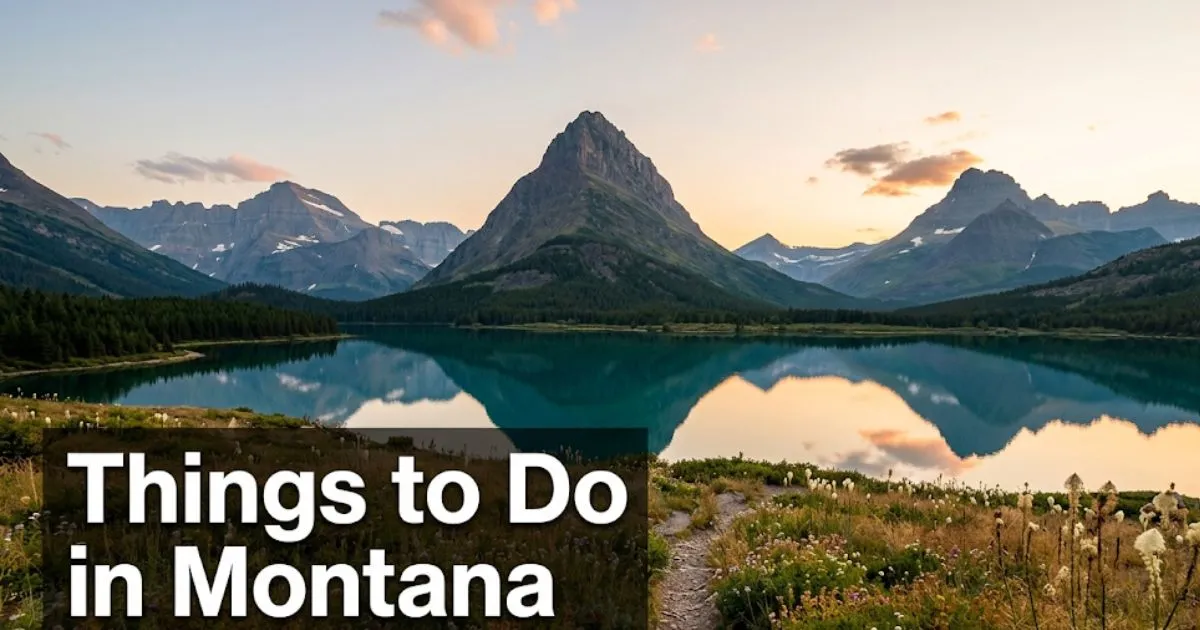
Things to Do in Montana: An Honest Guide to Big Sky Country (2026)

Montana demands you choose what kind of trip you actually want.
This is not a state where you casually stumble into the best experiences.
Glacier National Park alone requires more advance planning than most entire
countries do right now.
This guide cuts through the brochure language to give you the specific,
practical, traveler-type-specific intelligence you need to plan a Montana trip
that actually delivers.
Montana Things to Do: Why the State Demands a Different Kind of Planning
Montana is the fourth largest state by area with one of the smallest
populations.
That geometry creates the single most important planning reality here.
You cannot wing a Montana trip the way you can wing a weekend in Portland.
Distances between attractions routinely exceed three hours of driving.
According to the Montana Office of Tourism, the state receives over 12
million visitors annually.
Most of them cluster in the same three locations during the same ten weeks.
| Travel Reality | What It Means for Your Trip |
|---|---|
| Distances between major attractions | Minimum 3 hours driving |
| Glacier National Park summer visitation | 75% occurs June through August |
| Yellowstone’s Montana entrances | Gardiner and West Yellowstone book solid 6 months out |
| Cell service in western Montana | Unreliable outside towns over 5,000 people |
| Peak season hotel rates | Often triple off-season prices |
Key Takeaway: Pick one region per week of vacation or you will spend your
entire trip inside a rental car.
Things to Do in MT: Choosing Your Region First
Montana breaks into distinct travel regions that do not blend into a single
road trip without serious windshield time.
Pick one.
Western Montana holds the big peaks, Glacier National Park, and the buzzy
mountain towns.
It suits first-time visitors who want the postcard Montana.
Central Montana runs from Helena to Great Falls along the Missouri River.
It suits history travelers and those who want to understand the actual
Lewis and Clark expedition route without crowds.
Eastern Montana is high plains, dinosaur country, and the least visited
third of the state.
It suits solitude seekers and anyone tired of standing in line for a trailhead.
Southern Montana borders Yellowstone and includes Bozeman, Livingston, and
the Paradise Valley.
It suits fly-fishing obsessives, wildlife watchers, and those who want
Yellowstone access with better food towns.
The most common mistake first-time visitors make is booking a flight into
Bozeman and a hotel in Whitefish for the same five-day trip.
Those are seven hours apart in summer traffic.
Glacier National Park Things to Do
Glacier National Park operates on a timed vehicle reservation system for
the Going-to-the-Sun Road corridor from late May through early September.
You need this reservation or you will not enter the park’s core during peak
hours.
The Going-to-the-Sun Road runs 50 miles from West Glacier to St. Mary.
It is the single best alpine drive in the United States highway system.
Book your vehicle reservation through Recreation.gov the moment the
window opens for your travel dates.
Reservations typically release 120 days in advance and disappear within minutes.
According to the National Park Service, the Highline Trail from Logan
Pass ranks among the most exposed and rewarding day hikes in the park.
It opens fully only after snowmelt, often not until mid-July.
Best Activities by Traveler Profile
| Activity | Best For | Physical Demand | Insider Note |
|---|---|---|---|
| Highline Trail | Fit solo travelers and couples | High, exposed ledges | Start at 6 AM to park at Logan Pass |
| Trail of the Cedars | Seniors and families with strollers | Low, boardwalk | Wheelchair accessible full loop |
| Many Glacier boat tour | Couples and seniors | Low, seated | Reserve two months ahead |
| Grinnell Glacier hike | Fit hikers, small groups | High, 11 miles | Rangers guide this; tip them |
| Lake McDonald kayak rental | Families and solo travelers | Moderate | Afternoon winds kick up hard |
Key Takeaway: Show up at Glacier’s west entrance by 5:30 AM or accept you
will ride the shuttle system all day.
Yellowstone National Park Montana Entrances
Yellowstone’s Montana entrances at Gardiner and West Yellowstone offer a
different park experience than the Wyoming side.
The northern range near Gardiner holds the highest concentration of wolves
and bison in the park.
The Lamar Valley, accessed from Gardiner, delivers the best wildlife
watching in the contiguous United States.
Bring spotting scopes or rent them in town.
West Yellowstone puts you closest to Old Faithful and the geyser basins.
It is also the most crowded entrance corridor in the park system during July.
The Roosevelt Arch at the Gardiner entrance marks the park’s original 1903
entry point.
It remains the only entrance open to wheeled vehicles year-round.
Mammoth Hot Springs sits just inside the Gardiner entrance.
The travertine terraces here are actively changing formation and look
different every year.
Budget travelers should know that West Yellowstone motels run $300-plus
nightly in summer while Gardiner offers slightly more reasonable rates.
Cooke City, further up the Beartooth Highway, has even lower prices but
adds 45 minutes of driving each way.
Things to Do in Bozeman Montana
Bozeman functions as Montana’s most complete destination town for
travelers who want outdoor access, excellent food, and an actual downtown
you can walk.
It has outgrown its college-town modesty without becoming Aspen-expensive.
Main Street from Rouse Avenue to Willson Avenue holds more good restaurants
per block than most American cities twice its size.
The Montana Tourism Board identifies downtown Bozeman as the fastest-
growing culinary hub in the northern Rockies.
The Museum of the Rockies on Kagy Boulevard houses the largest collection
of Tyrannosaurus rex specimens on earth.
It is genuinely world-class and should not be skipped even if museums are
not usually your thing.
Downtown Bozeman Dining by Budget
| Restaurant | Cost Range | Best For |
|---|---|---|
| Dave’s Sushi | $12-$20 per roll | Solo travelers at the bar |
| Blackbird Kitchen | $25-$45 per entree | Couples, date night |
| Montana Ale Works | $15-$25 per plate | Groups, families |
| Pickle Barrel | $8-$12 per sub | Budget travelers, quick lunch |
| Rockford Coffee | $4-$7 per drink | Morning stop before hiking |
Families with children under ten will find the Museum of the Rockies holds
attention far better than the downtown shopping district.
The outdoor dinosaur exhibits let kids burn energy after the indoor galleries.
Solo travelers should post up at the bar at Plonk for the best wine list in
town and easy conversation with locals who actually know the hiking beta.
Key Takeaway: Fly into Bozeman Yellowstone International Airport (BZN) which
is the best-served airport in the state for direct flights.
Things to Do in Missoula Montana
Missoula is Montana’s cultural outlier in the best possible way.
It is a river town with a literary festival, a strong live music scene, and
the most progressive food culture in the state.
The Clark Fork River runs directly through downtown.
Locals float it on inner tubes from late June through August.
The Wilma Theatre on Higgins Avenue books national touring acts in a
restored 1921 venue that holds fewer than 1,500 people.
It is one of the most intimate major concert rooms in the mountain West.
Caras Park on the riverfront hosts the Downtown ToNight summer concert
series every Thursday evening from June through August.
It is free and genuinely the best weekly social event in the city.
The Missoula Farmers Market runs Saturday mornings from May through October
on North Higgins.
Arrive before 9 AM for the best produce and pastry selection before the
crowd thickens.
Seniors and accessibility travelers should know that the Riverfront Trail
system is fully paved, flat, and wheelchair-friendly for miles in both
directions from Caras Park.
Benches appear every quarter mile.
The local alternative to the busy downtown brewery scene is Imagine Nation
Brewing on the west side of the river.
It has better beer than the higher-profile spots and half the wait.
Things to Do in Whitefish Montana
Whitefish works as both a summer and winter destination, unlike most
Montana towns that go dormant in one season.
The town sits 25 minutes from Glacier National Park’s west entrance.
Whitefish Mountain Resort on Big Mountain runs summer operations including
lift-served mountain biking, alpine slides, and the Summit House restaurant
with views into Glacier.
It is the best family-friendly outdoor day outside the national park.
Downtown Whitefish on Central Avenue packs legitimate dining into three
walkable blocks.
It skews tourist-oriented in July and August but returns to a genuine local
rhythm by September.
Budget travelers should stay at the Whitefish Hostel on Railway Street.
Private rooms run well under $100 nightly in shoulder season, which is rare
this close to Glacier’s west entrance.
Whitefish Lake State Park on the town’s north edge offers a public swimming
beach and kayak launch.
It costs $8 per vehicle for non-residents and is worth every dollar on a
hot July afternoon.
The Whitefish Chamber of Commerce notes that the Huckleberry Days Arts
Festival in August draws the largest annual crowd to downtown.
Book lodging six months out if your dates coincide with it.
Couples looking for a genuinely romantic dinner should reserve a table at
Cafe Kandahar at the Kandahar Lodge.
It is the finest dining in the Flathead Valley and prices reflect that.
Montana Things to Do in Summer
Summer in Montana runs from late June through early September and this is
when the state is at its absolute best and most crowded.
Everything is open, the high country has melted out, and you need
reservations for nearly everything worth doing.
Floating a river is the essential Montana summer activity and every town
has its own stretch.
The Madison River near Bozeman, the Clark Fork through Missoula, and the
Flathead River near Whitefish are the three classic floats.
Wildfire smoke is the single biggest variable in a Montana summer trip.
August increasingly brings smoke from regional fires that can reduce
visibility to less than a mile and make strenuous hiking medically unwise
for sensitive groups.
Summer Activity Guide by Month
| Month | Best Activity | Crowd Level | Fire Risk |
|---|---|---|---|
| June | Wildflower hiking | Moderate | Low |
| July | River floating, peak hiking | Extreme | Moderate |
| August | High alpine trails, huckleberry picking | High | High |
| Early September | All activities with fewer people | Moderate | Variable |
The Montana Department of Environmental Quality maintains a real-time
air quality map that every summer visitor should bookmark before arrival.
Check it each morning and adjust outdoor plans accordingly.
Seniors and travelers with respiratory conditions should plan for potential
smoke days by building indoor backup activities into each region of their
itinerary.
Museums, historic theaters, and hot spring resorts are the best fallback
options.
Things to Do in Montana in Winter
Winter in Montana separates travelers into two distinct groups.
You are either here for downhill skiing and winter sports or you should
genuinely reconsider your timing.
Big Sky Resort near Bozeman offers the most skiable acreage in the United
States and lift tickets that reflect that scale.
Expect to pay among the highest day rates in North American skiing.
Whitefish Mountain Resort provides a more affordable and less intense ski
experience than Big Sky.
It suits families and intermediate skiers better than the expert-dominated
terrain at Big Sky.
Bozeman’s winter food scene actually improves over summer because the
locals reclaim their restaurants from tourist season.
Blackbird, Little Star Diner, and Feast Raw Bar all have available tables
and attentive kitchens from November through March.
Yellowstone National Park in winter is accessible only by guided snowcoach
or snowmobile from the West Yellowstone entrance.
It is the single most extraordinary wildlife viewing experience in the
continental US and costs accordingly.
The National Park Service limits winter access to Yellowstone to
permitted guides only.
Book snowcoach tours to Old Faithful at least three months ahead for
December through February dates.
Solo travelers who ski will find Big Sky’s Lone Peak Tram line moves
quickly for singles filling chairs.
It is one of the easiest places in American skiing to make ski friends for
a day.
Key Takeaway: Rent an all-wheel-drive vehicle with proper snow tires in
winter; Montana interstates ice over regularly and tow truck response can
take hours.
Montana State Parks and Lesser-Known Public Lands
Montana runs 55 state parks that collectively see a fraction of the
visitation national parks absorb.
They are the genuine local alternative for anyone who wants solitude,
fishing access, or a campsite without a reservation war.
Lewis and Clark Caverns State Park near Whitehall offers the most
impressive limestone cave tours in the northern Rockies.
The tour involves steep stairs, tight passages, and a 600-foot elevation
change inside the mountain.
It is physically demanding and genuinely not suitable for anyone with
mobility limitations, claustrophobia, or young children who cannot handle
90 minutes of guided darkness.
Bannack State Park near Dillon preserves a complete gold rush ghost town
with over 60 standing structures you can enter freely.
It is one of the best-preserved ghost towns in the American West and sees a
tenth of the visitors of any national park site.
Flathead Lake State Park comprises six separate units around the largest
natural freshwater lake west of the Mississippi.
Wild Horse Island on the lake requires a private boat or kayak to access
and holds a wild bighorn sheep population.
Montana Fish, Wildlife and Parks manages all state park camping
reservations through their online system.
Sites at popular parks like Flathead Lake book solid for summer weekends
within hours of opening.
Families with children rate Lewis and Clark Caverns as one of the best
activities in the state.
The tour guides are trained interpreters who make geology genuinely funny
for kids aged eight and up.
Montana Road Trip Routes That Actually Work
Montana road trips require realistic distance planning.
The state is 630 miles wide with exactly two interstates and long stretches
of two-lane highway where passing zones vanish for miles.
The Beartooth Highway from Red Lodge to Yellowstone’s northeast entrance
ranks as the most scenic drive in Montana.
It tops out at 10,947 feet and opens fully only from late May through
mid-October depending on snow.
The Going-to-the-Sun Road through Glacier is the second essential Montana
drive.
It crosses the Continental Divide at Logan Pass and requires the vehicle
reservation mentioned earlier.
Realistic Montana Road Trip Distances
| Route | Distance | Driving Time | Realistic Time With Stops |
|---|---|---|---|
| Bozeman to West Yellowstone | 90 miles | 1.5 hours | 2 hours |
| Missoula to Whitefish | 135 miles | 2.25 hours | 3 hours |
| Bozeman to Glacier West Entrance | 330 miles | 5 hours | 6.5 hours |
| Billings to Red Lodge | 60 miles | 1 hour | 1.5 hours |
| West Yellowstone to Gardiner | 55 miles | 1.25 hours | 2 hours via park roads |
The most common road trip mistake is attempting Bozeman to Glacier and back
in a single day.
You will spend ten hours in the car and see nothing meaningful.
Budget travelers should know that gas stations thin out dramatically once
you leave interstate corridors.
Fill your tank in any town with a population over 1,000 before heading into
national forest or reservation land.
Solo drivers on remote highways should carry a paper map and download
offline navigation before departing.
Cell coverage is genuinely absent across vast stretches of eastern and
central Montana.
Where to Stay in Montana by Region and Budget
Montana lodging splits into three distinct tiers: luxury guest ranches,
standard chain and independent hotels in towns, and national park lodges
that book a year ahead.
National park lodges inside Glacier and Yellowstone offer the best location
at the highest demand.
They are not luxury properties by any reasonable standard despite their
prices.
The historic lodges at Glacier (Lake McDonald Lodge, Many Glacier Hotel)
were built by the Great Northern Railway in the early 1900s.
They feature extraordinary architecture, small rooms, no air conditioning,
and some of the most coveted reservations in the national park system.
Xanterra Parks and Resorts operates the in-park lodges at Glacier.
Reservations open on a rolling 13-month basis and summer dates fill within
hours for the most desirable rooms.
Budget travelers should target early September for the best combination of
availability, weather, and rates across all lodging categories.
Hotel prices drop 30 to 50 percent from peak summer the moment Labor Day
weekend passes.
Bozeman and Missoula have the most robust vacation rental markets in the
state.
They suit families who need kitchens and multiple bedrooms without paying
guest ranch rates.
Couples seeking the romantic Montana ranch experience without the all-
inclusive price tag should look at small properties in the Paradise Valley
south of Livingston.
The Yellowstone River runs through this valley and morning views of the
Absaroka Range rival anything in the state.
Montana Food and Drink Worth Planning a Meal Around
Montana’s food identity runs deeper than steak and huckleberry everything
though both genuinely belong in your trip.
The state’s culinary strengths are beef, trout, craft beer, and a
surprisingly sophisticated small-town restaurant scene in Bozeman and
Missoula.
Montana ranks second nationally in craft breweries per capita.
Nearly every town over 3,000 people has at least one brewery and the beer
is consistently excellent.
Huckleberries are not just tourist marketing.
They grow wild in subalpine zones across western Montana and appear on
menus from July through September in pies, sauces, cocktails, and ice cream.
The steak at Land of Magic in Logan outside Three Forks is the kind of
prime rib experience that justifies ordering beef in beef country.
It is a local institution open since 1959 with zero interest in being
trendy.
Missoula’s food scene stands apart for its commitment to local sourcing and
its breakfast culture.
Burns St. Bistro and The Shack Cafe serve the two best breakfasts in town
and both require patience on weekend mornings.
Bozeman’s Blackbird Kitchen runs the most ambitious dinner menu in the
state.
The wood-fired dishes and house-made pasta hold up against any mountain
town restaurant in the country.
Budget travelers should target the lunch menu at top restaurants.
Blackbird’s lunch prices run half of dinner for nearly identical quality.
Solo travelers will find Montana restaurant bars universally welcoming.
Eating at the bar is the norm here and servers tend to be more conversational
with solo diners than with couples or groups.
Montana Wildlife Viewing: Where and When to See Animals
Montana delivers the most accessible large mammal viewing in the United
States outside Alaska.
You can see bison, elk, bighorn sheep, mountain goats, moose, black bears,
and grizzly bears on public land within a single trip.
Yellowstone’s Lamar Valley is the premier wolf-watching location in North
America.
Arrive before sunrise with spotting scopes and find the wildlife watchers
parked along the road who have already located the packs.
Grizzly bears are present throughout Glacier National Park and the
surrounding national forest lands.
Carry bear spray on every hike and know how to deploy it.
The National Park Service requires visitors to maintain 100 yards of
distance from bears and wolves at all times.
Park rangers actively enforce this regulation and will issue citations for
wildlife crowding.
Bison in Yellowstone may appear docile but injure more visitors than any
other animal in the park system.
Stay 25 yards away minimum and never approach a bison near a boardwalk or
parking lot.
The National Bison Range north of Missoula on the Flathead Reservation
offers wildlife viewing without Yellowstone-level crowds.
The 19-mile Red Sleep Mountain Drive loops through a managed bison herd
with mountain views that hold their own against any national park.
Families with children get the most wildlife engagement from the prairie
dog towns at Greycliff Prairie Dog Town State Park near Big Timber.
Kids can watch the colony’s social behavior from close range without the
safety concerns of larger wildlife.
Solo travelers interested in photography should join a wildlife guide
service out of Gardiner or West Yellowstone for at least one day.
Guides know the movement patterns and will put you on animals you would
never find alone.
Budget Travel in Montana: What Costs and What Doesn’t
Montana is not a cheap destination during summer but it offers specific
ways to reduce costs that most visitors miss.
The state’s public lands are the single best budget resource and they are
almost all free to access.
National Forest land surrounds most Montana destinations and offers free
dispersed camping with no reservation required.
You need a vehicle that can handle rough roads and you need to pack out
everything you bring in.
State parks cost $4 to $8 per vehicle for non-residents.
They are the best value lodging alternative for families with a tent or
small RV who do not need hookups.
Free and Low-Cost Montana Activities
- Hiking in Gallatin National Forest south of Bozeman costs nothing and
the trail network rivals any national park - The Missoula Downtown ToNight summer concert series runs free every
Thursday evening June through August - Most breweries offer free tastings or $2 sample pours before you commit
to a full pint - The Museum of the Rockies has a free admission window on select Sunday
afternoons; check their 2026 calendar - Wildlife watching in the Lamar Valley requires only a Yellowstone
entrance pass which is valid for seven days
The single biggest budget mistake is trying to save money by staying far
from your daily destination.
Gas costs in Montana will devour any lodging savings if you add two hours
of driving each day.
According to AAA Mountain West, Montana’s average gas prices run higher
than the national average due to distribution costs in the region.
Budget $100 to $150 weekly for fuel on any multi-stop road trip itinerary.
Couples can save significantly by booking a kitchenette unit and cooking
breakfast and lunch.
Dinner out in Bozeman or Whitefish will cost $60 to $120 for two people
with drinks.
Safety and Practical Warnings for Montana Travel
Montana’s primary safety risks are environmental rather than urban.
Wilderness preparation, wildlife awareness, weather readiness, and driving
caution matter more here than in most US destinations.
Key safety and practical facts every visitor should know:
- Carry bear spray on every hike in western Montana and keep it
accessible on your hip or chest strap, never inside your backpack - Cell service is absent across roughly 70 percent of Montana’s land area including most national park trail systems and highway corridors
between major towns - Afternoon thunderstorms in the high country develop rapidly in July and August and Lightning claims lives above treeline each summer
- Montana highway speeds of 80 mph on interstates combined with winter ice and summer wildlife on roadways create serious accident conditions
that out-of-state drivers routinely underestimate - Rivers that look calm from the bank can run fast and cold enough to cause hypothermia in minutes even in midsummer due to snowmelt
- Wildfire smoke in August can reach hazardous air quality levels
and travelers with asthma, COPD, or heart conditions should check the
Montana DEQ air quality map daily and have an indoor backup plan
The Montana Highway Patrol operates a roadside assistance number at
1-855-647-3777 for interstate emergencies.
Response times in rural areas can exceed one hour.
Frequently Asked Questions About Things to Do in Montana
What is the number one tourist attraction in Montana?
Glacier National Park receives roughly three million visitors annually,
making it Montana’s most visited single attraction.
The Going-to-the-Sun Road through the park’s center is the specific
experience most travelers prioritize.
It requires a timed vehicle reservation during summer 2026 just as it has
in recent years.
What is the best month to visit Montana?
September is the single best month for Montana travel in 2026.
Crowds drop sharply after Labor Day while weather remains warm and dry
through mid-month.
Wildfire smoke typically diminishes and lodging rates fall 30 to 50 percent
from peak summer pricing.
What part of Montana is the prettiest?
The Glacier National Park region, specifically the Many Glacier Valley, is
the most visually dramatic landscape in Montana.
The Paradise Valley south of Livingston ranks second for its combination of
the Yellowstone River and the Absaroka Mountain front.
Personal preference between alpine peaks and river-valley beauty determines
which suits you better.
How many days is enough for Montana?
Seven days is the minimum to visit one region of Montana properly.
Ten days allows you to combine two adjacent regions like Glacier and the
Flathead Valley.
Trying to cover both Glacier and Yellowstone in a single week guarantees
you will spend the majority of your trip driving between them.
What is the most visited city in Montana?
Bozeman is Montana’s most visited city due to its airport, its proximity to
Yellowstone’s Montana entrances, and its own downtown dining and outdoor
access.
Whitefish ranks second, driven almost entirely by its location 25 minutes
from Glacier National Park’s west entrance.
Missoula attracts strong summer visitation but functions more as a regional
hub than a national destination.
Is Montana expensive to visit?
Montana is a mid-range to expensive destination during peak summer months
from late June through August.
Hotel rates in Bozeman, Whitefish, and West Yellowstone routinely exceed
$300 per night during this window.
Budget travel is possible with advance planning, camping, and a focus on
public lands activities that cost nothing to access.
Montana rewards the traveler who commits to one region, books ahead for
the experiences that require it, and respects the distances and seasons that
define this state.
Book your national park lodging or timed-entry reservations first.
Everything else builds around those fixed points.
Confirm your specific entry requirements, vehicle reservation windows, and
operating hours directly with the National Park Service, the Montana Office of Tourism, and individual venues before departure.
Conditions shift year to year in mountain and wilderness destinations.
Montana is worth the planning effort because the experiences here are not
replicable elsewhere in the United States.
The state simply demands you take it seriously before it reveals what makes
it extraordinary.