Best Things To Do in Philadelphia in 2026 (Local Guide)

Philadelphia does not need a marketing pitch. The city where the United States was essentially invented, where the Declaration of Independence was signed and the Constitution was debated, where a $3 sandwich from a street-level counter can genuinely compete with a $40 restaurant plate in any American city, stands on its own. The things to do in Philadelphia span the full spectrum from colonial-era history that no other American city can replicate to some of the country’s most serious art museums to a food culture that Philadelphians are justifiably defensive about.
According to Visit Philadelphia, the city’s official tourism organization, Philadelphia welcomes more than 40 million visitors per year, including a significant share from international markets drawn specifically by Independence National Historical Park. That park, administered by the National Park Service, protects more original historic architecture from the founding era of the United States than any comparable site in the country. That alone makes Philadelphia a different kind of American city trip than most travelers expect going in.
This guide covers what Philadelphia genuinely delivers, which experiences are worth the time and admission cost, which neighborhoods suit which traveler types, how to eat well without spending restaurant-meal prices every hour, and how to structure a visit so you’re not spending your best hours standing in the wrong line. The honest seasonal reality, the free options, the local alternatives to the most crowded tourist spots, and the practical logistics are all here.
Things To Do in Philadelphia: What the City Actually Delivers
Philadelphia is one of the few American cities where the tourist version and the local version of the city exist in close, walkable proximity, which is both its greatest strength and the most common source of visitor confusion.
The tourist version centers on a roughly half-mile corridor in Old City: the Liberty Bell, Independence Hall, and the surrounding National Historical Park. This is genuinely worth your time, but it is one layer of a city with 10 distinct layers. Visitors who spend all of Day 1 in that corridor and then leave thinking they’ve seen Philadelphia have experienced the equivalent of visiting Nashville and only walking Broadway.
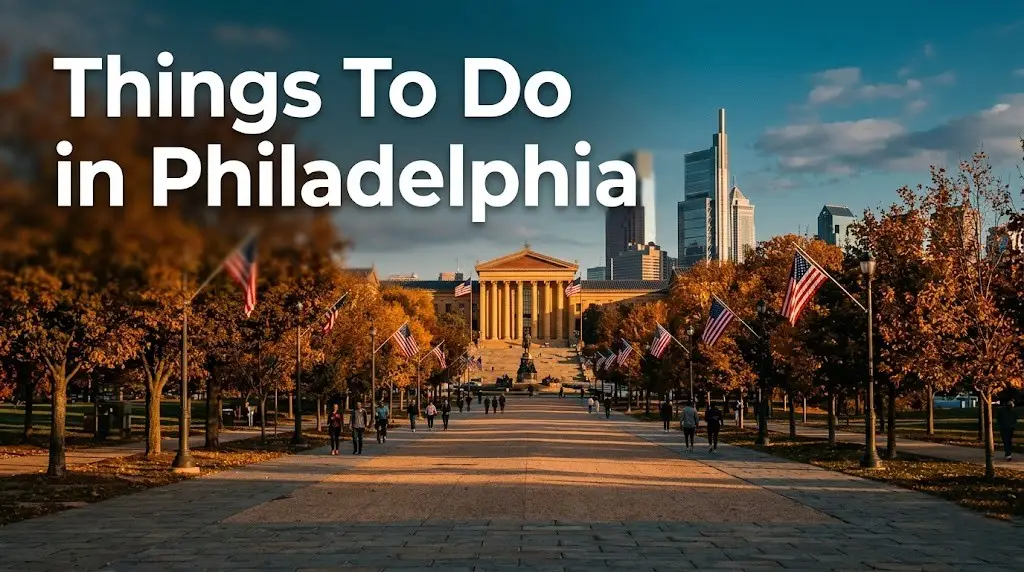
The actual city runs from Fishtown’s warehouse-converted bars and record shops northeast of downtown, through the Benjamin Franklin Parkway’s museum corridor in the northwest, down through South Philadelphia’s Italian Market and neighborhood dining culture, and out into Fairmount Park, which at more than 2,000 acres is one of the largest urban park systems in the United States. Philadelphia rewards the traveler who does not treat it as a one-block history museum with a cheesesteak chaser.
Best for first-time visitors: The combination of Old City, Reading Terminal Market, and at least one major museum. Best for returning visitors: Fishtown, Northern Liberties, and the Barnes Foundation on their own merit. Best for food-focused travelers: A South Philly-anchored itinerary starting at the Italian Market and ending at a BYOB dinner in Graduate Hospital or Bella Vista.
| Traveler Type | Philadelphia’s Strongest Draw | One Honest Limitation |
|---|---|---|
| History focused | Independence NHP is unmatched in the US | Liberty Bell line can run 45-60 min in summer |
| Art and culture | Barnes Foundation plus PMA is a world-tier pairing | Barnes requires advance tickets during peak periods |
| Food focused | BYOB culture and Reading Terminal are genuinely distinctive | Cheesesteak tourist spots differ from local picks |
| Families | Franklin Institute, Zoo, Please Touch Museum | Cobblestones in Old City are stroller-challenging |
| Budget travelers | More free cultural sites than most comparable cities | Hotel prices in Center City can spike with events |
Best Things To Do in Philadelphia for First-Time Visitors
First-time visitors to Philadelphia have the most to gain from a structured two-day framework that separates the historic district experience from the museum-and-neighborhood experience.
Day 1: The Historic Core and Market
Start at Independence National Historical Park before 9:00 a.m. The ranger-led tour of Independence Hall is the most substantive single experience in Philadelphia for anyone interested in American history. These tours require timed-entry tickets, available through the National Park Service reservation system. Book these weeks in advance during summer and spring. The tour itself runs approximately 35 minutes and gives you context that the Liberty Bell queue does not.
After Independence Hall, walk the Liberty Bell Center. No ticket is required but expect lines of 20 to 50 minutes on summer mornings. The Bell itself is displayed in a glass pavilion that offers a sightline toward Independence Hall, which is the experience most people come for. Allocate 20 to 30 minutes total.
From there, walk north on 5th or 6th Street to Reading Terminal Market for lunch. This is one of the best urban food markets in the United States, and it is genuinely excellent for lunch, not just as an attraction.
Day 2: Museum Mile and a Neighborhood
The Benjamin Franklin Parkway runs from City Hall northwest toward the Philadelphia Museum of Art. The Rodin Museum and the Barnes Foundation sit along or just off this corridor. Plan your morning around the Barnes Foundation or the Philadelphia Museum of Art, not both in one day. Spend the afternoon in either Fishtown (for younger, bar-and-record-shop culture) or Rittenhouse Square (for urban park, independent shops, and restaurant density).
Insider Tip:
Independence Hall timed-entry tickets release on a rolling 90-day window through the National Park Service. Check availability early in the morning and on the exact date your window opens. Summer dates fill within hours.
Booking 6 to 8 weeks ahead is the practical minimum during summer and spring. Fall and winter visits give you far more booking flexibility with little sacrifice in experience quality.
First-time visitors who skip the ranger tour and only do the Liberty Bell are making the single most common and most avoidable Philadelphia planning mistake.
Top Historic Sites and Things To See in Philadelphia
Independence National Historical Park is the defining reason Philadelphia holds a category of its own in American travel, and the National Park Service maintains a campus of sites that most visitors never fully explore beyond the two most photographed spots.
Carpenters’ Hall, two blocks east of Independence Hall, is where the First Continental Congress convened in 1774. It remains owned by the Carpenters’ Company of the City and County of Philadelphia, the oldest trade guild in America. Admission is free. On a summer morning, it draws a small fraction of the crowds lining up for the Liberty Bell two blocks away, despite telling a story of equal historical significance.
Elfreth’s Alley, one block north of the Market-Frankford Line’s 2nd Street station, is the oldest continuously inhabited residential street in the United States, dating to 1702. Walking the alley takes 10 minutes. The accompanying small museum in two original houses provides context on life in colonial Philadelphia. Hours and admission fees apply; verify before visiting.
Eastern State Penitentiary sits in the Fairmount neighborhood, a 15-minute walk from the Philadelphia Museum of Art. This former prison, open from 1829 to 1971, is now a National Historic Landmark open for guided and self-guided tours. The deteriorating cellblocks have a genuinely arresting quality that photographs do not fully prepare visitors for. Admission is charged; advance tickets are recommended and required for the extremely popular Halloween night events, which book months ahead.
- National Constitution Center: Interactive exhibits on the US Constitution; strong draw for teens and adults, less effective for children under 8
- Betsy Ross House: Brief, crowd-pleasing, and genuinely interesting; allow 30 minutes
- Second Bank Portrait Gallery (NPS): Free, uncrowded, contains original portraits of founders; severely undervisited
- African American Museum in Philadelphia: Covers 400 years of African American history in Pennsylvania and nationally; admission charged, advance tickets recommended for special exhibitions
For families: Independence Hall ranger tours hold children’s attention if kids are 8 and older. Younger children find the Second Bank Portrait Gallery and Elfreth’s Alley more manageable in pacing.
Philadelphia Neighborhoods Worth Exploring
Philadelphia’s distinct neighborhoods are not interchangeable, and the traveler who stays entirely in Old City sees approximately one-fifth of what makes this city genuinely interesting.
Old City is the historic and tourist center. Cobblestone streets, 18th-century architecture, gallery concentration (First Friday openings draw significant crowds), and easy walkability to Independence National Historical Park make it the logical base for first-timers. The restaurant and bar scene skews toward the polished and tourist-facing.
Fishtown sits northeast of Old City across Girard Avenue. It is the city’s most energetically evolving neighborhood, with independent record shops, serious craft beer bars, a strong live music scene, and some of Philadelphia’s most genuinely respected restaurants. It is where the local creative and hospitality industry spends its off nights. The neighborhood is walkable from the El’s Girard station.
Rittenhouse Square is Philadelphia’s most conventionally upscale neighborhood, centered on a 1.5-acre park that functions as the city’s genuine outdoor living room from April through October. The restaurant density along Walnut, Locust, and Spruce Streets is among the highest in the city. This suits couples and solo travelers who want urban sophistication over neighborhood grit.
South Philadelphia requires dedicated time. The 9th Street Italian Market, the country’s oldest outdoor market according to the market’s own records, runs for several blocks and sells produce, meat, cheese, and prepared food from vendors whose families have occupied the same stalls for generations. South Philly restaurant culture, particularly along East Passyunk Avenue, is where some of the city’s most serious culinary work is happening.
| Neighborhood | Character | Best For | Signature Experience |
|---|---|---|---|
| Old City | Historic, touristy, walkable | First-timers, history travelers | Independence NHP, Elfreth’s Alley |
| Fishtown | Creative, bar-forward, local | Solo travelers, couples, food focused | Live music, craft beer, BYOB dinner |
| Rittenhouse Square | Upscale, urban, park-centered | Couples, solo travelers, seniors | Park sitting, restaurant row, gallery walks |
| South Philadelphia | Local, food-dense, residential | Food travelers, returning visitors | Italian Market, East Passyunk dining |
| Fairmount | Green, museum-adjacent, quiet | Families, outdoor walkers | Fairmount Park, Eastern State Penitentiary |
| Northern Liberties | Hip, mixed-use, nightlife | Young adults, solo travelers | Night markets, bar scene, street art |
For seniors and accessibility travelers: Rittenhouse Square is the most mobility-friendly neighborhood, with level sidewalks, accessible restaurants, and a flat park surface. Old City’s cobblestone streets and uneven brick sidewalks are a genuine mobility challenge. The PHLASH tourist shuttle (seasonal, typically spring through fall) connects major sites and is an excellent alternative to walking between the Benjamin Franklin Parkway museums and Old City.
Key Takeaway: Philadelphia’s neighborhoods are more distinct from each other than most comparable American cities. Choosing one as your base versus just your destination shapes your entire experience of the city.
Best Things To Do in Philadelphia for Food Lovers
Philadelphia’s food culture is not a footnote to its history; it is a parallel attraction with its own geography, its own local loyalties, and a few specific experiences that no food-focused traveler should miss.
Reading Terminal Market is the most immediate and practically useful food experience in the city. Open daily, it occupies a 19th-century train shed in Center City and contains more than 80 vendors selling everything from Pennsylvania Dutch soft pretzels and scrapple to Ethiopian food, Lebanese food, and pastries from independent bakers. It is genuinely excellent for breakfast and lunch. Some vendors have reduced hours or specific day schedules; check the market’s own vendor listings before targeting a specific stall.
The cheesesteak question requires an honest answer. Pat’s King of Steaks and Geno’s Steaks in South Philadelphia are the most famous, directly across the street from each other at 9th and Passyunk, and they cater heavily to tourists who want the photo. Jim’s Steaks on South Street and DiNic’s Roast Pork at Reading Terminal Market are where more locals direct food-focused visitors, with DiNic’s roast pork Italian sandwich argued by many long-term Philadelphia food writers as the city’s most legitimately outstanding sandwich, regardless of how the cheesesteak gets the press.
Philadelphia’s BYOB restaurant culture is one of the city’s genuinely distinctive food features. Because Pennsylvania liquor licensing is expensive and complex, many neighborhood restaurants operate without liquor licenses, allowing and encouraging guests to bring their own wine and beer. This significantly reduces the cost of a serious dinner. East Passyunk Avenue in South Philly and the blocks surrounding Rittenhouse Square have the densest concentration of respected BYOB restaurants. Budget travelers take note: a BYOB dinner at a well-regarded Philadelphia neighborhood restaurant, with wine purchased from a corner store, can run $40 to $60 per person total rather than the $90 to $120 that a comparable licensed restaurant would cost.
The Italian Market on South 9th Street is best experienced on a Saturday morning, when vendors are fully staffed and the block-long stretch from Tasker to Wharton Streets is at its most active. The market is free to walk.
For budget travelers: Reading Terminal Market allows very satisfying meals at $10 to $18 per person if you choose vendors strategically. The Amish vendors in particular offer excellent value on prepared foods and baked goods.
Philadelphia Museums and Arts Experiences
Philadelphia’s museum concentration along Benjamin Franklin Parkway is the most substantive single cultural corridor in any American city outside of Washington, D.C.’s National Mall.
The Philadelphia Museum of Art is the city’s largest and most visited art institution, holding approximately 240,000 objects across European, American, Asian, and modern collections. The building itself, a Greek Revival structure at the top of Benjamin Franklin Parkway, is immediately recognizable from the exterior staircase made famous by the Rocky film franchise. The stairs are accessible and free to climb. The museum offers pay-what-you-wish admission on Friday evenings (hours and availability subject to change; verify before visiting). Full general admission carries a fee, typically in the $20 to $30 per adult range; confirm current pricing directly with the museum.
The Barnes Foundation, three blocks from the PMA along the Parkway, holds a collection of Impressionist, Post-Impressionist, and early Modern paintings assembled by Albert C. Barnes in the early 20th century. The collection includes more Renoir paintings than any single institution outside France, a substantial number of Cézannes, and works by Matisse, Picasso, and Seurat, arranged in Barnes’s original installation format with decorative ironwork and artifacts placed deliberately alongside the paintings. The effect is unlike any other museum experience. Tickets must be purchased in advance through the Barnes Foundation; same-day tickets are often unavailable during spring and fall peak periods.
The Rodin Museum on Benjamin Franklin Parkway sits two blocks west of the Barnes Foundation and charges a suggested donation rather than fixed admission. It contains the largest collection of Rodin sculptures outside Paris, including an outdoor cast of The Thinker and an indoor cast of The Gates of Hell. On a given weekday, you may share the garden with fewer than 30 other visitors. That ratio relative to the PMA and Barnes makes it the single most underappreciated experience on the Parkway.
- Franklin Institute: Science-focused, strong for ages 8 through 16; includes a permanent astronomy hall and rotating exhibitions; admission charged
- Academy of Natural Sciences of Drexel University: Natural history museum with live butterfly exhibit; admission charged; good for families with children under 10
- Mutter Museum: Medical history museum with genuinely unusual collections; for adults with strong stomachs and curiosity about medical history; not suitable for young children
- Penn Museum (University of Pennsylvania): World-class archaeology collection covering Egypt, Mesopotamia, and the ancient Mediterranean; admission charged; severely undervisited by tourists despite holding one of the finest university museum collections in the country
According to the Barnes Foundation, the gallery’s installation follows Albert Barnes’s original arrangement with precise intentionality; moving a single piece was contractually prohibited under the terms of the Foundation’s original charter for decades. The current Parkway building, opened in 2012, replicates the original installation rooms from the Merion, Pennsylvania building in their exact spatial and proportional dimensions.
For couples: The Barnes Foundation followed by dinner in Rittenhouse Square is the most consistently excellent cultural-into-culinary arc in the city. For seniors and accessibility travelers: Both the Barnes Foundation and the Philadelphia Museum of Art have elevator access and accessible pathways throughout. The PMA’s Greek Revival building involves stairs at the entrance, but accessible entries exist; contact the museum directly for current details.
Key Takeaway: The Rodin Museum’s suggested-donation model and near-empty visitor counts make it the clearest value-to-experience ratio on Philadelphia’s entire museum corridor, and most visitors walk past it to queue at the PMA’s main entrance.
Outdoor Things To Do in Philadelphia
Philadelphia’s outdoor spaces are more substantial than most urban travel guides suggest, and the city’s park system is large enough to absorb the kind of half-day outdoor activity that genuinely breaks up a museum-heavy visit.
Fairmount Park comprises more than 2,000 acres of contiguous green space stretching northwest from the museum district along the Schuylkill River and into the Wissahickon Valley. It is one of the largest urban park systems in the United States. Within the park, the Schuylkill River Trail runs as a paved multi-use path along the river, connecting Center City to the Manayunk neighborhood and beyond. The trail is flat, well-maintained, and accessible to cyclists, runners, and walkers. Bike rentals are available seasonally through services operating near the trail; verify current availability before planning around them.
Wissahickon Valley Park, the northwestern arm of Fairmount Park, offers a qualitatively different experience: unpaved trails, significant tree cover, a creek that runs through a rocky gorge, and a genuine sense of distance from urban life even though it sits within city limits. The Forbidden Drive, a gravel path along Wissahickon Creek, is accessible to pedestrians and equestrians only. It runs approximately 5 miles one-way and is suitable for a moderate half-day walk without significant elevation change.
The Philadelphia Zoo, located in West Philadelphia within Fairmount Park, is the oldest zoo in the United States and holds approximately 1,300 animals. It functions well as a half-day experience for families. Admission is charged; verify current pricing directly with the zoo.
Penn’s Landing along the Delaware River waterfront has undergone significant redevelopment over the past decade. The boardwalk area, seasonal outdoor programming, and river views provide a pleasant hour or two, particularly in warm weather. It connects easily to Old City via Market Street and is free to walk.
- Rittenhouse Square Park: Best urban park sitting in the city, free, excellent for people-watching; peak experience April through October
- Washington Square: One of William Penn’s original five squares, quiet, tree-shaded, near Independence NHP
- Rocky Steps at the Philadelphia Museum of Art: Free to access; climbing the 72 steps and turning around to see the Parkway view is genuinely rewarding and takes 20 minutes
For families: The Wissahickon Valley trails are best for children who are at least 6 and comfortable on unpaved surfaces. Younger children do better at the zoo or Rittenhouse Square’s flat lawns. For seniors and accessibility travelers: The Schuylkill River Trail’s paved surface and minimal elevation change make it the most accessible outdoor option in the city.
Things To Do in Philadelphia With Kids
Philadelphia is genuinely one of the better major American cities for families with children, largely because the concentration of hands-on science and natural history institutions is unusually high relative to other urban destinations.
The Franklin Institute in the Fairmount neighborhood is the strongest single child-focused experience in Philadelphia for ages 6 through 16. It combines permanent exhibits on electricity, aviation, space, and the human body with rotating special exhibitions. The centerpiece Giant Heart, a walk-through model of a human heart at approximately 15,000 times normal size, has been drawing children since the 1950s and genuinely holds their attention. The Franklin Institute’s train model, space command center, and science demonstration programming make it a full-day destination. Admission is charged; verify current family pricing directly with the institution.
The Please Touch Museum in Memorial Hall within Fairmount Park is designed specifically for children ages 7 and younger. It occupies a Beaux-Arts building from the 1876 Centennial Exposition and functions as an interactive play environment rather than a traditional museum. It suits families with very young children who will not get meaningful engagement from the Franklin Institute’s more complex content.
Independence Hall ranger tours hold the attention of children who are 8 years old and older, particularly if they have some school context for the American Revolution. Children under 8 typically find the tour duration difficult to sustain. The Betsy Ross House is more pacing-appropriate for younger children and tells a story with immediate visual and narrative engagement.
- Philadelphia Zoo: Half-day minimum; animal encounters and children’s zoo section are strong for ages 3 through 10
- Academy of Natural Sciences: Dinosaur exhibits and the live butterfly garden are the two strongest child-specific draws; full-admission entry, verify pricing
- Reading Terminal Market: Excellent for a family lunch with wide enough food variety to accommodate different children’s preferences without argument
For families with strollers or mobility aids: Old City’s cobblestone streets are a genuine challenge. The flat paved paths of the Benjamin Franklin Parkway corridor, Fairmount Park’s main drives, and the Schuylkill River Trail are all stroller and wheelchair accessible. Plan Old City visits with this in mind and consider wearing a child carrier for the historic district sections.
Key Takeaway: Families who split their Philadelphia visit between the Franklin Institute for one half-day and Independence National Historical Park for another (with age-appropriate activity selection) tend to leave with children who remain interested through the end, rather than hitting the late-afternoon wall that comes from trying to do too much historic district walking with young kids.
Romantic Things To Do in Philadelphia for Couples
Philadelphia offers a more genuinely romantic urban experience than its reputation suggests, largely because the city’s scale is human, its neighborhoods are walkable, and the food culture rewards lingering over dinner in a way that few American cities support at the same price point.
An evening at the Barnes Foundation during a special programming event, or a late afternoon visit timed to the quieter pre-closing hour window, positions the collection’s intimate gallery rooms as one of the more atmospheric art experiences available to couples in any American city. The installation’s design, with paintings surrounded by decorative ironwork and everyday objects chosen by Barnes himself, creates a conversation-generating environment that differs fundamentally from the white-wall gallery format.
A Saturday morning in the Rittenhouse Square neighborhood, starting with a coffee from one of the independent cafes around the square’s perimeter, moving into the park itself for an hour, and following it with lunch at one of the Walnut Street restaurants, is a simple and genuinely pleasant half-day structure. The square draws locals rather than tourists on Saturday mornings, which shifts the atmosphere considerably.
For dinner, Philadelphia’s BYOB restaurant culture is specifically advantageous for couples. Stopping at a wine shop to choose a bottle together, then arriving at a well-regarded BYOB restaurant in Bella Vista or East Passyunk, creates a more personal and lower-cost evening than a restaurant’s own wine program would. Total dinner cost for two at a serious BYOB restaurant, including a bottle of wine purchased separately, typically runs $70 to $110, which is significantly below what a comparable licensed restaurant would charge.
Eastern State Penitentiary’s self-guided audio tour, narrated in part by Steve Buscemi and various historians, has an atmospheric quality that couples tend to find unexpectedly engaging as a non-standard afternoon activity. The crumbling vaulted corridors and historical weight of the site make for the kind of shared experience that generates genuine conversation.
For couples seeking high-end experiences: The Benjamin Franklin Parkway corridor in the evening, particularly at dusk when the Parkway’s fountains are lit, is a consistently compelling ambient experience. Several hotels in Rittenhouse Square and along the Parkway offer packages that bundle museum admission with accommodation.
Best Things To Do in Philly on a Budget
Philadelphia is one of the more genuinely budget-accessible major American cities because the historic and cultural core of the visitor experience is largely free or low-cost by design.
The National Park Service manages Independence National Historical Park as free to access. Walking the grounds, entering the Second Bank Portrait Gallery, viewing the Liberty Bell, visiting Carpenters’ Hall, and walking Elfreth’s Alley cost nothing. The timed-entry Independence Hall tour is free with a reservation through the NPS system. This means a traveler can spend a full, substantive morning in the most historically significant district in American urban geography for $0 in admission fees.
The Rodin Museum operates on a suggested donation model, meaning the actual entry cost is whatever you choose to contribute. The Italian Market and Reading Terminal Market are free to walk. Rittenhouse Square, Washington Square, and the entire Fairmount Park system cost nothing to enter.
The Philadelphia Museum of Art offers pay-what-you-wish general admission on Friday evenings (specific timing and policy subject to change; verify with the museum before visiting). This is the most practical way for budget travelers to access one of the country’s major art institutions on their own terms.
Honest budget breakdown for a full day in Philadelphia:
| Activity | Cost (approx.) | Booking Required | Best For |
|---|---|---|---|
| Independence NHP campus walk | Free | NPS reservation for Ind. Hall | All traveler profiles |
| Independence Hall ranger tour | Free with NPS reservation | Yes, book weeks ahead | History travelers, families |
| Liberty Bell Center | Free | No, but lines are long in summer | First-timers |
| Rodin Museum | Suggested donation | No | Art focused, couples |
| Reading Terminal Market lunch | $10 to $18 per person | No | Everyone |
| Elfreth’s Alley | Free to walk, small museum fee | No | History travelers, couples |
| Schuylkill River Trail | Free | No | Outdoor focused, cyclists |
| PMA Friday evening | Pay-what-you-wish | No | Art focused, budget travelers |
For budget travelers specifically: Avoid the Old City tourist-facing restaurants near Independence Mall during lunch hours. The Reading Terminal Market, the Italian Market on Saturday mornings, and the BYOB neighborhood restaurants in South Philly all deliver significantly better food value per dollar than the sit-down restaurants positioned to capture the tourist foot traffic around the Liberty Bell.
Things To Do in Downtown Philadelphia
Downtown Philadelphia, which locals generally mean as Center City stretching from the Delaware River to the Schuylkill River and from South Street north to Vine Street, contains the city’s most concentrated visitor experience.
City Hall at Broad and Market Streets is a massive Second Empire building that served as the tallest building in Philadelphia for decades. The observation tower at the statue of William Penn offers city views and is accessible by elevator; hours and admission vary, and the tower access is sometimes limited for maintenance, so verify before visiting. The building’s interior, with ornate carved stonework in its public corridors, is free to walk during business hours.
The Mummer’s Museum on South Street preserves the history of the Philadelphia Mummers Parade, an annual New Year’s Day tradition that is entirely specific to Philadelphia and unlike any other American municipal celebration. The museum is small and admission is modest; it serves primarily as context for visitors who want to understand the cultural institution they may have seen referenced without understanding.
South Street itself, running east-west through the southern edge of Center City, functions as a mid-range commercial and entertainment corridor with independent shops, bars, and restaurants. It is accessible and more neighborhood-facing than the tourist district without the full localism of Fishtown.
Penn’s Landing along the Delaware River waterfront is a 15-minute walk east from Old City along Market or Chestnut Street. The outdoor spaces host seasonal programming, and the waterfront views of the Delaware River and the Ben Franklin Bridge (a genuinely photogenic suspension bridge) are worth the walk regardless of programming. The Independence Seaport Museum sits at Penn’s Landing and offers maritime history exhibits; admission is charged.
For solo travelers: Center City is navigable without a car and has the city’s most reliable transit access via the Market-Frankford Line and Broad Street Line. It suits solo travelers who want to move efficiently between neighborhoods without logistical complexity.
Key Takeaway: The Second Bank Portrait Gallery inside Independence National Historical Park, open free of charge and almost always crowd-free, contains original portraits of Benjamin Franklin, George Washington, and other founders painted from life. It is three minutes from the Liberty Bell and receives one-twentieth of the traffic. Go here before the Bell, not after.
Best Things To Do in Philadelphia at Night
Philadelphia’s evening scene is specifically strong in the bar, live music, and late-dining categories, with a concentration in Fishtown and Northern Liberties that has no equivalent in how many comparable East Coast cities present their nightlife.
Fishtown’s Frankford Avenue corridor is the most consistently active nightlife strip in current Philadelphia. Independent bars, small live music venues, and restaurants that run late are all within a two-to-three block stretch accessible from the El’s Girard station. This is a neighborhood rather than a tourist nightlife zone, which means locals outnumber visitors on most nights and the experience does not have the performed quality of a constructed entertainment district.
The Philadelphia Orchestra performs at the Kimmel Center for the Performing Arts on South Broad Street. The Orchestra holds one of the most distinguished reputations in American classical music and performs a full season from September through May, with a summer festival program at the Mann Center in Fairmount Park. Ticket prices range widely depending on seating and program; check the Kimmel Center directly for current season programming and pricing.
Eastern State Penitentiary’s Terror Behind the Walls Halloween events run from late September through early November and are among the most popular ticketed evening events in the city. These sell out weeks in advance; advance purchase is not optional.
Old City’s First Friday events, held on the first Friday of each month, draw galleries, studios, and small performance spaces open simultaneously in the evening. The concentration of galleries along Old City’s Chestnut and Market Streets and surrounding blocks creates a walkable evening cultural tour that is free to browse.
- Live music in Fishtown: Multiple small venues host original acts on weekends; neighborhood bars with no cover charge are more common than cover-required shows
- Jazz and cocktail bars: Rittenhouse Square neighborhood has the highest concentration of this type of evening experience
- Late-night food: Reading Terminal Market closes in the evening; late-night options concentrate along South Street and Passyunk Avenue
For couples at night: A Kimmel Center performance, or an early Barnes Foundation visit followed by dinner in Rittenhouse Square, is the most consistently elegant evening structure the city offers.
Unique Things To Do in Philadelphia That Most Tourists Miss
The experiences most specific to Philadelphia and least present in standard tourist content are the ones that give the city its particular character.
Philadelphia Magic Gardens on South Street is a sprawling mosaic environment built by artist Isaiah Zagar over decades, covering multiple lots and the surfaces of surrounding buildings in an explosion of tile, bottle glass, found objects, and hand-painted figures. It is unlike anything in American urban art that is accessible to the public on a walk-in basis. Admission is charged; verify current hours and pricing directly. The indoor labyrinth environment is the main draw; the outdoor sections along South Street are visible without entry.
The Mutter Museum at the College of Physicians of Philadelphia on South 22nd Street holds one of the most genuinely unusual museum collections in the country: medical history artifacts including a cast of the conjoined liver of the original Siamese twins Chang and Eng, a wall of skulls assembled by a 19th-century Viennese anatomist, preserved medical specimens, and historical surgical instruments. It is not for everyone. For the specific traveler who finds medical history, forensic anthropology, or pathology genuinely fascinating, it is one of the more memorable single-institution experiences in American museum culture. Admission is charged; the museum is not appropriate for young children.
The Penn Museum on the University of Pennsylvania campus in West Philadelphia holds one of the most significant collections of ancient Egyptian, Mesopotamian, and Mediterranean objects in the world, including a 12-ton granite sphinx from the reign of Ramesses II. It is systematically ignored by first-time Philadelphia visitors who do not know it exists. The admission cost is modest compared to the collection’s depth; verify current pricing with the museum directly.
Wissahickon Valley Park’s Forbidden Drive is, for outdoor-oriented travelers, a more genuinely restorative experience than any in-city attraction. The five-mile gravel path through an old-growth wooded gorge within city limits defies what most visitors expect Philadelphia to be capable of offering.
For returning visitors: These four experiences, Philadelphia Magic Gardens, the Mutter Museum, the Penn Museum, and the Wissahickon, represent a genuinely different version of the city from what the standard tourist itinerary covers. A returning visitor who builds a trip around these four and adds a couple of East Passyunk dinners will leave feeling like they finally got to the actual Philadelphia.
Key Takeaway: The Penn Museum’s Egyptian gallery, which holds an original ancient sphinx weighing 12 tons, is 15 minutes from Center City by subway, costs significantly less than the Barnes Foundation, and sees a fraction of comparable institutions’ visitor numbers. Check it before your second PMA visit.
Day Trips From Philadelphia Worth Taking
Philadelphia’s location on the Northeast Corridor and within a two-hour drive of significant destinations makes it a natural hub for extending a trip beyond the city itself.
Brandywine Valley (approximately 30 to 45 minutes southwest of Philadelphia via I-95 or Route 1) contains a concentration of significant cultural and natural institutions including the Brandywine River Museum of Art, which holds the largest collection of Wyeth family paintings in existence, the Longwood Gardens horticultural estate (1,100 acres of formal and naturalistic garden design, considered one of the world’s great public gardens), and the Winterthur Museum of American decorative arts. Any single one of these warrants a half-day visit; combining two in one day is feasible with early departure. Admission is charged at all three; verify current pricing and seasonal hours directly.
Lancaster County (approximately 70 minutes west of Philadelphia on Route 30 or the Pennsylvania Turnpike) is where Pennsylvania Dutch Amish and Mennonite agricultural communities have maintained traditional farming and craftwork practices since the 18th century. The landscape itself, with its working farms, roadside market stands, and absence of commercial chain infrastructure in the agricultural core, is the experience rather than any single attraction. Bird-in-Hand, Strasburg, and the town of Intercourse are the most frequently visited areas. The Strasburg Rail Road operates vintage steam locomotive excursions through the countryside.
New Hope (approximately 40 minutes north of Philadelphia along the Delaware River) is a small riverside town with a long artistic community history, antique shops, theater, and canal towpath walking. It suits couples and solo travelers looking for a half-day excursion with lower density and more pastoral character.
| Destination | Distance/Drive | Best For | One Reason to Go |
|---|---|---|---|
| Brandywine Valley | 30-45 min | Art travelers, couples | Longwood Gardens or Wyeth collection |
| Lancaster County | 70 min | Culture travelers, families | Working Amish farmland, no parallel in NE US |
| New Hope | 40 min | Couples, solo travelers | Delaware River towpath, antiques, theater |
| Valley Forge NHP | 25 min | History travelers, hikers | Revolutionary War winter encampment site |
| Cape May, NJ | 90-100 min | Beach travelers, birders | Victorian architecture, Atlantic Coast beaches |
For families: Lancaster County’s farm visits, and in particular the interactive farm experiences offered by several working farms near Bird-in-Hand, are strong for children ages 5 through 12. Longwood Gardens functions well for families with children who are 8 and older and can sustain several hours of walking in a structured garden environment.
Best Time To Visit Philadelphia and Seasonal Guide
The best time to visit Philadelphia is late April through early June or September through mid-October, when temperatures are comfortable, the city’s outdoor and walking culture is fully accessible, and hotel rates sit below the summer peak.
Summer (June through August) brings genuinely hot and humid conditions. Temperatures frequently reach the high 80s to low 90s Fahrenheit with humidity that makes outdoor walking more demanding than the thermometer reading alone suggests. Summer is also peak school trip and tourist season for the Independence National Historical Park, meaning Independence Hall tour slots and Liberty Bell lines are at their most competitive. Hotel rates peak in summer. The city’s outdoor cultural programming, including concerts at the Mann Center in Fairmount Park and river festivals at Penn’s Landing, is concentrated in summer, which is the genuine offset.
Fall is consistently the most pleasant season for a Philadelphia visit across most traveler profiles. October temperatures run from the mid-50s to low 70s Fahrenheit. Foliage in Fairmount Park and Wissahickon Valley is genuine and visible by mid-October. Hotel rates drop below summer levels while the full range of cultural programming remains in operation. The fall restaurant season, when kitchens are firing on the year’s best local produce, is an additional draw for food-focused travelers.
Winter (December through February) is cold, with average temperatures in the 30s and 40s Fahrenheit and occasional snow. Indoor museums are fully operational and crowds are significantly lower at paid attractions. Hotel rates hit their annual low point in January and February. The December holiday market at Love Park near City Hall draws visitors but does not significantly impact museum wait times.
Spring (March through May) is variable. March can be cold and wet. April through May is among the year’s best visiting periods once consistent warmth arrives.
| Season | Weather | Crowds | Events | Verdict |
|---|---|---|---|---|
| Spring (Apr-May) | 55-75°F, variable | Moderate, rising | Spring festivals, outdoor programming opens | Best season overall |
| Summer (Jun-Aug) | 80-92°F, humid | Peak | Mann Center concerts, river festivals | Fine with planning; avoid if heat-sensitive |
| Fall (Sep-Oct) | 55-72°F, dry | Moderate | Halloween at Eastern State Penitentiary | Excellent across all profiles |
| Winter (Nov-Feb) | 28-45°F, some snow | Low | Holiday markets, indoor season programming | Best value; best for museum focus |
For seniors and accessibility travelers: Spring and fall offer the most comfortable outdoor conditions for extended walking. Summer’s heat and humidity can be genuinely fatiguing for travelers managing cardiovascular or respiratory conditions. Winter cold is manageable if dressed appropriately, with the benefit of uncrowded museum visits.
Key Takeaway: Booking an October Philadelphia visit, particularly between the first and third weeks of October, gives you the city’s best outdoor conditions, fall foliage in Wissahickon and Fairmount, Eastern State Penitentiary’s seasonal programming, and hotel rates that can run 20 to 30 percent below August peak pricing.
Practical Tips for Getting Around Philadelphia
Philadelphia is among the more walkable major American cities for its most visited areas, but the specific structure of the historic district, museum corridor, and outlying neighborhoods means that understanding the transit system adds significant flexibility to a trip.
SEPTA (Southeastern Pennsylvania Transportation Authority) operates the city’s subway, elevated rail, trolley, and bus network. For visitors, two lines are particularly useful: the Market-Frankford Line (also called the El) runs east-west through Center City and connects the 30th Street Station area east through Old City, Fishtown, and beyond. The Broad Street Line runs north-south through Center City between City Hall and the sports complex in South Philadelphia. Single-ride fares are in the approximately $2.50 range; verify current pricing with SEPTA directly.
The PHLASH tourist shuttle operates seasonally (typically Memorial Day weekend through Labor Day, with some shoulder season variation) and runs a loop connecting Penn’s Landing, Old City, the Independence Mall area, Center City, the Benjamin Franklin Parkway museums, and back. It is specifically useful for visitors who want to move between the historic district and the museum corridor without walking the full Parkway distance. A daily pass is available; verify current pricing and seasonal operating dates directly with Visit Philadelphia.
From Philadelphia International Airport (PHL), the SEPTA Airport Line connects directly to 30th Street Station and Center City stations in approximately 25 to 30 minutes, with trains running regularly throughout the day. This is significantly faster and cheaper than a rideshare from PHL to Center City, which can take 30 to 50 minutes depending on traffic and will cost considerably more.
Driving and parking in Center City is not recommended for tourists. Parking garages charge in the $20 to $40 per day range. Traffic on Market Street and Broad Street during business hours is heavy. If you’re driving from outside the city, parking at a neighborhood SEPTA station and taking the subway into Center City is the practical approach.
- Old City to Museum Corridor: 1.5 miles on foot (approximately 30 to 35 minutes walking) or PHLASH shuttle in season
- Center City to Fishtown: Market-Frankford Line El, approximately 10 minutes from 8th Street to Girard station
- Center City to South Philly (Italian Market): 15 to 20 minute walk south from City Hall, or SEPTA bus
- Philadelphia to New York City: Amtrak Northeast Regional from 30th Street Station, approximately 90 to 115 minutes; Amtrak Acela faster but at premium pricing
For seniors and accessibility travelers: SEPTA stations vary significantly in elevator availability. Not all Market-Frankford Line stations have working elevator access; check SEPTA’s current accessibility status for specific stations before planning a route. The PHLASH shuttle is accessible for mobility devices when the seasonal service is operating. Rideshare services (Uber, Lyft) are widely available in Center City and are the most consistently accessible option for travelers who cannot navigate stairs.
Safety and Practical Warnings for Philadelphia
Philadelphia is a large American city with the practical considerations that accompany urban travel, and most visitors to the main tourism zones experience no safety issues. That said, specific practical warnings make a meaningful difference in how a visit unfolds.
Key safety and practical facts every visitor should know:
- Old City’s cobblestone streets and brick sidewalks are uneven terrain. Sturdy, flat-soled shoes are not optional for a walking-heavy Philadelphia itinerary. Heels on cobblestone are a genuine trip hazard.
- Independence Hall timed-entry tickets require advance booking. Arriving without a reservation during summer or spring means you will not tour the interior. The National Park Service reservation system is the only booking channel; there is no ticket-purchase option at the door for the ranger-led tour.
- The Kensington neighborhood in North Philadelphia, several miles from any major tourist destination, has well-documented public safety and public health concerns. It is not near Old City, Fishtown’s main bar district, or any standard tourist itinerary. Visitors are not directed to this area by any standard travel guide; the reference is included so travelers have accurate information rather than alarm.
- Summer heat and humidity in Philadelphia can reach the high 80s to low 90s Fahrenheit with humidity that makes outdoor walking more demanding than temperature alone indicates. Hydrate actively if planning extended outdoor time in July and August. Heat illness is a real concern for anyone spending prolonged time outdoors in direct sun during peak summer.
- Pickpocket awareness in crowded tourist areas, particularly around the Liberty Bell during summer peak hours, is standard urban travel practice. Keep bags zipped and worn in front in dense crowds.
- The Rocky Steps at the Philadelphia Museum of Art are a 72-step climb. They are free to ascend but represent a real physical demand for travelers with knee, hip, or cardiac conditions. The view from the top is rewarding; assess your own physical condition honestly before attempting them.
- Parking and traffic: Do not drive into Center City if you can avoid it. Parking garage rates are high, surface lots are limited near major attractions, and traffic on Market Street during weekday hours is chronically congested.
For any genuine emergency in Philadelphia, dial 911. The Philadelphia Visitors Center at 1599 Kennedy Boulevard can assist with non-emergency visitor questions and lost items during business hours.
Frequently Asked Questions About Things To Do in Philadelphia
What are the best things to do in Philadelphia for a first visit?
The highest-value first-visit combination is Independence National Historical Park (including the ranger-led Independence Hall tour, booked in advance through the National Park Service), the Liberty Bell Center, Reading Terminal Market for lunch, and either the Barnes Foundation or the Philadelphia Museum of Art for the afternoon.
Adding a walk through the Rittenhouse Square neighborhood or a Fishtown evening rounds out a two-day first visit with both the historic core and a genuine sense of the city’s current neighborhood culture.
First-timers should book the Independence Hall timed-entry reservation before any other trip logistics; those slots fill weeks ahead during spring and summer.
How many days do you need to see Philadelphia properly?
Three days is the practical minimum for a first visit that covers the historic district, at least two major museums, a neighborhood evening, and the Reading Terminal Market without feeling rushed.
A two-day visit is entirely feasible if priorities are clear in advance; one day for Old City and history, one day for the museum corridor and a neighborhood.
A four-day visit allows for a day trip to Brandywine Valley or Lancaster County alongside the city’s core experience.
Is Philadelphia walkable for tourists?
Philadelphia’s Center City and Old City areas are highly walkable, with the main historic attractions clustered within a half-mile radius.
The Benjamin Franklin Parkway corridor, which connects the historic district to the museum cluster, is approximately 1.5 miles and walkable in good weather, though the PHLASH shuttle covers this distance seasonally.
Old City’s cobblestone streets are uneven and require appropriate footwear; travelers with mobility limitations will find the flat paved streets of Center City and the Rittenhouse Square neighborhood more accessible.
What is the best neighborhood to stay in Philadelphia?
Center City is the most convenient base for first-time visitors, offering walkable access to both the historic district and the museum corridor.
Rittenhouse Square, within Center City’s western section, provides the highest restaurant and cafe density alongside the park, and suits couples and solo travelers who want neighborhood character alongside convenience.
Old City suits travelers who want to be immediately adjacent to Independence National Historical Park and prefer a more compact, architecturally historic immediate environment.
What are the best free things to do in Philadelphia?
The Independence National Historical Park campus, including the Liberty Bell Center, the grounds of Independence Hall, Carpenters’ Hall, the Second Bank Portrait Gallery, and a walk through Elfreth’s Alley, is free to access.
The Schuylkill River Trail, Fairmount Park, Wissahickon Valley’s Forbidden Drive, and all of Philadelphia’s five original city squares are free outdoor spaces.
The Rodin Museum operates on a suggested-donation model, making it effectively free to enter; the Philadelphia Museum of Art offers pay-what-you-wish admission on Friday evenings, subject to current policy which should be verified before visiting.
What is Philadelphia most famous for?
Philadelphia is most famous as the city where the Declaration of Independence was signed in 1776 and where the US Constitution was drafted in 1787, both at Independence Hall, a UNESCO World Heritage Site.
The city is also nationally recognized for the Philadelphia cheesesteak sandwich, the Philadelphia Museum of Art and its Rocky Steps, the Mummers Parade, and its BYOB restaurant culture.
According to Visit Philadelphia, the city’s founding-era historic district receives more than 5 million visitors per year, making Independence National Historical Park one of the most visited National Park Service sites in the United States.
Plan Your Philadelphia Visit With Confidence
Philadelphia rewards the visitor who goes beyond the Liberty Bell queue and spends time in its neighborhoods, its serious art institutions, and its food markets. The practical priority before any other booking is the Independence Hall timed-entry reservation through the National Park Service, followed by Barnes Foundation tickets if that museum is on your list. Both book out weeks ahead during spring and summer.
Prices, hours, seasonal schedules, shuttle availability, and pay-what-you-wish policies for individual attractions change. Verify admission costs, operating hours, and reservation requirements directly with each venue before you travel. The National Park Service website, the Barnes Foundation’s official ticketing page, and the Visit Philadelphia website are the most reliable current sources for logistics.
You have everything here to build a specific, honest, and genuinely satisfying Philadelphia itinerary. The city is better than its reputation outside the Northeast, more affordable than most travelers expect, and more layered than the Liberty Bell and cheesesteak shorthand suggests. Start with the NPS reservation and build outward from there.