Best Things to Do in Florida: 2026 Complete Travel Guide

Florida is one of the most visited states in the country, but the things to do in Florida that genuinely deliver on their promise look very different from the tourist-facing version most travel content sells you. The state stretches more than 500 miles from the Alabama border to Key West, covers wildly distinct ecosystems, and contains everything from the world’s most concentrated theme park infrastructure to some of the most ecologically unusual freshwater springs on the planet.
According to VISIT FLORIDA, the state’s official tourism organization, Florida welcomed more than 140 million visitors in recent years, making it the most visited state in the United States. But that volume of tourism also means the gap between what the tourist infrastructure offers and what genuinely memorable Florida experiences look like has never been wider. Most visitors cluster along a narrow corridor of marketed attractions while entire regions of the state operate in relative peace.
This guide covers Florida by region, by traveler type, by season, and by honest assessment of what genuinely earns your time versus what exists primarily because it’s easy to sell. You’ll find specific logistics, booking requirements, seasonal warnings, and the kind of local knowledge that doesn’t make it into the state tourism board’s promotional calendar.
Things to Do in Florida: What You Actually Need to Know First
Florida is not a single destination, and treating it like one is the single most common planning mistake visitors make.
The state divides naturally into four travel regions with genuinely different characters. The Panhandle (Pensacola to Panama City Beach) is beach-town Florida with sugar-white quartz sand and emerald water; it’s closer in spirit to coastal Alabama than to Miami. North Florida (Tallahassee, Gainesville, Jacksonville) is springs country and old Florida, culturally distinct from the resort corridor and largely overlooked by mainstream travel coverage. Central Florida (Orlando, Tampa, the Space Coast) is where the theme parks live and where most first-time visitors land. South Florida (Miami, the Everglades, the Keys) is subtropical, internationally diverse, and a genuinely different kind of place from the rest of the state.
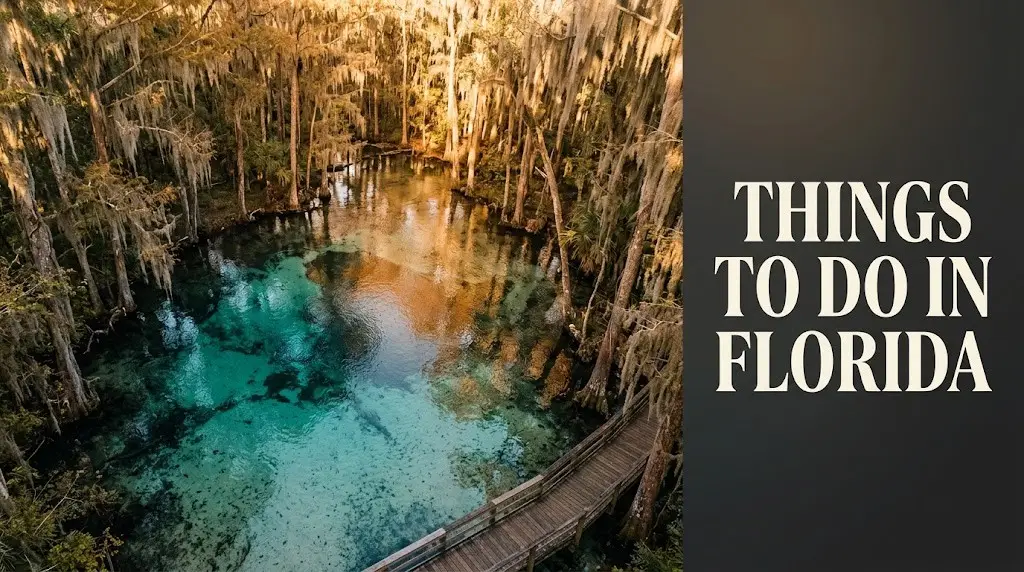
Booking requirements matter more in Florida than most destination guides acknowledge. Florida’s state park camping system fills 11 months in advance for popular sites. Ichetucknee Springs has swimming capacity limits. Dry Tortugas National Park requires booking the ferry weeks to months ahead. Kennedy Space Center launch viewings sell out. Going in without reservations at popular natural attractions, especially in peak season, means watching other people enjoy the thing you drove two hours to do.
The traffic reality on I-4 between Orlando and Tampa is also something every visitor to Central Florida should plan around. According to the American Automobile Association, the I-4 corridor ranks among the most congested stretches of interstate highway in the southeastern United States. Building extra transit time into Central Florida itineraries is not optional; it’s basic planning.
Insider Tip:
- Florida’s state parks, not its theme parks, offer the state’s most distinctive natural experiences at a fraction of the cost. The Florida Department of Environmental Protection manages more than 175 state parks covering 800,000 acres.
- For any Central Florida trip, check Brightline rail schedules before renting a car. Brightline now connects Orlando International Airport to Miami with stops in Fort Lauderdale, reducing the need to drive the congested I-95 corridor.
- Budget travelers specifically: a Florida State Parks annual pass covers vehicle entry at all 175+ parks and typically pays for itself within three park visits.
Best Things to Do in Florida Across Every Region
The best things to do in Florida fall into eight distinct experience categories, and knowing which category you’re optimizing for shapes which region you should visit.
Florida’s most defensible claim to greatness is its natural diversity. Nowhere else in the continental United States can you snorkel alongside manatees in crystal-clear 72-degree spring water in the morning and kayak through a 1.5-million-acre subtropical wilderness in the afternoon. The state’s geography produces experiences that have no equivalent in the rest of the country, and most of them are not the ones being marketed at you.
| Experience Category | Best Region | Cost Range | Best For | Booking Required |
|---|---|---|---|---|
| Theme parks and resorts | Central Florida | $100-$200+ per person/day | Families, first-timers | Yes, advance purchase recommended |
| Freshwater springs swimming | North/Central Florida | $4-$8 vehicle entry | Families, nature travelers, adults | Some sites require advance reservation |
| Everglades and wildlife tours | South Florida | $25-$80 per person | Nature enthusiasts, adults | Airboat: walk-up; camping: advance required |
| Gulf Coast beaches | Panhandle and Southwest | Free to $15 parking | Families, couples, seniors | No, but peak season arrives early |
| Florida Keys and reef diving | South Florida | $50-$150 for snorkel/dive tours | Adults, couples, divers | Yes for reputable operators |
| History and heritage sites | St. Augustine, Pensacola, Key West | Free to $20 | Cultural travelers, couples, seniors | Generally no |
| Cultural arts (Miami, Sarasota) | Southeast and Southwest | Free to $30 | Adults, couples, solo travelers | Some exhibitions require advance tickets |
| Fishing and boating | Statewide | $80-$300 for guided charters | Adults, groups, families | Yes, book captains in advance |
According to the National Park Service, Florida contains three national parks (Everglades, Dry Tortugas, Biscayne), two national seashores (Gulf Islands, Canaveral), and multiple national monuments, giving it one of the densest concentrations of federally protected natural land of any state east of the Mississippi.
For first-time visitors to Florida who want to see the state’s genuine range, the most common advice among experienced Florida travelers is to pick one region and go deep rather than trying to cover all four in a single trip. The Keys to Pensacola drive takes nearly 12 hours without stops. Florida rewards slow exploration.
Fun Things to Do in Florida Beyond the Theme Park Circuit
Fun in Florida doesn’t require a $150 ticket, a three-hour queue, or a resort hotel charging $400 a night for the privilege of being near the action.
The state’s natural infrastructure is genuinely extraordinary by any standard. Swimming in Ichetucknee Springs on a hot August afternoon, where 233 million gallons of 68-degree water flow daily through a limestone karst system, is more physically refreshing and visually remarkable than most theme park attractions at a fraction of the cost. The springs are a specifically Florida phenomenon: there are more than 700 documented freshwater springs in the state, a concentration found nowhere else in the world.
- Tubing the Ichetucknee River (Ichetucknee Springs State Park, Columbia County): a 3-mile float through protected spring-fed water; go early or on weekdays as capacity limits apply
- Kayaking the Rainbow River (Rainbow Springs State Park, Dunnellon): crystal-clear water over a white sand bottom; rental companies operate near the state park launch
- Glass-bottom boat tours at Silver Springs State Park (Ocala): one of the oldest tourist attractions in the state, genuinely worth the ticket for the underwater clarity
- Snorkeling with manatees at Crystal River National Wildlife Refuge: a permitted, guided experience from November through March when the manatees gather at warm spring vents
- Walking the Anhinga Trail at Everglades National Park: a 0.8-mile paved path where wildlife encounters (herons, anhingas, alligators) are reliable enough to feel staged but are entirely wild
The fun-to-cost ratio in Florida improves dramatically when travelers shift focus from the theme park corridor toward the state park system and natural springs. Budget travelers specifically will find the springs region in North and Central Florida delivers experiences that compete directly with the state’s most expensive attractions at a fraction of the price.
Couples without children often find this version of Florida the most satisfying. The springs towns (Ocala, Gainesville, Inverness) have genuinely good local restaurant scenes, low accommodation costs compared to the coast, and none of the manufactured resort atmosphere that can make Florida’s most famous destinations feel like expensive versions of the same experience.
Things to Do in Central Florida
Central Florida is where most Florida trips begin and where most Florida planning goes wrong.
The Orlando metro area contains the world’s highest concentration of theme park capacity, but it’s also home to the Space Coast, the Florida scrub ecosystem of Ocala National Forest, and a genuinely interesting urban core in the Milk District and Mills 50 neighborhoods of Orlando proper. Most visitors never see any of that because they don’t leave the resort corridor.
3-Day Central Florida Framework:
- Day 1: Choose one major theme park, arrive at opening, plan to leave by early afternoon when crowds peak. Use the afternoon for the Dr. Phillips Center for the Performing Arts or the Orlando Museum of Art in downtown Orlando. Dinner in the Mills 50 International Drive corridor (not the International Drive tourist strip).
- Day 2: Drive east to the Space Coast. Kennedy Space Center Visitor Complex at Merritt Island takes a full day; allow 5 to 7 hours minimum. Buy tickets in advance; launch viewing tickets are separate and sell out. Cocoa Beach for lunch and late afternoon on the Atlantic side.
- Day 3: North to Blue Spring State Park in Orange City for manatee viewing (November through March is best; summer visits see far fewer manatees). DeLand’s downtown district for lunch and afternoon exploring before returning to Orlando.
Central Florida families with children will find the Disney area’s supporting infrastructure, including public playgrounds, dedicated family dining, and hotel amenities designed for young children, genuinely useful. The resort hotels within Walt Disney World Resort offer stroller rentals, character breakfast experiences, and shuttle systems that eliminate the car logistics problem. The premium for staying on property pays off specifically for families with children under 10 who benefit from the proximity and themed atmosphere.
Adult-only travelers to Central Florida without a specific theme park goal will find Winter Park, just north of Orlando proper, a more satisfying base. Park Avenue in Winter Park has independent restaurants, the Charles Hosmer Morse Museum of American Art (home to the world’s most comprehensive collection of Louis Comfort Tiffany works), and a genuine downtown walkability that the resort corridor entirely lacks.
Key Takeaway: Central Florida’s theme parks are only one layer of a region that also includes the Kennedy Space Center, the best manatee viewing on the East Coast, and an underappreciated urban food and arts scene in Orlando proper and Winter Park. Plan for more than one activity category.
Things to Do in South Florida
South Florida operates on a different register from the rest of the state: subtropical, internationally inflected, faster-paced, and home to both the country’s most famously glamorous urban beach scene and its most ecologically irreplaceable wilderness.
Miami is the obvious anchor. But Miami divides sharply by neighborhood in ways that matter enormously for trip quality. South Beach (Miami Beach) is the international party scene and photographed architecture zone; the Art Deco Historic District along Ocean Drive and Collins Avenue is genuinely worth an afternoon, but Ocean Drive’s restaurant row is largely tourist infrastructure at premium prices. Wynwood is where the actual creative energy concentrates: the Wynwood Walls, an open-air street art complex, anchors a neighborhood of galleries, independent restaurants, and cocktail bars that feels nothing like South Beach. Little Havana on SW 8th Street (Calle Ocho) is where Cuban cultural identity in the city is most concentrated and most accessible to visitors.
Everglades National Park is 40 miles southwest of Miami and one of the most ecologically significant places in North America. The park protects the only subtropical wilderness in the continental United States, and its landscapes (sawgrass prairie, mangrove estuary, coastal manatee habitat) have no equivalent anywhere in the country. The Anhinga Trail and the Royal Palm area are accessible with minimal hiking. Pa-hay-okee Overlook offers the widest sawgrass panorama in the park. Flamingo at the southern tip requires a longer drive but delivers boat access to Florida Bay.
The Florida Keys begin 18 miles south of Homestead and run 113 miles to Key West. Key Largo is the dive and snorkel capital; John Pennekamp Coral Reef State Park offers the only living coral reef system in the continental United States accessible by glass-bottom boat, snorkel, or scuba. Marathon is the practical, family-friendly middle Key. Key West is the literary and nightlife destination: Hemingway’s house, the Sunset Celebration at Mallory Square, and the Duval Street bar corridor.
Budget travelers should know that South Florida runs expensive in winter (December through April is peak season). The Keys specifically command some of the highest accommodation rates in the state year-round. Going in late April or May, before summer heat peaks, offers significantly better pricing with reasonable weather.
Things to Do in North Florida
North Florida is the part of the state that Floridians themselves go to, and that most travel guides either skip entirely or cover in a single paragraph.
The region covering Tallahassee, Gainesville, Jacksonville, and the First Coast has a character that’s closer to the Deep South than to the Miami metropolitan area. Old-growth hardwood forests, black-water rivers, and some of the clearest freshwater springs in the world define the landscape here. The pace is slower, the crowds are smaller, and the natural authenticity is significantly higher than anything you’ll find in the theme park corridor.
Wakulla Springs State Park, about 15 miles south of Tallahassee, is North Florida’s best-kept open secret. The glass-bottom boat tours over a spring boil that discharges approximately 400,000 gallons of water per minute give a view of an underwater world that rivals anything in the Caribbean for clarity, at a state park day-use entry fee. The historic Wakulla Springs Lodge on the property dates to 1937 and offers one of the most atmospheric overnight stays in the Florida park system.
St. Augustine, an hour south of Jacksonville, is the oldest continuously occupied European-established settlement in the United States, founded in 1565. The Castillo de San Marcos National Monument, a coquina stone fort completed in 1695, anchors a historic district where the Spanish colonial and British occupation layers are genuinely visible in the architecture. The city rewards slow walking. St. George Street is the tourist-concentrated zone; the streets immediately behind it are where the city’s residential character and better independent restaurants live.
Amelia Island at the state’s northeastern tip gives Gulf Coast-comparable calm-water beaches without Gulf Coast crowds, plus a genuinely preserved Victorian downtown in Fernandina Beach that has character the resort-developed beaches of the central coast lack entirely.
Seniors and travelers with mobility considerations will find North Florida’s historic sites (Castillo de San Marcos, St. Augustine’s colonial quarter, the Tallahassee Museum) more physically accessible than the wilderness destinations of South Florida. Wakulla Springs boat tours are fully accessible by mobility aid.
Key Takeaway: North Florida is where experienced Florida travelers go to escape the state’s manufactured tourist infrastructure. Wakulla Springs, St. Augustine’s historic core, and Amelia Island deliver genuinely distinctive Florida experiences with a fraction of the crowd pressure of the state’s marketed destinations.
Unique Things to Do in Florida You Won’t Find in Other States
Florida’s most genuinely distinctive experiences, the ones that have no equivalent elsewhere in the continental United States, are almost entirely natural rather than built.
Swimming in a Florida spring is the clearest example. The springs produce 68 to 72-degree water year-round from underground aquifer systems, creating swimming environments that are simultaneously tropical in temperature and crystalline in clarity. Blue Spring State Park’s spring run near Orange City concentrates up to 500 manatees in winter months, making it one of the most reliable and ethically responsible manatee viewing experiences in the state. Manatee Springs State Park near Chiefland on the Suwannee River offers similar manatee encounters in a less-visited setting.
Snorkeling over living coral at John Pennekamp Coral Reef State Park in Key Largo is another experience with no continental US equivalent. The park protects approximately 70 nautical square miles of reef ecosystem including the Christ of the Abyss statue, a 4,000-pound bronze figure submerged 25 feet underwater off the Key Largo Dry Rocks reef formation.
The Everglades at night, specifically a guided kayak tour through the mangrove tunnels of the Ten Thousand Islands area, is an experience that surprises visitors who expected the Everglades to be primarily a daytime wildlife destination. Bioluminescent plankton periodically light up the water during certain moon phases and seasons; verify with operators before booking if this is the specific experience you’re seeking.
Florida Caverns State Park near Marianna in the Panhandle is uniquely the only Florida state park with air-filled caverns accessible to visitors. Tours of the limestone formations run regularly; the temperature inside the caverns is a consistent 65 degrees year-round, making it an unusual summer escape in a state that otherwise offers no cave systems to visit.
Couples specifically will find the combination of a night in a Florida spring town (like Gainesville or DeLand) paired with a full day at a spring system one of the state’s most romantically distinctive experiences precisely because it looks nothing like what Florida is marketed as.
Outdoor Things to Do in Florida for Nature-Focused Travelers
Florida’s outdoor activity landscape is far more varied than its beach and theme park identity suggests.
The state’s trail system covers multiple distinct ecosystems. The Florida Trail, a National Scenic Trail, runs approximately 1,300 miles from Big Cypress National Preserve in the south to Gulf Islands National Seashore near Pensacola in the northwest, making it one of only 11 National Scenic Trails in the United States. The trail passes through cypress swamps, longleaf pine flatwoods, and Panhandle coastal forests; no single section delivers the same experience as another.
For bird watching, Florida ranks among the top three US states by species count. The Corkscrew Swamp Sanctuary near Naples, managed by the National Audubon Society, protects the largest old-growth bald cypress forest in North America and offers a boardwalk trail that places visitors directly within one of the most productive bird and wildlife habitats in the Southeast. Ding Darling National Wildlife Refuge on Sanibel Island delivers a comparable wildlife density along a 4-mile Wildlife Drive that can be covered by car, bicycle, or on foot.
Paddling the Suwannee River, which flows 266 miles from the Okefenokee Swamp in Georgia to the Gulf of Mexico, is an experience that rewards multi-day planning. Outfitters along the river offer canoe and kayak rentals with shuttle services; camping is available at primitive sites along the river corridor.
| Outdoor Activity | Location | Physical Demand | Best Season | Cost Range |
|---|---|---|---|---|
| Springs snorkeling | North/Central Florida | Low | Year-round (best Oct-Apr) | $4-$8 park entry |
| Everglades kayaking | South Florida | Moderate | November-April | $40-$80 guided tour |
| Florida Trail hiking | Statewide | Varies by section | October-April | Free (permit for camping) |
| Suwannee River paddling | North Florida | Moderate | Spring and fall | $30-$60 rental/shuttle |
| Birding (Corkscrew) | Southwest Florida | Low (boardwalk) | November-April | Admission fee applies; verify current pricing |
| Manatee snorkeling | Crystal River | Low | November-March | $40-$75 guided tour |
Seniors and travelers with limited mobility will find Corkscrew Swamp’s fully paved boardwalk, Ding Darling’s drive-through option, and the glass-bottom boat tours at Wakulla Springs and Silver Springs accessible options that deliver genuine wildlife encounters without demanding terrain.
Key Takeaway: Florida’s outdoor activity catalog is anchored by a springs system and a national park that have no continental equivalent, a 1,300-mile National Scenic Trail, and wildlife viewing infrastructure at Corkscrew Swamp and Ding Darling that ranks among the best in the southeastern United States.
Best Beaches in Florida and How to Choose the Right One
Florida’s beaches are not interchangeable, and choosing the wrong one for your travel style wastes a significant portion of your trip.
The Gulf Coast and Atlantic Coast produce fundamentally different beach experiences. Gulf-side beaches from Naples north through Clearwater and up through Destin and the Panhandle have calmer water, warmer Gulf temperatures in winter, and the quartz sand that produces the Panhandle’s famously white-colored beaches. Atlantic-side beaches from Miami north through Cocoa Beach and Daytona have more surf, Atlantic water that runs cooler in winter, and harder-packed sand that’s better for walking and beach volleyball but less suited for young children wading.
| Beach | Character | Best For | Water Type | Crowd Level | Parking Note |
|---|---|---|---|---|---|
| Clearwater Beach (Pinellas County) | Classic Gulf resort beach | Families, first-timers | Calm, warm Gulf water | High in peak season | Paid garages; arrive early |
| Siesta Key (Sarasota County) | Quartz sand, award-recognized | Couples, beach purists | Calm Gulf | Moderate to high | Limited; street parking fills early |
| Grayton Beach (Walton County) | Panhandle state park beach | Adults, nature travelers | Emerald Gulf water | Low to moderate | State park entry fee |
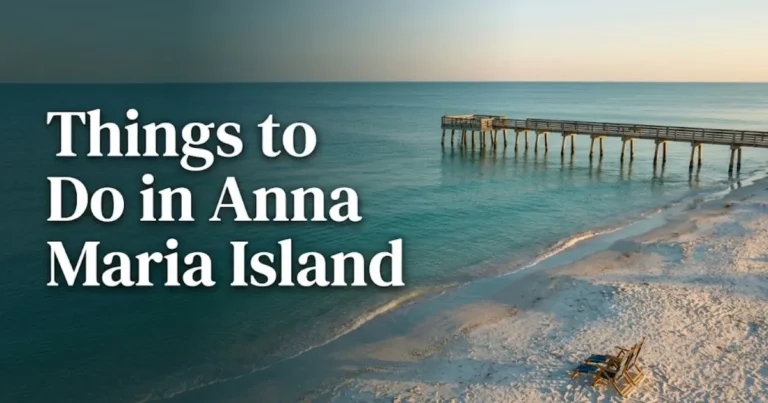
| Anna Maria Island (Manatee County) | Laid-back Gulf island | Families, couples | Calm Gulf | Moderate | Free beach parking, limited |
| Caladesi Island (Pinellas County) | Undeveloped barrier island | Adults, nature travelers | Gulf, calm | Low (boat or ferry access only) | Ferry from Honeymoon Island |
| South Beach (Miami Beach) | Urban, international scene | Adults, social travelers | Atlantic surf | Very high | Paid garages; expensive |
| Cocoa Beach (Brevard County) | Surf culture, Atlantic | Adults, surf travelers | Atlantic surf | Moderate | Paid and free options mix |
| Fort De Soto Park (Pinellas County) | Multi-beach county park | Families, campers | Calm Gulf and Bay | Moderate | County park fee |
The United States Lifesaving Association reports that rip currents account for approximately 80% of lifeguard rescues at ocean beaches. Check beach flag conditions before entering the water at any Florida beach. Double red flags mean the water is closed to swimming. A single red flag indicates high surf or dangerous conditions; non-experienced swimmers and children should stay out of the water.
Families with young children will specifically find the Gulf Coast beaches between Clearwater and Naples the most practical: calm enough for young waders, warm enough year-round for swimming from October through May, and with the beachside infrastructure (restrooms, concessions, lifeguard coverage at major beaches) that makes a day with children manageable.
Things to Do in Florida Other Than Disney
Florida has extraordinary travel experiences with no connection to theme parks, and most of them are dramatically less expensive.
The first thing to understand is geographic: Walt Disney World, Universal Orlando, and the other major theme park properties sit in a specific part of Central Florida. If you’re visiting St. Augustine, the Panhandle, the Everglades, or the Florida Keys, the Orlando theme park complex is not remotely on your itinerary and has no bearing on your trip.
For travelers specifically visiting Central Florida who want alternatives to theme parks:
- Kennedy Space Center Visitor Complex on Merritt Island is a genuinely substantive full-day destination. The Saturn V Center houses the most complete Saturn V moon rocket on public display. The Heroes and Legends facility opened with significant new content in recent years. Admission runs in the $50 to $80 range per adult as of recent years; verify current pricing before visiting.
- Bok Tower Gardens in Lake Wales, a National Historic Landmark designed by Frederick Law Olmsted Jr., is one of Florida’s most underappreciated public spaces. The Singing Tower carillon performs daily, and the surrounding Mediterranean Revival estate gardens are open for self-guided exploration.
- Crystal River National Wildlife Refuge is approximately 90 minutes from Orlando and offers the most reliable manatee swimming experience in the United States from November through March.
- Silver Springs State Park outside Ocala, the site of one of the world’s first tourist attractions dating to the 1870s, offers glass-bottom boat tours over crystal springs that are still spectacular.
- Mount Dora in Lake County is a small town with a genuinely walkable historic downtown, antique shops, lake kayaking, and a local restaurant scene that draws weekending Orlandoans. The contrast from the resort corridor 45 minutes to the south is striking.
Budget travelers specifically will find that the theme park corridor’s supporting infrastructure, including hotels, dining, and entertainment outside the parks, prices itself in relation to the nearby park admission costs. Moving 45 to 60 minutes away from the Disney/Universal zone dramatically reduces accommodation and dining costs while still providing easy access to theme parks when desired.
Things to Do in Florida for Adults
Florida delivers a genuinely strong adult travel experience when you look past the family resort marketing that dominates the state’s tourism identity.
Miami’s cultural and culinary scene is among the most internationally sophisticated in the United States. The Pérez Art Museum Miami (PAMM) on Biscayne Bay occupies a building that is itself worth the visit, and its permanent collection spans modern and contemporary Latin American and Caribbean art with a depth matched by few American regional museums. Nearby, the Frost Museum of Science combines world-class planetarium programming with living coral reef aquarium exhibits. Admission to each runs in the $20 to $30 range per adult at recent pricing; verify before visiting.
The Sarasota cultural district on Florida’s southwest coast punches significantly above its population size. The Ringling Museum of Art, the state art museum of Florida on the grounds of circus entrepreneur John Ringling’s former estate, houses a major collection of European Baroque paintings including the largest single collection of Peter Paul Rubens paintings in the Americas. The Ca’ d’Zan mansion on the same grounds is a Venetian Gothic palazzo overlooking Sarasota Bay. The Salvador Dali Museum in St. Petersburg holds the largest collection of Dali’s works outside of Europe.
Key West for adults who aren’t interested in the Duval Street bar scene has a genuinely interesting quieter side: the Key West Literary Seminar runs each January and draws serious literary figures; the Fort Jefferson and Dry Tortugas day trip from Key West is one of the most dramatic historical and natural experiences in the state; and the neighborhoods west of Duval (particularly the area around Angela Street and Simonton Street) have the kind of old frame house residential architecture and quiet sidewalk cafes that give the city its real character.
Solo travelers will find Miami’s Wynwood neighborhood and St. Petersburg’s downtown arts district the two Florida destinations with the most organic solo-traveler social infrastructure: walkable, independently minded, with bar and restaurant cultures that don’t presuppose you’re arriving in a group.
Key Takeaway: Florida’s adult cultural scene centers on Miami’s museum district and Sarasota’s arts corridor, both of which are substantially undersold relative to the state’s beach and theme park identity. The Ringling and the Pérez Art Museum alone justify a cultural-travel trip to Florida independent of any beach destination.
Fun Things to Do in Florida With Kids
Florida is genuinely one of the best US states for family travel, but the experiences that work best for children vary significantly by age group.
For children under 10, the Gulf Coast beaches from Clearwater south to Naples deliver the best combination of safe wading water, manageable beach logistics, and the kind of tangible wildlife encounter (dolphins from the beach, shorebirds walking alongside you, sand dollar hunting) that holds young children’s attention better than most scheduled attractions. Fort De Soto Park in Pinellas County has a designated dog beach, a nature trail with interpretive signs pitched at children, and two distinct beach areas with calm water.
The Kennedy Space Center appeals strongly to children aged 8 and older who have any interest in space, engineering, or history. The Astronaut Training Experience simulators and the shuttle Atlantis exhibit (which presents the actual orbiter in a dramatic elevated display) are specifically designed for interactive engagement. The on-site IMAX theater screens space mission films that are appropriate for ages 5 and up.
Blue Spring State Park during manatee season (roughly November through mid-March) is one of the most impactful wildlife experiences available to families in Florida. Manatees gather at the spring run in groups of 100 to 500 animals and are visible from the boardwalk in the water directly below you. The experience requires no water entry and no equipment, making it accessible for the full age range of a family.
- St. Augustine Alligator Farm Zoological Park: accredited by the AZA, houses all 24 crocodilian species and has been operating since 1893; appropriate for ages 4 and up
- Florida Museum of Natural History (Gainesville, University of Florida campus): free general admission to permanent galleries; the Butterfly Rainforest is a separate ticketed experience and is particularly effective with children
- Homosassa Springs Wildlife State Park: a state-operated wildlife facility (not a zoo) that houses non-releasable native Florida wildlife including the only publicly viewable Florida panther; appropriate for all ages
Families with children who use strollers or mobility devices will find Corkscrew Swamp’s paved boardwalk, Kennedy Space Center’s paved campus, and the major Gulf Coast beaches (Clearwater, St. Pete Beach) the most logistics-friendly options. The Everglades interior and North Florida wilderness sites involve unpaved terrain that requires planning for accessibility needs.
Free Things to Do in Florida
Florida has a substantial catalog of genuinely free experiences, though distinguishing the truly free from the “free to enter but pay for everything else” category requires specificity.
The Florida Museum of Natural History at the University of Florida in Gainesville is free for general admission to permanent exhibits (the Butterfly Rainforest carries a separate admission fee). The Ringling Museum’s grounds and certain garden areas are free, though the art galleries and mansion carry admission fees; verify current free access details before visiting. PAMM in Miami is free the first Thursday and Saturday of each month; confirm this before planning your visit as policies can change.
- Calle Ocho (SW 8th Street), Little Havana, Miami: free to walk and explore; independent Cuban bakeries, domino park, cigar shops, and murals; no entrance fee
- Wynwood Walls, Miami: the primary outdoor street art installation is free to view from the street; the Wynwood Walls interior garden charges admission
- Fort Clinch State Park (Amelia Island) guided tours: Civil War-era fort with ranger-led programs; state park entry fee applies but tour programming is included
- Paynes Prairie Preserve State Park (Gainesville): free to walk the main trail; state park vehicle entry fee applies; wild horses and bison are frequently visible from the overlook tower
- Bahia Honda State Park beach: accessible with the standard Florida State Parks entry fee; frequently cited by travel publications as one of the most beautiful beaches in the Keys
- The Dali Museum free days: check current calendar for specific free or reduced-admission days; policies change annually
According to VISIT FLORIDA, many of the state’s most visited natural attractions operate on a Florida State Parks vehicle entry fee of approximately $4 to $8 per vehicle (current as of publication; verify before visiting), making them effectively free once you’ve paid the gate fee for a full day of access.
Budget travelers should know that the Florida State Parks Annual Individual or Family Pass, purchased directly from the Florida Department of Environmental Protection, covers entry to all state parks for one calendar year and typically breaks even within three or four park visits.
Things to Do in Florida in Winter
Winter, specifically December through February, is Florida’s best season for travel to most of the state, and the period when the widest range of activities are most enjoyable.
The subtropical climate that makes Florida summer miserable to some visitors makes Florida winter genuinely pleasant: daily highs in the low 70s to mid-80s in South Florida and the Keys, 60s in North Florida and the Panhandle, and the near-absence of the afternoon thunderstorms that dominate summer afternoons statewide. According to VISIT FLORIDA, December through April represents peak travel season for the state precisely because the weather conditions across all regions are at their most predictable and comfortable.
Best winter experiences by region:
- South Florida and the Keys: peak season for beach weather; Everglades wildlife concentrations at their highest in dry season (December through April) as water levels drop and animals concentrate around remaining water sources; manatee viewing at Blue Spring (November through March) at its most reliable
- Central Florida: theme park wait times typically lower in January and early February outside holiday windows; spring manatee viewing begins; Kennedy Space Center less crowded than spring and summer
- North Florida: springs still 72 degrees year-round; birding at its peak as migratory waterfowl winter in Florida; St. Augustine Christmas festivals and living history programming
- Panhandle: water temperatures too cold for comfortable swimming (typically 50s to low 60s in the Gulf); excellent for walking beaches without summer crowds; state park camping at maximum availability
Couples visiting Florida in winter specifically for romance will find the combination of a Naples or Sarasota Gulf Coast base with day trips to Corkscrew Swamp and Myakka River State Park one of the state’s most satisfying low-key travel formulas. January and February bring the best weather, the most wildlife activity, and accommodation rates that are high but justifiable.
The one winter caveat: Florida’s Atlantic coast gets occasional cold fronts (locally called “northers”) that can drop temperatures significantly for two to four days at a time. These fronts pass through quickly but can disrupt beach plans. The Gulf Coast south of Tampa generally stays warmer during these events.
Key Takeaway: Florida in winter is genuinely the state’s best season for the widest range of activities, from Everglades wildlife watching at peak concentration to Gulf Coast beach weather that’s comfortable for all day outdoor use. Booking six to eight weeks in advance for Gulf Coast accommodations in January through March is standard; popular destinations book out further.
Things to Do in Florida in Summer
Summer in Florida runs from approximately late May through September, and it requires honest planning rather than avoidance.
The primary summer reality: heat index values regularly exceed 100 degrees Fahrenheit across most of the state by mid-morning, and afternoon thunderstorms are daily occurrences from approximately 2 p.m. to 5 p.m. across Central and South Florida. This is not a reason to avoid Florida entirely in summer, but it fundamentally changes the activity structure.
Summer activity strategy for Florida:
- Start outdoor activities by 8 a.m. The period from sunrise to 11 a.m. is the most functional outdoor window during Florida summer. Trails, springs, and outdoor attractions that are pleasant in the morning become uncomfortable by midday.
- Build in a midday break. Indoor air-conditioned activities (museums, aquariums, indoor entertainment) work well for the 11 a.m. to 3 p.m. window when heat and lightning risk peak.
- Springs are summer’s best Florida activity. The 68 to 72-degree spring water is most appreciated precisely when the ambient temperature is 95 degrees. Ichetucknee Springs, Ginnie Springs, and Gilchrist Blue Springs are at their most popular in summer; arrive early for capacity-limited sites.
- The Panhandle beaches are cooler than South Florida. While still warm, the Panhandle’s Gulf water in summer is exceptionally warm for swimming and the white sand beaches are at their visually best. July and August bring the highest Gulf water temperatures of the year.
- Budget travelers benefit from summer pricing in some areas. Miami’s hotel rates often drop in summer compared to winter peak. The Keys, however, remain expensive year-round.
Avoid in summer: Everglades hiking in the interior (heat plus mosquito density makes most trails genuinely unpleasant); extended midday outdoor activity anywhere in the state without significant shade and water; the Florida Keys in July and August (heat plus peak pricing is a poor value combination for most travelers).
Summer is Florida’s most affordable season for theme parks. Counterintuitively, while summer crowds are high at Orlando theme parks, the surrounding accommodation and dining options outside the resort corridor drop in price. Families traveling with school-age children who are constrained to summer vacation timing will find the springs, Panhandle beaches, and Kennedy Space Center (which has space-camp programming in summer) the best value experiences for the season.
Florida Day Trips Worth Planning
Florida’s geographic spread means the state rewards using its major city anchors as bases for day trips that cover genuinely distinct terrain.
From Miami, the Everglades is the most obvious and most rewarding day trip. The main park entrance at Ernest F. Coe Visitor Center is about an hour southwest of downtown Miami. A structured day covers the Anhinga Trail at Royal Palm (short, wildlife-dense, paved), the Pa-hay-okee Overlook for the widest sawgrass panorama, and Flamingo for Florida Bay access. The round trip from Miami to Flamingo is approximately 200 miles; start before 9 a.m. The Everglades is not a destination that improves with late arrivals in summer heat.
From Tampa, Tarpon Springs on the Pinellas County coast is a day trip that most Tampa visitors overlook. The city has maintained one of the largest Greek-American communities in the United States since the sponge diving industry established itself there in the early 20th century. The sponge docks, Greek Orthodox churches, and bakeries along Dodecanese Boulevard are genuinely culturally distinct from the rest of the Gulf Coast.
| Day Trip Origin | Destination | Drive Time | Best For | One Reason to Go |
|---|---|---|---|---|
| Miami | Everglades National Park | 1 hr to park entrance | Nature travelers, adults | Only subtropical wilderness in continental US |
| Miami | Key West (overnight recommended) | 4 hrs | Couples, adults | Mallory Square sunset, Dry Tortugas access |
| Orlando | Kennedy Space Center | 1 hr | Families, adults | Saturn V rocket, shuttle Atlantis exhibit |
| Orlando | Ocala National Forest springs | 1.5 hrs | Budget travelers, nature travelers | Alexander Springs, swimming in 68-degree water |
| Tampa | Tarpon Springs | 45 min | Cultural travelers, couples | Greek heritage district, sponge docks |
| Tampa | Myakka River State Park | 1 hr | Nature travelers, wildlife viewers | One of the largest state parks in Florida |
| Jacksonville | St. Augustine | 45 min | History travelers, couples | Castillo de San Marcos, oldest US city |
| Pensacola | Gulf Islands National Seashore | 30 min | Families, beach purists | Pristine undeveloped barrier island beach |
From Jacksonville, St. Augustine is Florida’s most reliably rewarding day trip for cultural and history-focused travelers. The distance is modest (about 45 minutes on US-1 South) and the historic district delivers enough content for a full day without feeling manufactured. Book parking near the visitor center at the Castillo de San Marcos early in the day; the old city’s parking is genuinely limited and the on-site National Park Service parking fills by mid-morning on weekends.
Safety and Practical Warnings for Florida
Florida’s combination of heat, water, wildlife, and traffic creates specific safety considerations that most travel content significantly understates.
Rip currents at ocean beaches are Florida’s most serious and most underestimated visitor risk. The United States Lifesaving Association reports that rip currents cause approximately 100 drowning deaths annually in the United States, with Florida beaches among the highest-risk locations.
Key safety and practical facts every visitor should know:
- Check beach flag conditions before entering the water. Double red flags mean the water is closed to swimming by law. Single red flag indicates high hazard conditions; children and inexperienced swimmers should not enter. Purple flag indicates dangerous marine life (jellyfish, stingrays, or, occasionally, Portuguese man-o’-war during certain wind conditions).
- Alligators are present in virtually all Florida freshwater. This includes retention ponds, golf course lakes, roadside ditches, and slow-moving streams. Do not swim in fresh or brackish water that is not a designated swimming area. Do not approach or feed alligators. Florida Fish and Wildlife Conservation Commission maintains a nuisance alligator hotline for animals that have approached human activity areas; call rather than attempting to handle or harass the animal.
- Lightning kills more people in Florida than any other state. Florida leads the nation in lightning strikes per square mile. When you hear thunder, immediately seek substantial indoor shelter. Open beach areas, golf courses, athletic fields, and bodies of water are the highest-risk locations. The daily summer afternoon thunderstorm cycle means lightning risk is predictable; plan outdoor activities to conclude before 2 p.m. and resume after the storm passes.
- Summer heat illness is a genuine medical risk for visitors unacclimatized to subtropical humidity. Heat exhaustion (heavy sweating, weakness, cold and pale skin, weak pulse, nausea) and heat stroke (high body temperature, hot and red skin, rapid pulse, possible unconsciousness) require immediate response. Move to air conditioning immediately; call 911 if symptoms include confusion or loss of consciousness.
- Red tide events periodically affect Gulf Coast beaches, causing respiratory irritation (coughing, sneezing, eye irritation) even for people who remain on the beach and do not enter the water. Check the Florida Fish and Wildlife Conservation Commission’s red tide current conditions map before planning Gulf Coast beach visits, particularly in late summer and fall.
- No-see-ums (biting midges) are nearly invisible biting insects present in coastal areas particularly at dawn and dusk. Standard insect repellents have limited effectiveness; products containing oil of lemon eucalyptus or permethrin-treated clothing are more effective. The bites cause significant discomfort but are not medically dangerous to most travelers.
- I-4 between Orlando and Tampa is one of the most statistically dangerous stretches of US interstate highway. Drive attentively, obey speed limits, and avoid peak commute times (7 to 9 a.m. and 4 to 7 p.m. weekdays).
For immediate emergencies, call 911. For National Park Service emergencies within Everglades, Dry Tortugas, or Biscayne National Parks, contact the NPS dispatch line listed at the park entrance or visitor center. For water-based emergencies, Coast Guard VHF Channel 16 is the emergency hailing frequency for vessels in Florida waters.
Frequently Asked Questions About Things to Do in Florida
What are the best things to do in Florida for first-time visitors?
First-time visitors to Florida will get the most complete picture of the state by combining one beach destination (Clearwater Beach or Siesta Key for Gulf Coast access) with one nature experience (a Florida spring or an Everglades day trip) and one cultural or historical stop (St. Augustine or Wynwood in Miami).
Attempting to cover all of Florida in a first visit is a planning mistake; the state’s size means choosing one or two regions and going deeper delivers a significantly better experience than surface-level coverage of five or six destinations.
Central Florida’s theme parks are a genuinely worthwhile first-time experience for families with children, but adults without children will find the springs, the Keys, and the Sarasota cultural corridor more satisfying.
What can you do in Florida other than go to Disney World?
Florida has more natural and cultural experiences with no connection to theme parks than most visitors realize, including Kennedy Space Center, Everglades National Park, the Florida Keys coral reef system, and more than 700 freshwater springs.
The Dry Tortugas, St. Augustine’s colonial historic district, the Ringling Museum of Art in Sarasota, and manatee viewing at Blue Spring State Park are all genuinely distinctive Florida experiences that have nothing to do with the Orlando theme park corridor.
Travelers specifically visiting Central Florida without a theme park goal will find Kennedy Space Center, Bok Tower Gardens, and the springs of Ocala National Forest the most rewarding alternatives within day-trip distance.
When is the best time to visit Florida?
The best time to visit most of Florida is October through April, when heat and humidity drop to comfortable levels, hurricane risk is minimal, and the state’s outdoor activities are at their most enjoyable.
December through February is peak season for the Gulf Coast and South Florida, delivering the most reliable warm weather and the highest wildlife activity in the Everglades and at manatee springs.
Summer travel (June through September) is possible but requires planning around daily afternoon thunderstorms, extreme heat, and hurricane season risk for coastal destinations.
What are some free things to do in Florida?
Free things to do in Florida include walking the Wynwood Walls street art district in Miami, exploring the historic Castillo de San Marcos grounds in St. Augustine (note: interior access carries an admission fee), and hiking the trails at Paynes Prairie Preserve State Park near Gainesville.
Florida’s state park day-use entry fee (typically $4 to $8 per vehicle at time of publication) covers access to beaches, trails, and wildlife areas at more than 175 parks; confirm current fees directly with the Florida Department of Environmental Protection before visiting.
The Florida Museum of Natural History in Gainesville offers free general admission to permanent exhibits, and PAMM in Miami offers free admission on specific days of the month; verify current free-access schedules directly with each institution before visiting.
What are the most unique things to do in Florida you can’t do anywhere else?
Swimming in Florida’s crystal-clear freshwater springs, snorkeling over living coral at John Pennekamp Coral Reef State Park (the only living reef system accessible in the continental United States), and viewing the world’s largest Saturn V moon rocket at Kennedy Space Center are experiences with no genuine continental equivalent.
Manatee snorkeling at Crystal River National Wildlife Refuge during winter months is specifically a Florida phenomenon: the United States has no other location where freshwater spring systems concentrate wild manatees in numbers accessible to snorkelers.
The Everglades, as the only subtropical wilderness in the continental United States, represents a genuinely irreplaceable natural experience regardless of where else a traveler has been in North America.
Is Florida a good destination for adults who don’t have kids?
Florida is an excellent adult travel destination when you focus on the right regions: Miami’s cultural and culinary scene, the Sarasota arts corridor, the Florida Keys, and North Florida’s springs and historical destinations are all built primarily around adult experiences.
The Gulf Coast stretch from Naples through Sarasota offers some of the best combination of beach quality, cultural programming (Ringling, Dali Museum, Gulf Coast Symphony), and restaurant scenes of any adult-focused US beach destination.
The family-resort marketing of the Central Florida corridor does not reflect the state as a whole; adults who stay out of the theme park zone will find Florida’s natural and cultural offerings genuinely competitive with better-marketed adult US travel destinations.
Florida’s genuine travel identity is more varied and more interesting than its tourism marketing suggests. The state that invented the theme park vacation also contains the oldest European settlement in the United States, the only subtropical wilderness on the continent, a coral reef system with no equivalent in the rest of the country, and a spring system whose clarity rivals the Caribbean at a fraction of the cost.
Start your planning by choosing a region rather than trying to cover the state. Book Florida state park camping well in advance if that’s part of your itinerary, and book the Dry Tortugas ferry as early as possible if that specific experience is on your list. Verify manatee season timing with Crystal River operators if you’re planning that experience for anything other than the November through March window.
Travel conditions, admission prices, park reservation systems, ferry schedules, and seasonal access at Florida’s natural attractions change regularly. Confirm key logistics directly with official park websites, venue ticket offices, and VISIT FLORIDA’s current resources before you leave home. The traveler who does that homework in advance consistently has a better Florida trip than the one who doesn’t.