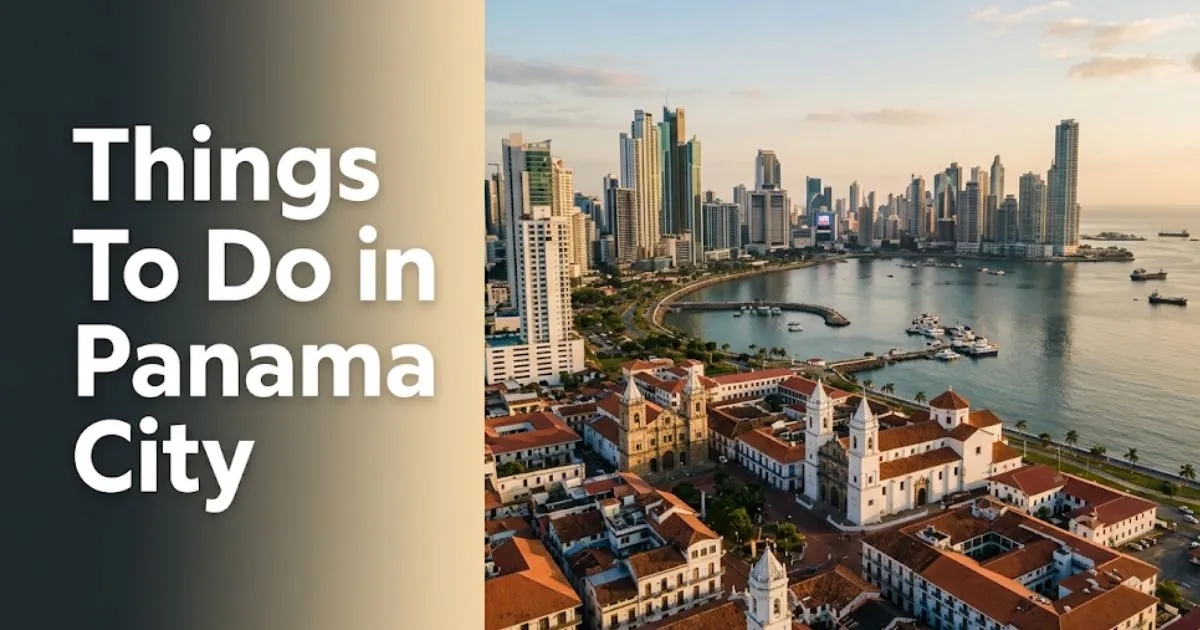
Top Things To Do in Panama City, Panama (2026 Guide)

Panama City, Panama, delivers more genuine depth per square mile than most travelers expect from a Central American capital. The best things to do in Panama City range from watching a 900-foot container ship pass through Miraflores Locks to eating ceviche at Mercado de Mariscos before sunset over the Pacific.
Panama City is home to two UNESCO World Heritage Sites: the Panama Canal Zone and the ruins of Panama Viejo, the oldest continuously inhabited European settlement on the Pacific coast of the Americas. The Panama Tourism Authority (ATP) reports the city received record international visitor numbers in 2024 and 2025.
This guide covers 16 specific areas of the city, from first-timer priorities to local neighborhood knowledge. It includes a 3-day itinerary, honest crowd assessments, and traveler profile guidance for every major experience.
Things To Do in Panama City: What Makes This Destination Worth Your Time
Panama City offers an experience that most visitors don’t fully grasp until they arrive. It’s the only city on Earth where you can watch intercontinental trade happen live from a restaurant terrace.
The city sits at the Pacific entrance of the Panama Canal. Its skyline looks like a miniature Miami behind colonial ruins that predate the United States.
Most travelers come for the canal. They leave fascinated by the food, the neighborhoods, and the urban wildlife an Uber ride from their hotel.
The city also runs on US dollars, requires no currency exchange, and has direct flights from over 20 North American cities through Tocumen International Airport (PTY). That practical frictionlessness is underappreciated.
Insider Tip:
- Panama City is frequently confused with Panama City Beach, Florida, in US search results. They are entirely different places.
- Panama City, Panama rewards three to five days. One day at the canal, one in Casco Viejo, one in the neighborhoods, and one for a day trip is the minimum honest framework.
- Budget travelers: the city is one of Latin America’s pricier capitals, but free and low-cost options exist in every neighborhood covered below.
Best Things To Do in Panama City for First-Time Visitors
The best first visit to Panama City prioritizes three anchors: Miraflores Locks, Casco Viejo, and Mercado de Mariscos. These three cover engineering, history, and food in a single logical day.
Miraflores gives you the canal’s mechanics. Casco Viejo gives you the historical and social context. Mercado de Mariscos gives you the city’s most honest culinary identity.
Most first-timers make the mistake of trying to add Panama Viejo, Ancon Hill, and the Biomuseo to this same day. The heat alone makes that punishing.
According to the Panama Tourism Authority (ATP), Miraflores Locks is the city’s single most visited attraction. Book the visitor center in advance during December through April, Panama’s dry season peak.
| Activity | Best For | Approx. Cost (USD) | Time Needed | Insider Note |
|---|---|---|---|---|
| Miraflores Locks | All profiles | $15–$25/adult | 2–3 hours | Arrive by 9am for ship queues |
| Casco Viejo walking | Couples, solos | Free to low-cost | Half-day | Outer edges, avoid after dark |
| Mercado de Mariscos | Budget, foodies | $5–$15/person | 1–2 hours | Upstairs restaurant vs. stalls |
| Biomuseo | Families, culture | $22–$28/adult | 2 hours | Closed Mondays; book ahead |
| Panama Viejo | History travelers | $10–$15/adult | 2 hours | Early morning only in dry season |
Seniors and accessibility travelers: Casco Viejo’s cobblestoned streets are genuine obstacles for wheelchairs and mobility aids. The flat Cinta Costera waterfront promenade is a far more accessible alternative for an afternoon stroll.
Panama City Things To Do for First-Time Visitors: Building Your Base
First-timers should orient themselves geographically before building any itinerary. Panama City stretches along the Pacific coast from the old colonial district in the west to the modern financial towers of Punta Pacifica and Costa del Este in the east.
The tourist-facing areas are roughly 12 miles from west to east. Getting between them without a car or Uber takes substantially longer than maps suggest.
Anchor one neighborhood per morning and one per afternoon. Moving across the full city multiple times in tropical heat is the single biggest planning error first-timers make.
Insider Tip:
- The Cinta Costera, Panama City’s 3-mile waterfront promenade, connects Casco Viejo to the modern financial district on foot. It’s flat, breezy, and free.
- Early mornings (before 9am) are the correct time for outdoor walking. By noon in January through April, temperatures regularly exceed 90°F with high humidity.
- Solo travelers: Casco Viejo has a genuinely social hostel scene. Selina Casco Viejo is well-regarded and centrally located within the historic district.
Casco Viejo Things To Do: Panama City’s Historic Heart
Casco Viejo (officially the San Felipe district) is Panama City’s most photogenic and socially alive neighborhood. It holds Spanish colonial architecture, French-era ruins, rooftop bars with canal views, and some of the city’s best restaurants within a 12-block walkable area.
The main plaza, Plaza de la Independencia, sits at the center. Streets radiating from it hold the bulk of restaurants, boutique hotels, galleries, and the Metropolitan Cathedral.
The rooftop bar at Tantalo Hotel is the local favorite for sunset views over the Pacific. It consistently draws both travelers and Panama City residents, which is a reliable signal that it’s genuinely good rather than tourist infrastructure.
The local alternative to the most-photographed Casco Viejo terrace experience: Casa Blanca Hotel’s rooftop, which has a smaller crowd and equally strong views.
Couples will find Casco Viejo the most romantic neighborhood in the city. The combination of colonial architecture, candlelit restaurants, and waterfront proximity is legitimate rather than manufactured.
Families with young children: Casco Viejo’s cobblestones and narrow sidewalks make stroller navigation frustrating. The Plaza Bolivar and Plaza Francia offer flat open spaces where children can move freely.
Seasonal note: Casco Viejo floods briefly during peak rainy season (September to October) in certain low-lying streets. Morning visits during these months avoid the heaviest afternoon rain.
Panama Canal and Miraflores Locks Visit: What to Actually Expect
The Miraflores Locks Visitor Center is Panama City’s most important attraction for first-time visitors. It is also frequently misunderstood: this is not a passive museum. It is a working industrial observation experience.
Watching a Panamax or Neo-Panamax vessel pass through the locks, with only feet of clearance on each side, is a genuinely memorable moment of scale. No photograph fully captures the size difference between the locks walls and the ship.
The visitor center has four floors: a museum covering canal history, an outdoor viewing platform at lock level, a theater with a short documentary, and a restaurant. Allow two to three hours minimum.
According to the Panama Canal Authority (ACP), roughly 13,000 to 14,000 vessels transit the canal annually. Ship traffic runs 24 hours. The viewing platforms are best between 9am and 11am when morning light hits the locks from the east.
Admission runs approximately $15 to $25 per adult depending on package selection; verify current pricing directly with the ACP website before visiting. Children’s rates are typically lower.
Budget travelers: The Miraflores Locks visitor center is worth its admission price. The Miraflores Lake overlook on the road to Gamboa offers a free elevated view of canal traffic, though without the close-proximity drama of the locks themselves.
Seniors and accessibility travelers: The visitor center is fully accessible by elevator. The outdoor observation deck has railing and shade structures. This is one of the most mobility-friendly major attractions in the city.
Key Takeaway: Book Miraflores Locks in advance during dry season (December to April) and arrive before 9am to catch the best light and ship traffic before tour groups peak.
Top Outdoor Activities in Panama City
Panama City offers urban wildlife access that no comparable capital city in the Western Hemisphere matches. Parque Natural Metropolitano is a 655-acre tropical forest within city limits, holding over 200 bird species and populations of white-tailed deer, Geoffrey’s tamarin monkeys, and coatis.
The main trail system includes the Nature Trail, the Mono Titi Trail, and the Cienaga Trail. Total trail distance is manageable in a morning. The park entrance is off Avenida Juan Pablo II.
Ancon Hill, a 654-foot forested hill above the former Canal Zone, offers the city’s best panoramic views. The road to the summit is open to hikers. It passes through original tropical forest.
The Ancon Hill summit view includes the canal, the city skyline, the Pacific, and the Bridge of the Americas simultaneously. This is genuinely one of the best urban viewpoints in Latin America.
Key outdoor activities in Panama City:
- Parque Natural Metropolitano trail hiking (free entry; approximately 2 to 3 hours)
- Ancon Hill summit walk (free; approximately 1.5 to 2 hours round trip)
- Calzada de Amador cycling along the causeway (bike rentals available; approximately $5 to $10 per hour)
- Panama Bay birdwatching along the Cinta Costera at low tide (free)
- Kayaking around the Amador Causeway islands (rentals approximately $15 to $30 per hour)
Families with children: Parque Natural Metropolitano is excellent for older children who enjoy wildlife spotting. Young children in strollers will struggle on the uneven forest trails.
Seniors: Ancon Hill’s summit road is paved but steep. The Calzada de Amador is flat and breezy, making it the best outdoor option for travelers with limited mobility.
Best Neighborhoods in Panama City, Panama
Panama City’s neighborhoods define radically different versions of the same city. Casco Viejo (San Felipe) is the colonial historic center. El Cangrejo is the city’s urban social hub, with the densest concentration of local restaurants, coffee shops, and nightlife outside the old city.
Marbella sits east of El Cangrejo and holds upscale restaurants, business hotels, and a calmer street environment. Punta Pacifica and Punta Paitilla are the oceanfront financial residential zones, with high-rises, marina views, and the Johns Hopkins Hospital Panama nearby.
Balboa is the former Canal Zone neighborhood, now part of Panama City, with wide tree-lined streets, the Balboa Yacht Club, and a distinctly different architectural character from the rest of the city.
The local alternative to spending all time in Casco Viejo: El Cangrejo around Calle Uruguay. This block concentrates the city’s best independent restaurants, a working local bar scene, and almost no tourist infrastructure.
| Neighborhood | Best For | Vibe | Walkability | Safety Note |
|---|---|---|---|---|
| Casco Viejo | Couples, first-timers | Historic, romantic | High (inner district) | Avoid outer edges at night |
| El Cangrejo | Solos, foodies | Urban, local | High | Generally safe |
| Marbella | Business travelers | Quiet, upscale | Moderate | Very safe |
| Punta Pacifica | Families, seniors | Residential, modern | Low | Very safe |
| Balboa | History enthusiasts | Quiet, tree-lined | Moderate | Very safe |
| Calzada de Amador | Families, cyclists | Casual, breezy | High | Very safe |
Solo travelers: El Cangrejo is the best neighborhood base for solo travelers who want to walk to restaurants and bars without requiring Uber every time.
Key Takeaway: Anchor your accommodation in Casco Viejo for atmosphere or El Cangrejo for local access. Moving between them costs approximately $4 to $7 by Uber.
Best Restaurants and Food Scene in Panama City
Panama City’s food scene is one of the most underreported stories in Latin American travel. The city has direct cultural connections to over 100 countries through canal trade history, producing a culinary range that includes serious Peruvian ceviche, Japanese-Panamanian fusion, and some of the best Spanish colonial-influenced cooking in the region.
Mercado de Mariscos on the Cinta Costera is the city’s most essential food experience. The ground floor is a working fish market. The second-floor restaurant serves ceviche, corvina, and shrimp dishes with Pacific bay views for approximately $8 to $20 per person.
The tourist-facing option for ceviche at Mercado de Mariscos is the second-floor restaurant. The local approach is to order from the stalls on the ground floor and eat standing. Both are legitimate; the stalls are cheaper and faster.
Top named restaurants to know:
- Maito (El Cangrejo area): James Beard-recognized chef Mario Castrellón’s flagship; Panamanian ingredients elevated to fine dining; reservations essential
- Donde Jose (Casco Viejo): Panamanian tasting menu in a 6-seat setting; considered the city’s most intimate dining experience; book 2 to 4 weeks ahead
- Tantalo (Casco Viejo): rooftop bar and kitchen; strong local cocktail program; no reservation required for bar
- La Rana Dorada (El Cangrejo): Panama’s best-known craft brewery; casual, local, affordable; no reservation needed
- Super Gourmet (El Cangrejo): daytime deli and cafe; local workers’ lunch spot; excellent sandwiches under $8
Budget travelers: Ceviche at Mercado de Mariscos, lunch at Super Gourmet, and dinner at La Rana Dorada can fill a full food day for approximately $20 to $30 per person total.
Couples: Donde Jose is one of the most genuinely special dining experiences in Central America for couples. The 6-seat format makes it feel private.
Things To Do in Panama City at Night
Panama City’s nightlife is concentrated in three areas: Casco Viejo, El Cangrejo, and Via Brasil. Each offers a different energy level and crowd.
Casco Viejo is the most atmospheric for evenings: rooftop bars, the lit-up colonial facades, and walkable restaurant clusters make it the best all-around evening neighborhood. Tantalo Hotel rooftop, Relic Bar, and Barlovento are the most consistent spots.
El Cangrejo around Calle Uruguay (locally called “Calle Lounge”) holds Panama City’s most concentrated bar strip. This is where young professionals gather from Thursday through Saturday. The bars open late by North American standards, typically from 9pm to 4am.
Via Brasil in Obarrio is the city’s late-night club district. The energy is significantly higher and the hours later than Casco Viejo. This is not a neighborhood for early-to-bed travelers.
Solo travelers find El Cangrejo the most approachable evening zone. The bar density and walkability mean there’s no need to plan ahead.
Couples should anchor their evening in Casco Viejo, ending at the Tantalo rooftop around 9pm after dinner.
Safety note for evening activities: Avoid walking between Casco Viejo and the El Chorrillo neighborhood at any hour. Take Uber even for short distances at night. Uber is consistently available and inexpensive throughout the city.
Fun Things To Do in Panama City With Kids
Panama City with children works best when activities are front-loaded in the cool morning hours. The Biomuseo is the city’s strongest family attraction: designed by Frank Gehry and built around Panama’s role as a land bridge between North and South American ecosystems.
The Biomuseo holds eight permanent exhibition galleries. The exhibits are genuinely interactive and the content is accessible for children over age seven. Admission runs approximately $22 to $28 for adults; children’s rates are lower. It is closed on Mondays; verify hours before visiting.
Parque Natural Metropolitano genuinely delivers wildlife for children who can manage a 1 to 2-mile trail. Tamarin monkey sightings are common in the morning. The visitor center has bilingual trail maps.
Family-friendly activities in Panama City:
- Biomuseo (Amador Causeway area): interactive natural history exhibits; closed Mondays
- Calzada de Amador cycling: flat, safe, breezy; bike and tandem rentals for families
- Miraflores Locks observation: children are consistently captivated by the massive ships
- Summit Animal Park: approximately 45 minutes from the city center; focuses on native Panamanian wildlife including harpy eagles
- Albrook Mall area: Panama’s largest shopping center; air-conditioned respite with a food court and cinema
Families with very young children (under age 5): Heat management is the primary challenge. Plan outdoor activities before 10am. The Biomuseo is air-conditioned and genuinely works for toddlers.
Key Takeaway: For families, the Biomuseo plus Calzada de Amador cycling covers a full day efficiently, combining education, outdoor activity, and shade in one geographic zone.
Day Trips From Panama City, Panama
Panama City is a legitimate day-trip hub. The San Blas Islands (Comarca Guna Yala) are the most-requested day trip: clear Caribbean water, Guna Indigenous culture, and island settings that look like a travel photographer’s set. Small planes depart from Albrook Airport (PAC) in roughly 25 to 40 minutes; boats take 2 to 3 hours from road’s end.
Gamboa and Soberania National Park is the most underappreciated day trip from the city. Gamboa sits 45 minutes north of Panama City on the canal. The Pipeline Road there is one of the world’s top birding destinations, with over 500 recorded species. The Gamboa Rainforest Resort offers aerial tram rides over the forest canopy.
Colon and the Caribbean coast is a practical canal history day trip. The Atlantic entrance of the canal at the Agua Clara Locks shows the canal’s newer, wider locks (opened 2016) that handle the largest modern cargo vessels.
Day trip options from Panama City:
| Destination | Travel Time | Cost Range (approx.) | Best For | Advance Booking |
|---|---|---|---|---|
| San Blas Islands | 25–40 min (plane) | $150–$250/person | Couples, adventure | Yes, 1–2 weeks ahead |
| Gamboa/Soberania | 45 min (car/tour) | $50–$100/person | Eco-travelers, families | Optional |
| Agua Clara Locks (Colon) | 1 hour (car/tour) | $40–$80/person | Canal history fans | No |
| El Valle de Anton | 2.5 hours (car) | $50–$120/person | Nature, couples | No |
| Portobelo | 2 hours (car/tour) | $40–$90/person | History travelers | No |
Solo travelers: San Blas organized day tours are the easiest solo option since transport, guide, and meals are typically included.
Seniors: Gamboa is the most accessible day trip with paved roads, flat boardwalk sections, and the aerial tram as a seated wildlife experience.
How To Get Around Panama City
Getting around Panama City is easier than most Latin American capitals for one specific reason: Uber operates reliably, safely, and cheaply throughout the city. A standard Uber from Casco Viejo to El Cangrejo costs approximately $4 to $8. From Casco Viejo to Miraflores Locks, budget approximately $10 to $15.
Metro de Panama (the city’s subway) has two operational lines as of 2026. Line 1 runs north-south from Albrook to San Isidro. Line 2 runs to the eastern suburbs. Neither line directly serves Casco Viejo or Miraflores Locks for tourists.
The Metrobus system covers broader ground but requires a top-up card (Mi Bus card) available at stations. For most tourists, the combination of walking within neighborhoods and Uber between them is the practical standard.
Taxis exist and are cheaper than Uber in theory. In practice, the absence of meters and the need to negotiate fares before boarding makes them less predictable for non-Spanish speakers. Uber removes that friction entirely.
How to get from Tocumen International Airport (PTY) to the city center:
- Exit arrivals and go to the official taxi counter (safer and fixed-fare)
- Fixed taxi fare from PTY to Casco Viejo runs approximately $25 to $35
- Fixed taxi fare to El Cangrejo runs approximately $20 to $30
- Uber is available from PTY; confirm the pickup zone with the driver via app
- Journey time varies from 25 to 50 minutes depending on traffic
Budget travelers: The Mi Bus card and metro are the cheapest transit options. A single metro ride costs under $1.
Seniors and accessibility travelers: Uber is the most practical choice. The metro stations have elevators, but coverage of tourist areas is limited.
Best Time To Visit Panama City, Panama
The best time to visit Panama City, Panama, is December through April, which is the dry season. These months bring low humidity, almost no rain, and consistent temperatures around 85 to 90°F. The canal views are clear, outdoor activities are comfortable in the mornings, and the festival calendar is active.
January through March is peak season. Hotels fill up and prices rise. Booking accommodation two to three months ahead is standard for this window.
May through November is the rainy season. Rain typically arrives in heavy afternoon bursts rather than all-day downpours. Morning activities remain fully viable. The city is noticeably less crowded and hotel rates are lower.
According to the Panama Tourism Authority (ATP), the dry season draws the highest international visitor numbers. Shoulder months (April and November) offer a practical compromise: drier than peak wet season with lower prices than the December to March peak.
Seasonal planning context:
| Month | Weather | Crowds | Price Level | Best For |
|---|---|---|---|---|
| Dec–Jan | Dry, 85°F | High | Higher | First-time visitors |
| Feb–Mar | Dry, 87°F | Peak | Peak | Canal events, festivals |
| April | Transitional | Moderate | Moderate | Shoulder value |
| May–Jun | Rainy afternoons | Low | Lower | Budget travelers, eco-tours |
| Jul–Oct | Rainy, humid | Lowest | Lowest | Budget, birding, lush scenery |
| November | Improving | Low | Lower | Good shoulder value |
Families: December through February offers the most comfortable conditions for children managing tropical heat.
Budget travelers: June through October offers the city’s lowest hotel rates with still-viable morning activity windows.
Key Takeaway: December through March delivers the best weather and the highest prices. May through October delivers the lowest prices and afternoon rain that rarely derails a well-planned morning itinerary.
Is Panama City, Panama Safe for Tourists?
Panama City is broadly safe for tourists who stay within the established visitor zones. The neighborhoods of Casco Viejo (inner district), El Cangrejo, Marbella, Punta Pacifica, Balboa, and the Calzada de Amador are consistently safe during the day and in the evening for aware travelers.
The specific areas where risk increases: El Chorrillo (directly adjacent to Casco Viejo’s west side), Curundu, and the outer edges of Santa Ana. These neighborhoods border tourist areas and should be avoided by visitors, particularly at night.
The US State Department maintains a Panama travel advisory. As of 2025, Panama has a Level 1 or Level 2 advisory depending on specific regions within the country. Verify the current advisory level at travel.state.gov before departure.
Practical safety guidance for Panama City:
- Use Uber over street taxis for predictability and a digital record of every ride
- Do not walk between Casco Viejo and El Chorrillo at any time
- Keep phones and cameras less visible in crowded markets (Mercado de Mariscos, Panama Viejo)
- ATMs inside bank lobbies and hotel lobbies are safer than street-facing ATMs
- Panama City uses US dollars. No currency exchange needed. Keep smaller bills for street food and markets.
- The Policia de Turismo (Tourist Police) patrols Casco Viejo and can be approached for assistance
Solo travelers, especially solo women: Casco Viejo and El Cangrejo are the safest evening environments. Traveling alone in these areas via Uber is standard practice and not a safety concern.
Seniors: The main tourist zones have adequate street lighting and consistent police presence. The flat Cinta Costera promenade is safe for morning walks.
Panama City 3-Day Weekend Itinerary
Three days is enough time to cover Panama City’s essential experiences without rushing. The key is anchoring each morning near one geographic area and not crossing the city unnecessarily in afternoon heat.
Day 1: Miraflores Locks, Biomuseo, Calzada de Amador
- Depart hotel by 8am. Arrive Miraflores Locks Visitor Center by 8:30am before peak tour groups
- Spend 2 to 3 hours at Miraflores: museum floors, outdoor observation deck, morning ship traffic
- Uber to Biomuseo on the Amador Causeway (10 minutes). Spend 2 hours in the galleries
- Walk or rent a bike along the Calzada de Amador after the Biomuseo. Stop at Naos Island for bay views
- Return to hotel by 3pm. Rest during peak afternoon heat
- Evening in Casco Viejo: dinner at Donde Jose (book ahead) or Tantalo rooftop
Day 2: Casco Viejo, Cinta Costera, Mercado de Mariscos
- Morning walk through Casco Viejo’s inner district: Plaza de la Independencia, Metropolitan Cathedral, Plaza Bolivar
- Walk the Cinta Costera waterfront promenade eastward toward the modern financial district
- Lunch at Mercado de Mariscos: second-floor ceviche and corvina with Pacific views
- Afternoon visit to Panama Viejo archaeological site (15-minute Uber from Mercado de Mariscos)
- Return to hotel by 4pm
- Evening in El Cangrejo: Maito for dinner (reserve ahead); La Rana Dorada for craft beer after
Day 3: Ancon Hill, Parque Natural Metropolitano, Day Trip Option
- Start Ancon Hill walk by 7am. Summit reached in approximately 45 minutes. Views of canal, city, and Pacific
- Return to base by 9:30am. Breakfast in El Cangrejo neighborhood
- Optional: Parque Natural Metropolitano for 2-hour wildlife trail morning walk
- Afternoon: free time in El Cangrejo. Coffee at local cafes. Shopping at Multiplaza Pacific if needed
- Evening: farewell dinner in Casco Viejo
Budget note: Days 1 and 2 carry the highest costs (Miraflores admission, Biomuseo admission, sit-down dinners). Day 3 is almost entirely free or low-cost.
Budget Travel Tips for Panama City, Panama
Panama City is not a budget backpacker capital in the way that Guatemala City or Medellin might be. However, it is significantly more affordable than comparable US cities, and strategic planning allows travelers to experience the best of the city without premium spend.
Free and low-cost experiences in Panama City:
- Ancon Hill summit walk: free
- Cinta Costera waterfront promenade: free
- Calzada de Amador walking (cycling costs approximately $5 to $10/hour for rentals)
- Parque Natural Metropolitano entry: typically low-cost; verify current fee
- Panama Viejo exterior grounds: the ruins are viewable from the perimeter at no cost; the interior museum requires admission approximately $10 to $15
- Casco Viejo neighborhood walking: free; no entrance fee to walk the district
Where to save without sacrificing quality:
- Mercado de Mariscos ground floor stalls vs. the second-floor restaurant: same fish, lower prices
- La Rana Dorada craft beer vs. hotel bar prices: approximately 50% savings per round
- Metro plus walking vs. Uber for short distances in El Cangrejo
Where the budget version genuinely underdelivers:
- Skipping Miraflores Locks to save $15 to $25 is a poor trade. This is the city’s essential experience.
- Skipping Biomuseo to save $22 to $28 costs you the city’s best rainy-day option and most engaging natural history content.
Budget accommodation: Casco Viejo holds several well-reviewed budget to mid-range hostels. Selina Casco Viejo is the most established option for solo travelers and budget-conscious couples.
Solo travelers: Budget approximately $80 to $120 per day including a private hostel room, Uber use, one sit-down meal, and one street food or market meal. Lower is achievable with dorm accommodation and full street food reliance.
Safety and Practical Warnings for Panama City
Panama City’s primary practical risk for visitors is not crime but heat management. Temperatures during dry season regularly reach 90°F with high humidity, and sun exposure during midday outdoor sightseeing is a genuine physical risk.
Key safety and practical facts every visitor should know:
- Heat risk: Schedule all outdoor activities before 10:30am or after 4pm. Midday sun at Panama City’s latitude (9°N) is intense even in cooler months.
- Neighborhood boundaries: El Chorrillo and Curundu directly border tourist areas. The visible transition from Casco Viejo’s main tourist zone to these neighborhoods can happen within one or two blocks. Do not wander without orientation.
- Petty theft: Mercado de Mariscos and Panama Viejo archaeological site have higher pickpocket risk in crowds. Keep bags front-facing and phones secured.
- Rain season flash flooding: Low streets in Casco Viejo and Santa Ana can flood quickly during heavy September to October rains. This passes within 30 to 60 minutes but affects mobility.
- Medical infrastructure: Panama City has strong medical infrastructure relative to the region. Johns Hopkins Hospital Panama in Punta Pacifica is the highest-regarded private facility. Travel insurance that covers medical evacuation is still advisable.
- Tap water: Officially safe to drink in Panama City. Bottled water remains the practical standard for most visitors.
- Sun protection: SPF 50 sunscreen, a hat, and UV-blocking sunglasses are non-negotiable for outdoor activities.
The Tourist Police (Policia de Turismo) are present throughout Casco Viejo and can be approached for assistance in Spanish or basic English.
Frequently Asked Questions About Things To Do in Panama City
What are the top things to do in Panama City, Panama?
The top things to do in Panama City include visiting the Miraflores Locks at the Panama Canal, exploring the Casco Viejo historic district, and eating ceviche at Mercado de Mariscos.
The Biomuseo, Ancon Hill, and Parque Natural Metropolitano round out a strong three to five day itinerary.
For travelers with extra days, a San Blas Islands day trip or Gamboa rainforest excursion adds significant variety.
Is Panama City, Panama safe for tourists in 2026?
Panama City is broadly safe for tourists within the established visitor neighborhoods: Casco Viejo’s inner district, El Cangrejo, Marbella, Punta Pacifica, and the Calzada de Amador.
Avoid El Chorrillo, Curundu, and the outer edges of Santa Ana at all hours.
Check the current US State Department Panama travel advisory at travel.state.gov before your departure.
How many days do you need in Panama City, Panama?
Three days is the practical minimum to cover Panama City’s essential attractions without rushing.
Five days allows for a day trip (San Blas Islands or Gamboa), fuller neighborhood exploration, and a more relaxed pace.
One or two days is only sufficient if you have a very specific itinerary and accept skipping either the canal, Casco Viejo, or the natural areas.
What is the best time of year to visit Panama City, Panama?
The best time to visit Panama City is December through April, during the dry season.
These months offer low humidity, clear skies, and the most comfortable conditions for outdoor activities and sightseeing.
May through November brings afternoon rain but significantly lower hotel prices and smaller crowds; morning activities remain viable throughout this period.
How do you get around Panama City, Panama?
Uber is the most practical way to get around Panama City for most tourists. It’s reliable, inexpensive, and removes the need to negotiate fares.
The Metro de Panama’s two lines serve primarily residential and business commuter routes and do not directly reach Casco Viejo or Miraflores Locks.
Walking is viable within individual neighborhoods like Casco Viejo and El Cangrejo; Uber is the best option for moving between neighborhoods.
What should I eat in Panama City, Panama?
Ceviche and corvina (sea bass) at Mercado de Mariscos are the city’s most essential food experience. Order from the ground-floor stalls for the most affordable version.
Maito restaurant in El Cangrejo offers Panamanian cuisine at its finest: chef Mario Castrellón uses native ingredients in a James Beard-recognized format.
For budget eating, La Rana Dorada for craft beer and casual food, and Super Gourmet for daytime sandwiches, both in El Cangrejo, are local favorites under $15 per person.
Plan Your Trip to Panama City with Confidence
Panama City rewards travelers who plan with geographic logic: anchor mornings near one area, let afternoons recover from the heat, and use Uber to connect the dots efficiently. Book Miraflores Locks and Donde Jose in advance. Everything else can be arranged day by day.
The first thing to do before departure: verify current admission prices, operating hours, and tour availability directly with the Panama Tourism Authority (ATP) at visitpanama.com and with the Panama Canal Authority at pancanal.com. Hours, fees, and tour schedules change and this article’s guidance should be treated as a planning framework rather than a definitive current-conditions source.
Panama City is one of the Americas’ most genuinely satisfying short-trip destinations. You now have everything needed to build a specific, realistic itinerary.