Top Things To Do in Madrid, Spain: 2026 Travel Guide

Madrid rewards travelers who give it time. The Spanish capital packs more genuine things to do in Madrid, Spain into a walkable city center than almost any other European destination of comparable size.
The city holds three of Europe’s most significant art museums within a ten-minute walk of each other. According to Madrid Destino, the city’s official tourism body, Madrid receives over ten million international visitors annually, yet its best neighborhoods remain authentically local.
This guide covers the top attractions, honest neighborhood assessments, local food culture, practical logistics, and a 2-day itinerary framework. It’s built for US travelers planning 3 to 6 days in the city in 2026.
Things To Do in Madrid, Spain: Why This City Earns Your Time
Madrid, Spain offers a rare combination of top-tier art, genuinely excellent food, and a city culture that operates at its own unhurried pace.
Unlike tourist-saturated Barcelona, Madrid’s most authentic neighborhoods remain places where locals actually live, eat, and gather. The contrast is significant and useful for planning.
The city sits at 646 meters above sea level on the central Castilian plateau. That elevation means crisp winters and brutally hot summers, two facts that directly affect how you plan your activities.
Madrid’s nightlife starts where most cities’ evenings end. Dinner before 9 PM marks you immediately as a tourist. Embrace the schedule or you’ll miss the city’s best version of itself.
Insider Tip:
- Book museum tickets online before you leave home, especially for the Prado and Reina Sofia
- Arrive at El Rastro flea market before 10 AM on Sundays for the best browsing
- For solo travelers, the tapas bar format is Madrid’s most social dining structure: you eat standing at the bar and conversations happen naturally
Best Things To Do in Madrid: The Core Experience Framework
The best things to do in Madrid cluster naturally into three zones: the Paseo del Arte museum corridor, the historic center around Plaza Mayor and La Latina, and the barrio circuit through Malasaña, Chueca, and Lavapiés.
Most visitors try to scatter randomly between all three on the same day. That approach produces long Metro rides, decision fatigue, and a superficial experience everywhere.
The smarter framework organizes days by zone. Spend a morning on the Paseo del Arte corridor, an afternoon in La Latina, and an evening wherever the neighborhood energy takes you.
| Activity Category | Best For | Cost Range | Time Needed | Insider Note |
|---|---|---|---|---|
| Museo del Prado | Culture travelers, couples | Free some evenings / ~€15 daytime | 3 to 4 hours minimum | Monday is least crowded |
| El Rastro Sunday market | Budget travelers, solo | Free to browse | 2 to 3 hours | Arrive before 10 AM |
| Tapas crawl La Latina | All profiles | €15 to €30 per person | 2 to 3 hours | Start at Calle Cava Baja |
| Retiro Park boat rental | Families, couples | Under €10 per boat | 1 to 2 hours | Busiest Saturday afternoons |
| Corral de la Morería flamenco | Couples, adults | €45 to €90 per person | 2 hours | Book 48 hours in advance |
| Templo de Debod sunset | Solo, couples | Free | 45 minutes | Arrive 30 minutes before sunset |
Madrid Museums and Art Galleries: The Golden Triangle
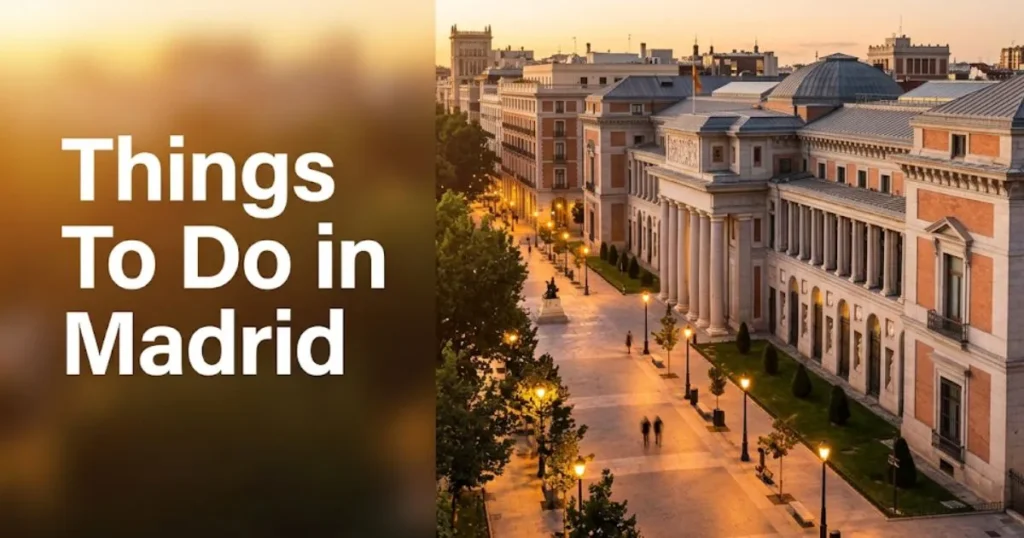
The Museo del Prado is Madrid’s defining cultural institution and one of the world’s great painting collections. Velázquez, Goya, El Greco, and Rubens anchor a permanent collection that requires multiple visits to properly absorb.
The Prado is free to enter Monday through Saturday from 6 PM to 8 PM and Sunday from 5 PM to 7 PM, though hours change seasonally. Verify the current schedule through the museum’s official website before visiting.
The Museo Nacional Centro de Arte Reina Sofia houses Picasso’s Guernica, arguably the most politically significant painting of the 20th century. The building itself, a converted 18th-century hospital, adds architectural context.
The Museo Nacional Thyssen-Bornemisza fills the conceptual gap between the Prado and Reina Sofia. It covers Impressionism, Expressionism, and early American painting, completing a sweep of Western art history across three adjacent buildings.
The most common mistake: Attempting all three museums in one day. The Prado alone justifies a full morning. Space these across two days minimum.
Insider Tip:
- For budget travelers: all three museums have free or reduced-price evening windows. Plan your visit specifically around these hours.
- CaixaForum Madrid, just off the Paseo del Prado, offers excellent rotating contemporary exhibitions at lower admission prices than the main three museums. Locals rate it highly for modern art shows.
- Seniors and accessibility travelers: all three major museums have full wheelchair access and elevator service. The Prado specifically provides dedicated accessibility entrances.
According to TURESPAÑA, Spain’s national tourism board, the Prado Museum is the most visited attraction in the country. Book timed-entry tickets online at least three to five days in advance during peak season (March through May, September through October).
Madrid Neighborhoods to Explore: Beyond the Tourist Center
Madrid’s best neighborhoods for visitors are La Latina, Malasaña, Chueca, and Lavapiés. Each has a genuinely distinct character.
La Latina is the oldest-feeling neighborhood in the city center. Calle de la Cava Baja runs through its heart. This street concentrates some of Madrid’s best traditional tapas bars within a four-block stretch.
Malasaña was the epicenter of the La Movida Madrileña cultural movement of the 1970s and 1980s. Today it hosts independent bookshops, vintage clothing stores, and some of the city’s best cocktail bars on Calle del Pez and Plaza del Dos de Mayo.
Chueca is Madrid’s LGBTQ+ neighborhood. It’s welcoming to all travelers. The streets around Calle de Fuencarral and Plaza de Chueca offer excellent café culture and independent shopping.
Lavapiés is Madrid’s most multicultural neighborhood. It hosts significant South Asian, North African, and Latin American communities. The street food scene here reflects that diversity genuinely.
For solo travelers: Malasaña is the best neighborhood for meeting people. Bar culture here encourages conversation in a way that more tourist-oriented areas do not.
For families: La Latina on a Sunday morning, before the tapas bars fill up, is extremely walkable with children. Plaza de la Cebada has open space and a relaxed pace.
Madrid Food, Tapas, and Markets: Where to Actually Eat
Madrid’s food culture is one of the strongest reasons to visit, but navigating it requires knowing which experiences are genuine and which are tourist infrastructure.
Mercado de San Miguel, near Plaza Mayor, is Madrid’s most photographed covered market. It’s excellent for a quick stand-up snack or wine with pintxos. It is not, however, where locals shop for groceries or eat their primary meals.
For a more authentic market experience, Mercado de Antón Martín in the Huertas neighborhood operates as a genuine neighborhood food market with a small collection of local food stalls. Prices are lower and the crowd is almost entirely local.
Calle de la Cava Baja in La Latina is the right starting point for a tapas crawl. Taberna El Tempranillo on this street has an excellent wine-by-the-glass program focused on Spanish regional wines. La Bola taberna near the Royal Palace is one of the oldest traditional restaurants in the city, specifically known for its cocido madrileño (Madrid-style chickpea stew).
Sobrino de Botín on Calle de los Cuchilleros is certified by Guinness World Records as the world’s oldest continuously operating restaurant, founded in 1725. It’s worth one visit for that history alone. However, it is heavily tourist-oriented today. The roast suckling pig (cochinillo) and lamb (cordero asado) remain genuinely good.
For budget travelers: A bocadillo de calamares (fried squid sandwich) from any bar around Plaza Mayor costs approximately €3 to €4 and is one of Madrid’s most authentic cheap eats.
Insider Tip:
- Vermouth hour (vermut) runs from roughly noon to 2 PM on Sundays. Bodega La Ardosa in Malasaña is where locals go for vermouth and house-made potato salad.
- Churros con chocolate at San Ginés café near Puerta del Sol is genuinely worth it, especially after midnight when the line disappears and the atmosphere is most local.
Retiro Park and Madrid’s Outdoor Spaces
Parque del Buen Retiro is Madrid’s answer to Central Park, but more formal, with a large boating lake, rose gardens, and the glass-and-iron Palacio de Cristal hosting rotating art exhibitions from the Reina Sofia’s collection.
The park covers approximately 350 acres in central Madrid. Rowing boats are available for hire on the Estanque Grande (large lake) at modest cost. Verify current rental rates on-site.
The Jardines de Sabatini, alongside the Royal Palace, offer a more formal French-style garden experience. Entry is free. The views back toward the palace are among the best in the city.
Templo de Debod is a genuine ancient Egyptian temple relocated to Madrid in the 1960s. The park surrounding it faces west. It provides one of Madrid’s best sunset viewpoints over the Casa de Campo and the Sierra de Guadarrama mountains in the distance.
For families: Retiro Park is the best family-oriented outdoor space in the city. The puppet theater on Sunday mornings (free) draws local families and is genuinely entertaining for children under 12.
For seniors and accessibility travelers: Retiro’s main paths are paved and flat. Wheelchair access throughout the main areas is good. Avoid the park’s outer unpaved paths, which have uneven terrain.
Seasonal note: Retiro in late April and May is spectacular. The rose garden at its peak bloom draws visitors but remains uncrowded on weekday mornings. July and August afternoons in the park can be dangerous in extreme heat. Visit early morning or after 7 PM during summer months.
Key Takeaway: Book Prado, Reina Sofia, and Royal Palace tickets online before leaving home. Long queues without tickets are genuinely time-wasting during peak months.
Madrid Flamenco and Nightlife: What’s Genuine and What Isn’t
Flamenco in Madrid is not indigenous the way it is in Seville or Granada. Madrid is instead the city where the best flamenco artists from across Spain come to perform at the highest professional level.
Corral de la Morería on Calle de la Morería in La Latina is Madrid’s most prestigious flamenco tablao. Performances here are professional, the space is intimate, and the quality is consistently high. Prices typically run approximately €45 to €90 per person including one drink.
Casa Patas in the Huertas neighborhood offers a slightly less formal, more affordable tablao experience. Local flamenco students and serious enthusiasts rate it for authenticity over spectacle.
The tourist flamenco shows near Puerta del Sol and Gran Vía are worth avoiding. They prioritize volume and theatrical production over the genuine art form.
For couples: Corral de la Morería is Madrid’s most genuinely romantic evening. The combination of intimate seating, professional performance, and Spanish wine makes it one of the city’s best date experiences.
For solo travelers: Casa Patas is more casual. You can book a single seat without the show-dinner combo. The bar culture before the show starts is entirely social.
Madrid’s general nightlife starts late. Bars in Malasaña and Chueca fill from midnight. Most clubs around Calle de la Princesa and the Alonso Martínez area don’t reach full energy until 2 AM.
Insider Tip:
- For nightlife that locals actually use: the area around Plaza de Olavide in the Chamberí neighborhood offers excellent bars with almost zero tourist presence
- Book flamenco at Corral de la Morería at least 48 to 72 hours in advance during spring and fall
Madrid Royal Palace and Historic Sites
Palacio Real de Madrid is the largest royal palace by floor area in all of Europe, with over 3,400 rooms (though a smaller portion is open to visitors). The official residence of the Spanish royal family is used only for state functions today.
The palace sits at the western edge of the historic center. Entry runs approximately €12 to €15 per adult, with free entry on certain afternoons. Verify current free-entry schedules with the palace’s official ticketing site before visiting.
Plaza Mayor is the formal heart of historic Madrid. It dates to the 16th century. The square itself is architecturally impressive, but the cafés and restaurants lining it charge significantly inflated tourist prices.
The honest local alternative to Plaza Mayor café culture is one block south at Plaza de la Cebada or two blocks west at Plaza de la Puerta de Moros. Both serve the same coffee at local prices to actual residents.
Puerta del Sol is Madrid’s zero-point marker, the official center of Spain’s road network. It’s a major pedestrian hub but not a destination in itself. The “La Osa y el Madroño” bear statue is the primary photo opportunity.
For families: Palacio Real has audioguide options suitable for children over 10. The sheer scale of the rooms and the armor collection typically hold children’s attention well.
According to Turismo Madrid, the Community of Madrid’s tourism board, the Royal Palace grounds including the Jardines de Sabatini and Campo del Moro gardens are separately managed. Check current opening schedules for the gardens, which differ from palace ticketing.
Free Things To Do in Madrid
Madrid offers a genuinely strong free activity circuit for budget-conscious travelers.
- Parque del Buen Retiro: Free entry, free puppet shows Sunday mornings, free access to Palacio de Cristal exhibitions
- Templo de Debod: Free entry to the park; small fee for the temple interior, verify before visiting
- Jardines de Sabatini: Free, adjacent to the Royal Palace
- Gran Vía architecture walk: Free; the early 20th-century buildings along this boulevard are architecturally significant without entering any attraction
- Mercado de Antón Martín: Free to browse; food and drink at local market prices
- El Rastro Sunday flea market: Free to browse; runs along Calle de la Ribera de Curtidores every Sunday morning
- Museo del Prado free hours: Free Monday through Saturday 6 to 8 PM and Sunday 5 to 7 PM (verify current schedule before visiting)
- Reina Sofia free hours: Free Monday and Wednesday through Saturday 7 to 9 PM and Sunday 1:30 to 7 PM (verify current schedule)
- CaixaForum outdoor vertical garden: Free to view; one of the most visually distinctive architectural features in the Paseo del Prado area
- Palacio de Cristal interior: Often free with Reina Sofia ticket; check current status
For budget travelers: A strategically planned free day in Madrid can include morning Retiro Park, midday Mercado de Antón Martín, and an evening free-entry museum session. This requires zero admission spending while covering genuine cultural experiences.
Key Takeaway: Madrid’s free evening museum windows at the Prado and Reina Sofia are genuinely uncrowded compared to peak daytime hours. This is the best-kept logistics secret in the city.
Madrid for Different Traveler Types
Madrid suits most traveler profiles well, but the experience differs significantly depending on who you are.
Solo travelers find Madrid exceptionally safe and naturally social. The tapas bar format, where eating at the bar counter is standard, eliminates the awkwardness of solo restaurant dining that plagues other European cities. The Malasaña neighborhood, specifically the bars around Plaza del Dos de Mayo, is the social center for younger solo visitors.
Couples have access to one of Europe’s most romantic city evening circuits. A flamenco show at Corral de la Morería followed by a late dinner in La Latina is difficult to improve on as a romantic evening. The Retiro Park boating lake is a classic afternoon experience that remains genuinely enjoyable despite its popularity.
Families with children face one genuine logistical challenge: Spanish dining culture. Most restaurants in Madrid do not fill until 9 PM or later. Children’s menus exist but are not universal outside of tourist-area restaurants. The solution is to eat dinner at 7 PM at places near Retiro Park or La Latina, accepting tourist-hour dining rather than fighting the cultural schedule.
Budget travelers find Madrid is one of Western Europe’s most affordable major capitals. Mid-range tapas bars charge €2 to €4 per tapa. A full dinner with wine at a non-tourist-facing restaurant in Malasaña or Lavapiés typically costs €15 to €25 per person.
Seniors and accessibility travelers should note that Madrid’s historic center has cobblestone streets in several areas, including parts of La Latina and around Plaza Mayor. The main Paseo del Prado boulevard and Retiro Park’s primary paths are smooth and flat. The Madrid Metro has elevator access at major hub stations, but not at every station on every line. Verify specific station accessibility before planning transit routes.
Things To Do in Madrid at Night
Madrid’s nocturnal identity is not a cliché. The city genuinely operates on a schedule that begins where other European capitals end.
Dinner at 9 to 10 PM is normal for locals. Bar culture begins seriously around 11 PM. The clubs around Chueca and Lavapiés typically peak between 1 AM and 4 AM. This is not manufactured nightlife infrastructure. It is how the city actually works.
For travelers who want evening culture without the late-night club circuit, the options are excellent:
- Flamenco at Corral de la Morería or Casa Patas: shows typically run 9 PM to 11 PM
- Rooftop bars: The rooftop at the Círculo de Bellas Artes cultural center on Calle de Alcalá offers panoramic city views for approximately €4 admission. It’s one of the best cheap city-view experiences in Madrid.
- Free museum evenings: Prado and Reina Sofia both have free late-afternoon to evening windows (verify current hours before visiting)
- Vermouth and pintxos in Malasaña: Bars around Calle del Pez and Plaza de San Ildefonso start filling around 7 PM with a younger local crowd
For solo travelers: The bar stools at Bodega La Ardosa in Malasaña attract regulars who talk to strangers. It’s the best single low-pressure social spot in the city.
For couples: The rooftop of the Círculo de Bellas Artes at sunset, followed by dinner at 9:30 PM in Chueca, is a Madrid evening that costs well under €60 per person and delivers more atmosphere than most tourist-oriented dinner experiences at three times the price.
Madrid in Different Seasons: When to Visit and When to Wait
The best months to visit Madrid are April through early June and late September through November.
Spring brings temperatures between 15 and 22 Celsius, the San Isidro Festival in May (Madrid’s patron saint celebration, filling the city with free concerts, bullfighting events, and street culture), and the best conditions for walking the neighborhoods and park areas.
Fall delivers cooling temperatures after summer’s heat, the departure of August’s reduced service levels, and a full return of local restaurant and bar culture. October in Madrid is among the best months for art museum visits, as crowds are lower than spring.
July and August are genuinely difficult. Temperatures regularly exceed 38 Celsius. Many locally-owned restaurants and bars close for two to four weeks in August as residents leave the city. The tourist infrastructure remains operational, but the authentic Madrid that makes the city worth visiting is significantly reduced.
Winter (December through February) offers Madrid’s Christmas markets around Plaza Mayor and Puerta del Sol. Prices drop significantly at hotels. Cold temperatures (occasionally near freezing) limit outdoor park and market activity.
For budget travelers: January and February are Madrid’s lowest-priced months for flights and hotels. The city is fully functional and culturally active. Dress for cold weather and the savings are significant.
For families: Spring is the best family season. The San Isidro Festival includes specific children’s programming around Parque de las Vistillas and the Pradera de San Isidro grounds.
Key Takeaway: July and August in Madrid are not just hot — they actively diminish the city’s best quality, which is its authentic local culture. Plan around these months if at all possible.
Madrid Day Trips: The Best Escapes Within Two Hours
Madrid’s geographic position in central Spain makes it one of Europe’s best bases for single-day excursions. Three destinations stand out for genuine quality versus tourist convenience.
Toledo is 70 kilometers south of Madrid and reachable by Renfe high-speed train in approximately 30 minutes from Madrid Atocha station. The medieval walled city holds El Greco’s most significant works in situ, a Gothic cathedral, and a Jewish quarter that survived the expulsion of 1492. Allow a full day.
Segovia is 90 kilometers northwest of Madrid. The Roman aqueduct running through the city center is one of the best-preserved in the world, built without mortar. The Alcázar castle inspired Walt Disney’s Cinderella castle design (according to numerous architectural historians, though the claim is not officially confirmed). Segovia is also the origin city for cochinillo asado. Allow six to seven hours.
El Escorial is approximately 50 kilometers northwest of Madrid. Felipe II’s 16th-century royal monastery-palace complex is a UNESCO World Heritage Site. It’s architecturally austere by design but historically significant for anyone interested in Spanish imperial history.
Aranjuez, 47 kilometers south of Madrid, offers a Baroque royal palace with extraordinary gardens and a small town with some of the region’s best strawberries and asparagus. The Tren de la Fresa (Strawberry Train) seasonal excursion from Madrid is a tourist-oriented but genuinely enjoyable option in spring.
For families: Segovia is the strongest day trip with children. The aqueduct is visually dramatic enough to capture young attention. The Alcázar towers offer the castle experience that young children respond to.
For budget travelers: The Cercanías regional rail makes Toledo and Segovia accessible at very low cost compared to organized tour pricing. Book directly through Renfe’s official ticketing system.
Getting Around Madrid: Practical Transit Guide
Madrid’s transit system is one of Europe’s most practical for visitors. The Madrid Metro serves all major attractions and neighborhoods with 12 lines and over 300 stations.
Line 8 (pink line) connects Adolfo Suárez Madrid-Barajas Airport (MAD) to Nuevos Ministerios in approximately 25 minutes. From Nuevos Ministerios, connections to the city center at Sol, Gran Via, and Atocha are straightforward.
To get from the airport to the city center by Metro:
- Follow signs from any MAD terminal to Metro Line 8 (pink)
- Purchase a 10-trip Metrobus card or tourist travel pass at the station ticket machines
- Ride Line 8 to Nuevos Ministerios (end of airport segment; supplement ticket required for this stretch — approximately €3 extra; verify current pricing)
- Transfer to Lines 6 or 10 toward Sol or Atocha depending on your accommodation location
- Allow 40 minutes total door-to-door from the terminal to central Madrid
Taxis from MAD to the city center run approximately €30 fixed rate by law (verify this rate is still in effect before departure). Ride-share services also operate from the airport.
For seniors and accessibility travelers: The EMT (Empresa Municipal de Transportes) bus system is more accessible than the Metro for travelers with mobility needs. Bus route 101 connects the airport to the city center at significantly lower cost than taxis.
Walking: Most of Madrid’s central attractions are within a 20 to 30-minute walk of each other. The Paseo del Arte museum corridor to La Latina to Puerta del Sol is a walkable arc of approximately 2 kilometers with no significant elevation changes.
Insider Tip:
- The Metrobus 10-trip card significantly reduces per-ride cost versus single tickets. Buy one at any Metro station ticket machine.
- Avoid driving in central Madrid. Parking is expensive and the city center has significant traffic-restricted zones.
Madrid Safety and Practical Warnings
Madrid is one of Western Europe’s safer major capitals. Violent crime against tourists is rare. The primary risk is pickpocketing.
Key safety and practical facts every visitor should know:
- Pickpocket risk is high in Puerta del Sol, Plaza Mayor, El Rastro (Sunday market), and on crowded Metro trains, especially Line 1. Use a cross-body bag worn in front. Keep phones in inner jacket pockets, not rear trouser pockets.
- Heat risk in summer is real. July and August temperatures regularly reach 38 to 42 Celsius. Carry water constantly. Avoid extended outdoor activity between noon and 5 PM. Senior travelers and young children are at heightened risk.
- Madrid’s altitude (646 meters above sea level) is not extreme but can cause mild fatigue during the first day, especially when combined with summer heat and jet lag arriving from the US.
- Scams at Puerta del Sol involve shell games and fake petition signers who demand money after you’ve touched the clipboard. Walk past without engaging.
- Medical infrastructure: Madrid has an excellent public hospital system. The Hospital Universitario La Paz and Hospital Gregorio Marañón are major facilities with international patient services. Travel insurance with medical coverage is strongly recommended.
- Emergency number in Spain: 112 is the universal emergency number for police, fire, and ambulance.
Bold warning for summer travelers: Do not underestimate Madrid’s summer heat. The city is at altitude with minimal coastal cooling effect. Heat-related illness is a documented risk for travelers not acclimatized to high-temperature dry heat.
Madrid Weekend Itinerary: A Practical 2-Day Framework
A focused 2-day Madrid itinerary covers the city’s essential experiences without the museum-fatigue that ruins most first visits.
Day 1: The Art Corridor and La Latina
- Begin at the Museo del Prado when it opens. Allow 3 hours for the permanent collection. Focus on the Velázquez rooms (12 and 14), the Goya Black Paintings (room 67), and the Flemish masters section.
- Walk south on the Paseo del Prado to the Reina Sofia. Allow 90 minutes for Guernica and the surrounding 20th-century Spanish art collection.
- Walk west to Mercado de San Miguel for a standing lunch: a glass of Spanish white wine, two or three pintxos, and jamón ibérico. Budget approximately €15 to €20 per person.
- Walk to La Latina. Explore Calle de la Cava Baja on foot. Stop at Taberna El Tempranillo for a glass of wine and a tapa.
- Return to your accommodation to rest. Madrid evenings require stamina.
- Dinner at 9:30 PM at a restaurant in La Latina or Malasaña. Try cocido madrileño if it’s on the menu.
Day 2: Royal History, Retiro, and a Neighborhood
- Start at Palacio Real when it opens. Allow 90 minutes. Book tickets online in advance.
- Walk through the Jardines de Sabatini (free, 15 minutes).
- Take the Metro or a 20-minute walk to Parque del Buen Retiro. Rent a rowing boat on the Estanque Grande. Walk to the Palacio de Cristal for the current exhibition.
- Spend the afternoon in Malasaña. Walk Calle del Pez and Calle de Fuencarral. Browse independently.
- Sunset at Templo de Debod (arrive 30 minutes before sunset for position).
- Evening flamenco at Casa Patas or Corral de la Morería (booked in advance).
- Late drink in Chueca or Malasaña to close the trip.
For families: Replace the flamenco evening with an early dinner at 7 PM near Retiro and an evening walk through the park. The Sunday puppet show adds an excellent family morning activity if your second day falls on a Sunday.
Key Takeaway: El Rastro on Sunday morning starts the best possible final day. Arrive before 10 AM, walk Calle de la Ribera de Curtidores, then move directly to La Latina for Sunday vermouth hour at Bodega La Ardosa.
Frequently Asked Questions About Things To Do in Madrid
What are the best things to do in Madrid for first-time visitors?
The best starting points for first-time visitors to Madrid are the Museo del Prado, Parque del Buen Retiro, a tapas crawl on Calle de la Cava Baja in La Latina, and one evening at a professional flamenco tablao.
These four experiences cover Madrid’s art identity, its outdoor culture, its food scene, and its performing arts tradition.
Distribute them across two days rather than compressing all four into one, or the quality of each experience drops significantly.
How many days do you need in Madrid to see the main highlights?
Three days is the realistic minimum to cover Madrid’s main highlights without rushing.
Four to five days is the ideal length for first-time visitors who want to combine the museum circuit, neighborhood exploration, at least one day trip, and genuine engagement with the food and nightlife culture.
Two-day visits are possible but require strict prioritization and will not include a day trip.
Is Madrid safe for solo travelers?
Madrid is one of Western Europe’s safest major cities for solo travelers, including solo women travelers.
The tapas bar format is naturally social and eliminates the discomfort of solo dining that affects many other European cities.
Keep your phone and valuables secured at Puerta del Sol and on crowded Metro trains, where pickpocketing is the primary risk.
What is the best time of year to visit Madrid?
The best time to visit Madrid is April through early June or late September through November.
Spring offers comfortable temperatures, the San Isidro Festival in May, and peak cultural activity across the city’s museums and nightlife.
July and August should be avoided if possible: temperatures regularly exceed 38 Celsius, many locally-owned businesses close for summer holidays, and the authentic local culture that defines Madrid is significantly reduced.
What are the best free things to do in Madrid?
The best free experiences in Madrid include Parque del Buen Retiro (park entry and Sunday puppet shows), the Prado and Reina Sofia during their free evening hours, Templo de Debod’s sunset viewpoint, the Jardines de Sabatini, and El Rastro Sunday flea market.
Free evening museum visits at the Prado (Monday through Saturday 6 to 8 PM, Sunday 5 to 7 PM) are significantly less crowded than daytime sessions.
Verify all free-entry windows directly with each institution before visiting, as schedules change seasonally.
How do you get around Madrid without a car?
Madrid’s Metro system covers all major attractions and neighborhoods efficiently. A tourist travel card (1-day through 7-day options) provides unlimited Metro and EMT bus access across the city.
Line 8 of the Metro connects the airport directly to the city center in approximately 25 minutes, with a small supplement charge for the airport segment.
Walking is viable for most central sightseeing: the distance from the Prado to the Royal Palace is approximately 2 kilometers on flat terrain.
Start Planning Your Madrid Trip Now
Madrid genuinely rewards travelers who give it four or five days and resist the urge to rush every major attraction into a single morning. The city’s best moments often happen between the planned stops: a glass of vermouth at a marble bar counter at noon, a sunset walk through Retiro, an unplanned conversation at a tapas bar on Calle de la Cava Baja.
Book your Prado tickets and flamenco reservation before you leave home. These two logistics steps make the biggest practical difference between a Madrid trip that exceeds expectations and one that wastes hours in queues.
All information in this guide reflects 2026 general guidance. Museum hours, free-entry windows, Metro pricing, and entry requirements change regularly. Verify all specifics directly with venues and through Madrid Destino‘s official city tourism resources before departure.