Top Things to Do in Venice Italy: Complete 2026 Guide

The best things to do in Venice, Italy extend far beyond gondola rides on the Grand Canal. Venice rewards travelers who explore all six sestieri, eat cicchetti at neighborhood bacaro bars, and arrive outside the summer crush.
Venice receives approximately 13 million visitors per year in a city built for fewer than 250,000. That gap between visitor volume and city scale defines every planning decision you will make here.
This guide covers the top attractions, best neighborhoods, honest crowd realities, island day trips, and the 2026 entry fee system. Every section includes practical logistics and traveler-specific guidance.
Things to Do in Venice Italy: What to Know First
Venice in 2026 operates differently from most European cities. The Città di Venezia has implemented a day-tripper entry contribution on peak dates, applying to non-overnight visitors entering the historic island center.
According to Venezia Unica, the city’s official pass and entry management system, the fee applies on specific high-traffic dates, primarily spring and early summer weekends. The fee structure and applicable dates for 2026 should be verified directly at veneziaunica.it before your departure.
Overnight guests are currently exempt from the day-tripper fee. This alone is a strong argument for staying inside the historic center rather than commuting from Mestre on the mainland.
Venice is built across 118 islands linked by over 400 bridges. There are no cars, no buses, and no bikes inside the historic center.
Navigation is entirely on foot or by water. Getting genuinely lost is not only inevitable but is the best way to discover the city’s quieter streets.
Important practical note: Many of Venice’s bridges have significant steps. Travelers using wheelchairs, mobility aids, or strollers should review ACTV’s accessibility route maps in advance.
The city is divided into six sestieri (districts): San Marco, Cannaregio, Castello, Dorsoduro, San Polo, and Santa Croce. Each has a distinct character. San Marco is the tourist core; the others are where the city actually lives.
Insider Tip:
- Book timed-entry tickets for the Doge’s Palace and Basilica di San Marco before arriving. Walk-up queues exceed two hours in summer.
- Arrive in Venice by train at Venezia Santa Lucia station. You walk straight onto the Grand Canal.
- For couples and solo travelers, the first morning walk should go directly away from San Marco toward Cannaregio or Dorsoduro.
Best Things to Do in Venice for Every Traveler
The best things to do in Venice depend almost entirely on your traveler profile, your arrival season, and how many days you have.
Venice’s most iconic experiences are genuine. The Grand Canal, Piazza San Marco, and the Accademia’s Venetian masters collection are worth the effort. The challenge is experiencing them without spending your entire trip in queues.
| Activity | Best For | Approximate Cost | Time Required | Insider Note |
|---|---|---|---|---|
| Gondola ride (official stand) | Couples | 80-130€ per gondola | 30-40 min | Book at official gondola stands, not street touts |
| Vaporetto Line 1 canal ride | All profiles | 9€ per ride | 45 min full route | The budget Grand Canal tour; sit at the bow |
| Doge’s Palace | Culture, history | 25-35€ per adult | 2-3 hours | Timed entry essential; book weeks ahead in summer |
| Cicchetti bacaro bar hop | Food travelers, budget | 15-30€ per person | 2 hours | Fondamenta della Misericordia, Cannaregio |
| Peggy Guggenheim Collection | Art, couples, solo | 16-18€ per adult | 1.5-2 hours | Quieter than Accademia; Dorsoduro waterfront |
| Burano island day trip | Families, photographers | Vaporetto cost | 3-4 hours | Go Tuesday to Thursday for fewer crowds |
| Campo Santa Margherita | Solo, budget, local vibe | Free | 1-2 hours | Best evening aperitivo square in Venice |
| La Fenice opera performance | Couples, culture | 30-200€+ | 2-3 hours | Book months ahead for main season performances |
For families with children: The Murano glass-blowing demonstrations and Burano’s colorful island streets engage children far better than art museums. Keep San Marco visits short.
For budget travelers: The vaporetto Line 1 ride, free church interiors, and cicchetti bars in Cannaregio deliver an authentic Venice experience for under 30 euros per day.
For seniors and accessibility travelers: The Zattere promenade in Dorsoduro is largely flat and runs along the Giudecca Canal. It is one of Venice’s most accessible and visually rewarding walks.
Top 10 Things to Do in Venice Right Now
The top 10 things to do in Venice in 2026 balance iconic sites with genuinely local experiences across all six sestieri.
Here is a practical two-day framework that builds an actual itinerary rather than a list of names:
Day 1:
- Arrive early at Basilica di San Marco (pre-booked timed entry). Visit the Pala d’Oro golden altarpiece and the rooftop loggia for canal views. Budget 60 to 90 minutes.
- Walk directly to the Doge’s Palace (Palazzo Ducale) next door. The Bridge of Sighs and the Great Council Chamber justify every euro of admission. Budget 2 hours minimum.
- Exit San Marco and walk northwest along the Grand Canal toward Rialto Bridge (Ponte di Rialto). Cross the bridge and browse the fresh fish and vegetable market at Erberia below on the San Polo side.
- Lunch at Osteria alla Ciurma on Calle Galeazza in San Polo. Order cicchetti at the bar. This is how Venetians eat lunch; budget 10 to 18 euros.
- Walk to the Frari Church (Basilica di Santa Maria Gloriosa dei Frari) in San Polo. Titian’s Assumption of the Virgin is the finest altarpiece in Venice. Budget 45 minutes.
- Late afternoon: board vaporetto Line 1 at San Toma and ride the full route to San Marco and back. This is the Grand Canal tour. Do it at golden hour.
- Evening aperitivo in Campo Santa Margherita in Dorsoduro. Join the local crowd at one of the open-air bars. Order a spritz al Bitter.
Day 2:
- Morning vaporetto to Murano island. Watch a live glass-blowing demonstration at one of the working fornaci (furnaces). The Museo del Vetro (Glass Museum) covers the island’s 700-year tradition.
- Vaporetto onward to Burano island. Walk the colored-house streets along Rio Ponti Lunghi. Lunch at the waterfront before the tourist crowd arrives.
- Optional return via Torcello island, where Santa Maria Assunta Cathedral contains Venice’s oldest Byzantine mosaics.
- Return to Venice. Spend the late afternoon walking the Fondamenta della Misericordia in Cannaregio. This canal-side street has the best concentration of authentic local bars in the city.
- Dinner reservation at Osteria alle Testiere in Castello. One of Venice’s most respected small seafood restaurants; book weeks in advance.
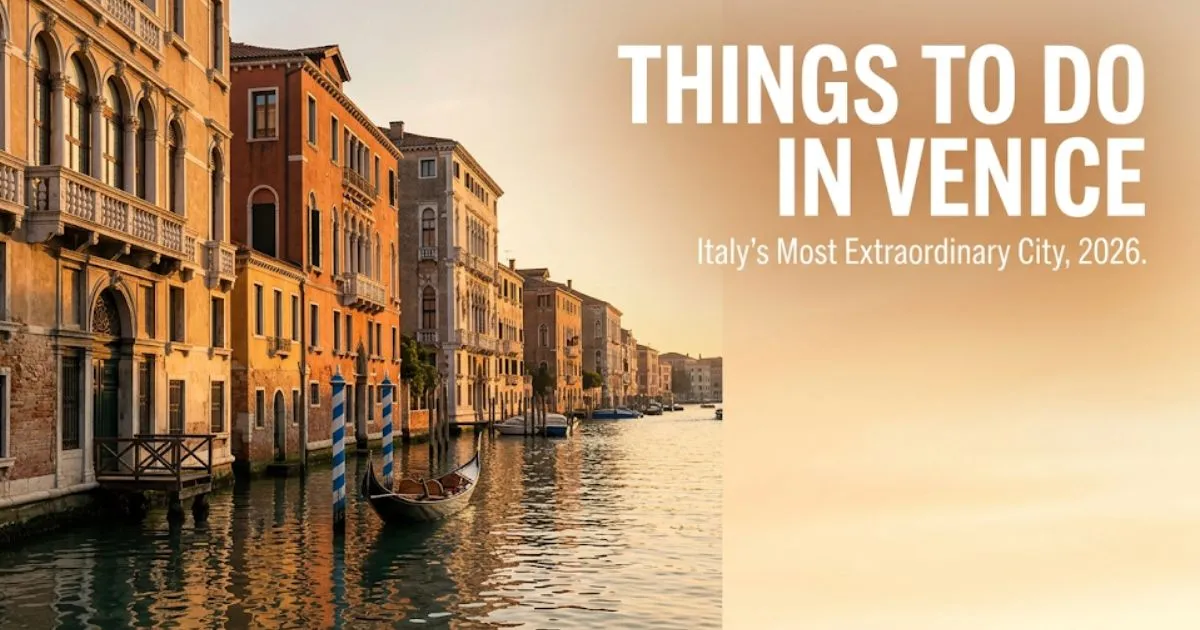
The Grand Canal: Venice’s Most Iconic Experience
The Grand Canal is Venice’s main waterway, running 3.8 kilometers in an S-curve through the city’s heart.
It is one of the few tourist experiences that fully earns its reputation. No photograph prepares you for the scale and beauty of the palazzi lining both banks at water level.
The most affordable way to experience the Grand Canal is vaporetto Line 1, which stops at every landing along the full route. A single ACTV ticket costs approximately 9 euros as of recent years; verify current pricing with ACTV before your visit.
The most atmospheric vaporetto experience is at golden hour. Ride from Piazzale Roma to San Zaccaria as the late afternoon light hits the Palazzo Contarini del Bovolo and the Ca’ d’Oro.
Gondola rides are the iconic canal experience for couples. The official rate from city-licensed gondola stands runs approximately 80 to 90 euros for a 30-minute daytime ride and more in the evening. Always confirm the price before boarding.
The honest assessment: gondola rides are genuinely beautiful, genuinely expensive, and genuinely worth it once. The experience is best in the smaller interior canals of Cannaregio or San Polo, not on the crowded Grand Canal itself.
The local alternative: The traghetto, a standing gondola ferry that crosses the Grand Canal at several points, costs approximately 2 euros. Locals use it daily. No tourist guide line required.
For budget travelers: The traghetto is the most Venetian canal experience available for any price. Arrive at the Sant’Angelo or San Toma traghetto point in the morning and cross with the locals.
For seniors: Vaporetto boarding requires stepping across a gap between the dock and the boat. The gap can be significant when the water is choppy. Use the handrails and wait for crew assistance if needed.
Key Takeaway: Ride vaporetto Line 1 at golden hour for the Grand Canal’s full visual impact, and cross via traghetto at least once for the most authentically local canal experience in Venice.
St. Mark’s Square and the Doge’s Palace
Piazza San Marco and the Doge’s Palace (Palazzo Ducale) are Venice’s most visited sites, and they are also genuinely among Europe’s most extraordinary historic spaces.
The honest assessment: the square itself is overwhelmed by tourists from May through September. The buildings surrounding it are the true reward.
Basilica di San Marco requires timed-entry booking, available through the official Venetian Museums system. Walk-up queues during summer exceed two hours. The interior mosaics covering 8,000 square meters of ceiling and wall surface are worth every planning effort required.
The Pala d’Oro, the golden altarpiece behind the main altar, requires a separate small additional fee. It is one of the finest examples of Byzantine goldsmithing in existence.
Doge’s Palace admission covers the palace itself, the Bridge of Sighs crossing, and the prison cells. The Secret Itineraries Tour of the palace’s hidden administrative chambers requires advance booking but is the single best insider experience in all of Venice.
According to Turismo Venezia, the Doge’s Palace is the most visited paid attraction in the city. Book timed entry at least two weeks ahead for summer visits.
For families: Children under 5 typically enter the Doge’s Palace free. The Bridge of Sighs corridor and the dungeon cells genuinely engage school-age children.
For budget travelers: Museo Correr, included on some museum pass options, faces Piazza San Marco from the western arcade and covers Venetian history with far shorter queues than the Doge’s Palace.
Insider Tip:
- Visit Piazza San Marco before 8:00 AM. The square is nearly empty. The basilica’s gold mosaics catch the morning light through the western facade.
- The clock tower (Torre dell’Orologio) offers guided rooftop tours. Book separately through the Venetian Museums system.
- Sit at Caffè Florian only if you understand you are paying for history, not coffee. The table service charge runs 6 to 10 euros extra per person. Locals use the standing counter inside for the same espresso at standard Italian bar prices.
Best Neighborhoods to Explore in Venice Italy
The best neighborhoods to explore in Venice Italy are the five sestieri beyond San Marco, each offering a version of the city that 80% of day-trippers never see.
| Sestiere | Character | Best For | Crowd Level | Highlight |
|---|---|---|---|---|
| Cannaregio | Local residential, Jewish Ghetto, canal-side bars | Solo travelers, foodies, budget | Low to medium | Fondamenta della Misericordia bar scene |
| Dorsoduro | Art galleries, student energy, waterfront promenade | Couples, art lovers, seniors | Medium | Peggy Guggenheim, Zattere |
| San Polo | Market culture, medieval churches, cicchetti | Food travelers, all profiles | Medium | Rialto Market, Frari Church |
| Castello | Residential Venice east of San Marco | Solo, photographers | Low | Arsenale, Via Garibaldi street life |
| Santa Croce | Quiet, western Venice, near Piazzale Roma | Budget, less-explored | Low | Fondamenta del Rio Marin |
| San Marco | Tourist core, iconic landmarks | First-time visitors | Very High | Basilica, Doge’s Palace, Rialto area |
Every sestiere has its own campo (main square), its own parish church, and its own character. Venice’s magic is in the transition between them.
The campi are not just intersections. Campo Santa Margherita in Dorsoduro is a living neighborhood square with market stalls, students, and evening aperitivo culture that has nothing to do with tourism.
For solo travelers: Cannaregio’s Fondamenta della Misericordia is the most social street in Venice. The bars are narrow, the conversations spill outside, and it is genuinely easy to meet other travelers and locals alike.
For couples: Dorsoduro’s Zattere promenade along the Giudecca Canal faces south, catching afternoon sun even in winter. Walking it at sunset with a gelato from a Rio Terà dei Catecumeni gelateria is a genuinely romantic experience.
The most overlooked sestiere: Castello, east of San Marco, where Via Garibaldi is the widest street in Venice and functions as a genuine neighborhood commercial street with zero tourist infrastructure. The Arsenale shipyard complex anchors the eastern end.
Things to Do in Dorsoduro, Venice
Dorsoduro is Venice’s most livable sestiere, home to two of the city’s greatest art collections and the most pleasant waterfront walk in the city.
The Peggy Guggenheim Collection on the Fondamenta Venier dei Leoni houses one of Europe’s finest 20th-century art collections. The building itself, Guggenheim’s former home on the Grand Canal, is as compelling as the art. Admission runs approximately 16 to 18 euros per adult; check the museum website for 2026 pricing.
The Gallerie dell’Accademia on Campo della Carità is the essential stop for Venetian Renaissance painting. Bellini, Titian, Tintoretto, Veronese, and Canaletto are all represented with major works.
The Zattere is a long waterfront promenade facing the Giudecca Canal. It is one of the few places in Venice where you can walk in a straight line for more than five minutes.
Punta della Dogana, the converted customs house at the tip of Dorsoduro, hosts rotating contemporary art exhibitions from the Pinault Collection. It is a strong alternative to the Accademia for travelers who prefer contemporary over Renaissance.
Campo Santa Margherita is Dorsoduro’s social heart. The square hosts a morning produce market and transitions to aperitivo hour by early evening.
For seniors and accessibility travelers: The Zattere promenade is mostly flat and runs a considerable distance along the water. It is among the most accessible extended walks available in central Venice.
For budget travelers: Both Gallerie dell’Accademia and Punta della Dogana offer free admission on specific dates. Verify through the institutions’ official websites for 2026 free-admission schedules.
Insider Tip:
- The Accademia Bridge (Ponte dell’Accademia) offers one of the two best Grand Canal views in Venice. The other is the Rialto Bridge. Visit both at different times of day.
- Gelateria Il Doge on Campo Santa Margherita is a consistently reliable gelato stop with a local rather than tourist clientele.
- The Church of Santa Maria della Salute at the tip of Dorsoduro is free to enter and architecturally extraordinary. Go in the morning before tour groups arrive.
Key Takeaway: Dorsoduro’s combination of the Peggy Guggenheim Collection, the Zattere promenade, and Campo Santa Margherita’s evening scene makes it the single most complete Venice neighborhood for visitors who want art, atmosphere, and local life in one district.
Things to Do in Cannaregio, Venice
Cannaregio is Venice’s most residential sestiere, home to the world’s first Jewish ghetto, the best canal-side bar scene in the city, and the walk that most tourists never take.
The Ghetto di Venezia (Venice Ghetto) in northern Cannaregio is where Jewish Venetians were required to live from 1516 onward. The name ghetto comes from this neighborhood. The Museo Ebraico di Venezia (Jewish Museum of Venice) in Campo del Ghetto Nuovo tells this history with genuine depth.
Fondamenta della Misericordia and parallel Fondamenta degli Ormesini form the most authentic bar strip in Venice. This is where Venetians drink after work. The bacaro bars here serve cicchetti (small snacks) and local wine at prices that bear no resemblance to the tourist markup around San Marco.
Al Timon on Fondamenta degli Ormesini is a popular local bar with canal-side seating and an excellent wine selection. It gets crowded by early evening. Arrive before 6:00 PM.
The northern reaches of Cannaregio, toward the Sacca della Misericordia lagoon, are among the least-visited areas of Venice’s historic center. Walking here on a weekday morning, you will encounter almost exclusively locals.
The Strada Nova is Cannaregio’s main commercial artery, running from the train station toward Rialto. It is practical and functional. The real character of Cannaregio lives in the smaller calli running north from it.
For solo travelers: Cannaregio is Venice’s most social neighborhood for independent travelers. The bar scene on Fondamenta della Misericordia has a communal, convivial energy that makes solo evenings genuinely enjoyable.
For budget travelers: Accommodation in Cannaregio runs consistently lower than San Marco or Dorsoduro. Staying here also puts you within walking distance of the vaporetto hub at Ferrovia (Santa Lucia station).
Seasonal note: In summer, Fondamenta della Misericordia fills with tourists who have discovered it. October through April, the neighborhood returns to the local-dominated atmosphere that defines it. Visit in shoulder season for the genuine experience.
Best Bacaro Bars and Cicchetti in Venice
The best bacaro bars in Venice serve cicchetti, the Venetian small-bite food tradition that is the most practical, affordable, and authentic way to eat in the city.
Cicchetti are bite-sized snacks served at the bar counter, typically priced between 1 and 4 euros each. A glass of house wine, called an ombra di vino, costs 1.50 to 3 euros at a genuine neighborhood bacaro.
This is how Venetians eat lunch and aperitivo. It is the opposite of the 25-euro pasta at an outdoor table near San Marco.
Best bacaro bars by neighborhood:
- Osteria alla Ciurma (San Polo, Calle Galeazza): No-frills, standing-room-only, exceptional cicchetti spread
- Al Timon (Cannaregio, Fondamenta degli Ormesini): Canal-side, lively evenings, good wine list
- Cantina do Mori (San Polo, Calle do Mori): One of Venice’s oldest bacari, reportedly frequented by Casanova, excellent francobolli (tiny tramezzino sandwiches)
- Bacaro Jazz (San Polo, Fondamenta degli Schiavoni area): Jazz soundtrack, later hours, good for after dinner
- El Sbarlefo (Santa Croce): Less discovered, excellent cicchetti, locals-only feel on weekday mornings
- Osteria Ae Cravate (Cannaregio): Reliable, neighborhood-focused, no tourist menu pricing
According to Venezia Autentica, the local sustainability and authentic Venice organization, supporting bacaro bars and neighborhood restaurants rather than tourist-trap establishments near San Marco is one of the most meaningful ways visitors can contribute to the city’s livability.
For budget travelers: A full cicchetti lunch of six to eight pieces plus two glasses of wine at a Cannaregio or San Polo bacaro costs 15 to 20 euros per person. That is the most affordable genuinely good meal available in Venice’s historic center.
For couples: Bar hopping through two or three bacari in Cannaregio on a weekday evening is one of Venice’s most genuinely romantic local experiences. It costs very little and feels nothing like tourism.
Venice Island Hopping: Burano, Murano, and Torcello
Venice island hopping to Burano, Murano, and Torcello offers three entirely different experiences within the same Venetian lagoon.
All three islands are accessible by ACTV vaporetto. A combined islands visit fits comfortably into a full day if you start by 9:00 AM. Buy an all-day ACTV pass; it is far more economical than paying per ride.
Murano is the closest island, about 15 minutes from Fondamente Nove. It is famous for its glassworking tradition dating to 1291. Attend a live glass-blowing demonstration at one of the working fornaci. The Museo del Vetro (Glass Museum) covers the island’s full history and technique.
Be selective about glass purchases on Murano. Many shops sell glass imported from elsewhere and marketed as Murano-made. Look for the Vetro Artistico Murano trademark on any piece you purchase.
Burano is approximately 40 minutes from Fondamente Nove by vaporetto. Its brightly colored fishing houses along Rio Ponti Lunghi are genuinely arresting. Burano is known for lace-making; the Museo del Merletto (Lace Museum) on Piazza Baldassarre Galuppi documents the tradition.
Arrive on Burano before 11:00 AM. Tour groups overwhelm the island’s narrow streets by late morning. A Tuesday through Thursday visit minimizes cruise-ship crowds significantly.
Torcello is the lagoon’s oldest inhabited island and the quietest. Santa Maria Assunta Cathedral contains Venice’s most ancient and beautiful Byzantine mosaics, dating to the 7th century. The island has barely 20 year-round residents.
For families: Burano’s colorful streets and Murano’s glass-blowing demonstrations are the most child-engaging lagoon experiences. Torcello’s archaeological museum supplements the cathedral visit for curious older children.
For seniors: Torcello’s paths are flat and uncrowded. The walk from the vaporetto stop to the cathedral takes about 15 minutes along a canal-side path. It is one of the most physically accessible deep-history experiences in the Venetian lagoon.
Key Takeaway: Start the lagoon islands day at Murano, proceed to Burano before 11:00 AM, and add Torcello only if you have time and historical interest. Trying to do all three islands in an afternoon is a common planning error that results in rushing all three.
Romantic Things to Do in Venice for Couples
Venice is one of the world’s most genuinely romantic destinations for couples, but the romance lives in the quieter corners, not the tourist core.
The neighborhoods of Cannaregio and Dorsoduro deliver the intimacy that postcards of Venice promise. Wandering into a dead-end calle over a canal at dusk, with no one else around, is an experience that cannot be engineered or toured into.
Most romantic experiences in Venice, specifically:
- Evening gondola ride through the interior canals of San Polo or Cannaregio: Book through an official gondola station, not a street tout. Specify the interior canals over the Grand Canal for a genuinely intimate experience.
- Dinner at Osteria alle Testiere (Castello, Calle del Mondo Novo): Seats 22 people. Venice’s most respected small seafood restaurant. Book weeks in advance.
- Sunset from the Ponte della Costituzione or the Accademia Bridge: The two finest Grand Canal views in the city, at the hour when the light turns the water gold.
- Morning coffee at Caffè del Doge (San Polo, Calle dei Cinque): A serious coffee shop far from the tourist circuit. Venetian-roasted coffee, no table-service surcharge.
- La Fenice opera performance (San Marco, Campo San Fantin): The opera house restored to its 1792 interior after a 1996 fire. Even partial performances in the main hall are architecturally extraordinary.
- Zattere promenade at sunset (Dorsoduro): South-facing, uncrowded in the evening, facing the Giudecca island across the canal.
The honest note for couples: Venice’s San Marco area is neither intimate nor romantic during peak season. The most photographed spots are the most crowded. The actual romance is in navigating the city’s quieter eastern Castello streets, the canal-side fondamente of Cannaregio, and the Dorsoduro waterfront. Stay overnight. Day-trippers cannot access the city at 7:00 AM or after 7:00 PM, when Venice becomes itself again.
Things to Do in Venice With Kids
Venice with kids is physically demanding, logistically complex, and genuinely rewarding for families who plan the right experiences.
The primary challenge is the bridges. Venice’s 400-plus bridges have steps. Most are not stroller-accessible. Families with infants in strollers face significant difficulty. ACTV publishes accessible route maps for mobility-limited travelers; these routes minimize bridge crossings and are also the practical solution for stroller navigation.
Best Venice experiences for children, specifically:
- Murano glass-blowing demonstrations: Live fire, molten glass, and a craftsman shaping a horse or vase in 90 seconds. Children universally find this compelling. Demonstrations at working fornaci run throughout the morning hours.
- Burano island visit: The outrageously colored houses along the canals engage even young children visually. The boat ride from Venice is itself an adventure.
- Gondola ride: Children aged 5 and above typically love the experience. The boat’s instability on boarding requires adult assistance.
- Doge’s Palace dungeon cells and Bridge of Sighs: School-age children respond to the prison narrative and the Bridge of Sighs story with genuine interest.
- Natural history and science: The Museo di Storia Naturale di Venezia (Natural History Museum) in Santa Croce engages children aged 6 and up with lagoon ecology and dinosaur fossils. It is significantly less crowded than the major art museums.
- Gelato navigation: Campo Santa Margherita has family-appropriate gelaterias and the most child-friendly open square in central Venice.
The honest assessment for families: Venice is not a theme park. It rewards curious children who like history, boats, and exploration. It exhausts toddlers and children who need space to run. Keeping daily walking distances manageable (under 4 kilometers) and building in gelato breaks prevents the mid-afternoon meltdown that ends many family Venice days early.
For families on a budget: The Natural History Museum, Burano’s streets, and the vaporetto canal rides are the most cost-effective family experiences. A museum pass covering multiple Venetian civic museums offers the best value for families visiting more than two sites.
Free and Budget Things to Do in Venice Italy
Venice on a budget is genuinely possible. The city’s architecture, canals, and public spaces are free. Its bacaro food culture is affordable. Only the major museums and organized experiences carry significant cost.
Free experiences worth prioritizing:
- Rialto Bridge and market: Cross the bridge, browse the Erberia produce market on the San Polo side, watch the fish market operate in the morning. Free entirely.
- Basilica di San Marco exterior and main nave: Entry to the main floor of the basilica is currently free; specific interior sections (Pala d’Oro, loggia, museum) require tickets. Verify current access terms at basilicasanmarco.it before visiting.
- All six sestieri on foot: Venice’s streets, campi, and canal-side fondamente are the experience. Walking requires nothing but time.
- Campo Santa Margherita: The city’s most social free public square. Evening aperitivo atmosphere is accessible without spending anything.
- Zattere promenade: Free, flat, scenic, south-facing. Walk the full length in either direction.
- Church of Santa Maria della Salute: Free entry. One of Venice’s most architecturally significant buildings.
- San Giorgio Maggiore Church: Free entry, with a separate small fee for the bell tower elevator. The tower view of Venice and the lagoon is among the city’s finest and far less crowded than any San Marco viewpoint.
- Arsenale exterior: The medieval shipyard complex exterior is publicly accessible. The interior hosts the Venice Biennale and is ticketed during those periods.
For budget travelers: The Venezia Unica city pass combines vaporetto access, museum entry, and other services at a bundled rate. Compare the pass cost against your planned individual purchases; for stays of two to three days with multiple museum visits, the pass typically offers genuine savings.
Dining on a budget: Cicchetti at bacaro bars in Cannaregio and San Polo. Standing lunch at the Rialto market area. Grabbing a pizza slice at one of the take-away spots on the Strada Nova. Sit-down restaurant meals near San Marco run 30 to 60 euros per person. The same quality meal in Cannaregio runs 20 to 35 euros.
Key Takeaway: The single biggest budget mistake in Venice is eating within 300 meters of Piazza San Marco. Walk 10 minutes in any direction and food quality improves while prices drop by 30 to 50 percent.
Venice Museums Worth Visiting
Venice’s museums worth visiting in 2026 include world-class collections housed in extraordinary historic buildings, and the choice between them depends entirely on what kind of art and history moves you.
| Museum | Collection Focus | Approximate Admission | Best For | Queue Reality |
|---|---|---|---|---|
| Gallerie dell’Accademia | Venetian Renaissance masters | 12-15€ per adult | Art lovers, culture travelers | Moderate; book ahead in summer |
| Peggy Guggenheim Collection | 20th-century modern and surrealist | 16-18€ per adult | Contemporary art, couples | Lower than Accademia |
| Doge’s Palace (Palazzo Ducale) | Venetian history, governance, power | 25-35€ per adult | History, families, all profiles | High; timed entry essential |
| Museo Correr | Venetian history, maps, art | Included in some passes | Budget, history | Low |
| Scuola Grande di San Rocco | Tintoretto cycle, 56 paintings | 10-12€ per adult | Serious art travelers | Very Low |
| Museo del Vetro (Murano) | Venetian glassmaking history | 10-12€ per adult | Families, design interested | Low |
| Ca’ d’Oro (Galleria Franchetti) | Medieval and Renaissance painting | 5-8€ per adult | Budget art lovers | Very Low |
| Museo di Storia Naturale | Natural history, lagoon ecology | 8-10€ per adult | Families, children | Low |
The most underrated museum in Venice: The Scuola Grande di San Rocco in San Polo contains Tintoretto’s greatest work cycle, 56 paintings covering the walls and ceilings of two enormous halls. The admission is modest. The queues are minimal. Condé Nast Traveler has called it one of Europe’s most overlooked art experiences.
According to the Museo Civici Veneziani (Venice Civic Museums consortium), a combined museum pass covering the Doge’s Palace, Museo Correr, Museo Archeologico, and the Biblioteca Nazionale Marciana Library offers better value than individual tickets for travelers visiting more than two of these sites.
For seniors: The Ca’ d’Oro on the Strada Nova in Cannaregio has an elevator and offers Grand Canal views from its Gothic loggia. It is one of the most accessible museum experiences in the city relative to the quality of its collection.
For art-focused travelers: Visit the Gallerie dell’Accademia in the morning on a weekday and the Peggy Guggenheim Collection in the afternoon. The two collections cover entirely different eras and complement each other perfectly in a single Dorsoduro day.
How to Get Around Venice Italy
Getting around Venice Italy is entirely by foot or by water. There are no cars, trams, or bikes inside the historic island center.
Primary transport options:
- Walking: The default mode. Most cross-city journeys take 20 to 40 minutes on foot. Venice’s six sestieri cover a compact area. Getting lost is part of navigating it.
- Vaporetto (ACTV water bus): The public transit system. Lines 1 and 2 serve the Grand Canal. Line 12 serves Murano, Burano, and Torcello from Fondamente Nove. Single tickets run approximately 9 euros per ride; day passes, 48-hour passes, and 72-hour passes offer significant savings for multiple daily journeys. Purchase through ACTV’s official app or at Venezia Unica points of sale. Validate before boarding.
- Water taxi: Private, point-to-point, operates 24 hours. Expensive: journeys typically run 30 to 100-plus euros depending on distance and time of day. Worth the cost for late-night arrivals from Marco Polo Airport or for travelers with significant luggage and mobility limitations.
- Gondola: For sightseeing, not practical transport. Official city-licensed fares start at approximately 80 to 90 euros for 30 minutes daytime. Always confirm price before boarding.
- Traghetto: Standing gondola ferry crossing the Grand Canal at several fixed points. Approximately 2 euros. Used daily by locals. Available at San Toma, Santa Sofia, and other crossing points.
Getting from Marco Polo Airport (VCE) to Venice:
- Alilaguna ferry (public water bus): Approximately 8 euros one way, 60 to 80 minutes to San Marco. Scenic but slow with heavy luggage.
- Water taxi: 100 to 130 euros for the full boat, faster, direct to your hotel landing if canal-adjacent. Worth splitting with others.
- Land bus (ATVO or ACTV): Approximately 8 euros, 20 minutes to Piazzale Roma. Then walk or take vaporetto into the city.
For families: ACTV vaporetti accommodate strollers at the front of the boat. Peak hours (8:00 to 9:30 AM and 5:30 to 7:00 PM) are very crowded. Travel outside these windows with young children.
For budget travelers: A 72-hour ACTV pass purchased at arrival covers all vaporetto travel, including the islands run to Murano, Burano, and Torcello, for a flat fee significantly below the cost of individual tickets.
Best Time to Visit Venice Italy
The best time to visit Venice Italy is October through early November or March through May. These shoulder season windows offer the best balance of weather, crowd levels, and authentic city atmosphere.
Seasonal breakdown:
| Season | Months | Crowd Level | Temperature | Key Events | Recommendation |
|---|---|---|---|---|---|
| Spring | March-May | Medium, building | 12-22°C | Venice Biennale opens (odd years) | Excellent; best for first visits |
| Early Summer | June | High | 22-28°C | No major events | Acceptable but crowds rising |
| Peak Summer | July-Aug | Very High | 28-36°C | No major events | Avoid if possible |
| Early Autumn | September | High | 20-26°C | Venice Film Festival (Aug-Sept) | Good for film festival; crowded |
| Late Autumn | Oct-Nov | Low-Medium | 10-18°C | Acqua alta season begins | Best overall window |
| Winter | Dec-Feb | Low | 2-10°C | Carnival (Feb); Christmas | Low crowds; cold; Carnival is extraordinary |
The 2026 Venice Carnival runs in February and is one of the world’s great festival experiences. Costume events, masquerade balls, and the public spectacle on Piazza San Marco make it worth the winter cold and the elevated prices. Book accommodation months in advance.
Acqua alta (high water flooding) peaks between October and January. The MOSE flood barrier system now provides significant protection, but occasional flooding still occurs in low-lying areas around San Marco. Pack waterproof footwear or buy rubber boots on arrival. Acqua alta does not cancel the city. Venetians put on boots and continue as normal.
The honest summer assessment: July and August in Venice are genuinely difficult. Temperatures in the city, surrounded by water with no air circulation in narrow calli, feel significantly hotter than the recorded temperature. The crowds around San Marco are so dense that forward movement slows to a shuffle. If summer is your only option, arrive at 7:00 AM, see the major sites before 11:00 AM, and retreat to Cannaregio or Dorsoduro for the afternoon.
According to Turismo Venezia, the city receives its highest single-day visitor counts on weekends in April, May, and June. A mid-week visit in any shoulder season month reduces crowds at major attractions by a significant margin.
For budget travelers: January and February (excluding Carnival weekend) offer Venice’s lowest accommodation rates. Many small hotels offer genuine value in the winter low season.
For seniors: October is the optimal month. Temperatures are comfortable for extended walking, crowds are thinner than summer, and the city’s golden autumn light on the canals is genuinely the best version of Venice’s visual landscape.
Key Takeaway: Book a mid-week visit in October or March, stay overnight inside the historic center, and wake up before 7:00 AM at least once. Venice before the day-trippers arrive is a different city from the one that exists at noon in August.
Safety and Practical Warnings for Venice
Venice is one of Europe’s safer destinations for urban crime, but specific practical risks require attention.
Key safety and practical facts every visitor should know:
- Pickpocket risk is genuine in Piazza San Marco, on crowded vaporetti, and around the Rialto Bridge. Keep wallets in front pockets and bags zipped and held against your body in these areas.
- Gondola pricing: Only board from official, city-licensed gondola stands marked with official signage. Confirm the exact price before boarding. Unofficial operators on the street may quote lower prices and significantly exceed them.
- Restaurant menus: Check for the coperto (cover charge) and servizio (service charge) listed on the menu before ordering. These are legitimate but should be known. Any restaurant that does not display a menu with prices outside or at the door warrants caution.
- Bridge steps: Hundreds of bridges have steep steps. Falls are more common than reported. Use handrails, especially after rain when steps become slippery.
- Summer heat: July and August temperatures inside Venice’s narrow streets can exceed 38°C. Carry water. Heat exhaustion risk is real, particularly for elderly travelers and young children.
- Acqua alta footwear: Between October and January, pack waterproof footwear or compact rubber boot covers. Acqua alta can occur with limited advance notice.
- Counterfeit goods: Street vendors selling goods near San Marco often operate illegally. Purchasing counterfeit goods is illegal under Italian law and can result in fines for buyers.
- Vaporetto validation: Always validate your ACTV ticket before boarding. Inspectors conduct routine checks. Unvalidated tickets result in on-the-spot fines.
For medical emergencies in Venice, the Ospedale Civile di Venezia (Venice Civil Hospital) on Campo Santi Giovanni e Paolo in Castello is accessible by vaporetto and is the city’s primary emergency care facility.
Frequently Asked Questions About Things to Do in Venice
What are the best things to do in Venice Italy for first-time visitors?
First-time visitors should prioritize the Doge’s Palace, Basilica di San Marco, a vaporetto ride along the Grand Canal, and at least one afternoon exploring Cannaregio or Dorsoduro.
Book timed entry for the Doge’s Palace and Basilica weeks in advance to avoid the walk-up queues that routinely exceed two hours in peak season.
The single most important first-time advice: walk away from San Marco into the surrounding sestieri. The city’s authentic character exists there.
Is Venice worth visiting in 2026?
Yes, Venice is worth visiting in 2026 for travelers who plan their visit in shoulder season and stay overnight inside the historic center.
The day-tripper entry fee system and timed-entry requirements at major sites require advance planning, but they also slightly reduce the worst crowd surges of previous years.
Venice’s architecture, art collections, lagoon islands, and bacaro food culture represent genuinely irreplaceable experiences that justify the planning effort.
How many days do you need in Venice Italy?
Two full days is the minimum for covering the essential Venice experiences without feeling rushed.
Three to four days allows for a relaxed island-hopping day, deeper neighborhood exploration in Cannaregio and Dorsoduro, and an evening at La Fenice opera house.
One day is sufficient only for hitting the absolute highlights; it does not allow you to experience the city’s actual character.
What is the day-tripper fee in Venice and how does it work?
Venice’s day-tripper entry contribution applies to non-overnight visitors entering the historic island center on designated peak dates, primarily spring and summer weekends.
Overnight visitors with a hotel booking inside the historic center are currently exempt from the fee.
Verify the exact 2026 fee schedule, applicable dates, and current pricing directly at veneziaunica.it before planning your visit, as the system continues to evolve.
What are the best free things to do in Venice Italy?
The best free things to do in Venice include walking all six sestieri on foot, crossing the Grand Canal by traghetto, exploring the Rialto market, and visiting the Church of Santa Maria della Salute.
Campo Santa Margherita in Dorsoduro and the Fondamenta della Misericordia in Cannaregio both offer free public spaces with genuine local atmosphere.
The San Giorgio Maggiore Church is free to enter, with a small separate fee for the bell tower elevator, which offers one of the finest and least-crowded elevated views of the city.
What is the best time to visit Venice to avoid crowds?
The best time to visit Venice with the fewest crowds is mid-October through early November or January outside of Carnival weekend.
A mid-week visit in any shoulder season month reduces crowd density at major attractions significantly compared to peak summer weekends.
Arriving at major sites before 8:30 AM, when the day-tripper groups have not yet entered the island, is the single most effective crowd-avoidance tactic regardless of season.
Plan Your Venice Trip: Final Guidance
Venice rewards travelers who arrive with a plan and the flexibility to abandon it. Book the Doge’s Palace and Basilica timed entry before anything else. Choose accommodation inside the historic center, ideally in Cannaregio or Dorsoduro, to access the city before and after day-trippers.
The single logistical step that makes the biggest difference is waking up early. Venice before 8:00 AM is the city that earned its reputation. Venice at noon on a summer Saturday is the city that frustrates unprepared visitors into saying it is overrated.
Travel prices, entry fees, vaporetto rates, museum hours, and the day-tripper fee system are all subject to change for 2026. Verify every key logistic directly with Venezia Unica, ACTV, and individual venues before departure. The investment in pre-trip verification saves hours of wasted time on the ground.
Venice is genuinely extraordinary for travelers who give it the planning it requires. Do the work before you arrive, and the city will give you back more than you planned for.