Best Things to Do in Inverness, Scotland (2026 Guide)

The best things to do in Inverness Scotland extend well beyond the Loch Ness boat tours that dominate travel marketing for this Highland city. Inverness is a compact, walkable city with a remarkable density of genuine historical and natural experiences within an hour’s drive.
The Visit Inverness Loch Ness regional tourism organization identifies over 40 distinct visitor experiences across the city and surrounding Highlands region. That range includes free city-centre walks, battlefield history, wildlife watching, and some of Scotland’s finest scenic driving.
This guide covers the city’s best genuine experiences for 2026. It includes a practical itinerary, honest seasonal guidance, and specific recommendations across every traveler profile.
Things to Do in Inverness Scotland: The Honest Overview
Inverness offers more depth than its Loch Ness reputation suggests, but it rewards travelers who look beyond the obvious first stop.
The city sits at the northeastern end of the Great Glen, a geological fault line that splits the Scottish Highlands. This geographic position makes Inverness the natural gateway to an extraordinary cluster of historic sites, wildlife habitats, and highland landscapes.
The city centre itself is compact and manageable. The River Ness runs through the middle, and most central attractions are within a 15-minute walk of each other.
For first-time visitors, the highest-value combination is: Inverness city centre on foot, Culloden Battlefield by car or bus, and one full day exploring Loch Ness and Urquhart Castle. Two days minimum. Three days is better.
Solo travelers will find Inverness easy to navigate independently. The compact centre, good hostel infrastructure, and proximity to major day-trip sites by public transport make it genuinely manageable without a car.
Couples will find the city’s atmospheric riverside, quality dining on Academy Street and Stephens Brae, and the dramatic Highland scenery particularly rewarding for a romantic long weekend.
| Activity | Best For | Cost Range | Time Needed |
|---|---|---|---|
| Ness Islands Walk | All profiles | Free | 45 to 60 minutes |
| Culloden Battlefield | History lovers, couples, adults | Approx. £12 to £18 per adult | Half day |
| Urquhart Castle | All profiles | Approx. £12 to £16 per adult | 2 to 3 hours |
| Dolphin watching (Chanonry Point) | Couples, families, wildlife | Free (self-drive) | Half day |
| Victorian Market | All profiles | Free to enter | 30 to 60 minutes |
| Tomatin Distillery tour | Adults, couples | Approx. £10 to £20 per adult | 1.5 to 2 hours |
| Glen Affric day trip | Outdoor enthusiasts, couples | Fuel/car only | Full day |
What Makes Inverness Worth Visiting
Inverness is genuinely worth visiting because it combines walkable Scottish city character with direct access to some of the most historically significant and scenically dramatic landscapes in Europe.
The city of roughly 70,000 people has a real identity beyond tourism. Church Street and Bank Street in the city centre carry the kind of independent shops, bookshops, and local pubs that Edinburgh’s Royal Mile lost to souvenir saturation decades ago.
Leakeys Bookshop on Greyfriars Hall is often cited as Scotland’s largest secondhand bookshop. It occupies a converted church and is worth an hour of any traveler’s time regardless of whether they buy anything.
The Eden Court Theatre on Bishops Road is a full-scale arts venue hosting theatre, live music, film, and visual arts year-round. It is where Inverness residents actually spend their cultural evenings.
For budget travelers, the city’s genuine character costs nothing to experience. The waterfront, the Victorian Market, Ness Islands, and Inverness Museum are all free.
According to VisitScotland, the Highlands and Islands region draws approximately 2.3 million visitors annually. Inverness functions as the primary urban base for most of those trips, which means peak summer can feel saturated. Shoulder seasons reveal a different city entirely.
Insider Tip:
- Walk Church Street rather than the High Street. It has more genuine local character.
- Leakeys Bookshop is closed Sundays. Plan accordingly.
- For seniors, the city centre terrain is largely flat with good pavement surfaces. The waterfront path from the city centre to Ness Islands is fully accessible.
Inverness Castle and City Centre
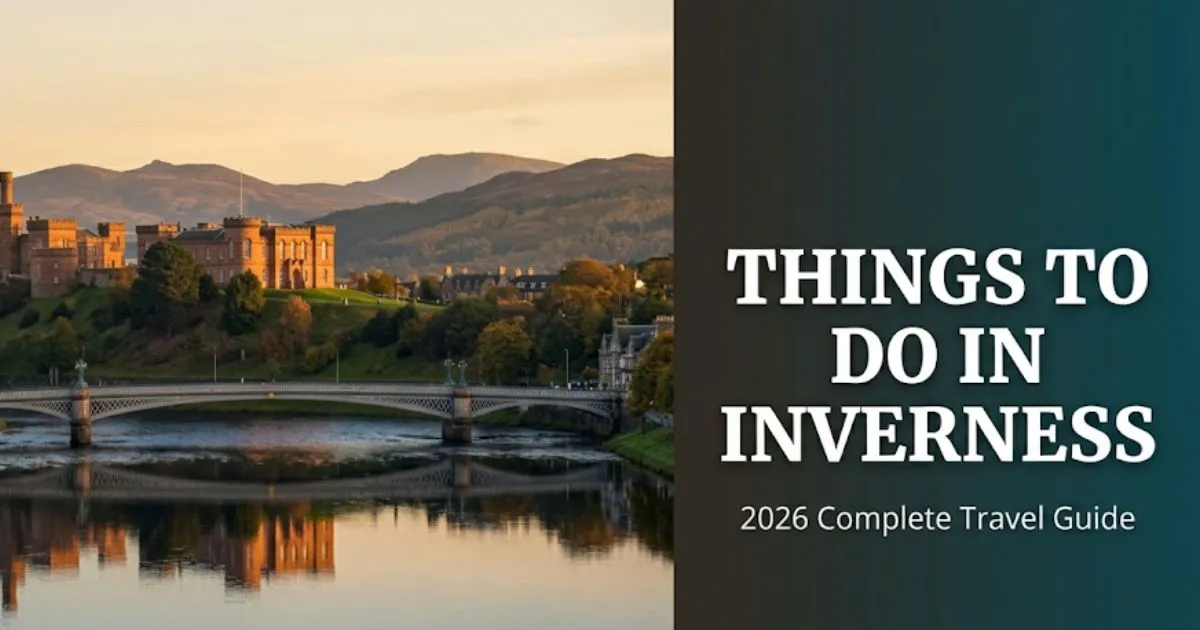
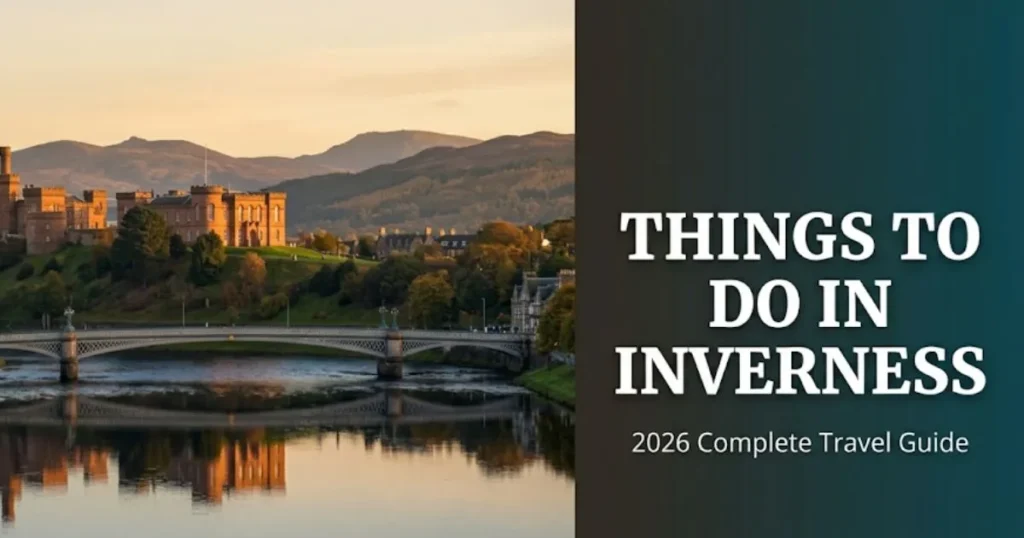
Inverness Castle sits on a red sandstone bluff directly above the River Ness, and its hilltop viewpoint over the city and surrounding Highland terrain is genuinely excellent.
The castle itself is undergoing a significant transformation. Historic Environment Scotland and Highland Council have been developing the site as a major visitor attraction. Verify the current access situation before visiting, as construction and phased opening timelines have shifted since initial announcements.
The viewpoint from the castle terrace is free to access when open. The views west over the River Ness and north toward the Beauly Firth on a clear day are among the best in the city.
The surrounding city centre is worth a focused walking hour. Falcon Square near the railway station is the main transit hub. From there, Church Street leads toward the Victorian Market, the Cathedral, and the waterfront in a logical walking loop.
Couples will find the castle terrace particularly atmospheric at dusk. The warm light on the red sandstone above the River Ness is one of Inverness’s genuinely photogenic moments.
Insider Tip:
- The castle exterior and terrace are the main draw. Do not build an extended itinerary around the interior until the new visitor attraction is confirmed open.
- Verify the latest opening status with Historic Environment Scotland before your visit.
- The steep path up to the castle from the riverside requires care in wet conditions. Wear shoes with grip.
Victorian Market Inverness
The Victorian Market on Academy Street is one of the most atmospheric covered shopping arcades in Scotland, and most visitors walk past it entirely.
Built in 1890, the Market runs through the centre of the city from Academy Street to Union Street. The ornate ironwork and glazed roof make it architecturally distinct from any standard high street retail environment.
Inside, independent traders sell a mix of Scottish craft, outdoor gear, local food, jewellery, and gifts alongside everyday local shops. The atmosphere is entirely different from the souvenir-heavy Royal Mile experience in Edinburgh.
Entry is free. The Market is typically open Monday through Saturday during normal retail hours. Verify current Sunday and holiday hours before visiting, as these change seasonally.
Budget travelers will find the Market genuinely useful for picking up quality Scottish food products, woollens, and gifts at prices well below the tourist-facing shops on High Street.
Families with young children will find it an easy pit-stop during a city-centre walk. The covered environment means weather is not a factor, which matters considerably in the Scottish Highlands.
Insider Tip:
- Go on a weekday morning for the most relaxed experience. Saturday afternoons bring local crowds that make the narrow aisles crowded.
- Several independent cafes inside the Market offer good coffee and Highland baked goods at local rather than tourist prices.
- This is the local alternative to the High Street souvenir shops. The quality difference is noticeable.
Ness Islands Inverness
Ness Islands is a free, genuinely beautiful riverside walk that most visitors overlook in favor of organized tours. It is one of Inverness’s best experiences.
The Islands are a series of small wooded islands in the River Ness, connected by a series of Victorian footbridges. The walk from the city centre to the islands takes roughly 15 minutes along the riverbank. The total loop takes 45 to 60 minutes at a relaxed pace.
The path winds through mixed woodland with river views on both sides. In autumn, the color is exceptional. In summer, the dappled light through mature trees makes it a genuinely atmospheric walk.
The islands are free to access year-round. No booking required. The path surface is generally well-maintained but can be muddy after rain. Appropriate footwear is advisable.
Seniors and accessibility travelers should note that the main riverside path is flat and well-surfaced. Some of the island paths are less even. The primary loop is manageable with a walking aid on a dry day.
Couples consistently rate Ness Islands among the most atmospheric free experiences in Inverness. The riverside in the evening light, particularly in May, June, and September, is quietly excellent.
Insider Tip:
- Start the walk at the Bught Park end rather than from the city centre. This gives you the best light on the islands in the afternoon.
- Locals use this walk regularly for morning exercise. It feels nothing like a tourist attraction. That is the point.
- Take the time to cross every footbridge. The view back toward Inverness Castle from the southernmost island bridge is one of the city’s underappreciated perspectives.
Key Takeaway: Ness Islands, the Victorian Market, and Leakeys Bookshop form a free half-day city-centre loop that most Inverness visitors miss entirely while paying for experiences that deliver far less.
Inverness Museum and Art Gallery
Inverness Museum and Art Gallery on Castle Wynd is a free local museum covering Highland natural history, Pictish artifacts, Highland clan culture, and local art. It is small, genuinely good, and almost always uncrowded.
The Pictish stone collection is the most significant reason to visit. The Highlands produced some of the most complex and beautiful Pictish carved stones in Scotland, and the museum holds a strong collection with clear interpretive context.
The Highland wildlife and geology galleries are well-curated for a regional museum. The art gallery rotates exhibitions and typically includes contemporary Scottish artists alongside historical Highland subjects.
Admission is free. The museum is managed by Highland Council and is typically open Tuesday through Saturday during standard hours. Verify current hours and any temporary closures before visiting, as staffing and seasonal schedules change.
Families with children will find the Pictish gallery and the wildlife displays genuinely engaging for older children aged 8 and above. Younger children may find the format less interactive than purpose-built children’s museums.
Budget travelers will appreciate that this is one of the most substantive free cultural experiences in the Highlands. It provides essential historical context for everything else in the region.
Insider Tip:
- Spend at least 30 minutes in the Pictish gallery before visiting Culloden or Urquhart. The historical layering of the Highlands becomes significantly richer with that foundation.
- The museum shop stocks quality local publications on Highland history at reasonable prices.
- Ask staff about current temporary exhibitions. The rotation means repeat visitors often find something new.
Dolphin Watching Near Inverness
The Moray Firth near Inverness is home to one of Europe’s northernmost resident populations of bottlenose dolphins, and watching them from Chanonry Point on the Black Isle is one of the most genuinely rewarding wildlife experiences in Scotland.
Chanonry Point is approximately 12 miles northeast of Inverness city centre, near the village of Fortrose on the Black Isle peninsula. Dolphins frequently come close to shore here, particularly on a rising tide in summer and early autumn, hunting fish in the narrows.
The experience is free. You park at Chanonry Point, walk to the shoreline, and wait. The dolphins are wild and sightings are not guaranteed. On a good day, they pass within 20 to 30 meters of the shore.
Best chances of a sighting: arrive at or shortly before high tide in the early morning or late afternoon. Local wildlife guides and the Scottish Dolphin Centre in Spey Bay publish tide tables and recent sighting reports. Verify current guidance before your visit.
Couples frequently rate Chanonry Point as their best Scotland wildlife experience. There is something genuinely affecting about watching large wild dolphins in a remote Highland setting with no boat tour infrastructure required.
Solo travelers can visit independently by car with no planning beyond checking the tide times. No booking, no guide required.
Insider Tip:
- A rising tide between two hours before and at high tide is the optimal window. Missing this by even an hour dramatically reduces sighting probability.
- Bring binoculars. A spotting scope on a tripod is what the serious wildlife watchers bring.
- For budget travelers: this is a world-class wildlife experience that costs nothing except the fuel to get there.
Loch Ness from Inverness
The most honest thing about visiting Loch Ness from Inverness is this: the loch itself is a large, cold, deep body of dark water, and the boat tours deliver primarily open water with distant shores.
Urquhart Castle, on the western shore of Loch Ness approximately 16 miles southwest of Inverness via the A82, is the genuine visual and historical payoff of any Loch Ness visit. The ruins of this 13th-century fortress above the loch are among the most dramatically situated castle remains in Scotland.
Historic Environment Scotland manages Urquhart Castle. Admission runs approximately £12 to £16 per adult as of recent years. Advance booking is strongly recommended in July and August, when the site reaches capacity by midday. Book directly through Historic Environment Scotland before visiting.
The A82 road along the western shore of Loch Ness is scenic but narrow and winding. Allow 30 to 40 minutes from Inverness to Urquhart on a clear summer day, longer in peak season with tour bus traffic.
Families with children will find Urquhart more engaging than a boat tour. The ruins are accessible and visually dramatic. Children can explore the tower and battlements with appropriate supervision.
Budget travelers should know that Loch Ness boat tour prices vary significantly by operator and duration. A self-drive visit to Urquhart Castle with advance booking delivers more historical value at a comparable or lower cost.
Insider Tip:
- Visit Urquhart Castle in the first opening hour or within the last hour before closing. Midday in July is genuinely unpleasant due to coach tour volumes.
- The Grant Tower at the north end of the site gives the best view both down the loch and back across the ruins. Do not skip it.
- The Loch Ness Centre in Drumnadrochit (on the A82, 2 miles from Urquhart) was recently redeveloped and is worth a stop for the updated scientific and folkloric coverage of the Nessie mythology.
Key Takeaway: Urquhart Castle, not a Loch Ness boat tour, is the right way to experience Loch Ness. Visit at opening time or late afternoon and book in advance from May through September.
Culloden Battlefield from Inverness
Culloden Battlefield is approximately 5 miles east of Inverness and is one of the most emotionally significant historic sites in Scotland. The 1746 Battle of Culloden was the last pitched battle fought on British soil and ended the Jacobite Rising.
The Culloden Visitor Centre, managed by Historic Environment Scotland, is one of Scotland’s best battlefield interpretation facilities. The immersive exhibition covering the lead-up, the battle itself, and its aftermath is genuinely excellent. Allow 2.5 to 3.5 hours for the full site including the battlefield walk.
Admission to the Visitor Centre runs approximately £12 to £18 per adult as of recent years. The battlefield ground itself is free to access year-round, though the Visitor Centre hours and admission fees should be verified before visiting.
The battlefield walk covers the ground where government and Jacobite forces met on April 16, 1746. The clan grave markers on the moor are sobering. This is a site with genuine emotional weight for many visitors.
Couples traveling through Scotland with any interest in history typically rate Culloden as the single most affecting site they visit. It requires no specialist knowledge to feel the weight of the place.
Families with children: the Visitor Centre’s multimedia presentation is engaging for children aged 8 and above. Younger children will find the battlefield walk meaningful if prepared with a brief explanation beforehand. Strollers can navigate the main paths in dry conditions.
Insider Tip:
- Come early. Coach tours arrive from Inverness in volume between 10:30 am and 2:00 pm. An 8:30 or 9:00 am arrival gives you the battlefield largely to yourself.
- The battlefield walk takes approximately 45 minutes at a steady pace. Allow extra time to pause at the clan markers.
- The Visitor Centre cafe is genuinely good and locally sourced. Lunch there is worth building into your timing.
Day Trips from Inverness
The best day trips from Inverness are Culloden Battlefield, Urquhart Castle and Loch Ness, Chanonry Point on the Black Isle, Glen Affric, and Fort George, each offering a distinctly different Highland experience.
Glen Affric, approximately 30 miles southwest of Inverness via the village of Cannich, is one of Scotland’s most beautiful glens. Ancient Caledonian pinewoods, a mirror-calm loch, and walking trails ranging from easy riverside paths to more demanding highland routes make it genuinely versatile.
Fort George, approximately 11 miles northeast of Inverness on the Moray Firth shoreline, is a near-perfectly preserved 18th-century artillery fortress. It is one of the most complete examples of a Hanoverian military fortification in Britain. Managed by Historic Environment Scotland, admission costs approximately £12 to £16 per adult as of recent years. Verify before visiting.
The Black Isle peninsula, directly across the Kessock Bridge from Inverness, combines Chanonry Point dolphin watching with the Pictish stones at Rosemarkie and the pleasant coastal village of Cromarty. A full Black Isle loop makes an excellent self-drive half day or full day.
Solo travelers without a car should note that Highland Explorer Tours and various Inverness-based operators run structured day tours to Loch Ness, Culloden, and Glen Affric. These are the most practical option for car-free visitors.
Families doing a multi-day Inverness stay can sequence Culloden on day one (morning), Loch Ness and Urquhart on day two (full day), and Black Isle dolphins and Fortrose on day three (morning to midday). This structure avoids backtracking and manages children’s energy well.
Insider Tip:
- Glen Affric does not have a visitor centre or cafe. Pack food and water. Fuel up in Inverness before heading southwest, as petrol stations thin out on the route to Cannich.
- The road to Glen Affric beyond Cannich is single-track with passing places. Inexperienced drivers on narrow highland roads should take their time.
Key Takeaway: Glen Affric and Fort George are the most consistently undervisited day trips from Inverness, and both deliver experiences that Loch Ness boat tours cannot match for genuine Highland character.
Best Restaurants in Inverness
The best dining in Inverness is concentrated on Stephens Brae, Academy Street, and along Bank Street near the riverside, with quality ranging from good Scottish gastropub food to genuinely accomplished modern Highland cooking.
Contrast Brasserie in the Glenmoriston Town House Hotel on Ness Bank is consistently cited as one of Inverness’s most accomplished restaurants. The setting on the River Ness and the menu’s emphasis on Highland-sourced proteins (venison, Highland beef, west coast seafood) delivers a genuinely regional dining experience.
Rocpool Restaurant on Ness Walk is another well-regarded option, running a modern European menu in a smart riverside room. Both are mid-to-upper price range. Budget approximately £35 to £60 per person including a glass of wine for a full dinner at either venue. Verify current menus and prices before visiting.
For casual dining, Number 27 on Castle Street is a popular local bistro with a straightforward menu and good-value set menus at lunch. Hootenanny on Church Street combines live Scottish folk music with a solid food menu in a relaxed pub environment.
Solo travelers will find both Rocpool and Number 27 genuinely comfortable for solo dining. The bar areas at both are social without being overwhelming.
Budget travelers: the Victorian Market food vendors and the covered market cafes offer good, locally made food at prices significantly below the Ness Bank restaurants. The Crown area northeast of the city centre has local cafes used by residents that offer full breakfasts and lunch at non-tourist prices.
Insider Tip:
- Book Rocpool and Contrast Brasserie at least 2 to 3 weeks ahead for weekend evenings in July and August. They fill with tourists and locals simultaneously.
- Hootenanny’s live music on weekends is free with no cover charge. It is genuinely the best free evening entertainment in the city.
Whisky Distilleries Near Inverness
The nearest whisky distillery to Inverness is Tomatin Distillery, approximately 15 miles south of the city on the A9 toward Aviemore. It is one of the larger Highland single malt producers, and its tours are well-organized and accessible for visitors new to Scotch whisky.
Tour prices at Tomatin run approximately £10 to £20 per adult as of recent years for the standard tour, with premium options including specific cask tastings at higher prices. Verify current tour options and advance booking requirements directly with Tomatin before visiting.
Glen Ord Distillery in Muir of Ord, approximately 12 miles west of Inverness, is the Diageo-owned distillery that produces the Singleton of Glen Ord expression. Its visitor experience is more polished and visitor-centre oriented. Prices and tour formats change seasonally. Book in advance.
Millburn Distillery historically operated within Inverness itself, though it has not operated as a working distillery for decades. The site has been repurposed. References to it as an active Inverness distillery in older travel content are outdated.
Couples pursuing a whisky-focused afternoon will find Tomatin the more authentic independent distillery experience. Glen Ord suits visitors who want a higher-production, polished visitor experience.
Drivers should plan a designated non-drinking driver or arrange alternative transport for any distillery tour involving tasting. This is practical and legal necessity, not optional.
Insider Tip:
- Tomatin’s visitor centre shop sells distillery-exclusive bottlings not available in retail stores. These make the best whisky souvenirs from the Highlands.
- The distillery is best visited on the way south from Inverness rather than as a standalone detour. Combine it with a trip toward the Cairngorms National Park if your itinerary allows.
Best Time to Visit Inverness
The best time to visit Inverness is late May through June or September through early October, when daylight is long or golden, crowds are manageable, and Highland weather is at its most cooperative.
May and June offer the longest daylight hours of the year, with light lasting until 10:00 pm or later near midsummer. Temperatures are cool but generally comfortable for outdoor activity. Midges, the tiny biting insects that make Scottish Highland summers uncomfortable, begin appearing in June but are less intense than peak midge season in July and August.
July and August bring the highest visitor volumes, the most intense midge season, the highest accommodation prices, and the greatest pressure on Loch Ness boat tours and the car parks at Urquhart Castle. This is when Inverness operates at full tourist capacity. If this is the only time you can travel, book everything well in advance and arrive at major sites at opening time.
September is the strongest all-round month. Crowds thin considerably after the first week. Autumn color begins appearing in the highland glens by late September. Dolphin activity at Chanonry Point remains excellent through early autumn.
Winter visits (November through February) offer the lowest accommodation prices and a genuinely atmospheric Highland city experience, but daylight shrinks to as few as 6 to 7 hours per day in December. Many scenic driving routes and some walking trails are less accessible due to weather conditions. Verify attraction hours carefully before a winter visit.
Budget travelers will find the best prices in October through November and March through April (excluding Scottish school holidays). Off-peak accommodation in Inverness can cost 30 to 50% less than July peak rates.
Insider Tip:
- Midge repellent is not optional between late May and September. Smidge brand repellent is the locally preferred choice. Buy it before heading into the glens or any sheltered Highland woodland.
Key Takeaway: September is Inverness’s best-kept travel secret: thinner crowds, lower prices, autumn color, active dolphins at Chanonry Point, and consistent daylight well into the evening.
Getting Around Inverness Without a Car
Inverness city centre is fully walkable, but reaching the region’s best experiences without a car requires strategic planning around ScotRail train services, Stagecoach Highlands buses, and Inverness-based organized tour operators.
ScotRail connects Inverness railway station to Edinburgh (approximately 3.5 to 4 hours), Glasgow Queen Street (approximately 3 hours and 15 minutes), Kyle of Lochalsh (for Isle of Skye ferry access, approximately 2.5 hours), and Thurso (for Orkney ferry access). Trains are genuinely scenic. Advance booking offers the best prices.
The Caledonian Sleeper overnight service connects London Euston to Inverness, arriving in the morning. For US travelers flying into London before heading north, this avoids a domestic flight and provides an atmospheric Highland arrival. Book well in advance for sleeper cabin accommodation on this service.
Stagecoach Highlands buses serve Culloden Battlefield (Route 5 from Queensgate/Falcon Square), the Black Isle, and some Loch Ness-area villages. Journey times and frequency vary. Check current timetables directly with Stagecoach Highlands before relying on bus access for time-sensitive day trips.
For Loch Ness, Glen Affric, and Fort George without a car, Highland Explorer Tours and multiple Inverness-based operators run structured day tours. These are the most reliable option and include hotel pickup in most cases.
Solo travelers using public transport should build in flexibility. Highland bus services run less frequently than urban networks. Missing the last return bus from Culloden or Urquhart is a real possibility without careful timetable checking.
Seniors and travelers with limited mobility will find organized tours the most comfortable and logistically secure option for reaching sites outside the city centre.
Insider Tip:
- Inverness city centre is genuinely manageable without a car for the Victorian Market, Ness Islands, the Museum, Leakeys Bookshop, and riverside dining. A car becomes essential only for the outlying Highland sites.
Things to Do in Inverness for Couples and Solo Travelers
Inverness rewards both couples and solo travelers with an atmospheric city character that Edinburgh and Glasgow, for all their scale, struggle to replicate at this level of intimacy.
Couples will find the Ness Bank riverside walk at dusk, dinner at Contrast Brasserie or Rocpool, and a morning drive down the A82 along Loch Ness toward Urquhart Castle consistently excellent for romantic travel. The Glenmoriston Town House Hotel on Ness Bank is the most atmospheric city-centre accommodation option for couples.
The Eden Court Theatre on Bishops Road programmes theatre, dance, film, and live music year-round. An evening performance here is genuinely different from the tourist-facing live music of Edinburgh’s Royal Mile. Check the Eden Court programme and book ahead for evening visits.
Solo travelers will find Inverness genuinely easy and safe to navigate independently. The city’s size means it never feels overwhelming. Hootananny on Church Street is the right place for a solo traveler to spend an evening: live folk and traditional music, a relaxed multi-room pub, and a crowd that ranges from locals to international visitors without tourist-destination awkwardness.
The Inverness hostel scene (including Inverness Youth Hostel on Victoria Drive) provides well-regarded budget accommodation with a social atmosphere that suits solo travel. Verify current availability and pricing directly before booking.
For couples pursuing an outdoor romantic day, the Ness Islands at golden hour, followed by dinner on Ness Bank, is Inverness at its most genuinely atmospheric.
Insider Tip:
- The Crown area, a 10-minute walk northeast of the city centre, has a cluster of independent neighborhood cafes and small restaurants where locals eat. It is the most practical local alternative to the riverside tourist dining strip.
Things to Do in Inverness with Kids
Inverness works well for families with older children aged 6 and above, but families with very young children should set realistic expectations about the region’s logistical demands.
Culloden Visitor Centre is genuinely excellent for children from approximately age 7 upward. The multimedia exhibition is immersive and visually engaging. The battlefield walk outside gives children room to move and observe. Younger children may find the historical weight of the site too abstract.
Inverness Museum and Art Gallery has interactive elements and wildlife displays that work well for children aged 6 and above. Entry is free. The Pictish carved stones are visually striking enough to hold most children’s attention.
Ness Islands is the best active outdoor option for families with young children. The footbridges, the river, the woodland, and the open paths give young children space to move. It is free, accessible by pram on the main paths, and takes 45 to 60 minutes at a family pace.
Urquhart Castle works well for older children who enjoy castle ruins and can handle the steps and slopes of the site. It is less suitable for strollers and requires adult supervision at all times near the unfenced higher sections.
Dolphin watching at Chanonry Point is excellent for children of all ages on a successful sighting day. Set expectations: it is genuinely wildlife watching, not a guaranteed performance. Bring snacks, binoculars, and patience.
Families should note that most Highland activities involve outdoor exposure to variable Scottish weather. Pack waterproofs for every child regardless of the morning forecast.
Insider Tip:
- Inverness Botanic Gardens on Bught Road (near Ness Islands) has sheltered greenhouses and an outdoor garden. It is free to enter and provides a useful 30-minute activity break during wet weather.
Key Takeaway: For families, Inverness is best with children aged 7 and above. Culloden, Ness Islands, and dolphin watching at Chanonry Point form the strongest family sequence in the region.
Free Things to Do in Inverness
There are more genuinely excellent free things to do in Inverness than most travel content acknowledges. Several of the destination’s best experiences cost nothing.
Free things to do in Inverness:
- Ness Islands Walk: free year-round, one of the city’s best experiences
- Victorian Market: free to enter, atmospheric covered arcade on Academy Street
- Inverness Museum and Art Gallery: free admission, strong Pictish collection on Castle Wynd
- Inverness Botanic Gardens: free entry, sheltered greenhouses, Bught Road
- Inverness Cathedral: free to enter, Victorian Gothic on Ardross Street
- Riverside walk along the River Ness: free, scenic, connects city centre to Ness Islands
- Chanonry Point dolphin watching: free, requires a car or an organized day tour
- Inverness Castle exterior and terrace: free when accessible, panoramic views (verify current status)
- Leakeys Bookshop browsing: free to browse, converted church, Greyfriars Hall
- Church Street and Bank Street walking: the city’s most characterful streets, free to explore
Budget travelers can build an entire Inverness day around free experiences and spend nothing except food costs.
The paid experiences that genuinely justify their admission costs are Culloden Visitor Centre (the quality of the exhibition earns it), Urquhart Castle (the setting is irreplaceable), and a Tomatin distillery tour (for whisky enthusiasts specifically).
According to VisitScotland, Highland visitors who plan at least one organized paid heritage experience alongside free activities report significantly higher overall satisfaction than those who rely exclusively on either paid or free itineraries.
Insider Tip:
- The Inverness Cathedral on Ardross Street is open to visitors and is architecturally striking. Most visitors walk past it without stopping. The interior is worth 15 minutes of anyone’s time.
One-Day and Two-Day Inverness Itinerary
A structured itinerary prevents the most common Inverness mistake: spending the entire first day on a Loch Ness boat tour and missing the city entirely.
One-Day Inverness Itinerary:
- Morning (9:00 to 10:00 am): Walk the Ness Islands. Start from the Bught Park end. Allow 60 minutes. Return along the opposite riverbank.
- Mid-morning (10:30 to 11:30 am): Inverness Museum and Art Gallery on Castle Wynd. Free entry. Focus 30 minutes on the Pictish collection.
- Late morning (11:30 am to 12:30 pm): Victorian Market on Academy Street. Browse, coffee break, pick up local food for a picnic lunch.
- Afternoon (1:00 to 5:00 pm): Drive to Culloden Battlefield. Arrive by 1:30 pm to beat the worst of the midday coach tour volume. Allow 2.5 to 3 hours for Visitor Centre and battlefield walk.
- Early evening (5:30 pm onward): Return to Inverness. Walk the riverbank past the Cathedral on Ardross Street. Dinner at Rocpool or Contrast Brasserie on Ness Bank.
Two-Day Inverness Itinerary:
Day 1 follows the one-day itinerary above, including the evening Ness Bank dinner.
- Day 2, early start (8:30 to 9:00 am): Drive the A82 southwest toward Loch Ness. Arrive at Urquhart Castle at opening time. Allow 2 to 3 hours.
- Mid-morning to lunch: Drive back along the A82 to Drumnadrochit. Visit the updated Loch Ness Centre for 45 minutes. Lunch in Drumnadrochit before returning to Inverness.
- Afternoon (2:30 to 5:30 pm): Drive northeast across the Kessock Bridge to Chanonry Point for dolphin watching. Check the tide table in advance. Return via Fortrose and Rosemarkie if time allows.
- Evening: Dinner at Hootananny on Church Street. Live folk music on weekends.
Solo travelers without a car: Replace the Culloden drive with the Stagecoach Highland Route 5 bus from Falcon Square. Replace the Loch Ness afternoon with a booked Highland Explorer day tour departing from Inverness. Adjust the second day accordingly.
Safety and Practical Warnings for Inverness and the Scottish Highlands
Highland weather is the primary practical risk for Inverness visitors. Conditions change from clear to cold, wet, and windy within minutes at any time of year.
Key safety and practical facts every visitor should know:
- Carry waterproof outer layers always. A dry morning in Inverness does not guarantee dry conditions in the glens or on the Loch Ness shore two hours later.
- Midges are a serious nuisance from late May through September. Pack Smidge or equivalent DEET-free repellent. Midges concentrate in still, sheltered, humid spots, particularly near water and woodland at dawn and dusk.
- The A82 along Loch Ness is narrow and winding. Allow extra time. Do not attempt to pass slow vehicles aggressively. Laybys are available for letting faster traffic pass.
- Mobile phone signal is unreliable beyond Inverness city centre, the A9 south, and the A82 through the glen. Do not rely on mobile navigation in remote Highland areas without a downloaded offline map.
- Highland rivers rise quickly after rain. Do not wade or stand close to Highland river banks after heavy rainfall. This applies particularly in Glen Affric and along the Ness.
- Tick awareness is necessary if walking in Highland woodland and heathland between spring and autumn. Check skin and clothing after walks in vegetated areas.
- Driving in Scotland requires adjustment. US visitors driving on the left for the first time should allow significant extra time and concentration on single-track roads with passing places. Single-track roads are normal throughout the Highlands.
In a medical emergency in Scotland, call 999 for ambulance, police, or fire services. NHS Highland manages regional healthcare. The main Raigmore Hospital is approximately 2 miles from Inverness city centre.
Frequently Asked Questions About Things to Do in Inverness
How many days do you need in Inverness?
Two full days is the minimum to experience Inverness city centre and its primary surrounding sites.
Three days allows for Culloden Battlefield, Urquhart Castle and Loch Ness, Chanonry Point dolphins on the Black Isle, and quality time in the city centre without rushing.
One day is only sufficient if Inverness is a brief stop on a longer Highland road trip and you focus entirely on the city centre, Ness Islands, and the Victorian Market.
Is Inverness worth visiting on its own or just as a base?
Inverness is worth visiting both as a destination and as a base. The city has genuine character, free walking experiences, quality dining, and a strong local arts scene.
It also functions as the best base for Loch Ness, Culloden, the Black Isle, and the North Coast 500 scenic driving route.
Most visitors underestimate the city’s own appeal and spend too little time in it while rushing to day trips.
What is the best thing to do in Inverness for first-time visitors?
Culloden Battlefield is the single most significant first-visit experience, combining Scotland’s most accessible major historical site with genuinely moving context about the Jacobite era.
Pair it with the Ness Islands walk and dinner on Ness Bank, and you have a first day that covers the city’s character and its best historical experience.
Loch Ness and Urquhart Castle are worth a full second day with an early start.
Can you visit Loch Ness and Culloden in the same day from Inverness?
Yes, but only if you have a car and manage the timing carefully. Culloden is 5 miles east; Urquhart Castle on Loch Ness is 16 miles southwest. They require driving in opposite directions.
Start at Culloden in the morning, return to Inverness at midday, then head southwest on the A82 to Urquhart in the afternoon.
Arrive at Urquhart by 2:00 pm at the latest in summer, as the last entry and car park capacity become issues by late afternoon in peak season.
What is Inverness like in September?
September is Inverness at its best for most traveler profiles. Crowds fall significantly after the first week. Accommodation prices drop from August peaks.
Daylight remains strong through much of September, with sunsets after 8:00 pm in early September and after 7:00 pm by the end of the month.
Autumn color begins appearing in highland glens by late September, and dolphin activity at Chanonry Point remains excellent through the month.
Do you need a car to visit Inverness?
You do not need a car for Inverness city centre. The Victorian Market, Ness Islands, the Museum, and riverside dining are all walkable.
You do need a car, or an organized tour, to access Urquhart Castle, Culloden Battlefield, Chanonry Point, Glen Affric, and Fort George comfortably.
ScotRail and Stagecoach Highlands buses cover Culloden and some Loch Ness-area stops, but services are infrequent. Car rental from Inverness Airport is the most flexible option for day trips.
Plan Your Inverness Trip With Confidence
Inverness genuinely earns its place on a Scotland itinerary. The key is knowing that the best of it sits outside the Loch Ness souvenir shops and the boat tour queues.
Book Urquhart Castle and Culloden Battlefield tickets through Historic Environment Scotland before you travel, particularly for July and August visits. Verify opening hours for the Inverness Museum, Tomatin Distillery tours, and Eden Court Theatre programming directly with each venue before departure.
Travel conditions, admission prices, seasonal hours, and transport schedules in the Scottish Highlands change regularly. Confirm all key logistics with Visit Inverness Loch Ness and named venues directly. Every detail in this guide reflects publicly available information for 2026, but on-the-ground conditions are the final authority.
Start your planning with two full days minimum. Add a third if your schedule allows. The Highlands reward time.