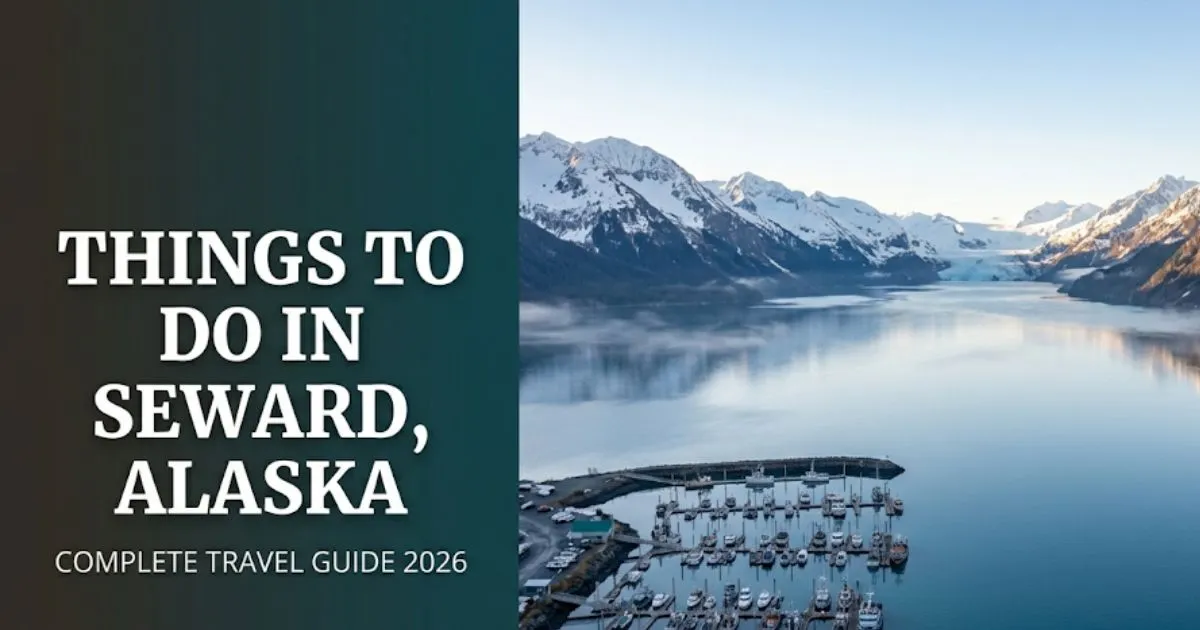
Things to Do in Seward, Alaska: The 2026 Visitor’s Guide

The best things to do in Seward, Alaska center on one non-negotiable reality: this is Alaska’s most accessible wilderness concentrated into a single coastal town.
Kenai Fjords National Park sits at Seward’s doorstep, and the glaciers, orcas, and Steller sea lions found here are not approximations of wilderness. They are the real thing.
This guide covers every major Seward experience. You’ll get honest guidance on what’s worth your money, what requires advance booking, who each activity suits, and how to build an actual two-day itinerary.
Things to Do in Seward, Alaska: What Makes This Town Different
Seward, Alaska stands apart from every other small coastal town in the United States because of one geographic accident: Kenai Fjords National Park begins practically at the town limits.
The town sits at the head of Resurrection Bay on the Kenai Peninsula, about 127 miles south of Anchorage via the Seward Highway. That drive alone ranks among the most dramatic road approaches to any US destination.
Unlike Juneau or Ketchikan, Seward is accessible by car from the continental road network. No floatplane. No ferry required.
According to the Seward Chamber of Commerce and Convention and Visitors Bureau, the town hosts roughly one million visitors annually during peak season. The infrastructure remains surprisingly small-town despite that volume.
Most visitors come for glacier and wildlife boat tours. The secondary draw is Exit Glacier, the only part of Kenai Fjords accessible by road.
The honest assessment: Seward rewards visitors who plan specifically and punishes those who arrive without reservations. The best experiences here are not spontaneous.
Insider Tip:
- Arrive on a Sunday or Monday in summer. Harbor parking and boat tour capacity are tightest on Friday afternoons and Saturdays.
- The town’s Fourth Avenue is walkable in 20 minutes. Don’t plan more than half a day for in-town exploration.
- Solo travelers will find Seward extremely navigable but socially quiet. It’s an outdoor destination, not a social scene.
What Is Seward, Alaska Known For?
Seward is known primarily for tidewater glacier viewing, marine wildlife encounters, and direct road access to one of the largest icefields in the United States.
The Harding Icefield, visible from the Harding Icefield Trail above Exit Glacier, is one of the largest icefields in the US. The National Park Service reports it covers approximately 700 square miles.
Seward also hosts two major annual events that define local culture. The Mount Marathon Race, held every July 4, sends runners up and down the nearly vertical Mount Marathon in a grueling tradition dating to 1915.
The Silver Salmon Derby each August draws serious sport fishers from across Alaska. Halibut fishing in Resurrection Bay is productive nearly year-round for those willing to charter.
The Alaska SeaLife Center functions as both a public aquarium and an active marine research and rehabilitation facility. It is the only facility of its kind in Alaska.
| Seward’s Defining Experiences | Best For | Season | Cost Range |
|---|---|---|---|
| Kenai Fjords boat tour | All profiles | May to Sept | $150 to $250+ per adult |
| Exit Glacier hike | Active travelers | May to Oct | Free to $15 NPS fee |
| Alaska SeaLife Center | Families, all ages | Year-round | $25 to $30 per adult |
| Mount Marathon Trail | Fit hikers | June to Sept | Free |
| Silver Salmon Derby | Sport fishers | August | Entry fee applies |
| Halibut charter fishing | Adults, small groups | May to Sept | $250 to $350+ per person |
Couples and romantic travelers will find Seward’s combination of dramatic scenery and small-town quiet genuinely atmospheric. The town has enough evening ambiance at the harbor for a memorable stay, even if it’s not a restaurant-dense urban destination.
Kenai Fjords National Park Boat Tour Seward
The Kenai Fjords full-day glacier and wildlife cruise is the single most important activity in Seward and one of the best wildlife experiences accessible by road anywhere in North America.
Tours depart from the Seward Small Boat Harbor and travel through Resurrection Bay into the open waters of Kenai Fjords. Full-day tours typically reach Holgate Glacier or Northwestern Fjord for glacial calving views.
Wildlife encountered on well-timed summer cruises includes orcas, humpback whales, Dall’s porpoise, Steller sea lions, sea otters, horned puffins, and bald eagles. No single day is guaranteed, but summer sightings are statistically reliable.
The two primary operators are Major Marine Tours and Kenai Fjords Tours. Both offer half-day and full-day options. Full-day tours run approximately 8 to 9 hours and reach the outermost fjords with the most dramatic glacier access.
Book 4 to 6 weeks in advance for any July departure. June and August require at least 2 to 3 weeks advance booking. Showing up day-of in peak summer and finding space is genuinely difficult.
| Tour Option | Duration | Typical Cost | Best For | Key Highlight |
|---|---|---|---|---|
| Half-day wildlife cruise | 3.5 to 4 hours | $100 to $130 per adult | Budget travelers, limited time | Resurrection Bay wildlife |
| Full-day glacier tour | 8 to 9 hours | $170 to $210 per adult | Most visitors | Tidewater glacier calving |
| Northwestern Fjord tour | 10 to 11 hours | $210 to $250+ per adult | Wildlife maximizers | Most remote fjords |
| Dinner cruise (select operators) | 4 hours | $100 to $150 per adult | Couples | Evening wildlife and scenery |
Seniors and accessibility travelers: Boat decks involve movement on open water. Mobility limitations should be confirmed with operators before booking. Motion sickness is a real factor on full-day open-water tours. Bring medication if prone.
Insider Tip:
- Dress for 20 to 30 degrees colder than the Seward harbor temperature. Wind chill on open water is severe even in July.
- The port side of the boat typically offers better glacier views on the westward fjord routes. Ask crew when boarding.
- Bring binoculars. Onboard magnification aids are limited.
Exit Glacier Seward, Alaska
Exit Glacier is the only section of Kenai Fjords National Park reachable by car, making it essential for any Seward itinerary regardless of budget or fitness level.
The glacier sits approximately 9 miles north of Seward via Exit Glacier Road off the Seward Highway. The NPS visitor center at the base provides ranger-led programs and current glacier information.
Three trail tiers exist here. The paved nature loop at the base suits all mobility levels and delivers close glacier views within a 20-minute walk. The upper trail to the Overlook Loop adds roughly 2 miles and moderate elevation gain. The Harding Icefield Trail extends 8.2 miles round-trip with 3,000 feet of elevation gain and is one of the most rewarding day hikes in Alaska.
The Harding Icefield Trail is not a casual hike. It requires solid fitness, appropriate footwear with traction, and 6 to 8 hours. Snow lingers at the top even in summer.
Families with children under 8 are best served by the paved nature loop. The icefield trail is not appropriate for young children. The overlook loop suits active children 10 and older with adult supervision.
Budget travelers note: Exit Glacier access uses the standard NPS America the Beautiful pass or charges a per-vehicle entrance fee. The walk-in rate for foot traffic is typically lower. Verify current fee structure at the NPS Kenai Fjords unit before visiting.
Glacier viewpoint markers along the lower trail show historical ice extent by year. The recession documented over recent decades is visible and striking. The NPS updates these markers regularly based on survey data.
Exit Glacier Road typically closes in winter due to snowfall. Access is generally restored by late April or May, depending on conditions. Verify with the NPS before an early-season or late-season visit.
Key Takeaway: Book your Kenai Fjords boat tour 4 to 6 weeks before your July visit. Missing this step is the single most common reason first-time Seward visitors leave disappointed.
Seward Alaska Wildlife and Marine Life
Seward’s position at the convergence of Resurrection Bay and the Gulf of Alaska makes it one of the most productive marine wildlife viewing locations in the continental road network of North America.
On and near Resurrection Bay, visitors reliably encounter sea otters floating in kelp beds near the harbor. Steller sea lions haul out on buoys and rock outcroppings visible from the harbor boardwalk. Horned puffins nest on rocky sea stacks visible from boat tours and, occasionally, from shore at Lowell Point.
Orca pods (both resident fish-eating orcas and transient mammal-eating orcas) move through Kenai Fjords waters during summer. Humpback whale sightings peak in July and August when herring concentrations are highest.
On land, black bears are active in the Seward area throughout summer. Brown bears are present on the broader Kenai Peninsula. Bear spray is non-negotiable on any inland trail, including the Harding Icefield route and Caines Head.
According to the Alaska Department of Fish and Game, Steller sea lion populations in Kenai Fjords waters have shown recovery trends in recent years following decades of decline. The boat tour rock haul-outs typically host dozens of individuals during peak season.
Solo travelers on wildlife viewing should avoid hiking the Harding Icefield Trail alone. Bear encounters are rare but possible, and the trail has limited cell service. Go with at least one partner or join a guided group.
Insider Tip:
- The harbor boardwalk at dawn (5 to 6 AM in summer) offers sea otter sightings without crowds. Bring coffee from Resurrect Art Coffee House on Third Avenue and walk the dock area before tours depart.
- Dall’s porpoise often bow-ride boat wakes. Stand at the bow of cruise vessels for the closest encounters.
Alaska SeaLife Center Seward
The Alaska SeaLife Center on Railway Avenue in downtown Seward is the only public aquarium and marine research facility in Alaska, accredited by the Association of Zoos and Aquariums.
It houses Steller sea lions, harbor seals, seabirds, fish, and invertebrates native to Alaskan waters. The facility also conducts active wildlife rehabilitation, and during certain seasons, recovering animals are visible in rehabilitation pools.
Admission runs approximately $25 to $30 per adult and $15 to $20 per child, based on recent pricing. Verify current rates directly with the center before visiting, as admission is subject to annual adjustment.
The center typically opens daily year-round, though hours vary by season. Winter hours are reduced. Confirm current schedule before planning a visit.
Families with children under 12 will find the SeaLife Center genuinely excellent. The viewing windows allow close-up encounters with sea lions and seals. The touch tanks engage young children meaningfully. Plan 2 to 3 hours.
Active adult travelers visiting Seward primarily for wilderness experiences may find the SeaLife Center underwhelming after a full-day boat tour. It functions better as a half-morning complement than a primary destination for that profile.
The facility sits within easy walking distance of the harbor and Fourth Avenue. It is one of the most wheelchair-accessible experiences in Seward. Paved pathways, elevator access, and interior climate control make it genuinely comfortable for seniors and visitors with mobility limitations.
Insider Tip:
- The SeaLife Center’s underwater viewing tunnels for the sea lion enclosure offer views impossible to replicate anywhere else in Alaska.
- Arrive early (at opening) on summer weekdays. Weekend afternoons draw cruise ship passenger overflow and can feel crowded in the main galleries.
Seward Alaska Kayaking and Water Activities
Sea kayaking on Resurrection Bay is one of the best on-water wildlife experiences in Seward for visitors who want proximity that no motor vessel can offer.
Sea otters, harbor seals, Steller sea lions, and seabirds can be encountered at extremely close range from a kayak at the waterline. The calm inner bay near the harbor is appropriate for novice paddlers. The outer bay and passages toward Caines Head require experience and appropriate tidal awareness.
Kayak Adventures Worldwide and Liquid Adventures are two named operators offering guided kayak tours out of Seward. Guided day tours typically run 4 to 6 hours and include equipment and a naturalist guide.
Rental kayak pricing varies by operator. Guided tours generally run approximately $100 to $150 per person for a half-day, with full-day guided options at higher rates. Verify pricing and availability directly with operators before your visit, as rates and schedules shift seasonally.
Solo travelers should choose guided tours rather than independent rentals unless they have genuine sea kayaking experience. Resurrection Bay water temperatures hover in the low 40s Fahrenheit even in summer. Capsizing without proper gear is a cold-water emergency.
Couples will find a guided 4-hour kayak tour one of Seward’s most memorable experiences. The scale of Resurrection Bay from water level, with the Kenai Mountains framing every direction, is genuinely worth the trip.
Paddleboard rentals are available at some harbor outfitters for calmer days in the inner bay. This is better suited to casual recreational use than wildlife viewing.
Insider Tip:
- June offers the best combination of calm bay conditions and active sea life for kayakers. August winds increase in the afternoons. Morning departures are almost always calmer than afternoon sessions.
Key Takeaway: Dress for 40-degree water temperatures even on sunny summer days. Cold-water immersion risk on Resurrection Bay is real and requires a dry bag with emergency layers on every kayak outing.
Seward Alaska Hiking Trails
Seward offers hiking across a wider range of difficulty and access levels than most visitors realize, from a paved nature loop suitable for all mobility levels to one of Alaska’s most demanding full-day alpine routes.
Two Lakes Trail runs about 1 mile through downtown Seward near the campground off Nash Road. It is flat, paved in sections, and appropriate for all ages and mobility levels. Wildlife sightings include spawning salmon in season and bald eagles overhead.
Mount Marathon Trail gains approximately 3,000 feet over just under 1.5 miles to the summit ridge. It is genuinely technical in sections, with loose scree and steep vertical exposure. Most visitors underestimate it significantly. Allow 4 to 6 hours round-trip.
The Caines Head State Recreation Area trail south of Seward at Lowell Point is one of the area’s most rewarding and least-crowded routes. The trail runs approximately 4.5 miles (one way) to Fort McGilvray, a World War II-era fortification with panoramic bay views. It is only accessible below the mid-tidal line for part of the route, requiring tide chart planning.
Seniors and accessibility travelers are genuinely served by the Two Lakes Trail and the lower Exit Glacier nature loop. Mount Marathon and Caines Head are not appropriate for limited mobility visitors.
Families with children can do the Two Lakes Trail easily. Active families with children 10 and older can attempt the lower Mount Marathon trail to the treeline (roughly 45 minutes up) without committing to the full summit. The Caines Head trail is appropriate for children 10 and older with tide chart awareness.
| Seward Trail | Distance | Difficulty | Best For | Key Note |
|---|---|---|---|---|
| Two Lakes Trail | 1 mile | Easy | All ages, all mobility | Flat, salmon viewing in season |
| Exit Glacier Nature Loop | 0.8 miles | Easy | Families, seniors | Paved, glacier views |
| Exit Glacier Overlook | 2 miles | Moderate | Active adults | Good glacier perspective |
| Harding Icefield Trail | 8.2 miles RT | Strenuous | Fit hikers only | Allow 6-8 hours, snow possible |
| Mount Marathon Trail | 3 miles RT | Very strenuous | Fit adults | Steep scree, elevation |
| Caines Head Trail | 9 miles RT | Moderate-strenuous | Active adults, older teens | Tide-dependent access |
Seward Alaska Harbor and Downtown
Seward Small Boat Harbor is the social and logistical center of town, more so than any commercial street. Boat tours, fishing charters, kayak outfitters, and harbormaster operations all radiate from this point.
The harbor boardwalk is worth an hour even for non-boaters. Sea otters forage in the kelp at the harbor mouth. Charter boat crews clean halibut and salmon at the cleaning stations, which draws eagles and gulls in theatrical numbers.
Fourth Avenue is Seward’s primary commercial street. It runs parallel to the railroad tracks through the center of town. Shops, galleries, and a handful of restaurants occupy the ground floors of a mix of historic and functional commercial buildings.
The Van Gilder Hotel on Adams Street is a National Register-listed 1916 property and one of the few genuine historic buildings in downtown Seward. It serves as a useful visual anchor for the town’s pre-tourism commercial history.
Budget travelers can spend several genuinely productive hours at the harbor and downtown at no cost. The harbor walk, the fish cleaning spectacle, and the Fourth Avenue street-level exploration cost nothing and deliver authentic local texture.
Couples will find the harbor at golden hour (which in Alaskan summer extends until 10 PM or later) genuinely atmospheric. The reflection of the Kenai Mountains in the calm harbor water at dusk is one of Seward’s best unscripted moments.
Insider Tip:
- Walk to the far end of the harbor near the launch ramps in the early morning. This is where commercial fishing boats return with halibut. The activity level and scale of fish being offloaded is a completely different Seward than the tourist boardwalk offers.
Key Takeaway: The harbor’s early morning (5 to 7 AM) commercial fishing activity gives you an unfiltered look at Seward’s working identity that disappears once tour boat departure crowds arrive by 8 AM.
Seward Alaska Restaurants and Dining
Seward’s dining scene is honest, seafood-forward, and appropriately limited for a town of approximately 3,000 permanent residents. Expecting urban restaurant variety is a setup for disappointment.
Ray’s Waterfront on the small boat harbor is Seward’s most consistently recommended seafood restaurant. The halibut and salmon are local, the harbor views are direct, and the setting is genuinely Alaskan without being kitschy. Expect a wait for dinner during peak summer. Reservations where accepted are worth taking.
Apollo Restaurant on Fourth Avenue is a longtime local fixture serving a mix of Greek and Alaskan seafood. It offers one of the few genuinely non-seafood-centric menus in town and has maintained local loyalty for decades. It’s the place locals eat when they’re not taking visitors to Ray’s.
Seward Brewing Company on Fourth Avenue serves locally brewed beers alongside bar-friendly food. The outdoor seating area in good weather is one of Seward’s better social environments. The beer quality consistently outpaces the food, but the overall experience suits a relaxed evening.
For breakfast, Resurrection Roadhouse near the harbor area and Ranting Raven Bakery on Fourth Avenue both serve solid morning options before early boat departures. Early arrival (before 7:30 AM) avoids the pre-cruise rush.
Budget travelers should note that dining costs in Seward skew higher than similar-sized towns in the continental US. Groceries at local markets for one or two meals can offset restaurant costs significantly during multi-day stays.
Families with children will find Ray’s and Apollo both accommodate kids without issue. Neither has a specific children’s menu, but both serve approachable options. The Seward Brewing Company outdoor area is family-friendly during daylight hours.
Insider Tip:
- If you catch your own halibut on a charter, some processing shops near the harbor will vacuum-seal and freeze your catch for travel. Ask your charter operator for current referrals. This is a Seward experience that no restaurant menu can replicate.
Seward Alaska with Kids and Families
Seward is a genuinely excellent family destination for children ages 8 and older. For families with younger children, the experience narrows significantly to the Alaska SeaLife Center and the lower Exit Glacier nature loop.
The Alaska SeaLife Center is the single best family-specific activity in Seward. Children who have any interest in marine animals will find it absorbing for 2 to 3 hours. The touch tanks, seal feeding windows, and sea lion viewing tunnels are legitimately engaging.
Full-day boat tours into Kenai Fjords are appropriate for children 8 and older. The combination of whale watching, glacier calving, and seabird colonies holds children’s attention on a well-timed tour. For children under 8, the motion on open water and the 8-plus hour duration create real management challenges.
The Two Lakes Trail is appropriate for toddlers and young children in carriers or strollers in the paved sections. The Exit Glacier lower loop is stroller-accessible on the paved portion.
Practical family logistics: Seward has no large grocery chain. Pack snacks and child-specific supplies before leaving Anchorage. The town’s single pharmacy has limited inventory. Pediatric medical facilities are not present in Seward; the nearest hospital is in Soldotna, approximately 90 miles by road.
Budget note for families: A family of four doing a full-day boat tour, Alaska SeaLife Center admission, and two restaurant dinners will spend $800 to $1,200 in two days before lodging. Plan accordingly.
Insider Tip:
- Book children’s boat tour tickets at the same time as adult tickets. Operators like Major Marine Tours offer reduced rates for children under 12, but those spots fill with the adult seats on peak-summer departures.
Seward Alaska Free and Budget Activities
A full Seward experience is not cheap. But a meaningful budget version of Seward is genuinely achievable with intentional planning.
Free activities in Seward:
- Walking the small boat harbor boardwalk and fish cleaning station area
- Two Lakes Trail (no entry fee)
- Bald eagle watching from the harbor (eagles congregate daily near the fish cleaning docks)
- Watching boat departures and arrivals from the harbor observation area
- Seward’s Fourth Avenue window shopping and local gallery browsing
- Viewing sea otters from the harbor breakwater (binoculars recommended)
- Sunrise and sunset at Lowell Point beach (short drive south of town)
The lower Exit Glacier nature loop charges the standard NPS vehicle fee but is free for walk-in access (verify current NPS fee structure before visiting). The America the Beautiful Annual Pass covers the fee for road access and pays for itself immediately at Exit Glacier if you have another NPS site visit on your Alaska trip.
Budget accommodation: Seward has an established campground near the harbor and a state campground at Lowell Point. Both offer significantly lower nightly costs than Seward’s lodges and hotels. RV camping along the waterfront is one of the most popular accommodation formats in town during summer.
The half-day wildlife cruise (rather than the full-day glacier tour) cuts boat tour cost by roughly 40 to 50 percent and still delivers Resurrection Bay wildlife encounters. It doesn’t reach tidewater glaciers, but for true budget travelers, the wildlife-only experience is a legitimate alternative.
Budget travelers should book accommodations 8 to 12 weeks ahead for summer visits. Last-minute lodging in Seward in July is both scarce and expensive.
Key Takeaway: The America the Beautiful Annual Pass costs approximately $80 and covers NPS entrance fees at Exit Glacier and every other federal land site on your Alaska trip. It is the single best budget move for any Seward visitor.
Best Time to Visit Seward, Alaska
The best time to visit Seward, Alaska for the full wilderness and wildlife experience is late May through mid-September, with late May and early September offering the strongest combination of access, lower crowds, and competitive pricing.
June delivers long daylight hours (18 to 20 hours), active marine wildlife, full boat tour schedules, and weather that is cool but reliably clear for several consecutive days. It is the local favorite among repeat Seward visitors.
July is peak season. All services run at full capacity. Boat tours book out weeks ahead. The Mount Marathon Race on July 4 draws significant crowds to a normally quiet town. Accommodation prices peak. The experience is maximized but so is every logistical challenge.
August brings the Silver Salmon Derby, active wildlife, and the first hints of fall foliage on the slopes above Seward. It is slightly less crowded than July but still requires advance planning.
Late September through April is off-season for most activities. Boat tours run limited or no service. Exit Glacier Road typically closes by late October. Accommodation prices drop by 40 to 60 percent.
| Month | Weather | Crowds | Boat Tours | Costs |
|---|---|---|---|---|
| May (late) | Cool, variable | Low-moderate | Full schedule begins | Below peak |
| June | Best weather avg | Moderate-high | Full, book ahead | Near peak |
| July | Warmest, variable | Peak | Book 4-6 weeks ahead | Peak pricing |
| August | Good, windier PM | High | Full schedule | Near peak |
| September | Cooler, colorful | Moderate | Reduced late Sept | Below peak |
| October-April | Cold, road closures | Very low | Limited/none | Lowest rates |
Families with children on school schedules face a narrow window of peak season overlap. Late June through late August is the practical family window. Accept peak pricing or plan for June before school ends if your schedule allows.
Seward Alaska Winter Activities
Seward in winter is a fundamentally different destination, and for the right traveler, it is genuinely worthwhile. It is not a winter resort town. It is an authentic Alaskan fishing and working town that happens to offer proximity to the aurora borealis during clear dark nights.
Northern lights viewing: The Kenai Peninsula sits within the auroral oval. Clear nights between late September and late March offer legitimate aurora opportunities from the dark hillsides above Seward. Light pollution is minimal. The harbor waterfront reflection of a strong aurora display is one of the most visually striking experiences the area offers.
Ice fishing: Sportfishing on local lakes and streams near the Seward area continues through winter for experienced anglers. The Alaska Department of Fish and Game maintains current regulations and species-specific ice fishing guidance; verify regulations before going.
The Alaska SeaLife Center operates year-round, making it one of the few Seward activities with consistent winter access. It is also less crowded in winter, allowing more time at exhibits without summer foot traffic.
Winter accommodation in Seward runs at dramatically lower rates. Properties that charge $200 to $350 per night in July often offer rooms at $90 to $150 during winter months. This makes a winter aurora-seeking trip a legitimate budget Alaska experience.
Practical winter warnings: The Seward Highway between Anchorage and Seward traverses mountain passes subject to avalanche closures and ice. Check Alaska 511 road conditions before every drive. A 2-hour summer drive can become a 4-hour winter drive in poor conditions.
Seniors and accessibility travelers may find winter Seward logistically challenging due to ice on sidewalks, limited service hours at restaurants, and reduced activity availability. Confirm specific winter accessibility conditions with your lodging property before booking.
Seward Alaska Day Trip from Anchorage Itinerary
Seward works as a day trip from Anchorage, but a two-day stay is the minimum for experiencing its defining activities without feeling rushed.
Day trip reality check: The drive from Anchorage to Seward is approximately 2.5 hours each way in good conditions on the Seward Highway. A day trip that includes a half-day boat tour leaves time for little else. For the full Kenai Fjords glacier cruise, an overnight stay is strongly recommended.
The Alaska Railroad Coastal Classic train offers a spectacular alternative to driving. It runs seasonally between Anchorage and Seward, with the return trip passing through the Kenai Mountains during the highest-light evening hours. Travel + Leisure has identified the Coastal Classic route as one of the most scenic train journeys in North America.
Suggested 2-Day Seward Itinerary:
Day 1:
- Depart Anchorage by 6:30 AM to arrive Seward by 9 AM.
- Board a full-day Kenai Fjords glacier and wildlife cruise departing at 9 or 10 AM. (Pre-booked.)
- Return to harbor approximately 6 to 7 PM.
- Dinner at Ray’s Waterfront or Apollo Restaurant.
- Evening harbor walk. Sunset in summer extends past 10 PM.
Day 2:
- Early breakfast at Ranting Raven Bakery or Resurrection Roadhouse.
- Drive to Exit Glacier (9 miles, 20 minutes). Hike the overlook loop or, for fit visitors, begin the Harding Icefield Trail by 8 AM.
- Return to Seward by early afternoon.
- Alaska SeaLife Center for 2 to 3 hours.
- Browse the harbor and Fourth Avenue before departing for Anchorage by 3 to 4 PM.
Solo travelers can execute this itinerary efficiently without a vehicle by combining the Alaska Railroad with outfitter shuttles for Exit Glacier. Verify current shuttle options with local tour operators before departing Anchorage.
Families with children should replace the Harding Icefield Trail on Day 2 with the lower Exit Glacier nature loop and add extra time at the Alaska SeaLife Center.
Seward Alaska Practical Travel Tips
Getting to Seward means either driving the Seward Highway (Alaska Route 1) from Anchorage or taking the Alaska Railroad Coastal Classic train. There is no commercial air service to Seward. No public bus service runs between Anchorage and Seward on a regular schedule.
Driving: The 127-mile drive from Anchorage takes approximately 2.5 hours in ideal summer conditions. The Seward Highway is consistently ranked among the most scenic drives in Alaska. Watch for Dall sheep on the canyon walls between Anchorage and Girdwood, and for beluga whales in Turnagain Arm at low tide.
Parking in Seward during peak summer is a genuine challenge. The small boat harbor parking area fills by 8 AM on summer weekends. Overflow parking exists at the railroad depot and on side streets. Consider walking or biking from your accommodation if staying within a mile of the harbor.
Cell service: Seward proper has serviceable cell coverage. Trails above the town, the Harding Icefield Trail, and open-water boat tours have limited to no cell service. Download offline maps before leaving your accommodation. Let someone know your trail itinerary if hiking alone.
Bear spray: Available at local outfitters in Seward. Do not arrive expecting to borrow it. Carry it on every inland trail. Know how to use it before leaving the parking lot.
Practical packing for Seward:
- Waterproof rain jacket (non-negotiable, regardless of forecast)
- Waterproof pants or shell layer for boat tours
- Layers for wind chill on open water (fleece mid-layer)
- Waterproof hiking boots for any trail beyond the paved loops
- Binoculars for wildlife viewing from both boat and shore
- Sunscreen (UV exposure is high at northern latitudes, even on overcast days)
- Seasickness medication if prone (full-day open-water tours cover significant distance)
Information currency warning: Tour operator schedules, NPS access policies, road conditions, and accommodation pricing in Seward change annually. Verify all logistics directly with operators and the National Park Service Kenai Fjords unit before departure. Prices and availability listed in this guide reflect general 2026 conditions and should be confirmed before booking.
Safety and Practical Warnings for Seward, Alaska
The primary safety risk for most Seward visitors is hypothermia exposure on open-water boat tours, not wildlife or trail hazards.
Key safety and practical facts every visitor should know:
- Cold-water immersion risk is serious on Resurrection Bay. Water temperatures remain in the low 40s Fahrenheit year-round. Wear layers and carry dry clothes in a waterproof bag on any water activity.
- Weather on Resurrection Bay changes within hours. A calm morning departure can return in whitecap conditions. This is normal. Operators manage it. Trust certified guides.
- Bear spray is mandatory on all inland trails in the Seward area. Black bears are active along the Caines Head trail and in the forest margins near Exit Glacier Road.
- Harding Icefield Trail requires snow travel competence in early season. Check NPS current conditions before June departures. Microspikes or crampons may be necessary through June.
- The Seward Highway has avalanche zones in winter and is subject to rockfall year-round. Never stop on the highway shoulder in slide zones. Heed road closure signs.
- Tidal access on the Caines Head trail is non-negotiable. Check NOAA tide predictions before hiking. The tidal section is impassable at high tide.
- Cell service disappears on open-water tours and upper mountain trails. File a trip plan with your lodging or a trusted contact before any backcountry day.
For marine emergencies on Resurrection Bay and Kenai Fjords waters, contact US Coast Guard Sector Anchorage. For NPS trail emergencies within Kenai Fjords National Park, contact the NPS Kenai Fjords unit ranger station in Seward.
Frequently Asked Questions About Things to Do in Seward, Alaska
What is Seward, Alaska, most known for?
Seward is most known for Kenai Fjords National Park boat tours, Exit Glacier, and direct road access to tidewater glacier and marine wildlife viewing from Anchorage.
The Alaska SeaLife Center and sport fishing for halibut and silver salmon are also major draws.
The town’s annual July 4 Mount Marathon Race is one of Alaska’s oldest and most recognized running traditions.
How many days do you need in Seward, Alaska?
Two days is the practical minimum for experiencing Seward’s defining activities without feeling rushed.
Day 1 covers a full-day Kenai Fjords boat tour. Day 2 covers Exit Glacier and the Alaska SeaLife Center.
Three days allows time to add hiking, kayaking, or a fishing charter alongside the core experiences.
What is the best time of year to visit Seward, Alaska?
The best time to visit Seward, Alaska is late May through early September, with late May and early September offering the best balance of access, wildlife activity, and lower crowds than peak July.
June delivers the most reliable clear weather and full boat tour availability.
July is peak season with the most activity but also the highest prices and the most critical need for advance reservations.
Do you need to book Kenai Fjords boat tours in advance?
Yes. Full-day Kenai Fjords glacier and wildlife cruises with operators like Major Marine Tours and Kenai Fjords Tours book out 4 to 6 weeks ahead for July departures.
June and August require at least 2 to 3 weeks advance booking.
Arriving in Seward without a boat tour reservation in peak summer and expecting to find availability day-of is the single most common planning mistake visitors make.
Can you visit Seward, Alaska on a budget?
Yes, with specific planning. Free activities include the harbor boardwalk, Two Lakes Trail, bald eagle and sea otter viewing near the harbor, and the lower Exit Glacier trail (walk-in, no vehicle fee required).
The America the Beautiful Annual Pass covers NPS vehicle fees and the half-day wildlife cruise costs roughly 40 to 50 percent less than the full-day glacier tour.
Camping at Seward’s harbor campground or Lowell Point State Recreation Area significantly reduces lodging costs compared to hotel rates.
Is Seward, Alaska good for families with kids?
Seward is excellent for families with children ages 8 and older. The Alaska SeaLife Center is the standout family activity, with close-up marine wildlife encounters appropriate for all ages.
Full-day boat tours suit children 8 and older with reasonable attention spans for an 8-hour open-water journey.
For families with children under 8, the SeaLife Center and the paved Exit Glacier nature loop are the most realistic activities. Limit expectations on the boat tour for very young children.
Plan Your Seward Trip: Final Guidance
Seward rewards planning more directly than almost any other destination in the continental United States road network. Book your Kenai Fjords boat tour first, then build everything else around it.
The most practical next step is visiting the NPS Kenai Fjords unit website and the booking pages for Major Marine Tours or Kenai Fjords Tours. Do this before finalizing accommodation dates. Your boat tour day determines your itinerary anchor.
Travel conditions, pricing, NPS access policies, road conditions, and seasonal operator schedules in Seward change year to year. Verify all logistics directly with operators and official sources before departure.
Seward is one of the most concentrated genuine wilderness experiences accessible by road anywhere in North America. Come prepared, book early, dress for the cold, and it will earn every mile of the Seward Highway drive.