
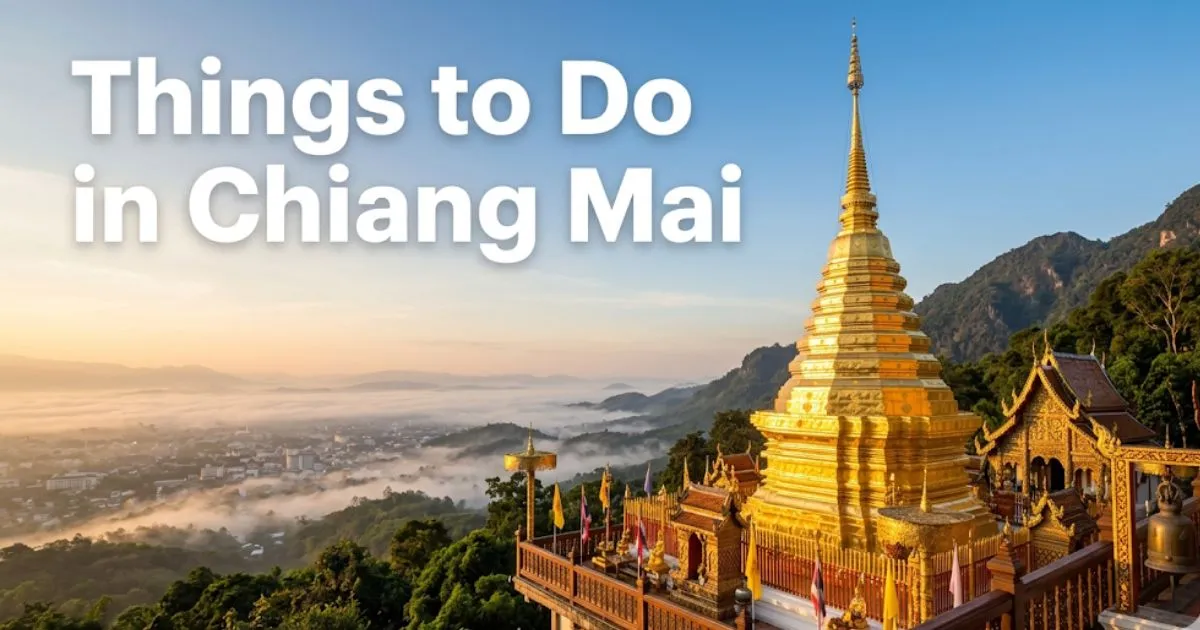
Chiang Mai in 2026: What Still Matters and What to Skip

Chiang Mai in 2026 rewards travelers who leave the Old City walls. The real city lives in its neighborhoods, not its tourist corridors.
The city welcomed over 6 million domestic and international visitors before the recent shift toward sustainable tourism caps at key sites. This guide cuts through the noise.
I cover exactly what to do, what to skip, what locals prefer, and how 2026 seasonal conditions and crowd management policies will affect your actual trip.
Chiang Mai Things to Do: An Honest Orientation
The best things to do in Chiang Mai center on food, temples, and mountain access. Start your planning by understanding the city’s actual layout.
Chiang Mai is a sprawl of distinct villages connected by ring roads. The Chiang Mai City Municipality reports the Old City is just four square miles of the metro area’s total footprint.
Nimmanhaemin Road is where the city’s creative class works and spends money. The Old City holds the temples and guesthouses.
The Ping River curves through neighborhoods where generations of families have built the city’s culinary and craft reputation. The mountains start rising about 20 minutes west.
| Area | Character | Best For | Average Accommodation |
|---|---|---|---|
| Old City | Temple-dense, walkable, tourist core | First-time visitors, history focus | Budget guesthouses to mid-range boutiques |
| Nimmanhaemin | Modern, cafe culture, design shops | Couples, digital nomads, food-focused travelers | Mid-range to premium condos and hotels |
| Wat Ket (East Bank) | Historic riverfront, art spaces, quiet | Solo travelers, repeat visitors, budget travelers | Budget to mid-range guesthouses |
| Santitham | Local food, university energy, no tourists | Food travelers, budget travelers, authentic experience | Budget guesthouses, local apartments |
| Hang Dong | Rural feel, artist communities, sprawl | Families, long-stay travelers, craft shoppers | Mid-range resorts, rental homes |
The single biggest mistake visitors make is booking everything inside the Old City. It is compact, crowded, and more expensive for less quality.
Venture outward by your second full day. Locals navigate the city by ring road, not by tourist landmarks.
Things to Do in Chiang Mai Thailand: The Temple Circuit Without the Crowds
Chiang Mai’s temples are the region’s most significant living religious architecture. The 2026 experience demands smarter timing and crowd management strategies.
Wat Phra That Doi Suthep remains the defining Chiang Mai experience for first-timers. The 306-step naga staircase delivers you to a golden chedi and panoramic views.
Morning is non-negotiable for this site. Arrive by 7:00 AM or expect shoulder-to-shoulder conditions by 9:00 AM. The funicular is available for seniors and mobility-limited visitors.
The temple is active. Dress accordingly with covered knees and shoulders.
For a local alternative, visit Wat Pha Lat hidden on the same mountain. Monks originally built this temple as a resting point on the pilgrimage path.
The jungle setting and stone Buddhas offer solitude the summit temple cannot. It is free and genuinely peaceful in the early morning.
Wat Chedi Luang in the Old City requires a 50 baht entry fee for foreign visitors as of recent years. The partially ruined 15th-century chedi is powerful in its incompleteness.
Visit in late afternoon when tour buses have departed. The evening monk chat program resumed fully in 2025 and continues through 2026.
Wat Phra Singh houses the revered Phra Singh Buddha image. The Lai Kham assembly hall contains the city’s finest examples of original Lanna mural painting.
Expect cruise ship-style crowds from 10:00 AM to 3:00 PM during the 2026 November through February peak. Go at opening or one hour before close.
Insider Tip:
- Temple fatigue is real and fast: three temples in one morning is the practical limit for most travelers
- Rent a bicycle to temple-hop the Old City’s flat grid efficiently and inexpensively
- The Tourism Authority of Thailand confirms temple dress codes are strictly enforced in 2026 for all active worship sites
Key Takeaway: Doi Suthep at 7:00 AM, Wat Pha Lat after, then Old City temples after the tour buses leave.
Things to Do Chiang Mai: Eating Your Way Through the City
Chiang Mai’s food identity runs from royal Lanna recipes to the city’s position as Thailand’s street food capital for northern cuisine. The best meals require neighborhood navigation.
Your breakfast mission is khao soi at Khao Soi Lam Duan Fah Ham. This open-air institution on the east bank of the Ping River serves the definitive version.
The crispy and soft noodle combination in coconut curry defines northern Thai comfort food. Arrive before 11:00 AM or they will sell out.
Warorot Market is the city’s largest fresh and prepared food market. The downstairs food court serves nam prik ong and sai ua sausage that most tourist restaurants cannot replicate.
The market’s dry goods section sells quality spice blends and local coffee beans for a fraction of Old City tourist shop prices. This is where restaurant cooks source ingredients.
For dinner, the Santitham neighborhood delivers what Nimman’s Instagram-friendly restaurants cannot. Suan Dok Gate area hosts excellent nam prik specialists and laap vendors after dark.
Lert Ros in the Old City grills whole fish over charcoal with a tamarind-chili sauce that justifies every 30-minute wait. The dining room has zero air conditioning and zero atmosphere.
The food is why you are there. Solo diners order one fish and one som tam without issue.
Cowboy Hat Lady at the North Gate night market makes the city’s most photographed slow-cooked pork leg. The meat is genuinely excellent and the 50-baht plates are the best value protein in the Old City.
Arrive after 8:00 PM when the line shortens. Families with young children find this market loud and crowded.
- Khao Soi Mae Sai for smaller, flavor-concentrated bowls without the tourist markup
- Somphet Market for fresh fruit, local snacks, and prepared foods at local prices
- SP Chicken for charcoal-roasted birds that rival any fine-dining poultry dish in the city
Best Things to Do in Chiang Mai: Markets and Night Bazaars in 2026
Chiang Mai’s market scene serves two distinct crowds in 2026: the tourist-oriented spectacle markets and the functional local markets where the city actually shops. Both belong on your itinerary.
The Sunday Walking Street on Ratchadamnoen Road is the city’s most famous market event. It now operates under the 2025-implemented vendor cap and crowd management system.
The 2026 layout creates one-way pedestrian flow in peak hours. The craft quality ranges from genuinely skilled silversmiths to the same elephant pants sold at every stall.
Arrive at 4:00 PM for browsing room. By 7:00 PM, the street becomes a stationary crowd with occasional forward movement.
Saturday Night Market on Wualai Road offers a smaller, more manageable version of the Sunday market. The silverwork quality is higher in this historic silversmith neighborhood.
For a non-tourist market experience, visit Ton Payom Market near the university. Thursday through Saturday mornings deliver fresh food, local clothing, and zero elephant-print merchandise.
Chang Phuak Night Market at the North Gate feeds locals and informed tourists nightly. The food stall concentration makes it the city’s most efficient street-food dinner strategy.
Warorot Market operates as the city’s central commercial market from early morning through late afternoon. The flower market section opens before dawn.
- Sunday Walking Street for the spectacle, but arrive early and shop the silver at Wualai Road stalls
- Chang Phuak for low-stakes street dinner any night of the week
- Warorot or Ton Payom for what locals actually buy and eat
- Skip the Night Bazaar on Chang Klan Road unless you need a suitcase or souvenir t-shirt at 10:00 PM
The Night Bazaar is Chiang Mai’s most persistent tourist infrastructure. It exists because it has always existed.
The goods are largely identical to what you will find elsewhere at higher prices. Seniors who want a fixed, predictable market with seating and air conditioning nearby will find it suitable.
Key Takeaway: Sunday Walking Street for the show, Warorot for the real thing, Chang Phuak for dinner.
Top Things to Do in Chiang Mai: The Mountain and Nature Access
Chiang Mai’s single greatest geographic asset is immediate access to Doi Suthep-Pui National Park. The mountain is a 20-minute drive from the Old City and contains the region’s best nature experiences.
Doi Suthep-Pui National Park charges a 200 baht foreign adult entry fee as of recent years. The park’s best trail is the Monthathan Waterfall route.
The 2.5-hour round trip follows a stream through mixed deciduous forest to a multi-tiered waterfall. Start at 6:00 AM for solitude and forest bird activity.
Bhubing Palace gardens offer manicured rose gardens and cool-season flower displays at 1,400 meters elevation. The gardens are open to visitors when the royal family is not in residence.
Check opening status before making the drive. The mountain road features aggressive songthaew drivers and sharp curves.
Doi Inthanon National Park requires a full day commitment 90 minutes southwest of the city. The summit is Thailand’s highest point at 2,565 meters.
The Kew Mae Pan Nature Trail delivers the park’s best walking experience with cloud forest and meadow views. The trail closes June through October annually for forest regeneration.
Ang Ka Luang Nature Trail near the summit offers an accessible boardwalk through moss-draped forest for seniors and families. Expect 5°C to 10°C morning temperatures at the summit during the 2026 cool season.
Families with children under eight find the full-day Doi Inthanon trip too much vehicle time. The shorter Doi Suthep mountain loop works better for young children.
- Doi Suthep mountain delivers 80% of the nature experience with 20% of the travel time
- Rent a motorbike only with a valid motorcycle license and an International Driving Permit recognized in Thailand
- Songthaews to Doi Suthep depart from Huay Kaew Road near the zoo and cost 60 to 80 baht per person each way
- The National Park Service of Thailand reports water levels at all Chiang Mai waterfalls are lowest March through May
Things to Do in Chang Mai: Craft, Art, and the Maker Scene
Chiang Mai’s creative economy is anchored in the historic craft communities east of the Ping River. The maker scene spans village ceramics studios, artist-run galleries, and the city’s emerging design district.
San Kamphaeng district is the historic pottery and ceramics production zone. The road from Chiang Mai to San Kamphaeng holds dozens of workshops.
Visit Baan Celadon for a working celadon pottery production demonstration. The showroom sells seconds at significant discounts.
Sankampaeng Hot Springs offers a genuine local soak experience separate from the tourist-geared hot spring resorts. The egg-boiling pools at the source spring are a local tradition.
For textile craft, Studio Naenna near the university creates contemporary designs using natural indigo and traditional Karen weaving techniques. The studio offers half-day workshops for visitors.
Baan Kang Wat is a purpose-built artist community near Wat Umong. The cluster of small studios includes ceramics, printmaking, textile, and coffee operations.
Sunday mornings here feel like a neighborhood market designed for art buyers, not souvenir shoppers. The cafe scene in this complex rivals Nimmanhaemin for quality.
The MAIIAM Contemporary Art Museum in San Kamphaeng holds the city’s most significant contemporary art collection. The building is a converted warehouse with strong natural light.
The museum’s permanent collection documents Thai contemporary art from the 1980s forward. Seniors and mobility-limited visitors benefit from the single-level gallery layout.
Chiang Mai City Arts and Cultural Centre in the Old City provides the most coherent introduction to Lanna history available in the city. The exhibits explain the kingdom that predated Thai unification.
- Baan Kang Wat for morning coffee and craft browsing, then the Old City for history
- San Kamphaeng pottery road for ceramics shoppers with transport
- MAIIAM for the city’s best air-conditioned cultural half-day
Chiang Mai Itinerary: How to Structure 3 Days
This Chiang Mai itinerary assumes you have three full days. It maximizes neighborhood logic, minimizes backtracking, and respects temple fatigue.
Day 1: The Old City and Temple Circuit
Start at 7:00 AM at Wat Phra That Doi Suthep before the crowd arrives. Take a songthaew from Huay Kaew Road.
Stop at Wat Pha Lat on the descent for a quiet jungle temple experience. Return to the Old City by 10:00 AM.
Walk the Old City temple circuit from Wat Phra Singh through Wat Chedi Luang. Lunch at Khao Soi Khun Yai near the North Gate.
Afternoon rest during peak heat. Evening dinner at Chang Phuak Night Market for street food at the Cowboy Hat Lady stall.
Day 2: East of the River and the Maker Scene
Morning at Warorot Market for breakfast and market exploration. Cross the river to Wat Ket historic district.
Lunch at Khao Soi Lam Duan Fah Ham for the definitive northern noodle dish. Afternoon craft exploration at Baan Kang Wat artist community.
Evening in the Santitham neighborhood for local Thai dinner without tourist crowds. This neighborhood has the city’s best concentration of northern Thai food in one walkable area.
Day 3: Mountain or Maker Day
Option A: Full-day trip to Doi Inthanon National Park. Depart by 6:30 AM with a private driver or join a small group tour.
Option B: Morning at San Kamphaeng for pottery studios and the MAIIAM Contemporary Art Museum. Afternoon at a Thai massage school for a proper two-hour treatment.
Evening at Ton Payom Market area for final dinner and local drinking spots. The student energy around this zone makes for Chiang Mai’s most unpretentious night out.
This three-day structure gives you temples, food, craft, nature, and neighborhood navigation. It avoids the tourist herd at the wrong hours.
Key Takeaway: Temple morning, food afternoon, neighborhood night. Repeat with different neighborhoods each day.
Where to Stay in Chiang Mai: Neighborhood Logic for 2026
Chiang Mai accommodation choices determine your daily experience more than any other decision you will make. Choose your neighborhood before you choose your hotel.
Old City lodging puts you inside the moat boundary. The advantage is walking access to major temples and the Sunday market.
The disadvantage is tourist density, higher prices for quality, and limited local food after 9:00 PM. Solo travelers and first-time visitors value the walkability.
Nimmanhaemin area suits couples and digital nomads. The hotel and condo stock is newer and mid-range to premium.
Coffee, brunch, and cocktail access is unmatched. Temple access requires a 15-minute songthaew ride.
Wat Ket and the East Bank appeals to repeat visitors and budget travelers. The guesthouse stock is older, cheaper, and river-adjacent.
The neighborhood has the city’s best concentration of independently owned cafes and art spaces. Sala Lanna and 137 Pillars House anchor the premium end of this zone.
Santitham serves food-focused travelers on a budget. The accommodation options are basic guesthouses and local apartments.
The food access is extraordinary and prices are local, not tourist. Families with young children may find the street-traffic mix stressful.
Hang Dong and the southern corridor offer resort-style accommodations with pool access and mountain views. The trade-off is a 30-minute minimum drive to the Old City.
- Book the Old City for a first trip of three nights or fewer for logistical simplicity
- Book Nimmanhaemin for a week of cafe work and evening dining access
- Book the East Bank for a quieter, more local experience with river proximity
- Verify 2026 booking lead times for November through February peak: 60 to 90 days for preferred properties
- The Tourism Authority of Thailand Chiang Mai office reports high-season hotel occupancy regularly exceeds 85% from December through January
Getting Around Chiang Mai: Transport Reality in 2026
Chiang Mai’s transportation options look simple on paper. The practical reality requires understanding which tool to use for which trip.
Songthaews are the red shared taxi trucks that form the city’s informal public transit system. Flag one, tell the driver your destination, confirm the price, and hop in the back.
Short Old City rides cost 30 baht. Cross-town trips run 40 to 60 baht per person.
Songthaews to Doi Suthep cost 60 to 80 baht one-way. Drivers may wait for a full truck before departing.
Grab and Bolt ride-hailing apps operate legally in Chiang Mai as of 2026. Car rides across the city cost 80 to 150 baht.
Bolt is consistently cheaper than Grab for the same trip. Solo travelers pay the full fare without splitting.
Tuk-tuks are the three-wheeled tourist transport that appears in every Chiang Mai photo. They cost more than Grab for short trips.
Negotiate the fare before getting in. Expect to pay 100 to 150 baht for most Old City to Nimmanhaemin trips.
Motorbike rental costs 200 to 300 baht per day for a basic scooter. This is not the place to learn to ride a motorbike.
Chiang Mai traffic fatalities involving tourists are concentrated at the Huay Kaew and Nimmanhaemin intersection and the Superhighway frontage roads. Rent only with a valid home-country motorcycle license and an International Driving Permit.
Bicycles work well within the Old City’s flat grid. Rentals cost 50 to 80 baht per day.
The moat road is dangerous for cyclists during rush hours. Seniors and families with children should use songthaews or Grab for cross-city movement.
Private drivers for day trips to Doi Inthanon or Chiang Rai cost 1,200 to 2,500 baht for a full day depending on distance and vehicle type. Arrange through your accommodation or a licensed tour operator.
- Grab for convenience, songthaews for budget, bicycle for Old City temple-hopping
- Never accept a taxi that refuses to use the meter or turn on the Grab app
- Download offline Google Maps for Chiang Mai before you arrive
- Seniors and accessibility travelers should rely on Grab cars for point-to-point city movement
Day Trips from Chiang Mai: What Earns the Drive Time
Chiang Mai’s surrounding province contains legitimate day-trip destinations. Some earn the round-trip drive. Others do not.
Doi Inthanon National Park is the single best day trip from Chiang Mai. The summit experience, nature trails, and twin chedis justify the 90-minute drive each way.
Book a private driver for 1,200 to 1,800 baht for the day. Small group tours run 800 to 1,200 baht per person.
The Kew Mae Pan Nature Trail opens November through May. The Royal Agricultural Station Inthanon offers greenhouse flower displays and a decent cafe.
Chiang Rai as a day trip means four hours of driving for the White Temple photo. The White Temple is extraordinary.
The drive time ratio is poor for a single day. Overnight in Chiang Rai if the White Temple and Black House Museum matter to you.
Mae Kampong Village is the mountain village day trip that Chiang Mai tourism promotes heavily. The village is a pleasant forest settlement with a waterfall and homestay culture.
The 2026 reality is that Mae Kampong receives heavy tourist traffic on weekends. Weekday visits offer a more authentic mountain village experience.
The drive is one hour east of the city. Arrange private transport for 1,000 to 1,500 baht round trip.
Lamphun provides a half-day cultural trip 30 minutes south of the city. Wat Phra That Hariphunchai is one of northern Thailand’s most historically significant temples.
The town has a quiet, unhurried charm that Chiang Mai’s Old City lost decades ago. Take a songthaew from the Old City for 40 baht each way.
Sticky Falls (Bua Thong) is the most purely fun Chiang Mai day trip. The limestone waterfall has grippy mineral deposits that let you walk straight up the cascades.
The falls are 90 minutes north of the city. The site has no entrance fee and basic facilities.
Families with children rate this as the single best Chiang Mai activity. Seniors and those with balance concerns should enjoy the lower pools and skip the vertical climbing sections.
| Day Trip | Drive Time | Best For | 2026 Crowd Note |
|---|---|---|---|
| Doi Inthanon NP | 1.5 hours | Nature, hiking, summit views | Weekdays much quieter; Kew Mae Pan closed Jun-Oct |
| Chiang Rai | 3.5 hours | White Temple, art, architecture | Overrated as a day trip; better as overnight |
| Mae Kampong | 1 hour | Mountain village, waterfall | Heavy weekend crowds; weekday visits only |
| Lamphun | 30 minutes | History, quiet temple town | Rarely crowded; easy half-day addition |
| Sticky Falls | 1.5 hours | Unique waterfall, family fun | Weekends busy; go early morning for best experience |
Chiang Mai’s elephant sanctuary industry requires careful vetting. The Tourism Authority of Thailand maintains a list of observation-only sanctuaries that meet animal welfare standards.
Elephant Nature Park in the Mae Taeng Valley is the most established ethical operation. Advance booking is essential year-round.
Avoid any operation offering elephant riding, painting demonstrations, or circus-style performances. These practices indicate an entertainment venue, not a sanctuary.
Key Takeaway: Doi Inthanon for mountain summit payoff, Lamphun for low-effort cultural reward, and skip Chiang Rai unless you can overnight there.
Seasonal Guide: When Chiang Mai Actually Works
Chiang Mai’s seasonal calendar determines your experience more than any itinerary. The city has three distinct seasons, not four.
Cool Season: November through February
This is Chiang Mai’s best weather window and its most crowded. Daytime temperatures run 25°C to 30°C with low humidity.
Morning temperatures drop to 12°C to 15°C. Bring a light jacket for temple visits and evening markets.
Hotel rates peak in December and January. Book 60 to 90 days ahead for preferred Old City or Nimmanhaemin properties.
The Sunday Walking Street in cool season evenings is genuinely pleasant. The mountain views from Doi Suthep are at their clearest in December and January.
Hot Season: March through May
Daytime temperatures reach 35°C to 40°C. The sun is punishing between 11:00 AM and 3:00 PM.
Structure your day around early morning activity, midday rest, and evening exploration. The Songkran water festival in mid-April provides three days of citywide water celebration.
Hotel rates drop 30% to 50% from cool-season peaks. The air quality declines during the agricultural burning period from late February through mid-April.
The Chiang Mai Provincial Public Health Office advises that PM2.5 air quality readings frequently exceed safe thresholds during March and April. Travelers with respiratory conditions should avoid these months entirely.
Rainy Season: June through October
Afternoon rain is reliable and heavy. Mornings are typically clear.
The landscape turns lush green. Waterfalls are at full flow.
Hotel rates hit annual lows. The rain rarely prevents morning activities.
The National Park Service closes Kew Mae Pan Nature Trail at Doi Inthanon from June through October. Some mountain roads experience temporary flooding.
The rainy season is Chiang Mai’s most underrated travel window. Mornings are beautiful, crowds are minimal, and prices are lowest.
Travelers with mobility limitations should note that Old City sidewalks become slippery during rainy season afternoons. Grab car availability becomes more competitive during downpours.
Best overall month: November for clear skies, moderate crowds if early in the month, and full waterfall flow from rainy season’s end
Worst months: March and April for heat, smoke, and air quality concerns
Best budget months: June and September for lowest hotel rates and acceptable morning weather
Budget Guide: What Chiang Mai Actually Costs in 2026
Chiang Mai remains Thailand’s best-value major city for travelers. Budget, mid-range, and premium travelers all find their price point.
Budget traveler daily spend: 800 to 1,200 baht ($22 to $33 USD at recent exchange rates)
Dorm bed or basic guesthouse: 250 to 500 baht
Street food meals: 50 to 80 baht each
Songthaew transport: 100 to 150 baht daily
One paid temple entry: 30 to 50 baht
Daily total for comfortable backpacking: under 1,000 baht
Solo travelers on a budget find Chiang Mai the most affordable major destination in Thailand for an extended stay. The street food and local market infrastructure means you never need a restaurant kitchen to eat well.
Mid-range daily spend: 2,000 to 3,500 baht ($55 to $95 USD)
Boutique hotel or premium guesthouse: 1,200 to 2,500 baht
Mix of street food and sit-down restaurants: 400 to 800 baht
Grab car transport: 200 to 400 baht
One organized tour or activity: 800 to 1,500 baht
Couples get excellent value at this tier. The mid-range hotel stock in Nimmanhaemin and the East Bank is some of Thailand’s best-designed accommodation for the price.
Premium daily spend: 5,000+ baht ($135+ USD)
Five-star hotel or luxury resort: 4,000 to 12,000 baht
Fine dining dinner: 1,000 to 2,500 baht per person
Private driver for day trips: 1,500 to 2,500 baht
Private guide for specialized experiences: 2,000 to 4,000 baht
Chiang Mai premium travel costs half what equivalent experiences cost in Bangkok or Phuket. The luxury resort stock in the Mae Rim Valley offers genuine world-class quality at mid-range international prices.
| Category | Budget (baht) | Mid-Range (baht) | Premium (baht) |
|---|---|---|---|
| Accommodation | 250-500 | 1,200-2,500 | 4,000-12,000 |
| Dinner | 50-80 | 200-400 | 1,000-2,500 |
| Daily transport | 100-150 | 200-400 | 500-1,000 (private) |
| Temple entry | Free-50 | 50-200 | 50-200 |
| Day trip | Self-arranged | 800-1,500 (group) | 2,500+ (private) |
Money-saving Chiang Mai tips:
- Songthaews replace Grab for all cross-city trips: 30 to 60 baht versus 100 to 150 baht
- Warorot Market food court lunches under 60 baht match 300-baht restaurant quality
- Free temple entries: Wat Pha Lat, Wat Suan Dok, and most neighborhood temples charge zero baht
- Monthly rental rates for apartments in Santitham start at 4,000 to 7,000 baht for long-stay travelers
- The Tourism Authority of Thailand confirms foreign visitors pay entry fees at Doi Suthep (30 baht), Doi Inthanon (200 baht), and major Old City temples (40 to 50 baht each)
Chiang Mai Culture and Etiquette: What Actually Matters
Chiang Mai has a distinct cultural identity separate from Bangkok and southern Thailand. Small behavioral adjustments significantly improve your experience.
Temple dress applies at all active worship sites, not just the famous ones. Shoulders and knees covered for all genders.
Sarongs are available for rent at Wat Phra Singh and Wat Chedi Luang for 10 to 20 baht. Carry your own for convenience and cost savings.
Remove shoes before entering temple buildings and many shops. Look for shoe racks or piles at entrances.
The wai greeting is appropriate when greeting monks, elders, or in formal situations. A simple head nod or smile suffices for most daily interactions.
Do not touch anyone’s head. Do not point your feet at Buddha images or people.
Monks occupy a special social position in Thai Buddhism. Women should not touch monks or hand objects directly to them.
Place offerings on the receiving cloth or on a table. Public transportation often reserves front seats for monks.
The Tourism Authority of Thailand publishes a temple etiquette guide updated for 2026 visitors. Download it before arrival.
Speaking even five Thai words transforms daily interactions. Sawadee kha/krap (hello), khop khun kha/krap (thank you), and mai pen rai (no problem/it’s okay) cover 80% of tourist situations.
Northern Thai people speak Kham Muang among themselves. Central Thai is universally understood.
The Lanna cultural identity is distinct and locally important. Chiang Mai was the capital of the Lanna Kingdom for centuries before incorporation into modern Thailand.
Respect for this history matters. The Chiang Mai City Arts and Cultural Centre provides the best introduction to Lanna history and culture in under two hours.
- Remove shoes anywhere you see a shoe pile; when in doubt, remove
- Temple dress is enforced at Doi Suthep and major Old City temples in 2026 with no exceptions
- The Lanna cultural distinction from central Thailand is genuine historical fact, not tourism marketing
- Seniors note: temple steps at Doi Suthep number 306 with a funicular alternative available
Safety and Practical Warnings for Chiang Mai
Chiang Mai is a generally safe destination with specific, manageable risks that informed travelers navigate easily. The most serious risk to visitors is road traffic.
Motorbike accidents are the single largest cause of tourist injury and fatality in Chiang Mai province. Rental shops do not verify license status or riding competency.
Traffic patterns differ from Western countries. Left-side driving, unpredictable lane discipline, and the prevalence of unmuffled motorbikes create genuine hazard.
Wear a helmet every time. Your travel insurance almost certainly excludes motorbike coverage without a valid motorcycle license from your home country and an International Driving Permit.
Air quality from February through April presents a genuine health concern. The agricultural burning season produces PM2.5 particulate levels that exceed World Health Organization safety guidelines.
The Chiang Mai Provincial Public Health Office publishes real-time air quality data. Travelers with asthma, COPD, or cardiac conditions should avoid Chiang Mai during the burning season entirely.
N95 masks provide meaningful protection for healthy travelers during moderate pollution days. Indoor air-filtered spaces become essential during severe pollution events.
Petty theft is uncommon but concentrated at the Sunday Walking Street and Night Bazaar during peak crowd hours. Keep valuables in front pockets or secured bags.
Food safety is generally good at high-turnover street stalls and busy local restaurants. Eat where locals eat and where the food moves fast.
Tap water is not potable. Bottled water is universally available.
The Tourism Authority of Thailand emergency tourist assistance: Call 1155 for English-speaking tourist police assistance. The national emergency number is 191 for police and 1669 for medical emergencies.
Chiang Mai Ram Hospital and Bangkok Hospital Chiang Mai provide international-standard medical care with English-speaking staff. Private hospital care requires payment or insurance verification at admission.
Scams specific to Chiang Mai:
- Tuk-tuk drivers offering temple tours for suspiciously low fares: the real revenue is shop commissions
- Gem and tailor shop recommendations from friendly strangers: high-pressure sales environments with inflated pricing
- “The temple is closed today” from a helpful local: it is not closed, they are steering you to a commission-paying shop
Key Takeaway: The motorbike is the risk, not the city. The smoke is seasonal and avoidable. The scams are predictable and easy to sidestep.
Frequently Asked Questions About Things to Do in Chiang Mai
What is the best time of year to visit Chiang Mai?
The best time to visit Chiang Mai is November through early February.
Temperatures are comfortable and the air quality is at its best.
Hotel rates peak in December and January, so book 60 to 90 days ahead for these months.
How many days do you need in Chiang Mai?
Three full days is the minimum to cover temples, food, and one mountain experience.
Five days allows for a day trip, craft exploration, and a slower neighborhood pace.
Extended stays of one week or more reveal the city’s best local rhythms and food.
What is the number one thing to do in Chiang Mai?
Wat Phra That Doi Suthep at sunrise is the essential Chiang Mai experience.
Arrive by 7:00 AM to experience the temple before the crowds arrive.
Skip the afternoon visit when heat, crowds, and haze diminish the entire experience.
Is Chiang Mai safe for solo travelers?
Chiang Mai is one of Thailand’s safest destinations for solo travelers.
The main safety risk is motorbike accidents, not crime.
The city has a well-established solo traveler infrastructure with excellent hostels and an easy social scene.
What should I avoid in Chiang Mai?
Avoid visiting during March and April if you have respiratory conditions.
Skip elephant operations that offer riding or performance-based interactions.
Steer clear of the tourist-geared Night Bazaar area for anything beyond emergency souvenirs.
How do I get from Chiang Mai to Doi Inthanon?
Book a private driver for 1,200 to 1,800 baht for a full-day round trip.
Small group tours cost 800 to 1,200 baht per person.
Public transport does not serve Doi Inthanon, so a private vehicle or tour is essential.
The Truth About Chiang Mai in 2026
Chiang Mai rewards travelers who treat it as a lived-in city, not a checklist of attractions. The temples are extraordinary but the temple fatigue is real.
The food is world-class but the best meals are in neighborhoods, not tourist zones. The mountain access is immediate but requires an early alarm.
Book your accommodation first with neighborhood logic. Structure your days around early mornings, midday rest, and evening markets.
The cool season is glorious and crowded. The rainy season is green and quiet.
Verify temple entry fees, national park access conditions, and accommodation pricing directly with venues and official tourism sources before departure. The Tourism Authority of Thailand Chiang Mai office on Tha Phae Road provides current visitor information.
Skip the elephant pants. Get up early. Eat where the cooks are cooking for locals.
The city does the rest.