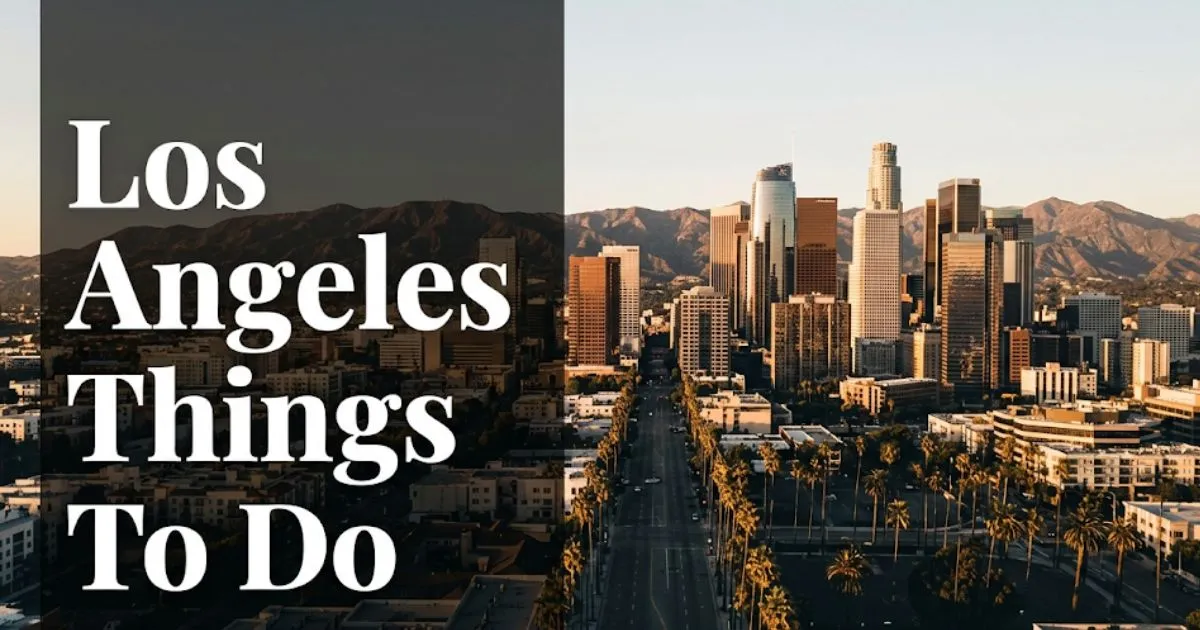
Los Angeles Things To Do: The 2026 Insider Guide

Los Angeles things to do span 500 square miles of city, which is both the promise and the trap.
The city delivers world-class beaches, serious hiking, genuinely great museums, and one of America’s most complex food cultures. But it only works if you plan it by neighborhood, not by attraction name.
This guide covers every major zone, every traveler type, and the specific practical logistics that turn an LA trip from frustrating to genuinely excellent.
Los Angeles Things To Do: What the City Actually Delivers
The honest truth about Los Angeles is that it functions less like a single city and more like 20 distinct neighborhoods loosely connected by freeways.
Hollywood Boulevard is what most first-timers picture. It is also the least representative part of the city, functioning primarily as tourist infrastructure with limited actual Hollywood industry activity.
The city’s real identity lives in Silver Lake’s bar scene, the food markets of Highland Park, the architecture of the Arts District, and the trails of the Santa Monica Mountains.
Discover Los Angeles, the city’s official tourism organization, identifies more than 100 distinct neighborhoods within the city limits. Most visitors see five.
That gap between what’s marketed and what’s genuine is where this guide focuses. Expect specifics, not a restatement of the tourist brochure.
Budget travelers should know upfront: LA has exceptional free experiences. The Getty Center charges no admission, though parking runs approximately $20 to $25 per vehicle.
The beaches are free. The trails are free. The markets are free to browse. Strategic planning makes LA surprisingly affordable despite its premium reputation.
Seniors and accessibility travelers will find the city’s flat coastal areas and most major museums fully accessible. Inland hiking and neighborhood walks on hills in Silver Lake and Los Feliz require more physical assessment before committing.
Best Things To Do in LA for First-Time Visitors
First-time visitors to LA should organize their first two days around two geographic zones: the Westside (Santa Monica, Venice, Getty Center) on day one, and Hollywood with Griffith Park on day two.
This approach eliminates the most common first-timer mistake: zigzagging across the city and spending the day in traffic rather than at destinations.
Day 1: Westside Framework
- Start at Santa Monica State Beach early (before 10 a.m.) to beat the crowds and find parking more easily.
- Walk north along the beach path to Venice Beach Boardwalk, approximately 2 miles.
- Cut inland to Abbot Kinney Boulevard for lunch. This stretch of boutique shops and quality restaurants is where actual Westsiders eat.
- Drive north on PCH to the Getty Center in the afternoon. Allow 2 to 3 hours minimum.
- End the day watching the sunset from the Getty’s outdoor terrace. It is one of the city’s genuinely earned views.
Day 2: Hollywood and Griffith
- Begin at Griffith Observatory early, ideally before 10 a.m. Parking on Observatory Road fills completely by midmorning on weekends.
- Walk the trail to the Hollywood Sign viewpoint from the Observatory. Approximately 3.5 miles round trip.
- Drive or take an Uber down to Los Feliz Village for lunch on Vermont Avenue.
- Afternoon: Warner Bros. Studio Tour in nearby Burbank. Book in advance. Tours run approximately $70 to $90 per person as of recent years and sell out days ahead.
- Return to Hollywood in the evening for the Hollywood Bowl if there is a show scheduled. Check the 2026 season calendar directly with the Bowl.
Couples will find the Getty Center terrace at sunset one of the most genuinely romantic moments the city offers. It requires no booking and costs only the parking fee.
Families with children should note the Hollywood Sign trail is manageable for kids over 8 but is not stroller-accessible. The Griffith Observatory is fully accessible and has free admission.
Top Things To Do in Los Angeles Neighborhoods
Los Angeles rewards travelers who commit to a single neighborhood for a half-day rather than trying to check off four different zones in one day.
These are the six neighborhoods that actually deliver a distinctive, walk-around-worthy experience.
Silver Lake: LA’s creative residential neighborhood. Centered on Sunset Boulevard between Hyperion and Micheltorena. Coffee shops, independent bookstores, and the reservoir walking path make this genuinely livable and visitor-friendly.
Los Feliz: Immediately adjacent to Griffith Park. Vermont Avenue is the neighborhood’s spine with restaurants, a classic movie house (Los Feliz 3 Theater), and bars that fill with locals on weekday evenings.
Highland Park: The most honestly exciting neighborhood for food in 2026. York Boulevard is lined with Mexican bakeries, natural wine bars, and taquerias that have no tourist-facing marketing whatsoever.
Arts District: Downtown’s northeast edge, centered around 6th Street and Mateo. Former industrial buildings converted to galleries, breweries (Arts District Brewing Company), and coffee roasters. Closest thing LA has to New York’s Meatpacking District era, before the saturation.
Culver City: Underrated by most first-timer itineraries. The Culver City Arts District on Washington Boulevard has gallery density rivaling any city of its size. Blum and Poe gallery and the Museum of Jurassic Technology on Venice Boulevard are both within walking distance.
Koreatown: The most geographically central neighborhood in the city. Also the most practical base for first-timers without a car, given its Metro access. Korean BBQ, 24-hour joints, and the best-value hotels relative to location in the city.
| Neighborhood | Best For | Metro Access | Primary Draw | Time to Allow |
|---|---|---|---|---|
| Silver Lake | Solo travelers, couples | Limited (ride share best) | Café culture, reservoir walk | Half-day |
| Los Feliz | Couples, solo | Limited | Vermont Ave dining, Griffith proximity | Half-day |
| Highland Park | Food travelers, adventurous | A Line adjacent | York Blvd food scene | 3 to 4 hours |
| Arts District | Adults, design travelers | B/Gold Line nearby | Galleries, breweries | Half-day |
| Culver City | Adults, couples | E Line (Expo) | Art galleries, dining | Half-day |
| Koreatown | Budget, solo, all types | B Line direct | Korean food, nightlife | Evening focused |
Budget travelers: Koreatown offers the city’s best value for dining. A full Korean BBQ meal runs approximately $25 to $40 per person, including side dishes.
Seniors: Silver Lake’s flat reservoir path is wheelchair-accessible and one of the most pleasant walks in the city. The Arts District involves some uneven sidewalks and requires comfortable footwear.
Key Takeaway: Plan each LA day around one or two neighboring zones. Crossing the city costs you two hours in traffic and half your itinerary.
Things To Do in Santa Monica and Venice Beach
Santa Monica and Venice Beach together form the most visited coastal stretch in Los Angeles, separated by 2 miles of paved beachfront bike and walking path.
Santa Monica is the more polished of the two. The Santa Monica Pier houses Pacific Park, a small amusement park with ocean views, and is genuinely worth 90 minutes for first-timers.
Third Street Promenade runs three blocks inland from the pier. It’s a pedestrian shopping district that functions well as a lunch and browsing stop but is increasingly chain-retail heavy.
For actual local Santa Monica character, Main Street Santa Monica from Pico Boulevard to Rose Avenue is the better choice. Independent restaurants, farmers markets on Wednesdays and Saturdays, and far fewer tourists than the pier area.
Venice Beach’s boardwalk is a genuine LA original: street performers, outdoor gym (Muscle Beach), skate park, and a density of vendors that has no equivalent elsewhere in the city. It is deliberately chaotic.
Abbot Kinney Boulevard, one block east of the boardwalk, is the counterpoint. Ranked by GQ as one of the coolest streets in America in multiple years, it hosts restaurants like Gjusta (a bakery and deli with a cult following among LA food people) and boutiques with no tourist-facing aesthetic.
Families with children: The Venice Skate Park is worth watching even if no one is skating. It’s a free, naturally occurring spectacle that holds children’s attention far longer than most ticketed attractions.
Couples: The bike path from Santa Monica to Venice at golden hour, roughly 5 to 6 p.m. in fall months, is one of LA’s most romantic free experiences. Bike rentals are available at multiple shops along Ocean Front Walk.
Insider Tip:
- Park in the Santa Monica city parking structures on 2nd Street rather than at the pier lots. Rates are lower and the walk is two blocks.
- Skip the pier restaurants entirely. Walk to Gjusta on Abbot Kinney for breakfast or lunch instead.
- Arrive at Venice Boardwalk before 11 a.m. on weekdays. Weekend afternoons are genuinely overwhelming for solo travelers and anyone with young children.
Outdoor Things To Do in Los Angeles
Los Angeles sits at the edge of two of California’s most accessible mountain and canyon systems, making outdoor activities one of the city’s strongest genuine offerings.
The Santa Monica Mountains National Recreation Area, managed by the National Park Service, stretches from Griffith Park in the east to Point Mugu in the west. It is one of the largest urban national recreation areas in the United States.
Griffith Park is the most accessible starting point for most visitors. At 4,310 acres, it is larger than Manhattan’s Central Park and contains two golf courses, an observatory, a Greek theatre, pony rides, and trail networks suitable for all fitness levels.
Topanga State Park, accessible from Topanga Canyon Boulevard, provides the experience of genuine backcountry hiking within 30 minutes of Santa Monica. Day use fees apply; verify current rates before visiting.
Runyon Canyon in Hollywood is popular for its city views and off-leash dog access. It is also the most crowded trail in the city on weekend mornings and functions somewhat as social infrastructure for the area’s fitness-oriented locals.
Solo travelers will find Runyon Canyon social in a way that mountain trails rarely are. It’s a legitimate place to meet people, particularly on weekend mornings before noon.
Families: The Griffith Park Merry-Go-Round and the nearby Los Angeles Zoo within Griffith Park provide a full family day without requiring a car once you’ve parked.
According to the National Park Service Santa Monica Mountains, the recreation area receives more than 30 million visits per year, making it the most visited unit in the NPS system. Trail conditions after rain or wildfire events can change rapidly. Check NPS trail status reports before any backcountry visit.
Safety Warning: Sun and heat exposure on inland trails can be severe from June through October. Carry at least one liter of water per person per hour of hiking. Many LA trails have no shade and no water sources.
Best Hikes in Los Angeles
The best hikes in Los Angeles combine accessibility with genuine natural quality. These six deliver on both without requiring a significant drive out of the city.
Runyon Canyon to Inspiration Point: 3.4 miles round trip. Moderate. City views from the summit. Crowded on weekends before noon. Go on weekday mornings for a completely different experience.
Griffith Observatory to Hollywood Sign via the Observation Trail: 6 miles round trip from the Observatory parking area. This is the correct route. Visitors who attempt to hike to the Hollywood Sign from Beachwood Canyon face route confusion and more crowds.
Eagle Rock Loop, Topanga State Park: 6.2 miles. Moderate to strenuous. Views of the Pacific on clear days. Far fewer people than any comparable hike closer to the city.
Parker Mesa Overlook, Pacific Palisades: 7.8 miles round trip from Trippet Ranch in Topanga. The reward is a panoramic view from the Santa Monica Mountains to Catalina Island on clear days. Best November through April.
Eaton Canyon Falls, Altadena: 4 miles round trip. One of the closest waterfall hikes to central LA. After wet winters, the falls are substantial. In summer, they are often dry. Check recent visitor reports before making the drive.
Malibu Creek State Park to the MASH Site: 4 miles round trip. Mostly flat. The location where the TV series MASH filmed exterior scenes. State park day use fee applies.
| Hike | Distance | Difficulty | Best Season | Crowd Level | Best For |
|---|---|---|---|---|---|
| Runyon Canyon | 3.4 mi | Easy | Year-round | Very High | Solo, social |
| Griffith to Hollywood Sign | 6 mi | Moderate | Oct to May | High | Couples, adults |
| Eagle Rock, Topanga | 6.2 mi | Moderate | Nov to Apr | Low | Experienced hikers |
| Parker Mesa Overlook | 7.8 mi | Strenuous | Nov to Apr | Low | Adults, solo |
| Eaton Canyon Falls | 4 mi | Easy | Jan to May | Moderate | Families |
| Malibu Creek / MASH | 4 mi | Easy | Year-round | Moderate | Families, couples |
Seniors and accessibility: The flat, wide path around the Griffith Park Observatory grounds is fully paved and wheelchair-accessible. The observatory itself is also accessible, making it the best outdoor destination for mobility-limited visitors in the entire city.
Key Takeaway: The Hollywood Sign hike via the Griffith Observatory trail is far superior to any route from Beachwood Canyon. Fewer crowds, better views, and a world-class observatory at the starting point.
Museums in Los Angeles Worth Your Time
Los Angeles has one of the strongest museum concentrations of any American city. The challenge is knowing which institutions genuinely earn a half-day commitment versus which are better suited to an hour’s visit.
The Getty Center in Brentwood is the clear first choice for most visitors. Admission is free. The architecture by Richard Meier, the garden designed by Robert Irwin, and the permanent collection including Van Gogh’s “Irises” justify the trip independently of one another. Budget at least 2.5 hours.
The Getty Villa in Pacific Palisades is the Getty’s often-overlooked counterpart. Dedicated to ancient Greek, Roman, and Etruscan antiquities, it sits in a recreated Roman villa overlooking the Pacific. Admission requires advance timed-entry reservation. Budget travelers note: the Villa admission was free as of recent years but reservation is mandatory.
The Broad in downtown LA is the contemporary art museum locals reference when visitors ask about serious modern art. Works by Jeff Koons, Cindy Sherman, Jean-Michel Basquiat, and Kara Walker. Free general admission but timed-entry tickets are required and book up days in advance.
LACMA (Los Angeles County Museum of Art) is the largest art museum west of Chicago by collection size. The permanent collection spans 6,000 years of art history. Chris Burden’s “Urban Light” installation outside the museum is the city’s most photographed art work.
The local alternative to LACMA for people who already know the collection: the Hammer Museum in Westwood. Free admission. The focus is on contemporary and emerging artists. Less tourist traffic. Better for repeat visitors to LA.
Families: The California Science Center in Exposition Park houses the Space Shuttle Endeavour. It is one of the few places in the country where you can walk directly underneath an actual shuttle orbiter. Admission to the science center is free. The shuttle exhibit requires a timed ticket, priced approximately $5 to $10 per person as of recent years.
Things To Do in Downtown Los Angeles
Downtown Los Angeles has transformed significantly in the past decade and now offers a genuine itinerary for a full day without needing a car once you’ve arrived.
Grand Central Market on Broadway at 3rd Street is the essential first stop. Operating since 1917, it houses approximately 40 vendors selling everything from Eggslut breakfast sandwiches to Thai food to fresh-pressed juice. Arrive by 9 a.m. on weekends or expect a wait.
The Broad is one block north on Grand Avenue. Plan this as either a morning stop before Grand Central Market or a separate afternoon visit.
Walt Disney Concert Hall on Grand Avenue is the Frank Gehry-designed home of the Los Angeles Philharmonic. Free self-guided tours of the building exterior and gardens are available most mornings. Guided interior tours require advance booking and modest fees.
Olvera Street (part of the El Pueblo de Los Angeles Historical Monument) is downtown’s oldest surviving commercial district. It functions partly as a tourist market and partly as a genuine living piece of the city’s Mexican heritage. The adjacent Union Station, built in 1939, is worth walking through purely for its architecture.
The Arts District, roughly a 15-minute walk east from Grand Central Market, is where downtown’s actual creative energy concentrates. Bavel restaurant on Mateo Street is one of LA’s most reservation-worthy dining experiences for adults. Stumptown Coffee on 7th and Flower is a reliable workday stop.
Budget travelers: The Metro B Line (Red Line) and Metro A Line (Blue Line) both serve downtown extensively. A Metro day pass costs approximately $3 to $5 as of recent years and covers unlimited rides on rail and bus lines. Verify current fares with LA Metro before visiting.
Solo travelers will find downtown significantly more walkable than any other LA neighborhood. The distance from Grand Central Market to the Arts District to the Broad is under 1.5 miles on flat ground.
Key Takeaway: Downtown LA works best as a self-contained day. Park once near Grand Central Market and walk to the Broad, Disney Hall, and the Arts District without moving your car.
Los Angeles Food Scene: Where to Actually Eat
Los Angeles has a food culture that rivals any American city, but it operates on a different logic than New York or Chicago.
The city’s best meals are often found in strip malls, food halls, and walk-up counters rather than white-tablecloth rooms. This reflects LA’s genuinely democratic food culture.
Grand Central Market covers breakfast and lunch comprehensively. Wexler’s Deli inside the market is the city’s most serious Jewish deli. Eggslut originated here before expanding nationally.
Koreatown on Wilshire Boulevard is the most concentrated dining corridor in the city. Restaurants like Park’s BBQ on Vermont Avenue (Korean BBQ with serious meat quality) and Dan Sung Sa on 6th Street (a Japanese-style izakaya with a Koreatown identity) operate in a way that has no tourist-facing marketing.
For tacos specifically: the standard tourist answer is Kogi BBQ trucks. The local answer is the birria de res at Tire Shop Taqueria in Boyle Heights, operational on weekends, requiring no reservation, and producing one of the most discussed single dishes in LA food circles over the past several years.
Gjusta Bakery on Abbot Kinney in Venice is the city’s most consistent answer to “where do chefs eat breakfast.” It is not cheap. Budget approximately $18 to $25 per person for a morning spread.
The Michelin Guide has recognized Los Angeles restaurants since 2019. N/Naka in Palms (kaiseki tasting menu, reservation required months in advance) and Kato in Century City regularly appear on serious food traveler itineraries.
Budget travelers: The best inexpensive meal in LA is not a secret. It’s a $3 to $5 taco from any of the taco trucks operating on the street in East LA, Boyle Heights, or Highland Park. They require no research beyond showing up.
Couples: A meal at Bavel in the Arts District is one of LA’s most genuinely romantic dining experiences. Middle Eastern-influenced menu, exceptional natural wine list, reservations required well in advance.
Things To Do in Los Angeles at Night
Los Angeles at night operates differently than most American cities. The energy concentrates in specific corridors rather than spreading across the city uniformly.
The Hollywood Bowl is the single best nighttime experience in the city when a show is scheduled. The outdoor amphitheater seats 17,000, the sound system is exceptional, and the practice of bringing a picnic and wine to the lawn section is a genuine LA cultural tradition. Book early. Popular shows sell out weeks ahead.
West Hollywood’s Santa Monica Boulevard corridor is the city’s most active LGBTQ+ nightlife zone, anchored by clubs like The Abbey at Santa Monica and Robertson. It functions seven nights a week with serious energy Thursday through Sunday.
Silver Lake offers the bar scene that locals who don’t want to be around tourists on a Thursday night actually use. The Short Stop on Sunset (a former police bar, now an indie music venue and bar) and Big Bar at the Alcove on Hillhurst Avenue are both deeply local choices.
Comedy is a serious LA nighttime category. The Groundlings on Melrose Avenue and Largo at the Coronet on La Cienega are the two rooms with the most consistent quality and serious comedy industry following.
Rooftop bars draw consistent traveler interest. The Rooftop at The Standard in downtown and Perch on 5th and Olive are the two that actually deliver on the LA rooftop promise. Budget approximately $15 to $20 per cocktail.
Solo travelers: The Short Stop in Silver Lake is one of the easiest places in the city to meet local Angelenos on a Friday night. No tourist infrastructure, pool table, good beer selection, and a crowd that actually converses.
Couples: A Hollywood Bowl concert with a picnic is genuinely the most romantic summer night LA offers. Arrive 90 minutes before showtime. The pre-show picnic atmosphere is half the experience.
Things To Do in Los Angeles With Kids
Los Angeles is a workable family destination when itineraries are built around contained, accessible attractions rather than long drives between neighborhoods.
The California Science Center in Exposition Park is the city’s best family anchor. Space Shuttle Endeavour, interactive science exhibits, and an IMAX theater cover most of a full day. Admission to the main museum is free.
The Los Angeles Zoo inside Griffith Park is 133 acres and well-maintained, with admission running approximately $22 to $29 per adult and less for children as of recent years. The Otis Booth Amphitheatre inside the zoo hosts weekend shows. Pair this with the nearby Griffith Park Merry-Go-Round for a complete morning.
The Natural History Museum of Los Angeles County in Exposition Park has one of the best dinosaur halls in the western United States. The butterfly pavilion operates seasonally, typically spring through fall. Verify before visiting.
Kidspace Children’s Museum in Pasadena is the most underused family option in the LA area. It’s specifically designed for children 10 and under, with outdoor water play features, nature exploration, and hands-on science exhibits. Pasadena is 30 minutes from downtown, much less from Hollywood.
Santa Monica Pier’s Pacific Park is manageable for families but know that it is primarily a small amusement park with oceanfront setting. It’s more impressive as scenery than as rides for children who have been to a full-scale theme park.
Families: Plan Exposition Park as its own day. The California Science Center and the Natural History Museum are in the same parking lot. One admission-free, one moderately priced. A full family day costs far less here than at any comparable attraction cluster in the city.
Budget families: Exposition Park is legitimately the best value family half-day in LA. Free parking on weekdays, free museum admission to the Science Center, and affordable food options on Figueroa Street outside the park.
Key Takeaway: Exposition Park (California Science Center plus Natural History Museum) is the most cost-effective family day in Los Angeles and the least known among first-time visitors from out of state.
Free Things To Do in Los Angeles
Los Angeles has a genuinely strong collection of free experiences. This matters because the city’s car rental, parking, and food costs add up quickly.
The Getty Center charges no admission. Parking runs approximately $20 to $25 per vehicle. A ride-share or the Big Blue Bus Route 14 from Santa Monica provides a cost-free arrival. Budget the parking as your only cost.
Griffith Observatory has no admission fee. The exhibits, the telescopes during public viewing nights (check the Observatory’s 2026 public program schedule), and the city views from the grounds are all free.
Olvera Street and Union Station cost nothing to explore. The architecture of Union Station alone is worth the Metro ride.
All public beaches are free. Santa Monica, Venice, Will Rogers, Zuma in Malibu, and Manhattan Beach all charge for parking but not for beach access.
The Hammer Museum in Westwood is free to the public and consistently shows some of the city’s most interesting contemporary work.
Free experiences worth noting:
- The Walt Disney Concert Hall exterior and garden: free self-guided access most mornings
- Los Angeles Central Library on 5th and Flower: a genuine architectural and cultural institution, free and open to the public
- Abbot Kinney Boulevard window shopping and people-watching: costs nothing and gives genuine local cultural texture
- The Original Farmers Market at Third and Fairfax: free to browse, with vendors going back to 1934
- Sunset views from Griffith Park’s Mount Hollywood summit trail: free hiking, free view, one of the best sightlines in Southern California
Budget travelers: A day built around the Getty Center (ride-share in), Griffith Observatory (free), and Grand Central Market (budget $15 to $20 for food) costs under $40 total per person.
Things To Do in Los Angeles for Adults
Los Angeles for adults without children in tow offers some of the most specific and genuinely high-quality experiences available in any American city.
The studio tours are frequently underestimated by first-time visitors. Warner Bros. Studio Tour Hollywood in Burbank provides direct access to active production lots, prop warehouses, and set reconstructions. Book in advance; the premium tours sell out consistently. The tour runs approximately 3 hours and costs approximately $70 to $90 per person as of recent years.
Paramount Pictures also offers studio tours with a slightly different emphasis. Paramount’s backlot has been in continuous production since 1926. The history density is different from Warner Bros., and both are worth comparing for film culture enthusiasts.
For architecture specifically: a self-guided drive along Mulholland Drive from Laurel Canyon to the 405 covers some of the most dramatic canyon-and-city scenery in Southern California at zero cost beyond gas.
The Museum of Contemporary Art (MOCA) on Grand Avenue downtown focuses exclusively on art created after 1940. The permanent collection includes significant works by Mark Rothko, Jackson Pollock, and Cindy Sherman. Admission runs approximately $15 to $18 per adult as of recent years.
The Ace Hotel Downtown on Broadway in the Broadway Theater District is worth visiting even without a booking. The rooftop pool area, the lobby’s Otium restaurant, and the building’s 1927 United Artists Theatre make it a destination in itself.
Couples: A meal at Nobu Malibu on PCH followed by a sunset walk on Point Dume State Beach is one of the most LA-specific adult evenings available. Both together in one evening requires a car and a reservation made well ahead.
Solo adults: The comedy community around Melrose Avenue and La Brea is genuinely the city’s most accessible and authentic cultural scene for solo visitors. Largo at the Coronet hosts music, comedy, and performance with a room that feels nothing like a tourist venue.
Day Trips From Los Angeles
Los Angeles sits within a half-day’s drive of some of the strongest day-trip destinations in the American West.
Catalina Island is 22 miles off the coast of Long Beach. The Catalina Express ferry operates daily from San Pedro, Long Beach, and Dana Point, with crossing times of approximately 60 to 90 minutes. The island’s single town, Avalon, is entirely walkable. Snorkeling, kayaking, and the Wrigley Memorial and Botanic Garden fill a full day easily. Verify 2026 ferry schedules and fares directly with Catalina Express before booking.
Joshua Tree National Park is approximately 140 miles east of downtown. It is a 2-hour drive under normal conditions and substantially longer during Friday afternoon traffic. The park requires no entry reservation currently, though timed-entry systems have been proposed and should be verified before visiting. Admission runs approximately $30 per vehicle as of recent years.
Santa Barbara is 100 miles north on the US-101. The drive along PCH for the last 30 miles is genuinely one of California’s best coastal stretches. The city’s State Street, the Santa Barbara Courthouse (free public access), and the beach at East Beach make a full day achievable.
Ojai is 90 miles north. The small arts and wellness town in Ventura County has no tourist infrastructure theater. It is genuinely what it appears to be: a place where working artists, organic farmers, and people who left LA live without looking back.
Disneyland in Anaheim is 35 miles south. One full day minimum required. Budget $130 to $200 per person for park admission as of recent years, plus parking and food. Families should book months ahead during 2026 school holiday periods.
| Day Trip | Distance | Travel Time | Best For | Cost Range |
|---|---|---|---|---|
| Catalina Island | 22 mi offshore | 90 min ferry | Couples, families | Ferry + activities: $80 to $150/person |
| Joshua Tree NP | 140 mi | 2 to 2.5 hrs | Adults, outdoor lovers | ~$30/vehicle park entry |
| Santa Barbara | 100 mi | 1.5 to 2 hrs | Couples, solo | Low (free beach and courthouse) |
| Ojai | 90 mi | 1.5 hrs | Adults, couples | Low to moderate |
| Disneyland | 35 mi | 45 to 60 min | Families | $130 to $200+/person |
Seniors: Santa Barbara is the most accessible day trip from LA. Flat State Street, excellent restaurants, and the historic courthouse with no admission make it physically manageable and culturally rewarding.
Key Takeaway: Joshua Tree on a Friday afternoon will cost you three hours in I-10 traffic. Leave Thursday night or arrive Saturday morning instead.
How To Get Around Los Angeles
Getting around Los Angeles without understanding the city’s geography and traffic patterns is the single fastest way to turn a good trip into a frustrating one.
Los Angeles requires a car for efficient exploration of multiple neighborhoods or attractions per day. This is not a city where ride-share provides adequate flexibility without significant cost at scale.
Renting a car: Book in advance. Rates at LAX are consistently higher than at off-airport rental locations. The Hollywood Burbank Airport (BUR) typically has lower base rates than LAX and is closer to Hollywood, Griffith Park, and the San Fernando Valley.
Metro Rail is genuinely useful for specific corridors. The Metro E Line (Expo Line) runs from downtown Santa Monica to downtown LA in approximately 45 to 50 minutes. The Metro B Line (Red Line) connects downtown to Hollywood and Universal City. For visitors based in Koreatown or downtown, these two lines cover a meaningful slice of the itinerary.
Traffic reality: The I-405 between the West Side and the Valley, and the I-10 between downtown and Santa Monica, are functionally parked during peak hours (7 to 10 a.m. and 4 to 7 p.m. Monday through Friday). Budget twice your expected drive time during these windows.
Parking: Hollywood Boulevard paid lots run approximately $20 to $40 per day. Santa Monica city parking structures near the pier charge less but fill quickly on weekends. Koreatown street parking is plentiful and largely free. Arts District parking is a mix of metered street and paid structure.
To get from LAX to most visitor areas efficiently:
- Pre-book a rental car or ride-share. The LAX ride-share pickup zone (The Loop) is accessed via the FlyAway shuttle from the terminals.
- For Santa Monica specifically: the Culver City Bus Line 6 connects LAX to Santa Monica at very low cost. Verify current routing before traveling.
- Avoid taxi ranks at LAX. They cost more and take longer.
- For Hollywood: a ride-share from LAX runs approximately $35 to $60 depending on traffic and surge pricing.
- For downtown: the FlyAway Bus to Union Station costs approximately $9 to $12 one-way and connects to all Metro Rail lines.
Budget travelers: The FlyAway Bus to Union Station plus the Metro Day Pass is the lowest-cost transportation combination from the airport and covers downtown, Hollywood, and Santa Monica adequately for a 2-day urban itinerary.
Best Time To Visit Los Angeles
The best time to visit Los Angeles is September through November, which is the exact opposite of when most tourists arrive.
September through November delivers the city’s warmest, clearest weather of the year. Ocean water temperatures are at their peak after summer. Crowds are notably thinner than July and August. Hotel rates drop.
June through August is when LA sees its highest visitor numbers. It is also when June Gloom suppresses the coastal weather for most of June: marine layer keeps the beach areas overcast until early to mid-afternoon, sometimes all day. The beaches are gray, not sunny, for a significant portion of the city’s peak season. Inland areas (Hollywood, Griffith, Pasadena) are unaffected by June Gloom but can be extremely hot.
October is the single best month. Santa Ana wind events bring exceptionally clear visibility. Temperatures run 75 to 85°F along the coast. The Hollywood Bowl season is ending, creating last-chance concerts. The light is different in LA in October, and it is genuinely the city at its most photogenic.
December through February offers the city’s lowest hotel rates outside major holiday weekends. The weather is mild by national standards (55 to 68°F daytime). Rain is possible, concentrated in December through March. Some mountain trails close temporarily after heavy rain. This period suits budget travelers and visitors who prioritize museums and indoor culture over beach time.
Wildfire awareness: The Santa Ana wind season (October through December) brings elevated wildfire risk. Fires in 2025 and prior years have affected trails and air quality in specific zones. Check California Department of Forestry and Fire Protection (CAL FIRE) advisories and LA County trail closure alerts before hiking during this period.
| Month | Weather | Crowd Level | Hotel Rate | Best For |
|---|---|---|---|---|
| Jan to Feb | 55 to 65°F, some rain | Low | Low | Budget travel, museums |
| Mar to May | 65 to 75°F, clearing | Moderate | Moderate | General sightseeing |
| Jun to Aug | 70 to 85°F inland, coastal June Gloom | Very High | High | Families (school schedules) |
| Sep to Nov | 75 to 88°F, clear | Moderate | Moderate to Low | Best overall |
| Dec | 55 to 68°F, rain possible | High (holidays) | Moderate to High | Holiday events |
According to the Los Angeles Tourism and Convention Board, October and November consistently show the best combination of clear weather, manageable crowds, and value hotel availability for leisure travelers.
Safety and Practical Warnings for Los Angeles
Los Angeles is a safe city for tourists in its primary visitor zones, but it has specific practical realities that unprepared travelers consistently underestimate.
Key safety and practical facts every visitor should know:
- Petty theft along Hollywood Boulevard and Venice Boardwalk is real. Keep bags secured and avoid displaying expensive camera equipment openly in crowded pedestrian areas.
- Sun exposure on LA trails is severe. Even a 3-mile hike at Runyon Canyon at 10 a.m. in October can result in serious sunburn. Apply SPF 50+ before any outdoor activity, carry water exceeding your expected need.
- Wildfire smoke during Santa Ana events affects outdoor activity. Check the South Coast Air Quality Management District (SCAQMD) air quality index before hiking or spending extended time outdoors during October through December.
- The I-405 and I-10 during peak hours are genuinely dangerous time traps, not minor inconveniences. Missing a timed-entry reservation or a studio tour start time because of traffic is a real and common occurrence.
- Skid Row in downtown LA (roughly between Main Street and Alameda, 3rd to 7th Streets) is an area of significant homelessness and is not a tourist-appropriate walking zone.
- Parking meters in Santa Monica and West Hollywood enforce aggressively. Overstay by ten minutes and a $73+ parking citation is a near-certainty.
- Cell service in the Santa Monica Mountains backcountry is unreliable. Download offline maps via Google Maps or Gaia GPS before any trail in Topanga State Park or the Malibu Creek area.
For trail emergencies in Los Angeles County parks: Los Angeles County Search and Rescue is the relevant emergency resource. In any outdoor emergency, call 911 and provide your best location description including trail name and nearest landmark.
Frequently Asked Questions About Los Angeles Things To Do
What are the best things to do in Los Angeles for first-time visitors?
The best first-time experiences in Los Angeles are the Getty Center (free admission, exceptional collection and architecture), Griffith Observatory (free, genuine city views), Grand Central Market (food and neighborhood character), and a walk along the Venice Boardwalk to Abbot Kinney Boulevard.
Structure your first two days around geographic zones: the Westside on day one, Hollywood and Los Feliz on day two.
This approach eliminates the most common first-timer error of driving across the city between disconnected attractions and spending the day in traffic.
Is Los Angeles walkable or do you need a car?
Los Angeles is not a walkable city in the way New York, Chicago, or San Francisco are.
A car is necessary for visiting multiple neighborhoods or attractions in a single day. The Metro E Line (Expo) and Metro B Line (Red) cover downtown, Hollywood, and Santa Monica usefully, but most of the city’s best experiences require a car or costly ride-share trips.
Budget for car rental, parking fees in tourist zones ($20 to $40 per day), and gas as genuine trip costs from the start.
What is the best time of year to visit Los Angeles?
The best time to visit Los Angeles is September through November.
These months deliver the city’s warmest, clearest weather, thinner crowds than summer, lower hotel rates than peak season, and the most photogenic light conditions of the year.
Avoid June if beach sunshine is your priority: June Gloom keeps coastal skies overcast until mid-afternoon for most of the month, despite LA’s reputation for perpetual sun.
What are free things to do in Los Angeles?
The Getty Center charges no admission (only parking). Griffith Observatory is free. All public beaches are free to access. The Hammer Museum in Westwood is free.
Walt Disney Concert Hall’s exterior and gardens are free to walk through most mornings.
The Original Farmers Market at Third and Fairfax, Olvera Street, and Union Station’s architectural interior all cost nothing to explore.
How many days do you need in Los Angeles?
Three full days is the minimum for a useful first visit to Los Angeles.
Day one: Westside (Santa Monica, Venice, Getty Center). Day two: Hollywood and Griffith Park. Day three: downtown (Grand Central Market, The Broad, Arts District).
Five days allows you to add Koreatown, a neighborhood like Silver Lake or Highland Park, and one day trip, which is the more satisfying version of an LA visit.
What is the best neighborhood to stay in for visiting Los Angeles?
The best neighborhood to stay in for a first visit to Los Angeles is either Santa Monica (coastal access, walkable beach area, good transit via Metro E Line) or Koreatown (geographically central, Metro B Line access, best value for money, excellent food within walking distance).
West Hollywood suits adult travelers prioritizing nightlife and the Sunset Strip.
Downtown suits travelers planning to focus on museums, the Arts District, and concert venues.
Plan Your Los Angeles Trip With Specificity
Los Angeles things to do reward travelers who plan geographically, not alphabetically by attraction name.
Book the Getty Center parking in advance if you’re driving. Reserve Warner Bros. Studio Tour and The Broad at least a week ahead. Check the Hollywood Bowl 2026 season calendar the moment it’s published and lock in tickets early for your dates.
Travel conditions in Los Angeles, including hotel pricing, park fees, Metro fares, timed-entry requirements, and wildfire-related trail closures, change throughout the year. Verify all logistics directly with venues, the Los Angeles Tourism and Convention Board at Discover Los Angeles, and the National Park Service for any Santa Monica Mountains activity before departure.
LA’s size is its complexity and its reward. Get the geography right, plan each day around one zone, and this city delivers more genuinely excellent hours than most visitors expect.