The Best Things to Do in Miami Beach, Florida (2026)

Miami Beach is one of the most photographed destinations in the United States, but things to do in Miami Beach go far beyond the postcard version of Ocean Drive.
The island spans three distinct neighborhoods, holds the largest collection of Art Deco architecture in the world, and contains some of Florida’s most underestimated dining streets.
This guide covers specific activities, named venues, honest crowd assessments, and a two-day itinerary. It is built for travelers who want to plan a real trip, not just a list.
Things to Do in Miami Beach: What Makes This Destination Different
Miami Beach is a barrier island, not a neighborhood of Miami. It sits separated from the mainland by Biscayne Bay, accessible via three causeways, and its geography shapes everything about how you experience it.
The island runs approximately seven miles north to south. South Beach (SoBe) is the densely urban, architecturally rich southern third. Mid-Beach centers around Collins Avenue between 23rd and 44th Streets. North Beach, above 63rd Street, is quieter, more residential, and genuinely preferred by experienced repeat visitors.
The Greater Miami Convention and Visitors Bureau identifies Miami Beach as a distinct city from Miami proper. This matters because many competitor guides inaccurately list Wynwood Walls as a Miami Beach attraction, when it is actually in the Wynwood neighborhood of mainland Miami, approximately four miles west.
Most visitors arrive, check into South Beach, and never explore north of 23rd Street. That is the single most common planning error this guide will help you avoid.
Insider Tip:
- The numbered streets on Miami Beach correspond directly to beach access. Streets between 5th and 14th are closest to the densest tourist zone.
- For noticeably fewer crowds at the water, walk north to the 21st Street or 35th Street beach entrances.
- Senior travelers and those with mobility limitations should note that the beach sand between 10th and 14th Streets, adjacent to Lummus Park, has the most accessible beach chair and umbrella rental infrastructure.
Best Things to Do in Miami Beach: The Experiences That Earn Their Reputation
The best things to do in Miami Beach fall into three categories: the genuinely excellent, the overrated, and the specific local experiences that most guides never name.
Genuinely excellent: The Art Deco Historic District architecture walk, the Bass Museum of Art, Lummus Park beach in the early morning, and a sunset from the Venetian Causeway looking back toward the Miami skyline. Each of these delivers something you cannot replicate elsewhere.
Overrated: Ocean Drive restaurants. Every top-ranking competitor guide lists Ocean Drive as a destination without noting that most restaurants there operate as tourist traps with inflated prices and mediocre food. The architecture on Ocean Drive is extraordinary. The food is not worth the premium.
The local alternative to Ocean Drive dining: Walk two blocks west to Española Way, a narrow Mediterranean-influenced pedestrian street between Washington and Drexel Avenues, running from 14th to 15th Street. You will find better food, lower prices, and a genuinely different atmosphere.
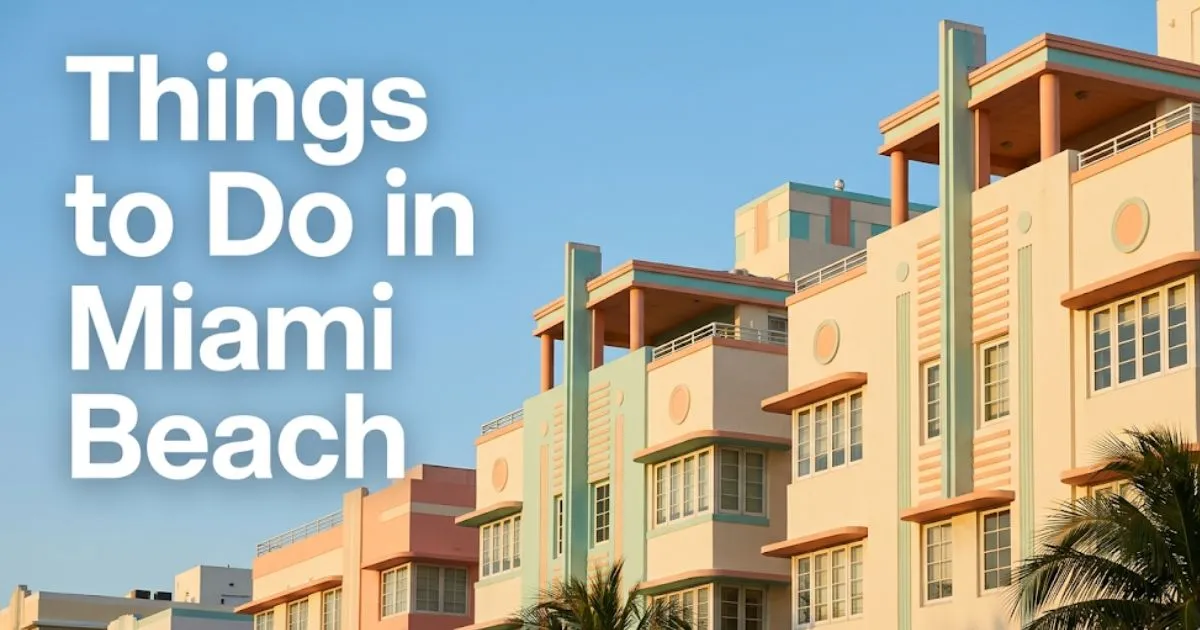
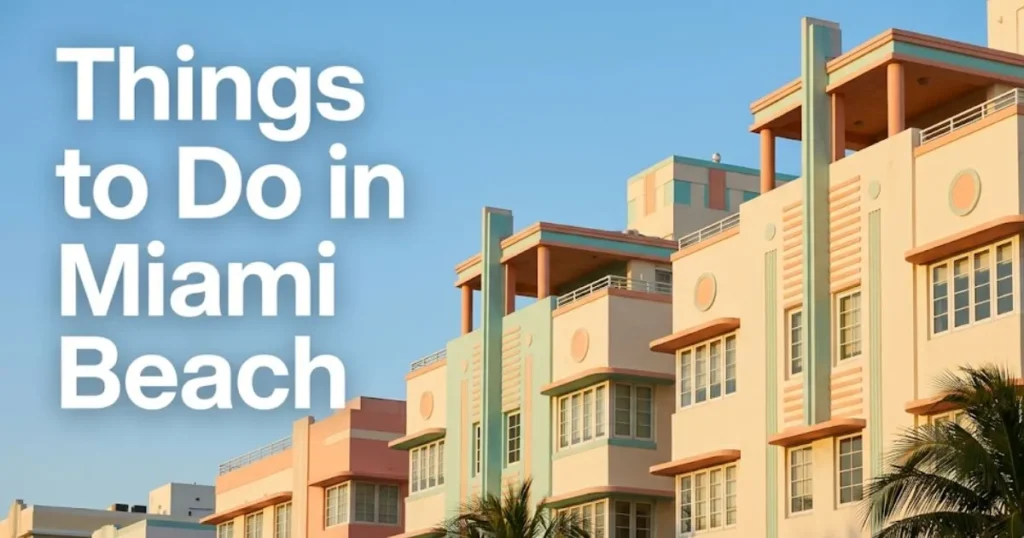
According to the Miami Design Preservation League, the Art Deco Historic District contains more than 800 historic buildings, the largest concentration of 1920s and 1930s resort architecture anywhere in the world. This is not marketing language. It is a genuine architectural phenomenon.
| Activity | Best For | Approx. Cost | Time Needed | Insider Note |
|---|---|---|---|---|
| Art Deco Walking Tour | Couples, solo, culture travelers | Free (self-guided) to ~$30 (guided) | 1.5 to 2.5 hours | Start at 10th St and Ocean Dr at 8am for best light |
| Lummus Park Beach | Families, budget travelers, all profiles | Free | Half to full day | 12th to 14th St section has lifeguards on duty |
| Bass Museum of Art | Culture travelers, rainy day option | ~$15 to $20 per adult | 1.5 to 2 hours | Thursday evenings often have extended hours |
| Española Way dining | Couples, adults, budget travelers | $15 to $40 per person | 1 to 2 hours | Busiest Friday and Saturday evenings |
| Venetian Causeway sunset walk | Couples, solo travelers | Free | 45 to 90 minutes | Park at the eastern end near Di Lido Island |
| Lincoln Road Mall | All profiles | Free to browse | 1 to 2 hours | Sunday morning farmers market is the best version |
Top Things to Do in Miami: Understanding What Miami Beach Offers vs. Mainland Miami
Miami Beach and Miami proper are frequently conflated, but they are separate cities with completely different activity profiles.
Miami Beach is where you go for ocean beaches, Art Deco architecture, South Beach nightlife, Lincoln Road shopping, and waterfront dining. The Bass Museum of Art and the Jewish Museum of Florida-FIU are both on the island.
Mainland Miami is where you go for Wynwood Walls, Pérez Art Museum Miami (PAMM), Calle Ocho in Little Havana, the Design District’s luxury retail, and Brickell’s financial district restaurant scene. These are not Miami Beach experiences.
For travelers with limited time: If you have three days total, spend two days on Miami Beach and use one afternoon for a rideshare trip into Wynwood or Little Havana. Do not try to do both on the same day.
Families with children should note that Key Biscayne, reached via the Rickenbacker Causeway from mainland Miami, offers Bill Baggs Cape Florida State Park. It has calmer water than South Beach’s Atlantic side. It is genuinely one of the best beach days accessible from Miami Beach.
Key Takeaway: Miami Beach’s Art Deco architecture is the only experience of its kind in the Western Hemisphere. Do not rush past it to get to the beach.
Things to Do in Miami Beach for Adults: Nightlife, Dining, and After-Dark Experiences
Miami Beach’s nightlife concentrates most heavily along Collins Avenue between 10th and 16th Streets, and along Washington Avenue between 5th and 17th Streets.
LIV at the Fontainebleau Miami Beach on Collins Avenue at 44th Street is the most famous large-format nightclub in South Florida. Cover charges run high, entry lines are long without table reservations, and the crowd skews toward a specific party-oriented demographic. It delivers on spectacle and scale.
For adults who want nightlife without the megaclub format, Mango’s Tropical Cafe on Ocean Drive offers live music and a high-energy floor show starting earlier in the evening. Ball & Chain in Little Havana on the mainland is a better live salsa and jazz experience if you’re willing to Uber across the causeway.
For couples: Rooftop bars offer a better atmosphere than street-level Ocean Drive for drinks. Juvia on the 13th floor at 1111 Lincoln Road offers skyline and ocean views alongside a Japanese-Peruvian menu. Cocktails run $20 to $30 each. The view earns it.
For solo travelers: The bar scene at the Goodtime Hotel on Washington Avenue at 16th Street draws a sociable, younger crowd. The pool and bar area are accessible to non-guests for a cover or minimum spend. It is one of the better solo social environments on the island.
The honest note for adults: Miami Beach’s nightlife peaks late. Most venues do not fill until midnight or later. Plan dinner for 9pm and expect to be out until 3am if you want the full experience. This is not a destination where nightlife works on a 7pm dinner, 10pm drinks schedule.
Things to Do on Miami Beach: Ocean, Beach Zones, and Water Sports
Miami Beach’s Atlantic-facing shoreline runs the full length of the island. Beach quality varies significantly by zone.
The best beach section for first-time visitors is the Lummus Park stretch between 12th and 14th Streets. Lifeguards are on duty, beach chair and umbrella rentals are organized, and the Art Deco backdrop on Ocean Drive makes the view landward as interesting as the ocean.
Between 21st and 35th Streets, the beach is significantly less crowded and equally beautiful. Mid-Beach residents use this stretch. Knowing this is the difference between a pleasant beach day and a sun-umbrella-to-sun-umbrella sardine experience.
Haulover Beach, north of Bal Harbour at 10800 Collins Avenue, is Miami-Dade County’s designated clothing-optional beach. It’s clean, well-managed, and not exclusively adults-only in its entirety. Families use the clothed sections without issue.
For water sports, the South Beach area has multiple operators offering jet ski rentals, parasailing, paddleboard rentals, and glass-bottom kayak tours, primarily launching from the area near 10th to 21st Streets on the Biscayne Bay (western) side of the island, not the ocean side. Calm bay water makes this the practical launch point.
Rip current warning: The Atlantic-facing beach at Miami Beach carries genuine rip current risk, especially during summer thunderstorm season. Always swim near a lifeguard station. When a red flag flies, stay out of the water. The Florida Department of Environmental Protection posts current beach conditions. Verify before entering the water.
Budget travelers: Beach access itself is free at all Miami Beach public access points. Chair and umbrella rentals are the primary cost, running approximately $25 to $45 for a set per day, depending on location and season. You are not required to rent them.
Fun Things to Do Miami Beach: Active, Outdoors, and Off the Sand
Miami Beach’s flat terrain and 7-mile length make it one of the most bicycle-friendly beach destinations in Florida.
Citi Bike Miami Beach, the city’s bike-share system, has docking stations throughout South Beach and Mid-Beach. A short-trip pass for 30-minute rides costs a few dollars per ride. A day pass covers multiple trips. This is the most efficient way to move along Collins Avenue without dealing with car parking or Electrowave wait times.
The Flamingo Park complex in South Beach, located between Jefferson and Michigan Avenues at 11th Street, contains a public pool, tennis courts, a baseball diamond, and a walking perimeter that locals use for early morning runs. It is a completely free and genuinely local experience that zero tourist guides mention.
Oleta River State Park, technically in North Miami Beach (not Miami Beach proper, but 15 minutes by car), offers kayaking, mountain biking trails, and mangrove ecosystem exploration. It is one of the largest urban parks in Florida. The contrast with South Beach is total. For active travelers, it deserves a half-day.
For families: The Miami Beach Golf Club at 2301 Alton Road is a public golf course with bay views. It is not a children’s activity specifically, but the adjacent area near Alton Road has less vehicular traffic and more open space than the Ocean Drive corridor, making it practical for families who need room to move.
Key Takeaway: Citi Bike and Flamingo Park are the two most practical free active experiences on Miami Beach that no tourist guide will tell you about.
Cool Things to Do in Miami Beach: Architecture, Art Deco, and Visual Experiences
The Art Deco Historic District is Miami Beach’s single most distinct offering. No other place in the world has this concentration of surviving 1920s and 1930s resort architecture.
The self-guided walk along Ocean Drive between 5th and 15th Streets is free. The best time to do it is 8am to 10am on any day, when light hits the pastel facades directly and crowds have not yet arrived. Bring nothing but a camera and comfortable shoes.
The Miami Design Preservation League offers guided Art Deco walking tours departing from the Welcome Center at 1001 Ocean Drive. Tours run approximately 90 minutes. Cost is approximately $25 to $35 per person as of recent years, but verify current pricing and scheduling directly. The MDPL guides provide architectural context no self-guided walk can replicate.
The Colony Hotel at 736 Ocean Drive (built in 1935) and the Carlyle Hotel at 1250 Ocean Drive are two of the most photographed facades. The Versace Mansion (officially the Villa Casa Casuarina) at 1114 Ocean Drive is now a private club and hotel but its exterior, where Gianni Versace was shot in 1997, remains one of the island’s most visited specific addresses.
The Bass Museum of Art at 2100 Collins Avenue is Miami Beach’s primary contemporary art institution. Its permanent collection includes works from the 16th through 21st centuries. Admission runs approximately $15 to $20 per adult as of recent years. Verify current hours and pricing before visiting.
For art travelers with a full day: Combine the Bass Museum in the morning with the Jewish Museum of Florida-FIU at 301 Washington Avenue in the afternoon. The building itself, a 1936 former Orthodox synagogue, is architecturally significant. Combined, these two museums give you a more complete picture of Miami Beach’s cultural identity than any beach day can.
Things to Do Near Miami Beach: Day Trips Worth the Drive
The best day trips from Miami Beach are reachable within 30 to 60 minutes and offer experiences fundamentally different from the island itself.
Key Biscayne and Bill Baggs Cape Florida State Park sit approximately 20 minutes south by car. The lighthouse at Bill Baggs dates to 1825 and is one of the oldest standing structures in South Florida. The beach faces the Atlantic but with calmer water and a fraction of Miami Beach’s crowds. Admission to the state park runs approximately $8 to $10 per vehicle as of recent years. Verify current fees.
Vizcaya Museum and Gardens in Coconut Grove, approximately 20 minutes southwest, is a 1916 Italian Renaissance-style estate with 10 acres of formal gardens on Biscayne Bay. It is one of the most visually spectacular historic properties in Florida. Admission runs approximately $22 to $25 per adult as of recent years. Plan 2 to 3 hours.
Everglades National Park is approximately 45 to 60 minutes southwest. The Royal Palm area near the park’s main entrance offers the Anhinga Trail, a flat 0.8-mile boardwalk through sawgrass and cypress where wildlife sightings are nearly guaranteed. It is the most accessible Everglades experience from Miami Beach.
Wynwood Arts District in mainland Miami is 20 to 30 minutes by rideshare. Wynwood Walls, the outdoor mural installation that began as a project by the late Tony Goldman, spans several city blocks. It is free to walk and genuinely worth two hours. Do not drive there. Rideshare to NW 2nd Avenue and explore on foot.
| Day Trip | Distance from Miami Beach | Best For | Approx. Time Needed | Advance Booking? |
|---|---|---|---|---|
| Key Biscayne / Bill Baggs | 20 min drive | Families, quieter beach day | Half day | No |
| Vizcaya Museum and Gardens | 20 min drive | Couples, history travelers, architecture fans | 2 to 3 hours | No, but verify hours |
| Everglades (Royal Palm area) | 45 to 60 min drive | Nature travelers, active visitors | Half day | No, but check NPS entry fees |
| Wynwood Walls | 20 to 30 min rideshare | Art travelers, younger adults | 2 to 3 hours | No |
| Venetian Pool, Coral Gables | 25 min drive | Families, architecture fans | 2 to 3 hours | Yes, timed-entry recommended |
Things to Do in Miami Beach Florida: Neighborhood-by-Neighborhood Guide
Miami Beach divides into three distinct zones. Treating it as a single neighborhood is the planning mistake that sends visitors back to the same three blocks every day.
South Beach (1st to 23rd Street): The densest, noisiest, most photographed, and most expensive zone. Ocean Drive, Lincoln Road, and the Art Deco Historic District are all here. This is where first-time visitors should base themselves. It is also where experienced repeat visitors spend the least additional time after their first trip.
Mid-Beach (23rd to 63rd Street): Home to the Fontainebleau Miami Beach at 4441 Collins Avenue, one of the most architecturally significant Miami Modern (MiMo) buildings in Florida. The stretch of Collins between 40th and 55th Streets has lower-key hotels, quieter beach access, and a genuinely different pace. The Faena Hotel Miami Beach at 3201 Collins Avenue anchors the Faena District, a curated block of arts, food, and hotel programming worth an afternoon.
North Beach (63rd Street and above): The most local zone. Normandy Isle sits just inland via the Normandy Isles neighborhood. The North Shore Open Space Park at 79th Street has wide beach access and almost no tourist congestion. North Beach feels like a different city from South Beach.
For budget travelers: North Beach hotels run significantly lower rates than South Beach equivalents for comparable quality. The tradeoff is 30 to 45 minutes of transit or rideshare time to South Beach attractions.
Insider Tip:
- Española Way between Washington and Drexel Avenues (14th to 15th Street) is the one South Beach street that feels genuinely local. It was designed in 1925 as an artists’ colony.
- The Sunday farmers market on Española Way runs in season (roughly October through April). Verify 2026 dates with local event organizers before planning around it.
- Seniors and accessibility travelers should note that North Beach’s wider sidewalks and fewer crowds make it significantly more comfortable to navigate than the congested South Beach corridor.
Key Takeaway: The Faena District on Collins at 32nd Street delivers the most curated, least crowded version of the Miami Beach luxury experience north of South Beach.
Miami FL Things to Do: Understanding the Broader Miami Experience
Miami Beach is part of the Miami metropolitan area but operates as an entirely separate city. Knowing what belongs to each helps you plan efficiently.
On Miami Beach: Art Deco architecture, South Beach, Lincoln Road, Ocean Drive, Lummus Park, Bass Museum, Española Way, and the Atlantic beachfront.
On the Miami mainland: Wynwood Walls, Pérez Art Museum Miami (PAMM) in Edgewater, Calle Ocho in Little Havana, the Design District’s luxury retail, Bayside Marketplace on Biscayne Bay, and the Adrienne Arsht Center for the Performing Arts.
Getting between them: Rideshare takes 20 to 35 minutes depending on traffic and the causeway used. The MacArthur Causeway (I-395) is the fastest route to downtown Miami. The Venetian Causeway is more scenic and less congested. Avoid driving during Friday afternoon rush hours. Traffic on the causeways approaching Miami Beach from the mainland can add 30 to 60 minutes to any quoted travel time.
According to the Greater Miami Convention and Visitors Bureau, Miami-Dade County attracts more than 24 million visitors annually. Miami Beach itself handles a disproportionate share of those visitors concentrated in a small geographic area. This is why crowd management matters here more than at most US beach destinations.
For solo travelers: The Miami Beach to Wynwood rideshare trip is one of the best practical day-planning moves on any visit. You get the beach in the morning, Wynwood murals and gallery scene in the afternoon, and return to South Beach for dinner without needing a rental car.
Tourist Things to Do in Miami: What’s Worth It and What to Skip
Every Miami Beach visitor guide lists the same 15 to 22 attractions. Not all of them deliver equal value for every traveler type.
Worth it, genuinely:
- Art Deco Historic District walking tour (self-guided or MDPL guided)
- Lummus Park Beach morning session before 10am
- Lincoln Road Sunday morning farmers market (seasonal, verify 2026 dates)
- Bass Museum of Art permanent collection
- Sunset from the Venetian Causeway pedestrian path
- Española Way dinner on a Friday or Saturday evening
Overrated for most visitors:
- Ocean Drive restaurant dining: pay for the atmosphere, not the food
- South Beach “club scene” if you’re not specifically there for megaclubs: the experience requires a late start, high cover costs, and specific crowd tolerance
- The Versace Mansion exterior: worth a two-minute look; there is no access beyond the exterior unless you book a room or dining reservation
The most honest assessment: Ocean Drive is the right answer to “where do I get the quintessential Miami Beach visual experience?” It is the wrong answer to “where do I eat dinner?”
For budget travelers: Lincoln Road is free to walk and genuinely interesting for architecture and people-watching. The farmers market on Sunday mornings brings produce, crafts, and a local crowd that is distinctly different from the standard Lincoln Road retail experience.
For families: The Miami Children’s Museum on Watson Island, located just before you cross the MacArthur Causeway onto Miami Beach from the mainland, is the most age-appropriate dedicated children’s attraction in this immediate area. It has hands-on exhibits designed for children ages 1 to 10. Admission runs approximately $20 to $25 per person as of recent years. Verify current pricing.
Things to Do Miami Beach: Neighborhoods, Streets, and Where Locals Actually Go
The streets that differentiate experienced Miami Beach visitors from first-timers are specific.
Washington Avenue, running parallel to Ocean Drive one block west, is where most locals prefer to eat, drink, and walk in South Beach. It has less tourist traffic than Ocean Drive and more variety in food and bar options.
Purdy Avenue in SoBe’s western edge near Sunset Harbour runs between 17th and 20th Streets. It contains some of the best neighborhood restaurants on the island: Macchialina at 820 Alton Road (one block east) is an Italian trattoria that regularly draws Miami locals making the bridge trip to Miami Beach specifically for it. Dinner reservations are recommended, especially on weekends.
Zak the Baker at 295 NW 26th Street in Wynwood (mainland Miami, easy rideshare) is worth knowing for breakfast before any mainland excursion. It is a genuine local institution, not a tourist recommendation.
La Sandwicherie at 229 14th Street in South Beach operates from a small walk-up counter. It has been serving the late-night South Beach crowd since 1988. It is the best value meal in the immediate South Beach area. Order anything with their house vinaigrette.
For couples: The Sunset Harbour neighborhood at the western edge of South Beach, between 17th and 21st Streets along Purdy Avenue and the nearby water, is the most genuinely neighborhood-feeling part of South Beach. It is worth a slow afternoon walk before dinner.
Key Takeaway: Washington Avenue and the Sunset Harbour neighborhood give you a more accurate picture of how Miami Beach actually lives than Ocean Drive ever will.
Miami Beach Things to Do: Arts, Culture, and Beyond the Beach
Miami Beach’s cultural identity is not just architectural. It has a year-round arts calendar and several institutions that compete with major US cities for collection quality.
Art Basel Miami Beach occurs annually in early December, typically during the first week of the month. It transforms Miami Beach into one of the world’s premier contemporary art gatherings. Hotels book out months in advance. Prices reach annual peak levels during this week. If you want to attend, book accommodations at least 4 to 6 months ahead and verify 2026 dates directly with Art Basel’s official organizers.
The South Beach Wine and Food Festival (SoBe Wine and Food Festival) runs annually in late February or early March. It draws major culinary figures for events across Miami Beach and the mainland. General admission events are accessible at moderate cost. Chef’s table experiences run significantly higher. Verify 2026 event dates and ticketing with the official festival organizers.
Art Deco Weekend, organized by the Miami Design Preservation League, typically occurs in January. It includes free outdoor activities, tours, and programming centered on Ocean Drive. It is one of the best events for architecture travelers and budget visitors, as much of it is free or low-cost.
The Bass Museum of Art currently has a permanent collection plus rotating contemporary exhibitions. The building itself, a 1930 Nautical Deco structure on Collins Avenue, is worth seeing for its architecture alone. The museum is on Miami Beach’s cultural institutional tier that punches above its geographic size.
For solo travelers: Art Basel week is simultaneously the most culturally stimulating and most logistically difficult time to visit Miami Beach solo. Accommodation prices are at annual peaks. Book early or choose an adjacent week instead.
Best Things to Do Miami: Food, Dining, and Where to Actually Eat
Miami Beach’s best food is not on Ocean Drive. Knowing where it actually is separates satisfying meals from expensive disappointments.
Yardbird Southern Table and Bar at 1600 Lenox Avenue is the single best-known genuinely quality restaurant on Miami Beach. Its fried chicken is among the most cited dishes in South Florida food coverage. Reservations are necessary for dinner. Expect waits even with a reservation during peak season.
Joe’s Stone Crab at 11 Washington Avenue has been operating since 1913. It is one of the most famous restaurants in Florida. Stone crab season runs from mid-October through mid-May. Outside of season, stone crab claws are frozen, not fresh. If stone crab is your purpose, visit between October and May. The wait for a table without a reservation runs long. Take-out from the Joe’s Take Away counter next door is faster and costs significantly less.
Macchialina at 820 Alton Road is the local’s pick for Italian in South Beach. Smaller, less publicized, and consistently better than any restaurant on Ocean Drive. Dinner reservations are strongly recommended.
La Sandwicherie at 229 14th Street: see the neighborhood section above. Budget travelers: this is your meal.
Planta South Beach at 850 Commerce Street offers a fully plant-based menu in a setting that does not feel like deprivation eating. It is one of the best plant-based restaurants in Florida by consistent regional media recognition.
The honest Ocean Drive verdict: Many restaurants on Ocean Drive use aggressive sidewalk staff to pull in tourists at inflated menu prices. Check the menu price before sitting down. A meal for two with drinks can run $120 to $180 before tip at mid-tier Ocean Drive establishments for food quality that does not justify that spend.
Miami Beach One Day Itinerary: How to See the Best of the Island in 24 Hours
A one-day Miami Beach itinerary works best if you organize it by time of day and geography rather than by “must-see list.”
Two-Day Weekend Framework:
Day 1:
- 7:30am: Walk Ocean Drive from 5th to 15th Street. Morning light hits the Art Deco facades directly. No crowds yet. Bring a camera.
- 9:00am: Coffee at the Panther Coffee location at 1875 Purdy Avenue in Sunset Harbour. One of Miami’s best specialty coffee roasters.
- 10:00am: MDPL guided Art Deco walking tour from 1001 Ocean Drive (verify 2026 schedule and reservation requirement).
- 12:30pm: Lunch on Española Way. Walk the full length. Choose a restaurant based on what you see, not a pre-set choice.
- 2:00pm: Afternoon beach session at Lummus Park, 12th to 14th Street. Rent chairs and umbrellas or bring your own setup.
- 5:30pm: Sunset walk on the Venetian Causeway pedestrian path. Views of the Miami skyline and Biscayne Bay.
- 8:00pm: Dinner at Macchialina on Alton Road. Book the reservation in advance.
Day 2:
- 8:00am: Citi Bike north along Collins Avenue to Mid-Beach. Explore the Faena District at 32nd Street.
- 10:30am: Bass Museum of Art. Allow 1.5 to 2 hours.
- 1:00pm: Lunch at Cafe Avanti on 71st Street in North Beach for a genuinely local, off-tourist-circuit experience.
- 3:00pm: North Shore Open Space Park beach time. Quiet, uncrowded, and genuinely beautiful.
- 6:00pm: Rideshare to Wynwood for the mural walk along NW 2nd Avenue.
- 9:00pm: Dinner on the mainland in Wynwood or return to Miami Beach for dinner at Yardbird.
For families with children: Swap the evening Wynwood trip on Day 2 for an early return to the hotel. Add the Miami Children’s Museum on Watson Island on Day 1 morning before the Art Deco walk.
Free Things to Do in Miami Beach: How to Enjoy the Island Without Spending Much
Miami Beach has a legitimate collection of free and low-cost experiences. Knowing them separates an affordable trip from an expensive one.
Free on Miami Beach:
- All public beach access along the Atlantic side of the island
- Self-guided Art Deco walking tour along Ocean Drive
- Lincoln Road Mall walking and window shopping
- Española Way walking and architecture viewing
- Flamingo Park perimeter walk and public courts
- Venetian Causeway pedestrian path sunset walk
- North Shore Open Space Park beach access
- Art Deco Weekend programming (annually in January, verify 2026 dates)
- Wynwood Walls exterior mural walk (mainland Miami, free to view)
Low cost (under $20 per person):
- Lummus Park beach chair and umbrella rental (approximately $25 to $45 per set, but beach access itself is free without renting)
- Citi Bike day pass for cycling Collins Avenue
- La Sandwicherie counter lunch
- Miami Beach Botanical Garden admission (free or low suggested donation, verify current status)
According to Miami-Dade County Parks and Recreation, Miami Beach’s public beaches are free for all visitors without restriction. No paid beach access system exists here, unlike some private resort beach arrangements. Any operator telling you that you must rent chairs to use the beach is incorrect.
For budget travelers: A full day in Miami Beach costs very little if you skip the restaurant traps. Pack snacks, buy from corner markets on Washington Avenue, walk the Art Deco District, and hit the beach free of charge. The most expensive part of Miami Beach for budget travelers is accommodation, not activities.
For seniors: The free Electrowave electric shuttle runs along Collins Avenue and Washington Avenue in South Beach and is genuinely useful for covering ground without walking in heat. Routes and hours run seasonally. Verify the 2026 route schedule with the City of Miami Beach Transportation Department before your visit.
Key Takeaway: Every Miami Beach beach access point is free. You are never required to pay to enter the water or sit on the sand.
Safety and Practical Warnings for Miami Beach
Miami Beach has specific safety realities that most travel guides omit entirely.
Rip currents are the primary water safety risk on the Atlantic-facing beaches. The risk increases during summer thunderstorm season and after weather events. Always check the posted flag system before entering the water. Red flags mean no swimming. Double red means the beach is closed to swimming. The rule is enforced by lifeguards. Do not ignore it.
Heat and UV exposure from June through September are extreme. Miami Beach sits at 25 degrees north latitude. The UV index regularly reaches 11 or higher, the maximum on the standard scale. Apply sunscreen rated SPF 30 or higher, reapply every 90 minutes in water or sun, and plan beach time for before 11am or after 3pm during summer.
Ocean Drive pricing and sidewalk solicitation: Some Ocean Drive restaurants use aggressive staff who will approach pedestrians with menu flyers and verbal sales pitches. This is legal and common. Do not feel obligated to enter any establishment based on sidewalk interaction.
Parking: Street parking meters on Miami Beach are expensive and scarce. The South Beach Parking Garage at 1661 Lenox Avenue is one of the most accessible public garages. Daily rates vary but can run $25 to $40 or more. Use rideshare or Citi Bike for South Beach unless staying in Mid or North Beach where garage access is easier.
Hurricane season: June through November is hurricane season in South Florida. The Atlantic hurricane season peaks in September. If visiting during this period, monitor National Weather Service Miami forecasts and know your hotel’s evacuation and weather policy before checking in.
Key safety contacts:
- Miami Beach Police non-emergency: verify current number through the official City of Miami Beach website
- National Weather Service Miami: weather.gov/mfl
- Florida Beach Conditions: check the Florida Department of Environmental Protection beach conditions portal before swimming
Frequently Asked Questions About Things to Do in Miami Beach
What are the best things to do in Miami Beach for first-time visitors?
First-time visitors should prioritize the Art Deco Historic District walking tour, a morning beach session at Lummus Park, and dinner on Española Way.
These three experiences cover the island’s architectural identity, its beach culture, and a genuinely local dining street that most guides skip.
Add a sunset walk on the Venetian Causeway for a view of the Miami skyline that no Ocean Drive restaurant can match.
What is the best time of year to visit Miami Beach?
The best time to visit Miami Beach is November through April, when temperatures are comfortable and humidity is manageable.
December through March offers the most reliable weather, the Art Deco Weekend event in January, and the South Beach Wine and Food Festival in late February or early March.
June through September brings heat, humidity, afternoon thunderstorms, and hurricane risk, though hotel rates drop significantly during these months.
Is Miami Beach good for families with kids?
Miami Beach works for families, but requires specific planning to avoid the experiences that suit adults only.
The Miami Children’s Museum on Watson Island, Lummus Park beach with lifeguard coverage, Flamingo Park, and a day trip to Bill Baggs Cape Florida State Park on Key Biscayne are the strongest family-specific options.
Avoid Ocean Drive for family dining. The crowds, sidewalk energy, and pricing make it a poor value for families compared to alternatives on Washington Avenue or Española Way.
How do you get around Miami Beach without a car?
The free Electrowave electric shuttle runs Collins Avenue and Washington Avenue through South Beach. Citi Bike stations cover most of South Beach and Mid-Beach.
Rideshare (Uber and Lyft) connects Miami Beach to the mainland efficiently, typically in 20 to 35 minutes depending on traffic and the time of day.
Verify the Electrowave route and schedule for 2026 directly with the City of Miami Beach Transportation Department, as seasonal adjustments apply.
What free things can you do in Miami Beach?
All public beach access on Miami Beach is free. The self-guided Art Deco walking tour along Ocean Drive, Lincoln Road Mall, Española Way, the Venetian Causeway pedestrian path, and Flamingo Park are all free.
The Miami Beach Botanical Garden on Convention Center Drive offers free or low-cost entry. Verify current admission status before visiting.
Art Deco Weekend programming in January includes significant free outdoor programming organized by the Miami Design Preservation League.
Is Ocean Drive worth visiting in Miami Beach?
Ocean Drive is worth visiting for architecture, atmosphere, and people-watching. It is not worth visiting for dining.
The Art Deco facades between 5th and 15th Streets are genuinely spectacular, especially in morning light before 10am.
Eat on Española Way or Washington Avenue instead. You will pay less and eat better than at any Ocean Drive restaurant aimed at sidewalk foot traffic.
Plan Your Miami Beach Trip With Confidence
Miami Beach rewards specific, practical planning more than almost any US beach destination.
Book Art Basel accommodations 4 to 6 months ahead. Book South Beach Wine and Food Festival accommodations at least 2 to 3 months in advance. For all other visits, 4 to 6 weeks ahead is typically sufficient outside of peak holiday weeks.
Verify all hotel rates, attraction hours, event dates, and practical logistics directly with official sources before departure. Prices, schedules, and operating hours change. The Greater Miami Convention and Visitors Bureau and the Miami Beach Visitor Center maintain current destination information.
Walk north of 23rd Street at least once. The island gets better the further you go from the postcard.