Things To Do in Vancouver WA: Your 2026 Local Guide

Vancouver, WA delivers an honest Pacific Northwest experience at prices Portland cannot match. The best things to do in Vancouver WA range from serious NPS-quality history programming to river waterfront trails that locals actually prefer over tourist-facing alternatives.
Sitting directly across the Columbia River from Portland, Vancouver draws over two million visitors annually to Fort Vancouver National Historic Site alone. That number tells you the demand is real, not manufactured.
This guide covers 16 specific activity categories, a one-day itinerary, seasonal guidance, and honest assessments of what is genuinely worth your time. You will leave with an actual plan.
Things To Do in Vancouver, WA: What Makes This City Worth Your Time
The best things to do in Vancouver, WA center on three strengths: serious national historic programming, accessible Columbia River waterfront recreation, and a compact downtown that rewards walking.
Vancouver is not a smaller Portland. It has its own identity built on military history, Pacific Northwest outdoor access, and a craft beverage scene that operates at lower price points than its neighbor across the bridge.
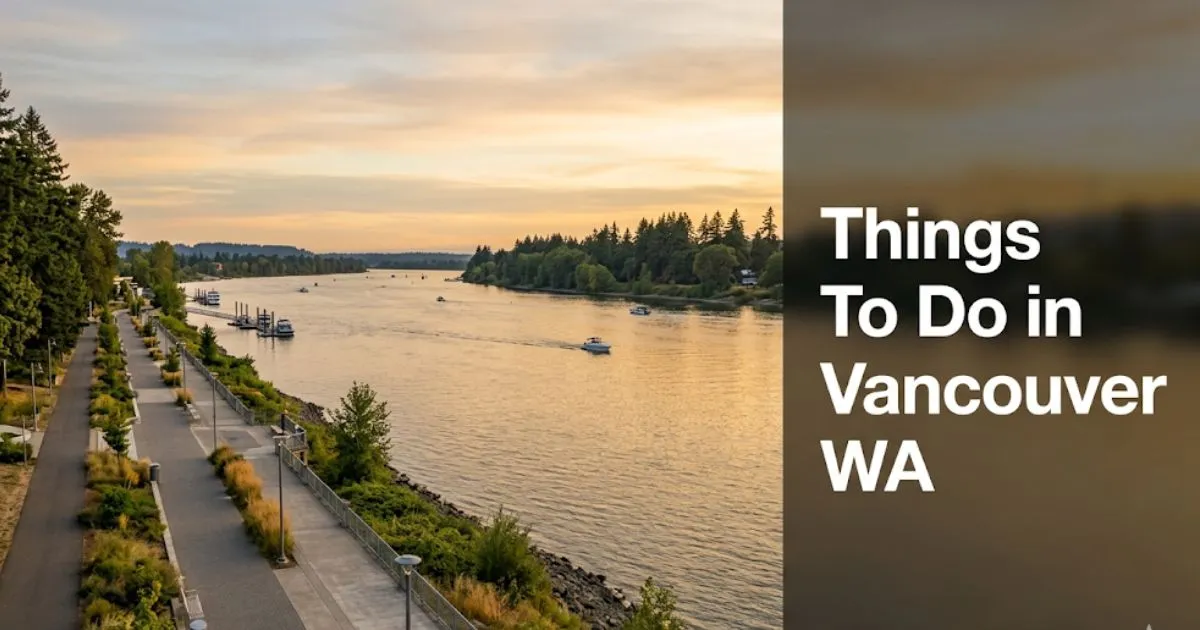
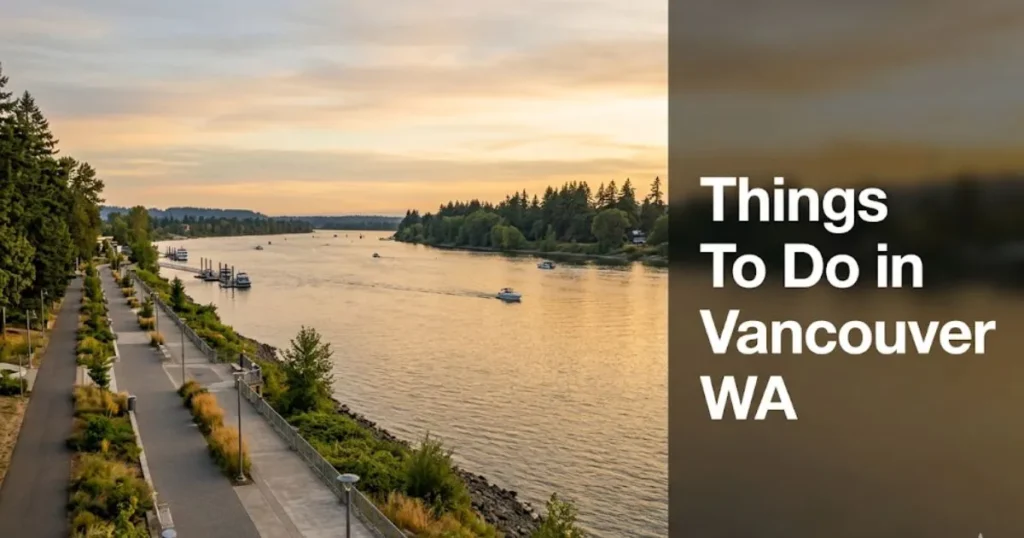
Visit Vancouver USA identifies the city as Clark County’s primary tourism hub. The waterfront redevelopment completed in recent years transformed a former industrial riverfront into one of the Pacific Northwest’s most accessible urban waterfronts.
The honest framing: Vancouver rewards visitors who engage with it on its own terms. Treat it as a Portland overflow hotel zone and you will miss its actual character entirely.
| Activity Category | Best For | Approximate Cost | Time Needed |
|---|---|---|---|
| Fort Vancouver NHS | History enthusiasts, families | Free to modest fee | 2 to 4 hours |
| Waterfront Park | Couples, families, walkers | Free | 1 to 3 hours |
| Lacamas Lake Regional Park | Hikers, nature lovers | Free | 2 to 5 hours |
| Craft Brewery Scene | Adults, couples, solo travelers | $15 to $40 per person | 2 to 4 hours |
| Pearson Air Museum | Aviation enthusiasts, kids | Modest admission | 1 to 2 hours |
| Farmers Market | Families, food lovers, budget travelers | Free to browse | 1 to 2 hours |
Insider Tip:
- The Columbia Riverfront Renaissance Trail connects the waterfront to Esther Short Park. Walk it before you drive anywhere.
- Officers Row is a 10-minute walk from Fort Vancouver. Almost no guidebook mentions it as a standalone experience.
- Solo travelers will find Vancouver’s compact downtown genuinely walkable without the urban density anxiety of Portland’s core.
Things To Do in Vancouver, Washington: Understanding the City’s Distinct Identity
Vancouver, Washington is the fourth-largest city in the state, with a history that predates Oregon statehood. Fort Vancouver was the commercial and governmental hub of the entire Pacific Northwest before American settlement organized the region.
That history is the city’s most underutilized asset by visitors. Most travelers spend 45 minutes at the fort reconstruction and move on. Experienced repeat visitors spend an entire day between the fort, Pearson Field, and Officers Row.
Couples and solo travelers will find the downtown arts corridor along Main Street walkable and genuinely local-feeling. Families with young children benefit from the NPS junior ranger programs at Fort Vancouver, which engage kids aged five and up meaningfully.
Budget travelers will note that Washington State has no state income tax, which funds better public park infrastructure than many comparable cities. Many of Vancouver’s best experiences are genuinely free.
Insider Tip:
- The Clark County Historical Museum on Main Street provides the regional context that makes Fort Vancouver’s story make sense. Visit it first.
- Seniors and accessibility travelers will find most downtown Vancouver attractions wheelchair accessible, with level paved surfaces throughout the waterfront zone.
- The real local neighborhood is the Uptown Village district along NE 15th Street, not the waterfront. That is where Vancouver residents actually eat and shop.
Fun Things To Do in Vancouver, WA: Activities That Genuinely Deliver
The most fun things to do in Vancouver, WA include the Vancouver Waterfront Park beer gardens during summer events, the Lacamas Lake trail loop, and the Pearson Air Museum’s actual flyable historic aircraft.
Propstra Square hosts the Vancouver Farmers Market from mid-April through late October. It is one of the Pacific Northwest’s better urban markets, with over 150 vendors at peak season.
The Water Resources Education Center on Columbia Way provides a free, genuinely engaging interactive exhibit on the Columbia River watershed. It sounds dry; it is not. Kids respond to it well, and the river view from the building is one of Vancouver’s best.
Families get the most from a combination: Fort Vancouver in the morning, waterfront park for lunch, Water Resources Education Center in the afternoon. That itinerary costs nearly nothing and runs a full, satisfying day.
Local Alternative: The tourist version of “fun in Vancouver” is the waterfront restaurants. The local version is grabbing a growler from Loowit Brewing Company on Broadway and walking the Confluence Trail to the river’s edge at dusk.
Things To Do in Downtown Vancouver, WA
Downtown Vancouver, WA is centered on Esther Short Park, one of the oldest public parks in Washington State, and extends along Main Street to the Columbia River waterfront.
Esther Short Park anchors the downtown core. The park hosts the Farmers Market, summer concert series, and occasional festivals. It is a genuine gathering point for locals, not a maintained-for-tourists green space.
The Carnegie Center for Arts and Education on East Evergreen Boulevard houses rotating gallery exhibits. Entry is typically free or low-cost; verify current hours and exhibits before visiting.
Walking distance from Esther Short Park, Officers Row on Everett Street presents 21 Victorian-era homes built between 1850 and 1906. General George C. Marshall lived here. This is a National Historic Landmark district that most visitors walk past without stopping.
Seniors and accessibility travelers will find downtown Vancouver significantly more navigable than Portland’s uneven terrain. Flat sidewalks, ample benches, and short distances between key sites make it one of the Pacific Northwest’s more senior-friendly urban cores.
Insider Tip:
- Park once at the Vancouver Waterfront garage near Columbia Way. Walk from there to every downtown attraction without moving your car.
- The weekend downtown scene peaks Saturday mornings during Farmers Market season. Weekday morning visits offer the same sites without crowds.
- Uptown Village along NE 15th Street is where locals actually go for independent dining and coffee. It is a 10-minute drive from the waterfront and worth it.
Outdoor Things To Do in Vancouver, WA
Vancouver, WA’s best outdoor experiences center on the Columbia River waterfront trail system, Lacamas Lake Regional Park, and the Burnt Bridge Creek Trail.
Vancouver Waterfront Park offers a paved, ADA-accessible riverfront promenade with direct Columbia River views. The trail connects west toward the I-5 bridge and east toward the Renaissance Trail. Total accessible waterfront walkway runs approximately two miles.
Burnt Bridge Creek Trail is a 9.3-mile paved trail through creek-side forest within city limits. Locals use it for morning runs and weekend cycling. It is almost entirely absent from tourist-facing content, which is precisely why it remains uncrowded.
Hikers and cyclists should know that Burnt Bridge Creek Trail connects to the broader city trail network. You can ride from Northeast Vancouver to the waterfront on separated trail without crossing a major road for much of the route.
Families with strollers and seniors using mobility aids will find Vancouver Waterfront Park and the lower Burnt Bridge Creek sections genuinely accessible. The upper Lacamas Lake trail sections involve elevation change and uneven natural surface.
Insider Tip:
- The Salmon Creek Regional Park trail system in North Vancouver is the local favorite for longer hikes. Less crowded than Lacamas Lake on weekends. The north loop trail offers old-growth tree stands rare this close to an urban center.
- Mountain bikers should check trail conditions November through March. Pacific Northwest rain makes natural surface trails hazardous during this period.
Key Takeaway: Park once at Vancouver Waterfront and walk the trail network east; you will cover the city’s best outdoor zone without driving again.
Fort Vancouver National Historic Site
Fort Vancouver National Historic Site is one of the Pacific Northwest’s most significant historical landmarks, operated by the National Park Service on a 366-acre site in central Vancouver.
The reconstructed 1840s fur trade fort presents daily living history programming. Costumed interpreters demonstrate period trades including blacksmithing, baking, and cooperage. The NPS site also includes the Pearson Air Museum on adjacent grounds.
Admission to the reconstructed fort area runs at a modest fee for adults; children under 15 typically enter free. The surrounding open grounds, including Pearson Field and the archaeological excavation sites, are free to walk. Verify current NPS fee schedules before visiting.
Families with children ages six and up are the ideal audience. The NPS Junior Ranger program keeps kids engaged while adults explore the exhibit halls. Allow two to four hours for a thorough visit.
History enthusiasts and couples interested in Pacific Northwest heritage should extend the visit to Officers Row, a five-minute walk north, and the adjacent Grant House, one of the oldest American buildings in the Pacific Northwest.
| Visitor Profile | Recommended Time | Must-See Element | Skip If |
|---|---|---|---|
| Families with kids | 2.5 to 4 hours | Junior Ranger program + fort reconstruction | Kids are under 4 |
| History enthusiasts | 3 to 5 hours | Archaeological exhibit + living history demos | You’ve visited twice |
| Budget travelers | 1 to 2 hours | Free grounds, Pearson Field walk | You want paid programming only |
| Seniors | 2 to 3 hours | Visitor center + paved fort courtyard | Mobility issues on unpaved paths |
| Couples | 1.5 to 2.5 hours | Sunset walk on fort grounds | Peak summer crowds on weekends |
The Honest Assessment: The fort reconstruction is genuinely impressive and the NPS programming is among the best in the Pacific Northwest. It is not overrated. What is overrated is the gift shop, which most visitors spend too long in at the expense of the living history programming happening outside it.
Lacamas Lake Regional Park
Lacamas Lake Regional Park in Camas, WA, approximately 12 miles east of downtown Vancouver, offers the region’s most rewarding full-day hiking and paddling experience.
The trail system loops the full perimeter of Lacamas Lake with approximately 6 miles of maintained trail. The route passes Pothole Falls and Round Lake, two specific destinations within the park that justify the full loop rather than an out-and-back walk.
Trailhead parking is available at the NE 35th Avenue lot in Camas. Weekday morning arrival before 9 a.m. is recommended from May through September. Weekend afternoons see full parking lots and crowded trail sections near the falls.
Hikers and nature photography enthusiasts will find the falls section genuinely rewarding from March through June, when water volume is at its highest. Summer visits remain pleasant but the falls reduce significantly.
Families with young children should note that the full perimeter loop involves real elevation change and natural-surface trail. It is manageable for kids aged eight and up but is genuinely challenging for strollers or mobility aids. The lakeside lower section is more accessible for shorter visits.
Insider Tip:
- Arrive at the NE 35th Avenue lot, not the Heritage Park lot. The former puts you at the falls within 20 minutes of walking. The Heritage Park lot adds 45 minutes of backtracking.
- The lake section near Lacamas Heritage Trail is where locals kayak and paddleboard. Rentals are not available at the park; bring your own or arrange through a Portland-area outfitter.
Best Restaurants in Vancouver, WA
Vancouver’s dining scene rewards visitors who leave the waterfront restaurant corridor and explore the Uptown Village district and the Fourth Plain Boulevard corridor.
The waterfront restaurants, including those facing Columbia River at Waterfront Park, are competent and offer good views. They are priced at Portland levels without Portland’s culinary ambition. Locals eat here occasionally. They do not consider it the best the city offers.
The Grant House Restaurant on Officers Row occupies a historic 19th-century building and serves Pacific Northwest cuisine in a genuinely distinctive setting. Reservations are recommended on weekends; verify current operating status before visiting.
For the actual local dining scene, Uptown Village along NE 15th Street runs a cluster of independent restaurants and cafes. This corridor includes genuinely local options that change with ownership, so specific restaurant names require current verification, but the neighborhood consistently delivers better value than the waterfront zone.
Budget travelers should know that Vancouver’s food truck presence is real and growing. The Clark County Fairgrounds area and events at Esther Short Park regularly feature local food vendors at $8 to $15 per meal.
Families with selective children will find the waterfront corridor most accommodating, with mainstream menus and kid-friendly pacing. The Uptown Village requires more flexibility in menu range but rewards adventurous families.
Insider Tip:
- Ask locals where they actually go for brunch. The answer will almost never be the waterfront. It will be somewhere on NE Fourth Plain or in the Hazel Dell neighborhood.
- The Vancouver Farmers Market at Propstra Square on Saturday mornings is legitimately one of the better ways to eat in Vancouver. Prepared food vendors offer Pacific Northwest-sourced meals for under $15.
Key Takeaway: Skip the waterfront restaurant row for everyday meals; the Uptown Village on NE 15th Street is where Vancouver’s real dining identity lives.
Vancouver, WA Craft Breweries
Vancouver, WA has developed a genuine craft brewery identity, with Loowit Brewing Company on Broadway and Trap Door Brewing on Main Street as the two anchors of the local scene.
Loowit Brewing (named for the Native American name for Mount St. Helens) occupies a spacious taproom near the waterfront. The hop-forward Pacific Northwest ales are well-made. The outdoor seating makes it the best warm-weather drinking spot in downtown Vancouver.
Trap Door Brewing operates a smaller, more intimate taproom and focuses on Belgian-influenced styles alongside Pacific Northwest standards. It is where local beer enthusiasts go when they want something less predictable than a West Coast IPA.
Both taprooms are within walking distance of each other and of the waterfront park. A brewery walk between the two, plus the waterfront, is a genuine two to three hour evening activity without needing a car.
Solo travelers and couples are the primary audience. The taproom culture here is genuinely social; the bar seating at both locations invites conversation in a way that Portland’s busier taprooms sometimes do not.
Families should note that both taprooms allow minors with accompanying adults during defined hours. Verify current family-hours policies before visiting with children.
The Local Alternative: Beyond Loowit and Trap Door, locals point to Heathen Brewing in East Vancouver as the taproom with the most loyal neighborhood following. It is less polished than the downtown options and significantly more local in atmosphere.
Free Things To Do in Vancouver, WA
The best free things to do in Vancouver, WA include the Fort Vancouver NHS grounds and Pearson Field walk, Vancouver Waterfront Park, Burnt Bridge Creek Trail, and the Saturday Farmers Market at Propstra Square.
Washington’s public park infrastructure is well-funded, and Vancouver benefits directly. The Columbia River waterfront promenade, the city trail network, and every regional park in Clark County carry no entry fee.
The Water Resources Education Center on Columbia Way is free to enter and provides one of the city’s most engaging indoor experiences. The building itself, positioned directly on the river, offers unobstructed Columbia River views from the upper-level observation area.
Budget travelers can realistically spend a full two-day Vancouver visit spending under $30 total on activities. The paid attractions (fort reconstruction, Pearson Air Museum) are the exceptions, not the rule.
Families will find the free activity inventory genuinely rich. Fort Vancouver NHS grounds, the waterfront trail, Esther Short Park, and Burnt Bridge Creek Trail together constitute a full two-day itinerary at zero admission cost.
Free Activities Checklist:
- Vancouver Waterfront Park and riverfront promenade
- Burnt Bridge Creek Trail (9.3 miles, paved)
- Esther Short Park and Propstra Square
- Officers Row National Historic District (exterior walk)
- Water Resources Education Center
- Columbia Riverfront Renaissance Trail
- Lacamas Lake Regional Park trail system (no entry fee)
- Salmon Creek Regional Park
- Vancouver Farmers Market (free to browse)
- Clark County Historical Museum (verify current admission policy)
Things To Do in Vancouver, WA With Kids
Vancouver, WA is one of the Pacific Northwest’s better family destinations, with a high concentration of free, outdoor, and NPS-quality activities scaled for children.
Fort Vancouver National Historic Site is the anchor family experience. The NPS Junior Ranger program provides structured engagement for children aged five through twelve. Living history demonstrations keep attention better than static museum exhibits.
Pearson Air Museum, adjacent to the fort, houses historic aircraft in a hangar setting. The museum emphasizes interactive exhibits over display-only presentation. Kids who engage with the hands-on aviation sections consistently rate it higher than any adults-only museum experience in the region.
Vancouver Waterfront Park has open lawn space, river views, and food vendors during summer months. It works for families because it is entirely self-paced with no mandatory routes or time constraints.
Families with very young children (under three) should focus on Esther Short Park and the waterfront promenade. Both are stroller-accessible, flat, and forgiving of unpredictable child schedules.
| Age Group | Best Activity | Why It Works | What To Skip |
|---|---|---|---|
| Ages 2 to 4 | Esther Short Park, waterfront walk | Flat, open, self-paced | Full Lacamas Lake loop |
| Ages 5 to 8 | Fort Vancouver NPS Junior Ranger | Structured, hands-on, free | Officers Row (no kids’ angle) |
| Ages 9 to 12 | Lacamas Lake trail, Pearson Air Museum | Physical challenge + aviation hands-on | Craft brewery taprooms |
| Ages 13 to 17 | Brewery walk (non-drinking), farmers market | Independent browsing, food culture | Fort Vancouver (less relevant to teens) |
Insider Tip:
- Book the Fort Vancouver Junior Ranger activity on weekday mornings when the demonstrations are less crowded than weekend visits.
- The Water Resources Education Center is air-conditioned, free, and genuinely holds children’s attention for 45 to 90 minutes. It is an underused backup plan for rainy days.
Things To Do in Vancouver, WA for Couples
Vancouver, WA offers couples a Pacific Northwest waterfront experience at prices significantly lower than Portland’s equivalent dining and entertainment options.
The Grant House Restaurant on Officers Row is the single most romantic dinner setting in Vancouver. The 19th-century historic building, the Pacific Northwest menu, and the absence of tourist-crowd energy make it consistently better than the waterfront options for a date dinner. Reservations are advised; verify current availability before visiting.
An evening walk along the Columbia Riverfront Renaissance Trail at sunset, followed by drinks at Loowit Brewing’s outdoor patio, is the standard local date itinerary for a reason. The river view at dusk from the waterfront lawn is one of the Pacific Northwest’s genuinely romantic urban settings.
Active couples should prioritize the Lacamas Lake loop on a weekday morning. The falls section, particularly Pothole Falls in spring, offers a level of natural beauty that surprises first-time visitors expecting a managed park.
The honest limitation for couples: Vancouver’s late-night entertainment options are limited. If your idea of a romantic evening involves live music beyond 10 p.m. or cocktail bars at a Portland-level, cross the bridge. Vancouver closes earlier than its neighbor.
Insider Tip:
- The Officers Row neighborhood at twilight, when the Victorian homes are lit and foot traffic is minimal, is one of Vancouver’s most overlooked romantic settings. It costs nothing.
- Couples visiting in October should check the event calendar for the Vancouver Wine and Jazz Festival and similar fall programming at Esther Short Park.
Key Takeaway: The Grant House on Officers Row is Vancouver’s best romantic dinner, and it is genuinely better than any waterfront restaurant for a couples’ evening.
Things To Do Near Vancouver, WA
The best day trips from Vancouver, WA include Mount St. Helens National Volcanic Monument, Cape Disappointment State Park, and the Columbia River Gorge corridor east on Highway 14.
Mount St. Helens is approximately 50 miles north on Interstate 5, then east on Highway 504. The Johnston Ridge Observatory sits at 4,314 feet with direct crater views. Winter and early spring access may be limited by road closures; verify USDA Forest Service road conditions before departure. Timed-entry requirements may apply during peak summer months; check the National Volcanic Monument’s official reservation system in advance.
Cape Disappointment State Park is approximately 80 miles west via Highway 14 and US 101. The park includes the Lewis and Clark Interpretive Center, two operational lighthouses, and North Head Trail with Pacific Ocean views. Allow a full day.
The Columbia River Gorge Scenic Highway begins immediately east of the Interstate 205 bridge. Driving east on Washington’s Highway 14 parallels the Oregon scenic route with less traffic and equally dramatic Columbia River views.
Families will find Mount St. Helens the most educational day trip, particularly for children who have visited Fort Vancouver and want to understand Pacific Northwest geological and ecological history.
Budget travelers should know that Cape Disappointment’s day-use fee runs in the moderate Washington State Parks range; the Gorge corridor on Highway 14 is entirely free.
Insider Tip:
- Avoid Mount St. Helens on summer weekend mornings. The Johnston Ridge Observatory parking lot fills before 9 a.m. in July and August. Arrive before 8 a.m. or plan a weekday visit.
- Beacon Rock State Park, 30 miles east on Highway 14, is one of the Columbia Gorge’s best short-hike experiences and sees a fraction of Multnomah Falls’ crowds.
Things To Do in Vancouver, WA This Weekend: A One-Day Itinerary
A single well-organized day in Vancouver, WA covers the city’s three strongest experiences: Pacific Northwest history, Columbia River waterfront, and local dining and craft beverage culture.
This itinerary works best for first-time visitors. Repeat visitors should swap the fort for a Lacamas Lake morning and the waterfront for an Uptown Village evening.
One-Day Vancouver, WA Itinerary:
- 8:30 a.m. Arrive at Fort Vancouver NHS. Begin with the visitor center orientation film (15 minutes). Proceed to the reconstructed fort for the first living history demonstration of the morning.
- 10:00 a.m. Walk north from the fort to Officers Row. The full street is a 10-minute walk. The Grant House and the historic residences require no entry fee for exterior viewing.
- 11:00 a.m. Drive or walk to the Clark County Historical Museum on Main Street. Allow 45 to 60 minutes for the regional history exhibits.
- 12:30 p.m. Walk west along Main Street to the Farmers Market at Propstra Square (Saturday only, mid-April through late October). Alternatively, seek lunch in the Uptown Village on NE 15th Street.
- 2:00 p.m. Drive or walk to Vancouver Waterfront Park. Walk the riverfront promenade east toward the Renaissance Trail. Allow 60 to 90 minutes.
- 3:30 p.m. Stop at the Water Resources Education Center on Columbia Way. Free entry. 45-minute visit is sufficient for adults; 60 to 90 minutes with children.
- 5:00 p.m. Walk to Loowit Brewing on Broadway for late-afternoon drinks. Arrive early to secure outdoor seating.
- 6:30 p.m. Dinner reservation at Grant House on Officers Row. Book in advance for weekends.
Getting Around Vancouver, WA
Getting around Vancouver, WA is most practical by car, though the compact downtown core is genuinely walkable once you have parked.
C-TRAN (Clark County Public Transportation Benefit Area Authority) operates local bus service throughout Vancouver and into Portland via the Interstate Bridge. Bus service is adequate for travel between major Vancouver nodes but involves transfer time that makes a car considerably more efficient for visitors with limited days.
Driving from Portland International Airport (PDX) takes approximately 20 minutes in normal traffic via Interstate 205 north. Budget 35 to 45 minutes during weekday peak hours (7 to 9 a.m. and 4 to 7 p.m.). There is no direct rail connection between PDX and downtown Vancouver as of 2026; the Columbia River Crossing light rail extension remains a future project. Verify current transit infrastructure with C-TRAN before planning a car-free itinerary.
Downtown Vancouver parking is generally available and low-cost. The waterfront garage near Columbia Way is the most practical single parking location for accessing the waterfront, Esther Short Park, and the immediate downtown corridor.
Solo travelers using Uber or Lyft will find service available but less dense than in Portland. Wait times can be longer in the evening. Plan accordingly.
Cyclists should know that Vancouver’s trail network is among the most developed of any Washington city of comparable size. The Burnt Bridge Creek Trail and the waterfront promenade are entirely separated from vehicle traffic.
Insider Tip:
- Avoid crossing the Interstate 5 bridge into Portland during weekday peak commute hours. The crossing backs up significantly. Use Interstate 205 as an alternative route.
- If you are staying in Portland, the C-TRAN express route to downtown Vancouver is a realistic car-free option for a day visit. Verify current schedules and routes directly with C-TRAN.
Key Takeaway: Rent a car at PDX for any Vancouver visit involving day trips; the downtown core itself is genuinely walkable once parked at the waterfront garage.
Things To Do in Vancouver, WA in Summer and Winter
Summer and winter require completely different Vancouver itineraries, with summer favoring outdoor and waterfront activities and winter shifting emphasis to indoor cultural venues and strategic day trips.
Summer (June through August) is peak season. Temperatures typically run 75 to 90 degrees Fahrenheit. The Vancouver Waterfront Park beer gardens, outdoor concerts at Esther Short Park, the Farmers Market, and the full Lacamas Lake trail system are all at their best. Book waterfront dining and events in advance.
Fall (September through October) is the strongest overall season. Crowd levels drop. Temperatures remain mild (55 to 70 degrees). The Columbia River Gorge foliage corridor on Highway 14 is at its peak. This is the season experienced repeat visitors choose.
Winter (November through February) brings consistent Pacific Northwest rain and limited daylight (sunset by 4:30 p.m. in December). Fort Vancouver NHS, Pearson Air Museum, and indoor cultural venues remain fully operational. Outdoor trails are passable but muddy. Hotel rates drop significantly. This is a legitimate budget-visit window if your priorities are history and culture rather than outdoor recreation.
Spring (March through May) brings Lacamas Lake’s waterfalls to peak flow. Pothole Falls in April is one of the Pacific Northwest’s better spring waterfall experiences within city-accessible distance.
| Season | Best Activities | Crowd Level | Approximate Hotel Rate | What to Avoid |
|---|---|---|---|---|
| Summer | Waterfront park, Farmers Market, breweries | High (July-Aug peak) | Premium | Midday outdoor activity in heat |
| Fall | Gorge drives, hiking, dining | Moderate | Mid-range | Weekend crowds at Lacamas |
| Winter | Fort Vancouver, Pearson Museum, indoor culture | Low | Budget | Muddy natural trails |
| Spring | Lacamas Lake falls, waterfront, markets | Low to moderate | Mid-range | None; best balanced season |
Seniors and accessibility travelers planning winter visits should note that while Vancouver’s downtown is flat and manageable, rainy conditions make the natural surface trails genuinely hazardous. Stick to paved waterfront and downtown routes November through February.
Safety and Practical Warnings for Vancouver, WA
Vancouver, WA is a generally safe Pacific Northwest city, but several specific practical risks affect visitor experience in ways that standard tourism content ignores.
Key safety and practical facts every visitor should know:
- Columbia River swimming: do not attempt it. The river’s current is deceptively strong. Vancouver Waterfront Park is for viewing and recreation on the bank, not in the water.
- Trail conditions November through March: Natural surface trails including Lacamas Lake and Salmon Creek become muddy and slippery after rain. Wear appropriate footwear or avoid natural-surface trails during extended wet periods.
- Peak-hour Interstate Bridge traffic: The I-5 crossing between Vancouver and Portland backs up severely during weekday commute hours. Add 20 to 30 minutes to any cross-river travel scheduled between 7 and 9 a.m. or 4 and 7 p.m.
- Mount St. Helens winter road access: Highway 504 east to Johnston Ridge Observatory may close due to snow and ice from November through May. Always verify road conditions with the USDA Forest Service before departure.
- Sun exposure in summer: Vancouver’s summer sun is strong and reflected off river surfaces. Use sunscreen on waterfront walks even on overcast Pacific Northwest days. Pacific Northwest cloud cover does not block UV radiation at effective levels.
- Downtown Vancouver safety: The immediate downtown and waterfront areas are generally safe. Apply standard urban awareness in any unfamiliar area, particularly after dark in zones away from the waterfront and Esther Short Park.
For emergencies, Clark County’s 911 system covers the entire Vancouver metro area. For Mount St. Helens trail and road conditions, contact the USDA Forest Service Gifford Pinchot National Forest office directly.
Frequently Asked Questions About Things To Do in Vancouver, WA
What are the best free things to do in Vancouver, WA?
The best free things to do in Vancouver, WA include Vancouver Waterfront Park, the Burnt Bridge Creek Trail, Esther Short Park, Officers Row, and the Water Resources Education Center.
The Fort Vancouver NHS grounds and Pearson Field are also free to walk; only the reconstructed fort interior and Pearson Air Museum charge admission.
The Saturday Farmers Market at Propstra Square is free to browse from mid-April through late October.
Is Vancouver, WA worth visiting or should I just go to Portland?
Vancouver, WA is worth a dedicated two to three day visit, not just a day trip detour from Portland.
The city offers Fort Vancouver NHS, a developed Columbia River waterfront, accessible regional parks, and a craft brewery scene at lower price points than Portland.
Portland wins on nightlife, restaurant density, and urban arts variety; Vancouver wins on history programming quality, park accessibility, and value for money.
How many days do you need in Vancouver, WA?
Two full days cover Vancouver’s primary attractions comfortably, with a third day ideal for a Mount St. Helens or Cape Disappointment day trip.
One day is enough for a first-time visitor focusing on Fort Vancouver, the waterfront, and downtown.
Three days allow the full regional experience including a Columbia Gorge drive and a Lacamas Lake hiking day.
What is there to do in Vancouver, WA with kids?
The best things to do in Vancouver, WA with kids include the Fort Vancouver NPS Junior Ranger program, the Pearson Air Museum’s interactive aviation exhibits, Esther Short Park, and the Water Resources Education Center.
All four activities are free or low-cost and remain engaging for children aged five through twelve.
Lacamas Lake’s trail loop suits active kids aged eight and up, though the full 6-mile perimeter is a genuine physical commitment.
What is the best time of year to visit Vancouver, WA?
The best time to visit Vancouver, WA is late spring (May through June) or early fall (September through October).
Both seasons offer mild temperatures, manageable crowds, and full access to outdoor trails, waterfront programming, and the Farmers Market.
Summer brings the most events and warmest weather but also peak crowds and premium hotel rates; winter is the budget season with most indoor attractions fully operational.
How do you get around Vancouver, WA without a car?
Getting around central Vancouver without a car is feasible using C-TRAN local bus service and on foot within the compact downtown and waterfront zone.
The downtown core, waterfront park, Fort Vancouver NHS, and the Burnt Bridge Creek Trail access points are within reasonable walking or cycling distance of each other.
Traveling from Portland to Vancouver by bus via C-TRAN’s express routes is practical for a day visit; verify current schedules directly with C-TRAN, as service adjusts seasonally.
Plan Your Vancouver, WA Visit With Confidence
Vancouver, WA works best as a primary destination for two to three days, not as a Portland hotel overflow zone. The Columbia River waterfront, Fort Vancouver National Historic Site, and the Clark County regional park system together constitute a genuinely satisfying Pacific Northwest travel itinerary.
Book the Grant House for your first evening and arrive at Fort Vancouver before 9 a.m. on your first full morning. Those two decisions will set the right tone for everything else.
Travel conditions, operating hours, admission fees, and event schedules change. Verify all logistics directly with Visit Vancouver USA and individual venues before departure. Fort Vancouver NHS fee and hours information is maintained by the National Park Service.
You now have a specific plan. Vancouver rewards visitors who engage with its actual character, and you have everything you need to do exactly that.