Best Things to Do in Salt Lake City, Utah: 2026 Guide

Salt Lake City rewards travelers who understand what it actually is: a mid-sized western city positioned within 45 minutes of exceptional outdoor terrain, with a genuine cultural scene, a food identity that has evolved well beyond its conservative reputation, and a downtown core that functions as the base for a much larger experience rather than the experience itself. The things to do in Salt Lake City that matter most are not all within walking distance of Temple Square, and the travelers who plan only for what they can see from downtown miss most of what makes a trip here genuinely worthwhile.
According to Visit Salt Lake, the city and its surrounding region receive several million visitors annually, drawn by ski resorts, proximity to five national parks, and a growing recognition of the city’s own cultural and culinary offerings. Salt Lake City International Airport (IATA: SLC) completed a major new terminal in recent years, making arrival noticeably smoother than a decade ago, and TRAX light rail puts downtown about 15 minutes from the gate without a rental car.
This guide covers the specific activities that deliver on their promise, the neighborhoods that suit different travel styles, the day trips worth prioritizing, the honest seasonal realities most travel content ignores, and the practical logistics of getting around a city where your car and the transit system serve different purposes. Verify hours, admission costs, and access conditions directly with venues before your visit, as conditions in 2026 may differ from those at the time of publication.
Things to Do in Salt Lake City: What Makes This City Worth Your Time
Salt Lake City is one of the most geographically advantaged mid-sized cities in the United States, with the Wasatch Range rising directly behind it and five national parks within a half-day’s drive, making it genuinely exceptional as an outdoor adventure base with urban amenities attached.
The city sits at approximately 4,327 feet above sea level, which matters practically. Visitors arriving from sea level may feel mild fatigue in the first day or two. The trails above the city quickly climb to 8,000 feet and above, and ski resorts in Little Cottonwood and Big Cottonwood Canyons operate above 10,000 feet. This elevation reality affects both how much energy you have on your first day and what types of outdoor activity are genuinely accessible for different fitness levels.
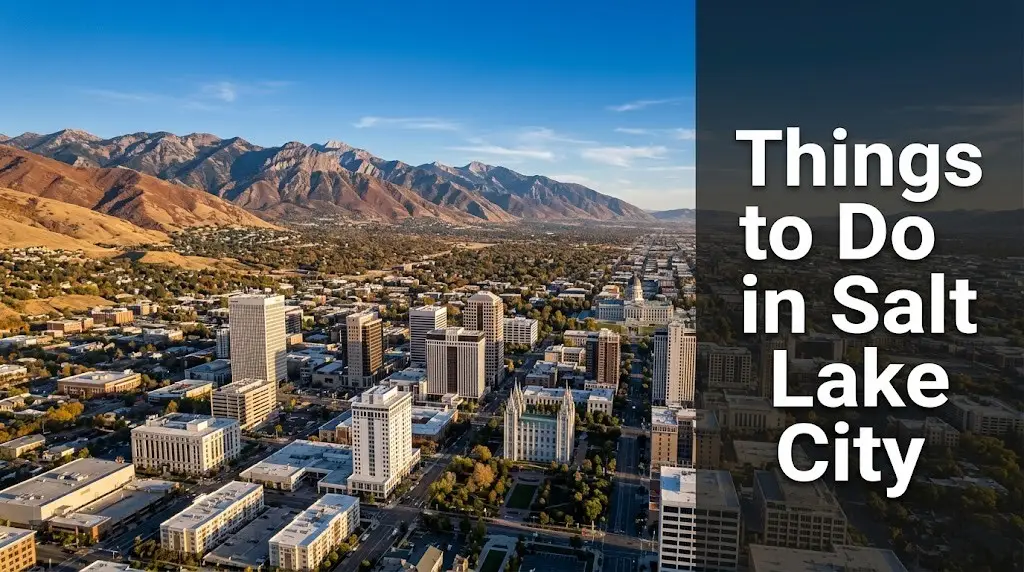
What distinguishes Salt Lake City from comparable-sized western cities is the dual identity: it functions simultaneously as a genuine urban destination with a strong arts scene, a Food Hall culture anchored by spots like The Post District, a serious craft beverage scene, and a genuinely interesting architectural and cultural heritage, while also serving as the departure point for canyon hikes, ski days, Antelope Island drives, and national park road trips. You can go to the opera at Eccles Theater on Friday night and hike Millcreek Canyon for three hours Saturday morning. Very few American cities at this population scale give you both options at this quality level.
The honest assessment: Salt Lake City is best for outdoor-focused travelers, cultural travelers with an interest in the Latter-day Saint heritage and natural history of the region, and road trippers positioning here as a base. It is not the right destination if your primary interest is urban nightlife, beach access, or the kind of cosmopolitan street-level density you find in cities three or four times its size.
According to the Utah Office of Tourism, the Wasatch Front region offers more ski terrain per capita than any other metropolitan area in the contiguous United States, which partially explains why the city skews heavily toward active, outdoors-oriented visitors.
Insider Tip:
- The airport-to-downtown TRAX light rail ride takes approximately 15 minutes on the Red Line and deposits you at the City Center or Temple Square stations, eliminating the need for a rental car on day one if your first night’s hotel is downtown.
- Altitude adjustment matters: plan a lighter first day (museum visits, the Temple Square area, downtown neighborhoods) rather than immediately heading into the canyons at elevation.
- For solo travelers, the Granary District’s walkable bar and restaurant strip is significantly more approachable on a weeknight than a Saturday, when it draws larger groups.
Things to Do in Salt Lake City for Adults
The adult-oriented experience in Salt Lake City is considerably stronger than the city’s historical reputation suggests, with a food and drink scene, live performance calendar, and nightlife corridor that reward visitors who know where to look beyond the tourist-facing downtown core.
The craft beverage shift in Utah has been genuine and significant. Utah’s liquor laws have evolved in recent years (the 3.2% beer cap that long defined the state’s bar culture was repealed in 2019), and the result is a real craft brewery scene anchored by names like Squatters, Uinta Brewing, and Kiitos Brewing in the Granary District. The Granary District itself, along Salt Lake City’s 400 South corridor, has developed into the city’s most adult-oriented neighborhood for bar-hopping and late-night dining, with venues that feel genuinely local rather than tourist-facing.
Live performance in Salt Lake City operates at a tier most visitors don’t anticipate. The Utah Symphony is one of the most respected regional orchestras in the western United States, performing at Abravanel Hall in a space known for its acoustic quality. Pioneer Theatre Company runs a professional regional theater season. Eccles Theater hosts touring Broadway productions throughout the year. For travelers interested in performing arts, Salt Lake City delivers at a level that surprises visitors expecting a smaller-market experience.
Sports anchors the adult social calendar in a different way. The Utah Jazz (NBA) play at the Delta Center (commonly called Vivint Arena locally), and Real Salt Lake (MLS) play at America First Field in Sandy, accessible via TRAX. Both offer genuinely affordable ticket options by major American sports market standards, particularly for mid-week games.
For adults who want evening dining without the tourist-strip experience, the 9th and 9th neighborhood (the intersection of 900 South and 900 East) anchors a walkable strip of independent restaurants and bars that operates firmly in the local-to-tourist ratio that most SLC visitors never find.
Key Takeaway: Salt Lake City’s adult experience works best for travelers who combine a canyon morning with an afternoon at a local brewery and an evening performance, rather than those treating downtown as a self-contained entertainment district.
Downtown Salt Lake City Things to Do
Downtown Salt Lake City is more organized and walkable than first-time visitors expect, structured around a grid system designed in the 1840s with blocks wide enough to allow a full ox team to turn around, which produces the generously wide streets and spacious intersections that still define the urban core.
Temple Square anchors the downtown experience and is one of the most architecturally significant religious sites in the American West. The Salt Lake Temple, the most recognized structure of The Church of Jesus Christ of Latter-day Saints, completed a major renovation effort that visitors should confirm the current status of before planning a visit, as access to specific areas has varied during the restoration period. The surrounding Temple Square grounds, including the Tabernacle (home of the Mormon Tabernacle Choir, officially the Tabernacle Choir at Temple Square) and multiple visitor centers, are generally open to all visitors regardless of religious affiliation. Entry is free at time of publication; confirm current access areas directly with Temple Square visitor services before your visit.
The Clark Planetarium on 400 West offers free general floor admission with paid IMAX and dome theater shows, making it a practical stop for families and science-interested adults. The Gateway shopping and entertainment district sits just west of downtown and provides a more relaxed outdoor mall environment with restaurants and a movie theater.
Gallivan Center in the heart of downtown serves as Salt Lake City’s primary public gathering space, hosting an outdoor skating rink in winter and outdoor concerts and events in summer. It’s the kind of urban public space that signals a city that has genuinely invested in its downtown core, rather than one where the city center empties after business hours.
For couples, the Utah Museum of Fine Arts on the University of Utah campus (reachable by TRAX) has permanent and rotating collections that consistently run above what a regional museum of this size would typically offer.
| Downtown Attraction | Approximate Cost | Booking Required | Best For |
|---|---|---|---|
| Temple Square | Free (verify current access) | No | All profiles |
| Clark Planetarium (floor) | Free | No | Families, curious adults |
| Clark Planetarium (dome shows) | Paid, varies | Recommended | Families, couples |
| Gallivan Center | Free | No | Couples, solo travelers |
| Utah Museum of Fine Arts | Paid, verify current rates | No | Cultural travelers, couples |
| The Gateway | Free to enter | No | Families, shoppers |
Outdoor Things to Do in Salt Lake City
The outdoor access from Salt Lake City is the city’s single most valuable asset for most traveler types, with five distinct canyon systems beginning within 15 to 30 minutes of downtown and providing hiking, biking, camping, and in winter, skiing terrain that rivals anything in the western United States.
Millcreek Canyon is the most accessible urban hiking corridor and the right starting point for travelers who want a genuine mountain trail experience without the longer drive to Big or Little Cottonwood Canyons. The road into Millcreek Canyon is paved for several miles, with multiple trailhead pullouts. Dogs are permitted on even-numbered days (verify current policies directly with Salt Lake County). Expect a modest vehicle fee at the entrance; confirm current rates before visiting.
The Bonneville Shoreline Trail runs for miles along the eastern bench of the valley, tracing the ancient shoreline of Lake Bonneville (the prehistoric lake that the Great Salt Lake is a remnant of). Segments near the University of Utah and near the Avenues neighborhood are accessible from within the city limits, making this a rare genuine urban trail that doesn’t require a drive. The footing varies significantly by segment, and some sections involve loose rock; appropriate footwear matters.
Antelope Island State Park sits in the Great Salt Lake and is reachable via a causeway from Syracuse, approximately 30 to 35 miles north of downtown Salt Lake City. The island supports a free-roaming American bison herd, pronghorn antelope, coyotes, and migratory bird populations that rival dedicated birding destinations. The island’s beaches are technically swimmable (the extreme salinity means you float effortlessly) but the brine shrimp smell and occasional shore fly presence make beach use unappealing for many visitors in peak summer months. Spring and fall visits are significantly more pleasant.
For budget travelers, both the Bonneville Shoreline Trail and the lower canyon roads in Millcreek are genuinely free or very low cost. Antelope Island State Park charges a vehicle day-use fee; confirm current rates with Utah State Parks before visiting.
Altitude warning: Trails in Big Cottonwood and Little Cottonwood Canyons reach 8,000 to 10,000 feet. Visitors not acclimated to elevation should plan shorter distances than they would at sea level and carry more water than they think they need. Sun exposure at high elevation is significantly more intense than at sea level even on overcast days.
Things to Do in Salt Lake City with Kids
Salt Lake City works well for families with children in the 4 to 14 age range, with a concentration of genuinely engaging children’s venues in and around downtown that go beyond the standard aquarium-and-zoo formula most US cities default to.
Discovery Gateway Children’s Museum at The Gateway is designed specifically for children through approximately age 12, with interactive exhibits across science, art, and community themes. It reads as a well-funded regional children’s museum rather than a generic play space, and the duration of engagement is typically two to three hours for most families with young children. Entry fees apply; check current rates directly with Discovery Gateway before visiting.
Tracy Aviary in Liberty Park is the oldest continuously operating aviary in the United States and presents a genuinely impressive collection of birds in naturalistic habitats. It’s compact enough that children don’t tire from walking before they’ve seen everything, which is a real logistical advantage over larger zoo formats. Liberty Park itself is Salt Lake City’s largest and most family-oriented urban park, with a pond, play areas, tennis courts, and a seasonal amusement area. The park is free to enter; Tracy Aviary charges admission.
Hogle Zoo on the east side of the city is the standard family destination for younger children and operates at a quality level above a small-city zoo. Stroller access is good throughout; the terrain is gently sloped but manageable. Budget for a half-day visit.
For older children and teens, the Natural History Museum of Utah on the University of Utah campus is one of the genuinely outstanding natural history museums in the western United States. The dinosaur collection and the Hall of Ancient Life are the standout exhibits. The building itself, designed by GSGSB architects, uses local Utah materials and incorporates mountain-view sight lines that enhance the experience architecturally.
Best for families with children ages 4 to 7: Discovery Gateway and Tracy Aviary.
Best for families with children ages 8 to 14: Natural History Museum of Utah and a short hike in Millcreek Canyon.
Key Takeaway: The Natural History Museum of Utah is consistently underestimated by first-time families who default to Hogle Zoo. For children with any interest in science, prehistory, or geology, the museum delivers a significantly richer experience per hour.
Cool Things to Do in Salt Lake City Beyond the Obvious
The single most distinctive and undersold attraction in Salt Lake City is Gilgal Sculpture Garden, a free outdoor sculpture park in the Sugar House neighborhood containing 12 original stone sculptures commissioned between 1945 and 1963 by LDS bishop Thomas Battersby Child Jr. The sculptures are surreal, allegorical, and unlike anything else in the Intermountain West: a sphinx with Joseph Smith’s face, a man in a business suit emerging from stone, figures carved in a style that sits somewhere between folk art and classical allegory. It’s small, free, open to the public, and almost entirely absent from major travel platforms. Plan 30 to 45 minutes.
The Granary District along 400 South has become a genuine arts and creative district in the way that the word is often misused for areas that are still primarily commercial. Genuine independent galleries, a growing concentration of working artist studios, and the Post District food hall occupy a corridor that feels more like a working creative neighborhood than a curated tourist precinct.
Red Butte Garden on the University of Utah’s east bench is a 100-acre botanical garden with panoramic valley views and a summer concert series that draws nationally recognized artists to an outdoor amphitheater setting. The concert series tickets sell out quickly; check schedules and booking windows well in advance. General garden admission runs separately from concert tickets.
The Bonneville Salt Flats, approximately 100 miles west of Salt Lake City on I-80, are where land speed records are set and where the surreal white surface creates a natural photography environment unlike anything in the American landscape. No admission fee; accessible via BLM land. The salt surface is best visited when dry, typically August through October, as it can be flooded in winter and spring. Confirm current surface conditions before the drive.
For solo travelers who want a genuinely local bar experience, the 9th and 9th neighborhood’s concentration of independent bars draws a predominantly local crowd. This stands in contrast to the Granary District’s bar scene, which tends younger and louder. Both are legitimate but serve different moods.
Salt Lake City Neighborhoods Guide: Where to Spend Your Time
Salt Lake City’s neighborhoods have distinct characters that don’t always come through in general destination content, and choosing where to base yourself or spend afternoon time significantly affects the quality of the experience.
| Neighborhood | Character | Best For | Signature Experience |
|---|---|---|---|
| Downtown Core | Urban, transit-connected, Temple Square proximity | First-timers, business travelers | Temple Square, Gallivan Center, Eccles Theater |
| 9th and 9th | Walkable independent restaurants and bars, residential | Couples, food-focused travelers, solo adults | Evening dining at independent restaurants, local bar scene |
| Granary District | Arts, creative, brewery-heavy, younger crowd | Adult travelers, craft beer focus, arts interest | Post District food hall, Uinta and Kiitos Brewing, gallery walk |
| Sugar House | Residential-feeling, diverse dining, Liberty Park adjacent | Families, budget travelers, longer stays | Liberty Park, Tracy Aviary, Gilgal Sculpture Garden |
| The Avenues | Historic architecture, walkable to downtown, quieter | Couples, heritage travelers, older adults | Capitol Hill views, Victorian residential architecture, proximity to City Creek Canyon trail |
| University of Utah area | Campus adjacent, museum district, canyon access | Cultural travelers, families with older kids | Natural History Museum of Utah, Red Butte Garden, Bonneville Shoreline Trail access |
Downtown is the most logical base for first-time visitors who want transit access, proximity to Temple Square, and the ability to walk to multiple attractions within a reasonable radius. It’s not the most atmospheric neighborhood, but it functions well as a hub.
9th and 9th is where experienced SLC visitors recommend couples and solo adult travelers spend at least one evening. The block radius around the intersection of 900 South and 900 East has more genuinely local independent restaurants per block than anywhere else in the city.
The Avenues, Salt Lake City’s historic hillside residential neighborhood directly northeast of downtown, is where the city’s Victorian and Craftsman architectural heritage is most visible. It’s walkable to Temple Square, quiet enough for genuinely restful stays, and provides access to City Creek Canyon Trail, a paved urban canyon walk beginning essentially at the edge of the neighborhood.
For seniors and accessibility travelers: Downtown and the University of Utah’s museum district provide the most accessible terrain. The Avenues involves hill walking that may not suit travelers with mobility limitations. Canyon hiking at any level requires advance assessment of trail conditions and surface type.
Fun Things to Do in Salt Lake City: Food, Drink, and the Local Scene
Salt Lake City’s food identity has evolved significantly in the past decade, and the current dining scene rewards travelers who move beyond the obvious downtown hotel restaurant corridor.
The Post District is the most useful single food destination in the city: a renovated post office building in the Granary District that houses multiple food vendors, a bar, and event space. The format works well for groups with varied tastes and provides a genuine sense of the city’s current culinary momentum. It runs similarly to food hall concepts in Denver and Portland but with a distinctly local lineup.
The 9th and 9th neighborhood anchors the city’s best independent restaurant strip. Spots like Current Fish and Oyster (seafood in a landlocked city done correctly) and Takashi (widely regarded as one of the stronger sushi restaurants in the Mountain West region) represent the quality level available to diners willing to venture 15 minutes from downtown. Verify current hours and reservation policies directly with each restaurant before visiting.
For the craft beverage scene, the Granary District’s concentration of breweries makes it a practical one-neighborhood crawl. Uinta Brewing Company operates a taproom in the area; Kiitos Brewing has earned a reputation for its European-style lagers in a region still dominated by American craft ale styles. Note that Utah’s liquor laws still apply: spirits and wine are available only in licensed restaurants and DABC-approved bars, not in standard grocery stores. Beer above a certain alcohol percentage is sold only through state liquor stores. These rules affect what’s available at convenience stores and supermarkets, though they have minimal impact on the restaurant and bar experience.
Budget travelers get the most value from the Post District’s food hall format (multiple options at casual pricing) and from the city’s strong taco truck and casual Mexican restaurant presence in West Salt Lake City neighborhoods.
Insider Tip:
- The Eccles Theater lobby bar is open before performances and on weekends independent of shows; it’s a useful upscale option in the downtown core without dinner-event commitment.
- Salt Lake City’s coffee culture is stronger than its reputation suggests. Publik Coffee and Blue Copper Coffee have multiple locations and represent genuinely good specialty coffee in a city where the dominant religious culture historically limited café culture.
- For solo travelers, counter seating at Takashi on a weeknight provides a better dining experience than waiting for a table on a weekend.
Things to Do Near Salt Lake City: Best Day Trips
Salt Lake City’s position in the Wasatch Front makes it one of the best-located day trip bases in the American West, with genuinely distinct destinations reachable within 30 minutes to two hours.
| Day Trip Destination | Distance from SLC | Drive Time | Best For | One Reason to Go |
|---|---|---|---|---|
| Park City | 30 miles east | 30 to 45 minutes via I-80 | All profiles | Historic Main Street, Sundance legacy, ski resort access |
| Antelope Island State Park | 35 miles north | 35 to 45 minutes | Families, nature travelers | Free-roaming bison herd, extreme salinity lake swim |
| Bonneville Salt Flats | 100 miles west | 90 minutes via I-80 | Photography, adventure travelers | Land speed record site, surreal white salt expanse |
| Wasatch Canyon Day (Big Cottonwood) | 20 miles southeast | 25 to 35 minutes | Hikers, skiers, families | Donut Falls, Brighton and Solitude resorts |
| Wasatch Canyon Day (Little Cottonwood) | 22 miles southeast | 30 to 40 minutes | Serious hikers, skiers | Snowbird and Alta resorts, Cecret Lake Trail |
| Ogden | 35 miles north | 35 to 45 minutes via I-15 | History travelers, outdoors | Historic 25th Street, Ogden River Parkway |
Park City is the most popular and most tourist-developed day trip from Salt Lake City, and it earns the attention. Historic Main Street has genuine character beyond the ski-resort-town formula: the Utah Film Commission offices, the legacy of the Sundance Film Festival (held each January, though Park City itself draws visitors year-round), and a high concentration of galleries and independent restaurants along a walkable hill. In summer, lift-served mountain biking at Park City Mountain Resort replaces skiing; confirm seasonal operations and pricing directly.
Big Cottonwood Canyon is the more family-accessible canyon day trip. The road into the canyon is straightforward, Donut Falls near the canyon mouth is a short hike (approximately 0.75 miles each way) appropriate for most fitness levels and for children, and the two resorts at the top (Brighton and Solitude) operate summer hiking and mountain biking programs.
Little Cottonwood Canyon runs more steeply and dramatically, reaches higher elevation faster, and hosts Snowbird and Alta, which together represent some of the heaviest average snowfall of any ski resort in North America. In summer, the canyon walls make for genuinely dramatic hiking but the steep grades eliminate some trails from consideration for casual hikers. The Cecret Lake Trail at Albion Basin (accessible via the Alta resort road) is an exception: a relatively short alpine lake hike at around 10,500 feet that is accessible for moderately fit visitors.
Note: Little Cottonwood Canyon Road can close temporarily during winter avalanche control operations. Check Utah Department of Transportation road conditions before a winter or early spring canyon day.
Key Takeaway: If you have only one day trip, the choice between Park City and a canyon day depends entirely on your travel style. Park City is more social and atmospheric; a canyon day is more physically engaging and visually dramatic. Both are genuinely worth the drive.
Things to Do in Salt Lake City This Weekend: A 2-Day Itinerary
A two-day Salt Lake City weekend works best when Day 1 prioritizes outdoor and canyon time (when you have the most energy) and Day 2 covers the city’s cultural and neighborhood experiences.
Day 1: Canyons and the Natural History Museum
- Depart your hotel by 8:00 AM for Millcreek Canyon or Big Cottonwood Canyon before midday heat and afternoon crowds build. Allow 2 to 3 hours for a moderate hike.
- Return to the city and visit the Natural History Museum of Utah on the University of Utah campus (accessible by TRAX Red Line to the University stop). Allow 2 hours minimum.
- Walk the short distance to Red Butte Garden if weather permits; afternoon in the garden with valley views requires no advance planning except to confirm hours and current admission.
- Take TRAX or drive to the 9th and 9th neighborhood for dinner. Arriving by 6:00 PM avoids peak weekend wait times at popular restaurants.
Day 2: Downtown, Neighborhoods, and the Granary District
- Start at Temple Square by 9:00 AM, when crowds are lightest and the grounds are quietest. Allow 60 to 90 minutes; confirm current access areas before visiting.
- Walk to the Clark Planetarium (free floor admission) for 30 to 45 minutes, or skip if traveling without kids.
- Visit Gilgal Sculpture Garden in Sugar House (mid-morning; it’s small and free, but requires a short drive or rideshare from downtown). Allow 30 to 45 minutes.
- Lunch at the Post District food hall in the Granary District. Arrive before noon to avoid the peak midday rush.
- Spend the afternoon walking the Granary District and visiting a brewery (Uinta Brewing or Kiitos Brewing both offer afternoon taproom hours; confirm current times).
- Evening: check the Eccles Theater or Gallivan Center schedule for current programming. A Friday or Saturday performance adds a strong close to the weekend.
For families with young children: substitute Day 1’s canyon hike with Tracy Aviary and Liberty Park, and replace the Natural History Museum with Discovery Gateway Children’s Museum. The two-day structure still works; the locations simply shift toward Sugar House and The Gateway.
Free Things to Do in Salt Lake City
Salt Lake City offers a genuinely substantial number of free or very low-cost experiences, making it one of the more accessible major western cities for budget-conscious travelers.
Free and low-cost activities in Salt Lake City (confirm current status before visiting, as free admission policies can change):
- Temple Square grounds and Visitor Centers: Generally free to enter; confirm current Temple area access
- Gallivan Center: Free outdoor public space; events sometimes ticketed separately
- Gilgal Sculpture Garden: Free public park, open daily during daylight hours
- Clark Planetarium general floor: Free at time of publication; dome and IMAX shows are paid
- Liberty Park: Free to enter (Tracy Aviary inside the park charges admission)
- Bonneville Shoreline Trail: Free; trailhead access from multiple city neighborhoods
- City Creek Canyon Trail: Free paved trail beginning near the State Capitol; no motorized vehicles on scheduled days (verify current calendar)
- Utah State Capitol Building: Free to enter and tour; one of the stronger state capitol interiors in the Mountain West
- Natural History Museum of Utah: Paid admission, but many public libraries in Salt Lake County offer museum pass programs for cardholders; verify with your local library before departure if applicable
- Red Butte Garden: Paid general admission; free for University of Utah students and faculty with ID
According to Visit Salt Lake, the city’s free cultural programming extends to outdoor summer concerts at Gallivan Center and the Craft Lake City DIY Festival, one of the largest handmade goods festivals in the Mountain West (held annually in August; verify 2026 dates and admission directly with the organizers).
Budget travelers can construct a genuinely rich two-day Salt Lake City experience centered on the free and low-cost tier without sacrificing the most distinctive local experiences. The Bonneville Shoreline Trail, Gilgal Sculpture Garden, City Creek Canyon Trail, Temple Square, and the State Capitol together provide a full day of genuinely high-quality Salt Lake City experience at essentially no cost.
Things to Do in Salt Lake City in Winter
Winter is when Salt Lake City operates at its peak as a destination for outdoor travelers, driven by the Wasatch Range ski resorts that have produced some of the heaviest average annual snowfall data of any resort zone in North America, a fact the Utah ski industry has effectively communicated under the “Greatest Snow on Earth” designation (a registered trademark of the Utah Office of Tourism).
Snowbird Ski Resort and Alta Ski Resort in Little Cottonwood Canyon are the two resorts that most serious skiers and snowboarders prioritize. Snowbird is the larger, more resort-oriented operation with tram access to over 3,000 vertical feet. Alta is one of the last major American ski resorts to remain skiers-only (no snowboarding); it maintains a traditional mountain town character that appeals to a specific skiing clientele. Both resorts typically operate from late November through May, and sometimes into June in high snow years. Lift ticket pricing has increased substantially across the US ski industry in recent years; book passes in advance and confirm 2026 pricing directly with each resort.
Brighton Ski Resort and Solitude Mountain Resort in Big Cottonwood Canyon offer a more accessible and often less expensive ski experience than their Little Cottonwood counterparts. Brighton is family-oriented and one of the few Utah resorts that permits terrain park use without steep fees. Solitude lives up to its name in terms of crowd levels: it consistently sees lighter traffic than the more marketed alternatives.
Non-skiers have legitimate winter reasons to visit. The Utah Symphony season runs through winter at Abravanel Hall. The Eccles Theater Broadway series continues through cold months. Indoor skating at community rinks is available; the Gallivan Center historically operates an outdoor ice rink (confirm 2026 operation). The Natural History Museum of Utah, Discovery Gateway, and the Clark Planetarium all operate year-round and are particularly appealing during winter weekdays when school groups are absent.
For seniors and accessibility travelers: downtown Salt Lake City in winter is generally navigable, but ice and snow on sidewalks can be an issue after storms. Canyon roads require winter tires or chains; this is a genuine requirement, not a suggestion, for Little Cottonwood Canyon in particular.
Key Takeaway: Book ski resort accommodations in Park City or at the canyon resorts at least 60 days in advance for peak January and February dates; valley-level Salt Lake City hotels offer significantly lower rates with a 30 to 40-minute drive to the slopes.
Things to Do in Salt Lake City in Summer
Summer in Salt Lake City runs hot in the valley, with July and August temperatures regularly reaching the low to mid-90s Fahrenheit and occasionally exceeding 100 degrees. The outdoor activity that works in summer is elevation-dependent: hike by 8:00 AM, retreat to valley-level activities by early afternoon.
The city’s summer cultural calendar is legitimately strong. Red Butte Garden’s outdoor concert series draws nationally recognized artists from June through September, with the amphitheater’s mountain backdrop producing one of the better outdoor concert environments in the Mountain West. Tickets sell out, sometimes months in advance; check the 2026 schedule and purchase early. The Craft Lake City DIY Festival in August draws over 400 local artisans and food vendors to a festival format that reflects the city’s creative community more accurately than any single retail district. The Days of ’47 Parade (held annually on July 24th, Pioneer Day, a Utah state holiday) is the largest parade in Utah and provides an authentic window into the city’s cultural and historical identity.
Summer canyon hiking is the city’s best outdoor value in terms of accessibility. The alpine zones at 9,000 to 10,000 feet in Big and Little Cottonwood Canyons stay 20 to 30 degrees cooler than the valley floor, making them practical even in peak summer. The Cecret Lake Trail at Albion Basin (accessed via the Alta ski resort road) is one of the most accessible high-alpine hikes in the Salt Lake area, reaching an alpine lake at approximately 10,300 feet in about 0.75 miles from the trailhead.
A summer-specific warning: Utah’s wildfire smoke season runs from late June through September, with smoke from fires in Utah, Nevada, California, and Idaho periodically reducing air quality in the Salt Lake Valley to unhealthy levels. Check the Utah Division of Air Quality’s daily Air Quality Index before any outdoor activity. On high AQI days, outdoor exercise at valley level is genuinely not advisable for sensitive groups; shifting to indoor attractions is the practical response, not an abundance of caution.
For families: summer is when Hogle Zoo and Tracy Aviary are busiest; arrive at opening time to beat heat and midday crowds.
Romantic Things to Do in Salt Lake City
Salt Lake City works well as a couples destination in ways that a surface-level city profile wouldn’t suggest, particularly for couples who combine outdoor experiences with the city’s quieter cultural offerings.
An evening at Abravanel Hall for the Utah Symphony is genuinely impressive: the hall’s acoustics rank among the best in the American West, the programming runs at a level that would satisfy serious music travelers, and ticket prices run well below comparable symphony experiences in San Francisco, Los Angeles, or Chicago. Check the 2026 season schedule directly with the Utah Symphony and book in advance for peak dates.
For a day-trip romantic experience, the drive into Millcreek Canyon in early October for fall foliage is one of the most specifically beautiful drives accessible from Salt Lake City. The canyon aspens turn through late September and the first two weeks of October, and the paved road into the canyon makes this accessible without a serious hike. Pack a simple picnic; the canyon’s day-use areas provide the setting.
Red Butte Garden works particularly well as a couples venue in evening concert settings but is also a strong afternoon destination: the 100 acres of curated garden space with Wasatch Range views creates a genuinely atmospheric outdoor environment. Pick a clear day; hazy summer air quality reduces the visual impact of the mountain backdrop.
The 9th and 9th neighborhood anchors the city’s best romantic dinner options. Current Fish and Oyster has a room design and a menu that both deliver on a date-night standard. Pago is another neighborhood standby with a locally sourced menu that has maintained quality consistency across multiple years. Confirm current reservation policies and hours directly; both are popular and Saturday dinner tables book in advance.
For couples staying in Salt Lake City longer than a weekend, a sunset drive to Antelope Island in fall provides one of the more striking natural photography and contemplative driving experiences accessible from a US metropolitan area. The causeway views of the Great Salt Lake at sunset are worth the 35-mile drive.
Best Time to Visit Salt Lake City
The best time to visit Salt Lake City for most traveler types is April through early June or September through mid-October, when valley temperatures are comfortable, canyon trails are fully accessible, crowd levels at popular attractions are manageable, and neither wildfire smoke nor extreme heat affects the outdoor experience.
April and May bring mild temperatures (highs typically in the 60s and 70s Fahrenheit), wildflowers at mid-elevations in the canyons, and the tail end of the ski season at higher-elevation resorts. This shoulder window has the strongest overall combination of factors: comfortable weather, thinner crowds at downtown attractions, and manageable national park conditions if you’re adding a day trip to Zion or Bryce Canyon to your trip.
September and October are the other peak quality window. The air quality issues from wildfire smoke typically ease by mid-September. Canyon fall foliage runs from late September (higher elevations) through mid-October (valley level). Temperatures drop back into the comfortable hiking range. Ski resorts begin opening in late October (Brighton and Solitude typically open first; verify 2026 opening dates directly). Hotel rates are often slightly lower than summer peak.
June through August suits travelers who prioritize cultural programming (the Red Butte Garden concert series, Craft Lake City) and who are comfortable starting outdoor activities by 7:00 to 8:00 AM to avoid heat. The wildfire smoke variable is the least predictable factor; some summers are clear, others significantly smoky. Check the Utah Division of Air Quality forecast as part of any summer outdoor planning.
November through March belongs to skiers and snowboarders. The ski experience in the Wasatch resorts is genuinely exceptional, the city’s indoor cultural calendar is strong, and hotel rates at valley level are significantly lower than at ski resort base areas.
| Season | Weather | Crowds | Best Activity Type | Honest Caveat |
|---|---|---|---|---|
| Spring (Apr to May) | 60 to 75°F days | Low to moderate | Hiking, culture, city exploration | Late spring snow possible in canyons above 8,000 feet |
| Summer (Jun to Aug) | 85 to 95°F+ days | Peak | Cultural events, early morning hiking | Wildfire smoke and heat limit afternoon outdoor activity |
| Fall (Sep to Oct) | 60 to 78°F days | Moderate | Hiking, foliage, canyon drives | Brief window; mountain weather turns quickly in November |
| Winter (Nov to Mar) | 30 to 45°F valley days | High at ski resorts | Skiing, snowboarding, indoor culture | Canyon roads require winter tires; I-80 closures possible |
Getting Around Salt Lake City: Practical Logistics
Salt Lake City is a car-forward city with a functioning transit spine, and understanding which activities are transit-accessible and which genuinely require a car is the logistics intelligence most travel content about SLC fails to provide.
TRAX Light Rail (operated by the Utah Transit Authority) connects Salt Lake City International Airport to downtown Salt Lake City in approximately 15 minutes on the Red Line, and extends east to the University of Utah campus, south to the Jordan Valley area, and to the South Jordan and Daybreak communities. For visitors staying downtown and visiting the University of Utah’s museum district (Natural History Museum of Utah, Red Butte Garden, Utah Museum of Fine Arts), TRAX makes these connections car-free. Fares run on a zone-based system; confirm current fares with Utah Transit Authority before travel.
What TRAX does not reach: Antelope Island State Park, Millcreek Canyon, Big Cottonwood Canyon, Little Cottonwood Canyon, the Bonneville Salt Flats, and most suburban attractions. A car or rideshare is essential for canyon days and the Antelope Island trip.
Driving and Parking: Salt Lake City’s grid system makes navigation intuitive once you understand the address system (all addresses are measured from the intersection of Main Street and South Temple in block increments). Downtown parking in surface lots and garages typically costs $10 to $20 per day; some attractions have validated parking. Street parking is metered in the downtown core; meters are enforced during business hours on weekdays and Saturdays.
Rideshare: Both major US rideshare services operate in Salt Lake City; coverage is reliable within the city and close suburbs, but availability for early-morning canyon departures (6:00 to 7:00 AM) can be limited. For canyon day trips departing early, a rental car is more practical.
Airport logistics: SLC is a Delta hub and Southwest stronghold, providing direct connections from most major US cities. The new terminal, completed in phases in recent years, is significantly more functional than the previous facilities. Car rental centers are at the terminal. For downtown-only visits without canyon day trips, TRAX from the airport is the most cost-effective arrival option.
For seniors and accessibility travelers: TRAX trains are wheelchair accessible and equipped with audio announcements. Downtown sidewalks are generally wide and well-maintained; the Avenues neighborhood involves sustained hill walking. Confirm specific attraction accessibility needs directly with venues before visiting.
Safety and Practical Warnings for Salt Lake City
Salt Lake City presents specific safety and practical concerns that most travel content about the city does not address directly but that materially affect visitor experience and safety.
Key safety and practical facts every visitor should know:
- Altitude adjustment is real at 4,327 feet: Visitors arriving from near sea level may experience mild headache, fatigue, or shortness of breath in the first 24 to 48 hours. Drink more water than usual on the first day. Do not plan a demanding canyon hike for your first afternoon.
- Canyon elevation compounds the altitude concern: Trails in Big and Little Cottonwood Canyons reach 8,000 to 11,000 feet. Visitors without high-altitude hiking experience should start with shorter, lower-elevation trails and increase duration on subsequent days.
- Summer wildfire smoke is a genuine health concern, not just a visual one: The Utah Division of Air Quality publishes daily Air Quality Index readings. On days when the AQI exceeds 100, outdoor exercise for sensitive groups (children, elderly, those with respiratory conditions) is officially advised against. On days above 150, outdoor exercise is not advisable for anyone.
- Flash flood risk applies to slot canyon day trips in southern Utah: If you add a day trip to Zion or other canyon destinations, check National Weather Service flash flood warnings before entering any slot canyon or narrow canyon environment. Flash floods travel faster than you can run and have killed visitors in conditions that looked safe at the trailhead.
- Great Salt Lake odor is real and variable: In south wind conditions, particularly in summer, hydrogen sulfide odor from the lake and its shoreline brine shrimp ecosystem reaches parts of the city and the Antelope Island area. It is not harmful at normal ambient concentrations but can be intense and unpleasant. Check wind direction before planning a Great Salt Lake or Antelope Island visit.
- Little Cottonwood Canyon Road closes for avalanche control: In winter, this canyon road closes temporarily when the Utah Department of Transportation conducts avalanche mitigation. Check road conditions via the UDOT website before a canyon ski day.
- Downtown Salt Lake City’s west side requires awareness after dark: The area west of the TRAX tracks in the Granary District and near the I-15 corridor has pockets of urban poverty; standard urban safety awareness applies.
For medical emergencies: University of Utah Health hospital is accessible via TRAX and is one of the Mountain West’s leading medical centers. Dial 911 for any life-threatening emergency.
Frequently Asked Questions About Things to Do in Salt Lake City
What is Salt Lake City best known for?
Salt Lake City is best known for world-class ski resorts in the surrounding Wasatch Range, its position as the headquarters of The Church of Jesus Christ of Latter-day Saints, and its role as the gateway to five of Utah’s national parks.
The city also has a growing reputation for outdoor recreation beyond skiing, including hiking, mountain biking, and Great Salt Lake access, alongside a cultural scene anchored by the Utah Symphony, Eccles Theater, and the Natural History Museum of Utah.
How many days do you need in Salt Lake City?
Two full days is enough to see the city’s primary attractions and complete one canyon or outdoor day trip.
Three days allows you to add Antelope Island, a second canyon experience, or a day trip to Park City without rushing the city’s own neighborhoods and cultural sites.
Four or more days makes sense only if you are using Salt Lake City as a base for national park road trips or multi-day ski resort stays.
Is Salt Lake City worth visiting if you don’t ski?
Salt Lake City is genuinely worth visiting year-round for non-skiers, who have access to canyon hiking, Antelope Island, the Natural History Museum of Utah, Temple Square, a strong independent restaurant scene, and proximity to national parks.
The shoulder seasons of April through May and September through October deliver the best overall experience for non-skiing visitors: comfortable temperatures, accessible trails, and manageable crowds.
What is the best neighborhood to stay in Salt Lake City?
Downtown is the most practical base for first-time visitors, providing TRAX access, walkability to Temple Square and Gallivan Center, and proximity to most major attractions.
Couples and adult travelers who want a more local feel and walkable restaurant access should look at accommodations near the 9th and 9th neighborhood, though options there are more limited than downtown.
Is Salt Lake City easy to get around without a car?
Salt Lake City is manageable without a car if your plans center on downtown, Temple Square, and the University of Utah’s museum district, all of which are connected by TRAX light rail.
A car becomes necessary for canyon day trips, Antelope Island, the Bonneville Salt Flats, and most activities more than three miles from a TRAX station.
What is the one thing most first-time visitors to Salt Lake City get wrong?
Most first-time visitors spend all their time within downtown Salt Lake City and miss the outdoor experiences in the surrounding canyons and at Antelope Island, which represent the genuinely distinctive elements of what makes a Salt Lake City trip exceptional.
Planning at least one canyon morning and one day trip outside the city limits makes the difference between a forgettable urban trip and a genuinely memorable Salt Lake City experience.
Planning Your Salt Lake City Trip
The practical starting point for a Salt Lake City trip in 2026 is to decide whether you’re visiting as a city-focused trip, a ski trip, or a hybrid gateway-to-Utah-outdoors experience. That decision drives everything else: where you stay, what you book in advance, and how you allocate your days.
Book Red Butte Garden concert tickets, ski resort passes, and restaurant reservations for popular 9th and 9th spots as early as your plans are confirmed. Confirm Temple Square’s current access areas, Natural History Museum of Utah hours, and Antelope Island State Park vehicle fees directly with each venue before your visit. Prices, hours, and access conditions change, and the information in this guide reflects research current at time of publication rather than guaranteed 2026 conditions.
The traveler who plans one canyon morning, one genuine neighborhood evening, and one day trip of their choice will leave Salt Lake City with a specific, layered understanding of what makes this city genuinely worth the detour. That’s the trip worth planning.