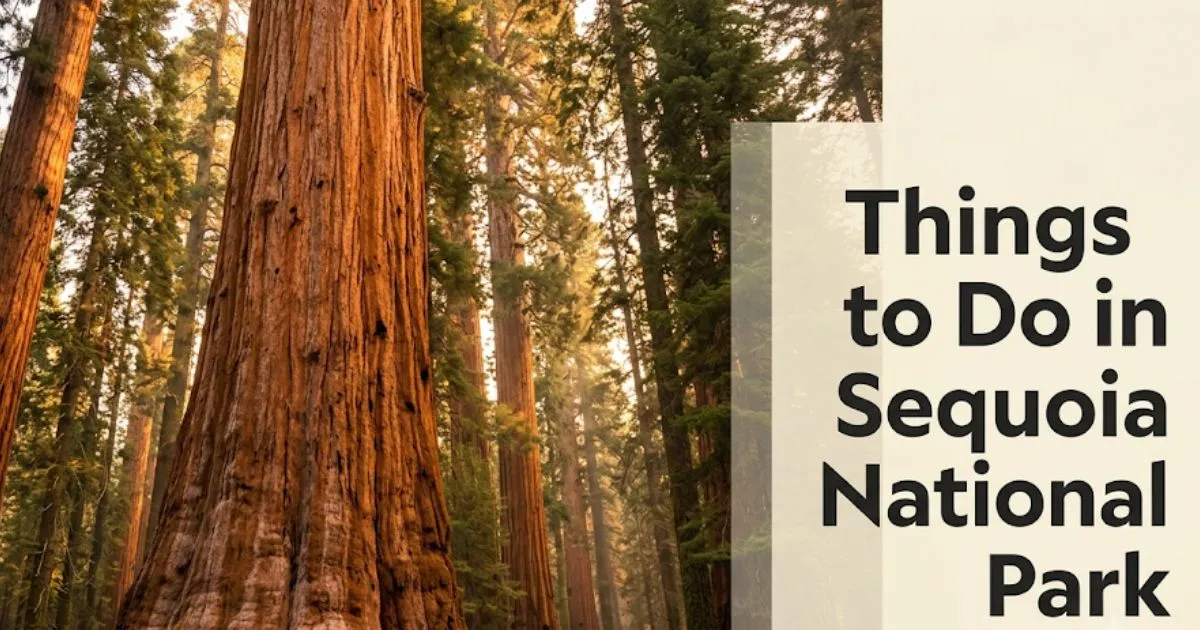
Things to Do in Sequoia National Park | Full 2026 Guide

Sequoia National Park holds the largest living things on Earth by volume, and things to do in Sequoia National Park range from standing beside a tree that predates the Roman Empire to snowshoeing through silent winter forest in January.
The park protects over 400,000 acres of Sierra Nevada wilderness. The National Park Service reports the General Sherman Tree measures 274 feet tall with a base circumference of 102 feet, making it the largest known living tree on the planet by volume.
This guide covers the best hikes, scenic drives, cave tours, family activities, seasonal planning, and practical 2026 logistics. Read it once and you’ll have everything needed to build a real itinerary.
Things to Do in Sequoia National Park: The Essential Overview
Sequoia National Park delivers one experience no other park in America replicates: walking among groves of ancient giant sequoias so large that photographs genuinely fail to convey their scale.
The park divides into three primary visitor zones. The Giant Forest area at approximately 6,400 feet elevation holds the densest concentration of mature sequoias, the General Sherman Tree, Moro Rock, and Crescent Meadow.
The Lodgepole area serves as the main services hub. It holds the largest campground, the market, and visitor center access.
The Mineral King area in the park’s southeast sits at the end of a winding 25-mile road. It offers a dramatically different experience: fewer than one percent of park visitors reach it.
The park’s foothills zone along the Kaweah River corridor provides a warmer, oak-woodland environment. It suits late-fall and winter visits when upper elevations are snowed in.
Insider Tip:
- First-time visitors typically allocate one day and regret it. The Giant Forest area alone justifies two days.
- Summer visitors who arrive before 7 a.m. at Moro Rock or the Congress Trail parking area will have these trails nearly to themselves.
- Budget travelers: the America the Beautiful Interagency Annual Pass at approximately $80 covers entry for one full year across all federal lands, paying for itself within three visits.
Best Things to Do in Sequoia National Park
The best things to do in Sequoia National Park center on the Giant Forest sequoia groves, Moro Rock, Crystal Cave, Crescent Meadow, and Tokopah Falls, but the experience quality varies dramatically by timing and preparation.
| Activity | Best For | Difficulty | Cost Range | Time Required |
|---|---|---|---|---|
| General Sherman Tree | All profiles | Easy | Park entry fee | 30 to 60 minutes |
| Congress Trail loop | All profiles, especially families | Easy to moderate | Park entry fee | 2 to 3 hours |
| Moro Rock summit | Active adults, older children | Moderate (350 steps) | Park entry fee | 1 to 2 hours |
| Crystal Cave tour | All profiles, families | Easy (guided, paved cave paths) | $16 to $23 per adult (verify) | 1.5 to 2 hours |
| Tokopah Falls | Families, hikers | Easy to moderate | Park entry fee | 3 to 4 hours round trip |
| Alta Peak | Experienced hikers only | Strenuous, 11+ miles | Park entry fee | Full day |
| Mineral King backpacking | Experienced backpackers | Strenuous | Permit required | Overnight to multi-day |
| Big Trees Trail | Families, seniors, accessibility | Easy, paved loop | Park entry fee | 45 to 90 minutes |
| Giant Forest Museum | All profiles | None | Free with park entry | 30 to 45 minutes |
| Snowshoeing Giant Forest | Winter visitors | Easy to moderate | Ranger programs available | 2 to 4 hours |
According to Visit California, Sequoia and Kings Canyon together draw approximately 1.5 million visitors annually, with the vast majority concentrated between Memorial Day weekend and Labor Day.
Top Things to Do in Sequoia National Park Right Now
The top priority for any 2026 visitor is confirming whether timed-entry permits are required before arriving. The National Park Service implemented timed-entry systems during peak summer periods in recent years, and requirements may change for 2026.
Check nps.gov/seki before booking any accommodations. Arriving without a required timed-entry reservation results in turning back at the gate.
Crystal Cave tour tickets represent the second top priority. These sell out in advance during peak season. Purchase them through Recreation.gov.
The third priority is the Congress Trail. Most visitors who see the General Sherman Tree turn around and miss the full Congress Trail loop, which passes dozens of additional massive sequoias including the President Tree, the Chief Sequoyah Tree, and the Washington Tree.
The Congress Trail continues for approximately 2 miles beyond Sherman. It offers a more immersive sequoia experience with a fraction of the General Sherman parking area crowd.
Families with children should add the Junior Ranger Program to their list. Available at any visitor center, the program keeps children actively engaged across the whole visit.
Solo travelers and photographers should note that predawn light on the Grant Grove area and Crescent Meadow meadow floor in September and October is exceptional. Cell service is nonexistent in these areas, so download offline maps before entering the park.
Key Takeaway: Book Crystal Cave tickets and verify timed-entry requirements at nps.gov/seki before your travel date. Both sell out or close without notice.
General Sherman Tree and the Giant Forest: What to Actually Expect
The General Sherman Tree is the correct first stop for any Sequoia visit, but the experience of visiting it requires preparation for what it actually is: one enormous tree in a dense forest, accessed via a shuttle during summer, with significant crowds at the viewing platform between 9 a.m. and 3 p.m.
The tree sits approximately a quarter mile down a paved path from the upper Sherman Tree parking area. The walk is steep returning uphill. Visitors with significant mobility limitations should use the lower parking area accessed from the Wolverton Road turnoff, which provides a flat approach.
For families: The General Sherman viewing area is entirely paved, suitable for strollers, and genuinely impresses children of all ages. Build 45 to 60 minutes here before continuing the Congress Trail loop.
For seniors and accessibility travelers: The lower Sherman Tree trailhead via Wolverton Road provides a flat, ADA-accessible approach to the tree. This is significantly easier than the main upper lot path.
The Giant Forest Museum sits a short drive from Sherman. It provides the best contextual explanation of sequoia fire ecology and life cycle in the park. Spending 30 minutes here before hitting the trails meaningfully improves the experience.
Insider Tip:
- The single most photographed composition is from the base looking straight up the trunk. Get there before 8 a.m. for a clear shot.
- The parking lot at the Sherman Tree upper lot fills by 9 a.m. on summer weekends. The shuttle from Wuksachi Lodge or Lodgepole avoids the parking problem entirely.
- Summer afternoon: skip the Sherman Tree area entirely and hike Crescent Meadow instead. Return to Sherman early the following morning.
Sequoia National Park Hiking Trails: From Easy to Demanding
Sequoia’s hiking ranges from paved flat loops accessible to strollers to strenuous backcountry routes requiring overnight permits and bear canisters.
The Big Trees Trail is the park’s most accessible hike: a 1.3-mile paved loop through a giant sequoia grove near the Giant Forest Museum. It is fully wheelchair-accessible, suitable for all ages and fitness levels.
The Congress Trail extends 2 miles from the General Sherman Tree through the densest concentration of named giant sequoias in the park. Round trip from Sherman runs approximately 2 miles. Allow 2 to 3 hours minimum.
Tokopah Falls covers 3.7 miles round trip along the Marble Fork Kaweah River to a dramatic 1,200-foot granite cascade. Difficulty is moderate. It is the best waterfall hike in the park.
Alta Peak is Sequoia’s most demanding popular day hike: 13.5 miles round trip with nearly 4,000 feet of elevation gain to a summit above 11,000 feet. Experienced hikers only. Start by 6 a.m. Carry water purification equipment.
For beginners and families: Start with Big Trees Trail, then Congress Trail. Add Crescent Meadow as a third option. This combination covers the park’s best ground-level sequoia experience without overextending young hikers.
For experienced solo hikers: Alta Peak and the Lakes Trail (7 miles round trip) offer genuine Sierra Nevada wilderness without the permit system required for backcountry overnight travel.
Safety note: At 6,400 feet elevation in the Giant Forest area, visitors arriving from sea level should allow one full day of lighter activity before attempting Alta Peak or other strenuous trails. Altitude-related headaches affect visitors more often than the park’s informational signage suggests.
Moro Rock and the Best Scenic Viewpoints
Moro Rock delivers the park’s most expansive panoramic view from the top of a 350-step staircase carved into a granite dome, reaching approximately 6,725 feet elevation.
The full summit view takes in the Great Western Divide and, on clear days, the Central Valley fog layer from above. In fall, the air clarity is exceptional. Summer afternoon haze from Central Valley agricultural activity reduces the view significantly.
The staircase is narrow and exposed in sections. It is not suitable for visitors with a significant fear of heights or severe mobility limitations. The trail takes approximately 20 to 30 minutes each direction.
For families: Children aged 8 and up typically handle Moro Rock well. Younger children should be supervised closely on the exposed granite sections.
For seniors: The lower viewing platform, reachable within the first 100 steps, offers a substantial view without the full summit commitment. This compromise delivers a genuinely worthwhile experience.
The Moro Rock parking area fills completely by 9 a.m. on summer weekends. Use the free Sequoia Shuttle from Wuksachi or Lodgepole during peak season.
The lesser-known alternative: Beetle Rock, a broad granite slab a short walk from the Giant Forest Museum parking area, offers a peaceful elevated view with almost none of the Moro Rock foot traffic. Experienced repeat visitors often prefer it for the solitude.
Insider Tip:
- Arrive at Moro Rock at dawn. The summit view at sunrise in September is the single best photographic moment in the park.
- The return shuttle from Moro Rock runs frequently during summer. Check the posted schedule at the trailhead kiosk.
Crystal Cave Tours: What You Need to Know Before You Go
Crystal Cave is the only cave in Sequoia open to the public, offering guided marble cave tours through approximately a quarter mile of underground formations.
The cave sits at approximately 4,800 feet elevation, accessed via a narrow, winding 7-mile road off the Generals Highway. The road is not suitable for RVs or vehicles longer than 22 feet.
Crystal Cave tickets must be purchased online through Recreation.gov in advance. Walk-up tickets are not available. During summer, tours sell out days to weeks ahead. Purchase as soon as dates open.
Tours run approximately 50 minutes. The cave interior stays at a constant 48 degrees Fahrenheit year-round. Bring a light jacket regardless of outside temperature.
The cave is not ADA-accessible. The path involves uneven surfaces, narrow passages, and some bending. Visitors with significant mobility limitations or claustrophobia should plan alternative activities.
Crystal Cave is closed in winter, typically from November through mid-May, though exact dates vary annually. Verify the opening date at nps.gov/seki before planning a spring trip around cave access.
For families: Children are welcome. The 50-minute format holds attention well. The cave’s geological formations, particularly the stalactites and marble flowstone, are genuinely impressive in person.
For budget travelers: The Crystal Cave ticket fee is separate from park entry. Factor this into total visit costs. The cave is worth the additional cost. It is the park experience most unlike anything else in the Sierra Nevada.
Key Takeaway: Crystal Cave tickets sell out weeks ahead in summer. Book on Recreation.gov the moment your travel dates are confirmed.
Crescent Meadow and Big Trees Trail
Crescent Meadow is the quietest, most atmospheric area in the Giant Forest and the one most visitors skip by spending all their time at the General Sherman parking area.
John Muir called Crescent Meadow “the gem of the Sierra.” The meadow sits in a clearing surrounded by massive sequoias and wildflowers in early summer, with a 1.8-mile trail looping its perimeter.
The trail is largely flat, accessible, and shaded. It suits all fitness levels and age groups. In late September and October, the meadow grass turns amber and the sequoia bark glows in the afternoon light.
Tharp’s Log, along the Crescent Meadow trail, is a hollowed-out fallen sequoia that the early settler Hale Tharp used as a summer shelter in the 1860s. It is one of the park’s most interesting historical details and almost never mentioned in standard visitor guides.
For families: The Crescent Meadow loop is ideal for young children. The terrain is manageable, the scenery impresses without requiring physical effort, and wildlife sightings (black bears, mule deer, and Steller’s jays) are common.
For couples: The meadow in the golden hour before sunset is genuinely atmospheric. Arrive by 4 p.m. in September for the best light. Crowds thin significantly by late afternoon.
The Big Trees Trail at Round Meadow, near the Giant Forest Museum, offers a similarly accessible flat loop through a different sequoia grove. Both Crescent Meadow and Big Trees Trail deserve separate morning or afternoon time blocks.
Tokopah Falls Trail: Sequoia’s Best Waterfall Hike
Tokopah Falls is the best waterfall hike in Sequoia National Park: 3.7 miles round trip through a glacially carved granite canyon to a 1,200-foot cascade above the Marble Fork Kaweah River.
The trail begins at the Lodgepole Campground parking area. It follows the river through a forest of red firs and western junipers before opening into a dramatic high granite bowl with the falls at its head.
Best flow is in late May and June when Sierra snowmelt peaks. By late August, the falls diminish significantly. A June visit delivers the most dramatic water volume.
For families: This is the best hike for children aged 6 and up. The trail is relatively flat, consistently scenic, and the river provides natural stopping points for rest. The falls at the end are genuinely impressive.
For solo hikers: The early morning hours before 8 a.m. see the trail at its quietest. Wildlife sightings including mule deer and black squirrels are common in early morning.
For seniors: The trail surface is packed dirt and rock, not paved. Trekking poles are helpful. The 1.85-mile one-way distance is manageable for most active seniors. The return trip is not significantly more difficult than the outbound.
The Lodgepole area serves as a practical base for this hike. Lodgepole has the park market, showers available to non-campers for a fee, and the main year-round visitor center.
Insider Tip:
- Pack a wind layer. The granite bowl at the base of Tokopah Falls channels a strong wind even on warm summer days.
- The trail can be muddy in early season. Waterproof footwear is advisable for May visits.
Key Takeaway: Tokopah Falls in late May or June offers the park’s most dramatic waterfall experience. The parking lot fills by 9 a.m. on summer weekends.
Mineral King Valley: The Less-Visited Side of Sequoia
Mineral King Valley is the most dramatically beautiful and least-visited major destination inside Sequoia National Park, reached via a 25-mile narrow mountain road that filters out the casual visitor entirely.
The valley sits at approximately 7,800 feet elevation in the park’s southeastern corner. It offers subalpine meadows, granite peaks, and access to some of the finest wilderness day hiking in the Sierra Nevada, all without the summer crowds that define the Giant Forest area.
The Mineral King Road is paved but extremely narrow, with over 700 curves in 25 miles. It is not suitable for RVs, vehicles with trailers, or bus tours. The drive takes approximately 90 minutes from the Three Rivers park entrance area.
The marmots of Mineral King are genuinely famous. These yellow-bellied marmots have a documented attraction to vehicle wiring, rubber hoses, and brake lines. The National Park Service strongly recommends wrapping vehicle undercarriages with chicken wire or parking on marmot-proof platforms available at the trailhead. This is not a joke. Marmot vehicle damage is an established visitor reality at Mineral King.
For experienced hikers: The trail to Sawtooth Pass (9 miles round trip, significant elevation gain) and the route to Eagle and Mosquito Lakes are among the finest day hikes in the Sierra Nevada. Both require early starts and appropriate high-altitude preparation.
For couples: The Cold Springs Campground at Mineral King sits in a setting that earns the description genuinely. Reserving a site here for a night means waking up in a high alpine valley without cell service, noise, or crowds. It is the most peaceful overnight experience in the park.
Mineral King Road typically opens in late May and closes after the first significant snowfall in late fall. Verify at nps.gov/seki before making this a trip anchor.
Sequoia National Park With Kids
Sequoia National Park is genuinely excellent for families with children aged 5 and older, with accessible trails, a free Junior Ranger Program, and natural features that impress children without requiring any hiking ability at all.
The Junior Ranger Program, available free at any park visitor center, gives children aged 3 to 12 a booklet of activities, puzzles, and observation challenges tied to the park’s ecology. Completing the booklet earns an official NPS badge and swearing-in ceremony. It sustains engagement across a full day visit.
Best activities for families by age group:
- Ages 3 to 6: Giant Forest Museum (interactive exhibits), Big Trees Trail (flat, paved, stroller-friendly), General Sherman Tree viewing platform (accessible lower approach via Wolverton Road).
- Ages 6 to 10: Tokopah Falls trail, Congress Trail, Crescent Meadow loop, Crystal Cave tour (50-minute guided format holds attention well).
- Ages 10 and up: Moro Rock summit stairs, Lakes Trail, extended Congress Trail, and, for active families, the lower reaches of the Alta Peak trail.
What genuinely does not work for young children: Alta Peak, any backcountry trail, and any activity requiring more than a 4-mile hiking day without significant rest stops.
Food logistics matter. The Lodgepole Market carries basic groceries, sandwiches, and snacks. The Wuksachi Lodge restaurant serves sit-down meals. Beyond these options, the park has no restaurants. Pack lunches for trail days.
For budget families: The park pass covers all trail access. Crystal Cave is the main additional cost. The Junior Ranger Program is free. Pack food from Visalia or Three Rivers before entering the park to reduce in-park food costs significantly.
Sequoia National Park Accessibility and Senior Travel
Sequoia National Park offers meaningful accessible experiences for visitors with mobility limitations, though the park’s terrain requires honest planning to match activities to physical capability.
Fully accessible paved trails:
- Big Trees Trail at Round Meadow: 1.3-mile paved loop through a giant sequoia grove. Wheelchair-accessible throughout. The single best accessible experience in the park.
- General Sherman Tree lower approach via Wolverton Road: flat, paved path to the tree. Significantly easier than the upper parking lot approach.
- Giant Forest Museum area paths: paved and accessible around the museum and adjacent grove areas.
The Generals Highway scenic drive is accessible by car with no hiking required. Numerous pull-outs provide views without any walking.
Moro Rock is not accessible to visitors with significant mobility limitations. The 350-step staircase includes narrow sections, uneven stone steps, and exposure.
Crystal Cave is not accessible for wheelchair users or visitors with significant mobility limitations. The cave path is uneven and involves crouching in sections.
For seniors with moderate mobility: The Big Trees Trail plus the General Sherman Tree lower approach plus the Crescent Meadow loop covers a genuinely full and impressive day with limited physical demand.
Medical infrastructure note: The nearest hospital is in Visalia, approximately 60 miles from the Giant Forest area via the Generals Highway. Visitors with cardiac conditions or serious respiratory issues should consult a physician before traveling to 6,400 feet elevation. Altitude effects begin at this elevation for some individuals.
The Sequoia Shuttle buses are accessible and connect major park areas during summer operation. Verify 2026 schedule and accessibility features at nps.gov/seki before your trip.
Key Takeaway: The Big Trees Trail near the Giant Forest Museum is the park’s only fully paved, wheelchair-accessible sequoia grove loop. Plan the visit around it for any party with mobility considerations.
Best Time to Visit Sequoia National Park
The best time to visit Sequoia National Park is late May through early June or mid-September through mid-October for the combination of full trail access, manageable crowds, and optimal weather.
Month-by-month breakdown:
| Month | Crowd Level | Trail Access | Notable Conditions |
|---|---|---|---|
| January to February | Very low | Limited (Generals Highway may close) | Snowshoe season, peaceful Giant Forest |
| March to April | Low | Partial | Snowmelt begins, some trails muddy |
| Late May to June | Moderate | Full (Crystal Cave opens) | Wildflowers, peak waterfall flow |
| July to August | Very high | Full | Peak heat in foothills, summer thunderstorms |
| September to October | Moderate | Full | Best clarity, bear activity visible, golden light |
| November | Low | Shrinking | First snows possible, road closures start |
| December | Very low | Limited | Holiday visitors at lower elevations |
Summer reality check: July and August bring the largest crowds. The General Sherman Tree parking area, Lodgepole, and Moro Rock all reach capacity before 9 a.m. on peak summer weekends. The shuttle system alleviates but does not eliminate the congestion.
Winter Sequoia offers an entirely different experience. The Giant Forest area receives substantial snow. Snowshoeing and cross-country skiing are viable from December through March. The National Park Service periodically offers ranger-led snowshoe walks (verify availability at nps.gov/seki, as these programs vary year to year).
For budget travelers: September and October offer lower Wuksachi Lodge rates compared to summer peak. Campground competition also eases after Labor Day.
Sequoia National Park Shuttle, Entry Fees, and Practical Logistics
Getting to Sequoia National Park requires a car. There is no commercial bus, train, or rideshare service reaching the park from any major city.
Entry fees as of recent years run approximately $35 per vehicle for a 7-day pass. Verify the current 2026 fee at nps.gov/seki before visiting. The America the Beautiful Annual Pass (approximately $80) covers entry to all federal lands for one year.
Timed-entry permits have been required during peak summer periods in recent years. The 2026 requirements may differ. Check nps.gov/seki no later than 60 days before your planned visit date.
The free Sequoia Shuttle operates during summer between Visalia, the town of Three Rivers, and major park destinations including Lodgepole, Giant Forest, and the General Sherman Tree trailhead. This eliminates the parking problem for visitors who can time their arrival in Visalia. Verify the 2026 schedule before planning around it.
No gas stations operate inside Sequoia National Park. Fill up in Three Rivers (limited options) or Visalia before entering the park. Running low on fuel on the Generals Highway is a genuine problem.
Cell service: Essentially nonexistent throughout the park above the foothill zone. Download offline maps (Google Maps or Gaia GPS) and the NPS Sequoia app before entering.
The Generals Highway involves tight curves and steep grades. It is not suitable for vehicles longer than 22 feet in some sections. RV and trailer size restrictions apply. Check Caltrans and NPS guidance before driving large vehicles.
Parking at Lodgepole reaches capacity by 9 a.m. on summer weekends. The overflow lot fills by 10 a.m. Arrive by 7 a.m. or use the shuttle.
Insider Tip:
- Pack enough food for the full visit before entering. Lodgepole Market covers basics but at elevated prices. Visalia has full grocery options 60 miles out.
- Bear boxes at campgrounds are mandatory for food storage. Bring nothing scented inside your tent.
Things to Do Near Sequoia National Park
The most significant activity near Sequoia National Park is Kings Canyon National Park, administered jointly with Sequoia and accessed via the same entry pass.
Kings Canyon Scenic Byway (California State Route 180) descends 5,000 feet from Grant Grove Village to Road’s End at the floor of Kings Canyon, one of the deepest canyons in North America. The drive takes approximately 1.5 hours one way and passes Zumwalt Meadow, the best easy riverside walk in the combined park area.
Grant Grove Village serves as the Kings Canyon hub, with a visitor center, lodge, and campground. The General Grant Tree, the nation’s Christmas tree by Congressional designation, rivals the General Sherman Tree in scale and is considerably less crowded.
Hume Lake sits on Forest Service land between the two parks. It offers swimming, kayak rentals, and camping in a setting that most Sequoia visitors never discover.
Three Rivers, California, the gateway town 14 miles below the Ash Mountain entrance, has the best food options near the park. The Buckeye Tree Lodge and several local restaurants serve the visitor corridor.
Visalia, California, approximately 60 miles from the Giant Forest, is the nearest city with full services: grocery stores, pharmacies, hotels at multiple price points, and the FAT airport connection via Highway 198.
Giant Sequoia National Monument, administered by the U.S. Forest Service adjacent to the national park, contains additional sequoia groves accessible without a park entry fee. The Muir Grove in Dorst Creek area is one example. Verify access conditions with the Sequoia National Forest ranger district before visiting.
For budget travelers: Staying in Visalia and driving in daily is significantly cheaper than in-park lodging. Budget hotels in Visalia run well below the Wuksachi Lodge rate.
Key Takeaway: The General Grant Tree in Kings Canyon is covered by your Sequoia pass and sees a fraction of the General Sherman Tree’s crowd. Visit it on day two.
Sequoia National Park Itinerary: One Day and Weekend Plans
Planning a one-day visit to Sequoia National Park requires ruthless prioritization. The park is large, the roads are slow, and the temptation to see everything produces a rushed experience of nothing.
One-Day Sequoia Itinerary:
- Arrive at the Ash Mountain entrance by 7 a.m. to beat the Generals Highway congestion.
- Drive directly to the Giant Forest Museum parking area. Walk the adjacent grove paths for 30 minutes.
- Hike the Congress Trail from the General Sherman Tree lower parking lot (Wolverton Road approach). Allow 2.5 to 3 hours for the full loop.
- Drive to Moro Rock. Summit the 350-step staircase by noon, before afternoon haze builds. Allow 1 hour.
- Drive to Crescent Meadow. Walk the 1.8-mile loop. Allow 1 to 1.5 hours.
- Return to Lodgepole for a late lunch at the market.
- Exit before 4 p.m. to avoid the Generals Highway evening descent traffic.
Weekend Itinerary (2 Days):
Day 1:
- Arrive by 7 a.m. Check into Wuksachi Lodge or Lodgepole Campground.
- General Sherman Tree (lower lot approach). Congress Trail full loop.
- Giant Forest Museum (30 to 45 minutes).
- Moro Rock summit.
- Sunset at Crescent Meadow.
Day 2:
- Crystal Cave morning tour (pre-booked on Recreation.gov).
- Tokopah Falls hike from Lodgepole.
- Afternoon drive to Kings Canyon Scenic Byway. Walk Zumwalt Meadow.
- General Grant Tree in Grant Grove Village.
- Exit via Highway 180 to Fresno, or return to park lodging for a third night.
For families with young children: Drop Alta Peak, Crystal Cave (if children are under 6), and the Kings Canyon drive from the two-day plan. Replace with a second Tokopah Falls outing and morning sequoia grove time.
Safety and Practical Warnings for Sequoia National Park
Black bears are active throughout Sequoia National Park year-round. Food storage laws are strictly enforced.
Key safety and practical facts every visitor should know:
- Bear food storage: Never leave food, scented products, or trash in an unattended vehicle. Bears in the park have learned to break car windows. Use the bear boxes at all picnic areas and campgrounds. Backcountry campers must use an approved bear canister, which is mandatory, not optional.
- Altitude: The Giant Forest area sits at 6,400 feet. Visitors arriving from sea level may experience headaches, fatigue, and shortness of breath on arrival. Rest and hydrate before strenuous hiking. Alta Peak exceeds 11,000 feet. Acclimatize for a full day before attempting it.
- Afternoon thunderstorms: July through September brings daily afternoon thunderstorm risk above 8,000 feet. Summit hikes like Alta Peak require a 6 a.m. start to descend before afternoon electrical storms develop. Do not be on exposed granite at midday during storm season.
- No cell service: Signal is unavailable throughout the park above the foothills. Download offline maps before entering. Tell someone your planned trail and return time when doing any hiking beyond an established grove walk.
- Generals Highway driving: The highway is narrow, steep, and winding. RVs and large vehicles face restrictions in sections. Do not drive it in icy or snowy conditions without chains. Check Caltrans road conditions before every mountain visit.
- Foothills heat: The Ash Mountain entrance area regularly exceeds 100 degrees Fahrenheit in July and August. Hikers in the foothill zone risk heat stroke. Carry a minimum of one liter of water per person per hour in foothills conditions.
- Mineral King marmots: Protect your vehicle undercarriage when parking at Mineral King. Marmots chew through rubber hoses and wiring. The NPS provides protection materials at the Mineral King trailhead, or bring chicken wire to wrap around the vehicle underside.
For park emergencies, contact the National Park Service Sequoia and Kings Canyon dispatch through the Lodgepole Visitor Center or any park ranger station.
Frequently Asked Questions About Things to Do in Sequoia National Park
What is the most famous thing to see in Sequoia National Park?
The most famous sight in Sequoia National Park is the General Sherman Tree, the largest living organism on Earth by volume.
It stands 274 feet tall with a base circumference of 102 feet.
The tree is located in the Giant Forest area, approximately 2 miles from the Lodgepole Visitor Center, and requires either a shuttle ride or a walk from the upper Sherman Tree parking area.
How many days do you need in Sequoia National Park?
Two full days is the minimum to see the park’s major highlights without feeling rushed.
A two-day visit covers General Sherman Tree, Congress Trail, Moro Rock, Crystal Cave, Crescent Meadow, and Tokopah Falls comfortably.
Three days allows the addition of Mineral King Valley or a Kings Canyon Scenic Byway drive, which significantly expands the experience.
Do you need reservations to visit Sequoia National Park in 2026?
Timed-entry permits have been required during peak summer periods in recent years, and may apply in 2026.
Verify the current 2026 entry requirements at nps.gov/seki before booking any trip logistics.
Crystal Cave tour tickets require advance purchase through Recreation.gov at any time of year the cave is open, and they sell out during summer.
Is Sequoia National Park good for families with young children?
Sequoia National Park is genuinely excellent for families with children aged 5 and older.
The Big Trees Trail is fully paved and stroller-accessible, the General Sherman Tree impresses children of every age, and the free Junior Ranger Program sustains engagement across a full day visit.
Crystal Cave tours work well for children aged 6 and up, and Tokopah Falls is the best family hike in the park for ages 6 through 12.
What is the difference between Sequoia and Kings Canyon National Parks?
Sequoia National Park holds the Giant Forest, the General Sherman Tree, Moro Rock, and Crystal Cave. Kings Canyon National Park, administered jointly with Sequoia, contains Grant Grove and the spectacular Kings Canyon gorge accessed via the Kings Canyon Scenic Byway.
Both parks are covered by one entry pass and are connected by the Generals Highway.
Most visitors center their trip in Sequoia’s Giant Forest and add a Kings Canyon Scenic Byway drive as a second-day excursion from the same base.
When should you avoid visiting Sequoia National Park?
The most genuinely difficult time to visit Sequoia National Park is July and August on weekends.
Parking at major trailheads fills by 9 a.m., the General Sherman area operates on shuttle-only access, the Generals Highway experiences stop-and-go traffic, and afternoon thunderstorms limit summit hiking windows.
January through March offers a peaceful alternative but requires confirming that the Generals Highway is open and accepting that Crystal Cave, some ranger programs, and full trail access will not be available.
Plan Your Visit Before You Arrive
Sequoia National Park rewards visitors who do two things before departure: book Crystal Cave tickets through Recreation.gov and verify timed-entry requirements at nps.gov/seki. Both details change annually, and neither can be resolved at the gate.
The park’s best experiences go to visitors who arrive early, leave the General Sherman Tree parking area by 10 a.m., and spend time on the Congress Trail, Crescent Meadow, and Tokopah Falls rather than circling the crowded Sherman viewing platform for hours.
Travel conditions, entry requirements, shuttle schedules, road closures, and Crystal Cave tour availability change from year to year. Verify every key detail directly with the National Park Service at nps.gov/seki before your 2026 departure. Get the logistics right, and the park delivers an experience genuinely unlike anything else in American travel.