Best Things to Do in Santa Cruz, CA: 2026 Travel Guide

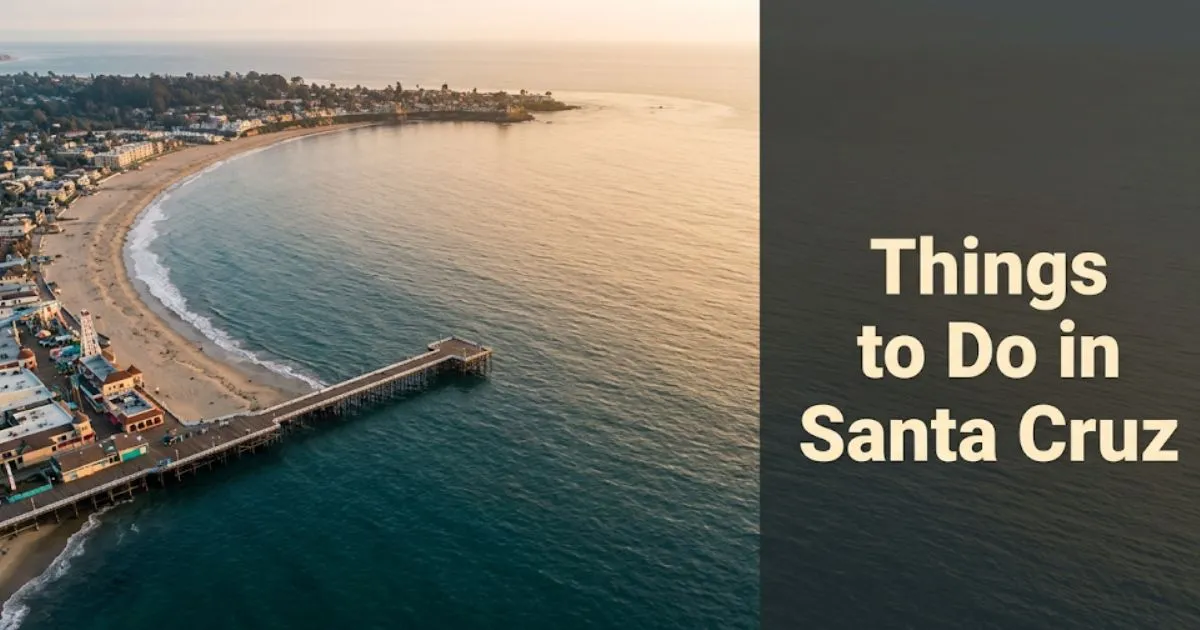
Santa Cruz, California rewards travelers who plan beyond the Boardwalk. The best things to do in Santa Cruz range from surfing a world-class point break to hiking old-growth redwoods within the same afternoon.
The city sits on Monterey Bay, 75 miles south of San Francisco. According to the Santa Cruz County Conference and Visitors Council, the area draws over three million visitors annually without losing the authentic surf-town identity that makes it worth the trip.
This guide covers 16 distinct activity zones, practical logistics, honest crowd assessments, and itineraries for families, couples, solo travelers, and budget visitors. Use it to plan an actual trip, not just collect a list of attraction names.
Things to Do in Santa Cruz: What Makes This City Worth Your Time
Santa Cruz sits at the rare intersection of beach town, surf culture, university energy, and redwood forest access. Few California coastal cities of its size deliver this range within walking or cycling distance of each other.
The city’s counterculture identity is genuine, not manufactured. It predates the tech money that reshaped San Francisco and remains visible in its local music venues, independent bookstores, and Westside coffee culture.
What separates Santa Cruz from comparable California beach towns like Ventura or Santa Barbara is the layering: you can ride a historic wooden roller coaster in the morning, watch professionals surf one of California’s most technically demanding breaks in the afternoon, and walk into old-growth redwoods by early evening.
Honest assessment: Santa Cruz does not suit travelers seeking luxury hotel infrastructure, Michelin-starred dining, or a polished resort experience. Carmel or Pebble Beach serves that traveler better.
The city suits outdoor-focused travelers, families willing to engage with a genuinely active beach culture, Bay Area residents who want nature access within two hours, and solo travelers who thrive in walkable towns with a real local scene.
Insider Tip:
- Arrive Thursday or Friday to beat weekend Bay Area traffic on Highway 17
- Use the Westside and Seabright neighborhoods as your base for non-Boardwalk days
- First-timers consistently underestimate how cold the Pacific water is year-round; pack a light wetsuit or budget for a rental if swimming is the goal
Best Things to Do in Santa Cruz California: The Essential Starting List
The best things to do in Santa Cruz California combine coastal access, surf culture, natural history, and the Boardwalk experience into a specific and sequenced itinerary.
Here is the core list experienced visitors and locals agree is genuinely worth time versus what functions primarily as tourist infrastructure:
Activities worth prioritizing:
- Walking or cycling West Cliff Drive at sunset (free, 2.5 miles one way)
- Watching surf at Steamer Lane from the cliffside viewing area
- Visiting Natural Bridges State Beach during monarch butterfly season (October through February)
- Exploring Wilder Ranch State Park’s coastal bluff trails
- Spending one morning at the Santa Cruz Beach Boardwalk on a weekday
- Browsing Pacific Avenue’s independent shops and Verve Coffee Roasters
- Walking the UCSC campus trail loop through the redwood groves
- Visiting the Seymour Marine Discovery Center at Younger Lagoon
Activities that underdeliver relative to their reputation:
- The Mystery Spot: genuinely amusing for 45 minutes; worth the visit if passing through, not worth planning around
- Santa Cruz Wharf: the structure is photogenic but the dining is tourist-grade; Seabright and Westside have better food at lower prices
| Activity | Best For | Cost Range | Time Needed |
|---|---|---|---|
| Santa Cruz Beach Boardwalk | Families, groups | Free entry, rides $5–$60+ per person | 2 to 4 hours |
| West Cliff Drive walk/cycle | Couples, solo, seniors | Free | 1 to 2 hours |
| Steamer Lane surf watching | All profiles | Free | 30 to 60 minutes |
| Natural Bridges State Beach | Families, couples | Parking fee applies | 1 to 2 hours |
| Wilder Ranch State Park | Hikers, cyclists | Day use fee applies | 2 to 4 hours |
| Seymour Marine Discovery Center | Families, solo | Admission approximately $10–$18 per adult | 1 to 2 hours |
| UCSC campus redwood walk | Couples, solo | Free | 1 to 2 hours |
| Pacific Avenue exploration | All profiles | Free (shopping/dining costs vary) | 1 to 3 hours |
Budget travelers: West Cliff Drive, Steamer Lane viewing, the UCSC campus redwood trail, and Seabright Beach are all free. A genuinely excellent Santa Cruz day costs nothing if you plan it around these anchors.
Santa Cruz Beach Boardwalk: What to Expect and What to Skip
The Santa Cruz Beach Boardwalk is one of the few remaining seaside amusement parks on the California coast, and it genuinely earns its reputation as a one-of-a-kind experience. The Giant Dipper wooden roller coaster, built in 1924, is a National Historic Landmark and rides differently than anything at a modern theme park.
Entry to the Boardwalk grounds is free. Rides are either pay-per-ride or covered by an all-day wristband; pricing varies by season and day type, so verify current rates on the Boardwalk’s official website before visiting.
The honest crowd reality: On summer Saturday afternoons, the Boardwalk is genuinely overwhelming. Parking lots fill by 10 a.m. Lines for the Giant Dipper and Loggers Revenge can reach 45 to 60 minutes.
The solution is timing. Weekday mornings in June and July, or any visit in September and October, deliver the same experience with manageable crowds. The Boardwalk typically operates seasonal hours from spring through fall, with reduced winter weekend operation; confirm current hours before visiting.
For families with young children: The Boardwalk has a dedicated section of rides for younger kids. Stroller access is straightforward. The main crowd congestion zone is the ride midway section; the beach-facing areas are less compressed.
For seniors and accessibility travelers: The Boardwalk’s boardwalk surface is generally accessible. Some ride loading areas have physical requirements. The beach-adjacent portions allow passive enjoyment of the atmosphere without ride participation.
Insider Tip:
- Book tickets online in advance for summer weekends; this does not guarantee a shorter line but simplifies entry
- Park on side streets north of the Boardwalk (Riverside Avenue direction) to avoid the $20-plus beach lot fees
- The local alternative to the Boardwalk’s food options: walk three blocks to the Westside for actual Santa Cruz dining
To visit the Boardwalk efficiently:
- Arrive before 10 a.m. on weekend visits; before 11 a.m. on weekdays
- Buy wristbands online before arriving if planning an all-day ride session
- Start at the Giant Dipper immediately; the line grows fastest for this ride
- Move to the beach side mid-morning before the beach crowds arrive
- Exit by 1 p.m. on summer Saturdays to avoid the worst parking exit congestion
Surfing in Santa Cruz: From Beginner Lessons to Watching the Pros
Surfing in Santa Cruz is not an activity bolted onto a beach town identity. It is the foundational cultural institution around which everything else grew.
Steamer Lane, off West Cliff Drive at Lighthouse Point, is the most recognized surf break in Northern California. It hosts professional competitions and draws experienced surfers from across the region. Watching from the cliff above is free and genuinely thrilling, even for non-surfers.
Cowell Beach, adjacent to the Wharf, is Santa Cruz’s beginner surf break. Several surf schools operate here, including the Santa Cruz Surf School and Club Ed Surf School at Cowell Beach. Lesson prices run approximately $90 to $130 per person for a two-hour group session; verify current rates before booking.
Pleasure Point, on the Eastside, is the neighborhood that shaped modern longboard culture. The break here is slower and more approachable than Steamer Lane. The cliffside park above Pleasure Point is a local hangout; watching the morning surf session from here is free and specific to Santa Cruz in a way no tourism board can replicate.
For first-timers who want to try surfing: Cowell Beach is the correct choice. It has the gentlest conditions of any Santa Cruz break and the highest concentration of professional instructors.
For experienced surfers: Steamer Lane requires genuine skill and local knowledge of the lineup. Do not paddle out without understanding the break and the protocol.
Ocean water temperature in Santa Cruz averages 55 to 58 degrees Fahrenheit year-round. A wetsuit is not optional; it is required for any time in the water beyond a few minutes.
Seasonal note: Summer brings smaller wave conditions and higher crowds at Cowell Beach. Fall and winter deliver larger, cleaner swells at Steamer Lane. Spring offers a balance of rideable conditions and moderate crowds.
According to Surfer Magazine, Steamer Lane has hosted competitive surfing events for over 40 years and remains one of the defining point breaks in American surf culture.
Insider Tip:
- Non-surfers: bring a coffee from Verve on 41st Avenue and watch the dawn patrol at Pleasure Point at 7 a.m.; this is where Santa Cruz actually lives
- Book beginner surf lessons at least one week in advance for summer visits; spots fill quickly
- For couples: a tandem surf lesson at Cowell is a genuinely memorable activity that actually delivers what it promises
Key Takeaway: The cliff above Steamer Lane is the single best free viewpoint in Santa Cruz; no admission, no parking fee from the West Cliff Drive pull-out, and the view of Northern California surfing is unmatched.
Best Beaches in Santa Cruz for Every Type of Visitor
Santa Cruz has seven distinct public beaches, and they are not interchangeable. Choosing the right one for your group determines whether you have a relaxed beach day or a frustrating one.
Cowell Beach is the safest swimming beach. It is protected by the Santa Cruz Wharf’s breakwater effect, which reduces wave intensity. This makes it the correct choice for families with young children and non-swimmers.
Natural Bridges State Beach is a mile-long crescent north of the Wharf with a natural rock arch formation as its backdrop. It is less crowded than Cowell and has a distinct natural character. Parking fees apply; arrive before 10 a.m. on weekends to secure a spot.
Seabright Beach (also called Twin Lakes Beach at its eastern end) is the local’s daytime beach. It lacks the Boardwalk infrastructure but delivers wide sand, good body-surfing conditions, and a genuine neighborhood atmosphere. Far fewer tourists find their way here even in peak summer.
New Brighton State Beach, four miles south in Capitola, has a campground, shade trees, and calmer atmosphere than any in-city Santa Cruz beach. This is the correct choice for overnight camping near the coast.
Waddell Beach, 17 miles north on Highway 1, is the best windsurfing and kiteboarding beach in the region. It is not a swimming beach; the surf is powerful and the wind constant. It is worth the drive if you are specifically interested in watching world-class wind sports.
| Beach | Best For | Parking | Crowd Level |
|---|---|---|---|
| Cowell Beach | Families, swimmers | Street and Boardwalk lots | High in summer |
| Natural Bridges State Beach | Couples, nature | State Park lot (fee applies) | Moderate |
| Seabright/Twin Lakes | Locals, relaxed beach days | Street parking, free | Low to moderate |
| New Brighton State Beach | Campers, families | State Park lot (fee applies) | Moderate |
| Waddell Beach | Wind sports, photography | Pull-out parking, free | Low |
For seniors and accessibility travelers: Cowell Beach has the most accessible path to the sand via the Boardwalk promenade. Natural Bridges has a paved accessible path to a beach overlook. Seabright requires walking several hundred yards from street parking across soft sand.
Outdoor Things to Do in Santa Cruz Beyond the Beach
Santa Cruz’s outdoor activity range extends well beyond its beaches. The city and surrounding county offer coastal bluff cycling, old-growth redwood hiking, wildlife observation, and agricultural land access within a 20-mile radius.
West Cliff Drive is the city’s defining outdoor spine. The 2.5-mile paved path runs along the coastal bluffs from the Boardwalk to Natural Bridges. Walking or cycling it takes 45 minutes to two hours depending on pace and how many times you stop to watch the surf. Free parking is available along the drive in scattered pull-outs, though these fill by 9 a.m. on summer weekends.
Bike rentals are available from several operators near the Boardwalk and on Pacific Avenue. Rates run approximately $15 to $30 for a half-day rental; confirm current rates with specific outfitters before visiting.
Kayaking and paddleboarding in Monterey Bay, accessible from the Santa Cruz Wharf area and the Westside launch points, puts visitors directly in the bay’s wildlife zone. Sea otters, harbor seals, and seasonal whale activity are genuinely observable from a kayak. Rental and tour operators near the Wharf offer guided tours; guided experiences typically run two to three hours and cost approximately $50 to $100 per person.
Whale watching from the Santa Cruz Wharf is most productive from January through March (gray whales) and November through December (humpbacks). Several seasonal operators run 2-to-3-hour boat trips; prices and schedules vary by season.
For solo travelers: West Cliff Drive at dawn, before the cycling and running crowds arrive, is one of California’s genuinely excellent free solo morning experiences. The light on the water at 7 a.m. is worth waking up for.
Insider Tip:
- Rent bikes rather than drive West Cliff Drive; parking mid-drive is frustrating and the path is best experienced at cycling pace
- The pull-out at Lighthouse Point, directly above Steamer Lane, is the most dramatic West Cliff viewpoint
- For paddleboard beginners: the launch from the Westside near Natural Bridges is calmer than Wharf-area water during morning hours
Santa Cruz Hiking and Nature: Redwoods, Cliffs, and Coastal Trails
Santa Cruz hiking includes both coastal bluff trails and old-growth redwood forest access within 30 minutes of the city center. This is the activity most visitors underuse.
Henry Cowell Redwoods State Park, 6 miles north of downtown Santa Cruz on Highway 9, has a 1.5-mile loop trail through a grove of old-growth coast redwoods. Trees here reach 285 feet. The trail is accessible to most fitness levels and takes 45 to 60 minutes. Day use fees apply; verify current rates with California State Parks before visiting.
Wilder Ranch State Park, 3 miles north of downtown on Highway 1, has over 35 miles of trails across coastal bluffs, agricultural land, and creek canyons. The Old Cove Landing Trail (approximately 2.5 miles round trip) is the most rewarding for first-timers: it delivers ocean views, historic dairy ranch buildings, and wildlife without demanding technical hiking skills.
The UC Santa Cruz campus contains a network of forested trails connecting the developed campus to second-growth redwood stands. The trail from the base of campus near the Farm and Garden toward the upper meadows is free, open to the public, and virtually unknown among non-local visitors. This is the honest local alternative to the more-crowded Henry Cowell loop.
Big Basin Redwoods State Park, 25 miles north of Santa Cruz, suffered severe fire damage in 2020 and remains in active restoration. Access and trail availability have changed significantly. Check current status directly with California State Parks before planning any Big Basin visit; do not rely on pre-2021 trail guides for this park.
For families with children: Henry Cowell’s main loop is stroller-accessible on the flat section. Kids respond immediately to the scale of the old-growth trees.
For seniors and accessibility travelers: Henry Cowell’s main redwood loop has a paved section. The Wilder Ranch bluff trail has uneven surfaces requiring stable footwear.
According to California State Parks, Wilder Ranch protects over 7,000 acres of coastal and inland habitat and is one of the largest preserved coastal areas accessible to the public in Santa Cruz County.
Key Takeaway: The UCSC campus forest trail is free, rarely crowded, and delivers genuine old-growth adjacent redwood walking that most Santa Cruz first-timers never find.
Santa Cruz Neighborhoods to Explore on Foot
Santa Cruz’s character lives in its neighborhoods, not on the Boardwalk. First-timers spend all their time between the Boardwalk and Pacific Avenue. Repeat visitors know the city differently.
Pacific Avenue downtown is the commercial spine of the city. Independent bookstores (Cedar Street Titles), vintage clothing shops, coffee bars, and restaurants line a walkable 10-block stretch. It is the most tourist-visible part of downtown but retains genuine local commerce.
The Westside is the neighborhood that feels most like the Santa Cruz locals actually live in. Natural Bridges anchors one end. Verve Coffee Roasters on Swift Street is the local coffee institution. The stretch between Swift and Natural Bridges has surf shops, neighborhood restaurants, and a pace that is noticeably different from the Boardwalk zone.
Seabright sits east of the San Lorenzo River mouth, south of the Twin Lakes. It is quieter than downtown, has genuine neighborhood restaurants, and access to Twin Lakes Beach without Boardwalk crowds. The Santa Cruz Harbor is in this neighborhood; watching the working harbor alongside the pleasure craft is a specifically Santa Cruz experience.
Pleasure Point, on the far Eastside, is the surf neighborhood. Cliff Drive above Pleasure Point is where locals gather in the mornings. The stretch of East Cliff Drive from 30th Avenue to 41st Avenue has coffee shops, surf shops, and a genuinely local neighborhood character absent from the tourist center.
Capitola Village, four miles southeast of Santa Cruz city center, deserves its own half-day. The painted buildings of Capitola-by-the-Sea face a sheltered cove with a calm beach. It is a separate city with its own walkable village commercial strip, a better afternoon escape option than trying to extend a crowded Boardwalk day.
For couples: Pleasure Point at sunrise, coffee in hand, watching the morning surf session, is the most romantically specific thing Santa Cruz offers that is not listed on any top-15 tourism list.
Insider Tip:
- The Seabright neighborhood farmers market (check current schedule with the Santa Cruz County Conference and Visitors Council) is smaller and more local than the downtown Wednesday market
- Walk Capitola village on a Tuesday or Wednesday to experience it without weekend crowds
- Pacific Avenue shopping is best before noon; afternoons in summer turn it genuinely crowded
Things to Do in Santa Cruz for Families
Santa Cruz is one of California’s most genuinely family-suited coastal cities. The range of age-appropriate activities is wider than most comparable beach towns, and the price floor is low enough for budget-conscious families.
The Santa Cruz Beach Boardwalk is the obvious anchor for families. Children ages 5 to 12 respond most strongly to the combination of beach access and amusement rides. The Boardwalk has a dedicated younger-children’s section with rides appropriately scaled for ages 2 to 7, separate from the thrill rides targeting older kids and adults.
Seymour Marine Discovery Center at the end of Delaware Avenue on Younger Lagoon is the best family activity most first-timers miss. The Center is operated by UC Santa Cruz and covers the marine science of Monterey Bay. A 25-foot blue whale skeleton outside the entrance is visible before you pay admission. The exhibits are genuinely interactive and hold children’s attention longer than most aquarium-style attractions; admission runs approximately $10 to $18 per adult with reduced rates for children; verify current pricing before visiting.
Natural Bridges State Beach has a monarch butterfly overwintering grove behind the beach. From approximately late October through February, monarch butterflies cluster in the eucalyptus trees in numbers that genuinely impress children. The walk from parking to the grove is short and stroller-accessible on most of the path.
Henry Cowell Redwoods State Park delivers the redwood scale experience that consistently gets children’s attention. The main loop is short, flat enough for most ages, and takes under an hour.
For families with teenagers: Surf lessons at Cowell Beach are the activity most teenage visitors name as a trip highlight in retrospect. Book in advance.
For families on a budget: The Boardwalk itself is free to enter. Seabright Beach is free. The UCSC campus walk is free. Natural Bridges beach access is free (parking fee applies). A full family day costs primarily parking and food.
Key Takeaway: Book Seymour Marine Discovery Center in the morning before the Boardwalk in the afternoon; this sequence uses energy levels correctly for families with younger children.
Things to Do in Santa Cruz for Couples
Santa Cruz works well for couples if you look past the tourist infrastructure. The Boardwalk is a crowd experience, not a romantic one, during peak season.
West Cliff Drive at sunset is the correct couple’s activity. The light over Monterey Bay from the cliffs above Steamer Lane turns genuinely golden from 5 to 7 p.m. in fall and spring. Walk from Lighthouse Point toward Natural Bridges. Stop at every overlook.
A morning at Pleasure Point, watching the dawn patrol surf from the cliffside park with coffee from one of the Eastside cafes on 41st Avenue, is a specifically Santa Cruz couple experience. It is not listed in tourism brochures. It is what people who live here actually do on Sunday mornings.
Kayaking in Monterey Bay is one of the most rewarding couple activities. A two-hour guided kayaking tour puts you alongside sea otters and sea lions in the kelp beds. Operators near the Wharf offer year-round tours; spring and fall deliver the best wildlife density alongside manageable water conditions.
Capitola Village on a weekday afternoon provides the most genuinely charming pedestrian environment within 30 minutes of Santa Cruz. The pastel buildings, calm cove, and walkable village strip have a scale and character that the Santa Cruz city center lacks for couples seeking a quieter setting.
For a romantic dinner: Bantam restaurant on Mission Street has a wood-fired menu and sourcing from the surrounding mountains and coast. The atmosphere is warm, the room is small, and the reservation is worth booking two to three weeks in advance for weekend visits.
Honest assessment: Santa Cruz does not have a concentrated fine dining district. Couples seeking multiple high-end dinner options on a 3-night trip will find the choice narrower than Monterey or Carmel. For one or two dinners, it delivers well. For a food-focused romantic trip, set expectations accordingly.
Free Things to Do in Santa Cruz
Santa Cruz has a genuinely substantial catalog of free activities. This is not a city where the best experiences all sit behind admission fees.
Genuinely free activities:
- Walk or run West Cliff Drive from the Boardwalk to Natural Bridges (2.5 miles, free, no permit required)
- Watch surfing from the cliff above Steamer Lane at Lighthouse Point (free, anytime)
- Walk the UCSC campus redwood trail system (free, open to the public; bring water)
- Visit Seabright Beach and Twin Lakes Beach (free access, street parking available)
- Explore Pacific Avenue downtown (free to walk; shopping and dining are your own budget)
- Attend the Santa Cruz Downtown Farmers Market on Wednesday afternoons (free entry, typically held on Lincoln Street; verify current location and times with the Santa Cruz County Conference and Visitors Council)
- Watch the working Santa Cruz Harbor from the public dock (free; sea lions frequently haul out on the docks)
- Walk the grounds of the Santa Cruz Beach Boardwalk (free entry; rides cost extra)
- Drive Highway 1 north to Davenport for coastal bluff views and the Davenport sea cave beach pull-out (free; genuinely dramatic coastal geology)
For budget travelers: A two-day Santa Cruz itinerary anchored around free activities can be genuinely excellent. The paid admissions worth their cost are Seymour Marine Discovery Center, Henry Cowell Redwoods State Park day use, and a single surf lesson if surfing is your interest.
For solo travelers on a tight budget: The UCSC campus trail walk connects to the Pogonip open space preserve. The combined loop is 3 to 5 miles of free redwood and meadow hiking accessible from the campus edge without a car, if staying in downtown Santa Cruz.
Insider Tip:
- Natural Bridges beach access is free; the parking lot charges a fee. Street parking on Natural Bridges Drive and Swanton Boulevard is available and free, though limited
- The Seymour Marine Discovery Center has free public tours on certain days; check their current schedule before visiting
Santa Cruz Food Scene and Nightlife
Santa Cruz has a food culture built on local sourcing, independent ownership, and California coastal ingredients. It is not a city with a dozen fine dining restaurants. It is a city where the genuinely good restaurants are excellent and the mediocre ones cluster near the tourist zones.
Verve Coffee Roasters on Swift Street on the Westside is the local coffee institution. The roasting operation is on the premises. The pour-overs are precise. The Swift Street location has more local character than the Pacific Avenue outpost.
Penny Ice Creamery on Cedar Street downtown is worth a specific visit. It uses locally sourced dairy and seasonal fruit flavors genuinely tied to the Santa Cruz Mountains agricultural calendar. The line in summer is long but moves efficiently.
Bantam on Mission Street is the best dinner option for couples and adult travelers. Wood-fired cooking, local sourcing, and a focused menu. Book in advance for weekend visits.
The taco culture on the Westside, particularly the trucks serving the working neighborhoods near Swift Street and Mission Street, delivers the best value-to-quality ratio in the city for quick meals.
For nightlife: Santa Cruz is not a nightlife city in the Las Vegas or Nashville sense. The Catalyst Club on Pacific Avenue has hosted live music for decades and remains the city’s most significant music venue. Moe’s Alley on Otis Street is a smaller room with a more local and eclectic booking calendar. Both are worth checking if your dates align with an act you want to see.
Honest assessment: The Santa Cruz Wharf restaurant strip is tourist-priced with mediocre food by local standards. Eat there for the view if the view matters. For the actual Santa Cruz food experience, stay on Pacific Avenue, Mission Street on the Westside, or explore the Eastside near 41st Avenue.
For budget travelers: Tacos and burritos from Westside trucks, Penny Ice Creamery, and the farmers market vendors are all genuine Santa Cruz food experiences at low cost.
Key Takeaway: Skip the Wharf restaurants for meals; walk to the Westside or Pacific Avenue and eat where locals eat, at significantly lower prices and significantly higher quality.
Santa Cruz Arts and Culture
Santa Cruz has a genuine arts and cultural infrastructure that operates independently of its tourism economy. This is not a city that stages culture for visitors; it has a working arts community that visitors can access.
The Santa Cruz Museum of Art and History (MAH) on Front Street downtown is the city’s primary cultural institution. The programming tends toward contemporary and community-engaged exhibitions rather than a permanent blue-chip collection. It is worth two hours. Admission runs approximately $8 to $15 per adult; check current pricing and exhibition schedule before visiting.
The Mystery Spot on Branciforte Drive is a privately operated gravitational anomaly attraction that has operated since 1939. Tours are approximately 45 minutes and limited to small groups. It is amusing and genuinely specific to Santa Cruz in a kitchy counterculture way. It is not a substitute for a cultural itinerary but works as an offbeat addition if the tour timing works with your schedule. Admission runs approximately $8 to $12 per person; book online in advance because tour slots fill on summer weekends.
The UC Santa Cruz campus is worth visiting beyond its hiking trails. The university has public art installations, an arboretum open to the public (the UC Santa Cruz Arboretum and Botanic Garden), and an architectural identity that treats the redwood forest as its organizing principle rather than clearing it. The Arboretum specializes in plants from California, Australia, South Africa, and New Zealand; it is one of the most genuinely interesting botanical collections on the California coast.
For solo travelers: The MAH often hosts evening events and community programming. Check their current calendar; these events connect visitors with the working local creative community.
For families: The Mystery Spot works well for ages 8 and up. The MAH may engage older teenagers; younger children will find it less compelling.
Insider Tip:
- The UCSC Arboretum is free or very low-cost to enter; the Friends of the Arboretum support membership provides year-round access for frequent Santa Cruz visitors
- First Fridays downtown sometimes include open studio events; check local listings with the Santa Cruz County Conference and Visitors Council for current programming
Cool Things to Do in Santa Cruz This Weekend
A weekend in Santa Cruz in 2026 works best with a structured sequence. Trying to do everything results in Boardwalk congestion frustration and missed genuinely excellent experiences.
Suggested 2-Day Weekend Framework:
Day 1: Coastal and Surf Culture
- Start at Verve Coffee Roasters on Swift Street by 8 a.m.
- Walk or cycle West Cliff Drive from Natural Bridges to Lighthouse Point (or reverse)
- Spend 30 to 45 minutes watching surf at Steamer Lane
- Have lunch on Pacific Avenue downtown (not on the Wharf)
- Visit the Seymour Marine Discovery Center in the mid-afternoon
- Sunset at the Lighthouse Point overlook above Steamer Lane
- Dinner at Bantam on Mission Street (reservation required)
Day 2: Redwoods, Neighborhoods, and Beach
- Morning hike at Henry Cowell Redwoods State Park (arrive by 9 a.m.)
- Drive scenic Highway 9 back toward Santa Cruz for the mountain character
- Explore Capitola Village for lunch and a beach walk (Capitola Beach is calmer than any in-city Santa Cruz beach)
- Santa Cruz Beach Boardwalk in mid-afternoon (avoid peak Saturday crowds by arriving after 3 p.m. when families with young children begin leaving)
- Final evening on Pacific Avenue or in the Seabright neighborhood
For families with young children: Move the Boardwalk to morning on Day 2. Swap Bantam for a more casual Pacific Avenue dinner option. Add Seymour Marine to Day 1 before the West Cliff walk.
For couples: Both days work as listed. Add a sunset kayaking tour from the Westside on Day 1 afternoon for a specifically memorable couple experience.
For budget travelers: This two-day itinerary has a free version. Swap Bantam for taco trucks on the Westside. Use street parking throughout. Skip the Boardwalk rides and walk the grounds instead.
Things to Do Near Santa Cruz California
Santa Cruz sits at a geographic hub that makes it an ideal base for a wider Central California Coast exploration. The destinations within 60 miles are genuinely excellent.
Monterey Peninsula is 45 miles south on Highway 1. The Monterey Bay Aquarium is one of the finest marine aquariums in the world; book timed-entry tickets well in advance, especially for summer weekends. Cannery Row is worth a walk but is heavily touristified; the Old Fisherman’s Wharf in Monterey has more working harbor character than Santa Cruz’s Wharf.
Carmel-by-the-Sea is 55 miles south. It is the highest-end day trip option from Santa Cruz: excellent galleries, Clint Eastwood’s historic Mission Ranch Restaurant, and the Carmel Mission Basilica as a genuine historical site. Parking in Carmel village is a weekend challenge; arrive before 10 a.m.
Big Sur begins approximately 65 miles south of Santa Cruz on Highway 1. The drive alone is the activity. Bixby Creek Bridge is the iconic photography stop. McWay Falls at Julia Pfeiffer Burns State Park falls directly onto the beach. Highway 1 through Big Sur is subject to closures from landslides and erosion; check current road status with Caltrans before planning this drive.
Capitola Village is 4 miles southeast. It deserves more than a day trip mention; treat it as Santa Cruz’s quieter, more charming annex.
Half Moon Bay is 40 miles north on Highway 1 and significantly less touristed than Santa Cruz. Its beaches are dramatic and accessible. Downtown Half Moon Bay has a Main Street that feels like Northern California coastal living before the tourism money arrived.
| Destination | Distance | Drive Time | Best For |
|---|---|---|---|
| Capitola Village | 4 miles | 10 minutes | Couples, families, relaxed afternoon |
| Monterey | 45 miles | 60 minutes | Marine life, history, aquarium |
| Carmel | 55 miles | 75 minutes | Couples, galleries, fine dining |
| Big Sur | 65 miles | 90 minutes | Scenic driving, hiking, photography |
| Half Moon Bay | 40 miles north | 60 minutes | Uncrowded beaches, local food scene |
Important: Highway 1 south of Big Sur is subject to seasonal closures. Always check Caltrans QuickMap or the official Caltrans road conditions service before a Big Sur drive.
Best Time to Visit Santa Cruz and Practical Tips
The best time to visit Santa Cruz is September and October. Post-summer crowds have dissipated, temperatures hold in the low-to-mid 70s Fahrenheit, monarch butterflies begin arriving at Natural Bridges, the ocean is at its annual warmest, and weekend parking is manageable.
April through early June is the second-best window. Wildflowers are active in the hills. Whale migration is visible offshore. Crowds are moderate and hotel rates are below peak summer levels.
Avoid: July and August for anyone sensitive to crowds. These months bring the highest hotel rates, worst Boardwalk queues, most congested parking, and the most difficult driving conditions on Highway 17 from the Bay Area. The beach experience itself is not better in July than in October.
Winter (December through February): The least crowded period. Whale watching hits its best conditions for gray whales. Natural Bridges butterfly grove is at peak occupancy. Temperatures run 50 to 60 degrees Fahrenheit. Rain is possible. The Boardwalk operates reduced winter hours. Hotel rates are at annual lows.
Getting to Santa Cruz:
- From San Jose: Highway 17 south, approximately 45 minutes in clear conditions. Friday evening traffic extends this to 90 minutes or more. Drive attentively; Highway 17 has a genuinely poor safety record on its steep mountain grades.
- From San Francisco: Highway 1 south through Half Moon Bay to Santa Cruz (scenic, approximately 2 hours) or Highway 101 to Highway 17 (approximately 90 minutes). Highway 1 is the more rewarding drive but adds time.
- Nearest airports: Mineta San Jose International (SJC), approximately 40 miles; San Francisco International (SFO), approximately 80 miles. Car rental is necessary for any visitor planning to reach Wilder Ranch, Henry Cowell, or Big Sur.
Getting around Santa Cruz: Santa Cruz Metro bus service covers the city but does not efficiently connect Westside attractions to Eastside neighborhoods without transfers. A car, bike, or rideshare is more practical for multi-neighborhood days. Pacific Avenue to West Cliff Drive to Natural Bridges is walkable. Everything else benefits from a bike or car.
Parking reality: Boardwalk-area lots charge $20 to $30 per day in summer. Street parking along West Cliff Drive fills by 9 a.m. on summer weekends. Seabright and Pleasure Point have free street parking within a short walk of the beach. Henry Cowell and Wilder Ranch charge day-use parking fees; arrive before 10 a.m. on summer weekends or lots fill.
Safety and Practical Warnings for Santa Cruz
The Pacific Ocean along Santa Cruz’s coast is cold, powerful, and genuinely dangerous for unprepared swimmers. Rip currents are present at most Santa Cruz beaches except Cowell Beach. If caught in a rip current, swim parallel to shore, not against the current.
Key safety and practical facts every visitor should know:
- Water temperature averages 55 to 58 degrees Fahrenheit year-round. Hypothermia risk is real for extended swimming without a wetsuit. Rent or bring a wetsuit for any surfing or sustained swimming activity.
- Highway 17 is one of California’s most accident-prone mountain highways. Drive the speed of traffic, avoid tailgating, and do not attempt to pass in unfamiliar conditions. Fog reduces visibility dramatically on the mountain stretch.
- Wilder Ranch coastal trails have uneven surfaces and some exposed cliff edges. Keep children within arm’s reach near cliff edges. Do not approach the cliff edge at any point along the coastal trail.
- Sunburn risk is high even in overcast coastal conditions. Marine layer clouds do not block UV radiation effectively. Apply sunscreen even when the sky is gray.
- Limited cell service is present on some sections of Highway 9 between Santa Cruz and Henry Cowell, and on portions of the Wilder Ranch interior trails. Download offline maps before hiking.
- Big Sur Highway 1 closures are not predictable. Check Caltrans road conditions before any southern day trip.
For ocean emergencies, call 911. The Santa Cruz County Sheriff’s Search and Rescue unit covers coastal emergency response. The nearest major hospital is Dominican Hospital on Soquel Drive in Santa Cruz.
Frequently Asked Questions About Things to Do in Santa Cruz
What is Santa Cruz, California best known for?
Santa Cruz is best known for the Santa Cruz Beach Boardwalk, Steamer Lane surf break, and its counterculture coastal identity rooted in surf culture.
The city is also known for the UC Santa Cruz campus in the redwood hills and access to some of California’s most accessible coastal redwood hiking.
The combination of a working surf culture, an amusement park on the beach, old-growth redwood forests within 20 minutes, and Monterey Bay marine wildlife makes it one of California’s most activity-diverse coastal cities for its size.
How many days do you need in Santa Cruz?
Two days is the sweet spot for a first Santa Cruz visit that covers the Boardwalk, beaches, a redwood hike, and neighborhood exploration without rushing.
Three days allows for a day trip to Monterey or Carmel and time to explore specific neighborhoods like Pleasure Point and Capitola Village at a relaxed pace.
A single day is enough to experience West Cliff Drive, the Boardwalk, and Pacific Avenue, but you will leave with a partial picture of what Santa Cruz actually is.
Is Santa Cruz worth visiting in winter?
Yes, Santa Cruz in winter offers its lowest hotel rates, smallest crowds, best whale watching conditions, and the monarch butterfly grove at Natural Bridges at or near peak occupancy.
Temperatures run 50 to 60 degrees Fahrenheit with occasional rain; pack layers and a waterproof outer layer, and plan for indoor options on wet days.
The Boardwalk operates reduced winter hours; verify the current winter schedule before planning your visit around it.
What is the best beach in Santa Cruz for families?
Cowell Beach, adjacent to the Santa Cruz Wharf, is the best family beach in Santa Cruz.
Its location behind the Wharf’s partial breakwater creates gentler wave conditions than any other in-city beach, making it the safest swimming environment for young children.
The proximity to the Boardwalk and the Wharf makes logistics straightforward for families managing young children and gear.
Is the Santa Cruz Beach Boardwalk free to enter?
The Santa Cruz Beach Boardwalk is free to enter the grounds.
Rides are priced separately, either pay-per-ride or via an all-day wristband; prices vary by season and day type, so check the official Boardwalk website for current 2026 pricing before your visit.
Parking in Boardwalk-adjacent lots is a separate fee that can reach $20 to $30 per day in peak summer season.
How do you get from San Francisco to Santa Cruz?
The most direct route from San Francisco to Santa Cruz is Highway 101 south to Highway 17 south, approximately 90 minutes in normal traffic conditions.
The scenic alternative is Highway 1 south through Pacifica, Half Moon Bay, and Pescadero to Santa Cruz; this route takes approximately 2 hours but is one of Northern California’s most rewarding coastal drives.
Friday evenings and Sunday afternoons bring significant congestion on Highway 17 from the San Jose direction; if driving from the Bay Area on a Friday, depart before 2 p.m. or after 8 p.m. to avoid the worst of it.
Plan Your Santa Cruz Visit Now
Santa Cruz in 2026 rewards visitors who look past the Boardwalk. Start with West Cliff Drive and Steamer Lane, explore the Westside and Seabright neighborhoods, hike at Henry Cowell or Wilder Ranch, and save the Boardwalk for a weekday morning when it delivers its genuine character.
Book the Boardwalk’s ride passes online in advance for summer visits. Reserve a table at Bantam at least two weeks out for weekend dinners. Confirm Big Sur road conditions with Caltrans before any southern day trip.
Prices, hours, parking fees, and seasonal availability across Santa Cruz change regularly. Verify current conditions directly with the Santa Cruz County Conference and Visitors Council and relevant attraction websites before departure. The traveler who calls ahead saves the frustration that follows from outdated information.