Best Things to Do in New Mexico for Every Traveler 2026

New Mexico delivers things to do that no other US state can replicate. From gypsum dunes at White Sands to a UNESCO pueblo at Taos to one of the world’s great art-collecting streets on Canyon Road, the range is genuinely exceptional.
New Mexico True, the state’s official tourism brand, identifies over 33 distinct Native American pueblo and tribal nations contributing to the state’s cultural identity. No state in the continental US has a deeper Indigenous living heritage woven into its daily visitor experience.
This guide covers every major zone of the state: the arts-heavy north, the outdoor-focused south, and the urban corridor anchored by Albuquerque. It separates what is worth your time from what is built for tourism.
Things to Do in New Mexico: Why This State Earns a Dedicated Trip
New Mexico rewards travelers who treat it as a primary destination, not a drive-through stop between other western parks.
The state sits at the intersection of three major cultural traditions: Native American pueblo culture, Spanish colonial heritage, and Anglo frontier history. That combination produces a visual and culinary identity unlike anything in neighboring Arizona, Colorado, or Texas.
For first-time visitors, the honest starting framework is geographic. Northern New Mexico is where arts, culture, Indigenous heritage, and mountain outdoor recreation concentrate. Southern New Mexico is where the state’s most dramatic natural landscapes live.
Trying to cover both zones in three days produces a trip defined by driving rather than experiencing. Choose a zone first. Then add the other on a return visit.
| Zone | Primary Draws | Best For | Drive from ABQ |
|---|---|---|---|
| Northern NM | Santa Fe, Taos, Bandelier, Ghost Ranch | Arts, culture, hiking, couples | 1 to 2 hours |
| Southern NM | White Sands, Carlsbad Caverns, Bisti Badlands | Outdoor adventure, families, photographers | 2 to 4 hours |
| Albuquerque Metro | Balloon Fiesta, Old Town, Petroglyph NM | Urban culture, families, solo travelers | Base city |
Seniors and mobility travelers should note that New Mexico’s most celebrated natural sites involve significant walking on uneven terrain. White Sands has paved paths near the visitor center. Carlsbad Caverns offers elevator access. Bisti Badlands is accessible only by rough walking on cracked desert terrain.
Insider Tip:
- New Mexico’s state highway 68 between Española and Taos, known locally as the Low Road, runs alongside the Rio Grande canyon and is one of the state’s most scenic drives with almost no tourist signage pointing to it
- The High Road to Taos (NM-76 through Truchas and Chimayó) is the more famous scenic route but takes 30 to 45 minutes longer and requires a full stop at Santuario de Chimayó to do it properly
- Road trip travelers should plan the Low Road in one direction and the High Road in the other
Best Things to Do in Santa Fe
Santa Fe is the most concentrated arts destination in the American Southwest, and its historic core is walkable in a way that no other New Mexico city matches.
The Santa Fe Plaza is the historic center. It is a functional town square, not a theme park recreation. The Palace of the Governors on the plaza’s north side is the oldest continuously occupied government building in the United States, according to the National Park Service.
Canyon Road, a one-mile stretch of galleries and studios southeast of the plaza, is Santa Fe’s most important single cultural asset. The concentration of over 80 galleries on one walkable street is unmatched anywhere in the Mountain West.
For couples, the combination of Canyon Road in the morning and dinner at The Shed (a red-chile enchilada institution since 1953 on the east side of the plaza) followed by a sunset at the Cross of the Martyrs overlook above the plaza produces one of New Mexico’s genuinely memorable days.
For budget travelers, the core Santa Fe experience is largely free. Walking Canyon Road costs nothing. The Santa Fe Plaza is public. The outdoor sculpture garden at the New Mexico Museum of Art is viewable from the street. Entry to the museum’s interior runs approximately $12 to $15 per adult as of recent years; verify current pricing before visiting.
For families with children, be honest about the pace. Canyon Road moves slowly and children under 10 typically lose interest within 20 minutes. The New Mexico History Museum adjacent to the Palace of the Governors has more hands-on engagement for younger visitors.
Summer on Canyon Road is busy but manageable. The first Friday of each month year-round hosts an art walk with gallery openings and extended hours. This is the best single evening to visit.
Insider Tip:
- Most visitors walk Canyon Road from the lower (Paseo de Peralta) end upward, then turn back. Continue to the upper end and cut through Garcia Street to reach the quieter Acequia Madre neighborhood, where local life feels genuinely separate from the tourist circuit
- Ten Thousand Waves, a Japanese-style mountain spa north of Santa Fe on Hyde Park Road, is the city’s best kept secret for couples and solo travelers seeking something genuinely restorative after a day of gallery-walking
Things to Do in Albuquerque
Albuquerque is the most underestimated city in New Mexico. Most visitors treat it as an arrival hub rather than a destination. That is a mistake.
Old Town Albuquerque, established in 1706, is a walkable historic district of Spanish colonial architecture centered on the San Felipe de Neri Church. It is less polished than Santa Fe’s plaza area and more genuinely lived-in because of it.
The Indian Pueblo Cultural Center on 12th Street NW is one of the most important cultural institutions in the state. It was founded by the 19 New Mexico Pueblos and tells the region’s Indigenous history from the perspective of pueblo people themselves, not from an outside curatorial lens.
For budget travelers, Albuquerque offers more than any other New Mexico city per dollar spent. The Petroglyph National Monument on the city’s west side is free to enter and contains over 24,000 ancient rock carvings. Walking the trails takes 45 minutes to 2 hours depending on the route chosen.
The Sandia Peak Tramway, the longest aerial tramway in North America, ascends from the east side of the city to 10,378 feet at Sandia Crest. Round-trip tickets run approximately $25 to $30 per adult as of recent years. Verify current pricing directly with the tramway before visiting.
For solo travelers, Albuquerque’s Nob Hill district on Central Avenue between Carlisle and Washington is the city’s most walkable neighborhood for food, coffee, and evening entertainment. It functions as the city’s genuine local commercial corridor rather than a tourist zone.
Insider Tip:
- The Frontier Restaurant on Central Avenue across from the University of New Mexico campus is a New Mexico institution. It serves green chile-smothered breakfast burritos from early morning, has a mural of John Wayne, and has been operating since 1971. It is not a tourist attraction. It is where Albuquerque actually eats.
- The BioPark system (Albuquerque Aquarium, Botanic Garden, and Rio Grande Zoo) on the west bank of the Rio Grande is the city’s best full-day family option. Combined admission runs approximately $15 to $20 per adult; verify current pricing before visiting.
Key Takeaway: Albuquerque’s Indian Pueblo Cultural Center and Frontier Restaurant together give you more genuine New Mexico context per hour than almost anything in Santa Fe’s tourist core.
Things to Do in Taos
Taos is a small northern mountain town that punches far above its size in cultural and outdoor significance. It has a permanent population of under 6,000 but draws artists, hikers, skiers, and spiritual seekers from across the country.
Taos Pueblo is the primary reason to visit and one of the most significant sites in the American Southwest. It is a UNESCO World Heritage Site and one of the oldest continuously inhabited communities in North America. Guided tours run daily except during certain tribal ceremonial periods; check with the pueblo directly for current access policies before planning your visit.
The Rio Grande Gorge Bridge on US-64 west of Taos is one of the most vertigo-inducing and photogenic stops in New Mexico. The bridge sits 650 feet above the Rio Grande. It is free to visit, takes 30 minutes, and is genuinely dramatic.
For outdoor travelers, the drive on NM-522 north from Taos to the Wild Rivers Recreation Area along the Rio Grande del Norte National Monument takes under an hour and delivers canyon overlooks and river access far less crowded than the Gorge Bridge stop.
Taos Ski Valley, 19 miles north of town on NM-150, operates during winter and transforms into a hiking base in summer. The ski valley road itself, lined with aspen groves, is worth driving in late September and early October for fall color.
For couples, the combination of a morning at Taos Pueblo, lunch at El Gamal on Guadalupe Plaza (a Middle Eastern-New Mexican fusion spot genuinely popular with locals), and an evening drive to the Gorge Bridge for sunset is one of the state’s best single days.
Seniors and mobility travelers should know that Taos Pueblo’s ground-level paths are unpaved but relatively flat. The Blue Corn Cafe across the plaza from the pueblo entrance serves as an accessible rest point with genuinely local food.
White Sands National Park Activities
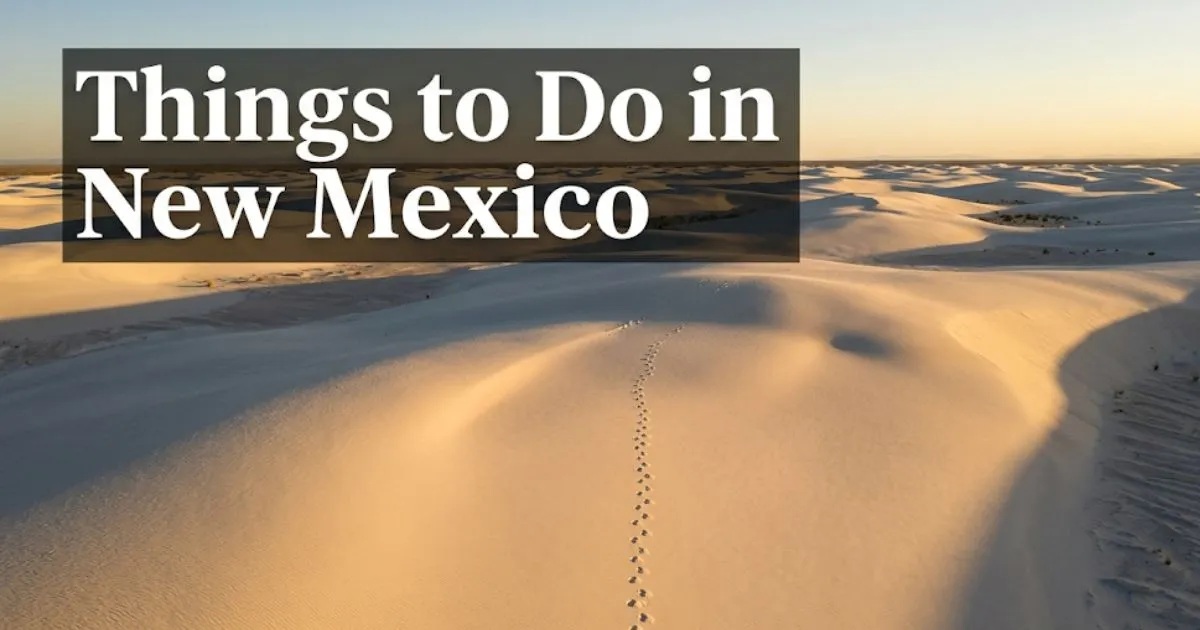
White Sands National Park is the most visually singular destination in the American Southwest. It is 275 square miles of pure gypsum dunes that appear snowlike and stay significantly cooler than surrounding desert terrain even in summer heat.
The park is located near Alamogordo in south-central New Mexico, approximately 3 hours south of Albuquerque via US-54. This is not a quick detour from the northern cultural circuit. It requires dedicated planning as a southern New Mexico anchor.
Timed-entry permits are required during peak season. The National Park Service has implemented reservation systems for popular time windows, particularly on weekends from spring through fall. Check NPS.gov well in advance and book permits as soon as your travel dates are confirmed.
Sunrise and the two hours before park closing are the best times to visit. Midday in summer brings temperatures above 100°F. The white dunes intensify UV reflection, making sunburn risk higher than typical desert exposure even on overcast days.
For families, the sled rental program at the visitor center (plastic disc sleds for the dunes) is the park’s best family-specific activity. Children engage with it in ways that standard trail walking does not deliver. Budget approximately $20 to $25 for sled rental.
For photographers, the Interdune Boardwalk provides accessible viewing of the dune field. For serious photography, the backcountry camping lottery allows overnight stays in the dunes for sunrise and sunset light without the day-visitor crowds.
Insider Tip:
- The Lake Lucero Tour, a ranger-led program to the dry lakebed where gypsum crystals form and eventually become the dunes, runs on selected Saturdays. It requires advance reservation and sells out quickly. It is the single most educational experience the park offers.
- Most visitors stay on the main Dunes Drive and miss the Backcountry Camping Area trails entirely. Even non-campers can walk into this section and lose the crowds within 15 minutes.
Carlsbad Caverns Visit Tips
Carlsbad Caverns National Park contains one of the largest underground cave chambers in North America and hosts the most dramatic natural bat flight spectacle in the United States.
The caverns are in the Guadalupe Mountains of southeastern New Mexico, approximately 4 hours from Albuquerque and 2.5 hours from El Paso (ELP), making El Paso a practical arrival airport for visitors whose primary goal is the southern parks circuit.
Advance reservations are required for all guided tours. The self-guided Natural Entrance route also benefits from reserved time windows during peak season. The NPS reservation system for Carlsbad fills weeks ahead during spring and fall. Book early.
The Mexican free-tailed bat flight from late May through October (peak in August and September) involves up to 400,000 bats exiting the cave at dusk. The nightly Bat Flight Amphitheater program begins roughly 30 minutes before sunset. This is one of the most legitimately astonishing wildlife spectacles in North America and requires no hiking ability whatsoever.
For seniors and mobility travelers, Carlsbad Caverns is one of New Mexico’s most accessible major sites. The Big Room, the main cavern chamber, is accessible via elevator. The self-guided tour inside is paved and relatively flat. This is a genuinely rare combination of accessibility and spectacle.
For budget travelers, the America the Beautiful Annual Pass (approximately $80 per vehicle as of recent years) covers entrance to both Carlsbad Caverns and White Sands plus every other NPS site visited that year. For anyone visiting two or more national parks, it pays for itself immediately. Verify current pricing at NPS.gov.
Insider Tip:
- Most visitors arrive mid-morning and miss the bat flight entirely because they do not realize it requires returning to the park entrance after sundown. Plan to stay through sunset or return specifically for the evening flight if you visit during bat season.
- The Slaughter Canyon Cave tour requires a 1.25-mile round-trip hike and helmets. It is significantly less visited than the main cavern and shows formations the main cave cannot match for sheer density.
Key Takeaway: Book Carlsbad Caverns guided tours and White Sands timed-entry permits before anything else in your New Mexico planning. Both fill weeks out during peak season.
Albuquerque International Balloon Fiesta
The Albuquerque International Balloon Fiesta is the largest hot air balloon event in the world. Approximately 500 balloons launch in mass ascensions over Albuquerque’s North Valley during the first full weekend through the second weekend of October each year.
For 2026, verify current dates directly with the official Balloon Fiesta website as specific scheduling varies by year. The event typically runs 9 days in early to mid-October.
Mass ascension at dawn, when hundreds of balloons launch simultaneously in the cooler morning air, is the event’s primary spectacle. It begins around 7 a.m. with balloon inflation starting before sunrise. Arrival before 6 a.m. is standard advice, but experienced attendees arrive even earlier to secure parking.
Tickets require advance purchase. Walk-up availability at the gate is unreliable during peak weekend days. Purchase tickets through the official Balloon Fiesta website. Prices have historically ranged from approximately $15 to $30 per day for general admission; confirm 2026 pricing directly with the official source.
For families, the Balloon Fiesta is one of New Mexico’s genuinely great family experiences. Young children respond to the scale and color in ways that most cultural sites cannot match. The Fiesta’s morning hours align well with children’s natural early-rising patterns.
For budget travelers, be aware that Albuquerque hotel prices during Balloon Fiesta week spike dramatically. Booking accommodation months in advance is not an exaggeration. Visitors who book late often stay in Santa Fe or Rio Rancho and commute.
For couples, the Special Shape Rodeo days feature balloons in novelty shapes (animals, characters, objects) and draw the largest crowds. The regular mass ascensions on the first morning and last morning are less crowded and more atmospherically dramatic.
Insider Tip:
- The Night Magic Glow events, where tethered balloons are inflated and lit at dusk without launching, photograph as well as mass ascensions and are less chaotic. They also run on weekday evenings with smaller crowds.
- Chase crews follow balloons from the ground. Arriving early enough to watch inflation from inside the launch field is possible with field access tickets rather than general admission.
Meow Wolf Santa Fe
Meow Wolf is a permanent immersive art experience in Santa Fe that defies easy categorization. It is part funhouse, part narrative installation, part collective art project.
The original Meow Wolf location, called House of Eternal Return, is at 1352 Rufina Circle in Santa Fe’s industrial Railyard area south of downtown. It is not a gallery. It is a fully inhabitable fictional world inside a former bowling alley rebuilt by over 130 artists.
Tickets require advance purchase online. Walk-up availability exists but is limited on weekends. Admission runs approximately $30 to $40 per adult as of recent years; verify current pricing at the official Meow Wolf website before visiting.
For families with children, Meow Wolf is one of New Mexico’s best genuinely age-appropriate experiences for kids aged 6 and up. The interactive elements, hidden rooms, and narrative mystery structure engage children for 2 to 3 hours. Children under 5 may find the sensory intensity overwhelming.
For solo travelers and couples, allow at least 2.5 hours. The experience rewards curiosity and genuine exploration rather than speed. There is no prescribed path. Everything is touchable. Expect to discover rooms other visitors miss entirely if you look carefully.
What most visitors get wrong: They treat Meow Wolf as a photo opportunity rather than a story to investigate. There is an actual narrative hidden throughout the House of Eternal Return. Finding the story clues dramatically deepens the experience. Ask staff for context before entering.
| Visitor Type | Recommended Time | Best Day to Visit | Practical Note |
|---|---|---|---|
| Families with kids | 2.5 to 3 hours | Weekday morning | Sensory intensity; check age guidance |
| Couples | 2 to 3 hours | Weekday afternoon | Quieter for exploration |
| Solo travelers | 1.5 to 2.5 hours | Any weekday | Easier to move through at your own pace |
| First-time visitors | Plan 2.5 hours | Check event calendar | Avoid special event nights if possible |
Insider Tip:
- The Meow Wolf Laundromat on the ground floor of the building (visible from Rufina Circle) is a fully functional, public-access laundromat decorated by Meow Wolf artists. It is free to enter and gives you a sense of the aesthetic without buying a ticket.
Key Takeaway: Meow Wolf requires advance ticket purchase on weekends. Book at least a week ahead in summer and during school holiday periods.
New Mexico Outdoor Adventures and Hiking
New Mexico’s outdoor range is wider than most visitors expect. It covers desert dunes, volcanic badlands, river canyons, alpine forests, and ski terrain within a single state.
Valles Caldera National Preserve, a 13-mile-wide ancient volcanic crater northwest of Los Alamos, offers meadow hiking unlike anything else in the Southwest. The preserve is managed by the National Park Service and is significantly less visited than comparably dramatic NPS sites in the region.
Bandelier National Monument, 45 minutes northwest of Santa Fe on NM-4, preserves Ancestral Puebloan cliff dwellings carved directly into volcanic tuff canyon walls. The main loop trail runs 1.2 miles and includes ladder-assisted climbing into actual dwelling alcoves. The NPS requires shuttle access from the Ponderosa Campground area during peak visitor periods; check NPS.gov for current access policies.
For hikers, the Kasha-Katuwe Tent Rocks National Monument south of Cochiti Pueblo features cone-shaped rock formations in a narrow slot canyon. It is one of the state’s most photogenic short hikes at under 3 miles round-trip. Access is managed by the Bureau of Land Management; verify current permit requirements before visiting.
For families with children 8 and up, Bandelier’s cliff dwelling ladders are a genuine highlight that produces lasting memories. Children under 8 may struggle with the climbing elements. The main trail to the cliff dwellings is manageable for most children.
For seniors and mobility travelers, Valles Caldera’s Valle Grande meadow is viewable from the main road and the visitor facilities without significant walking. The preserve’s ranger programs provide context accessible to visitors who cannot cover the full trail system.
Summer hiking across all New Mexico elevations requires awareness of the monsoon pattern. Afternoon thunderstorms develop rapidly from mid-July through September. Start hikes before 8 a.m. and be off exposed ridges by noon. This is not a suggestion. Lightning at high elevation kills hikers in New Mexico every summer.
Bisti Badlands and Remote New Mexico Landscapes
Bisti/De-Na-Zin Wilderness, managed by the Bureau of Land Management, is the most otherworldly landscape in New Mexico. It is a 45,000-acre stretch of eroded badlands in the San Juan Basin of northwestern New Mexico containing hoodoos, petrified wood, and formations that appear extraterrestrial.
It is also the most logistically demanding major natural destination in the state. The nearest town with substantial services is Farmington, approximately 37 miles north. The access road is unpaved. There are no marked trails, no visitor center, and no cell service. This is genuinely remote terrain.
What to bring without exception:
- A downloaded offline map of the Bisti wilderness boundary (GPS coordinates for the south trailhead: approximately 36.732°N, 108.037°W; verify before departure)
- At least 2 liters of water per person per hour in the field
- A compass or offline GPS device
- Sun protection at an extreme level; there is zero shade in the badlands
- A full tank of gas before leaving Farmington
For solo travelers, Bisti requires a safety-first approach. Navigation without landmarks is genuinely difficult. Going with at least one other person is strongly recommended. Inform someone of your planned route and expected return time before entering.
For photographers, the golden hour before sunset produces the most dramatic light on the hoodoo formations in the southern section of the wilderness. The drive from Albuquerque takes approximately 3 hours. Plan an overnight in Farmington to reach the south trailhead for morning light.
The nearest hospital with emergency services is in Farmington. The nearest NPS ranger station is not within the wilderness itself. Self-sufficiency is not optional here. It is the baseline condition for visiting.
Insider Tip:
- The southern trailhead section (often called the “Egg Factory” area for its smooth rounded formations) is the more photogenic half. The northern section covers more ground but requires better navigation skills.
- Spring (late March through May) and fall (September through October) are the only comfortable seasons for extended Bisti exploration. Summer heat exceeds safety thresholds for afternoon visits.
New Mexico Food Culture and Green Chile
New Mexico’s food identity is built on a single agricultural product that other states simply do not have in the same form: green chile. Specifically, Hatch green chile, grown in the Hatch Valley of Doña Ana County, is to New Mexico what Parmigiano-Reggiano is to Emilia-Romagna. The product has a protected geographic identity in the state’s agricultural culture.
The question every server in New Mexico asks every table is “red or green?” Red refers to dried and reconstituted red chile sauce. Green refers to roasted Hatch green chile sauce. “Christmas” means both. This is not a regional quirk. It is the state’s actual official question, designated by law.
For food travelers, Albuquerque is the better food city for New Mexican cuisine at honest prices. The Frontier Restaurant on Central Avenue serves the definitive green chile breakfast burrito. El Pinto on 4th Street NW in the North Valley is a New Mexican institution serving patio dining under cottonwood trees with chile sauces made from their own farm’s harvest.
In Santa Fe, The Shed on East Palace Avenue is a required stop for red chile enchiladas. Café Pasqual’s on Water Street, open since 1979, serves a breakfast and brunch menu informed by Mexican, Native American, and New Mexican culinary traditions simultaneously.
For budget travelers, New Mexican cuisine at local family-owned spots is genuinely affordable. A full meal with sopapillas (the puffy fried bread served with honey and a staple of New Mexican dining) at a non-tourist-facing local restaurant typically runs $12 to $20 per person.
The Hatch Chile Festival takes place on Labor Day weekend each year in the town of Hatch (approximately 40 miles north of Las Cruces). The 2026 dates should be verified directly with Doña Ana County. It is one of the state’s most genuinely local annual events and worth building a southern New Mexico trip around.
Key Takeaway: Order green chile on everything, at least once. The question is not whether it will be too spicy. The question is which restaurant’s version is worth the drive.
Canyon Road Galleries and Santa Fe Art Scene
Canyon Road is the most important single street for visual art commerce in the Mountain West. The full length from Paseo de Peralta to Cristo Rey Church covers approximately one mile and contains over 80 galleries, studios, sculpture gardens, and working artist spaces.
The concentration and quality range from established international dealers to emerging artists working in studios directly off the street. The New Mexico Museum of Art on Lincoln Avenue at the northwest corner of the plaza anchors the institutional end of the city’s art identity and has presented regional and national work since 1917.
The Georgia O’Keeffe Museum on Johnson Street, two blocks from the plaza, is the only museum in the US dedicated to a female artist of her stature. O’Keeffe lived and worked in the Abiquiu and Ghost Ranch area north of Santa Fe for much of her career. The museum’s permanent collection is complemented by changing exhibitions.
For couples, the first Friday evening art walk on Canyon Road is the ideal visit structure. Galleries stay open late, pours of wine are common at openings, and the street takes on an energy that midday visits cannot match. Plan to be on Canyon Road between 5 p.m. and 8 p.m.
For budget travelers, Canyon Road’s galleries are free to enter. Purchasing is never required. The sculpture gardens of several Canyon Road galleries are publicly viewable from the street. The Georgia O’Keeffe Museum charges approximately $15 to $20 per adult for entry; verify current pricing before visiting.
What is overrated: The Santa Fe Indian Market, held annually in August, is a genuinely important cultural event for Indigenous artists. But it draws enormous crowds that overwhelm the plaza area and make navigation difficult. Visiting the permanent collection at the Indian Pueblo Cultural Center in Albuquerque gives more contextual depth with zero crowd pressure, any day of the year.
Insider Tip:
- The SITE Santa Fe gallery on South Guadalupe Street in the Railyard Arts District is the city’s most serious contemporary art institution and is consistently overlooked by visitors focused on Canyon Road. It operates on a pay-what-you-wish admission model.
- Abiquiu and Ghost Ranch, 1 hour north of Santa Fe on US-84, are where O’Keeffe actually lived and painted. Ghost Ranch offers tours of the landscape she made famous. This is the local alternative for anyone who wants O’Keeffe’s actual context rather than just the museum.
New Mexico Stargazing and Night Sky Experiences
New Mexico has more certified International Dark Sky Places than almost any other US state. The combination of high elevation, low humidity, minimal light pollution outside urban corridors, and over 300 clear nights per year creates conditions among the best in North America for naked-eye and telescope astronomy.
The Very Large Array (VLA) radio telescope facility on the Plains of San Agustin, approximately 50 miles west of Socorro on US-60, is one of the most dramatic scientific facilities in the world. It consists of 27 massive radio antennas arranged in a Y-shaped configuration. The visitor center is open daily (verify current hours at the VLA official website) and admission is free. You do not need to be an astronomy enthusiast to find it genuinely affecting.
Capulin Volcano National Monument in northeastern New Mexico offers a crater-rim trail at 8,182 feet elevation with minimal surrounding light pollution. The combination of volcanic geology and dark sky access is unusual and photogenic year-round.
For photographers, the City of Rocks State Park near Deming in southern New Mexico hosts regular dark-sky observation events. The park’s boulder formations create foreground interest for astrophotography that flat desert sites cannot match.
For families, the New Mexico Museum of Natural History and Science in Albuquerque operates a planetarium with regular public programs. It is not an outdoor experience but gives children astronomical context before night-sky viewing at darker locations.
The best months for stargazing statewide are January through March (clearest winter skies, no monsoon humidity) and September through November (post-monsoon clarity, comfortable temperatures for extended outdoor viewing). Summer monsoon season from mid-July through September introduces cloud cover that interrupts even high-elevation viewing.
Insider Tip:
- The drive along US-380 between Carrizozo and Roswell passes through the Valley of Fires Recreation Area and Mescalero Apache lands with essentially zero light pollution and pullouts where roadside stargazing at 2 a.m. in clear skies is unmatched in the continental US.
New Mexico Road Trip Planning and Driving Distances
A New Mexico road trip requires honest distance planning. The state is larger than most visitors realize from a two-dimensional map view.
Driving distances between key destinations:
| Route | Distance | Drive Time (No Stops) |
|---|---|---|
| Albuquerque to Santa Fe | 65 miles | 1 hour |
| Santa Fe to Taos | 70 miles | 1.5 hours (High Road) |
| Albuquerque to White Sands | 215 miles | 3 hours |
| Albuquerque to Carlsbad Caverns | 285 miles | 3.5 hours |
| Santa Fe to Bisti Badlands | 185 miles | 2.5 hours |
| White Sands to Carlsbad Caverns | 90 miles | 1.5 hours |
| Albuquerque to Taos | 130 miles | 2 hours |
Renting a car at Albuquerque International Sunport (ABQ) is the standard approach for most visitors. ABQ has all major rental agencies. Book in advance for peak season (October, spring breaks, summer).
For a 5-day road trip covering the north, a practical framework runs:
- Arrive ABQ; drive to Santa Fe (1 hour); afternoon on Canyon Road; dinner at The Shed
- Full morning in Santa Fe (Georgia O’Keeffe Museum, plaza, Meow Wolf); afternoon drive to Taos via Low Road
- Morning at Taos Pueblo; afternoon at Rio Grande Gorge; High Road drive back toward Española
- Valles Caldera and Bandelier; return to Albuquerque via Los Alamos
- Albuquerque (Indian Pueblo Cultural Center, Petroglyph NM, Old Town); depart from ABQ
For a 5-day trip covering the south:
- Arrive ABQ or ELP; drive to White Sands (via Alamogordo)
- Full day at White Sands including sunrise or sunset; overnight Alamogordo or Las Cruces
- Drive to Carlsbad Caverns; afternoon cave tour; evening bat flight program
- Bisti Badlands day trip from Farmington (if time permits) or Roswell stop (for solo travelers curious about the alien tourism circuit)
- Return drive to ABQ via US-285; depart
Seniors and mobility travelers should build in driving time cushion. Mountain routes between Santa Fe and Taos include elevation changes and curves that require attentive driving. A full travel day rarely accommodates more than one major destination and one driving segment comfortably.
Key Takeaway: Renting a car at ABQ and choosing either north or south New Mexico as your primary zone (not both) is the single decision that determines whether your trip feels like a genuine experience or a driving marathon.
Best Time to Visit New Mexico
The best time to visit New Mexico is late September through early November for statewide travel, or late March through late May for southern destinations.
Seasonal breakdown:
| Season | Months | Conditions | Best For |
|---|---|---|---|
| Spring | March to May | Mild, some wind, occasional late snow in north | White Sands, Carlsbad, hiking |
| Summer | June to August | Hot in south (100°F+), monsoons July-Sept, busy | High-elevation north, Taos, Valles Caldera |
| Fall | Sept to Nov | Ideal statewide; Balloon Fiesta in Oct; harvest | Everything; best all-around season |
| Winter | Dec to Feb | Cold nights north; mild days south; low crowds | Budget travel; Carlsbad Caverns; skiing Taos |
October is simultaneously the best month and the most expensive month in New Mexico. The Albuquerque International Balloon Fiesta in early October, Hatch chile harvest season through September and October, and fall foliage in northern mountain aspen groves all coincide. Hotel prices in Albuquerque during Balloon Fiesta week rank among the highest in the state’s annual cycle.
For budget travelers, January and February deliver the lowest hotel prices statewide, comfortable daytime temperatures in southern New Mexico (highs in the 50s to 60s°F near Las Cruces and Alamogordo), and almost zero crowds at White Sands and Carlsbad Caverns.
For families, spring break period (mid-March through April) brings a strong mix of manageable temperatures and open facilities without the monsoon unpredictability of summer. White Sands in late March before spring break crowds arrive is genuinely close to the ideal visit window.
What most visitors misunderstand about summer: The monsoon season does not mean continuous rain. It means intense, fast-moving afternoon thunderstorms that typically last 30 to 60 minutes and then clear. Morning hours in summer are often clear and beautiful. Plan outdoor activities between 6 a.m. and noon. Reschedule nothing based on an afternoon storm threat; just be prepared for it.
New Mexico Travel Tips and Practical Logistics
The most consequential practical tip for any New Mexico trip is this: book your National Park permits and major attraction tickets before booking anything else.
Critical booking checklist before departure:
- White Sands timed-entry permit: check NPS.gov for current system; book as soon as travel dates are confirmed
- Carlsbad Caverns guided tour reservation: NPS.gov; fills weeks ahead in spring and fall
- Balloon Fiesta tickets: official Balloon Fiesta website; book months ahead for October travel
- Meow Wolf tickets: official Meow Wolf website; book at least a week ahead on weekends
- Taos Pueblo guided tour: contact the pueblo directly; access closes during tribal ceremonial periods
- Bandelier National Monument shuttle: check NPS.gov for current shuttle reservation requirements during peak season
- Rental car at ABQ: book weeks ahead for October and spring break travel
Altitude awareness is not optional in northern New Mexico. Santa Fe sits at approximately 7,000 feet above sea level. Taos is similar. Visitors flying from sea-level cities (New York, Miami, Houston, Los Angeles) frequently experience headaches, fatigue, and shortness of breath on their first day. The standard advice: hydrate heavily for 24 hours before arrival, avoid alcohol on your first evening, and plan a lighter activity schedule for your first day in the north.
For solo travelers, northern New Mexico is exceptionally safe for solo travel. Santa Fe and Taos are walkable, well-lit at night, and have established solo-traveler communities around their arts and wellness scenes. Albuquerque requires the same urban awareness you would apply in any American city of comparable size.
Cell service reality: Expect limited to no cell service in Bisti Badlands, along portions of the High Road to Taos, in parts of the Valles Caldera, and on many BLM roads in rural New Mexico. Download offline maps (Google Maps or Maps.me) for every route you plan to drive before leaving urban areas.
The America the Beautiful Annual Pass covers entrance to all National Park Service sites. For any visitor planning to visit White Sands, Carlsbad Caverns, Bandelier, Petroglyph, and Valles Caldera in one trip, it pays for itself. Purchase at any NPS entrance station or online at NPS.gov. Verify current pricing before purchase.
Safety and Practical Warnings for New Mexico Travelers
New Mexico’s most serious safety risks are environmental and often underestimated by first-time visitors.
Sun and UV intensity: High-altitude desert sun is severe year-round. At 7,000 feet in Santa Fe or on white gypsum dunes at White Sands (which reflect UV light), sunburn occurs significantly faster than at sea level. Apply SPF 50 or higher and reapply every 90 minutes outdoors regardless of cloud cover.
Key safety and practical facts every visitor should know:
- Altitude sickness affects a meaningful percentage of visitors flying to Santa Fe or Taos from low elevations. Symptoms include headache, nausea, fatigue, and sleep disruption. Descend to lower elevation if symptoms become severe. Drink water, not alcohol, on your arrival evening.
- Flash floods occur in slot canyons and washes with no warning during monsoon season (mid-July through September). Never enter a canyon or wash if there are dark clouds visible anywhere on the horizon, even if skies are clear directly overhead. Water travels from miles away.
- Heat at White Sands in summer exceeds 100°F at midday. Carry at least 1 liter of water per person per hour. The white sand reflects heat from below while the sun radiates from above. Heat exhaustion risk is real.
- Limited cell service in rural New Mexico is not a minor inconvenience. It is a genuine safety factor. Download offline maps. Carry a paper road map of New Mexico. Tell someone your planned route and return time before heading into backcountry areas.
- Wildlife: Rattlesnakes are present in desert terrain statewide. Watch where you step and where you place your hands on rocks. Black bears are present in the Gila Wilderness and higher mountain areas. Standard bear awareness practices apply.
- Driving on unpaved BLM roads after rain can produce deep mud that immobilizes standard vehicles. Check weather forecasts before driving to Bisti Badlands, City of Rocks, or other remote BLM sites.
For medical emergencies in rural New Mexico, dial 911. Response times in remote areas can exceed 30 to 45 minutes. The University of New Mexico Hospital in Albuquerque is the state’s primary Level I Trauma Center.
Frequently Asked Questions About Things to Do in New Mexico
What is the single best thing to do in New Mexico for a first-time visitor?
White Sands National Park is the single most irreplaceable experience in New Mexico for first-time visitors.
No other landscape in the United States looks like it, and no photograph fully prepares you for the scale and color of the gypsum dune field.
Combine White Sands with a night in Santa Fe and the Taos Pueblo, and you have experienced three things with no equivalent anywhere else in North America.
How many days do you need in New Mexico to see the highlights?
Five to seven days is the realistic minimum for covering New Mexico’s highlights without feeling rushed.
A focused 3-day trip can cover the northern zone (Santa Fe, Taos, Bandelier) or the southern zone (White Sands, Carlsbad Caverns) well, but not both.
Trying to do the entire state in 3 days produces a driving trip, not a travel experience.
Is New Mexico worth visiting?
New Mexico is among the most underestimated destinations in the continental United States.
It combines national landscapes that rival Utah’s famous parks, an arts culture that rivals any American city, a living Indigenous heritage with no peer in the US, and a culinary identity that is genuinely its own.
The travelers who find it underwhelming are usually those who rushed it, underplanned logistics, or expected it to perform like a standard southwestern park circuit.
What should I know before visiting White Sands National Park?
Book your timed-entry permit through NPS.gov before your trip, not on arrival day.
Bring twice as much water as you think you need, wear high-SPF sunscreen, and plan to be in the park either in the first two hours after opening or in the two hours before closing.
Midday summer visits are physically demanding and logistically crowded; sunrise and sunset visits are where the park genuinely earns its reputation.
When is the best time to visit New Mexico?
The best time to visit New Mexico is late September through early November.
Fall brings comfortable temperatures statewide, the Albuquerque International Balloon Fiesta in early October, green chile harvest season, and aspen color in the northern mountains.
For budget travel, January and February offer low prices and mild weather in southern New Mexico, with almost no crowds at White Sands and Carlsbad Caverns.
Do you need a car to travel around New Mexico?
A rental car is non-negotiable for any New Mexico trip that includes more than one city or any national park.
Albuquerque has bus service within the city, and Santa Fe has limited local transit, but no public transportation connects the state’s major destinations at practical frequencies for travelers.
Rent at Albuquerque International Sunport (ABQ) for the widest selection and best pricing; book weeks in advance for October travel during Balloon Fiesta season.
Plan Your New Mexico Trip Now
New Mexico’s best experiences require advance logistics. Book your timed-entry permits for White Sands, your cave tour reservations at Carlsbad Caverns, and your Meow Wolf tickets before making hotel or flight decisions.
Prices, hours, permit availability, and seasonal access at all New Mexico destinations are subject to change. Verify all logistics directly with NPS.gov, official attraction websites, and New Mexico True (the state’s official tourism resource) before your departure date.
Choose your zone first, north or south. Reserve the permits that zone requires. Then let the drive, the food, and the sky do the rest.