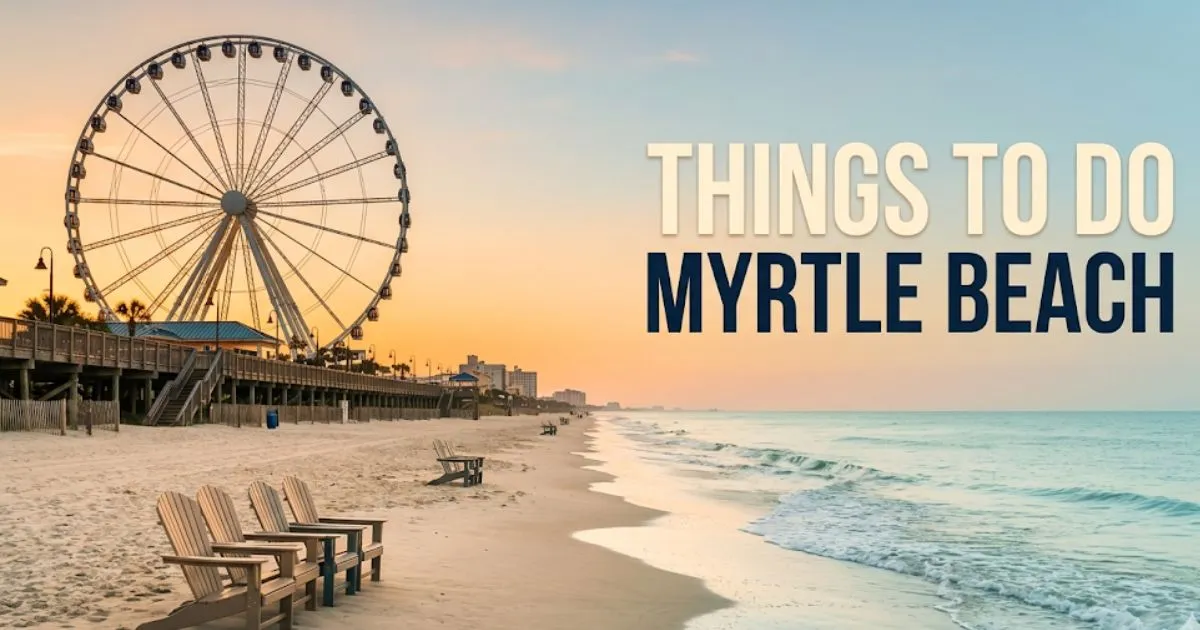
16 Best Things to Do in Myrtle Beach in 2026

Myrtle Beach offers two very different vacations in one 60-mile stretch. The choice between the buzzing central Boardwalk and the quiet South Strand defines your trip.
The Grand Strand hosts over 19 million visitors annually, according to the Myrtle Beach Area Convention and Visitors Bureau. Most never leave the central 10-mile tourist corridor.
This guide separates the genuine experiences from the tourist traps. You will find a complete 3-day itinerary and local alternatives to every crowded mainstay.
Things to Do Myrtle Beach
The best things to do in Myrtle Beach split between high-energy attractions and relaxed beach culture. Your ideal mix depends entirely on your travel style.
Ripley’s Aquarium at Broadway at the Beach anchors the indoor attraction scene. Its moving walkway through an underwater tunnel remains genuinely impressive for all ages.
Admission runs approximately $30 to $40 per adult. Budget 2 to 3 hours for a thorough visit. Morning arrivals avoid the heaviest crowds.
Families with children under 12 rate this as a top-tier experience. Solo adults and couples may find the value limited compared to larger city aquariums.
Visit on a rainy weekday morning during summer. Avoid Saturday afternoons entirely during peak season when the moving walkway becomes a stationary crowd.
Locals with young kids skip the midday chaos by purchasing annual passes. They arrive at opening time and leave before 11 a.m. when the summer camp buses pull in.
Insider Tip:
- The aquarium opens at 9 a.m. but the penguin exhibit gets active around 10 a.m. after feeding.
- Broadway at the Beach parking is free but the lot fills by noon in summer. Use the lot behind the aquarium for fastest access.
Things to Do in Myrtle Beach South Carolina
The Grand Strand stretches from Little River down to Pawleys Island. Understanding this geography is the single biggest planning advantage you can have.
The central Strand runs from 2nd Avenue North to 29th Avenue South. This is the postcard Myrtle Beach of the SkyWheel and crowded beaches.
The South Strand begins at Surfside Beach and runs through Murrells Inlet. This zone offers a low-rise, local-first beach experience that most visitors never find.
The North Strand around North Myrtle Beach and Barefoot Landing feels more residential. It suits families wanting a quieter base with easy access to central attractions.
| Strand Zone | Vibe | Best For | Beach Quality |
|---|---|---|---|
| Central Strand | High-energy, commercial, dense | First-time visitors, teens, nightlife seekers | Wide and busy, lifeguard stands present |
| North Strand | Residential, spread out, relaxed | Families, multi-generational groups | Quieter sections, Cherry Grove tidal creeks |
| South Strand | Local, low-rise, unpolished charm | Couples, repeat visitors, budget travelers | Narrower in spots, Surfside and Garden City Piers |
The central Strand’s beach quality is perfectly adequate but the density of rental umbrellas is startling. Families with toddlers appreciate the South Strand’s slower pace and lack of a highway shadowing the sand.
Key Takeaway: The Grand Strand is three distinct destinations. Your hotel location, not your intention to explore, will dominate your daily experience.
Best Time to Visit Myrtle Beach
The best time to visit Myrtle Beach is late April through May and September through mid-October. These shoulder seasons deliver pleasant beach weather and manageable crowds.
Ocean temperatures reach the low 70s by late May. September offers bathwater-warm ocean in the low 80s, the warmest of the year.
July is the busiest, hottest, and most expensive month. Daytime highs hover in the upper 80s with oppressive humidity, and afternoon thunderstorms are a near-daily occurrence.
Winter visits from December through February bring highs in the 50s and many attractions closing entirely. The beach remains beautiful for walks, but swimming is out of the question.
Spring break season runs from mid-March through late April. The weather is a gamble, and hotel rates spike around Easter. Myrtle Beach Bike Week Spring Rally in May consumes lodging availability.
Avoid the week of Carolina Country Music Fest in June unless you are attending. The central Boardwalk area becomes a dense, loud, and expensive gridlock zone.
According to the Myrtle Beach Area Chamber of Commerce, hotel occupancy regularly hits 90% during these major events. Book accommodations three to six months in advance for any June or July stay.
Myrtle Beach Boardwalk and Promenade
The Myrtle Beach Boardwalk & Promenade stretches 1.2 miles from 2nd Avenue Pier to 14th Avenue North Pier. It is the pulsating, tourist-dense heart of the central Strand.
This is a classic American boardwalk experience. The arcades at Gay Dolphin Gift Cove and the towering SkyWheel define the skyline.
A SkyWheel ride costs around $15 per adult for a 10-minute rotation. The climate-controlled gondolas make this a viable attraction even on a sweltering July afternoon.
The Boardwalk suits families, teens, and anyone who wants maximum stimulation. Travelers seeking a quiet oceanfront stroll should look to the South Strand immediately.
Summer evenings bring live music to Plyler Park and heavy pedestrian traffic. The winter months leave the Boardwalk largely abandoned, with many shops closing until spring.
Locals avoid the Boardwalk entirely during peak summer weekends. They walk it in the early morning, arriving before 9 a.m., when the only crowd is joggers and the light over the ocean is far better for photos.
Local Alternative: For a quieter pier experience, drive 15 minutes south to Surfside Pier. It offers the same ocean-walking feeling with a fraction of the crowd and a genuinely local diner at its entrance.
Key Takeaway: The Boardwalk is the postcard. Surfside Pier and the Marsh Walk are the actual local coastal experience.
Broadway at the Beach Myrtle Beach
Broadway at the Beach is South Carolina’s most visited tourist attraction. It is a 350-acre outdoor entertainment complex built around a central lake.
This is a carefully engineered tourist consumption zone. It houses Ripley’s Aquarium, WonderWorks, the Hollywood Wax Museum, and dozens of chain restaurants and souvenir shops.
The experience is clean, safe, and entirely predictable. Expect to walk a lot in direct sun with limited shade between venues.
Families with children ages 8 to 14 find the maximum value here. The Pavilion Park Central amusement rides and the water feature shows hit the sweet spot for this demographic.
Couples and adult groups without children should treat Broadway as a single-evening dinner and people-watching stop. It is not a multi-day destination for this profile.
The commercial chains dominate the dining scene, but local escape hatches exist. The Grumpy Monk on the complex’s edge offers far better craft beer and burgers than any chain option inside.
Locals use Broadway for the movie theater and specific restaurants, then leave. They never attempt to park in the main lots on a Saturday evening in July, entering instead from the back road off 21st Avenue North.
| Attraction | Profile Fit | Approx. Cost (Adult) | Honest Assessment |
|---|---|---|---|
| Ripley’s Aquarium | Families, all ages | $30-$40 | Genuinely well-executed; crowded by noon |
| WonderWorks | Families, ages 6-14 | $25-$35 | Hands-on science; afternoon lines are long |
| Hollywood Wax Museum | Pop culture fans | $20-$30 | A one-time novelty; better for rainy days |
| Pavilion Park Central | Families, ages 3-12 | Pay-per-ride | Clean and manageable; young-kid focused |
| Dave & Buster’s | Teens, adult groups | Variable | Identical to every other location nationally |
Myrtle Beach State Park Outdoor Guide
Myrtle Beach State Park sits on a pristine, undeveloped stretch of beach just south of the central hotel towers. It is the single best nature escape within city limits.
A short maritime forest nature trail leads from the parking lot to the fishing pier. The shade on this trail offers immediate relief from the beach sun.
Park admission costs approximately $8 per adult and $4 per child. This is the best value on the entire Grand Strand for a full day of outdoor access.
The park suits families, couples, and solo travelers seeking a quiet beach day. The pier is a popular fishing spot where no fishing license is required.
The park provides the only centrally located beach setting without high-rises looming behind you. The contrast when you exit the park and see the hotel towers to the north is jarring.
The pier and nature center operate year-round. The beach is swimming-friendly from late spring through early fall, with lifeguards on duty seasonally.
Locals buy an annual park pass and treat this as their primary beach access. They know the north end of the park beach is quieter and that the pier shop sells basic tackle and snacks.
Alternative for nature-seekers: Huntington Beach State Park in Murrells Inlet offers a wilder, more ecologically diverse experience 20 minutes south. Its causeway drive through salt marshes is a prime birding route.
Key Takeaway: State park admission costs less than a single Boardwalk parking fee and delivers an entirely different Myrtle Beach experience.
Brookgreen Gardens Sculpture and Wildlife
Brookgreen Gardens is a 9,100-acre sculpture garden and wildlife preserve in Murrells Inlet. It is the cultural and artistic counterweight to everything the Boardwalk represents.
The world’s largest collection of American figurative sculpture lives here. The pieces are placed throughout manicured gardens beneath a canopy of ancient live oaks.
Admission runs around $20 per adult with a ticket valid for seven consecutive days. Budget at least three hours for the garden core alone.
This experience suits couples, seniors, and solo travelers with an interest in art or horticulture. Families with young children can use the zoo area, but the sculpture garden requires a quiet, walking pace that small kids rarely sustain.
Spring is the optimal season when the azaleas bloom in March and April. The live oaks draped in Spanish moss provide enough shade to make even a July visit bearable.
The Lowcountry Zoo within the gardens exhibits only native species in natural habitats. It is a quiet, educational complement, not a competitor to the commercial aquariums.
Locals use the seven-day ticket as a multi-visit morning walk pass. They arrive when the gates open at 9:30 a.m. and focus on one specific garden section per visit before the midday heat.
According to Brookgreen Gardens’ management, fall brings fewer crowds and the “Nights of a Thousand Candles” event in December, which transforms the gardens with thousands of hand-lit candles and requires advance ticket purchase.
Murrells Inlet Marsh Walk Seafood
The Murrells Inlet Marsh Walk is a half-mile wooden boardwalk along a saltwater estuary. It is the seafood capital of South Carolina and the authentic alternative to the central Boardwalk.
This is where the calabash-style seafood tradition lives in its most concentrated form. The marsh views at sunset are genuinely spectacular.
The cluster of waterfront restaurants includes Dead Dog Saloon, Bovine’s, and Wicked Tuna. Each offers outdoor decks directly over the marsh grass and water.
The Marsh Walk suits adults, couples, and families seeking a local dining atmosphere. Solo travelers can comfortably post up at any bar and eat well without the Boardwalk’s arcade noise.
Happy hour here is a local ritual, typically running from 4 p.m. to 7 p.m. with fresh seafood specials. The raw bar at The Claw House offers the best oyster selection on the Grand Strand.
Summer evenings bring live music to multiple stages. The atmosphere is a low-country waterfront party, not a high-volume tourist spectacle.
Locals treat the Marsh Walk as their definitive entertaining-ou-of-town-guests move. They eat an early dinner before the 6 p.m. rush and then walk the boardwalk with a drink as the sun sets over the marsh.
Insider Tip:
- Order the she-crab soup. This is the definitive Lowcountry seafood dish, and the Marsh Walk restaurants do it as well as anywhere.
- Parking is free but tight. Use the public lot on the hill behind the strip during peak dinner hours.
Key Takeaway: The Marsh Walk is what the Boardwalk claims to be but is not. It is a genuine, local, and specific regional experience.
Surfside Beach and Garden City Local Guide
Surfside Beach and Garden City Beach form the transition zone between the commercial Grand Strand and the rural Hammock Coast. This is where the Myrtle Beach experience scales down to human size.
Surfside Pier is the anchor. Surfside Pier offers a local diner, ice cream shop, and a fishing and strolling pier without the Boardwalk’s visual noise.
Garden City Pier sits just south. It is an even older, more weathered structure with a genuinely local arcade and a bar where the clientele knows each other’s names.
These beaches suit families with young children and couples seeking a quiet base. The low-rise condo and beach house landscape feels nothing like the hotel-canyon central Strand.
The town of Surfside brands itself as a family beach. Its beachfront is almost entirely residential, with public access points tucked between private homes every few blocks.
Dining in this zone runs toward local seafood houses. Graham’s Landing and Surfside Diner deliver what the central chains cannot: a meal where the owner might be working the floor.
The biggest mistake visitors make is driving through Surfside on Highway 17 Business and assuming they have seen it. The beachside neighborhoods east of 17 are the actual destination and must be explored on foot or by bike.
Local Alternative to Central Strand Beach Day: Park at the Surfside Pier public lot. Walk the beach south toward Garden City. The sand quality is identical, and the crowd density is a fraction of the central Strand.
Myrtle Beach Water Sports and Dolphin Tours
The warm, shallow waters of the Grand Strand support a robust water sports industry. The best operators are independent local companies, not hotel concierge affiliates.
Downwind Sails and Blue Wave Adventures consistently earn high marks for dolphin watch cruises. These are not guaranteed wildlife shows, but the inshore dolphin population is large and sightings are reliable.
Parasailing operates from numerous central-Strand marinas. This is a quiet, peaceful experience once aloft, entirely different from the noise of the speedboat ride out.
Kayak and paddleboard rentals run strongest in the calmer waters of Murrells Inlet and the Waccamaw River. Black River Outdoors in Georgetown offers guided swamp tours in cypress forests an hour south.
Jet ski rentals are widely available but tightly regulated in surf zones. The inlet areas offer safer and more enjoyable riding for inexperienced operators.
Fishing charters depart from Murrells Inlet, Little River, and central marinas. A half-day deep-sea trip runs approximately $80 to $120 per person with all gear provided.
According to the South Carolina Department of Natural Resources, anyone over 16 fishing from a boat in saltwater must possess a valid saltwater fishing license. This is included with most charter fees but not with pier admission.
Solo travelers and couples will find the most value in guided kayak tours. Families with older children will enjoy the social energy of a dolphin cruise.
Key Takeaway: Book water sports directly with the operator at least 48 hours in advance during peak season. Hotel concierge bookings add a commission and limit your operator choice.
Myrtle Beach Live Music and Nightlife
Myrtle Beach nightlife runs along two distinct tracks. The central Strand offers high-volume tourist bars, while the South Strand and inland venues deliver genuine local music culture.
The Bowery on the Boardwalk is the historic anchor. This honky-tonk bar has operated since 1944 and famously launched the country band Alabama.
It is a genuine piece of music history and a packed, loud, tourist-heavy bar. The experience is authentic but entirely unsubtle. Go once, go early, and do not expect a quiet drink.
House of Blues at Barefoot Landing in North Myrtle Beach draws national touring acts. The Sunday Gospel Brunch is the single most underrated recurring event on the Grand Strand.
The Carolina Opry and Alabama Theatre represent the high-production-caliber live shows. These are polished, family-friendly, and genuinely impressive performances that anchor the evening entertainment scene.
Ocean Annie’s Beach Bar in Myrtle Beach and The Beaver Bar in Murrells Inlet are local outdoor-drinking institutions. They offer live cover bands and a flip-flops atmosphere that defines the beach bar experience.
Adults and couples seeking a local music scene should head to Suck Bang Blow in Murrells Inlet or Local on the Water in North Myrtle. These are biker-friendly and local-focused, a world apart from the Boardwalk’s tourist bars.
Carolina Country Music Fest takes over the central Boardwalk area in June 2026. Book accommodations far in advance or avoid this weekend entirely if you are not attending.
According to event organizers, CCMF 2026 headliners and ticket on-sale dates are typically announced in the preceding fall. The festival consistently sells out well before the event date.
Myrtle Beach for Families with Kids
Myrtle Beach is fundamentally built for families with school-age children. The destination’s entire infrastructure targets this demographic, and it shows.
Myrtle Waves Water Park is the largest water park in South Carolina. It suits families with children ages 6 to 15 and offers enough shade and seating for parents to endure a full day.
Family Kingdom Amusement Park on Ocean Boulevard is a classic seaside wooden-coaster park. It operates on a pay-per-ride or unlimited wristband system that allows families to spend only what they need.
Ripley’s Aquarium and WonderWorks provide the air-conditioned rainy-day safety net. Both are at Broadway at the Beach, making them logistically easy to combine.
The beach itself is the primary attraction and it is free. The central Strand beaches are wide, flat, and have lifeguards on duty seasonally.
Families with toddlers should base themselves in Surfside Beach or North Myrtle Beach. The central Strand’s Ocean Boulevard traffic and crowded sand create unnecessary stress for parents managing small children.
Pirate Adventures of Myrtle Beach is a local hidden gem for ages 3 to 8. Children board a small pirate ship, get costumed, and hunt for treasure in the calm intracoastal waterway.
Insider Tip:
- The North Myrtle Beach Cherry Grove Point tidal pools at low tide are the best natural playground on the Grand Strand for young children. Bring water shoes.
- The Sun Fun Festival in early June offers family-friendly activities and sandcastle competitions.
Key Takeaway: Myrtle Beach with kids works best when you choose a home base that matches your children’s ages. The central Strand suits tweens and teens. The South Strand suits toddlers.
Myrtle Beach for Couples Romantic Itinerary
Couples seeking a romantic Myrtle Beach experience must deliberately escape the central tourist corridor. The destination delivers romance, but it requires curation.
Brookgreen Gardens is the single most romantic setting on the Grand Strand. Walk the Live Oak Allee in the early morning, and the gardens feel like a private estate.
Murrells Inlet Marsh Walk offers sunset drinks over the marsh. Bovine’s upstairs deck provides the best date-night view, especially with a reservation at golden hour.
A stay in a Surfside Beach or Garden City oceanfront rental puts the ocean on your private balcony without the Boardwalk crowds. This is the correct lodging strategy for a couples’ trip.
Huntington Beach State Park offers miles of undeveloped beach for long, quiet walks. The southern end near the jetty is particularly secluded and beautiful.
Dinner at Frank’s in Pawleys Island or Aspen Grille in Myrtle Beach elevates the dining experience well beyond the calabash seafood houses. These require reservations, especially on weekends.
Couples should avoid Ocean Boulevard’s central blocks after dark during peak summer. The atmosphere is not dangerous, but it is loud, crowded, and entirely unromantic.
The Market Common offers a walkable, upscale evening district with cocktails, a movie theater, and quiet fountains. It feels like a different city from the Boardwalk entirely.
Couples without children should time their visit for the shoulder seasons. September offers the warmest ocean water of the year and hotel rates that have dropped significantly from July peaks.
Myrtle Beach on a Budget Free Attractions
A Myrtle Beach vacation does not require expensive attraction tickets. The beach itself is free, and a strategic approach unlocks significant value.
The Myrtle Beach State Park fishing pier and nature trails cost only the park admission. The beach access included in that fee is the best value on the Strand.
Broadway at the Beach charges no admission. You can walk the complex, watch the water features, and enjoy the lake views without spending a dollar on attractions.
The Myrtle Beach Boardwalk & Promenade is free to walk. The summer evening entertainment at Plyler Park is also free and features local musicians.
Market Common hosts free outdoor movies and events in its central green space. Check their 2026 event calendar for specific dates.
The Murrells Inlet Marsh Walk is free to stroll. Parking is also free, making this a zero-cost evening experience before you even order a drink.
Surfside Pier charges a small walking fee of approximately $1. Watching the sunrise from the pier is free and is the best non-beach sunrise view on the coast.
Budget travelers should focus dining dollars on local seafood houses for lunch, not dinner. The lunch menu at Proseer’s in Murrells Inlet offers the same seafood at significantly lower prices than dinner.
Free Activities by Profile:
- Families: Cherry Grove tidal pools at low tide, sandcastle building on any beach, Vereen Memorial Gardens boardwalk trail in Little River.
- Couples: Sunset at Huntington Beach State Park, walking the Marsh Walk, the gardens at Brookgreen (with multi-day ticket value).
- Solo Travelers: The Boardwalk in early morning, the state park nature trail, the Garden City Pier for people-watching.
Key Takeaway: The most expensive Myrtle Beach elements are lodging and dinner. The beach, the Boardwalk, the Marsh Walk, and the state park nature trails are all effectively free.
Rainy Day Activities Myrtle Beach
Summer afternoon thunderstorms are a near-daily reality in Myrtle Beach. A rainy-day plan is not optional; it is essential.
Ripley’s Aquarium absorbs crowds well and entertains all ages for two to three hours. Arrive at opening to secure a spot before the midday storm spike in attendance.
WonderWorks at Broadway at the Beach offers interactive science exhibits. The indoor ropes course is its best feature and takes about an hour alone.
810 Billiards & Bowling at Market Common offers upscale bowling, billiards, and a full restaurant. It is a polished alternative to the Boardwalk arcades and suits adult groups and families equally.
The Hollywood Wax Museum and its companion attractions provide a couple of hours of indoor, air-conditioned distraction. The value is fair for families but limited for couples.
The Carolina Opry and Alabama Theatre run matinee shows during summer that make excellent rainy afternoon alternatives. Check their 2026 schedules for specific showtimes.
Broadway at the Beach shops and the Gay Dolphin Gift Cove on the Boardwalk provide indoor retail wandering. The Gay Dolphin is a sprawling, multi-level novelty store that can consume an hour of curiosity-driven exploration.
Rainy Day Planning Sequence:
- Check the hourly forecast at 8 a.m. Afternoon storms are predictable.
- Book aquarium or museum tickets online before the rain starts. Walk-up availability disappears fast.
- Plan the morning for outdoor beach time while the sky is clear.
- Transition to your indoor attraction by 1 p.m. as the clouds build.
- End the indoor block with an early dinner. By 6 p.m., the storm has typically cleared.
Solo travelers and couples should use rainy afternoons for the Brookgreen Gardens indoor galleries. The sculpture collection continues into climate-controlled pavilions.
Myrtle Beach 3 Day Itinerary Planner
This 3-day Myrtle Beach itinerary follows geographic logic to minimize driving. Each day occupies a distinct zone of the Grand Strand without backtracking.
Day 1: The Central Strand Experience
Start at the Myrtle Beach Boardwalk & Promenade by 9 a.m. Walk the full 1.2 miles, ride the SkyWheel once the morning line is manageable, and explore the Gay Dolphin Gift Cove.
Lunch at Peaches Corner, a historic Boardwalk diner that has served hot dogs and burgers since 1937.
Spend the afternoon at Myrtle Beach State Park. Use the beach, walk the nature trail, and fish from the pier if interested.
Dinner at a central seafood house. Sea Captain’s House offers oceanfront dining with a 60-year local history and a better-than-tourist-trap menu.
Evening at Broadway at the Beach. Walk the complex, ride the amusement rides at Pavilion Park Central, and catch the fireworks show if your dates align.
Day 2: The South Strand and Marsh Culture
Morning at Brookgreen Gardens. Arrive at 9:30 a.m. opening. Walk the Live Oak Allee, the sculpture gardens, and the Lowcountry Zoo. Budget three to four hours.
Lunch at Graham’s Landing in Surfside Beach for a local seafood lunch on the water.
Afternoon at Surfside Pier and Surfside Beach. Swim, sunbathe, or walk the pier. This is your quiet beach afternoon.
Drive south to the Murrells Inlet Marsh Walk by 4:30 p.m. Happy hour at Dead Dog Saloon. Dinner at Bovine’s or The Claw House. Stay for live music and the sunset over the marsh.
Day 3: Choice Track (Profile-Dependent)
Option A (Families with Kids): Morning at Myrtle Waves Water Park. Plan to arrive at opening. Afternoon recovery and beach time. Evening at Ripley’s Aquarium or the Boardwalk arcades.
Option B (Adult Groups and Couples): Morning at Huntington Beach State Park for the wild beach and Atalaya Castle tour. Lunch at a Murrells Inlet seafood house. Afternoon at a local brewery. Evening at The Carolina Opry or Alabama Theatre.
Option C (Golfers): Morning tee time at a top-tier Grand Strand course. Afternoon beach recovery. Evening Marsh Walk dinner and live music.
Itinerary Logistics:
- Book Brookgreen Gardens, water park, and show tickets online in advance.
- Reservations for dinner at Frank’s, Aspen Grille, or Bovine’s are essential during peak season.
- The drive from central Myrtle Beach to Murrells Inlet takes approximately 20 to 25 minutes without traffic.
Frequently Asked Questions About Myrtle Beach
What is the number one tourist attraction in Myrtle Beach?
Broadway at the Beach is South Carolina’s single most visited tourist attraction.
This 350-acre entertainment complex houses Ripley’s Aquarium, WonderWorks, and dozens of restaurants and shops.
It is a dense, walkable consumption experience, not a nature or culture destination.
Is Myrtle Beach worth visiting for adults?
Yes, Myrtle Beach is worth visiting for adults who want a classic American beach vacation with abundant dining, golf, and live music.
The experience is not a quiet, cultured coastal escape like Charleston or Savannah.
Adult groups should focus on the South Strand, the Murrells Inlet Marsh Walk, and the golf infrastructure that anchors the region.
What are the best free things to do in Myrtle Beach?
The beach, the Myrtle Beach Boardwalk & Promenade, and the Murrells Inlet Marsh Walk are all completely free to access.
Broadway at the Beach and Market Common also charge no admission to walk and explore.
The Myrtle Beach State Park fishing pier requires only the park’s small admission fee for access to nature trails and a pristine beach.
How many days are enough for a Myrtle Beach vacation?
A 3 to 4-day Myrtle Beach vacation is sufficient to cover the core experiences without feeling rushed.
This allows one day for the central Boardwalk/Broadway zone, one day for the South Strand, and one day for a water park or golf round.
A full week is common for families who want significant unstructured beach time alongside the attraction visits.
What is the best month to visit Myrtle Beach?
September is the single best month to visit Myrtle Beach for warm ocean temperatures, lower hotel rates, and significantly reduced crowds.
May offers the best balance of pleasant weather and full attraction operation before the summer peak.
Avoid July for heat, crowds, and premium pricing unless your schedule leaves no alternative.
Is Myrtle Beach or North Myrtle Beach better for families?
Myrtle Beach is better for families with tweens and teens who want maximum attraction density and the Boardwalk energy.
North Myrtle Beach is better for families with young children who need a quieter, more residential beach base.
The correct answer depends entirely on your children’s ages and your tolerance for crowds.
The single biggest mistake Myrtle Beach visitors make is confusing the Boardwalk for the entire destination. The Grand Strand is three distinct coastal zones, and your trip quality depends on choosing the right one for your travel style.
Book your accommodations first and let your lodging location guide your itinerary. Surfside Beach for quiet family trips, central Myrtle Beach for high-energy attraction access, or Murrells Inlet for the seafood and marsh culture.
Verify operating hours, admission prices, and event dates directly with venues and the Myrtle Beach Area Convention and Visitors Bureau before your 2026 departure. The beach is always free. The Boardwalk is always open for walking. Everything else is seasonal and subject to change.