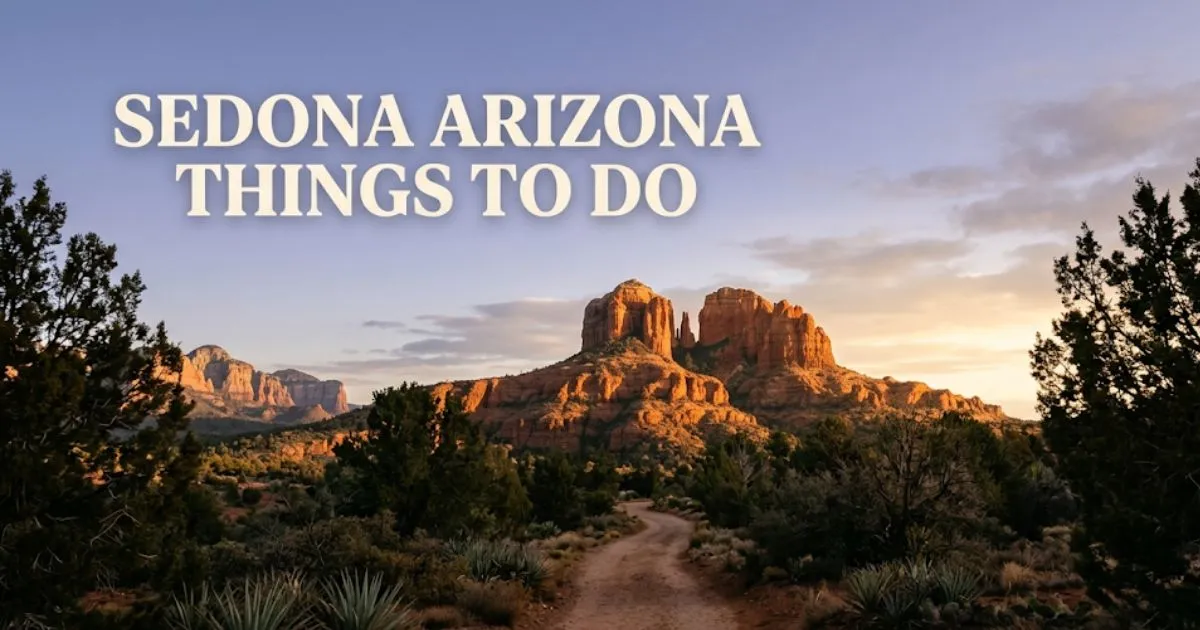
Sedona Arizona Things to Do: The 2026 Travel Guide

Sedona’s most rewarding experiences demand a pre-dawn alarm and a Red Rock Pass. The postcard views you came for are earned, not casually found.
More than three million visitors arrive annually seeking those sandstone formations. Coconino National Forest data confirms trailhead parking at Cathedral Rock often fills before 7 AM in peak months.
This guide covers exactly what to do, how to park, when to go, and what to skip. You will know which trails suit your fitness level and where locals eat away from the Uptown crowds.
sedona arizona things to do
The core Sedona experience is hiking among red rock formations at sunrise, followed by a gallery stroll and a Verde Valley wine tasting in the afternoon.
Your entire trip plan hinges on understanding the parking and shuttle system first. Everything else flows from this logistical reality.
The Sedona Shuttle provides free access to key trailheads from Thursday through Sunday. Driving to those same trailheads on a Saturday morning without a plan means circling for hours.
This itinerary framework places every activity in practical order. It also distinguishes between what first-timers think they should do and what experienced visitors actually prioritize.
| Activity Type | Top Pick | Best For | Cost Range |
|---|---|---|---|
| Hiking | Cathedral Rock Trail | Active couples, solo hikers | Free with pass |
| Scenic Drive | SR 179 from VOC to Uptown | Seniors, families, mobility-limited | Free |
| Arts & Shopping | Tlaquepaque Arts Village | Couples, art collectors | Free to browse |
| Spiritual | Amitabha Stupa | Solo seekers, contemplative travelers | Free |
| Off-Road | Broken Arrow Trail via Pink Jeep | Families with older kids, thrill-seekers | $80-$140 per person |
best things to do in sedona arizona
The best single thing to do in Sedona is the Cathedral Rock Trail hike at sunrise, followed by breakfast at Mesa Grill at Sedona Airport.
Cathedral Rock delivers the most iconic red rock silhouette in the region. The trail is short at just over one mile round-trip but steep, with sections of rock scrambling.
Parking at the Cathedral Rock trailhead on Back O’ Beyond Road is notoriously impossible after 7 AM in high season. Take the free Sedona Shuttle from the park-and-ride on SR 179 instead.
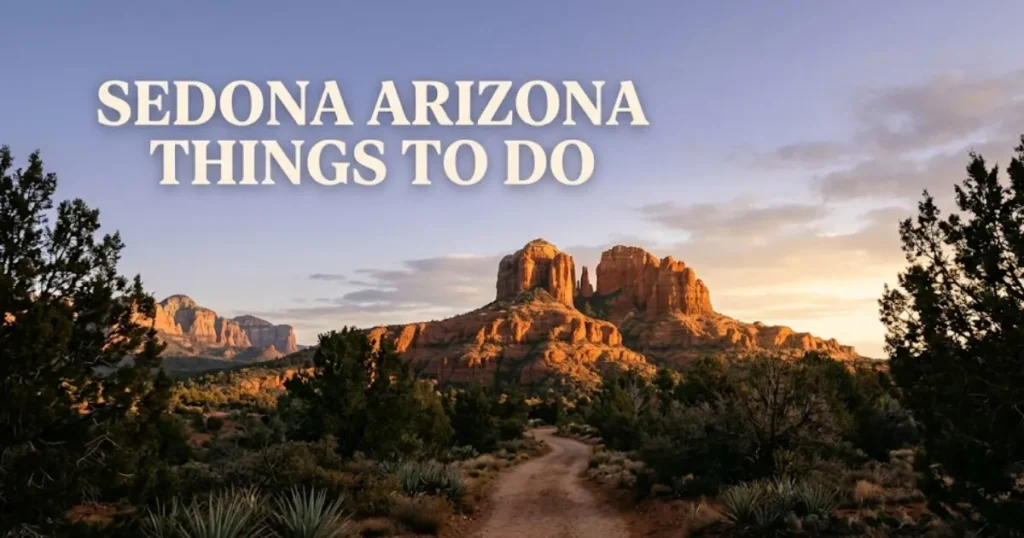
This experience best suits active couples and solo hikers comfortable with uneven terrain and 700 feet of elevation gain. Families with children under eight or anyone with knee issues should choose Bell Rock instead.
October and April are the prime months for Cathedral Rock. Summer monsoons make the slickrock dangerously slippery, and winter ice patches persist on the shaded scramble sections into late morning.
Locals know Buddha Beach at Crescent Moon Picnic Site offers the same Cathedral Rock reflection view across Oak Creek without the vertical climb. The swimming hole there is the real Sedona summer secret.
Key Takeaway: Cathedral Rock at sunrise, then Mesa Grill for the prickly pear mimosa.
top things to do sedona
Three experiences define a top Sedona visit: hiking Devil’s Bridge Trail for the arch photo, watching sunset from Airport Mesa, and exploring Tlaquepaque Arts Village.
Devil’s Bridge is the most photographed natural arch in Sedona. The 4.2-mile round-trip hike is moderate until the final steep scramble to the arch itself.
The Dry Creek Road trailhead fills earlier than any other lot in Sedona, often by 5:30 AM on weekends. Book a Pink Jeep Tour to the trailhead instead, which bypasses the parking problem entirely.
This hike suits families with older children and active travelers. It is a poor choice for seniors with balance concerns or anyone unwilling to queue for the arch photo, which often takes 30 to 45 minutes in peak season.
Spring wildflower blooms in April make Devil’s Bridge spectacular. Avoid this trail entirely during monsoon afternoons from July through September, as the exposed slickrock becomes dangerously wet.
The local alternative is Boynton Canyon Trail, which offers a longer, quieter canyon walk with less social-media-driven crowding. The vortex energy seekers prefer it too, and the trailhead is served by the Sedona Shuttle.
things to do sedona az
Sedona splits into three distinct zones: Uptown Sedona for tourist-facing galleries and shops, West Sedona for local grocery stores and practical services, and the Village of Oak Creek for golf and quiet desert condos.
Uptown is the walkable core. Its sidewalks are crowded, its parking meters are aggressive, and its crystal shops are numerous and repetitive.
West Sedona along 89A is where locals fuel up. Sedona Memories Bakery makes enormous cookies and sandwiches for trail lunches, and it only takes cash.
Village of Oak Creek at the southern end of SR 179 offers a quieter home base. Bell Rock and Courthouse Butte are its backyard trails, and they are less congested than their northern counterparts.
Couples will prefer the ambiance of Uptown strolls and Tlaquepaque. Families will appreciate West Sedona’s grocery stores and the Village’s quieter condo rentals with kitchen facilities.
Solo travelers will find West Sedona’s casual dining scene more welcoming for single diners than Uptown’s high-end date-night restaurants. Elote Cafe in West Sedona is the town’s most recommended restaurant, and its waitlist confirms it.
things to do near sedona az
The Verde Valley Wine Trail in Cottonwood and Clarkdale delivers Arizona’s best wine tasting within a 25-minute drive of Sedona’s traffic.
Old Town Cottonwood is the single best half-day escape from Sedona’s crowds. Its main street features tasting rooms, a vinyl record shop, and the outstanding Pizzeria Bocce.
Merkin Vineyards Tasting Room, owned by Tool frontman Maynard James Keenan, pours Caduceus and Merkin wines in a stylish Old Town Cottonwood space. The gelato counter next door is part of the same operation.
This day trip suits couples and adult groups seeking a break from hiking. It is less compelling for families with children, though Old Town Cottonwood’s pizza spots and open spaces soften that limitation.
The Verde Valley Wine Festival in May transforms Cottonwood into a regional draw. Summer afternoon tastings require heat tolerance, as Old Town sidewalks bake even with misters running.
Avoid the expensive organized wine tours from Sedona. A rideshare to Old Town Cottonwood costs less than one tour ticket, and you set your own tasting room pace.
Insider Tip:
- Merkin Vineyards Osteria in Cottonwood serves a full Italian menu alongside the wines, and it outclasses most Sedona restaurants for lunch.
- Chateau Tumbleweed offers the most creative Arizona blends in a converted Clarkdale garage space.
- Solo travelers will find the tasting bar at Burning Tree Cellars the most convivial counter in Cottonwood.
things to do in sedona arizona
A complete Sedona visit layers together red rock mornings, arts afternoons, and Verde Valley evenings.
Tlaquepaque Arts and Shopping Village is the essential arts destination. Its vine-covered courtyards and mission-style architecture are legitimately beautiful, even if the shopping skews high-end.
Gallery Row along SR 179 in the Sedona Arts Center district features working artists’ studios alongside traditional Southwest galleries. The First Friday Art Walk each month draws locals and repeat visitors.
Sedona’s culinary identity runs from cowboy breakfasts at the Coffee Pot Restaurant to wood-fired fine dining at Mariposa Latin Inspired Grill. Both require planning: Coffee Pot for the cash-only policy, Mariposa for reservations booked weeks ahead.
Families should prioritize Slide Rock State Park in Oak Creek Canyon for natural water slides and wading. The park entrance fee is around $20 per vehicle, and summer weekend parking fills by 10 AM.
Budget travelers will find Sedona expensive for dining and lodging. The free Sedona Shuttle, picnic lunches from Whole Foods in West Sedona, and free access trails are the practical budget strategy.
Seniors will enjoy Tlaquepaque’s shaded benches and the Sedona Trolley narrated tours that cover Uptown and the Chapel without walking miles. The trolley requires advance booking in peak months.
things to do at sedona arizona
The Chapel of the Holy Cross is Sedona’s most visited architectural landmark. The modernist Catholic chapel is built directly into the red rock buttes.
The views from the chapel entrance look south toward Bell Rock and Courthouse Butte. The interior is small and quiet, and visitors typically spend 15 to 20 minutes on site.
Parking is the primary frustration here. The small lot cannot accommodate peak demand, and vehicles queue along Chapel Road on weekends. Arrive at opening time or use a rideshare to skip the line entirely.
This experience suits all traveler profiles equally well, which is rare in Sedona. The chapel entrance is accessible, with a ramp leading from the parking area to the main level.
Summer afternoon visits mean harsh direct sun on the exposed walkway. The chapel itself is air-conditioned and offers a cooling break from the heat.
Locals know the best view of the chapel is actually from the Chapel Trail spur off the Little Horse Trail, not from the crowded tourist overlook. That short hike frames the building against its dramatic geological backdrop.
cool things to do in sedona
The Amitabha Stupa and Peace Park in West Sedona is the cool, quiet counterpoint to Sedona’s crowded vortex tourism circuit.
This Buddhist stupa sits among juniper and piñon pines at the base of Thunder Mountain. Visitors walk the perimeter path clockwise, spin prayer wheels, and sit on benches facing the red cliffs.
The stupa is free to visit and open daily from dawn to dusk. It receives far fewer visitors than the commercially marketed vortex sites, and the atmosphere is genuinely contemplative.
Solo travelers and spiritual seekers will find this the most authentically peaceful spot in Sedona. Families with young children are asked to maintain quiet voices, which limits its suitability for energetic kids.
Sunset at the stupa is exceptionally quiet and beautiful. Morning visits offer cooler temperatures and the softest light on the red rock backdrop.
According to the Amitabha Stupa and Peace Park volunteer caretakers, the site was consecrated by Tibetan Buddhist monks and is maintained entirely by donation. It is not a tourist attraction but a working religious site, and visitors are asked to treat it accordingly.
Key Takeaway: Skip the paid vortex tour and sit at the stupa at sunset instead.
best things to do sedona
A focused best-of Sedona weekend requires brutal honesty about what to skip.
Skip the Uptown crystal shops on your first pass. They are repetitive, and Tlaquepaque offers higher-quality browsing for the same tourist retail category.
Skip Schnebly Hill Road if you value your vehicle’s suspension. This famously rough dirt road ruins rental car tires and shocks, and the view from the top is only marginally better than the paved Airport Mesa overlook.
Prioritize Broken Arrow Trail via Pink Jeep Tour for the genuine off-road experience. This is the tour that built the company’s reputation, and the Road of No Return section is genuinely thrilling.
Couples will love the sunset Sedona Wine and Beer Tour concept done independently: start at Vino di Sedona for an afternoon tasting, then move to Sedona Beer Company for local craft beer and pub food at half the restaurant price.
Budget travelers should note that Pink Jeep tours are expensive, typically $80 to $140 per person. The free Sedona View Trail at the airport delivers comparable panoramic views without any vehicle requirement.
Seniors and mobility-limited travelers will appreciate that the Sedona Airport Overlook is fully accessible by car with dedicated parking and paved viewing areas.
top things to do in sedona arizona
The West Fork Trail in Oak Creek Canyon is Sedona’s top escape from desert heat and summer crowds.
This trail follows Oak Creek through a narrow canyon with towering red walls and ponderosa pines. Thirteen creek crossings keep your feet wet and the experience memorable.
A Red Rock Pass or America the Beautiful Pass is required for parking. The Call of the Canyon day-use area fills early, and the Coconino National Forest gate closes when capacity is reached, often before 9 AM in October.
This hike suits active families with older children, couples, and solo hikers comfortable with water crossings and rocky trail sections. It is not suitable for strollers or those with balance concerns.
October delivers unreal fall color from canyon maples and oaks. Summer offers the coolest hiking temperatures in the Sedona area due to the canyon shade and creek proximity.
Locals hike West Fork on weekday mornings and avoid weekend afternoons entirely. The trail becomes a slow single-file line during peak hours, which defeats the peaceful canyon experience.
| Trail | Difficulty | Parking | Best For |
|---|---|---|---|
| West Fork | Easy | Call of the Canyon lot, fills early | Heat escape, fall color |
| Cathedral Rock | Hard | Shuttle only recommended | Photography, sunrise |
| Bell Rock | Moderate | Courthouse Vista, larger lot | Families, vortex access |
| Devil’s Bridge | Moderate | Dry Creek fills by 5:30 AM | Arch photo, couples |
| Boynton Canyon | Moderate | Shuttle served | Solitude, vortex |
things to do sedona
A practical three-day Sedona itinerary sorts your visit by zone and lighting. Morning light hits Cathedral Rock. Evening light hits Airport Mesa.
Day 1: The Red Rock Core
Start at 6 AM at the Sedona Shuttle park-and-ride for Cathedral Rock. Hike to the saddle, not the summit, for the best photo. Lunch at Tortas de Fuego in West Sedona for enormous Mexican sandwiches. Sunset at Airport Mesa, arriving 90 minutes before sunset for a parking spot.
Day 2: Oak Creek Canyon Day
Drive up 89A through Oak Creek Canyon to the West Fork Trail before 8 AM. Pack water shoes and a lunch. Afternoon wading at Slide Rock State Park. Dinner at Butterfly Burger in Oak Creek for the truffle burger and fries.
Day 3: Arts, Chapel, and Wine
Morning visit to Chapel of the Holy Cross before the tour buses. Brunch at Mesa Grill overlooking the red rocks. Afternoon gallery walk at Tlaquepaque. Evening drive to Cottonwood for Pizzeria Bocce and wine tasting on Main Street.
This itinerary works well for couples and solo travelers. Families should swap Cathedral Rock for Bell Rock on Day 1 and reduce the West Fork distance by turning around after the first two creek crossings.
best things to do in sedona az
Sedona’s best experiences split between active outdoor mornings and curated cultural afternoons. The Palatki Heritage Site represents the best cultural experience most visitors miss entirely.
Palatki and its sister site Honanki preserve Sinagua cliff dwellings and pictographs dating back to 1150 AD. Palatki requires advance reservations made through recreation.gov.
Volunteer rangers lead small-group tours through the cliff dwellings. The experience is intimate and educational, and the red rock alcoves provide natural shade during the hour-long tour.
This experience suits history-interested couples, solo travelers, and families with children old enough to follow preservation rules. The dirt access road is rough but passable for most vehicles without high clearance.
The Palatki sites are closed during winter holidays and require lead-time reservations. Summer monsoon storms can close the access road with short notice.
According to the U.S. Forest Service, Palatki is one of the largest and most accessible Sinagua cliff dwelling sites in the Coconino National Forest. The pictographs include some of the best-preserved examples in the Southwest.
Key Takeaway: Palatki requires a reservation and delivers more cultural depth than any Uptown experience.
sedona top things to do
The definitive top experience list centers on one rule: do outdoor things in morning light and indoor things in midday heat.
Bell Rock is the most accessible vortex experience and the best Sedona hike for families and seniors. The Courthouse Vista parking lot is larger than most trailhead lots, and the trail is a choose-your-own-adventure scramble without a single required route.
Red Rock State Park offers the best nature center and ranger-led programming in the area. Its trails are less dramatic than the national forest trails, but the interpretive signage and bird watching along Oak Creek are excellent.
The Sedona International Film Festival in late February transforms the town into a cinephile destination. Individual tickets and festival passes sell months in advance.
Budget travelers should know that Red Rock State Park has a per-person entry fee around $7, separate from the Red Rock Pass. The nature center and restrooms make it worth the cost for a family day.
Seniors will appreciate Red Rock State Park’s accessible visitor center and shorter, flatter trails along the creek. The Bunkhouse Trail is wheelchair-accessible and offers genuine riparian habitat viewing.
Safety and Practical Warnings for Sedona
Sedona’s primary danger is casual visitors underestimating trail difficulty, heat, and monsoon flooding.
Key safety facts every visitor must know:
- Flash floods in Oak Creek Canyon and dry washes are deadly and fast-moving. Never enter a flooded wash or creek crossing. Check the National Weather Service flash flood risk before any canyon hike from July through September.
- Summer heat reaches 100 degrees by midday. All desert hiking must finish by 11 AM. Carry one liter of water per person per hour of hiking, and do not rely on cell service for emergencies. Most Sedona trails have zero signal.
- Trailhead parking on weekends requires arrival before sunrise. This is not an exaggeration. Devil’s Bridge, Cathedral Rock, and West Fork lots are full by 6 AM during peak season.
- Rock scrambling on Cathedral Rock and Devil’s Bridge is genuinely dangerous when wet. Do not attempt these trails during or after rain. The slickrock becomes tractionless.
- Sedona sits at 4,350 feet elevation. Altitude sickness symptoms include headache and nausea. Hydrate heavily the day before your first hike and limit alcohol on arrival day.
In an emergency on federal land, dial 911 and request Coconino County Search and Rescue. The Yavapai County Sheriff’s Office handles the Verde Valley side. Carry a personal locator beacon or satellite messenger for backcountry hikes.
Frequently Asked Questions About Sedona
What is the best time of year to visit Sedona?
March through May and September through November offer comfortable hiking temperatures and clear skies.
Spring brings wildflowers, while October delivers cottonwood and oak color along Oak Creek.
Avoid June through August for heat and monsoon risk, and Christmas week for traffic gridlock.
Do I need a pass to park at Sedona trailheads?
Yes, a Red Rock Pass or America the Beautiful Pass is required at most Coconino National Forest trailheads.
Red Rock Passes cost around $5 daily or $15 weekly from vending machines at trailheads and the Sedona Chamber.
The Sedona Shuttle is free and eliminates the need for trailhead parking at Cathedral Rock, Boynton Canyon, and Dry Creek.
Is Sedona worth visiting if I don’t hike?
Yes, scenic drives along SR 179 and 89A, the Chapel of the Holy Cross, and Tlaquepaque offer rewarding non-hiking experiences.
Sedona Airport Overlook and Red Rock State Park provide accessible red rock views.
The Verde Valley Wine Trail in Cottonwood is a short drive and requires no hiking at all.
How many days do you need in Sedona?
Three full days is the practical minimum for a first visit.
One day for core red rock hiking, one for Oak Creek Canyon, and one for arts, culture, and wine.
A longer five-day visit allows adding a Grand Canyon day trip and Palatki Heritage Site.
What should I do in Sedona with kids?
Bell Rock and Slide Rock State Park are the best family-friendly activities in Sedona.
Bell Rock offers choose-your-own scrambling without a steep mandatory route.
Slide Rock provides natural creek wading and slippery rock slides that children genuinely love.
Are the vortexes in Sedona real?
Sedona’s vortex sites are locations where many visitors report feeling concentrated earth energy or spiritual resonance.
The U.S. Forest Service does not officially recognize vortex energy as a scientific phenomenon.
Airport Mesa and Bell Rock are the most accessible vortex sites for self-guided exploration.
Sedona rewards the prepared. Book your Red Rock Pass, set a pre-dawn alarm, and board the free shuttle to the trailhead your first morning.
The difference between a frustrating Sedona trip and an extraordinary one is almost always the parking and timing strategy. Those who sleep in circle trailhead lots while those who rise early stand alone on Cathedral Rock at sunrise.
Trail conditions, shuttle schedules, and pass prices shift. Verify current logistics with the Coconino National Forest Red Rock Ranger District and Sedona Chamber of Commerce websites just before departure.
You now know exactly what to do and what to skip. The red rocks are waiting, and the shuttle leaves before the sun comes up.