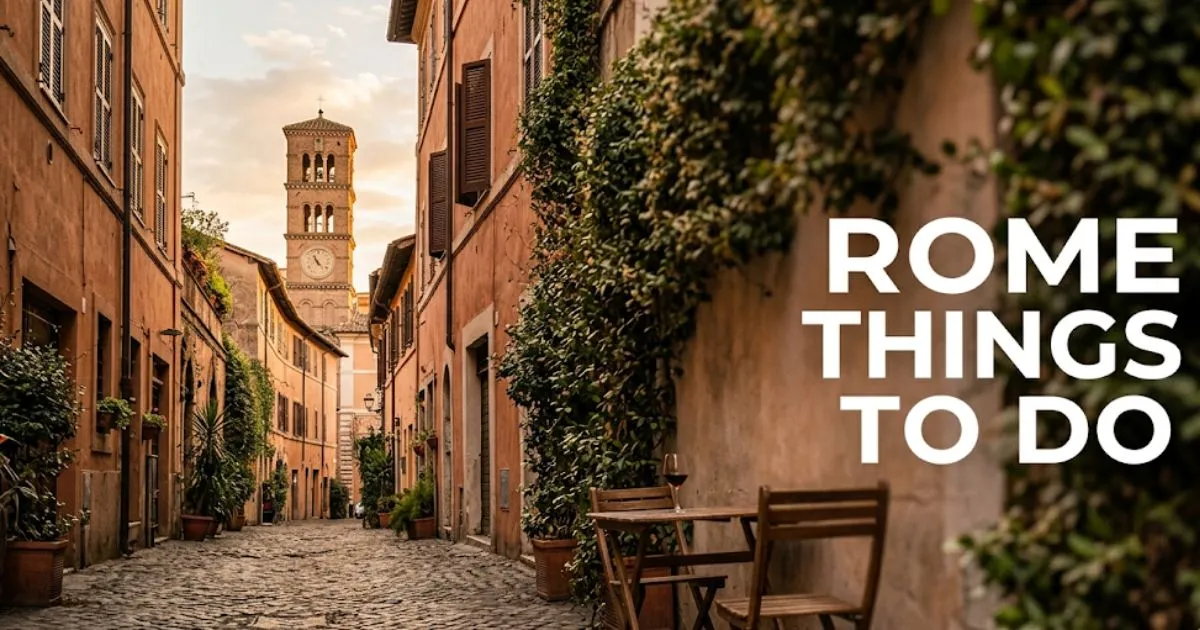
Rome Things to Do in 2026: A Local-Informed Guide

Rome in 2026 rewards travelers who book ahead and explore beyond the obvious list.
The Colosseum is essential, but the real Rome lives in a Testaccio market stall or a Monti side street at dusk.
Over 10 million visitors passed through Rome in 2024, and the Jubilee year of 2025 will reshape visitor patterns well into 2026.
This guide covers exactly what to prioritize, how to book it, and what to skip.
I will walk you through specific neighborhoods, honest crowd realities, and the local alternatives that experienced repeat visitors choose over the tourist-packed main attractions.
Rome Things to Do
Your Rome trip needs a clear strategy built around advance bookings and neighborhood pairings.
The city splits into distinct zones, each with a different rhythm and reward.
The historic center holds the marquee ancient and Renaissance sites. Trastevere, Monti, and Testaccio hold the living city.
Start with the Colosseum and Vatican, then move to the neighborhoods where the pace slows and the food gets better.
The single most useful thing you can do before arriving is book timed-entry tickets for the Colosseum, Vatican Museums, and Borghese Gallery.
Without them, you will spend hours in lines in the sun. The official booking platform for the Colosseum is Coopculture.
For the Vatican, use the Musei Vaticani official site. Third-party resellers charge more but sometimes have availability when official channels are sold out.
Solo travelers should plan a mix of booked attractions and unstructured neighborhood walking.
Families with children under 10 should limit scheduled sites to one major attraction per day.
Couples will find the best version of Rome in the evening hours when the day-trippers leave and the piazzas soften.
Budget travelers should load up on the free experiences: the Pantheon, every piazza from Navona to Santa Maria in Trastevere, and the Appian Way.
Rome is not a city you can do completely on a budget without careful planning. Accommodation and dining add up fast.
Rome rewards slowing down and treating neighborhoods as destinations, not corridors between landmarks.
Key Takeaway: Book Colosseum and Vatican timed-entry tickets before your flight, then build your neighborhood exploring days around those fixed times.
Best Things to Do in Rome
The best things in Rome are the ones that match your travel style, not someone else’s checklist.
The Colosseum is the obvious starting point. Book the “Full Experience” ticket that includes the underground hypogeum and the arena floor.
The standard entry ticket only gets you to the upper levels and feels incomplete.
The underground tour puts you where gladiators waited and animals were caged. It changes how you see the entire structure.
Allow at least 90 minutes for the Colosseum alone. Morning slots before 10:00 AM are coolest and least crowded.
The Vatican Museums require their own strategy. The Sistine Chapel is at the end of the museum route.
You cannot skip the long walk through the galleries to reach it. Budget three hours minimum for the full route.
Early morning entry tickets let you in before general opening. These are worth the higher cost if you want a less packed Sistine Chapel experience.
Families with young children will find the Vatican Museums route exhausting with few places to sit. Consider the shorter “Highlights Tour” version if available.
Seniors should request the accessible route at the information desk, which shortens the walk but still hits the essential stops.
For an underrated alternative to the Vatican Museums’ crowds, visit the Basilica of San Clemente near the Colosseum.
It is a layered church where you descend through a 12th-century basilica into a 4th-century church, and then into a 1st-century Roman street and Mithraic temple.
There are no long lines. The descent into the Roman street level is cooler on hot days and genuinely haunting.
| Attraction | Best For | Cost Range | Booking Lead Time |
|---|---|---|---|
| Colosseum Full Experience | History enthusiasts, solo travelers | €24-32 | 30 days advance |
| Vatican Museums Early Entry | Art lovers, couples | €40-50 | 60 days advance |
| Basilica of San Clemente | History buffs, families with older kids | €10 | Same-day possible |
| Borghese Gallery | Art enthusiasts, couples | €15-20 | 10 days advance |
According to Coopculture, the official Colosseum ticketing authority, timed-entry slots for the underground tour sell out within hours of release during high season.
Check the site exactly 30 days before your planned visit date and book at midnight Rome time.
Solo travelers will appreciate that the Colosseum is easy to navigate alone with clear signage and plenty of space.
Couples should book the late afternoon Colosseum slot and then walk up to the Forum overlook at golden hour.
Seniors should know there are elevators at the Colosseum but the Forum and Palatine Hill involve uneven walking surfaces.
Key Takeaway: Skip the standard Colosseum ticket and get the underground access version, then visit San Clemente instead of a second major archaeological site.
Top 10 Things to Do in Rome
This is a top-10 list built for real trip planning, not for a tourism brochure.
Each entry includes who it genuinely works for and what the booking reality looks like in 2026.
1. Colosseum Underground and Arena Floor
Book the Full Experience ticket 30 days ahead. Morning slots beat the heat. Budget 90 minutes.
2. Vatican Museums and Sistine Chapel
Book early entry tickets 60 days ahead. The route is long and physically demanding. Three hours minimum.
3. Pantheon at Opening Time
Arrive at 8:55 AM. The doors open at 9:00. You get ten minutes of near-silence inside the most intact ancient Roman structure anywhere.
4. Borghese Gallery
Tickets release in two-hour blocks. Book 10 days ahead. The Bernini sculptures alone are worth the entire trip for art lovers.
5. Trastevere Evening Passeggiata
Start at Piazza di Santa Maria at 6:00 PM. Walk toward Piazza Trilussa. Stop at a bar with outdoor seating for an aperitivo. No booking needed.
6. Appian Way by Bike on Sunday
The Appian Way closes to cars on Sundays. Rent a bike near the Catacombs of San Callisto and ride the ancient stone road.
7. Testaccio Market Lunch
Go to the box at Mordi e Vai for a braised beef sandwich. Eat it standing at the counter. This is Rome’s most genuine food market.
8. Capitoline Museums Late Entry
The Capitoline Museums stay open late on certain days. Fewer crowds, cooler temperatures, and a terrace overlooking the Forum at sunset.
9. Basilica of San Clemente Descent
Three layers of history in one building. No lines. Cool underground air. A perfect midday stop.
10. Aventine Keyhole
Walk up the Aventine Hill to the Knights of Malta priory gate. Look through the keyhole for a perfect framed view of St. Peter’s dome.
Rome’s top 10 is not about checking boxes fast. It is about picking the experiences that fit your pace.
Solo travelers can move quickly through this list. Families should pick five and build in long lunch breaks.
Couples should prioritize the evening experiences: Trastevere, Capitoline late entry, and the Aventine Keyhole at dusk.
Seniors should note that the Vatican route and Palatine Hill walking are the most physically demanding on this list.
Budget travelers can skip the paid Forum entry and instead walk Via dei Fori Imperiali for sweeping free views of the ruins from above.
According to the Comune di Roma tourism office, the Aventine Keyhole remains free and publicly accessible, though small lines form at sunset.
Key Takeaway: Choose five items from this list that match your pace, book the three that need advance tickets, and leave the rest of your days open for neighborhoods and food.
Things to Do in Italy Rome
Understanding Rome means understanding it as part of a broader Italian trip context.
Rome is not a quick stop between Florence and the Amalfi Coast.
It demands its own dedicated window of three to four full days minimum.
If you are building a broader Italy itinerary, position Rome first for ancient history and chaotic energy.
Follow it with Florence for Renaissance art and walkable order, then a coastal or countryside stop for decompression.
The Rome-to-Florence high-speed train takes 90 minutes from Termini Station.
Book train tickets on Trenitalia or Italo directly. Third-party booking sites add fees and obscure the actual ticket terms.
Within Rome, the metro system is limited compared to other European capitals.
Metro Line A runs from Termini to the Vatican area. Metro Line B serves the Colosseum.
Most of the historic center requires walking between sites. The bus network fills gaps but is slow in traffic.
Solo travelers will find Rome’s chaos manageable once they accept that punctuality is approximate and dinner starts at 8:00 PM.
Families coming from other Italian stops should budget Rome as the most physically demanding leg of their trip.
Couples doing a multi-city Italian journey should save one romantic dinner budget for a rooftop terrace in Rome’s historic center.
The view from the Hotel Raphael rooftop near Piazza Navona at sunset is the kind of cityscape that justifies Rome’s premium pricing.
Budget travelers should know that Rome’s accommodation costs are the highest in Italy alongside Venice.
Book lodging in the Monti or Trastevere neighborhoods rather than the Spanish Steps area to save 30% to 40% on nightly rates.
Rome is the loudest, most crowded, and most extraordinary Italian city.
Place it strategically in your broader itinerary and give it the full attention it needs.
Key Takeaway: Give Rome three full days minimum, stay in Monti or Trastevere to save money, and use high-speed rail to connect to Florence when you are ready for a slower pace.
10 Things to Do in Rome
Here are 10 specific, actionable Rome experiences with exact timing and booking guidance for 2026.
1. Colosseum Underground Tour at 9:00 AM
Book the Full Experience ticket through Coopculture exactly 30 days before. Cooler air, lower crowds, better photos.
2. Vatican Museums Early Entry at 7:45 AM
Enter before general public. Walk fast through the galleries. Spend 15 quiet minutes in the Sistine Chapel before the crowd fills it.
3. Pantheon at 9:00 AM
The doors open and you walk into the rotunda while the first light hits the oculus. Ten minutes of near-solitude in an ancient Roman temple.
4. Roscioli Salumeria Lunch at Noon
Sit at the bar. Order carbonara and a glass of wine. This is Rome’s most famous deli-restaurant hybrid. Book a counter seat weeks in advance.
5. Borghese Gallery 3:00 PM Slot
Two hours of Bernini sculptures and Caravaggio paintings. This timed-entry system means the galleries are never packed. Book 10 days ahead.
6. Trastevere Evening Walk at 6:00 PM
Start at Santa Maria in Trastevere. Walk through the alleys. Stop at Bar San Calisto for a cheap beer among locals who have been coming here for decades.
7. Appian Way Bike Ride Sunday Morning
The ancient road closes to cars. Rent a bike at the Catacombs of San Callisto entrance. Ride past cypress trees and Roman tombs.
8. Testaccio Market Lunch on a Weekday
Skip the weekend crowd. Go to Mordi e Vai for a bollito sandwich. Then Da Felice for supplì. Eat standing up like a local.
9. Capitoline Museums at 5:00 PM
Check late-opening days. The museum empties out. The terrace cafe overlooks the Forum at sunset. The view alone justifies the ticket.
10. Aventine Hill Keyhole at Dusk
Walk up the quiet Aventine. Look through the bronze keyhole. A perfect framed St. Peter’s dome sits at the end of a garden avenue. Free. Unforgettable.
Each of these 10 experiences is time-boxed for a reason. Rome rewards those who arrive early or stay late.
Budget travelers can do six of these for under €30 total in entry fees. The free experiences here are among the best in the city.
Seniors should prioritize the Pantheon, Borghese Gallery, and Capitoline Museums. These are climate-controlled or shaded with seating available.
Families will find the Appian Way bike ride and Testaccio Market lunch the most relaxed and kid-friendly on this list.
Key Takeaway: Build your days around early mornings for major sites, late afternoons for museums, and evenings for neighborhoods and food.
Things to See and Do in Rome
Rome’s visual and experiential density is unmatched. You turn a corner expecting a wall and find a 2,000-year-old temple instead.
The Trevi Fountain is the city’s most photographed water feature. It is also the most predictably packed.
Go at 6:30 AM if you want a photo without a crowd. By 9:00 AM, the piazza is shoulder-to-shoulder.
The coin-toss tradition is charming. The elbow-to-elbow reality of the approach ramp is not.
For a fountain experience with breathing room, walk to the Fontana dell’Acqua Paola on the Janiculum Hill.
It is a massive Baroque fountain with a panoramic terrace behind it overlooking the entire city. Locals come here at sunset. Tourists barely do.
The Spanish Steps are a staircase. They are a beautiful staircase with a Bernini fountain at the base.
They are also just stairs. If you are not shopping on Via Condotti, you do not need to dedicate time here.
The real view is from the top at Trinità dei Monti church looking west over the rooftops at dusk.
The Roman Forum is essential Roman history but brutally hot in summer with zero shade.
Go at 8:30 AM in summer or 3:00 PM in shoulder season. Bring water. There are few working fountains inside.
Solo travelers should not miss the Forum, but should book a guided tour or at minimum download a good audio guide.
The stones and columns do not self-explain, and the signage is minimal.
Couples should walk the Forum at the end of the day and then exit onto Via dei Fori Imperiali as the lights come on.
Families with young children will find the Forum rough terrain and hard to narrate. Consider the Colosseum plus San Clemente instead.
The Palatine Hill offers the best Forum views from above and has more shade than the Forum floor.
Budget travelers should note that the Colosseum, Forum, and Palatine Hill are on a single combination ticket.
If you only have time for one, pick the Colosseum underground tour and walk Via dei Fori Imperiali for Forum views from above for free.
According to the Parco Archeologico del Colosseo, the combined ticket is valid for 24 hours from first use, giving you a full day to spread out the visits.
Key Takeaway: See the Trevi Fountain at dawn or skip it, do the Forum early or late to avoid heatstroke, and save the Janiculum Hill overlook for a quieter Roman panorama.
Fun Things to Do in Rome
Rome’s fun side lives in its food culture, its evening rhythm, and its willingness to let you do nothing in a beautiful piazza.
A food tour in Testaccio is the single most fun structured activity in Rome.
The neighborhood is Rome’s working-class culinary heart. Eating Europe and Devour Tours run excellent small-group walks through the market and surrounding bakeries.
You will eat supplì, porchetta, pecorino, and gelato while understanding why Roman food culture is so fiercely protected by locals.
An aperitivo crawl in Trastevere is the best unstructured evening activity.
Start at Freni e Frizioni for a cocktail on the piazza. Move to Bar San Calisto for a cheap beer.
End at Ma Che Siete Venuti a Fà for craft beer if that is your thing. Do this on a Thursday evening when Romans are out.
Cooking classes are widely advertised and vary wildly in quality.
Book through Cooking Classes in Rome or directly with Latteria Studio in Trastevere.
The good ones teach you how to make fresh pasta and a proper amatriciana sauce, then you eat what you made with wine.
Avoid the large-group classes near the Vatican. They are assembly-line operations designed for tour bus groups.
Solo travelers will find food tours and cooking classes the easiest ways to meet other travelers.
Couples should book a private class or a small-group evening tour and treat it as a date night.
Families with children over 10 will find a morning market tour and cooking class a highlight of the trip.
Budget travelers should skip the organized tours and build their own food crawl through Testaccio Market.
The sandwich at Mordi e Vai costs a few euros. The gelato at Gelateria dei Gracchi is among Rome’s best. The market itself is free to wander.
Rome does not have a big organized nightlife scene like Berlin or Barcelona.
Its fun is in the dinner table that lingers for three hours, the unplanned piazza concert, the late-night gelato walk.
Key Takeaway: Book a Testaccio food tour for structured fun, then do Trastevere’s aperitivo circuit on your own for a genuine Roman evening out.
Top Things to Do in Rome Italy
Rome’s top-tier experiences are not just the landmarks. They are the seamless blend of landmark and lifestyle.
The Pantheon is the city’s best attraction because it requires no advance booking, costs little, and delivers an intact 2,000-year-old Roman temple.
Go at opening. Stand under the oculus. If it rains, watch the water fall through the hole in the ceiling and drain through the ancient floor grates.
Borghese Gallery is the top art experience for travelers who find the Vatican Museums overwhelming.
It is a villa in a park with a contained two-hour visit and some of the best Bernini sculptures in existence.
The Appian Way is the top outdoor escape from the city without leaving city limits.
Walk or bike the ancient basalt road. Visit the Catacombs of San Callisto. Picnic in the shade of an umbrella pine.
Trastevere’s evening scene is the top atmospheric experience.
The neighborhood is discovered but not ruined. Side streets west of Viale Trastevere still hold family-run trattorias where the menu is written in Roman dialect.
Testaccio’s food culture is the top culinary experience.
This is not a pretty neighborhood. It is a real one. The market, the trattorias, and the lack of souvenir shops tell you everything.
Rome’s top things are about depth, not breadth. Pick three of these top experiences and build the rest of your trip around eating and walking.
According to the Italian National Tourist Board (ENIT), Rome’s annual visitor numbers in 2026 are expected to remain elevated following the Jubilee year, with some restoration projects continuing into early 2026.
Check specific monument websites for scaffolding or closure updates before your trip.
Solo travelers should use the Borghese Gallery and the Appian Way as their decompression zones from the city’s intensity.
Families should treat the Pantheon as a quick, cool, awe-inspiring 20-minute stop that children actually enjoy.
Budget travelers can do the Pantheon for cheap, the Appian Way for free, and Trastevere’s piazzas for the cost of a gelato.
Key Takeaway: The Pantheon, Borghese Gallery, and Appian Way are Rome’s top-tier experiences that offer genuine quality without the crushing density of the Colosseum or Vatican.
Things to Do in Rome Today
Spontaneous Rome exists. You just need to know where it lives.
Morning spontaneous options: The Pantheon opens at 9:00 AM and rarely has a line longer than 20 minutes.
The Campo de’ Fiori market runs every morning except Sunday. Buy a slice of pizza bianca from Forno Campo de’ Fiori and eat it standing in the piazza.
The Capitoline Museums can be entered on the same day with no advance ticket. The terrace cafe has one of Rome’s best views.
Midday spontaneous options: The Basilica of San Clemente takes walk-ins all day.
The Jewish Ghetto is a compact walkable quarter with Roman Jewish food unlike anything else in the city. Nonna Betta does a remarkable carciofo alla giudia.
Afternoon spontaneous options: Walk the Borghese Gardens above Piazza del Popolo. Rent a rowboat on the small lake. Nothing needs a ticket.
The Aventine Hill walk is free, quiet, and ends at the keyhole and the Giardino degli Aranci with a stunning terrace view.
Evening spontaneous options: The Trastevere passeggiata requires no planning. The Monti neighborhood near the Colosseum fills with aperitivo bars on Via Urbana.
Rome’s “today” availability is better than most guidebooks suggest. You just have to aim for neighborhoods and atmosphere, not the marquee ticket attractions.
Solo travelers can fill a spontaneous day beautifully with this lineup.
Families can do the market, the Borghese Gardens rowboats, and the Aventine walk without any advance booking.
Budget travelers will find the free and same-day cheap options here cover a rich, full Roman day.
The city’s walkability is your spontaneous travel asset. Rome is a pedestrian city with a metro backbone.
You can pivot your entire day on a whim if you stick to neighborhoods rather than scheduled attractions.
Key Takeaway: Rome is surprisingly spontaneous if you aim for the Pantheon, Campo de’ Fiori, San Clemente, Borghese Gardens, and the Aventine Hill instead of the Colosseum and Vatican.
Best Things to Do in Rome Italy
The truly best experiences in Rome combine historic significance with manageable logistics and genuine local culture.
Here is a tighter, more curated version of the absolute best for 2026:
For ancient wonder: Colosseum underground tour plus Basilica of San Clemente. One is the grandest ruin. The other is the most intimate archaeological descent.
For art: Borghese Gallery over the Vatican Museums if you prefer uncrowded rooms and Bernini’s most emotional sculptures.
For atmosphere: Trastevere from 5:00 PM onward. Start at Santa Maria in Trastevere. End at a side-street trattoria with no English menu.
For food: Testaccio Market for lunch, then a reservation at Flavio al Velavevodetto for dinner. This restaurant is built into the Monte Testaccio, a hill made of ancient Roman amphorae shards.
For escape: The Appian Way by bike on a Sunday morning. The ancient road surface is rough. The quiet is total.
For a view: Janiculum Hill at sunset. Locals come here. Tour buses cannot fit. The panorama spans the entire city with St. Peter’s dome at center.
According to TripAdvisor’s Rome forums, the most common regret expressed by first-time visitors is spending too much time in lines and not enough in neighborhoods.
Build your itinerary around two booked attractions per day maximum. Leave the rest open.
Solo travelers will find the curated list here covers the essentials without overwhelming.
Couples should shift the balance toward evening atmosphere and food over packed daytime attractions.
Families should replace the Vatican with the Borghese Gallery for a more manageable art experience with children.
Budget travelers can do the Appian Way, Janiculum Hill, and Trastevere on almost zero euros.
The real Rome is not a sequence of ticket booths. It is the long lunch, the gelato walk, and the discovery of a piazza you were not looking for.
Key Takeaway: Book two major attractions per day maximum and leave the rest of your time for Rome’s free, walkable, neighborhood-level experiences.
Top Ten Things to Do in Rome
This is a ranking that privileges experience quality over landmark fame.
It reflects what a knowledgeable Roman itinerary actually looks like.
- Colosseum Underground Tour — Book 30 days ahead. Morning slot. Full Experience ticket.
- Trastevere Evening — No booking. Start at 6:00 PM. End at a trattoria on a side street.
- Borghese Gallery — Book 10 days ahead. Two-hour slot. Bernini’s Apollo and Daphne is here.
- Pantheon at Opening — 9:00 AM. No booking needed for entry. Pay at the door. Stand under the oculus.
- Testaccio Market Lunch — Weekday morning. Mordi e Vai sandwich. Da Felice supplì.
- Appian Way Sunday Bike Ride — Car-free Sundays. Rent a bike. Visit the Catacombs.
- Basilica of San Clemente — Walk in. Descend through three historical layers. Cool underground air.
- Capitoline Museums Late Entry — Check late-opening days. Sunset terrace over the Forum.
- Janiculum Hill Sunset — Free. Panoramic city view. Puppet theater nearby for children.
- Jewish Ghetto Walk and Lunch — Nonna Betta for carciofo alla giudia. Compact, atmospheric quarter.
This ranking deprioritizes the Vatican Museums only because of crowd density and physical demand.
If art is your primary reason for visiting Rome, slot the Vatican early-entry tour at number three and adjust accordingly.
Budget travelers can do six of these ten for under €30 total.
Seniors should know that the Janiculum Hill walk is uphill but gradual, and the Capitoline Museums have good elevator access.
Families will find the Appian Way bike ride and Testaccio Market the most relaxed and engaging for children.
Key Takeaway: This top-ten ranking values authentic neighborhood evenings and intimate historical experiences over packed, timed-entry marathon days.
10 Best Things to Do in Rome
The “10 best” frame is useful for decision-making. Here is the 2026 version with precise booking windows and crowd avoidance built in.
| Ranking | Experience | Booking Window | Crowd Level |
|---|---|---|---|
| 1 | Colosseum Underground | 30 days ahead | Moderate with timed entry |
| 2 | Borghese Gallery | 10 days ahead | Low by design |
| 3 | Pantheon at 9:00 AM | Walk-in | Low at opening |
| 4 | Trastevere Evening | None | Moderate |
| 5 | Testaccio Market Lunch | None | Low on weekdays |
| 6 | Appian Way Bike Ride | None | Low |
| 7 | Basilica of San Clemente | Walk-in | Low |
| 8 | Capitoline Museums Late | Same-day possible | Low in evenings |
| 9 | Janiculum Hill Sunset | None | Low |
| 10 | Vatican Early Entry | 60 days ahead | Moderate with early entry |
The key insight here is that only three of the ten best experiences require advance booking.
Five of the ten are walk-in or free.
Rome’s best experiences are not gated behind ticket windows.
They are gated behind knowing which neighborhood to be in when the light gets golden and the aperitivo hour begins.
Solo travelers can use this list as a flexible framework without the pressure of a packed schedule.
Couples should prioritize the evening-heavy items and the Borghese Gallery for a romantic, art-filled trip.
Families should swap the Vatican for the Capitoline Museums if the early entry logistics feel too rigid.
Budget travelers can drop the Colosseum underground tour and do the standard entry plus the free Forum overlook instead.
The 10 best things to do in Rome is a starting point, not a rigid agenda.
Key Takeaway: Only three of the ten best Rome experiences need advance tickets. The rest are walk-in or free neighborhood-level discoveries.
Things to Do and See in Rome
Rome’s “and see” dimension is about the visual spectacle of the city itself, not just the interior attractions.
The Vittoriano monument in Piazza Venezia is widely disliked by Romans for its oversized white marble aesthetic.
The rooftop terrace, however, has a 360-degree view of the city that requires a ticket but no long queue.
Take the glass elevator up for a panorama that puts the Forum, Colosseum, and St. Peter’s in a single frame.
Piazza Navona is a Baroque masterpiece and a tourist gauntlet of overpriced restaurants.
See the Bernini fountain. Admire Borromini’s church facade. Then walk two blocks north to eat anywhere else.
Via dei Coronari is a pedestrian antique-dealer street parallel to the chaos of Corso Vittorio Emanuele.
It connects Piazza Navona to the Tiber and feels like a different century.
The Protestant Cemetery in Testaccio is a quiet, green space where Keats and Shelley are buried.
The cats that live here are famously cared for. The pyramids of the Pyramid of Cestius rise next door.
This is a Roman corner that feels entirely removed from the Baroque and ancient center.
Palazzo Doria Pamphilj on Via del Corso is a lived-in noble palace with a Velázquez portrait of Pope Innocent X in a gallery that is rarely crowded.
It is open for walk-in visits and is one of Rome’s most overlooked art collections.
Solo travelers will find the Protestant Cemetery and Palazzo Doria Pamphilj to be restorative quiet zones.
Couples should walk Via dei Coronari at dusk. The antique shop windows glow.
Families will appreciate the Vittoriano elevator ride as a quick, visual payoff without a long museum route.
Budget travelers should note that Palazzo Doria Pamphilj is cheaper than the major museums and requires no advance booking.
Rome’s visual spectacle is everywhere and mostly free.
The trick is stepping one block away from the main tourist artery.
Key Takeaway: See Piazza Navona for the fountain, then leave immediately for Via dei Coronari, Palazzo Doria Pamphilj, or the Protestant Cemetery for a richer, quieter Roman afternoon.
Best Neighborhoods to Explore in Rome
Rome is a city of distinct neighborhoods, each with a different pace and purpose.
Trastevere is the postcard neighborhood. The alleywest of Viale Trastevere still hold genuine Roman life.
The east side near the river is tourist-heavy but still beautiful. Stay west of Piazza di Santa Maria for a calmer experience.
Monti is the neighborhood closest to the Colosseum with a local, lived-in feel.
Via Urbana has aperitivo bars, vintage shops, and a younger Roman crowd.
It is walkable to the Forum and Colosseum but feels entirely residential after dark.
Testaccio is the food neighborhood. No major monuments.
Just the market, the pyramid, the Protestant Cemetery, and some of Rome’s best trattorias.
Stay here if you want to eat well and see how Romans actually live.
Prati is the residential district near the Vatican. Wide boulevards, fewer tourists, excellent shopping and dining.
It is more orderly than the historic center and a good base for families who want space and calm.
Centro Storico is the historic core around Piazza Navona and the Pantheon.
Staying here puts you in the middle of everything. It also puts you in the middle of the highest prices and the worst restaurant value in the city.
It is beautiful but requires a strategy for finding good food that is not priced for tourists.
Aventino is the quiet, residential hill south of the Circus Maximus.
It is calm, green, and has the keyhole and orange garden. Few tourists stay here. It feels like a Roman village.
| Neighborhood | Best For | Vibe | Dining Quality |
|---|---|---|---|
| Trastevere | Couples, solo travelers | Lively, romantic | High, but check side streets |
| Monti | Solo travelers, budget | Young, local | Good aperitivo scene |
| Testaccio | Food travelers, locals vibe | Working-class, real | Excellent |
| Prati | Families, seniors | Orderly, calm | Good, less touristy |
| Centro Storico | First-timers | Beautiful, chaotic | High risk of tourist traps |
| Aventino | Couples, seniors | Quiet, green | Limited but good |
According to the Comune di Roma, the city’s official tourism portal provides neighborhood-specific walking guides and event calendars updated monthly.
Check before your trip to catch local festivals or market days in your chosen neighborhood.
Solo travelers should base in Monti or Trastevere for social energy and easy access to evening activity.
Families should look at Prati for space, calm, and proximity to the Vatican without the Centro Storico chaos.
Budget travelers should avoid Centro Storico hotels and look in Monti or eastern Trastevere for better value.
The neighborhood you stay in shapes your Rome experience more than any single attraction.
Key Takeaway: Stay in Monti or Trastevere for a genuine, walkable Rome base. Avoid Centro Storico hotels unless budget is no concern and you want the postcard outside your door.
How to Avoid Crowds at Rome Attractions
Crowd avoidance in Rome requires timing, not luck.
The primary strategy is booking early morning timed-entry slots for every major attraction.
The Colosseum opens at 8:30 AM. Book the 8:30 or 9:00 AM slot. By 10:30 AM, the entry plaza is packed.
The Vatican Museums early entry at 7:45 AM is worth the higher price. You enter before the general crowd.
You walk the galleries in relative quiet. You reach the Sistine Chapel with fewer than 50 people inside if you move fast.
The Pantheon opens at 9:00 AM. The line forms at 8:45 AM. Arrive then and you are inside within ten minutes of opening.
By 10:30 AM, the line can stretch around the piazza.
The Trevi Fountain is a crowd nightmare by 9:00 AM. Go at 6:30 AM or not at all.
The Spanish Steps are quieter at 8:00 AM and pleasant. After 10:00 AM, they are a seated crowd.
The Borghese Gallery limits entry by design. Book your two-hour slot and the crowd is never an issue.
Off-season travel is the other major crowd avoidance lever.
November through February sees far fewer visitors. January and February are the quietest months with the lowest hotel rates.
The trade-off is colder weather and earlier sunsets. Rome in January is mild by Northern European standards but still chilly.
Restoration scaffolding is more common in the low season, and some outdoor sites have reduced hours.
Post-Jubilee 2025, expect some infrastructure from the Holy Year to remain in place into early 2026.
Check official attraction websites for specific access notes.
Solo travelers can move faster through crowds and fill canceled reservation slots.
Families should book the earliest available slots and finish major sites before lunch.
Seniors should use the accessibility entrances where available and avoid peak midday heat.
Key Takeaway: Book early morning slots, travel in November or February if possible, and check post-Jubilee access notes before booking anything for early 2026.
Rome Day Trips Worth Taking
Rome’s day trip options are exceptional and surprisingly easy.
Ostia Antica is the single best day trip from Rome for history and archaeology.
It is a preserved Roman port city, larger and in some ways more evocative than Pompeii.
The commuter train from Porta San Paolo station takes 30 minutes.
You walk into an intact Roman city with a theater, baths, taverns, and apartment blocks.
Mosaics are still in place on floors. The scale is enormous. The crowds are minimal.
Tivoli offers two distinct experiences: Villa d’Este with its Renaissance gardens and fountains, and Hadrian’s Villa, the emperor’s sprawling country palace.
Both are accessible by bus or regional train from Rome. You can do both in a single long day, but picking one is more comfortable.
Villa d’Este suits garden lovers and those who want a shorter, less physically demanding visit.
Hadrian’s Villa is vast, requires walking, and is best for archaeology enthusiasts.
Orvieto in Umbria is a hill town reachable by regional train in about 70 minutes.
It has a stunning Gothic cathedral, underground cave tours, and a slower pace than Rome.
It is a full-day commitment but feels like a genuine escape into the Italian countryside.
Frascati in the Castelli Romani is the closest wine-country day trip.
It is a 30-minute train ride. You walk uphill to the town center, eat porchetta, and drink the local white wine.
It is an easy half-day option if you want a quick break from the city without losing a full day.
Solo travelers will find Ostia Antica easy to navigate independently with good signage.
Families should consider Frascati for a relaxed, short trip with food and open space.
Seniors should pick Villa d’Este over Hadrian’s Villa for more seating and shade.
Budget travelers should know that Ostia Antica is far cheaper than a Pompeii day trip from Rome and just as rewarding.
According to the Ostia Antica Archaeological Park, the site is open Tuesday through Sunday with reduced hours in winter months.
Check the official site for current hours and any post-Jubilee restoration closures.
Key Takeaway: Ostia Antica is the best Rome day trip for history lovers. Tivoli is for garden and villa enthusiasts. Frascati is for a quick wine-country break.
Roman Food and Dining Guide
Roman food is specific, deeply traditional, and best eaten where Romans eat.
The four essential Roman pastas are carbonara, cacio e pepe, amatriciana, and gricia.
Carbonara is egg, guanciale, pecorino, and pepper. No cream. If a menu lists cream in the carbonara, leave.
Cacio e pepe is pecorino cheese and black pepper. It is the simplest and hardest to get right.
Amatriciana is tomato, guanciale, and pecorino. Gricia is amatriciana without tomato.
Supplì are fried rice balls with mozzarella inside. They are the essential Roman street food.
Supplizio near Campo de’ Fiori is a dedicated supplì shop and does classic and creative versions.
Pizza al taglio is pizza by the slice, sold by weight. Pizzarium near the Vatican is the famous option.
Antico Forno Roscioli near Campo de’ Fiori is a bakery with exceptional pizza bianca and pizza rossa by the slice.
Gelato requires discrimination. Gelateria dei Gracchi near the Vatican and Fatamorgana in Monti are among the best.
Avoid gelato shops with mountains of brightly colored, piled-high gelato. That is tourist bait.
Real gelato is stored in covered metal tins and looks flat and unphotogenic. It tastes entirely different.
Trattorias versus restaurants: a trattoria is casual, family-run, and often less expensive.
Da Enzo al 29 in Trastevere is famous and now requires a long wait unless you arrive before opening.
Flavio al Velavevodetto in Testaccio is built into an ancient amphora hill and does classic Roman pastas exceptionally.
Armando al Pantheon near the Pantheon is a classic that requires a reservation weeks in advance.
Budget travelers should eat lunch at markets and bakeries and save trattoria dinners for one splurge per day.
Solo travelers should sit at the bar where possible for faster seating and a more social experience.
Families will find trattorias welcoming with children, especially earlier in the evening before the Roman dinner rush.
Key Takeaway: Eat pasta at a Testaccio trattoria, gelato at a shop with covered metal tins, and pizza al taglio for a quick lunch between attractions.
Rome Travel Planning and Booking Tips
Rome rewards advance planning more than almost any other European city.
Here is a practical step-by-step booking timeline for a 2026 trip.
Six months before: Book flights and accommodation. Rome hotels fill up, and prices are lowest far in advance.
Three months before: Research restaurant reservations. Armando al Pantheon, Roscioli, and Da Enzo book out far ahead.
Sixty days before: Book Vatican Museums early entry tickets. These release in batches and go fast.
Thirty days before: Book Colosseum Full Experience underground tickets. Release at midnight Rome time. Be online at that exact moment.
Ten days before: Book Borghese Gallery tickets. These release in rolling windows and still sell out.
One week before: Reserve any guided tours. Food tours in Testaccio. Context Travel for archaeological walks.
Day before: Check official attraction websites for any last-minute closure notices or restoration updates.
Day of: Arrive 15 minutes before your timed entry window. Late arrivals may be turned away.
The Roma Pass is a city pass that includes transit and discounted or free entry to certain attractions.
It covers the Colosseum and Borghese Gallery but not the Vatican Museums.
It is worth it if you plan to visit multiple covered attractions and use public transit heavily.
Calculate your planned entries and transit use before buying. It is not an automatic value.
ZTL zones are restricted traffic areas in the historic center. Do not drive in central Rome.
Parking is a nightmare, and ZTL violation fines arrive months later through your rental company.
Use public transit, walking, and the occasional taxi. Taxis from official ranks are reliable. Taxis hailed from the street or airport arrivals without a rank are often unlicensed.
Solo travelers should stay in neighborhoods with good evening foot traffic and proximity to transit.
Families should book apartments with kitchenettes in Prati or Aventino for space and grocery access.
Seniors should request ground-floor or elevator-accessible rooms. Many historic-center buildings have stairs.
Budget travelers should book refundable rates and recheck prices closer to departure for potential drops.
According to the ENIT Italian National Tourist Board, 2026 visitor numbers are expected to remain high following the Jubilee year.
Book earlier than you think you need to. The margin for spontaneity in Rome’s booking ecosystem is shrinking every year.
Key Takeaway: Book Vatican 60 days ahead, Colosseum 30 days ahead, restaurants a month ahead, and check official sites the day before for any closure updates.
Safety and Practical Warnings for Rome
Rome is a safe city overall, but petty crime and practical discomforts are real.
Pickpocketing is the primary safety concern, concentrated on crowded Metro trains, bus lines, and around major tourist sites.
Keep your phone and wallet in front pockets or a zipped cross-body bag.
On Metro Line A, especially between Termini and the Vatican stops, be alert in crowded cars.
Distraction techniques include someone spilling something on you or asking for directions while an accomplice works.
Authorized taxi ranks are safe. Unlicensed drivers approaching you at the airport or train station are not.
Always use the official taxi rank at Fiumicino Airport. The fixed fare to central Rome is clearly posted.
Ride-hailing apps like FreeNow work in Rome and let you book licensed taxis through an app interface.
Summer heat is a genuine physical risk, especially at archaeological sites with no shade.
The Roman Forum and Palatine Hill are fully exposed. Bring a refillable water bottle.
Rome has thousands of public water fountains called nasoni with cold, clean, free drinking water.
Refill constantly in summer. Heat exhaustion at the Forum ruins a day and can be dangerous.
Cobblestone streets are ubiquitous in the historic center and Trastevere. Wear supportive footwear with grip.
This is not a city for flip-flops or heels. Uneven basalt stones are slippery when wet or polished smooth by centuries of traffic.
Emergency numbers: 112 is the pan-European emergency number. 118 is for medical ambulance in Italy.
Pharmacies are marked with a green cross and can provide basic medical advice in English.
Key Takeaway: Protect your phone and wallet in crowded transit and tourist zones, drink constantly from nasoni fountains in summer, and wear sturdy shoes on the uneven stone streets.
Frequently Asked Questions About Rome Things to Do
What is the absolute best time of year to visit Rome?
The best time to visit Rome is mid-April to early June and late September to October.
Temperatures are comfortable for walking and the city’s outdoor dining and piazza culture are at their peak.
Avoid July and August for extreme heat and peak crowds, and note that post-Jubilee 2026 may still see elevated visitor numbers from the Holy Year’s aftermath.
How many days do I realistically need in Rome?
You need four full days for a first visit that covers the essential landmarks and leaves time for neighborhoods.
Three days covers the Colosseum, Vatican, and a quick neighborhood walk but feels rushed and checklist-driven.
If you love ancient history or food culture, five to six days allows a day trip to Ostia Antica and deeper neighborhood exploration.
Are Rome attraction tickets refundable if plans change?
Most official Rome attraction tickets are non-refundable once purchased through Coopculture or the Vatican Museums official site.
Third-party resellers may offer flexible or refundable options at a higher price point.
Read cancellation terms closely before booking and consider travel insurance that covers prepaid excursion costs.
How do I get from Fiumicino Airport to central Rome?
The Leonardo Express train runs from Fiumicino Airport to Termini Station in 32 minutes.
It is the fastest option with fixed pricing and no traffic risk.
Official taxi ranks offer a fixed fare to central Rome, and ride-hailing apps like FreeNow allow app-based taxi booking.
Is the Roma Pass worth buying in 2026?
The Roma Pass is worth buying if you plan to visit the Colosseum and Borghese Gallery and use public transit regularly.
It does not cover the Vatican Museums, which is a significant limitation.
Calculate the covered entries you actually plan to visit against the pass price before purchasing.
What neighborhood should I stay in for a first-time visit to Rome?
Trastevere is the best neighborhood for a first visit if you want atmosphere, evening energy, and good food.
Monti is the best neighborhood for solo travelers or those wanting proximity to the Colosseum with a local feel.
Prati suits families and those who want calm, wide streets, and easy Vatican access.
Rome rewards travelers who know what to book and what to let go of.
The Colosseum underground and the Vatican early entry are worth the advance planning.
The real city reveals itself in the hours between those bookings.
Give yourself permission to skip a famous attraction for a long lunch in Testaccio or a walk up the Aventine at dusk.
The best Roman experience is often the unplanned hour in a piazza with a gelato that was not on any list.
Before you travel, verify timed-entry ticket availability, local event calendars, and any post-Jubilee access changes on official attraction sites.
Things change fast in Rome. Your preparation is your greatest travel asset.