Best Things To Do in Lima, Peru: 2026 Insider Guide

Lima is one of South America’s most underestimated cities, and it rewards travelers who treat it as a destination rather than a transit stop. The things to do in Lima, Peru span world-ranked restaurants, active pre-Inca ruins inside the city limits, Pacific cliff walks, and a food market culture that has no peer on the continent.
PromPerú, Peru’s official tourism promotion authority, identifies Lima as home to more restaurants in the World’s 50 Best rankings than any other South American city. That single fact tells you more about Lima’s genuine character than any neighborhood description.
This guide covers every major district, every traveler profile, honest cost context, and the safety intelligence you need to navigate Lima confidently. Use it to build a real itinerary, not a tourist checklist.
Things to Do in Lima, Peru: What Makes This City Worth Your Time
Lima, Peru deserves a minimum of three dedicated days, not one transit night before a flight to Cusco.
The city sits on Pacific coastal cliffs at near-sea-level elevation. That matters because travelers arriving from the US face zero altitude adjustment in Lima, making it the ideal place to eat well, explore, and recover before ascending to Cusco’s 11,152-foot elevation.
Lima’s identity is built on two things that reinforce each other: pre-Columbian history and a culinary culture that emerged partly from it. Ingredients used at Central restaurant come directly from the ecological zones Andean civilizations cultivated for centuries.
The city is also extraordinarily compact for visitors. Miraflores, Barranco, and San Isidro form a walkable coastal triangle. The Historic Center is a 30-minute rideshare away.
Insider Tip:
- Lima’s most common tourist mistake is scheduling only one night here. Flights from Miami and New York land at night; one-night visitors see only their hotel and the airport.
- Book your Lima stay on the return leg from Machu Picchu when you have more energy and a clearer understanding of what Peru actually offers.
- Couples especially benefit from positioning Lima at the trip’s end: Barranco’s restaurant and bar scene is best enjoyed without early-morning trek logistics hanging over the evening.
Best Things to Do in Lima, Peru Right Now
The best things to do in Lima, Peru in 2026 center on the food scene, coastal cliff activities, and the city’s pre-Inca ruins that most visitors walk past entirely.
Dining at a World-Ranked Restaurant: Central, led by chef Virgilio Martínez, and Maido, led by chef Mitsuharu Tsumura, are Peru’s two representatives in the World’s 50 Best Restaurants rankings. Both require advance reservations. Book Central four to eight weeks out minimum; Maido runs similarly tight during high season.
Paragliding from the Malecón Cliffs: Operators launch tandem paragliding flights from the Malecón de la Reserva in Miraflores directly over the Pacific. Flights last 10 to 20 minutes and cost approximately $60 to $100 USD per person as of recent years. No experience required.
Visiting Huaca Pucllana: This active pre-Inca archaeological pyramid sits inside a Miraflores residential block. Most visitors to Miraflores walk within two blocks of it without realizing it exists. Guided tours run throughout the day; evening tours with dramatic lighting are available several nights per week. Admission is modest; verify current pricing before visiting.
| Activity | Best For | Cost Range | Time Needed | Insider Note |
|---|---|---|---|---|
| Central restaurant | Couples, foodies | $180-250/person | 3 hours | Book 6-8 weeks ahead |
| Maido restaurant | Couples, solo diners | $150-220/person | 2.5 hours | Nikkei-Peruvian fusion |
| Paragliding, Malecón | Solo, couples | $60-100/person | 1 hour total | Best May-October |
| Huaca Pucllana | All profiles | $10-15 approx. | 1-1.5 hours | Evening tours are superior |
| Mercado No. 1 Surquillo | Budget, foodies | $4-8 for full lunch | 1.5-2 hours | Arrive before noon |
Top Things to Do in Lima for Every Interest
Lima’s top activities sort cleanly by interest type, which is how experienced repeat visitors approach the city.
For food-focused travelers, the hierarchy runs from market lunches at Mercado Número 1 de Surquillo through mid-range neighborhood restaurants like Isolina Taberna Peruana in Barranco, up to the tasting-menu experiences at Central and Maido. Each level is genuinely worth its price point.
For history travelers, Lima offers two tiers of archaeological experience. Huaca Pucllana inside Miraflores is immediately accessible and expertly interpreted. Pachacamac Archaeological Zone, 30 kilometers south, requires a half-day excursion but delivers scale and context that Huaca Pucllana cannot match.
For outdoor and active travelers, the Pacific coastline delivers paragliding, surfing at Punta Hermosa (45 minutes south of Miraflores), and the Circuito Mágico del Agua fountain complex at Parque de la Reserva, which is specifically excellent for families with children aged 5 to 14.
Honest assessment: The Circuito Mágico del Agua is frequently listed alongside fine dining and archaeology in Lima guides. It is a genuine crowd-pleaser for families and a pleasant evening for couples. Solo travelers and culture-focused travelers will find 45 minutes there sufficient.
Local alternative to the tourist version: Instead of booking a food tour through a hotel concierge, go directly to Mercado Número 1 de Surquillo on a weekday morning. The market’s ceviche counters serve the same base-level Peruvian seafood preparation that drives the fine dining scene, at a fraction of the cost. Locals eat here daily.
Key Takeaway: Book Central or Maido first, before any other Lima reservation. Availability disappears weeks in advance, and these two restaurants represent experiences unavailable anywhere else on earth.
Lima, Peru Things to Do by Neighborhood
Lima’s character shifts completely between districts, so understanding the city’s geography is the single most practical thing a visitor can do before arrival.
| Neighborhood | Best For | Walking Accessibility | Cost Tier | Insider Note |
|---|---|---|---|---|
| Miraflores | All profiles, especially families, seniors | High: flat Malecón path | Mid to premium | The safe default base for all visitors |
| Barranco | Couples, solo travelers, nightlife | Moderate: hilly, cobblestoned | Mid-range | Best Lima neighborhood for dinner + drinks |
| San Isidro | Business travelers, upscale accommodation | High: parks and flat streets | Premium | Lima’s financial core; quieter than Miraflores |
| Historic Center | History travelers, architecture | Low: crowded, uneven, smoggy | Budget | Visit daytime only; rideshare in and out |
| Surquillo | Foodies, budget travelers | Moderate | Budget | Locals’ market district; not a neighborhood to stay |
| Chorrillos | Surfers, local-experience seekers | Low for tourists | Budget | Adjacent to Miraflores; authentic local feel |
Miraflores is where nearly all US visitors stay, and it earns this. It has Lima’s best concentration of mid-range to premium restaurants, the flattest walking paths along the Malecón, and the most reliable safety infrastructure. Parque Kennedy, Miraflores’s main square, is the neighborhood’s social center from morning through midnight.
Barranco functions as Lima’s creative district. The pedestrian street Jirón Domeyer connects to the Puente de los Suspiros (Bridge of Sighs) and down to El Bulevar, where Lima’s best concentration of bars and small live-music venues operates from 7pm onward.
Seniors and travelers with mobility limitations should base in Miraflores and use rideshare for day trips. Barranco’s hills and uneven streets require confident footing.
Things to Do in Miraflores, Lima
Miraflores is the most practical and accessible base for all things to do in Lima, Peru, with the Pacific cliff walk, the Huaca Pucllana pyramid, and Peru’s best restaurant concentration within walking distance of each other.
The Malecón de la Reserva is Lima’s defining public space. This clifftop promenade stretches for several kilometers above the Pacific, past Parque del Amor (with the Víctor Delfín sculpture), through paragliding launch zones, and down toward Larcomar’s commercial complex built into the cliff face.
Parque del Amor is worth visiting for the mosaic-tiled walls and the Pacific view. It is also one of Lima’s most photographed locations, which means weekend afternoons are crowded. Visit at 8am for the view without the crowd.
Larcomar sits at the cliff’s edge and functions as both a shopping mall and a dining zone with unobstructed Pacific views. Avoid the chain restaurants here; the views are excellent and the food generally is not. The complex is genuinely useful for families needing an air-conditioned break, a cinema, or a pharmacy.
Insider Tip:
- Walk the Malecón south from Parque del Amor toward the paragliding zone for the best Pacific cliff views; most tourists walk only to the sculpture and turn back.
- La Mar Cebichería, run by chef Gastón Acurio, is the best mid-range ceviche experience in Miraflores. Arrive when it opens at noon; waits exceed 45 minutes by 1pm on weekends.
- Solo travelers find Miraflores’s cafe culture excellent for working mornings before afternoon sightseeing; the district has reliable wifi throughout its main commercial streets.
Things to Do in Barranco, Lima
Barranco is Lima’s most atmospheric neighborhood for an evening, combining Peru’s best bohemian bar scene with colonial architecture, Pacific cliff access, and several of the city’s most honest local restaurants.
The neighborhood centers on Jirón Domeyer and the pedestrian path down to Puente de los Suspiros. The bridge overlooks a colonial-era ravine. The path below it leads to the Costa Verde coastal highway and a set of beach access stairs. The walk takes 15 minutes and is best at sunset.
Isolina Taberna Peruana on Avenida San Martín is the single best restaurant in Barranco for experiencing traditional Peruvian home cooking at a restaurant quality. Chef José del Castillo serves large-format plates: cau cau, seco de res, leche asada. Budget approximately $25 to $45 per person for a full meal with drinks.
Barranco’s bar scene on El Bulevar and the surrounding streets activates after 8pm. El Dragón is the neighborhood’s best-known live music venue, hosting jazz and Latin music several nights per week. Verify the current schedule directly before visiting.
For couples, Barranco is Lima’s most romantic neighborhood. For solo travelers, the walkable bar strip between Jirón Grau and Avenida Pedro de Osma is safe and socially active on Thursday, Friday, and Saturday nights.
Families with young children will find Barranco’s evening culture starts too late and runs too loud for early bedtimes. Visit Barranco for a 4pm walk and the sunset view at Puente de los Suspiros, then return to Miraflores for dinner.
Key Takeaway: Barranco rewards a full afternoon-into-evening visit, not a 2-hour stop. Walk Jirón Domeyer at 4pm, watch the sunset from Puente de los Suspiros, then stay for dinner at Isolina.
Things to Do in Lima’s Historic Center
Lima’s Historic Center, the Centro Histórico, is a UNESCO World Heritage Site containing the finest colonial Spanish architecture in South America, and it requires a full half-day to do it justice.
The Plaza Mayor de Lima is the center’s anchor. On its edges stand the Catedral Basílica de Lima (17th-century Baroque construction; Francisco Pizarro’s remains are displayed inside), the Palacio de Gobierno del Perú, and the Palacio Municipal de Lima. The ceremonial changing of the guard at the Palacio de Gobierno happens daily; verify the current schedule before visiting.
Jirón de la Unión, the pedestrian commercial street connecting Plaza Mayor to Plaza San Martín, is the Historic Center’s main artery. It is also one of Lima’s most congested and pickpocket-active zones during peak hours.
Practical rules for the Historic Center:
- Arrive by rideshare (Uber, Cabify, or InDriver); do not walk from a distant transit point
- Visit between 9am and 1pm on weekdays for the lowest crowd density
- Keep phones and cameras inside bags on Jirón de la Unión; display them only inside the plaza
- Carry a photocopy of your passport; keep the original in your hotel safe
- Return to Miraflores by rideshare; do not stay in the Historic Center after dark
The Convento de San Francisco and its famous catacombs are the Historic Center’s most visited interior experience after the Cathedral. Guided tours run through the catacombs, which contain the remains of an estimated 25,000 people. Admission fees apply; verify current pricing before visiting.
Seniors should note that the Historic Center involves significant walking on uneven colonial-era stone surfaces. Wear flat, closed shoes. Wheelchair accessibility in this zone is limited.
Lima, Peru Food and Dining: The Honest Guide
Lima’s food scene is the best reason to visit, and understanding how it is structured saves you from wasting a dinner on a tourist-facing restaurant that coasts on Peru’s culinary reputation.
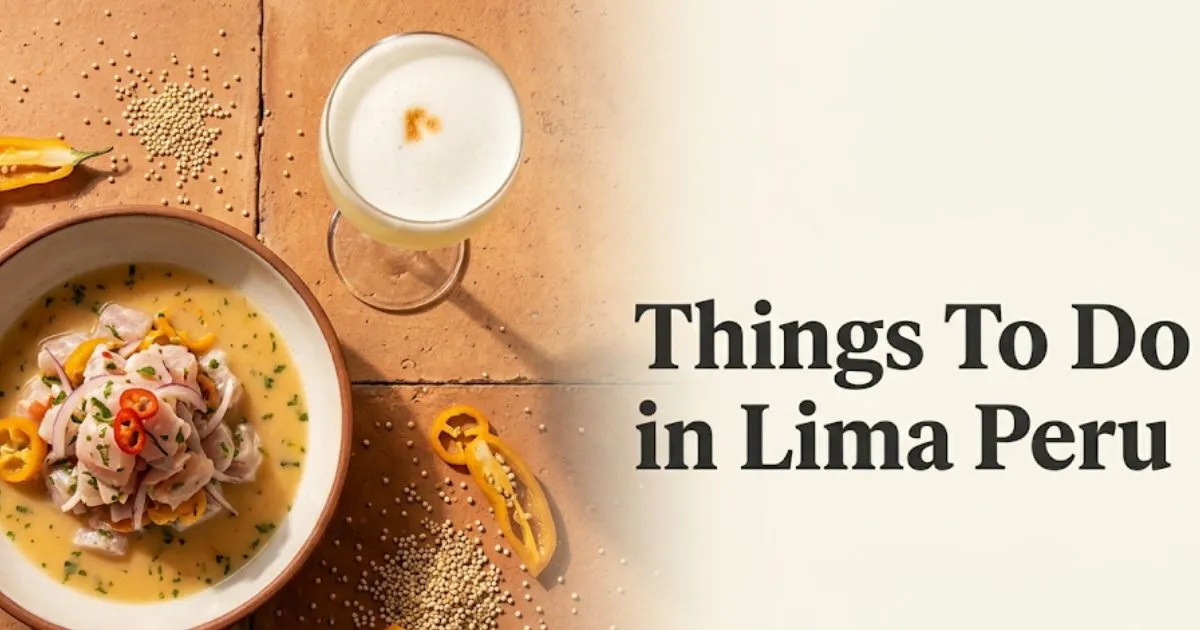
Lima’s dining divides into three honest tiers. The budget tier is Mercado Número 1 de Surquillo and its neighboring market stalls: full ceviche with leche de tigre, chicha morada, and causa for approximately $5 to $10 USD. The mid-range tier is neighborhood restaurants like Isolina in Barranco and El Mercado in Miraflores: $25 to $55 per person. The premium tier is Central, Maido, and Kjolle (also from the Central team): $150 to $250 per person.
What the tourist-facing restaurants get wrong: Lima has dozens of restaurants on the main Miraflores commercial strip, specifically along Avenida Larco and near Larcomar, that serve technically acceptable Peruvian food at elevated prices to visitors who do not know the local alternatives. These restaurants are not bad; they are simply not what Lima actually is.
According to PromPerú, Peruvian cuisine’s identity is built on the fusion of indigenous Andean ingredients, Spanish colonial cooking, Japanese immigration (Nikkei), and West African influence (Criolla). Understanding this heritage makes the menus at Central and Maido make sense.
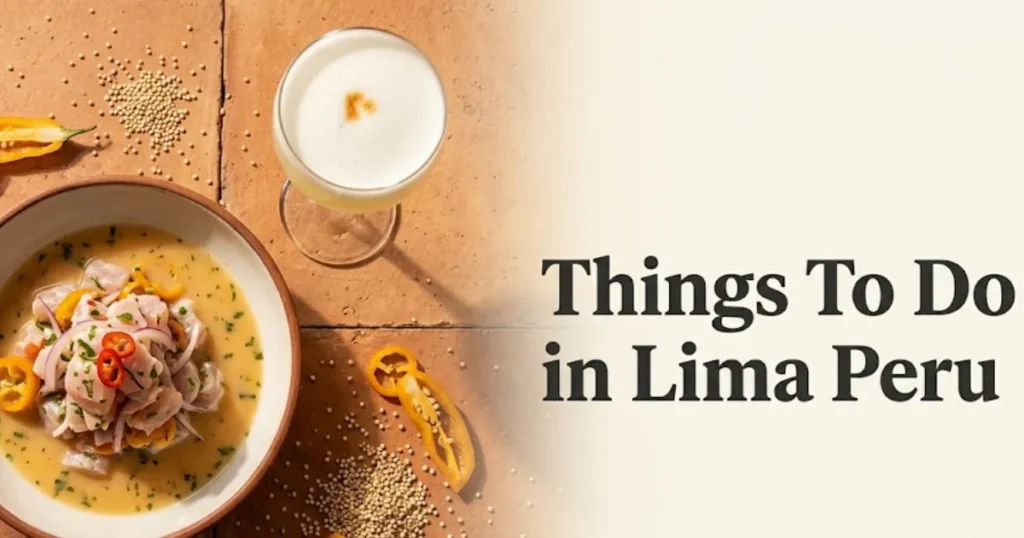
The pisco sour is Lima’s defining cocktail. The original, most technically precise version is widely argued to be served at Bar Maury in the Historic Center, a 1920s-era bar that has served the drink since pisco sours were codified as a recipe. Budget travelers can experience it here for significantly less than at Miraflores hotel bars.
For budget travelers specifically: A ceviche lunch at Mercado Número 1 de Surquillo, followed by a pisco sour at a Barranco bar in the evening, delivers the full spectrum of Lima’s culinary identity for under $20 USD total. This is not a compromise version. This is how Lima residents eat.
Key Takeaway: Make your Central or Maido reservation before you book your flights. Not after. Before.
Lima, Peru Museums and Culture
Lima’s museum scene is anchored by the Museo Larco, the single best pre-Columbian collection in Peru and one of the best in all of South America.
Museo Larco sits in an 18th-century viceroyalty mansion in the Pueblo Libre district, approximately 20 minutes from Miraflores by rideshare. Its collection spans 5,000 years of Peruvian civilizations, with exceptional Moche ceramics and the world’s largest accessible pre-Columbian erotic art collection. Admission fees apply; verify current pricing. The museum is open daily, with evening hours several nights per week. The museum café in the garden is genuinely good for lunch.
The local alternative to Museo Larco as the only museum visit: Combine Museo Larco with Huaca Pucllana in Miraflores on the same day. Both deal with pre-Columbian Lima civilizations; Museo Larco provides the context, and Huaca Pucllana provides the physical scale. Together, they form a complete half-day cultural itinerary.
The Museo de Arte de Lima (MALI) in the Parque de la Exposición covers Peruvian art from pre-Columbian through contemporary periods. It is a strong complement to Museo Larco for travelers interested in the arc of Peruvian visual culture rather than purely pre-Columbian history.
Barranco contains Lima’s active contemporary art gallery scene. MATE (Museo Mario Testino), the foundation established by the Lima-born fashion photographer, focuses on contemporary Peruvian and international photography. Admission fees apply. Verify hours before visiting, as schedule changes have occurred in recent years.
For families with children: Huaca Pucllana holds children’s attention better than museum interiors. The exterior pyramid walk and the llamas kept on-site typically capture young attention for 45 to 60 minutes.
Lima, Peru Outdoor Activities and Beaches
Lima’s outdoor activities center on the Pacific coastline, and they deliver more than most US visitors anticipate.
Paragliding from Miraflores is Lima’s most accessible outdoor thrill. Tandem flights with licensed operators launch from the Malecón de la Reserva and fly over the Costa Verde coastal road and the Pacific. The view of the Lima cliffs from the air is the city’s most visually dramatic perspective. Flights run approximately $60 to $100 USD per person. Book through operators who launch directly from the Malecón rather than through hotel concierge-arranged tours; you pay significantly less.
Costa Verde is the coastal road at the base of Lima’s cliffs. Access points run from Chorrillos north through Miraflores. The beaches here, specifically Playa La Estrella and Playa Barranquito, are used by Lima residents but are not tropical beach experiences. Water is cold year-round (Humboldt Current keeps it at approximately 14 to 18°C / 57 to 64°F), and fog is frequent from May through November.
Surfing in Lima: Punta Hermosa, 45 kilometers south of Miraflores, is Lima region’s primary surf destination. Waves run year-round, with the largest swells arriving April through October. For first-timers, several Miraflores-area operators run beginner surf lessons at Playa Makaha in Chorrillos. Budget approximately $40 to $70 USD for a group lesson.
For solo travelers and couples: Paragliding is the standout experience. For families with children over 8: the walk along the Malecón is free, accessible, and genuinely impressive. Children under 8 cannot paraglide with most operators.
Seniors and accessibility travelers should focus on the upper Malecón path, which is paved and flat. The stairs down to Costa Verde involve significant steps and are not recommended for travelers with knee or hip limitations.
Key Takeaway: The Malecón walk from Parque del Amor south to the paragliding zone is free, takes 90 minutes, and delivers Lima’s most distinctive visual experience. Do it on your first full morning before crowds build.
Lima, Peru Day Trips Worth Taking
The two day trips that genuinely justify a half-day away from Lima are Pachacamac and, with an early start, the Ballestas Islands combined with the Ica desert.
Pachacamac Archaeological Zone sits approximately 30 kilometers south of Miraflores and predates the Inca Empire by centuries. The site covers several square kilometers of adobe pyramid complexes. The on-site Museo de Sitio Pachacamac is excellent. Allow 3 to 4 hours. Entry fees apply; verify current pricing and whether timed entry reservations are required before visiting, as the Peru Ministry of Culture has periodically implemented advance booking requirements at major sites.
Getting to Pachacamac: A rideshare from Miraflores runs approximately 40 to 60 minutes depending on traffic. Allow for heavy traffic on the Panamericana Sur on weekday mornings. An organized tour handles logistics but typically combines Pachacamac with Barranco, which reduces time at the site.
Huacachina and the Ica Desert: This is Lima’s most popular full-day excursion, combining a sand-boarding and dune-buggy ride in the Ica desert with a visit to the Huacachina oasis. The drive takes approximately 4 hours each way. Budget travelers use the Cruz del Sur or TEPSA bus lines from Lima’s main bus terminal at Plaza Norte. The journey demands a full day; plan for 12 to 14 hours round-trip.
The Ballestas Islands (off Paracas, 4 hours south) are sometimes called the “poor man’s Galápagos.” The comparison is generous but the boat tour delivers sea lions, Humboldt penguins, and Peruvian pelicans at close range for approximately $15 to $25 USD per person on the boat portion.
For families with children: The Ballestas boat tour is excellent for children 5 and older. Dune buggies are appropriate for children over 5 but involve aggressive driving; assess your child’s motion tolerance honestly.
Lima, Peru Itinerary: How to Spend 3 Days
A 3-day Lima itinerary should be structured around the three distinct zones of the city, with the most demanding travel saved for day two when your rhythm is established.
Day 1: Miraflores and the Coast
- Start at 8am on the Malecón de la Reserva, walking south from Parque del Amor to the paragliding zone
- Visit Huaca Pucllana at 10am; morning light is excellent and crowds are minimal
- Lunch at La Mar Cebichería (arrive precisely at noon; the wait becomes significant by 12:30pm)
- Afternoon rest or Larcomar exploration for families
- Paragliding from the Malecón at 4pm for optimal afternoon light and thermal conditions
- Dinner at a Miraflores restaurant; Osaka for Nikkei-Peruvian fusion at a mid-premium price point
Day 2: Barranco and the Historic Center
- Morning: Rideshare to the Historic Center by 9am
- Visit the Catedral Basílica and the Convento de San Francisco catacombs (allow 2 hours total)
- Walk Plaza Mayor and Jirón de la Unión (keep electronics inside your bag on the pedestrian street)
- Rideshare to Barranco by 1pm for lunch at Isolina Taberna Peruana
- Walk Jirón Domeyer and the Puente de los Suspiros at 4pm (sunset timing)
- Dinner and drinks on El Bulevar in Barranco; El Dragón for live music if schedule aligns
Day 3: Museums, Pachacamac, or World-Ranked Dining
- Morning: Museo Larco in Pueblo Libre (9am open, 2 hours minimum)
- Afternoon: Pachacamac day trip OR afternoon at leisure in Miraflores
- Evening: Central or Maido, if reserved in advance (the non-negotiable priority of the trip)
Note for travelers with only 2 days: Compress Day 1 and Day 2 by spending morning in Miraflores and afternoon in Barranco on day one, then dedicating day two to the Historic Center and Museo Larco.
Best Time to Visit Lima, Peru
The best time to visit Lima, Peru is May through November, when the coastal garúa fog is at its least persistent and outdoor activities run at full capacity.
Lima’s climate is unlike any other South American capital. The Humboldt Current keeps the ocean cold year-round and produces a persistent coastal fog called garúa from roughly December through April. During this period, Lima is gray, cool, and humid for weeks at a stretch. The city does not become tropical. It becomes overcast.
| Month | Weather | Crowd Level | Best For |
|---|---|---|---|
| Jan-Mar | Heavy garúa, overcast | Low | Budget hotel rates; fewer tourists |
| Apr | Transition; fog lightens | Moderate | Good value with improving conditions |
| May-Jul | Clearest skies, cooler temps | Moderate-High | Paragliding, outdoor activities |
| Aug-Oct | Reliable clear days | High | Peak season; best overall conditions |
| Nov | Transition back to fog | Moderate | Shoulder season value |
| Dec | Early garúa returns | High (holidays) | Christmas travelers; expect fog |
August is Lima’s peak month in both visitor volume and weather clarity. Hotel prices are highest in July and August.
According to PromPerú, Lima’s peak domestic travel season runs from July through August, aligned with Peru’s national holidays and the school vacation period. US and European visitors predominantly arrive May through September. Book accommodation at least 6 to 8 weeks ahead for these months.
For budget travelers: January and February offer the city’s lowest hotel rates with the trade-off of persistent fog. The food scene, museums, and nightlife are entirely unaffected by weather. A budget-focused traveler who prioritizes dining over outdoor activities can find significant savings in the garúa season.
Key Takeaway: May through October is when Lima works best for first-time visitors. If your trip is fixed in December through February, prioritize the food scene and museums; outdoor activities will be fog-limited.
Lima, Peru Safety Tips for Tourists
Lima is a safe city for tourists who use district-specific common sense, and it is not safe at all if you treat it like a low-risk small town.
The risk profile differs dramatically by neighborhood:
- Miraflores and San Isidro: Well-patrolled, tourist-infrastructure-dense, low risk for standard daytime activity. Petty theft from restaurant tables (phone left unattended) is the primary risk.
- Barranco (daytime and early evening): Generally safe in the main pedestrian areas around Jirón Domeyer and El Bulevar. Avoid isolated back streets after midnight.
- Historic Center: Higher risk. Jirón de la Unión and surrounding streets have concentrated pickpocket activity, particularly targeting phones and cameras in crowds. Visit during business hours and use rideshare for arrival and departure.
- Callao (near the port) and surrounding areas: Not a tourist zone. Avoid entirely unless visiting for the airport.
Critical safety rules every Lima visitor must follow:
- Never hail a street taxi in Lima. Express kidnapping (secuestro al paso) in unregistered taxis is a documented risk. Use Uber, Cabify, or InDriver exclusively. Both apps show your driver’s name, license plate, and route in real time.
- Store your actual passport in your hotel safe; carry a photocopy.
- Use a cross-body bag or money belt in the Historic Center; do not use a backpack with external pockets.
- The US Embassy in Lima (Avenida La Encalada 1287, Surco) handles emergencies for US citizens. Save the emergency line before departure and verify the current number with the US Department of State website.
- Check the current US Department of State Peru Travel Advisory before departure. Peru’s advisory level has shifted between Level 1 and Level 2 in recent years; verify the current status.
For solo female travelers specifically: Miraflores and Barranco during daytime and early evening are genuinely comfortable for solo female navigation. Avoid walking alone in the Historic Center or Barranco’s side streets after 11pm.
Lima, Peru Travel Tips for Every Type of Traveler
Lima functions differently for each traveler profile, and the adjustments you make before arriving determine the quality of your experience.
Solo Travelers: Miraflores’s cafe and restaurant culture is exceptionally solo-friendly. Counter seating at La Mar, the Mercado Número 1 lunch counters, and Isolina’s bar area all accommodate solo diners without the awkwardness common in formal South American restaurant settings. The Malecón walk is excellent solo. Use rideshare apps exclusively; never compromise on this, as solo travelers are the primary target for taxi-based express kidnapping.
Couples and Romantic Travelers: Lima is one of South America’s best city destinations for couples who share a culinary interest. Barranco’s evening atmosphere, Central’s tasting menu experience, and a sunset paragliding flight from the Malecón form a genuinely memorable trip framework. Position at least two of your Lima nights in a Barranco boutique hotel; the neighborhood’s pace is slower and more intimate than Miraflores.
Families with Children: Miraflores is the family base. Huaca Pucllana holds children’s attention (llamas on-site are effective). The Circuito Mágico del Agua at Parque de la Reserva is specifically designed for evening family visits and has good lighting and crowd management. Lima’s restaurant dinner culture runs late (8pm to 10pm is standard); book early reservations explicitly when traveling with young children, as most restaurants accommodate this without issue.
Budget Travelers: Lima is one of South America’s great budget food destinations. The mercado lunch model (Mercado Número 1 de Surquillo, Mercado de Barranco, or the food court at Mercado Central in the Historic Center) delivers genuine Peruvian cooking for $5 to $10 USD. Accommodation in Miraflores hostel-grade properties runs $15 to $35 USD per night. The Malecón walk, Parque Kennedy, and the Historic Center’s plazas are free. A full Lima day on this model costs $30 to $50 USD including meals, transport, and a museum entry.
Seniors and Accessibility Travelers: Miraflores is the right base. The Malecón is paved and flat. Museo Larco has good accessibility infrastructure for a historic building. The Historic Center is not recommended for travelers with significant mobility limitations: uneven colonial stone streets, crowded pedestrian zones, and no consistent wheelchair infrastructure. Huaca Pucllana’s exterior walk is manageable; the interior sites involve uneven terrain.
Key Takeaway: Whatever your traveler profile, base yourself in Miraflores. Every other Lima district is more rewarding as a day or evening excursion than as a base.
Fun Things to Do in Lima, Peru at Night
Lima’s nightlife is serious, late-starting, and worth staying up for, structured around the restaurant-to-bar pipeline that defines how Lima residents actually spend their evenings.
Dinner in Lima typically starts between 8pm and 9:30pm at mid-range and premium restaurants. This is not affectation; it reflects how Peruvian social culture is organized. If you arrive at 6:30pm expecting a quiet dinner, you will be the only table in the restaurant. By 9pm, the room will be full.
Barranco after dark is Lima’s best nightlife district for travelers. The concentration of bars between Jirón Grau and Avenida Pedro de Osma includes live music venues, cocktail bars specializing in pisco-based drinks, and open-air terraces overlooking the colonial ravine.
El Dragón hosts live jazz, cumbia, and Latin rock on a schedule that changes weekly. Doors typically open at 9pm; music starts between 10pm and 11pm. Cover charges vary; verify the current schedule and pricing directly before visiting.
Ayahuasca, a bar built inside a converted Republican-era mansion on Prolongación San Martín in Barranco, is arguably Lima’s most visually distinctive bar interior. Multiple rooms across multiple floors feature different drink programs. It has appeared on international bar lists but remains genuinely local in clientele on weeknights.
For premium cocktails in Miraflores, the bar program at Isolina for post-dinner drinks is underrated compared to the hotel bar circuit. The pisco selection at Bar Piselli in Barranco covers a range of single-varietal piscos that provide a genuine education in the category for about $8 to $15 USD per pour.
For solo travelers: The bar strip in Barranco is socially active and safe within the pedestrian areas from 8pm to midnight. Return to Miraflores by rideshare rather than walking back alone.
Safety and Practical Warnings for Lima, Peru
Lima’s primary practical risk for tourists is transport-based crime, specifically express kidnapping in unregistered taxis, which is entirely preventable with one behavioral rule.
Key safety and practical facts every Lima visitor must know:
- Never enter an unregistered street taxi in Lima. Use Uber, Cabify, or InDriver for every journey without exception. The app records your driver’s identity, license plate, and route.
- Lima’s altitude is near sea level, but your connecting destination (Cusco) is at 11,152 feet. Do not rush from Lima to Cusco without acclimatization planning; acute mountain sickness is serious and preventable.
- The Historic Center requires daytime-only visits. After 7pm, crowds thin but risk increases. Rideshare in and out; do not walk to or from this district from other neighborhoods.
- Lima traffic is extreme. A 10-kilometer rideshare can take 45 minutes during rush hours (8am to 10am and 5pm to 8pm). Build this into your schedule or your restaurant reservations will be missed.
- Sun exposure on Lima’s coastal cliffs is significant despite the overcast climate. The garúa diffuses but does not block UV radiation. Use sunscreen on the Malecón regardless of cloud cover.
- The US Department of State Peru Travel Advisory should be verified at travel.state.gov before departure. Advisory levels change; the current designation reflects conditions at the time of your trip, not at the time this article was published.
For genuine medical emergencies, the Clínica Anglo Americana in San Isidro and Clínica Internacional in Miraflores are the facilities best equipped to serve English-speaking US visitors.
Frequently Asked Questions About Things to Do in Lima, Peru
How many days do you need in Lima, Peru?
Three to four days is the right amount of time in Lima, Peru for a first visit.
One day covers Miraflores basics but misses Barranco, the Historic Center, and the food market culture entirely.
Four days allows Miraflores, Barranco, the Historic Center, Museo Larco, a half-day at Pachacamac, and at least one premium restaurant reservation.
Is Lima, Peru safe for tourists?
Lima is safe for tourists in Miraflores, San Isidro, and Barranco’s main pedestrian areas when using rideshare apps exclusively for transportation.
The most significant preventable risk is entering an unregistered street taxi; Uber, Cabify, and InDriver eliminate this risk by verifying driver identity and recording the route.
The Historic Center requires additional vigilance for pickpocket activity on Jirón de la Unión and should be visited only during daytime business hours.
What is Lima, Peru best known for?
Lima is best known internationally for its culinary scene, which includes Central and Maido among the world’s top-ranked restaurants, and for its position as the gateway to Machu Picchu and the Inca Trail.
The city is also the site of major pre-Columbian archaeology, specifically Huaca Pucllana inside Miraflores and the Pachacamac Archaeological Zone 30 kilometers to the south.
Lima’s UNESCO-designated Historic Center contains the finest concentration of colonial Spanish architecture in South America.
What is the best neighborhood to stay in Lima?
Miraflores is the best neighborhood to stay in Lima for the majority of US visitors.
It offers the flattest walking terrain, the highest concentration of safe mid-range to premium restaurants, reliable rideshare access, and proximity to both the Malecón coastal walk and Huaca Pucllana.
Barranco is an excellent alternative for couples prioritizing a creative, bohemian atmosphere over practical convenience, but it requires more reliance on rideshares to access other city zones.
What is the best time of year to visit Lima, Peru?
The best time to visit Lima, Peru is May through November, when the coastal garúa fog is least persistent.
June through September offers the most reliably clear days, optimal conditions for Malecón paragliding, and the strongest overall visitor experience for outdoor activities.
December through April brings persistent overcast conditions that limit outdoor activity; the food scene, museums, and nightlife remain fully operational year-round and are unaffected by seasonal weather.
Is Lima worth visiting before or after Machu Picchu?
Lima is worth visiting both before and after Machu Picchu, but visiting after delivers a better experience for most travelers.
Before Machu Picchu, Lima functions as an acclimatization base and gateway; after, travelers return with more energy, a clearer sense of Peru’s culinary culture, and the motivation to make the restaurant reservations they skipped on the way in.
The critical planning point is making Central or Maido reservations weeks in advance regardless of which direction you travel, since availability disappears well before arrival.
Closing
Lima’s reward is proportional to the time you give it. Three dedicated days, built around the Miraflores-Barranco-Historic Center framework in this guide, deliver a city that earns its reputation as one of South America’s most compelling urban destinations.
Book your Central or Maido reservation before anything else. Then confirm your rideshare app is working before you leave the airport. Those two actions, more than any other logistics step, determine the quality of your Lima experience.
Travel conditions in Lima, including admission prices, restaurant hours, archaeological site entry requirements, and US-Peru flight schedules, change regularly. Verify all key details directly with venues and through official sources at PromPerú and the US Department of State before departure. Lima is ready for you in 2026; the only thing left is building your itinerary.