Things To Do in Valencia Spain: The 2026 Complete Guide

Valencia gives you more per euro, per day, and per square kilometer than almost any other Mediterranean city. The best things to do in Valencia span futurist architecture, a UNESCO-listed medieval silk exchange, a living lagoon ecosystem, and a food culture that predates every paella recipe you’ve ever seen at home.
Turisme Comunitat Valenciana identifies Valencia as Spain’s third-largest city by population. It draws well over 2 million international visitors annually without the pricing or attitude of Barcelona.
This guide covers every significant experience by neighborhood, traveler type, budget level, and season. It also names what to skip, what to do instead, and how to structure three days without wasting a single afternoon.
Things To Do in Valencia Spain: What Makes This City Different
The best things to do in Valencia, Spain center on a city that refused to become a theme park of itself. While Barcelona rebuilt its waterfront for tourism, Valencia rebuilt its ancient riverbed for its own residents.
The Turia Gardens run 9 kilometers through the city center on the dry bed of a river diverted after catastrophic 1957 floods. Locals jog, bike, picnic, and play football there every single day.
That is the pattern Valencia repeats across every neighborhood. The Mercado Central, open since 1928, still serves the actual community around it alongside tourists.
Ruzafa, once a working-class district, is now Valencia’s most culturally alive neighborhood. Its galleries, independent coffee roasters, and restaurants serve locals first and visitors second.
For first-time visitors, Valencia sits between Barcelona’s scale and Seville’s warmth. It has neither city’s international name recognition, which means shorter queues, lower prices, and more genuine neighborhood character.
Insider Tip:
- Arrive by Tuesday or Wednesday if visiting midweek. Weekends in the old town are noticeably more crowded from June through September.
- The Valenbisi bike-share system covers most major areas. A 3-day subscription costs a few euros and makes the Turia Gardens path the most efficient route between the old town and the beach.
- Solo travelers find Valencia’s neighborhood bar culture extremely accessible. Single diners at bar counters in Ruzafa are completely unremarkable.
Best Things To Do in Valencia: A Traveler Profile Overview
The best things to do in Valencia vary significantly by who is doing them. A couple seeking a long romantic weekend needs a different guide than a family with a 9-year-old.
| Traveler Profile | Top Priority Experience | Secondary Experience | Budget Level |
|---|---|---|---|
| Couples | Ruzafa dinner and evening walk | La Albufera sunset boat trip | Mid-range |
| Solo Travelers | Barrio del Carmen exploration | IVAM contemporary art | Budget-friendly |
| Families with Kids | Bioparc Valencia full day | City of Arts and Sciences | Mid-range |
| Budget Travelers | Turia Gardens bike ride | Free Museu de Belles Arts | Low cost |
| Seniors / Accessibility | City of Arts and Sciences | Mercado Central morning visit | Variable |
Couples find Valencia genuinely intimate outside of peak summer weekends. The city has none of Barcelona’s impersonal scale.
Families need to plan around heat. Bioparc and the Oceanografic both offer shaded indoor-outdoor environments. Turia Gardens playgrounds are a reliable free option for younger children.
Budget travelers should know that Valencia’s free attractions are genuinely excellent. The Museu de Belles Arts de Valencia on Calle de Sant Pius V holds one of Spain’s finest collections of Valencian Gothic painting at zero cost.
Seniors and accessibility travelers face honest challenges in Barrio del Carmen. Its cobblestone streets are narrow and uneven. The City of Arts and Sciences complex, by contrast, is comprehensively accessible with paved paths throughout.
Top Things To Do in Valencia Spain: The Non-Negotiable Experiences
The top things to do in Valencia Spain include the City of Arts and Sciences, Mercado Central, La Albufera, and Barrio del Carmen as the four experiences no visit should skip. Each rewards different parts of a visit.
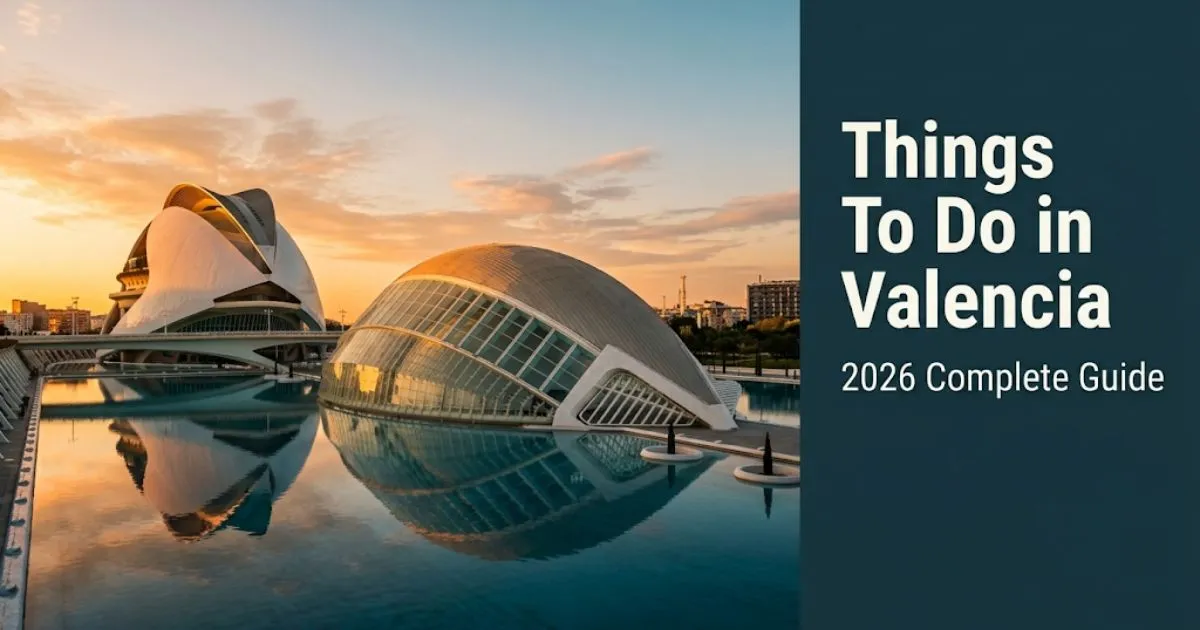
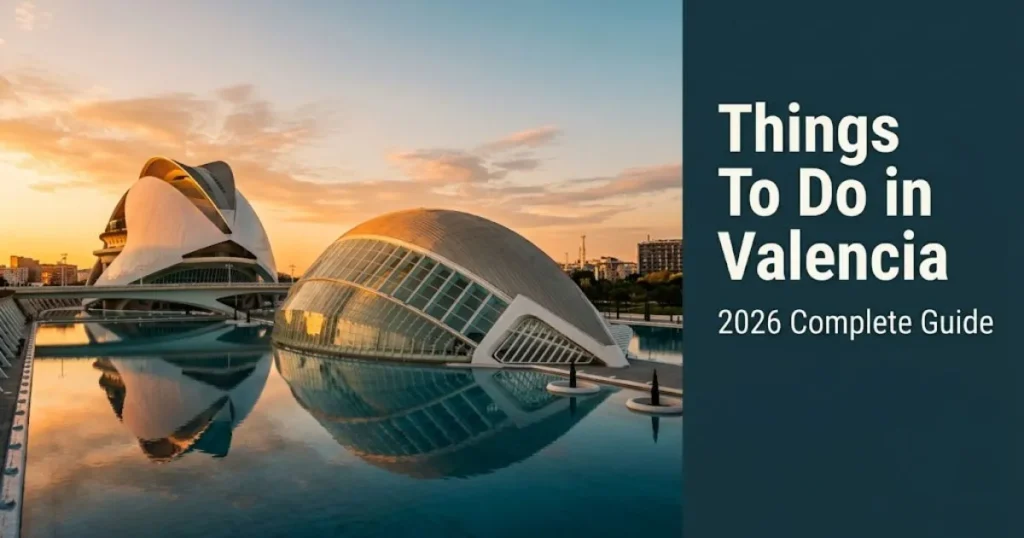
The City of Arts and Sciences is genuinely as architecturally remarkable as its photographs suggest. Santiago Calatrava and Félix Candela designed a complex that makes most futurist architecture look timid by comparison.
The Mercado Central is the correct version of a European covered market: actual vendors, actual local shoppers, actual produce and seafood at 7 AM. Arrive before 10 AM to see it functioning as a market rather than a tourist photo stop.
La Albufera Natural Park provides the ecological counterpoint to the city’s architecture. A 4,300-hectare freshwater lagoon lies 11 km south of Valencia. Rice paddies border the water on three sides.
Barrio del Carmen holds the city’s medieval bones. Roman walls, Gothic churches, and 19th-century buildings share blocks with independent bookshops and neighborhood bars on Calle de Quart and Calle de Caballeros.
The honest overrated assessment: the Hemisferic IMAX theater inside the City of Arts and Sciences complex. The building’s exterior is genuinely extraordinary. The IMAX programming is standard and not worth prioritizing over the Museu de les Ciencies or Oceanografic.
Local alternative: Instead of the Hemisferic, walk the perimeter of the entire City of Arts and Sciences complex along the reflecting pools at golden hour. The exterior is what earned the architecture its global reputation.
Key Takeaway: Valencia’s most visited sites genuinely earn their status, but arrive at Mercado Central before 10 AM and the City of Arts and Sciences at either opening or two hours before close to avoid the thickest crowds.
City of Arts and Sciences Valencia: What to Actually Do There
The City of Arts and Sciences (Ciudad de las Artes y las Ciencias) is Valencia’s most visited attraction and one of Europe’s most photographed architectural complexes. It spans 350,000 square meters on the former Turia riverbed.
The complex contains five distinct venues. The Oceanografic is the largest aquarium in Europe, housing over 45,000 animals across Mediterranean, Atlantic, Arctic, and tropical zones. Allow a full three to four hours.
The Museu de les Ciencies Principe Felipe runs interactive science exhibitions across three floors of a structure that resembles the skeleton of a giant whale. Children aged 7 and older engage with it well. Younger children find the scale overwhelming rather than stimulating.
Admission pricing varies by combination package and season. According to visitvalencia.com, combination tickets covering multiple venues offer better per-venue value than single-venue admission. Verify current pricing directly before purchasing.
The complex is fully accessible with paved surfaces and elevator access throughout. It is the single most accessibility-friendly major attraction in Valencia, making it the logical centerpiece for seniors and accessibility travelers.
Insider Tip:
- Book Oceanografic tickets in advance online, especially from June through August. Walk-up queues in peak season can be substantial.
- The outdoor reflecting pools and walkways are free to access at all times. An evening walk through the complex costs nothing.
- The least crowded morning to visit is Tuesday. Weekends in summer attract families and tour groups that make the Museu de les Ciencies noticeably loud.
Barrio del Carmen and Ruzafa: Valencia’s Two Essential Neighborhoods
Barrio del Carmen and Ruzafa are Valencia’s two most distinct urban neighborhoods. They serve completely different purposes in a visit and both are worth dedicated time.
Barrio del Carmen (El Carme in Valencian) is the historic core. The neighborhood’s narrow lanes follow Roman and Moorish street patterns. The Torres de Quart and Torres de Serranos, two surviving Gothic city gates, mark its outer boundaries.
Calle de Caballeros is the neighborhood’s primary social artery, lined with bars, small restaurants, and music venues. At night, particularly Thursday through Saturday, it is dense with people and noise.
Ruzafa sits a 15-minute walk southeast of El Carme. It is Valencia’s equivalent of what the Marais is to Paris or Bermondsey is to London. Independent coffee shops on Calle de Cuba and Calle de Literato Azorín sit beside galleries, vintage shops, and restaurants serving genuinely interesting food.
Couples find Ruzafa’s evening bar-restaurant culture the most romantic version of Valencia’s social scene. Solo travelers find El Carme’s bar density and street-level social energy easier to navigate alone.
Accessibility note: El Carme’s cobblestones are a genuine challenge for mobility aids and strollers. Ruzafa has wider, flatter streets throughout.
Insider Tip:
- El Carme is best on weekend afternoons for walking. It is best avoided after midnight on weekends if you want a quiet experience.
- Ruzafa’s best independent coffee is at Brunchic on Calle de Cuba or Federal Café on Carrer del Pare Perera. Both open early and draw a mostly local clientele.
- Budget travelers should note that Ruzafa’s restaurant prices are 20 to 30 percent lower than the tourist-facing old town for equivalent quality food.
Mercado Central and Valencia’s Food Scene
The Mercado Central de Valencia anchors one of Europe’s most distinctive regional food cultures. Valencia is the origin city of paella valenciana. It is also where horchata de chufa, a tiger-nut milk drink, has been consumed daily since at least the 13th century.
The market building, opened in 1928, is a Modernista architectural landmark in its own right. Its iron and glass roof covers more than 1,200 stalls selling Valencian citrus, local sea bass and bream, jamón, fresh herbs, and spices. It is open Monday through Saturday mornings. Verify current hours before visiting.
The single most important food intelligence for Valencia visitors: do not eat paella on the Malvarrosa beachfront. The restaurants catering to tourists on that strip charge premium prices for dishes that bear little resemblance to traditional paella valenciana.
Authentic paella valenciana is made with local rice varieties, free-range chicken, rabbit, garrofó beans, and flat green beans. It is cooked over orange-wood fire in an open pan. The correct location to eat it is in the restaurants of El Palmar, a village 11 km from Valencia beside the Albufera lagoon.
Food budget guidance: A full paella lunch for two in El Palmar runs approximately 30 to 50 euros total, including house wine. In a tourist-facing beachfront restaurant, the same experience costs more and delivers less.
Insider Tip:
- Horchaterías El Siglo on Plaza de Santa Catalina is the most authentic horchata destination in the city center. Order it with fartons, the long sweet pastry made for dipping.
- Mercado de Colón, a 1914 Modernista market building in Eixample, has been partially converted to bars and cafés. Its architecture rewards a visit even without buying anything.
- Budget travelers can assemble a genuine Valencian lunch from Mercado Central stalls: fresh anchovies, local olives, Valencian orange, and a bocadillo for under 10 euros.
La Albufera and Outdoor Activities in Valencia
La Albufera Natural Park is the outdoor experience that most genuinely separates Valencia from comparable European Mediterranean cities. It is a working lagoon ecosystem, an active rice-farming region, and a wildlife refuge, all within 20 minutes of the city center.
Getting there without a tour requires Bus 25 from Avenida de la Plata, which runs to El Palmar village. Frequency varies by season; verify current schedules on the EMT Valencia website before departure.
A boat trip across the Albufera lagoon takes approximately 45 minutes to one hour. Local fishermen operate small wooden boats from the village of El Palmar and from the port of El Saler. These trips are not structured tours. Prices are set by individual operators. Verify availability and cost locally.
The Devesa de l’Albufera, a pine forest and dune system separating the lagoon from the Mediterranean coast, has cycling and walking paths. The Valenbisi bike system does not extend to this area. Renting a bike from a Valencia city shop for the day provides the most flexibility.
Families with children aged 8 and older typically enjoy the boat trip and rice field walks. Younger children may find the pacing slow. Couples find the lagoon sunset genuinely atmospheric, particularly from September to November when crowds are minimal.
Insider Tip:
- Combine the Albufera visit with a paella lunch in El Palmar. These restaurants cook daily from noon. Arriving after 2 PM on weekends means the best rice dishes are often sold out.
- Birdwatching at the lagoon is best at dawn and dusk. The park hosts herons, egrets, and migratory flamingos during spring and autumn passage periods.
- The Albufera area is 5 to 8 degrees cooler than the city on summer afternoons. It is one of the most heat-manageable outdoor options from July through August.
Key Takeaway: La Albufera is the experience most first-time visitors skip and most repeat visitors say was the best part of their trip. Go. Take Bus 25. Have paella in El Palmar. Return before dark.
Malvarrosa Beach and Coastal Things To Do
Playa de la Malvarrosa is Valencia’s primary city beach, located 4 km from the historic center. It is a wide, flat, dark-sand beach backed by a long promenade called the Paseo Marítimo.
Getting there is straightforward. Bus 19 and Bus 31 from the city center reach Malvarrosa in approximately 20 minutes. The Valenbisi bike route through Turia Gardens connects the old town to the beach in under 30 minutes on flat terrain.
Immediately north of Malvarrosa, Playa de la Patacona receives fewer visitors. It has the same sand quality and easier parking on weekdays. Locals typically prefer Patacona from June onward when Malvarrosa becomes crowded.
El Cabanyal neighborhood sits directly behind the Malvarrosa beachfront. It is a working-class fishing neighborhood undergoing genuine renovation rather than gentrification. Calle de Escalante and Calle del Progrés have the neighborhood’s most interesting independent restaurants, ceramics workshops, and cafés.
Families with children find Malvarrosa suitable for young children: the beach is flat, the water entry is gradual, and lifeguard coverage operates during summer months. Always verify current lifeguard hours and flag conditions before entering the water.
Rip currents can occur at Malvarrosa during storms and rough-weather periods. Observe flag warnings without exception.
Insider Tip:
- Avoid Malvarrosa on Saturday and Sunday in July and August. It becomes extremely crowded by 10 AM. Weekday mornings from 8 to 11 AM offer the beach at its best.
- El Cabanyal Market, held Saturday mornings, is one of Valencia’s most local market experiences. It serves the neighborhood community rather than tourists.
- Sunset from the Veles e Vents building at the Americas Cup Port, a 20-minute walk south of Malvarrosa, offers one of the city’s most dramatic coastal views at no cost.
Valencia Cathedral and the Historic Old Town
Valencia Cathedral (Catedral de Santa María de Valencia) stands on the site of a Roman forum, later a Visigothic church, then a mosque. The current structure reflects 13 centuries of building, demolition, and rebuilding.
The cathedral’s most specific claim: it houses what the Roman Catholic Church officially recognizes as a candidate for the Holy Grail. The Santo Cáliz, a first-century agate cup, is displayed in the Capilla del Santo Cáliz. Whether you engage with the religious context or not, the artifact is undeniably extraordinary.
Climbing the Miguelete Tower (El Micalet) rewards the 207-step effort. The tower offers the best elevated view of Valencia’s old town roofline, the cathedral’s dome, and the surrounding medieval street pattern. Admission runs a few euros. Verify current pricing before visiting.
La Lonja de la Seda (the Silk Exchange), a five-minute walk from the cathedral, is the genuine architectural equal of the City of Arts and Sciences within the medieval context. Its 15th-century Gothic trading hall, the Sala de Contratación, has columns that spiral toward the ceiling in a way that seems physically impossible for the era. UNESCO awarded it World Heritage status in 1996.
Budget travelers should note that the cathedral exterior, the plaza, and the Plaza de la Virgen adjacent to it are entirely free to experience. Interior admission fees apply for specific chapels and the Miguelete Tower.
Insider Tip:
- Turisme Comunitat Valenciana notes that visiting the cathedral and La Lonja on a Tuesday or Wednesday morning minimizes tour group congestion significantly.
- The square immediately behind the cathedral, Plaza de la Almoina, contains archaeological remains of the Roman forum visible through ground-level glass panels. Free to view.
- Skip the guided audio tour inside the cathedral. Walk the perimeter of the Gothic nave independently and spend the saved time at La Lonja.
Key Takeaway: La Lonja de la Seda is the most undervisited major attraction in Valencia’s old town. If you see one medieval building, make it this one rather than spending extra time inside the cathedral.
Things To Do in Valencia at Night
Valencia’s nightlife follows a schedule that confuses most US visitors arriving with American timing instincts. Dinner begins at 9 PM at the earliest. Bars in Barrio del Carmen fill between 11 PM and 1 AM. Clubs open at 1 AM and peak at 3 to 4 AM.
The most functional nightlife approach for visitors not committed to the full Spanish schedule: dinner in Ruzafa at 9 PM, two or three bars on Calle de Caballeros in El Carme from 11 PM, and home by 1 AM.
Calle de Caballeros holds the highest concentration of bars per block in the old town. Bar Calcotot and the surrounding establishments draw a mixed local and visitor crowd. Volume increases steadily from Thursday onward.
The La Marina de Valencia waterfront district, adjacent to the Americas Cup Port, offers a different nightlife character. Bars and clubs there skew younger and louder. The setting is more dramatic, with harbor views, but the atmosphere is less local.
Solo travelers find El Carme bar culture accessible and social. Single visitors at bar counters are entirely unremarkable. Couples who prefer a quieter evening should stay in Ruzafa, where dinner extends past 11 PM at many restaurants and the social energy is relaxed rather than intense.
Families and early risers have no business on Calle de Caballeros after midnight. Plan differently.
Insider Tip:
- The Palau de la Música Valenciana on Paseo de la Alameda runs regular evening classical and flamenco concerts. Tickets are affordable and the building is an architectural experience. Check the program schedule on arrival.
- Thursdays in Valencia are locally considered the social start of the weekend. The same venues on Friday and Saturday are significantly more crowded.
- The nightlife areas around Avenida de Aragón serve a primarily local Spanish crowd rather than an international tourist mix.
Things To Do in Valencia for Free
Valencia offers more genuinely excellent free activities than most comparably sized European cities. The Turia Gardens, the Museu de Belles Arts, the Plaza de la Virgen, and the entire exterior of the City of Arts and Sciences cost nothing.
The Museu de Belles Arts de Valencia on Calle de Sant Pius V holds Gothic retables, Baroque altarpieces, and a collection of Valencian painters including Ribalta, Ribera, and Sorolla. Admission is free. It is visited by a fraction of the tourists who queue for lesser collections elsewhere in Spain.
Free activities worth scheduling:
- Turia Gardens full-length walk or bike ride (9 km, flat, shaded in sections)
- Torres de Serranos exterior and plaza (free; interior admission applies)
- Torres de Quart exterior view and bullet-hole façade from the 1808 siege
- Plaza de la Virgen and the Baroque fountain of the Turia river god
- Plaza del Ayuntamiento and the city hall’s neoclassical façade
- La Lonja de la Seda exterior courtyard (interior admission applies for the Sala de Contratación)
- IVAM (Institut Valencià d’Art Modern) has free Sunday entry. Verify current free-entry schedule before visiting.
- El Cabanyal Market on Saturday mornings
- Sunset walk along the Paseo Marítimo at Malvarrosa
Budget travelers can build a full two-day Valencia itinerary at minimal cost using exclusively the free attractions listed above, combined with Mercado Central food stalls for meals.
Things To Do in Valencia with Kids
Valencia with children works best when the itinerary centers on Bioparc Valencia and the City of Arts and Sciences Oceanografic. Both are full-day experiences with genuine child engagement throughout.
Bioparc Valencia in the Turia Gardens area is a zoo designed around the concept of immersed environments. Children walk through African savanna and rainforest habitats without obvious barriers separating animals from visitors. Allow a full four to five hours. It is one of the most thoughtfully designed urban zoos in Europe.
The Oceanografic at the City of Arts and Sciences houses Europe’s largest aquarium collection. An underwater tunnel section puts sharks and rays directly overhead. Children aged 5 and older are typically engaged throughout. The shark and ray tanks reliably produce the strongest reactions from kids of any age.
Turia Gardens playgrounds are free and scattered along the park’s 9 km length. The playground near the Gulliver figure at the Palau de la Música end is the most elaborate: a 70-meter-long reclined figure covered in slides, ropes, and climbing structures.
Families should avoid scheduling beach days from 11 AM to 4 PM in July and August. Spanish beach culture manages this through shade umbrellas and mid-afternoon breaks. US families with children not used to high heat need to plan water access and shade explicitly.
Insider Tip:
- Combination tickets for Bioparc plus Oceanografic represent the best per-attraction value for family visits. Verify current family pricing directly with the venues.
- The Turia Gardens route from the old town to Bioparc by bike is flat, shaded, and takes about 20 minutes. Valenbisi accommodates adult riders. Children need a rented bike or a cargo bike setup.
- Pack snacks for Bioparc. Food options inside are limited and expensive.
Key Takeaway: For families, Bioparc Valencia plus the Turia Gardens Gulliver playground delivers a full, genuinely excellent day at a cost well below Barcelona’s comparable family attractions.
Things To Do in Valencia in 3 Days: A Practical Itinerary
Three days in Valencia allows you to cover the city’s essential experiences without rushing any of them. This itinerary is designed for first-time visitors and assumes a base in either the Barrio del Carmen area or Ruzafa.
Day 1: Old Town and Culture
- Start at Mercado Central between 8 and 9 AM. Buy breakfast from stall vendors.
- Walk to Valencia Cathedral and climb the Miguelete Tower for the old-town view.
- Walk five minutes to La Lonja de la Seda. Spend 45 minutes inside the Sala de Contratación.
- Explore Barrio del Carmen on foot along Calle de Caballeros and side streets.
- Lunch at a Carmen neighborhood restaurant. Budget 12 to 18 euros per person.
- Visit IVAM (Institut Valencià d’Art Modern) in the afternoon. Free on Sundays.
- Evening dinner in Ruzafa at 9 PM. Try Calle de Cuba or Calle de Literato Azorín.
Day 2: City of Arts and Sciences and Beach
- Arrive at City of Arts and Sciences at opening time. Book tickets in advance.
- Spend the morning at the Museu de les Ciencies or Oceanografic (choose one).
- Walk or bike the Turia Gardens path east to the beach.
- Afternoon at Playa de la Patacona (quieter alternative to Malvarrosa).
- Walk through El Cabanyal neighborhood for late afternoon.
- Sunset from the Veles e Vents building at the Americas Cup Port.
Day 3: La Albufera and El Palmar
- Take Bus 25 from Avenida de la Plata to El Palmar village.
- Arrange a lagoon boat trip with local operators on arrival.
- Paella lunch at one of El Palmar’s lakeside restaurants from noon.
- Return to Valencia by mid-afternoon.
- Browse Museu de Belles Arts (free) on the way back through the city.
- Final evening at a Plaza de la Virgen terrace bar before departure.
Las Fallas Festival 2026 and Seasonal Events in Valencia
Las Fallas is Valencia’s defining annual event and one of Europe’s most extraordinary public spectacles. The festival runs from approximately March 1 through March 19, 2026, with the climactic Nit del Foc fireworks display and the burning of giant satirical monuments on March 19.
According to Turisme Comunitat Valenciana, Las Fallas draws over 2 million visitors during the peak week of March 15 to 19. Accommodation prices during this period multiply by three to five times standard rates. Booking 6 to 12 months ahead is not an exaggeration for the final days.
The mascletà, a daily daytime firecracker sequence at Plaza del Ayuntamiento at 2 PM from March 1 through March 19, is free and genuinely unlike any sound experience available elsewhere in Europe. It is less a spectacle and more a physical sensation.
The falla monuments themselves, enormous papier-mâché satirical sculptures set up across every neighborhood, are free to walk among. The Sección Especial monuments in the city center reach heights of 20 to 25 meters.
Visitors not planning for Las Fallas: April through mid-June offers the most comfortable version of Valencia. Spring temperatures run 17 to 24 degrees Celsius. Summer crowds have not yet arrived.
Couples and solo travelers who are not specifically seeking the festival experience are generally better served by visiting outside the Las Fallas peak period. The city is quieter, cheaper, and more navigable.
Insider Tip:
- If attending Las Fallas, stay as close to Plaza del Ayuntamiento as possible. Walking distance to the mascletà and monument neighborhoods matters enormously during these days.
- The neighborhood falles (local monuments) in outer districts are often more inventive than the Sección Especial monuments near the center.
- March 19 night, when the monuments burn, is extraordinarily loud. Earplugs are practical, not excessive.
Day Trips From Valencia Spain
The most practical day trips from Valencia reach Xàtiva, Sagunto, and Peñíscola by regional Renfe Cercanias trains or road. All three offer experiences that complement Valencia’s city character without duplicating it.
Xàtiva, 60 km south of Valencia, holds a castle complex that stretches along a ridge above the old town. Two hours is the minimum worth allowing for the castle alone. The town’s Colegiata de Santa María and several Gothic palaces make Xàtiva worthwhile as a full day. Renfe Cercanias connects Valencia with Xàtiva in approximately one hour.
Sagunto, 28 km north of Valencia, contains a Roman theater restored to functional use and a medieval castle above a well-preserved historic quarter. It is the closest day trip from the city and the easiest to combine with a morning or afternoon back in Valencia.
Peñíscola, 130 km north of Valencia, requires a car or organized excursion. The walled medieval town sits on a rocky peninsula jutting into the Mediterranean. It is the most dramatically sited day trip option from Valencia.
La Tomatina at nearby Buñol, held on the last Wednesday of August, is the most internationally recognized single-day event accessible from Valencia. It involves approximately 120,000 kilograms of tomatoes and roughly 20,000 participants. Advance ticket purchase is mandatory. Verify the 2026 date and ticketing process well before departure.
Insider Tip:
- Budget travelers can reach Sagunto by Renfe Cercanias for a few euros each way. The Roman theater admission is minimal.
- Xàtiva is cooler than Valencia in summer. It makes a practical escape on extremely hot days.
- Peñíscola in July and August is crowded with Spanish domestic vacationers. Visit in May, June, or September for a markedly better experience.
Key Takeaway: Xàtiva is the most rewarding day trip from Valencia for history and architecture. Sagunto is the fastest and cheapest option. Both beat generic organized tour packages.
Practical Tips for Visiting Valencia Spain
The most important practical fact for Valencia visitors: the city is extremely navigable without a car. EMT Valencia buses, Metrovalencia, the Valenbisi bike-share, and walkable distances between major neighborhoods make car rental unnecessary for a city-based itinerary.
Getting to Valencia:
- Valencia Airport (VLC) sits 8 km from the city center.
- Metrovalencia Line 3 and Line 5 connect the airport to the city center in approximately 25 minutes.
- The Aerobus airport coach is an alternative. Verify 2026 routes and schedules at the airport on arrival.
- Renfe high-speed AVE trains connect Madrid to Valencia in approximately 1 hour 40 minutes.
- Renfe trains from Barcelona to Valencia take approximately 3 hours 10 minutes.
Getting around the city:
- Valenbisi bike-share: short-subscription options available at terminals across the city. The Turia Gardens path makes cycling the fastest route between the old town and the beach.
- EMT Valencia buses cover every significant destination. Bus 25 reaches La Albufera. Bus 19 and 31 reach Malvarrosa.
- The Metrovalencia metro serves outer districts and the airport effectively. City center distances are short enough that walking or cycling is typically faster.
Practical warnings:
- Apply high-factor sun protection daily from May through September. UV levels in Valencia routinely exceed warning thresholds during midday hours.
- Summer temperatures regularly exceed 35°C. Schedule outdoor walking before 11 AM or after 5 PM.
- Standard pickpocket awareness applies in Mercado Central and around Valencia Cathedral in peak season. Keep bags closed and in front of your body.
- Cobblestone streets in Barrio del Carmen make wheeled luggage and mobility aids difficult. Choose accommodation with this in mind.
Cost overview:
| Category | Budget Range (General Guidance) |
|---|---|
| Mid-range hotel per night | 70 to 140 euros (verify current rates) |
| Mercado Central lunch per person | 8 to 15 euros |
| Full paella lunch in El Palmar (for 2) | 30 to 50 euros including house wine |
| City of Arts and Sciences combination ticket | Varies by venue combination; verify at visitvalencia.com |
| EMT bus single ride | Under 2 euros; verify current fare |
| Valenbisi 3-day subscription | A few euros; verify current pricing |
| Day trip to Xàtiva by Renfe | Under 10 euros return; verify current fares |
Safety and Practical Warnings for Valencia Spain
Valencia is a safe destination by European standards. The most common traveler risks are heat-related illness in summer, standard urban pickpocketing, and swimming in unsafe sea conditions.
Key safety and practical facts every visitor should know:
- Heat risk is real from June through September. Temperatures regularly exceed 35°C. Carry water at all times. Schedule outdoor activities before 11 AM and after 5 PM.
- Observe beach flag warnings without exception. Yellow and red flags indicate dangerous swimming conditions at Malvarrosa and Patacona. The sea can change quickly after storms.
- Pickpocket risk exists in crowded areas. Mercado Central, Valencia Cathedral plaza, and the City of Arts and Sciences entry queues are the most common locations. Use a front-facing bag or money belt.
- Barrio del Carmen after midnight on weekends is noisy and can feel chaotic near Calle de Caballeros. This is not a danger, but it is not appropriate for families or light sleepers staying in the area.
- Cobblestone streets in El Carme require solid footwear. High heels and mobility aids face genuine difficulty on these surfaces.
- Emergency services in Spain: Dial 112 for all emergencies. English-speaking operators are available.
- Nearest hospital to city center: Hospital Clínic Universitari de Valencia is a major facility. The Valencia tourist health card (Tarjeta Sanitaria) system for EU visitors and travel insurance for US visitors should be confirmed before departure.
Frequently Asked Questions About Things To Do in Valencia
What are the best things to do in Valencia, Spain?
The best things to do in Valencia, Spain include the City of Arts and Sciences, the Mercado Central, Barrio del Carmen, La Albufera Natural Park, and a paella lunch in El Palmar village.
Turia Gardens bike ride, the Silk Exchange at La Lonja de la Seda, and the Ruzafa neighborhood evening scene round out the essential experiences for a 3 to 4 day visit.
The Museu de Belles Arts and IVAM are the most consistently undervisited excellent experiences in the city, both highly recommended for visitors with an extra afternoon.
How many days do you need in Valencia?
Three days gives you enough time to cover Valencia’s essential experiences without rushing.
Four to five days allows for a La Albufera day trip, a beach day, and a day trip to Xàtiva or Sagunto alongside the city’s main attractions.
Two days is enough for a focused first visit covering the City of Arts and Sciences, old town, and one neighborhood dinner, but you will leave wanting more time.
What is Valencia, Spain most famous for?
Valencia is most famous for being the origin city of paella valenciana, for the futurist architecture of the City of Arts and Sciences, and for the Las Fallas festival held each March.
It is also the third-largest city in Spain and the home of La Lonja de la Seda, a UNESCO World Heritage Site recognized for its Gothic commercial architecture.
Horchata de chufa, a tiger-nut milk drink consumed in Valencia for centuries, is another specific local cultural identity found nowhere else in this form.
Is Valencia worth visiting as a tourist?
Valencia is genuinely worth visiting and consistently delivers more per day of travel than its international profile suggests.
It offers medieval architecture, futurist design, Mediterranean beach access, a distinctive food culture, and livable neighborhood character at prices 20 to 30 percent lower than Barcelona for comparable experiences.
Repeat visitors to Spain frequently name Valencia as their preferred destination over the more internationally marketed alternatives.
What is the best time of year to visit Valencia?
The best time to visit Valencia is April through early June or September through October.
Spring offers warm temperatures, outdoor dining conditions, and post-Las Fallas quiet. Autumn gives you beach swimming, lower hotel rates, and manageable crowds.
July and August bring extreme heat regularly exceeding 35°C, peak accommodation prices, and beach crowds that reduce the quality of most outdoor experiences.
Is Valencia cheaper than Barcelona?
Valencia is consistently cheaper than Barcelona across accommodation, dining, and attraction costs.
Mid-range hotel rates in Valencia typically run 20 to 40 percent lower than equivalent properties in Barcelona during the same season.
Restaurant prices in Ruzafa and Barrio del Carmen for meals equivalent in quality to Barcelona’s mid-range dining typically cost 15 to 25 percent less, making Valencia one of the most cost-effective Mediterranean city destinations available to US travelers.
Plan Your Valencia Visit With Confidence
Valencia rewards specific planning more than almost any European Mediterranean city. Book Las Fallas accommodation 6 to 12 months ahead if you want that experience. Otherwise, book 6 to 8 weeks ahead for spring and autumn, and 3 to 4 months ahead for July and August.
The single most valuable logistical step: get a Valenbisi bike-share subscription on your first day and use the Turia Gardens path as your primary route between the old town, the beach, and the City of Arts and Sciences.
Travel conditions, operating hours, bus routes, and admission prices in Valencia change seasonally and annually. Verify all key logistics directly at visitvalencia.com and with individual venues before departure. The information in this guide reflects 2026 planning conditions and general guidance, not real-time confirmed operations.
Valencia is a city that holds up across every visit. Go once and you will understand why so many travelers return.