Things to Do in Shibuya: The Complete 2026 Tokyo Guide

Shibuya rewards travelers who look past the crossing. The district packs world-famous urban spectacle, serious food culture, and some of Tokyo’s best bar alleys into one navigable neighborhood.
According to the Japan National Tourism Organization, Shibuya Ward receives more foreign visitors annually than any other single Tokyo district. That density makes knowing where to go, and when, genuinely valuable intelligence.
This guide covers things to do in Shibuya across every traveler type. It includes specific named venues, honest seasonal guidance, practical logistics, and one-day itinerary structure to let you plan your actual trip immediately.
Things to Do in Shibuya: What the District Actually Delivers
Shibuya is Tokyo’s youth culture engine, shopping headquarters, and nightlife district rolled into one geographic node. It is not, however, a single-experience destination.
The district operates on two layers. The first is the famous surface: the crossing, the neon, the department stores, and the crowds.
The second layer is what makes Shibuya genuinely worth multiple days. Residential pockets like Daikanyama and Nakameguro sit within a 15-minute walk of the main station.
| Experience Layer | What It Includes | Best For | Time Needed |
|---|---|---|---|
| Surface Tourist Circuit | Scramble Crossing, Hachiko, Center-gai, Shibuya 109 | First-time visitors | 2 to 3 hours |
| Mid-Layer Shopping and Culture | Shibuya Parco, Tokyo Hands, Bunkamura, Shibuya Hikarie | Culture-focused travelers | 3 to 4 hours |
| Local Neighborhood Layer | Daikanyama, Nakameguro, Nonbei Yokocho | Repeat visitors, locals | Half-day to full day |
| Outdoor and Shrine Layer | Meiji Jingu, Yoyogi Park, Shibuya Stream | Families, couples, nature-seekers | 2 to 4 hours |
Shibuya genuinely serves solo travelers, couples, and food-focused visitors exceptionally well. Families with toddlers and seniors with mobility limitations will face real friction at the station and on crowded pedestrian streets during peak hours.
The honest assessment: Shibuya Crossing is worth seeing. It is not worth building your entire Tokyo day around.
Insider Tip:
- The Crossing is most visually dramatic at night, approximately 7 to 9 PM, when neon lighting maximizes the spectacle
- Daytime crowds are heavier but less atmospheric; the reverse is true for photography
- Budget travelers note that the entire surface tourist circuit is free and requires zero advance planning
Best Things to Do in Shibuya Tokyo for First-Time Visitors
The best starting point for first-time visitors to Shibuya is the Hachiko Memorial Statue at the Hachiko Exit of Shibuya Station. This is the district’s most reliable orientation landmark.
From Hachiko, the Shibuya Scramble Crossing is immediately visible. Cross it once to say you did.
Then walk directly to the Scramble Square building. Ride to Shibuya Sky on the 46th floor for an aerial orientation before exploring street level.
From Shibuya Sky, the entire district layout becomes legible. You can identify Yoyogi Park, Daikanyama’s tree canopy, and the Nakameguro river corridor from a single vantage point.
The most common first-timer mistake is spending three hours at the crossing and station area, then running out of time for Nonbei Yokocho and Daikanyama. Plan the observation deck first, the crossing second.
Top five first-timer experiences, in priority order:
- Shibuya Sky observation deck at Scramble Square for district orientation
- Shibuya Scramble Crossing, ideally observed from the Starbucks window on Mark City or from street level
- Center-gai pedestrian street for the full youth-culture streetscape
- Shibuya 109 for a building-sized window into Japanese youth fashion
- Nonbei Yokocho for your first evening drink in a genuinely local setting
For solo travelers, this circuit is entirely safe and straightforward to navigate alone. English signage is present throughout Shibuya Station and at major attractions.
For families, skip Center-gai during afternoon peak hours (3 to 6 PM) when crowds become genuinely difficult to navigate with strollers or young children.
Shibuya Crossing and the Scramble Square Observation Deck
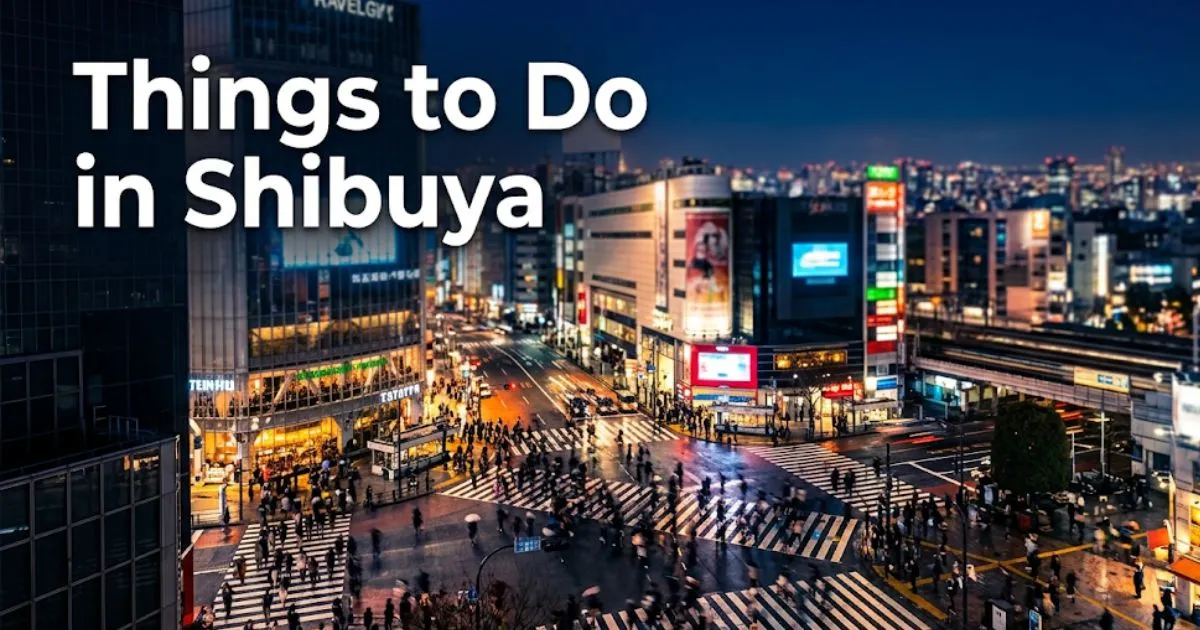
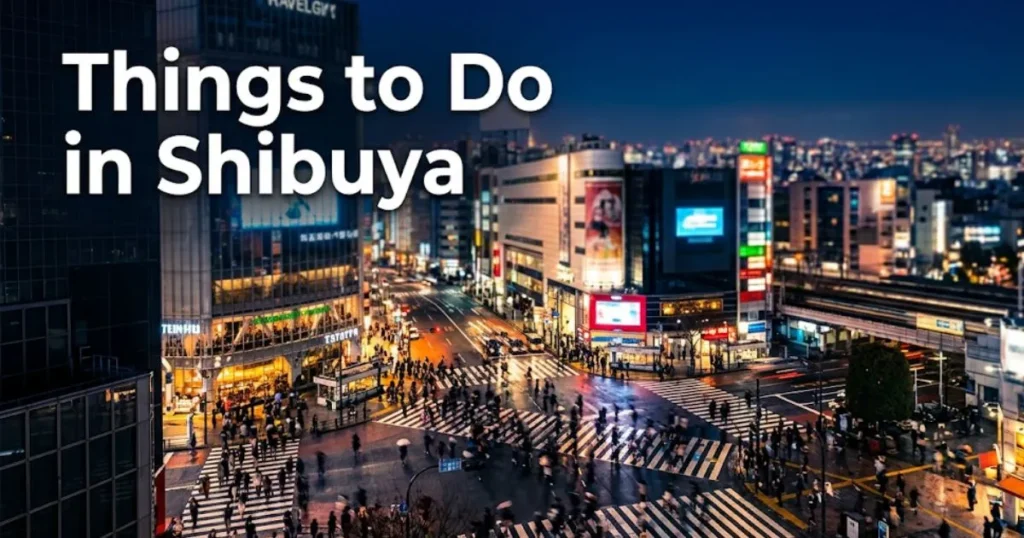
Shibuya Crossing, officially called the Shibuya Scramble Crossing, is the most photographed intersection in the world. Up to 3,000 people cross simultaneously during peak rush hour.
The crossing itself takes 90 seconds to walk. The experience of standing in it is disorienting, loud, and genuinely unlike anything else in global urban travel.
The honest assessment here: standing in the crossing is the tourist experience. The better view is from above.
Shibuya Sky, the open-air rooftop observation deck on the 46th floor of Scramble Square, provides an unobstructed aerial view of the crossing and the Tokyo skyline beyond. Admission runs approximately 2,000 to 2,500 yen per adult as of recent years; verify current pricing before visiting.
Advance booking is strongly recommended. Tickets sell out on peak days, particularly weekends and during Golden Week.
The Starbucks on the second floor of Shibuya Mark City offers a free window-side view looking down toward the crossing approach. It is consistently crowded but costs only the price of a coffee.
| Viewing Option | Cost | Crowd Level | Best Time | Booking Required |
|---|---|---|---|---|
| Street level crossing | Free | Extreme at peak | Weekday, non-peak hours | No |
| Starbucks Mark City window | Coffee purchase only | High | Early morning | No |
| Shibuya Sky rooftop | ~2,000 to 2,500 yen | Manageable with timed entry | Sunset or evening | Yes, advance |
| Scramble Square indoor floors | Free (shopping areas) | Moderate | Any time | No |
Seniors and accessibility travelers should note that Shibuya Sky involves an escalator and some standing on the open rooftop deck. The deck has no seating sections. Verify accessibility arrangements directly with Scramble Square before visiting.
Insider Tip:
- Book Shibuya Sky for the 30 to 45 minutes before sunset to catch the shift from golden hour to full neon illumination in a single visit
- The indoor observation floor below the rooftop is less crowded and partially sheltered, preferable in rain or extreme heat
- Shibuya Sky tickets booked through the official Scramble Square website typically have better availability than third-party booking platforms
Shibuya Neighborhoods Worth Exploring Beyond the Crossing
The most rewarding things to do in Shibuya Japan are consistently found in the neighborhoods that sit outside the main station orbit. Daikanyama, 10 to 15 minutes on foot from Shibuya Station, is where the district’s residential elegance surfaces.
Daikanyama T-Site is a bookshop and lifestyle complex that local Tokyo residents consider one of the city’s best designed public spaces. It opens typically around 7 AM and stays open late; verify current hours before visiting.
The complex combines a curated bookshop with a vinyl record section, a coffee bar, and rotating specialty exhibitions. It is a genuine destination rather than retail infrastructure.
A 10-minute walk from Daikanyama follows the Meguro River into Nakameguro. The canal-side streets hold independent cafes, small fashion boutiques, and some of Tokyo’s most photographed cherry blossom viewing spots in spring.
Nonbei Yokocho, translated as Drunkard’s Alley, sits five minutes on foot from Shibuya Station. It is a narrow alley of tiny bars holding 10 to 20 people each, mostly with standing room and counter seating.
This is the specific Shibuya experience that experienced Tokyo travelers rate above the crossing. It is the antidote to Shibuya’s scale.
Couples find Nakameguro canal-side particularly well-suited for an afternoon walk followed by dinner. The area has some of Tokyo’s best small restaurant density without the crowds of central Shibuya.
Solo travelers should note that Nonbei Yokocho’s small bar format naturally creates conversation. Most bars welcome solo visitors.
Key Takeaway: Daikanyama and Nakameguro give Shibuya its depth. Without them, you have visited the postcard, not the district.
Shopping in Shibuya
Shibuya is Tokyo’s most concentrated shopping district for youth fashion, Japanese design goods, and mid-range international brands. No single department store or shopping complex defines the experience.
Shibuya 109, the cylindrical building at the top of the Dogenzaka slope, is the canonical address for Japanese fast fashion and youth streetwear. It is deliberately styled for a specific demographic and is worth entering as a cultural experience regardless of buying intent.
Shibuya Parco, reopened after a major redesign in 2019, contains a mix of streetwear labels, Japanese designer brands, a Nintendo store, and a gallery floor with rotating art and pop culture exhibitions. It operates on a different register than 109, skewing toward design and creative culture.
Tokyo Hands (formerly Tokyu Hands) in Shibuya is the practical shopping destination that experienced Tokyo visitors consistently prioritize. It is a multi-floor lifestyle and hardware store carrying Japanese stationery, craft supplies, travel accessories, and household goods that serve as genuinely useful souvenirs.
Center-gai is the pedestrian shopping street running perpendicular from the crossing. It is crowded, loud, and dense with chain restaurants, game centers, and clothing stores. It functions as Shibuya’s commercial spine.
Spain-zaka, the sloped street running parallel to Center-gai, is quieter and holds more independent and boutique-level options.
Budget travelers should know that Shibuya 109 has a basement floor with lower price-point items. Tokyo Hands is similarly accessible across budget levels and yields better value per purchase than most tourist-oriented gift shops.
Seniors and accessibility travelers should note that Shibuya Parco and Shibuya Hikarie both have elevator access throughout. Shibuya 109’s layout is escalator-based with tight floor layouts that can be difficult for mobility aids during peak shopping hours.
Food and Drink in Shibuya
Shibuya’s food culture covers every price point and format from standing ramen counters to omakase sushi. The district is not Tokyo’s most celebrated dining neighborhood, but it has excellent options across every category.
Fuglen Tokyo in the Tomigaya neighborhood, a short walk or taxi from Shibuya Station, is a Norwegian-Japanese coffee and cocktail bar that the Tokyo food community consistently identifies as one of the city’s best independently operated cafes. It opens early as a coffee bar and transitions to cocktails in the evening.
For ramen, the Shibuya area has strong representation from major Tokyo ramen styles. The basement food halls of Shibuya Hikarie and Shibuya Scramble Square contain high-quality ramen and Japanese dining at prices ranging from approximately 900 to 1,800 yen per bowl; verify current pricing directly.
Nonbei Yokocho functions as both a bar destination and a food destination. Several of the alley’s bars serve yakitori, grilled skewers, and small Japanese plates alongside drinks. The format is standing or counter dining, which suits solo travelers and couples.
The Spain-zaka area around the Dogenzaka slope holds a higher density of independent restaurants compared to Center-gai. It includes izakaya (Japanese pub restaurants), casual Japanese Italian hybrids, and small soba counters.
For a mid-range splurge, Shibuya Hikarie’s dining floor aggregates several respected Tokyo restaurant brands under one roof, making it a reliable choice when you want quality without committing to a full-service reservation.
Budget travelers should know that convenience store food in Japan is genuinely high quality. Lawson, 7-Eleven, and FamilyMart near Shibuya Station sell onigiri, sandwiches, and hot items at 200 to 500 yen that local workers eat daily.
Insider Tip:
- Lunch service at many Shibuya restaurants offers the same kitchen as dinner at 40 to 60% of the cost
- The basement food halls open earlier and close later than street-level restaurants
- Fuglen Tokyo’s evening cocktail menu uses Japanese whisky and seasonal Japanese ingredients unavailable at most international cocktail bars
Shibuya Nightlife
Shibuya’s nightlife is among Tokyo’s most concentrated and varied. It ranges from approachable neighborhood bars to high-capacity clubs, with every format between.
Nonbei Yokocho is the correct starting point for a Shibuya evening regardless of how the night continues. The alley’s bars are friendly to foreign visitors, most staff have basic English, and the compact format makes it easy to try multiple spots in a single evening.
The Dogenzaka and Love Hotel Hill area holds Shibuya’s higher-energy club and bar district. This zone is active from approximately 10 PM until the early morning hours. Street touts are present; declining firmly and continuing walking is the standard Tokyo response.
WOMB on Maruyamacho is Shibuya’s most internationally known club, with a reputation for electronic music programming. Capacity is significant; expect queues on weekend nights from midnight onward. Check WOMB’s official calendar for 2026 programming before visiting.
Contact, also in the Daikanyama area, skews toward underground electronic music with a more locally-oriented crowd than WOMB. It is the specific alternative that experienced Tokyo nightlife visitors consistently choose over the more tourist-visible options.
Solo travelers will find Shibuya’s bar format generally solo-friendly. Counter seating at small bars creates natural conversation. Large clubs are less solo-friendly and require more navigation of group dynamics.
Couples who want atmosphere without high volume should note that Nonbei Yokocho and Fuglen Tokyo‘s evening program offer genuinely intimate settings. The club district is explicitly not designed for couples seeking quiet connection.
Key Takeaway: Start your Shibuya evening at Nonbei Yokocho before 9 PM to get a counter seat; by 10 PM the alley is at capacity and finding a spot becomes difficult.
Culture and History in Shibuya
Shibuya’s cultural institutions are less famous than its commercial identity but deliver some of the most distinctive Tokyo experiences available in the district. Bunkamura is Shibuya’s dedicated arts complex, housing a concert hall, theater, cinema, and gallery space.
The gallery at Bunkamura (called Bunkamura The Museum) rotates major international exhibition loans and Japanese art historically significant to the twentieth century. Programming for 2026 should be checked directly with Bunkamura before visiting, as the venue has undergone renovation periods in recent years.
The Toguri Museum of Art near Shibuya holds one of Japan’s most focused private collections of Edo-period porcelain and ceramics. It is small, quiet, and completely absent from most tourist itineraries. Admission runs approximately 1,000 yen per adult; verify current pricing before visiting.
Meiji Jingu, technically across the border in Harajuku but accessible in 15 minutes on foot from Shibuya, is one of Tokyo’s most significant Shinto shrines. The forested approach path through the shrine’s woodland is a genuine contrast to Shibuya’s urban density.
The shrine itself is free to enter. The inner garden has a separate admission fee; verify current entry requirements through the official Meiji Jingu website.
Seniors and accessibility travelers should note that Meiji Jingu’s approach path is gravel and unpaved in sections. The distance from the entrance gate to the main shrine is approximately 800 meters. The inner garden involves some uneven terrain.
Families with children will find Meiji Jingu’s wooded approach and open grounds genuinely child-friendly. The scale of the shrine and the absence of commercial noise makes it one of the better Tokyo experiences for children under 10.
Outdoor Spaces Near Shibuya
The best outdoor experience in the Shibuya area is Yoyogi Park, a large urban park immediately adjacent to Meiji Jingu in the Harajuku direction. It is free to enter and open daily from early morning.
Yoyogi Park holds Tokyo’s most accessible hanami (cherry blossom viewing) zone during late March and early April. The park fills with Tokyo residents spreading picnic sheets under the blossom canopy.
This is not a quiet or contemplative experience during peak cherry blossom season. It is a city-scale outdoor party that local residents genuinely love. Managing your expectations accordingly will improve the experience.
Shibuya Stream, the riverside walkway along the upper Meguro River section near Shibuya Station, is a newer outdoor public space that opened with the Shibuya Stream office and retail development. It runs from near Shibuya Station south toward Daikanyama.
The walkway is narrow but consistently less crowded than central Shibuya streets. It provides a pleasant, shaded walking route between Shibuya and Daikanyama during the warmer months.
The Nakameguro Canal, technically in the Meguro River’s mid-section, is lined with cherry trees and flanked by cafe and restaurant terraces. During cherry blossom season it is dramatically lit with paper lanterns in the evenings.
Outside of cherry blossom season, Nakameguro canal-side remains one of Tokyo’s best outdoor walking and dining environments. It simply becomes less photographed.
Families should note that Yoyogi Park has large open grass areas appropriate for children to run freely. It is one of the few genuinely child-appropriate outdoor spaces within walking distance of Shibuya.
Key Takeaway: Yoyogi Park and Nakameguro canal are where Shibuya breathes. Neither requires a ticket and both are within a 20-minute walk of Shibuya Station.
Things to Do in Shibuya for Families
Shibuya with young children requires more planning than most Tokyo districts. The station is large and complex, the crowds are dense during peak hours, and most of the district’s celebrated experiences are calibrated for adults.
That said, specific Shibuya experiences work genuinely well for families. Yoyogi Park is the single best family-oriented outdoor space in the district. Open grass, shade trees, and playground areas make it appropriate for children of all ages.
Meiji Jingu‘s forested approach path holds the attention of older children particularly well. The scale of the shrine gate and the transition from urban noise to woodland quiet is a memorable contrast that children respond to differently than adults.
Shibuya Parco has a Nintendo Store that is child-appropriate and consistently engaging for children familiar with Japanese game culture. The store does not require purchase and serves as a free entertainment stop.
The Pokemon Center at Shibuya Hikarie is a dedicated Pokemon retail and experience space. For families with children who have any familiarity with Pokemon, this is a reliable 45-minute to one-hour stop.
Stroller navigation warning: Shibuya Station is one of the more stroller-difficult major Tokyo stations. Elevators exist but are not always obvious from street level. The central escalator paths are faster but require folding strollers. Bold warning: plan your Shibuya Station exit strategy with a stroller before arriving by checking the station map on the Tokyo Metro official website.
The Scramble Crossing is genuinely disorienting for young children and small children in strollers at peak hours. The mid-morning period, roughly 10 to 11 AM on weekdays, is significantly more manageable.
Shibuya for Couples and Romantic Travelers
Shibuya’s most romantic experiences are not in its most famous locations. The crossing is spectacular but not intimate. The most genuinely romantic Shibuya experiences are in Daikanyama and Nakameguro.
Daikanyama T-Site in the early evening, browsing the book and vinyl sections with coffee in hand, is consistently cited by Tokyo residents as one of the city’s most comfortable shared-experience destinations for couples. It has no entry cost and no time pressure.
A walk from Daikanyama along the Meguro River into Nakameguro, particularly in the early evening when canal-side restaurants are setting up outdoor lighting, is one of Tokyo’s most naturally atmospheric couple experiences. This requires no reservation and no planning beyond comfortable shoes.
Fuglen Tokyo‘s cocktail program is the best couple-oriented evening drink option in the broader Shibuya area. The bar is small, the lighting is warm, and the drinks are genuinely distinctive. Arrive before 8 PM to find seating.
Shibuya Sky at sunset, booked for the 30-minute golden hour window, is Shibuya’s most deliberately cinematic couple experience. The open-air rooftop at that hour has genuine atmosphere. Booking the right time slot is the entire difference in quality.
The local alternative to a tourist-facing couple experience: the Spain-zaka slope in the early evening holds several small restaurants that are entirely unphotographed and genuinely intimate. The slope itself is quiet after 8 PM when the shopping traffic has moved on.
Honest note: Nonbei Yokocho is fun for couples but is not romantic in the quiet-evening sense. It is lively, convivial, and crowded. It is a great couple experience in the energy sense, not the candlelit sense.
Free and Budget-Friendly Things to Do in Shibuya
A full day of things to do in Shibuya japan can be completed at almost zero cost for admissions. The crossing, Hachiko, Center-gai, Yoyogi Park, Meiji Jingu, and the Nakameguro canal walk are all free.
The significant paid experiences in Shibuya are Shibuya Sky (approximately 2,000 to 2,500 yen per adult), the Toguri Museum of Art (approximately 1,000 yen per adult), and any ticketed Bunkamura programming. All three are optional.
Free things to do in Shibuya:
- Shibuya Scramble Crossing, street-level experience
- Hachiko Memorial Statue
- Daikanyama T-Site browsing (no purchase required)
- Nakameguro canal walk
- Yoyogi Park
- Meiji Jingu main shrine approach and shrine grounds (inner garden has separate fee)
- Window shopping on Center-gai, Spain-zaka, and Shibuya Hikarie’s commercial floors
- People-watching from Starbucks Mark City (cost of one drink)
Budget dining in Shibuya:
- Convenience store meals (Lawson, 7-Eleven, FamilyMart): 200 to 600 yen per item
- Ramen at Shibuya station-area counters: approximately 800 to 1,200 yen per bowl
- Standing soba counters near Shibuya Station: approximately 500 to 900 yen per bowl
- Department store basement food halls: 600 to 1,500 yen per item
Budget travelers should note that Tokyo’s transit costs are distance-based. A Suica IC card is the most efficient way to pay, and a day of movement within Shibuya and adjacent neighborhoods typically costs 300 to 600 yen in total transit fares.
According to the Tokyo Metropolitan Government Bureau of Tourism, Shibuya holds some of the highest density of free public art installations in Tokyo, particularly around Shibuya Stream and Shibuya Cast, making it possible to have a culturally rich day at minimal cost.
Key Takeaway: Shibuya Sky is the only genuinely worth-the-cost paid attraction in the district for most visitors; every other premium experience has a free alternative nearby.
Best Time to Visit Shibuya
The best time to visit Shibuya is mid-October through mid-November or late February through mid-March. Both periods offer comfortable temperatures, manageable crowds, and full access to the district’s range of experiences.
Late March to early April is the cherry blossom window. Yoyogi Park and Nakameguro are at their most visually arresting. Hotel prices rise significantly and availability tightens; booking 90 to 120 days in advance is standard for cherry blossom season Tokyo visits.
Periods to approach carefully:
- Golden Week (late April to early May): The busiest domestic travel period in Japan. Shibuya reaches its absolute peak density. Prices spike and queues at Shibuya Sky and popular restaurants extend significantly.
- August: Tokyo summer heat and humidity are serious. Daytime temperatures regularly exceed 33 to 35 degrees Celsius with high humidity. Shibuya’s outdoor spaces become genuinely unpleasant from 11 AM to 4 PM.
- Late December and early January: New Year holiday draws large crowds to Meiji Jingu specifically. Some businesses close between December 29 and January 3.
Halloween in Shibuya: The annual street Halloween that made Shibuya internationally famous was officially restricted by the Shibuya Ward government starting in 2023 due to crowd management concerns. Regulations for 2026 have not been finalized as of this writing. Verify current Shibuya Halloween policies through official Shibuya Ward channels before planning travel around this event.
Couples seeking the most atmospheric Shibuya experience should target mid-November, when autumn foliage colors appear in Yoyogi Park and Nakameguro canal-side trees turn gold and red.
Getting to and Around Shibuya
Getting to Shibuya from central Tokyo is straightforward. The JR Yamanote Line connects Shibuya to Tokyo Station, Shinjuku, Harajuku, and Ebisu in under 15 minutes.
From Narita Airport (NRT), the Narita Express (N’EX) runs directly to Shibuya Station. Journey time is approximately 80 to 90 minutes. Fares run approximately 3,000 to 4,000 yen; verify current pricing through JR East.
From Haneda Airport (HND), the Tokyo Monorail connects to Hamamatsucho Station, where the Yamanote Line reaches Shibuya in roughly 30 to 40 minutes total.
A Suica or Pasmo IC card, loaded at any airport or major station, handles all Tokyo transit payments. These cards work on JR lines, Tokyo Metro, private railway lines, and most convenience stores. This is the single most useful logistics decision for any Tokyo trip.
Navigating Shibuya Station: Shibuya Station is one of Tokyo’s most complex stations, serving five rail lines on multiple underground and above-ground levels. The Hachiko Exit is the primary orientation exit for tourists. All major sightseeing directions are reachable from Hachiko Exit within a 10-minute walk.
To reach Daikanyama and Nakameguro without walking: take the Tokyu Toyoko Line one stop from Shibuya to Daikanyama Station, or two stops to Nakameguro Station.
Seniors and accessibility travelers should request the accessible route through Shibuya Station. Elevators connect all major platforms but require knowing which level the elevator is on in advance. The station’s official accessibility map is available through the Tokyo Metro website and is worth downloading before arrival.
Getting around within Shibuya itself is primarily on foot. Most major destinations within the district are within a 15 to 20-minute walk of Shibuya Station.
One-Day Shibuya Itinerary
A single day in Shibuya covers the core experiences without doubling back. The sequence below minimizes backtracking and front-loads paid reservations.
Pre-visit booking required: Shibuya Sky observation deck. Book the sunset time slot through the official Scramble Square website at least three to seven days in advance, more during peak seasons.
One-Day Shibuya Itinerary:
- 9:00 AM: Arrive at Shibuya Station via Hachiko Exit. Photograph the Hachiko statue before morning crowds build.
- 9:30 AM: Walk to Meiji Jingu via Harajuku, approximately 20 minutes on foot. Allow 45 minutes for the shrine approach and main grounds.
- 11:00 AM: Return through Harajuku toward Shibuya. Browse Takeshita Street or head directly to Yoyogi Park’s southern entrance for a rest stop.
- 12:00 PM: Lunch at the basement food halls of Shibuya Hikarie or a standing ramen counter near Shibuya Station. Budget 900 to 1,500 yen.
- 1:30 PM: Walk to Daikanyama via Shibuya Stream walkway. Browse Daikanyama T-Site. Allow 45 minutes to one hour.
- 2:30 PM: Walk the Meguro River toward Nakameguro. Browse canal-side cafes and boutiques. Coffee stop at one of the canal-side independent cafes.
- 4:30 PM: Return to Shibuya by Tokyu Toyoko Line (one stop). Explore Shibuya Parco, particularly the gallery floor and Nintendo Store.
- 5:30 PM: Head to Scramble Square for your pre-booked Shibuya Sky sunset slot. Allow one hour.
- 7:00 PM: Dinner in the Shibuya Hikarie dining floors or Spain-zaka restaurant strip.
- 9:00 PM: Evening drinks at Nonbei Yokocho. Arrive by 9 PM to find counter seating at your first bar of choice.
This itinerary works well for solo travelers and couples. Families with young children should substitute the Nakameguro walk for additional time at Yoyogi Park and end the evening earlier, skipping Nonbei Yokocho.
Day Trips from Shibuya to Nearby Neighborhoods
Shibuya connects directly to some of Tokyo’s most rewarding adjacent neighborhoods. None require more than 20 minutes by foot or transit.
Harajuku is the most immediate day-trip-adjacent destination. Takeshita Street is the youth fashion corridor; Omotesando is its upscale parallel, lined with international architecture-designed flagships and the Omotesando Hills complex. The walk from Shibuya to Omotesando along the Omotesando boulevard takes approximately 15 minutes.
Ebisu, one stop south on the Yamanote Line, is Shibuya’s quieter, more grown-up adjacent neighborhood. Yebisu Garden Place, a former brewery complex turned shopping and museum district, holds the Tokyo Metropolitan Museum of Photography. This is the local alternative for culture-seekers who find Shibuya’s commercial energy too high-volume.
Shimokitazawa, two stops from Shibuya on the Keio Inokashira Line, is a genuinely distinct Tokyo neighborhood that experienced Tokyo visitors consistently choose over a second day in Shibuya. It has the highest density of vintage clothing shops, independent live music venues, and small theater companies in Tokyo. Thrift stores price vintage denim and Japanese workwear significantly below what the same pieces cost in Harajuku boutiques.
Daikanyama and Nakameguro function as both within-Shibuya destinations and day-trip-worthy stops in their own right. A half-day built entirely around the Daikanyama to Nakameguro canal walk is a complete and satisfying Tokyo experience without touching central Shibuya at all.
According to Lonely Planet’s Tokyo Guide, Shimokitazawa consistently ranks as one of Tokyo’s most distinctive neighborhoods for travelers interested in independent culture and local retail. It is the specific recommendation for repeat Tokyo visitors who have already spent time in Harajuku and Shibuya’s main commercial zone.
Budget travelers should note that Shimokitazawa’s vintage economy is significantly more accessible than Harajuku boutique pricing. Quality vintage finds at 2,000 to 6,000 yen are genuinely available.
Safety and Practical Warnings for Shibuya and Tokyo
Tokyo is one of the world’s safest major urban destinations for foreign visitors. Violent crime against tourists is extremely rare.
Key safety and practical facts every Shibuya visitor should know:
- The Scramble Crossing crowd is safe but disorienting. Keep bags secured on your front and be prepared to stop if you misjudge the signal timing.
- Dogenzaka and Love Hotel Hill area touts are common after 9 PM. They are not dangerous, but persistent. Walk past without engaging.
- Tokyo summer heat from late July through August is a genuine health risk. Carry water, use the shaded underground walkways between air-conditioned buildings, and plan outdoor activities before 11 AM or after 5 PM.
- Shibuya Station navigation is complex enough that first-time visitors often exit from the wrong level. Download the Shibuya Station map in advance or use Google Maps in offline mode.
- Japan requires no tip at any restaurant or bar. Attempting to tip may cause confusion. Service is included in the culture, not the bill.
- Emergency services in Japan: Police dial 110. Ambulance and fire dial 119. For non-emergency English language assistance, the Japan Visitor Hotline operates 24 hours at 050-3816-2787 as of recent years; verify this number is current before travel through the Japan National Tourism Organization website.
- Earthquake awareness: Tokyo is seismically active. All modern buildings meet strict earthquake resistance standards. If tremors occur, follow Japanese public guidance, which is typically to shelter under a sturdy structure rather than evacuate to the street.
Frequently Asked Questions About Things to Do in Shibuya
What are the best things to do in Shibuya for first-time visitors to Tokyo?
First-time visitors should prioritize Shibuya Sky for district orientation, the Scramble Crossing, Nonbei Yokocho for an evening drink, and a walk through Daikanyama and Nakameguro.
These four experiences cover Shibuya’s famous surface, its best viewpoint, and its most rewarding local-facing layer.
Meiji Jingu, accessible on foot from Shibuya in approximately 20 minutes, is worth including for a full day.
Is Shibuya Crossing worth it and how do you get the best view?
Shibuya Crossing is worth experiencing but it takes 90 seconds to cross. The best view is from above, specifically from the Shibuya Sky rooftop deck at Scramble Square or from the second-floor Starbucks window at Shibuya Mark City.
Street-level is disorienting and produces less satisfying photography than any elevated vantage point.
The evening crossing, from approximately 7 to 9 PM on a weeknight, is more atmospherically lit and slightly less crowded than peak rush hour.
How much does it cost to visit Shibuya Sky observation deck?
Admission to Shibuya Sky runs approximately 2,000 to 2,500 yen per adult as of recent years; verify current pricing through the official Scramble Square website before visiting.
Advance booking is strongly recommended. Tickets for peak dates and sunset time slots sell out days to a week in advance.
The observation deck is closed during some weather conditions, particularly high winds; the official Shibuya Sky website posts real-time operational status.
What is the best time to visit Shibuya?
The best time to visit Shibuya is mid-October through mid-November for comfortable temperatures and autumn foliage. Late February through mid-March is a strong second option.
Late March through early April delivers cherry blossoms at Yoyogi Park and Nakameguro but brings significantly higher hotel prices and crowd density.
Avoid August for outdoor activities and Golden Week for all activities if crowd sensitivity is a factor.
Is Shibuya good for families with kids?
Shibuya works for families with specific planning. Yoyogi Park, Meiji Jingu, the Nintendo Store at Shibuya Parco, and the Pokemon Center at Shibuya Hikarie are the most child-appropriate destinations.
The Scramble Crossing and Center-gai are overwhelming for toddlers during peak hours; the mid-morning window on weekdays is significantly more manageable.
Stroller navigation at Shibuya Station requires using elevator routes, which are present but not always obvious; download the station accessibility map in advance.
How do you get from Shibuya to Nakameguro or Daikanyama?
Daikanyama is one stop from Shibuya on the Tokyu Toyoko Line, or a 15-minute walk following the Shibuya Stream walkway south.
Nakameguro is two stops on the Tokyu Toyoko Line from Shibuya Station, or a 20 to 25-minute walk through Daikanyama along the Meguro River.
The walk between Daikanyama and Nakameguro along the canal is approximately 10 minutes and is itself one of the area’s best experiences.
Plan Your Shibuya Visit with Confidence
Shibuya delivers most for travelers who treat it as a layered district rather than a single attraction. Book Shibuya Sky first, build the rest of your day around Daikanyama, Nakameguro, and Nonbei Yokocho, and leave the Scramble Crossing as a 90-second punctuation mark rather than a headline act.
Before departure, verify Shibuya Sky ticket availability and current pricing through the official Scramble Square website. Confirm Meiji Jingu’s inner garden hours and any 2026 Bunkamura programming directly with those venues. Travel conditions, operating hours, admission prices, and any event-related regulations in Shibuya can change. Cross-reference key logistics with the Japan National Tourism Organization at jnto.go.jp before you travel.
Shibuya is one of the world’s genuinely great urban districts. Approach it with specific plans for its best layers and you will leave with a view of Tokyo that no amount of crossing photography can replicate.