16 Best Things to Do in Boston MA in 2026

Boston rewards visitors who skip the obvious and dig deeper.
Most first-timers spend too long at Quincy Market and miss the real city entirely.
The Freedom Trail matters, but the neighborhoods between its stops matter more.
The North End, Beacon Hill, and the South End are where Boston actually lives.
This guide covers exactly what earns your time in Boston for 2026.
It tells you what to skip, where locals go, and how to build a smart three-day plan.
Best Things to Do in Boston MA
The single best thing to do in Boston is walk the Freedom Trail through downtown, the North End, and Charlestown.
This 2.5-mile brick path connects 16 Revolutionary War sites under National Park Service management.
Start at Boston Common and follow the red line to the USS Constitution in Charlestown.
Allow four to five hours to complete the full route at a reasonable pace.
Budget at least 90 minutes more if you plan to enter the museum sites along the way.
The trail itself costs nothing to walk.
Guided tours by National Park Service rangers run seasonally from April through November.
Solo travelers will find the route safe, well-marked, and easy to navigate independently.
Families with children under 10 should plan to complete only the downtown portion.
Seniors should note that the Charlestown section involves a steep uphill walk to the Bunker Hill Monument.
| Freedom Trail Segment | Distance | Key Sites | Best For |
|---|---|---|---|
| Downtown | 0.7 miles | Boston Common, State House, Granary Burying Ground | All travelers, first-time visitors |
| North End | 0.5 miles | Paul Revere House, Old North Church | History enthusiasts, couples |
| Charlestown | 0.8 miles | USS Constitution, Bunker Hill Monument | History buffs, physically active visitors |
The most common mistake is treating the Freedom Trail as a checklist rather than an experience.
Stop for coffee in the North End between sites.
Take 20 minutes on a bench in the Granary Burying Ground to read the headstone inscriptions of Paul Revere, Samuel Adams, and John Hancock.
The National Park Service Boston National Historical Park rangers stationed at Faneuil Hall and the Charlestown Navy Yard provide deeper historical context than any guidebook.
Tourist Things to Do in Boston
Faneuil Hall Marketplace and Quincy Market are Boston’s most visited tourist attractions.
The historic building dates to 1742 and genuinely matters.
The food court and chain retail surrounding it are skippable.
Walk through the ground-floor market stalls for the 10-minute historical experience.
Then leave immediately for the North End or Boston Public Market nearby.
The Boston Public Market on Hanover Street offers local food vendors without the chain-restaurant crush.
Red Apple Farm sells Massachusetts-grown produce and cider donuts that outclass anything at Quincy Market.
Duck Tours depart from multiple locations and provide a 80-minute land-and-water overview of the city.
The amphibious vehicle enters the Charles River for harbor views.
Tickets run approximately $45 to $55 per adult and sell out days ahead in summer.
Families with young children rate Duck Tours highly.
Solo travelers and couples seeking depth over novelty should skip it in favor of a walking tour.
Legal Sea Foods and Union Oyster House anchor the tourist dining circuit.
Union Oyster House claims the title of America’s oldest continuously operating restaurant.
The clam chowder is solid.
The wait times and pricing reflect landmark status more than culinary ambition.
For a better seafood experience at a lower price, walk to Row 34 in the Seaport District.
Key Takeaway: Quincy Market is a food court with a historic exterior. Walk through for 10 minutes, then eat at Boston Public Market across the street.
Historic Things to Do in Boston
Boston’s concentration of Revolutionary War history is unmatched in the United States.
The Paul Revere House in the North End is the oldest remaining structure in downtown Boston.
Built around 1680, this small wooden home tells the story of Revere’s midnight ride through period-furnished rooms.
Admission runs approximately $6 to $8 per adult.
Allow 30 minutes inside.
The narrow doorways and steep staircases make this site inaccessible for wheelchair users and challenging for visitors with mobility limitations.
The Old North Church stands at 193 Salem Street and famously displayed the two lanterns signaling British troop movements.
The church remains an active Episcopal congregation.
Tours of the bell tower and crypt run throughout the day for a small additional fee.
Climbing the bell tower involves narrow, winding wooden stairs.
The USS Constitution at the Charlestown Navy Yard is the oldest commissioned warship still afloat in the world.
Launched in 1797, the ship earned the nickname “Old Ironsides” during the War of 1812.
Free tours run year-round led by active-duty US Navy sailors.
The adjacent museum charges approximately $10 to $15 for adults and covers the ship’s full history.
This experience delivers more genuine historical value than Faneuil Hall at a fraction of the crowd level.
The Bunker Hill Monument commemorates one of the earliest major battles of the Revolutionary War.
Climbing the 294 steps to the top is free but physically demanding.
The view from the summit looks across the Charles River toward downtown Boston.
There is no elevator.
Visitors with heart conditions or knee problems should skip the climb and visit the exhibit lodge at the base instead.
The Granary Burying Ground on Tremont Street holds the graves of Paul Revere, Samuel Adams, and John Hancock.
The cemetery dates to 1660 and sits directly beside the Park Street T station.
Entry is free.
Reading the slate headstone inscriptions offers a direct connection to colonial Boston that no museum exhibit can replicate.
Boston Neighborhoods to Explore
Boston’s neighborhoods each deliver a distinct character that changes how you experience the city.
The North End is Boston’s Italian-American heart and the city’s densest concentration of restaurants per square foot.
Hanover and Salem Streets form the main dining corridor.
This neighborhood operates as Boston’s living museum: colonial history downstairs, espresso bars upstairs.
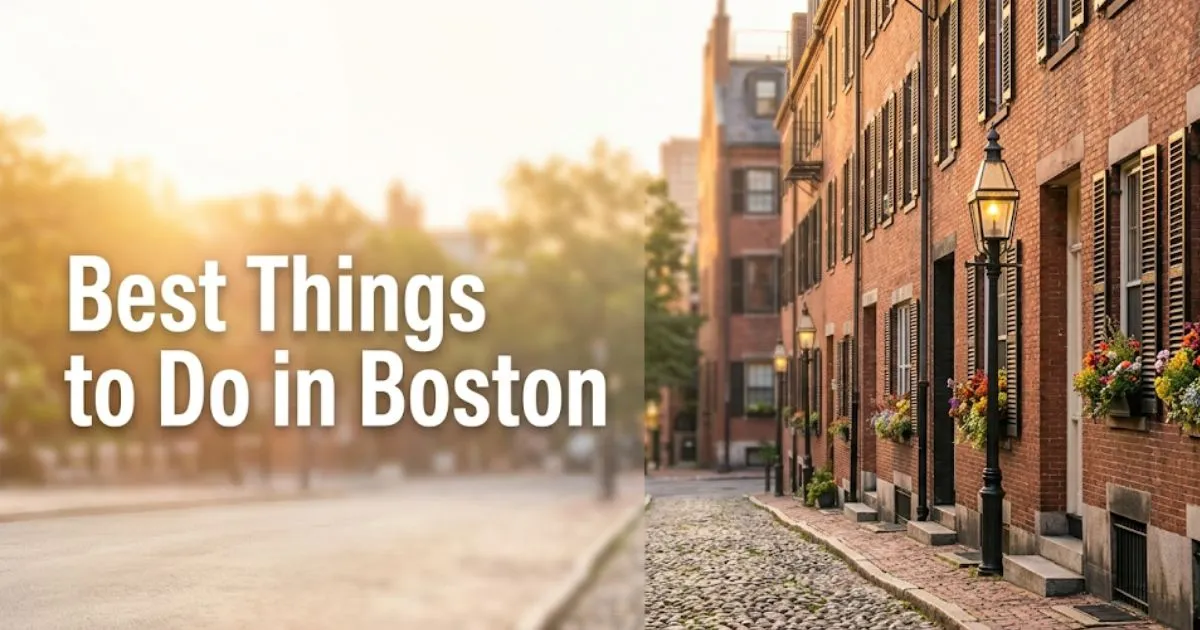
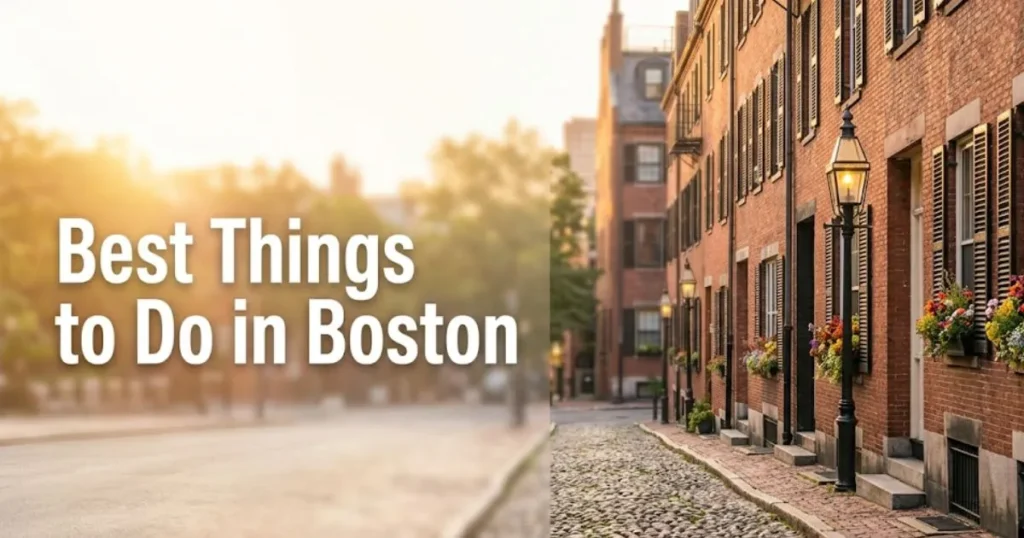
Beacon Hill features gaslit streets, Federal-style row houses, and brick sidewalks that curve past hidden gardens.
Charles Street runs the length of the neighborhood with independent bookstores, antique shops, and the Paramount restaurant.
Acorn Street is the most photographed residential lane in America.
Arrive before 8:00 AM to photograph it without crowds.
The Back Bay centers on Newbury Street’s eight-block retail corridor and the Boston Public Library at Copley Square.
Boylston Street runs parallel with larger commercial storefronts and the Prudential Center skywalk.
This neighborhood suits shoppers and architecture enthusiasts equally.
The South End claims Boston’s strongest contemporary dining scene and the SoWa Open Market on Sundays from May through October.
Tremont Street and Washington Street host nationally recognized restaurants in converted brownstones.
This is where Boston’s food culture extends beyond seafood and Italian standards.
The Seaport District represents Boston’s newest neighborhood built on former industrial piers.
The Institute of Contemporary Art anchors the cultural end of the district.
Pricey seafood towers and rooftop bars dominate the dining scene.
This neighborhood suits travelers who prioritize modern aesthetics over historic character.
| Neighborhood | Primary Draw | Dining Style | Best For |
|---|---|---|---|
| North End | Colonial history, Italian food | Casual pasta, cannoli shops | Couples, history lovers |
| Beacon Hill | Architecture, Charles Street shops | Upscale American, cafes | Romantic travelers, photographers |
| Back Bay | Shopping, Boston Public Library | Fine dining, brunch spots | Shoppers, architecture fans |
| South End | Contemporary dining, galleries | Chef-driven restaurants | Food-focused travelers |
| Seaport | Waterfront views, ICA museum | Seafood towers, cocktail bars | Modern urbanists |
Key Takeaway: Pick two neighborhoods per day maximum. Boston’s walkable scale tempts over-scheduling, but neighborhood hopping wastes time better spent at a cafe table watching a single block come alive.
Coolest Things to Do in Boston
The coolest things in Boston happen away from the Freedom Trail crowds.
SoWa Open Market in the South End runs Sundays from May through October and features local artists, vintage vendors, a farmers market, and a food truck courtyard.
The artist studios in the adjacent converted warehouse buildings open for browsing.
This is Boston’s best single Sunday activity for travelers who want to see the city’s creative side.
The Isabella Stewart Gardner Museum in the Fenway neighborhood houses a Venetian-style palace built around a central courtyard garden.
The art collection spans three floors of European, Asian, and American works displayed exactly as Gardner arranged them before her death in 1924.
The museum gained wider attention after a 1990 art heist remains unsolved.
Empty frames still hang where the stolen works once sat.
Admission runs approximately $20 to $22 for adults.
Timed-entry tickets are required and should be booked at least one week ahead.
The courtyard garden peaks in March and April when the hanging nasturtiums cascade from the upper balconies.
This museum suits art enthusiasts, couples seeking a romantic indoor experience, and anyone who appreciates eccentric personal collections over traditional gallery layouts.
Fenway Park tours run year-round even when the Red Sox are out of season.
The ballpark opened in 1912 and remains the oldest active Major League Baseball stadium.
The one-hour guided tour covers the Green Monster seats, the press box, and the field warning track.
Game-day tickets for the 2026 season require advance purchase through the Red Sox official website.
Standing-room tickets offer the cheapest entry at approximately $25 to $35 for most games.
Catching a game from the bleachers on a summer evening is a genuine Boston experience that transcends whether you care about baseball.
The Charles River Esplanade stretches three miles along the Boston side of the river between the Museum of Science and the Boston University Bridge.
Community Boating offers kayak and sailboat rentals from April through October.
The Hatch Shell hosts free concerts and movie nights throughout the summer season.
Hidden Things to Do in Boston
The Boston Athenaeum at 10 ½ Beacon Street is one of the oldest independent libraries in the United States.
The fifth-floor reading room overlooks the Granary Burying Ground through tall windows.
The first floor and art gallery are open to the public during limited hours.
Visitors can join a guided tour for approximately $10 or request a free self-guided visit pass.
This is Boston’s single best rainy-day refuge for readers and quiet travelers.
The Warren Anatomical Museum inside Harvard Medical School’s Countway Library displays medical artifacts including the skull of Phineas Gage.
The museum is free and open to the public on weekdays.
The collection includes Civil War surgical kits, early anatomical models, and medical instruments spanning two centuries.
Not for the squeamish, but genuinely fascinating for science-minded visitors.
Castle Island in South Boston combines a historic fort, walking paths, and the Sullivan’s seafood stand.
Fort Independence dates to the 1850s and offers free guided tours on summer weekends.
The causeway walk provides harbor and airport views without the downtown crowds.
Locals come here for the fried clams and hot dogs at Sullivan’s, a seasonal counter-service institution.
This destination suits families seeking outdoor space and couples wanting a harbor walk without the tourist density.
The Arnold Arboretum in Jamaica Plain is a 281-acre Harvard University-managed botanical garden.
Entry is free year-round.
The lilac collection peaks in mid-May and draws knowledgeable crowds.
The bonsai collection and the hilltop views of the Boston skyline reward visitors who make the 30-minute Orange Line trip from downtown.
East Boston’s waterfront parks along Marginal Street offer the single best skyline view in the city.
Piers Park and LoPresti Park face downtown directly across the harbor.
The Blue Line from Aquarium station reaches Maverick Square in four minutes.
Zero tourists.
This is where Boston photographers take their portfolio shots.
Key Takeaway: The Athenaeum reading room, the Warren Museum, and East Boston’s harbor parks cost nothing and deliver experiences most Boston visitors never discover.
Best Food Experiences Boston
Boston’s food identity runs from centuries-old oyster houses to contemporary chef-driven restaurants.
Lobster rolls divide the city into two camps: hot buttered Connecticut-style and cold mayonnaise-dressed Maine-style.
Neptune Oyster in the North End serves a hot buttered version on a toasted brioche roll for approximately $35 to $40.
Arrive 30 minutes before opening to avoid a two-hour wait.
James Hook and Company on the Fort Point Channel waterfront offers a more affordable lobster roll from a casual seafood shack.
This is the working-lobster-company experience rather than the sit-down restaurant version.
Clam chowder at Union Oyster House is the historic choice.
Saltie Girl in the Back Bay serves a smoked clam chowder with salt pork that represents the modern evolution of the dish.
The North End’s Italian dining centers on Hanover Street from Cross Street to Commercial Street.
Giacomo’s on Hanover Street draws the longest line for its pasta dishes and cash-only policy.
Carmelina’s on Hanover Street takes reservations and serves a better overall experience.
Pomodoro on Salem Street is the tiny, reservation-essential local favorite with fewer than 20 seats.
No North End restaurant allows you to walk in at 7:00 PM on a Saturday without a wait.
Dinner at 5:30 PM or 9:00 PM is the local timing strategy.
Pastry decisions matter in the North End.
Mike’s Pastry on Hanover Street has the name recognition and the tour bus lines.
Modern Pastry on Hanover Street has the better cannoli.
Bova’s Bakery on Salem Street is open 24 hours and serves the locals who avoid both tourist-bakery lines entirely.
The South End dining scene runs along Tremont Street and Washington Street.
Toro serves Spanish tapas in a former industrial space and does not take reservations for parties under six.
Myers and Chang offers Asian-influenced small plates from chef Joanne Chang, who also runs Flour Bakery.
Oysters reach peak quality in Boston’s colder months.
Row 34 in the Seaport District, Neptune Oyster, and B&G Oysters in the South End represent the city’s top oyster bars.
| Food Experience | Best Spot | Price Range | Insider Note |
|---|---|---|---|
| Hot buttered lobster roll | Neptune Oyster | $35-$40 | Arrive before opening |
| Affordable lobster roll | James Hook | $20-$28 | Casual waterfront shack |
| North End pasta | Carmelina’s | $18-$28 per dish | Reservations essential |
| Best cannoli | Modern Pastry | $5-$7 each | Skip Mike’s line |
| Top oyster bar | Row 34 | $3-$4 per oyster | Seaport location |
| 24-hour bakery | Bova’s | $3-$6 per item | Local alternative to Mike’s |
Harvard Square dining in Cambridge adds another dimension.
Alden and Harlow serves creative small plates in a basement space on Brattle Street.
Mr. Bartley’s Burger Cottage on Massachusetts Avenue has fed Harvard students and tourists since 1960.
Things to Do in Boston at Night
Boston’s nightlife rewards those who know where to look beyond the obvious downtown bars.
The North End after dark transforms when the dinner crowds thin and the narrow streets quiet down.
Caffe Vittoria on Hanover Street serves espresso and grappa until midnight in a space unchanged since 1929.
Caffe Paradiso across the street stays open equally late with a slightly younger crowd.
Both pour better coffee than any daytime tourist stop.
The Seaport District rooftop bars deliver harbor views with your cocktail.
Lookout Rooftop at the Envoy Hotel offers panoramic views of the Boston skyline and harbor.
Arrive by 4:30 PM on weekends to secure a seat.
The crowd skews young professional and the drink prices reflect the view.
Live music in Cambridge centers on Club Passim in Harvard Square.
This basement venue has launched folk and acoustic careers since 1958.
Shows typically start at 8:00 PM with tickets in the $20 to $35 range.
The Beehive in the South End pairs live jazz with dinner and cocktails in a two-level space.
The bar area does not require reservations and the music runs nightly.
This is Boston’s best date-night venue for couples seeking atmosphere without the club scene.
Comedy at Laugh Boston in the Seaport District books national touring acts alongside local comedians.
Shows run Thursday through Saturday with tickets in the $25 to $35 range.
The Seaport Boulevard waterfront walk connects the ICA museum to the Boston Harborwalk.
This path stays lit and populated into the evening hours.
Couples and solo travelers will find it safe and scenic for an after-dinner walk.
The view of downtown lights reflected in the harbor outranks any paid observation deck.
Late-night dining options thin out considerably after 10:00 PM outside of the North End and Seaport.
Bova’s Bakery on Salem Street operates 24 hours and serves pizza, calzones, and pastries to the post-bar crowd.
South Street Diner near South Station runs 24 hours and serves the full diner menu in a vintage railcar setting.
Boston is not a 4:00 AM city.
Last call typically falls between 1:00 and 2:00 AM.
Plan your night accordingly.
Things to Do in Boston for Couples
Boston rewards couples who treat the city as a walkable romantic backdrop rather than a checklist.
The Boston Public Garden swan boats operate from mid-April through mid-September.
A 15-minute ride costs approximately $4 to $5 per person.
The lagoon paddle beneath the suspension bridge under willow trees delivers the single most romantic 15 minutes in downtown Boston.
Early morning rides before 10:00 AM avoid the lines.
Beacon Hill at dusk offers gaslit streets, brick sidewalks, and flower-box windows that feel designed for couples.
Start at Charles Street and wander uphill toward Louisburg Square.
The neighborhood’s residential silence and architectural detail create intimacy that no restaurant reservation can match.
Dinner in the North End followed by cannoli and an espresso at Caffe Vittoria forms the classic Boston couples’ evening.
Make a reservation at Mamma Maria on North Square for the best upscale Italian in the neighborhood.
The restaurant occupies a converted townhouse with five small dining rooms.
Request a table by the window overlooking the square.
Picnic on the Charles River Esplanade costs nothing and outclasses most paid activities.
Pick up sandwiches from Flour Bakery on Clarendon Street.
Walk five minutes to the riverbank.
Claim a bench or grass patch facing the Cambridge skyline at sunset.
The Boston University sailing pavilion’s small boats drift past as the light fades.
Rooftop drinks at Lookout Rooftop or the smaller Contessa atop the Newbury Hotel on Newbury Street work for couples who want skyline views.
Contessa requires reservations booked weeks in advance.
The Isabella Stewart Gardner Museum courtyard garden provides the best indoor date activity for couples who appreciate art and atmosphere.
Winter couples should time their visit for the nasturtium hanging in March.
Summer couples benefit from the museum’s air conditioning and calm during the hottest afternoons.
Day trip to the Boston Harbor Islands suits couples seeking an escape from the city rhythm.
Ferries depart from Long Wharf to Spectacle Island and Georges Island from May through October.
Spectacle Island offers a sand beach and five miles of walking trails with harbor views.
Pack a lunch and treat it as Boston’s version of a coastal hike.
Things to Do in Boston with Kids
Boston serves families with school-age children better than families with toddlers.
The Boston Children’s Museum on Fort Point Channel occupies a converted warehouse with three floors of hands-on exhibits.
The three-story climbing structure anchors the central atrium.
Admission runs approximately $20 to $22 per person.
Allow three to four hours minimum.
The museum suits children ages 3 through 12 best.
The New England Aquarium on Central Wharf centers on a four-story Giant Ocean Tank containing a Caribbean coral reef ecosystem.
Penguin feedings and seal training sessions run throughout the day.
Admission runs approximately $32 to $35 for adults and $24 to $26 for children.
Arrive at opening to avoid the midday crowds that make exhibits difficult to access.
Combine the aquarium with a whale watching cruise departing from the same wharf.
Boston Harbor City Cruises runs 3-to-4-hour trips from April through October.
Whale sightings are not guaranteed, but the Stellwagen Bank Marine Sanctuary produces reliable humpback sightings in season.
Dress for temperatures 15 degrees colder on the water.
The Museum of Science spans the Charles River dam and contains a planetarium, live animal demonstrations, and the Theater of Electricity with indoor lightning shows.
The dinosaur exhibit and hands-on Discovery Center target younger children.
This museum covers enough ground to fill a full rainy day.
Fenway Park tours engage kids ages 8 and up who have even a passing interest in sports.
The Green Monster seats and warning-track access feel special regardless of team loyalty.
One-hour tours run daily year-round.
Game-day tours offer less field access but more energy in the ballpark.
Franklin Park Zoo in Dorchester covers 72 acres with a tropical rainforest building, giraffe savanna, and children’s zoo with a petting area.
Admission runs approximately $22 to $24 for adults and $14 to $16 for children.
This works for a half-day outdoor activity with younger children who need space to move.
Swan boats in the Public Garden appeal to children under 8.
The ride is gentle, short, and surrounded by the park’s open space for running afterward.
The adjacent Make Way for Ducklings bronze statues provide an essential photo stop for families with young children.
What families should skip: The full Freedom Trail in one day will exhaust children under 12.
Do the downtown portion between Boston Common and Faneuil Hall only.
Quincy Market’s basement-level seating area is loud, crowded, and stressful with strollers.
Eat at the Boston Public Market instead.
Free Things to Do in Boston
Boston offers more free world-class experiences than almost any American city its size.
The Freedom Trail costs nothing to walk.
National Park Service sites along the route including Faneuil Hall, the USS Constitution, and the Bunker Hill Monument offer free entry.
The Boston Public Library in Copley Square opens its central courtyard, upstairs Bates Hall reading room, and the John Singer Sargent murals to the public daily.
Free guided tours run several times per week.
The library’s architectural beauty and quiet grandeur match any paid museum in the city.
Harvard University’s campus in Cambridge opens its central Harvard Yard to the public.
Free student-led historical tours depart from the Harvard Information Center.
The Harvard Museum of Natural History charges admission, but walking the campus grounds, Harvard Yard, and Memorial Hall exterior costs nothing.
The Samuel Adams Brewery in Jamaica Plain offers free tours with beer samples.
A suggested donation benefits local charities.
Tours run on a first-come basis and fill early on weekends.
The Boston Common and Public Garden form a continuous 74-acre green space in the city center.
The Common’s Frog Pond hosts free wading in summer and paid ice skating in winter.
The Public Garden’s flower beds peak in May and June.
Castle Island in South Boston offers free Fort Independence tours and harbor views.
Sullivan’s food stand requires cash for fried clams, but the grounds and fort cost nothing.
SoWa Open Market costs nothing to browse.
Vendors sell goods, but the market’s energy, art studios, and people-watching are free.
Charles River Esplanade offers miles of waterfront walking and the Hatch Shell’s free summer concert series.
Community Boating charges for rentals, but sitting on the docks costs nothing.
The Massachusetts State House offers free guided tours on weekdays.
The building’s gold dome and interior murals merit the 45-minute visit.
Free museum days: The Museum of Fine Arts offers free admission on certain Wednesday evenings.
The Isabella Stewart Gardner Museum offers free admission on select days.
The Institute of Contemporary Art is free on Thursday evenings.
Check individual museum websites for 2026 free day schedules.
These change annually.
Boston Things to Do in Winter
Boston winter demands indoor planning and strategic outdoor timing.
The Isabella Stewart Gardner Museum courtyard garden glows even in January under the glass roof.
This museum becomes essential shelter from cold weather.
The interior courtyard stays warm year-round.
Fenway Park tours run daily through winter without the summer crowds.
The ballpark under snow offers a unique perspective unavailable to baseball-season visitors.
This suits sports fans and photographers equally.
The Museum of Fine Arts operates fully through winter and contains enough gallery space to fill two full days.
The Art of the Americas wing alone spans four floors of American painting, furniture, and decorative arts.
This museum rewards winter visitors with uncrowded galleries and full attention from docents.
Ice skating on the Boston Common Frog Pond runs from approximately November through March.
Admission and skate rentals cost approximately $10 to $15 combined.
The rink looks best at night with the city skyline lit behind the trees.
Boston Symphony Orchestra performs at Symphony Hall from September through May.
The BSO’s holiday concerts and winter programming represent the city’s cultural peak.
Tickets for weekend performances should be booked weeks ahead.
Restaurant week in Boston typically runs in March and again in August.
Participating restaurants offer prix-fixe lunch and dinner menus at reduced rates.
This is the best time for budget travelers to access restaurants that would otherwise stretch their spending limit.
Winter-specific limitations matter.
The Boston Harbor Islands ferry does not operate from November through April.
Whale watching tours suspend operations from November through March.
The Swan Boats in the Public Garden are stored from October through mid-April.
Many Freedom Trail historic house museums reduce hours or close entirely in January and February.
Check the National Park Service Boston operating calendar before planning a winter Freedom Trail walk.
The North End’s dense restaurant concentration makes it Boston’s best winter neighborhood.
You can move between espresso, pasta, and pastry without extended outdoor exposure.
Beacon Hill’s steep brick sidewalks become treacherous in icy conditions.
Wear boots with genuine traction.
The T runs year-round but experiences weather-related delays during heavy snow.
Budget extra transit time in January and February.
Best Time to Visit Boston
The best time to visit Boston is late April through early June and September through mid-November.
May delivers flowering trees in the Public Garden and comfortable walking temperatures in the 60s.
September and October bring New England’s fall foliage and crisp air without summer hotel pricing.
July and August bring peak crowds, high humidity, and hotel rates that average $350 to $500 per night in central neighborhoods.
The Freedom Trail in August heat with full sun exposure is a test of endurance, not a pleasant stroll.
Line up outdoor activities for morning hours and plan air-conditioned museums for the afternoon.
January through March offers the lowest hotel rates and the fewest tourists.
The tradeoff is bitter cold, potential snow disruptions, and reduced attraction hours.
Boston’s winter wind off the harbor cuts through clothing more aggressively than the temperature reading suggests.
Pack windproof outer layers.
| Season | Months | Crowd Level | Hotel Rates | Best For |
|---|---|---|---|---|
| Spring | April to June | Moderate | $200-$350 | Walking tours, Public Garden flowers |
| Summer | July to August | Peak | $350-$500 | Harbor activities, outdoor dining |
| Fall | September to November | Moderate | $250-$400 | Foliage, comfortable weather |
| Winter | December to March | Low | $150-$250 | Museums, theater, lower costs |
College graduation weekends in May flood the city with families.
Hotels book out months in advance and rates spike dramatically.
Check the Boston university commencement calendar before booking May travel.
The Boston Marathon in mid-April brings massive crowds and road closures.
The city hums with energy, but getting around becomes genuinely difficult.
Marathon Monday on Patriots’ Day is a local holiday.
Many Bostonians have the day off, and the Red Sox play a morning game at Fenway.
This single day is one of the best annual events to experience the city’s character.
Key Takeaway: Pick May or October for the ideal balance of weather, crowds, pricing, and full attraction access. Avoid July if heat and tour-group crowds will diminish your experience.
Things to Do in Boston This Weekend
A Boston weekend requires strategic geographic clustering to avoid wasting time in transit.
Friday evening: Start in the North End for dinner at Carmelina’s or Giacomo’s.
Arrive by 5:30 PM to minimize wait time.
Follow dinner with cannoli from Modern Pastry and espresso at Caffe Vittoria.
Walk the harbor side of the neighborhood along Commercial Street for skyline views before heading back.
Saturday morning: Walk the Freedom Trail from Boston Common through the North End to Faneuil Hall.
This downtown segment takes approximately two hours at a relaxed pace.
Spend Saturday afternoon at the Isabella Stewart Gardner Museum or the Museum of Fine Arts in the Fenway area.
Both sit a short Green Line ride from downtown.
Book Gardner tickets in advance for weekend entry.
Saturday evening: Dinner in the South End at Toro or Myers and Chang.
Reservations are essential for Saturday night.
After dinner, walk Tremont Street to the Beehive for live jazz and cocktails.
Sunday morning: Browse SoWa Open Market if visiting May through October.
Grab breakfast at one of the South End’s cafes like Flour Bakery or South End Buttery.
If SoWa is out of season, visit the Boston Public Library and Trinity Church at Copley Square instead.
Sunday afternoon: Head to Harvard Square in Cambridge via the Red Line.
Walk Harvard Yard, browse Harvard Book Store, and eat lunch at Mr. Bartley’s Burger Cottage.
The Harvard Museum of Natural History fills a rainy Sunday afternoon perfectly.
For a waterfront alternative, take the ferry to Spectacle Island for harbor views and walking trails.
The ferry runs from May through October.
Pack snacks since island food options are limited.
Three rules for a successful Boston weekend.
Walk when the distance is under one mile.
The T wastes more time on short distances than your feet do.
Book dinner reservations before arriving.
The best Boston restaurants fill completely on weekends.
Skip one major tourist attraction.
You will enjoy the attraction you actually experience more than the three you rush through.
Boston Itinerary 3 Days
A three-day Boston itinerary organized by neighborhood minimizes transit time and maximizes experience quality.
Day 1: Downtown and North End
Start at Boston Common and walk the Freedom Trail through the State House and Granary Burying Ground.
Spend 90 minutes in Faneuil Hall for the historic building and the adjacent Boston Public Market for lunch.
Skip the Quincy Market food court.
Afternoon: Complete the North End portion of the Freedom Trail.
Visit the Paul Revere House and Old North Church.
Late afternoon: Sit down for espresso at Caffe Vittoria or Caffe Paradiso.
Evening: Dinner in the North End at Mamma Maria or Carmelina’s.
End with cannoli from Modern Pastry and a walk along the harbor on Commercial Street.
Day 2: Back Bay, Fenway, and South End
Morning: Visit the Boston Public Library and Trinity Church at Copley Square.
Walk Newbury Street’s eight-block retail corridor.
Grab lunch at Saltie Girl for seafood or Parish Cafe for sandwiches.
Early afternoon: Tour Fenway Park or attend a game if the Red Sox are in town.
Allow two hours for the museum and neighborhood.
Late afternoon: Take the Green Line to the Isabella Stewart Gardner Museum.
Book tickets in advance.
Evening: Dinner in the South End along Tremont Street.
Toro for tapas, Myers and Chang for Asian small plates, or B&G Oysters for seafood.
After-dinner drinks at The Beehive for live jazz.
Day 3: Cambridge or Waterfront
Option A (Cambridge): Take the Red Line to Harvard Square.
Walk Harvard Yard, browse Harvard Book Store, and visit the Harvard Museum of Natural History.
Lunch at Alden and Harlow or Mr. Bartley’s Burger Cottage.
Afternoon: Walk along the Charles River back toward Boston via the John W. Weeks Footbridge.
This walk takes about 40 minutes and delivers the best skyline views of the trip.
Option B (Waterfront): Visit the New England Aquarium in the morning.
Take an afternoon whale watching cruise departing from Central Wharf.
Evening: Seafood dinner at Row 34 in the Seaport District.
Walk the Harborwalk after dinner for downtown skyline views across the water.
Evening for either option: Final dinner at a restaurant you have not visited yet.
Posto in Somerville for pizza, Neptune Oyster if you can get in, or Row 34 for a last round of oysters.
Three-day budget note: Central Boston hotels average $250 to $400 nightly.
Budget $60 to $90 per person per day for food at a mid-range level.
Attractions and tours will add approximately $50 to $80 per person for the three-day period if following this itinerary’s paid-entry recommendations.
Cool Things to Do in Boston
The Boston Harbor Islands offer 34 islands and peninsulas accessible by ferry from May through October.
Spectacle Island features a sand beach, five miles of trails, and views of the Boston skyline that make the 20-minute ferry ride worth the trip.
This is Boston’s outdoor escape without leaving city limits.
Georges Island houses Fort Warren, a Civil War-era granite fortress with guided tours and self-guided exploration through dark tunnels.
Pack a flashlight.
The ferry connects both islands on a single route.
Allow four to five hours for both islands.
The SoWa First Fridays event opens South End artist studios on the first Friday evening of each month.
Galleries serve wine and artists discuss their work in an informal open-studio format.
This is Boston’s best free evening cultural event and draws a crowd that skews more local than tourist.
The MIT Museum in Cambridge reopened in a new location in Kendall Square.
Exhibits cover artificial intelligence, holography, and kinetic sculpture with an interactive emphasis that suits science-minded visitors and families with teenagers.
The Rose Kennedy Greenway replaced the former elevated Central Artery with a mile-long linear park running from the North End to Chinatown.
The Greenway carousel features Boston-native animals instead of horses.
Food trucks park at intervals along the route.
This park connects neighborhoods that the highway once separated and rewards a slow walk with unexpected views.
Candlepin bowling at Sacco’s Bowl Haven in Somerville offers the New England variant with narrow pins and smaller balls.
Flatbread Company operates a pizza restaurant inside the lanes.
Reserve a lane ahead for weekend evenings.
This suits families, groups of friends, and couples seeking a non-tourist evening activity that reflects actual Boston regional culture.
The Harvard Book Store on Massachusetts Avenue in Cambridge operates a print-on-demand book machine.
You can order an out-of-print title and watch it printed and bound in minutes.
This bookstore’s basement level holds the used and remaindered collection where Boston academics find their best deals.
Key Takeaway: Boston’s coolest experiences sit one neighborhood outside the downtown tourist core. The Harbor Islands, SoWa First Fridays, and Somerville’s candlepin lanes show you the city locals actually live in.
Safety and Practical Warnings for Boston
Boston is a safe city by American urban standards, but practical precautions improve any visit.
Winter walking requires serious attention to footwear and surfaces.
Brick sidewalks in Beacon Hill and the North End develop invisible black ice after freeze-thaw cycles.
Wear boots with genuine rubber tread.
A sprained ankle from an icy brick sidewalk is Boston’s most common tourist injury.
Summer heat in July and August catches visitors who assume New England stays cool.
Temperatures reach the 90s with humidity that makes the Freedom Trail’s exposed sections physically draining.
Carry water and start outdoor activities before 10:00 AM.
Several older MBTA stations lack air conditioning and become dangerously hot on extreme days.
Pickpocketing concentrates in crowded areas around Faneuil Hall, Quincy Market, and the busy Freedom Trail segments near Downtown Crossing.
Keep wallets in front pockets and bags zipped closed.
This is standard urban awareness, not a reason for excessive concern.
The Central Artery tunnel system replaced the elevated highway, but the multi-level road network confuses pedestrians.
Follow signs carefully when crossing near the Rose Kennedy Greenway edges.
Traffic emerges from tunnels at unexpected angles.
Drivers in Boston run yellow and freshly red lights with consistency.
Look both ways even when you have the walk signal.
Public restrooms along the Freedom Trail are scarce.
Faneuil Hall and the Boston Public Market offer facilities.
Plan restroom stops in advance rather than assuming availability.
The National Park Service visitor centers at Faneuil Hall and the Charlestown Navy Yard provide restrooms during operating hours.
Emergency medical care is excellent in Boston.
Massachusetts General Hospital sits near Beacon Hill.
Tufts Medical Center serves the downtown area.
Dial 911 for emergencies.
The city’s medical infrastructure is among the best in the United States.
Frequently Asked Questions About Boston
What is the number one thing to do in Boston?
The number one thing to do in Boston is walk the Freedom Trail from Boston Common to the USS Constitution.
This 2.5-mile route connects 16 historic sites that tell the story of the American Revolution.
The trail is free to walk and guided by National Park Service rangers seasonally.
How many days do you need in Boston?
Three full days covers Boston’s core neighborhoods, major historic sites, and at least one museum without rushing.
A weekend works if you focus on one neighborhood per half-day and skip the Harbor Islands.
Five days allows a day trip to Cambridge, the Harbor Islands, and a slower pace through the city’s dining scene.
Is Boston walkable for tourists?
Boston is one of America’s most walkable cities with a compact downtown core where major attractions sit within a two-mile radius.
The Freedom Trail connects most historic sites on foot without requiring transit.
Beacon Hill’s steep brick sidewalks and the Charlestown section of the Freedom Trail present challenges for visitors with mobility limitations.
What is the best month to visit Boston?
May and October are Boston’s best months for comfortable temperatures, manageable crowds, and full attraction access.
May delivers flowering trees in the Public Garden and temperatures in the 60s.
October brings fall foliage and crisp air without summer pricing.
Are Boston attractions free?
Many of Boston’s best attractions are free including the Freedom Trail, Boston Common, the Public Garden, and the Boston Public Library.
National Park Service sites like the USS Constitution and Faneuil Hall offer free entry.
Major museums charge admission but several offer free entry on specific weekday evenings.
What food is Boston famous for?
Boston is famous for clam chowder, lobster rolls, baked beans, Boston cream pie, and the Italian-American cuisine of the North End.
Fresh oysters from New England waters are served at dedicated oyster bars throughout the city.
The cannoli rivalry between Mike’s Pastry, Modern Pastry, and Bova’s Bakery is a genuine local food debate.
Boston delivers an experience shaped far more by your choices than by the city itself.
Follow the tourist script and you will leave thinking Boston is Faneuil Hall and a Freedom Trail you rushed through.
Walk the neighborhoods, skip Quincy Market, and eat where locals eat.
You will find one of America’s most rewarding urban destinations.
Book your Isabella Stewart Gardner Museum tickets before anything else.
Then secure North End and South End dinner reservations for weekend evenings.
Check National Park Service seasonal hours if visiting between November and March.
Verify whale watch and Harbor Islands ferry schedules directly with operators before booking.
Your three days in Boston are yours.
Spend them in the neighborhoods where the city actually lives.