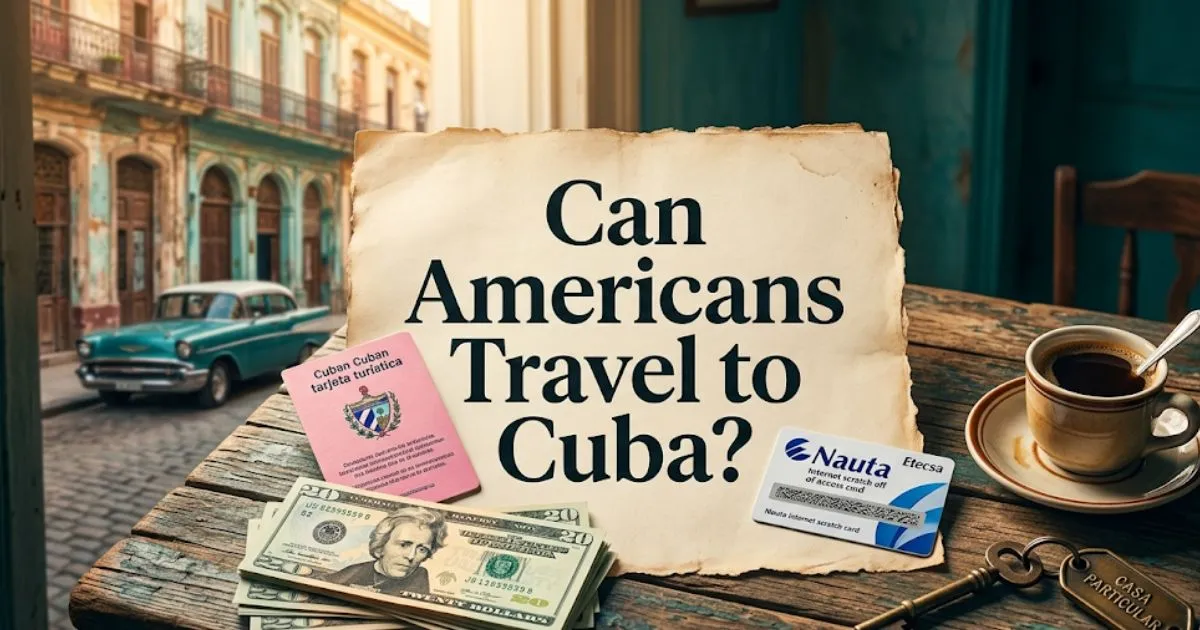
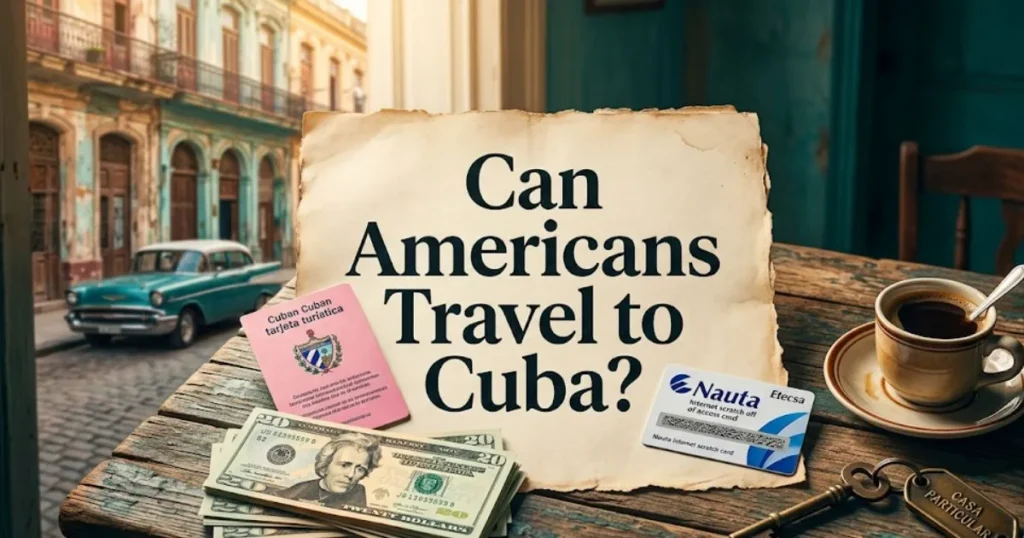
Can Americans Travel to Cuba in 2026? The Legal & Real Guide

Yes, Americans can legally travel to Cuba in 2026. Pure tourism is still banned, but twelve distinct authorization categories cover almost any civilian visit.
The legal path most independent travelers use is “Support for the Cuban People.” The real-world challenge is now purely logistical: cash, connectivity, and planning a truly compliant schedule.
This guide merges the U.S. government’s legal framework with the on-the-ground reality of Havana’s streets. We cover the exact steps from your OFAC self-license to your first Cuban peso meal in a private paladar.
Is It Legal for Americans to Travel to Cuba in 2026?
Yes, travel to Cuba for U.S. citizens remains legal under a structured licensing system. A full ban on travel has not been reinstated.
Congress would need to pass new legislation to completely ban travel. The current system of 12 OFAC-authorized “general licenses” still governs all U.S. travel.
You self-certify your travel category when booking a flight. No pre-approval paperwork is filed with the government beforehand.
The critical rule is that you cannot spend money at properties on the Cuba Prohibited List. Your entire economic footprint must support private Cuban citizens and businesses, not the state.
Understanding the 12 OFAC Travel Categories for Cuba
The 12 categories are the entire legal gateway for your trip. You must pick one and adhere to its rules for the entire duration.
General tourism is not a category. A beach resort vacation is explicitly not authorized and is the most common cause of legal jeopardy.
The full list includes family visits, official U.S. government business, journalism, professional research, educational activities, religious activities, public performances, athletic competitions, support for the Cuban people, humanitarian projects, research in authorized information centers, and certain authorized export transactions.
For almost all cultural travelers, the single relevant category is “Support for the Cuban People.” The others are situational, tied to a specific profession or a documented family emergency.
| Category Example | Best For | Key Requirement |
|---|---|---|
| Family Visits | Cubans visiting close relatives | Documented familial relationship |
| Educational Activities | Students in structured programs | Must be part of an accredited program |
| Religious Activities | Missionaries and church groups | Full-time schedule of religious work |
| Support for Cuban People | Independent cultural travelers | Full-time schedule of private sector activities |
Key Takeaway: Ninety-five percent of independent travelers will use one category: Support for the Cuban People. Ignore the rest unless you have a specific edge case.
The “Support for the Cuban People” License in Practice
This license requires a full-time schedule of activities that support private businesses and individuals. You cannot structure your trip around government-run tourism.
A full-time schedule means more than just a single activity per day. It is a pre-planned itinerary of six to eight hours of deliberate, independent economic engagement.
Breakfast at a private café, a morning walk through the Callejón de Hamel art project, and lunch at a privately-owned paladar all count. So does an afternoon dance class with an independent instructor or shopping at a private art studio in Vedado.
Retail purchases from independent vendors and stays in casas particulares (private B&Bs) are the foundation of your evidence. You must keep records for five years after your trip, per OFAC regulations.
A traveler who books a government-run hotel and a state tour bus has zero legal cover. A traveler who fills their days with private meals, private transport, and private lodging has full legal cover.
How U.S. Policy Changes Affect Your 2026 Cuba Trip
U.S. Cuba policy fluctuates with each presidential administration. The core 12-category statutory framework has proven surprisingly durable.
The most disruptive action for independent travelers would be a new executive order banning the “Support for the Cuban People” category. This has been threatened but not executed as of early 2026.
A secondary risk is the expansion of the State Department’s Cuba Prohibited List. According to the U.S. Department of State, new hotels or shops linked to the Cuban military can be added at any time, invalidating your booking.
Your practical defense is booking only transparently private accommodations and experiences. Document the private nature of your itinerary with receipts and a written daily schedule.
This insulates you from future policy shifts. You are relying on statutory categories, not transient regulatory loopholes that can be closed overnight.
Cuba Tourist Card vs. Visa: What Americans Need
A Cuban Tourist Card is not a visa. It is a simple entry form, color-coded by country, required by the Cuban government.
Americans must purchase the pink card, not the green one used by most other nationalities. You buy this before departure from your airline or a third-party service.
The cost is typically included in your ticket or available for purchase at the departure gate for a separate fee, usually ranging from $50 to $100. American Airlines and Southwest Airlines sell them directly at Miami and Tampa gates.
Fill out the pink card carefully with a pen. A mistake voids the card, requiring a second purchase, which can delay your boarding.
You must also complete Cuba’s online D’Viajeros form within 72 hours of departure. It generates a QR code you will show upon arrival at Jose Marti International Airport.
Insider Tip:
- Take a clear photo of your completed pink tourist card the second you get it.
- Keep it with your passport at all times, never in checked luggage.
- Solo travelers and couples benefit most from the airline gate purchase. Families should buy in advance to avoid a scramble with children in line.
Flights to Cuba from the U.S. in 2026
Direct flights from Miami, Tampa, and Fort Lauderdale to Havana remain the primary gateway. They operate daily with multiple flight choices.
Flight frequency has stabilized after years of wild inconsistency. Booking 60 to 90 days in advance is no longer necessary, and 30 days is usually sufficient for good pricing.
The airport experience is streamlined. You check in, buy your pink tourist card, sign your OFAC affidavit digitally, and board.
All flights arrive at Havana’s Jose Marti International Airport. Terminal 3 handles U.S. charter and commercial flights, a ten-minute drive from central Vedado.
The entire process is now similar to any other international flight from the U.S. The only difference is the tourist card purchase and the self-certification affidavit you click on an airline kiosk.
Key Takeaway: The physical act of flying to Havana is the easiest logistical step of the entire trip. The money problem is the real test.
The Money Problem: Cash, Cards, and Currency in Cuba
U.S. credit and debit cards are functionally useless in Cuba. You are a pure cash traveler the moment you land.
The economic reality is bifurcated. State-run businesses accept only Cuban Pesos (CUP). Private businesses strongly prefer foreign cash, especially U.S. dollars or euros.
Bring a large stack of clean, crisp U.S. $100 bills. You will exchange small amounts into CUP on the street with trusted casa particular hosts or private vendors.
Never use the official government CADECA exchange offices. The informal street rate yields roughly double the purchasing power, an unavoidable reality of the local economy.
The smartest backup is a non-U.S. payment card. A Wise or Revolut card loaded with Euros can occasionally withdraw from rare, functional ATMs, but never rely on this as a primary strategy.
For a solo traveler, a $100-per-day budget in physical U.S. dollars is safe. A couple will want to bring $150 to $200 per day to never face a cash crisis.
Internet, Cell Service, and VPNs in Cuba
Cuba has no universal, reliable mobile data. Your U.S. phone plan’s “international roaming” will fail or generate a massive bill.
You buy scratch-off Etecsa Nauta internet cards at official Etecsa stores or hotels. These give you one to five hours of slow but functional WiFi.
Connectivity only works inside designated public WiFi parks and major hotel lobbies. You will see clusters of locals on phones in Plaza de la Revolución and the Malecón.
A VPN is mandatory, not optional. Install and test NordVPN or ExpressVPN before leaving U.S. airspace.
The VPN unblocks restricted content and provides a minimal layer of data security on a deeply monitored public network. Download offline Google Maps for Havana before you depart.
Your internet life shrinks to deliberate check-in windows once or twice a day. This is not a destination for the perpetually connected, a reality that suits solo travelers and couples seeking a digital detox but can frustrate families trying to maintain stateside contact.
Cuba Travel Health Insurance Requirements
The Cuban government mandates proof of health insurance for all U.S. arrivals. This is not optional.
U.S. health insurance does not apply. You must purchase a Cuban-specific policy, usually automatically bundled into the price of your flight from the U.S.
Verify this at the time of booking. Southwest Airlines and American Airlines include the Asistur medical insurance policy in the ticket fee.
Keep a printed copy of the Asistur policy with your passport. A Cuban customs officer has the right to ask for it at immigration.
This insurance directs you to the Clínica Internacional Cira García for primary care. The clinic provides a standard of care below typical U.S. hospital standards.
Bring a comprehensive personal pharmacy. Pack Imodium, Cipro, rehydration salts, and any prescription medication you cannot go a week without.
Is Cuba Safe for American Travelers?
Violent crime against tourists is remarkably rare in Havana. Your primary safety risk is economic hustling, not physical assault.
The jinetero economy is pervasive. A hustler offers cigars, restaurant recommendations, or taxi rides, and the outcome is a severely inflated price or a commission scam.
The most common safety failures are opportunistic. A phone left on a table on a busy street in Centro Habana can vanish quickly.
Late-night safety varies by neighborhood. The Malecón is popular but can feel desolate after midnight, especially for a solo woman.
For solo female travelers, Havana is safer than most U.S. cities in terms of stranger violence. Unwanted verbal attention is constant, but physical escalation is low.
Ignore the jinetero with a firm, non-negotiable “No, gracias.” Engage a private casa host to arrange a trusted, vetted driver for any evening travel.
Key Takeaway: In Havana, your money is never physically safe in a loose pocket, but your person almost always is. Guard the first; trust but verify for the second.
Best Time to Visit Cuba: Weather, Crowds, and Seasons
The best time to visit is November through April. This is the dry, warm season with temperatures between 70 and 80 degrees Fahrenheit.
Hurricane season runs from June through November, peaking in August and September. Travel insurance with full medical and evacuation coverage is non-negotiable during this window.
The summer months of July and August bring suffocating humidity and severe fuel shortages. Power blackouts are more frequent and can kill the vibe in a casa particular without a generator.
May and October are the value sweet spots. The weather can be glorious, crowds thin, and casa owners more open to negotiation on room rates.
For Americans specifically, travel over major U.S. holidays like Thanksgiving and Christmas sees a surge in Cuban-American family travel. Flights are fuller and casas in Vedado book up solid.
Where to Stay in Havana: Casas Particulares vs. Hotels
Every American should stay in a casa particular. It is the single most legally protective lodging choice you can make.
A hotel stay is a minefield. According to the U.S. State Department, many hotels are on the Cuba Prohibited List due to military ownership, making your booking a potential sanctions violation.
A casa particular is a licensed private room or apartment in a Cuban family’s home. It offers lower cost, direct support to a local family, and a powerful legal paper trail.
The experience gap is enormous. A $35 casa room in Vedado comes with a proud host, homemade breakfast, and unfiltered local advice.
A $250 hotel room in a state-run property gets you a sterile lobby, state-employed staff, and a violation of OFAC rules. Do not stay in them.
Book casas on Airbnb before you arrive, as the platform vets for private ownership. Confirm with your host they operate legally as a private residence, not a proxy for a government entity.
| Lodging Type | Cost Per Night | Legal Risk | Cultural Experience |
|---|---|---|---|
| Private Casa Particular | $30 to $80 | Low (Documentable) | High (Host immersion) |
| Boutique Hotel (Prohibited List) | $200 to $400 | Very High | Low (State-managed) |
| Independent Luxury Rental | $100 to $250 | Medium (Verify Owner) | Medium (Private but sterile) |
Eating in Cuba: The Real Paladar vs. Government Restaurant Guide
Do not eat in government-run restaurants. Eat exclusively in paladares, the privately owned restaurants that are the heart of a legal trip.
Paladares are a culinary revolution. They operate out of family homes, back patios, and converted apartments, and they are where every great meal in Havana happens.
The government food sector is grim. State restaurants produce cold, unseasoned food without the ingredients or motivation to make it good.
La Guarida is the most famous paladar, set on a top-floor apartment in a crumbling Centro Habana mansion. The rooftop bar is a legendary spot for a sunset cocktail.
Dona Eutimia in the back alley near Plaza de la Catedral serves the best ropa vieja and mojitos in Old Havana. It is small, private, and everything a legal meal should be.
Ask your casa particular host where they eat. They will point you to a nameless living room a few blocks away with five tables and the best black beans you will ever taste.
Budget travelers can eat well for $5 a meal at private peso food counters serving pizza and fried chicken. A couple at a top paladar with cocktails will spend $40 to $80 total.
Havana’s Essential Neighborhoods and What to Do in Each
Old Havana (La Habana Vieja)
This is the four-hundred-year-old colonial core. The four main plazas, Plaza de Armas, San Francisco de Asís, Vieja, and Catedral, are stunning open-air museums.
A legal trip here centers on private art galleries and independent booksellers. Avoid the state-run museum shops that slide into your camera roll uninvited.
Families should manage expectations. The cobblestones are torturous for strollers. Plan a shorter, morning-only walk through the plazas with young children.
Vedado
Vedado is the modern, leafy heart of the city. Its wide boulevards and grand, decaying mansions are home to the city’s best private dining and nightlife.
The Fábrica de Arte Cubano (FAC) is a must-do experience. It is a massive, privately-run art gallery, music venue, and performance space in a former cooking oil plant.
Couples and solo travelers thrive in Vedado. The nightlife is concentrated here, and a private dinner at a hidden paladar followed by art at FAC makes an unassailable Support for the Cuban People schedule.
Centro Habana
Centro Habana is the densely populated, crumbling, and absolutely hypnotic working-class barrio. It connects Old Havana to Vedado.
This is not a curated tourist experience. It is raw city life with laundry hanging off balconies and music blasting from every window.
The vulnerability to petty theft is highest here. A solo traveler must maintain intense spatial awareness and carry a cross-body bag. The Malecón seawall here is the city’s true public living room at sunset.
Key Takeaway: Never confuse Old Havana’s restored tourist core with the real city. Vedado is where modern Cuba lives, and Centro Habana is where it survives.
Bringing Back Cigars, Rum, and Other Souvenirs
You can bring back authentic Cuban rum and cigars for personal use. The 2016 relaxation of this rule has not been permanently reversed.
The universal limit for U.S. Customs is $800 worth of goods duty-free per person. This includes a combined value of cigars and alcohol.
You cannot bring back goods made by entities on the State Department’s Cuba Prohibited List. Do not buy from state-operated outlet stores in the airport terminal.
Buy directly from the farmer at a private tobacco farm in Viñales or a legitimate, privately-owned cigar roller in the city. The quality is superior and the legal chain is clean.
A box of Montecristos from a private source is the authentic treasure. The same box bought at a state shop in the airport is legally risky and often poorly stored.
Keep every receipt. If CBP questions your purchase, a receipt from Fusterlandia art studio or a private farmer clears the provenance instantly.
A Realistic Daily Budget for Traveling in Cuba
A U.S. traveler must budget entirely in physical cash. Break this into three clear, escalating tiers.
A budget traveler needs $60 to $80 per day. This covers a basic $30 private room, peso-level counter meals, shared taxi rides, and a single low-cost museum or gallery entry.
A mid-range traveler needs $120 to $180 per day. This buys a great $60 casa particular, two excellent paladar meals with drinks, a private classic car tour, and a night at the Fábrica de Arte.
A high-end traveler needs $200 to $300 a day. This funds the top paladares like La Guarida, a private driver all day, best-available casas, and heavy private guide and art studio expenditures.
Add a $200 to $300 emergency buffer for a one-week trip. A sudden fuel crisis requiring a last-minute private ride to the airport will swallow $80 in cash instantly.
| Budget Level | Daily Cash Need | Accommodation | Dining |
|---|---|---|---|
| Budget | $60 to $80 | Basic Casa ($30) | Peso food counters ($5) |
| Mid-Range | $120 to $180 | Great Casa ($60) | Top Paladares ($40) |
| High-End | $200 to $300 | Best Private Villa ($100) | La Guarida & VIP ($80) |
Safety and Practical Warnings for Cuba
The single greatest risk to your trip is running out of physical cash in a country where your cards do not work. This is an absolute travel-ender.
Key safety and practical facts every visitor should know:
- Carry your full trip cash in a money belt under your clothes. Never display large sums in public.
- Ignore every street jinetero with a firm “No, gracias.” A conversation is the start of a financial hustle.
- Do not drink tap water. Use bottled water even for brushing teeth to avoid severe stomach issues.
- Fuel shortages are real. Confirm your airport return ride with a private driver a full 24 hours in advance.
- Medical infrastructure is scarce. A serious injury means a difficult medical evacuation to South Florida. Purchase comprehensive evacuation insurance.
The U.S. Embassy in Havana can provide limited emergency consular services. Dial 911 in a medical crisis, but expect rudimentary ambulance response times.
Frequently Asked Questions About Traveling to Cuba
Can U.S. citizens legally travel to Cuba in 2026?
Yes, U.S. citizens can legally travel under one of 12 OFAC general license categories.
The “Support for the Cuban People” category is the standard path for independent cultural travelers.
Pure beach tourism without documented private sector engagement is still prohibited.
How does the “Support for the Cuban People” travel license work?
You self-certify your adherence to a full-time schedule of supporting private businesses and individuals.
This requires a documented itinerary of private restaurants, private accommodation, and interactions with independent artists and guides.
You must keep your receipts and records for five years.
Can I use my U.S. credit card in Cuba?
No, U.S.-issued credit and debit cards are not accepted at any point of sale or ATM in Cuba.
You must bring all the cash you will need in physical U.S. dollars or euros.
A backup non-U.S. payment card like Wise or Revolut may work at rare ATMs but must never be your only plan.
What is the best way for an American to get money in Cuba?
Bring a large amount of crisp, clean U.S. hundred-dollar bills.
Exchange small amounts of USD for Cuban Pesos (CUP) on the informal street market through your private casa host.
Never use the official government exchange houses, which will give you half the value.
Is it safe for a solo American woman to travel to Havana?
Yes, Havana has very low rates of violent crime against foreign women.
Persistent catcalling and unsolicited conversation from hustlers is a constant annoyance.
Ignore the hustlers, use vetted private drivers, and stay in Vedado for the most comfortable solo female experience.
Can I bring Cuban cigars and rum back to the United States in 2026?
Yes, you can bring back Cuban-origin cigars and rum for personal consumption.
The total value of all your personal goods, including cigars and alcohol, must stay under the $800 duty-free limit.
You must purchase them from a verifiable private source, not a state-run shop, to comply with OFAC rules.
Your Trip in a Single Truth
Cuba is a legal, logistically complex, and profoundly rewarding destination for the right traveler. The central challenge is not the U.S. law, it is the money in your pocket.
You are now armed with the full legal framework and the harsh, honest street-level logistics. This is not an all-inclusive beach vacation.
The difference between a disaster and a trip that changes how you see the world is physical cash, a vetted private driver, and a clear daily schedule of private-sector engagement.
Book your private casa tonight. Verify it is not a state proxy. Then pull your cash, pack your pharmacy, and download your offline map.
Travel rules and local economic realities shift without warning. Verify the latest State Department advisory and consult your airline for OFAC affidavit procedures in the 48 hours before departure. The empty, crumbling, magnificent streets of Havana await the traveler who plans for the real Cuba.