Top Things to Do in Port Angeles, WA: 2026 Travel Guide

Port Angeles, Washington is one of the Pacific Northwest’s most underestimated base camps. The best things to do in Port Angeles center on world-caliber outdoor access, a genuine local food and craft beverage scene, and a ferry crossing to Canada that most visitors forget to plan.
Sitting directly on the Strait of Juan de Fuca, Port Angeles serves as the primary gateway to Olympic National Park, which the National Park Service identifies as one of the most ecologically diverse parks in the US system.
This guide covers every major experience, from Hurricane Ridge timed-entry logistics to the Black Ball Ferry Line to Victoria, plus honest traveler-profile breakdowns and a practical 2-day itinerary.
Things to Do in Port Angeles, WA: What Kind of Destination Is This?
Port Angeles, WA delivers a rare combination of subalpine mountain access, old-growth forest, marine wildlife, and Pacific Northwest food culture within one small coastal city.
Port Angeles sits at the northern edge of the Olympic Peninsula, population approximately 20,000. It is a working port city, not a tourist resort town.
That distinction matters. Expect authenticity over polish.
The downtown waterfront is accessible and walkable. The mountains begin less than 18 miles from the city center by road.
Travelers coming for pure outdoor experience will find no equivalent base for Olympic National Park at this price point. Those expecting a curated resort town experience should adjust expectations.
| Experience Category | Best For | Cost Tier | Advance Booking |
|---|---|---|---|
| Hurricane Ridge | Hikers, couples, families | Park entry fee | Required in summer |
| Lake Crescent | All profiles | Park entry fee | Lodge: yes |
| Victoria Ferry | Couples, solo travelers | Mid-range fare | Recommended |
| Waterfront Walk | All profiles | Free | No |
| Sol Duc Hot Springs | Couples, families | Mid-range | Resort: recommended |
| Feiro Marine Life Center | Families | Low admission | No |
Olympic National Park and the Port Angeles Gateway
Olympic National Park begins effectively in Port Angeles, making the city the most practical entry point for the entire park’s northern zone.
The Olympic National Park Visitor Center, located on Race Street in Port Angeles, is the single most useful first stop for any visitor. Rangers provide current trail condition reports, permit information, and seasonal road status.
According to the National Park Service, Olympic National Park encompasses nearly one million acres across three distinct ecosystems: temperate rainforest, alpine meadow, and Pacific coastline. No other park in the lower 48 combines all three.
The visitor center itself is free to enter and typically open daily. Park entry fees apply when accessing most park zones by vehicle; the America the Beautiful Pass covers Olympic National Park entry and pays for itself within two visits.
For solo travelers: The visitor center bulletin board often lists ranger-led hikes and programs, which are excellent for meeting other travelers in a safe, structured setting.
Insider Tip:
- Ask rangers specifically about current Hurricane Ridge Road conditions before driving up, regardless of what any app shows.
- The visitor center has clean restrooms, a bookstore with trail maps, and staff who will give honest assessments of trail difficulty levels.
- Seniors should ask rangers directly about the most accessible current trail options; conditions change seasonally.
Hurricane Ridge: The Signature Mountain Experience
Hurricane Ridge is Port Angeles’s most significant attraction: a subalpine meadow at 5,242 feet elevation with panoramic views of the Olympic Mountains and, on clear days, Vancouver Island.
The Hurricane Ridge Visitor Center sits at the ridge summit. The drive up Hurricane Ridge Road covers approximately 17 miles from the park entrance gate, gaining nearly 5,000 feet of elevation.
Critical 2026 planning note: The National Park Service has implemented a timed-entry reservation system for Hurricane Ridge Road during peak summer months, typically from late June through Labor Day. Reservations are required for private vehicles on Friday, Saturday, and Sunday mornings. Book through Recreation.gov well in advance.
The road typically opens in late May depending on snowpack and is subject to closure anytime due to weather. Call the Olympic National Park road conditions line or check the NPS website before driving up in shoulder seasons.
For families: Children who handle car travel well generally enjoy the summit views and the interpretive exhibits inside the visitor center. The short paved trail near the parking lot is manageable for most ages and mobility levels.
For hikers: The Big Meadow Loop near the visitor center provides wildflower viewing in late June through July. More serious hikers continue to the Sunrise Point trail or the Hurricane Hill summit trail, which is approximately 3.2 miles round trip with about 700 feet of elevation gain.
| Hurricane Ridge Access | Detail |
|---|---|
| Peak Season Permit | Required Fri-Sun, late June through Labor Day (verify for 2026 on Recreation.gov) |
| Road Distance from Port Angeles | Approximately 17 miles |
| Typical Opening | Late May, weather dependent |
| Winter Access | Road often closed November through March |
| Summit Elevation | 5,242 feet |
| Best Wildflower Window | Late June through mid-July |
Insider Tip:
- Book your Hurricane Ridge timed-entry slot the moment reservations open, which is typically 90 days in advance on Recreation.gov.
- Arrive at the summit before 10 AM for the clearest views; afternoon clouds frequently obscure the peaks by early afternoon in summer.
- Budget travelers: the timed-entry permit fee is modest; the larger cost is the park entry fee, which the America the Beautiful Pass eliminates.
Ediz Hook and the Port Angeles Waterfront
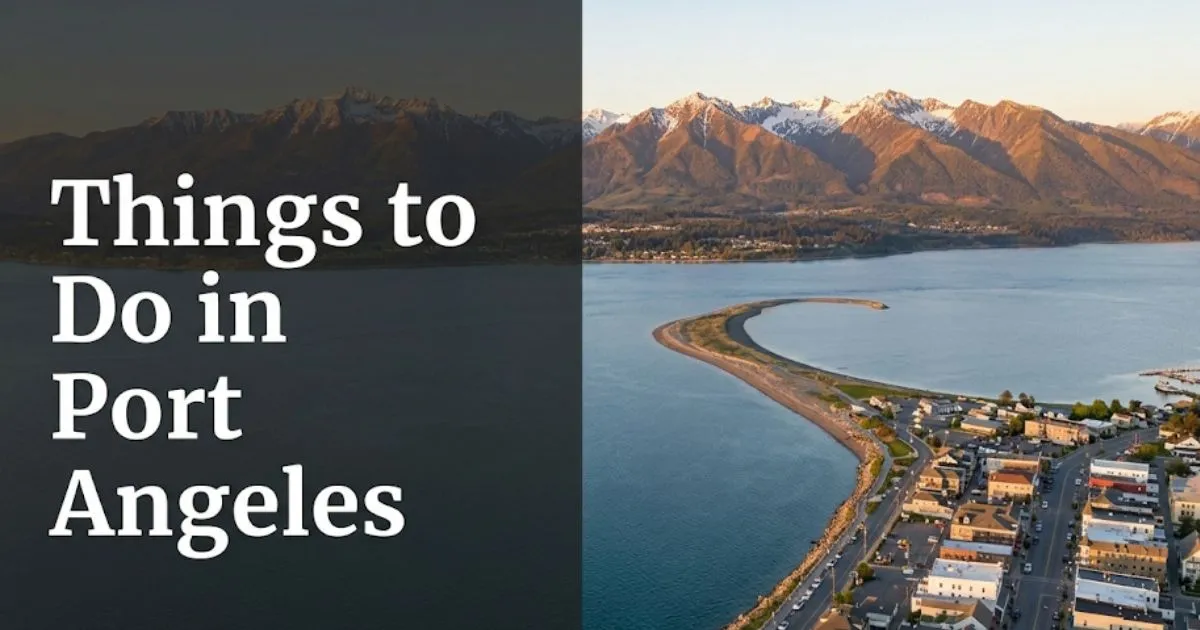
Ediz Hook is a 3-mile natural sand spit that curves into the Strait of Juan de Fuca, forming Port Angeles Harbor. It is one of the most overlooked free experiences in the entire city.
The spit provides unobstructed views across the strait toward Victoria, BC. Harbor seals, bald eagles, and great blue herons are regularly visible from the Hook without any equipment.
The Olympic Discovery Trail runs along the Port Angeles waterfront and connects to Ediz Hook. This paved trail section is one of the flattest and most accessible outdoor options in the area.
Walking the full length of Ediz Hook and back covers approximately 6 miles. The terrain is entirely flat.
For seniors and accessibility travelers: The paved waterfront trail section and the beginning stretch of Ediz Hook are fully accessible. The spit itself is a gravel road open to vehicle access, which means mobility-limited visitors can drive to the tip.
For couples: Early evening on Ediz Hook provides some of the most unobstructed sunset views in Port Angeles, with the Olympic Mountains to the south and the strait to the north.
Insider Tip:
- The Arthur D. Feiro Marine Life Center, located on the Port Angeles City Pier at the foot of Lincoln Street, houses a touch tank with Pacific Northwest marine species. Admission is low-cost and the facility is genuinely excellent for children.
- The Feiro Center is often skipped in favor of Hurricane Ridge, but it is a genuinely substantive stop for families and solo travelers interested in marine biology.
- Local alternative to the busy downtown pier area: walk the first mile of Ediz Hook on a weekday morning for near-solitude and better wildlife sightings.
Key Takeaway: Book your Hurricane Ridge timed-entry permit on Recreation.gov at least 90 days before a summer weekend visit; showing up without one means being turned away at the gate.
Hiking Trails Near Port Angeles
The best hiking near Port Angeles in 2026 ranges from flat, paved waterfront paths to serious subalpine ridge walks, with most options falling within a 30-mile drive of downtown.
Hurricane Hill Trail (approximately 3.2 miles round trip, 700 feet gain) is the most rewarding accessible hike directly from the Hurricane Ridge Visitor Center. Views extend to the Strait of Juan de Fuca on clear days.
Deer Park Road accesses a genuinely less-visited ridge area east of Hurricane Ridge. The road is unpaved and steep; a high-clearance vehicle is strongly recommended. The payoff is near-solitude at elevations comparable to Hurricane Ridge.
The Elwha River Trail, accessible from the Olympic Hot Springs Road trailhead off US-101, provides old-growth forest walking with no elevation gain for the first several miles. This is the strongest option for travelers wanting rainforest atmosphere without a difficult climb.
For budget travelers: Every trailhead in the national park requires park entry; the America the Beautiful Pass is the most economical option for anyone planning more than two days of park access.
For solo travelers: The Washington Trails Association maintains current trail condition reports at wta.org. Checking conditions before departure is essential; trails can have downed trees, washouts, or snow well into June.
Key trail options near Port Angeles:
- Hurricane Hill Trail: moderate, 3.2 miles RT, summit views
- Big Meadow Loop (Hurricane Ridge): easy, 0.5 miles, accessible wildflower walk
- Elwha River Trail: easy, old-growth forest, multiple miles, flat
- Deer Park Road area trails: strenuous, unpaved road access, solitude
- Olympic Discovery Trail (waterfront): easy, paved, flat, accessible
Lake Crescent and Sol Duc Hot Springs
Lake Crescent and the Sol Duc Hot Springs Resort represent the two strongest half-day or full-day excursions from Port Angeles, each about 20 to 30 miles west on US-101.
Lake Crescent is a glacially carved lake of extraordinary clarity and depth, ringed by old-growth forest and accessed by US-101. The Lake Crescent Lodge, operated within the park, sits directly on the lakeshore and has been receiving guests since 1916.
The Marymere Falls Trail from the Storm King Ranger Station parking area is 1.8 miles round trip and leads through old-growth forest to a 90-foot waterfall. This is consistently rated one of the best short hikes in the entire Olympic Peninsula.
Beyond Lake Crescent, another 14 miles on US-101 brings you to Sol Duc Hot Springs Resort. The resort operates soaking pools fed by natural hot springs within the national park. Admission to the pools is charged separately from lodging.
For couples: A morning at Lake Crescent followed by an afternoon at Sol Duc hot springs constitutes one of the strongest single-day itineraries accessible from Port Angeles.
For families: The Sol Duc Falls Trail (1.6 miles round trip) is suitable for children aged 5 and older. The falls drop into a narrow canyon and are one of the most photographed features in Olympic National Park.
Seasonal note: Sol Duc Hot Springs Resort typically operates from mid-April through late October. Verify the exact 2026 season directly with the resort before planning around it.
Port Angeles Restaurants and Local Food Scene
Port Angeles’s best restaurants reflect its identity: a Pacific Northwest port city with serious access to local seafood, farms, and craft producers, not a tourist dining strip.
Bella Italia, on First Street in downtown Port Angeles, has operated for decades and is genuinely embedded in the local dining culture. It gained wider recognition after appearing in “Twilight” film promotion, but its wood-fired preparation and local ingredient sourcing predate that association.
Kokopelli Grill on East First Street focuses on Pacific Northwest ingredients prepared with American regional technique. The halibut and local oyster preparations are consistently cited by repeat visitors as the strongest single-plate experiences in the city.
Frugals Drive-In, on East Front Street, is Port Angeles’s answer to the question of where locals actually eat lunch on a Tuesday. Burgers and milkshakes at genuine budget-friendly prices, with a drive-in format that has not changed in decades.
The Crabhouse on the waterfront serves fresh Dungeness crab and regional seafood. Portions are generous and pricing is mid-range by Pacific Northwest coastal standards.
For budget travelers: Frugals and the Clallam County Farmers Market on Saturday mornings provide the most economical local food experiences in Port Angeles.
For couples: Bella Italia for dinner, followed by a waterfront walk, is the most natural romantic evening sequence in the city.
According to Visit Port Angeles, the farmers market on Clallam County Courthouse grounds operates on Saturday mornings from spring through fall and features local produce, prepared foods, and regional crafts.
Craft Beer and Wine in Port Angeles
Port Angeles has a genuine craft brewery scene that punches above its population size, with options that experienced Pacific Northwest travelers will recognize as serious operations.
Harbinger Winery, on East First Street, produces wines from eastern Washington grapes with a tasting room that looks directly out over the Port Angeles waterfront. The combination of strait views and genuine wine quality makes this the strongest single-activity pairing for couples on a downtown afternoon.
Port Angeles Brewing Company serves craft ales in a taproom setting on West Front Street. The rotating seasonal tap list reflects Pacific Northwest brewing traditions, and the casual atmosphere is distinctly local rather than tourist-oriented.
The Beer Mongers Society functions as a bottle shop and taproom hybrid, carrying regional and local cans and drafts that represent the broader Olympic Peninsula craft scene beyond what any single brewery produces.
For solo travelers: Port Angeles’s taproom culture is genuinely welcoming for solo visitors. Bar seating at Port Angeles Brewing provides easy conversation with locals.
For couples: Harbinger Winery is the strongest option for a scenic, relaxed late-afternoon experience before dinner.
Insider Tip:
- Harbinger’s tasting room can fill up on summer weekend afternoons. Arrive before 3 PM for the most relaxed experience.
- Neither the brewery nor the winery operates as a tourist trap. Prices are local-market appropriate, not tourist-premium.
- Both are within easy walking distance of each other in downtown Port Angeles, making a combined stop efficient.
Key Takeaway: Harbinger Winery on East First Street delivers strait views and serious eastern Washington wines in a setting that costs nothing to enter and everything to leave quickly.
Port Angeles Museum of Art and Cultural Attractions
Port Angeles supports a cultural scene that surprises first-time visitors expecting only outdoor recreation.
The Port Angeles Fine Arts Center, located in Webster’s Woods on East Lauridsen Boulevard, operates as a genuine contemporary art center within a 5-acre sculpture park. Admission is typically free. The sculpture garden is accessible on a paved path and open year-round during daylight hours.
The Fine Arts Center hosts rotating exhibitions of regional and national contemporary work. The building itself, a former Carnegie library, is architecturally notable.
The Dungeness River Audubon Center, located in Sequim approximately 20 miles east of Port Angeles, is the strongest dedicated natural history and environmental education center within easy driving distance. It sits adjacent to the Dungeness National Wildlife Refuge trailhead.
For families: The Fine Arts Center sculpture garden is genuinely engaging for children; the open-air setting keeps visits comfortable for short attention spans.
For seniors: The paved path through Webster’s Woods sculpture garden is fully manageable for most mobility levels. The setting is quiet and unhurried.
Port Angeles also hosts Juan de Fuca Festival of the Arts, typically held in late May, which brings outdoor and indoor music performances, arts vendors, and community events to the downtown waterfront area. Verify 2026 dates directly with the festival organization.
Ferry to Victoria, BC from Port Angeles
The Black Ball Ferry Line operates the MV Coho between Port Angeles and Victoria, British Columbia, making a Canada day trip or overnight one of the most distinctive experiences available from this base.
The crossing takes approximately 90 minutes each way. The MV Coho crosses the Strait of Juan de Fuca between the Black Ball Ferry terminal in downtown Port Angeles and the Victoria Inner Harbour, which places arriving passengers directly in Victoria’s most walkable and scenic district.
Passport requirement: A valid US passport (book or card) is required for all passengers, including children. No exceptions. Do not attempt this crossing without valid travel documentation.
For vehicles: Vehicle reservations on the MV Coho are strongly recommended and often essential in summer. Book directly through the Black Ball Ferry Line website well in advance, particularly for weekend crossings in July and August.
For foot passengers: Walk-on passengers have more scheduling flexibility but should still book in advance during peak season. The fare for foot passengers is significantly lower than the vehicle rate.
For couples: A foot-passenger day trip to Victoria, arriving at the Inner Harbour and spending the day exploring the Royal BC Museum, Fisherman’s Wharf, and Chinatown before the afternoon return sailing, is one of the Pacific Northwest’s genuinely excellent urban day trips.
For budget travelers: Foot-passenger fare plus transit within Victoria makes this an affordable international day trip. Budget approximately half a day minimum in Victoria to make the crossing worthwhile.
Seasonal note: The MV Coho typically operates year-round, but crossing frequency and scheduling change seasonally. Verify 2026 schedules and current fares directly with the Black Ball Ferry Line before booking travel around this crossing.
Day Trips from Port Angeles
Port Angeles sits at the center of one of the Pacific Northwest’s strongest day-trip networks, with genuinely distinct destinations within 30 to 60 miles in multiple directions.
Sequim (pronounced “skwim”), approximately 17 miles east on US-101, sits in an unusual rain shadow that gives it significantly more annual sunshine than surrounding Peninsula areas. Sequim is known for lavender farming, the Dungeness Spit (the longest natural sand spit in the US), and the Dungeness National Wildlife Refuge. The 5.5-mile round-trip hike along Dungeness Spit to the historic lighthouse is one of the most distinctive coastal walks in Washington State.
Lake Crescent and Sol Duc, discussed above, constitute the strongest western day trip from Port Angeles within the national park boundary.
Port Townsend, approximately 50 miles east via US-101 and State Route 20, is a Victorian seaport with intact 19th-century architecture, a serious arts community, and the Jefferson County ferry connection to Whidbey Island. It is meaningfully different from Port Angeles in character and provides a strong contrast for multi-day visitors.
For solo travelers: Port Townsend’s independent bookshops, coffee culture, and gallery scene make it particularly appealing for solo day-trip visitors.
For families: Dungeness Spit is excellent for older children who can manage the full walk. The Dungeness National Wildlife Refuge is one of the stronger wildlife observation destinations in western Washington.
| Day Trip | Distance from Port Angeles | Best For | Key Experience |
|---|---|---|---|
| Sequim | 17 miles east | All profiles | Dungeness Spit, lavender farms |
| Lake Crescent | 20 miles west | Hikers, couples | Marymere Falls, lake kayaking |
| Sol Duc Hot Springs | 34 miles west | Couples, families | Hot springs soaking, Sol Duc Falls |
| Port Townsend | 50 miles east | Solo, couples | Victorian architecture, arts |
| Victoria, BC | 90-min ferry | Couples, solo | International harbor city |
Key Takeaway: Sequim’s Dungeness Spit is a legitimately underused day trip from Port Angeles; the 5.5-mile spit hike to the lighthouse is one of the most distinctive coastal walks in Washington State.
Things to Do in Port Angeles for Families
Port Angeles for families with children works best when kids are old enough to engage with outdoor experiences rather than needing urban entertainment infrastructure.
The Arthur D. Feiro Marine Life Center on the city pier is the single strongest family-specific stop in Port Angeles proper. Touch tanks with Pacific Northwest species, including sea stars, urchins, and anemones, provide hands-on engagement that genuinely holds children’s attention. Admission is affordable and the facility is compact enough for short attention spans.
Hurricane Ridge works well for families whose children are comfortable in vehicles for a 45-minute winding mountain road and can engage with the visitor center exhibits. The short paved trail near the summit is manageable for most children aged 5 and older.
Sol Duc Falls via the Sol Duc Falls Trail (1.6 miles round trip, minimal elevation gain) is one of the strongest family hikes in the entire Olympic Peninsula. The falls are dramatic and the trail is short enough to complete without significant fatigue.
For families with toddlers and very young children: Focus on the Feiro Marine Life Center, the waterfront trail, and Ediz Hook by vehicle. Reserve the national park hiking for when children are older.
For families with teenagers: Consider adding the Victoria, BC ferry crossing. Victoria’s downtown and harbor area is engaging for older children and teens, and the ferry experience itself is genuinely exciting for most ages.
Honest note: Port Angeles does not have a major theme park, water park, or entertainment complex infrastructure. Families expecting that type of experience should add Port Townsend or plan a broader Washington State itinerary accordingly.
Free Things to Do in Port Angeles
Port Angeles offers a meaningful range of genuinely free experiences that are not consolation prizes for budget travelers but legitimate highlights.
Free and low-cost experiences:
- Ediz Hook Natural Area: free, drive or walk the full length, wildlife viewing, strait views
- Port Angeles Fine Arts Center and Webster’s Woods: typically free admission, open year-round during daylight
- Olympic Discovery Trail (waterfront section): free, paved, accessible, connects downtown to Ediz Hook
- Arthur D. Feiro Marine Life Center: low-cost admission (not free, but among the lowest-priced marine facilities in Washington)
- Clallam County Farmers Market: free to browse, Saturday mornings, spring through fall
- Olympic National Park Visitor Center (Port Angeles): free to enter; park vehicle fees apply at park entry points
- Elwha River trailhead area: accessible with park pass; first stretch of trail free with pass
For budget travelers: The America the Beautiful Annual Pass covers Olympic National Park entry and is cost-effective for any visit of two or more days. At approximately $80 as of recent years, it pays for itself against two separate park entry fees.
For seniors: The America the Beautiful Senior Pass (available to US citizens and permanent residents aged 62 and older) provides lifetime or annual park access at a significantly reduced rate. Verify current pricing and availability at any National Park Service entrance station or through the NPS website.
According to the Olympic Peninsula Visitor Bureau, many of Port Angeles’s strongest outdoor experiences require only the park entry pass, with no additional activity fees on top.
Best Time to Visit Port Angeles
The best time to visit Port Angeles, WA is from late June through early September for full Hurricane Ridge access, or May and September for shoulder-season conditions with lighter crowds.
Summer (late June through August): Hurricane Ridge Road is fully open, wildflowers peak in late June and early July, and ferry crossings to Victoria operate at maximum frequency. This is also peak tourist season. Hurricane Ridge timed-entry reservations are required on weekends. Lodging prices are at their highest. Book everything in advance.
Shoulder Season (May and September): May brings wildflowers lower in the park and lighter crowds, but Hurricane Ridge Road may still have snow. September offers the most balanced conditions: comfortable temperatures, cleared roads, fading crowds, and the last weeks of summer ferry schedules.
Fall (October): Port Angeles in October is genuinely underrated. Fall color in the Olympic Peninsula’s deciduous zones is significant. Crowds have dropped substantially. Lodging rates decline. Hurricane Ridge Road typically remains open into October, weather permitting.
Winter (November through March): Hurricane Ridge Road is frequently closed for extended periods. Sol Duc Hot Springs Resort closes in late October. The MV Coho ferry continues operating but on reduced schedules. The Olympic Peninsula receives its heaviest rainfall in winter, though Port Angeles itself benefits from the rain shadow effect and is measurably drier than areas like Hoh or Quinault.
| Month | Hurricane Ridge | Crowds | Lodging Cost | Notes |
|---|---|---|---|---|
| May | Often snow-covered | Low | Lower | Wildflowers in lower elevations |
| June | Opens late June | Growing | Mid | Permit required weekends |
| July | Fully open | Peak | Highest | Permit required; book early |
| August | Fully open | Peak | Highest | Permit required; book early |
| September | Open, weather dependent | Moderate | Mid | Best overall balance |
| October | Open, weather risk | Low | Lower | Fall color, fewer crowds |
| Nov-Mar | Frequently closed | Very low | Lowest | Limited park access |
Getting to Port Angeles and Getting Around
Getting to Port Angeles, WA from Seattle takes approximately 2.5 to 3 hours by the most direct route combining the Washington State Ferries Bainbridge Island crossing with US-101 west.
From Seattle by ferry and road: Take the Washington State Ferries Bainbridge Island route from the Seattle ferry terminal (Pier 52, Colman Dock) to Bainbridge Island. From Bainbridge, drive US-305 to the Kitsap Peninsula, connect to State Route 3, cross the Hood Canal Bridge on State Route 104, then join US-101 westbound to Port Angeles. Total driving time from Bainbridge is approximately 1.5 to 2 hours.
From Seattle by road only: Take Interstate 5 north briefly, then US-101 around the southern end of Puget Sound through Olympia and up the western shore. This route avoids the ferry but adds significant distance and typically takes 3.5 to 4 hours without traffic.
By air: William R. Fairchild International Airport (CLM) in Port Angeles has limited scheduled service. Most air travelers fly into Seattle-Tacoma International Airport (SEA) and rent a vehicle.
Getting around Port Angeles: A personal vehicle is essential. Port Angeles itself is compact and walkable in its downtown core, but Olympic National Park, Hurricane Ridge, Lake Crescent, Sol Duc, and most significant attractions require driving. Car rental is available at SEA-TAC and through agencies in Port Angeles. Public transit within the city is limited and does not serve national park areas.
Practical logistics checklist:
- Reserve a vehicle before departure; rental availability in Port Angeles itself is limited
- Download offline maps (Google Maps or Gaia GPS) before entering national park areas where cell service is unreliable
- Book Hurricane Ridge timed-entry permit on Recreation.gov before your trip
- Carry a full tank of fuel before driving toward Hurricane Ridge or Sol Duc; gas stations are limited in park zones
- Ferry parking at the Bainbridge Island terminal fills on summer weekends; book ferry reservations for vehicles
Safety and Practical Warnings for Port Angeles and Olympic National Park
The single most consequential safety issue for Port Angeles visitors is attempting Hurricane Ridge without confirming current road status and permit requirements, particularly in shoulder season or during summer weekends.
Key safety and practical facts every visitor should know:
- Hurricane Ridge Road has no guardrails on sections of its upper switchbacks. Driver comfort with steep, narrow mountain roads is genuinely required.
- Cell service is unreliable to absent on Hurricane Ridge Road, throughout the Sol Duc valley, and in most Olympic National Park backcountry areas. Download offline maps and trail information before entering these zones.
- Wildlife encounters: Black bears are present throughout Olympic National Park. The National Park Service recommends carrying bear spray on backcountry trails and storing food in bear canisters or hard-sided vehicle containers.
- Weather changes rapidly at Hurricane Ridge elevation. Summer mornings can be clear; by early afternoon, clouds, fog, and sudden rain are common. Carry a waterproof layer regardless of the morning forecast.
- Strait of Juan de Fuca ferry conditions: The MV Coho crossing can be rough in storm conditions. Travelers prone to seasickness should check weather forecasts for the strait before their crossing date and consider purchasing motion sickness medication in advance.
- Driving US-101 west toward Lake Crescent includes sections with sharp curves and limited passing opportunities. Logging trucks operate on this corridor regularly.
- Emergency contact: The Olympic National Park emergency line is available through the park’s main information number; save it before entering remote areas.
Key Takeaway: Download offline trail maps for Hurricane Ridge and Sol Duc before leaving Port Angeles; cell service disappears quickly once you leave the city.
Frequently Asked Questions About Things to Do in Port Angeles, WA
What is Port Angeles, WA known for?
Port Angeles is primarily known as the northern gateway to Olympic National Park and as the US departure point for the Black Ball Ferry to Victoria, British Columbia.
The city provides direct access to Hurricane Ridge, Lake Crescent, Sol Duc Hot Springs, and old-growth forest trails, making it the strongest base for Olympic Peninsula outdoor travel.
It is also a working Pacific Northwest port city with a genuine local food, craft beer, and arts scene that independent-minded travelers find more appealing than more tourist-developed gateway towns.
Do I need a reservation to drive up to Hurricane Ridge?
Yes, during peak summer season. The National Park Service requires timed-entry reservations for private vehicles on Hurricane Ridge Road on Fridays, Saturdays, and Sundays from approximately late June through Labor Day.
Reservations are made through Recreation.gov and are typically available 90 days in advance.
Verify the exact 2026 reservation dates and requirements directly on the Recreation.gov website or the Olympic National Park page before your visit, as these policies are updated annually.
How do I get from Seattle to Port Angeles?
The most practical route from Seattle to Port Angeles combines the Washington State Ferries Bainbridge Island crossing with approximately 1.5 to 2 hours of driving on US-101 westbound.
Total travel time is typically 2.5 to 3 hours depending on ferry wait times and road conditions.
An all-road route through Olympia avoids the ferry but adds roughly an hour to the total journey; most travelers find the ferry route faster and more enjoyable.
Is the ferry from Port Angeles to Victoria worth it?
Yes, for most visitors with at least a full day available, particularly couples and solo travelers.
The 90-minute crossing on the MV Coho arrives directly at Victoria’s Inner Harbour, placing passengers within walking distance of the Royal BC Museum, Fisherman’s Wharf, Beacon Hill Park, and the city’s compact downtown.
Bring a valid US passport (book or card); no documentation exceptions exist for this international crossing.
What is the best time of year to visit Port Angeles, WA?
The best time to visit Port Angeles, WA is late June through early September for full Hurricane Ridge and park access, or September for the strongest balance of access and lighter crowds.
Summer brings the clearest mountain views and warmest temperatures, but requires advance timed-entry permits for Hurricane Ridge on weekends.
October is genuinely excellent for fall color and near-solitude, though Sol Duc Hot Springs Resort closes in late October and Hurricane Ridge Road faces increasing weather-related closure risk.
Is Port Angeles good for families with kids?
Port Angeles works well for families whose children are at least 5 to 8 years old and comfortable with outdoor hiking and driving to park destinations.
The Arthur D. Feiro Marine Life Center on the city pier is the strongest family attraction within Port Angeles proper, with touch tanks that genuinely engage younger children.
Families with toddlers or very young children will find the waterfront trail and Ediz Hook accessible, but the most celebrated park experiences require age-appropriate stamina and interest in outdoor settings.
Plan Your Port Angeles Trip Before You Leave Home
Port Angeles rewards travelers who arrive with reservations in hand and offline maps downloaded. Book your Hurricane Ridge timed-entry permit on Recreation.gov the moment your travel dates are confirmed.
If the Victoria ferry is part of your plan, secure MV Coho reservations early, especially for vehicle crossings in July and August.
Travel conditions in and around Olympic National Park change annually. Hurricane Ridge road status, Sol Duc resort operating dates, timed-entry permit requirements, and ferry schedules for 2026 should all be verified directly with the National Park Service, Recreation.gov, and the Black Ball Ferry Line before departure. The traveler who does this pre-trip homework consistently has a better visit than the one who assumes conditions match last year’s experience.