16 Best Places to Visit in New Mexico for 2026

New Mexico is not a single destination but a collection of distinct, far-flung worlds.
You must choose carefully to match your travel style with the right terrain.
The state packs six of the nation’s 63 national parks into stunning high desert.
It also holds the oldest capital city, a UNESCO World Heritage pueblo, and a modern art phenomenon.
This guide sorts through every major region, popular site, and lesser-known alternative.
It tells you honestly which places earn the hype and which ones you can skip.
| Destination | Best For | Vibe | Must-See Attraction | Local Alternative |
|---|---|---|---|---|
| Santa Fe | Art Lovers, Couples | Sophisticated Adobe | Canyon Road Galleries | Railyard Arts District |
| Albuquerque | Families, Budget Travelers | Urban Southwest | Old Town & Sandia Tram | Nob Hill District |
| Taos | Solo Travelers, Skiers | Rugged & Spiritual | Taos Pueblo | Rio Grande Gorge Bridge |
| White Sands NP | Photographers, Families | Surreal & Playful | Alkali Flat Trail | Dunes Drive at Sunset |
| Carlsbad Caverns NP | All Traveler Profiles | Subterranean Wonder | Big Room Self-Guided Tour | Slaughter Canyon Cave |
| Chaco Culture NHP | History Buffs, Adventurers | Remote & Solitary | Pueblo Bonito Overlook | Wijiji Trail at Dawn |
Best Places to Visit in New Mexico: 2026 Edition
This selection focuses on destinations that provide a distinct New Mexico experience.
Each was chosen for its cultural integrity, natural beauty, or historical significance.
The list intentionally excludes places resting on reputation without delivering substance.
It prioritizes active, immersive experiences over passive drive-through sightseeing.
Loud, franchise-heavy tourist strips are omitted here.
Instead, you get the raw, quiet, and genuinely enchanting locations the state does best.
The New Mexico Tourism Department identifies cultural tourism as the state’s top visitor draw.
This reality shaped the criteria for every single destination that made the final list.
Key Takeaway: Choose a base region instead of trying to conquer the entire state in one trip.
Santa Fe
Santa Fe is the cultural and culinary heart of the American Southwest.
Its commitment to preserving adobe architecture makes it visually unlike any other US city.
Start your visit at the historic Santa Fe Plaza for your bearings.
Then walk immediately off the plaza to Sena Plaza for a quiet courtyard coffee away from crowds.
A room at La Fonda on the Plaza puts you in the center of everything.
Street parking is a serious challenge, so use the downtown garages which average $12 to $20 per day.
Couples will find Santa Fe the most romantic destination in the state.
Families with very young children may struggle with the lack of playgrounds and open green space downtown.
September is the ideal month with perfect weather and the Santa Fe Fiesta underway.
January can be bitterly cold and many smaller galleries close for the month.
Canyon Road’s galleries are world-famous and overwhelmingly touristy.
Locals spend their gallery money at the Railyard Arts District, specifically during the Friday afternoon pop-up markets.
Key Takeaway: Skip the Plaza-front dining and walk two blocks in any direction for better food at lower prices.
Albuquerque
Albuquerque functions as the state’s pragmatic and multicultural backbone.
It offers more affordable lodging and a more relaxed local culture than the capital up north.
Old Town’s central plaza is a must-do for its historic San Felipe de Neri Church.
The real local scene, however, is a mile east on Nob Hill’s Central Avenue, lined with indie shops and diners.
The Sandia Peak Tramway is the city’s marquee attraction with a roughly $30 per person fee.
Purchase tickets online well in advance for summer weekends to avoid a two-hour wait.
Solo travelers benefit most from Albuquerque’s easy navigation and laid-back social spaces.
Budget travelers will find the best hotel rates in the state here outside of the Balloon Fiesta period.
October is unforgettable for the Albuquerque International Balloon Fiesta, though hotel rates triple.
The best alternative window is early May when the weather is warm and the city is uncrowded.
The tramway views are iconic but you can drive the Sandia Crest Scenic Byway for only the cost of gas.
The view from 10,600 feet at the summit is virtually the same without the ticket price.
Taos
Taos attracts artists, skiers, and spiritual seekers to its high desert plain.
Its 1,000-year-old pueblo is the single most historically significant site in the state.
Taos Pueblo is a living UNESCO World Heritage Site with a roughly $25 entry fee.
It closes without notice for tribal funerals or private ceremonies, so always call the tourism office before driving up.
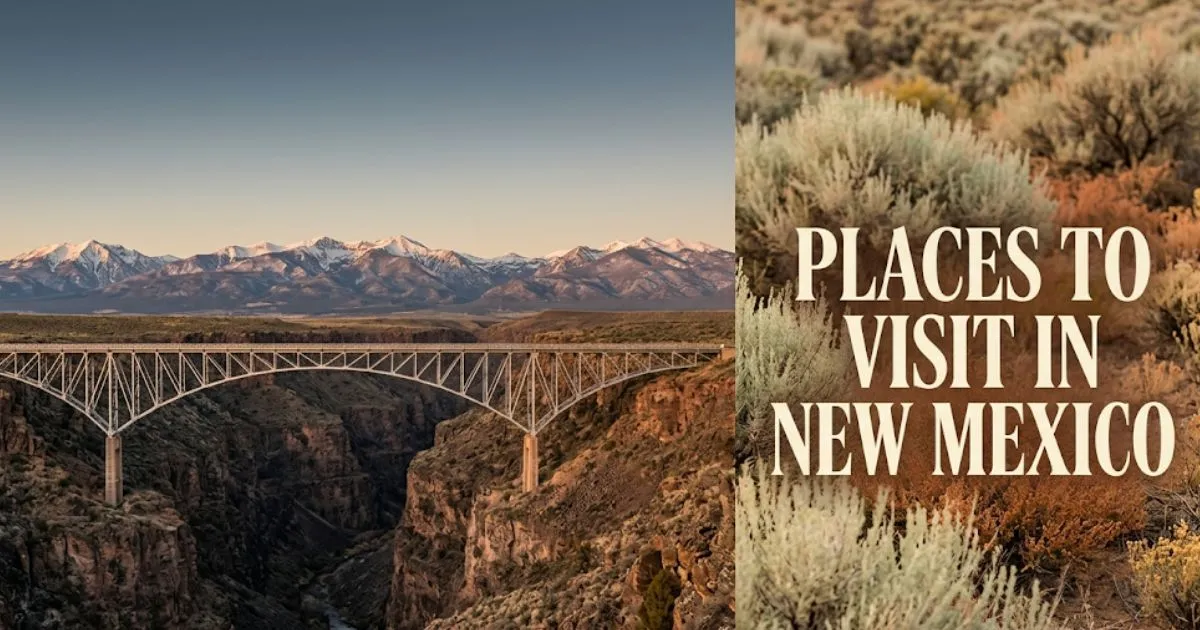
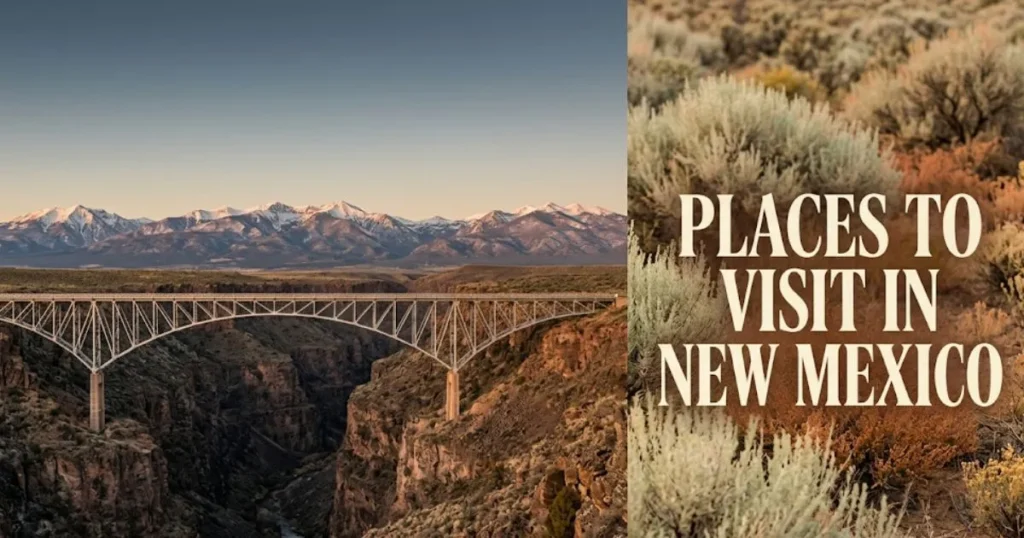
The dramatic Rio Grande Gorge Bridge is just west of town and completely free to walk.
Solo travelers find the raw landscape and spiritual quiet uniquely grounding here.
Winter brings heavy snow to Taos Ski Valley, making the town a dual-weather destination.
The mix of ski bums, artists, and old Hispanic families gives Taos a cultural friction that feels authentic.
The High Road to Taos scenic drive defines the journey here more than the destination itself.
You will want to skip the fast food in Española on the Low Road and instead stop at Sugar Nymphs Bistro in Peñasco.
Key Takeaway: Taos is at 6,969 feet, and the altitude hits harder here than Santa Fe for most visitors.
White Sands National Park
White Sands is a 275-square-mile gypsum dune field that looks like a snow-covered alien planet.
It is the newest national park in the system, gaining the designation in late 2019.
The eight-mile Dunes Drive lets you experience the park from your car.
Venture onto the Alkali Flat Trail to leave all traces of other humans behind within 20 minutes.
Bring a plastic sled from the visitor center gift shop for the classic dune-sliding experience.
Sledding works best after a recent rain when the gypsum is packed firm and fast.
Families consistently rate this as the single best kid-friendly stop in New Mexico.
Seniors should be aware that walking in loose gypsum sand is far more tiring than it looks.
The park is at its most magical during the golden hour before sunset.
It is actively unpleasant at midday in July when the white surface reflects sun directly into your eyes.
The visitor center sells $20 sleds, but locals grab cheap plastic saucers from the Alamogordo Walmart.
The experience is identical for a fraction of the price.
Carlsbad Caverns National Park
Carlsbad Caverns holds a subterranean world so vast it defies comprehension.
The Big Room is the largest accessible cave chamber in North America by volume.
You must secure a timed-entry reservation online in advance for any entry in 2026.
Same-day walk-ups are almost never available, particularly from March through October.
The Big Room Trail is a 1.25-mile paved loop accessible to most fitness levels.
Wheelchair users and families with strollers can navigate the full route without issue.
The natural entrance descent is an 800-foot drop on a steep and wet path.
Choose the elevator option if you have knee problems, heart conditions, or limited mobility.
Budget travelers should know entry costs roughly $15 per adult but is free on certain federal holidays.
Pre-dawn drives are required for the free bat flight viewing program at the natural entrance.
Everyone goes to the Big Room, making it crowded by 10:00 AM.
Experienced visitors book the ranger-led Slaughter Canyon Cave tour for a raw, unlit caving experience with headlamps.
Key Takeaway: Book your timed-entry reservation the moment the 30-day window opens for spring and fall trips.
Chaco Culture National Historical Park
Chaco Canyon is the most archaeologically significant site in the American Southwest.
It also requires the most punishing drive to reach, filtering out casual tourists completely.
You need a high-clearance vehicle to navigate the final 13 miles of washboard dirt road.
The route becomes impassable after any meaningful rain, even in a capable SUV.
The Pueblo Bonito complex is a thousand-year-old great house with 600 rooms.
Walking through its precisely aligned doorways with zero cell service feels like actual time travel.
A rustic campground inside the park offers some of the darkest night skies on earth.
Solo travelers and history buffs find the isolation profound, while some families struggle with the total lack of amenities.
Visit in May or October for dry roads and bearable daytime temperatures.
Do not attempt the drive in July or August when sudden monsoon downpours can strand you for a full day.
The main petroglyph trail gets the most foot traffic.
Hike the Wijiji Trail at sunrise instead for a completely solitary experience with a perfectly intact great house.
Bandelier National Monument
Bandelier preserves Ancestral Pueblo dwellings carved into a volcanic tuff canyon.
Wooden ladders allow you to climb directly into cavates, small rooms carved into the cliff face.
A mandatory shuttle runs from White Rock to the Visitor Center during peak season from 9 AM to 3 PM.
Outside those hours and during winter, you can drive your personal vehicle into Frijoles Canyon.
The Main Loop Trail is a 1.4-mile paved path that takes you past the most famous dwellings.
It is fully accessible for wheelchairs and strollers along the floor section.
Climbing the four ladders to reach the Alcove House ceremonial cave is the park’s highlight.
This 140-foot ascent is genuinely frightening for those with a fear of heights and impossible for most young children.
The park is at its quietest on a crisp October weekday.
It is an absolute pressure cooker of crowds on summer weekends with long shuttle lines.
Most visitors stick to the Main Loop and leave within two hours.
Hike the Frijoles Canyon Trail past Alcove House for total solitude and a chance to spot wild turkeys along the river.
Key Takeaway: Arrive before 8:30 AM in peak season to park your own car and avoid the shuttle entirely.
Valles Caldera National Preserve
Valles Caldera is a vast, emerald-green volcanic meadow inside a collapsed supervolcano crater.
It looks more like a film set for Scotland’s Highlands than the American Southwest.
Vehicle entry permits are required and limited, and you must book through the Recreation.gov platform.
The main road through the preserve, Valle Grande, is open for personal vehicles seasonally from roughly May to November.
This is the premier location in the state for seeing massive elk herds.
Photographers and solo travelers who value stillness over stimulation will find it unmatched.
Winter transforms the preserve into a Nordic skiing and snowshoeing zone when the main road closes.
Summer brings afternoon thunderstorms that can quickly turn the unpaved backcountry roads into impassable mud.
The parking lot at the visitor center gets the predictable photo.
Hike the La Jara Trail to a small, forest-ringed dome in the valley center for an utterly solitary picnic with 360-degree views.
Las Cruces and Organ Mountains
Las Cruces is the state’s second-largest city and its most underrated base camp.
It sits in the Mesilla Valley under the jagged spires of the Organ Mountains.
The historic Old Mesilla Plaza is the spot for a quiet evening of mariachi and strong margaritas.
La Posta de Mesilla is the tourist favorite, but locals head to Andele for the best green chile pork tacos.
Organ Mountains-Desert Peaks National Monument offers over 500,000 acres of rugged trails.
The Dripping Springs Natural Area provides an easy, accessible stroll to a historic sanatorium with cool canyon shade.
It suits budget travelers and snowbirds perfectly due to its low cost of living.
Families with kids will appreciate the free, excellent Las Cruces Museum System on Main Street.
The best time here is March and November when the high desert air is crisp and clear.
June brings punishing 100-degree-plus days that make hiking the low-elevation trails unsafe after 10:00 AM.
Everyone hikes the popular Baylor Canyon Pass.
Locals escape to Soledad Canyon for a quieter trail that leads to a seasonal waterfall hidden in the desert.
Key Takeaway: Las Cruces is the best base for exploring White Sands without paying Alamogordo hotel prices.
Silver City and the Gila Wilderness
Silver City is a funky, arts-driven former mining town with a cool, high-elevation climate.
It serves as the gateway to the immense Gila National Forest.
The historic downtown is walkable and lined with galleries, but it’s the Gila Cliff Dwellings that demand the trip.
This national monument preserves Mogollon culture dwellings inside dramatic canyons, reached via a wildly scenic 44-mile mountain road.
A visit here is a commitment because the drive from Silver City takes 1.5 to 2 hours each way.
It is a poor choice for anyone with a tight schedule or a fear of steep, winding cliffside roads.
Hikers should tackle the Middle Fork Trail along the Gila River.
It involves multiple river crossings, so bring water shoes and expect to get wet up to your shins.
The cool 6,000-foot altitude makes this a prime summer escape when the southern desert bakes.
Winter snow can temporarily close the road to the cliff dwellings, so verify conditions with the Forest Service first.
The main cliff dwellings loop gets the visitors.
Explore the lesser-visited TJ Site along the Trail to the Past for a completely solitary Mogollon ruin experience.
Best New Mexico Ghost Towns
New Mexico’s ghost towns are not themed attractions but real, crumbling remnants of the mining frontier.
They offer a window into the state’s boom-and-bust relationship with silver, gold, and turquoise.
Chloride, west of Truth or Consequences, is a classic silver camp with preserved cabins.
Lake Valley, managed by the BLM, features a well-preserved schoolhouse and a self-guided walking tour for a small fee.
Madrid, on the Turquoise Trail, is no longer a ghost town but a reborn artist community.
It is the single best stop between Santa Fe and Albuquerque for a coal-mining history lesson and a cold drink at the Mine Shaft Tavern.
Families find Madrid easy and rewarding with its accessible shops and engine house museum.
Purists seeking true silence and decay should head to Chloride instead.
Visit in May for pleasant temperatures and zero crowds on the dirt access roads.
The summer monsoon season turns these roads into sticky clay traps unsuitable for standard cars.
Madrid gets packed with tourists on weekends.
Locals driving south to Albuquerque stop at the genuinely sleepy and still-authentic Cerrillos just three miles down the road instead.
Key Takeaway: Download offline maps for the entire region before you leave cell service in Santa Fe or ABQ.
Unique New Mexico Destinations Worth the Drive
Certain places in New Mexico operate on a scale of strangeness that justifies the extra miles.
These are not your standard museum or scenic viewpoint stops.
Meow Wolf in Santa Fe, the House of Eternal Return, is a disorienting, walk-through art installation.
It is a multi-sensory labyrinth funded by Game of Thrones author George R.R. Martin, costing roughly $40 per adult.
Very Large Array west of Socorro on the Plains of San Agustin is a working radio telescope.
Walking among the 82-foot dishes feels like stepping onto a science fiction film set from the 1990s.
Teens and young adults rank Meow Wolf as a trip highlight, but it can overwhelm sensitive kids and seniors.
The VLA has a small museum and self-guided walking tour that is entirely out in the open with zero shade.
Bisti/De-Na-Zin Wilderness south of Farmington is a badlands of surreal, eroded hoodoos.
This is a landscape for adventurous photographers willing to hike off-trail with a GPS unit to find the “Cracked Eggs” formations.
Go to the VLA on the first Saturday of the month for the free, docent-led behind-the-scenes tour.
For Bisti, stop at Star Party Pizza in Cuba, NM, to ask the owner for the latest backroads mud report before driving in.
New Mexico Road Trip: A Perfect 7-Day Itinerary
This itinerary solves the state’s biggest planning problem: how to connect far-flung sites without living in the car.
It focuses on the central corridor and northern treasures for a manageable, high-reward loop.
Day 1: Arrive in Albuquerque.
Fly into Albuquerque International Sunport (ABQ) and pick up your rental car.
Spend the afternoon in Old Town before getting dinner in the Nob Hill district.
Day 2: Albuquerque High Altitude.
Ride the Sandia Peak Tramway or drive the Sandia Crest Road in the morning.
Explore the Petroglyph National Monument in the afternoon to see 400-year-old rock art.
Day 3: The Turquoise Trail to Santa Fe.
Take the scenic NM-14 north through Madrid and Cerrillos.
Arrive in Santa Fe by afternoon and walk through the Railyard Arts District.
Day 4: Santa Fe Deep Dive.
Tour Canyon Road and Museum Hill in the morning to beat the crowds.
Book a late-afternoon entry to the mind-bending Meow Wolf after exploring the Santa Fe Plaza.
Day 5: High Road to Taos.
Leave Santa Fe on the High Road, stopping at Sugar Nymphs Bistro in Peñasco.
Visit the Rio Grande Gorge Bridge and the Taos Plaza before sunset.
Day 6: Northern Wilds.
Make the day trip from Taos to the Great Sand Dunes in Colorado or hike the ski valley.
Alternatively, return south to experience a sunrise at Valles Caldera National Preserve.
Day 7: Cultural Immersion.
Book a morning tour at Taos Pueblo if it’s open to the public.
Drive back to Albuquerque via the Low Road through Española for your departing flight.
Key Takeaway: This loop minimizes the two-hour driving gaps that kill itineraries by stringing sites along the way.
Best Time to Visit New Mexico
The best overall travel window for a statewide road trip is late September through October.
The light is golden, the balloon fiesta fills Albuquerque, and the green chile harvest is in full swing.
This fall period provides daytime temperatures in the 70s and cool nights perfect for a fire pit.
Hotel rates in Santa Fe and Taos peak during this window, so book four to six months ahead.
The spring shoulder from mid-April to May offers the next-best compromise of weather and value.
Winds can be a genuine nuisance in April, frequently gusting over 40 miles per hour across the plains.
The worst time for a full-state trip is the monsoon peak from July through August.
Flash floods make backcountry roads deadly, and the southern deserts like Carlsbad and Las Cruces bake in 100-plus-degree heat.
Winter from November to March is the hidden gem season for Albuquerque and southern desert parks.
Snowpack makes high-elevation sites like Valles Caldera and Bandelier’s backcountry inaccessible, but White Sands is magical with light snow.
Safety and Practical Warnings for New Mexico Travel
New Mexico’s beauty is often remote, high, dry, and unforgiving of poor preparation.
Understanding the primary risks before you go prevents your trip from becoming a rescue statistic.
Key safety and practical facts every visitor should know:
- Extreme dehydration can set in within an hour during a summer hike. Carry one full gallon of water per person per day.
- Altitude sickness affects visitors to Santa Fe (7,200 ft) and Taos (6,900 ft) routinely. Symptoms include headache and nausea, so avoid alcohol on your first full day.
- Flash floods in arroyos and canyons are lethal and can occur miles away from visible rain. Never camp in a dry wash and turn around if a dirt road has water running over it.
- Limited cell service is the norm in every national park and monument. Download offline Google Maps and inform someone of your daily route before leaving Wi-Fi.
- Dust storms along I-10 in the south can reduce visibility to zero in seconds. Pull completely off the highway, turn off your lights, and wait it out.
A satellite communicator like a Garmin inReach is a wise investment for solo hikers heading into Chaco or the Gila.
The New Mexico State Police non-emergency number is 505-841-9256, but coverage is thin in remote areas.
Frequently Asked Questions About Visiting New Mexico
What is the number one tourist attraction in New Mexico?
The Carlsbad Caverns Big Room is New Mexico’s most-visited single natural attraction.
It draws over 400,000 visitors annually to a single subterranean chamber.
White Sands National Park competes for the top spot, especially after its national park upgrade.
How many days do you need to see the best places in New Mexico?
A minimum of seven days is needed for a northern highlights loop.
This allows you to see Albuquerque, Santa Fe, and Taos without constant driving.
A ten-day itinerary is required to add the southern parks like Carlsbad Caverns.
What is the best time of year to visit New Mexico to avoid crowds?
January is the least crowded month of the year statewide.
You will find empty trails in the southern parks and heavy discounts in Santa Fe.
However, high-elevation hikes and certain restaurants in Taos will be closed for the season.
Is it safe to drive in remote areas of New Mexico?
Driving is safe if your vehicle matches the road’s requirements.
A high-clearance SUV or 4WD is non-negotiable for Chaco Canyon and the Gila backcountry.
The main risk is getting stranded on an impassable dirt road with zero cell service after a rainstorm.
Do you need reservations for Carlsbad Caverns in 2026?
Yes, timed-entry reservations are mandatory for all visitors to Carlsbad Caverns.
You must book a specific entry time slot online at Recreation.gov before your visit.
Reservation windows typically open 30 days in advance and sell out completely for spring break.
Which is better to visit, Santa Fe or Albuquerque?
Santa Fe is better for a luxury-oriented, culturally immersive, and deeply romantic escape.
Albuquerque is better for a budget-friendly, relaxed, and locally authentic urban experience.
The best answer is to do both if your itinerary allows, as they are only a 60-minute drive apart.
Your choices here matter more than at most destinations because New Mexico makes no effort to shrink its distances for your convenience.
Start by booking your national park entries and the Santa Fe hotel. That singular step locks your budget and route into place.
Always verify timed-entry rules at NPS.gov and road conditions via NMRoads.com before departure.
The real New Mexico is found in the quiet moments between its famous landmarks. That is exactly where you should be looking