25 Best Things To Do in Oklahoma City, Oklahoma 2026

Oklahoma City rewards curious travelers who move past the obvious tourist circuit. The best things to do in Oklahoma City span world-class Western heritage museums, a rapidly maturing food scene, and distinct arts districts that locals know far better than most visitors do.
According to Visit OKC, the city draws over 25 million visitors annually to a destination that packs genuine cultural depth into a walkable core. OKC’s cost structure is significantly more favorable than most comparably interesting American cities.
This guide covers the top activities, the best neighborhoods, honest seasonal timing, specific dining recommendations, and a practical two-day framework. Every section tells you what to skip alongside what to prioritize.
Things To Do in Oklahoma City: What Makes OKC Worth Your Time
Oklahoma City offers a genuinely distinct American city experience built around Western heritage, Plains culture, and a food and arts scene that has grown substantially in the past decade.
The city is not trying to be Austin or Nashville. It has its own identity: part cowboy heritage, part Plains resilience, part quietly ambitious urban renewal. That combination is either exactly what you’re looking for or a clear signal to look elsewhere.
OKC is geographically spread out. Most visitors need a car to move efficiently between districts.
The OKC Streetcar covers a useful loop connecting Midtown, Bricktown, and the Arts District. But Stockyards City, the National Cowboy Museum, and several parks require driving.
Budget travelers will find OKC unusually affordable for a city with this level of cultural infrastructure. Several of the best experiences cost nothing.
Seniors and accessibility travelers should know that Oklahoma City’s flat terrain is genuinely accessible. Most major attractions have full ADA infrastructure.
The single biggest mistake most first-time visitors make: spending the entire trip in Bricktown. It’s the most promoted district. It is not the most interesting one.
- OKC is best visited: April through early June, September through November
- Avoid: Mid-June through August (extreme heat, average highs above 95°F)
- Tornado season awareness required: late March through May
- Getting around: Personal vehicle or ride-share for most attractions
Best Things To Do in Oklahoma City Right Now
The best things to do in Oklahoma City in 2026 include visiting the Oklahoma City National Memorial and Museum, exploring the National Cowboy and Western Heritage Museum, walking Scissortail Park, dining in the Plaza District, and attending a Oklahoma City Thunder game at Paycom Center.
Below is a practical comparison table by traveler profile:
| Activity | Best For | Approx. Cost | Time Needed | Insider Note |
|---|---|---|---|---|
| OKC National Memorial and Museum | All profiles | Free (outdoor) / ~$15 adults (museum) | 1.5 to 3 hours | Visit the outdoor memorial at dawn for maximum quiet |
| National Cowboy and Western Heritage Museum | History, couples, families | ~$15 to $20 adults | 2 to 4 hours | One of the best regional museums in the US; undervisited |
| Scissortail Park | Families, budget, outdoor | Free | 1 to 3 hours | Weekend events added in spring and fall |
| Paycom Center Thunder game | Couples, adults, families | ~$40 to $150+ per ticket | 3 hours | Buy tickets early; home games sell out in peak season |
| Paseo Arts District walking | Solo, couples, arts travelers | Free (galleries vary) | 1 to 2 hours | First Friday events monthly draw local crowds |
| Oklahoma City Zoo | Families | ~$15 to $20 adults, less for children | 3 to 5 hours | Spring mornings are the best time; avoid summer midday |
| Bricktown Canal boat tours | Couples, families | ~$10 to $15 per person | 45 minutes | Scenic but touristy; the canal walk itself is free |
| Cattlemen’s Steakhouse, Stockyards City | Adults, couples, food travelers | ~$25 to $60 per person | 1.5 hours | A genuine OKC institution since 1910; reserve in advance |
Suggested 2-Day Weekend Framework:
Day 1:
- Morning: Oklahoma City National Memorial outdoor grounds (free; allow 45 minutes minimum)
- Late morning: Oklahoma City National Memorial Museum (allow 1.5 hours)
- Lunch: Tucker’s Onion Burgers, Midtown location
- Afternoon: National Cowboy and Western Heritage Museum (allow 2.5 to 3 hours)
- Evening: Dinner at Cattlemen’s Steakhouse in Stockyards City
- Night: Return to Bricktown for a drink; the Jones Assembly or Criterion if a show is booked
Day 2:
- Morning: Myriad Botanical Gardens and Crystal Bridge Conservatory
- Late morning: Scissortail Park walk
- Lunch: Plaza District (try Sunnyside Diner or neighboring local spots)
- Afternoon: Paseo Arts District walking galleries
- Late afternoon: Boathouse District and Oklahoma River kayaking or cycling
- Evening: Dinner at Vast (atop the Devon Energy Center) for a special-occasion meal
Oklahoma City Neighborhoods To Visit: A District-by-District Guide
Oklahoma City’s most interesting districts are Bricktown, the Paseo Arts District, Stockyards City, the Plaza District, Film Row, and Deep Deuce. Each has a distinct character and a different visitor profile.
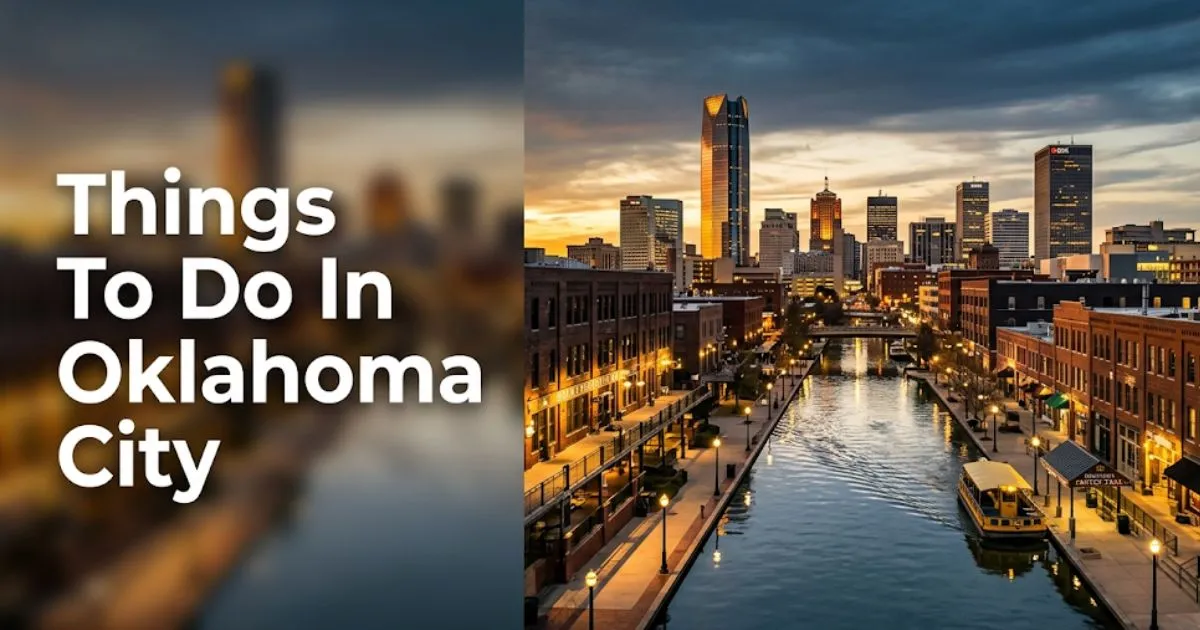
Bricktown is the most visited. It is a converted warehouse district along a canal, now filled with restaurants, bars, and entertainment venues. Expect weekend crowds and tourist pricing.
The honest local assessment: Bricktown is enjoyable but is OKC’s most tourist-facing district by a wide margin.
Paseo Arts District, about two miles northwest of downtown along NW 28th Street, is where OKC’s working artists and independent galleries actually live. Monthly First Friday events draw locals consistently.
Stockyards City on Exchange Avenue is one of the few authentically functioning Western commercial districts in the US. You can watch actual livestock auctions, buy custom boots, and eat at Cattlemen’s Steakhouse all within two blocks.
The Plaza District along NW 16th Street is OKC’s most genuinely neighborhood-feeling commercial strip. Independent restaurants, boutiques, and coffee shops line a walkable stretch with very few tourist businesses.
Film Row in the Automobile Alley area preserves early 20th-century commercial buildings. It’s a quieter walking area with galleries and cocktail bars.
Deep Deuce, northeast of downtown, is a historic African American cultural district now undergoing significant development. It has genuine historical significance worth understanding before arriving.
For families: Bricktown and Scissortail Park provide the most child-friendly logistics.
For solo travelers and couples: The Paseo Arts District and Plaza District offer a more genuinely local experience.
Things To Do in Bricktown Oklahoma City
Bricktown is Oklahoma City’s most-visited entertainment district, built around a one-mile canal lined with restaurants, live music venues, and boat tour operations.
The canal boat tour is the district’s signature tourist experience. Tours depart from multiple docks and take approximately 35 to 45 minutes on the water. Admission runs approximately $10 to $15 per person for recent years; verify before booking.
Couples and families find the canal walk genuinely pleasant on weekend evenings. The illuminated canal is one of OKC’s most photographed settings after dark.
The honest assessment: Bricktown is enjoyable but overrepresented in travel guides relative to its local appeal. Most OKC residents choose the Plaza District or Paseo for a night out.
What Bricktown does well:
- Basecamp Bar and Grill for outdoor seating along the canal
- The Bricktown Ballpark (Chickasaw Bricktown Ballpark) for a Triple-A baseball game in summer
- Jones Assembly on Sheridan Avenue for nationally touring live music acts
- Mickey Mantle’s Steakhouse for a sports-history-themed upscale dinner
What experienced repeat visitors skip: The chain restaurants that dominate the north end of the canal corridor. They exist in most US cities and bring nothing Oklahoma-specific.
Parking reality: Metered street parking is available but limited on Friday and Saturday nights after 7 PM. The municipal parking garages on Sheridan and E Sheridan Avenue provide the most reliable weekend parking. Budget approximately $8 to $15 for evening garage parking.
Seniors and accessibility travelers: The canal walk is fully paved and flat, making it one of OKC’s most accessible outdoor experiences.
Key Takeaway: Bricktown is OKC’s postcard. The Plaza District and Paseo Arts District are where the actual local city lives. Visit both.
Oklahoma City Arts and Culture
Oklahoma City has a genuine arts infrastructure centered on the Oklahoma Contemporary Arts Center, the Oklahoma City Museum of Art, the Paseo Arts District, and the annual Festival of the Arts.
The Oklahoma Contemporary Arts Center near the intersection of NW 11th Street and Lee Avenue opened a major facility in 2021. It is one of the most architecturally significant buildings in OKC and operates a rotating exhibition program that draws regional and national artists.
Admission is typically free or nominal; verify current hours and exhibition schedule with the venue directly before visiting.
The Oklahoma City Museum of Art on Couch Drive downtown houses an impressive permanent collection anchored by a major Dale Chihuly glass installation. Admission runs approximately $12 to $18 per adult for recent years.
According to Visit OKC, the Festival of the Arts held in Scissortail Park each spring is one of Oklahoma City’s most attended annual events, drawing over 700,000 visitors across six days of visual arts, live performance, and food vendors. Exact 2026 dates should be verified with the Festival of the Arts organization directly.
Solo travelers and arts-focused visitors will find the Paseo Arts District the most satisfying concentrated experience. Over 80 artists maintain studios within a few blocks. First Friday Paseo Art Walk events happen monthly; the crowds are local, the experience is genuine.
Budget travelers note that many Paseo galleries are free to enter. The First Friday events involve no admission charge.
The deadCenter Film Festival, held annually in late spring in OKC, is one of the most respected independent film festivals in the region. Film enthusiasts should check the 2026 schedule directly with deadCenter’s official programming.
Oklahoma City National Memorial: What To Know Before You Visit
The Oklahoma City National Memorial and Museum on NW 5th Street marks the site of the 1995 Murrah Federal Building bombing and stands as one of the most emotionally significant historic sites in the American South and Plains.
The outdoor memorial grounds, including the Field of Empty Chairs and the Survivor Tree, are open daily and free of charge. The museum component requires a separate paid ticket.
Museum admission runs approximately $15 per adult for recent years; check the National Memorial’s official site for 2026 pricing and any reservation requirements before visiting.
Plan a minimum of two hours for the full museum experience. Budget closer to three hours if visiting with older children or if the historical context is personally significant to your family.
The single most important practical note: Visit the outdoor grounds at dawn or early morning on weekdays. Weekend afternoons, particularly in spring and fall, draw large crowds that reduce the contemplative quality of the experience.
Families with children should be thoughtful about age-appropriateness. The museum covers the bombing in significant historical and emotional detail. It is appropriate for children aged ten and older with parental preparation. Younger children can experience the outdoor grounds meaningfully without the museum interior.
Accessibility: The outdoor memorial grounds and museum are fully accessible. The site is flat and paved throughout.
The Survivor Tree, an American elm that survived the bombing and continues to grow on the memorial grounds, is one of the most quietly powerful specific experiences at any US historical site. Most visitors walk past it without fully engaging with its significance. Stop. Read the interpretive signage.
Oklahoma City Cowboy and Western Heritage
The National Cowboy and Western Heritage Museum on NE 63rd Street is, without qualification, one of the best regional museums in the United States. It is consistently undervisited relative to its actual quality.
The museum houses over 28,000 artifacts spanning American Western art, Native American cultures, rodeo history, and frontier settlement. The James Earle Fraser sculpture collection and the Albert K. Mitchell Collection of Western Art are among the most significant Western art holdings in the country.
Admission runs approximately $15 to $20 per adult for recent years; verify 2026 pricing directly with the museum. Budget two to four hours minimum.
Stockyards City on Exchange Avenue, about two miles southwest of downtown, is the other essential Western heritage experience in OKC. It is one of the only commercial Western districts in the US that actually functions as a working livestock economy alongside its tourism identity.
Cattlemen’s Steakhouse at 1309 S Agnew Avenue has operated since 1910. It is an OKC institution and one of the rare restaurants where “institution” is not a tourism board cliche. Steaks are aged on-site. The lamb fries are a regional specialty that requires advance mental preparation if you are unfamiliar with them.
For couples: The combination of the Cowboy Museum in the afternoon followed by Cattlemen’s Steakhouse for dinner is one of OKC’s best full-day experiences and costs significantly less than comparable quality would in Dallas, Denver, or Chicago.
Insider Tip:
- The Cowboy Museum’s Prosperity Junction exhibit, a recreated 1900s frontier cattle town, is the single most underrated experience in the entire building.
- Visit Stockyards City on a Tuesday or Wednesday morning when working livestock auctions are more likely to be in session.
- The custom boot shops on Exchange Avenue (Langston’s Western Wear is the most established) require appointment booking for custom orders but allow walk-in browsing.
Key Takeaway: The National Cowboy and Western Heritage Museum is genuinely one of the best museums in the American South and Plains. Its low tourist traffic makes the experience even better.
Outdoor Things To Do in Oklahoma City
Scissortail Park is Oklahoma City’s premier urban green space, a 70-acre park connecting the Myriad Botanical Gardens to the south end of the downtown core.
The park opened its final phase in 2021 and now includes a splash pad, a children’s play area, walking and cycling paths, and a performance pavilion. Entry is free.
Myriad Botanical Gardens at 301 W Reno Avenue anchors the northern end of the park. The Crystal Bridge Tropical Conservatory within the gardens houses a curated collection of tropical and desert plants in a distinctive cylindrical glass structure.
Crystal Bridge admission runs approximately $6 to $12 per adult for recent years; verify 2026 pricing directly with the Gardens. The botanical gardens themselves are free to enter.
The OKC Boathouse District along the Oklahoma River offers kayaking, stand-up paddleboarding, rowing, cycling, and zip-lining through a network of facilities. Several operators run rentals; Riversport Adventures is the primary activity operator for the district.
Rental and activity pricing varies widely by activity type. Budget approximately $15 to $50 per person depending on what you book. Verify 2026 schedules and pricing with Riversport Adventures directly.
Lake Hefner on the northwest edge of the city is where OKC residents actually go for outdoor recreation. The lake has a 9-mile paved loop trail, sailing, and some of the better sunset views in the city. It is quieter and more local than the Boathouse District.
Families with young children: Scissortail Park’s splash pad and playground are the most reliably engaging outdoor options in OKC for ages 2 to 10.
Seniors and accessibility travelers: Scissortail Park and the Myriad Botanical Gardens are fully paved and flat throughout.
Avoid outdoor activities from approximately 11 AM to 4 PM during July and August. Heat regularly reaches 98 to 103°F during OKC summers. Morning and evening outdoor activity is comfortable; midday is not.
Oklahoma City Food and Dining
Oklahoma City’s food scene has developed into one of the more interesting mid-sized city dining scenes in the American South, moving well beyond the steakhouses and chicken fried steak that define its most promoted culinary identity.
The honest picture: OKC’s traditional food identity is genuinely worth exploring. Chicken fried steak, onion burgers, and beef barbecue are not tourist theater here. They are the actual local food culture.
Tucker’s Onion Burgers at multiple OKC locations (the Midtown location on N Walker Avenue is the most convenient) serves what is genuinely the defining OKC burger style: thin-pattied, onion-smashed, cooked on a flat-top griddle. Budget approximately $8 to $14 per person.
Cattlemen’s Steakhouse in Stockyards City remains the single most historically significant restaurant in Oklahoma City. It has been operating since 1910, changed ownership in a poker game in 1945, and still ages its own beef.
Pops 66 in Arcadia, Oklahoma, about 25 miles northeast of downtown on old Route 66, is one of the most photographed roadside stops in the state. The soda selection exceeds 700 varieties. Budget about $3 to $6 per person for soda. The food is secondary to the experience.
Vast atop the Devon Energy Center at 333 W Sheridan Avenue serves the most architecturally spectacular dining room in OKC, with views across the city. Dinner runs approximately $60 to $120 per person before drinks. It is a special-occasion restaurant, not an everyday option.
Coop AlmaVerde in the Plaza District offers one of OKC’s best contemporary dining experiences at mid-range prices.
For budget travelers: The Plaza District has multiple approachable options under $20 per person for lunch. Sunnyside Diner on N Western Avenue is a local breakfast institution with no tourist markup.
Couples should note that OKC’s mid-range restaurant quality-to-price ratio is significantly better than in comparable Texas or Colorado cities.
Key Takeaway: Tucker’s Onion Burgers and Cattlemen’s Steakhouse are not tourist traps. They are the actual food identity of Oklahoma City, and both genuinely earn their reputation.
Things To Do in Oklahoma City at Night
Oklahoma City’s nightlife centers on Bricktown, Midtown, and the Plaza District, each with a distinct character and crowd profile.
Bricktown at night is the most tourist-facing option. It is busy, well-lit, and safe. The canal walk is genuinely pleasant after dark. The bar concentration along Sheridan Avenue and the canal attracts a mixed age range on weekends.
Jones Assembly at 901 W Sheridan Avenue is OKC’s best mid-size live music venue for nationally touring acts. Capacity sits around 2,500, which keeps the experience relatively intimate. Check the 2026 schedule directly; shows book out weeks in advance.
Midtown along N Walker Avenue has developed a strong cocktail bar and restaurant culture. Sidecar Barley and Wine Bar and neighboring spots serve a noticeably more local crowd than Bricktown.
The Paseo Arts District hosts its monthly First Friday Art Walk events in the evening. These are free, locally attended, and significantly more interesting than a bar crawl for travelers who want genuine social texture.
OKC Thunder home games at Paycom Center (100 W Reno Avenue) represent one of the best NBA game experiences in the league’s mid-market cities. The arena is compact and loud. Ticket prices run approximately $40 to $150 or more depending on opponent and seat location; verify 2026 pricing with the Thunder’s official box office.
For solo travelers: The Plaza District’s bar and restaurant scene offers the easiest solo-friendly social environment. Midtown cocktail bars are similarly approachable.
For couples: A Thunder game followed by late dinner in Bricktown or Midtown is a strong OKC date night structure.
Practical note: Uber and Lyft coverage in OKC is reliable within the downtown, Bricktown, and Midtown areas. Surge pricing applies on game nights at Paycom Center. Plan accordingly or park in a garage near the arena early in the evening.
Unique Things To Do in Oklahoma City
Several of OKC’s most genuinely distinctive experiences receive far less coverage than Bricktown in travel guides, despite being more specific to this city than anything along the canal.
The American Indian Cultural Center and Museum on I-35 south of downtown is one of the largest Native American cultural institutions in the US. It was under extended development for years; verify its 2026 operational status and programming schedule directly with the museum before planning a visit.
Stockyards City livestock auctions (Tuesday and Wednesday mornings typically) give visitors a look at working Western commerce that is almost entirely absent from modern US city tourism. You can watch actual cattle sold at auction in a working sale barn two miles from downtown Oklahoma City.
The Oklahoma History Center on NE 23rd Street (adjacent to the State Capitol) is a serious, well-funded state history institution covering Oklahoma from pre-territorial days through statehood and the Dust Bowl. Admission runs approximately $7 to $10 for recent years; verify 2026 pricing.
Driving Route 66 west from OKC toward El Reno or east toward Arcadia covers some of the most intact original alignment of the highway still accessible in Oklahoma. The Pops 66 soda ranch and the restored Round Barn in Arcadia are both within 30 minutes of downtown.
The National Weather Center in Norman, about 20 miles south of OKC, offers free public tours of one of the world’s most significant meteorological research facilities. Given Oklahoma’s tornado history, this has genuine context for any visitor.
For adults and couples: The Vast Restaurant atop Devon Energy Center offers one of the more architecturally unique dining experiences in the American interior.
Insider Tip:
- The Murrah Building Memorial at dawn is a categorically different experience than at midday. The quiet is genuinely rare among major US memorial sites.
- Stockyards City on a working auction morning is the single experience most OKC guides miss entirely.
- The OKC Streetcar is free on specific days; check the current schedule with the city’s transit authority before your visit.
Oklahoma City With Kids
Oklahoma City is a genuinely family-friendly destination with child-appropriate infrastructure across most major attractions.
The Oklahoma City Zoo and Botanical Garden at 2101 NE 50th Street is consistently rated among the top zoos in the South Central US. The zoo covers over 100 acres and houses more than 1,900 animals. Admission runs approximately $15 to $20 per adult and less for children; verify 2026 pricing and any reservation requirements directly with the zoo.
The best time to visit the zoo is spring mornings (April through mid-June) when temperatures are comfortable and animals are active. Avoid summer midday visits. The heat genuinely affects children’s enjoyment and the animals’ activity levels.
Scissortail Park is free and designed with children in mind. The splash pad is the biggest draw for ages 2 to 8. The open lawn areas are good for younger children who need unstructured space.
The Science Museum Oklahoma on NE 52nd Street (near the Zoo) is a hands-on science museum with exhibits specifically designed for school-age children. Admission runs approximately $14 to $16 per person for recent years; verify 2026 pricing.
Myriad Botanical Gardens works well for children ages 4 and up. The Crystal Bridge is genuinely interesting to children who have never seen tropical plant environments.
Practical logistics for families:
- Most OKC family attractions require driving; the Zoo, Science Museum, and Cowboy Museum are not walkable from downtown
- The OKC Zoo has a full-service restaurant inside; food quality is acceptable and significantly overpriced, as at most American zoos
- Bricktown canal boat tours are appropriate for children ages 4 and older
- Children 12 and under should skip the National Memorial Museum interior; the outdoor grounds are appropriate for all ages
According to Visit OKC, Oklahoma City is among the most affordable major-market family travel destinations in the South Central US when measured by per-person daily activity costs.
Oklahoma City for Couples
Oklahoma City offers a strong couples travel experience at a price point well below comparable Texas or Colorado city alternatives.
The National Cowboy and Western Heritage Museum followed by dinner at Cattlemen’s Steakhouse is the single best full-day OKC couples itinerary that is specific to this city and unavailable anywhere else. Budget approximately $70 to $120 for two people including admission and a full dinner.
A Thunder NBA game at Paycom Center is one of the better couples date nights in the American interior. The arena is compact and creates genuine shared energy. Reserve seats in the lower bowl for the best experience; prices run approximately $80 to $300 for two tickets depending on the game.
Dinner at Vast atop the Devon Energy Center is the best special-occasion restaurant option in OKC. Views of the city are legitimate. The food quality is strong. Budget approximately $120 to $200 for two people before drinks.
The Paseo Arts District on a First Friday evening is low-cost, locally attended, and provides genuine social immersion rather than tourist entertainment.
A sunset walk at Lake Hefner on the northwest edge of the city, followed by dinner at one of the lake’s waterfront restaurants, is where OKC couples actually spend evenings. It is not in most travel guides. It is genuinely pleasant.
Romantic pacing note: OKC is a two-full-day city for couples who want to explore properly. One day is enough to hit the highlights but not enough to discover the city’s actual character.
The Skirvin Hilton Hotel on Park Avenue is OKC’s most historic hotel, operating since 1911, and provides the strongest sense-of-place accommodation for couples who want their hotel to have personality.
Key Takeaway: The couples experience that most separates OKC from comparable cities is the Cowboy Museum plus Cattlemen’s Steakhouse combination: genuinely singular, affordable, and specific to this place.
Free Things To Do in Oklahoma City
Oklahoma City offers a significant number of genuinely free or near-free experiences that compete in quality with the city’s paid attractions.
Free experiences that are worth your time:
- Oklahoma City National Memorial outdoor grounds: The Field of Empty Chairs, the Reflecting Pool, and the Survivor Tree are all free to access at any hour
- Scissortail Park: Free daily; the splash pad, paths, and lawn areas require no admission
- Myriad Botanical Gardens (grounds only): The outdoor gardens are free; the Crystal Bridge Conservatory charges admission
- Paseo Arts District walking and gallery browsing: Most galleries are free to enter; First Friday Art Walk events have no admission charge
- Lake Hefner 9-mile trail loop: Free to walk or cycle
- Oklahoma State Capitol building and grounds: Free daily tours of the Capitol building, which has working oil wells on its lawn (genuinely unique)
- Deep Deuce neighborhood walking tour: Free; this historically significant African American district is best understood with a downloaded self-guided audio tour
- OKC Farmers Public Market on Britton Road: Saturdays, free to browse and attend
Budget travelers will find OKC unusually generous with free access. A full day of activity is possible at essentially zero cost beyond food and transportation.
For families on a budget: Scissortail Park plus the State Capitol tour plus the National Memorial grounds gives a full, meaningful day at no admission cost. Bring lunch from a nearby grocery or the Plaza District.
The honest note on “free” at OKC: The National Memorial Museum, the Cowboy Museum, and the Zoo are the three paid attractions that genuinely justify their admission. Do not skip them to save $15 per person if you’re in OKC for the first time.
Things To Do Around Oklahoma City: Day Trips Worth the Drive
The best day trips from Oklahoma City are the Wichita Mountains Wildlife Refuge, Norman, the Route 66 corridor east toward Arcadia and Stroud, and the Chickasaw National Recreation Area.
Wichita Mountains Wildlife Refuge near Lawton, Oklahoma is approximately 90 miles southwest of OKC via I-44. It is a genuinely dramatic landscape of granite boulders, bison herds, and prairie that most OKC visitors never see. The National Park Service manages the refuge; entry is free. Allow a full day for a comfortable visit.
Norman, 20 miles south on I-35, is the home of the University of Oklahoma. The Sam Noble Oklahoma Museum of Natural History on the OU campus houses one of the most significant natural history collections in the South Central US. Admission runs approximately $7 to $9 for recent years; verify 2026 pricing directly.
The Route 66 drive east from OKC through Edmond to Arcadia to Chandler to Stroud covers approximately 50 to 80 miles and includes Pops 66, the Round Barn at Arcadia, and several intact 1920s and 1930s commercial facades that give genuine context for the highway’s history.
Chickasaw National Recreation Area near Sulphur, Oklahoma, approximately 90 miles southeast on I-35, combines natural springs, swimming areas, and prairie hiking in a National Park Service site that is almost entirely unknown to visitors who are not from Oklahoma. Entry fees run approximately $5 to $10 per vehicle for recent years; verify 2026 fees.
For families: Wichita Mountains Wildlife Refuge is the best day-trip choice. Bison sightings are reliable, and the landscape is dramatic enough to hold children’s attention.
For budget travelers: Both the Wichita Mountains and Chickasaw NRA charge low or no fees and provide full-day outdoor value.
Practical note: All four day trips require a car. None are accessible by public transit from OKC. Build in return time before dark, particularly at Wichita Mountains where bison cross roads at dusk.
Safety and Practical Warnings for Oklahoma City Visitors
Oklahoma City’s primary safety consideration is tornado season, which runs from late March through late May and requires situational weather awareness rather than trip cancellation.
Key safety and practical facts every visitor should know:
- Download a weather alert app before arriving in OKC during spring months. The National Weather Service Storm Prediction Center, based in Norman, issues tornado watches and warnings that you need to be able to receive on your phone
- Summer heat is extreme. Average highs in July exceed 95°F. Plan outdoor activity before 10 AM or after 5 PM from June through August
- Bricktown on Friday and Saturday nights draws large weekend crowds. Street parking is very limited after 8 PM. Use the Sheridan Avenue parking garages
- Oklahoma City’s street grid is large. Walking between districts is not practical. The distance from Bricktown to the Paseo Arts District is over 3 miles. Use the OKC Streetcar within its coverage area and ride-share for longer trips
- The National Memorial Museum can be emotionally intense. The 1995 bombing content is presented in full historical detail. Prepare children and sensitive visitors accordingly
- Drive-in tornado shelters are available at several OKC public facilities; hotel staff can direct you to the nearest shelter location if a warning is issued
The Oklahoma Department of Emergency Management maintains public shelter location information and current weather guidance at their official state website. Register your hotel location with the front desk staff on arrival during spring months and confirm their storm shelter procedure.
Frequently Asked Questions About Things To Do in Oklahoma City
What is Oklahoma City most known for?
Oklahoma City is most known for the Oklahoma City National Memorial and Museum, the National Cowboy and Western Heritage Museum, Bricktown Entertainment District, and the NBA Oklahoma City Thunder.
The city also carries deep historical significance as the site of the 1995 Murrah Federal Building bombing and as a living center of American Western and Native heritage.
Its food identity is built around onion burgers, chicken fried steak, and beef steakhouses, with a growing contemporary dining scene in the Plaza District and Midtown.
How many days do you need in Oklahoma City?
Two full days is the minimum for a first visit to Oklahoma City that covers the National Memorial, the Cowboy Museum, Bricktown, and one additional district.
Three days allows for a Thunder game, a Stockyards City experience, and a day trip to the Wichita Mountains or Norman.
One day is enough for a single focused experience, like the National Memorial and Bricktown, but is not enough to understand what makes OKC genuinely interesting.
Is Oklahoma City worth visiting in 2026?
Yes, Oklahoma City is worth visiting in 2026, particularly for travelers who value Western and Native American heritage, honest American food culture, and a mid-sized city with genuine character at below-average costs.
OKC is not the right choice for travelers seeking coastal scenery, mountain hiking, or a cosmopolitan urban experience comparable to Chicago or Los Angeles.
The National Cowboy and Western Heritage Museum alone justifies a visit for anyone interested in American Western history.
What is the best neighborhood to stay in Oklahoma City?
The best neighborhood to stay in Oklahoma City for first-time visitors is downtown, within walking distance of Bricktown and the OKC Streetcar.
The Skirvin Hilton on Park Avenue provides the most historically significant accommodation in the city.
Midtown hotels place guests closer to the Plaza District and the Paseo, which suits repeat visitors or travelers more interested in local dining than tourist attractions.
What is the best time of year to visit Oklahoma City?
The best time to visit Oklahoma City is April through early June or September through November.
Spring brings comfortable temperatures, the Festival of the Arts, and lively outdoor activity in Scissortail Park and the Bricktown area.
Fall offers lower humidity, pleasant walking weather, and the start of Thunder NBA season, which adds a strong evening entertainment option.
Is Oklahoma City safe for tourists?
Oklahoma City is generally safe for tourists in the main visitor districts, including Bricktown, Midtown, the Plaza District, and the downtown Memorial and museum area.
Standard urban awareness applies: keep to well-lit areas after dark, use covered parking garages rather than isolated surface lots, and be aware of your surroundings in unfamiliar neighborhoods at night.
The primary practical safety concern in OKC is weather: tornado season runs late March through May, and summer heat from June through August requires midday indoor planning.
Plan Your Oklahoma City Trip With Confidence
Oklahoma City is a city that consistently delivers more than most first-time visitors expect. The two experiences that most define it, the National Memorial and the Cowboy Museum, stand up to comparison with any museum-level attraction in the American interior.
Book the National Cowboy and Western Heritage Museum visit first. Reserve a table at Cattlemen’s Steakhouse. Check the Thunder schedule and buy tickets early if a home game aligns with your trip. These three steps will anchor your itinerary better than anything else.
Prices, hours, OKC Streetcar schedules, and event dates for 2026 are subject to change. Verify current logistics directly with Visit OKC and individual venues before you depart. The city changes faster than most travel guides track.