Best Things to Do in Montreal Canada: 2026 Guide

Montreal does not deliver its best experiences to visitors who treat it like a checklist city. The real Montreal reveals itself through neighborhood rhythm, food culture, and seasonal energy.
The city operates in two distinct modes: summer festival chaos and winter resilience, and what you can do shifts completely between them.
This guide names specific streets, venues, and experiences sorted by neighborhood and traveler profile. No generic tourism board language. Just the Montreal that experienced visitors and locals actually recommend.
Things to Do in Montreal Canada
Montreal rewards travelers who understand its neighborhood geography before they arrive. The city is not a single downtown core with attractions radiating outward.
It is a collection of distinct boroughs each with its own food culture, architecture, and daily rhythm. The difference between Plateau-Mont-Royal and Old Montreal is the difference between local life and tourist postcard.
Choosing the right neighborhood base shapes your entire Montreal experience. Here is how the city’s key visitor zones compare.
| Neighborhood | Best For | Vibe | Budget Level | Transit Access |
|---|---|---|---|---|
| Old Montreal | First-time visitors, couples | Historic, cobblestone streets, tourist infrastructure | Premium | Orange Line, Place-d’Armes |
| Plateau-Mont-Royal | Solo travelers, food-focused visitors | Local, residential, restaurant-dense | Mid-range | Orange Line, Mont-Royal |
| Mile End | Creative travelers, bagel pilgrims | Artistic, independent shops, musician culture | Mid-range | Orange/Blue Line transfer |
| Quartier des Spectacles | Festival attendees, entertainment seekers | Modern, performance-focused, pedestrian zones | Mid-range to premium | Green Line, Place-des-Arts |
| Little Italy | Market lovers, families | Residential, authentic, slower pace | Budget to mid-range | Blue Line, Jean-Talon |
Solo travelers find the Plateau’s walkable density and counter-service food culture ideal for navigating alone.
Couples gravitate toward Old Montreal’s evening atmosphere and the sunset view from Mount Royal’s Kondiaronk Belvedere. Families appreciate Little Italy’s open spaces and Jean-Talon Market’s sampling culture.
Top 10 Things to Do in Montreal
The most recommended Montreal experiences cluster into ten distinct activities that define the city’s identity. These are the experiences that earn their reputation.
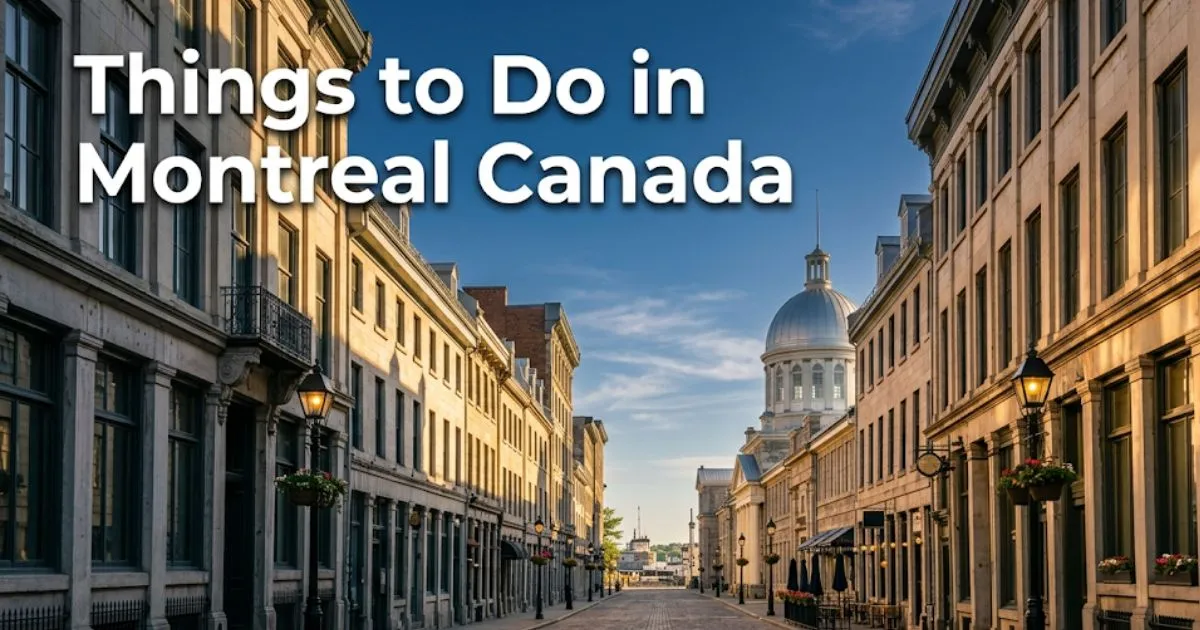
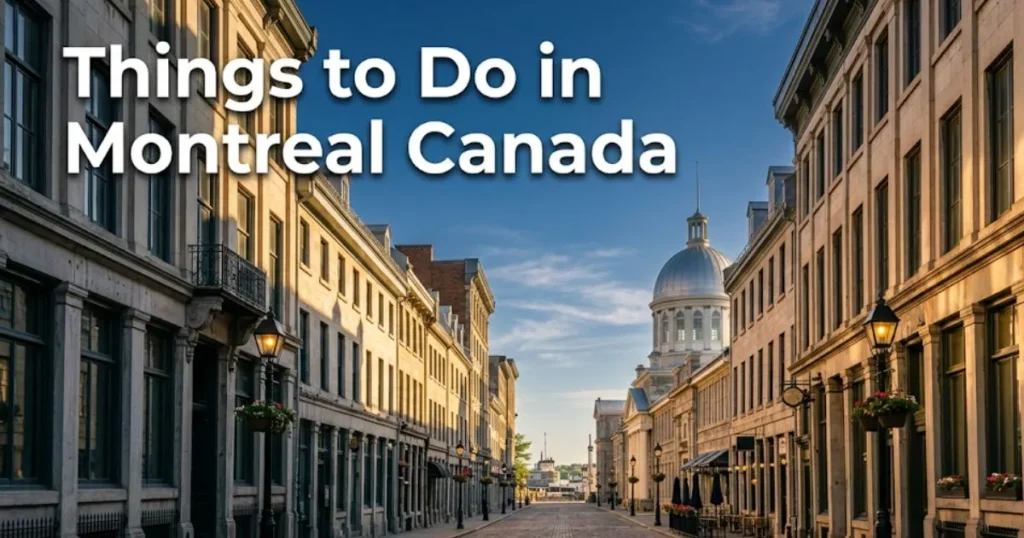
Old Montreal’s cobblestone streets between Place d’Armes and the Old Port form the city’s most photographed district. Start at Notre-Dame Basilica and walk Saint-Paul Street east toward the water.
Mount Royal Park delivers the definitive Montreal view from the Kondiaronk Belvedere lookout. The park, designed by Frederick Law Olmsted, spans 692 acres of urban green space above the city center.
Schwartz’s Deli on Saint-Laurent Boulevard serves the smoked meat sandwich that defines Montreal’s culinary reputation. Expect a 30 to 60-minute line during peak hours.
Saint-Viateur Bagel in Mile End produces Montreal-style bagels 24 hours a day in a wood-fired oven. These smaller, denser, sweeter bagels differ completely from their New York counterparts.
Jean-Talon Market in Little Italy operates as Montreal’s premier public market with produce vendors, cheese shops, and prepared food counters. It functions best as a lunch destination with sampling opportunities.
The Montreal Museum of Fine Arts on Sherbrooke Street houses a collection spanning five pavilions. The museum offers free admission to its permanent collection, with special exhibitions requiring paid entry.
The Lachine Canal provides a 14.5-kilometer waterfront path for cycling and walking through the city’s industrial history. Parks Canada manages the canal and its historic locks.
Parc Jean-Drapeau occupies two islands in the Saint Lawrence River with the Biosphere museum, La Ronde amusement park, and summer festival grounds. Access is via the Yellow Line metro.
Quartier des Spectacles transforms into a pedestrian-only entertainment district during summer festivals. The area contains Place des Arts, the city’s primary performing arts complex.
The Underground City, officially the RESO network, connects 33 kilometers of shopping, dining, and transit tunnels beneath downtown. It serves as both winter refuge and commuter infrastructure.
Old Montreal Things to Do
Old Montreal concentrates more visitor activity per square block than any other district. The neighborhood is also the most tourist-oriented part of the city.
Notre-Dame Basilica on Place d’Armes deserves its reputation with a gilded interior and soaring blue ceiling. The AURA light show runs in the evenings and requires advance tickets.
Saint-Paul Street stretches from Place d’Armes to the Old Port with galleries, restaurants, and souvenir shops. The street is genuinely beautiful in early morning before crowds arrive.
The Pointe-à-Callière Museum sits on the actual archaeological site where Montreal was founded in 1642. The underground excavation viewing area is the museum’s most distinctive feature.
Place Jacques-Cartier slopes downhill toward the Old Port with outdoor terraces and street performers in summer. The square is the neighborhood’s tourist epicenter and feels manufactured during peak hours.
Local Alternative: Walk Rue Saint-François-Xavier or Rue Saint-Sacrement, parallel streets one block from Saint-Paul, for quiet residential Old Montreal architecture without tourist crowds.
Old Port of Montreal offers the La Grande Roue observation wheel, zip-line, and seasonal Clock Tower Beach. These are polished tourist attractions rather than Montreal cultural experiences.
Solo travelers enjoy Old Montreal’s walkability and photo opportunities but pay premium prices for food and drink. Budget travelers should eat elsewhere and visit Old Montreal for architecture and atmosphere.
Winter visits to Old Montreal require serious traction footwear. The cobblestone streets become genuinely hazardous when icy.
Plateau Mont Royal Things to Do
The Plateau-Mont-Royal borough is where Montreal’s food culture, residential architecture, and local daily life converge. This is the neighborhood that makes visitors consider moving here.
Saint-Laurent Boulevard cuts through the Plateau as the city’s historic cultural divide. The street’s restaurant density from Sherbrooke to Mont-Royal Avenue is unmatched in the city.
Mont-Royal Avenue runs east-west through the Plateau’s commercial heart with independent boutiques, cafes, and the iconic signage that defines the neighborhood’s visual character. The street is at its best between Saint-Denis and Parc.
Duluth Avenue offers a concentrated stretch of BYOB restaurants where bringing your own wine keeps dining costs reasonable. This street is essential knowledge for budget-conscious food travelers.
The Plateau’s distinctive triplex architecture with external staircases and wrought-iron balconies creates the neighborhood’s visual identity. Walking residential side streets delivers better architecture appreciation than main commercial arteries.
Parc La Fontaine serves as the Plateau’s outdoor living room with a pond, walking paths, and summer theater performances. The park is where locals actually spend weekend afternoons.
Families with children appreciate the Plateau’s park density and casual dining culture. Kids can handle the neighborhood’s flat terrain and wide sidewalks easily.
Seniors and accessibility travelers should note that the Plateau’s external staircases and older building stock mean limited elevator access in many restaurants and shops.
Mile End Montreal
Mile End operates as Montreal’s creative and culinary neighborhood northeast of the Plateau. The area is small, intensely walkable, and disproportionately influential on Montreal’s cultural identity.
Saint-Viateur Bagel and Fairmount Bagel compete in a decades-long bagel rivalry that defines the neighborhood’s food identity. Saint-Viateur is open 24 hours and sells bagels hot from the wood-fired oven.
Fairmount Bagel, on Fairmount Street, claims the title of Montreal’s first bagel bakery, opening in 1919. Both produce the distinctive Montreal-style bagel that is smaller, denser, and sweeter than New York versions.
Bernard Avenue serves as Mile End’s main commercial street with independent bookstores, vintage shops, and the neighborhood’s best coffee. Café Olimpico anchors the intersection of Bernard and Saint-Viateur with espresso and terrace seating.
Drake Street and surrounding alleys contain some of Montreal’s most distinctive street art and murals. The neighborhood’s creative identity is literally painted on its walls.
Mile End’s music heritage runs through venues like Casa del Popolo and the former rehearsal spaces that produced Arcade Fire and other Montreal bands. The neighborhood still feels like a creative community rather than a tourist attraction.
Solo travelers find Mile End’s cafe culture and walkable scale ideal for unhurried exploration. The neighborhood rewards wandering without a fixed itinerary.
Budget travelers note that Mile End’s bagel bakeries offer the city’s best food value. A hot sesame bagel costs pocket change and counts as a genuine Montreal experience.
Montreal Museums
Montreal’s museum landscape covers archaeology, fine arts, contemporary art, and natural science in venues spread across the central city. Several museums offer free admission periods worth scheduling around.
The Montreal Museum of Fine Arts on Sherbrooke Street spans five pavilions connected by underground passages. The permanent collection is free to visit. Special exhibitions require timed-entry tickets during peak seasons.
Pointe-à-Callière in Old Montreal delivers the city’s origin story through underground archaeological excavations viewed from elevated walkways. The museum connects physically to the actual 17th-century foundations of Montreal.
The Canadian Centre for Architecture in Shaughnessy Village offers exhibitions on architecture and design in a building that includes the restored Shaughnessy House mansion. The sculpture garden is free to visit and provides an unusual urban oasis.
The Space for Life complex in the Rosemont district includes the Biodome, Botanical Garden, Insectarium, and Planetarium. These are distinct institutions sharing a campus near Pie-IX metro station.
The Biodome replicates five North American ecosystems under one roof with live animals and climate-controlled environments. This is Montreal’s strongest museum experience for families with children.
Winter visitors benefit from Montreal’s museum density as indoor alternatives when extreme cold makes outdoor exploration unpleasant. Museum-hopping becomes a legitimate winter itinerary strategy.
Seniors and accessibility travelers find the major museums well-equipped with elevators and accessible entrances. The Museum of Fine Arts’ underground connections between pavilions are fully accessible.
Montreal Food Tour
Montreal’s food identity is not a single cuisine but specific iconic items concentrated in distinct neighborhoods. A self-guided food tour delivers better value and flexibility than organized tour packages.
Start with a smoked meat sandwich at Schwartz’s Deli on Saint-Laurent Boulevard. Order medium-fat for the traditional experience. The line moves faster during off-peak hours between 2 p.m. and 4 p.m.
Walk north to Fairmount Bagel for a hot sesame bagel straight from the wood-fired oven. The bakery experience of watching bagels being rolled by hand is as essential as the eating.
Continue to Jean-Talon Market for Quebec cheese samples, fresh oyster shucking, and seasonal produce. The market’s prepared food counters allow sampling without committing to full meals.
End with poutine at La Banquise on Rachel Street, open 24 hours with over 30 poutine variations. Purists order the classic with just cheese curds and gravy.
Alternative poutine experiences exist at Patati Patata on Saint-Laurent, a tiny counter-service spot with a tighter menu and local regulars. The fries here are crispier than La Banquise’s version.
The Mile End food corridor between Saint-Viateur and Bernard streets concentrates bagels, Italian cafes, and some of the city’s most influential restaurants within walkable blocks.
Solo food travelers find Montreal’s counter-service culture and counter seating ideal for dining alone without awkwardness. The city’s food scene accommodates solo exploration better than table-service-focused destinations.
Budget travelers note that Montreal’s iconic foods are inherently affordable. A smoked meat sandwich, a bagel, and a market lunch cost less combined than a single mid-range dinner.
Montreal Bagels and Smoked Meat
Two foods define Montreal’s culinary identity more than any others. Montreal bagels and smoked meat are not just menu items. They are neighborhood institutions.
Saint-Viateur Bagel in Mile End operates 24 hours daily with a wood-fired oven visible from the counter. The bagels are hand-rolled, boiled in honey-water, and baked in the wood oven.
Fairmount Bagel on Fairmount Avenue claims 1919 origins as Montreal’s first bagel bakery. The sesame bagel is the classic order at both establishments. Eat it hot within minutes of purchase.
The Montreal bagel differs from New York bagels in size, density, and sweetness. Montreal bagels are smaller, denser, slightly sweet from the honey-water boil, and have a larger central hole.
Schwartz’s Deli on Saint-Laurent Boulevard has served smoked meat since 1928. The interior has barely changed. The experience is communal seating, rapid service, and a sandwich that is the standard against which all smoked meat is measured.
Order medium-fat smoked meat for the traditional texture and flavor. Lean is available but drier. The line outside Schwartz’s is part of the experience. Expect 30 to 60 minutes during peak hours.
Lester’s Deli on Bernard Avenue in Outremont serves excellent smoked meat without the Schwartz’s line. Locals who want the same quality with less waiting time choose Lester’s.
Snowdon Deli in the Côte-des-Neiges neighborhood offers another respected alternative with smoked meat and classic Jewish deli fare. The hand-cut preparation here earns loyalty from west-end Montrealers.
Families find Schwartz’s communal tables and rapid pace challenging with young children. Lester’s or Snowdon Deli offer more relaxed family dining environments.
Solo travelers can often skip the Schwartz’s line by taking a single counter seat during off-peak hours. Ask about counter availability when you arrive.
Jean-Talon Market
Jean-Talon Market in Little Italy is Montreal’s premier public market and a genuine working food hub, not a tourist performance. The market operates year-round with peak vibrancy from May through October.
The market’s produce section offers Quebec strawberries in June, corn in August, and apple displays by September. Vendors encourage sampling. The seasonal produce calendar determines what you will find.
Cheese vendors like Fromagerie Hamel offer extensive Quebec cheese selections with knowledgeable staff. Quebec produces some of North America’s finest cheeses and the market is the best place to sample them.
Prepared food counters serving oysters, grilled sausages, and Quebec-style crepes make the market a legitimate lunch destination. Budget approximately $15 to $25 per person for a market lunch of small plates.
The winter market operates in heated outdoor structures with root vegetables, preserved products, and the same cheese and meat vendors. The experience is different but still genuine.
Atwater Market in the Saint-Henri neighborhood offers a smaller, more architecturally striking alternative with a distinctive clock tower and canal-side location. Produce selection is comparable but the surrounding neighborhood is quieter.
Solo travelers thrive at Jean-Talon Market with counter service, sampling culture, and no pressure to occupy a table. The market is genuinely one of North America’s best solo food experiences.
Budget travelers can assemble an excellent meal from samples, cheese counter purchases, and market bakery bread for under $15. This is the city’s strongest budget food experience.
Montreal Summer Activities
Montreal from June through September operates as one of North America’s most vibrant summer cities. The transformation from winter hibernation to outdoor festival culture is nearly complete by late June.
Mount Royal Park hosts Tam-Tams every Sunday afternoon with an informal drum circle, picnicking, and people-watching near the Sir George-Étienne Cartier Monument. This is a genuine local institution, not a tourist performance.
The Lachine Canal offers 14.5 kilometers of waterfront cycling and walking paths managed by Parks Canada. Rent a BIXI bike at any dockside station and ride from the Old Port to Atwater Market.
Clock Tower Beach in the Old Port provides urban sand and Adirondack chairs with Saint Lawrence River views. Entry costs approximately $2 to $5. The beach is a sunbathing and lounging destination, not a swimming beach.
Parc Jean-Drapeau on Île Sainte-Hélène and Île Notre-Dame hosts outdoor concerts, the Osheaga festival in late summer, and the Piknic Électronik electronic music series on Sundays. The Jean-Drapeau metro station connects directly.
Restaurant terrace culture transforms Montreal streets from May through October. The Plateau, Mile End, and Old Montreal all develop extensive outdoor dining presences. Tables at the best terraces fill by early evening.
Families benefit from Montreal’s summer park culture. Splash pads, playgrounds, and open green space provide low-cost entertainment that works across different age groups.
Solo travelers and couples find summer Montreal’s outdoor social energy creates natural opportunities for interaction. The city’s summer personality is extroverted in ways its winter self is not.
Montreal Things to Do in Winter
Montreal winters are genuinely extreme. January and February temperatures average -10°C to -15°C with wind chill pushing conditions significantly colder. The city does not pause for winter. It adapts.
Igloofest in the Old Port runs January through February 2026 with outdoor electronic music, winter installations, and a crowd that embraces extreme cold as part of the experience. Dress in layers far beyond what seems necessary.
Montréal en Lumière in late February or early March 2026 combines free outdoor light installations in Quartier des Spectacles with a major culinary festival. The event transforms winter darkness into a city-wide attraction.
The Underground City, officially the RESO network, connects 33 kilometers of climate-controlled tunnels linking metro stations, shopping centers, office towers, and cultural venues. Use the RESO as a practical transit tool, not as an attraction itself.
Mount Royal Park in winter offers cross-country skiing trails, snowshoe paths, and a skating rink at Beaver Lake. Equipment rentals are available near the park entrance on weekends. Trail conditions require checking before visiting.
Indoor market visits to Jean-Talon and Atwater markets replace outdoor exploration. The markets operate year-round. Winter visits feel more local and less tourist-crowded than summer market experiences.
Museum-focused itineraries work especially well in winter when outdoor walking between venues is impractical. Group the Museum of Fine Arts, McCord Museum, and Canadian Centre for Architecture for a manageable indoor day.
Solo travelers comfortable with cold weather find winter Montreal rewarding in its honesty. The city does not perform for tourists in February. What remains is genuine local life.
Seniors and accessibility travelers should carefully assess winter sidewalk conditions. Ice accumulation is common and municipal clearing varies by borough. Traction aids for footwear become essential equipment.
Montreal Festivals 2026
Montreal’s festival calendar dominates the city’s identity from June through September and returns for winter highlights. Planning around specific festivals determines your Montreal experience as much as neighborhood choices.
The Montreal International Jazz Festival typically runs late June through early July 2026 in Quartier des Spectacles. The festival programs hundreds of free outdoor concerts alongside ticketed indoor performances at Place des Arts venues.
Just for Laughs typically runs July 2026 with stand-up comedy, street performances, and gala shows. The festival transforms Saint-Denis Street and the Quartier des Spectacles into a comedy-focused pedestrian zone.
Osheaga Music and Arts Festival at Parc Jean-Drapeau runs late July or early August 2026 with three days of major international acts. Tickets sell out months in advance. Book accommodation early as hotel prices spike during the festival weekend.
Piknic Électronik runs Sundays from May through September at Parc Jean-Drapeau with electronic music, food vendors, and an outdoor dance floor overlooking the city skyline.
Igloofest runs January through February 2026 in the Old Port with outdoor electronic music, winter art installations, and a snowsuit-clad crowd. This is winter Montreal at its most celebratory.
Montréal en Lumière typically runs late February or early March 2026 with illuminated art installations, outdoor activities, and a major culinary component bringing international chefs to the city.
Festival attendance requires accommodation booked months in advance. Jazz Festival and Just for Laughs weekends fill hotels across the central city. Budget travelers should consider university residence summer rentals for festival visits.
Families find the free outdoor Jazz Festival programming accessible with children. The crowd density requires vigilance with young kids but the atmosphere is generally relaxed.
Montreal Nightlife
Montreal’s nightlife distributes across distinct neighborhoods rather than concentrating in a single entertainment district. Each zone serves a different crowd and energy level.
Saint-Laurent Boulevard between Sherbrooke and Mont-Royal forms the Plateau’s primary nightlife corridor with bars, clubs, and late-night food. The strip is at its most intense between Thursday and Saturday nights.
Crescent Street and Bishop Street downtown cater to a younger, university-affiliated crowd with bars and clubs oriented toward Anglophone visitors. This is the city’s most tourist-concentrated nightlife zone.
Quartier des Spectacles around Sainte-Catherine Street houses larger venues and performance spaces. Club Soda and MTELUS book major touring acts in mid-sized rooms.
Mile End and Little Italy bars skew older and more neighborhood-oriented with wine bars, craft beer, and quieter atmospheres. Bar Henrietta and Buvette Chez Simone represent this style.
Hochelaga-Maisonneuve in the east end has developed a local nightlife scene around Ontario Street with bars catering to a French-speaking residential crowd.
Solo travelers find Montreal’s bar culture navigable alone. Counter seating is common. The after-hours culture means late-night food options remain available.
Couples seeking quieter date-night atmospheres should target Mile End wine bars and Plateau cocktail spots rather than Saint-Laurent’s high-energy club corridor.
Budget travelers note that Montreal bars generally price below comparable U.S. city venues. Happy hour specials are common. BYOB restaurants on Duluth Avenue eliminate alcohol markup entirely.
Free Things to Do in Montreal
Montreal offers more free experiences than most North American cities of comparable size. The city’s free cultural infrastructure is substantial and genuinely worth building an itinerary around.
Mount Royal Park is completely free including the Kondiaronk Belvedere lookout and the Sunday Tam-Tams gathering. The park delivers the definitive Montreal view at zero cost.
The Montreal Museum of Fine Arts permanent collection is free to visit. Special exhibitions require paid entry but the core collection spanning five pavilions costs nothing.
Old Montreal walking exploration costs nothing beyond transit to get there. The neighborhood’s streets, architecture, and waterfront views are free. Early morning exploration delivers the experience without crowds or costs.
Quartier des Spectacles outdoor installations and light projections are free year-round. The public square features rotating public art and interactive installations visible without tickets.
Jean-Talon Market and Atwater Market are free to enter and explore. Sampling is encouraged. A market visit costs only what you choose to spend on food.
Street art and mural exploration in Mile End, particularly around Saint-Laurent Boulevard and Bernard Avenue, costs nothing. The city’s mural festival has produced a walkable outdoor gallery.
Notre-Dame Basilica exterior and Place d’Armes square are free. The interior requires paid entry for tourists but attending a mass service allows free interior viewing with the appropriate respectful behavior.
Lachine Canal paths are free to walk or cycle if using your own bike or walking. BIXI bike rental costs apply for bike-share usage.
Budget travelers can build entire satisfying days from free experiences. A morning of Old Montreal walking, an afternoon at Mount Royal, and an evening in Quartier des Spectacles costs only transit fare and food.
Montreal Day Trips
Montreal’s location allows day trips into Quebec’s Eastern Townships, Laurentian Mountains, and Ottawa within driving range. Several worthwhile destinations sit within 90 minutes.
Quebec City lies approximately 2.5 hours by train or car. VIA Rail connects directly from Montreal’s Gare Centrale. The trip works as a long day trip but better as an overnight.
Mont-Tremblant in the Laurentians offers mountain scenery, village exploration, and outdoor activities approximately 90 minutes north of Montreal. Summer brings hiking and lake activities. Winter brings skiing.
The Eastern Townships southeast of Montreal offer rolling hills, wineries, and small towns like Knowlton and Sutton. The region requires a car for practical exploration.
Ottawa, Canada’s capital, sits approximately two hours west. Parliament Hill, national museums, and the Rideau Canal are accessible by VIA Rail from Montreal.
Mont-Saint-Hilaire, a UNESCO Biosphere Reserve, offers hiking trails and the Gault Nature Reserve 40 minutes east of Montreal. Accessible by suburban train and local taxi.
Oka National Park west of Montreal on the Lake of Two Mountains offers beaches, hiking, and the historic Oka Calvary trail. A car is required for access.
Day trip planning requires checking VIA Rail schedules in advance. Weekend service can differ from weekday frequency. Rental cars spike in price during summer weekends and festival periods.
Families benefit from Mont-Saint-Hilaire’s manageable hike lengths and Oka’s beach access. These destinations offer nature breaks within practical distance for young children.
Montreal Itinerary
Montreal rewards at least three full days. Two days covers essential neighborhoods and food experiences. One day forces uncomfortable tradeoffs between Old Montreal and the Plateau-Mile End corridor.
One-Day Montreal Itinerary
- Start at Notre-Dame Basilica when doors open. Spend 30 minutes inside the basilica interior with its gilded details and blue ceiling.
- Walk Saint-Paul Street east through Old Montreal toward the Old Port. Take Rue Saint-François-Xavier or Saint-Sacrement for quiet parallel streets.
- Metro or BIXI from Old Montreal to Mile End. Eat a hot bagel at Saint-Viateur Bagel followed by an espresso at Café Olimpico on Bernard Avenue.
- Walk south through Plateau-Mont-Royal on Saint-Laurent Boulevard. Stop at Schwartz’s Deli for a smoked meat sandwich during off-peak hours.
- Metro to Mount Royal Park for the Kondiaronk Belvedere sunset view over the city. Walk up from Peel Street through the park’s Olmsted-designed paths.
Two-Day Montreal Itinerary
Day 1: Old Montreal morning exploration including Notre-Dame Basilica and Pointe-à-Callière Museum. Afternoon Old Port walk and Lachine Canal BIXI ride from Old Port to Atwater Market. Evening in Old Montreal.
Day 2: Morning at Jean-Talon Market with sampling lunch. Afternoon Mile End bagel tour and Plateau-Mont-Royal residential street walking. Evening Mount Royal sunset followed by dinner in the Plateau.
Solo travelers can move faster through this itinerary. Couples and groups should add buffer time for meals and spontaneous stops.
Families with young children should stretch the two-day itinerary across three days. The pace above works for adults but overwhelms children’s attention spans.
Winter visitors should replace outdoor neighborhood walking with museum and market focus. The RESO underground network helps connect indoor destinations efficiently.
Key Takeaway: Montreal rewards settling into neighborhood rhythm over checklist sightseeing. Pick two neighborhoods per day maximum and let food discoveries shape your route.
Safety and Practical Warnings for Montreal
Montreal is a safe city by North American standards, but several practical risks and urban realities merit specific awareness from visitors.
Key safety and practical facts every visitor should know:
- Winter sidewalk ice creates genuine fall risk from December through March. Wear traction aids on footwear and avoid smooth-soled shoes entirely during winter months.
- Cobblestone streets in Old Montreal become hazardous when wet or icy. The historic surfaces are uneven by design and require attention while walking even in good conditions.
- Pickpocket risk concentrates in crowded festival zones, particularly Jazz Festival and Just for Laughs outdoor areas. Keep valuables in front pockets during peak crowd density.
- Saint-Laurent Boulevard late-night requires standard urban awareness between 2 a.m. and 4 a.m. on weekends. The area is not dangerous but has the concentration of intoxicated crowds typical of any major nightlife corridor.
- Mount Royal trail conditions vary dramatically with weather. Wet trails become slippery. Winter trails require proper equipment. Cell service is reliable throughout the park.
- Lachine Canal path is multi-use with cyclists traveling at speed. Stay right while walking and remain aware of bike traffic, especially on weekends.
- Metro service ends around 1 a.m. Night buses operate limited routes. Plan late-night transportation in advance rather than relying on metro return trips.
- Language is not a safety concern. Montreal is functionally bilingual. Attempting basic French greetings is appreciated but English works everywhere a visitor would go.
In an emergency, dial 911 for police, fire, or ambulance services. The 911 system operates in both English and French.
Frequently Asked Questions About Montreal
What is the best time of year to visit Montreal?
The best time to visit Montreal is late May through early October.
Summer delivers festival energy, outdoor terrace dining, and the city’s most vibrant neighborhood atmosphere.
Winter offers lower prices and unique festival experiences like Igloofest but requires tolerance for extreme cold.
How many days do you need in Montreal?
Three full days allows coverage of Old Montreal, the Plateau-Mile End corridor, Jean-Talon Market, and Mount Royal Park.
Two days forces tradeoffs between neighborhoods but covers the essential food and architecture experiences.
One day only works for a rushed greatest-hits tour missing the neighborhood rhythm that defines the city.
Is Montreal safe for tourists?
Montreal is generally safe for tourists with violent crime rates well below comparable U.S. cities.
Standard urban awareness applies in crowded festival zones and late-night nightlife corridors.
Winter sidewalk ice and Old Montreal cobblestone surfaces present the most common practical safety risks.
Do I need to speak French to visit Montreal?
You do not need to speak French to visit Montreal as a tourist.
English is widely spoken in all visitor-facing businesses, restaurants, and attractions throughout the city.
Attempting basic French greetings is culturally appreciated but not required for practical navigation.
What is the best way to get around Montreal?
The STM metro system provides the most efficient transit between major neighborhoods and attractions.
BIXI bike-share offers excellent warm-weather transit between May and November with stations throughout central neighborhoods.
Taxis and ride-share services fill gaps, particularly for late-night transit when metro service ends around 1 a.m.
Is Montreal expensive to visit?
Montreal is moderately priced compared to major U.S. cities with significant savings on food and cultural experiences.
Accommodation prices spike during Grand Prix weekend and major festival weekends. Budget travelers find excellent value in market food, free museums, and BYOB restaurants.
The Canadian dollar exchange rate typically favors U.S. visitors, adding approximately 25% to 30% purchasing power.
Montreal delivers best when you treat it as a food and neighborhood destination rather than a checklist of attractions. The city’s identity lives in its bagel bakeries, market aisles, and residential streets more than in its tourist infrastructure.
Book accommodation in Plateau-Mont-Royal or Mile End for the strongest neighborhood experience. Reserve festival-period hotels months in advance. Verify festival dates, venue hours, and reservation requirements with Tourisme Montréal before departure, as conditions shift between seasons and year to year.
The Montreal that rewards return visits is the one you discover on a quiet Mile End side street, not the one on the postcard. Start there.