

Best Things To Do in Dauphin Island, Alabama 2026

The best things to do in Dauphin Island, Alabama center on nature, history, and quiet Gulf Coast access that Gulf Shores cannot offer.
This small barrier island, roughly 14 miles long and sitting at the mouth of Mobile Bay, draws serious birdwatchers, families seeking uncrowded beaches, and travelers who want the Gulf without resort-town infrastructure.
This guide covers every major activity, the honest seasonal truth, specific local venues, practical logistics, and which experiences genuinely suit each type of traveler.
Things To Do in Dauphin Island Alabama: What Makes This Island Different
Dauphin Island is not a resort beach town, and understanding that is the entire key to planning a good trip here.
There are no high-rise condos, no chain restaurants, and no nightclub scene. The island’s permanent population sits below 1,500 people.
What Dauphin Island offers instead is genuine ecological significance. The Alabama Coastal Birding Trail identifies the island as one of the most important migratory songbird stopover sites on the entire Gulf Coast.
Fort Gaines Historic Site, the Dauphin Island Sea Lab Estuarium, and the Dauphin Island Audubon Bird Sanctuary form the activity core alongside three distinct beach access areas.
The island suits nature travelers, history enthusiasts, families comfortable with a low-key pace, and couples wanting seclusion. It does not suit travelers expecting Gulf Shores-level amenities.
Insider Tip:
- The island has fewer than a dozen dining establishments total; plan meals in advance, especially on summer weekends
- Grocery supplies are limited on the island; stock up in Mobile or Theodore before crossing the bridge
- Solo travelers will find the island easy and safe to navigate but socially quiet
| Activity | Best For | Cost Range | Time Required | Insider Note |
|---|---|---|---|---|
| East End Beach | Families, couples | Free | 2 to 4 hours | Best swimming beach on the island |
| Fort Gaines Historic Site | History lovers, families | Low admission | 1.5 to 2 hours | Civil War cannon firings on select dates |
| Estuarium | Families, educators | Low admission | 1.5 to 2 hours | Touch tanks genuinely engage children |
| Audubon Bird Sanctuary | Birdwatchers, solo travelers | Free | 1 to 3 hours | Peak activity at dawn during migration |
| Shell Mound Trail | All profiles | Free | 45 to 90 minutes | Shaded and stroller-accessible sections exist |
| Kayaking | Couples, active travelers | Rental cost varies | 2 to 4 hours | Back Bay waters calmer than Gulf side |
| Fishing Pier | Budget travelers, families | Free to low cost | Flexible | Redfish and speckled trout common catches |
| Mobile Bay Ferry | Road trippers, all profiles | Ferry fare applies | 35-minute crossing | A legitimate travel experience, not just transit |
Dauphin Island Beaches: Where to Swim, Sit, and Watch the Gulf
East End Beach is the island’s primary public swimming beach, located at the eastern tip of Dauphin Island near the campground.
It offers restroom facilities, picnic areas, and relatively calm Gulf waters compared to more exposed stretches. Parking is available but fills quickly on summer weekends.
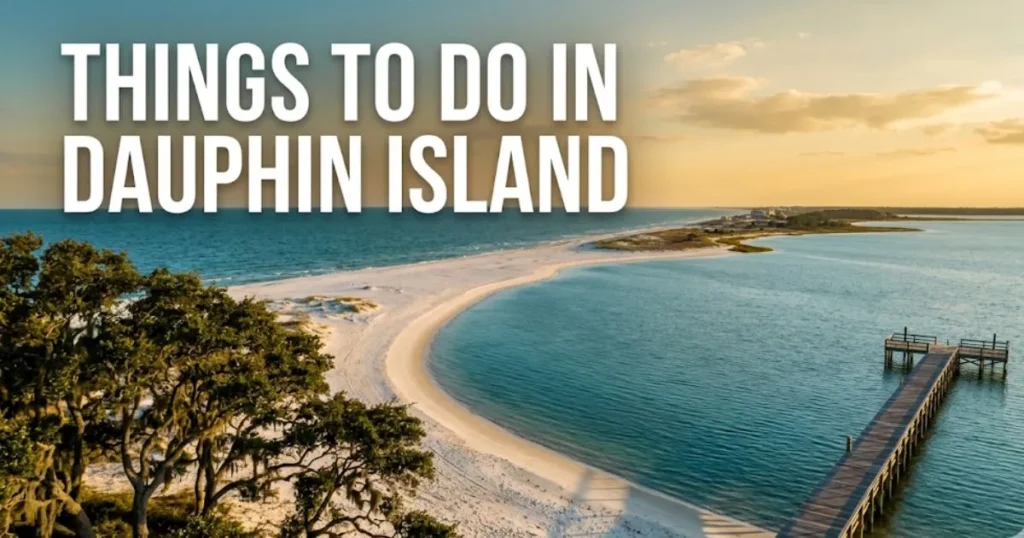
West End Beach sits at the opposite end of the island and has a more exposed, wilder character. It attracts shelling walkers, surf casters, and photographers who want isolation over amenities.
The water here can be rougher, and rip currents have been documented at both beaches. Always check the National Weather Service Mobile forecast for rip current advisories before entering the Gulf.
Little Dauphin Island is a separate undeveloped spoil island accessible only by boat. Locals and kayakers prize it for complete solitude and excellent shelling.
For families with young children, East End Beach is the right call. For couples wanting a private sunset walk, the western beach sections offer far fewer people on any given day.
Insider Tip:
- Arrive at East End Beach before 9 a.m. on summer weekends to secure parking without stress
- The beach at Pelican Point on the bay side offers calmer water and is ideal for toddlers and non-swimmers
- Jellyfish presence in Gulf waters peaks from June through August; water shoes protect against stings
Fort Gaines Historic Site Dauphin Island: A Civil War Fort Worth the Admission
Fort Gaines Historic Site is a legitimately significant military fortification. It played a direct role in the 1864 Battle of Mobile Bay, where Admiral David Farragut issued his famous “Damn the torpedoes” order.
The brick pentagonal fort sits at the eastern tip of the island facing Mobile Bay. Its cannons, barracks, and underground tunnels are preserved and explorable without a guided tour requirement, though ranger-led programs enhance the experience.
Admission runs at a modest rate for adults and children; verify current pricing directly with the Town of Dauphin Island, which manages the site. Hours are typically seasonal, with reduced hours from fall through early spring.
History-focused visitors should budget 90 minutes to two hours. Children who lose interest in military history typically stay engaged through the tunnel passages and cannon viewing areas.
Families with children will find Fort Gaines genuinely holds young attention longer than most historic sites, particularly the underground magazine and the view of the bay entrance. Stroller access is limited in some interior sections.
Seniors and accessibility travelers should note that the grounds involve uneven brick surfaces. Flat areas near the entrance are accessible, but the full interior circuit requires careful footing.
Insider Tip:
- The cannon overlooking the bay at the eastern bastion offers one of the best photographic angles on Mobile Bay anywhere on the Alabama coast
- On select event dates, the fort hosts living history demonstrations and Civil War encampments; check the Town of Dauphin Island’s official calendar before your visit
- The local alternative to a standard tourist walkthrough: attend a ranger-led history program when available, which covers the strategic significance of Fort Powell and Mobile Bay in a depth most self-guided visitors miss entirely
Dauphin Island Sea Lab Estuarium: The Island’s Most Underrated Stop
The Dauphin Island Sea Lab Estuarium is operated by the Marine Environmental Sciences Consortium, a coalition of Alabama universities. It is not a commercial aquarium. It is a working marine research facility that opens its public education wing to visitors.
That distinction matters. The exhibits cover real Gulf Coast and Mobile Bay ecology with scientific depth that commercial aquariums rarely match. Four major habitat tanks showcase coastal Alabama ecosystems: a Mobile Bay estuary, a barrier island beach, a Gulf of Mexico reef, and a freshwater swamp.
Admission is modest; verify current rates directly with the Dauphin Island Sea Lab before visiting. The facility is typically open daily, with seasonal hours that may vary; confirm before departure.
Families with school-age children will find this genuinely educational in a way that holds children’s interest. Touch tanks allow hands-on interaction with stingrays and other Gulf species.
Budget travelers should prioritize the Estuarium over any paid activity on the island. The combination of educational value and admission cost represents the best value ratio on Dauphin Island.
Insider Tip:
- The Estuarium is the best rainy-day activity on the island by a significant margin
- Ask staff about the research programs operating from the adjacent Sea Lab campus; the facility’s public tour schedule occasionally includes access to research areas not open during standard visits
- The outdoor living marsh exhibit behind the main building is often overlooked but showcases native coastal Alabama plant and animal species in a genuinely immersive setting
Key Takeaway: Fort Gaines, the Estuarium, and East End Beach are the three non-negotiable stops on any first visit to Dauphin Island. Do them in that order for the best pacing.
Dauphin Island Audubon Bird Sanctuary: The Island’s Most Significant Natural Asset
The Dauphin Island Audubon Bird Sanctuary is a 164-acre protected tract managed by the National Audubon Society and recognized as one of the premier migratory bird stopover sites in North America.
During spring migration, exhausted trans-Gulf migrants land here after crossing the Gulf of Mexico overnight. On the right morning in late April or early May, the sanctuary’s trees can be filled with dozens of warbler species, tanagers, buntings, and orioles in what birders call a “fallout.”
The sanctuary features several short trail loops through maritime forest, freshwater ponds, and transitional habitat zones. Most trails are easy to moderate in difficulty and can be walked in 30 to 90 minutes.
Access is free. The sanctuary is typically open during daylight hours. No reservation is required for individual visitors, though organized birding groups should check current access protocols with the Alabama Coastal Birding Trail program.
Solo travelers who are birders will find Dauphin Island during spring migration one of the most rewarding experiences on the entire Gulf Coast. The social community of birders who gather here during fallout events is welcoming and knowledgeable.
Seniors and accessibility travelers should note that the main entry trail is relatively flat and manageable. Some of the secondary loops involve roots and uneven ground; a walking pole is useful.
Insider Tip:
- Dawn is not just the best time to visit; it is the only time serious birders visit during migration. Arrive at the sanctuary gate at first light.
- The freshwater pond area attracts wading birds throughout the year, even outside migration season
- During non-migration periods (winter and midsummer), the sanctuary is peaceful and largely empty but still worth 45 minutes for wildlife photography
Dauphin Island Birding: One of the Gulf Coast’s Premier Wildlife Experiences
Dauphin Island birding is recognized by the Alabama Department of Conservation and Natural Resources as a top-tier destination on the Alabama Coastal Birding Trail. The island’s position at the northern edge of the Gulf of Mexico makes it a critical first landfall for trans-Gulf migrants.
Spring migration runs from late March through mid-May, with peak activity in the last two weeks of April and first week of May. Fall migration runs from late August through October, with shorebird diversity peaking in September.
The primary birding locations on the island include the Audubon Bird Sanctuary, the Indian Shell Mound Park area, the shores of Little Lagoon (accessible along the island’s back roads), and the beach margins at the east and west ends for shorebirds and seabirds.
Birding during summer on the island is limited and uncomfortable due to heat and humidity. Winter offers resident species including Brown Pelican, various herons and egrets, and occasional rarities but lacks the drama of migration season.
Solo travelers who are serious birders represent the visitor profile for whom Dauphin Island delivers the most disproportionately high return. The island punches far above its size in terms of species diversity during peak windows.
Families with children can engage young ones with shorebird watching at East End Beach without needing binoculars or field guides. The larger, easily visible species (pelicans, gulls, herons) maintain children’s interest effectively.
Insider Tip:
- The Dauphin Island Bird Count, typically held in late April, is a community science event worth timing a trip around; verify current dates with the Dauphin Island Sea Lab or Alabama Coastal Birding Trail
- Bring a quality pair of binoculars; the sanctuary’s pond area regularly hosts species that require optical magnification to identify confidently
- The best fallout conditions follow overnight storms during spring migration; a weather system moving through the Gulf the night before you visit often means the trees are full of birds at dawn
Dauphin Island Fishing and Kayaking: On the Water Without a Resort Price Tag
Dauphin Island fishing access is genuinely varied. The Dauphin Island Public Fishing Pier on the bay side provides free or low-cost shore access for inshore species including redfish, speckled trout, flounder, and blue crab.
The Gulf-side surf casting along West End Beach is productive for whiting and pompano. Charter boat operations depart from the Dauphin Island Marina for offshore bottom fishing and nearshore trolling; verify current charter availability and pricing directly with the marina.
Kayaking on the back-bay and lagoon side of the island is well-suited to flat-water paddling conditions. The bay side is significantly calmer than the Gulf side and appropriate for intermediate paddlers.
Kayak rentals have been available through local operators on the island, though availability varies seasonally. Verify rental options before arrival, as the island’s small commercial footprint means operators change year to year.
Couples will find a sunset kayak paddle along the back-bay marsh among the most distinctly romantic experiences available on the island. There is no equivalent experience at Gulf Shores without traveling considerably further into the backcountry.
Budget travelers can fish the public pier at minimal to no cost, making it the most affordable water activity on the island by a clear margin.
Insider Tip:
- The crabbing spots along the back-bay docks near the ferry terminal produce well in summer; a simple hand line with chicken necks and a dip net is all the gear required
- Bring your own kayak if you have roof-rack capability; rental inventory on the island is limited and books out quickly during spring and fall weekends
- For families, the calm water of the back-bay side near Pelican Point is the best introduction to paddling for children under 10
Key Takeaway: The public fishing pier, back-bay kayaking, and West End surf casting give Dauphin Island three distinct water activity options at costs well below what comparable Gulf Coast resort towns charge.
Dauphin Island Shell Mound Trail: A 4,000-Year-Old Site Hidden in Plain Sight
Indian Shell Mound Park contains one of the most significant Native American archaeological sites on the Alabama Gulf Coast. The mound was built by Indigenous peoples over thousands of years from discarded shells, forming an elevated landmass that rises above the surrounding flat island terrain.
The short loop trail through the park takes 30 to 45 minutes at a relaxed pace. Interpretive signage covers the archaeological and cultural history of the site. Access is free.
The shell mound itself is an unusual landform in the context of a low-lying barrier island. Its elevation creates a distinct microhabitat supporting mature live oaks and maritime vegetation not found elsewhere on the island.
Families with children will find the shell mound’s unusual terrain interesting for young explorers, though the historical context requires parental narration for children under eight to engage fully with.
Accessibility travelers should note that the path surface involves compacted shell material with some uneven sections. A standard walker can navigate the outer loop; the central mound area requires careful footing on any mobility aid.
The park is adjacent to the birding sanctuary area, making it a natural pairing stop. Birders walking the sanctuary trails often continue to the shell mound loop as a single morning outing.
Insider Tip:
- Visit the shell mound in early morning or late afternoon; the mature live oaks shade the trail and make it comfortable even in warm months
- The mound’s elevated position creates a useful vantage point for observing birds moving through the adjacent canopy
- Most visitors to the Audubon Sanctuary miss the shell mound entirely; they are a five-minute walk apart and should always be combined
Dauphin Island Outdoor Activities: Beyond the Beach
Dauphin Island’s outdoor activity range extends well beyond beach time and birding. The island’s barrier island ecology supports dolphin watching from the ferry dock and east-end jetty, sunset photography from the western beach margins, and nature photography throughout the sanctuary and shell mound areas.
Cycling the island is practical given its 14-mile length and flat terrain. No dedicated bike rental operation has been consistently available on the island; bring your own or inquire locally about current availability before arrival.
Wildlife observation opportunities extend to sea turtle nesting activity along Gulf-facing beaches during summer months. The Alabama Department of Conservation and Natural Resources coordinates sea turtle monitoring programs on the island; observe any nesting signage and maintain required distances.
Solo travelers will find the island’s flat road network easy to navigate by bicycle, covering the main east-west stretch from the fort to the western beach in under an hour at a casual pace.
Seniors should note that the terrain is maximally accessible in terms of flat ground, but summer heat and humidity create serious exertion risk outdoors. Early morning activities and indoor midday breaks are essential planning elements for summer visits.
Insider Tip:
- The best dolphin sightings on Dauphin Island occur from the eastern jetty near Fort Gaines, particularly at dawn and dusk
- Nature photography is most productive in the sanctuary during the blue hour immediately following sunset; the light quality in the maritime forest at this time is exceptional
- The island’s undeveloped western end, accessible only on foot along the beach, offers complete solitude on most mornings regardless of season
Dauphin Island Restaurants and Local Dining: Manage Expectations, Eat Well
Dauphin Island has fewer than a dozen dining establishments, and understanding that before arrival prevents significant frustration. This is not a food-tourism destination. It is an island where you eat well within a limited menu of honest, local Gulf Coast cooking.
Barnacle Bill’s Seafood is the island’s most consistently recommended casual seafood spot. Fried Gulf shrimp, local fish, and casual indoor-outdoor seating define the experience. Expect a wait on summer weekends.
Lighthouse Bakery is the island’s best breakfast stop, serving pastries, coffee, and morning fare in a small-scale bakery setting. It opens early and often sells out of specific items by late morning on weekends.
Couples looking for a romantic dinner setting will find the options limited. Barnacle Bill’s is casual and family-dominated. Plan a nicer dinner in Mobile on either side of an island visit if a formal dining experience matters to your trip.
Budget travelers will actually thrive here. Casual seafood plates, crab boil supply pickups from local bait-and-tackle shops, and self-catering from supplies brought from Mobile make the island affordable for extended stays.
Insider Tip:
- The island’s grocery options are extremely limited; bring a cooler stocked with basics from Mobile before crossing the bridge for any stay longer than a day trip
- Several rentals and the campground store carry basic provisions, but selection is minimal and pricing reflects the captive market reality
- The best meal strategy for a two-night stay: breakfast at Lighthouse Bakery, lunch from a packed cooler at the beach, dinner at Barnacle Bill’s one evening and a self-prepared seafood boil the other
Key Takeaway: Stock a cooler before you cross the bridge. Dauphin Island’s dining is honest and local, but the footprint is too small to rely on restaurant availability for every meal.
Dauphin Island Camping: The Best Way to Experience the Island Fully
Dauphin Island Campground is the primary public camping facility on the island, operated by the Town of Dauphin Island. It offers both RV sites with hookups and tent camping sites in a setting adjacent to East End Beach.
The campground’s location makes it the most immersive way to experience the island. Early-morning bird walks from the campsite to the sanctuary take under 10 minutes. The beach is walking distance before the day-use crowds arrive.
Reservations are essential for summer and holiday weekends. The campground fills weeks in advance during peak season. Verify current reservation systems, pricing, and availability directly with the Town of Dauphin Island before planning a camping trip.
Families with children will find the campground’s beach proximity a genuine advantage. Children can move between the campsite and the beach at will, and the eastern end of the island is the safest and most accessible area for young swimmers.
RV travelers from the Roadtrippers audience will find hookup availability at the campground, though the site density is closer to a community park than a resort campground. Shade varies by site; request shaded sites when reserving if traveling in summer.
Insider Tip:
- Book campground reservations as early as the system permits for any spring or summer weekend; this is one of the most in-demand camping spots on the Alabama Gulf Coast
- Tent campers who prefer solitude should visit in October or November; the campground drops to minimal occupancy and the weather is genuinely comfortable
- The campground’s eastern location places you within walking distance of Fort Gaines, the ferry terminal, and the Estuarium, making it the best base for a car-light island experience
Best Time To Visit Dauphin Island: The Honest Seasonal Truth
The best time to visit Dauphin Island is late April through mid-May for birding and spring weather, or September through October for fall migration and comfortable outdoor temperatures.
Summer is the most popular time and the most problematic. June through August brings heat index values regularly exceeding 100 to 105 degrees Fahrenheit, jellyfish in Gulf waters, peak campground and rental occupancy, and serious traffic delays on the single causeway bridge on Friday evenings and Sunday afternoons.
Spring migration (late April to early May) is when the island delivers its single most extraordinary experience: a trans-Gulf bird fallout. This is genuinely rare and worth scheduling travel around.
Fall offers warm but more bearable temperatures, active shorebird activity, and significantly lower visitor volumes. September and October are the locals’ preferred visiting months.
Winter is quiet and mild by most standards, with daytime temperatures typically ranging from the upper 50s to mid-60s Fahrenheit. Most amenities remain open but at reduced hours. Birdwatching continues with resident and wintering species.
Budget travelers benefit most from shoulder season visits. Fall and winter deliver dramatically lower accommodation rates with minimal sacrifice in island experience quality.
Seniors should avoid summer entirely. The heat and humidity on a largely exposed barrier island create genuine exertion risk for older adults. October and April offer ideal conditions.
Insider Tip:
- The worst single weekend to visit is the Fourth of July; every beach, campsite, and restaurant on the island reaches maximum capacity simultaneously
- A storm system moving through the Gulf the night before a spring visit can trigger an extraordinary fallout event at the sanctuary the following dawn
- According to the Alabama Tourism Department, the Alabama Gulf Coast as a whole sees its lowest visitor volumes in January and February, making winter the quietest period for those who value solitude over amenities
How To Get to Dauphin Island: The One Thing Most Visitors Don’t Plan For
Getting to Dauphin Island requires a personal vehicle. There is no public transit, no airport shuttle, no Uber, and no Lyft service on or to the island.
From Mobile, take I-10 west briefly, then turn south on Alabama Highway 193 through the town of Coden and across the two-lane causeway bridge. The drive from downtown Mobile is approximately 35 miles and takes 45 minutes to one hour under normal conditions.
On summer Friday afternoons and Sunday afternoons, causeway traffic can extend the crossing significantly. This is not a minor inconvenience; it is a meaningful planning factor that no competitor guide acknowledges honestly.
The Mobile Bay Ferry (also called the Fort Morgan Ferry) provides an alternative approach from the east. It departs from Fort Morgan near Gulf Shores and arrives at the Dauphin Island ferry dock in approximately 35 minutes. This is a legitimate and scenic option for travelers coming from the Gulf Shores corridor.
Ferry schedules, fares, and seasonal availability change and must be verified directly with the ferry operator before any trip that depends on it. The ferry does not operate year-round and may have limited departure times in shoulder seasons.
Mobile Regional Airport (MOB) is the nearest commercial airport, approximately 40 miles from the island. Renting a car at MOB is essential; no ground transportation serves the island.
Insider Tip:
- If staying multiple nights, plan grocery shopping in Mobile or Theodore (on Highway 193 before the bridge) rather than banking on island supplies
- The ferry from Fort Morgan adds a genuine sense of island arrival that the bridge drive cannot match; if routing through the Gulf Shores area, the ferry is worth the fare as an experience
- Arrive on the island before 2 p.m. on summer Fridays to avoid the worst causeway backup
Key Takeaway: Every Dauphin Island trip requires a rental car or personal vehicle and a grocery stop before crossing the bridge. Planning around these two logistics removes the most common visitor frustrations.
Dauphin Island for Families: What Works, What Doesn’t, and What Kids Actually Enjoy
Dauphin Island is genuinely well-suited for families with children, provided expectations match the island’s low-key, nature-focused character. It is not a water park destination.
The strongest family activities are East End Beach for swimming, the Estuarium for marine education and touch tanks, Fort Gaines for hands-on exploration of tunnels and cannons, and Indian Shell Mound Park for unusual terrain exploration.
Children under five will primarily engage with beach time and shell collecting. The Estuarium’s touch tanks hold attention reliably for ages four and up. Fort Gaines holds interest for ages six and up with some parental context.
Families with strollers should note that the shell mound trail has sections requiring careful navigation. The Estuarium and the Fort Gaines grounds have manageable surfaces near the main access areas.
Pacing matters on this island. A two-night family stay is optimal: one full beach day, one day split between the Estuarium and Fort Gaines, and the shell mound trail as a morning filler before departure.
The island has no amusement rides, no water parks, and no arcade game infrastructure. Families who need those elements should route to Gulf Shores instead.
Insider Tip:
- The ferry crossing from Fort Morgan is one of the most reliably exciting experiences for young children on any Alabama Gulf Coast trip; the boat ride, dolphins visible from the deck, and the approach to the island from the water all hold children’s attention completely
- Pack a shell identification guide; the eastern beaches and the bay-side shallows produce a genuinely diverse collection of Gulf species
- For toddler-age children, the bay-side water at Pelican Point is the safest and most comfortable swimming option on the island due to its calm, shallow conditions
Dauphin Island for Couples: The Quiet Gulf Coast Alternative
Dauphin Island is the right Gulf Coast choice for couples who value seclusion, natural beauty, and unhurried pacing over resort amenities and nightlife.
The island’s character as an uncrowded, car-dependent, restaurant-limited destination is a feature rather than a flaw for couples who want to be away from resort crowds. There is genuine solitude available here at almost any time outside summer peak weekends.
The strongest couples experiences on the island are sunset beach walks on the western margin, dawn birding at the sanctuary during migration season, kayak paddling on the back bay, and dinner at Barnacle Bill’s followed by a night sky that is genuinely dark by Gulf Coast standards.
The ferry crossing to or from Fort Morgan is a legitimate romantic travel moment. Few experiences on the Alabama Gulf Coast match arriving at Dauphin Island by boat at golden hour.
For couples who want a more active adventure dimension, the combination of kayaking the back bay in the morning and hiking the shell mound trail in the late afternoon gives the day a satisfying physical structure.
Couples on a budget will find Dauphin Island significantly more affordable than Gulf Shores or Orange Beach for a comparable beach-and-nature experience. Vacation rental properties on the island cater to the couples and small-group market.
Insider Tip:
- The single best couples moment available on Dauphin Island: watch the sunset from the western beach with no resort lighting, no bar music, and no crowd. The Gulf horizon is completely unobstructed.
- Book a bay-facing vacation rental if possible; the back-bay sunset views are quieter and less crowded than the Gulf-facing beach access points in the evenings
- Dining options are too limited to rely on spontaneous restaurant choices; make a reservation at Barnacle Bill’s on any Friday or Saturday visit to avoid a significant wait
Dauphin Island Day Trip from Mobile: A Practical One-Day Framework
Dauphin Island is a practical and worthwhile day trip from Mobile, roughly 35 miles and 45 to 60 minutes away under normal traffic conditions.
To get the most from a single day, structure the visit to minimize backtracking and maximize the distinct experience categories the island offers.
Suggested 1-Day Itinerary for Dauphin Island:
- Depart Mobile by 7:30 a.m. to reach the island before 9 a.m. and secure East End Beach parking
- Spend 7:30 to 9 a.m. at the Dauphin Island Audubon Bird Sanctuary at dawn (this is non-negotiable during April and May migration season)
- Walk to Indian Shell Mound Park immediately after the sanctuary visit (five-minute walk, 30 to 45 minutes on-site)
- Drive to Fort Gaines Historic Site by 10 a.m. and spend 90 minutes exploring the fort and bay views
- Lunch at Barnacle Bill’s (arrive by 11:30 a.m. to beat the midday queue)
- Visit the Dauphin Island Sea Lab Estuarium from 1 p.m. to 2:30 p.m.
- Spend the afternoon at East End Beach from 2:30 to 5 p.m.
- Walk the western beach margin for sunset around 6 to 7 p.m. (season-dependent)
- Depart for Mobile before Sunday evening causeway traffic peaks (before 4 p.m. on Sundays if returning to I-10)
Families should shift the Estuarium to the morning if traveling with children under eight, as it holds attention better before fatigue sets in.
Solo travelers doing the island as a day trip can cover all major sites comfortably in one day by following this sequence, with the sanctuary at dawn being the highest-priority stop.
Insider Tip:
- Day-trippers from Mobile should avoid making this drive on a summer Sunday afternoon; the causeway backup heading back toward the mainland can add 45 to 60 minutes to the return trip
- The ferry option from Fort Morgan works well for day trippers willing to combine Dauphin Island with a Gulf Shores or Fort Morgan visit; arrive by ferry in the morning and return by bridge in the afternoon
Safety and Practical Warnings for Dauphin Island Visitors
Dauphin Island presents several genuine safety and practical challenges that no competitor guide addresses honestly.
Key safety and practical facts every visitor should know:
- Rip currents at East End Beach and West End Beach are a documented risk, particularly after storms; check the National Weather Service Mobile rip current forecast before entering Gulf water
- Summer heat and heat index values regularly exceed 100 to 105 degrees Fahrenheit from June through August; plan all outdoor activities before 10 a.m. or after 5 p.m. and carry adequate water
- Jellyfish are common in Gulf nearshore waters from June through August; water shoes reduce sting risk significantly
- Limited medical facilities exist on the island; the nearest full-service hospital is in Mobile, approximately 45 to 60 minutes away under normal conditions
- Cell service is inconsistent in the western, undeveloped sections of the island; do not rely on navigation apps or emergency calling in these areas without a satellite-capable device
- Single bridge access creates genuine traffic congestion on summer Friday evenings and Sunday afternoons; this is not a minor delay but a planning-relevant travel constraint
- No ride-share or taxi service operates on the island; a personal vehicle is required for all island navigation
- Wildlife disturbance rules apply to sea turtle nesting areas marked on Gulf beaches during summer; observe all posted signage and maintain required distances
The nearest Coast Guard resources for maritime emergencies in this area are managed through US Coast Guard District 8. For on-island non-maritime emergencies, Mobile County emergency services provide coverage.
Frequently Asked Questions About Things to Do in Dauphin Island
What are the best things to do in Dauphin Island Alabama?
The best things to do in Dauphin Island Alabama are visiting the Audubon Bird Sanctuary during spring or fall migration, exploring Fort Gaines Historic Site, swimming at East End Beach, and touring the Dauphin Island Sea Lab Estuarium.
Indian Shell Mound Park and kayaking on the back bay round out a complete one or two-day itinerary covering the island’s distinct natural, historical, and water-based experiences.
All of these activities can be completed in a single well-paced day trip or spread comfortably across a two-night stay.
Is Dauphin Island worth visiting?
Dauphin Island is worth visiting for nature enthusiasts, birdwatchers, history-focused travelers, families comfortable with a low-key pace, and couples wanting Gulf Coast seclusion without resort-town infrastructure.
It is not the right choice for travelers expecting nightlife, fine dining, resort amenities, or the activity density of Gulf Shores or Orange Beach.
The island’s combination of genuine ecological significance, Civil War history, and uncrowded beaches makes it a distinctly valuable Gulf Coast destination for the right traveler.
What is the best time to visit Dauphin Island?
The best time to visit Dauphin Island is late April through mid-May during peak spring bird migration, or September through October for fall migration and comfortable outdoor temperatures.
Summer (June through August) is the most popular season but also the most problematic, with extreme heat, jellyfish presence, peak crowds, and causeway traffic congestion.
Winter visits are quiet and mild, well-suited for birdwatching and solitude, with most facilities open at reduced hours; verify seasonal hours before visiting.
How do you get to Dauphin Island Alabama?
Getting to Dauphin Island requires a personal vehicle; there is no public transit, Uber, or Lyft service on or to the island.
From Mobile, drive south on Alabama Highway 193 approximately 35 miles across the two-lane causeway bridge, a journey of 45 to 60 minutes under normal conditions.
An alternative approach from the east is the Mobile Bay Ferry, departing from Fort Morgan near Gulf Shores with a 35-minute crossing to Dauphin Island; verify current schedules and fares directly with the ferry operator before your trip.
Is Dauphin Island good for families with kids?
Dauphin Island is a good destination for families with children who enjoy beaches, nature, and hands-on educational experiences. The Estuarium’s touch tanks, Fort Gaines’s tunnels and cannons, and East End Beach swimming are the strongest family-specific activities.
The island has no amusement rides, water parks, or arcade infrastructure; families expecting those elements should consider Gulf Shores instead.
Children ages four and older typically engage most fully with the island’s activity mix; toddlers do well at the calm bay-side water at Pelican Point.
Are there good restaurants on Dauphin Island?
Dauphin Island has fewer than a dozen dining establishments, so expectations should be calibrated accordingly. Barnacle Bill’s Seafood offers solid casual Gulf Coast cooking with fried shrimp, local fish, and relaxed seating as the island’s primary dinner option.
Lighthouse Bakery handles breakfast with pastries and coffee in a small-format setting that sells out of popular items by late morning on weekends.
The practical advice for any stay longer than a day trip is to bring grocery supplies from Mobile before crossing the bridge rather than relying on island dining for every meal.
Plan Your Dauphin Island Visit with the Right Expectations
Dauphin Island rewards travelers who arrive knowing what it actually is: a quiet, ecologically significant barrier island with genuine wildlife value, a legitimate Civil War fort, and beach access without resort infrastructure.
Book the Dauphin Island Campground as your first reservation step if camping; it fills weeks in advance for spring and summer weekends. If renting, prioritize bay-facing properties for quieter evenings and better wildlife access.
Travel conditions, ferry schedules, Estuarium hours, Fort Gaines admission pricing, and campground reservation systems change regularly. Verify all key logistics directly with the Town of Dauphin Island, the Dauphin Island Sea Lab, and the Fort Morgan Ferry operator before departure.
The traveler who arrives knowing the causeway traffic reality, brings a stocked cooler, and reaches the Audubon Bird Sanctuary at dawn will have a Dauphin Island experience that most visitors never find by showing up without a plan.