Things to Do in Puerto Plata: The 2026 Essential Guide

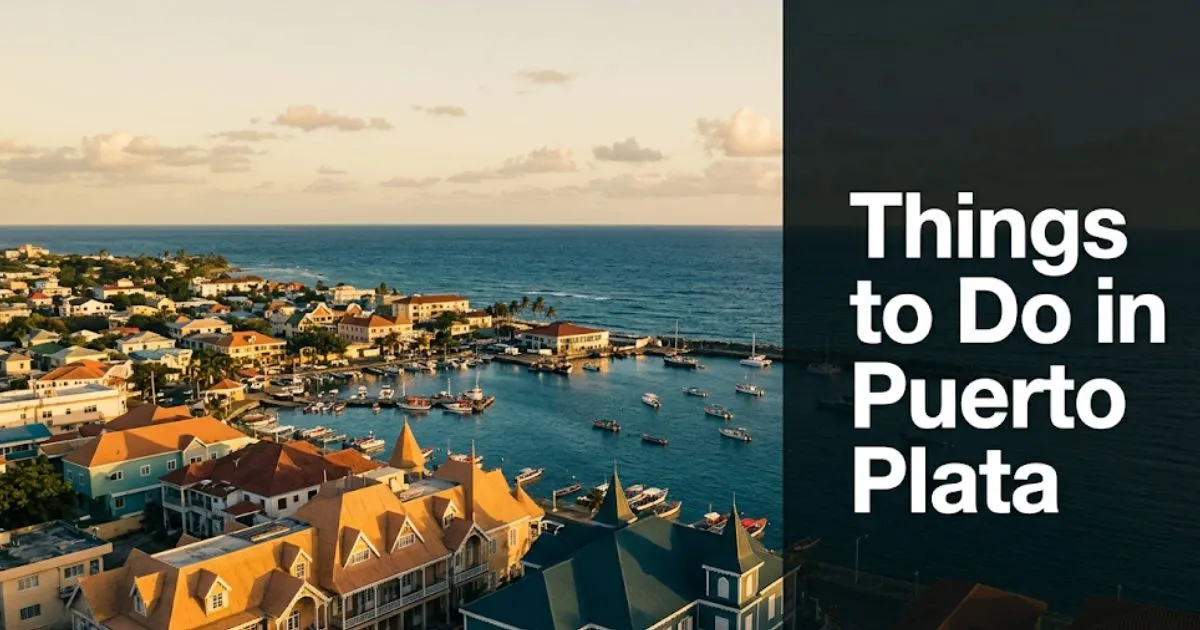
The best things to do in Puerto Plata go far beyond the resort pool at Playa Dorada. This north coast Dominican city pairs colonial history with Atlantic beaches, waterfall hikes, and rum culture in ways that no other Caribbean destination quite matches.
Puerto Plata sits on Hispaniola’s northern shore, roughly 200 kilometers from Santo Domingo. According to the Ministerio de Turismo de la República Dominicana (MITUR), the north coast receives over one million visitors annually, yet most never leave their all-inclusive resort.
This guide covers every major attraction, honest crowd realities, traveler profile breakdowns, and a practical 2-day itinerary. Read this before you book your excursions.
Things to Do in Puerto Plata: A Destination Overview
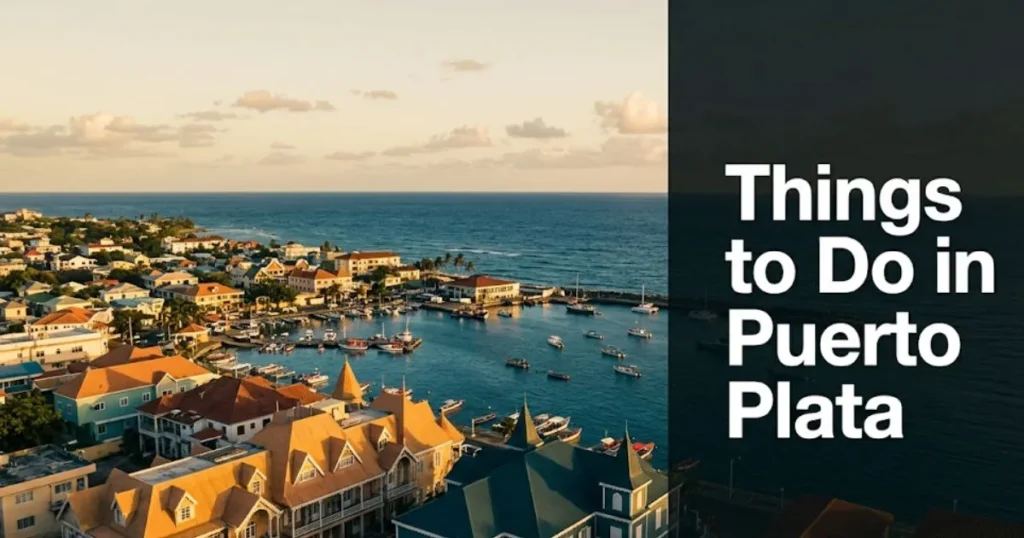
Puerto Plata rewards travelers who treat it as a real city, not just a beach backdrop. The Victorian Gingerbread architecture district, the colonial fortress, the cable car, and the amber museum all exist within a compact, walkable historic center that most resort visitors never see.
The city divides naturally into three distinct zones. The historic centro holds the culture, architecture, and museums. The Playa Dorada corridor, about 5 kilometers east of center, holds the all-inclusive resorts and the main beach. Cofresi and Costambar, to the west, offer quieter residential beach access.
Understanding this geography saves wasted hours. Plan your days by zone rather than by attraction list.
Travelers arriving by cruise ship dock at Amber Cove, a Norwegian Cruise Line-developed pier about 3 kilometers west of the city center. Excursion shuttles operate from there directly to most major sites.
Best for: Culture travelers and adventure seekers who plan to spend time in the actual city, not only the resort zone.
Not ideal for: Travelers seeking the ultra-luxury infrastructure of Cap Cana or Casa de Campo.
| Zone | Key Attractions | Best For | Distance from City Center |
|---|---|---|---|
| Historic Centro | Fortaleza, Amber Museum, Victorian District, Malecon | Culture, history, walking | 0 km (center) |
| Playa Dorada | Resorts, golf, main beach | Beach relaxation, families | 5 km east |
| Cofresi / Costambar | Ocean World, quiet beaches | Families, couples | 3-5 km west |
| Amber Cove | Cruise terminal, water park access | Cruise day visitors | 3 km west |
Best Things to Do in Puerto Plata: A 2-Day Framework
The best two days in Puerto Plata split cleanly between the city and the surrounding coast. Spend Day 1 in the historic center, cable car, and Malecon. Reserve Day 2 for the 27 Charcos excursion or a beach day with a rum factory stop.
Day 1: City, History, and Culture
- Start at Fortaleza San Felipe at opening time, before tour groups arrive.
- Walk east along the Malecon promenade to Central Park (Parque Central).
- Explore the Victorian Gingerbread District around Calle Beller and Calle Duarte.
- Visit the Amber World Museum on Calle Duarte for genuine fossil amber context.
- Take the Teleférico del Pico Isabel de Torres in the afternoon when morning cloud cover typically clears.
- End the evening at a restaurant on or near the Malecon.
Day 2: Adventure and Coast
- Book the 27 Charcos de Damajagua tour in advance; depart by 8:00 a.m.
- Return to the resort zone by early afternoon.
- Stop at the Brugal rum distillery on the way back toward Playa Dorada.
- Spend the late afternoon at Playa Dorada or Playa Costambar.
Couples can extend this framework to 3 days by adding a half-day in Cabarete for a sunset beach bar session. Families should swap the 27 Charcos for Ocean World Adventure Park on Day 2 if children are under 10.
Best Beaches in Puerto Plata
Playa Dorada is the most organized beach for resort visitors, with consistent Atlantic waves, beach chair rentals, and vendors selling local craft. It is not the most beautiful beach in the area, but it is the most practical for first-timers.
Playa Costambar, about 4 kilometers west of center, draws more Dominican residents and fewer resort tourists. The water is calmer here. Bring your own supplies; beachside services are minimal compared to Playa Dorada.
Playa Sosua, 25 minutes east by car, is the most snorkeling-friendly beach near Puerto Plata. A protected bay creates calm, clear water. Gear rental is available directly on the beach from multiple vendors.
Playa Long Beach, between the city center and Playa Dorada, is a local favorite for evening walks. It’s not a swimming beach due to currents, but the sunset views over the Atlantic make it worth a short stop.
Insider Tip:
- Playa Cofresí, adjacent to Ocean World, has natural shade from coconut palms that Playa Dorada lacks.
- Visit any beach before 10:00 a.m. to beat both the heat and the vendor crowd.
- Seniors and travelers with mobility needs should choose Playa Dorada, which has the flattest beach access of any major option.
Budget travelers: All public beaches in the Dominican Republic are legally free to access. Chair rental and umbrella fees are charged by vendors, not the government. You can decline.
Teleférico Puerto Plata: The Mount Isabel de Torres Cable Car
The Teleférico del Pico Isabel de Torres is Puerto Plata’s single most distinctive experience. A Swiss-built aerial cable car climbs 800 meters above the city to the summit of Mount Isabel de Torres, where a statue of Christ the Redeemer overlooks the Atlantic coast and Cibao Valley.
The summit holds a botanical garden with labeled Dominican native plant species. The city view from the top, on a clear day, extends from the harbor to Playa Dorada. Allow 2 to 3 hours total including the ascent, garden walk, and descent.
Admission runs approximately $10 to $20 per person as of recent operating seasons; verify current pricing directly before visiting. The Teleférico has experienced periodic maintenance closures. Always confirm it is operating before planning your day around it.
Morning hours often bring cloud cover to the summit. Aim for an early-to-mid afternoon visit when visibility typically improves. The cable car typically operates daily except Tuesdays, with seasonal hours; confirm before visiting.
Families with children find the summit garden gentle enough for all ages, with no significant terrain challenges after the cable car ride. Seniors should note the upper garden has uneven paths in sections.
Local alternative: Hikers with strong fitness can reach the summit on foot via a trail that departs from the base station area. This takes approximately 2 to 3 hours uphill. Most visitors do not know this option exists.
27 Charcos de Damajagua: The Waterfall Experience
Los Charcos de Damajagua, known internationally as the 27 Waterfalls, is the most physically active major excursion from Puerto Plata. Visitors hike through the Damajagua River, climb waterfalls, and jump into turquoise pools at heights up to 10 meters.
The site sits approximately 40 to 45 minutes by road from the Puerto Plata city center. Tour operators depart from the Playa Dorada resort zone with hotel pickup. Admission and guide fees run approximately $20 to $40 per person depending on how many of the 27 levels you complete, as of recent seasons; verify current rates before booking.
Licensed local guides are mandatory and are included with organized tours. You cannot enter the waterfalls without a guide. Book through a MITUR-registered tour operator.
The first 7 waterfalls are suitable for most visitors. Completing all 27 requires strong physical fitness, comfort with jumping from heights, and the ability to swim. Non-swimmers should not attempt this excursion.
Families with children should know that children under 5 are generally not permitted due to safety requirements. Children 6 and older can typically complete the lower 7 pools. Confirm age and height restrictions when booking.
Budget travelers: This is one excursion worth paying for. The independent access process is complex and the licensed guide is genuinely necessary for safety navigation.
Insider Tip:
- Depart by 8:00 a.m. to reach the site before the mid-morning cruise ship excursion surge.
- Wear water shoes with grip. Sandals are inadequate on the wet rock surfaces.
- The hike back down is steeper than the ascent. Factor this into your energy planning.
Key Takeaway: Book the 27 Charcos tour early in your trip and request the earliest morning departure your operator offers. Crowds double by 10:30 a.m.
Fortaleza San Felipe de Puerto Plata
Fortaleza San Felipe is the oldest standing European military fort in the Americas, built by the Spanish in the 16th century to defend the harbor against pirates and rival colonial powers. It anchors the western end of the Malecon waterfront promenade.
The fortress houses a small museum with colonial-era cannons, military artifacts, and Dominican historical exhibits. Allow 45 minutes to 1 hour for a thorough visit. Admission runs approximately $2 to $5 per person as of recent years; verify current pricing before visiting.
The site opens typically in the morning and closes in the afternoon, with midday closures possible; verify hours before visiting. It is most enjoyable before 11:00 a.m., before tour groups from the cruise port arrive.
Culture travelers and history enthusiasts will find this genuinely significant. The fort predates Jamestown, Plymouth Rock, and virtually every other European structure in the Western Hemisphere.
Couples find the sunset view from the fort’s exterior walls over the harbor one of the most quietly dramatic moments in Puerto Plata. The interior closes before sunset; arrive for the exterior view independently.
Local alternative: After the Fortaleza, walk the Malecon eastward toward Parque Central. The seafront promenade is where local families gather in the evening. This is the authentic city rhythm, not a tourist construct.
Amber Museum Puerto Plata
The Amber World Museum on Calle Duarte in the historic centro displays the Dominican Republic’s exceptional amber fossil collection. The country produces some of the world’s finest amber, including specimens containing prehistoric insects preserved for over 20 million years.
The museum occupies a restored Victorian-era building. Exhibits explain the geology of Dominican amber and display pieces including the specific mosquito-in-amber specimens that inspired the Jurassic Park novel. Allow 45 minutes to 1 hour.
A commercial amber jewelry shop operates on the ground floor. Vendors throughout the city sell amber pieces, but quality and authenticity vary significantly. The museum shop offers certified genuine Dominican amber with documentation.
Budget travelers should visit the museum before shopping at street-level amber stalls. Understanding what authentic amber looks like and costs helps avoid purchasing colored glass or fake resin at inflated prices.
Families with children often find the prehistoric insect exhibits more engaging for kids than any beach activity. The Jurassic Park connection creates genuine enthusiasm in younger visitors.
Insider Tip:
- Hold amber pieces up to natural light. Genuine Dominican amber glows with internal depth. Synthetic resin does not.
- Purchase from museum-certified vendors or shops with certificates of authenticity.
- Blue amber from the Dominican Republic, which fluoresces under UV light, is the rarest and most valuable variety. It is also the most commonly faked.
Brugal Rum Factory Tour
The Brugal and Co. rum distillery tour is one of the most culturally specific experiences available in Puerto Plata. Brugal is the Dominican Republic’s dominant domestic rum brand, produced in Puerto Plata since 1888. The facility sits along the road between the city center and the Playa Dorada resort zone.
Tours typically run on weekdays during business hours; verify current tour availability and scheduling before visiting. The tour covers the production process from molasses fermentation through barrel aging and bottling. A tasting session follows. The fee runs approximately $5 to $15 per person as of recent seasons.
The rum produced here is genuinely different from Cuban or Jamaican styles. Brugal uses a lighter, drier profile suited to mixing. The aged Brugal Añejo and the premium Brugal 1888 are worth tasting specifically, not only the standard blanco.
Solo travelers and couples find this one of the better spontaneous afternoon stops. The tour is short enough at about 45 minutes that it fits between beach time and dinner without disrupting a day’s rhythm.
Budget travelers note that the tour is inexpensive relative to most excursions, and the tasting session is included. Bottles purchased at the distillery are typically priced below resort gift shop rates.
Local alternative: Skip the souvenir rum bottle with the generic Brugal label. Ask specifically for the Brugal 1888 Gran Reserva at the factory shop. It is genuinely exceptional and often unavailable at US duty-free prices.
Key Takeaway: The Brugal distillery tour is best scheduled on a travel day between the city and the beach corridor. It takes under an hour and costs almost nothing.
Puerto Plata Victorian District and Malecon
The Victorian Gingerbread District around Parque Central and Calle Beller is Puerto Plata’s most architecturally distinctive neighborhood. Late 19th-century wooden houses with ornate fretwork facades, wraparound verandas, and pastel paint schemes line streets that have barely changed in 130 years.
This architecture arrived with European tobacco merchants who settled Puerto Plata during the Dominican Republic’s tobacco export boom. The style is genuinely unique in the Caribbean and has no direct equivalent in Punta Cana or Santo Domingo’s Zona Colonial.
The Malecon runs along the waterfront from the Fortaleza San Felipe eastward toward Long Beach. It is the city’s social spine. Evenings bring local families, food vendors, and merengue music from passing cars. Walk it after 6:00 p.m. for the full effect.
Solo travelers find the Malecon one of the safest and most social evening environments in the city. It is open, well-lit, and populated by locals who are not primarily there to sell to tourists.
Couples walking the Malecon at dusk with a cold Presidente beer from a Malecon kiosk experience the city as it actually lives. This costs almost nothing and delivers more genuine local atmosphere than any organized excursion.
Practical note: The historic center streets can be uneven. Seniors and travelers with mobility challenges should wear supportive footwear and plan routes along Calle Beller and the main Malecon walkway, which are more maintained than side streets.
Ocean World Adventure Park Puerto Plata
Ocean World Adventure Park at Cofresi Beach, approximately 3 kilometers west of the city center, is the Dominican Republic’s largest marine theme park. The facility includes dolphin and sea lion interaction programs, a shark encounter pool, a swim-with-stingrays area, a tropical bird aviary, and a casino.
Entry and interaction package pricing runs approximately $50 to $150 per person depending on which programs are included, as of recent seasons. Full dolphin swim programs represent the highest pricing tier. Verify current pricing and booking requirements directly with Ocean World before visiting.
Families with children represent the clearest match for this attraction. Children aged roughly 5 through 14 respond enthusiastically to the dolphin programs. The shark and stingray pools engage older children and adults.
Animal welfare travelers should research Ocean World’s practices independently before booking. Marine mammal interaction programs draw ongoing scrutiny from conservation organizations. This is a genuinely held concern among a segment of the travel community, and it deserves honest acknowledgment.
Honest assessment: Ocean World is a well-operated commercial marine park. It is not an equivalent to a natural reef dive or a wild dolphin encounter. The experience is controlled, the animals are habituated to human interaction, and it is not a substitute for genuine wildlife encounters. For families with young children, it works extremely well within that context.
Insider Tip:
- Book dolphin programs at least several days in advance. Peak season availability fills quickly.
- Combine the Ocean World visit with time at Playa Cofresí, which is directly adjacent and free to access.
Restaurants and Local Food in Puerto Plata
The most honest dining advice for Puerto Plata: eat at least two meals outside your resort. The all-inclusive format, by design, keeps guests fed without requiring them to discover Dominican cuisine.
Comedor-style restaurants in the historic center serve traditional Dominican plates: rice and beans (arroz con habichuelas), stewed chicken (pollo guisado), fried plantains (tostones and mangú), and the national stew sancocho. Prices at local comedores run roughly $5 to $10 USD per meal, a fraction of resort dining.
La Catalina Hotel restaurant on the hill above the city has the best view of the harbor and serves a mix of Dominican and continental dishes at mid-range prices. It is consistently recommended by long-term expats and repeat visitors as the best combination of setting and quality in the immediate area.
The Malecon restaurant strip offers seafood and Dominican fare in an outdoor setting. Quality varies significantly. Choose restaurants where you can see local families eating rather than tables filled exclusively with resort guests on excursion packages.
Budget travelers: The local lunch staple is called the “plato del día” (plate of the day) at comedores. For under $6 USD, you get a full protein, rice, beans, salad, and often a drink. This is how Dominican workers eat every day.
Couples seeking a nicer dinner should look at the small locally owned restaurants on streets adjacent to Parque Central. Ask your hotel or a trusted local contact for the current favorite. The restaurant landscape shifts seasonally.
Vegetarian travelers will find plant-based options limited at traditional comedores. Resort dining is more accommodating by design.
Key Takeaway: Eat at least one lunch at a local comedor in the historic center. The plato del día costs under $6 USD and is authentically Dominican in a way no resort buffet replicates.
Puerto Plata Nightlife
Puerto Plata’s nightlife is concentrated along the Zona Rosa, a stretch near the Malecon and city center where bars, discotheques, and live music venues operate primarily on weekends. It is a modest scene by Cancun or Cartagena standards.
The musical culture is the genuine draw. Merengue and bachata, both genres with deep Dominican Republic roots, are live nightly at local venues rather than recorded background tracks in resort bars. Hearing live merengue in a Zona Rosa club is a different experience from any tourist-facing entertainment show.
Solo travelers should exercise standard awareness in the nightlife district. The Zona Rosa is active and generally fine for groups and confident solo visitors, but the 2:00 a.m. to 4:00 a.m. hours and unfamiliar surroundings require judgment about transport home.
Couples at the Playa Dorada resort zone have access to hotel entertainment and the resort strip bars, which are safer but less culturally authentic. If you want genuine Dominican nightlife, plan transport to and from the Zona Rosa in advance.
Practical note: Pre-arrange return transport from any nightlife outing. Negotiate taxi prices before getting in, not after.
Honest assessment: Puerto Plata is not a nightlife destination in the primary sense. Travelers seeking an aggressive club scene should look at Punta Cana or Santo Domingo. The value here is live Dominican music in local venues, not an internationally recognized party circuit.
Day Trips from Puerto Plata
Puerto Plata’s location on the north coast makes it an excellent base for day trips that most Punta Cana visitors cannot access conveniently.
Cabarete, 20 kilometers east of Puerto Plata, is the Caribbean’s premier kite surfing destination. Even non-participants find the beach bar culture, the flat turquoise water, and the international traveler community energizing. The drive takes about 25 minutes by car.
Playa Grande near Río San Juan, roughly 90 minutes east, is consistently ranked among the Dominican Republic’s most beautiful beaches. Red cliffs frame a wide bay with consistent Atlantic surf. Bring everything you need; facilities are minimal.
La Isabela National Historic Park, 50 kilometers west, marks the site of Christopher Columbus’s first permanent European settlement in the Americas, established in 1494. The park includes ruins of Columbus’s original structures and a museum. It is rarely crowded and deeply historically significant.
Samaná Peninsula, roughly 3 to 3.5 hours east by road, offers humpback whale watching from January through March. Day trips are long but the experience is unique in the Caribbean.
Budget travelers can reach Cabarete by guagua minibus for under $3 USD one way. Private taxi transfers to Playa Grande or La Isabela cost more but are still reasonable when split among a group.
| Day Trip | Distance | Best For | Highlight |
|---|---|---|---|
| Cabarete | 20 km east | Couples, solo travelers, sports | Kite surfing beach, bar scene |
| Playa Grande / Río San Juan | 90 km east | Beach lovers, nature travelers | Dramatic cliffside Atlantic beach |
| La Isabela National Historic Park | 50 km west | History travelers | First European settlement site |
| Samaná Peninsula | 200 km east | Wildlife travelers (Jan-Mar only) | Humpback whale watching |
| Santiago de los Caballeros | 90 km south | Urban culture seekers | Second-largest Dominican city |
Things to Do Near Puerto Plata for Families
Puerto Plata is a solid family destination with the right planning. Ocean World Adventure Park is the headline family attraction. The dolphin, sea lion, and stingray programs work well for children aged 5 and older.
Playa Dorada suits families with young children better than any other local beach. The beach chair and umbrella infrastructure, proximity to resort facilities, and relatively supervised environment reduce the friction of managing young children at the beach.
The Teleférico cable car is a genuine family activity. Children are uniformly engaged by the ascent and the summit view. The botanical garden at the top gives them space to move without ocean safety concerns.
The Amber World Museum works better for older children (roughly 8 and up) than for toddlers. The prehistoric insect exhibits are genuinely fascinating for curious kids.
Families should avoid the 27 Charcos for children under 6 due to safety requirements. The hike and waterfall jumping are exhilarating but genuinely risky for very young children. Confirm age restrictions with your specific operator before booking.
Practical family logistics:
- Most Playa Dorada resorts offer children’s club programs that include supervised activities.
- Pediatric medical facilities in Puerto Plata are adequate for minor issues. For serious medical situations, Santo Domingo is the nearest major hospital center.
- Children’s menus at resort restaurants are standard. At local comedores, rice, plantains, and chicken are universally available and child-friendly.
- Stroller access is difficult on historic center sidewalks. Baby carriers are more practical for younger children exploring the city.
Key Takeaway: Families with children under 6 should center their itinerary on Playa Dorada, the cable car, and Ocean World. The 27 Charcos is specifically not appropriate for this age group.
Free and Budget Things to Do in Puerto Plata
Puerto Plata is one of the Caribbean’s most accessible destinations for budget-conscious travelers willing to step outside the resort zone.
Free experiences in Puerto Plata:
- Walking the Malecon promenade at sunset
- Exploring the Victorian Gingerbread District on foot
- Swimming at any public beach (entry to the sand is legally free at all Dominican Republic beaches)
- Visiting Parque Central and watching local life around the gazebo
- Exploring the exterior of Fortaleza San Felipe from the Malecon (exterior walk is free; interior museum charges admission)
- Watching kite surfers from the beach in Cabarete (free to observe from the beach)
Low-cost experiences (under $15 USD per person):
- Fortaleza San Felipe interior museum
- Amber World Museum admission
- Brugal rum factory tour with tasting
- Guagua minibus to Cabarete (under $3 USD)
- Plato del día lunch at a local comedor
Where budget travelers lose money: Vendor pressure at the amber market and around tourist sites is persistent. Agreeing to a vendor demonstration of amber testing creates an implied obligation that is hard to exit politely. Acknowledge vendors briefly and keep moving if you are not purchasing.
Solo budget travelers can have a genuinely full day in Puerto Plata for under $30 USD by combining the Fortaleza, Amber Museum, a comedor lunch, and a Malecon evening walk. The Teleférico adds another $15 to $20 USD and is worth it.
Best Time to Visit Puerto Plata and Practical Logistics
The best time to visit Puerto Plata is December through April, the dry season on the Dominican Republic’s north coast. Temperatures sit in the low to mid-80s Fahrenheit with lower humidity and minimal rainfall. February is specifically excellent due to the Carnival Puerto Plata festival, one of the country’s most culturally vibrant annual events.
The worst time to visit is August through October, peak Atlantic hurricane season. The north coast receives more annual rainfall than Punta Cana due to trade wind patterns. Even outside hurricane events, August and September bring consistent afternoon downpours and reduced visibility for water activities.
May through July represents a value window: lower hotel rates, fewer cruise ship crowds, greening landscape. Rain probability increases but full-day washouts are not the norm. Book flexible excursion policies during this period.
Getting there: Gregorio Luperón International Airport (POP) serves Puerto Plata with direct flights from several US East Coast cities. Major US carriers and charter operators service POP, particularly from New York, Miami, and Boston. Verify current direct route availability for 2026, as routes change seasonally.
Getting around:
- Taxis from POP to Playa Dorada resort zone take approximately 20 to 25 minutes and cost roughly $20 to $30 USD; agree on price before entering.
- Guagua minibuses run fixed routes between the city center and nearby towns for under $1 to $3 USD.
- Motoconcho (motorcycle taxis) are cheap but carry meaningful road safety risk.
- Most organized excursions include hotel pickup from the Playa Dorada zone.
Entry requirements for Americans: US citizens require a valid US passport. As of recent years, the Dominican Republic has included the tourist card fee in airline ticket prices for most international arrivals. Verify current entry requirements with the Dominican Republic Ministry of Foreign Affairs and the US Department of State before travel, as requirements can change.
Practical warnings:
- Do not drink tap water. Use bottled water exclusively, including for brushing teeth.
- Sun protection is critical. UV index on the north coast regularly reaches extreme levels year-round.
- Negotiate taxi prices before entering. Meters are not used. Establish the fare verbally first.
- ATMs are available in the Playa Dorada zone and city center. Notify your bank before travel.
- The Dominican peso (DOP) is the local currency. USD is widely accepted in tourist zones but at unfavorable exchange rates. Exchange currency or use ATMs for better value.
Safety and Practical Warnings for Puerto Plata
The primary safety consideration in Puerto Plata is understanding the distinction between the heavily managed tourist zones and the general city environment.
Key safety and practical facts every visitor should know:
- The Playa Dorada resort zone, Amber Cove cruise terminal, and main tourist sites are generally safe for visitors during daylight hours and early evening.
- Avoid displaying expensive jewelry, cameras, and phones openly in crowded areas, particularly around the Malecon vendor strip after dark.
- The 27 Charcos excursion involves genuine physical risk for non-swimmers and anyone with significant mobility or heart conditions. Do not attempt it if you cannot swim competently in moving water.
- Rip currents occur on exposed Atlantic-facing beaches, particularly Playa Long Beach. Swim only at beaches with lifeguard presence or at protected bays like Playa Sosua.
- Road safety is a genuine concern. Dominican traffic patterns differ significantly from US norms. Use only established taxi services or resort-contracted drivers; avoid solo motoconcho use for longer distances.
- Medical facilities in Puerto Plata are adequate for minor and moderate issues. Serious medical situations may require transport to Santo Domingo.
- Travel insurance covering medical evacuation is strongly recommended for any trip to the Dominican Republic.
In an emergency, contact 911, which is the Dominican Republic’s national emergency number, or reach the US Embassy in Santo Domingo at their published emergency contact line. Verify both numbers before departure.
Frequently Asked Questions About Things to Do in Puerto Plata
What are the best things to do in Puerto Plata for first-time visitors?
The best experiences for first-time visitors are the Teleférico cable car to Mount Isabel de Torres, the Fortaleza San Felipe fortress, the Amber World Museum, and the 27 Charcos de Damajagua waterfalls.
Spend at least one full day in the historic city center rather than staying in the Playa Dorada resort zone.
Adding a Brugal rum distillery stop and an evening Malecon walk gives you a complete picture of Puerto Plata’s culture, history, and local rhythm.
Is Puerto Plata safe for tourists in 2026?
Puerto Plata’s main tourist zones, including Playa Dorada, Amber Cove, and the historic center during daylight hours, are generally safe for visitors exercising standard awareness.
Avoid displaying expensive items openly, traveling alone in unfamiliar areas late at night, and using unlicensed transportation.
Check the current US Department of State travel advisory for the Dominican Republic before departure, as conditions and advisories change.
How many days do you need in Puerto Plata?
Three to four days is the ideal length for a complete Puerto Plata visit, covering the city, at least one major excursion, beach time, and a day trip.
Two days is workable if you prioritize efficiently and use the framework in this guide.
One day, as a cruise port stop from Amber Cove, is enough for the Fortaleza, Amber Museum, and Malecon walk, but not the 27 Charcos.
What is the best beach in Puerto Plata?
Playa Sosua is the best beach near Puerto Plata for snorkeling and calm swimming in a protected bay.
Playa Dorada is the most practical for resort guests with full beachside services.
Playa Grande near Río San Juan, 90 minutes east, is the most dramatically beautiful beach in the wider region, with red cliffs and wide Atlantic surf.
When is the best time to visit Puerto Plata?
The best time to visit Puerto Plata is December through April, when the north coast dry season brings low rainfall, comfortable temperatures, and the February Carnival festival.
August through October is the worst time, coinciding with peak Atlantic hurricane season and the north coast’s highest annual rainfall.
May through early July offers lower prices and fewer crowds but with increasing afternoon rain probability.
Can you do Puerto Plata on a budget?
Yes. Public beaches are legally free to access in the Dominican Republic. The Fortaleza, Amber Museum, and Brugal distillery tour all cost under $20 USD per person.
Local comedor restaurants serve full Dominican meals for $5 to $10 USD, and guagua minibuses connect the city and nearby towns for under $3 USD.
The 27 Charcos excursion at $20 to $40 USD represents the highest budget line item for independent travelers, but it is genuinely worth the cost.
Plan Your Puerto Plata Trip With Confidence
Puerto Plata delivers a genuine Caribbean destination with layers that reward effort. The cable car, the fortress, and the 27 Charcos are not interchangeable with any other Caribbean island’s checklist.
Book the 27 Charcos tour before any other excursion, request the earliest departure time available, and build the rest of your itinerary around it. Then verify the Teleférico’s operating status directly before your visit, as maintenance closures happen without advance notice.
Travel conditions, entry requirements, tour pricing, and operating hours in the Dominican Republic change regularly. Confirm key logistics directly with operators and check official guidance from the Ministerio de Turismo de la República Dominicana (MITUR) and the US Department of State before departure. Travelers who leave the resort zone and engage with Puerto Plata as the actual city it is consistently report the most satisfying visits.