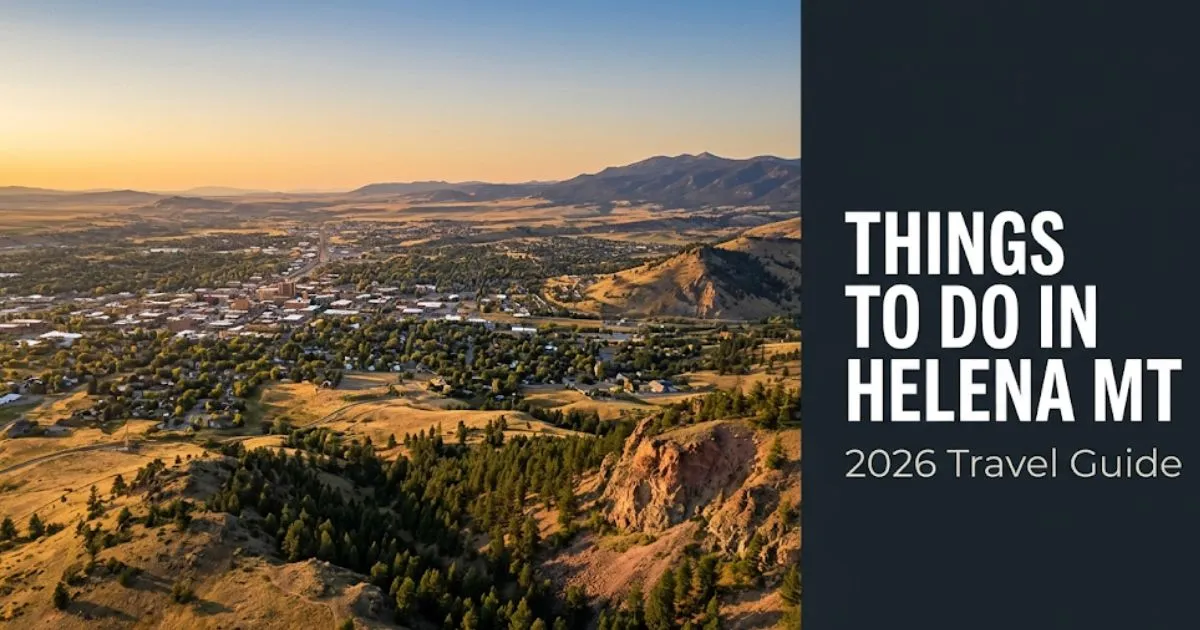
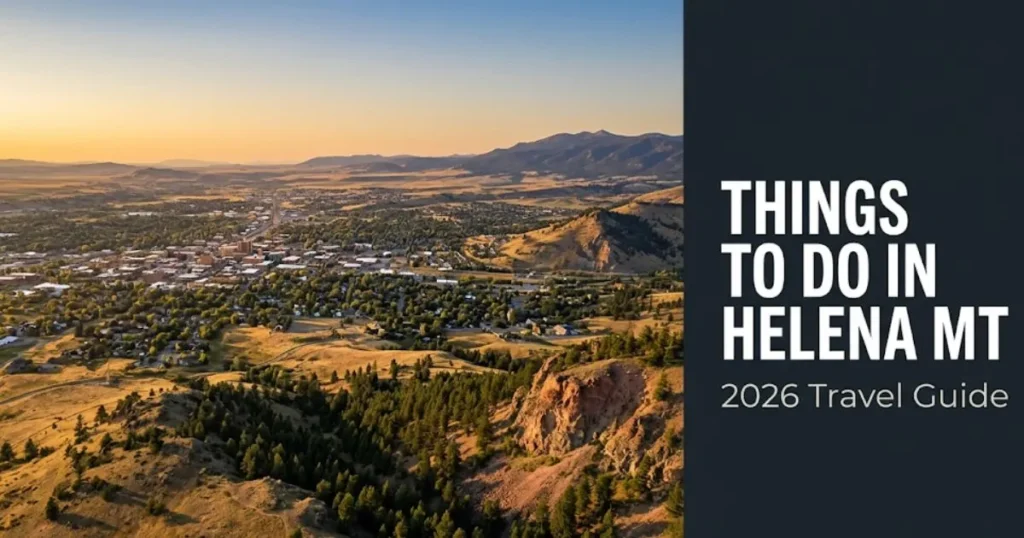
18 Best Things To Do in Helena MT for 2026 Visitors

Helena, Montana, delivers one of the American West’s most underestimated combinations: a working state capital with genuine gold rush history, world-class hiking within city limits, and serious outdoor adventure just minutes away.
Montana’s Office of Tourism consistently identifies Helena as one of the state’s most historically significant cities. The Cathedral of Saint Helena alone draws visitors from across the country.
This guide covers the best things to do in Helena MT, organized by experience type, traveler profile, and honest value. You’ll leave knowing exactly how to build a real itinerary.
Things To Do in Helena Montana: What Makes This City Different
Helena, Montana, offers a rare combination of genuine frontier history, accessible mountain trails, and a compact downtown that actually rewards walking.
Most state capitals feel administrative and impersonal. Helena feels like a real western town that happened to become a capital. The gold rush history embedded in every block of Last Chance Gulch is tangible, not performed.
The city sits at roughly 4,100 feet in the Rocky Mountain foothills. That elevation means real seasons, real weather, and real outdoor terrain within minutes of downtown.
For context, Helena is roughly the size of a well-developed college town. It has approximately 32,000 residents. That scale means low crowds, easy parking, and genuine local character rather than tourist infrastructure.
Couples and solo travelers find Helena particularly rewarding. The city does not overwhelm. It rewards slow, curious exploration.
Families will find fewer structured kid-specific attractions than at a resort destination. Active families with children who can handle trail hiking will fare far better than those expecting theme-park formats.
According to the Montana Office of Tourism, Helena ranks among Montana’s top five most-visited cities, drawing travelers primarily from the Pacific Northwest, Mountain West, and Midwest.
The single most important planning note: bring a car. Public transit within Helena is limited, and most of the city’s best experiences require driving.
Insider Tip:
- Start every Helena morning with a stop at Park Avenue Bakery on Park Avenue. It opens early and locals fill it on weekdays.
- The downtown core is walkable in a morning. Reserve your afternoon for driving to Mount Helena or Canyon Ferry.
- Solo travelers: the compact downtown makes Helena unusually safe and easy to navigate alone on foot.
What Is Helena MT Known For?
Helena is known for its gold rush origins, its status as Montana’s state capital, and its position as a gateway to serious mountain and lake recreation.
The city was founded as a gold camp in 1864. It became one of the wealthiest cities per capita in the United States by the 1880s. That wealth built the Cathedral of Saint Helena, the elaborate Victorian mansions on Benton Avenue, and the Montana State Capitol Building.
Beyond the historic architecture, Helena is known for the Gates of the Mountains, a dramatic Missouri River canyon that Lewis and Clark named in 1805.
Canyon Ferry Lake, one of Montana’s largest reservoirs, sits just 15 miles east of downtown. It is the primary destination for fishing, boating, and camping near Helena.
| Helena Known For | Why It Matters | Best Traveler Profile |
|---|---|---|
| Gold rush history and architecture | Authentic frontier wealth story | History-focused couples and solos |
| Montana State Capitol | Active seat of state government | All profiles |
| Gates of the Mountains | Lewis and Clark landscape, boat tours | Outdoor travelers, couples |
| Mount Helena City Park | In-city mountain hiking | Hikers, active families |
| Canyon Ferry Lake | Fishing, boating, camping | Families, anglers |
| Cathedral of Saint Helena | Gothic landmark, free to visit | Culture-focused travelers |
The local alternative to the most-visited historic sites: the Original Governor’s Mansion on Ewing Street. It receives a fraction of the Capitol’s visitors and provides a more intimate, detailed window into Montana’s political and social history.
Best Things To Do in Helena Montana: Top Experiences Ranked
The best things to do in Helena Montana span historic walking districts, mountain trails, boat tours, and arts institutions that consistently punch above a city of this size.
Here is an honest ranking of the experiences that genuinely earn their reputation:
Top-tier experiences (worth planning your trip around):
- Gates of the Mountains boat tour: The single most memorable experience in the Helena area. This two-hour Missouri River canyon boat tour through soaring limestone cliffs earns its reputation completely.
- Mount Helena City Park trail system: Over 620 acres of city-owned mountain terrain with 20-plus miles of trails. The 1906 Trail to the summit offers genuine panoramic views of the valley.
- Last Chance Gulch and Reeder’s Alley: A genuine 19th-century streetscape that functions as both a pedestrian mall and a living history walk.
Solid experiences worth your time:
- Montana State Capitol tours
- Montana Historical Society Museum
- Cathedral of Saint Helena
- Holter Museum of Art
- Archie Bray Foundation for the Ceramic Arts
What to skip or scale back: The Ghost Town Hall of Fame at the Frontier Town complex west of town receives promotional coverage it does not fully earn. The actual ghost town sites like Elkhorn State Park and Marysville deliver the real thing without the tourist markup.
Budget travelers can cover Helena’s highest-value experiences almost entirely for free. Mount Helena trails, the Capitol tour, the Cathedral, and Last Chance Gulch all have no admission charge. The Gates of the Mountains boat tour is the primary paid experience worth budgeting for.
Key Takeaway: Book the Gates of the Mountains boat tour in advance. It fills on summer weekends and is the single experience most Helena visitors later wish they had prioritized.
Outdoor Things To Do in Helena Montana
Helena’s outdoor recreation options are exceptional for a city of its size, anchored by Mount Helena City Park within city limits and Canyon Ferry Lake 15 miles east.
The outdoor landscape around Helena includes high-desert foothills, granite mountain terrain, a major reservoir, and the upper Missouri River canyon system. That range covers hiking, fishing, boating, kayaking, and winter skiing within a 45-minute drive of downtown.
Key outdoor activities by location:
- Mount Helena City Park: 20-plus miles of trails. Free. Open year-round (winter conditions apply December through March). Trailheads accessible off Adams Street.
- Canyon Ferry Lake: Boating, fishing, swimming, and camping. The Bureau of Reclamation manages the lake. Multiple recreation areas including White Sandy, Hellgate, and Chinaman’s Gulch. Verify seasonal opening dates for specific areas before visiting.
- Gates of the Mountains: Boat tours operate May through September (verify exact schedule with the Gates of the Mountains Boat Tours company before visiting). The wilderness area includes hiking trails accessible from the boat tour’s Meriwether picnic area.
- Beartooth Road / Birdseye Road area: Mountain biking and gravel riding routes popular with locals north of the city.
- Great Divide Ski Area: Montana’s largest ski resort by acreage, located 22 miles north of Helena on Belmont Road. Operates approximately mid-November through early April. Verify current season dates.
Seniors and accessibility travelers: Canyon Ferry Lake’s recreation areas offer the most accessible outdoor experience near Helena. Paved or well-maintained gravel paths exist at several recreation areas. Most Mount Helena trails involve significant elevation gain on natural terrain and are not wheelchair accessible.
Families with children: Canyon Ferry’s White Sandy Beach area is the most family-appropriate outdoor experience. The water is cold but swimmable in July and August. Young children handle the beach setting far better than the mountain trails.
Helena Montana Hiking: Trails Worth Your Time
The best hiking in Helena Montana centers on Mount Helena City Park, which places genuine mountain terrain within walking distance of the downtown core.
No other Montana capital city has this. Helena’s trail system runs from gentle lower-elevation loops to a summit hike with views across the entire valley to the Elkhorn Mountains and Big Belt Mountains.
Primary trails on Mount Helena:
- 1906 Trail: The most direct route to the 5,468-foot summit. Approximately 3.5 miles round trip with roughly 1,000 feet of elevation gain. Moderate to strenuous. Allow 2 to 3 hours.
- Prospect Shafts Trail: Passes historic gold mining remnants. A genuinely interesting historical layer added to the hike. Moderate difficulty.
- Prairie Trail Loop: The most accessible option on Mount Helena. Lower elevation, less gain, good for beginners and families with older children.
- Ridgetop Trail: Connects multiple peaks along the South Hills ridge. More demanding. Experienced hikers only.
Beyond Mount Helena, the Helena National Forest surrounds the city and offers additional backcountry hiking. The Continental Divide National Scenic Trail passes near Helena.
Insider Tip:
- Start any summit hike by 9 a.m. in summer. Afternoon thunderstorms develop quickly and exposed ridgelines are dangerous.
- The Prospect Shafts Trail is the choice locals recommend for first-time visitors. It combines the historical mining story with the mountain views.
- Solo travelers: Mount Helena trails are well-trafficked during daylight hours and generally safe. Always tell someone your route plan for backcountry extensions.
Seniors and accessibility travelers: The lower Prairie Trail Loop is the most manageable option on Mount Helena for those with limited mobility. Canyon Ferry Lake recreation areas are better suited for visitors who cannot manage elevation gain.
Mount Helena City Park: The Local’s Outdoor Escape
Mount Helena City Park is the most consistently rewarding thing to do in Helena MT for outdoor-focused travelers, covering over 620 acres of mountain terrain directly accessible from the downtown core.
Most cities with mountains nearby require a significant drive to reach trailheads. Helena’s trailhead parking off Adams Street puts you on the mountain in under 10 minutes from any downtown hotel.
The park is free. It is open year-round. Trail conditions in winter require microspikes or snowshoes from approximately December through March.
Summer morning hiking here is genuinely striking. The panoramic view from the summit takes in the entire Helena Valley, the Big Belt Mountains to the east, and the Elkhorn Range to the south.
Quick logistics:
- Primary trailhead: Off Adams Street, near Mount Helena Road. Free parking.
- Dogs welcome on leash.
- No water available on trails. Bring at least two liters per person for summit hikes in summer.
- Mountain biking permitted on designated trails (Ridgetop and Prairie Trail). Hikers have right of way.
Couples and romantic travelers: The summit at golden hour (roughly 7 to 8 p.m. in midsummer) is consistently one of the most striking views in the Helena area. This is an experience that earns genuine enthusiasm.
The local alternative to the standard tourist recommendation: most visitor guides focus on the Cathedral and the Capitol for a Helena morning. Locals typically spend those same mornings on Mount Helena and save the cultural sites for afternoon.
According to the Helena City Parks and Recreation Department, Mount Helena City Park is the city’s most-visited recreational area and accommodates hikers, mountain bikers, and dog walkers across all four seasons.
Key Takeaway: The Gates of the Mountains boat tour and Mount Helena trails are Helena’s two highest-return experiences. If you only have one day, prioritize both and fit the downtown historic walk around them.
Gates of the Mountains Helena: The Missouri River Canyon Experience
The Gates of the Mountains boat tour is the single most distinctive and time-worthy experience in the Helena area, taking visitors through the dramatic Missouri River canyon that Meriwether Lewis described in his journals on July 19, 1805.
The canyon walls rise up to 1,200 feet above the river. The limestone formations are unlike anything else in western Montana. This is not a generic scenic boat tour. The landscape is genuinely extraordinary.
How to experience the Gates of the Mountains:
- Drive north from Helena on I-15 approximately 20 miles to the Gates of the Mountains boat launch area.
- Purchase tickets in advance online or by phone through Gates of the Mountains Boat Tours. Peak summer weekends sell out.
- Tours typically run approximately 2 hours round trip. Departures generally begin mid-morning, with multiple daily departures in peak season.
- The tour stops at the Meriwether picnic area, which provides access to hiking trails into the Gates of the Mountains Wilderness.
- Admission runs approximately $20 to $35 per adult as of recent seasons. Children typically receive reduced pricing. Verify current rates directly with the operator before visiting.
Wildlife sightings on the tour are common. Bighorn sheep, osprey, bald eagles, and white-tailed deer are regularly spotted on canyon walls and riverbanks.
Families with children: Children 5 and older typically handle the two-hour tour well. Younger children may find the duration challenging. The Meriwether stop provides a good opportunity for children to move around.
Seasonal note: Tours operate approximately May through September. Exact start and end dates vary by year. Verify before planning your visit around this experience.
The local insight most first-timers miss: combining the boat tour with a hike from the Meriwether stop adds two to three hours and reveals canyon terrain that the boat tour itself cannot show. Pack water and a snack.
Last Chance Gulch Helena: Walking the Gold Rush District
Last Chance Gulch is Helena’s historic pedestrian mall, built along the original placer gold mining gulch where four prospectors struck gold in July 1864 and named their find “Last Chance.”
The name stuck, and the gulch that became the financial spine of 19th-century Helena is now a six-block outdoor walking district lined with historic stone buildings, restaurants, local shops, and the Myrna Loy Center for the Performing Arts.
Walking Last Chance Gulch from north to south takes roughly 30 to 45 minutes. Reading the historical markers adds another 30 minutes. This is not an all-day activity. Plan it as a two-hour maximum and you will cover it well.
What to look for on the walk:
- The Power Block at the north end: one of Helena’s finest examples of 1880s commercial architecture.
- Placer Hotel building: a landmark that anchors the mid-gulch stretch.
- Atlas Building: Victorian-era commercial architecture preserved largely intact.
- Historical markers at the original placer gold discovery site.
Budget travelers: Last Chance Gulch is entirely free to walk. The adjacent Reeder’s Alley (covered in its own section) adds another free historical layer.
Seniors and accessibility travelers: Last Chance Gulch itself is flat and paved, making it the most accessible historical experience in Helena. The pedestrian mall is wheelchair and mobility aid friendly throughout.
The honest assessment: Last Chance Gulch is genuinely worth one focused morning walk. It is not worth a full day. Visitor guides that suggest spending an entire afternoon here are padding an itinerary.
Montana State Capitol Tour: What to Expect
The Montana State Capitol Building offers free guided tours and is one of Helena’s most architecturally and historically significant buildings, housing Charles M. Russell’s largest painting, “Lewis and Clark Meeting the Flathead Indians,” in the House chamber.
Tours are offered through the Montana Historical Society. Guided tours typically run on the hour during the summer season. Self-guided tours are available when the building is open. Verify current tour schedules and building access directly with the Montana Historical Society before visiting, as legislative session schedules affect access.
Practical logistics:
- Location: 1301 East Sixth Avenue, Helena. Walking distance from downtown.
- Admission: Free.
- Duration: Guided tour approximately 45 minutes. Self-guided 30 to 60 minutes depending on pace.
- Parking: Available in the adjacent lot and on surrounding streets.
The Capitol dome is topped by a copper figure of Lady Liberty. The building’s interior rotunda and legislative chambers reflect the ambition and prosperity of late 19th-century Montana.
The honest assessment: The Capitol is worth a visit, particularly the House chamber for the Russell mural. It does not require more than 90 minutes of your day. Visitors who make it the centerpiece of their Helena itinerary typically wish they had spent that time on the trails or the boat tour.
The local alternative: the Original Governor’s Mansion on Ewing Street, managed by the Montana Historical Society, receives far fewer visitors and provides a more intimate view of Helena’s Victorian-era political culture. Tours run seasonally. Verify availability before visiting.
Families with children: Children 8 and older who have covered Montana history in school typically engage with the Capitol well. Younger children find the building interesting for roughly 15 minutes before attention wanes.
Key Takeaway: Helena’s historic district (Capitol, Last Chance Gulch, Reeder’s Alley, Cathedral) can all be covered in a single well-paced morning. Free your afternoon for outdoor experiences.
Holter Museum of Art Helena: The City’s Cultural Anchor
The Holter Museum of Art on Lawrence Street is Helena’s primary contemporary and fine arts institution, offering rotating exhibitions alongside a permanent collection that emphasizes Montana and regional artists.
Admission is free, which makes this one of the best value cultural stops in any Montana city. The museum typically operates Tuesday through Saturday with limited Sunday hours. Verify current hours before visiting, as they are subject to seasonal change.
The Holter is small by major metropolitan museum standards. Plan approximately 60 to 90 minutes. The rotating exhibitions change several times annually, so repeat visitors consistently find new content.
What makes the Holter distinct from a generic regional art museum:
- Consistent focus on contemporary craft alongside fine art. The ceramics and mixed media exhibitions are particularly strong.
- Close programmatic relationship with the Archie Bray Foundation for the Ceramic Arts, one of the most respected ceramic arts residency programs in the United States. Located at 2915 Country Club Avenue, the Bray Foundation’s grounds and gallery are open to the public and worth a separate visit.
- Regular community events and artist talks during exhibition openings.
Solo travelers and couples: The Holter fits naturally into a Helena afternoon after a morning outdoors. The Lawrence Street location puts it within easy walking distance of Last Chance Gulch.
Budget travelers: Free admission makes this a no-compromise cultural experience. The Archie Bray Foundation grounds are also free to walk.
According to the Montana Arts Council, the Holter Museum of Art and the Archie Bray Foundation together constitute one of the most significant arts pairings in Montana’s cultural infrastructure, regularly attracting artists and collectors from across the country.
Reeder’s Alley Helena MT: The Oldest Surviving Block
Reeder’s Alley is Helena’s oldest continuously standing commercial district, a narrow stone-and-brick alley off Fuller Avenue that housed miners, laborers, and small businesses from the 1870s onward.
Where Last Chance Gulch shows you the wealthy face of Helena’s gold rush era, Reeder’s Alley shows you the working-class face. The buildings here are rougher, smaller, and more honest about the actual texture of frontier life.
The alley is free to walk. Several of the original structures now house small shops, a restaurant, and the Montana Federation of Garden Clubs offices. The Pioneer Cabin at the north end of the alley is particularly evocative.
Practical logistics:
- Location: Off Fuller Avenue, south of Last Chance Gulch pedestrian mall. A 5-minute walk from the main Gulch.
- Open: The exterior and alley are accessible at any hour. Businesses within operate standard commercial hours.
- Duration: 20 to 30 minutes for a thorough walk with historical markers.
- Cost: Free.
The local knowledge layer: Most visitor guides list Reeder’s Alley as a footnote after the Capitol and the Cathedral. Locals and repeat visitors consistently rate it as the more atmospheric historical experience. The physical scale of the buildings communicates the hardship of frontier life in a way that the Capitol’s grandeur deliberately does not.
Seniors and accessibility travelers: The alley surface involves some uneven cobblestone and brick. Mobility aids can navigate the main path but the uneven surface requires caution. The Pioneer Cabin interior has a step threshold.
Couples and romantic travelers: Reeder’s Alley in the early evening, when the day-trippers have moved on, has genuine atmosphere. The stone buildings catch the late afternoon light in a way that photographs well and feels genuinely historic.
Best Restaurants in Helena MT: Where Locals Actually Eat
Helena’s dining scene is small, unpretentious, and better than its size suggests, anchored by a cluster of quality independent restaurants along and near Last Chance Gulch.
This is not a restaurant city in the way Missoula or Bozeman are developing. The dining landscape in Helena rewards knowing specifically where to go rather than wandering.
Honest breakdown of where to eat in Helena:
| Restaurant | Type | Price Range | Best For | Insider Note |
|---|---|---|---|---|
| Montana Ale Works | American pub, local craft beer | $15-$30/person | Casual groups, solo travelers | Best local tap selection in Helena |
| Blackfoot River Brewing Company | Brewpub | $12-$25/person | Budget travelers, casual dining | Their seasonal ales are excellent |
| Park Avenue Bakery | Bakery, breakfast, lunch | $8-$15/person | Solo travelers, early risers | Opens early, the real local morning spot |
| The Jade Garden | Chinese-American | $10-$20/person | Budget families | Longtime local institution, unpretentious |
| On Broadway | Fine dining | $30-$60/person | Couples, special occasions | Helena’s most ambitious kitchen |
The honest assessment: Helena does not have the James Beard-caliber restaurant scene of Missoula or Bozeman. What it has is a set of genuine, locally-owned independent places that serve good food without pretension. That is actually a better dining experience for many travelers than navigating a competitive restaurant city.
Budget travelers: Blackfoot River Brewing Company and Park Avenue Bakery deliver genuinely good food at lower price points. Groceries from the Town Pump or Albertsons on North Montana Avenue enable easy picnic preparation for Canyon Ferry or Mount Helena days.
The local dining reality most visitor guides miss: Helena’s best food experience is often a combination of a brewpub dinner at Montana Ale Works and a morning at Park Avenue Bakery. The city’s restaurant scene is thin enough that knowing these two names essentially covers the local quality tier.
Key Takeaway: Helena’s restaurant scene rewards specific knowledge. Montana Ale Works and On Broadway cover casual and special-occasion dining. Park Avenue Bakery is the non-negotiable morning stop.
Things To Do Near Helena MT: Day Trips Worth the Drive
The best day trips from Helena include ghost towns, hot springs, and mountain lake recreation that most visitors to the city completely overlook.
Helena’s position in west-central Montana puts several genuinely rewarding short drives within easy reach. The following deserve specific planning attention:
Elkhorn State Park (approximately 40 miles south on Elkhorn Road):
This is the most photogenic ghost town accessible from Helena. The 1870s-era silver mining boomtown left behind two original buildings (Fraternity Hall and Gillian Hall) in remarkable condition for structures over 140 years old. The drive through the Boulder Valley is itself scenic. Allow a half-day. Verify road conditions before visiting, as the final stretch involves unpaved roads.
Marysville Ghost Town (approximately 25 miles northwest of Helena):
Smaller than Elkhorn but closer, Marysville offers original structures and a quiet, uncrowded atmosphere. A handful of residents still live in the area. The drive on secondary roads is easy in good weather. Allow 2 to 3 hours round trip.
Boulder Hot Springs (approximately 55 miles south on US-69):
Historic resort with outdoor and indoor soaking pools. This is the closest thermal soaking experience to Helena. Admission pricing and hours are subject to change; verify directly before visiting. Adults find this genuinely relaxing. The historic inn building is architecturally interesting regardless.
Great Divide Ski Area (22 miles north, approximately 30 minutes):
In winter, Helena’s primary outdoor recreation anchor becomes skiing. Great Divide is Montana’s largest ski resort by acreage, with significantly lower lift ticket prices than Big Sky or Whitefish. Verify current season dates and lift prices directly with the resort.
Canyon Ferry Lake (15 miles east on US-12 then MT-284):
Not technically a day trip but worth a full half-day. The lake covers nearly 35,000 acres. The walleye, rainbow trout, and yellow perch fishing draws anglers from across Montana. The summer swimming and boating season runs roughly June through early September.
Best Time To Visit Helena MT: Seasonal Honest Guide
The best time to visit Helena Montana is late May through June or September through early October, when weather is reliably good, crowds are lower than peak summer, and the outdoor landscape is at its most accessible.
Here is the honest seasonal breakdown:
| Season | Months | Conditions | Crowd Level | Best For |
|---|---|---|---|---|
| Late Spring | May-early June | 50-70°F days, some rain, trails opening | Low | Hikers, history travelers, value-seekers |
| Peak Summer | July-August | 75-90°F days, afternoon thunderstorms | Moderate | All activities; book Gates of the Mountains early |
| Fall | September-October | 45-70°F, clear skies, fall color | Low | Best overall conditions; fewest crowds |
| Winter | November-March | 10-40°F, snow likely, trails icy | Very low | Skiers only; Great Divide operational |
The honest crowd reality: Helena does not experience Yellowstone or Glacier-level crowd problems. Even in peak summer, the city remains genuinely manageable. The Gates of the Mountains boat tours fill on summer weekends, but downtown Helena and Mount Helena trails rarely feel crowded.
Weather warnings: Summer afternoon thunderstorms develop quickly over the mountains. Hikers should target early morning starts and be off exposed ridgelines by 1 p.m. July and August can bring days over 90°F, which makes early morning the only comfortable hiking window. Carry water regardless of season.
For budget travelers: September and October offer the best combination of good weather and lower accommodation prices. Many Helena visitors time their Montana road trips to peak July and August, which means late-season travel genuinely rewards those who can plan around school schedules.
Seniors and accessibility travelers: June and September are the most physically comfortable months. July and August heat can be challenging for extended outdoor activity, and winter cold and ice significantly limit mobility-restricted access to outdoor experiences.
Helena MT Practical Travel Tips: Logistics, Getting There, Getting Around
Getting to Helena MT typically involves flying into Helena Regional Airport (HLN), served by Delta and United connections through Salt Lake City, Denver, and Seattle, or driving from Missoula (approximately 110 miles west on I-90 then I-15) or Great Falls (approximately 85 miles north on I-15).
HLN is a small regional airport with limited direct flight options. Travelers with schedule flexibility often find better flight prices and more routing options through Missoula Montana Airport (MSO) or Great Falls International Airport (GTF), both of which require a rental car drive into Helena.
Getting around Helena:
- A car is essential for reaching Mount Helena trailheads, Canyon Ferry Lake, the Gates of the Mountains, and day trip destinations.
- Downtown Helena is walkable. The Last Chance Gulch area, Reeder’s Alley, the Capitol, and the Holter Museum are all within reasonable walking distance of each other.
- Ride-share availability (Uber and Lyft) exists in Helena but is significantly less reliable than in larger Montana cities. Do not plan your logistics around ride-share as a primary transportation option.
- Parking downtown is generally easy and affordable. Surface lots and street parking are available throughout the downtown core.
Practical checklist before departing for Helena:
- Book Gates of the Mountains boat tour in advance if visiting May through August.
- Check the Montana Department of Transportation website (MDT) for road conditions in winter and early spring.
- Reserve accommodation early if visiting for the Governor’s Cup Road Race (typically June) or Montana Frontier Days.
- Carry cash. Not all smaller Helena businesses reliably accept cards.
- Cell service is good downtown but degrades in the mountains and canyon areas.
Budget travelers: Helena’s hotel options include national chain properties along the US-12 and I-15 corridors. Mid-range rooms run approximately $100 to $180 per night in peak season. The Helena KOA and Canyon Ferry Lake campgrounds offer significantly lower-cost overnight options.
Key Takeaway: Fly into Helena Regional Airport if connections work. Otherwise, rent a car in Missoula and drive the scenic I-90/I-15 route through the Montana foothills. Either way, you need a car for the full Helena experience.
Suggested Helena MT Itinerary: How to Spend 1 Day and a Full Weekend
A well-structured Helena itinerary covers the city’s historic core in one morning and its outdoor highlights in one afternoon, making it genuinely achievable as a single strong day or an unhurried weekend.
One-Day Helena Itinerary:
- 7:30 a.m.: Park Avenue Bakery for breakfast. Order early; it gets busy with locals by 8 a.m.
- 9:00 a.m.: Drive to Mount Helena City Park trailhead on Adams Street. Hike the 1906 Trail or Prospect Shafts Trail. Allow 2 to 3 hours for a summit-and-return.
- 12:00 p.m.: Return to downtown. Walk Last Chance Gulch south to north (45 minutes). Continue to Reeder’s Alley (20 minutes).
- 1:30 p.m.: Lunch at Montana Ale Works or Blackfoot River Brewing Company.
- 3:00 p.m.: Montana State Capitol tour (45 minutes). Walk to the Cathedral of Saint Helena exterior (15 minutes).
- 4:30 p.m.: Holter Museum of Art or Archie Bray Foundation grounds if time allows.
- 6:30 p.m.: Dinner at On Broadway (reserve ahead) or a casual return to Montana Ale Works.
Weekend Helena Itinerary:
Day 1 (City Focus): Follow the one-day itinerary above. Add the Original Governor’s Mansion in the mid-afternoon for visitors who want deeper historical context.
Day 2 (Outdoor and Day Trips): Drive to the Gates of the Mountains for a morning boat tour (reserve in advance). Return to Helena by early afternoon. Drive to Canyon Ferry Lake (White Sandy area) for an afternoon at the water. Return for dinner.
Optional Day 3 Addition: Drive to Elkhorn State Park for the ghost town experience. Return via Boulder for lunch. Consider Boulder Hot Springs in the afternoon.
Families with children: Swap the Holter Museum and Capitol on Day 1 for more time at Mount Helena’s lower Prairie Trail Loop. Replace the boat tour on Day 2 with a longer Canyon Ferry beach afternoon if children are under 8.
Safety and Practical Warnings for Helena MT
The primary safety consideration for Helena MT visitors is afternoon thunderstorm risk on mountain trails, which develops rapidly and can bring lightning, hail, and flash flooding with little warning.
Key safety and practical facts every visitor should know:
- Thunderstorm risk on trails: Start hikes by 9 a.m. in summer. Be off exposed ridgelines and summit areas by early afternoon. The Mount Helena summit and the Gates of the Mountains canyon are both exposed.
- Elevation adjustment: Helena sits at 4,100 feet. Visitors from sea-level locations may experience mild altitude fatigue, reduced exertion capacity, and increased sun sensitivity. Hydrate more than you think you need to.
- Wildlife awareness: Black bears and mountain lions are present in the Helena National Forest and, occasionally, in the Mount Helena City Park area. Make noise on trails. Do not hike alone in remote areas without informing someone of your route.
- Winter driving: I-15 and surrounding highways receive significant snowfall and ice from November through March. Check the Montana Department of Transportation road condition reports before driving mountain passes.
- Water on trails: No potable water sources exist on Mount Helena trails. Carry at least two liters per person for summit hikes. Dehydration risk increases significantly in summer heat.
- Cell service gaps: Service degrades notably in the Gates of the Mountains canyon area and in the Helena National Forest backcountry. Download offline maps before venturing into these areas.
For medical emergencies in Helena, St. Peter’s Health on Broadway Street is the regional medical center. The Montana Highway Patrol is reachable for road emergencies at 911 throughout the state.
Frequently Asked Questions About Things To Do in Helena MT
What is Helena Montana known for?
Helena, Montana, is known for its gold rush history, its status as the state capital, and its outdoor recreation access including mountain hiking, Missouri River canyon boat tours, and Canyon Ferry Lake.
The city was founded as a gold mining camp in 1864 and became one of the wealthiest cities per capita in the United States by the 1880s.
That wealth produced the Montana State Capitol, the Cathedral of Saint Helena, and the Victorian architecture along Benton Avenue that still defines the city’s historic character.
Is Helena MT worth visiting?
Helena MT is worth visiting for travelers interested in authentic frontier history, accessible mountain hiking, and a genuinely unpretentious western capital city without resort-level tourist infrastructure.
It is not the right choice for travelers expecting major nightlife, a polished food and dining scene comparable to Bozeman or Missoula, or structured family entertainment attractions.
For history-focused travelers, outdoor hikers, and road trip itinerary builders who want a real Montana experience away from Glacier and Yellowstone crowds, Helena consistently overdelivers relative to expectations.
What is the best time of year to visit Helena Montana?
The best time to visit Helena Montana is late May through June or September through early October, when weather is good, trails are fully open, and crowds are lower than peak summer.
July and August bring reliable warm weather and full activity season access, but afternoon thunderstorms are common and the Gates of the Mountains boat tours fill on weekends.
Winter (November through March) is suited only for skiing-focused visitors using Great Divide Ski Area, as most outdoor activities become significantly limited by cold and snow.
How many days do you need in Helena MT?
Two full days is the practical minimum to cover Helena’s historic downtown and its primary outdoor experiences without rushing.
A single well-structured day can cover the city’s core (Last Chance Gulch, Reeder’s Alley, the Capitol, and Mount Helena) if you start early and move efficiently.
Three days allows for the Gates of the Mountains boat tour, a Canyon Ferry Lake afternoon, and a ghost town day trip to Elkhorn or Marysville without sacrificing depth at any single experience.
Is there good hiking in Helena Montana?
Helena has exceptional in-city hiking through Mount Helena City Park, with over 20 miles of trails covering more than 620 acres of mountain terrain directly accessible from downtown.
The 1906 Trail to the Mount Helena summit offers approximately 3.5 miles round trip with roughly 1,000 feet of elevation gain and panoramic valley views.
The Helena National Forest surrounding the city provides additional backcountry hiking, and the Gates of the Mountains Wilderness adds canyon terrain accessible from the boat tour’s Meriwether picnic area stop.
What can you do in Helena MT for free?
Helena offers more free high-quality experiences than most comparable-sized western cities, including Mount Helena City Park trails, Last Chance Gulch, Reeder’s Alley, the Montana State Capitol tour, the Cathedral of Saint Helena, the Holter Museum of Art, and the Archie Bray Foundation grounds.
The only primary paid experience among Helena’s top-tier recommendations is the Gates of the Mountains boat tour, which runs approximately $20 to $35 per adult as of recent seasons.
Budget travelers can construct a genuinely full and rewarding two-day Helena itinerary spending very little beyond accommodation and food.
Planning Your Helena MT Trip: Final Guidance
Helena rewards travelers who come with genuine curiosity and a car. The historic walking district and the mountain trails together deliver more than most small-city destinations can offer, and the Gates of the Mountains boat tour is the rare experience that fully lives up to its reputation.
Book the Gates of the Mountains tour first. It is the single logistical step that most commonly derails otherwise well-planned Helena visits when left to chance on a summer weekend. Verify current tour schedules, admission prices, and reservation availability directly with the operator before finalizing your travel dates.
Travel conditions, restaurant hours, trail access, and seasonal event calendars in Helena change year to year. Confirm key logistics with VisitHelena.com (the official Helena Convention and Visitors Bureau) and the Montana Office of Tourism before departure. You now have the specific local knowledge to build a real itinerary. The rest is a matter of booking early and starting each day before the afternoon weather arrives.