Best Things To Do in Princeton NJ in 2026: Full Guide

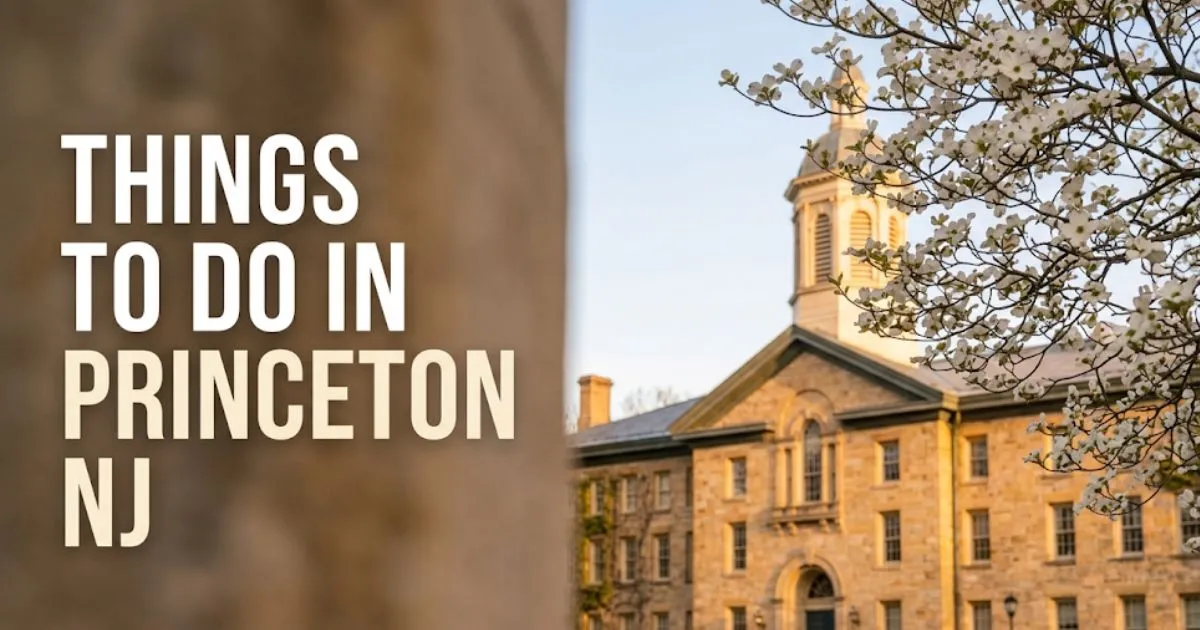
Things to do in Princeton NJ span Ivy League architecture, Revolutionary War battlefields, a world-class art museum, and one of New Jersey’s best independent dining streets. Princeton delivers a genuinely complete day or weekend for travelers who look beyond the campus gates.
Visit Princeton, the town’s official tourism organization, notes that the borough draws visitors from both New York City and Philadelphia who want cultural depth without a long journey. The 55-mile positioning between both cities makes Princeton one of the Mid-Atlantic’s most accessible cultural day trips.
This guide covers every major Princeton experience in 2026, with honest seasonal assessments, traveler profile guidance, and the practical logistics most other guides skip entirely. You will leave knowing exactly where to go, what to skip, and how to build a real itinerary.
Things To Do in Princeton NJ: What the Town Actually Delivers
The best things to do in Princeton NJ combine Ivy League campus beauty, genuine American history, nationally recognized fine art, and a surprisingly strong independent restaurant scene.
Princeton is not a theme park version of a college town. It is a functioning, economically confident small city of roughly 30,000 residents that happens to contain one of the world’s most architecturally significant university campuses.
Visitors who arrive expecting a simple campus tour often leave surprised. The art museum, the canal trail system, and the Witherspoon Street dining corridor are all first-rate experiences that have nothing to do with the university.
The honest caveat: Princeton is not cheap. Dining, parking, and accommodation all run at premium pricing, especially on weekends and during university event periods.
Budget travelers can navigate Princeton affordably by focusing on free attractions (the campus, the art museum, the battlefield park, and the canal trails) and timing their visit to a weekday.
| Experience Category | Best For | Cost Range | Time Needed |
|---|---|---|---|
| Campus walk and Nassau Hall | All profiles | Free | 1.5 to 2 hours |
| Princeton University Art Museum | Couples, solo travelers, seniors | Free (verify) | 1.5 to 3 hours |
| D&R Canal State Park trail | Families, solo, active travelers | Free | 1 to 4 hours |
| Princeton Battlefield State Park | History travelers, families | Free | 1 to 1.5 hours |
| Witherspoon Street dining | Couples, solo | $20 to $60 per person | 1 to 2 hours |
| Morven Museum and Garden | Seniors, history travelers | Low admission | 1 to 1.5 hours |
| Palmer Square shopping | All profiles | Free to browse | 1 hour |
| McCarter Theatre Center | Couples, cultural travelers | $30 to $85+ per ticket | 2 to 3 hours |
Best Things To Do in Princeton: The Essential Shortlist
The single best overall experience in Princeton is a self-guided walking loop that connects Nassau Hall, the Princeton University Art Museum, Palmer Square, and Witherspoon Street within roughly two miles.
Most visitors cover only Nassau Street and the main campus green. That route is entirely legitimate but leaves out the art museum, which is genuinely one of the most significant collections in the northeastern United States, and Witherspoon Street, where the town’s actual dining identity lives.
Insider Tip:
- Start at the FitzRandolph Gate on Nassau Street (the main campus entrance facing town) and walk toward Nassau Hall first. The morning light on the building’s sandstone facade is noticeably better before noon.
- After the campus, cross Nassau Street into Palmer Square for coffee before heading south on Witherspoon Street.
- Seniors and visitors with mobility considerations should note that the campus paths are paved and largely flat. The one exception is the Blair Arch area, which requires navigating some uneven stone walkways.
The Princeton University Art Museum reopened after a major expansion in 2023. It remains among the top university art museums in the country, with collections spanning ancient Mediterranean, Asian, and European art alongside a strong contemporary wing.
Princeton University Campus and Landmarks
Princeton University’s campus is one of the most architecturally coherent Collegiate Gothic environments in the United States, and walking it requires no student ID, no ticket, and no reservation.
Nassau Hall, built in 1756, served as the temporary capital of the United States in 1783. The Continental Congress met here after the British evacuation of Philadelphia.
The campus’s most photographed feature is Blair Arch, a late-19th-century stone gate connecting two dormitory wings. It is best photographed in morning light with minimal foot traffic.
Firestone Library and Princeton Chapel are both open to visitors during daytime hours. Princeton Chapel is one of the largest university chapels in the world and is worth entering for the stained glass alone.
Self-guided campus walking maps are available through Princeton University’s official website and at the Frist Campus Center, which also has public restrooms.
Families with teenagers will find the campus genuinely engaging. Younger children typically lose interest within 30 to 45 minutes unless parents frame specific story points around buildings.
Insider Tip:
- Avoid the Princeton University campus during graduation weekend in late May and the Reunions alumni weekend that follows immediately after. Crowds are exceptional. Parking is nearly impossible. Nassau Street restaurants operate at capacity.
- The best campus visit is a Tuesday or Wednesday morning in mid-October or mid-April.
Campus access is generally open year-round. Some buildings restrict public entry during academic events, so verify specific building access before planning a detailed indoor tour.
Princeton Art Museum and Cultural Attractions
The Princeton University Art Museum holds a collection of more than 115,000 works across ancient, Asian, European, and American art, housed in a newly expanded building that opened its renewed galleries in late 2023.
Admission policy and hours change seasonally. As of recent years, general admission has been free, but the museum occasionally charges for major special exhibitions. Verify current admission and hours directly with the museum before visiting.
The museum’s strongest permanent collection areas include ancient Mediterranean objects, East Asian ceramics, and a European paintings collection that includes works by Monet, Cézanne, and Rubens. The photography collection is significant and often overlooked.
Couples and solo travelers who appreciate fine art will find this museum genuinely worthy of two to three hours. It is not a quick walk-through.
Morven Museum and Garden at 55 Stockton Street is Princeton’s most underrated cultural institution. This 18th-century house served as home to New Jersey governors and is now a state museum with rotating exhibitions on New Jersey decorative arts and history.
McCarter Theatre Center on University Place presents a full professional season of theater, dance, and music. It is one of the few Tony Award-winning regional theaters in New Jersey.
The Princeton Garden Theatre on Nassau Street is a single-screen independent cinema operating since 1930. It programs art-house and independent films that no multiplex within 20 miles would show.
Seniors generally find the art museum and Morven Museum the most comfortable Princeton cultural experiences. Both are fully accessible, air-conditioned, and manageable at a slow pace.
Outdoor Activities in Princeton NJ
The Delaware and Raritan Canal State Park offers more than 70 miles of flat, paved trail running parallel to the historic D&R Canal, with Princeton’s section being among the most scenic and accessible portions.
The canal towpath through Princeton passes through a mix of wooded sections and open meadows along the Millstone River floodplain. It is flat throughout, making it genuinely accessible for strollers, cyclists, and visitors with limited mobility.
Carnegie Lake (officially Lake Carnegie) runs along the southern edge of the Princeton campus. It was gifted to Princeton by Andrew Carnegie in 1906 specifically to give the university a rowing venue. The lakeside path provides excellent views of the crew teams practicing, especially in fall and spring.
Cyclists and joggers use the canal towpath year-round, but the trail reaches its best condition in spring and fall. Summer humidity on the canal path can be significant, and the tree cover is incomplete in some sections.
Families with younger children find the canal towpath ideal. The flat surface, shade from mature trees, and minimal car traffic make it one of the safest outdoor walking or cycling environments near Princeton.
Insider Tip:
- Rent bikes from local outfitters rather than driving the canal trail sections. Parking at trail access points is limited. The most convenient Princeton access point is near the Harrison Street bridge off Washington Road.
- The best fall foliage on the canal trail typically peaks in mid-October, consistent with broader New Jersey fall timing.
The towpath connects Princeton to Kingston, Rocky Hill, and Griggstown in both directions, allowing longer rides of 10 to 20 miles for active travelers.
Princeton NJ History and Heritage Sites
Princeton’s role in the American Revolution is more significant than most visitors realize, and Princeton Battlefield State Park on Mercer Road is the physical center of that history.
The Battle of Princeton on January 3, 1777, was one of George Washington’s most strategically critical victories, following immediately after the crossing of the Delaware and the Battle of Trenton. The battlefield site preserves the actual ground where the engagement occurred.
Thomas Clarke House, located within the battlefield park, is an 18th-century farmhouse that served as a field hospital during the battle and is open for tours on a seasonal basis. Admission to the park itself is free.
History-focused travelers should combine Princeton Battlefield with Rockingham State Historic Site in Rocky Hill, approximately five miles north of Princeton. Washington used Rockingham as his headquarters in 1783 while the Continental Congress met at Nassau Hall.
Morven Museum and Garden adds a third layer of Princeton history, covering the colonial and early national periods through its house museum and garden programming.
Seniors and history travelers consistently rate Princeton Battlefield as one of the most undervisited Revolutionary War sites in New Jersey. The grounds are flat and well-maintained, and the interpretive signage is thorough.
Insider Tip:
- Most visitors to Princeton never make it to Princeton Battlefield. It is less than a mile from Palmer Square. That ratio of significance to visitor volume is remarkable.
- The battlefield is best visited on a weekday morning when school groups are not present. Weekend afternoons can bring moderate but manageable crowds.
According to the New Jersey Division of Travel and Tourism, Princeton Battlefield State Park is one of the state’s most historically significant publicly accessible sites. Verify seasonal hours for the Thomas Clarke House before planning an indoor visit.
Key Takeaway: The Princeton University campus, the Art Museum, and Princeton Battlefield together cover architecture, fine art, and Revolutionary War history within a two-mile radius. Plan all three in one morning.
Things To Do in Princeton With Kids
Princeton with children works best for families with school-age kids who can engage with history, architecture, and outdoor exploration. It is a harder sell for families with toddlers.
The Delaware and Raritan Canal towpath is the single most universally kid-friendly Princeton experience. Flat, car-free, and visually interesting, it holds children’s attention far better than a museum corridor.
Princeton Battlefield State Park works well for children aged eight and older who have some historical context. The open field format and the specific story of Washington’s winter campaign give parents strong narrative hooks.
The Princeton University campus provides genuine wonder for curious children. The Blair Arch and Princeton Chapel tend to generate the most engagement, and Frist Campus Center has public restrooms and occasional student activity that makes the campus feel alive rather than institutional.
Families should avoid bringing young children to the Princeton University Art Museum on first visits unless the children have specific enthusiasm for art. The collection is genuinely excellent, but it requires quiet and patience that many young children cannot sustain for two hours.
Insider Tip:
- The Princeton Farmers Market at Hinds Plaza runs on Saturdays and is excellent for families who want a local experience that is not campus-centered. Fresh food, local vendors, and outdoor space make it a relaxed family stop. Verify current season dates before visiting.
- For a genuine kid reward at the end of a Princeton day, walk down Witherspoon Street to Thomas Sweet Ice Cream, a Princeton institution since 1979, for blended ice cream in local flavors.
| Activity | Age Range | Duration | Cost | Kid-Friendliness |
|---|---|---|---|---|
| D&R Canal towpath walk | All ages | Flexible | Free | Excellent |
| Princeton Battlefield | 8+ | 1 to 1.5 hours | Free | Good |
| Campus walk | 6+ | 1 to 2 hours | Free | Good |
| Princeton Farmers Market | All ages | 1 hour | Free to browse | Excellent |
| Art Museum | 10+ | 1.5 to 2 hours | Free (verify) | Moderate |
Princeton NJ Restaurants and Dining
Witherspoon Street is where Princeton’s genuine restaurant identity lives, and it is categorically more interesting than the tourist-facing options on Nassau Street facing the campus gates.
The Witherspoon Street corridor runs south from Nassau Street for several blocks and concentrates a mix of independent restaurants, cafes, and bars that reflect Princeton’s international academic community. The food range spans South Asian, Mediterranean, pan-Asian, and contemporary American.
Mediterra on Hulfish Street is a farm-to-table Mediterranean restaurant that has been a Princeton dining benchmark for years. It offers one of the better wine programs in Mercer County.
Elements on Hulfish Street represents Princeton’s most ambitious fine dining option, with a seasonal tasting menu format and a kitchen that has drawn national food press attention. Reservations are strongly recommended, especially on weekends.
Budget-conscious diners will find Witherspoon Street’s casual end more approachable. The Princeton campus area has several cafes and sandwich spots at moderate price points.
Couples will find Princeton’s dining scene genuinely romantic at the upper end. The combination of stone-walled dining rooms, candlelit settings, and BYOB options at some Witherspoon establishments makes for compelling evening itinerary material.
Insider Tip:
- Several Princeton restaurants operate as BYOB (bring your own bottle), a New Jersey restaurant tradition that meaningfully reduces the cost of a dinner out. Ask specifically when making reservations.
- Avoid arriving on Nassau Street for dinner without a reservation on Friday and Saturday evenings from April through October. Tables at the better restaurants fill quickly.
The Princeton Farmers Market at Hinds Plaza on Saturdays gives a clear picture of the local food culture beyond restaurants. Local farms, bakers, and specialty food producers make it a worthwhile detour for food-focused visitors.
Free Things To Do in Princeton NJ
Princeton has a stronger free activity inventory than most visitors expect for a premium-priced destination.
Free experiences include the entire Princeton University campus self-guided walk, the D&R Canal State Park towpath, Princeton Battlefield State Park, and (verify before visiting) the Princeton University Art Museum general admission.
Nassau Hall exterior and the campus green are freely accessible year-round. The FitzRandolph Gate, Blair Arch, and Princeton Chapel interior are all open to the public during standard hours without charge.
The Institute for Advanced Study grounds at 1 Einstein Drive are openly walkable. Einstein worked and lived here from 1933 until his death in 1955. The grounds include a historical marker at the site of his former office.
Budget travelers can spend a full, genuinely rewarding day in Princeton spending nothing on admission. The cost pressure points are dining, parking, and accommodation.
- Free campus self-guided walk: 1.5 to 2 hours
- Free D&R Canal towpath: flexible duration
- Free Princeton Battlefield State Park: 1 to 1.5 hours
- Free Morven Museum garden (grounds): flexible
- Free Palmer Square browsing and window shopping: 30 to 60 minutes
- Free Princeton Farmers Market Saturday browsing: 45 to 60 minutes
Seniors on fixed incomes will find that Princeton’s free activity layer is genuinely substantial and does not feel like a consolation tier. The campus, battlefield, and canal trail are among the most historically and scenically significant free experiences in central New Jersey.
Key Takeaway: A full day in Princeton can cost nearly nothing in admission fees. The real budget pressure is parking and dining. Plan both before you arrive.
Things To Do Near Princeton NJ
The strongest day-trip addition from Princeton is Grounds for Sculpture in Hamilton, New Jersey, approximately eight miles south via Route 206.
Grounds for Sculpture is a 42-acre sculpture park and museum with more than 270 sculptures by artists including Seward Johnson, whose life-size figurative works are among the most photographed works in the collection. Admission runs in the range of $18 to $22 per adult as of recent years. Verify current pricing before visiting.
Lambertville, New Jersey, sits 12 miles west of Princeton on the Delaware River and offers one of the best antique and independent shopping corridors in the state. The town’s Bridge Street and Union Street are lined with galleries, dealers, and restaurants.
New Hope, Pennsylvania, directly across the Delaware River from Lambertville, extends the experience into Bucks County with additional antique shops, restaurants, and a historic canal-side walking path.
Trenton, New Jersey, seven miles south, holds the New Jersey State Museum and the Trenton Battle Monument, a 150-foot column marking the site of Washington’s first Revolutionary War victory at the Battle of Trenton.
Families will find Grounds for Sculpture the strongest nearby addition. The open grounds format, walkable paths, and visually surprising sculptures engage children of varied ages.
Couples planning a full weekend often combine Princeton on Saturday with a Lambertville-New Hope day on Sunday. The 12-mile drive takes 20 minutes. The contrast between Princeton’s academic tone and Lambertville’s antique-and-arts character makes the combination feel balanced.
Princeton NJ Day Trip From NYC and Philadelphia
Princeton is one of the most practical day trips available from both New York City and Philadelphia, with a genuine cultural offering that justifies the journey without an overnight stay.
From New York Penn Station, take NJ Transit’s Northeast Corridor line to Princeton Junction station. The journey runs approximately 65 to 80 minutes depending on the specific train. At Princeton Junction, board the Dinky, NJ Transit’s two-car shuttle train that runs approximately 2.8 miles from Princeton Junction to Princeton Station in the center of town. The Dinky runs on a regular schedule and the ride takes about five minutes. Round-trip fare is in the $20 to $30 range; verify current NJ Transit pricing directly.
From Philadelphia 30th Street Station, take NJ Transit or Amtrak’s Northeast Regional to Princeton Junction. The journey runs approximately 45 to 55 minutes. The same Dinky connection applies.
The Dinky is the detail most first-time visitors from NYC or Philadelphia do not know about. Missing the Dinky schedule means waiting 20 to 30 minutes for the next shuttle. Check the NJ Transit Dinky schedule before arriving at Princeton Junction.
Solo travelers using the train from NYC or Philadelphia will find Princeton completely walkable once they arrive at Princeton Station. No car is needed for the core Princeton itinerary.
Insider Tip:
- The last Dinky departure back to Princeton Junction operates relatively early in the evening. Check the schedule before building an evening itinerary around a Princeton restaurant dinner without a return car plan.
- Driving from NYC takes 60 to 90 minutes depending on traffic. Parking in Princeton is possible but carries real frustration on weekends.
Princeton NJ Shopping and Neighborhoods
Palmer Square is Princeton’s primary retail district, a landscaped commercial block centered on a green space across from Nassau Hall that contains a mix of national brands, local boutiques, and restaurants.
The shopping on Palmer Square skews toward premium: specialty food shops, upscale clothing boutiques, and gift stores serving the university-affiliated demographic. Expect prices to reflect the neighborhood.
Nassau Street itself carries a mix of independent bookstores, gift shops, and coffee houses that give it more local character than a standard tourist retail strip. Labyrinth Books at 122 Nassau Street is an independent bookseller with one of the strongest academic and literary sections in central New Jersey.
Witherspoon Street south of Nassau Street is a better street for browsing independent shops and galleries alongside the restaurant options described above.
Princeton Shopping Center on Route 206 is a conventional American mall for travelers needing practical retail (pharmacy, grocery, basics) during a longer stay. It is functional and unremarkable.
Solo travelers who enjoy browsing independent bookstores and specialty shops will find the Nassau Street and Witherspoon Street corridor genuinely satisfying. Palmer Square works best for those comfortable with premium-priced boutique retail.
Insider Tip:
- Small World Coffee at 14 Witherspoon Street is where Princeton locals actually drink coffee. It is not the campus-adjacent Starbucks equivalent. Two locations serve the borough; the Witherspoon Street original is the one worth knowing.
- Avoid Palmer Square on weekend afternoons during the academic year. Foot traffic concentrates near the restaurant entries and makes the square feel more congested than its size warrants.
Key Takeaway: Labyrinth Books on Nassau Street and Small World Coffee on Witherspoon Street are the two local institutions most visitors skip and most residents use daily.
Things To Do in Princeton NJ This Weekend: A Suggested Itinerary
A Princeton weekend divides naturally into two distinct days: one campus-and-culture day and one outdoors-and-neighborhood day.
Day 1: Campus, Art, and History
- Arrive at Princeton Station via the Dinky. Walk north on Witherspoon Street to Nassau Street.
- Enter the campus through the FitzRandolph Gate. Walk to Nassau Hall and spend 20 minutes on the historic building and the campus green.
- Walk east on campus toward the Princeton University Art Museum. Allow 90 minutes to two hours inside.
- Exit the museum, cross Washington Road, and walk south to Prospect Gardens (the university’s formal garden, free and public).
- Return to Nassau Street for lunch. Either Palmer Square cafe options or Witherspoon Street casual restaurants.
- After lunch, drive or walk to Princeton Battlefield State Park on Mercer Road. Allow 60 to 90 minutes.
- Return to Witherspoon Street for dinner. Make reservations before the trip, especially for Friday or Saturday.
Day 2: Trails, Neighborhoods, and Day Trips
- Start at Small World Coffee on Witherspoon Street.
- Drive to the D&R Canal towpath access near the Harrison Street bridge. Walk or cycle south toward Carnegie Lake. Allow 60 to 90 minutes.
- Return to town and browse Labyrinth Books on Nassau Street.
- Drive to Grounds for Sculpture in Hamilton or to Lambertville for lunch and afternoon exploring.
- Return to Princeton for early dinner or head home from Lambertville or Hamilton.
Best Time To Visit Princeton NJ
The best time to visit Princeton NJ is mid-April through late May before graduation, or September through mid-October during the fall academic semester.
Spring (mid-April to mid-May) delivers the campus at its most visually striking: cherry blossoms, blooming dogwoods along the paths, and the full energy of a functioning academic year. Temperatures are comfortable, typically in the 55 to 72 degrees Fahrenheit range.
Fall (September through October) brings golden foliage along the canal trail and Carnegie Lake, reduced summer humidity, and the pleasant energy of a new academic year on campus.
What to avoid: Graduation weekend (typically late May) and the Reunions alumni weekend that follows it. Hotels within 20 miles often sell out months in advance. Nassau Street restaurants operate at capacity. Campus access is partially restricted for ceremonies.
Mid-January through early March is Princeton’s low season. Outdoor attractions lose their appeal in cold and grey conditions, but hotel rates drop significantly and the town is genuinely uncrowded.
Seniors and visitors with heat sensitivity should avoid July and August. New Jersey summer humidity is substantial, the campus offers limited shade on its main paths, and the canal trail can feel punishing by midday.
According to the New Jersey Division of Travel and Tourism, Princeton’s fall season is among the most visited periods for cultural heritage tourism across central New Jersey. Book accommodations well in advance for October weekends.
Getting To and Around Princeton NJ
Getting to Princeton by train from New York City or Philadelphia is the most practical option for day-trippers and weekend visitors who do not want to navigate New Jersey driving.
The NJ Transit Northeast Corridor line connects New York Penn Station to Princeton Junction station in approximately 65 to 80 minutes. At Princeton Junction, the Dinky shuttle train completes the 2.8-mile journey to central Princeton. The full trip from Penn Station to Princeton town center typically runs 75 to 90 minutes door-to-door.
From Philadelphia 30th Street, the same NJ Transit service or Amtrak’s Northeast Regional reaches Princeton Junction in 45 to 55 minutes.
Driving to Princeton is viable from both cities, but weekend parking is a genuine frustration. Nassau Street has metered street parking that fills quickly on weekends. The most reliable paid parking is the Princeton University Lot 21 off Alexander Road and the municipal lot off Hulfish Street near Palmer Square.
Within Princeton, walking covers nearly everything on the core itinerary. The campus, Palmer Square, Nassau Street, and Witherspoon Street are all within a half-mile of each other.
Seniors and visitors with mobility limitations should note that the campus paths and Nassau Street sidewalks are generally accessible. The canal towpath is flat and paved. The Princeton Battlefield grounds are grassy and may require more stable footing.
Insider Tip:
- Check the NJ Transit Dinky schedule before you go. The Dinky does not run continuously. Missing a departure means waiting on the platform at Princeton Junction, which has limited shelter.
- If driving, arrive before 10 a.m. on weekends. Parking in Princeton after 11 a.m. on a Saturday in April or October requires significant patience.
Key Takeaway: The Dinky shuttle train at Princeton Junction is the detail most first-time train visitors miss. Check its schedule the night before your trip and plan your return time around the last evening departure.
Princeton NJ Couples and Romantic Activities
Princeton is one of the stronger romantic weekend destinations in the Mid-Atlantic for couples who value walkable beauty, excellent dining, and cultural depth over beach resorts or nightlife-heavy cities.
The combination of the Gothic campus architecture, the canal towpath at golden hour, and the Witherspoon Street restaurant scene creates a genuinely romantic texture without requiring anything manufactured or tourist-packaged.
Romantic activities specifically worth planning for couples:
- Evening performance at McCarter Theatre Center followed by dinner on Witherspoon Street. McCarter’s professional season runs from fall through spring.
- A morning walk along Carnegie Lake when the crew teams are on the water. The lake in early morning light is one of Princeton’s most genuinely beautiful visual moments.
- Dinner at Elements on Hulfish Street for a special occasion. The tasting menu format is designed for a multi-hour dinner experience. Reservations are essential.
- An afternoon at the Princeton University Art Museum followed by the Princeton Garden Theatre for an independent film in the evening.
- A Saturday morning at the Princeton Farmers Market at Hinds Plaza for local food shopping before a self-catered picnic on the D&R Canal towpath.
What sounds romantic but underdelivers for couples: Palmer Square on a busy Saturday afternoon. The foot traffic and commercial atmosphere feel more like a shopping mall than a romantic European-style town square. Visit Palmer Square early morning or during the week.
Couples planning an overnight should book accommodations well in advance. The Nassau Inn on Palmer Square is Princeton’s most centrally located hotel. Rates climb significantly on university event weekends.
Safety and Practical Warnings for Princeton NJ
Princeton is a low-crime, well-maintained small city with no significant safety concerns for typical visitors.
Key practical facts every visitor should know:
- Parking on Nassau Street and Palmer Square fills completely by mid-morning on spring and fall weekends. Arrive before 10 a.m. or use the Hulfish Street municipal lot and plan to walk.
- The Dinky train at Princeton Junction operates on a limited schedule. Missing the last evening Dinky means either a taxi to Princeton Junction or finding alternate transport. Check the schedule.
- Graduation weekend in late May creates near-gridlock conditions across Princeton and Mercer County. Hotel prices spike weeks in advance. Nassau Street becomes genuinely difficult to navigate.
- The D&R Canal towpath has limited cell service in sections. Download offline maps before starting a longer walk or cycle.
- Summer heat and humidity are significant in central New Jersey. July and August temperatures regularly reach the high 80s to low 90s Fahrenheit with high humidity. Carry water on any outdoor activity.
- The canal towpath is shared by cyclists, joggers, and walkers. Cyclists move at speed on the paved sections. Walkers with strollers or mobility aids should stay to the right and listen for approaching bike traffic.
For general emergencies in Princeton, contact Mercer County emergency services at 911. The University Medical Center of Princeton at Plainsboro is the nearest full-service hospital, approximately six miles from central Princeton.
Frequently Asked Questions About Things To Do in Princeton NJ
What are the best things to do in Princeton NJ for a day trip?
The best day-trip itinerary in Princeton NJ covers the university campus walk, the Princeton University Art Museum, and lunch on Witherspoon Street, all within a compact half-mile area.
Add Princeton Battlefield State Park in the afternoon if time allows. It is less than a mile from Palmer Square and significantly undervisited relative to its historical importance.
Day-trippers arriving by train from New York or Philadelphia can cover Princeton’s core itinerary without a car, as everything central is walkable from Princeton Station.
Is Princeton NJ worth visiting if you are not affiliated with the university?
Princeton is worth visiting for any traveler interested in American history, fine art, walkable architecture, or strong independent dining. The university is the visual anchor, but it is not the only reason to come.
The Princeton University Art Museum, Princeton Battlefield State Park, and the Delaware and Raritan Canal trail system are all first-rate experiences that exist independently of the university affiliation question.
Visitors who care only about college campuses and have no interest in Revolutionary War history or art museums may find Princeton’s depth does not match their specific interests.
How do I get to Princeton from New York City by train?
Take NJ Transit’s Northeast Corridor line from New York Penn Station to Princeton Junction station, a journey of approximately 65 to 80 minutes.
At Princeton Junction, board the Dinky, NJ Transit’s shuttle train, for the five-minute ride to Princeton Station in the center of town.
Check the Dinky’s schedule in advance because it does not run on a continuous loop. The full door-to-door journey from Penn Station to Princeton town center typically runs 75 to 90 minutes.
What is the Princeton University Art Museum admission fee?
The Princeton University Art Museum has offered free general admission in recent years, but admission policies and fees for special exhibitions change.
Always verify current admission pricing directly with the museum before visiting, as the museum’s expanded programming following its 2023 reopening includes ticketed special exhibitions alongside its free permanent collection access.
The museum is closed on Mondays. Operating hours vary between the academic year and summer. Confirm hours before planning your visit.
What is the best time of year to visit Princeton NJ?
The best time to visit Princeton NJ is mid-April through late May before graduation, or September through mid-October.
Both windows offer comfortable temperatures, the full visual appeal of the campus and canal trail, and the energy of an active academic community without the overcrowding of graduation and Reunions weekends.
Avoid late May graduation weekend and the immediately following Reunions alumni weekend, when hotel rooms sell out, prices spike significantly, and campus access is partially restricted.
Are there free things to do in Princeton NJ?
Yes. Free activities in Princeton include the self-guided campus walk, the Delaware and Raritan Canal State Park towpath, Princeton Battlefield State Park, Prospect Gardens on the university campus, and the grounds of the Institute for Advanced Study.
The Princeton University Art Museum has offered free general admission to its permanent collection in recent years. Verify current policy before visiting.
Browsing Nassau Street, Witherspoon Street, and the Saturday Princeton Farmers Market at Hinds Plaza adds additional free time without any admission obligation.
Closing
Princeton rewards travelers who arrive with a plan and leave the campus gates open. The Witherspoon Street dining corridor, the D&R Canal towpath, and Princeton Battlefield cover genuinely first-rate experiences that most visitors skip entirely on a first trip.
Book dinner reservations before you travel. Check the Dinky schedule the night before if you are coming by train. Verify museum hours and admission policy directly, as both have changed with the Art Museum’s post-renovation reopening.
Travel conditions, hours, prices, and seasonal schedules change. Confirm key logistics directly with Visit Princeton, NJ Transit, and individual venues before departure. Every logistical detail you verify in advance saves an hour of frustration on the day you arrive.