Things To Do in Mendocino: 21 Best Activities in 2026

Mendocino is one of the most rewarding things to do in Mendocino searches that actually delivers on its promise. This compact Northern California village sits on a coastal headland 155 miles north of San Francisco and earns every comparison to a New England fishing village dropped onto the Pacific.
The California Department of Parks and Recreation manages seven state parks within a ten-mile radius of the village. That density of protected coastline and redwood forest makes Mendocino genuinely rare among California coastal destinations.
This guide covers the best activities in Mendocino village and the surrounding coast. It also addresses what most visitors get wrong, which season actually delivers clear skies, and where to eat without defaulting to the most-photographed option.
Things To Do in Mendocino: Understanding the Destination First
The best things to do in Mendocino divide into three distinct geographic zones, each requiring a separate plan.
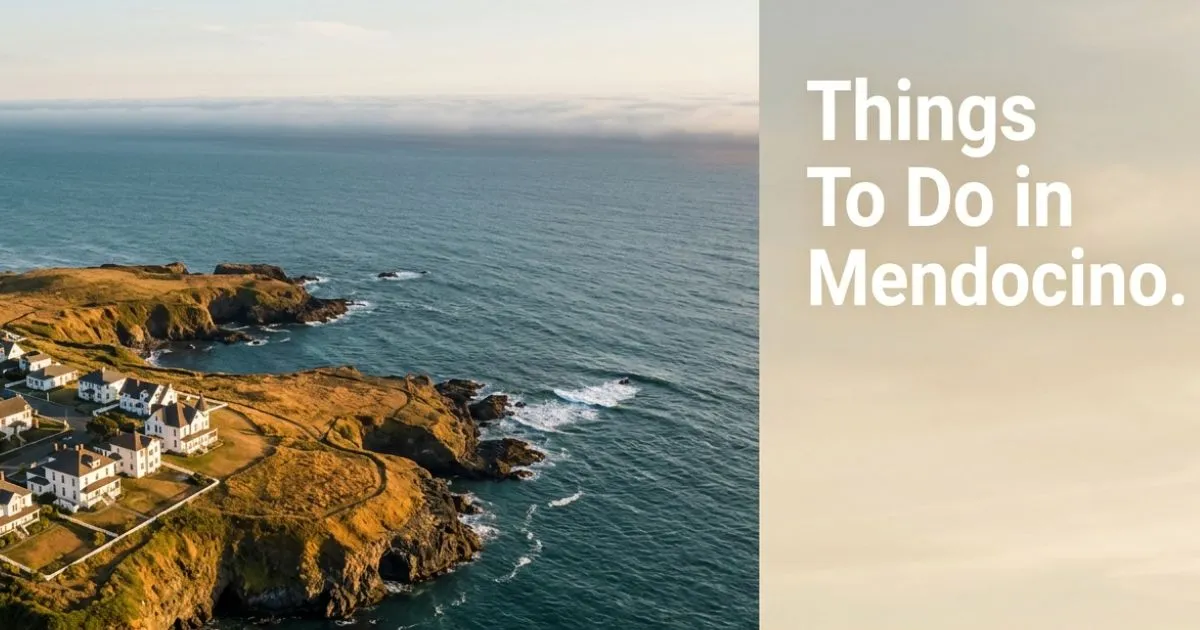
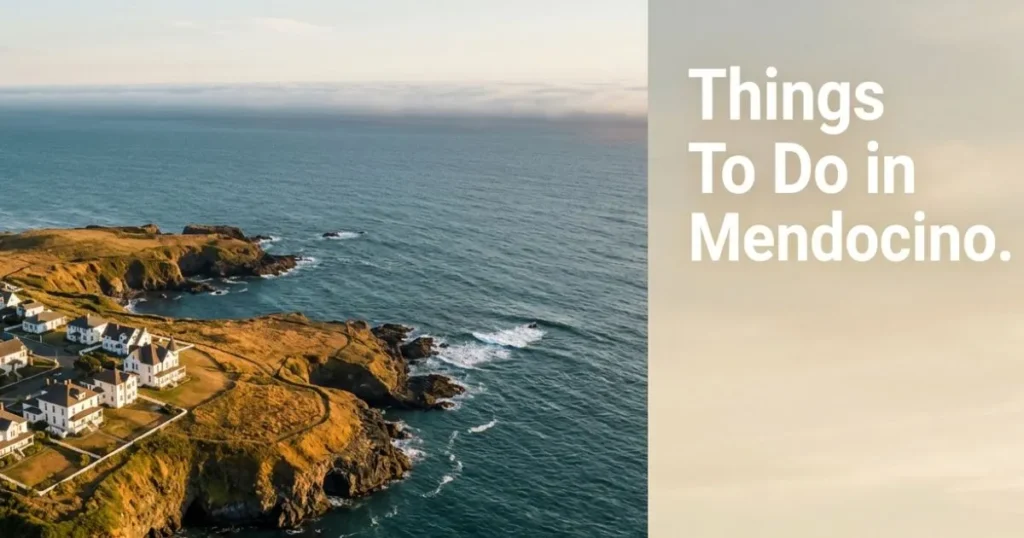
Mendocino village occupies a compact headland with Victorian architecture, art galleries, and direct bluff access to the Pacific. It is walkable in under twenty minutes end to end.
Fort Bragg sits nine miles north. It holds Glass Beach, Noyo Harbor, and the Skunk Train. Many visitors confuse it with Mendocino; it is a separate town with a different character.
The state parks corridor stretches south from Mendocino. Van Damme State Park and Russian Gulch State Park are the primary hiking destinations, each within five miles of the village.
Understanding these three zones prevents the most common planning mistake: spending your first afternoon driving in the wrong direction.
| Zone | Key Attractions | Distance from Village | Best For |
|---|---|---|---|
| Mendocino Village | Headlands, galleries, dining | 0 miles | Couples, arts travelers |
| Fort Bragg | Glass Beach, Skunk Train, Noyo Harbor | 9 miles north | Families, budget travelers |
| State Parks Corridor | Van Damme, Russian Gulch | 2-5 miles south | Hikers, nature seekers |
| Anderson Valley | Navarro Vineyards, Roederer Estate | 30 miles east | Wine travelers, couples |
Insider Tip:
- Park once in the village near Mendocino Art Center on Little Lake Street and walk everywhere in the village itself
- Save the car for day-trip destinations like Van Damme or Anderson Valley
- Solo travelers: the village is compact and walkable, making it genuinely easy to navigate without a car once you arrive
Mendocino Village Character: What Makes It Worth the Drive
Mendocino village’s most distinctive quality is its architectural coherence. The town is listed on the National Register of Historic Places as a historic district.
The entire village core uses Victorian-era board-and-batten buildings, water towers, and white picket fences. No chain stores operate inside the village. This is actively maintained by local ordinance.
The main commercial street is Lansing Street, running parallel to the headlands. Ukiah Street and Albion Street form the secondary retail and gallery corridors.
Gallery Bookshop, on the corner of Main and Kasten, is the most respected independent bookstore on the North Coast. It has operated in this location since 1964.
Couples respond strongly to the village’s walkable, unhurried scale. The absence of chain retail and fast food preserves a genuinely different atmosphere from coastal California’s more developed resort towns.
Budget travelers should note that the village itself is free to explore. Galleries do not charge admission. The headlands are free to walk. Cost is concentrated in accommodation and dining.
According to the Mendocino County Tourism Commission, the village sees its highest visitor concentration in July and August despite those months delivering the most persistent fog. September through November offers comparable accommodation availability with far better weather.
Mendocino Headlands State Park and Coastal Walking
Mendocino Headlands State Park offers the single most accessible and visually rewarding coastal experience in the entire village. The bluff-top path runs along the town’s western and southern edges.
The trail circles the headland for approximately three miles round trip. Elevation change is minimal; the path is relatively flat with some uneven sections near the bluff edge.
Tidal sea stacks, blowholes, and cove beaches below the bluff are the primary visual draws. At low tide, access routes to the small beaches below exist at several points; check tidal charts before attempting.
The headlands are free to enter with no day-use fee. No parking permit is required for the village-edge trailhead on Heeser Drive.
For couples, the sunset view from the headlands northwest corner is the single most romantic free experience in Mendocino. Arrive thirty minutes before sunset for positioning.
Seniors and accessibility travelers: the main bluff path is mostly flat but unpaved in sections. The boardwalk segments near the visitor center are wheelchair-accessible; the outer bluff edges are not.
Sneaker wave warning: do not climb down to the rocks or beaches without checking ocean conditions. The Mendocino coast produces unpredictable waves on calm-looking days. Stay back from the edge.
Insider Tip:
- The headlands look entirely different at low tide. Check tide tables (available free via NOAA’s tide prediction site) the night before your visit
- The local alternative to the main headlands path: the unmarked trail west from the Ford House Museum cuts closer to the bluff edge with less foot traffic
- Families with young children should stay on the main path; the bluff edge is unfenced in many sections
Van Damme State Park and the Pygmy Forest
Van Damme State Park is the most undervisited state park within easy reach of Mendocino village, located approximately three miles south on Highway 1.
Its primary draws are two distinct trails serving entirely different experiences. The Fern Canyon Trail runs a gentle three-mile round trip through a redwood and fern gulch. The Pygmy Forest Trail accesses a rare ecological formation where mature cypress and pine trees grow only two to three feet tall due to acidic soil conditions.
Day-use parking fees at Van Damme run approximately $8 to $10 per vehicle as of recent years. Verify current California State Parks fees before visiting, as rates are updated periodically.
The Pygmy Forest is the more unique experience of the two. Nothing else like it exists within an accessible day trip of Mendocino. A short accessible boardwalk allows visitors with mobility limitations to observe the formation without navigating unpaved trail.
Families with children eight and older respond well to the Pygmy Forest’s visual novelty. The “full-grown but miniature” trees generate genuine engagement that a standard redwood grove walk may not.
The Fern Canyon Trail is the local alternative to crowded Armstrong Redwoods near Guerneville. It delivers a comparable old-growth fern and redwood experience with a fraction of the visitor count.
Insider Tip:
- Combine both trails in one Van Damme visit: Fern Canyon in the morning, Pygmy Forest via the inland connector trail in the afternoon
- Bring water; there are no concessions in the park
- The Pygmy Forest boardwalk makes this one of the most accessibility-friendly nature experiences near Mendocino
Russian Gulch State Park and the Waterfall Trail
Russian Gulch State Park, two miles north of Mendocino village on Highway 1, offers the most rewarding full-day hiking option on the immediate Mendocino coast.
Its signature experience is the waterfall hike: approximately 6.5 miles round trip through second-growth redwood and riparian forest to a 36-foot cascade. The trail is well-maintained and moderately graded throughout.
Day-use fees at Russian Gulch are comparable to Van Damme, in the $8 to $10 range per vehicle as of recent years. Verify with California State Parks before your visit.
The park also includes a dramatic sea arch accessible from the day-use area without hiking. The arch is a flat walk of under a quarter mile from the parking area.
Solo hikers find Russian Gulch particularly rewarding. The trail is long enough to feel genuinely immersive but well-marked enough for confident navigation without a guide.
Seniors and those with limited mobility can still access the sea arch and the first half mile of the canyon floor. The waterfall portion requires sustained hiking and is not suitable for wheelchairs or those with significant mobility limitations.
Insider Tip:
- The waterfall runs strongest November through April after seasonal rainfall. Summer visits may find the flow significantly reduced
- Start the waterfall hike before 9 AM on summer and fall weekends to avoid the main crowd arriving at 10
- The local alternative to the waterfall trail: the less-trafficked Headlands Loop trail within the same park accesses coastal bluffs with fewer hikers
Key Takeaway: Mendocino’s three nearest state parks serve completely different experiences. Match your energy level: headlands for easy coastal walking, Van Damme for ecological novelty, Russian Gulch for a genuine half-day hike.
Kayaking and Water Activities on the Mendocino Coast
The Big River estuary at the south end of Mendocino village offers the most protected and accessible paddling on the Mendocino coast. The river mouth is calm, sheltered from ocean swells, and flanked by forested hills.
Catch a Canoe and Bicycles Too, operated at the Stanford Inn by the Sea, rents outrigger canoes and kayaks for Big River exploration. Rates typically run in the $35 to $65 per person range for a two-hour rental, though verify current pricing directly. The estuary is flat-water paddling appropriate for beginners.
Big River extends approximately eight miles inland as a navigable waterway. The further you paddle, the quieter and more forested the surroundings become. Three miles in, you lose sight of the highway entirely.
Ocean kayaking along the Mendocino coast requires significantly more experience than Big River paddling. Conditions along the open coast are suitable for advanced paddlers only; independent ocean kayaking by beginners is genuinely dangerous given the swell, cold water, and rocky shoreline.
Couples rate Big River paddling as one of the most genuinely romantic activities near Mendocino. The estuary at dusk, with redwoods reflected on still water, is the kind of experience that photographs cannot fully represent.
Families with children under ten should confirm with Catch a Canoe that their rental options accommodate younger passengers before booking, as outrigger canoe stability and child safety policies vary by operator.
Insider Tip:
- Paddle upriver on incoming tide for an easier return trip downriver on the outgoing current
- Bring a dry bag for cameras; condensation from the coastal fog is significant even on clear days
- The Big River estuary is a harbor seal pupping area in spring; keep appropriate distance from any seals on the bank per California Wildlife Protection guidelines
Whale Watching on the Mendocino Coast
Gray whale migration along the Mendocino coast runs from approximately late December through April, with the peak southward migration in January and February and the northward return in March and April.
Noyo Pacific operates whale watching tours out of Noyo Harbor in Fort Bragg, nine miles north of Mendocino village. Tour durations typically run two to three hours. Rates generally fall in the $50 to $80 per adult range; verify current pricing and availability directly, as tours require advance booking during peak season.
The Mendocino Headlands offer free land-based whale watching from December through April. Bring binoculars. The bluff-top vantage at the northwest corner of the headlands is the best shore position.
Blue whales appear offshore in summer (typically July through September) in feeding concentrations. Noyo Pacific and other operators offer blue whale tours during this window; conditions and sightings vary year to year.
Seniors and travelers with limited mobility can access meaningful whale watching from the accessible sections of the headlands bluff without any boat trip. This is one of the few wildlife experiences in the area that works fully from land.
Budget travelers: the land-based headlands option delivers real whale watching during January through April at zero cost. The boat tours provide closer encounters but are not necessary for a satisfying experience during peak gray whale migration.
According to Visit Mendocino County, the Mendocino headlands are one of the few locations in California where gray whales pass within a quarter mile of land during migration, making shore-based spotting genuinely effective.
Mendocino Restaurants and Dining Worth Your Time
Mendocino’s dining scene is small, well-regarded, and priced at the upper end of what the California coast delivers outside of major cities.
Café Beaujolais on Ukiah Street is the restaurant most associated with Mendocino’s culinary identity. It has operated since 1977 and built a reputation for California coastal cuisine using local produce and Mendocino County ingredients. Dinner for two with wine typically runs $100 to $150 and above; verify current pricing directly.
Trillium at Stanford Inn by the Sea is the most serious plant-based fine dining on the North Coast. The menu uses exclusively organic, biodynamically farmed ingredients from the inn’s own gardens. It is genuinely impressive regardless of dietary preference, not simply a vegetarian fallback.
MacCallum House Restaurant, in the historic MacCallum House Inn on Albion Street, provides the closest thing to a traditional formal dinner experience in the village. It suits couples seeking occasion dining more than solo travelers or budget-conscious visitors.
For more casual and lower-cost eating: Frankie’s Pizza on Main Street is the local standard for a quick, affordable meal. Mendocino Farmers Market operates on Fridays from May through October in Howard Street Park; local produce, baked goods, and prepared foods at reasonable prices.
The single most practical dining strategy in Mendocino is to eat breakfast or lunch at the farmers market or one of the informal village spots, then book your one nice dinner at Café Beaujolais or Trillium rather than trying to spend heavily at every meal.
| Restaurant | Style | Price Range | Best For |
|---|---|---|---|
| Café Beaujolais | California coastal | $$$ | Couples, special occasions |
| Trillium at Stanford Inn | Plant-based fine dining | $$$ | Couples, plant-based eaters |
| MacCallum House | Traditional formal | $$$ | Couples, occasion dining |
| Frankie’s Pizza | Casual, quick | $ | Budget travelers, families |
| Mendocino Farmers Market | Market fare | $ | Everyone, Friday visits only |
Key Takeaway: Book Café Beaujolais or Trillium for dinner at least two weeks ahead on any weekend visit. Both restaurants are small and fill early; walk-in availability on Friday or Saturday evenings is unreliable.
Mendocino Wine Tasting and the Anderson Valley Day Trip
Anderson Valley, accessed via Highway 128 through the Navarro River Redwoods, is the most practical and rewarding day trip from Mendocino for wine-focused travelers.
The valley sits approximately 30 miles east of Mendocino village, about 45 minutes by car on Highway 128. The drive through the Navarro River redwood corridor is one of the most beautiful inland routes in Northern California.
Navarro Vineyards in Philo is the most visitor-friendly Anderson Valley winery. It has offered free tasting for decades, an unusual practice in California wine country. Verify the current tasting policy directly, as wine country practices evolve; the consistent quality of their Alsatian-style whites and pinot noir remains their calling card.
Husch Vineyards, also in Philo, is Anderson Valley’s oldest winery. Its small, vine-covered tasting room delivers a genuine small-farm wine country experience without the staging of Napa or Sonoma.
Roederer Estate in Philo produces the most critically recognized sparkling wine in Anderson Valley. Tastings typically require a fee; verify current rates. This is the winery for wine-serious travelers who want to understand why Anderson Valley’s cool climate produces exceptional sparkling wine.
Couples visiting for a long weekend should build one full day around the Anderson Valley loop: Highway 128 east to Boonville, lunch at the Boonville Hotel restaurant, afternoon winery visits in Philo, and the return via Highway 128 through the Navarro redwoods.
Budget travelers: Navarro Vineyards’ historically free tasting model makes Anderson Valley one of the most accessible wine day trips in California. Bring a cooler; many wineries sell bottles for picnicking on site.
Insider Tip:
- The Navarro River Redwoods State Park section along Highway 128 is drive-through accessible but also has roadside pull-outs for short walks among old-growth redwood
- The Boonville Hotel restaurant in the town of Boonville serves Anderson Valley-sourced food that matches the wine quality; worth a lunch stop
- Solo travelers: Anderson Valley is welcoming to solo tasters; Navarro and Husch both have a relaxed, non-intimidating atmosphere
Mendocino Art Galleries and the Arts Scene
Mendocino village supports a density of working art galleries per square block that rivals towns five times its size.
The Mendocino Art Center on Little Lake Street is the anchor of this community. Founded in 1959, it includes gallery space, artist studios, and a year-round schedule of arts education workshops. The main gallery rotates exhibitions monthly; admission is generally free to the gallery.
Highlight Gallery, on Main Street, focuses on fine craft and studio art including ceramics, glass, and jewelry. It represents North Coast artists with a consistent standard of quality. This is where experienced gallery visitors spend their time rather than the souvenir-facing shops on Lansing Street.
The village has roughly two dozen galleries within walkable range. Quality varies considerably. The most reliable approach is to identify two or three serious galleries and spend time in those rather than cycling through all of them superficially.
Mendocino’s arts scene concentrates its events calendar around the Mendocino Film Festival in June and the Mendocino Mushroom Festival in November. Both bring significant visitor traffic and accommodation pressure.
Couples who identify as arts-focused find Mendocino disproportionately rewarding compared to other Northern California coastal towns. The gallery concentration, the Art Center’s workshop offerings, and the overall village aesthetic create a cohesive arts destination experience.
Budget travelers: galleries are free to enter and browse. Workshop participation at the Mendocino Art Center involves fees that vary by program. Check the Art Center’s schedule and pricing directly for 2026 workshop availability.
Fort Bragg and Glass Beach: Things To Do Near Mendocino
Glass Beach in Fort Bragg is the most-searched attraction in the broader Mendocino area, and it is worth addressing its reality directly.
Glass Beach is a coastal access point on the north end of Fort Bragg, nine miles north of Mendocino village. The beach earned its name from decades of sea-tumbled glass and pottery shards from a former dump site. Collecting glass is now prohibited under California State Parks regulations; the beach is a preserve, not a scavenging site. Many visitors arrive expecting to take glass home and leave disappointed.
The beach itself, accessed through MacKerricher State Park, remains visually interesting for what it represents and for the sea glass still visible in the sand. The wider MacKerricher State Park includes a coastal bluff trail, a ten-mile beach accessible by foot or bicycle, and a lake with harbor seal viewing.
Noyo Harbor on the south end of Fort Bragg provides Mendocino’s most functional working-harbor experience. It is the departure point for whale watching tours and sport fishing charters. Several restaurants on the harbor serve fish and chips and fresh seafood at prices significantly lower than Mendocino village dining.
The Skunk Train departs from the Fort Bragg Depot on Laurel Street. The historic narrow-gauge railroad operates tourist excursions into the redwood forests east of Fort Bragg. Rides vary by season between shorter excursions and longer trips; verify the 2026 schedule and pricing directly with the operator.
Families with children rate the Skunk Train among the highest-engagement activities near Mendocino. The combination of a historic steam or diesel locomotive, redwood scenery, and manageable trip length works well for children ages five and older.
Key Takeaway: Glass Beach is worth thirty minutes of your time for what it represents geologically and historically. It does not deliver the souvenir experience its name implies. MacKerricher’s broader coastal trail is where you spend the rest of that Fort Bragg morning.
Best Time To Visit Mendocino, California
The best time to visit Mendocino is September through November for warm weather and clear skies, or April through May for wildflowers and shoulder-season pricing.
Summer in Mendocino is the single most misunderstood seasonal reality on the Northern California coast. June, July, and August bring the Karl the Fog pattern that dominates the entire coastal zone. Temperatures in Mendocino village often hold in the mid-50s Fahrenheit through August mornings. The fog frequently does not burn off until afternoon, if at all.
September through November is the warmest, clearest stretch. Temperatures commonly reach the mid-60s to low 70s. The light is golden. The crowds are thinner than peak summer. This is when Mendocino actually looks like the photographs.
January through March brings storm-watching season. Heavy Pacific swells, dramatic cliff-side wave action, and peak gray whale migration make winter genuinely worthwhile for travelers who embrace dramatic coastal weather rather than requiring sunshine.
April and May deliver wildflower blooms on the headlands. Irises, Indian paintbrush, and lupine cover the bluff-top grasslands. This is the most visually striking the headlands become all year.
| Month | Weather | Crowd Level | Best For |
|---|---|---|---|
| Jan-Feb | Stormy, gray, 50s°F | Low | Whale watching, storm viewing |
| Mar-Apr | Improving, wildflowers | Moderate | Hikers, wildflower seekers |
| May-Jun | Variable fog begins | Moderate-High | All-around visits |
| Jul-Aug | Persistent fog, 55-60°F | High (peak crowds) | Avoid if warmth is your goal |
| Sep-Oct | Warmest, clearest | Moderate | Best overall window |
| Nov | Mild, mushroom season | Low-Moderate | Wine, mushroom festival |
| Dec | Stormy, rain begins | Low | Storm watching, quiet visits |
One Weekend in Mendocino: A Practical Itinerary
A weekend in Mendocino works best structured around one outdoor priority per day, with the village itself providing the connective tissue of dining and browsing.
Saturday:
- Arrive Friday evening if possible. Check in to your accommodation and walk the headlands before dinner; the sunset view requires no planning.
- Saturday morning: Van Damme State Park. Fern Canyon Trail takes two to three hours. Return to the village by noon.
- Lunch at the Mendocino Farmers Market (Friday only) or Frankie’s Pizza for a casual, low-cost reset.
- Saturday afternoon: Mendocino Art Center and two or three gallery stops on Main Street and Albion Street. Allow ninety minutes.
- Saturday evening: Dinner at Café Beaujolais or MacCallum House. Reservations required; book two to four weeks ahead on weekends.
Sunday:
- Sunday morning: Russian Gulch State Park waterfall trail for serious hikers (three to four hours round trip). For a lighter morning, the Mendocino Headlands loop is a two-hour alternative.
- Midday: Drive to Fort Bragg. Walk Glass Beach and MacKerricher’s coastal trail. Lunch at a Noyo Harbor restaurant for the most affordable fresh seafood meal of the trip.
- Sunday afternoon: If wine is a priority, head east on Highway 128 to Navarro Vineyards or Husch for one or two winery stops on the way home. This adds 90 minutes but is one of the most rewarding afternoon drives in Northern California.
- Depart south on Highway 101 via Ukiah for the fastest return to the Bay Area. Reserve Highway 1 for daylight driving only.
Mendocino for Couples and Romantic Getaways
Mendocino village’s compact walkability, Victorian architecture, gallery culture, and coastal setting make it one of the strongest dedicated romantic destinations on the US Pacific Coast outside of major cities.
Heritage House Resort on the Little River bluffs, approximately three miles south of the village, offers the most iconic couples accommodation. Bluff-side cottages with direct ocean views place guests above the Pacific in a setting that genuinely earns the description. Rates are premium, often $300 to $600 per night and above; verify current pricing directly.
Stanford Inn by the Sea, on the south edge of the village, combines organic biodynamic gardens, llamas on the grounds, spa services, and the Trillium restaurant. It is the most holistic romantic resort near Mendocino for couples who prioritize wellness alongside coastal scenery.
MacCallum House Inn on Albion Street sits at the center of the village itself. For couples who want to walk to galleries and dinner without driving, this is the most practical base.
The single romantic experience that no specific resort delivers: the Big River estuary at sunset by canoe. Catch a Canoe closes by late afternoon in most seasons; plan accordingly and confirm current hours before your visit.
For couples on a tighter budget: Little River Inn offers comfortable rooms at prices generally below Heritage House, with direct Highway 1 coastal views and an on-site restaurant and golf course.
Insider Tip:
- The most overlooked romantic evening in Mendocino is a pre-dinner headlands walk at sunset followed by dinner at Café Beaujolais. It costs nothing extra beyond your dinner bill and produces the quintessential Mendocino evening
- Book accommodations six to eight weeks ahead for any Friday or Saturday night between September and November
Mendocino for Families and Budget Travelers
Mendocino can work well for families, but it requires honest expectations about what the village itself provides versus what the surrounding parks deliver.
The village core is not primarily child-oriented. Galleries, antique shops, and fine dining restaurants are the dominant village experience. Children under eight will find limited engagement in the village’s commercial areas.
Where Mendocino genuinely works for families is in the state parks:
- Van Damme State Park: The Pygmy Forest’s visual novelty engages children who have outgrown purely sensory nature walks. Ages eight and up respond well.
- MacKerricher State Park in Fort Bragg: The ten-mile beach, tide pools, and harbor seal viewing from the Haul Road provide the most family-complete park experience near Mendocino.
- Russian Gulch: The sea arch is a five-minute walk from the parking area and is immediately dramatic for children.
- Skunk Train in Fort Bragg: The most consistently child-engaging paid activity near Mendocino. Verify the 2026 schedule and pricing directly with the operator.
For budget travelers, the math in Mendocino requires a frank assessment. Village weekend accommodation is expensive relative to the Northern California baseline. Fort Bragg provides the practical budget alternative, with motels and mid-range hotels at significantly lower weekend rates than Mendocino village B&Bs.
Free activities in the Mendocino area:
- Mendocino Headlands State Park walking trails
- Gallery browsing in the village (free to enter)
- Land-based whale watching from the headlands (December through April)
- Glass Beach access at MacKerricher (viewing only; no collecting)
- Navarro River Redwoods State Park corridor on Highway 128
Key Takeaway: Budget travelers should base themselves in Fort Bragg and drive the nine miles to Mendocino village for activities rather than paying village accommodation premiums. The experience difference is the room; the activities are the same.
Safety and Practical Warnings for the Mendocino Coast
The Mendocino coast carries specific safety risks that the destination’s reputation as a gentle, scenic retreat does not always suggest to first-time visitors.
Key safety and practical facts every visitor should know:
- Sneaker wave risk is real and serious. The Mendocino coast produces unpredictable, large waves even on calm-looking days. Never turn your back on the ocean on rock outcroppings or low coastal positions. Stay well back from the bluff edge.
- Ocean swimming is unsafe at all Mendocino coast beaches. Water temperatures hover in the 50s Fahrenheit year-round. Currents are strong. Riptides occur along the open coast. Big River Beach is not a swimming beach.
- Highway 1 driving requires full attention. The two-lane coastal highway between Jenner and Mendocino has cliff-edge sections with minimal guardrails and limited passing options. Do not rush. Do not attempt in darkness if unfamiliar with the route.
- Cell service is limited throughout the area. Download offline maps before departing. Many state park trails and inland valley roads have no signal.
- State park trails can be muddy and slippery November through April. Wear appropriate footwear for any trail beyond the paved headlands sections. Trail conditions vary significantly after rain events.
- Wildlife approach distances apply. Harbor seals hauled out on beaches and rocks are protected. Stay at least 50 yards away from any hauled-out seal per Marine Mammal Protection Act guidelines.
For emergencies in the Mendocino area, the California Highway Patrol’s Ukiah Communications Center covers the coastal corridor. The nearest hospital with emergency services is Adventist Health Ukiah Valley in Ukiah, approximately 60 miles east. Howard Memorial Hospital in Willits is approximately 55 miles east. Plan accordingly.
Frequently Asked Questions About Things To Do in Mendocino
What is there to do in Mendocino on a weekend trip?
A Mendocino weekend covers coastal hiking on the Mendocino Headlands, a morning at Van Damme or Russian Gulch state parks, gallery browsing in the village, dinner at Café Beaujolais, and a day trip to Fort Bragg or Anderson Valley.
Two days is enough for the core village experience. Adding a third day allows Anderson Valley wine country on Highway 128 without feeling rushed.
When is the best time of year to visit Mendocino, California?
September through November is the best time to visit Mendocino for warm, clear weather and manageable crowds.
April through May offers wildflower blooms on the headlands and lower accommodation rates than peak summer.
Summer (June through August) brings persistent coastal fog and temperatures often in the mid-50s Fahrenheit; visitors expecting warm beach weather are consistently disappointed by this season.
Is Mendocino good for families with kids?
Mendocino works for families with children ages eight and older who are comfortable with hiking and nature-based activities.
The Van Damme State Park Pygmy Forest, MacKerricher State Park beach and tide pools, and the Skunk Train in Fort Bragg are the highest-engagement family experiences near Mendocino.
The village itself offers limited child-specific entertainment; families who base their expectations on outdoor activity rather than the village gallery and dining scene have the best experience.
How far is Mendocino from San Francisco and how do you get there?
Mendocino is approximately 155 miles from San Francisco via Highway 1, or approximately 165 miles via US-101 north to Highway 128.
The Highway 101 and Highway 128 route is faster and less stressful, typically taking three to three and a half hours. Highway 1 along the coast is slower (three and a half to four hours minimum) but scenically rewarding in clear conditions.
No public transit connects San Francisco to Mendocino; a rental car or personal vehicle is required.
Is Glass Beach in Mendocino or Fort Bragg?
Glass Beach is in Fort Bragg, not Mendocino village.
The two towns are nine miles apart on Highway 1. Fort Bragg holds Glass Beach, Noyo Harbor, and the Skunk Train; Mendocino village holds the historic headlands, Victorian architecture, and the main gallery district.
Collecting glass at Glass Beach is prohibited under current California State Parks regulations; the beach is a preserve.
What is the weather like in Mendocino in summer?
Mendocino summer weather is cool and often foggy, with temperatures frequently staying in the mid-50s to low 60s Fahrenheit through July and August.
The Northern California coastal fog belt sits directly over Mendocino during peak summer months. The fog often does not burn off until afternoon, and some days it does not lift at all.
Travelers expecting warm, sunny summer beach conditions should plan their visit in September or October instead.
Plan Your Mendocino Trip with Confidence
Mendocino rewards travelers who match their expectations to what the destination actually delivers: a compact, walkable, historically preserved village surrounded by some of the most accessible state park coastline in California. The best version of a Mendocino trip is not a beach vacation. It is a two to four day combination of coastal hiking, gallery time, excellent dinners, and at least one day pointed toward Anderson Valley or Fort Bragg.
Book your accommodation first, six to eight weeks ahead for any weekend visit between September and November. Lock in Café Beaujolais or Trillium for at least one dinner when you book the room.
Verify all state park fees, restaurant hours, whale watching tour schedules, and attraction details directly with venues before departure. Prices, hours, and seasonal availability change regularly. The California Department of Parks and Recreation at parks.ca.gov holds current state park fee information. Visit Mendocino County at mendocino.com maintains the most current local event and activity calendar. Your trip will go exactly as planned once those two logistics are confirmed first.