Best Banff Things To Do: Your Full 2026 Travel Guide

Banff things to do range from turquoise lake hikes to gondola rides above treeline. Planning which to prioritize, and in what order, separates a rewarding trip from a crowded, logistically frustrated one.
Banff National Park covers over 2,500 square miles of the Canadian Rockies. According to Banff Lake Louise Tourism, the park welcomes over four million visitors annually, making advance planning non-negotiable.
This guide covers specific named activities, honest crowd realities, booking logistics, and a complete 3-day framework. Every traveler profile gets honest, specific guidance.
Things To Do in Banff National Park
The most essential things to do in Banff National Park fall across three categories: iconic lake experiences, trail hiking, and scenic drives.
No other destination in North America delivers this combination at this scale. Yosemite Valley offers dramatic granite walls. The Canadian Rockies deliver something structurally different: layered turquoise lakes, glaciated peaks, and wildlife corridors all within a single contiguous park.
Parks Canada manages the park under a vehicle entry permit system. Permits are required for all visitors arriving by private vehicle, separate from any activity fees.
The park’s road network connects most major attractions. Roam Transit buses serve the Banff townsite, Lake Louise, and the Lake Connector route seasonally, making car-free travel more realistic than most visitors expect.
| Activity | Best For | Cost Range (CAD) | Time Required | Insider Note |
|---|---|---|---|---|
| Moraine Lake hike | Couples, photographers | Free with shuttle ticket | 2 to 4 hours | Book shuttle 6 to 8 weeks ahead |
| Johnston Canyon walk | Families, seniors | Free with park permit | 1.5 to 3 hours | Lower falls are stroller-accessible |
| Banff Gondola | All profiles | Approx. $55 to $75 adult | 2 to 3 hours | Book online to avoid ticket lines |
| Icefields Parkway drive | Couples, solo travelers | Free (fuel and permit) | Full day | Start before 8 a.m. for best light |
| Banff Upper Hot Springs | Budget, couples | Approx. $16 to $20 adult | 1 to 2 hours | Quieter on weekday mornings |
| Tunnel Mountain Trail | Families, seniors | Free | 1 to 1.5 hours | Best sunset view in the townsite |
Best Things To Do in Banff
The single best thing to do in Banff, by consensus of experienced repeat visitors, is not the Gondola or even Lake Louise. It is the Plain of Six Glaciers Trail from Lake Louise’s lakeshore.
This 8.7-mile (14 km) round-trip trail delivers glacier close-ups, mountain panoramas, and a historic teahouse that has operated since 1927. It combines the iconic Lake Louise scenery with genuine alpine effort.
The trail requires moderate fitness. Elevation gain is approximately 1,300 feet (400 meters). Budget 4 to 6 hours.
For families with younger children, Johnston Canyon delivers a close rival. Catwalk-style boardwalks through a narrow limestone canyon end at impressive waterfalls, with minimal elevation change.
Insider Tip:
- The Plain of Six Glaciers Teahouse serves hot drinks and homemade baked goods. It does not accept credit cards. Bring cash.
- Arrive at the Lake Louise lakeshore parking by 7 a.m. in peak season or use Roam Transit from Lake Louise Village.
- Solo travelers will find the trail social and well-trafficked enough to feel safe at any skill level.
Banff National Park Hiking Trails
Banff National Park’s hiking trail network covers over 1,000 miles (1,600 km) across terrain ranging from accessible lakeshore boardwalks to multi-day backcountry routes.
The most significant division for trip planning is between front-country trails (accessed by road, no permits required) and backcountry routes (wilderness camping permit from Parks Canada required).
Front-country highlights by difficulty:
- Easy: Tunnel Mountain Trail (2.9 km loop, 160m elevation gain, best at sunset); Johnson Lake Loop (3.4 km, flat, family-ideal); Vermilion Lakes shoreline walk (fully flat, wheelchair-accessible sections)
- Moderate: Johnston Canyon to Upper Falls (5.6 km round-trip); Plain of Six Glaciers (14 km round-trip, 400m gain); Peyto Lake viewpoint from Bow Summit (2.2 km, short but steep)
- Strenuous: Sentinel Pass via Larch Valley (11.6 km, 725m gain, golden larch season peak in late September); Ha Ling Peak (6 km round-trip, 730m gain, accessible from Canmore)
- Backcountry: Skoki Valley, Rockwall Trail, Egypt Lake circuit (multi-day, Parks Canada wilderness camping permit required, book months ahead)
Seniors and accessibility travelers should target Vermilion Lakes, the Johnston Canyon lower falls boardwalk, and the Lake Louise shoreline path. All three involve minimal grade changes and paved or well-maintained surfaces.
Insider Tip:
- Trail conditions change rapidly. Check Parks Canada’s trail report tool before each hiking day.
- The Larch Valley trail to Sentinel Pass sees its largest single-day crowd surge during the golden larch window (late September to mid-October). Arrive before 8 a.m. on weekdays.
Moraine Lake Banff
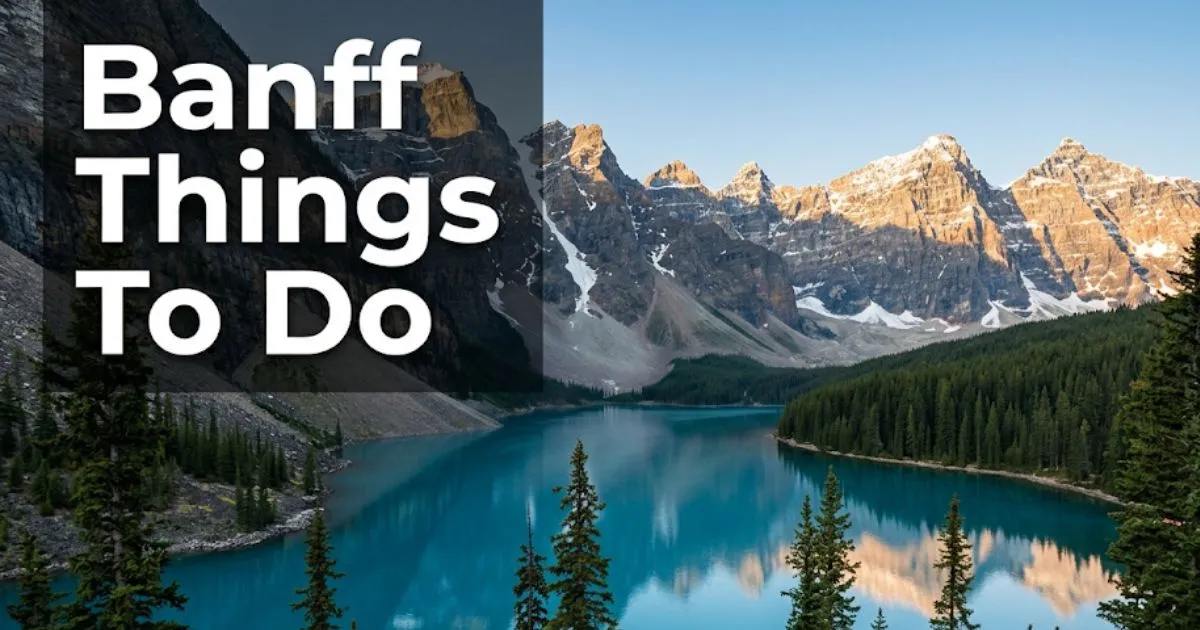
Moraine Lake is the most photographed lake in Canada. Getting there in 2026 requires a mandatory Parks Canada shuttle reservation, not a personal vehicle.
Since the Moraine Lake Road was closed to private vehicles during peak season starting in 2022, the shuttle booking system through Parks Canada has become the only reliable way to access the lake. Shuttles depart from Lake Louise Ski Resort and Banff townsite (via the Lake Connector route).
How to book the Moraine Lake shuttle in 2026:
- Create a Parks Canada account at reservation.pc.gc.ca well before your trip
- Shuttle reservations open months in advance and sell out within hours of release
- Set a calendar reminder for the exact opening date of the reservation window
- Choose the morning shuttle departure time (the 7 to 9 a.m. window gives the best light and thinner crowds)
- Bring your confirmation on your phone or printed, alongside your national park entry permit
- Allow 3 to 4 hours at the lake for a full loop hike to the Rockpile viewpoint and along the lakeshore
Budget travelers should know the shuttle ticket adds a cost beyond the park permit. Verify current pricing directly with Parks Canada, as fees adjust annually.
Insider Tip:
- The Rockpile viewpoint above the Valley of the Ten Peaks is the classic composition point. Most visitors go there first and leave. Continue along the lakeshore trail past the canoe rental dock for a quieter experience.
- Photographers should book the first morning shuttle departure. The lake’s famous turquoise color photographs best in direct morning light before midday shadow fills the valley.
Key Takeaway: Book the Moraine Lake shuttle the moment reservations open. This single step determines whether you see Moraine Lake or spend a day rerouting your itinerary.
Lake Louise Things To Do
Lake Louise offers the single most condensed collection of iconic Banff experiences in one location: the famous lake, the Plain of Six Glaciers hike, the Fairmont Chateau Lake Louise, and Bow Valley viewpoints.
The lake itself is accessible by car, with paid parking at the Lake Louise parking lot. Arrival before 7 a.m. in peak summer guarantees a spot. After 9 a.m. on summer weekends, the lot fills completely.
Activities based at Lake Louise:
- Lakeshore walk (3.5 km round-trip, flat, suitable for all mobility levels)
- Plain of Six Glaciers Trail (14 km round-trip, moderate, teahouse reward)
- Lake Agnes Trail and Teahouse (7.4 km round-trip, moderate, 400m gain)
- Beehive Summit above Lake Agnes (additional 1.5 km, strenuous, spectacular ridge views)
- Canoe rental on Lake Louise (from the boathouse at the lake’s eastern end, approximately CAD $90 to $110 per hour for a two-person canoe; verify current rates)
- Fairmont Chateau Lake Louise afternoon tea (advance reservation required; one of the Canadian Rockies’ most celebrated hotel experiences)
Couples should note: canoe rental on Lake Louise at sunrise is one of the genuinely romantic experiences in Canadian travel. The Fairmont afternoon tea is priced for a splurge occasion, not a daily budget.
According to Banff Lake Louise Tourism, Lake Louise Village has grocery stores, a gas station, and public washroom facilities. This makes it the most practical base for multi-day hikers in the Lake Louise zone.
Johnston Canyon Banff
Johnston Canyon is Banff National Park’s most accessible significant natural attraction, and one of the few experiences that genuinely works for every traveler profile.
The canyon trail follows a series of suspended catwalks bolted into limestone cliff faces above Johnston Creek. Lower Falls (2.7 km round-trip) and Upper Falls (5.6 km round-trip) are the primary destinations.
For families with children: the lower falls route is manageable for children as young as 4 or 5 with adult supervision on the catwalks. Strollers are not practical on the boardwalk sections. Baby carriers work well.
For seniors and accessibility travelers: the lower falls trail is the most achievable of Banff’s major attraction hikes. Surface quality is good. Railing systems are present. The upper falls route involves more sustained gradient.
Timing matters significantly here. The canyon is busiest between 10 a.m. and 3 p.m. daily in peak summer. Starting by 7:30 a.m. or arriving after 4 p.m. gives a genuinely different experience.
Winter ice walk: Between December and February, Johnston Canyon’s waterfalls freeze into dramatic ice formations. Guided ice walks operate from Johnston Canyon Resort. This is one of Banff’s least-crowded and most underrated winter experiences.
Insider Tip:
- Continue 3 km past the Upper Falls on the Ink Pots trail to reach seven natural blue-green mineral springs. Most canyon visitors stop at the Upper Falls. The Ink Pots, which bubble constantly through ice and snow in winter, see a fraction of the foot traffic.
Banff Gondola
The Banff Gondola on Sulphur Mountain rises to 7,486 feet (2,281 meters) above sea level in under 8 minutes, delivering 360-degree views of six mountain ranges.
At the summit, a 1-kilometer interpretive boardwalk links the gondola terminal to the original Sulphur Mountain weather observatory, a National Historic Site of Canada. The boardwalk is paved and accessible for most mobility levels.
Tickets run approximately CAD $55 to $75 per adult as of recent seasons. Booking online in advance avoids the ticketing line. Verify current pricing at the Banff Gondola website before visiting.
Budget travelers should weigh cost against the alternative: the Sulphur Mountain hiking trail climbs 655 meters over 5.5 km to the same summit, and the gondola ride down is included free with the hiking trail summit arrival. This is one of Banff’s genuinely useful cost-saving insider moves.
Local alternative: Most visitors ride the gondola and walk the boardwalk. Experienced Banff visitors add the Cosmic Ray Station boardwalk extension to Sanson Peak, an additional 700 meters beyond the main observatory. This viewpoint sits above the crowds and delivers the clearest sight lines across Bow Valley.
The gondola experience is most rewarding on clear mornings before 11 a.m. Afternoon cloud buildup obscures summit views on many summer days.
Families with children: The gondola is one of Banff’s best family activities. The ride is short, the summit walkable, and the interpretive displays about mountain ecosystems hold children’s attention better than most natural history content in the park.
Key Takeaway: Hike up Sulphur Mountain and ride the gondola down to access the same summit experience at zero ticket cost, one of Banff’s most useful and underused cost-saving strategies.
Icefields Parkway Drive
The Icefields Parkway, Highway 93 between Lake Louise and Jasper, is the most scenically dramatic single drive in North America. The 143-mile (230 km) route takes 2 to 4 hours nonstop, and a full day to do properly.
Key stops along the parkway from south (Lake Louise) to north (Jasper):
- Bow Lake (43 km from Lake Louise): Glacial lake with direct views of Crowfoot Glacier; short lakeshore trail
- Peyto Lake Viewpoint at Bow Summit (40 km from Lake Louise): The wolf-head-shaped lake photograph requires a 1.2 km walk from the parking lot to the main viewpoint
- Saskatchewan River Crossing (88 km from Lake Louise): The only fuel stop between Lake Louise and Jasper. Fill the tank regardless of gauge reading.
- Mistaya Canyon (92 km from Lake Louise): A dramatic limestone gorge on a 900-meter flat trail from the highway
- Columbia Icefield and Athabasca Glacier (127 km from Lake Louise): The largest icefield in the Rocky Mountains south of Alaska; guided glacier walks and Ice Explorer bus tours are ticketed experiences
- Glacier Skywalk (130 km from Lake Louise): Glass-floored observation platform over a 918-foot (280-meter) canyon cliff
Driving tip: The parkway’s speed limit is 90 km/h with wildlife crossings frequent enough to require constant attention. Elk, bighorn sheep, and bears are common road-edge sightings. Do not stop on the highway. Use designated pullouts only.
According to Parks Canada, both the Ice Explorer glacier walk and the Glacier Skywalk require advance ticket purchases through Pursuit Collections, the licensed operator. Walk-up tickets are often unavailable in peak summer.
Banff Hot Springs
Banff Upper Hot Springs on Mountain Avenue, just above the townsite, is the park’s natural geothermal bathing facility, operating year-round and managed by Parks Canada.
Water temperatures hold between 37°C and 40°C (98°F to 104°F). Admission runs approximately CAD $16 to $20 per adult for a standard session, with towel and swimsuit rentals available for additional fees. Verify current pricing at Parks Canada before visiting.
The hot springs experience is significantly better in three specific conditions: weekday mornings in shoulder season (May and October), during snowfall in winter when steam creates a dramatic atmospheric effect, and at closing time on summer evenings when day crowds have departed.
For budget travelers: this is one of Banff’s few attractions offering a complete and memorable experience under CAD $25 per person.
The overrated reality: In peak summer, the pools can feel less like a restorative alpine experience and more like a crowded public pool. July and August afternoon sessions are the lowest quality time to visit.
The Cave and Basin National Historic Site, lower in the townsite, is where Banff’s hot springs were first discovered in 1883, triggering the establishment of Canada’s national park system. The interpretive center here is excellent. The original bathing cave is no longer accessible for swimming but remains visible. Admission runs approximately CAD $4 to $8. This is the local alternative to the Upper Hot Springs for visitors more interested in history than bathing.
Banff Wildlife Watching
Banff National Park hosts one of the densest wildlife corridors in North America. Grizzly bears, black bears, wolves, elk, moose, bighorn sheep, mountain goats, and coyotes all inhabit the park’s protected corridor.
The best wildlife watching concentrations by location:
- Vermilion Lakes (just west of the townsite on Vermilion Lakes Drive): Wetland ecosystem supporting elk, beavers, and seasonal waterfowl. Dawn and dusk are peak activity windows.
- Bow Valley Parkway (Highway 1A): This parallel route to the Trans-Canada is closed seasonally between 8 p.m. and 8 a.m. to protect wildlife movement. Bighorn sheep and elk are consistent sightings.
- Lake Minnewanka Road: The most reliable location for mule deer and the occasional wolf sighting in the eastern park zone.
Parks Canada wildlife safety requirements are enforced and non-negotiable. Minimum distances are 30 meters from elk and deer, 100 meters from bears and wolves. Wardens issue fines for violations.
The elk rut in September and October is the single most dramatic wildlife event in the Banff calendar. Bull elk move through the townsite itself. Spectacular and genuinely strange to witness. Keep significant distance. Rutting bulls are unpredictable.
Carry Parks Canada-approved bear spray on all hikes. Practice the draw. This is not optional equipment. It is practical safety gear.
Families: The Vermilion Lakes at dawn is the best family wildlife introduction. It is flat, short, and offers reliable animal sightings without technical hiking requirements.
Key Takeaway: Drive the Bow Valley Parkway at dawn or dusk for wildlife sightings without the Trans-Canada’s truck traffic. Most visitors skip it entirely and miss the park’s best wildlife corridor.
Banff Townsite
Banff townsite is not merely the park’s service hub. It is a legitimate destination in its own right, with distinct dining, cultural institutions, and walkable neighborhoods.
The townsite divides roughly into two commercial zones: Banff Avenue, the primary tourist strip with souvenir shops, chain restaurants, and high-volume foot traffic; and Bear Street, one block west, where local dining and independent retail concentrate.
Bear Street dining worth knowing:
- Juniper Bistro (at the Juniper Hotel, slightly outside the central strip): Mountain-view dining with a menu sourced toward local Alberta producers. The best dinner view in the townsite zone.
- Tooloulou’s: Consistently praised for Cajun-inspired cooking in an unexpected location. Reliable and reasonably priced by Banff standards.
- The Bison Restaurant: Farm-to-table with a strong game meat focus, located on Bear Street. One of the better dinners in the park.
The Whyte Museum of the Canadian Rockies on Bear Street covers the human history of the Rockies with genuinely strong photography and mountaineering collections. Admission is modest. Budget approximately 1.5 hours.
The Banff Centre for Arts and Creativity on St. Julien Road hosts concerts, visual arts exhibitions, and cultural events year-round. Check their programming calendar before visiting. Many events are free or modestly priced.
Banff Avenue is overrated as a dining street. The most photographed street in the townsite is where food quality and value both dip relative to Bear Street options. Avoid the chain restaurant stretch on Banff Avenue if dinner quality matters.
Things To Do in Banff With Kids
Banff is a strong family destination for children aged 5 and up. Younger children require specific activity selection.
The best Banff activities for children by age range:
Ages 4 to 7:
- Johnston Canyon lower falls (catwalk adventure, short enough for small legs)
- Banff Gondola (short ride, interpretive displays, accessible summit walk)
- Vermilion Lakes wildlife walk (flat, short, animal sightings)
- Banff Park Museum (Victorian natural history museum in the townsite, genuinely engaging for curious kids)
Ages 8 to 12:
- Lake Louise lakeshore walk and canoe rental
- Tunnel Mountain Trail (short, rewarding, first real peak view)
- Johnston Canyon upper falls with Ink Pots extension
- Bow Lake shoreline walk
Ages 13 and up:
- Ha Ling Peak from Canmore (accessible from Banff, serious first summit)
- Icefields Parkway full-day drive with stops
- Sentinel Pass via Larch Valley in September
Practical logistics for families: The Roam Transit bus system eliminates parking stress at Lake Louise. Kids under a certain age ride free (verify current age threshold with Roam). The Lake Louise Village grocery store at Samson Mall stocks picnic supplies.
Strollers work on: the Vermilion Lakes path, the Lake Louise lakeshore, and the Cave and Basin boardwalk. They do not work on any canyon or mountain trail. Bring a carrier for toddlers on any trail beyond parking lot level.
Banff for Couples
Banff is one of the most naturally compelling romantic destinations in North America. The combination of dramatic alpine scenery, high-quality accommodation, and outdoor adventure creates a setting that earns the description without embellishment.
The genuinely romantic experiences, specifically:
- Canoe rental on Lake Louise at sunrise (book the earliest available window; the lake’s famous turquoise color is best before 10 a.m.; the Fairmont Chateau at the far end frames the scene)
- Fairmont Banff Springs Hotel dinner or afternoon tea (the castle-like structure on Spray Avenue genuinely delivers on its reputation; prix-fixe dinner pricing is premium)
- Stargazing at Vermilion Lakes (the townsite’s low light pollution makes this a legitimate experience; bring a blanket and layers; temperatures drop sharply after sunset year-round)
- Helicopter flight over the Rockies (operated from Canmore by operators like Alpine Helicopters; pricing is substantial but the 20-minute flight over glaciated peaks is categorically different from any other viewpoint experience)
- Snowshoeing to Frozen Lake Louise at night (in winter, Parks Canada permits night snowshoeing on the Lake Louise lakeshore; the reflection of moonlight on ice and snow is extraordinary)
What sounds romantic but underdelivers for couples: The Banff Gondola at peak midday hours. The summit is crowded in summer. Choose early morning or late afternoon. The experience at 7 a.m. and the experience at noon are not comparable.
Accommodation note for couples: The Fairmont Banff Springs Hotel on Spray Avenue sets the standard. Mid-range alternatives like the Juniper Hotel and the Mount Royal Hotel on Banff Avenue offer good value relative to the Fairmont’s pricing.
Key Takeaway: Book Lake Louise canoe rental for the first morning light window. This single experience defines Banff for most couples who do it, and sells out quickly.
Free Things To Do in Banff
Free things to do in Banff National Park are extensive once the park entry permit is paid. Most hiking, wildlife watching, scenic drives, and lakeshore access cost nothing beyond the permit.
Genuinely free experiences (with a valid park permit):
- All front-country hiking trails (Tunnel Mountain, Johnston Canyon, Plain of Six Glaciers, Peyto Lake, Bow Lake, Vermilion Lakes, Hoodoos Trail)
- Wildlife watching on Vermilion Lakes Drive and Bow Valley Parkway
- Icefields Parkway driving (fuel and permit are the only costs)
- Lake Louise lakeshore walk
- Moraine Lake lakeshore walk (with shuttle ticket; shuttle has a fee but is separate from the lake access itself)
- Swimming at Two Jack Lake and Johnson Lake in summer (no additional fee)
- Banff Centre for Arts and Creativity free outdoor programming (check seasonal calendar)
- Cave and Basin National Historic Site exterior grounds
Budget traveler reality check: The park entry permit is the single unavoidable cost. As of recent Parks Canada pricing, daily vehicle permits run approximately CAD $10 to $22 and annual Discovery Passes approximately CAD $75 to $145 for a family of up to 7 people in one vehicle. Verify current pricing at pc.gc.ca. For multiple-day visits, the Discovery Pass pays for itself in two to three days.
Where budget travelers should not cut costs: Don’t skip the Banff Gondola if fitness limits the 5.5 km hike up Sulphur Mountain. Don’t skip Johnston Canyon to save time. These deliver value that justifies their modest costs or hiking investment.
Banff Day Trips
The best day trips near Banff extend the Canadian Rockies experience into neighboring parks and towns.
Top day trips from Banff townsite:
Canmore (25 minutes east on Trans-Canada Highway): The closest town outside the park boundary. Canmore has better value accommodation and dining than Banff townsite. Ha Ling Peak is the signature hike: 6 km, 730m gain, one of the most rewarding half-day summits accessible from this region. Grassi Lakes (a 30-minute walk to twin turquoise lakes) is a lower-effort Canmore alternative worth knowing.
Jasper National Park (3.5 hours north on Icefields Parkway): A full day drive the parkway north to Jasper townsite, stopping at Columbia Icefield, Athabasca Falls, and Maligne Canyon. Jasper is less crowded than Banff in peak summer. Maligne Lake, 48 km east of Jasper townsite, hosts the famous Spirit Island boat cruise, which requires advance booking through Maligne Lake Boat Tours.
Yoho National Park (1 hour west on Trans-Canada Highway): Just across the British Columbia border. Emerald Lake in Yoho offers a quieter Moraine Lake analog with a scenic 5.2 km lakeshore loop. Takakkaw Falls, one of Canada’s highest waterfalls, is a 10-minute walk from its parking area and genuinely dramatic.
Kootenay National Park (1.5 hours southwest): Paint Pots (natural ochre springs) and Marble Canyon are short, accessible stops on Highway 93 South.
According to Travel Alberta, the Icefields Parkway, Yoho, and Kootenay combination can be covered in a 3-day loop from Banff returning via the Trans-Canada.
Banff Itinerary 2026
A 3-day Banff itinerary for 2026 should front-load the shuttle-required and advance-booked experiences.
Day 1: Lake Louise and Moraine Lake
- Depart Banff townsite by 6:30 a.m. for Lake Louise parking (or take the 7 a.m. Roam Transit)
- Walk the Lake Louise lakeshore before crowds arrive (7 to 8 a.m. window is the quietest)
- Begin Plain of Six Glaciers Trail from the lake’s far western end (allow 4 to 5 hours including teahouse stop)
- Return to Banff for lunch on Bear Street
- Take the 3 p.m. Moraine Lake shuttle (if morning shuttle unavailable; afternoon light still works)
- Rockpile viewpoint and lakeshore loop at Moraine Lake (allow 1.5 hours)
- Return to townsite; dinner at The Bison Restaurant
Day 2: Johnston Canyon, Icefields Parkway North Section, Gondola
- Leave by 7:30 a.m. for Johnston Canyon parking before the main crowd wave
- Walk to Ink Pots beyond the Upper Falls (allow 3.5 hours round-trip)
- Drive north on Icefields Parkway to Bow Lake and Peyto Lake viewpoints (2 hours driving and stops)
- Return south to Banff by 4 p.m.
- Banff Gondola at 5 p.m. for late afternoon summit light (pre-book tickets online)
- Vermilion Lakes at sunset for wildlife and mountain reflections
Day 3: Banff Townsite, Sulphur Mountain Hike, Hot Springs
- Whyte Museum of the Canadian Rockies (9 a.m. open, allow 1.5 hours)
- Sulphur Mountain hiking trail up from Banff Avenue trailhead (2 to 3 hours up)
- Ride gondola down from summit (free with trail arrival; present at upper terminal)
- Late afternoon: Banff Upper Hot Springs (arrive 3 p.m. for post-lunch-crowd quiet)
- Final dinner: Juniper Bistro for mountain views and Alberta-sourced menu
Budget note: This itinerary is achievable at mid-range costs except for the gondola ticket and hot springs admission. Meals on Bear Street run approximately CAD $30 to $55 per person for dinner. Verify all current prices directly with each operator.
Key Takeaway: Build your Banff itinerary around shuttle booking windows and crowd timing. The order of your activities matters more in Banff than in almost any other park.
Safety and Practical Warnings for Banff National Park
Banff’s dramatic terrain, wildlife density, and altitude create a specific set of safety realities that tourism content routinely underplays.
Key safety and practical facts every visitor should know:
- Altitude adjustment: Banff townsite sits at 4,537 feet (1,383 meters). Unacclimatized visitors from low-elevation locations commonly experience fatigue, headaches, and reduced endurance on day one. Reduce planned hiking intensity on your first day.
- Bear spray is essential, not optional: Carry Parks Canada-approved bear spray on all trails. Practice the draw before heading out. It must be accessible, not buried in a pack.
- Wildlife distance enforcement: Parks Canada wardens actively enforce the 30-meter minimum (elk, deer) and 100-meter minimum (bears, wolves). Fines are issued. Do not approach any wildlife for photos.
- Mountain weather: Summer afternoon thunderstorms are frequent. Begin hikes early and plan to be below treeline by early afternoon on any exposed summit route.
- Icefields Parkway fuel: Saskatchewan River Crossing is the only fuel station between Lake Louise and Jasper, approximately 100 km from each. Fill the tank at Lake Louise Village before driving north.
- Limited cell service: Cell coverage drops completely on most of the Icefields Parkway and on backcountry trails. Download offline maps (Maps.me or Gaia GPS) before leaving the townsite.
- Hypothermia risk: Mountain temperatures drop sharply after sunset year-round. Bring insulating layers even on warm summer days. Rain gear is essential.
In a medical emergency, dial 911. Parks Canada emergency wardens can be reached through the Banff dispatch center. Cell service limitations mean satellite communication devices are advisable for backcountry travelers.
Frequently Asked Questions About Banff Things To Do
What are the best things to do in Banff for first-time visitors?
First-time visitors to Banff should prioritize Moraine Lake, Lake Louise, Johnston Canyon, and the Banff Gondola on Sulphur Mountain.
These four experiences deliver the Canadian Rockies’ most iconic and distinct scenery within a manageable 2 to 3 day itinerary.
Book the Moraine Lake shuttle as far in advance as possible, as it sells out weeks ahead during peak season.
Do you need to book a shuttle to visit Moraine Lake?
Yes, during peak season private vehicles cannot access Moraine Lake Road. A Parks Canada shuttle reservation is required.
Shuttles depart from Lake Louise Ski Resort and are booked through the Parks Canada reservation system at reservation.pc.gc.ca.
Reservations open months before the summer season and sell out within hours of the booking window opening. Set a reminder for the exact opening date.
What is the best time of year to visit Banff National Park?
The best time to visit Banff is late June through early September for full trail access, and late September to mid-October for golden larch season with thinner crowds.
July and August deliver the widest trail access but the most intense crowding at Moraine Lake, Lake Louise, and Johnston Canyon.
Late September is widely considered by experienced Banff visitors to be the single best week of the year, combining larch color, elk rut activity, and dramatically reduced visitor numbers compared to peak summer.
Is Banff worth visiting in winter?
Banff in winter is a genuinely strong experience, particularly for skiers, snowshoers, and ice walkers. It is not the same park as summer Banff.
The three major ski resorts (Mount Norquay, Sunshine Village, and Lake Louise Ski Resort) operate from approximately November through May. Johnston Canyon ice walks run December through February.
Accommodation rates in winter are significantly lower than summer rates, making winter the budget-preferred season for the same quality hotels.
How much does it cost to enter Banff National Park?
Banff National Park requires a Parks Canada vehicle entry permit. Daily permits run approximately CAD $10 to $22 per vehicle as of recent seasons.
The Parks Canada Discovery Pass covers unlimited entry to all national parks for one year and runs approximately CAD $75 to $145 for a family or group of up to 7 people in one vehicle.
For visits of 3 or more days, the Discovery Pass provides better value than daily permits. Verify current pricing at pc.gc.ca before purchasing.
What can you do in Banff for free?
With a valid park entry permit, the majority of Banff’s experiences are free. All front-country hiking trails, wildlife watching, scenic drives, and lakeshore access cost nothing beyond the permit itself.
Vermilion Lakes wildlife walks, the Bow Valley Parkway, swimming at Two Jack Lake, and the Hoodoos Trail are all free with permit admission.
The Banff Centre for Arts and Creativity also hosts free outdoor programming seasonally. Check their current events calendar before visiting.
Plan Your Banff Trip Now
The most important step in planning any Banff trip is booking the Moraine Lake shuttle. Do it first, before accommodation, before flights. That single reservation determines more about your trip quality than any other decision.
From there, build your itinerary around early morning starts and a realistic assessment of your hiking fitness. Banff rewards preparation at every level.
Travel conditions, Parks Canada permit fees, shuttle availability, and seasonal road access change from year to year. Verify all logistics directly at pc.gc.ca and at Banff Lake Louise Tourism’s official site before departure. The park is worth every hour of advance planning it requires.