Things to Do in Mykonos: The 2026 Insider Guide

Mykonos delivers a genuinely rare combination: ancient archaeological drama, Cycladic architectural beauty, and a legitimate nightlife scene in one compact island. But the things to do in Mykonos that are actually worth your time look quite different from the Instagram version most visitors plan around.
The island covers roughly 85 square kilometers, but the concentration of experiences is dense. The Greek National Tourism Organization identifies Mykonos as one of Greece’s highest-demand destinations, with visitor arrivals consistently exceeding 1 million annually across the summer season.
This guide covers every layer of the island: the old town neighborhoods, the beaches sorted by traveler type, the one day trip that changes how you understand the Aegean, honest dining across budget levels, and the seasonal reality that most guides bury.
Things to Do in Mykonos: What You Actually Need to Know First
Mykonos rewards travelers who understand what it actually is before they arrive. It is a premium, party-forward, architecturally extraordinary island in the Cyclades that operates at a very high cost from late June through August.
The island is built around two distinct identities. Mykonos Town (called Chora) is a medieval Cycladic maze of whitewashed alleys, working churches, and boutique restaurants. The beach zones operate on a separate logic entirely, from organized beach club culture at Paradise Beach to quieter local coves in the island’s north.
Getting this distinction clear before you plan matters. Travelers who spend all their time at beach clubs miss Chora entirely. Those who skip the beaches miss the clearest Aegean water in the Cyclades.
The island is not large. You can reach any point from Mykonos Town in under 30 minutes by bus or taxi.
Insider Tip:
- Most first-timers stay in Mykonos Town. That is correct. But staying near the Windmills area or the Matogianni Street corridor puts you within walking distance of 80% of the old town experience.
- Do not plan Delos as an afterthought. Book the ferry before you book your dinners.
- For seniors and travelers with mobility considerations: Chora’s cobblestone streets are extremely uneven. Comfortable, flat-soled shoes are not optional.
Best Things to Do in Mykonos for First-Time Visitors
The best things to do in Mykonos for first-timers combine the Chora old town, one or two beach days, the Delos archaeological day trip, and at least one evening watching sunset from the windmill area.
Paraportiani Church, a whitewashed asymmetric cluster of five chapels fused together over centuries, is the island’s most photographed building. It sits at the edge of Chora near the port waterfront. It requires no admission and no booking. Most visitors spend 20 to 30 minutes here.
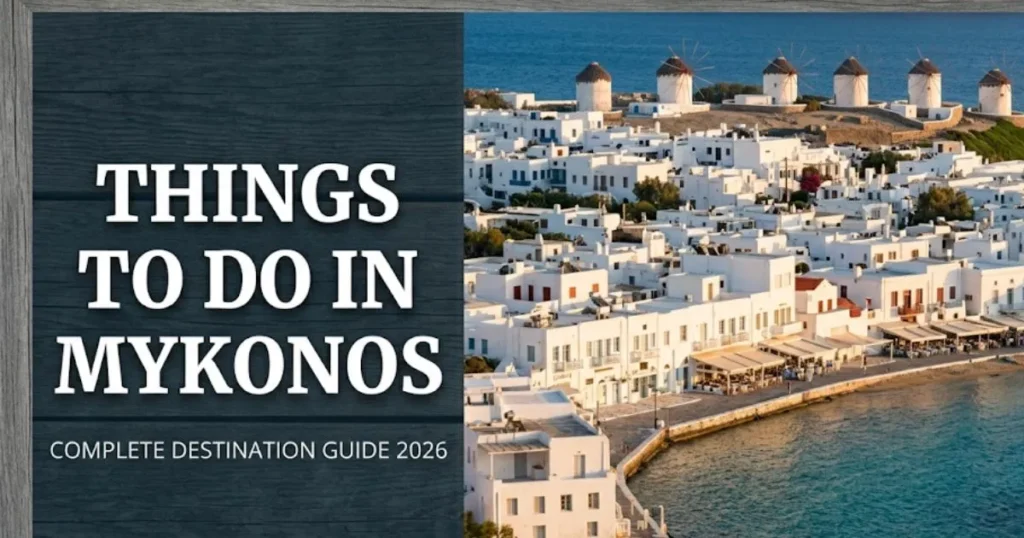
The Kato Myli windmills are a five-minute walk from Paraportiani. Both are best visited in the early morning before 9 a.m. or late afternoon from 5 p.m. onward. Midday visits compete with tour group arrivals from cruise ships.
The Mykonos Archaeology Museum near the old port provides context that makes the Delos day trip significantly richer. Admission runs approximately 4 to 6 euros per adult; verify current pricing before visiting.
| Experience | Best For | Cost Level | Time Needed | Insider Note |
|---|---|---|---|---|
| Paraportiani Church | All profiles | Free | 20 to 30 min | Go before 9 a.m. to avoid crowds |
| Kato Myli Windmills | Couples, photographers | Free | 30 to 45 min | Sunset is prime; 5 p.m. onward |
| Mykonos Archaeology Museum | History travelers, Delos-bound visitors | Low (approx. 4 to 6 euros) | 45 to 60 min | Visit before Delos for context |
| Delos day trip | History travelers, couples, all profiles | Moderate (ferry plus entry) | Full day | Book ferry in advance |
| Chora wandering | All profiles | Free | 2 to 3 hours | Get lost intentionally. Streets have no map logic. |
Mykonos Town Things to Do: Chora Neighborhood by Neighborhood
Chora is the dense, labyrinthine heart of Mykonos Town, and it divides into distinct zones that function very differently.
Matogianni Street is the island’s central commercial corridor. It runs through the middle of Chora with boutiques, jewelry shops, and restaurants. It is the most tourist-dense street and genuinely warranted: the architecture alone justifies the walk.
Alefkandra, the area known to visitors as Little Venice, sits on the southwest waterfront edge of Chora. The buildings here were originally built by sea captains in the 17th and 18th centuries, with balconies extending directly over the Aegean.
The Kastro neighborhood sits above Alefkandra. It is the oldest section of Chora and noticeably quieter than the main commercial streets. Walking through the Kastro in the morning, before the cruise ship passengers arrive by 10 a.m., is the closest thing Mykonos offers to a genuinely local morning.
Taxi Square (Manto Mavrogenous Square) is the effective geographic center of Chora and serves as the main meeting and orientation point. Every neighborhood is reachable within a 10-minute walk from here.
Insider Tip:
- Chora has no grid logic. Getting lost is not a problem. It is the point.
- For families with young children: Matogianni Street has too many narrow passages and motorbike traffic to be stroller-friendly. The broader waterfront promenade near the new port is far more navigable.
- For solo travelers: Chora is exceptionally safe to walk alone at any hour. The streets are always populated during tourist season.
Best Beaches in Mykonos: Which One Is Right for You
Mykonos has more than 30 beaches, and they serve completely different purposes. Choosing the right one by traveler type makes a significant practical difference.
Psarou Beach on the southwest coast is the island’s most glamorous and most expensive beach. Sunbed rentals here are among the priciest on the island. It attracts a yacht-anchoring, luxury crowd and delivers on that experience.
Agios Sostis Beach on the north coast is the direct opposite. It has no organized beach club infrastructure, no sunbed rentals, and no road-facing commercial development. Locals use it. The sand is clean, the water is clear, and you bring your own towel and supplies.
Paradise Beach and Super Paradise Beach on the south coast are the island’s famous party beaches. They are genuinely fun during the day for groups and nightlife travelers. They are genuinely overwhelming by August, when they are packed to capacity.
Elia Beach is the longest beach on the island and significantly more relaxed than Paradise or Super Paradise. It offers both organized and unorganized sections, making it workable for multiple budget levels.
| Beach | Vibe | Cost Level | Best For | Insider Note |
|---|---|---|---|---|
| Psarou | Luxury, glamorous | Very high | Couples, luxury travelers | Reserve sunbeds in advance or arrive by 9 a.m. |
| Agios Sostis | Local, undeveloped | Free | Budget travelers, locals, families | No shade, no facilities. Bring everything. |
| Paradise | Party, high-energy | Moderate to high | Groups, nightlife travelers | Avoid in August if crowds aren’t your purpose |
| Super Paradise | LGBTQ-friendly, party | Moderate to high | LGBTQ travelers, groups | Smaller and more intimate than Paradise |
| Elia | Relaxed, mixed | Low to moderate | Couples, families, budget travelers | Best combination of access and calm |
| Panormos | Quiet, windy | Free to low | Budget travelers, nature-focused | North coast. Meltemi winds can be strong here. |
Seniors and accessibility travelers: Beach access on Mykonos is generally via sandy paths or steps. Elia Beach has the most accessible approach among organized beaches. Verify specific accessibility features directly with beach club operators before visiting.
Mykonos Beach Clubs: What They Cost and What to Expect
Mykonos beach clubs are a genuine and defining experience, but their cost structure surprises most first-time visitors. Understanding the pricing model before you arrive matters.
Nammos at Psarou Beach is arguably the most famous beach club in Greece. Sunbed reservations here carry a minimum spend requirement, not a fixed cover fee. That minimum spend runs into the hundreds of euros per couple during peak season. Nammos earns its reputation for service quality. It does not earn it for value.
Scorpios Mykonos at Paraga Beach operates differently. It built its brand on a late-afternoon music and dance culture, drawing visitors who come more for the atmosphere than the sunbeds. Scorpios generally does not offer reserved beach access the same way Nammos does. Verify the current reservation policy before visiting, as it changes annually.
Jackie O Beach at Super Paradise is smaller and carries a distinctly welcoming atmosphere for LGBTQ travelers. Cover or minimum spend policies apply during peak season; check current terms directly.
To book beach club access effectively:
- Identify which beach club matches your budget tier and vibe preference.
- Check the club’s official reservation page in March or April for summer dates. Psarou and Nammos fill up months in advance for July and August.
- Confirm minimum spend requirements versus fixed cover fees before booking.
- Note cancellation policies. Weather disruptions do occur.
- Arrive within 30 minutes of your reserved time. Late arrivals in peak season frequently lose their reserved position.
Budget travelers: Beach club sunbed minimums are not a budget travel activity. Agios Sostis, Fokos, and Panormos beaches on the north coast deliver genuine Aegean beach experiences at zero cost.
Key Takeaway: The Delos archaeological site, Agios Sostis Beach, and Chora’s morning streets are the three experiences that consistently overdeliver relative to cost on Mykonos. Beach clubs consistently underdeliver for anyone not prepared for their price structure.
Mykonos Nightlife: Where Locals and Visitors Actually Go
Mykonos nightlife is legitimate and varied, but the tourist and local circuits operate in parallel and rarely intersect. Knowing which is which changes your evening completely.
Cavo Paradiso at Paradise Beach is the island’s most internationally known club. It has hosted headline DJs for decades. It opens late, peaks after 2 a.m., and operates at full international festival scale. Tickets for big DJ nights sell out and require advance purchase.
The bars along Enoplon Dynameon Street in Chora near Little Venice represent a more accessible and genuinely Mykonian evening scene. These bars serve cocktails to a mixed tourist and local crowd, with balcony seating facing the Aegean. The atmosphere is social rather than club-oriented.
For an evening that feels less engineered for tourists, the small bars and tavernas around Ano Mera village (30 minutes by bus from Chora) attract locals from the island’s working population who live year-round in Mykonos. These are not nightclubs. They are the kind of relaxed, unhurried evening that most visitors never experience.
For couples: The Enoplon Dynameon Street cocktail bar strip at sunset is the most romantic evening start on the island. Reserve a balcony table in advance during July and August.
For solo travelers: Cavo Paradiso is welcoming to solo visitors. The scale of the crowd makes meeting other travelers straightforward.
Insider Tip:
- Mykonos clubs do not fill until midnight at the earliest. Arriving before 1 a.m. at Cavo Paradiso feels premature.
- The evenings in June and September are significantly more pleasant for dining al fresco than August. Lower humidity, less wind, more available tables.
Little Venice Mykonos: Sunset, Drinks, and What to Skip
Little Venice, officially the Alefkandra neighborhood, is one of the most genuinely beautiful settings in the Cyclades. The 17th-century sea captain houses with their wooden balconies directly over the water create an atmosphere that earns its reputation.
The key practical reality: sunset here is popular to the point of managed chaos in July and August. Tables at the waterfront bars fill by 6 p.m. for an 8 p.m. sunset in peak season.
Katerina’s Bar and Caprice Bar are the two most established Little Venice cocktail bars. Both have balcony seating directly over the water. Both require either a reservation or an early arrival during peak season.
The overhyped version of Little Venice is a margarita at a packed standing-room waterfront bar with tour groups pressing against you. The genuine version is a table on a wooden balcony at 5:30 p.m. in late September, watching the light change on the Aegean.
For the genuine version:
- Arrive at Alefkandra between 5 and 5:30 p.m. in shoulder season (May, June, September).
- In July and August, call the bar directly in the morning to ask about table reservation options.
- Order local wine or Mythos beer. Cocktail pricing at these bars runs from moderate to high.
- Stay through the 30 minutes after official sunset. The post-sunset light on the water is frequently better than the sunset itself.
For seniors: The path from Chora to Alefkandra is a short and relatively flat coastal walk, but the cobblestones are irregular. Wear flat-soled shoes and allow extra time.
Key Takeaway: Book your Delos ferry the moment you confirm your Mykonos travel dates. The official ferry runs from the Old Port of Mykonos and is the only public access to the site. In July and August it fills weeks in advance.
Mykonos Windmills: The Kato Myli Experience
The Kato Myli windmills on the hill above Alefkandra are the most iconic visual symbol of Mykonos, and they are genuinely worth the visit. They are also frequently reduced to a quick photo stop when they deserve more context.
The seven windmills date to the 16th century and were built by Venetian occupiers to grind wheat from the Cyclades. The Aegean Maritime Museum in Chora, located on Enoplon Dynameon Street, holds exhibits that explain the windmill system and the island’s broader seafaring history. The museum runs a small admission fee; verify current pricing before visiting.
The windmills themselves are not open for interior access. The value is the vantage point over Alefkandra and the Aegean below, and the light quality in the late afternoon.
For photographers: The best light on the windmills falls between 5 p.m. and 7 p.m. in summer, when the sun is low on the western horizon. The morning offers clean, cool light without crowds.
For budget travelers: The windmill viewpoint is free. The Aegean Maritime Museum is one of the most cost-effective cultural stops on the island. Together they make a complete two-hour cultural morning at minimal expense.
Insider Tip:
- The overlook just below the windmills faces southwest. Position yourself with the windmills behind you for a sunset photograph that captures both the mills and the golden water below.
- Skip the windmill area between 10 a.m. and 4 p.m. in peak season. Cruise ship tour groups make it genuinely unpleasant.
- For families with children: The windmill hill is a short climb, manageable for children aged 5 and up. The open viewpoint makes for an impressive first sight of the Aegean for kids.
Delos Day Trip from Mykonos: The Island’s Most Underrated Experience
A Delos day trip from Mykonos is one of the most historically significant experiences available anywhere in the Aegean and is consistently skipped by visitors who treat Mykonos as purely a beach destination. That is a genuine mistake.
Delos is a UNESCO World Heritage Site and one of the most important archaeological sites in all of Greece. The island was considered the birthplace of Apollo in Greek mythology and functioned as the commercial and religious center of the Aegean for centuries.
The ferry from the Old Port of Mykonos runs seasonally, typically from May through October. The crossing takes approximately 30 minutes. Round-trip ferry fare plus site entry combined runs approximately 20 to 30 euros per person based on recent pricing. Verify exact costs directly with the ferry operator and the site before visiting.
There is no accommodation on Delos. You arrive, explore, and return on the same ferry. Most visitors allocate 3 to 4 hours on the site.
Key highlights within the Delos archaeological site:
- The Terrace of the Lions: A row of archaic marble lion sculptures facing the Sacred Lake, among the most photographed ancient artifacts in the Mediterranean.
- The House of Dionysus: A preserved Roman-era house with an extraordinary mosaic floor depicting Dionysus riding a panther.
- The Mount Kynthos summit: A 30 to 40-minute climb from the main site. The view of the surrounding Cyclades from the top is genuinely rewarding.
- The Delos Archaeological Museum within the site houses statuary and artifacts found on the island.
For history travelers: Delos without a guide misses significant context. Multiple guided tour operators based in Mykonos offer half-day Delos excursions with licensed archaeologist guides. Booking in advance is strongly recommended for July and August.
For seniors and accessibility travelers: The Delos site is extensive and entirely outdoors. The terrain is uneven ancient stone paving. The Mount Kynthos climb is steep. Sun exposure is intense. Bring substantial sun protection, water, and comfortable footwear.
Ano Mera Mykonos: The Village Most Visitors Never See
Ano Mera is Mykonos’s only inland village and the most authentic inhabited settlement on the island. Most day-tripping visitors and beach club regulars never see it. That makes it worth your time.
The village sits roughly 8 kilometers east of Mykonos Town, accessible by KTEL bus or taxi. The central square is anchored by the Panagia Tourliani Monastery, a working Greek Orthodox monastery founded in 1542. The monastery’s interior contains an ornate Baroque-style carved wooden iconostasis that is considered one of the finest on any Cycladic island.
Ano Mera has a small selection of tavernas serving straightforward Greek food at prices notably lower than anything in Chora. Lunch for two at a village taverna runs significantly less than a comparable lunch in Mykonos Town. The food is unremarkable by Chora standards in terms of presentation. The kopanisti cheese, a pungent local Mykonian specialty, is available at Ano Mera’s village shops at honest local prices.
For budget travelers: Ano Mera is the practical alternative to Chora’s premium dining. A full lunch with local wine at a village taverna costs a fraction of a comparable meal on Matogianni Street.
For families with children: The village square is flat, stroller-accessible, and genuinely calm. Children can run freely in the open square. The monastery allows visitors and is family-appropriate; dress codes apply (covered shoulders and knees).
Insider Tip:
- Combine Ano Mera with a visit to nearby Kalafatis Beach and Agios Sostis Beach. Both are accessible without returning to Chora.
- The Panagia Tourliani Monastery observes religious hours. Verify visiting times directly before planning your trip.
Key Takeaway: Ano Mera, Agios Sostis Beach, and the Delos morning ferry together form the best one-day alternative itinerary for travelers who want the real island rather than the tourist loop.
Mykonos Water Sports: What’s Available and Where to Book
Mykonos water sports are concentrated on the south coast beaches and range from basic kayak rentals to full-day sailing and windsurfing instruction.
Windsurfing is particularly well-suited to Mykonos because the Meltemi wind that blows reliably across the Aegean from late June through August creates ideal conditions. Ftelia Beach on the north coast is the island’s primary windsurfing destination, with rental and lesson operators stationed there. Conditions at Ftelia during peak Meltemi can be advanced-level. Beginners should confirm skill-appropriate conditions before booking.
Kalafatis Beach on the east coast hosts several water sports operators offering jet ski rentals, water skiing, wakeboarding, and paddleboard rentals. Equipment rental rates vary by operator; compare pricing at the beach before committing.
Yacht charters from Mykonos harbor range from sunset cruises for groups to full-day Cyclades exploration with a skipper. Prices scale significantly by boat size and duration. A half-day group sailing excursion runs considerably less per person than a private full-day charter. Book reputable operators through the Mykonos Marina or established charter companies with verifiable licensing.
For families with children: Paddleboarding and kayaking at calmer beach conditions (early morning before afternoon Meltemi builds) are accessible for children aged 8 and older. Jet skis and motorized water sports require adult operation.
For solo travelers: Group sailing day trips are one of the most social activities on the island and consistently cited in traveler reports as a good way to meet other visitors. Several operators run shared group charters from the old port.
Safety note: Meltemi wind conditions can change quickly. Water sports operators should be monitoring conditions actively. Do not rent equipment and head out independently without checking current sea state with the operator.
Where to Eat in Mykonos: Honest Dining Guidance Across Budget Levels
Mykonos dining ranges from exceptional and expensive to mediocre and extremely expensive. The positioning matters more than the price tier on this island.
M-eating on Kalogera Street in Chora is consistently cited among the island’s best restaurants for modern Greek cuisine. It is not cheap. A dinner for two with wine runs into the higher range for Mediterranean dining. Reservations are essential from June through September.
Kiki’s Tavern above Agios Sostis Beach is the island’s most famous budget-accessible dining destination and earns the reputation honestly. It serves grilled meat and fish without a menu. You sit at communal tables. Cash only. No reservations. Arrive by 11:30 a.m. or expect a wait. The food quality is high and the atmosphere is genuinely informal.
For mid-range dining in Chora: the smaller tavernas on the streets behind Taxi Square toward the Kastro neighborhood charge less than Matogianni Street and serve equivalent food.
Kopanisti cheese is the local Mykonian specialty, a pungent fermented soft cheese. Try it at a wine bar before dinner rather than as an afterthought. It pairs specifically with Assyrtiko white wine from the Cyclades.
| Restaurant / Option | Location | Price Level | Best For | Note |
|---|---|---|---|---|
| M-eating | Kalogera Street, Chora | High | Couples, food-focused travelers | Reserve weeks in advance in summer |
| Kiki’s Tavern | Agios Sostis Beach | Low to moderate | Budget travelers, groups | Cash only. No reservations. Arrive early. |
| Kastro neighborhood tavernas | Behind Taxi Square, Chora | Moderate | Budget to mid-range | Less visible but equivalent quality to Matogianni |
| Nammos Restaurant | Psarou Beach | Very high | Luxury travelers | Beachfront lunch. The experience, not just the food. |
For families with children: Greek tavernas are universally child-welcoming. The pacing is relaxed and portions are large. The Kastro neighborhood tavernas are the most practical for families who need table space and flexibility.
How to Get Around Mykonos: Transport Options and Honest Tradeoffs
Getting around Mykonos involves a set of genuine tradeoffs that most travel content underrepresents. The taxi situation, specifically, surprises many first-time visitors.
Taxis on Mykonos are limited in number and operate from Taxi Square (Manto Mavrogenous Square) in Chora. During peak season, demand dramatically exceeds supply. Do not rely on taxis as your primary transport in July and August. Waiting times of 30 to 60 minutes are common.
KTEL Mykonos buses operate from two bus stations: the South Station near the waterfront in Chora serving Paradise Beach, Plati Yialos, and the south coast beaches, and the North Station near the Old Port serving Ano Mera, Elia Beach, and the north coast. Fares are low, typically a few euros per ride. Routes are limited to major beach and village destinations. Schedules run seasonally; verify the current timetable before your trip.
ATV and quad bike rentals are the most commonly advertised transport option for exploring the island independently. They are also the most accident-prone. Mykonos roads are narrow, heavily trafficked in summer, and often poorly maintained at edges. Medical evacuations from ATV accidents on Mykonos are documented annually. Rent a small car instead if you need independent mobility. Car rental operators are available at the airport and in Mykonos Town.
Water taxis connect the old port to Plati Yialos and from there to several south coast beaches. They run seasonally and are faster than bus alternatives for beach-hopping on the south coast.
For seniors and accessibility travelers: Accessible ground transport on Mykonos is limited. KTEL buses are not wheelchair-accessible. Taxis are standard sedans. Plan transport logistics before arrival and confirm options directly with accommodation providers.
Best Time to Visit Mykonos: Month-by-Month Guidance
The best time to visit Mykonos is May, June, or September. The worst time is August, despite August being the most popular month.
According to the Greek National Tourism Organization, peak visitor arrivals in the Cyclades concentrate in July and August. This directly translates to maximum prices, minimum availability, and maximum Meltemi wind disruption.
| Month | Weather | Crowds | Cost Level | Best For |
|---|---|---|---|---|
| April | Mild, some wind | Very low | Low | Budget travelers, cultural sites |
| May | Warm, pleasant | Low to moderate | Moderate | All profiles. Best overall value. |
| June | Hot, sunny | Moderate | Moderate to high | Couples, beach travelers, nightlife |
| July | Very hot | Very high | Very high | Nightlife groups. Accept the crowds. |
| August | Very hot, Meltemi wind peak | Absolute peak | Highest of year | Only if nightlife is the primary purpose |
| September | Warm, calming | Moderate | Moderate | Best shoulder season month. All profiles. |
| October | Mild, some closures | Low | Low to moderate | Budget travelers, culture-focused |
| November to March | Cool, many closures | Very low | Low | Not recommended. Limited operations. |
The Meltemi wind blows reliably from the north through much of July and August. It makes the north coast beaches like Ftelia and Panormos choppy and uncomfortable. It creates rough ferry conditions. It can make outdoor dining genuinely difficult. June and September have significantly less Meltemi disruption.
For families with children: May and early June are the best months. Water temperatures are warm enough for swimming, crowds are manageable, and the heat has not yet reached peak intensity.
Key Takeaway: September in Mykonos delivers the same beaches, sunsets, windmills, and Delos ferry at significantly lower prices and with dramatically more available restaurant reservations than July or August.
Mykonos Itinerary: How to Structure 2, 3, or 4 Days
Most visitors to Mykonos spend 3 to 4 nights. That is the right amount of time for a complete experience without repetition. Two days is possible but requires very deliberate prioritization.
2-Day Mykonos Itinerary
Day 1: Chora, Culture, and Sunset
- Morning: Walk Matogianni Street and surrounding Chora lanes before 9 a.m. No crowds. Best light.
- Visit Paraportiani Church and the Kato Myli windmills by 9 to 10 a.m. before cruise ship groups arrive.
- Mykonos Archaeology Museum: 45 minutes. Sets up the Delos context.
- Lunch at a Kastro neighborhood taverna. Less expensive than Matogianni Street equivalents.
- Afternoon: South coast beach. Elia for the relaxed version. Paradise for the party version. Allow 2 to 3 hours.
- Return to Chora by 5 p.m. Cocktail at Katerina’s or Caprice Bar in Alefkandra with Aegean sunset timing.
- Dinner on Kalogera Street or in the Kastro neighborhood.
Day 2: Delos and the Real Island
- Book the early Delos ferry from the Old Port of Mykonos. Arrive at the port 30 minutes before departure.
- Spend 3 to 4 hours on the Delos site. Include the Terrace of the Lions, House of Dionysus, and the Mount Kynthos climb if fitness allows.
- Return ferry to Mykonos by early afternoon.
- KTEL bus to Ano Mera village (approximately 20 to 25 minutes from South Station).
- Lunch at Ano Mera village taverna. Visit Panagia Tourliani Monastery.
- Continue to Agios Sostis or Kalafatis Beach for late afternoon swimming.
- Return to Chora. Evening in the Enoplon Dynameon Street bar area.
3 to 4-Day Extensions: Add a dedicated beach club day at Psarou or Elia Beach. Add one day for water sports at Ftelia or Kalafatis. Add one evening for a sailing sunset cruise from the Old Port.
Mykonos on a Budget: Where to Save Without Losing the Experience
Mykonos has an earned reputation as one of Greece’s most expensive islands. That reputation is accurate for luxury travelers booking high-season beach clubs and Matogianni Street restaurants. It is survivable but requires strategy for budget travelers.
Free and low-cost activities:
- Walking Chora’s lanes, the Kastro neighborhood, and the waterfront promenade: free.
- Paraportiani Church and the Kato Myli windmill viewpoint: free.
- Agios Sostis, Fokos, and Panormos beaches on the north coast: free.
- Sunset from the windmill hill above Alefkandra: free.
- The Aegean Maritime Museum: low admission, typically 4 to 6 euros per adult.
Where to eat on a budget:
- Kiki’s Tavern at Agios Sostis is the single best food-to-cost ratio on the island.
- Village tavernas in Ano Mera charge genuinely local prices.
- Bakeries and small cafes near the Old Port in Chora serve breakfast for a fraction of hotel breakfast pricing.
- Fresh fruit and local cheese from the small markets behind Matogianni Street is the most affordable and authentic midday option.
Where accommodation costs can be managed: Staying in Mykonos Town during shoulder season (May or September) rather than peak August cuts accommodation rates significantly. Properties in Ano Mera village run considerably less than equivalent quality in Chora.
For budget travelers: The Delos ferry plus site entry is the highest-value single expenditure on the island relative to experience quality. It is worth every euro regardless of budget level.
What to skip if cost is a concern: Beach clubs with minimum spends are not a budget-compatible activity. The Aegean water is equally clear at Agios Sostis for free.
Safety and Practical Warnings for Mykonos Visitors
Mykonos carries specific safety and practical risks that most travel content glosses over.
Key safety and practical facts every visitor should know:
- ATV and quad bike accidents are a recurring visitor risk on Mykonos. Narrow roads, tourist traffic, and unfamiliarity with the terrain create documented injury risk. Rent a small car instead if you need independent mobility across the island.
- Meltemi wind peaks in July and August. Ferry services can be delayed or canceled in strong Meltemi conditions. Build flexibility into your departure plans if traveling in August.
- Sun exposure from June through August is intense. The reflective quality of Mykonos’s whitewashed surfaces intensifies UV exposure. Sunscreen of SPF 50 or higher is practical, not precautionary.
- Cobblestone street falls are a real risk in Chora. Heeled shoes on wet cobblestones after rain or sea spray create genuine slip hazard. Flat, non-slip soles are the correct footwear.
- Pickpocket risk is elevated in the Old Port area during peak season when cruise passengers arrive. Keep valuables secured in the port zone.
- Delos heat exposure is extreme. The site is fully exposed with no shade structures. Visiting Delos in August without a hat, water, and sunscreen is a genuine health risk for vulnerable travelers.
- Water safety: Paradise Beach and Super Paradise Beach have organized swim zones. Always swim within designated areas. Meltemi conditions create choppier surf than the calm-water appearance of sheltered Aegean coves suggests.
For medical emergencies on Mykonos, Mykonos General Hospital is located in Ano Mera. The emergency number in Greece is 112.
Frequently Asked Questions About Things to Do in Mykonos
How many days do you need in Mykonos?
Three to four nights is the ideal duration for Mykonos, covering the old town, two or three beach days, and the Delos day trip.
Two days is workable only if you strictly prioritize and skip either the beach club scene or Delos, not both.
Five or more nights is realistic for travelers who intend to base their entire trip in Mykonos and day trip to other Cyclades islands from there.
What is the best time of year to visit Mykonos?
May, June, and September are the best months to visit Mykonos for a combination of good weather, manageable crowds, and reasonable pricing.
July and August bring peak crowds, peak prices, and peak Meltemi wind, which disrupts ferry travel and makes north coast beaches uncomfortable.
April and October offer genuine savings and empty beaches, but some seasonal businesses operate reduced hours or close entirely.
Is Mykonos expensive?
Mykonos is one of Greece’s most expensive islands, particularly for accommodation and beach club experiences during July and August.
Budget travelers can manage costs effectively by visiting in shoulder season, eating at Ano Mera village tavernas and Kiki’s Tavern, and choosing free beaches like Agios Sostis over organized beach clubs.
The Delos ferry and site entry combined costs approximately 20 to 30 euros per person and represents the best value-to-experience ratio on the island.
What is the best beach in Mykonos?
Agios Sostis on the north coast is the best beach for travelers who want a genuine, undeveloped Aegean swimming experience without sunbed rentals or organized infrastructure.
Psarou is the best beach for luxury and glamour with full beach club service, at a correspondingly high cost.
Elia Beach offers the best balance of space, calm atmosphere, and organized amenities for most general traveler profiles.
Can you do a day trip from Mykonos to Delos?
Yes, Delos is accessible as a day trip from the Old Port of Mykonos via a seasonal ferry service that runs approximately 30 minutes each way.
The ferry operates from roughly May through October; verify the current schedule and book in advance for July and August, when ferries fill quickly.
Plan to spend 3 to 4 hours on the Delos site and return on the same day, as there is no accommodation on Delos.
Is Mykonos good for families with kids?
Mykonos is workable for families with children but is not specifically designed for family travel infrastructure the way that beach resorts on Rhodes or Crete typically are.
The best family experience on Mykonos centers on Ano Mera village, Elia Beach’s calmer organized section, and Chora morning walks in early season when crowds are light.
Families with children under 5 will find the cobblestone streets, beach club culture, and late-night social pacing of Mykonos a genuine logistical challenge.
Plan Your Mykonos Trip with the Right Priorities
Book the Delos ferry before you book your restaurants. That single step separates the visitors who leave Mykonos with a genuinely complete experience from those who spend four days at beach clubs and leave having missed one of the most significant archaeological sites in Europe.
Shoulder season, specifically May, June, and September, is when Mykonos delivers its best version: the same white cube architecture, the same Aegean water, the same windmills at sunset, at meaningfully lower costs and with actual restaurant reservations available.
Travel conditions, ferry schedules, beach club pricing, site entry fees, and seasonal hours change annually. Verify all key logistics directly with operators and the Greek National Tourism Organization at visitgreece.gr before departure. Your trip planning is only as good as the information you verify closest to your travel date.