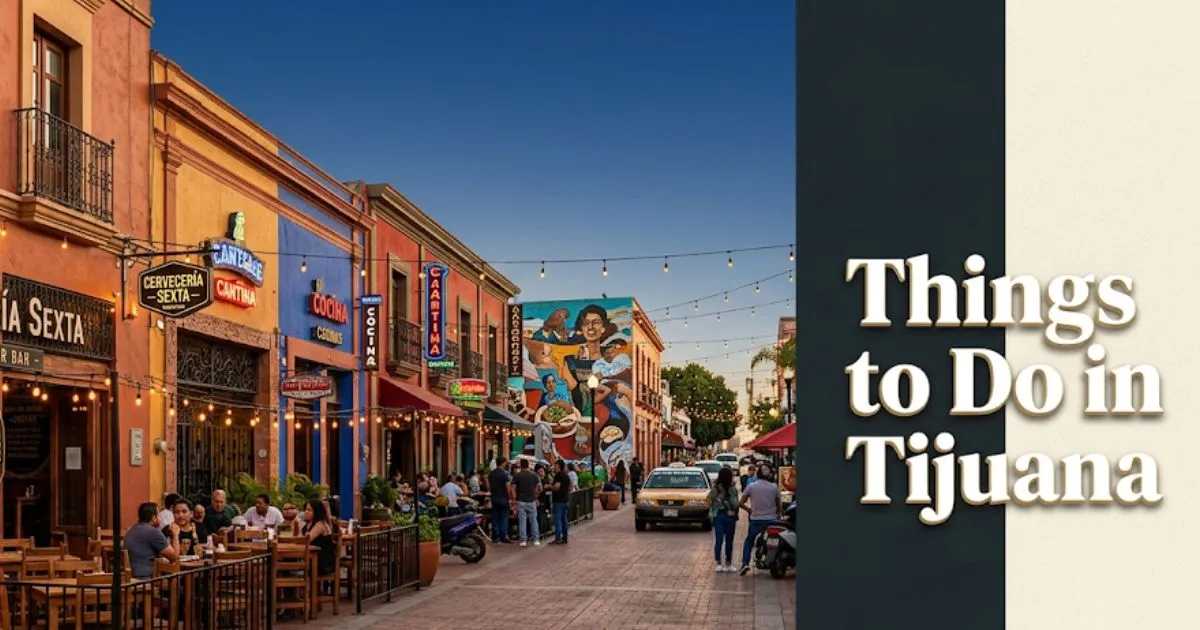
Best Things to Do in Tijuana Mexico: 2026 Travel Guide

The best things to do in Tijuana go far beyond Avenida Revolucion souvenirs. This city delivers a legitimate culinary scene, serious craft beer, world-class street art, and a cultural energy that San Diego cannot match for the price.
Tijuana is home to over 2 million people and one of the most dynamic food cultures on the North American continent. Cotuco, Tijuana’s official tourism bureau, identifies the city as one of Mexico’s fastest-growing gastronomic destinations.
This guide covers the city’s best neighborhoods, top activities, border crossing logistics, honest safety guidance, and a full weekend itinerary. It is built for first-timers and returning visitors alike.
Things to Do in Tijuana: Why This City Earns a Real Visit
Tijuana rewards visitors who engage with it as a full urban destination, not a novelty border town.
The city’s identity has shifted substantially over the past decade. Its culinary movement, Baja Med cuisine, blends Pacific seafood, Asian-immigrant cooking traditions, and Mexican technique into something found nowhere else on the continent.
Its craft beer scene is legitimate. Tijuana now has more craft breweries per capita than most US cities of comparable size.
Street art covers entire building facades across Zona Rio and the Pasaje Rodriguez arts corridor. These are not tourist installations. They are commissioned works from internationally recognized artists.
For budget travelers, the value equation is extraordinary. A full-day experience including a sit-down lunch, craft beers, and street food costs a fraction of the equivalent in San Diego.
Insider Tip:
- Exchange USD to Mexican pesos before or immediately after crossing; rates near the border on the Mexican side are competitive
- Carry small bills. Many street food vendors and market stalls prefer exact change.
- Solo travelers will find Uber extremely reliable throughout Zona Rio and the gastronomic corridor
Things to Do in Tijuana Mexico: Understanding the City’s Neighborhoods
Tijuana’s best experiences are clustered across four distinct zones, and knowing which zone to visit first makes the difference between a great trip and a wasted afternoon.
Avenida Revolucion in the historic center is the tourist corridor. It has curio shops, clubs, and pharmacy storefronts. It is not where Tijuana’s best experiences live, but it is worth one walk-through for context.
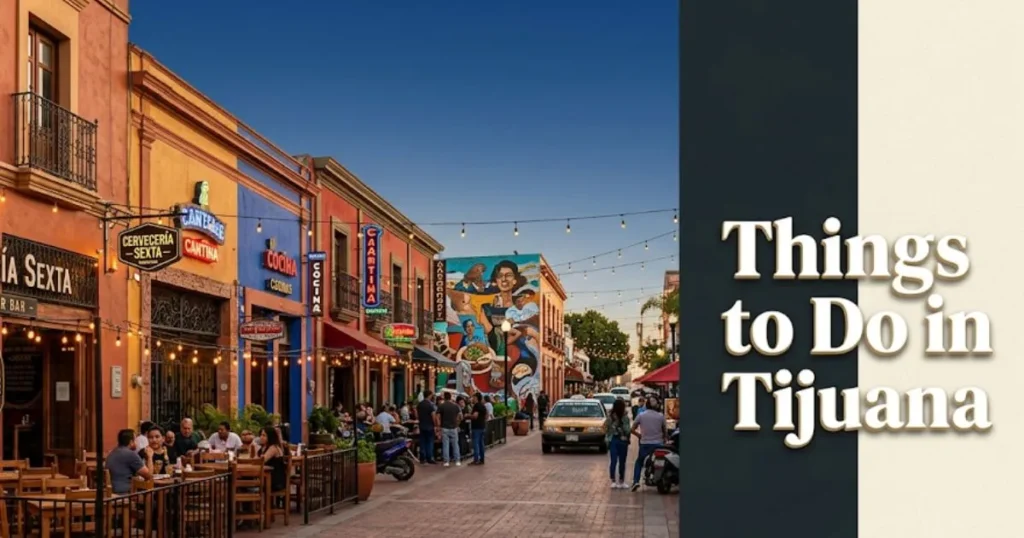
Zona Rio is the city’s modern commercial and cultural district. It holds the best restaurants, CECUT, and most of the city’s upscale hotels.
Calle Sexta (Sixth Street) and the surrounding gastronomic corridor are where serious food travelers should spend most of their time. It is dense with craft beer bars, Baja Med restaurants, and mezcalerías.
Playas de Tijuana is the beach neighborhood, approximately 20 minutes by Uber from the center. It is quiet, residential, and completely unlike the rest of the city in character.
| Neighborhood | Best For | Vibe | Walk-Friendly |
|---|---|---|---|
| Avenida Revolucion | First-time context, shopping | Tourist-facing, commercial | Yes |
| Zona Rio | Culture, upscale dining, CECUT | Modern, urban | Yes in core |
| Calle Sexta corridor | Food, craft beer, mezcal | Local, lively evenings | Yes |
| Playas de Tijuana | Beach, quieter atmosphere | Residential, relaxed | Yes near shore |
Fun Things to Do in Tijuana: Top Experiences Worth Your Time
The most fun things to do in Tijuana are concentrated in its food, beer, art, and street-level culture rather than its formal attractions.
Start with the Pasaje Rodriguez arts corridor, a pedestrian alley between Avenida Revolucion and Avenida Constitucion. Local artists and small vendors occupy stalls and the walls carry rotating murals. It takes 20 minutes to walk slowly and costs nothing to enter.
Mercado Hidalgo is Tijuana’s main public market, located in the Hipodromo neighborhood near Zona Rio. It sells fresh produce, spices, dried chilies, artisan cheeses, and prepared foods. Arrive before noon for the best selection.
For families, Parque Teniente Guerrero in the Centro neighborhood is a green space with a small zoo, a botanical garden, and open lawns. It is one of the few genuinely kid-appropriate outdoor spaces in the city center.
Couples looking for an intimate evening should head to Via Corporativo, a pedestrian dining strip in Zona Rio with wine bars, cocktail-forward restaurants, and a calm atmosphere very different from the louder Avenida Revolucion scene.
Key activities to book or plan in advance:
- Wine tours to Valle de Guadalupe (30 to 45 minutes south) require advance reservation, especially on weekends
- Cooking class experiences in the Calle Sexta corridor book quickly on weekends
- CECUT temporary exhibitions sometimes require timed entry; verify before visiting
Key Takeaway: Tijuana’s real value is in its food corridor and craft beer scene, not Avenida Revolucion. Spend at least 3 hours on Calle Sexta and Via Corporativo before leaving.
Tijuana Food Scene: Where to Eat and What to Order
Tijuana’s food scene is one of the most underestimated on the continent. It extends well beyond tacos, though the tacos are genuinely extraordinary.
Tacos El Franc on Calle Sexta serves carne asada tacos cooked over wood-burning grills. Budget travelers will find a full meal here costs the equivalent of $3 to $6 USD. The line moves fast and street-side eating is part of the experience.
La Querencia in Zona Rio is the restaurant most commonly cited as exemplifying Baja Med cuisine. Chef Miguel Angel Guerrero’s kitchen uses ingredients from the Pacific coast, local farms, and Baja wine country. Budget approximately $30 to $50 USD per person for a full dinner with wine.
The Caesar salad was invented in Tijuana, specifically at what is now the Caesars Hotel on Avenida Revolucion. The tableside preparation is theatrical and the salad itself is decent, though the location skews heavily tourist. For first-timers, it is worth one visit for the historical context.
Mercado Hidalgo for breakfast is the local’s move. The prepared food stalls serve birria, menudo, and fresh-squeezed juices. Expect to spend $5 to $10 USD for a full breakfast.
For couples, the wine-and-tasting-menu format at restaurants along Via Corporativo creates an intimate, genuinely romantic dinner experience at prices that feel absurdly low by San Diego standards.
According to Cotuco, Tijuana’s official tourism and convention bureau, the city’s gastronomic corridor along Calle Sexta now hosts more than 80 distinct food and beverage concepts, making it one of the densest culinary concentrations in northern Mexico.
Avenida Revolucion Tijuana: What It Actually Delivers
Avenida Revolucion is Tijuana’s most famous street and its most misunderstood one. It delivers exactly what it promises: curio shops, pharmacy storefronts, clubs with outdoor DJs, and a concentrated tourist infrastructure.
It is not where Tijuana’s best food, beer, or culture lives. But dismissing it entirely means missing the Pasaje Rodriguez arts alley that cuts through it, the Caesars Hotel with its Caesar salad origin story, and the honest cultural artifact of a border city’s tourist economy.
Walk it once. Spend an hour. Then move east into Zona Rio or north onto Calle Sexta.
For budget travelers, Avenida Revolucion has the city’s most concentrated leather goods, silver jewelry, and handcrafted souvenir shopping. Prices are negotiable. Starting at 50% of the asking price is standard.
For seniors and accessibility travelers, note that the sidewalks on Avenida Revolucion are uneven and crowded. Mobility aids are manageable but the experience is genuinely physically demanding in peak hours.
Insider Tip:
- The Tijuana Arch (El Arco) at the northern end of Avenida Revolucion is the most photographed landmark in the city
- Skip the overpriced souvenir stores immediately adjacent to the arch
- The best artisan leather work is found in shops two blocks east of the main strip, away from the highest-traffic storefronts
Zona Rio Tijuana: The City’s Real Cultural Core
Zona Rio is the neighborhood that experienced visitors return to, and the one most first-timers underestimate. It holds the city’s best cultural infrastructure and most interesting dining concentration.
Centro Cultural Tijuana, universally known as CECUT, is the defining cultural institution of the city. Its spherical Omnimax theater is one of the most recognizable architectural landmarks in northern Mexico. CECUT hosts rotating art exhibitions, the Tijuana Orchestra, film screenings, and permanent collections covering Baja California history. Admission to the grounds is typically low-cost; Omnimax screenings and some exhibitions carry separate admission fees. Verify current pricing before visiting.
El Cubo is the contemporary art gallery within CECUT’s complex. It shows rotating works from Mexican and international artists and is free to enter during standard operating hours.
For shopping, Plaza Rio Tijuana is the city’s main enclosed mall, immediately adjacent to CECUT. It is practical, air-conditioned, and useful for picking up pharmacueticals, electronics, and branded goods at Mexican prices.
Families with children will find CECUT’s children’s programming and outdoor spaces genuinely useful. The grounds are stroller-accessible in the main areas, though some terrain transitions require care.
| Zona Rio Highlights | Cost Range (USD approx.) | Best For | Time to Allow |
|---|---|---|---|
| CECUT grounds and El Cubo | Free to low-cost | Culture, art | 1 to 2 hours |
| Omnimax Theater | $5 to $10 per person | Families, first-timers | 45 to 60 min |
| Via Corporativo dining | $25 to $60 per person | Couples, food travelers | 2 to 3 hours |
| Plaza Rio Tijuana | Free to enter | Families, budget shopping | 1 hour |
Tijuana Craft Beer: The Brewing Scene That Changed the City
Tijuana’s craft beer movement is one of the most significant in Mexico and consistently surprises visitors expecting only mainstream Mexican lagers.
Border Psycho Brewery, located in the Zona Rio area, produces some of the most recognized craft beers in Baja California. Their taproom is a comfortable, locally popular space where prices run approximately $3 to $6 USD per pour. It is not a tourist bar. The clientele is predominantly local professionals and beer enthusiasts.
Mamut Brewery operates a large taproom on Avenida Revolucion and is one of the first stops many craft beer visitors make. Their IPAs and wheat beers are consistently well-executed. The Avenida Revolucion location makes it accessible for first-timers who are orienting in that district.
Insurgente Brewery has become one of the most exported Baja craft labels, with their Bovine Blood IPA recognized at international competitions. Their Tijuana taproom in Zona Rio is worth an afternoon stop.
The Calle Sexta corridor functions as an informal beer district in the evenings. Multiple craft bars line several blocks and bar-hopping between them is a natural evening format.
Budget travelers will find craft beer in Tijuana costs 40 to 60 percent less than comparable quality pours in San Diego.
According to the Baja California Craft Brewers Association, Baja California has more than 100 registered craft breweries as of recent counts, with Tijuana hosting the largest concentration.
Key Takeaway: Tijuana’s craft beer scene is legitimate international-quality brewing. Start at Border Psycho or Insurgente, then walk the Calle Sexta corridor in the evening.
Tijuana Street Art: Where to Find the Best Murals
Tijuana’s street art scene is not decoration. It is one of the most politically engaged and visually sophisticated public art concentrations in northern Mexico.
Pasaje Rodriguez is the primary destination. This pedestrian alley between Avenida Revolucion and Avenida Constitucion hosts rotating murals, artist studios, small galleries, and independent food stalls. No admission cost. Best visited mid-morning before vendor crowds peak.
The walls along Calle Segunda and Calle Tercera in the Centro district carry large-scale murals that directly address border identity, immigration, and Baja California cultural history. These are not commissioned tourist pieces. They reflect genuine political and social commentary from local and visiting artists.
In Zona Rio, the facades around the CECUT complex and along Boulevard Sanchez Taboada carry commissioned institutional murals that document Baja California’s indigenous and colonial history.
For serious art travelers, the El Cubo gallery within CECUT rotates exhibitions that often feature artists whose street work also appears throughout the city. It bridges the institutional and public art scenes in a way few comparable institutions manage.
Solo travelers will find the mural walk through Pasaje Rodriguez and the adjacent blocks extremely navigable alone. The area is active and populated during daylight hours.
Insider Tip:
- Bring a camera with a wide-angle lens. Many of the largest murals cannot be captured without stepping back to a full street width.
- The best morning light for photography hits the eastern-facing murals along Calle Segunda before 10 AM
- Free guided mural walks are sometimes organized by local art collectives; check CECUT’s event calendar before your visit
Tijuana Museums and Culture: Beyond the Street Level
Tijuana’s institutional cultural life extends well beyond CECUT and offers context that makes the street-level experience significantly richer.
Centro Cultural Tijuana (CECUT) remains the anchor. Its permanent collection covers pre-Columbian artifacts, colonial-era Baja California history, and the development of the city’s border identity. The building itself, designed by Manuel Rosen Morrison and Pedro Ramirez Vazquez, is an architectural landmark worth visiting independently of the exhibitions.
The Catedral de Nuestra Senora de Guadalupe de Tijuana on Avenida Negrete in the historic center is the city’s primary religious site. Construction began in the early 20th century. Visitors are welcome during non-service hours. Admission is free.
Parque Teniente Guerrero in the Centro neighborhood includes a small botanical garden and outdoor exhibition space that occasionally hosts weekend cultural events and artisan markets. It is one of the few genuinely green spaces in the city center.
For families with children, CECUT’s children’s science programming and the small zoo within Parque Teniente Guerrero provide age-appropriate engagement. Neither experience is comparable in scale to a major US science museum, but both hold children’s attention for 45 to 90 minutes.
Senior travelers and accessibility visitors should note that CECUT’s main building is elevator-accessible. The Parque Teniente Guerrero grounds are largely flat and manageable with mobility aids on the paved paths.
Tijuana Shopping: Where Locals Actually Buy Things
Tijuana shopping rewards travelers who move past the souvenir-corridor instinct and into where residents actually spend their money.
Mercado Hidalgo is the most authentic shopping experience in the city. Located in the Hipodromo neighborhood, it sells artisan cheeses from Baja dairy farms, dried chiles from across Mexico, handmade tortillas, fresh herbs, mezcal from small producers, and prepared foods. No vendor markup for tourists here. Prices reflect what locals pay.
Plaza Rio Tijuana is Tijuana’s primary commercial mall, immediately adjacent to CECUT on Paseo de los Heroes. It holds Mexican pharmacy chains (where many US visitors purchase prescription medications at significantly lower cost), electronics stores, clothing retailers, and a food court. It is useful, practical, and completely unglamorous.
For leather goods, silver, and artisan crafts, the shops along Avenida Revolucion between Calle Primera and Calle Octava have the widest selection. Prices are negotiable. Never pay the first-quoted price on artisan goods.
Budget travelers will find the most value at Mercado Hidalgo and along the market stalls on Calle Segunda. Silver jewelry authenticity should be verified; look for the “.925” stamp on sterling pieces.
Insider Tip:
- Pharmacy purchases of medications require a Mexican prescription for controlled substances. Over-the-counter availability differs from US standards. Research specifically before assuming you can purchase a given medication freely.
- Many pharmacies near the border cater specifically to US medical tourists; pricing is transparently posted in USD in most.
Key Takeaway: Skip the Avenida Revolucion souvenir shops for real purchases. Mercado Hidalgo is where Tijuana’s best artisan food, mezcal, and authentic craft products are sold at local prices.
Tijuana Nightlife: What Actually Happens After Dark
Tijuana’s nightlife is genuinely diverse and runs from mezcalerias with 50-bottle pour lists to nightclubs that operate until dawn.
Avenida Revolucion after 10 PM is dense, loud, and heavily tourist-oriented. The clubs here cater to groups and play commercial EDM and reggaeton. They are not where Tijuana’s actual nightlife culture lives, but they are accessible and generate their own energy.
The more interesting evening scene is concentrated along Calle Sexta and the streets radiating from the gastronomic corridor. Bars here are smaller, locally patronized, and more craft-focused. Most open late afternoon and peak between 8 PM and midnight.
Mezcal bars along Calle Sexta and Via Corporativo stock expressions from small Oaxacan and Durango producers that are unavailable or significantly more expensive in the US. Budget approximately $6 to $15 USD per mezcal pour depending on the producer and expression.
For couples, the wine bars along Via Corporativo create an intimate evening setting with natural wine lists focused on Valle de Guadalupe producers.
Solo travelers should know that Tijuana’s nightlife areas are safe in the tourist-frequented zones during standard evening hours. Staying within the Zona Rio, Calle Sexta, and Via Corporativo corridor is the correct framework. Leaving those zones late at night without a known destination is not advisable.
According to the US Department of State’s Mexico travel advisory system, travelers should stay alert in crowded entertainment areas and use Uber rather than unmarked vehicles for late-night transport.
Tijuana Day Trip from San Diego: How to Plan It
A Tijuana day trip from San Diego is one of the most accessible international experiences available anywhere in the United States.
The fastest and most practical route is the pedestrian crossing at San Ysidro, the busiest land border crossing in the Western Hemisphere. Walk across, clear Mexican immigration (which for most visitors requires no advance paperwork), and you are in Tijuana in under 20 minutes from the San Diego trolley.
The San Diego Metropolitan Transit System (MTS) Blue Line Trolley runs from downtown San Diego to the San Ysidro border station. Fare is typically under $5 USD and the journey takes approximately 40 to 50 minutes from downtown.
Driving is a slower option. The vehicle crossing at San Ysidro involves wait times of 1 to 3 hours during peak periods. The Otay Mesa crossing to the east typically has shorter waits for vehicles. If driving, Mexican auto insurance is legally required and must be purchased before crossing. AAA and multiple online providers offer day policies.
Once in Tijuana, Uber is the most practical transport. It operates normally throughout Zona Rio, Calle Sexta, and the main tourist areas. Establish your first Uber ride before needing it urgently.
To plan your day trip efficiently:
- Take the Blue Line Trolley to San Ysidro (depart before 9 AM to beat midday crowds)
- Walk across the pedestrian border; have your passport ready for return crossing
- Download Uber Mexico before departure
- Start in Zona Rio for CECUT and breakfast at Mercado Hidalgo
- Move to Calle Sexta by noon for food and craft beer
- End with a walk through Pasaje Rodriguez before heading back by 5 PM to avoid peak return wait times
Tijuana Border Crossing Tips: Everything First-Timers Get Wrong
Most Tijuana visitors make their biggest logistical mistake at the border, not in the city itself.
US citizens and permanent residents require a valid passport or passport card to re-enter the United States. A driver’s license alone is not sufficient for return. Confirm your document status before departure.
The northbound (return to US) wait at San Ysidro on weekday afternoons typically runs 45 to 90 minutes for pedestrians. On weekends and US holidays, it can exceed 2 to 3 hours. The CBPOne app from US Customs and Border Protection allows pedestrian travelers to check current wait times before heading to the crossing. Use it.
SENTRI lane enrollment dramatically reduces crossing times. The Trusted Traveler Program requires a background check and interview, but approved members cross in a dedicated lane that typically takes under 15 minutes. It is worth the enrollment process for anyone making Tijuana visits more than a few times per year.
Mexican immigration southbound typically requires no paperwork for US citizens staying less than 72 hours and remaining in the border zone. Verify current requirements with the Instituto Nacional de Migración before visiting, as policies can shift.
Key border crossing practical rules:
- Carry your passport. Not a photocopy. The original document.
- Do not carry firearms or ammunition across the border. This is a federal crime in Mexico carrying severe penalties.
- Declare all purchases over the duty-free exemption limit ($800 USD per person) on return
- Avoid the San Ysidro vehicle crossing on Friday evenings; it is consistently the slowest period of the week
Key Takeaway: Cross on foot at San Ysidro via the Blue Line Trolley. Have your passport. Check CBPOne for wait times before returning. This single logistical framework saves most first-timers hours of frustration.
Things to Do in TJ for Every Traveler Type
Tijuana’s experience differs substantially by traveler profile. What works brilliantly for a solo food traveler is a different itinerary from what suits a family with young children.
Solo travelers will find Tijuana’s food and craft beer corridor extremely well-suited to independent exploration. The Uber network is reliable. English is widely spoken in restaurant and bar settings in Zona Rio and Calle Sexta. The social scene at craft breweries and mezcal bars is open and conducive to conversation.
Couples get the most from Tijuana with a half-day food and wine approach. A morning at Mercado Hidalgo, an afternoon along Calle Sexta, and an evening dinner at La Querencia or a Via Corporativo wine bar creates a genuinely romantic, culturally rich day. Costs for a full day experience often run $80 to $150 USD total for two.
Families with children should center their Tijuana visit on CECUT, Mercado Hidalgo, and Parque Teniente Guerrero. The nightlife corridor and mezcal-bar culture are not appropriate evening options for families with young kids. A mid-morning arrival, CECUT visit, market lunch, and return before dinner is the family-appropriate format.
Budget travelers will find Tijuana one of the best-value destinations reachable from any US city. A full day of street food, craft beer, market exploration, and free cultural institutions can cost $20 to $40 USD per person total.
Senior and accessibility travelers should note that Zona Rio is the most accessible part of the city, with wider sidewalks and more level terrain. CECUT is partially wheelchair accessible. Avenida Revolucion in peak hours is physically demanding and chaotic for anyone with mobility concerns.
| Profile | Best Zone | Top Activity | Avoid | Budget/Day (USD) |
|---|---|---|---|---|
| Solo traveler | Calle Sexta | Craft beer bars, mural walk | Unmarked taxis late at night | $25 to $50 |
| Couple | Via Corporativo | Dinner + wine, Mercado Hidalgo | Avenida Revolucion evenings | $80 to $150 for two |
| Family with kids | Zona Rio, Parque Guerrero | CECUT, Mercado Hidalgo | Late-night anywhere | $50 to $100 for four |
| Budget traveler | Calle Sexta, Centro | Street tacos, free murals, Mercado | Caesars Hotel tourist meal | $20 to $40 |
| Senior / accessibility | Zona Rio | CECUT, Via Corporativo dining | Uneven Avenida Revolucion | $40 to $80 |
Tijuana Weekend Itinerary: How to Structure Two Days
A Tijuana weekend itinerary works best when Day 1 covers the cultural and culinary core, and Day 2 extends to a Baja day trip or deeper neighborhood exploration.
Day 1: Food, Culture, and the Gastronomic Corridor
- Cross at San Ysidro pedestrian by 9 AM; Uber directly to Mercado Hidalgo for breakfast
- Walk to CECUT in Zona Rio; allow 1.5 to 2 hours for the galleries and grounds
- Lunch at Tacos El Franc on Calle Sexta (arrive before 1 PM for shorter lines)
- Afternoon: walk the Pasaje Rodriguez mural corridor and browse artisan stalls
- Craft beer stops: Border Psycho, then Insurgente taproom in Zona Rio
- Evening dinner at La Querencia or a Via Corporativo wine bar; return crossing by 9 PM
Day 2: Playas de Tijuana and Optional Valle de Guadalupe Extension
- Morning at Playas de Tijuana: the Pacific beach neighborhood has weekend seafood vendors, a relaxed local atmosphere, and the border wall meeting the ocean (a significant and sobering visual landmark)
- Late morning: return to Zona Rio for brunch at a Calle Sexta restaurant
- Optional extension: Uber or day-tour to Valle de Guadalupe wine region (30 to 40 minutes south). Weekend winery lunches require advance reservation. Budget $60 to $120 USD per person for a full winery lunch experience.
- Return to San Ysidro crossing by 4 PM on Sunday to avoid peak return congestion
Weekend budget estimate (per person, excluding accommodation): $100 to $200 USD covers two days of eating, craft beer, cultural admissions, and Uber transport. Accommodation in Zona Rio mid-range hotels runs approximately $60 to $120 USD per night.
Tijuana Things to Do: Safety and Practical Tips for 2026
Tijuana is a safe destination for tourists who stay within well-traveled zones and apply standard urban travel awareness. It is not a destination to approach without genuine preparation.
The US Department of State maintains travel advisories for Baja California. Verify the current advisory level at travel.state.gov before your visit. Advisory levels fluctuate and the 2026 status should be confirmed directly.
The neighborhoods most relevant to tourists (Zona Rio, Calle Sexta, Avenida Revolucion, Playas de Tijuana, and Via Corporativo) are frequented by hundreds of thousands of visitors annually without incident. Zona Norte, a district north of Avenida Revolucion, carries a substantially different risk profile. Most tourists have no reason to visit Zona Norte, and none of the experiences listed in this guide are located there.
Key safety and practical rules every Tijuana visitor should follow:
- Use Uber exclusively. Do not enter unmarked taxis or accept rides from strangers at the border.
- Drink bottled water exclusively. Ice in established restaurants is generally purified; street vendor ice varies.
- Keep your passport on your person, not in a bag that can be snatched.
- Do not display expensive cameras, jewelry, or phones in crowded street settings.
- Stay aware of your surroundings in Avenida Revolucion crowds, particularly at night.
- Have your Uber app set up and funded before you need it urgently.
- Share your itinerary with someone not on the trip if traveling solo.
- If you require emergency assistance in Mexico, the national emergency number is 911 (Mexico adopted the 911 system nationally).
The US Consulate General in Tijuana is located in Zona Rio and provides emergency consular services to US citizens.
Frequently Asked Questions About Things to Do in Tijuana
What are the best things to do in Tijuana for first-time visitors?
First-time visitors should prioritize the Calle Sexta food corridor, Pasaje Rodriguez street art, CECUT in Zona Rio, and Mercado Hidalgo.
These four stops cover Tijuana’s strongest offers: authentic food, street art, institutional culture, and market life.
Skip Avenida Revolucion as your main destination; walk through it for 30 minutes and then move into Zona Rio where the city’s real character lives.
Is Tijuana safe for tourists in 2026?
Tijuana is safe for tourists who stay in established visitor zones: Zona Rio, Calle Sexta, Avenida Revolucion, Via Corporativo, and Playas de Tijuana.
Use Uber for all transport, avoid displaying valuables, and check the current US Department of State travel advisory for Baja California before visiting.
Zona Norte is the one district most tourists should not visit; it has a substantially higher risk profile than the rest of the tourist-relevant city.
How do I get from San Diego to Tijuana?
The fastest route is the Blue Line Trolley from downtown San Diego to San Ysidro, then the pedestrian crossing into Tijuana.
Total travel time from downtown San Diego to central Tijuana runs approximately 60 to 80 minutes using this method.
Driving is an option but vehicle wait times at San Ysidro often run 1 to 3 hours; the Otay Mesa crossing to the east is typically faster for vehicles.
What is the best food to eat in Tijuana?
Tijuana’s must-eat experiences are carne asada tacos from a wood-burning street grill, Baja Med cuisine at La Querencia, and a market breakfast at Mercado Hidalgo.
The Caesar salad, invented at the Caesars Hotel on Avenida Revolucion in 1924, is worth ordering at least once for the historical context.
Seafood tostadas and fish tacos are best found at Playas de Tijuana weekend vendors along the beach.
How long does it take to cross the Tijuana border?
Southbound crossing into Tijuana typically takes 10 to 20 minutes by foot and is rarely delayed significantly.
Northbound return to the US varies from 30 minutes in off-peak periods to 3-plus hours on holiday weekends and Friday evenings.
Check the CBPOne app from US Customs and Border Protection for real-time wait time estimates before heading to the crossing.
What should I know before visiting Tijuana for the first time?
Bring your passport or passport card. A driver’s license alone is insufficient for re-entry to the United States.
Mexican auto insurance is legally required if driving across the border; purchase a day policy before departure through AAA or an online provider.
Uber is the correct transport within Tijuana; do not use unmarked taxis, carry small-denomination pesos, and drink bottled water exclusively.
Plan Your Tijuana Trip: Final Guidance
Tijuana is one of the most genuinely underestimated destinations reachable from any US city. Its food scene, craft beer culture, and street art are not tourist facsimiles. They are the real product of a city with two million people and a complex, fascinating identity.
Book the Valle de Guadalupe extension first if you are going on a weekend. Those winery lunches sell out. Verify the US State Department advisory level before departure and confirm CECUT operating hours directly.
Travel conditions, border crossing policies, restaurant hours, and admission prices change. Confirm key logistics with Cotuco (Tijuana’s official tourism bureau) or directly with venues before you leave San Diego. The traveler who walks across that pedestrian bridge prepared will find one of the best-value, most culturally rich day trips on the continent waiting on the other side