
Best Things To Do in Olympic National Park | 2026 Guide

The best things to do in Olympic National Park span three completely different ecosystems: ancient temperate rain forests, rugged Pacific coastline, and alpine meadows above the tree line.
Olympic National Park covers nearly one million acres across the Olympic Peninsula in northwestern Washington State, making it one of the most geographically complex and ecologically diverse parks in the American national park system.
This guide covers every major zone, every experience worth your time, and every practical logistics detail that most park guides skip entirely. Whether you have two days or five, this is how to plan it right.
Things To Do in Olympic National Park: The Full Picture
Olympic National Park offers more variety than almost any other park in the United States, and that variety is both its greatest strength and its biggest planning trap.
The park divides naturally into three experience zones: the Olympic Mountains interior accessed from Port Angeles and Hurricane Ridge Road, the Hoh and Quinault Rain Forests along the park’s southern and western slopes, and the Pacific Coast stretching nearly 73 miles of roadless wilderness beach.
These zones are not adjacent. Driving from Hurricane Ridge to the Hoh Rain Forest takes approximately 1.5 to 2 hours. Driving from the Hoh to Rialto Beach takes another 45 to 60 minutes.
First-time visitors who try to see all three zones in a single day will spend most of that day in the car. The park’s scale demands multi-day planning with zone-based priorities.
| Zone | Key Experience | Best For | Drive From Port Angeles |
|---|---|---|---|
| Hurricane Ridge | Alpine views, snowshoeing | Couples, scenic drive fans | 45 min |
| Hoh Rain Forest | Ancient forest hiking | All profiles | 95 min |
| Pacific Coast (Ruby/Rialto) | Beach walking, tide pools | All profiles | 100 min |
| Lake Crescent | Kayaking, swimming | Families, couples | 25 min |
| Sol Duc Valley | Hot springs, waterfall hike | All profiles | 55 min |
| Quinault Rain Forest | Rain forest loop, lodge stay | Seniors, families | 110 min from Port Angeles |
| Kalaloch | Beach access, wildlife | Families, accessibility | 80 min from Port Angeles |
Insider Tip:
- Port Angeles is the best base for Hurricane Ridge, Lake Crescent, and Sol Duc access
- Forks serves as the practical base for Hoh Rain Forest and coastal beach access
- Lake Quinault Lodge provides a southern base for Quinault Rain Forest and Kalaloch
Olympic National Park Activities by Zone
Planning Olympic National Park by zone rather than by attraction list is the single most effective strategy experienced visitors use.
Most travel guides list 20 attractions alphabetically. That structure is useless when attractions sit 90 miles apart on single-lane park roads with no gas stations between them.
Zone 1: The Mountain Interior covers Hurricane Ridge, Deer Park, and Obstruction Point. This zone rewards visitors with the park’s highest-elevation access and its only roadside alpine meadow views.
Zone 2: The Rain Forest Valleys includes Hoh, Quinault, Bogachiel, and Sol Duc. Each valley offers its own trail network and distinct character.
Zone 3: The Pacific Coast runs from Shi Shi Beach in the north through Rialto Beach, Ruby Beach, Kalaloch, and the Quinault coast in the south. Access points are spread across roughly 73 miles of Highway 101.
Solo travelers can cover significant ground alone, but the coastal wilderness areas require self-sufficiency. Families with young children will find Zones 2 and 3 more manageable than Zone 1’s alpine terrain.
Budget travelers note that once the entry fee is paid, the majority of park experiences cost nothing beyond food and lodging. The Hall of Mosses, Ruby Beach, and Rialto Beach are free to access within the park.
Hurricane Ridge Olympic National Park
Hurricane Ridge delivers the park’s most dramatic alpine scenery, reaching 5,242 feet elevation with panoramic views of the Olympic Mountains and, on clear days, the Strait of Juan de Fuca and Vancouver Island beyond.
The 17-mile Hurricane Ridge Road climbs from Port Angeles through dense forest before breaking into open subalpine meadows. Road conditions and access vary significantly by season.
In summer, the Hurricane Ridge Visitor Center is a logical starting point. The paved Big Meadow Loop is 1.6 miles and accessible to most visitors, including those with limited mobility.
More committed hikers can extend onto the Hurricane Hill Trail (3.2 miles round trip) or the Sunrise Point Trail for unobstructed ridgeline views.
For 2026: The National Park Service has implemented timed-entry reservations for Hurricane Ridge Road during peak summer months, typically July and August. Reservations are required for vehicle entry during designated morning and midday windows. Verify current requirements at Recreation.gov well before your visit, as these sell out weeks in advance during peak season.
The road is typically open late June through early October, weather permitting. Winter snowshoeing and cross-country skiing are possible when the road is plowed on weekends, but verify conditions before attempting the drive.
Couples find Hurricane Ridge one of the park’s most rewarding experiences, particularly at sunset when the ridge empties of day crowds and alpenglow lights the Bailey Range.
Families with young children should note that wind on the ridge is often intense and temperatures run 10 to 20 degrees cooler than Port Angeles.
Insider Tip:
- Arrive before 9:00 AM during summer to avoid reservation window conflicts and parking pressure at the summit
- Deer are habituated and frequently visible in the meadows near the visitor center
- Obstruction Point Road, 8 miles of unpaved road east of Hurricane Ridge, offers complete solitude and spectacular views with zero crowds
Hoh Rain Forest Things To Do
The Hoh Rain Forest is one of the largest temperate rain forests in the United States, receiving up to 14 feet of precipitation annually and producing some of the most visually distinctive old-growth forest landscapes in North America.
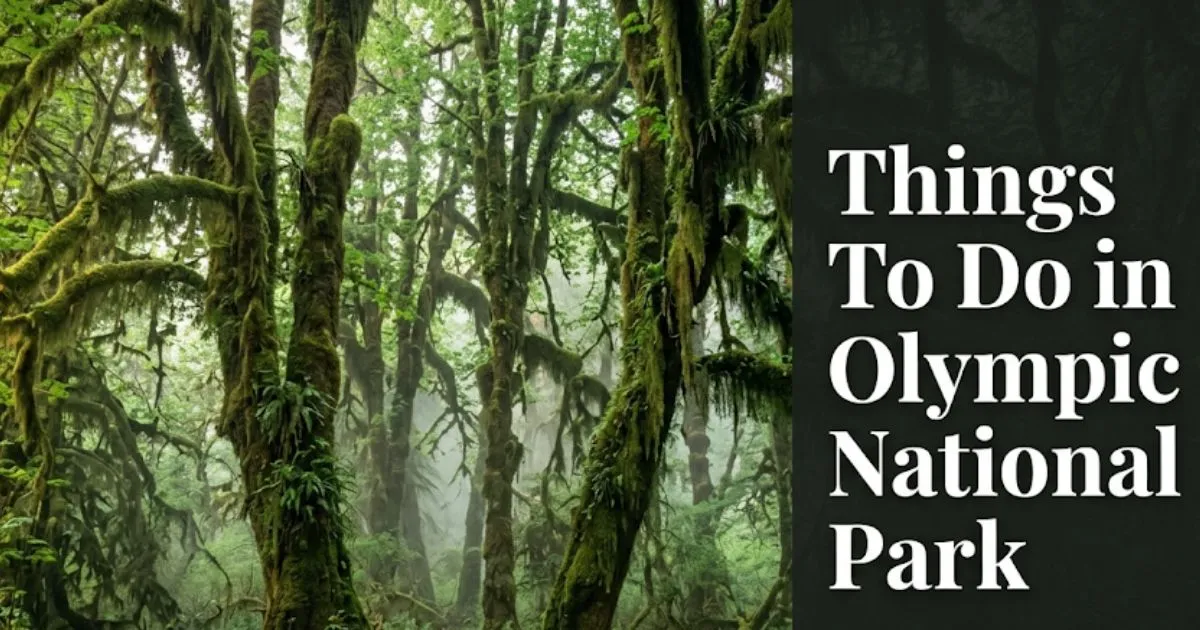
The Hall of Mosses Trail is the Hoh’s signature experience: a 0.8-mile loop through cathedral groves of big-leaf maple draped in thick club moss, creating the dense green canopy seen in every photograph of this park.
The trail is genuinely extraordinary and genuinely merits its reputation. It is also genuinely crowded from July through August, with the parking area at the Hoh Rain Forest Visitor Center filling by mid-morning on summer weekends.
Arrive before 9:00 AM or after 4:00 PM in summer to walk the Hall of Mosses with meaningful solitude.
The Hoh River Trail extends 17.4 miles one-way to the base of Mount Olympus. Day hikers can walk 2 to 5 miles in without any technical requirement and experience increasingly deep old-growth forest away from the main visitor crowd.
For experienced hikers, the first camp at Happy Four is 5.7 miles in and provides a genuine backcountry rain forest experience with a wilderness permit.
Families with children ages 5 and older will find the Hall of Mosses genuinely captivating. The scale of the trees and the moss coverage creates a storybook visual environment that holds children’s attention far better than most interpretive exhibits.
Seniors and accessibility travelers: The Hall of Mosses Trail is paved for a portion of its length but has uneven terrain and roots throughout. A companion or walking poles are helpful.
Insider Tip:
- The Hoh to Rialto Beach Coastal Route (accessible via a ranger-guided program in season) offers a completely different Hoh experience beyond the visitor center loop
- The Spruce Nature Trail (1.2 miles) near the visitor center is less crowded than the Hall of Mosses and passes through equally impressive old-growth Sitka spruce stands
Ruby Beach and the Olympic Coast
Ruby Beach is the Pacific coast’s most visually dramatic and most photographed access point, featuring sea stacks, driftwood fields, and tide pools within a short walk of a paved parking area off Highway 101.
The beach itself earns every photograph taken of it. Sea stacks rise directly from the surf. The driftwood accumulations at the high tide line are some of the largest you will encounter on any beach in the continental United States.
Critical safety note: Rogue waves at Ruby Beach, Rialto Beach, and all Olympic coastal beaches are a documented and genuine hazard. The National Park Service explicitly warns that logs in the surf zone can move without warning and that waves can surge far up the beach without notice. Never turn your back to the ocean. Never stand on logs in the surf zone. Keep children back from the water’s edge.
The walk from the Ruby Beach parking area to the beach is approximately 0.25 miles on a compacted trail. The beach itself requires scrambling over driftwood and uneven cobble, which is challenging for strollers and mobility aids.
Rialto Beach, approximately 30 miles north of Ruby Beach near the Mora area, offers a longer stretch of wild Pacific coastline and the dramatic sea arch at Hole-in-the-Wall, reachable at low tide by walking 1.5 miles north along the beach.
Kalaloch Beach, accessible directly from the highway near Kalaloch Lodge, is the coast’s most accessible beach for families and seniors. Multiple numbered beach access points (Beach 1 through Beach 4, plus Kalaloch Beach itself) offer varied terrain.
The Kalaloch Tree of Life, an enormous Sitka spruce whose root system spans an eroded cliff face above the beach, is worth a stop at Beach 4.
Budget travelers: All coastal beach access is included in the park entry fee.
Insider Tip:
- Third Beach, reached via a 1.3-mile trail from a small trailhead south of La Push, offers sea stack scenery equal to Ruby Beach with a fraction of the crowds
- Tide pool quality at Rialto Beach exceeds Ruby Beach; low tide charts are available at the Mora Ranger Station
Key Takeaway: Olympic National Park is three parks in one. Plan each zone as its own half-day or full-day destination, not a quick detour on a single long drive.
Lake Crescent Olympic National Park
Lake Crescent is one of the deepest lakes in Washington State, a glacially carved body of water so clear that visibility extends 60 feet down, with a blue-green color that looks fabricated until you see it in person.
The lake sits just 25 minutes west of Port Angeles on Highway 101, making it the most logistically convenient major destination in the park for visitors based in Port Angeles or coming from the east.
Lake Crescent Lodge, the park’s most atmospheric lakeside accommodation, sits directly on the water. Rowboat and kayak rentals are available at the lodge for guests and day visitors, typically from late spring through early fall. Verify current rental availability with the concessionaire before visiting.
The Marymere Falls Trail (1.8 miles round trip) begins near Storm King Ranger Station and passes through old-growth forest to a 90-foot waterfall. This is one of the park’s most accessible waterfall hikes, with only modest elevation gain.
For stronger hikers, the Mount Storm King Trail branches from the Marymere Falls path and climbs steeply to a 4,534-foot summit with panoramic lake and mountain views. The upper portion involves a rope section and significant exposure; this section is not appropriate for children or anyone with a fear of heights.
Couples consistently rate Lake Crescent among the park’s most romantic settings. The lodge’s lakeside veranda at evening, with the mountains reflecting in the water, delivers the kind of experience that looks exactly as good as it sounds.
Families with younger children love the lake’s swimming area near the lodge. The water is cold year-round; summer brings temperatures comfortable enough for brief swims.
Insider Tip:
- The east end of Lake Crescent at Fairholm offers a less-visited boat launch and picnic area with equivalent water access and fewer crowds than the lodge area
- Sunrise over Lake Crescent, viewed from the Highway 101 pullouts east of the lodge, is among the park’s finest early-morning views
Sol Duc Falls and Hot Springs
Sol Duc Falls is arguably the park’s single most spectacular waterfall, a four-chute cascade dropping into a narrow basalt canyon, reachable via a paved 1.6-mile trail through old-growth forest with almost no elevation gain.
The falls trail from the Sol Duc Trailhead is one of the park’s most accessible significant hikes. The flat terrain and short distance put it within reach of nearly all visitor profiles, including most seniors and families with children old enough to walk 1.6 miles.
Sol Duc Hot Springs Resort operates the park’s only developed hot spring pools, maintaining three mineral soaking pools and one freshwater pool open to day visitors and resort guests. Admission for day soakers runs at a moderate per-person rate; verify current pricing with the resort directly. The pools are typically open May through October.
The resort includes cabin accommodations, a restaurant, and a campground. Summer reservations fill months in advance. Book as early as possible for July and August stays.
Couples find Sol Duc one of the park’s most complete day or overnight destinations: falls hike in the morning, hot springs in the afternoon, dinner at the resort restaurant.
Families with children love the hot springs pools, which are not as hot as many adults prefer but are well-suited for kids who have completed a morning hike and need active recovery.
The Seven Lakes Basin Trail extends from Sol Duc into one of the park’s most celebrated backcountry circuits, reaching subalpine lakes at elevations above 4,000 feet. This multi-day route requires a wilderness permit and is not a day hike option for most visitors.
Insider Tip:
- The Sol Duc Falls canyon is just as compelling in November and March when no crowds exist and the water volume is at its highest
- Pack lunch; the resort restaurant serves food but has limited hours and can be crowded at peak meal times
Quinault Rain Forest and Kalaloch Beach
Quinault Rain Forest is the least-visited of the park’s major rain forest areas, which makes it the best choice for travelers who find the Hoh’s parking situation frustrating in summer.
The Quinault Rain Forest Loop (4 miles) circles Lake Quinault through massive old-growth trees including some of the largest Sitka spruce, western red cedar, and Douglas fir specimens in Washington State. Several of these trees are recognized record holders for their species.
Lake Quinault Lodge, built in 1926 on the lake’s south shore, is the most historically atmospheric lodging option in the park’s broader area. The lodge’s game room, massive stone fireplace, and lake view dining room create a genuine early-twentieth-century national park lodge experience.
The Maple Glade Rain Forest Trail (4 miles round trip) in the Quinault Valley is the park’s best alternative to the Hall of Mosses for visitors who want to skip the Hoh’s crowds entirely. The understory maple groves here rival the Hoh’s visual drama with significantly fewer visitors.
Kalaloch Beach and its numbered access points sit approximately 30 miles north of Quinault on Highway 101. Kalaloch is the Olympic coast’s most accessible section, with Kalaloch Lodge providing overnight options directly above the beach.
Seniors and accessibility travelers will find Kalaloch and the Quinault area more manageable than the northern park zones. The beach access trails at Kalaloch are shorter and less rugged than those at Ruby or Rialto Beach.
According to the Olympic Peninsula Visitor Bureau, the Quinault area receives significantly less visitation than the Hoh corridor despite offering equivalent rain forest quality.
Insider Tip:
- The Quinault area’s combination of lake lodge, rain forest hiking, and coastal beach access (Kalaloch is 30 miles north) makes it the best single base for visitors who want a quieter southern approach to the park
Key Takeaway: Skip the Hoh crowds in summer by visiting Quinault’s Maple Glade instead. You get identical rain forest quality with a fraction of the parking stress.
Olympic National Park Wildlife Viewing
Olympic National Park hosts one of the most significant Roosevelt elk herds in the Pacific Northwest, and wildlife viewing here is not incidental. It is one of the park’s defining experiences.
Roosevelt elk are the largest of the elk subspecies and are regularly visible in the Hoh Valley meadows, the Quinault River corridor, and the Sol Duc River bottomlands, particularly in early morning and evening hours.
Black bears are present throughout the park. Sightings are common near berry patches in late summer and in the river bottomlands. Bears in Olympic are generally habituated to hikers but should always be treated with respect and distance.
Marine wildlife viewing is excellent from the coastal areas. Pacific gray whales pass offshore during spring and fall migration, visible from headlands at Kalaloch and Rialto Beach with binoculars. Harbor seals and sea otters are present in the protected coves near the river mouths.
Mountain goats at Hurricane Ridge are a signature wildlife encounter. The goats are non-native, introduced to the peninsula in the 1920s, and the NPS has conducted relocation programs. A small population remains visible in the Hurricane Ridge area.
For families: The Hoh Valley meadows near the visitor center are consistently the most reliable elk viewing location in the park. Elk are frequently visible from the main parking area at dawn and dusk in summer.
Solo travelers and photographers: The Quinault River corridor, accessible via the North Shore Road, offers elk viewing with almost no other visitors during weekday mornings.
Practical warning: Never approach wildlife. The NPS recommends staying at least 75 feet from elk and other large animals. Habituated elk in the Hoh Valley have injured visitors who approached too closely.
Olympic National Park Scenic Drives
The most rewarding scenic drive in Olympic National Park is Highway 101’s Olympic Loop, which circumnavigates the entire peninsula, passing through rainforest corridors, coastal bluff sections, and logging communities before returning to its starting point.
The full loop is approximately 350 miles from Port Angeles and can be driven as a multi-day road trip or used as the structural backbone for a full park visit.
The 17-mile Hurricane Ridge Road from Port Angeles is the park’s most dramatic point-to-point drive, climbing from sea level to 5,200 feet with pullouts providing views of the Elwha River valley and the Strait of Juan de Fuca.
Obstruction Point Road, an unpaved 8-mile spur east of Hurricane Ridge, is the park’s best-kept scenic drive secret. The road reaches 6,150 feet, higher than any paved road in the park, with views into the park’s roadless interior that very few visitors ever see.
Lake Crescent’s Highway 101 corridor passes along the lake’s north shore with multiple pullouts. The light on the lake in late afternoon, with mountains reflected in the water, is consistently one of the park’s most photographed views.
For seniors and accessibility travelers: The Hurricane Ridge Road and Lake Crescent drive are fully paved and accessible by personal vehicle. Obstruction Point Road requires a high-clearance vehicle and is not recommended for low-clearance cars or RVs.
Couples on a road trip: The Lake Quinault to Kalaloch stretch of Highway 101, with the ocean appearing and disappearing through the coastal forest, is one of the Pacific Northwest’s finest drives.
Insider Tip:
- The stretch of Highway 101 between Ruby Beach and Kalaloch, known locally as the “beach stretch,” offers 8 miles of ocean-visible driving with numbered beach pullouts every half mile
Olympic National Park Hiking Trails
Olympic National Park contains more than 600 miles of maintained trails, ranging from paved 0.5-mile nature walks to 40-mile backcountry routes requiring multiple wilderness permits.
The park’s best hiking is organized by zone. No single day hike covers the rain forest, the coast, and the mountains.
Top day hikes by zone and difficulty:
| Trail | Zone | Distance | Difficulty | Best For |
|---|---|---|---|---|
| Hall of Mosses | Hoh | 0.8 mi | Easy | All profiles |
| Sol Duc Falls | Sol Duc | 1.6 mi | Easy | All profiles |
| Marymere Falls | Lake Crescent | 1.8 mi | Easy | Families, seniors |
| Hurricane Hill | Hurricane Ridge | 3.2 mi | Moderate | Couples, solo hikers |
| Hoh River Trail (to Elk Meadow) | Hoh | 9 mi RT | Moderate | Hikers |
| High Divide Loop | Sol Duc | 18.5 mi | Strenuous | Experienced hikers |
| Ozette Coastal Loop | Coastal | 9.4 mi | Moderate | Solo, couples |
| Third Beach | Coastal | 2.8 mi RT | Easy-Mod | All profiles |
Backcountry permits are required for all overnight wilderness camping. Permits are available through Recreation.gov for designated sites on the more popular routes (Hoh River Trail, Ozette, High Divide). Verify current permit requirements and availability before planning any overnight trip.
Families with children under 8: The Hall of Mosses, Sol Duc Falls, and Marymere Falls are the three most consistently successful family hikes. All are short, flat, and visually rewarding.
The Ozette Coastal Loop (9.4 miles) connects Lake Ozette with Cape Alava and Sand Point via a combination of boardwalk and coastal beach walking. It is the park’s best one-day backcountry taste for experienced day hikers.
Insider Tip:
- Bogachiel State Park, just outside the park boundary near Forks, offers an easy river trail through old-growth forest with zero permit requirements and virtually no visitors
Key Takeaway: For the most memorable single day hike in Olympic, pair the Sol Duc Falls Trail (morning) with an afternoon soak at Sol Duc Hot Springs Resort. This combination costs nothing extra beyond the resort soaking fee and delivers two completely different experiences in one valley.
Olympic National Park With Kids and Families
Olympic National Park is genuinely excellent for families, with one honest qualification: it rewards families with children old enough to walk 1 to 3 miles without assistance.
Families with toddlers and infants will find the park beautiful but logistically demanding. Stroller access is limited to paved nature loops near visitor centers. Most trails include roots, rocks, and uneven terrain.
Best family-specific experiences:
- Hall of Mosses Trail at the Hoh: Short, flat enough for ages 5 and up, visually extraordinary. Children consistently respond to the scale of the trees and the otherworldly moss.
- Kalaloch Beach access points: The numbered beach pullouts along Highway 101 south of Kalaloch Lodge offer easy beach access with short walks and reliable tide pool visibility at low tide.
- Lake Crescent swimming: The lake’s near-lodge swimming area is shallow enough for supervised child swimming in summer.
- Hurricane Ridge meadow wildlife: The Big Meadow Loop’s deer and marmot sightings hold children’s attention consistently.
- Sol Duc Hot Springs pools: The family pool is warm rather than hot and is well-suited for children who have earned a soak after a morning hike.
What sounds good for families but underdelivers: The Hoh River Trail beyond the 2-mile mark loses most children’s interest quickly. The scenery becomes repetitive past the main viewpoints and the trail length becomes a management challenge.
The Olympic National Park Junior Ranger Program is available at all major visitor centers. Children earn badges by completing activity booklets at their own pace.
Safety with children on the coast: The rogue wave hazard is real and is particularly important to communicate to children before any beach visit. Keep children back from the surf line at all Olympic coastal beaches.
Olympic National Park for Seniors and Accessibility Travelers
Olympic National Park is more accessible than most visitors assume, with several outstanding experiences requiring minimal physical demand.
The park’s most accessible tier of experiences includes the Hall of Mosses Trail (partially paved, 0.8 miles), the Kalaloch Beach access points (short compacted gravel paths), and the Hurricane Ridge Big Meadow Loop (paved, 1.6 miles, moderate grade).
Lake Crescent Lodge offers waterfront access, rowboat rentals operated from a dock, and comfortable seating areas with lake views that require no walking to enjoy. The lodge’s dining room is fully accessible.
Sol Duc Hot Springs Resort pools are accessible from the parking area. The soaking pools involve some stepping, but the short distance from parking makes them one of the park’s most accessible signature experiences.
What to know about terrain reality: The Olympic coast’s beach access involves driftwood scrambling and cobble walking that is genuinely challenging for anyone with hip, knee, or ankle issues. Ruby Beach and Rialto Beach are not accessibility-friendly despite their proximity to parking areas.
Wheelchair access: The Olympic National Park Visitor Center in Port Angeles is fully wheelchair accessible and offers an excellent orientation film, exhibits, and ranger-led programs. The visitor center is a worthy stop independent of the physical activities it introduces.
According to the National Park Service, the park has prioritized accessible trail improvements at key locations including the Sol Duc Falls Trail approach and the Hurricane Ridge Big Meadow Loop. Verify current conditions at the visitor center on arrival.
Seniors driving solo: The Hurricane Ridge Road requires no physical exertion beyond the drive itself. The panoramic views from the main parking area are accessible without leaving the vehicle.
Best Time To Visit Olympic National Park
The best time to visit Olympic National Park is late June through mid-September for full access to all zones, trails, and park facilities, with mid-July through August bringing peak crowds and maximum operational services.
Month-by-month breakdown:
| Month | Conditions | Crowds | Hurricane Ridge | Recommendation |
|---|---|---|---|---|
| January-March | Heavy rain, snow at elevation | Very low | Often closed | Storm watching coast only |
| April-May | Variable, rain likely | Low-moderate | Partially open | Good for rain forest |
| June | Variable, early summer | Moderate | Opens late June | Excellent value |
| July-August | Best weather, dry spells | Peak | Fully open | Book everything far ahead |
| September | Stable, cooling | Moderate | Open | Best overall month |
| October | Rain increases, fall color | Low | Closing season | Late fall beauty |
| November-December | Heavy rain, limited access | Very low | Closed | Not recommended for most |
Summer reality: July and August bring the park’s best weather but also its worst crowds. The Hoh Rain Forest parking area overflows by 10:00 AM on summer weekends. Hurricane Ridge requires timed-entry reservations. Campgrounds fill months in advance.
September is genuinely the park’s best month for most visitors. The crowds drop significantly after Labor Day, the weather remains stable, Hurricane Ridge is still fully open, and the fall colors begin in the high elevations.
Winter is for a specific visitor: The Pacific coast in winter is storm-watching territory. Kalaloch and Ruby Beach in January during a Pacific storm produce raw, dramatic ocean conditions that coastal photography enthusiasts specifically target. Cold, wet, and magnificent for those who know what they are seeking.
For families: June and September offer the best combination of good weather and manageable crowds compared to peak July-August.
Olympic National Park Entry Fees and Reservations 2026
The entry fee for Olympic National Park as of recent years runs approximately $35 per vehicle for a 7-day pass, or $20 per person for those entering on foot or by bicycle. Verify the 2026 fee schedule at nps.gov/olym before visiting.
The America the Beautiful Interagency Annual Pass covers entry to all federal lands including Olympic and is the obvious choice for anyone visiting two or more national parks in a year. At approximately $80 per year as of recent years, the pass pays for itself after three park entries.
2026 Reservation Requirements:
The National Park Service implemented a timed-entry reservation system for Hurricane Ridge Road during peak summer months. For 2026, reservations are expected to be required during designated summer hours via Recreation.gov. Check nps.gov/olym early in the year (February or March) to confirm the exact 2026 requirements and booking window open date.
Campground reservations: The park’s most popular campgrounds, including Kalaloch Campground, Sol Duc Campground, Heart O’ the Hills, and Mora Campground, book through Recreation.gov. Sites at prime locations fill within minutes of becoming available during the reservation window, which typically opens six months in advance. If you want a July or August campsite at Kalaloch or Sol Duc, set a calendar reminder for the exact booking window open date.
Backcountry wilderness permits are required for all overnight backcountry camping. Some quota-based trails require advance permits through Recreation.gov.
For budget travelers: No reservation is required to access most of the park’s day use areas, including the Hoh Rain Forest, Ruby Beach, Rialto Beach, and Lake Crescent, outside of the Hurricane Ridge Road timed-entry windows.
Insider Tip:
- Walk-up backcountry permits are often available at the Wilderness Information Center in Port Angeles for less-popular routes. Visit early morning for the best selection of unclaimed daily quota permits.
Key Takeaway: Book Hurricane Ridge Road reservations and campground sites the day the Recreation.gov window opens, typically six months out. Waiting even 24 hours for summer peak dates risks finding nothing available.
Olympic National Park Itinerary and Day Trip From Seattle
A day trip from Seattle to Olympic National Park is genuinely possible but genuinely limiting. The ferry crossing from Seattle or Edmonds to the Olympic Peninsula, combined with driving time, leaves approximately 4 to 5 hours of actual park time.
Day trip from Seattle: Take the Washington State Ferries crossing from Edmonds to Kingston (approximately 30 minutes) or the Seattle-Bainbridge ferry (35 minutes), then drive to either Lake Crescent (under 2 hours from Kingston) or the Hoh Rain Forest (approximately 2.5 hours). This works as a day trip. It does not work as a full park survey.
For a first visit, three days is the meaningful minimum:
To plan your three-day visit:
- Day 1: Port Angeles base, Hurricane Ridge, Lake Crescent. Arrive via Bainbridge or Kingston ferry. Drive to Port Angeles. Visit the Olympic National Park Visitor Center for orientation. Drive Hurricane Ridge Road. Return via Lake Crescent for sunset and dinner at Lake Crescent Lodge.
- Day 2: Hoh Rain Forest and Sol Duc Valley. Drive from Port Angeles to the Hoh (90 minutes). Walk the Hall of Mosses and 2 miles of the Hoh River Trail. Drive back through Forks and up the Sol Duc Road. Hike Sol Duc Falls Trail. Soak at Sol Duc Hot Springs. Camp or lodge at Sol Duc.
- Day 3: Pacific Coast. Drive from Sol Duc to Rialto Beach near La Push (45 minutes). Walk to Hole-in-the-Wall at low tide. Drive south on Highway 101 to Ruby Beach. Continue to Kalaloch for late afternoon beach access. Drive south toward Aberdeen or return north toward Port Angeles and the ferry.
For a five-day visit: Add the Quinault Rain Forest and a night at Lake Quinault Lodge on Day 4, and a full morning at Kalaloch before departure on Day 5.
Solo travelers can execute the three-day itinerary efficiently. The park is safe and well-marked for independent travel. Cell service is limited throughout; download offline maps before entering the park.
Safety and Practical Warnings for Olympic National Park
The single most underestimated danger in Olympic National Park is the rogue wave hazard on all Pacific coast beaches, documented as responsible for deaths and serious injuries at Ruby Beach, Rialto Beach, and Kalaloch.
Key safety and practical facts every visitor should know:
- Rogue waves: Never turn your back to the ocean on any Olympic coast beach. Waves can surge far up the beach without warning. Never stand on or near drift logs in the surf zone. This warning applies to adults and children equally.
- Bear safety: Black bears are active throughout the park. Store all food in bear boxes or bear canisters. Never leave food in tents or vehicles in bear-active areas. Bear canisters are required for all backcountry travel.
- Cell service: Cell service is effectively nonexistent through most of the park, including the Hoh corridor, Sol Duc Valley, and all coastal areas. Download offline maps (Gaia GPS, AllTrails offline, or downloaded NPS maps) before entering the park.
- Weather: Mountain weather at Hurricane Ridge changes rapidly. Bring layers regardless of the Port Angeles forecast. The ridge can experience wind, fog, and temperature drops of 20 or more degrees within an hour.
- River crossings: Snowmelt swells the park’s rivers through June and into July. Backcountry trails with river crossings can be dangerous during high snowmelt periods. Check current conditions at the Wilderness Information Center before any backcountry trip.
- Gas: No gas stations exist inside the park. Fill the tank in Port Angeles, Forks, or Aberdeen before entering remote zones.
- Hypothermia risk: The coast and rain forest maintain cool, wet conditions year-round. Wet layers are dangerous even in summer. Carry waterproof shells regardless of the forecast.
The National Park Service emergency line for Olympic is managed through the Port Angeles Visitor Center dispatch. For wilderness emergencies, call 911 when cell service is available, or send a satellite communicator message if carrying one.
Frequently Asked Questions About Olympic National Park
What are the best things to do in Olympic National Park?
The best things to do in Olympic National Park include hiking the Hall of Mosses in the Hoh Rain Forest, watching sunrise from Hurricane Ridge, walking Rialto Beach to Hole-in-the-Wall, kayaking on Lake Crescent, and soaking at Sol Duc Hot Springs after the Sol Duc Falls hike.
These experiences together represent the park’s three ecosystems: rain forest, alpine, and Pacific coast.
No single day covers all three zones. Plan each as its own destination within a multi-day visit.
How many days do you need for Olympic National Park?
Three days is the practical minimum for seeing the park’s main zones meaningfully, and five days is the better target for a comprehensive visit.
A one-day visit allows for one zone only, either the Hoh Rain Forest, Hurricane Ridge, or the Pacific coast.
Two days covers two zones adequately if driving logistics are planned efficiently in advance.
Do you need reservations for Olympic National Park in 2026?
Timed-entry reservations for Hurricane Ridge Road are expected to be required in summer 2026, bookable through Recreation.gov.
Popular campgrounds including Kalaloch, Sol Duc, and Heart O’ the Hills also require advance reservations via Recreation.gov.
Verify the exact 2026 reservation requirements at nps.gov/olym, as these requirements change annually and the booking windows open several months before peak season.
What is the best time of year to visit Olympic National Park?
September is the best overall month for Olympic National Park, combining stable late-summer weather with significantly lower crowds than July and August.
Late June is the second-best choice, offering good weather and the full opening of Hurricane Ridge before peak summer crowds arrive.
July and August offer the best weather but peak crowds, full parking lots, and the tightest reservation pressure on campgrounds and Hurricane Ridge Road access.
Is Olympic National Park good for families with young kids?
Olympic National Park is excellent for families with children ages 5 and older who can walk 1 to 3 miles.
The Hall of Mosses, Sol Duc Falls Trail, Marymere Falls, Kalaloch Beach, and Lake Crescent swimming area are all consistently successful family experiences.
Families with toddlers will find stroller access very limited; most trails involve roots and uneven terrain that standard strollers cannot navigate.
Is Olympic National Park worth it if you don’t hike?
Olympic National Park is worth visiting without hiking, specifically for the scenic drives, the coastal beach access, the lake views, and the hot springs.
Hurricane Ridge Road, the Lake Crescent corridor of Highway 101, and the Kalaloch beach access points are all accessible without significant walking.
Sol Duc Hot Springs Resort is reachable via a short flat walk from the parking area and delivers a genuine park experience without any serious hiking requirement.
Plan Your Olympic National Park Visit With Confidence
Olympic National Park rewards the visitors who plan it with the same seriousness they bring to international travel. Book your Hurricane Ridge Road reservation and campsite the day the Recreation.gov window opens. Verify 2026 timed-entry requirements and entry fees at nps.gov/olym before your trip.
Download offline maps for the Hoh corridor, the Sol Duc Valley, and the coastal beach zones before you lose cell service. Fill your gas tank in Port Angeles, Forks, or Aberdeen before entering remote zones.
Travel conditions, road access, entry fees, reservation requirements, and seasonal operations in Olympic National Park change annually. Verify all logistics directly with the National Park Service and Recreation.gov before your departure date. The travelers who do this preparation will spend their days in the park rather than managing problems at the trailhead.