Best Places to Visit in Turkey: The 2026 Travel Guide

The best places to visit in Turkey span three distinct travel worlds: ancient archaeological sites among the world’s most significant, a Mediterranean coastline that rivals anything in the Aegean, and interior landscapes unlike anything else on the planet.
Turkey welcomed approximately 56 million international visitors in recent years, according to the Turkish Culture and Tourism Office, making it consistently one of the top ten most-visited countries globally.
This guide covers 16 specific destinations across every region, with honest seasonal guidance, practical booking logistics, traveler profile recommendations, and one-week itinerary structure.
Best Places to Visit in Turkey: How to Choose the Right Destinations
The best places to visit in Turkey depend almost entirely on your travel style, available time, and which type of experience you’re prioritizing.
Turkey contains more UNESCO World Heritage Sites than Greece and more coastline than most travelers realize. The country functions less like a single destination and more like four distinct travel regions stitched together.
Use this comparison table to match destinations to your priorities before reading further:
| Destination | Best For | Cost Tier | Best Season | Primary Experience |
|---|---|---|---|---|
| Istanbul | Culture, food, history | Mid-range to premium | April-June, Sept-Oct | Ottoman and Byzantine heritage |
| Cappadocia | Couples, adventure | Mid-range | April-June, Sept-Oct | Surreal landscapes, ballooning |
| Ephesus/Selcuk | History travelers | Budget-friendly | April-May, Oct | Ancient Roman ruins |
| Pamukkale | Day-trippers | Budget-friendly | April, Oct | Travertine terraces |
| Bodrum | Couples, luxury | Premium in summer | May, Sept-Oct | Coastal, nightlife, history |
| Fethiye/Ölüdeniz | Families, hikers | Mid-range | May-June, Sept | Coastal, hiking, sailing |
| Antalya | Families, beach | Budget to mid-range | May, Sept-Oct | Beach, ancient ruins |
| Mardin/Gaziantep | Food, culture | Budget-friendly | March-May, Oct | Cuisine, architecture |
| Trabzon | Off-radar travelers | Budget-friendly | June-Sept | Black Sea, monasteries |
| Safranbolu | Weekend escape | Budget-friendly | April-Oct | Ottoman architecture |
Insider Tip:
- First-time visitors almost always underallocate time to Istanbul. Three days minimum; four is better.
- Cappadocia hot air balloon flights require 6 to 8 weeks advance booking during April through June and September through October.
- Budget travelers get the most from Turkey’s less-commercialized southeast: Mardin and Gaziantep offer extraordinary experiences at a fraction of Istanbul’s cost.
Top Places to Visit in Turkey for First-Time Visitors
First-time visitors to Turkey should prioritize Istanbul, Cappadocia, and one coastal destination: this combination covers the full range of what makes Turkey exceptional.
The Turkish Culture and Tourism Office’s GoTurkiye platform identifies Istanbul and Cappadocia as the two most-visited regions in the country, and both earn that status honestly.
For a first visit, the Istanbul-Cappadocia-coast structure works because it layers urban culture, extraordinary interior landscape, and Mediterranean relaxation without requiring exhausting overland connections.
Fly between regions. Istanbul to Cappadocia runs approximately 1.5 hours on Turkish Airlines or Pegasus. Driving between them costs two days of travel time that a first-timer genuinely cannot afford.
For solo travelers: Istanbul and Cappadocia both have well-developed solo traveler infrastructure with hostel networks, guided tour options, and clearly signed attractions.
For families with children: Cappadocia’s underground cities at Derinkuyu genuinely engage children ages 8 and older. Istanbul’s Topkapi Palace treasury holds children’s attention for about 45 minutes before they need a break.
Avoid building a first Turkey itinerary around the Turquoise Coast alone. The coast is extraordinary, but it does not represent Turkey’s full cultural depth.
| Traveler Type | Recommended First-Visit Route |
|---|---|
| History focus | Istanbul (4 days) + Ephesus/Selcuk (2 days) + Pamukkale (1 day) |
| Adventure focus | Istanbul (2 days) + Cappadocia (3 days) + Antalya (2 days) |
| Relaxation focus | Istanbul (2 days) + Fethiye (5 days) |
| Budget focus | Istanbul (3 days) + Selcuk/Ephesus (2 days) + Pamukkale (2 days) |
| Culture/food focus | Istanbul (3 days) + Gaziantep (2 days) + Mardin (2 days) |
Istanbul Places to Visit
Istanbul is Turkey’s most complex and rewarding destination, covering 14 distinct neighborhoods across two continents separated by the Bosphorus Strait.
The tourist map of Istanbul concentrates almost entirely in Sultanahmet, the historic peninsula containing Hagia Sophia, Topkapi Palace, the Blue Mosque, and the Grand Bazaar. These landmarks genuinely earn their status.
Hagia Sophia’s conversion to an active mosque means dress code requirements are strictly enforced. Women must cover their hair; both genders must remove shoes. Plan 90 minutes minimum.
Topkapi Palace requires advance timed-entry booking during April through October. Walk-up entry lines can exceed two hours. Book directly through the official Topkapi Palace ticketing portal.
Beyoglu, across the Golden Horn from Sultanahmet, is where Istanbul actually lives. Istiklal Avenue is the main pedestrian spine, but the real discovery is the side streets: Cihangir for coffee and book shops, Karakoy for contemporary art galleries and the city’s best brunch spots.
The Bosphorus cruise most tourists book is the commercial ferry from Eminonu. The local alternative: take the regular Sehir Hatlari public ferry from Kabatas toward Anadolu Kavagi. It costs a fraction of the tourist price and uses the same waterway.
For seniors and accessibility travelers: Sultanahmet’s cobblestone streets are genuinely challenging for mobility aids. The Topkapi Palace has limited elevator access. Plan for significant walking on uneven surfaces.
Insider Tip:
- The Grand Bazaar is atmospheric but heavily tourist-oriented for pricing. The Spice Bazaar near Eminonu offers better value and more authentic market energy.
- Visit Hagia Sophia at opening time (typically 9 a.m., but verify hours before visiting). The interior clears significantly within the first 45 minutes.
- Galata Tower offers city views, but the rooftop terrace of the nearby Galata Kulesi neighborhood restaurants offers the same view with dinner attached.
Key Takeaway: Book Topkapi Palace timed entry in advance; walk-up lines during peak season can cost you the entire morning.
Cappadocia Turkey
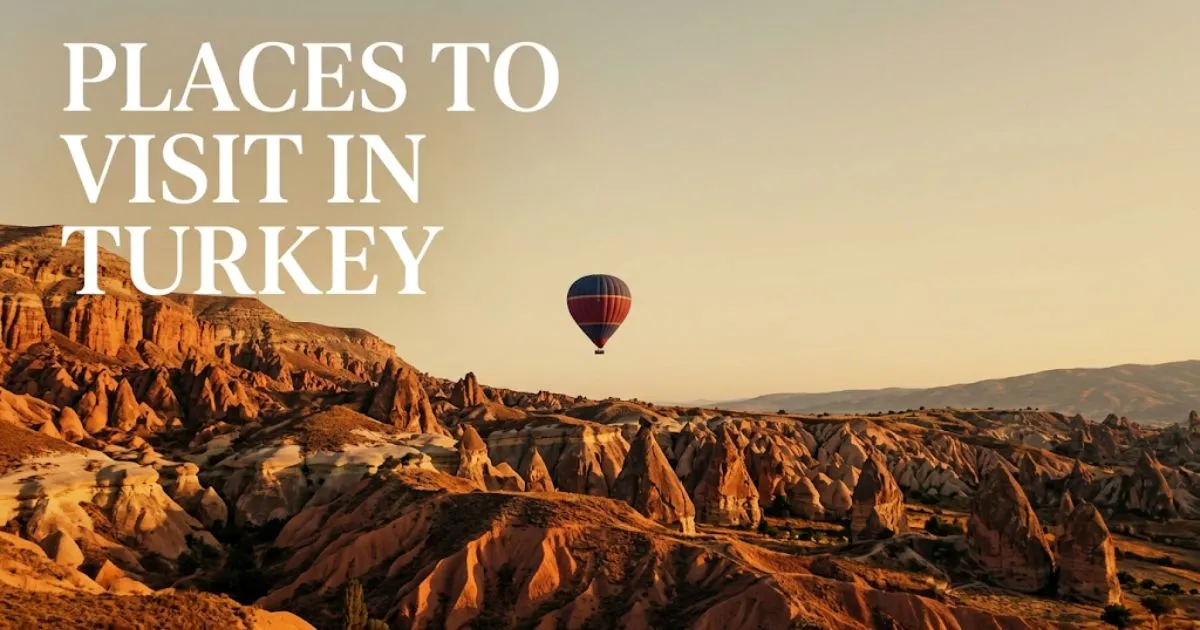
Cappadocia is Turkey’s most visually singular destination: a volcanic plateau in central Anatolia where centuries of erosion created the fairy chimney formations that define the region’s identity.
Göreme National Park, a UNESCO World Heritage Site, is the geographic center of the Cappadocia experience. The park contains rock-cut churches with Byzantine frescoes dating to the 10th century.
Hot air ballooning over the Rose Valley and fairy chimneys at sunrise is the defining Cappadocia experience. Royal Balloon and Turkiye Balloons are the two operators with the strongest safety and passenger records. Flights typically depart at sunrise and last approximately 60 minutes.
Book balloon flights a minimum of 6 to 8 weeks ahead during April, May, June, September, and October. Cancellations due to wind are common; reputable operators offer a refund or reschedule option.
Derinkuyu Underground City, one of several ancient underground settlements in the region, extends 18 stories below ground and once sheltered thousands of people. Low ceilings and narrow passages make it unsuitable for claustrophobic travelers.
The tourist concentration in Cappadocia sits in Göreme village. The local alternative for accommodation is Uchisar, a quieter hilltop village with the same cave hotel options and significantly fewer tour groups.
For couples: Cave hotels in Göreme and Uchisar, particularly those carved directly into the rock face, are genuinely romantic. Argos in Cappadocia is the most cited premium property for couples.
For budget travelers: Cappadocia’s landscape is entirely walkable. The Rose Valley and Love Valley trails are free. A balloon flight is the single significant expense.
Insider Tip:
- Cappadocia is at 1,000 to 1,200 meters elevation. Summer nights cool significantly. Pack a layer.
- The ATV and horse tours marketed heavily in Göreme are generally lower value than a self-guided walking circuit of the Rose Valley at sunrise or sunset.
Ephesus and the Aegean Coast
Ephesus is the best-preserved ancient Roman city in the Mediterranean world, located outside Selcuk in Turkey’s western Aegean region.
The Library of Celsus, the main colonnaded street (Curetes Street), and the Great Theater (capacity 25,000) are the three anchors of an Ephesus visit. Allow a minimum of three hours on site.
Ephesus has two entrance gates: the lower gate near the Celsus Library and the upper gate at Magnesia. Enter at the upper gate, walk downhill, and exit near the library. This routing avoids backtracking against tour group foot traffic.
Selcuk is the base town for Ephesus, 3 kilometers from the site. It is far preferable to staying in Kusadasi, the cruise port town 20 kilometers away that serves primarily as a shopping stop for ship passengers.
The Aegean coast around Selcuk also contains the ruins of the Temple of Artemis, one of the Seven Wonders of the Ancient World. One column remains standing. Most visitors find it anticlimactic; include it only if ancient wonder completion matters to you.
Izmir, Turkey’s third-largest city 80 kilometers north of Selcuk, is underused by foreign tourists. Its Kordon waterfront promenade, Kemeralti bazaar, and Alsancak restaurant and bar district represent authentic Aegean urban culture with almost no tourist overlay.
For seniors and accessibility travelers: Ephesus involves 2 to 3 kilometers of walking on ancient marble pavement, some of which is uneven. Marble becomes extremely slippery when wet. Check weather before visiting.
For families: Ephesus genuinely holds the attention of children ages 10 and older. Younger children lose interest within 30 minutes on archaeological sites.
Key Takeaway: Enter Ephesus from the upper gate and walk downhill. This single routing decision eliminates the biggest navigation frustration at the site.
Pamukkale Turkey
Pamukkale is a natural travertine terrace formation in southwestern Turkey, created by calcium-rich thermal water cascading down a white limestone hillside over millennia.
The photographs circulating of Pamukkale show turquoise water filling the white terraces in abundance. The reality in 2026 is that visitor flow is heavily managed; most terraces have restricted water to preserve the formation.
Visitors must remove footwear to walk on the travertines. The sections open for visitor access contain warm shallow water in some pools, typically 30 to 40 centimeters deep.
The Antique Pool inside the adjacent Pamukkale Thermal Resort allows swimming among original Roman columns. This is the most experiential thermal activity available on site; admission is separate and runs approximately $20 to $30 per person based on recent reports.
Hierapolis, the ancient Roman city directly above the travertines, is included in the same site ticket and is often overlooked. Its main street, necropolis, and theater are substantial and far less crowded than Ephesus.
Pamukkale works best as a single full-day visit, not a multi-day stay. The nearest overnight base with better accommodation quality is Denizli, 20 kilometers east.
For budget travelers: Pamukkale is one of Turkey’s best-value major sites. The combined travertine and Hierapolis ticket runs approximately $20 to $25 per adult as of recent pricing.
Honest Assessment: Pamukkale photographs significantly better than the live experience for most visitors. If you are traveling Turkey’s Aegean circuit, it merits a stop. It does not merit a dedicated multi-day trip.
Bodrum and the Turquoise Coast
Bodrum sits on a peninsula in southwestern Turkey where the Aegean meets the Mediterranean, combining Ottoman history at Bodrum Castle with a coastal resort culture built around sailing and nightlife.
Bodrum Castle, completed in 1522 by the Knights of St. John, now houses the Museum of Underwater Archaeology, which holds one of the world’s most significant collections of ancient Mediterranean shipwreck artifacts.
The marina strip of Bodrum is heavily commercialized and premium-priced during July and August. The historic Old Town neighborhood behind the castle is where the authentic village character survives.
Gulet boat charters (traditional wooden sailing vessels) depart from Bodrum harbor for multi-day voyages along the Turquoise Coast. A shared cabin on a group gulet charter runs approximately $100 to $180 per person per day including meals. Private charters run significantly higher.
The Blue Voyage route from Bodrum to Fethiye covers six to seven days of coastline, coves, and ancient Lycian ruins accessible only by water. This is the single best way to experience the Turkish coast for travelers with the time.
For couples: Bodrum during May and September, outside peak season, offers the coastline and old-town atmosphere at reduced prices and without July and August’s resort-town energy.
For budget travelers: Bodrum in July and August is one of Turkey’s most expensive destinations. The same coast at a fraction of the cost is accessible from Marmaris or Fethiye during shoulder season.
Insider Tip:
- Gulet boats require advance booking for July and August departures. May and September have significantly more availability and better pricing.
- The peninsula’s inland villages, including Yalikavak (before its luxury marina development) and Gundogan, offer authentic Turkish village life within 30 minutes of Bodrum center.
Key Takeaway: Bodrum’s July and August prices can match Greek island resorts. Visit in May or September for the same coastline at 30 to 40 percent lower accommodation costs.
Fethiye and Ölüdeniz Turkey
Fethiye is a market town and harbor on Turkey’s Aegean-Mediterranean junction, serving as the gateway to Ölüdeniz, the double bay lagoon consistently cited among the most photographed beaches in the Mediterranean.
Ölüdeniz’s Blue Lagoon is a protected natural area with calmer, shallower water than the open beach immediately adjacent. The two zones are distinct; the lagoon requires a separate entrance fee.
Paragliding from Babadag Mountain directly to Ölüdeniz beach is the signature Fethiye activity. The 1,900-meter descent takes approximately 25 to 40 minutes. Tandem paragliding with licensed operators runs approximately $70 to $120 per person.
Butterfly Valley, accessible by boat from Ölüdeniz, is a canyon beach reachable only by sea or a steep unmarked descent. Day boat services run from Ölüdeniz harbor throughout summer. The valley is named for the Jersey Tiger moth population that migrates through the canyon.
Saklikent Gorge, 45 minutes inland from Fethiye, is a canyon narrow enough to touch both walls simultaneously. The gorge walk involves wading through cold water. It is one of Turkey’s most genuinely underused experiences.
The Lycian Way, a 540-kilometer marked trail between Fethiye and Antalya, begins just outside Fethiye. Section hiking from Oludeniz toward Kabak Valley represents some of the finest coastal hiking in the Mediterranean.
For families: Ölüdeniz’s lagoon section is exceptional for families with children. The shallow, calm water is safe for young swimmers. The open beach adjacent has more current.
For solo travelers: Fethiye has a genuinely mixed traveler-to-local ratio and a functioning town character that coastal resort towns like Marmaris have lost entirely.
Antalya Turkey
Antalya is Turkey’s largest Mediterranean resort city and one of the country’s primary beach tourism hubs, but its historic district, Kaleici, is the most genuinely rewarding urban neighborhood on the Turkish Mediterranean coast.
Kaleici is a Roman-era harbor town preserved within Antalya’s modern city limits. Its narrow limestone streets, Ottoman-era wooden buildings, and functioning Roman harbor walls make it qualitatively different from any beach resort area in Turkey.
The Antalya Museum holds one of the most significant collections of Greco-Roman artifacts in Turkey, including statue galleries from Perge and a sarcophagus collection that is exceptional even by international museum standards.
Perge and Aspendos are the two ancient sites within day-trip range of Antalya that most visitors underestimate. Perge’s colonnaded Roman street is better preserved than most comparable sites in Greece. Aspendos Roman theater (2nd century CE) is still used for live performances during the Aspendos Opera and Ballet Festival each summer.
For families: Antalya works well for families with children combining beach time and cultural exposure. The Old Town’s harbor is a manageable half-day for children ages 6 and older.
For budget travelers: Antalya’s Old Town accommodation is dramatically cheaper than coastal resort alternatives along the same coast. Pension guesthouses in Kaleici run $40 to $80 per night as of recent pricing, with significantly more character than resort hotels.
Honest Assessment: The beach resort strip east of Antalya (Side, Alanya) is heavily package-tourism oriented. If beach relaxation is the only goal, it delivers. If cultural engagement is part of the trip, Antalya’s Kaleici is the base.
Key Takeaway: Aspendos Roman theater hosts live opera and ballet performances during summer. Check the Aspendos International Opera and Ballet Festival schedule before booking your Antalya dates.
Mardin and Gaziantep Turkey
Mardin and Gaziantep represent the most rewarding cultural and culinary experiences in Turkey for travelers willing to venture into the southeastern interior.
Mardin is an ancient city built on a limestone ridge above the Mesopotamian plain in southeastern Turkey. Its stone-carved architecture, Syriac Christian monasteries, and Arab-Kurdish-Turkish cultural blend create a city unlike anywhere else in the country.
Deyrulzafaran Monastery, founded in the 5th century CE and located 5 kilometers outside Mardin, is one of the oldest continuously functioning Christian monasteries in the world. Entry is free; guided tours are conducted by the monastery’s resident community.
Gaziantep, four hours west of Mardin by bus, holds the Zeugma Mosaic Museum, which houses the largest collection of Roman mosaics in the world. The museum’s star piece, the Gypsy Girl mosaic, is among the most reproduced ancient artworks in Turkey.
Gaziantep’s food culture is Turkey’s most serious culinary destination. The city produces the country’s finest baklava at shops like Imam Cagdas (established 1887) and Koçak Baklava, both located in the old bazaar district. Local baklava is pistachio-heavy, not walnut-heavy: this is an important regional distinction.
For budget travelers: Southeast Turkey is Turkey’s best-value travel region. Accommodation in Mardin and Gaziantep runs $35 to $70 per night for good-quality boutique guesthouses. Restaurant meals cost a fraction of Istanbul pricing.
For solo travelers: Both cities are off the primary tourist circuit. English-language signage is limited in Gaziantep’s bazaar district. Basic Turkish phrases help significantly.
Insider Tip:
- Mardin’s rooftop terraces face south over the Syrian plain. Sunset from any of the old-city guesthouses is genuinely worth stopping for.
- Fly from Istanbul to Gaziantep (Gaziantep Oguzeli Airport) or to Mardin directly. Overland from Istanbul takes 15 to 20 hours.
Trabzon and the Black Sea Coast
Trabzon is Turkey’s primary Black Sea city, a port town in the country’s northeast that serves as the gateway to the region’s monasteries, highland meadows, and tea-growing valleys.
Sumela Monastery, carved directly into a cliff face 300 meters above the Altindere Valley floor, 40 kilometers south of Trabzon, is Turkey’s most dramatically sited religious site. The monastery dates to the 4th century CE and was continuously occupied until 1923.
Getting to Sumela involves a 20-minute walk uphill from the parking area. The path is paved but moderately steep. The monastery interior has recently been restored and frescoes are now accessible for viewing.
The Kaçkar Mountains inland from Trabzon are Turkey’s primary alpine trekking region. Yaylacilar (highland villages) accessible by 4WD tracks offer some of the most authentic rural Turkish culture in the country.
Black Sea cuisine is distinct from western Turkish food. Hamsi (Black Sea anchovy), corn bread, and the rich highland butter that characterizes Trabzon’s mountain settlements are the core of a food culture that most international visitors never encounter.
For off-the-beaten-path travelers: Trabzon receives a fraction of western Turkey’s international visitor numbers. Turkish domestic tourists visit in numbers, but international infrastructure is limited. This is genuinely rural Turkey.
For families: Sumela Monastery works well for children ages 8 and older who can manage the uphill approach walk. Younger children may struggle.
Key Takeaway: Sumela Monastery visits require checking current restoration access status. Some sections have been periodically closed during ongoing restoration. Verify before visiting.
Safranbolu Turkey
Safranbolu is a remarkably preserved Ottoman caravanserai town in northern Turkey, 225 kilometers northeast of Ankara, recognized as a UNESCO World Heritage Site for its 18th-century timber-frame architecture.
The town’s Çarşı district contains more than 1,000 registered historic Ottoman houses, most of which are still inhabited or operating as boutique guesthouses. Walking Safranbolu’s streets is genuinely different from any other urban experience in Turkey.
Safranbolu is named for its historic saffron trade. The town’s lokum (Turkish delight) made with local saffron remains a specialty worth seeking out in the Çarşı bazaar.
The town is accessible by bus from Ankara (approximately 3 hours) or Karabuk (30 minutes, the nearest rail connection). It is most commonly visited as a 2-day detour from an Ankara or Istanbul itinerary.
For couples: Safranbolu’s boutique guesthouses in restored Ottoman mansions are among Turkey’s most atmospheric overnight options. The Cinci Han caravanserai, converted to a hotel, is the most historically significant accommodation in town.
For budget travelers: Safranbolu is one of Turkey’s best-value overnight destinations. Guesthouse rates run $45 to $90 per night. The town’s main experiences are free: walking the Çarşı district, visiting the Cinci Han courtyard, and the panoramic view from the Hidirlik hill.
Honest Assessment: Safranbolu is a genuine architectural time capsule that most Turkey itineraries skip entirely. It suits travelers who find Ottoman history and urban landscape more compelling than beaches or ruins.
Best Time to Visit Turkey
The best time to visit Turkey is April through early June or September through October, when temperatures are moderate, crowds are manageable, and coastal and interior destinations are simultaneously accessible.
According to the Turkish Culture and Tourism Office, summer (July and August) is Turkey’s peak visitor season, particularly for coastal destinations. This is also the worst period for anyone planning archaeological site visits.
Here is what each season actually delivers:
| Season | Conditions | Best Destinations | Avoid |
|---|---|---|---|
| March-April | Warming, some rain | Istanbul, Ephesus, Cappadocia | Coastal swimming |
| May-June | Ideal across country | All destinations | Nothing |
| July-August | Extreme heat, peak crowds | Coast/beach only | Ephesus, Cappadocia midday |
| September-October | Post-peak, warm sea | All destinations | Nothing |
| November-February | Cool, some closures | Istanbul, Gaziantep, Mardin | Coast, Cappadocia balloon flights |
Summer heat in Cappadocia regularly reaches 35°C to 40°C. Archaeological sites like Ephesus, which have virtually no shade, become genuinely miserable between 11 a.m. and 4 p.m. in July and August.
For budget travelers: November through March offers Turkey’s lowest hotel rates across all destinations. Istanbul in winter is manageable and significantly cheaper.
For hot air balloon travelers: April through early June and mid-September through October offer the most reliable balloon flight conditions in Cappadocia. Winter flights operate but cancellation rates are higher due to wind.
How to Get Around Turkey
Getting around Turkey efficiently means using domestic flights for inter-regional travel and surface transport for within-region exploration.
Turkish Airlines and Pegasus Airlines both operate extensive domestic networks connecting Istanbul to Cappadocia (Nevşehir or Kayseri airports), Izmir, Antalya, Bodrum-Milas, Dalaman, Trabzon, Gaziantep, and Mardin. Domestic fares on Pegasus frequently run $30 to $80 per segment when booked 4 to 6 weeks in advance.
Inter-city buses are Turkey’s ground transport backbone. Kamil Koç, Metro Turizm, and FlixBus Turkey operate comfortable long-distance routes between major cities. Istanbul to Ankara runs approximately 6 hours. Istanbul to Cappadocia runs 10 to 11 hours overnight.
Turkish State Railways (TCDD) operates a high-speed rail route between Istanbul’s Pendik station and Ankara (approximately 4 hours). The scenic mountain route via Bolu is worth considering for the landscape alone.
Car rental is practical for Aegean and Mediterranean coastal exploration, where driving distances between sites (Selcuk, Pamukkale, Fethiye, Antalya) are manageable and rural sites have no other convenient access. Driving in Istanbul is not recommended.
Dolmus (shared minibus) service connects villages and towns within regions affordably. This is how locals travel between Selcuk and Ephesus, between Göreme and Avanos in Cappadocia, and along the Bodrum Peninsula coast.
For budget travelers: The Pegasus Airlines app frequently surfaces last-minute domestic fares below $40. Building flexibility into your dates by 1 to 2 days can yield significant savings.
For seniors and accessibility travelers: Domestic airports in Turkey vary significantly in accessibility quality. Istanbul Airport (IST) has full accessibility infrastructure. Regional airports like Nevşehir and Kayseri are smaller and have more limited accessibility features.
Key Takeaway: Fly between Turkey’s major regions. The time saved over overland travel gives you an additional half-day at your destination, which matters significantly on a one or two-week trip.
Turkey Travel Tips and Safety 2026
Turkey is a broadly safe destination for international travelers, and the US State Department’s current travel advisory should be verified directly before booking, as advisory levels can change.
Apply for your e-visa before departure. US citizens require a Turkish e-visa obtainable through the official Republic of Turkey e-Visa website. Applications take approximately 24 to 72 hours to process. The fee runs approximately $50 to $60 as of recent years; verify the current rate at the official portal.
Key practical facts every visitor should know:
- Currency: The Turkish lira is the local currency. US dollars and euros are widely accepted at tourist sites and hotels but at inferior exchange rates. Use local ATMs or licensed currency exchange offices (döviz) for better rates.
- Heat warning: Summer temperatures at open archaeological sites exceed 38°C regularly. Sun protection, a hat, and minimum 2 liters of water per person are not optional at Ephesus or Pamukkale in July.
- Urban awareness: The Grand Bazaar and Istiklal Avenue in Istanbul have active pickpocket risk. Use a front-carry bag. Keep valuables in hotel safes.
- Eastern border regions: Some provinces near the Syrian and Iraqi borders carry elevated US State Department advisories. These are geographically separate from all tourist destinations covered in this guide. Verify specifically.
- Dress code at religious sites: Both mosques and some monasteries require shoulders and knees covered. Women must cover hair at active mosques. Carry a scarf.
- Medical infrastructure: Istanbul and major cities have internationally accredited hospitals. Rural areas in eastern Turkey have limited medical infrastructure. Travel insurance with medical evacuation coverage is strongly recommended.
- Language: English is widely spoken at tourist sites and hotels in western Turkey. In southeastern destinations (Mardin, Gaziantep), Turkish and some Arabic are more common.
In an emergency, the general emergency number in Turkey is 112 for ambulance, fire, and police. The US Embassy in Ankara and the US Consulate in Istanbul both provide emergency consular services for American travelers.
One-Week Turkey Itinerary
One week in Turkey is enough to cover Istanbul, Cappadocia, and one coastal or cultural destination if logistics are planned around domestic flights rather than overland travel.
This itinerary is structured for first-time visitors prioritizing the highest-impact combination of experiences. Adjust the coastal stop based on your traveler profile:
Day 1 to 3: Istanbul
- Arrive at Istanbul Airport (IST). Take the Havaist shuttle or metro to your accommodation in Sultanahmet or Beyoglu.
- Day 1: Sultanahmet district. Hagia Sophia (book timed entry in advance), Blue Mosque, Topkapi Palace exterior. Evening in Beyoglu on Istiklal Avenue.
- Day 2: Topkapi Palace interior (pre-booked timed entry). Grand Bazaar morning. Afternoon Bosphorus public ferry from Kabatas toward Anadolu Kavagi. Return for dinner in Karakoy.
- Day 3: Spice Bazaar, Galata Tower, Cihangir neighborhood. Evening departure flight to Cappadocia (Kayseri or Nevşehir airport).
Day 4 to 5: Cappadocia
- Day 4: Arrive Cappadocia, check in to Göreme or Uchisar cave hotel. Afternoon: Rose Valley walk. Sunset at Uchisar Castle viewpoint.
- Day 5: Pre-dawn balloon flight (pre-booked 6 to 8 weeks in advance). Göreme Open Air Museum after balloon return. Afternoon: Derinkuyu Underground City. Evening in Avanos.
Day 6 to 7: Antalya or Fethiye (choose by interest)
- Day 6: Morning flight from Kayseri to Antalya (AYT) or Dalaman (DLM). Arrive coastal destination midday.
- Day 7: Kaleici Old Town Antalya, or Ölüdeniz lagoon and Butterfly Valley from Fethiye. Depart from Antalya or Dalaman airport.
For couples: Replace Day 7 with a gulet half-day sail from Fethiye harbor toward the 12 Islands route.
For history-focused travelers: Substitute the coastal stop with Selcuk and Ephesus. Fly Kayseri to Izmir, visit Ephesus on Day 6, Pamukkale on Day 7, fly home from Izmir (ADB) or Dalaman (DLM).
Frequently Asked Questions About Places to Visit in Turkey
What are the best places to visit in Turkey for first-time visitors?
Istanbul, Cappadocia, and one coastal destination (Fethiye, Antalya, or Bodrum) form the strongest first-visit combination.
This three-region structure covers Ottoman and Byzantine history, Anatolia’s volcanic landscape, and the Turkish Mediterranean coast within a realistic one-week timeframe.
Fly between regions rather than driving. Istanbul to Cappadocia by air takes 90 minutes; overland takes 10 hours.
How many days do you need in Turkey to see the highlights?
Seven days covers Istanbul, Cappadocia, and one coastal destination at a reasonable pace without feeling rushed.
Ten to fourteen days adds Ephesus, Pamukkale, and either the cultural southeast (Gaziantep, Mardin) or an extended coastal stay.
Two weeks is the ideal first-visit duration for travelers who want to experience the country’s full range without rushing significant sites.
Is Turkey safe to visit in 2026?
Turkey is broadly safe for tourists visiting the major destinations covered in this guide.
The US Department of State maintains a current travel advisory for Turkey that should be checked directly at travel.state.gov before booking, as advisory levels can change.
Eastern border regions near Syria and Iraq carry separate elevated considerations; these regions are geographically distinct from Istanbul, Cappadocia, the Aegean coast, and the Mediterranean coast.
What is the best time of year to visit Turkey?
The best time to visit Turkey is April through early June or September through October.
These shoulder seasons combine moderate temperatures, manageable crowds at major sites, warm coastal water (particularly in September), and reliable hot air balloon conditions in Cappadocia.
July and August bring extreme heat at archaeological sites, peak resort prices on the coast, and significant tourist volume at Istanbul’s Sultanahmet district.
Do Americans need a visa to visit Turkey?
Yes, US citizens require a Turkish e-visa before arrival.
Apply through the official Republic of Turkey e-Visa portal at least 72 hours before departure. The fee runs approximately $50 to $60 as of recent years, payable by credit card.
Do not use third-party websites that charge processing fees above the official government rate. The official e-visa portal is the only authorized source.
What is the most underrated place to visit in Turkey?
Gaziantep is Turkey’s most underrated destination for international travelers.
It holds the world’s largest Roman mosaic collection at the Zeugma Mosaic Museum, produces Turkey’s finest baklava, and has a functioning bazaar culture with almost no international tourist overlay.
Safranbolu is the most underrated architectural destination: a fully intact Ottoman caravanserai town that most visitors to Turkey never hear about.
Planning Your Turkey Trip
Turkey rewards travelers who treat it as a country of regions rather than a single destination. Book Istanbul’s Topkapi Palace and Cappadocia balloon flights before anything else. These are the two experiences with the most demand and the least forgiveness for last-minute planning.
Verify your e-visa status, current US State Department travel advisory, and site-specific entry requirements directly before departure. Prices, hours, and access logistics at major Turkish sites change seasonally and sometimes without advance notice.
The single most useful step you can take right now is to book your domestic Turkey flights. Fare availability between Istanbul, Cappadocia, and the coast tightens significantly 30 days before travel. Lock in the regional structure of your trip first, then build the daily itinerary around it.