Best Things to Do in Blowing Rock NC: 2026 Travel Guide

Blowing Rock, NC packs more genuine mountain character into a square mile than most Appalachian towns manage across a full county.
Sitting at roughly 3,600 feet on the Blue Ridge, this small town of around 1,400 residents anchors one of the most beautiful weekend driving circuits in the American South.
This guide covers the best activities, trails, dining, and practical logistics for 2026. It is built for travelers who want a specific plan, not a recycled tourism board list.
Things to Do in Blowing Rock NC
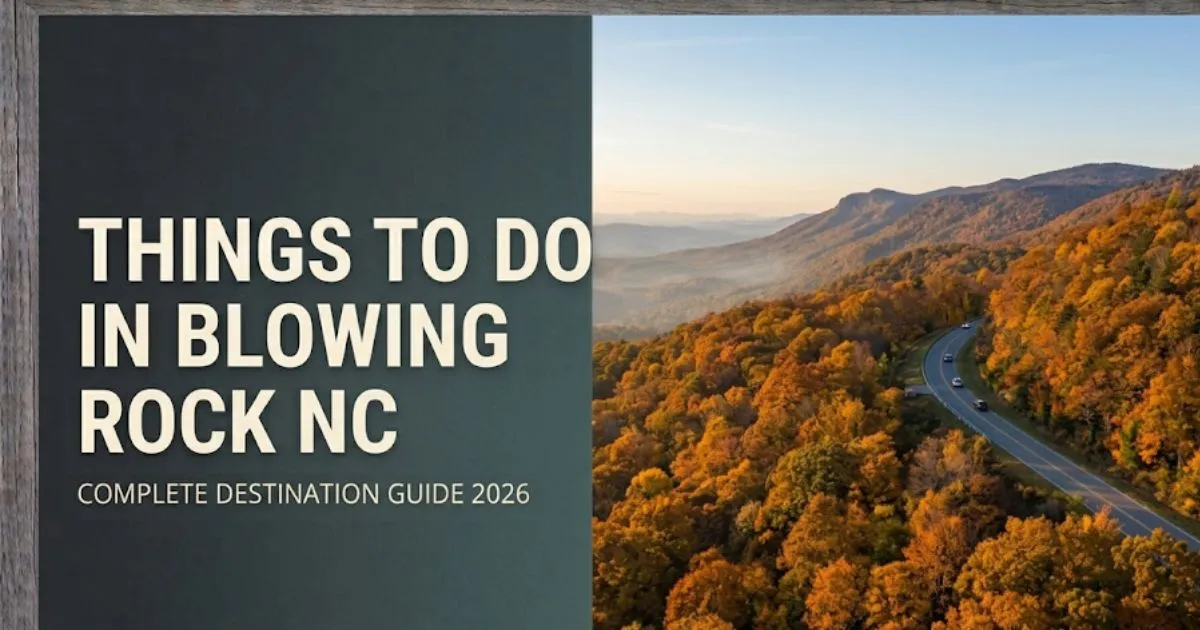
The things to do in Blowing Rock, NC range from hiking carriage trails at Moses H. Cone Memorial Park to watching fall color from Blue Ridge Parkway overlooks above 4,000 feet.
The town itself sits right on the Parkway at Milepost 291. That placement makes it one of the most convenient mountain access points in the entire southern Appalachians.
Blowing Rock rewards travelers who slow down. It is not a destination built around spectacle; it is built around quality of place.
The central geography is compact. Main Street, the Parkway access points, and the primary trailheads are all within a five-minute drive of each other.
Couples find the combination of scenic drives, craft dining, and gallery browsing genuinely satisfying over a full weekend. Families with younger children gravitate toward Tweetsie Railroad and Broyhill Park.
Hikers and nature travelers use Blowing Rock as a base for the Moses Cone trail network and the Glen Burney Falls descent. Seniors with mobility considerations can access Bass Lake’s flat perimeter trail without significant physical demand.
Insider Tip:
- The town’s elevation keeps summer temperatures 10 to 15 degrees cooler than Charlotte or Raleigh. Pack a light layer even in July.
- Downtown parking on Main Street fills completely by 10 AM on any fall weekend. Arrive before 9 AM or park at Broyhill Park and walk.
- The Blue Ridge Parkway between Blowing Rock and Grandfather Mountain is among the most accessible and visually rewarding sections of the entire 469-mile route.
Best Things to Do in Blowing Rock NC
The best things to do in Blowing Rock, NC for most travelers in 2026 are: hiking the Moses H. Cone carriage trails, driving the Blue Ridge Parkway to Grandfather Mountain overlooks, walking Glen Burney Trail to the falls, and exploring Main Street’s independent shops and restaurants.
The activity spread here differs from busier mountain towns. Blowing Rock has no major resort infrastructure and no large commercial entertainment district.
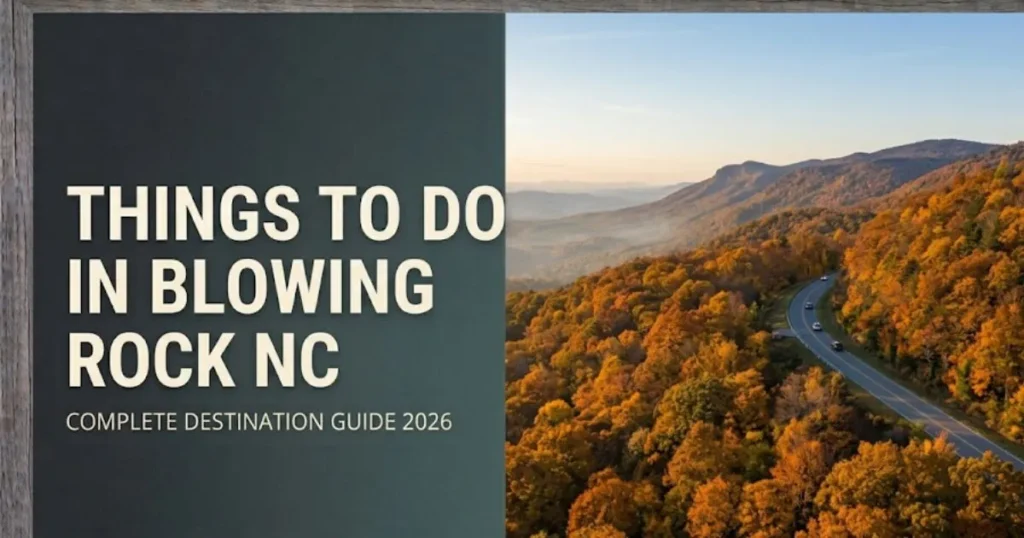
What it has is a tightly curated collection of genuinely good experiences. The quality-to-crowd ratio is better than Asheville or Banner Elk on most non-peak weekends.
| Activity | Best For | Cost Range | Time Required | Insider Note |
|---|---|---|---|---|
| Moses H. Cone Carriage Trails | All profiles | Free | 1 to 3 hours | Flat carriage road surfaces work for most mobility levels |
| Glen Burney Trail | Hikers | Free | 2 to 3 hours | Steep and uneven; not for casual footwear |
| Blue Ridge Parkway Drive | Couples, Seniors | Free | 1 to 4 hours | Sections close in winter ice; verify before visiting |
| Tweetsie Railroad | Families | Approx. $30 to $45 per person | 3 to 5 hours | Book in advance on summer weekends |
| The Blowing Rock (attraction) | First-time visitors | Approx. $5 to $10 per person | 30 to 45 minutes | Modest geological feature; manages expectations |
| BRAHM (art museum) | Culture travelers | Free to modest admission | 1 to 2 hours | Underutilized by first-time visitors |
| Main Street dining and shopping | All profiles | Variable | 2 to 4 hours | Best on weekday afternoons |
Families should anchor their day around Tweetsie Railroad and Broyhill Park. Couples get more from the Parkway drive, Glen Burney, and a dinner on Main Street.
Outdoor Activities in Blowing Rock NC
Blowing Rock’s outdoor activity options center on trail hiking, scenic driving, fishing, and waterfall access within a five-mile radius of downtown.
The Blue Ridge Parkway is the organizing spine. Nearly every outdoor experience in Blowing Rock connects back to it, either by trailhead access or by scenic approach.
Hikers have three distinct trail experiences to choose from. Moses H. Cone offers gentle carriage-road walking. Glen Burney Trail offers a genuine descent to a dramatic waterfall. The Parkway overlooks offer walk-up views without trail commitment.
Fishing access exists at Bass Lake inside Moses H. Cone Memorial Park. The lake sits at a comfortable elevation with a flat perimeter trail.
According to the National Park Service, Moses H. Cone Memorial Park is one of the Blue Ridge Parkway’s most visited recreation areas, drawing visitors for both trail access and the historic Flat Top Manor house.
Cyclists use the Moses Cone carriage road network regularly. The trails are unpaved but compacted and manageable on hybrid bikes.
Seniors and accessibility travelers should note that Bass Lake’s perimeter is the most reliably flat and accessible walking surface in the area. Glen Burney Trail has steep, rocky sections that require sure footing and appropriate footwear.
The outdoor season runs effectively from late April through early November. Blue Ridge Parkway sections near Blowing Rock may close briefly in winter during ice events, typically reopening within 24 to 48 hours.
The Blowing Rock Attraction
The Blowing Rock is a historic overlook attraction at the edge of the Johns River Gorge, charging a modest admission fee and offering views across the Piedmont below.
It is the town’s namesake. A geological quirk causes updrafts that push light objects back upward when thrown from the rock’s edge.
The honest assessment: it is a genuine piece of Appalachian history and the views on a clear day are wide and satisfying. It is not, however, the dramatic canyon-edge experience some visitors picture from the name alone.
Admission runs approximately $5 to $10 per adult as of recent years, with reduced rates for children. Verify current pricing directly with the attraction before visiting.
The site also features the Legend of Cherokee origin story, which adds cultural and historical depth to what is otherwise a 30 to 45-minute stop.
First-time visitors should include it as one stop among several rather than a primary destination. Repeat visitors and locals tend to skip it in favor of the Blue Ridge Parkway overlooks, which are free and offer comparable or superior panoramas.
The local alternative experienced travelers prefer: Price Lake Overlook at Milepost 297 on the Blue Ridge Parkway. It costs nothing, requires no ticket, and delivers an unobstructed mountain lake view that rivals anything on the paid attraction circuit.
Insider Tip:
- Visit The Blowing Rock on a weekday morning to avoid tour bus groups.
- Clear days, particularly after cold fronts pass through, offer 40-mile visibility across the Piedmont. Cloudy or hazy days significantly limit the view payoff.
- This stop is best suited for first-time visitors, history-oriented travelers, and families who want to check the town’s namesake off their list.
Key Takeaway: Arrive at any Blowing Rock trailhead or downtown parking area before 9 AM on fall weekends. Everything fills within an hour of that window.
Moses H. Cone Memorial Park and Bass Lake
Moses H. Cone Memorial Park offers more than 25 miles of carriage trails, two lakes, and the restored Flat Top Manor house, all free to enter as part of the Blue Ridge Parkway system.
It is the single most underrated experience in Blowing Rock for repeat visitors and locals. No entry fee. No reservation required on most days. Accessible from the Parkway at Milepost 294.
The Bass Lake loop is the gentlest walk in the park. At roughly 1 mile around, with a flat, packed surface, it is genuinely accessible for most mobility levels. The reflection of Flat Top Manor in the lake on a still morning is one of the most photographed views in the High Country.
The carriage trail network climbs higher into the property toward Flat Top Mountain, offering more elevation gain for hikers who want a proper workout. The trails are wide, well-maintained, and clearly signed.
The manor house itself functions as a Blue Ridge Parkway craft center operated by the Parkway Craft Center, featuring works by Southern Highland Craft Guild artisans. It is open seasonally; verify hours before visiting.
Families should know that the Bass Lake trail is stroller-accessible on the flat sections but not throughout the full carriage trail network. Solo travelers can easily spend two to three hours exploring the trail network without feeling rushed or crowded on non-peak days.
Fall is the prime season. Peak color at Moses Cone typically arrives between mid-October and early November. The higher carriage trails offer sweeping color views across multiple ridge lines simultaneously.
Glen Burney Trail Hiking in Blowing Rock
Glen Burney Trail descends through a gorge from the edge of Blowing Rock village to two waterfalls: Anne Carter Falls and Glen Burney Falls, the taller of the two at approximately 40 feet.
The trailhead is located at the end of Glen Burney Road, within a short drive of downtown. Total round-trip distance is approximately 2.4 miles, but the descent and return elevation change makes it physically demanding.
Expect the descent to take 45 to 60 minutes. The return climb back to the trailhead is steeper than most visitors anticipate. Budget at least 2 to 2.5 hours total.
The trail surface is rocky, rooted, and uneven throughout. Hiking shoes or trail runners are required. Do not attempt this trail in sandals, flip-flops, or casual sneakers.
Budget travelers will find Glen Burney Trail one of Blowing Rock’s best free experiences. The waterfalls at the bottom are genuinely impressive, especially after rainfall when water volume is high.
Families with young children should assess this trail carefully. Children 8 and older who are comfortable on uneven terrain can manage it. Strollers are not suitable at any point on the trail.
The local waterfall alternative for those who want a more accessible experience: Cascades Trail at E.B. Jeffress Park at Blue Ridge Parkway Milepost 272. It is shorter, flatter, and leads to Falls Creek waterfall through a hemlock forest.
Insider Tip:
- Glen Burney Trail’s gorge holds moisture and shade. Even on hot summer days, temperatures near the falls run noticeably cooler than at the trailhead.
- Go early on weekends. The narrow trail creates passing bottlenecks when crowded.
- Seniors and travelers with knee issues should skip the return climb. It is steep enough to cause real discomfort on the ascent.
Blue Ridge Parkway Near Blowing Rock NC
The Blue Ridge Parkway passes directly through Blowing Rock at Milepost 291, making this one of the most accessible entry points along the entire 469-mile route from Virginia to Cherokee, NC.
The Parkway is free to drive. No entry fee, no toll, no permit required for standard vehicle travel.
The stretch between Blowing Rock and Grandfather Mountain to the south (approximately 12 miles) is among the most visually dramatic sections of the road. It passes the Linn Cove Viaduct, one of the most photographed pieces of road engineering in the American South.
The Linn Cove Viaduct hugs the side of Grandfather Mountain at elevation. The pullout and short interpretive walk there is a 15-minute stop that most first-time Parkway visitors name as the highlight of their day.
According to VisitNC, the Blue Ridge Parkway ranks among North Carolina’s most visited natural attractions annually. The Blowing Rock section receives especially high traffic from September through late October.
Parkway sections near Blowing Rock can close temporarily in winter due to ice and snow. Before any winter or early spring visit, verify current road status at the National Park Service Blue Ridge Parkway website.
Seniors find the Parkway ideal. Pull-off overlooks are frequent, require minimal walking, and deliver panoramic mountain views from the car window or a brief 50-foot walk to a railing.
Couples in 2026 who want the most memorable Parkway experience should plan the drive at golden hour, roughly 45 to 60 minutes before sunset. The light on the ridge lines at that hour justifies driving the entire Blowing Rock to Grandfather Mountain stretch twice.
Key Takeaway: The Linn Cove Viaduct pullout between Blowing Rock and Grandfather Mountain is a 15-minute stop that genuinely earns the detour. Do not skip it.
Tweetsie Railroad Blowing Rock NC
Tweetsie Railroad is a Western-themed amusement park built around a narrow-gauge steam train ride, located approximately 3 miles from downtown Blowing Rock on US-321.
It is the most specifically family-oriented paid attraction in the area. The steam train ride itself circles a 3-mile loop through staged Western scenes, with mock train robberies and cowboy performances.
Admission runs approximately $30 to $45 per person as of recent years, with age-based pricing tiers. Verify current rates directly with Tweetsie Railroad before visiting.
The park operates seasonally, typically spring through fall, with special Halloween and Christmas-themed events extending the season at the edges. Confirm the 2026 operating calendar directly with Tweetsie Railroad before booking travel around it.
Families with children ages 3 to 12 will get the most value here. Children under 3 are often admitted free; verify current policy. The steam train ride runs approximately 35 minutes and is the central experience.
Beyond the train, the park includes carnival rides, a petting zoo, gold panning, and live entertainment. Expect to spend three to five hours for a full visit.
Budget travelers should note this is one of the higher per-person costs in the Blowing Rock area. The experience is well-executed for its target audience. For families with young children, it delivers. For adults without children, the park has limited appeal.
Advance online ticket purchase is strongly recommended for summer weekends and any October date. On peak days, walk-up tickets may sell out.
Restaurants and Dining in Blowing Rock NC
Blowing Rock’s dining scene punches above its population weight, with Speckled Trout Restaurant and Bottle Shop on Main Street earning consistent recognition as the town’s most locally-rooted dining experience.
Speckled Trout focuses on Appalachian-sourced ingredients with a beverage program that highlights regional craft beers and North Carolina wine. Dinner reservations are recommended on weekends.
Canyons Restaurant, also on Main Street, offers a more casual atmosphere with mountain views from its back terrace. It handles a broader range of traveler budgets without sacrificing quality.
Village Cafe Blowing Rock anchors the breakfast and lunch crowd. For morning visitors, it is the practical first stop before hitting trailheads. Expect a wait on weekend mornings during foliage season.
Blowing Rock Brewing Company occupies a space on Main Street with solid house-brewed options and a menu that works for both beer-focused visitors and those who just want a reliable lunch after a trail morning.
The local alternative to Main Street’s busiest restaurants: Bistro Roca on Yonahlossee Road, slightly outside the downtown core, delivers a more intimate dining atmosphere with a kitchen that takes the sourcing seriously. Locals tend to cite it when pressed for their honest preference.
Budget travelers should note that Blowing Rock’s dining runs mid-range to upscale by general NC standards. A full dinner for two at most Main Street restaurants runs $60 to $100 before drinks. The Village Cafe and Blowing Rock Brewing Company offer the most accessible price points.
According to High Country Host, the regional tourism organization for Watauga County, Blowing Rock’s restaurant density per capita is among the highest in the NC mountains, reflecting its role as a visitor-focused destination year-round.
Shopping in Downtown Blowing Rock NC
Downtown Blowing Rock’s shopping is concentrated on Main Street and the adjacent Shoppes on the Parkway, offering a mix of independent galleries, home goods boutiques, and Appalachian craft retailers.
This is not a mall-adjacent strip of chain stores. The commercial character reflects the town’s identity as a mountain arts community.
Bolick Pottery at Traditions Pottery on US-321 is a destination in itself for ceramics collectors. The Bolick family has operated a traditional Catawba Valley pottery tradition for generations, and the on-site working studio is worth a stop even for visitors who do not plan to buy.
The Blowing Rock Art and History Museum (BRAHM) anchors the cultural side of Main Street. Exhibitions rotate and focus on regional Appalachian art and history. Admission is free to modest; verify current rates before visiting.
Shoppers looking for mountain outfitters and outdoor gear should head to Boone NC (15 minutes away), which has a larger outdoor retail footprint including an REI and multiple independent outfitters.
Couples find the gallery browsing and boutique circuit genuinely pleasant on a weekday morning when Main Street is quiet. Families with restless children may find the shopping circuit feels long after 45 minutes.
Insider Tip:
- The best shopping hours on Main Street are Tuesday through Thursday between 10 AM and 2 PM. Weekend afternoons are congested and parking becomes genuinely difficult.
- Several gallery owners on Main Street are themselves working artists. Asking about their own work often opens a more engaging conversation than reading the wall labels.
Key Takeaway: BRAHM on Main Street is Blowing Rock’s most underused attraction by first-time visitors. It is free or low-cost and delivers genuine Appalachian cultural depth that no trail or overlook can.
Fall Foliage in Blowing Rock NC
Fall foliage in Blowing Rock typically peaks between mid-October and early November, with the exact timing varying year to year based on summer rainfall and fall temperature patterns.
Blowing Rock sits at an elevation where color arrives earlier than in lower-elevation NC towns. The High Country often sees peak color one to two weeks ahead of the Piedmont below.
The week of October 10 to 17 has historically been near-peak for the Blowing Rock and Blue Ridge Parkway corridor, though this shifts by a week or more in both directions depending on the year. High Country Host publishes a real-time foliage tracker each fall; check it within 30 days of your planned visit.
The foliage crowd reality is significant. The third and fourth weekends of October bring the heaviest visitor volumes of the entire year. US-321 backs up for miles south of Blowing Rock on Saturday and Sunday mornings.
The practical solution: visit the third week of September or the first week of November instead. Color is past full peak but still strong, accommodation rates drop, and parking is manageable.
Moses H. Cone Memorial Park and the Blue Ridge Parkway overlooks between Mileposts 291 and 305 offer the densest concentration of viewable color without requiring strenuous hiking.
Accommodation bookings for peak fall weekends (mid to late October) should be made 4 to 6 months in advance. Properties in and immediately around Blowing Rock fill completely on peak foliage weekends.
Budget travelers should know that the same scenic drives and overlooks are free at any time of year. The foliage itself costs nothing. The premium is in accommodation and restaurant wait times during peak weeks.
Romantic Things to Do in Blowing Rock NC
Blowing Rock is genuinely well-suited for couples, particularly those who want scenic beauty, quality dining, and a small-town atmosphere without driving to Asheville’s busier urban environment.
The combination works: a morning carriage trail walk at Moses Cone, a Parkway drive at sunset, and a dinner reservation at Speckled Trout covers the essential romantic day.
Couples staying overnight should look at properties in the immediately surrounding area, including several historic inns and mountain cabins available through vacation rental platforms. The town’s small lodging inventory books quickly on fall and summer weekends.
The Mayview Manor area and the properties along Yonahlossee Road offer the most private and scenically placed accommodations within a short drive of Main Street.
A practical romantic itinerary for 2026: arrive Friday afternoon, walk Bass Lake at Moses Cone before dinner, dine at Bistro Roca or Speckled Trout. Saturday: drive the Parkway south to Linn Cove Viaduct and Grandfather Mountain. Sunday morning: Glen Burney Trail before the drive home.
The honest note for couples: Blowing Rock’s romantic appeal depends heavily on low-crowd conditions. A peak October Saturday on Main Street is crowded and loud enough to undercut the intimate mountain-town character. The town’s romantic identity is strongest on weekdays and in shoulder seasons.
Insider Tip:
- The best sunset view accessible to couples without hiking is from Rough Ridge Overlook on the Blue Ridge Parkway near Milepost 302. The ridge walk to the view is under 1 mile round-trip.
- For the most private dining experience in the area, book Bistro Roca on a Tuesday or Wednesday night.
Family Things to Do in Blowing Rock NC
Blowing Rock with kids works best when Tweetsie Railroad anchors the itinerary and the rest of the day fills with lower-intensity activities nearby.
Tweetsie Railroad is the clearest family anchor in the area. Children 3 to 12 respond consistently well to the steam train experience. Adults with children under 3 will find free or very low admission, though verify the current age policy before visiting.
Broyhill Park in downtown Blowing Rock offers a small lake, walking path, and picnic area. It is free, central, and gives children room to move after a car trip. It functions well as a 45-minute reset between other activities.
The Bass Lake loop at Moses Cone works for families with children who can walk 1 mile at a comfortable pace. The flat surface and lake views hold children’s attention better than most trail environments.
Families with children under 5 should know that Glen Burney Trail is not appropriate. The terrain is steep and uneven enough to be genuinely hazardous for small children. The Parkway overlooks and Bass Lake are the right alternatives.
According to VisitNC, the Blue Ridge Parkway corridor near Blowing Rock is consistently identified as a top family road trip destination in North Carolina, particularly for families combining national park access with small-town dining and lodging.
For a full family day: Tweetsie Railroad in the morning (open 9 AM most days; verify 2026 hours), Broyhill Park for lunch, Bass Lake walk at Moses Cone in the afternoon, pizza or casual dining on Main Street in the evening.
Key Takeaway: For families, Tweetsie Railroad requires advance online ticket purchase on any summer or October weekend. Walk-up availability is not guaranteed on peak days.
Free Things to Do in Blowing Rock NC
The majority of Blowing Rock’s best outdoor experiences cost nothing, including the Blue Ridge Parkway drive, Moses H. Cone Memorial Park, Bass Lake, Glen Burney Trail, and all Parkway overlooks.
The Blue Ridge Parkway has no entry fee. No annual pass is needed to drive the road, access overlooks, or use trailheads managed by the National Park Service within the corridor.
Free experiences by category:
- Hiking: Glen Burney Trail, Moses H. Cone carriage trails, Bass Lake loop, Cascades Trail at E.B. Jeffress Park (Milepost 272)
- Scenic driving: Blue Ridge Parkway full corridor; no toll or entry fee
- Overlook access: Rough Ridge, Price Lake Overlook, Linn Cove Viaduct pullout
- Park access: Moses H. Cone Memorial Park including Flat Top Manor exterior
- Cultural browsing: BRAHM on Main Street (free or modest suggested donation on select days; verify current admission policy)
- Town walking: Main Street, Broyhill Park, downtown gallery browsing
Budget travelers can spend a full and genuinely rewarding day in Blowing Rock spending zero dollars on admission. The natural infrastructure here is unusually strong for a town of this size.
The primary costs are accommodation, dining, and fuel. Accommodation in and around Blowing Rock is not budget-friendly. Travelers on a tight lodging budget should consider staying in Boone NC (15 minutes away) where more mid-range motel options exist, and day-tripping into Blowing Rock.
Seniors on fixed incomes should also note that the America the Beautiful Senior Pass (a one-time fee for US citizens 62 and older) provides access to all NPS-managed areas and would cover entrance fees at nearby Grandfather Mountain State Park, which charges separately.
Day Trips from Blowing Rock NC
Blowing Rock sits within easy driving distance of several distinct destinations, making it an effective hub for a multi-day High Country trip.
Grandfather Mountain State Park is the most significant day trip from Blowing Rock, located approximately 12 miles south via the Blue Ridge Parkway and US-221. The park charges a separate admission fee (verify current rates before visiting). Its swinging bridge at the summit, mile-high elevation, and wildlife habitats (black bear, mountain lion, eagles) make it a full-day experience.
Boone NC is 15 minutes north on US-321. It is the regional college town (Appalachian State University) with a larger restaurant and bar scene, outdoor gear retailers, and a more active nightlife culture than Blowing Rock.
Linville Falls sits approximately 25 miles south via the Blue Ridge Parkway at Milepost 316. The falls are among the most photographed in the NC mountains, with a short trail system (1 to 2 miles) leading to multiple viewpoints. No entry fee as an NPS site.
Valle Crucis NC is 20 minutes west on NC-105. The Mast General Store at Valle Crucis anchors a genuinely historic shopping and cultural stop. The original Mast General Store has operated continuously since 1883 and functions as a working country store rather than a museum recreation.
Banner Elk NC (30 minutes via NC-105 and NC-181) offers ski resort access at Sugar Mountain Resort and Beech Mountain Resort for winter visitors. Both are within a short drive.
| Destination | Distance from Blowing Rock | Best For | Primary Experience |
|---|---|---|---|
| Grandfather Mountain | 12 miles | All profiles | Summit views, wildlife, swinging bridge |
| Boone NC | 15 minutes | Solo travelers, outdoor shoppers | Dining, gear retail, college-town energy |
| Linville Falls | 25 miles | Hikers, nature travelers | Waterfall trails, NPS corridor |
| Valle Crucis / Mast General Store | 20 minutes | Couples, cultural travelers | Historic general store, rural character |
| Banner Elk | 30 minutes | Winter sports travelers | Ski resort access |
Getting To and Around Blowing Rock NC
Getting to Blowing Rock requires a car. There is no commercial airport in the High Country, no Amtrak service, and no regional bus connection to the town itself.
Charlotte Douglas International Airport (CLT) is the nearest major airport, approximately 2 hours south via I-85 and US-321. This is the most practical fly-drive option for most visitors.
Raleigh-Durham International Airport (RDU) is approximately 3 hours east via I-40 and US-321. It is a viable alternative depending on flight availability and pricing.
Driving directions from Charlotte: Take I-77 North to I-40 West, then follow US-321 North into Blowing Rock. The last 20 miles on US-321 climb significantly in elevation. Mountain driving experience is helpful, though not required.
Once in Blowing Rock, the town is small enough to navigate entirely on foot if you can secure parking. The challenge is that parking.
Parking on Main Street and at the Shoppes on the Parkway is free but limited. On any peak weekend (summer Saturdays, any October weekend), these lots fill by 9 to 10 AM. Broyhill Park has additional parking and is a 5-minute walk to Main Street.
Moses H. Cone Memorial Park, Glen Burney Trail, and Blue Ridge Parkway overlooks all have their own trailhead parking, though these also fill on peak foliage weekends.
Safety note: The Blue Ridge Parkway has no cell service in several sections between Blowing Rock and Linville. Download offline maps before driving the Parkway, and carry a paper map as a backup.
The recommended approach for peak-season visitors: book accommodation within walking distance of Main Street and use your car only for Parkway excursions.
Key Takeaway: Cell service on the Blue Ridge Parkway between Blowing Rock and Linville Falls is unreliable. Download offline maps before you leave your lodging.
Best Time to Visit Blowing Rock NC
The best time to visit Blowing Rock, NC is mid-September through early October for a balance of fall color, manageable crowds, and comfortable temperatures.
The second-best window is late May through mid-June, when wildflowers bloom along the Parkway, rhododendrons peak in the high elevation forests, and summer crowds have not yet arrived.
| Season | Conditions | Crowd Level | Notes |
|---|---|---|---|
| Mid-September to early October | Peak to near-peak color, 50s to 70s F | Moderate | Best balance of color and manageable crowds |
| Mid to late October | Full peak color, 40s to 60s F | Very high | Traffic and parking congestion severe on weekends |
| Late May to mid-June | Wildflowers, rhododendron bloom, mild | Low to moderate | Underrated window; accommodations more available |
| July and August | Warm (70s to 80s F), 10-15 degrees cooler than Charlotte | Moderate to high | Summer families; busy but manageable |
| November to March | Cold, occasional snow, some Parkway closures | Low | Off-season rates; limited trail access possible |
| December (holiday season) | Cold, festive Main Street lighting | Moderate | Christmas in Blowing Rock events draw visitors |
The worst time to visit, if you want to avoid crowds: the third and fourth Saturday of October. This period brings the single highest visitor volume of the year to a town with genuinely limited parking and infrastructure.
Seniors benefit most from a September or early June visit, when temperatures are comfortable, trails are dry, and the Parkway is fully open without weather complications.
Budget travelers should target November through early December or February through April. Accommodation rates drop significantly, and the town’s natural scenery remains worthwhile even without full foliage.
One-Day Itinerary for Blowing Rock NC
A one-day Blowing Rock itinerary works best when it separates morning trail time from afternoon town exploration and ends with a Parkway drive at golden hour.
This plan assumes arrival the night before or an early-morning drive from Charlotte or Raleigh to be on-site by 8:30 AM.
One-Day Blowing Rock Itinerary:
- 7:30 to 8:30 AM: Breakfast at Village Cafe on Main Street. Arrive before the crowd builds. Order early; the kitchen moves quickly.
- 8:45 to 10:30 AM: Drive to Glen Burney Trail on Glen Burney Road. Hike down to Glen Burney Falls and back. Allow 2 hours and wear proper footwear. This trail is best completed before 10 AM to beat other hikers on narrow sections.
- 10:45 AM to 12:30 PM: Drive to Moses H. Cone Memorial Park at Milepost 294 on the Blue Ridge Parkway. Walk the Bass Lake loop (1 mile, flat). Browse the Parkway Craft Center in Flat Top Manor if it is open.
- 12:45 to 1:45 PM: Lunch on Main Street. Canyons Restaurant or Blowing Rock Brewing Company both handle midday crowds efficiently.
- 2:00 to 3:00 PM: Main Street gallery browsing and BRAHM visit. The afternoon window is quieter than morning for shopping.
- 3:15 to 4:00 PM: Brief stop at The Blowing Rock attraction if this is your first visit. Allow 30 to 45 minutes. It can be skipped by repeat visitors in favor of more Parkway time.
- 4:15 to 6:00 PM: Drive the Blue Ridge Parkway south toward Grandfather Mountain. Stop at the Linn Cove Viaduct pullout. Continue to Rough Ridge Overlook for the golden-hour light on the ridge.
- 6:30 PM: Dinner reservation at Speckled Trout or Bistro Roca. Book in advance. Walk-in availability on peak evenings is uncertain.
Families with young children should swap Glen Burney Trail for Tweetsie Railroad (opens 9 AM most operating days) and replace the Parkway drive with additional Broyhill Park time in the afternoon.
Seniors should skip Glen Burney Trail and extend the Moses Cone / Bass Lake portion of the morning, then spend additional time at BRAHM before an early dinner.
Safety and Practical Warnings for Blowing Rock NC
Blowing Rock’s mountain environment and elevation create specific safety and logistics realities that most visitors do not anticipate from the town’s small, friendly character.
Key safety and practical facts every visitor should know:
- Weather changes rapidly at 3,600 feet. Morning sun can shift to afternoon thunderstorms without warning, especially July through September. Carry a rain layer on any trail.
- Glen Burney Trail is genuinely strenuous. The return climb surprises visitors who underestimate elevation gain. Do not attempt in sandals or casual footwear.
- Blue Ridge Parkway sections close in winter and during ice events. Verify the NPS road status report before any visit from November through March.
- Cell service on the Parkway is unreliable. Download offline maps before leaving lodging. Carry water and a fully charged phone.
- The Parkway has a 45 mph speed limit and is not designed for passing. Leave extra following distance on curves, especially in fog.
- Peak fall weekend traffic on US-321 can back up for miles south of Blowing Rock. Budget extra travel time and use early morning arrival to bypass the worst congestion.
- Altitude adjustment: At 3,600 feet, visitors coming from sea-level areas may notice mild breathlessness on the first day. Hydrate more than usual and pace trail activity accordingly.
- Wildlife encounters: Black bears are present in the wider High Country area. Follow standard bear awareness practices on trails: make noise, store food properly, do not approach wildlife.
In a genuine medical or trail emergency on the Blue Ridge Parkway, contact the National Park Service Parkway emergency line or call 911. First responder access on Parkway sections can take longer than in urban environments.
Frequently Asked Questions About Things to Do in Blowing Rock NC
What is Blowing Rock NC known for?
Blowing Rock, NC is known for its location on the Blue Ridge Parkway, the historic Blowing Rock geological attraction, Moses H. Cone Memorial Park, Tweetsie Railroad, and its small-town Main Street of galleries and restaurants.
At roughly 3,600 feet elevation, it also draws visitors for fall foliage, wildflower season, and mountain temperatures that stay 10 to 15 degrees cooler than the NC Piedmont in summer.
The town’s combination of scenic driving access, family attractions, and walkable dining makes it one of the most visited small towns in the NC mountains.
Is Blowing Rock NC worth visiting?
Yes, Blowing Rock is worth visiting for couples, families with young children, fall foliage travelers, and seniors seeking scenic mountain access without strenuous logistics.
It is not the right destination for adventure travelers seeking technical outdoor sports, or budget travelers who need low-cost overnight accommodations.
The town’s value is highest when visited outside peak October foliage weekends, when the crowds and parking situation significantly diminish the experience.
How far is Blowing Rock NC from Charlotte?
Blowing Rock is approximately 90 to 110 miles from Charlotte, depending on the specific route, which translates to roughly 1.5 to 2 hours of driving.
The most common route uses I-77 North to I-40 West and then US-321 North through Lenoir and Caldwell County into Blowing Rock.
The final stretch on US-321 climbs through mountain terrain and should be driven at appropriate speeds, especially in wet or foggy conditions.
What is the best time to visit Blowing Rock NC?
The best time to visit Blowing Rock, NC is mid-September through early October for near-peak fall color with manageable crowds, or late May through mid-June for wildflowers and mild temperatures.
Peak October foliage weekends (third and fourth weekends of October) deliver the most dramatic color but also the most severe crowd and parking congestion of the entire year.
Off-season visits from November through early December and February through April offer significantly lower accommodation rates and quiet Main Street access.
Is the Blue Ridge Parkway free near Blowing Rock?
Yes, the Blue Ridge Parkway is completely free to drive near Blowing Rock, with no toll, no entry fee, and no permit required for standard vehicle access.
The America the Beautiful annual pass is not needed for Parkway access, though it does provide value at nearby Grandfather Mountain and other NPS-adjacent sites.
Some Parkway sections close temporarily in winter during ice events; verify the current road status at the National Park Service Blue Ridge Parkway website before visiting November through March.
What should I not miss in Blowing Rock NC?
First-time visitors should prioritize the Blue Ridge Parkway drive to Linn Cove Viaduct, the Bass Lake loop at Moses H. Cone Memorial Park, dinner at Speckled Trout on Main Street, and a morning hike on Glen Burney Trail if they are physically comfortable on steep terrain.
Families should add Tweetsie Railroad to that list and book tickets in advance.
The single stop most visitors skip that experienced travelers consistently recommend is the Rough Ridge Overlook on the Parkway near Milepost 302, especially at late afternoon when the ridge light is strongest.
Planning Your Trip to Blowing Rock NC
Blowing Rock rewards early planners. Book accommodation three to four months ahead for any fall weekend visit, and lock in Tweetsie Railroad tickets before leaving home if you are traveling with children.
The single logistics step that makes the biggest difference: set your alarm for a 7:30 AM start on any peak-season day. Trails, parking, and breakfast spots are all dramatically more enjoyable before 10 AM when weekend crowds arrive in force.
Travel conditions, operating hours, admission prices, and Blue Ridge Parkway road status change regularly. Verify all key logistics directly with the National Park Service Blue Ridge Parkway site, Tweetsie Railroad’s official booking page, and High Country Host before your departure date.
Blowing Rock is a small town that does the mountain experience right. Arrive with a specific plan, start early, and you will leave with a full day of exactly the kind of thing the NC High Country does better than almost anywhere in the eastern US.