Things To Do in El Salvador: The 2026 Travel Guide

El Salvador packs more genuinely rewarding things to do into a country the size of Massachusetts than most travelers expect. From world-class Pacific surf breaks to a UNESCO archaeological site that rivals Pompeii, the range here is specific, impressive, and chronically underreported.
The country uses the US dollar as its official currency, which removes exchange hassle entirely for American travelers. CORSATUR, El Salvador’s official tourism body, reports visitor numbers have grown steadily since 2022 as the security landscape shifted significantly.
This guide covers the country’s best activities by zone, traveler profile, and season. You will leave knowing exactly what to book, where to go first, and how many days you actually need.
Things To Do in El Salvador: What Makes This Country Worth Your Trip
The best things to do in El Salvador range from surfing Punta Roca, one of the world’s most respected right-hand point breaks, to walking through a pre-Columbian Maya village preserved under volcanic ash at Joya de Cerén.
El Salvador is the smallest country in Central America. It is also the most densely packed with distinct, high-quality experiences per square kilometer.
Unlike neighboring Guatemala or Costa Rica, it has not been fully absorbed into international resort circuits. That means you encounter fewer tour groups, more authentic interactions, and significantly lower prices.
The honest frame for this destination: it rewards curious, mobile travelers who plan ahead. It does not reward travelers who expect Caribbean-standard beach resorts or tourist-sanitized infrastructure everywhere they go.
| Experience Category | Signature Example | Best Traveler Profile | Approximate Cost Range |
|---|---|---|---|
| Pacific Surfing | Punta Roca, El Tunco | Surfers, adventure travelers | $20-$60/day with board rental |
| Volcano Hiking | Santa Ana (Ilamatepec) | Active travelers, outdoors couples | $15-$30/person with guide |
| Colonial Towns | Suchitoto, Ataco | Culture travelers, couples | Free to explore, $10-$20 for tours |
| Archaeological Sites | Joya de Cerén, Tazumal | History travelers, families (older kids) | $3-$5 entry range |
| Crater Lakes | Lake Coatepeque | All profiles, most accessible | Free to enter area, boat rentals extra |
| Coffee Region | Apaneca, Juayúa highlands | Food travelers, couples | $15-$40 for guided farm tours |
| Cloud Forest/Wildlife | El Imposible, Montecristo | Serious hikers, naturalists | $6-$15 entry range |
Best Time to Visit El Salvador
The best time to visit El Salvador is during the dry season, running from November through April.
Skies are clear for volcano hikes. Unpaved roads to rural sites are passable. Beach conditions are consistent and the Pacific surf is firing.
December through February brings the most comfortable temperatures across the country. It is also peak season, so book accommodation in Suchitoto and El Tunco at least four to six weeks in advance.
The wet season runs May through October. Rain typically arrives in the afternoon, leaving mornings workable for outdoor activities. Most travelers can navigate the wet season with an adjusted schedule.
August and September are the most genuinely difficult months. Rainfall is heaviest. Roads to cloud forest reserves and northern mountain areas can flood or wash out. Volcano hikes are occasionally closed due to poor summit visibility.
Insider Tip:
- Late November is an excellent timing sweet spot: dry season has begun, prices are pre-Christmas, and the Juayúa Food Festival weekend crowds are manageable
- The Ruta de las Flores towns are at their most vibrant with flowering coffee plants from November through January
- Budget travelers visiting in the wet season (May to July) will find accommodations 20 to 30 percent cheaper with still-manageable conditions
San Salvador Things To Do
San Salvador rewards travelers who treat it as more than a layover between the airport and El Tunco.
MARTE (Museo de Arte de El Salvador) in the Colonia San Benito district holds the country’s strongest collection of Salvadoran modern art, including works by Fernando Llort, whose folk art style appears on the facade of the Metropolitan Cathedral. Entry runs approximately $2 to $3 per person as of recent years.
Mercado Ex-Cuartel is the correct market for food exploration in San Salvador. The national market Mercado Central is larger but more chaotic. Ex-Cuartel is where you find the city’s best informal food stalls selling pupusas, yuca frita, and sopa de res in a navigable space.
Parque Cuscatlán provides San Salvador’s best public green space. It is a genuine neighborhood park used by locals for morning exercise, family outings, and weekend leisure, not a tourist attraction dressed as one.
The Zona Rosa and Escalón neighborhoods are where most tourist-grade restaurants and hotels concentrate. They are safe, walkable, and useful as a base. They are not where you find the city’s most interesting food or cultural life.
For solo travelers, San Salvador’s walkable tourist zone around Zona Rosa and Colonia San Benito is navigable without concern during daylight. Night movement should stay to well-lit, populated areas. Families with young children will find San Salvador perfectly manageable for a day of cultural sightseeing.
Insider Tip:
- The Barrio Antiguo (historic downtown) around the Metropolitan Cathedral and Plaza Libertad has been through substantial renovation. It rewards a morning walk but requires awareness of your belongings in crowds
- The rooftop bar at several Zona Rosa hotels offers the clearest view of Volcán San Salvador at dusk, which costs nothing if you order a drink
El Tunco Beach and Surfing in El Salvador
El Tunco is El Salvador’s most established beach destination, and it earns its reputation specifically for one reason: the surf at Punta Roca, a right-hand point break roughly 10 kilometers north in La Libertad, is consistently ranked among the best in Central America.
El Tunco itself is a small beach town built almost entirely around the surf. The main strip runs along Calle Principal with hostels, surf shops, and open-air bars. It is not a beach for swimming. The wave is a powerful shore break and rip currents are consistent.
Always verify current water conditions with local surf schools before entering the water. This is not a beginner swimming beach under any circumstances.
For surfers, El Tunco to Punta Roca is a 15-minute tuk-tuk or taxi ride. Punta Roca is the serious wave. El Tunco’s local break is better suited for intermediate surfers learning the reef. Board rentals run approximately $10 to $20 per day at several shops along the main street.
Couples find El Tunco’s sunset atmosphere genuinely atmospheric. The beach bars at dusk deliver on the visual. The town is small enough to feel intimate.
Budget travelers will find El Tunco one of the cheapest beach destinations in the Western Hemisphere. Hostel dorms run approximately $10 to $20 per night. A full meal costs $3 to $8 at most local spots.
Families with young children should skip El Tunco’s surf beach. The undertow is dangerous and there is no protected swimming area. Playa El Zonte, 10 kilometers west, is calmer and better suited for families.
Santa Ana Volcano Hike in El Salvador
Santa Ana Volcano (locally called Ilamatepec) is El Salvador’s highest peak at 2,381 meters and its most rewarding day hike.
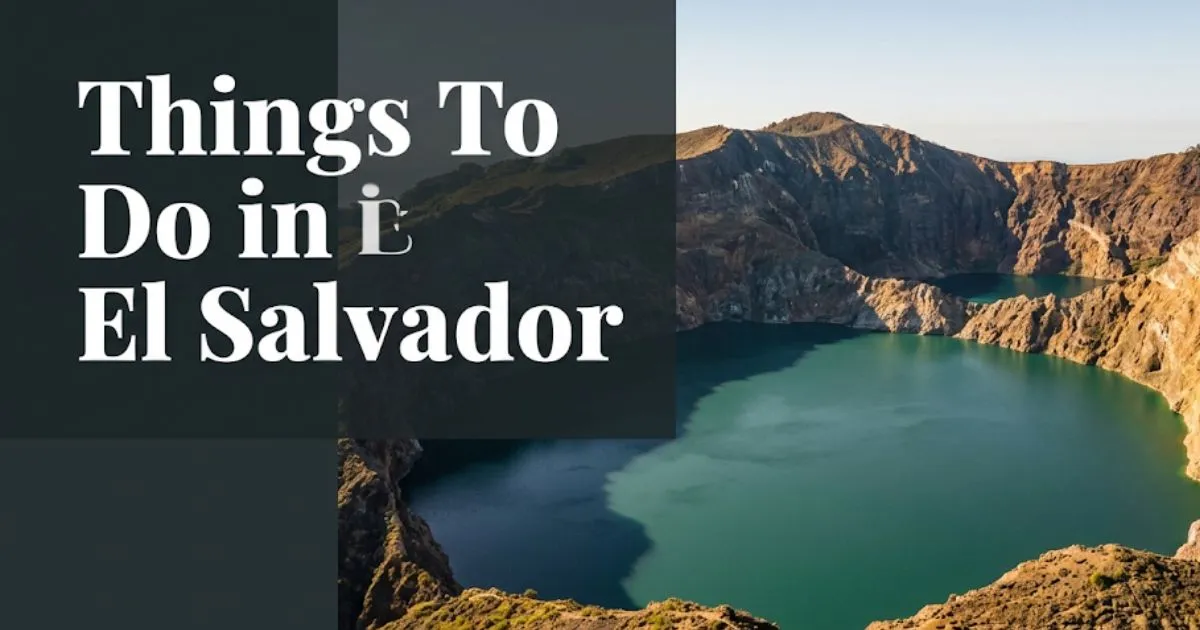
The summit reveals an active turquoise-green crater lake, one of only a few in the world. The view on a clear dry-season day also reaches Lake Coatepeque far below and the Pacific coast on the horizon.
The hike typically departs from the Cerro Verde National Park ranger station. The round trip takes approximately four to five hours at a moderate pace. The ascent is steep in sections and requires good footwear.
Advance reservation is required for the guided hike. Independent ascent without an official guide is not permitted. Contact CORSATUR or arrange through your hotel or hostel. Tours typically run in the morning from the Cerro Verde trailhead. Verify current departure times and reservation requirements directly before visiting, as access schedules change seasonally.
Admission to Cerro Verde National Park runs approximately $3 to $6 per person as of recent years. Guided summit tours add additional cost. Verify current pricing with the park directly.
This hike is not suitable for young children or travelers with limited mobility. The terrain is volcanic rock and exposed ridge line. There is no accessibility infrastructure on the trail.
The local alternative to Santa Ana’s standard tour: The hike to Izalco Volcano from the same Cerro Verde starting point is shorter, steeper, and rewards experienced hikers with a stark black lava landscape. Locals call it the “Lighthouse of the Pacific” for its 19th-century eruption history. It sees significantly fewer visitors than the Santa Ana route.
Key Takeaway: Book the Santa Ana volcano guided hike before you arrive in El Salvador. Permits fill during peak dry-season weekends, and walk-up access without a guide is not permitted.
Ruta de las Flores in El Salvador
Ruta de las Flores is a 36-kilometer road through El Salvador’s western coffee highlands, connecting the colonial towns of Nahuizalco, Juayúa, Apaneca, and Concepción de Ataco.
Each town has a distinct identity. Juayúa hosts a weekend food festival every Saturday and Sunday with dozens of vendors serving everything from grilled meats to chuco (a corn-based drink), running year-round. Ataco is the most visually striking, with cobblestone streets, painted walls, and a concentration of coffee shops and craft shops along Calle 2a Avenida Sur.
Getting there from San Salvador takes approximately two hours by car or shuttle. Tuk-tuks are the primary way to move between towns once you are on the route. Most travelers base in Juayúa or Ataco for one to two nights.
Couples consistently rate the Ruta de las Flores among El Salvador’s most romantic experiences. The pace is slow, the scenery is genuinely beautiful in the highland context, and the food and coffee quality is the best in the country.
Budget travelers should know the Juayúa food festival is excellent value. Plates average approximately $3 to $6 each. Weekend accommodation in Juayúa books up. Reserve at least one week ahead for weekend visits.
Families with children over 10 manage the Ruta de las Flores well. Younger children will struggle with the cobblestone streets and the primarily restaurant-and-cafe nature of the experience.
The overrated pick on this route: Nahuizalco is often listed first because of its indigenous artisan reputation. In practice, the craft market is small and the experience is thin compared to what Ataco and Juayúa deliver. Spend your time in Ataco and Juayúa. Nahuizalco is a brief stop at most.
Suchitoto, El Salvador
Suchitoto is El Salvador’s best-preserved colonial town, sitting above Lago Suchitlán approximately 47 kilometers northeast of San Salvador.
The town center around Iglesia de Santa Lucía and the central plaza is genuinely intact colonial architecture without the restoration-heavy feel of many heritage tourism towns. The white church facade against the lakeside backdrop is one of El Salvador’s most photographed locations, and for once the reality matches the image.
The lake itself offers boat tours to small islands including Los Pájaros Island, a bird sanctuary reachable by lancha (small wooden boat) from the town docks. Bird species include roseate spoonbills, herons, and cormorants. Tours run approximately $10 to $20 per person and last two to three hours.
Suchitoto also connects to the Cinquera Forest Reserve, a cloud forest area with howler monkeys and a memorial to the Salvadoran civil war, reachable in about 40 minutes by car. It is one of the most undervisited and genuinely interesting nature-and-history combinations in the country.
Couples find Suchitoto the single most romantic destination in El Salvador. Several boutique hotels occupy restored colonial buildings. One to two nights here is the most common and most rewarding stay in the country for a couple traveling without a surf agenda.
Solo travelers navigating Suchitoto is straightforward. The town is small and walkable. Evening safety is better here than in most Salvadoran cities because the town is essentially a functioning arts and tourism community.
Insider Tip:
- The town’s Thursday evening street food market near Plaza Morazan is a local event, not a tourist production. It runs from approximately 5 PM onward
- The lookout point at the end of Calle Francisco Morazan gives the clearest view of Lago Suchitlán at golden hour without any entrance fee
Key Takeaway: Suchitoto is the single most underrated destination in El Salvador relative to the time most tourists give it. One night minimum. Two nights is better.
Lake Coatepeque, El Salvador
Lake Coatepeque is a caldera lake formed inside an ancient volcanic crater in western El Salvador, approximately 80 kilometers west of San Salvador near the city of Santa Ana.
The water is a deep blue-green and reaches temperatures warm enough for swimming year-round. The crater walls rise steeply around the lake, giving it a basin feel that is genuinely dramatic without requiring any hiking to appreciate.
Most of the lake’s shoreline is privately owned by weekend homes belonging to wealthy Salvadoran families. Public access points are limited. The main public access area is near the town of El Congo on the eastern shore. Several hotels and restaurants with lake access exist along the western and northern shores, and most allow day visitors who purchase food or drinks.
Budget travelers should look for lake-access restaurants that allow swimming with a minimum food or drink purchase, which typically runs approximately $5 to $10 per person. This is genuinely the best access approach for travelers not staying overnight.
Lake Coatepeque is the most accessible major outdoor attraction in El Salvador for seniors and travelers with limited mobility. The shoreline at several hotel access points is flat, the water entry is gradual, and no hiking is required to reach the lake.
Families with children will find it a genuinely enjoyable swimming destination. Children over 12 can handle kayak rentals available at several shoreline operations.
The lake is busiest on weekends when Salvadoran day-trippers from San Salvador and Santa Ana arrive. Midweek visits in the dry season offer the best balance of calm water and fewer crowds.
Joya de Cerén, El Salvador
Joya de Cerén is a UNESCO World Heritage Site preserving a Maya farming village buried under volcanic ash around 590 CE, making it one of the best-preserved pre-Columbian rural communities in the Americas.
It is sometimes called the “Pompeii of the Americas,” and that comparison is accurate in this sense: everyday objects including pottery, stored food, sleeping areas, and agricultural fields were preserved exactly where people left them when they fled the eruption. This is not a reconstructed site. These are actual structures under protective shelters.
The site is located approximately 35 kilometers west of San Salvador near the town of San Juan Opico. Entry runs approximately $3 to $5 per person as of recent years. Verify current hours and pricing with the site directly before visiting.
On-site guides significantly improve the experience. Request a guided tour at the entrance. English-speaking guides are available but should be confirmed in advance. The guided experience takes approximately 90 minutes.
This is one of the most genuinely significant archaeological sites in Central America and receives a fraction of the visitors that Tikal or Chichen Itza attract. That is to its visitors’ benefit.
Families with children aged 10 and up find Joya de Cerén far more engaging than many archaeological sites because the preserved everyday objects (kitchen tools, stored beans, a community sauna) are immediately comprehensible and fascinating to children who understand the Pompeii parallel.
The local alternative for archaeology travelers: Tazumal in Chalchuapa, approximately 25 kilometers further west, preserves a ceremonial platform complex from an older Maya period. Combine Joya de Cerén and Tazumal in one day trip from San Salvador for a complete archaeological picture of El Salvador’s pre-Columbian heritage.
El Salvador Food and Street Food
El Salvador’s food culture is the most overlooked dimension of any trip to this country, and its most accessible entry point is the pupusa.
A pupusa is a thick corn or rice flour tortilla stuffed with combinations of chicharrón (pork rind), cheese, refried beans, and loroco (a native flower bud with a green, slightly bitter flavor). It is always served with curtido, a lightly fermented cabbage slaw, and a thin tomato salsa. At a proper pupusería, a single pupusa costs approximately $0.50 to $1.50.
The best pupusas in San Salvador are not in the tourist zone. The neighborhood of Ciudad Delgado, east of the city center, has a concentration of family-run pupuserías that locals prefer. Any pupusería with a visible wood-fired comal (griddle) and a line of local families is the correct choice.
Beyond pupusas, El Salvador’s street food includes:
- Yuca frita: fried yuca root served with chicharrón and curtido, found at market stalls throughout the country
- Sopa de pata: a slow-cooked cow’s foot soup that is the local Sunday morning tradition
- Elotes locos: street corn prepared with mayonnaise, cheese, and mustard, sold by vendors in parks
- Riguas: fresh corn cakes cooked in banana leaves, found on the Ruta de las Flores
The Mercado Ex-Cuartel in San Salvador is the correct market for tourists interested in food exploration. It is more organized than Mercado Central and has better vendor variety. A full meal from market stalls runs approximately $3 to $6.
Budget travelers will find El Salvador among the cheapest countries in the Americas for food quality relative to cost. Meals at pupuserías and market stalls cost a fraction of equivalent quality in any other country at this travel budget level.
Key Takeaway: One pupusa at a tourist restaurant tells you nothing. The real pupusa experience requires a wood-fired pupusería in a non-tourist neighborhood. Ask your hotel which one locals actually use.
El Salvador Coffee Tour
El Salvador’s western highlands produce coffee of internationally recognized quality, and the Apaneca-Ilamatepec mountain range is the country’s primary growing region.
Coffee tours run from several farms in the Apaneca and Juayúa area. A complete tour typically covers the growing fields, the wet-milling process, the drying process, and a cupping (tasting) session. Tours run approximately $15 to $40 per person depending on length and farm. Reserve directly with farms through CORSATUR-listed operators or through your hotel in Juayúa or Ataco.
Finca Santa Leticia near Apaneca is one of the most frequently recommended farm tour operations and also functions as a hotel and archaeological park with pre-Columbian stone spheres on the grounds. It offers a combined nature, history, and coffee experience uncommon at a single location.
Couples find coffee farm tours one of the most enjoyable half-day activities on the Ruta de las Flores. The farms are visually impressive in the highland setting, the tasting sessions are genuinely educational, and the pace is relaxed.
Seniors and travelers with limited mobility should inquire about terrain before booking. Some farm tours require walking on uneven hillside paths. Farms operating formal tour programs generally have easier walking options available, but confirm in advance.
The best time for coffee tourism is November through February, when the harvest season is active and the farms are at their most photogenic with ripe red coffee cherries on the plants.
The overlooked detail most coffee tourists miss: El Salvador produces almost exclusively Bourbon-variety arabica. This single-origin variety has a distinctive sweet and slightly nutty flavor profile that experienced coffee drinkers will recognize as distinct from the Guatemalan and Costa Rican highland coffees they may have tried. Bring home beans from the farm directly. They will not be available at this freshness or price anywhere outside the country.
El Salvador National Parks and Hiking
El Salvador’s protected areas system covers environments ranging from the country’s only cloud forest at Montecristo in the far northwest to the Pacific lowland jungle of El Imposible National Park on the western coast.
El Imposible National Park is El Salvador’s largest protected rainforest, covering approximately 3,000 hectares in the Ahuachapán Department near the border with Guatemala. It hosts over 400 bird species and several mammal species including pumas and white-tailed deer. Entry and guided access are arranged through Salvanatura, the NGO that manages the park. Entry runs approximately $6 to $15 per person as of recent years. Reserve in advance as visitor numbers are controlled.
Montecristo Cloud Forest Reserve, administered jointly by El Salvador, Guatemala, and Honduras, sits at 2,418 meters elevation in the far northwest corner of the country. The forest is closed to visitors during the reproductive season of local wildlife, typically from May through October. The dry season access months of November through April offer the best experience. Verify current access status before planning this visit.
Hiking in El Salvador’s national parks requires preparation specific to the terrain:
- Waterproof trail footwear for any park visit, including dry season when dew and shade keep trails damp
- Sun protection at all elevation levels. UV exposure at volcano elevations is more intense than most visitors anticipate
- Water and snacks for full-day hikes. No park concession services exist in most protected areas
- A physical fitness baseline for El Imposible and Montecristo. These are not paved nature walks
- Cell service is absent or unreliable in El Imposible and in the northern highland areas. Download offline maps before departure
Serious birding travelers should know El Salvador’s position on the Pacific Flyway makes it one of Central America’s better migratory bird observation points from November through February.
El Salvador Safety and Travel Tips 2026
El Salvador’s safety situation for tourists in 2026 is meaningfully improved compared to the country’s historical reputation, but requires specific preparation rather than dismissal or exaggeration.
The Salvadoran government’s security operations beginning in 2022 produced a documented and dramatic reduction in gang-related violence. The US State Department travel advisory for El Salvador has been at Level 2 (Exercise Increased Caution) as of recent ratings. Verify the current advisory level at travel.state.gov before booking or departing. Advisory levels change and your specific travel decision should be based on the most current official guidance.
Practical safety facts every traveler should know:
- Petty theft targeting phones, cameras, and bags in crowded areas is the most common crime affecting tourists. Keep electronics in front pockets or secured bags in markets and bus stations
- San Salvador’s tourist zones (Zona Rosa, Escalón, Colonia San Benito) are considerably safer environments for tourists than areas outside these districts
- Avoid travel by local bus at night. Use reputable shuttle services or taxis arranged through your hotel for any nighttime movement
- ATM security: Use ATMs inside banks or inside major supermarkets, not street-facing ATMs. Cover your PIN entry
- The US Embassy San Salvador is located in the Antiguo Cuscatlán district. Save the emergency contact number before travel: +503-2501-2999
- Travel insurance covering medical evacuation is strongly recommended. Medical facilities in San Salvador are adequate for most needs. Rural and remote areas have very limited medical infrastructure
- Register your trip with the US Embassy through the Smart Traveler Enrollment Program (STEP) before departure
Budget travelers using chicken buses: The local public bus system is extremely cheap but involves crowded conditions where pickpocket risk is higher than in shuttles or taxis. Use the Pullman bus services (King Quality, Tica Bus) for inter-city routes for a moderate step up in security and comfort.
Key Takeaway: El Salvador’s safety reality in 2026 is dramatically better than a decade ago and significantly better than most outdated travel warnings suggest. The practical preparation steps above are the same ones any experienced traveler applies in any Latin American city.
Getting Around El Salvador
Getting around El Salvador involves choosing between four primary options, each with real trade-offs in cost, comfort, speed, and independence.
Private shuttle services are the correct choice for most international tourists visiting key tourist sites. Shuttle companies operating tourist circuits connect San Salvador, El Tunco, Suchitoto, Santa Ana, and the Ruta de las Flores. Prices run approximately $15 to $40 per person per route. Book through your hotel or hostel.
Rental cars provide the greatest flexibility and are the practical choice for travelers visiting El Imposible National Park, Montecristo, Perquín, or other off-circuit destinations. International driver’s licenses are recommended. Central American road conditions vary. GPS navigation works well in El Salvador with standard apps. Budget for fuel and note that many rural roads are unpaved.
Chicken buses (repurposed American school buses) serve local routes between every town in the country at very low cost, typically $0.25 to $1.50 per trip. They are crowded, slow, and an authentic local experience. They are not suitable for long-distance travel with luggage.
Tuk-tuks and mototaxis operate in smaller towns including the Ruta de las Flores villages. They cost approximately $1 to $3 per short ride and are the correct way to move between Juayúa, Apaneca, and Ataco.
Getting from the international airport (SAL) to San Salvador city center takes approximately 45 to 60 minutes depending on traffic. Official airport taxis and hotel pickup services are the safest options from SAL. Agree on a price before getting in any taxi not using a meter.
Seniors and travelers with mobility limitations should use shuttle services exclusively. Chicken buses have no accessibility accommodations. Tuk-tuks require stepping up and can be physically demanding for passengers with joint or balance limitations.
El Salvador Itinerary: 3 to 7 Days
A well-structured El Salvador itinerary depends entirely on your primary interest: surf, culture, food, nature, or a genuine combination.
3-Day Itinerary (First-Time Visitor, Cultural and Highlights Focus):
- Day 1: Arrive at SAL. Transfer to San Salvador. Afternoon: MARTE museum and Mercado Ex-Cuartel for street food. Evening: Zona Rosa for dinner
- Day 2: Full day in Suchitoto. Morning boat tour on Lago Suchitlán to Los Pájaros Island. Afternoon: walk the colonial center, visit Iglesia de Santa Lucía, Plaza Morazan evening market
- Day 3: Early departure to Joya de Cerén (90-minute guided site tour). Continue to El Tunco for a final afternoon on the coast. Sunset beach bar. Return to SAL area for morning departure
7-Day Itinerary (Full Country Overview):
- Day 1: Arrive SAL, San Salvador orientation, Mercado Ex-Cuartel, Parque Cuscatlán
- Day 2: Suchitoto full day, overnight in colonial boutique hotel
- Day 3: Joya de Cerén and Tazumal archaeological sites, overnight Santa Ana city
- Day 4: Santa Ana Volcano hike (morning), Lake Coatepeque afternoon swim and lunch
- Day 5: Ruta de las Flores. Arrive Juayúa for weekend food festival. Overnight Concepción de Ataco
- Day 6: Coffee farm tour in Apaneca. Afternoon in Ataco. Transfer to El Tunco
- Day 7: El Tunco surf or beach morning. Transfer to SAL for departure
Surfer-Focused Itinerary Adjustment: Replace Days 3 through 5 with a base at El Tunco, with day trips to Punta Roca and exploration of the less-known breaks at Playa El Sunzal and Las Flores on the eastern coast near the La Unión Department.
Couples should weight the itinerary toward Suchitoto (two nights), the Ruta de las Flores overnight in Ataco, and Lake Coatepeque. These three experiences deliver the strongest combination of visual beauty, food quality, and relaxed pace.
Day Trips from San Salvador
San Salvador sits within two hours of nearly every major attraction in El Salvador, making day trips a practical option even for travelers based in the capital.
The five most practical day trips from San Salvador:
- Joya de Cerén and Tazumal: Combine both archaeological sites in one day. Total drive time from San Salvador: approximately 1.5 hours to Joya de Cerén, then 30 minutes further to Tazumal in Chalchuapa
- Suchitoto: 47 kilometers northeast, approximately one hour by car or 90 minutes by shuttle. Full day in Suchitoto with a boat tour returns you to San Salvador by evening
- Santa Ana Volcano and Lake Coatepeque: The volcano hike runs morning hours. Lake Coatepeque for swimming and lunch completes the day. Total round trip approximately 160 kilometers
- Ruta de las Flores (Juayúa focus): Two hours from San Salvador. Best on a Saturday or Sunday for the food festival. Can be done as a long day trip but overnight stay significantly improves the experience
- El Boquerón National Park: The crater of Volcán San Salvador is a 30-minute drive from the city. A paved road leads to the crater rim viewpoint. Easy half-day option for travelers with limited time
The most overrated day trip from San Salvador: The beach town of La Libertad itself (as distinct from El Tunco to its west) is frequently listed as a day trip destination. The town’s fish market is functional and the port area has a raw authenticity. But for travelers who want a Pacific beach experience, El Tunco and Playa El Zonte deliver a far better day. Skip La Libertad town unless you specifically want the port market experience.
Renting a car in San Salvador is the most efficient approach for multi-site day trips. Shuttle services are excellent for single-destination days but involve fixed timing that limits combining two or three sites in one day.
Safety and Practical Warnings for El Salvador
El Salvador’s primary practical risks are manageable but require specific awareness from every visitor.
Key safety and practical facts every visitor should know:
- Petty theft is the most common tourist-affecting crime. Phones and cameras displayed in crowded markets, bus stations, and beach areas are the primary targets. Use front pockets, secure bags, and avoid displaying expensive equipment unnecessarily in public
- Sun and heat exposure at Pacific beach elevations is severe. El Tunco’s exposed beach has no natural shade. High-SPF sunscreen, a hat, and hydration are essential. Heat exhaustion risk is real for travelers arriving from cooler climates
- Altitude at Santa Ana Volcano summit (2,381 meters) can cause mild altitude discomfort for visitors coming directly from sea-level locations. Take the ascent at a measured pace. Stay hydrated
- Water safety at Pacific surf beaches: Only experienced swimmers and surfers should enter the water at El Tunco and Punta Roca. Rip currents are persistent. Playa El Zonte is calmer but still requires attention to current conditions
- Road conditions: Rural roads to El Imposible, Montecristo, and parts of the northern Morazán Department can be rough or impassable after heavy rain. Check conditions before departing in the wet season
- Cell service: Coverage is good in cities and on main highways. Expect limited or no service in El Imposible National Park, Montecristo Cloud Forest, and remote mountain areas. Download offline maps before departure
- Drinking water: Tap water in El Salvador is not reliably safe for drinking. Use bottled or filtered water. Most hotels and restaurants serving tourists provide filtered water
For emergencies in El Salvador, the national emergency number is 911. The US Embassy San Salvador can be reached at +503-2501-2999.
Frequently Asked Questions About Things To Do in El Salvador
Is El Salvador safe for tourists in 2026?
El Salvador is safer for tourists in 2026 than at any point in the past two decades, following government security operations that began in 2022.
The US State Department travel advisory for El Salvador has been at Level 2 (Exercise Increased Caution) as of recent reporting.
Verify the current advisory level at travel.state.gov before booking, as advisory ratings are updated regularly and your decision should be based on the most current official guidance.
What is the best time of year to visit El Salvador?
The best time to visit El Salvador is November through April during the dry season.
Skies are clear for volcano hikes and beach visits, roads to rural areas are passable, and temperatures are comfortable throughout the country.
December through February are the peak months with the most visitors. Booking accommodation four to six weeks ahead for popular areas like El Tunco and Suchitoto is practical during this window.
How many days do you need in El Salvador?
A minimum of four to five days allows a meaningful visit covering San Salvador, one archaeological site, and either the surf coast or the Ruta de las Flores.
Seven days is the ideal window for a full country overview including Suchitoto, a volcano hike, the Ruta de las Flores, and time on the Pacific coast.
Ten days allows a deeper exploration including El Imposible National Park, the northern Morazán region, and the Lake Coatepeque area without rushing any section.
What are the best things to do in El Salvador for first-time visitors?
The top priorities for a first-time visitor are Suchitoto for colonial architecture and the lake, Joya de Cerén for the UNESCO archaeological site, the Ruta de las Flores for food and coffee culture, and El Tunco for the Pacific coast.
The Santa Ana Volcano hike is the single most memorable outdoor experience in the country and is worth planning around regardless of how long your trip is.
Reserve the volcano hike and any overnight accommodation in Suchitoto and Ataco before you arrive, particularly if visiting between December and February.
Do I need a visa to visit El Salvador as a US citizen?
US citizens do not need a visa to visit El Salvador for stays of up to 90 days.
A valid US passport is required. Entry is also eligible under the CA-4 Border Control Agreement, which covers El Salvador, Guatemala, Honduras, and Nicaragua within a single 90-day stay across all four countries.
Verify current entry requirements with the US Embassy or the Salvadoran government directly before departure, as travel documentation requirements are subject to change.
What is the currency in El Salvador and can I use US dollars?
El Salvador’s official currency is the US dollar, which was adopted in 2001.
No currency exchange is required for American travelers. Prices at markets, restaurants, and transportation are all quoted in dollars.
Small bills are practical for pupuserías, market stalls, tuk-tuks, and tips. Very small vendors often cannot change bills larger than $10. Carry $1 and $5 bills throughout the country.
El Salvador’s practical advantage over nearly every comparable Central American destination is this: the country is compact enough to see its best experiences without a complex multi-city logistics plan, and it still runs at a price level that makes almost every activity accessible regardless of budget.
Book the Santa Ana Volcano guided hike and your Suchitoto accommodation before you land. Everything else can be organized on the ground. Verify the US State Department travel advisory, confirm your entry requirements, and check seasonal conditions for any national park access before departure, as all of these change independently of each other.
The traveler who arrives with those two bookings confirmed, a rental car or shuttle plan in place, and small bills in their wallet is already ahead of 80 percent of first-time visitors to El Salvador.