
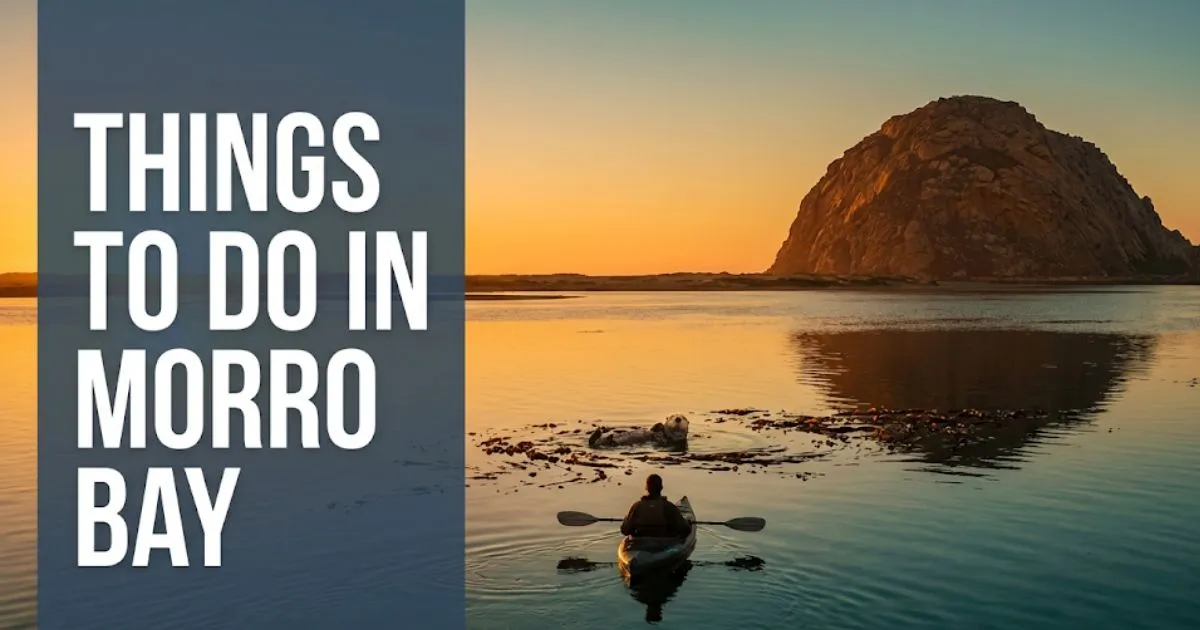
Things to Do in Morro Bay, CA: The 2026 Local Guide

Morro Bay is one of the most rewarding things to do in Morro Bay is to simply stop moving and pay attention. This small California coastal town delivers wildlife, paddling, hiking, and fresh seafood within a compact walkable area most visitors underuse.
The town sits on a protected estuary along San Luis Obispo County’s Central Coast. According to Visit SLO CAL, the official tourism organization for San Luis Obispo County, Morro Bay’s estuary is one of California’s largest and most ecologically significant coastal habitats.
This guide covers the specific activities, named venues, practical logistics, and honest seasonal advice a first-time or returning visitor actually needs. It also separates what is genuinely worth your time from what is tourist infrastructure.
Things to Do in Morro Bay
The single most useful orientation for Morro Bay is this: the town divides into four distinct zones, and each rewards a different kind of visitor.
The Embarcadero is the waterfront strip most visitors spend their entire time on. It holds dining, shops, charter boats, and the most direct view of Morro Rock.
Morro Bay State Park covers the estuary’s southern edge. It holds campgrounds, the Natural History Museum, and the access points for paddling and wildlife watching.
The Beach Zone runs along Morro Strand State Beach to the north and Coleman Beach to the south. These are the town’s quiet alternatives to the Embarcadero’s foot traffic.
Baywood Park, on the estuary’s eastern shore, is where locals actually live, eat at small neighborhood restaurants, and kayak from without the Embarcadero crowds.
Budget travelers can spend a full day in Morro Bay for under $60 per person including kayak rental, lunch, and hiking. No major paid attraction is required.
Seniors and accessibility travelers benefit from the Embarcadero’s completely flat, paved surface and the paved estuary-side path through Tidelands Park.
| Zone | Best For | Cost Range | Crowd Level |
|---|---|---|---|
| Embarcadero | First-timers, dining, harbor views | Free to walk; dining $15-$40 per person | High on weekends |
| Morro Bay State Park | Families, campers, paddlers, hikers | Day-use fee applies; verify current rates | Moderate |
| Morro Strand / Coleman Beach | Solo travelers, locals, surfers | Free | Low to moderate |
| Baywood Park | Couples, repeat visitors, birders | Free to explore; dining $10-$30 | Low |
Best Things to Do in Morro Bay
The best things to do in Morro Bay are kayaking the estuary at dawn, hiking Black Hill Trail at sunrise, and eating fresh Dungeness crab directly from Giovanni’s Fish Market and Deli on the Embarcadero.
These three experiences represent what Morro Bay does better than nearly any other Central Coast town of its size. They are also what most visitors who spend their day browsing Embarcadero souvenir shops never get to.
Giovanni’s Fish Market and Deli, located at 1001 Front Street on the Embarcadero, sells freshly cooked crab and shrimp cocktail from a counter window. Eating on the dock with a view of Morro Rock is the quintessential Morro Bay experience.
Kayaking the estuary with a local outfitter like Sub Sea Tours and Kayaks puts you within feet of sea otters and harbor seals. This is not an exaggeration. It happens on nearly every paddle.
| Activity | Best For | Approx. Cost | Time Needed | Insider Note |
|---|---|---|---|---|
| Kayak/SUP on the estuary | Couples, families, solo travelers | $25–$55 per person (rental range) | 2–3 hours | Book weekends in advance |
| Black Hill Trail | Hikers, photographers, couples | Free | 1.5–2 hours | Best at sunrise or golden hour |
| Giovanni’s Fish Market crab | Budget travelers, foodies | $15–$30 per person | 30 minutes | Eat at the dock, not inside |
| Morro Bay State Park Museum | Families, seniors | Low admission; verify before visiting | 1 hour | Often overlooked by visitors |
| Whale watching charter | Nature travelers, couples | $50–$100 per person (range) | 3–4 hours | Book at least a week ahead |
| Coleman Beach walk | Solo travelers, dog owners | Free | 1–2 hours | Quieter than the Embarcadero |
Morro Bay Attractions Worth Your Time
Not every attraction in Morro Bay earns equal time. Some are genuinely worthwhile. Some are tourist infrastructure with a waterfront view charging accordingly.
Worth your time: The Natural History Museum at Morro Bay State Park is genuinely good for the Central Coast context it provides. Exhibits on the estuary ecosystem, Chumash cultural history, and local geology are specific and well-curated.
Overrated: The Embarcadero’s souvenir row and most of its clam chowder vendors are indistinguishable from any California wharf town. The chowder is fine, not local, and generally overpriced.
Worth your time: Tidelands Park, directly adjacent to the Embarcadero at the south end, offers quiet estuary views and access without the foot traffic. Locals picnic here while visitors crowd the main strip.
The Galley Seafood Grill and Bar at 213 Beach Street delivers some of the better sit-down seafood in town. It consistently prioritizes locally sourced fish over frozen imports, which not every Embarcadero restaurant can honestly claim.
Couples looking for a genuinely memorable Morro Bay experience should prioritize the sunset harbor cruise over the Embarcadero walk. The view of Morro Rock from the water at golden hour is the specific image most people carry home from this town.
Seniors and accessibility travelers will find the Natural History Museum fully accessible and the Tidelands Park path smooth and flat for wheelchairs and mobility aids.
Key Takeaway: Skip the Embarcadero souvenir shops and spend that hour at Tidelands Park or Giovanni’s dock window instead.
Morro Rock and the Embarcadero
Morro Rock is a 581-foot volcanic plug at the harbor entrance and the visual centerpiece of Morro Bay. It is protected as a California State Historic Landmark and cannot be climbed.
The Embarcadero runs south from Morro Rock along the waterfront. It is the most-visited street in town and, on a summer weekend, one of the most congested.
Morro Rock itself is best viewed from two specific points: from the parking area at its base (Coleman Drive), and from the water during a kayak or harbor cruise. The view from the Embarcadero is partially obstructed by boat masts and buildings.
The rock’s base area is a designated peregrine falcon nesting site. Spotting scopes are sometimes set up by local naturalists near the parking area during nesting season in spring. This is free and genuinely excellent wildlife observation.
First-time visitors should walk the Embarcadero once in each direction but plan to spend no more than an hour there. The real Morro Bay experience is behind and beyond this strip.
Families with young children will find the Embarcadero manageable and stroller-friendly. The rock’s parking lot is a good photo stop with minimal walking required.
The Embarcadero’s morning hours before 10 AM are dramatically calmer. Arriving early for Giovanni’s breakfast or a coffee before the charter boats load is the local approach to enjoying the waterfront without the afternoon crowd.
Insider Tip:
- Park at the rock’s base on Coleman Drive. This is free, less congested, and gives you the best unobstructed view.
- Walk north along the rock’s edge at low tide for tide pool access that most visitors miss entirely.
- The peregrine falcons nesting on the rock’s north face are visible with binoculars from the parking area from approximately February through June.
Morro Bay State Park
Morro Bay State Park covers 2,800 acres of coastal scrub, eucalyptus forest, estuary habitat, and campgrounds along the bay’s southern edge. It is the operational heart of Morro Bay’s outdoor activity.
The park contains the Natural History Museum, the marina with kayak launch access, campgrounds for tent and RV visitors, and the trailheads for Black Hill Trail and the Chumash Trail. A state park day-use fee applies. Verify the current rate directly with California State Parks before your visit.
Camping at Morro Bay State Park fills fast on summer and holiday weekends. According to California State Parks, reservations through ReserveCalifornia are required for peak-season camping and are often available only 90 days in advance from the opening booking window.
The park’s eucalyptus grove is one of the largest monarch butterfly overwintering sites on the Central Coast. Monarchs are typically present from late October through early February, with peak numbers in November and December.
Families with children benefit most from the Natural History Museum’s hands-on exhibits and the park’s flat estuary trails near the marina. Children under 12 typically find the museum’s interactive displays genuinely engaging for 45 to 60 minutes.
Solo travelers and campers who want a quiet base for a Morro Bay weekend will find the park campground the best-value accommodation option in town. Sites book quickly, so plan 30 to 60 days ahead for non-peak periods.
Insider Tip:
- The park’s back eucalyptus loop trail near the campground is where the monarch butterfly cluster is heaviest in November. Most visitors go to the museum and miss it entirely.
- The marina kayak launch within the park is calmer and less crowded than the Embarcadero-adjacent launch points.
Kayaking and Water Activities on Morro Bay
Kayaking the Morro Bay estuary is the single best outdoor activity in town. The protected bay offers calm, flat water even when the Pacific Ocean outside the harbor is rough.
Sub Sea Tours and Kayaks, located on the Embarcadero, rents single and double kayaks and stand-up paddleboards. Rental rates run approximately $20 to $55 per hour depending on craft type. Verify current pricing directly before booking, as rates adjust seasonally.
The most rewarding paddle route follows the eastern shore of the estuary toward Baywood Park and the back channels of the estuary. This is where sea otter sightings are most consistent. Otters float on their backs in the kelp beds and are generally unbothered by slow-moving kayaks at respectful distances.
Central Coast Outdoors operates guided kayak tours that include naturalist commentary on the estuary ecosystem. Guided tours cost more than independent rentals but provide significantly more wildlife context and navigation safety for first-time paddlers.
Families with children should use a guided tour or double kayak with an experienced paddler. Kids ages 8 and up typically handle the flat estuary water well. Younger children are best suited to double kayaks with a parent paddling.
Solo travelers on a budget can rent a single kayak independently and self-navigate. The estuary’s shape makes it difficult to get genuinely lost. Wind typically picks up in the afternoon, so morning paddles are calmer and more wildlife-rich.
Morning launches between 7 and 9 AM offer the calmest water and highest otter activity. Weekend afternoons between noon and 3 PM are the busiest on the water. Book summer weekend rentals at least a week in advance.
Morro Bay Hiking Trails
The best hiking near Morro Bay is Black Hill Trail inside Morro Bay State Park. The 4.5-mile round-trip route climbs 640 feet to the summit of Black Hill with panoramic views of the estuary, the Pacific Ocean, and the Santa Lucia Mountains.
The trailhead is accessed from the park’s main entrance road near the Natural History Museum. No trail fee beyond the park’s day-use entry applies, though verify current park fee structures with California State Parks before visiting.
Black Hill at sunrise is one of the most genuinely rewarding visual experiences on the Central Coast. The marine layer typically sits below the summit in early morning, creating a fog-over-water effect that photographs exceptionally well.
For a longer and more dramatic hike, the drive to Montana de Oro State Park, 10 miles south via Los Osos Valley Road, accesses the Bluff Trail. This 3.5-mile coastal cliff trail offers the Central Coast’s most dramatic ocean views outside of Big Sur.
Couples rate Black Hill as Morro Bay’s most romantic hike. The summit at sunset requires a headlamp for the descent but delivers a view most visitors never see.
Seniors and accessibility travelers should note that Black Hill Trail involves significant elevation gain on uneven terrain. It is not accessible for wheelchairs or those with limited mobility. The flat Heron Rookery Trail within the state park near the marina is fully paved and accessible, covering 1.5 miles of estuary-edge habitat.
Insider Tip:
- Black Hill’s east-facing summit is better for sunrise than sunset. The west face catches the best golden-hour light before dusk.
- The Chumash Trail within Morro Bay State Park connects to the campground and the museum area on a quieter, less-trafficked path that locals prefer on busy weekends.
Key Takeaway: Black Hill Trail at sunrise beats every Embarcadero activity on the list. Set the alarm and do it first.
Morro Bay Wildlife and Bird Watching
Morro Bay’s estuary is among California’s most productive bird watching locations. Over 250 bird species have been documented in the Morro Bay area according to local naturalist records and the California Department of Fish and Wildlife.
The estuary’s mudflats are critical shorebird habitat. Species present year-round include great blue herons, snowy egrets, black oystercatchers, and willets. Winter brings large numbers of dunlins, western sandpipers, and marbled godwits.
The Morro Bay Natural History Museum maintains a current species sighting list and staff can point visitors to the best observation spots on any given day. This is the most practical birding resource in town.
Sea otters are consistently present in the back channels of the estuary near Baywood Park. They are most active in the early morning and late afternoon. The Embarcadero has otter viewing from the dock railing, but the kayak approach from the estuary’s eastern shore gets significantly closer.
Harbor seals haul out on sandbars visible from the Embarcadero and from kayaks. They are present year-round, with pup season typically running from late winter through spring.
Solo travelers and birders should spend a morning at the estuary’s southern end near the state park marina. The confluence of freshwater and saltwater habitat at this point produces the highest species diversity per hour of any single location in the area.
Families with children should combine the Natural History Museum visit with a short walk along the Heron Rookery Trail. Great blue herons nest in the eucalyptus trees directly visible from this path during spring nesting season.
Whale Watching Near Morro Bay
Whale watching from Morro Bay operates across two distinct seasons. Gray whales migrate past the Central Coast from December through May. Blue whales and humpback whales feed in the offshore waters from July through October.
Charter boats depart from the Morro Bay Harbor on the Embarcadero. Multiple operators run 3 to 4-hour trips. Prices typically range from approximately $50 to $100 per adult for a standard charter trip, though rates vary by operator and season. Verify current prices directly with individual charter operators.
Sub Sea Tours and several other harbor-based operators run regularly scheduled whale watching trips. Booking at least one to two weeks in advance is recommended for summer trips. December through March gray whale trips often have more availability on shorter notice.
Blue whale season from July through September is the highest-reward period for seeing the largest animals on Earth. Blue whales feed in upwellings off the Central Coast with notable consistency during these months. According to NOAA Fisheries, the waters off California’s Central Coast host some of the highest blue whale feeding concentrations in the Pacific.
Couples should book a morning trip for the calmest seas and best light for photography. Afternoon trips are often rougher outside the harbor.
Families with children should note that small children prone to motion sickness may find the open-water portion of the trip uncomfortable. The 3 to 4-hour duration can be long for children under 7.
Seniors and accessibility travelers should confirm with individual operators whether their vessels have accessible boarding and seating. Most harbor-based whale watching boats have limited accessibility features. Ask directly before booking.
Key Takeaway: Book the July-through-September blue whale trips. This is one of the most reliably productive blue whale watching locations on the entire US Pacific coast.
Where to Eat in Morro Bay
The best meal in Morro Bay is not at a white-tablecloth restaurant. It is a paper tray of fresh Dungeness crab or shrimp cocktail from Giovanni’s Fish Market and Deli at 1001 Front Street, eaten on the dock with the harbor in front of you.
Giovanni’s operates as a working fish market and prepared food counter. They cook and sell fresh local catch including Dungeness crab, clam chowder, fish and chips, and shrimp. Prices are reasonable for the quality. This is where locals eat lunch. It is the anti-tourist-trap answer to the Embarcadero’s dining row.
Windows on the Water at 699 Embarcadero Road is the Embarcadero’s most consistently reviewed sit-down dining option. The harbor view is genuine, the seafood sourcing is better than most neighboring restaurants, and the brunch service is worth the weekend wait. Budget approximately $25 to $45 per person for a full meal without wine.
Dorn’s Original Breakers Cafe at 801 Market Avenue, a block off the Embarcadero, has been serving locals since 1942. It is quieter, less expensive, and more honest about what it is than the waterfront places. Breakfast here before a morning kayak or hike is a legitimate Morro Bay experience.
For a genuinely local dinner away from the tourist strip, Baywood Bistro in Baywood Park on the estuary’s east shore serves the same bay view with a significantly calmer atmosphere and a more local dining crowd.
Budget travelers can eat well at Giovanni’s for under $20 per person. A full day of eating in Morro Bay at this standard runs approximately $40 to $55 total, which is exceptional by California coastal standards.
Couples looking for a romantic dinner should book Windows on the Water for the sunset window seating. Request a harbor-view table when reserving.
Morro Bay for Families with Kids
Morro Bay suits families with children ages 6 and older better than it suits families with toddlers or infants. The outdoor-focused activity mix and uneven terrain in the state park are better matched to children who can hike short distances.
The Natural History Museum at Morro Bay State Park is the best family starting point. Exhibits on local marine life, Chumash history, and the estuary ecosystem are pitched at an engaging level for children aged 6 through 14. Budget 45 to 60 minutes.
A guided kayak on the estuary is the activity that most children ages 8 and up rate as the trip highlight. Sea otter sightings from a double kayak are common. The flat, calm estuary water removes the ocean safety concern that makes open-water activities inappropriate for young children.
Tidelands Park at the south end of the Embarcadero has open lawn space, picnic tables, and estuary views. It is the town’s best low-cost family break point between activities. Strollers navigate the paved path easily.
The Embarcadero waterfront walk works for families as a 30 to 45-minute orientation. Keep expectations moderate: the main strip is busy on weekends and the novelty fades quickly for children once Giovanni’s window food has been ordered.
Families should avoid scheduling a whale watching charter with children under 7 unless the child is an experienced boater. The open-water portion outside the harbor can be rough. Children prone to motion sickness should skip this activity entirely.
For families with teens, the Black Hill Trail climb is genuinely engaging. The summit view provides the “wow” moment that the Embarcadero walk promises but cannot deliver.
Morro Bay for Couples
Morro Bay’s best romantic asset is its scale. It is small enough to feel intimate, calm enough to slow down in, and scenically specific enough that the views feel earned rather than packaged.
A sunrise kayak on the estuary, followed by breakfast at Dorn’s Original Breakers Cafe, followed by the Black Hill Trail hike, followed by a sunset harbor cruise, is a nearly perfect one-day romantic itinerary. Each element is genuinely different in tone and setting.
The drive from Morro Bay north to Cambria on Highway 1 takes approximately 30 minutes. Cambria’s Moonstone Beach boardwalk walk is quieter and more intimate than anything on the Morro Bay Embarcadero. This is the couples-specific local alternative to spending a second day on the Embarcadero.
Windows on the Water for dinner, with a harbor-view table booked in advance, delivers the Morro Bay waterfront experience at its most atmospheric. The view of Morro Rock at dusk from a window table is specific enough to earn the description.
For accommodations, the Inn at Morro Bay sits directly adjacent to the state park and overlooks the estuary. It is quieter than Embarcadero-adjacent hotels and closer to the nature experiences that distinguish this town from other California coastal stops.
Couples on a budget can access nearly all of Morro Bay’s best romantic experiences for free or low cost. The Black Hill sunrise, the estuary walk, the Coleman Beach sunset walk, and the Baywood Park kayak launch are all free or low-cost. Budget romantic travel here is not a compromise.
Key Takeaway: The Cambria drive and Moonstone Beach walk are what couples who have already done Morro Bay add to a second visit. Do it on day one if you have two days.
Free Things to Do in Morro Bay
Morro Bay is one of the more genuinely free-accessible coastal towns in California. The majority of its best outdoor experiences cost nothing or close to it.
Free activities in Morro Bay:
- Morro Rock viewing from Coleman Drive parking area (parking currently free; verify before visiting)
- Embarcadero waterfront walk along Front Street from Morro Rock south to Tidelands Park
- Tidelands Park estuary overlook and picnic area
- Coleman Beach access from the parking area south of Morro Rock
- Morro Strand State Beach day-use access along Yerba Buena Street (day-use fee applies at some access points; verify)
- Heron Rookery Trail within Morro Bay State Park (state park day-use fee applies for vehicle entry; walkers and cyclists may access without fee at some entry points; verify)
- Black Hill Trail (state park day-use entry fee applies for vehicles; check current fee structure)
- Bird watching from the Embarcadero dock and Tidelands Park estuary edge
- Wildlife watching at Coleman Beach and the rock base area
Budget travelers can spend a full day in Morro Bay on these free or low-cost activities with no admission required beyond a state park day-use fee where applicable.
Seniors and accessibility travelers will find the Embarcadero walk and Tidelands Park loop fully accessible. Both cover flat, paved surfaces with no significant elevation change.
Solo travelers on a tight schedule can see the core of Morro Bay, including the rock, the harbor walk, Coleman Beach, and a picnic lunch from Giovanni’s, for under $30 in a single morning.
Best Time to Visit Morro Bay
The best time to visit Morro Bay is September through November for the clearest weather, smallest crowds, and most consistent wildlife activity across all categories.
September brings warm, clear afternoons with the marine layer lifting fully by midday most days. October is the transition month when monarch butterflies begin arriving at the eucalyptus grove, whale watching shifts from blue whales to gray whale migration preparation, and hotel prices drop below summer peaks.
May through July brings the Central Coast’s notorious marine layer, locally called the “June Gloom.” Morning fog at Morro Bay is heavy during these months and often does not lift until 1 to 2 PM. Afternoon activities are often perfectly clear and pleasant, but the fog significantly affects morning hiking, photography, and whale watching visibility.
July and August are the peak summer crowd months. The Embarcadero is congested on weekends, parking is extremely limited, and accommodation prices reach their annual high.
December through February is the quietest period. Gray whale watching begins in December. The town is calm, hotel prices are low, and weekday visits feel almost private. The monarch butterfly cluster at the state park eucalyptus grove peaks in November and December.
Couples traveling for scenery and atmosphere will find September through October the optimal combination of clear weather, manageable crowds, and all activities fully operational.
Families should weigh the summer crowd reality against school-schedule constraints. If visiting in summer, arrive early on weekdays and use the state park activities rather than the Embarcadero.
| Month | Weather | Crowds | Wildlife Highlight | Best For |
|---|---|---|---|---|
| Jan–Feb | Cool, some fog | Low | Gray whale migration begins | Budget travelers |
| Mar–May | Variable | Moderate | Gray whales peak, wildflowers | Nature travelers |
| Jun–Jul | Heavy fog AM | High | Blue whales begin offshore | Families (school schedule) |
| Aug–Sep | Clearing fog | High to Moderate | Blue whales, shorebirds | Whale watchers |
| Oct–Nov | Clear, warm | Low to Moderate | Monarch butterflies, mixed birds | Couples, birders |
| Dec | Cool, clear | Low | Monarchs, gray whales start | Budget, quiet seekers |
Things to Do Near Morro Bay
The three most rewarding day trips from Morro Bay are Montana de Oro State Park to the south, Cambria to the north, and San Luis Obispo to the east.
Montana de Oro State Park, 10 miles south via Los Osos Valley Road, is what experienced Central Coast travelers consider the most underrated state park in California. The Bluff Trail runs 3.5 miles along volcanic cliffs above Pacific swells. The park also includes sand dunes, tide pools, and backcountry campgrounds. No comparison to any Embarcadero activity is fair.
Cambria is 26 miles north of Morro Bay on Highway 1. The drive itself is worthwhile. Moonstone Beach’s boardwalk, Shamel Park, and Cambria’s small but specific restaurant scene make it a full half-day destination. Nit’s Cuisine in Cambria delivers one of the better Thai meals on the entire Central Coast.
San Luis Obispo is 12 miles east on Highway 1. It is the region’s most complete dining and cultural city. The San Luis Obispo Farmers Market, held every Thursday evening on Higuera Street, is one of California’s most locally attended markets. Downtown SLO’s dining on Higuera and Garden Streets is significantly broader than anything in Morro Bay.
Hearst Castle at San Simeon is 45 minutes north of Morro Bay on Highway 1. Guided tours of the estate are available through California State Parks. Reserve tour tickets well in advance, particularly for weekends from April through October.
Couples doing a highway 1 road trip should drive south to Montana de Oro first, then north to Cambria on the second day. These two routes represent the full range of the Central Coast’s character.
Key Takeaway: Montana de Oro State Park is a 20-minute drive from Morro Bay and outperforms the Embarcadero for dramatic coastal scenery by a wide margin.
One Day in Morro Bay Itinerary
One focused day in Morro Bay can cover its best experiences without rushing if the sequence is planned to minimize backtracking and maximize the quality of each experience.
Recommended One-Day Morro Bay Itinerary:
- 7:00 AM: Black Hill Trail. Park at the Morro Bay State Park main entrance off State Park Road. Hike Black Hill at sunrise. The 4.5-mile round-trip takes 1.5 to 2 hours. Clear morning views of the estuary and Morro Rock are most reliable in September through November.
- 9:30 AM: Natural History Museum. Walk from the trailhead to the museum near the park marina. Spend 45 minutes on the estuary and Chumash exhibits. This is the best contextual orientation for everything else in the day.
- 11:00 AM: Kayak launch from the state park marina. Book a single or double kayak through Sub Sea Tours or launch from the state park marina access point. Paddle the eastern estuary channel toward Baywood Park. Budget 2 hours for a self-guided paddle including sea otter stops.
- 1:00 PM: Lunch at Giovanni’s Fish Market. Drive or walk to the Embarcadero. Order Dungeness crab or shrimp cocktail from the dock window. Eat at the dock. This is the correct sequence. Arriving before 12:30 PM avoids the peak lunch line.
- 2:30 PM: Embarcadero walk and Tidelands Park. Walk south from Giovanni’s to Tidelands Park. Spend 30 minutes at the estuary overlook. This is a decompression window, not a major activity. Keep it short.
- 4:00 PM: Coleman Beach or Morro Rock base. Drive to the rock’s base parking area on Coleman Drive. Walk the tide pool area at low tide if timing allows. Check tide tables before visiting. This is the best unobstructed Morro Rock view and a calmer environment than the Embarcadero.
- 6:00 PM: Dinner at Windows on the Water or Dorn’s Original Breakers Cafe. If budget allows, book a harbor-view table at Windows on the Water for sunset. For a lower-cost evening, Dorn’s Original Breakers Cafe on Market Avenue is the honest local choice.
Getting to Morro Bay and Getting Around
Getting to Morro Bay requires a car. There is no practical public transit option from Los Angeles, San Francisco, or San Luis Obispo that serves Morro Bay with useful frequency or schedules.
From Los Angeles, the drive is approximately 240 miles via US-101 North to California Highway 1. Allow 4 to 4.5 hours without traffic. The US-101 route through San Luis Obispo is faster and more reliable than the coastal Highway 1 route south of San Luis Obispo, which adds significant time.
From San Francisco, the drive via US-101 South takes approximately 4 to 4.5 hours. San Luis Obispo Regional Airport (airport code SBP) serves direct flights from Los Angeles, San Francisco, Phoenix, and Seattle on select carriers. A rental car from SBP is necessary for reaching and moving around Morro Bay.
Getting around Morro Bay itself is straightforward. The Embarcadero, downtown, and the state park are within a compact 3-mile radius. Walking is practical for Embarcadero-to-downtown trips. A car is needed for the state park, Coleman Beach, Montana de Oro, and most day trips.
Parking on the Embarcadero on summer and holiday weekends is genuinely difficult. The main Embarcadero parking lots fill by 10 AM on busy weekend days. Arrive before 9 AM or park on Market Avenue or Main Street and walk four blocks to the waterfront.
Seniors and accessibility travelers should note that the Embarcadero’s main parking lot closest to the waterfront typically includes accessible spaces. The Natural History Museum at Morro Bay State Park has accessible parking directly adjacent to the entrance.
The San Luis Obispo Regional Transit Authority (RTA) operates Route 12 between San Luis Obispo and Morro Bay on a limited schedule. Verify current schedules before planning to rely on transit. This route is not practical for day-trip tourism logistics but may suit travelers without cars staying in Morro Bay overnight.
Safety and Practical Warnings for Morro Bay
The primary safety consideration in Morro Bay is ocean swimming conditions at Morro Strand State Beach and Coleman Beach. Both face the open Pacific and carry active rip current risk on any given day.
Key safety and practical facts every visitor should know:
- Do not swim at Coleman Beach or Morro Strand without checking surf and rip current conditions first. Check the National Weather Service marine forecast or look for posted beach condition flags before entering the water.
- Morro Rock cannot be climbed. It is a protected state historic landmark and a peregrine falcon nesting site. Attempting to climb it is illegal and can result in a significant fine.
- Marine layer fog reduces Highway 1 visibility significantly between Morro Bay and Cambria. Do not drive this coastal section at speed in morning fog conditions. The road has sharp curves above ocean cliffs with no guardrail on some sections.
- Cell service is limited in parts of Montana de Oro State Park. Download offline maps before hiking there. Let someone know your planned trail route if hiking solo.
- The estuary tidal cycle affects kayaking conditions. Paddling against an outgoing tide near the harbor mouth is significantly harder than paddling in the protected inner estuary. First-time paddlers should ask outfitters about tidal timing before launching.
- Sun exposure on the water is more intense than it feels. The marine layer diffuses light but does not block UV radiation. Apply sunscreen before paddling or whale watching, even on overcast days.
- Morro Bay State Park campground fills to capacity on summer weekends and holiday weekends. Book through ReserveCalifornia as early as the 90-day advance window opens. Walk-in sites are extremely rare during peak season.
For general coastal emergencies, the US Coast Guard Station Morro Bay provides maritime rescue coverage for the harbor and offshore areas.
Frequently Asked Questions About Things to Do in Morro Bay
What is Morro Bay best known for?
Morro Bay is best known for Morro Rock, a 581-foot volcanic plug at the harbor entrance, and for the protected estuary that supports sea otters, harbor seals, and one of California’s most productive shorebird habitats.
The combination of the iconic rock, the wildlife-rich estuary, and fresh local seafood from working fishing boats makes it one of the Central Coast’s most distinctive small towns.
Most visitors discover on arrival that the kayaking and wildlife watching outperform the Embarcadero shopping strip as the town’s most memorable experiences.
How many days do you need in Morro Bay?
One full day is enough to see Morro Bay’s highlights if your itinerary is well-structured from the start.
Two days allows you to add Montana de Oro State Park, a whale watching charter, and either Cambria or San Luis Obispo as day-trip destinations without rushing.
A three-day visit suits travelers who want to hike, paddle, explore both nearby towns, and eat through the town’s dining options at a genuinely relaxed pace.
Is Morro Bay worth visiting in 2026?
Yes, Morro Bay is worth visiting in 2026, particularly for travelers looking for a California coastal experience that has not been overrun by the commercial development that has reached much of the Southern California coast.
The estuary, wildlife, and outdoor activity access remain genuinely excellent, and the town’s small scale means most experiences feel personal rather than crowded.
Travelers who arrive expecting Monterey-level infrastructure or a large food and nightlife scene will find the town limited. Those who come for the estuary, the rock, and the quiet will find it exactly as specific and satisfying as its reputation suggests.
What are the best free things to do in Morro Bay?
The best free things to do in Morro Bay include walking the Embarcadero, viewing Morro Rock from the Coleman Drive parking area, walking Coleman Beach, and bird watching from Tidelands Park.
Black Hill Trail is accessible for hikers; check whether a state park day-use vehicle fee applies before driving in.
The Embarcadero itself, Tidelands Park, and the rock base area are free to access and deliver the core visual experience of the town at no cost.
Is Morro Bay foggy, and when is the best weather?
Morro Bay is frequently foggy from May through July due to the Central Coast’s marine layer, which often does not lift until early to mid-afternoon during this period.
September through November offers the clearest conditions, with the marine layer lifting earlier in the morning and afternoon temperatures staying warm without summer peak-season crowds.
December through February is the quietest and coolest period, with clear days common but temperatures requiring a jacket, especially on the water.
What towns are near Morro Bay worth visiting?
The three towns nearest to Morro Bay worth visiting are Cayucos (4 miles north, a quieter beach town with a working pier), Cambria (26 miles north, with Moonstone Beach boardwalk and better dining variety), and San Luis Obispo (12 miles east, the region’s most complete city for restaurants, markets, and cultural activity).
Montana de Oro State Park, 10 miles south, is technically not a town but delivers the most dramatically scenic coastal experience within a 30-minute drive.
Hearst Castle at San Simeon, 45 minutes north on Highway 1, is the region’s major historical attraction and requires advance tour reservations through California State Parks.
Plan Your Morro Bay Trip Now
Start with a kayak reservation and a state park campsite booking before anything else. These are the two elements most likely to be unavailable if you wait until the week of your trip.
Verify state park fees, kayak rental rates, and whale watching tour schedules directly with operators. Prices and seasonal hours change, and this guide reflects general ranges from recent years rather than real-time confirmed figures.
The reader who structures their Morro Bay trip around the estuary, the Black Hill sunrise, and the Giovanni’s dock experience will leave with a genuinely specific sense of this place that no Embarcadero afternoon alone can provide.