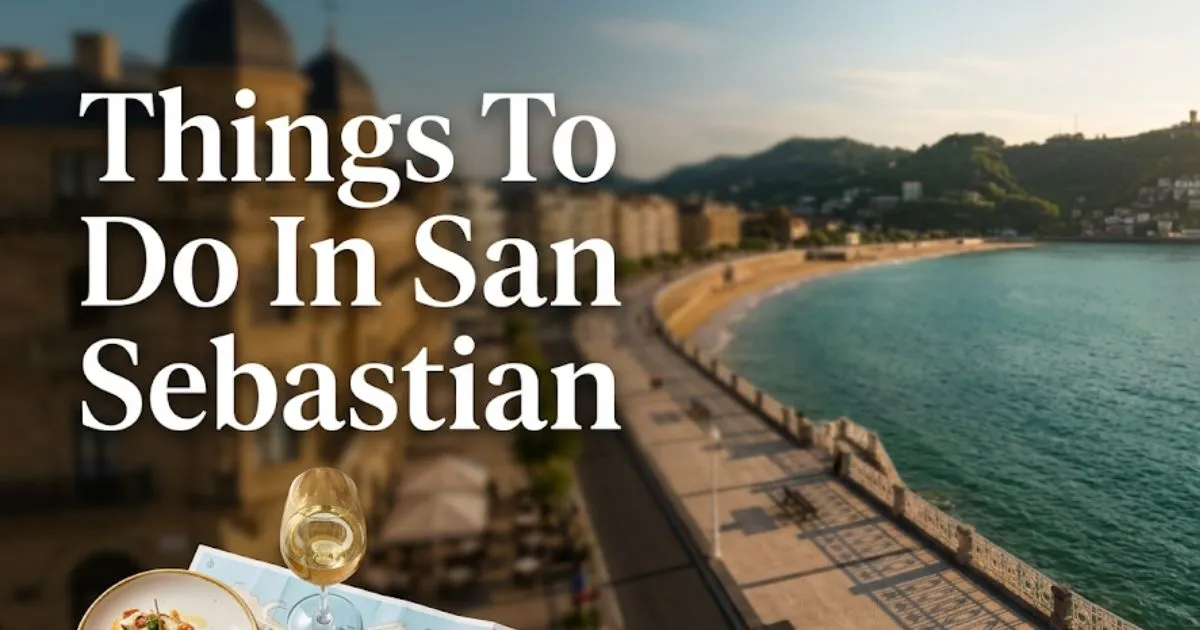
Things To Do in San Sebastian: The 2026 Insider Guide

The best things to do in San Sebastian go far beyond La Concha beach and a casual pintxos crawl. This small Basque city consistently ranks among Europe’s highest concentrations of Michelin-starred restaurants per capita, and that is only the beginning of what it offers.
San Sebastián Turismoa reports that the city has more Michelin stars per square kilometer than almost any other city in the world. That density of culinary ambition sits inside a genuinely beautiful coastal setting framed by two mountains and a horseshoe bay.
This guide covers specific neighborhoods, named bars and restaurants, beach strategy, cultural experiences, festival planning, day trips, and a practical two-day itinerary. You will leave knowing exactly where to go and in what order.
Things To Do in San Sebastian: What Makes This City Different
San Sebastian offers a rare combination: world-level food culture, a legitimately beautiful beach, serious surf, and a compact, walkable city center.
The city operates on Basque identity, not Spanish tourism. The Euskara language appears on street signs alongside Spanish. Locals take pintxos culture with a seriousness that has nothing to do with catering to visitors.
Most travelers arrive expecting beaches and leave converted by the food. The actual experience rewards travelers who engage with both dimensions, not one or the other.
The city is genuinely small. Everything in the core area is within 20 minutes on foot.
Insider Tip:
- Arrive hungry. The best pintxos bars start fresh service at 7 pm.
- Book Michelin-starred dinners before you book your flights, not after.
- The city’s reputation is 100% earned; the challenge is knowing which specific places deliver it.
Best Things To Do in San Sebastian Spain: The Essential Framework
The best things to do in San Sebastian Spain fall into five categories: eating and drinking, beach and coastal life, outdoor exploration, cultural institutions, and festival experiences.
The eating and drinking category carries the most weight. San Sebastian’s culinary culture operates at every price level, from a 2-euro gilda pintxo at Bar Martinez to a 200-euro tasting menu at Arzak.
Outdoor exploration means Monte Igueldo, Monte Urgull, the coastal walk to Pasaia, and surfing Zurriola. These are not backup activities for bad dining days.
| Category | Top Experience | Best For | Cost Range | Advance Booking |
|---|---|---|---|---|
| Pintxos | Parte Vieja bar crawl | All profiles | Low (2-5€ per pintxo) | None needed |
| Fine dining | Arzak or Mugaritz | Couples, foodies | Premium (150-250€/person) | Months in advance |
| Beach | La Concha | Families, couples | Free | None |
| Surfing | Zurriola + Pukas lessons | Solo, young travelers | Moderate (40-70€ lesson) | 1-2 days ahead |
| Hiking | Monte Urgull | Solo, budget | Free | None |
| Culture | San Telmo Museoa | All profiles | Low (admission ~6-10€) | None typically |
| Day trip | Hondarribia | Couples, families | Low-Moderate | None |
San Sebastian’s Parte Vieja (Old Town)
Parte Vieja is San Sebastian’s historic old quarter and the geographic center of its pintxos culture. It occupies a compact grid of streets between the Urumea River and Monte Urgull.
The key streets are Calle 31 de Agosto, Calle Fermín Calbetón, and Calle San Jerónimo. Each holds a concentration of pintxos bars competing at a high level.
Parte Vieja is equally the city’s most congested area in July and August. Weekend evenings from 8 pm onward become genuinely difficult to navigate without a plan.
Couples and romantic travelers will find it most enjoyable on weekday evenings outside peak summer. The narrow streets and warm bar light create genuine atmosphere when crowds thin.
Budget travelers should note that Parte Vieja pintxos are among the most cost-effective ways to eat well in Europe. A full evening of eating and drinking runs approximately 20 to 35 euros per person.
Insider Tip:
- Go at 7 pm sharp, when bars restock fresh pintxos. The best pieces go fast.
- Avoid the bars immediately flanking Plaza de la Constitución; they tend to serve reheated pintxos to tourist turnover crowds.
- Calle Fermín Calbetón has the highest concentration of quality bars per block.
San Sebastian Pintxos Bars: Where Locals Actually Eat
The best pintxos bars in San Sebastian are not the most crowded ones. Knowing which bar does which dish defines the experience.
Bar Nestor on Calle Pescadería is famous for one thing: a tortilla de patatas made in two batches daily. Arrive at 1 pm or 8 pm exactly, or it will be gone. No exceptions.
A Fuego Negro on Calle 31 de Agosto takes pintxos in a more creative direction. This is the bar for travelers who want Basque tradition reinterpreted through a modern culinary lens.
Zeruko on Calle Pescadería consistently wins recognition for its creative, smoke-and-fire presentations. According to San Sebastián Turismoa, the city’s pintxos circuit is officially designated as a cultural experience integral to Basque identity.
Casa Vergara on Calle Mayor is where locals go when they want traditional pintxos without the tourist density of the main Calle Fermín Calbetón strip.
Solo travelers will find pintxos bars among Europe’s most solo-friendly dining formats. Standing at a bar, eating with your hands, and talking to whoever is next to you is standard practice.
Insider Tip:
- Never load a plate from the bar counter without checking what is freshly made. Cold pintxos sitting on the counter since noon are not what this city’s reputation is built on.
- Order hot pintxos from the kitchen; that is where the real craft is.
- The gilda (olive, anchovy, pickled pepper on a skewer) is the canonical starting pintxo. Judge every bar by its gilda first.
Key Takeaway: Go to Bar Nestor at exactly 1 pm or 8 pm for the tortilla; miss those windows and you miss it entirely.
Michelin Star Restaurants San Sebastian: What You Need to Know
San Sebastian has more Michelin-starred restaurants per capita than almost any city on earth, with Arzak, Mugaritz, Akelarre, and Martin Berasategui’s eponymous restaurant among its most recognized.
Arzak in the Miraconcha area is a three-Michelin-star institution run by Juan Mari Arzak and his daughter Elena. It represents Basque nouvelle cuisine at its most refined and approachable.
Mugaritz, located outside the city center near Errenteria, holds two stars and consistently ranks in global top-50 restaurant lists. Its approach is more conceptual and challenging than Arzak.
Dinner at these restaurants runs 150 to 250 euros or more per person, sometimes excluding wine. Reservations open months in advance and fill quickly.
Budget travelers have a genuine option: the menú del día at many Michelin-starred restaurants offers a multi-course lunch for approximately 50 to 80 euros per person. This is the system locals use to access these kitchens affordably.
Couples planning a special occasion dinner should book Arzak or Akelarre at least three months before their travel dates. Popular dates in June, September, and October disappear faster than that.
Insider Tip:
- Mugaritz closes for a long annual break, typically from January through early April. Verify dates before planning a winter trip around it.
- Akelarre’s setting on Monte Igueldo adds a coastal view component that Arzak and Mugaritz do not offer.
- The lunch menu strategy is the single most practical piece of intelligence for any non-premium traveler wanting to experience these kitchens.
La Concha Beach San Sebastian: The Reality Behind the Photos
La Concha beach is one of Europe’s most photographed urban beaches, and it genuinely earns that recognition for its horseshoe shape, calm water, and promenade quality.
The beach faces southwest into the Bay of Biscay. The water temperature is cool by Mediterranean standards, typically 17 to 22 degrees Celsius in summer.
In July and August, La Concha is genuinely overcrowded. The sand disappears under beach chairs and bodies by 11 am on sunny weekends.
Families with children will find La Concha’s calm, shallow water ideal for young swimmers. The water is reliably calm compared to Zurriola on the other side of Monte Urgull.
Couples find the promenade, Paseo de La Concha, equally worthwhile. Walking it at sunset toward Ondarreta delivers one of the city’s most purely enjoyable experiences.
Seniors and accessibility travelers should note that the promenade itself is flat and well-maintained. Beach access includes some ramp options, but the sandy surface presents challenges for mobility aids.
The local alternative to La Concha’s peak-summer crowds is Ondarreta beach, west of La Concha past the Miramar Palace. Ondarreta attracts far more locals and significantly fewer tourists on the same sunny day.
Insider Tip:
- Arrive at La Concha before 9:30 am in summer to secure a good position.
- The far western end near Ondarreta is always less crowded than the central section below the promenade’s midpoint.
- Swimming to Santa Clara Island from La Concha is a local summer tradition. The island also has a small ferry service; verify seasonal schedules before visiting.
Key Takeaway: Ondarreta beach delivers the same bay view and calmer water with a fraction of La Concha’s summer crowd.
Zurriola Beach and Surfing San Sebastian
Zurriola beach sits on the eastern side of the Urumea River mouth, directly in front of the Gros neighborhood. It faces the open Atlantic and receives consistent surf year-round.
This is San Sebastian’s surf beach. The waves at Zurriola are generally unsuitable for casual, non-swimmer beach days in autumn and winter, when swells are heaviest.
Pukas Surf Eskola is the city’s most established surf school, operating on Zurriola with lessons for beginners through advanced surfers. Lessons typically run 40 to 70 euros per session; verify current pricing directly.
Solo travelers and younger visitors gravitate to Zurriola’s more energetic beach culture. The crowd here skews local and active rather than tourist-dense.
Families with children should exercise caution. Zurriola’s waves and rip currents make it unsuitable for young or inexperienced swimmers on most days.
Summer mornings at Zurriola before 10 am offer the best combination of manageable crowds and good surf conditions. The beach fills with sunbathers from midday onward in July and August.
Insider Tip:
- If you are a non-surfer, Zurriola is still worth visiting for its atmosphere and the Gros neighborhood bars directly behind it.
- The Kursaal Congress Centre by Rafael Moneo sits at the beach’s western end. Its two translucent glass cubes are among the city’s most distinctive pieces of contemporary architecture.
- For consistent, well-organized surf lessons, book Pukas at least one day ahead in summer; classes fill quickly.
Monte Igueldo and Monte Urgull: San Sebastian’s Two Peaks
Monte Igueldo and Monte Urgull are the two hills flanking La Concha bay. Each offers a completely different experience and rewards different types of visitors.
Monte Igueldo rises on the western side of the bay. Its summit is reached by a vintage funicular railway from the Ondarreta end of La Concha. At the top sits a small amusement park and the best panoramic view of the bay.
The funicular typically operates daily, with seasonal hours. Admission runs approximately 3 to 5 euros each way; verify current rates directly. The view from the summit is the one that appears on every San Sebastian postcard.
Monte Urgull on the eastern side is free to access on foot via trails from Parte Vieja. The summit holds the Castillo de la Mota, a 12th-century fortress, and a large statue of Christ overlooking the city.
Budget travelers should prioritize Monte Urgull over Monte Igueldo. The view is comparable, the experience is authentic, and the price is zero.
Families with children who are old enough to enjoy a funicular ride will find Monte Igueldo’s amusement park a genuine hit. Very young children may find the short funicular ride more exciting than the view.
Seniors and accessibility travelers should note that Monte Urgull requires walking on uneven stone paths with elevation gain. Monte Igueldo’s funicular is significantly more accessible for those with mobility limitations.
Insider Tip:
- The Monte Igueldo funicular runs on a specific schedule; check times before hiking to Ondarreta.
- Sunrise on Monte Urgull, before the tour groups arrive, is one of the city’s genuinely overlooked experiences.
- The walk from Monte Urgull’s base through the fortifications takes approximately 30 to 40 minutes at a moderate pace.
Key Takeaway: Monte Urgull is free, genuinely beautiful, and almost always less crowded than Monte Igueldo; go there first.
San Telmo Museum and Basque Culture
The San Telmo Museoa in Parte Vieja is San Sebastian’s primary museum and the most substantive introduction to Basque history, identity, and contemporary art in the city.
The museum occupies a former 16th-century Dominican convent expanded with a contemporary wing designed by Nieto Sobejano Arquitectos. The architecture alone warrants the visit.
Admission typically runs 6 to 10 euros for adults, with reduced rates for seniors and free entry for children under a certain age. Verify current pricing before visiting.
The permanent collection covers Basque ethnographic history, the industrial transformation of the Basque Country, and contemporary Basque art. The works of Eduardo Chillida and Jorge Oteiza feature prominently.
Families will find the ethnographic sections engaging for older children. The contemporary art wing requires more patience from younger visitors.
For a deeper Chillida experience, Chillida-Leku in Hernani (approximately 20 minutes from the city) is an open-air sculpture park within the late sculptor’s former farmhouse. It is among the finest outdoor sculpture experiences in Europe and consistently undervisited by first-time San Sebastian travelers.
Insider Tip:
- San Telmo Museoa offers free admission on Tuesdays; verify this benefit remains in place for 2026 before planning around it.
- The museum’s internal courtyard, decorated with José María Sert’s epic murals, is a genuinely memorable space that most visitors walk through too quickly.
- Pair a San Telmo visit with a morning pintxos crawl for a logical Parte Vieja half-day sequence.
San Sebastian Film Festival and Jazzaldia: Festival Planning
San Sebastian hosts two internationally significant annual festivals that reshape the city’s calendar completely.
Jazzaldia, the San Sebastián Jazz Festival, typically runs in late July. It brings major international jazz and crossover acts to open-air stages around the city, including concerts on the La Concha promenade that are free to attend.
The San Sebastián International Film Festival, known locally as Zinemaldia, runs in September, typically the second week. It is one of Europe’s A-list film festivals, alongside Cannes, Venice, and Berlin, and draws major international film talent.
Both festivals create enormous accommodation pressure. According to the San Sebastián International Film Festival’s official programming information, Zinemaldia brings tens of thousands of visitors to a city of 187,000 residents.
Couples and solo travelers who enjoy film culture will find Zinemaldia a rare opportunity to see premieres and attend industry events in a city that remains genuinely functional and beautiful throughout. Book accommodation 6 to 12 months ahead.
Budget travelers should note that Jazzaldia’s open-air concerts are free, making it one of Europe’s most accessible major jazz festivals. Indoor concerts require tickets bought in advance.
Semana Grande (Aste Nagusia), the city’s main Basque summer festival, runs in August and includes massive fireworks competitions over La Concha bay nightly. It is spectacular but adds to summer crowd pressure.
Insider Tip:
- Zinemaldia tickets for specific screenings sell quickly. Register on the official festival site early.
- The Jazzaldia free concerts on La Concha promenade are genuinely excellent. Arrive an hour early to secure a good position.
- Avoid booking accommodation without checking festival calendars first; rates during Jazzaldia and Zinemaldia can triple compared to surrounding weeks.
Key Takeaway: Book accommodation for Jazzaldia or Zinemaldia at least six months in advance; the city genuinely fills to capacity for both.
Gros Neighborhood San Sebastian: Where Locals Eat and Surf
Gros is the neighborhood directly east of Parte Vieja, across the Urumea River. It is San Sebastian’s most authentic everyday neighborhood and carries none of Parte Vieja’s tourist density.
Calle San Juan in Gros is the street most experienced visitors reference when they say they prefer eating pintxos away from tourist crowds. The bars here serve the same Basque culinary tradition with a local clientele.
Bodega Donostiarra on Calle Peña y Goñi in Gros is a neighborhood institution serving traditional Basque food in an unfussy setting. It operates as a classic txokoa-adjacent dining experience.
Gros has direct access to Zurriola beach and a younger, surf-influenced atmosphere. The neighborhood’s morning coffee culture operates around a cluster of independent cafes along Calle Zabaleta.
Solo travelers will feel immediately comfortable in Gros. The neighborhood’s bar culture is genuinely local and welcoming without the performance aspect of Parte Vieja’s more tourist-aware bars.
Couples seeking a quieter alternative to Parte Vieja’s evening crowds will find Gros delivers a similar pintxos experience with more breathing room and more genuine conversation with locals.
Insider Tip:
- Walk from Parte Vieja to Gros across the Zurriola bridge. The 10-minute walk filters out most tourist traffic.
- Gros pintxos bars tend to open and close on local timing, not tourist timing. Most open around 7 pm for evening service.
- The Gros market (Mercado de San Martín) operates mornings and provides excellent context for understanding local Basque food culture beyond the pintxos bar format.
Day Trips from San Sebastian: Three Worth Your Time
The three most worthwhile day trips from San Sebastian are Hondarribia, Bilbao, and the surrounding Basque coastal villages.
Hondarribia is a fortified medieval port town 20 kilometers east, right on the French border. Its old quarter is genuinely well-preserved, its fish restaurants are excellent, and it attracts far fewer international tourists than San Sebastian. EuskoTren and buses connect the cities regularly.
Bilbao lies approximately 100 kilometers west, accessible by EuskoTren in roughly an hour and a half, or by car in under an hour. The Guggenheim Bilbao, designed by Frank Gehry, is the anchor attraction and genuinely lives up to its architectural reputation.
The Basque coastal villages of Getaria and Zarautz sit between San Sebastian and Bilbao along the GI-638 coastal road. Getaria is birthplace of Juan Sebastián Elcano, the first circumnavigator of the globe, and its txakoli wine culture is worth the detour.
Families with children will find Hondarribia more manageable than Bilbao for a half-day trip. The town is compact and its waterfront is highly accessible.
Budget travelers should factor in EuskoTren costs, which are modest. The Bilbao Guggenheim charges admission; verify current rates before visiting.
Insider Tip:
- Hondarribia’s Parte Zaharra (old quarter) is reached by climbing above the marina. Most day-trippers stay at the marina level and miss the walled medieval town entirely.
- A Biarritz day trip from San Sebastian is possible by bus or car (approximately 50 kilometers), making it a legitimate French Basque cultural extension of the visit.
- The coastal drive from San Sebastian to Getaria along the GI-638 is one of the most scenic coastal road segments in northern Spain.
San Sebastian for Couples and Romantic Travelers
San Sebastian is among Spain’s best destinations for couples, combining exceptional food, a beautiful coastal setting, and a compact, walkable city that never feels overwhelming.
The Paseo de La Concha at sunset, the Monte Igueldo funicular at dusk, and a reserved dinner at Akelarre with its bay view represent a genuinely high-quality romantic itinerary without any forced romance-product positioning.
Couples focused on food experiences should divide their time: one Michelin-starred dinner, one Parte Vieja pintxos evening, one Gros neighborhood dinner at a lower-key local restaurant. This rotation gives a complete picture of the city’s culinary identity.
The neighborhoods of Antiguo and Ondarreta near the western end of La Concha are quieter than Parte Vieja and suit couples looking for accommodation away from the peak Parte Vieja noise.
Solo travelers in San Sebastian will find a genuinely solo-friendly environment. The pintxos bar format, the surf culture at Zurriola, and the film festival community during Zinemaldia all create natural social environments.
For solo female travelers specifically, San Sebastian’s compact layout, active street life until late, and relatively low crime profile make it one of the more comfortable solo destinations in Spain.
Insider Tip:
- Reserve Monte Igueldo for late afternoon rather than midday to catch the best bay light.
- The walk along Paseo Nuevo, the promenade on the north face of Monte Urgull, is one of the city’s most underused walks for couples. It faces open ocean rather than the bay.
- Couples willing to book months ahead will find dinner at Arzak a reliably transformative experience without Mugaritz’s more experimental-conceptual approach.
Key Takeaway: Reserve a Michelin lunch, not dinner, to access San Sebastian’s top kitchens at roughly half the price of full dinner service.
San Sebastian with Kids and Families
San Sebastian suits families better than its reputation as a food-and-beach destination suggests, with specific caveats around dining culture timing and cobblestone terrain.
La Concha’s calm, supervised beach is genuinely excellent for families with children of swimming age. The water is calmer than Zurriola, the promenade has shade, and the Aquarium de San Sebastián at the harbor end of Parte Vieja provides a reliable half-day activity.
The Aquarium de San Sebastián sits at the base of Monte Urgull in the harbor area. Admission typically runs approximately 10 to 14 euros for adults and less for children; verify current pricing before visiting.
The Monte Igueldo funicular and summit amusement park is a genuine hit for children aged 4 and older. The vintage funicular itself is the experience; the small rides at the top are modest but charming.
The honest caution for families: San Sebastian’s dining culture runs late. Restaurants typically do not fill until 9:30 pm. Families with young children who need to eat at 6 pm will find themselves eating alone in empty restaurants or piecing together pintxos across multiple bars.
The practical solution is building a late-afternoon pintxos crawl at 7 pm as the family dinner. Children of any age can navigate a pintxos bar with ease.
Seniors and accessibility travelers face genuine challenges in Parte Vieja. The cobblestones are uneven and persistent throughout the historic quarter. Monte Urgull’s summit trails are on stone paths with significant gradient.
Insider Tip:
- The Aquarium’s walk-through shark tank tunnel is the single most reliably exciting experience for children under 12 in the city.
- Book the Monte Igueldo funicular timing before walking to Ondarreta; it does not run continuously and schedules vary seasonally.
- Families staying in the Gros neighborhood have the easiest beach access (Zurriola) but should supervise children carefully in the surf.
Budget Travel in San Sebastian: Eating and Living Well for Less
San Sebastian has a genuine budget-friendly layer that most competitors completely miss. The city is not cheap for accommodation in peak season, but it may be the most cost-effective place in Europe to eat extraordinarily well.
The pintxos system means a complete, high-quality dinner of five to eight items with drinks costs approximately 20 to 35 euros per person. No tipping is standard or expected in pintxos bars.
The menú del día is Spain’s national lunch menu system, and San Sebastian’s version is exceptional. Many excellent restaurants offer a three-course lunch with wine for approximately 15 to 25 euros. Some Michelin-adjacent restaurants offer a version for 40 to 60 euros.
Free activities in San Sebastian include:
- Walking the Paseo de La Concha promenade
- Hiking Monte Urgull to the Castillo de la Mota summit
- Swimming at La Concha and Zurriola beaches
- Attending Jazzaldia open-air concerts (verify free vs. ticketed program for 2026)
- Walking the Paseo Nuevo along Monte Urgull’s ocean face
- Exploring Parte Vieja’s market halls and public squares
- Watching the Semana Grande fireworks from La Concha promenade
Accommodation is where budget travelers feel the most pressure. July and August rates in central Parte Vieja can be prohibitive. Staying in Gros reduces accommodation costs significantly while keeping everything walkable.
Insider Tip:
- The market at La Bretxa in Parte Vieja sells fresh local produce, cheese, and prepared Basque items at market prices. Picnic lunches from La Bretxa plus pintxos evenings is a legitimate budget strategy.
- Eating at the bar rather than securing a table reduces costs further at most pintxos bars; table service sometimes adds a small cover or menu markup.
- Shoulder season (May to June, September to October) cuts accommodation rates dramatically compared to August while delivering better weather conditions.
Best Time to Visit San Sebastian
The best time to visit San Sebastian is September, specifically the second and third weeks when the Film Festival runs and summer crowds have thinned.
May through early June is the second-best window: long days, lower crowds, green hills, and comfortable temperatures without the July to August beach congestion.
July and August deliver the best beach weather but the worst crowd experience. La Concha is genuinely packed. Parte Vieja pintxos bars in peak summer are difficult to enjoy without arriving exactly at opening time.
| Month | Weather | Crowd Level | Notable Events | Cost Level |
|---|---|---|---|---|
| Jan-Feb | Cold, rainy | Low | Carnival | Budget-friendly |
| Mar-Apr | Variable, mild | Low-moderate | Easter week | Moderate |
| May-Jun | Warm, pleasant | Moderate | N/A | Moderate |
| July | Warm, sunny | Very high | Jazzaldia (late July) | Premium |
| August | Warm, sunny | Peak | Semana Grande | Premium |
| September | Warm, pleasant | High-moderate | Film Festival | High |
| Oct-Nov | Mild, rainier | Low-moderate | N/A | Moderate |
| December | Cool, rainy | Low | Christmas markets | Budget-moderate |
The Basque coast is genuinely rainy outside summer. October through April sees regular Atlantic rain systems. This does not make the city unwelcoming; the food and culture are year-round. But travelers expecting reliable sunshine outside June to September will be disappointed.
Seniors traveling outside peak summer will find the reduced crowd levels and cooler temperatures far more physically comfortable for walking the city’s streets and hills.
Insider Tip:
- The September Film Festival coincides with excellent weather, thinner beach crowds, and the city’s most exciting cultural calendar moment. The combination is hard to beat.
- The Semana Grande fireworks competition in August is spectacular enough to justify an August visit if you book accommodation six months ahead and accept the crowds.
- Spring (May to June) delivers green hills, full restaurant availability, and the city at its most locally authentic before the summer influx.
Getting Around San Sebastian and One-Day Itinerary
Getting around San Sebastian is primarily done on foot. The city center is small enough that walking is the correct answer for most visitors, most of the time.
EuskoTren connects San Sebastian to Bilbao, Hendaye (France), and surrounding Basque towns. The city bus network (Dbus) covers all neighborhoods including those outside the walkable core.
Reaching San Sebastian from abroad typically means flying into Bilbao Airport (BIO) and taking a direct bus (Alsa operates this route) or rental car to San Sebastian, approximately 1 hour by road. Biarritz Airport (BIQ) across the French border is a second option for low-cost carriers, approximately 40 minutes by road.
Taxis are available throughout the city and are reasonably priced by European standards. Rideshare apps operate but with less coverage than in major Spanish cities.
Suggested Two-Day Itinerary:
Day 1:
- Morning: Coffee in Gros, walk to La Concha promenade, swim or walk to Monte Urgull summit (free).
- Midday: Menú del día lunch at a Parte Vieja or Gros restaurant.
- Afternoon: San Telmo Museoa (allow 90 minutes), explore Parte Vieja streets.
- 7 pm: Pintxos crawl, starting at Bar Nestor (arrive at exactly 7 pm for fresh tortilla), then A Fuego Negro, then Zeruko.
- 9:30 pm: Sit-down dinner or continue pintxos in Gros.
Day 2:
- Morning: Zurriola beach or surf lesson with Pukas (book 24 hours ahead).
- Midday: Lunch in Gros at a local restaurant on Calle San Juan.
- Afternoon: Monte Igueldo funicular (check schedule), Ondarreta beach walk.
- Early evening: Day trip to Hondarribia or Paseo Nuevo sunset walk.
- 9 pm: Pre-booked dinner at Arzak or Akelarre (if booked months ahead) or continue pintxos rotation.
Insider Tip:
- Car rental is not useful inside the city. Parking in central San Sebastian is limited and expensive. Use EuskoTren or buses for day trips and walk everywhere in the city.
- The Dbus app (Android and iOS) provides real-time bus tracking in Euskara, Spanish, and English.
- Walking time from Parte Vieja to Gros via the Zurriola bridge is approximately 10 minutes.
Safety and Practical Warnings for San Sebastian
San Sebastian is among the safer cities in Spain, but specific practical risks apply, particularly in peak season.
Key safety and practical facts every visitor should know:
- Petty theft risk: Parte Vieja in peak summer crowds creates pickpocket opportunities. Keep bags in front and avoid large rear pockets in crowded bar environments.
- Zurriola surf risk: The beach faces open Atlantic swell. Non-swimmers should not enter the water on days with visible wave action. Red flags mean stay out.
- Cobblestone terrain: Parte Vieja and Monte Urgull paths are on irregular stone. Unsuitable footwear causes falls; wear proper shoes.
- Late dining culture: Restaurants not operating full service until 9 pm is not a malfunction. Plan around it or use pintxos bars for earlier eating.
- Festival accommodation: Attempting to book accommodation during Jazzaldia, Semana Grande, or Zinemaldia within a month of the event is futile. Book six months to a year ahead.
- Weather unpredictability: The Basque coast can deliver rain on any day outside peak summer. Pack layers regardless of season.
- Michelin booking windows: Top restaurants open reservations months in advance. Checking one week ahead is not a strategy.
Bold warning: If you plan to surf at Zurriola without instruction, assess conditions carefully. The beach presents consistent rip current risk outside calm summer days.
The city’s emergency services number is 112, the standard European emergency number. The local Red Cross and municipal medical services are well-equipped for a city of this size.
Frequently Asked Questions About Things To Do in San Sebastian
What are the best things to do in San Sebastian for first-time visitors?
The best things to do in San Sebastian for first-time visitors are a Parte Vieja pintxos crawl, a La Concha beach morning, and a Monte Urgull hike.
Add the San Telmo Museoa for cultural context and Gros neighborhood for a local contrast to Parte Vieja’s tourist density.
These five experiences cover the city’s core identity without requiring advance reservations or a large budget.
How many days do you need in San Sebastian?
Three days is the recommended minimum for a satisfying San Sebastian visit without rushing.
Two days covers the essentials: Parte Vieja, La Concha, Monte Urgull, and a Gros evening.
Four to five days allows for a Michelin-starred dinner, a day trip to Hondarribia or Bilbao, and time in the city that does not feel scheduled every hour.
What is the best time of year to visit San Sebastian?
The best time to visit San Sebastian is September, particularly the first three weeks, when the Film Festival runs and summer crowds have eased.
May through early June is the second-best window, offering warm weather, lower prices, and full restaurant availability.
July and August offer the best beach weather but the highest crowds, the most expensive accommodation, and pintxos bars that are genuinely difficult to enjoy without a precise timing strategy.
What are the best pintxos bars in San Sebastian that locals actually go to?
The best pintxos bars locals prefer include Bar Nestor (for its legendary tortilla, served at 1 pm and 8 pm only), A Fuego Negro (for creative modern pintxos), and Zeruko (for elaborate hot pintxos presentations).
In Gros, the bars on Calle San Juan attract a predominantly local crowd with comparable quality and significantly less tourist density.
Casa Vergara on Calle Mayor is the most reliable traditional option in Parte Vieja without the performance aspect of the most tourist-visible bars.
Is San Sebastian expensive to visit?
San Sebastian is mid-range to premium overall, but food costs are genuinely lower than comparable European food-destination cities.
Pintxos dinners run approximately 20 to 35 euros per person for a full evening of eating and drinking.
Accommodation is where the real cost sits, particularly in July and August; staying in Gros instead of central Parte Vieja reduces hotel costs while keeping everything walkable.
Can you do a day trip to San Sebastian from Bilbao?
Yes, San Sebastian is a practical and worthwhile day trip from Bilbao, approximately 100 kilometers east.
EuskoTren connects the two cities in roughly 2 hours and 30 minutes; the Alsa bus or a car rental covers the distance in under an hour.
A day trip allows time for a La Concha walk, a Parte Vieja pintxos crawl, and one museum or hill visit, which is enough for a genuinely satisfying introduction to the city.
Plan Your San Sebastian Trip: Final Guidance
San Sebastian is a city where specific knowledge pays off far more than general enthusiasm. Know which pintxos bar to visit at which hour. Know that Gros delivers a more local experience than Parte Vieja. Know that September beats August for almost every reason except beach temperature.
Book Michelin-starred restaurants and festival accommodation first, before any other element of your trip. These fill months ahead and are the single planning step most visitors skip until it is too late.
Travel conditions, prices, hours, and entry requirements change year to year. Verify all key logistics directly with venues, the official San Sebastián Turismoa website, and festival organizers before departure. The city rewards travelers who arrive with a plan and rewards them even more when that plan is built on specific, accurate information.