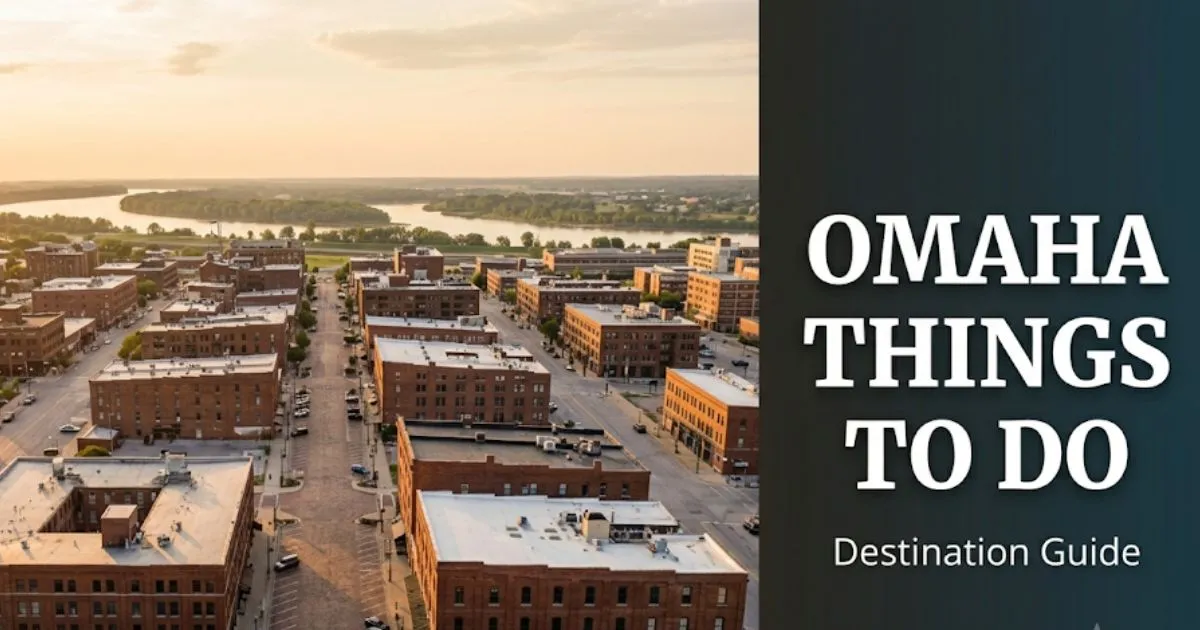
Omaha Things to Do: Best Activities and Local Tips 2026

Omaha things to do range from one of North America’s top-rated zoos to a genuine independent restaurant scene most travelers never find. This city earns a stronger recommendation than its Midwest reputation suggests.
Visit Omaha, the city’s official convention and visitors bureau, reports that Omaha welcomes over 10 million visitors annually. The vast majority spend their time in two places, missing the rest of a city that rewards exploration.
This guide covers every major attraction, the best neighborhoods, honest seasonal advice, and exactly what to skip. You will leave knowing how to plan an actual Omaha trip, not just a list.
Omaha Things to Do: What Makes This City Worth Your Time
Omaha is a genuinely underestimated American city with a food and arts identity that surprises nearly every first-time visitor. It also has the price point advantage that most comparable coastal cities cannot match.
The city sits on the western bank of the Missouri River in eastern Nebraska. Its position as a historic crossroads of westward expansion shaped a cultural density unusual for a city of its size.
Visit Omaha identifies the city’s Old Market District, Henry Doorly Zoo, and Joslyn Art Museum as its three anchor experiences. All three earn their reputation for different reasons and different traveler types.
What the tourism board does not say: the city’s most interesting neighborhood is Benson, not the Old Market. Locals eat in Dundee. The riverfront is genuinely transformed and still largely undiscovered by out-of-towners.
Omaha competes favorably with Kansas City for weekend trip quality. It costs less, crowds less, and parks more easily.
Insider Tip:
- The Berkshire Hathaway Annual Meeting, held each May, turns Omaha into a temporary global destination. Hotel prices spike significantly during this period.
- If your trip overlaps with the College World Series in June, book accommodation 4 to 6 months out or face significant rate increases.
- Solo travelers and couples benefit most from arriving Thursday evening to catch Benson’s weeknight bar scene before weekend crowds arrive.
Best Things to Do in Omaha Nebraska Right Now
The best things to do in Omaha Nebraska in 2026 center on four distinct experiences: the zoo, the Old Market, the Benson neighborhood dining scene, and the rebuilt riverfront at Gene Leahy Mall.
The Gene Leahy Mall redevelopment, completed as part of Omaha’s RiverFront project, transformed a flood-prone stretch into a park system with water features, trails, and event space. It changed how the city uses its waterfront.
| Activity | Best For | Cost Range | Time to Allow | Insider Note |
|---|---|---|---|---|
| Henry Doorly Zoo | Families, animal lovers | $25-$35/adult | 4 to 6 hours | Book online to skip entry lines |
| Old Market stroll | Couples, first-timers | Free to browse | 2 to 3 hours | Best on Saturday mornings |
| Gene Leahy Mall | All profiles | Free | 1 to 2 hours | Evening light on the water feature is exceptional |
| Benson bar crawl | Adults, solo travelers | $20-$50 per person | 3 to 4 hours | Start at Beercade, end at Reverb Lounge |
| Joslyn Art Museum | Couples, culture travelers | Free general admission | 2 hours | Free on Sundays; confirm current policy before visiting |
| Lauritzen Gardens | Couples, seniors | $12-$18/adult | 2 to 3 hours | Peak bloom is May through early June |
| Durham Museum | History travelers, families | $12-$16/adult | 2 hours | Art Deco train station interior alone is worth the visit |
Couples will find the most satisfying combination in a Gene Leahy Mall walk followed by dinner in the Old Market or Dundee. Families should anchor their trip around Henry Doorly Zoo and leave other experiences for Day 2.
Things to Do in Omaha for Adults
Things to do in Omaha for adults without children center on three zones: the Old Market for dining and evening atmosphere, Benson for bars and live music, and Midtown for gallery and arts engagement.
Slowdown, located in the North Downtown area near 14th and Webster Streets, is Omaha’s primary independent music venue. It draws national touring acts and local artists in a 600-capacity indoor-outdoor space that feels nothing like a tourist experience.
Reverb Lounge in Benson is smaller, more intimate, and where locals go when Slowdown’s lineup does not match their taste. Both venues typically announce lineups 4 to 8 weeks out; check schedules before your trip.
Beercade, also in Benson, combines arcade games with a strong craft beer selection. It skews young adult and is the most reliably social space in Omaha for solo travelers wanting to meet locals.
The Dundee neighborhood, centered on 50th Street and Underwood Avenue, holds Omaha’s most concentrated block of independent restaurants and wine bars. This is where the city’s professional and creative class eats on a Tuesday night.
Insider Tip:
- Au Courant in Dundee is the restaurant Omaha’s food community points to when asked what best represents the city’s culinary ambition in 2026.
- The Orpheum Theater on Farnam Street hosts Broadway touring productions and Omaha Symphony performances. Check the schedule; a weeknight show pairs well with a pre-show dinner on Harney Street.
- Adults traveling without kids can skip the Omaha Children’s Museum entirely. The Durham Museum delivers far more genuine cultural engagement for the same time investment.
Top Things to Do in Omaha’s Most Visited Attractions
The top things to do in Omaha by visitor volume are Henry Doorly Zoo, the Old Market District, Joslyn Art Museum, and Lauritzen Gardens. All four genuinely earn their popularity, though for different reasons.
Henry Doorly Zoo and Aquarium consistently ranks among the top zoos in North America. Its indoor rainforest, Desert Dome, and aquarium section are the specific exhibits that separate it from a standard city zoo.
Joslyn Art Museum, located on Dodge Street, holds an impressive permanent collection anchored by 19th and 20th century American and European work. Admission to the permanent collection is free on Sundays; verify current policy directly with the museum before visiting.
Lauritzen Gardens, Omaha’s botanical garden near the Missouri River, peaks in May and June. The rose garden section is the most photographed, but the Japanese garden is the most quietly rewarding.
The honest assessment: the Old Market is Omaha’s most tourist-oriented district. It earns a visit for its brick-paved streets, cobblestone alleys, and genuine dining quality. It is also the most crowded spot in the city on weekend evenings.
The local alternative to the Old Market for dinner: the Dundee neighborhood. Less foot traffic, more neighborhood character, better reservation availability, and pricing that runs roughly 15 to 20 percent lower for equivalent quality.
According to the Nebraska Tourism Commission, the Joslyn Art Museum and Henry Doorly Zoo are the two most frequently cited reasons first-time visitors choose Omaha as a destination.
Key Takeaway: Henry Doorly Zoo requires a minimum of 4 hours to see the exhibits worth the admission price. Plan it as a morning-only or full-day activity, never an afternoon afterthought.
Omaha Old Market Things to Do
The Old Market District is Omaha’s most walkable neighborhood and its primary dining and shopping destination for visitors. It occupies roughly 10 square blocks of restored warehouse architecture near 10th and Howard Streets.
M’s Pub, one of the Old Market’s anchor restaurants, has operated continuously since 1972. It serves as a reliable benchmark for the district’s dining quality: genuinely good food in a space that feels like it belongs to the city, not to tourism.
The Passageway, a covered alley running off Howard Street, holds a cluster of independent shops and galleries. It is the most distinctive physical space in the Old Market and feels nothing like a standard shopping district.
Weekend evenings in the Old Market bring significant foot traffic. Parking fills in the surface lots by 7:00 PM; the Market Parking Garage on 11th Street provides the most reliable covered option, though it too fills quickly. Arriving before 6:00 PM or walking from a nearby hotel is the practical solution.
Upstream Brewing Company, located inside the Old Market, is the most logical spot for a pre-dinner beer. It brews on-site and has enough seating variety to work for groups, couples, and solo travelers at the bar.
Couples find the Old Market most rewarding for a Saturday lunch and afternoon stroll followed by an early dinner before the evening crowd peaks. Families should note that the district is stroller-accessible on the main streets but cobblestones on side alleys are a challenge.
Insider Tip:
- The Farnam Street Farmer’s Market operates on Saturday mornings in the Old Market area during warmer months. Arrival before 9:00 AM gives you access before the crowds arrive and before the best local produce and food vendors sell out.
- For shopping, the Old Market delivers the best density of independent bookshops, vintage clothing, and art galleries in the city. Jackson Street Booksellers is the specific stop serious readers should make.
Omaha Benson Neighborhood: Where Locals Actually Go
Benson is Omaha’s most genuinely local neighborhood for nightlife, live music, and independent dining. It sits along North 60th Street between Maple and Military Avenues, about a 10-minute drive northwest of the Old Market.
What Benson has that the Old Market does not: a functional neighborhood economy. The bars, restaurants, and venues here serve the people who live within walking distance, which means less tourist pricing and more authentic atmosphere.
Reverb Lounge on North 60th Street is the neighborhood’s best music venue. It books a mix of indie, folk, and alternative artists in an intimate space where no seat is farther than 40 feet from the stage.
Beercade combines a genuinely excellent craft beer selection with vintage and modern arcade games. The combination sounds gimmicky; it works because the beer program is taken seriously and the space is large enough to avoid feeling cramped.
For food in Benson, Dinker’s Bar is the honest local choice: a dive bar with a hamburger that the Omaha food community has argued about for decades. It is the opposite of Instagram food and completely worth it.
Solo travelers will find Benson the most naturally social zone in the city. The bar layout and neighborhood vibe make meeting people easy in a way that the Old Market, with its tourist orientation, does not facilitate.
Insider Tip:
- Benson’s best nights are Thursday through Saturday. Sunday brunch has emerged as a secondary strong day, with several spots along 60th Street offering weekend brunch menus.
- The neighborhood hosts the Benson First Friday arts event monthly. If your trip coincides, galleries and studios open late and the entire strip feels energized.
Henry Doorly Zoo Omaha: What to Know Before You Go
Henry Doorly Zoo and Aquarium is Omaha’s single most-visited attraction and one of the genuinely great zoological parks in North America. Plan a minimum of 4 hours; 6 hours is more realistic for a thorough visit.
The three exhibits that justify the admission cost on their own: the Lied Jungle (one of the world’s largest indoor rainforests), the Scott Aquarium (a full-scale aquarium built into the zoo campus), and the Desert Dome (the world’s largest geodesic dome sheltering a desert ecosystem). These are not standard city zoo additions.
Admission runs approximately $25 to $35 per adult and $15 to $25 per child as of recent years. Prices are subject to change; verify directly with the zoo before your visit. Online purchase is strongly recommended to avoid entry line delays during peak season.
Peak crowds arrive on weekends from late May through August. A Tuesday or Wednesday visit in June offers the same experience with significantly fewer people competing for exhibit sightlines.
Families will find this the clearest best-value activity in Omaha. The zoo’s physical scale is substantial; children under 8 will tire before seeing everything, so prioritize the Lied Jungle and Scott Aquarium first.
Seniors and accessibility travelers: The zoo’s campus is large. Motorized scooter rentals and wheelchair rentals are available on-site. The terrain involves significant walking over varied surfaces. Budget an extra 30 minutes compared to a standard visitor timeline.
Insider Tip:
- The zoo’s IMAX theater is a separate ticket addition. Skip it unless traveling with children; the exhibit time is more valuable.
- Arriving at opening time (typically 9:00 AM; verify before visiting) allows 60 to 90 minutes in the most popular exhibits before the primary crowd wave arrives around 11:00 AM.
- The local alternative for animal experiences: Fontenelle Forest in Bellevue, 10 minutes south of Omaha, offers forest hiking alongside wildlife observation in a completely non-touristy environment.
Key Takeaway: Book Henry Doorly Zoo tickets online before your trip. Walk-up lines during summer weekends can add 30 to 45 minutes before you reach an exhibit.
Omaha Food Scene and Best Restaurants
Omaha’s food scene is one of the most underestimated in the Midwest, running from genuinely ambitious fine dining in Dundee to a taco truck culture in South Omaha that rivals much larger cities. The beef reputation is real but incomplete.
Block 16, located at 1611 Farnam Street downtown, is the restaurant that changed how the national food press wrote about Omaha. Its Korean-American fusion approach to comfort food (specifically the Korean fried chicken and the Viscacha burger) earned coverage from publications that usually ignore the Midwest.
Au Courant in Dundee operates as a neighborhood wine bar with a rotating seasonal menu. It is the restaurant Omaha’s culinary community considers most representative of where the city’s dining identity is heading in 2026.
Wren, a tasting menu restaurant in the Blackstone neighborhood near 40th and Farnam, offers the city’s most ambitious fine dining experience. Reservations are typically required 2 to 3 weeks in advance for weekend seatings.
South Omaha along 24th Street is Omaha’s most overlooked food destination for visitors. The neighborhood’s Latin American restaurant and taqueria concentration is dense, genuine, and priced for the neighborhood rather than for tourists.
Budget travelers will find the most satisfying meals per dollar at Block 16 for lunch, the South 24th Street taquerias for any meal, and the Old Market for a mid-range dinner that does not require a reservation.
According to Visit Omaha, the city’s restaurant scene has grown by over 30 percent in new openings over the past five years, with the Blackstone and Dundee neighborhoods leading the expansion.
Insider Tip:
- Nebraska Brewing Company in Papillion (20 minutes south of downtown) is the area’s most respected craft brewery. The taproom experience is worth the short drive for beer-focused travelers.
- The Saturday Farnam Street Farmers Market runs May through October and is the best way to understand Omaha’s local food producer community in one morning.
Free Things to Do in Omaha
The best free things to do in Omaha include the Gene Leahy Mall riverfront park, the permanent collection at Joslyn Art Museum on Sundays, the Bob Kerrey Pedestrian Bridge, and the Old Market’s walkable streets and galleries.
Free activities in Omaha worth building into your itinerary:
- Gene Leahy Mall and the Heartland of America Park: The rebuilt RiverFront area is Omaha’s best free outdoor experience. The water features, walking paths, and Missouri River views deliver genuine quality.
- Bob Kerrey Pedestrian Bridge: The 3,000-foot pedestrian bridge spans the Missouri River between Omaha and Council Bluffs, Iowa. Walking it puts you in two states simultaneously. It costs nothing and takes 20 minutes.
- Joslyn Art Museum permanent collection: Free on Sundays; a genuinely strong permanent collection that would cost $20 to $25 to access at a comparable institution in a major coastal city. Verify current free-admission schedule before visiting.
- Bemis Center for Contemporary Arts: Free admission; rotating contemporary art exhibitions in a gallery space on 12th Street that punches above its market size.
- Union for Contemporary Art in north Omaha: A free-admission arts center focused on social justice and community arts programming. Undervisited by tourists and genuinely interesting.
- Fontenelle Forest trails in Bellevue: A modest day-use fee (verify current rates before visiting) for access to forest trails along the Missouri River floodplain. Feels nothing like a city park.
- Old Market stroll: Window shopping, gallery browsing, and people-watching in the historic district costs nothing.
Budget travelers can build a genuinely rich two-day Omaha experience spending less than $50 per person if they prioritize the free riverfront, Sunday museum access, and lunch at Block 16 or South 24th Street.
Family Things to Do in Omaha
Family things to do in Omaha are anchored by Henry Doorly Zoo, the Omaha Children’s Museum, and the Gene Leahy Mall’s interactive water features. Omaha ranks genuinely well for family travel at a Midwest price point.
Omaha Children’s Museum, located at 500 South 20th Street, is best suited for children under 10. The hands-on science and creative play exhibits hold younger children’s attention effectively. Admission runs approximately $12 to $16 per person; verify current pricing before visiting.
The Gene Leahy Mall water feature area functions as a free outdoor play space during summer. Children under 10 treat the interactive water jets as a waterpark. Pack a change of clothes.
For families with children who are not old enough to appreciate the zoo fully, the Strategic Air Command and Aerospace Museum in Ashland (40 minutes southwest of Omaha on Interstate 80) is one of the most underutilized family attractions in the region. The aircraft collection is one of the largest in the country; entry fees are modest and crowds are minimal.
Families with children under 5 should prioritize the Children’s Museum and the riverfront on Day 1 and the zoo on Day 2. The zoo’s scale is too large for a combined same-day visit with other major activities.
Stroller access: The Old Market’s main streets are manageable. The Passageway and several side alleys have cobblestone surfaces that make stroller navigation genuinely difficult. Plan accordingly.
Insider Tip:
- The zoo’s Children’s Adventure Trails section is specifically designed for under-8 visitors. It runs near the zoo entrance and is the right starting point for families with young children before heading deeper into the campus.
- For a rainy day backup plan: Scheels at Village Pointe (a large sporting goods retailer with a Ferris wheel inside the store) is Omaha’s most unusual family-friendly weather backup option.
Key Takeaway: Omaha Children’s Museum is genuinely worth it for families with children under 10. For ages 10 and above, the Durham Museum delivers more substantive engagement at a comparable price.
Omaha Outdoor Activities and Riverfront
Omaha’s outdoor activity scene centers on the rebuilt RiverFront development, the Bob Kerrey Pedestrian Bridge, Fontenelle Forest in Bellevue, and the Papio Trail system connecting neighborhoods across the metro.
The Gene Leahy Mall and Heartland of America Park form the core of the RiverFront district. Walking the full loop from the mall through the park to the pedestrian bridge and back covers approximately 2.5 miles on flat, paved surfaces. It works for all fitness levels.
Fontenelle Forest Nature Center in Bellevue holds 17 miles of trails through Missouri River floodplain forest. The boardwalk trail system is the most accessible entry point; the ridge trails require more physical effort and reward hikers with elevated river views.
Trail conditions at Fontenelle Forest vary seasonally. Muddy conditions after rain are significant on unpaved trails. Ticks are present from April through October; wear long pants and use insect repellent.
The Papio Trail system connects neighborhoods across Omaha on paved multi-use paths. Road cyclists and recreational riders use it as the primary non-car way to move between the riverfront and Elmwood Park, covering roughly 7 miles of connected trail.
Seniors and accessibility travelers will find the Gene Leahy Mall and the paved Bob Kerrey Bridge the most accessible outdoor options. Fontenelle Forest’s boardwalk is accessible; the ridge trails are not suitable for mobility aids.
Insider Tip:
- Elmwood Park, near the University of Nebraska Omaha campus, is Omaha’s most undervisited city park. Mature trees, picnic infrastructure, and walking paths make it a genuine local retreat.
- Kayak and paddleboard rentals are available at the RiverFront during summer months (verify current operator schedules before visiting). The Missouri River itself carries strong currents; rentals operate on the calmer lagoon sections, not the main river channel.
Omaha History and Museums
Omaha’s history runs through westward expansion, railroad development, the Great Plains Black experience, and its role as a processing center in the American food economy. The museum infrastructure reflects this depth.
Durham Museum, housed inside the restored 1931 Art Deco Union Station at 801 South 10th Street, is Omaha’s best history museum. The building itself is worth the admission price. The permanent collection covers Great Plains history from Native cultures through the railroad era and into the 20th century.
Joslyn Art Museum at 2200 Dodge Street holds the city’s most important art collection. The Karl Bodmer paintings of Native American life in the 1830s are among the most historically significant artworks in the Great Plains region and are not well-known nationally.
Great Plains Black History Museum focuses on the African American experience in Omaha and Nebraska. It is a small but genuinely significant institution. Visiting is a meaningful counterpart to the Durham Museum’s broader narrative.
Fort Omaha, managed by the Douglas County Historical Society, served as the headquarters of the U.S. Army’s Balloon Corps during World War I. It is one of Omaha’s most specific historical stories and almost entirely unknown to first-time visitors.
History-focused travelers should allocate a full day for the Durham Museum, Joslyn, and Fort Omaha. The combination covers 150 years of Great Plains and American history without redundancy.
According to the Douglas County Historical Society, Fort Omaha’s balloon corps history is one of the most underrepresented military stories in Midwestern public history education. Seasonal hours apply; verify before visiting.
Insider Tip:
- The Strategic Air Command and Aerospace Museum in Ashland is a 40-minute drive from downtown but holds the most physically impressive collection in the Omaha region. It is a full-day alternative for travelers whose interests run toward aviation and military history rather than fine art.
Omaha Things to Do This Weekend: A One-Day Itinerary
One day in Omaha is enough to experience the city’s three essential zones: the riverfront, the Old Market, and either Benson or the Henry Doorly Zoo depending on your traveler profile. Two days allows genuine depth.
One-Day Omaha Itinerary (Balanced for First-Time Visitors):
- 8:30 AM: Arrive at the Farnam Street Farmers Market in the Old Market (Saturday only, May through October). Browse local produce and food vendors before crowds arrive.
- 10:00 AM: Walk to Gene Leahy Mall and Heartland of America Park. Cross the Bob Kerrey Pedestrian Bridge for the Missouri River view. Allow 90 minutes total.
- 11:30 AM: Drive or rideshare to Henry Doorly Zoo. Prioritize the Lied Jungle, Desert Dome, and Scott Aquarium in that order. Allow 3 to 4 hours.
- 3:30 PM: Return to the Old Market area. Browse the Passageway galleries and shops. Stop at Jackson Street Booksellers if books are your thing.
- 5:30 PM: Pre-dinner beer at Upstream Brewing Company in the Old Market.
- 7:00 PM: Dinner reservation at Block 16 for a mid-range meal, or walk to Dundee for a reservation at Au Courant for a more neighborhood-local experience.
- 9:00 PM: Drive to Benson for the evening. Start at Beercade, check the schedule at Reverb Lounge for live music, and end the night at Dinker’s Bar for the hamburger that the city argues about.
Families should replace the Benson evening with an early return after dinner and the morning farmers market. The zoo visit is the full-day centerpiece for families.
Couples can replace Step 3 with a visit to the Joslyn Art Museum and Durham Museum for a culturally richer daytime experience before the Old Market evening.
Key Takeaway: The Old Market and Henry Doorly Zoo on the same day is overambitious. Pick one as your primary experience and use the other as a secondary stop. You will enjoy both more.
Things to Do Near Omaha Nebraska: Day Trip Guide
The best day trips near Omaha Nebraska include the Strategic Air Command and Aerospace Museum in Ashland, Platte River State Park near Louisville, Mahoney State Park near Ashland, and Lincoln, Nebraska for a full-day urban excursion.
| Day Trip Destination | Distance from Omaha | Drive Time | Best For | Key Experience |
|---|---|---|---|---|
| Lincoln, Nebraska | 50 miles west on I-80 | 55 minutes | Culture, Big Ten sports fans | Nebraska State Capitol, Haymarket District |
| Mahoney State Park | 30 miles south on I-80 | 35 minutes | Families, outdoor recreation | Waterpark, camping, trails |
| SAC Aerospace Museum, Ashland | 25 miles southwest | 30 minutes | Aviation history, families | Largest aircraft collection in the region |
| Platte River State Park | 30 miles south | 35 minutes | Nature, hiking | Missouri River and Platte River views |
| Council Bluffs, Iowa | 5 miles east | 10 minutes | Casual, casino visitors | Hilton Casino, Lewis and Clark monument |
| Brownville, Nebraska | 70 miles south | 75 minutes | History, scenic drive | Missouri River history, antique shops |
Lincoln is the strongest full-day option for adult travelers. The Haymarket District in Lincoln functions similarly to Omaha’s Old Market but with a Big Ten college-town energy. The Nebraska State Capitol building, with its distinctive tower design, is architecturally significant and free to enter.
Mahoney State Park is the clearest family day trip option near Omaha. Its waterpark, miniature golf, and trail system deliver a full family day without the admission cost of the zoo.
Getting there: All day trips from Omaha require a car. Public transit does not serve any of these destinations. Interstate 80 connects the most heavily used day trip corridor.
Omaha Seasonal Guide: Best and Worst Times to Visit
The best time to visit Omaha is May through early June and September through mid-October. The worst time for most travelers is late June through August, when heat, humidity, and crowd concentration peak simultaneously.
Spring (April through May): Temperatures range from the mid-50s to low 70s Fahrenheit. Lauritzen Gardens is at peak bloom from mid-May through early June. The Berkshire Hathaway Annual Meeting in early May creates hotel rate spikes; book 3 to 4 months in advance if traveling during this period.
Early Summer (June): The College World Series, held at TD Ameritrade Park in late June, is one of the most energetic sporting events in the Midwest. If sports travel is your goal, this is Omaha’s peak event. If it is not your goal, avoid late June entirely. Hotels sell out months in advance.
Summer (July through August): Average high temperatures reach 88 to 95 degrees Fahrenheit with high humidity. Outdoor activities become physically demanding in the afternoon hours. The zoo and museums make more sense as morning activities during this period.
Fall (September through October): The most underrated season to visit Omaha. Temperatures drop to comfortable 60s and 70s, the crowds thin significantly after the College World Series and summer peaks, and the Old Market restaurant scene is at its most enjoyable without the weekend congestion.
Winter (November through March): Cold temperatures (average highs in the 30s and 40s Fahrenheit) limit outdoor activity. The Old Market takes on a quieter character. Hotel rates drop significantly. The Durham Museum and Joslyn become more natural centerpieces. If low-cost travel matters more than weather, winter is Omaha’s value season.
Insider Tip:
- The Holiday Lights Festival in the Old Market runs through December and is the most atmospheric version of the district all year. The brick streets and string lights create a genuinely pleasant winter evening environment.
Getting Around Omaha Nebraska: Practical Tips
Getting around Omaha requires a car for the vast majority of visitors. The Metropolitan Area Transit (MAT) bus system serves the city but is not optimized for tourist navigation between the Old Market, Benson, and the zoo.
From Eppley Airfield (OMA) to downtown:
- Rideshare (Uber or Lyft) is the primary practical option. The trip to the Old Market runs approximately 10 to 15 minutes and typically costs $15 to $25, depending on time of day and surge pricing.
- Taxi service is available at the airport but less consistently available than rideshare.
- Rental cars are available at OMA through all major agencies. Pickup is in the terminal.
- MAT bus service connects to downtown but requires transfers and significantly more time. Not recommended for travelers with luggage.
- There is no rail link between OMA and downtown Omaha as of 2026. Verify before departure whether any transit development has changed this.
Parking in the Old Market: Surface lots along 10th and 11th Streets fill by 6:30 to 7:00 PM on Friday and Saturday evenings. The Market Parking Garage on 11th Street between Howard and Harney is the best covered option. Arrive before 6:00 PM or walk from a hotel within the district.
Between neighborhoods: Benson is approximately 3 miles from the Old Market. Rideshare is the practical option for evening travel between the two areas. Driving and parking in Benson on weekend evenings is generally easier than the Old Market.
Seniors and accessibility travelers: The Old Market’s main streets are flat and manageable. Side alleys with cobblestones should be avoided with mobility aids. The Gene Leahy Mall is fully paved and accessible. All major museums have accessible entrances and elevator access; confirm directly with each venue.
Insider Tip:
- Downtown Omaha hotels within walking distance of the Old Market eliminate the parking problem entirely. The Kimpton Cottonwood Hotel in Midtown and the Embassy Suites downtown are the two most strategically located options for a car-free Old Market experience. Verify current availability and rates before booking.
Frequently Asked Questions About Omaha Things to Do
What are the best free things to do in Omaha Nebraska?
The best free things to do in Omaha include the Gene Leahy Mall riverfront park, the Bob Kerrey Pedestrian Bridge, and the Joslyn Art Museum permanent collection on Sundays.
The Bemis Center for Contemporary Arts and Union for Contemporary Art also offer free admission year-round.
The Old Market’s streets, galleries, and Passageway are free to explore, making a full half-day itinerary possible without spending anything.
Is Henry Doorly Zoo worth it in 2026?
Henry Doorly Zoo is worth the admission price for families, animal enthusiasts, and first-time Omaha visitors. The Lied Jungle, Desert Dome, and Scott Aquarium are genuinely exceptional exhibits.
For adults traveling without children who are not specifically interested in zoos, the time and cost may be better invested in the Old Market, Joslyn, and Benson neighborhood experiences.
Admission runs approximately $25 to $35 per adult as of recent years; verify current pricing directly with the zoo before visiting.
What is the best neighborhood to stay in Omaha?
The best neighborhood to stay in for first-time visitors is the Old Market District or within walking distance of it. Staying there eliminates the parking problem and puts you within walking distance of the city’s best evening dining and nightlife.
Midtown Crossing near Turner Park is the best alternative for travelers who prefer a slightly quieter base with easy rideshare access to both the Old Market and Benson.
Suburban hotels near the zoo offer proximity to that attraction but require a car for everything else.
How many days do you need in Omaha?
Two full days is the practical minimum for a satisfying Omaha visit covering the zoo, Old Market, one museum, and the Benson neighborhood.
Three days allows for a day trip to Lincoln or Mahoney State Park alongside the city’s core experiences.
One day is possible but requires choosing between the zoo and the museum-and-neighborhood combination; you cannot do both well in a single day.
What is Omaha Nebraska known for?
Omaha is known for Henry Doorly Zoo, one of North America’s top-rated zoos; the historic Old Market District; the College World Series; Warren Buffett and Berkshire Hathaway; and Omaha Steaks.
The city is also recognized for its role in westward expansion history, as the eastern terminus of the First Transcontinental Railroad.
Its food scene, particularly Block 16 and the Dundee neighborhood restaurant community, has drawn national attention in recent years.
Is Omaha a good city to visit for adults without kids?
Omaha is a genuinely good city for adults without children, particularly for food-focused travelers, music and arts visitors, and couples seeking a low-pressure weekend destination.
The Benson neighborhood, Dundee dining scene, Slowdown music venue, Joslyn Art Museum, and Durham Museum all deliver adult-specific experiences with no child-oriented framing.
The city does not compete with Chicago or Nashville for nightlife volume or sheer scene density, but it delivers quality-per-dollar that both cities cannot match.
Plan Your Omaha Trip with Confidence
Omaha rewards visitors who go beyond the Old Market and Henry Doorly Zoo. The Benson neighborhood and Dundee dining scene are where the city’s genuine identity lives, and they are almost entirely visitor-free on most nights.
Book your Henry Doorly Zoo tickets online before arriving. Secure Old Market restaurant reservations for Friday and Saturday evenings at least one week out. If your trip overlaps with the College World Series or the Berkshire Hathaway Annual Meeting, book accommodation 4 to 6 months in advance or expect significant rate increases.
Travel conditions, operating hours, admission prices, and seasonal schedules change. Verify all key logistics directly with Visit Omaha and individual venues before departure.
Omaha delivers a genuinely undervalued two to three-day trip. You just need to know where to look.