Best Things to Do in Savannah, GA: 2026 Visitor Guide

Savannah, Georgia earns its reputation as one of the most atmospheric cities in the American South not through any single landmark but through the cumulative effect of 22 tree-shaded historic squares, architecture that has survived intact for two centuries, a genuine food culture, and a local arts community anchored by one of the country’s most influential design colleges. The things to do in Savannah, GA range from completely free walks through oak-canopied parks to ticketed historic house tours, river kayaking, and ghost excursions with more atmosphere than camp, depending on which operator you book.
According to Visit Savannah, the city’s official destination organization, Savannah’s National Historic Landmark District is one of the largest in the United States, covering 2.5 square miles of original Oglethorpe-planned grid in the urban core. That planning framework, designed in 1733 and still legible in the city’s layout today, is what makes Savannah navigable on foot in a way that most American cities of comparable size are not.
This guide covers the city’s genuine highlights and their honest limitations, organized by experience category and traveler profile. You’ll find a specific itinerary framework, cost ranges, what to skip, what to book in advance, and the practical logistics that most Savannah travel content skips entirely. The goal is that you leave with a real plan, not just a list of attractions you’ve already seen on five other websites.
Things to Do in Savannah GA: What the City Actually Delivers
Savannah delivers a genuinely distinctive American travel experience, one built on atmosphere, walkability, and history that is visible rather than just commemorated on plaques.
The city’s identity is rooted in a specific geographic and architectural reality. General James Oglethorpe’s 1733 plan created a city of self-contained neighborhood units, each centered on a public square, with residential lots and civic buildings arranged around them. That structure survived urban renewal, the Civil War, and mid-twentieth century development pressure largely because local preservation advocates in the 1950s fought to save it when the city was considering demolishing the Historic District for parking infrastructure. What remains is a walkable, human-scaled urban environment that rewards slow exploration.
What Savannah does not deliver is theme-park efficiency. This is a city best experienced by people who want to walk, eat well, sit in a park, wander into a museum or historic house, and repeat. Travelers expecting fast-moving itineraries with high-density attractions will find the pace slow. The city’s best experiences unfold gradually.
The honest assessment for different traveler types looks like this:
| Traveler Profile | Savannah Suitability | What Works Best | Honest Limitation |
|---|---|---|---|
| Couples | Excellent | Walking squares, intimate dining, ghost tours, historic inn stays | Can feel crowded on peak weekends |
| Solo travelers | Very good | Self-paced square walks, SCAD arts scene, food tours | Evening solo dining in some areas requires planning |
| Families with young children | Moderate | Forsyth Park, Tybee Island beach, open spaces | Historic indoor attractions lose young kids quickly |
| Budget travelers | Good | Extensive free outdoor content, budget dining options | Best indoor museums require admission |
| Seniors and accessibility travelers | Mixed | Flat Historic District streets, trolley tours | River Street cobblestones are a genuine barrier |
| History enthusiasts | Excellent | Dense concentration of intact antebellum architecture and sites | – |
Savannah rewards travelers who prepare for two realities: summer heat is a genuine physical challenge that limits outdoor comfort, and the tourist corridor (River Street plus City Market) represents a small and relatively surface-level slice of what the city actually has to offer.
Savannah’s Historic Squares: The Framework for Everything
Savannah’s 22 surviving historic squares are the single most important thing to understand about the city before you arrive, because they are both the primary attraction and the geographic framework that organizes everything else.
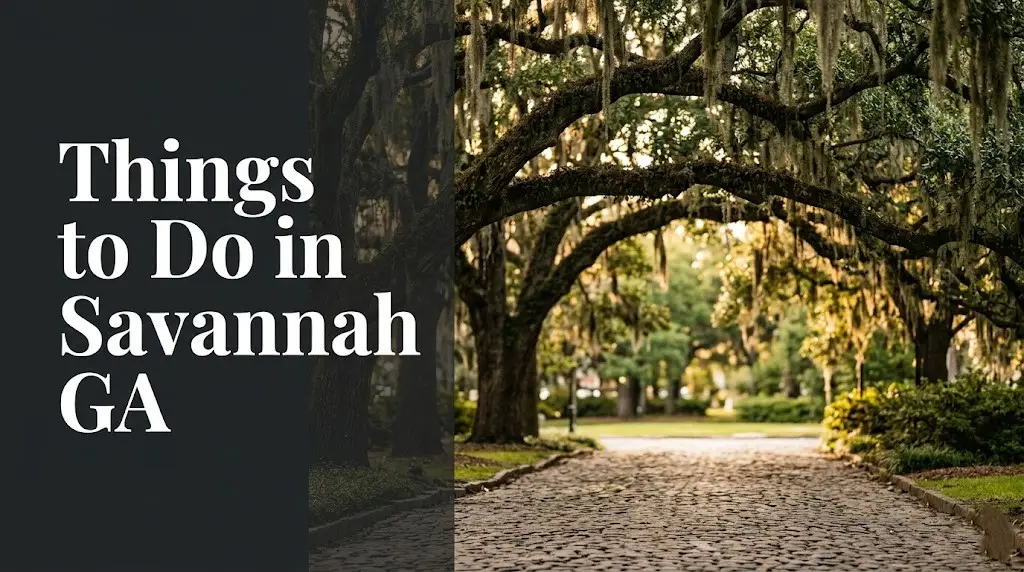
The original Oglethorpe plan designated 24 ward-based squares; 22 survive intact and have been restored. Each square is a small park, typically shaded by mature live oak trees draped with Spanish moss, flanked by historic homes, churches, and civic buildings, and equipped with benches. They are free to enter at any hour. In aggregate, they constitute the experience that most visitors describe when they say Savannah changed how they think about what an American city can be.
Not all 22 squares are equally worth your time. The five or six most significant ones have distinct architectural or historical identities that make them genuinely different from each other. The others, while pleasant, can feel similar if you spend more than a few minutes in each.
| Square | Character | Best For | Signature Element |
|---|---|---|---|
| Forsyth Park | Large central park; not technically a square | All traveler types | Cast-iron fountain; open lawn; café; most social atmosphere |
| Chippewa Square | Compact and architecturally refined | Couples, history enthusiasts | Featured in “Forrest Gump” (bench scene filmed here) |
| Madison Square | Balanced Georgian architecture on all four sides | Architecture enthusiasts | Green-Meldrim House on one side; monument to Sergeant Jasper |
| Monterey Square | Often cited as the most elegant | Couples, photographers | Near Mercer Williams House; quiet and relatively uncrowded |
| Colonial Park Cemetery | Adjacent to Reynolds Square | History enthusiasts | One of Savannah’s oldest cemeteries; free to enter |
| Lafayette Square | Cathedral proximity | Families, history travelers | Cathedral of St. John the Baptist on eastern boundary |
Insider Tip: The squares are dramatically different depending on time of day. Early morning before 9 a.m., they are genuinely quiet. By mid-morning, the organized walking tour groups have arrived. By early afternoon in summer, the heat makes extended sitting uncomfortable without shade. The best experience of the squares happens between 7 and 9 a.m. and again after 5 p.m. when the tour groups have dispersed and the light through the oaks is at its most photogenic.
For families with children: The squares function well as rest and play stops between museum visits, but children will not sustain interest in them as a primary activity for more than 15 to 20 minutes per square. Plan them as connective tissue between destinations rather than as standalone destinations for young travelers.
Things to Do in the Savannah Historic District
The Savannah Historic District is where most visitors spend the majority of their time, and it genuinely rewards that attention, provided you move beyond the obvious tourist checkboxes into the district’s more specific historic and architectural offerings.
The three most substantive indoor experiences in the Historic District are the Owens-Thomas House and Slave Quarters (managed by Telfair Museums), the Juliette Gordon Low Birthplace (managed by the Girl Scouts of the USA), and the Mercer Williams House Museum. Each offers a genuinely different historical lens on Savannah, and each charges admission in the approximate $10 to $25 per adult range at recent rates. Verify current admission before visiting, as these figures change.
The Owens-Thomas House is architecturally the most significant of the three, representing one of the finest examples of English Regency architecture in the United States. Its slave quarters exhibit, added in recent years and frank in its presentation of the full household’s history, gives the site a depth that typical antebellum house museum tours lack. Allow 45 to 60 minutes here.
The Juliette Gordon Low Birthplace is the birthplace of the founder of Girl Scouts of the USA and operates as a living museum. It draws a significant number of family visitors and Girl Scout troops. For history travelers who are not specifically interested in the Girl Scouts organization, the Mercer Williams House may deliver more of the drama they’re seeking: its connection to Jim Williams, the protagonist of John Berendt’s “Midnight in the Garden of Good and Evil,” gives it a narrative hook that makes the tour memorable for adult visitors.
The Georgia State Railroad Museum, located at the edge of the Historic District in the Roundhouse Railroad Museum complex, is genuinely undervisited relative to its historical significance. It contains the most intact antebellum railroad facility remaining in the United States, and its scale surprises visitors who expect a modest exhibit. This is one of the specific cases where the experience substantially exceeds what the attraction’s modest tourist profile suggests.
For budget travelers: Owens-Thomas House, Juliette Gordon Low Birthplace, and Mercer Williams House all require admission. Prioritize the one that most aligns with your specific historical interest rather than trying to do all three in a single day; the combined cost adds up, and museum fatigue is real.
Savannah Neighborhoods Worth Exploring Beyond the Tourist Core
The most common Savannah planning mistake is spending the entire trip within the Historic District and River Street corridor, which leaves the city’s most locally authentic neighborhoods completely unexplored.
The Starland District (centered on Bull Street between 37th and 41st Streets, also referred to by longtime locals as the Thomas Square neighborhood) is where Savannah’s working creative community actually lives and gathers. SCAD students and faculty, young professionals, and local artists have built a neighborhood culture here that includes independent coffee shops, small art galleries, experimental restaurants, and food trucks. The neighborhood is walkable, visually interesting because of its Victorian-era residential architecture, and entirely free of the tour-bus infrastructure that defines the Historic District’s tourist experience.
The Victorian District, immediately south of Gaston Street, contains some of Savannah’s most impressive residential architecture: late-19th century Victorian homes in Queen Anne, Italianate, and Second Empire styles on tree-lined streets. This neighborhood is largely residential and not set up for tourist activities specifically, but it rewards a 30 to 45 minute walking detour for anyone interested in Savannah’s architectural depth beyond the antebellum period.
Midtown Savannah, further south along Bull Street past the Victorian District, is where you find the grocery stores, the neighborhood restaurants, and the day-to-day life of Savannah residents. It is not a tourist destination in any conventional sense, but stopping for a meal or coffee here while driving between the Historic District and Forsyth Park gives a more complete picture of the city than the tourist zone alone provides.
For solo travelers: The Starland District specifically suits solo travelers who want to spend time in spaces where locals outnumber tourists. Several of the coffee shops and small bars have the kind of social atmosphere where solo visitors integrate naturally rather than standing out.
According to the Savannah Area Chamber of Commerce, SCAD’s presence in the city contributes significantly to its creative economy, with thousands of students and faculty shaping the retail, dining, and arts culture of neighborhoods beyond the Historic District core.
Key Takeaway: Savannah’s Historic District is worth your time, but the city’s most genuine neighborhood character lives south of Gaston Street in the Starland District and Victorian District, which most visitors never see.
Things to Do on River Street Savannah (and What to Skip)
River Street deserves an honest assessment because it is Savannah’s most visited corridor and also its most tourist-saturated, and understanding what it actually offers helps you calibrate how much time to spend there.
The riverfront is architecturally atmospheric. The former cotton warehouses along the bluff, converted into restaurants, bars, hotels, and shops, retain their original brick and timber character. The views across the Savannah River to South Carolina are genuinely good. The activity of large container ships passing directly in front of the city is a specific and surprising feature that children find immediately engaging and that most adult visitors find striking the first time they see it.
What River Street is not is an authentic slice of Savannah food and bar culture. The majority of restaurants along the waterfront are tourist-oriented in their menus, service, and pricing. The candy shops (including the Savannah Candy Kitchen, which is worth a brief stop for its saltwater taffy and pralines as regional confections) and souvenir shops are geared explicitly toward day-trippers. This is not a criticism specific to River Street; it is a reality of high-volume tourist corridors in any American city. Manage expectations accordingly.
Factor’s Walk, the narrow lane immediately above River Street along the bluff face, connected to the street level by a series of iron bridges and ramps, is architecturally more interesting than River Street itself and significantly less crowded. Walking Factor’s Walk rather than River Street gives a better sense of the original commercial infrastructure of Savannah’s cotton economy.
Practical logistics to know: River Street’s cobblestones are the original ballast stones used as ship cargo in the 18th century. They are historically significant and genuinely difficult to walk on, especially in anything other than flat, supportive footwear. For mobility-impaired visitors or seniors, River Street is one of the most physically demanding areas in the Historic District, and the uneven surface creates a real fall risk. A ramp from the Hyatt Regency hotel provides one accessible descent from street level; confirm current accessibility options with the hotel before your visit.
For couples: The riverfront at sunset has a genuinely atmospheric quality and works well as a pre-dinner walk, particularly in spring and fall when the temperature cooperates. Budget 45 minutes to an hour rather than anchoring a full meal here unless the restaurant specifically appeals to you on its own merits.
Outdoor Things to Do in Savannah GA
Forsyth Park is the single most important outdoor space in Savannah, and for outdoor activities in the city itself, it functions as both the social center and the primary green space for the Historic District.
The park spans 30 acres at the southern end of the Historic District, anchored by its famous cast-iron fountain (dating to 1858 and one of the most photographed objects in the city). On weekend mornings, the park hosts a farmers market, local fitness groups, dog walkers, families, and musicians. It is free, it is central, and it gives a more authentic picture of how Savannah residents use their city than any tour does. The park’s café, Forsyth Park Café, provides a practical coffee-and-pastry stop that allows you to sit and watch the park’s activity without committing to a full restaurant experience.
Beyond the city itself, Tybee Island is the primary outdoor destination for Savannah visitors, located approximately 18 miles east via US 80. Tybee provides the Atlantic beach access that the city itself lacks, plus the Tybee Island Lighthouse, which dates to 1736 and is one of the oldest and tallest lighthouses in the Southeast. Admission to the lighthouse complex is typically charged; verify current pricing and hours before visiting. The beach itself is public and free to access.
Wormsloe Historic Site, managed by the Georgia Department of Natural Resources, is one of the most visually distinctive experiences in the Savannah region: a 1.5-mile avenue of live oak trees forming a cathedral-like canopy over a tabby colonial road, leading to the ruins of a colonial fort. The image of the oak avenue is one of the most recognizable in Georgia tourism. It is approximately 10 miles southeast of the Historic District and requires a short drive. Admission is typically charged; verify current fees with Georgia State Parks before visiting.
For families: Tybee Island’s calmer northern end, near the lighthouse, is generally better suited to young children than the more exposed south end beach, which can have stronger surf. The Tybee Island Marine Science Center offers family-oriented programs that work particularly well for children between the ages of 5 and 12.
For seniors and accessibility travelers: Forsyth Park has paved paths throughout and is largely flat, making it accessible for mobility aids and easier walking. Wormsloe’s oak avenue involves a gravel and packed-earth surface that may challenge some mobility aids; confirm current path conditions before visiting.
Savannah Ghost Tours and Nightlife
Savannah’s ghost tour industry is one of the most commercially developed in any American city, and the quality range across operators is significant enough to make operator selection worth your attention before booking.
The city’s ghost tour reputation rests on two genuine foundations: its age (large portions of the Historic District were built on colonial-era burial grounds, and the city’s history includes multiple yellow fever epidemics with mass mortality), and its atmospheric physical environment (Spanish-moss-draped oaks, gas street lanterns, and 18th-century architecture create genuine nighttime atmosphere that no amount of theatrical ghost storytelling could manufacture independently).
Savannah Walks and Ghosts and Gravestones are two of the more consistently reviewed operators for adult visitors seeking a tour that balances historical authenticity with atmosphere. Savannah Walks offers walking-format tours with guides who emphasize documented history alongside local legend. Ghosts and Gravestones uses a trolley format and includes access to Colonial Park Cemetery at night, which provides a specific atmospheric experience that the walking tours do not.
Book ghost tours in advance, particularly on weekends between March and November. The most popular time slots, typically 8 to 10 p.m., sell out on peak weekends. Prices typically run in the $20 to $35 per adult range depending on tour format and operator; verify current pricing directly with operators.
For nightlife beyond ghost tours: Savannah’s open container law permits alcohol in approved to-go cups within the Historic District. This shapes the city’s bar culture in a specific way: the experience of walking between bars with a drink is legal and common, and it creates a social atmosphere on the street level that is genuinely different from most American cities. Congress Street and the area around City Market concentrate most of the live music bars and late-night venues. The quality of live music varies; opt for venues that advertise specific bands or performers rather than generic “live music nightly” signage.
For solo travelers: Savannah’s open-container culture and the compact walkability of the bar district makes it one of the more solo-friendly nightlife environments in the South. The social atmosphere on the streets in the evening naturally creates interaction opportunities.
Key Takeaway: Savannah’s ghost tour industry has a wide quality range; choose an operator that emphasizes historical documentation alongside atmosphere, and book the 8 to 10 p.m. timeslot in advance on any weekend between March and November.
Where to Eat in Savannah GA
Savannah’s food scene has matured significantly over the past decade, and the city now has enough genuinely good restaurants across price points that eating well here does not require spending a lot of money or knowing the right insider contacts.
Mrs. Wilkes Dining Room on Jones Street is the most specific eating experience Savannah offers: a family-style, communal-table Southern lunch that has been operating since 1943 and seats strangers together at long tables to share rotating dishes of fried chicken, collard greens, biscuits, corn, sweet potatoes, and rotating specials. The line begins forming before the restaurant opens, typically around 11 a.m. Tuesday through Friday; arrive by 10:30 a.m. to secure a reasonable wait. It is a genuinely communal, filling, and historically significant meal. The price point is moderate. Verify current operating days and hours before visiting, as the schedule has changed over the years.
The Grey, located in a renovated 1938 Greyhound bus terminal on Martin Luther King Jr. Boulevard, is the restaurant that established Savannah’s credibility as a destination for serious contemporary food. Chef Mashama Bailey’s cooking focuses on Georgia and Low Country ingredients interpreted through a modern lens. The restaurant earned national recognition including a James Beard Award. Dinner reservations are required well in advance, particularly on weekends; book at least two to three weeks ahead for spring and fall visits.
The Olde Pink House in Reynolds Square occupies a 1771 colonial mansion and serves traditional Southern food in an atmospheric setting. It is popular with tourists and locals alike, and the bar on the lower level (called the Planter’s Tavern) is one of Savannah’s more genuinely atmospheric late-night spots regardless of whether you dine upstairs.
Leopold’s Ice Cream on Broughton Street has operated since 1919 and makes its ice cream in-house using family recipes. The lines can be long on weekend afternoons; visit on a weekday morning or just before the evening rush if you want a shorter wait. The Tutti Frutti flavor, a house original, is the one local regulars order.
For budget travelers: Broughton Street and the surrounding blocks have sandwich shops, lunch counters, and casual restaurants that deliver full meals in the $10 to $18 range. The farmers market at Forsyth Park on weekend mornings is a low-cost option for a breakfast or light meal with locally made products.
Free Things to Do in Savannah GA
Savannah offers a genuinely substantial collection of free experiences, which is notable for a city with as much historical and cultural depth as this one.
The following are reliably free at time of publication, though visitors should confirm before departing as policies at specific sites can change:
- Walking all 22 surviving historic squares, including sitting, picnicking, and enjoying the oak canopy and Spanish moss (free, always open)
- Forsyth Park in its entirety, including the fountain area, paths, and weekend farmers market browsing (free)
- Colonial Park Cemetery, one of Savannah’s oldest cemeteries dating to the 18th century, is open to visitors during daylight hours (free; verify current hours)
- The exterior of the Cathedral of St. John the Baptist on Lafayette Square, one of the most architecturally striking Gothic Revival churches in the Southeast (free to view exterior; interior viewing depends on service schedule)
- SCAD Museum of Art occasionally offers free general admission periods or specific exhibitions at no charge; verify current admission policy before visiting
- Broughton Street window shopping and exterior architecture observation is free and gives a good sense of the city’s commercial streetscape
- The Savannah Riverfront promenade and ship-watching from River Street are free (specific shops and restaurants along River Street are paid)
- Wormsloe Historic Site’s oak avenue photograph opportunity requires admission to the site itself; budget travelers should know that the iconic avenue image requires paid entry
- The Savannah History Museum courtyard and the Roundhouse Railroad Museum exterior can be viewed at limited cost with a Georgia State Parks pass in some configurations; verify current admission options
For budget travelers specifically: A full day in Savannah that covers the squares, Forsyth Park, Colonial Park Cemetery, Broughton Street, and the Riverfront promenade can cost essentially nothing beyond food and beverage. The city’s most atmospheric and distinctive outdoor experiences are accessible without admission.
Fun Things to Do in Savannah GA with Kids
Savannah works for families with children better in some situations than others, and being honest about this distinction saves families from planning frustration.
What genuinely works well for children in Savannah:
- Tybee Island beach: A 20-minute drive from the Historic District, Tybee provides the beach access that children actually want. The northern end near the lighthouse is calmer. The Tybee Island Marine Science Center has touch tanks and hands-on exhibits that hold children’s attention effectively.
- Forsyth Park: The large open lawn, the fountain, and the informal atmosphere make Forsyth Park the best urban outdoor space for families. Children can run, play, and reset between structured activities.
- River Street ship watching: The sight of massive ocean-going container ships passing directly in front of the city at close range is something children find genuinely remarkable. Position on the River Street wharf for 15 to 20 minutes of ship watching at no cost.
- Savannah Bananas games: The Savannah Bananas, a trick-performance baseball team based at historic Grayson Stadium, have become one of the most genuinely family-entertaining live events in the region. Tickets require advance booking and sell out quickly; check availability well before your trip.
- Savannah History Museum: The museum’s exhibits on Savannah’s Civil War history and railroad history tend to hold children’s interest better than the purely decorative-arts focus of some of the historic home museums.
What sounds good for families but often underdelivers for young children: Historic house museum tours (children typically disengage within 10 minutes; these are better reserved for families with older teens who have genuine historical interest), ghost tours (inappropriate for young children and not suited to the typical ghost tour schedule or content), and extended square-walking tours (the architectural and historical significance is entirely invisible to children under 10).
For families: Budget Tybee Island as at least half a day, not a quick side trip. The drive there and back, plus beach time, realistically takes 4 to 5 hours. Plan it as a separate day rather than attempting to combine it with a full Historic District day.
Romantic Things to Do in Savannah GA
Savannah is one of the stronger choices in the American South for romantic travel, and it earns that reputation through specific qualities rather than generic Southern charm.
The city’s walkability is the foundation of its romantic appeal. Couples can spend an entire day on foot, moving between squares, stopping for coffee or a drink, browsing independent shops on Broughton Street, sitting in Forsyth Park, and exploring neighborhoods at their own pace without a car. The scale of the Historic District makes this genuinely achievable in a way that spread-out Sunbelt cities do not.
Specific romantic experiences in Savannah that deliver on their premise:
- An early evening cocktail at the rooftop bar of one of the Historic District boutique hotels (the view over the square canopy at dusk is one of the city’s most consistently atmospheric experiences; specific rooftop options change as hotels renovate and open, so verify current options on arrival)
- A dinner reservation at The Grey, which has the most complete romantic atmosphere of any Savannah restaurant: the converted Art Deco bus terminal space, the lighting, the food quality, and the service combine effectively. Book two to three weeks in advance for Friday and Saturday dinners.
- The Midnight in the Garden of Good and Evil trail: couples who have read John Berendt’s 1994 book, or who know the story, can spend several hours visiting the specific locations: Monterey Square, Bonaventure Cemetery (where the famous Bird Girl statue was originally photographed), and the Mercer Williams House. This is a self-guided experience with a specific narrative thread that makes it more intimate than a guided tour.
- An evening walk through Monterey Square, arguably the most architecturally refined of the Historic District squares, followed by a late drink at Planters Tavern in the basement of the Olde Pink House. This combination of atmosphere and low-key intimacy is harder to find in more conventionally touristy American cities.
For couples: The Historic District’s concentration of boutique inns and bed-and-breakfast properties in restored antebellum townhouses provides accommodation options that reinforce the romantic atmosphere in a way that hotel chains in the suburban zone do not. The price premium for staying inside the Historic District is real but pays dividends in walkability and atmosphere.
Key Takeaway: Romantic Savannah lives in the evening hours at specific squares and in a handful of genuinely atmospheric restaurants; book The Grey two to three weeks ahead and walk Monterey Square at dusk for the combination that most reliably delivers.
Cultural Things to Do in Savannah
Savannah’s cultural identity is more layered than most visitors expect, and the presence of the Savannah College of Art and Design (SCAD) gives it a contemporary arts dimension that purely historical Southern cities lack.
SCAD operates across dozens of buildings in the Historic District and surrounding neighborhoods, many of them in beautifully restored historic structures. The SCAD Museum of Art, housed in a renovated railroad depot, holds a permanent collection that includes significant works spanning multiple centuries and a rotating exhibition schedule that, in recent years, has featured international-caliber contemporary art shows. Verify current exhibitions and admission fees before visiting, as SCAD’s programming changes each semester.
The Telfair Museums system comprises three properties: Telfair Academy (the main art museum in an 1818 Regency mansion), Owens-Thomas House and Slave Quarters, and Jepson Center for the Arts (modern and contemporary art in a purpose-built contemporary building). A combination ticket covering all three typically offers cost savings over individual admission; verify current pricing with Telfair Museums directly.
The Ships of the Sea Maritime Museum in a William Jay-designed Greek Revival mansion covers Savannah’s history as a major Atlantic port and includes an impressive collection of ship models and maritime artifacts. It is consistently undervisited relative to its quality and is one of the specific cases where the experience exceeds what a casual tourist recommendation would suggest.
The Savannah Film Festival, produced annually by SCAD typically in the fall, brings independent and international films to the city with screenings in Historic District theaters. For culturally inclined travelers planning a fall visit, the festival calendar is worth checking as part of your planning.
For solo travelers interested in arts culture: SCAD’s open exhibitions and gallery events are genuinely accessible to visitors and provide one of the few contexts in Savannah where solo travelers interact organically with the local creative community rather than other tourists.
Day Trips from Savannah GA
Savannah’s geographic position in coastal Georgia places it within reasonable driving range of several genuinely distinct day trip destinations, each worth considering depending on your traveler profile.
| Destination | Distance from Savannah | Drive Time | Best For | One Reason to Go |
|---|---|---|---|---|
| Tybee Island | 18 miles east | 25 to 35 minutes | Families, couples, beach lovers | Atlantic beach access; lighthouse |
| Hilton Head Island, SC | 40 miles north | 45 to 60 minutes | Couples, golfers, nature travelers | More upscale beach resort environment than Tybee |
| Jekyll Island, GA | 70 miles south | 75 to 90 minutes | Nature travelers, history enthusiasts | State-protected barrier island; historic Jekyll Island Club |
| Cumberland Island, GA | 110 miles south | 2 hours to ferry terminal | Nature and wilderness travelers | Wild horses; National Park Service; ferry access only |
| Charleston, SC | 100 miles north | 2 hours | History enthusiasts, couples | A genuinely distinct Southern city; not interchangeable with Savannah |
| Okefenokee Swamp, GA | 70 miles west | 75 minutes | Eco-travelers, photographers | Largest blackwater swamp ecosystem in North America |
Cumberland Island National Seashore, managed by the National Park Service, requires a ferry reservation that should be booked weeks in advance. The island has no paved roads, no hotels, and no commercial services beyond a single inn and the NPS campground. It is one of the most genuinely wild experiences accessible within a day of a major Southern city.
For families considering day trips: Tybee Island is the practical choice; it is close, accessible by regular road, has full beach services, and children respond to it immediately. Cumberland Island is better suited to older children or teenagers who can appreciate the wilderness context.
For couples: Hilton Head offers a more upscale environment than Tybee, with better dining options in the resort zone, but its resort-development character feels less distinctively Southern. Choose between them based on whether you want beach access plus regional authenticity (Tybee) or beach access plus resort comfort (Hilton Head).
Best Time to Visit Savannah GA
The best time to visit Savannah, Georgia is mid-March through early June and late September through November, when outdoor temperatures support the walking-based exploration that defines the best Savannah experience.
Spring (March through May) is the city’s most popular season, and for specific reasons: temperatures run from the 60s to low 80s Fahrenheit, azaleas bloom across the Historic District in March and April, and the city’s social calendar is at its most active. The significant caveat for spring planning is St. Patrick’s Day, which Savannah celebrates as one of the largest such observances in the United States. The Savannah Area Chamber of Commerce notes that St. Patrick’s Day weekend draws hundreds of thousands of visitors to the city. If you want St. Patrick’s Day in Savannah specifically, book accommodation 6 to 12 months in advance; if you want a quieter spring visit, avoid mid-March entirely.
Fall (October through November) is the season that most experienced Savannah travelers prefer. Temperatures drop back into the comfortable range, humidity falls significantly, crowds thin after the summer peak, and the autumn light through the oak canopy has a quality that spring and summer light do not match. Hotel rates are typically lower than spring peak but remain higher than winter rates.
Summer (June through August) is genuinely difficult in Savannah for outdoor-focused visitors. Temperatures regularly reach the low to mid-90s Fahrenheit with high humidity. Heat index values frequently exceed 100 degrees. The city’s celebrated outdoor activities, walking the squares, visiting Bonaventure Cemetery, exploring Wormsloe, become physically draining experiences after an hour outdoors. Summer visitors should plan early morning outdoor activity (before 10 a.m.), extended midday breaks indoors or at air-conditioned attractions, and resume outdoor time after 5 p.m. The positive case for summer: hotel rates drop, and Tybee Island beach is at its most swimmable.
Winter (December through February) offers Savannah’s lowest hotel rates and thinnest crowds. Temperatures are mild by national standards (40s to 60s Fahrenheit), though cold by Savannah standards, and occasional cold snaps bring temperatures into the 30s. The outdoor experience is less lush than spring or fall, but the city remains walkable and the historic sites are fully operational. For budget travelers or those who prioritize avoiding crowds, January and February represent genuine value.
Getting Around Savannah GA
Getting around Savannah, GA is simpler than most American cities of comparable size because the Historic District is compact and genuinely walkable, but the specifics of parking and transit require advance planning to avoid the frustration that catches many first-time visitors.
Walking is the primary and best mode of transportation within the Historic District. The grid of squares means nothing is more than a 10 to 15 minute walk from the center of the district, and the experience of walking between squares is itself one of the city’s primary attractions. Comfortable walking shoes are non-negotiable; the brick sidewalks and occasional cobblestones reward supportive footwear.
Parking is the most stressful practical aspect of a Savannah visit for drivers. Street parking in the Historic District is metered, limited in duration, and heavily enforced. The city operates parking garages at Bryan Street and State Street that are the recommended options for day visitors arriving by car. Rates in city garages typically run in the $1 to $2 per hour range at recent rates; verify current pricing before relying on this. On peak weekends and during major events, all Historic District parking fills early; arriving before 9 a.m. gives you the best chance of a garage space.
Trolley tours serve a specific function for first-time visitors: the Old Town Trolley Tours hop-on hop-off system lets you cover the city’s primary geographic zones in a single day without walking between them, and the narration gives a useful first orientation to what you’re seeing. This is a particularly good option for seniors, travelers with mobility considerations, or families with young children who cannot sustain multi-mile walking days. The trolley is not a substitute for walking the squares themselves, but it is an efficient survey tool.
Chatham Area Transit (CAT) operates bus service throughout the city and a free shuttle in portions of the Historic District. The free DOT route covers the Historic District core and is a practical option for moving between the north and south ends of the district without walking.
For seniors and accessibility travelers: The flat terrain of the Historic District makes it more accessible than many historic American cities. The key exceptions are River Street cobblestones and some brick sidewalks with uneven surfaces. The Old Town Trolley provides a seated, covered alternative for travelers who cannot sustain extended walking.
Key Takeaway: Parking in the Historic District on any weekend between March and November is competitive; arrive before 9 a.m. for a garage space, or stay in the district itself and walk everywhere.
Savannah GA Weekend Itinerary
A well-structured Savannah weekend can cover the city’s primary experiences without rushing, provided you sequence activities logically by geography and time of day.
Day 1: Historic District Immersion
- 7:30 to 9 a.m.: Walk Forsyth Park before the crowds arrive. Get coffee from Forsyth Park Café. Watch the fountain area come to life with morning joggers and dog walkers. This is Savannah at its most locally authentic.
- 9 to 10:30 a.m.: Walk north through the squares from Forsyth Park toward the riverfront, spending 10 to 15 minutes in each of the most significant: Monterey Square, Madison Square, Chippewa Square. Stop and sit. Notice the architecture. Read the historical markers.
- 10:30 a.m. to 12:30 p.m.: Visit either the Owens-Thomas House or the Mercer Williams House (choose one; doing both in a single morning is too much). Allow 45 to 60 minutes for whichever you choose.
- 12:30 to 1:30 p.m.: Lunch at Mrs. Wilkes Dining Room if operating on your visit day (Tuesday through Friday typically; verify before visiting). If not, the Broughton Street corridor has multiple lunch options.
- 2 to 4 p.m.: Midday museum visit during the hottest part of the afternoon (in summer) or a walk through Colonial Park Cemetery and the remaining squares in the Historic District core (in spring or fall).
- 4 to 5 p.m.: Leopold’s Ice Cream on Broughton Street.
- 5 to 6:30 p.m.: Riverfront walk and ship watching. Brief stop at Factor’s Walk. Sunset viewing from the wharf.
- 7 to 9 p.m.: Dinner reservation (book The Olde Pink House, The Collins Quarter, or Local 11ten for mid-range to upscale options; or Husk Savannah for Southern food with serious culinary intent).
- 9 to 10:30 p.m.: Ghost tour (pre-booked). Return to accommodation.
Day 2: Expansion Beyond the Tourist Core
- Morning: Drive to Wormsloe Historic Site. Walk the oak avenue. Allow 45 to 60 minutes. Return to the city by midmorning.
- Late morning: Explore the Starland District on Bull Street south of 37th. Coffee at a local independent café. Browse any galleries that are open.
- Lunch: Eat in the Starland District or midtown rather than the Historic District; this is where you’ll find the most locally oriented meal of the trip.
- Afternoon: Tybee Island. Allow 3 to 4 hours for the beach, lighthouse visit, and return drive.
- Evening: Return to the Historic District for a low-key evening; a walk through Monterey Square at dusk, a drink at Planters Tavern, an early night before departure.
For families with children: Replace the ghost tour with an evening walk to watch ships from River Street. Replace the Wormsloe morning with the Tybee Island Marine Science Center. Consider Day 2 as primarily a Tybee Island day rather than a split itinerary.
Safety and Practical Warnings for Savannah, GA
Savannah is not a high-risk destination, but several practical safety realities affect the quality and safety of a visit in ways that standard travel content does not address directly.
Key safety and practical facts every visitor should know:
- Summer heat and heat illness: Sustained outdoor walking in Savannah from June through August carries a genuine heat illness risk. Temperatures in the low to mid-90s Fahrenheit combined with high humidity create heat index values that can reach 105 degrees or higher. Visitors should carry water, seek shade or air conditioning every 45 to 60 minutes, and recognize early heat exhaustion symptoms (dizziness, nausea, heavy sweating, weakness) as a signal to stop immediately and cool down.
- River Street cobblestones are a fall risk: The original ballast-stone surface of River Street is uneven, slippery when wet, and challenging even for visitors with no mobility impairment. Wear supportive flat footwear, not heels or sandals without ankle support, for any River Street visit.
- Tybee Island rip currents: Tybee Island beach is a standard Atlantic coastal beach environment with the rip current risks that entails. Swim at beaches with lifeguard coverage. Do not swim in areas posted with warning flags. Rip current protocol: do not fight the current; swim parallel to shore until free, then return to beach at an angle.
- Open container areas and alcohol: Savannah’s open container district is legal within specific boundaries and in approved vessels (typically a wax-coated to-go cup, not a glass). Alcohol cannot be carried outside the designated Historic District zone. The open container culture is a genuine part of Savannah’s social atmosphere; it is not, however, a signal that all alcohol rules are suspended. Driving under the influence laws apply fully, and alcohol consumption in cars remains illegal.
- Neighborhood awareness at night: The Historic District is well-traveled and generally safe for tourists at night, particularly in the primary square and restaurant zones. As with any city, awareness of your surroundings in less populated side streets late at night is practical caution, not cause for alarm.
- Hurricane season logistics: Savannah and Tybee Island fall within the coastal Georgia hurricane zone. The Atlantic hurricane season runs June 1 through November 30, with peak risk in August and September. Monitor the National Hurricane Center’s forecasts if visiting during this window, and purchase travel insurance that covers weather disruption if your trip coincides with peak hurricane months.
For any medical emergency in Savannah, call 911. The Savannah Memorial University Medical Center is the region’s primary hospital facility.
Frequently Asked Questions About Things to Do in Savannah, GA
What are the best things to do in Savannah GA for a first-time visitor?
First-time visitors to Savannah, Georgia should prioritize walking the historic squares, particularly Forsyth Park, Chippewa Square, Monterey Square, and Madison Square, which are free and showcase the city’s most distinctive character.
A visit to at least one major historic house museum (the Owens-Thomas House or Mercer Williams House), an evening ghost tour booked with an operator like Savannah Walks, and a meal at Mrs. Wilkes Dining Room or The Grey cover the three most essential dimensions of what Savannah specifically offers.
Plan at least two full days to cover the Historic District and one day trip, either to Wormsloe Historic Site or Tybee Island, depending on whether you prioritize history or beach access.
How many days do you need in Savannah Georgia?
Two full days is the practical minimum for seeing Savannah’s Historic District core and one additional destination outside it.
Three days allows for a more relaxed pace, a proper day trip to Tybee Island or Wormsloe, exploration of neighborhoods beyond the tourist core like the Starland District, and time for the meal and nightlife experiences that make Savannah distinctive without feeling rushed.
Four or more days suits travelers who want to include multiple day trips, visit multiple museums, or use Savannah as a base for exploring coastal Georgia more broadly.
Is Savannah GA worth visiting in 2026?
Savannah is worth visiting in 2026 for travelers who value walkable historic architecture, genuine regional food culture, and a city-scale atmosphere that is distinctly different from most American destinations.
It is particularly strong for couples, history enthusiasts, arts and culture travelers, and anyone who enjoys slow, exploratory travel rather than high-density attraction itineraries.
The city is less suited to families with very young children (whose interests are better served by beach access at Tybee Island than by the Historic District’s primarily adult-oriented experiences) and travelers who require significant physical accessibility accommodation on the riverfront.
What is the most popular neighborhood to stay in Savannah GA?
The Historic District is by far the most popular and most practical area to stay in Savannah, placing visitors within walking distance of nearly every major attraction, restaurant, and evening activity.
Boutique inns and bed-and-breakfast properties in restored antebellum townhouses within the Historic District provide an accommodation experience that reinforces the city’s atmosphere in a way that suburban chain hotels do not.
The trade-off is cost: Historic District accommodation typically runs higher than properties outside the core, but the elimination of car dependency during the visit often offsets that premium in practical terms.
Are there free things to do in Savannah GA?
Yes, Savannah has a substantial collection of genuinely free experiences including all 22 surviving historic squares, Forsyth Park, Colonial Park Cemetery, the Savannah Riverfront promenade, and the exterior architecture of the Historic District.
Browsing Broughton Street, watching container ships from River Street, and attending the Forsyth Park weekend farmers market are all free activities that give a complete picture of Savannah’s daily character.
The city’s major indoor historic sites (Owens-Thomas House, Mercer Williams House, Juliette Gordon Low Birthplace, Wormsloe Historic Site) do charge admission; a budget-focused visitor can build a full and satisfying Savannah day entirely from free outdoor experiences.
Is Savannah Georgia safe for tourists?
Savannah is generally safe for tourists in the Historic District and primary visitor zones, which are well-traveled and well-lit during evening hours.
The same urban awareness that applies in any American city applies in Savannah: stay in populated areas after dark, be aware of your surroundings on less-traveled side streets late at night, and secure valuables in your vehicle or accommodation.
The city’s tourist infrastructure, including the walkable Historic District and riverfront, is managed with visitor safety in mind, and the practical risk level in the primary visitor zones is low for most travel contexts.
Savannah rewards travelers who arrive with a clear understanding of what the city actually is: a walking city, a history city, a food city, and one of the few American urban environments where the planned physical structure of the 18th century is still legible on every block. The single most important step you can take before arriving is to book the experiences that require advance reservations: a ghost tour for peak-season evenings, a dinner at The Grey or The Olde Pink House for your primary special meal, and ferry tickets if Cumberland Island is on your agenda.
Verify hours, admission prices, and seasonal availability directly with each venue before you travel. Savannah’s historic sites and museums operate on schedules that change by season, and the information in this guide reflects general patterns rather than day-specific operational details. A quick confirmation call or website check before departure saves you from arriving at a closed door.
The travelers who leave Savannah most satisfied are the ones who let the squares and the pace of the city work on them rather than treating the experience as a checklist. Give the city the time it requires, and it consistently delivers.