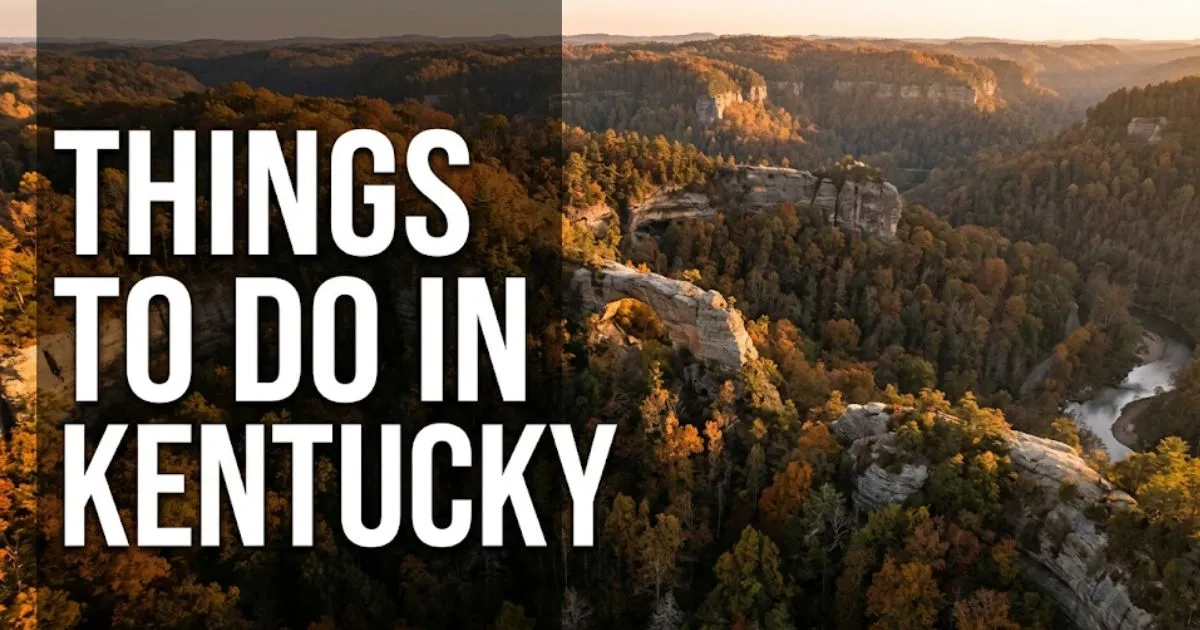
Top Things to Do in Kentucky for an Unforgettable 2026 Trip

Kentucky offers some of the most underestimated travel experiences in the entire United States. From the cave systems beneath Mammoth Cave National Park to the limestone spring water that makes bourbon production possible here and nowhere quite the same anywhere else, things to do in Kentucky run far deeper than the tourist brochures suggest.
The state spans five distinct geographic regions. Each delivers a fundamentally different travel experience, from Appalachian ridge trails in the east to thoroughbred horse farms rolling across the Bluegrass Region’s gentle hills.
This guide covers the best activities, cities, outdoor experiences, and practical logistics for 2026. It is built for travelers who want a specific, honest framework rather than a recycled list of names.
Things to Do in Kentucky: What Makes This State Worth the Trip
The best things to do in Kentucky are built around three experiences the state genuinely owns: bourbon production, cave exploration, and Appalachian outdoor adventure.
No other US state produces bourbon at Kentucky’s scale and heritage depth. The Kentucky Distillers’ Association reports that more than 95 percent of the world’s bourbon supply is produced in Kentucky, a fact that shapes the state’s entire travel identity.
Mammoth Cave is the longest known cave system on Earth. Red River Gorge offers rock climbing and trail hiking at a quality level that draws serious outdoor travelers from across the Southeast.
Louisville and Lexington provide genuine urban anchors. Both cities have developed neighborhood-level food, arts, and entertainment scenes that hold up independently of the bourbon and horse racing draws.
Kentucky is also more affordable than comparable Eastern US destinations. A full week of genuine travel here costs significantly less than a comparable trip to Nashville, Asheville, or Charleston.
Couples and adults traveling in small groups get the most from Kentucky’s mix of distillery experiences, scenic drives, and outdoor adventure. Families with older children (ages eight and up) can access most of the outdoor and cave experiences. Solo travelers find Kentucky’s driving-route structure works well when you have your own vehicle.
The honest limitation: a car is not optional. Public transit does not connect Kentucky’s major attractions. Every meaningful experience outside Louisville’s urban core requires a rental car or personal vehicle.
| Experience Type | Best For | Cost Range | Season |
|---|---|---|---|
| Bourbon Trail distilleries | Adults, couples | Free to $50+ per person | Year-round |
| Mammoth Cave tours | Families, history fans | $15 to $30 per adult | Year-round, book ahead |
| Red River Gorge hiking | Outdoor travelers, solo | Free with parking | April through November |
| Churchill Downs/Derby | Couples, groups | $20 to $200+ | April through May |
| Louisville NuLu dining | All profiles | $15 to $60 per person | Year-round |
| Keeneland Racing | Couples, families | $5 to $20 general | April and October |
| Shaker Village | History, couples | $15 to $25 per adult | March through December |
| Cumberland Falls | Families, budget | $5 vehicle entry | Year-round |
Top Things to Do in Kentucky for 2026
The top experiences in Kentucky for 2026 include Mammoth Cave tours, the Kentucky Bourbon Trail, Red River Gorge, Keeneland Racing, and Louisville’s NuLu neighborhood dining scene.
According to the Kentucky Department of Tourism, the state welcomed record visitation numbers in recent years, driven largely by bourbon tourism growth and increased national awareness of Red River Gorge as a climbing destination.
The Kentucky Bourbon Trail is not simply a list of distilleries. It is a curated, passport-stamped self-guided experience connecting more than 95 distilleries, craft distilleries, and urban bourbon destinations across the state.
Mammoth Cave remains the single most visited natural attraction in the state. Booking a tour in advance is not optional from April through October; popular tours sell out weeks ahead.
Insider Tip:
- Keeneland Race Course in Lexington runs live racing only in April and October; visiting outside those windows means a self-guided tour, not a race day experience
- Buffalo Trace Distillery in Frankfort offers free tours and remains one of the only major distilleries on the trail with no charge for the standard experience
- The moonbow at Cumberland Falls (a lunar rainbow visible on full-moon nights) is one of only two such phenomena in the Western Hemisphere; check the lunar calendar before planning a Cumberland Falls visit
Budget travelers will find Kentucky unusually generous. Free state park trail access, Buffalo Trace’s free tours, Keeneland’s low general admission, and Big Four Bridge in Louisville require nothing but a parking fee or a walk.
Things to Do in Kentucky for Adults
Kentucky’s adult-specific draw centers on bourbon culture, live horse racing, chef-driven dining in Louisville and Lexington, and outdoor adventures that reward physical engagement.
The Kentucky Bourbon Trail experience is not a sightseeing checklist. Each distillery represents a distinct production approach, ownership history, and flavor profile that takes genuine engagement to appreciate.
Woodford Reserve Distillery in Versailles sits inside a National Historic Landmark. Its stone warehouse and copper pot still room are among the most visually striking production environments in American whiskey.
Maker’s Mark Distillery in Loretto operates on a self-sufficient farm campus. The hand-dipped wax sealing experience is genuinely interactive, not just performative.
For dining, Louisville’s NuLu neighborhood (East Market District) has developed a restaurant concentration that rivals mid-sized food cities in the Southeast. Proof on Main inside the 21c Museum Hotel offers locally sourced Kentucky cuisine alongside contemporary art installations.
Lexington’s Distillery District on Manchester Street has converted a historic distillery complex into a food hall, craft brewery, and bar environment that locals use far more than tourists currently do.
Adults who want horse culture beyond the Kentucky Derby should visit Keeneland Race Course during its April or October meet. The atmosphere is elegant without being inaccessible, and general admission runs far lower than Churchill Downs during Derby season.
Solo travelers find Kentucky’s driving route structure straightforward. The bourbon trail’s distillery stops are well-signed, and most distilleries welcome solo visitors without the couple-or-group social dynamic.
Things to Do in Louisville Kentucky
Louisville is Kentucky’s largest city and its most developed travel destination, built around the convergence of bourbon heritage, Muhammad Ali’s legacy, thoroughbred racing, and a legitimate independent restaurant scene.
The Muhammad Ali Center on the riverfront is the most emotionally substantial museum in Louisville. It goes well beyond boxing biography to address civil rights, global humanitarian work, and the specific Louisville context that shaped Ali’s identity.
Churchill Downs on Central Avenue is the home of the Kentucky Derby, the oldest continuously held major sporting event in the United States. Tours run year-round, and the Kentucky Derby Museum on-site is worth two to three hours even without a race day visit.
The Louisville Slugger Museum and Factory on West Main Street is smaller than its reputation suggests, but the factory tour showing actual bat production is genuinely engaging. Allow ninety minutes maximum.
NuLu (East Market District) is where Louisville’s food and arts energy genuinely concentrates. The neighborhood runs along East Market Street between downtown and Butchertown. Garage Bar operates in a converted service station and anchors the local casual dining scene with wood-fired pies and bourbon cocktails.
The Big Four Bridge crosses the Ohio River on a converted railroad bridge. The pedestrian and cycling path delivers views of downtown Louisville and the river. It is free and takes thirty to forty-five minutes round trip.
Families should note that Churchill Downs tours and the Slugger Museum work well for children aged eight and older. The Muhammad Ali Center is most impactful for ages twelve and up, when children can contextualize the civil rights narrative.
Seniors and accessibility travelers: NuLu’s East Market Street is flat and walkable. Churchill Downs tours involve some staircase navigation; verify accessibility needs directly with the venue before visiting.
Things to Do in Lexington Kentucky
Lexington is the horse capital of America and the second-largest city in Kentucky, offering a more relaxed pace than Louisville with a distinctly different cultural identity.
Keeneland Race Course on Versailles Road is where serious horse racing culture lives in Kentucky. General admission during the April and October meets is genuinely low-cost, and the grandstand atmosphere is more authentic than the Derby’s festival energy.
The Kentucky Horse Park on Iron Works Pike is a working horse facility and museum complex north of the city. Visitors can watch horse presentations, tour the International Museum of the Horse, and see active thoroughbred care operations. Plan a minimum of three hours.
Lexington’s Horse Farm Tours allow visitors onto working thoroughbred breeding farms in the surrounding Bluegrass Region. Several farms offer guided access, including tours of historic barns, breeding operations, and pasture walks. Confirm individual farm availability before visiting, as access changes seasonally.
The Distillery District on Manchester Street is Lexington’s best-developed urban gathering space. It holds West Sixth Brewery, the Ethereal Brewing taproom, and several food vendors in a refurbished industrial campus.
Raven Run Nature Sanctuary on Jack’s Creek Pike provides 734 acres of river gorge and meadow terrain on Lexington’s southern edge. Trails are well-maintained and free to enter with a timed reservation. It is one of Lexington’s most legitimately local outdoor spaces.
Couples find Lexington’s slower pace and horse farm landscape ideal for a romantic day-drive combination: a morning race at Keeneland, a horse farm tour in the Bluegrass, and an evening dinner in the Distillery District.
Budget travelers: Keeneland’s general admission during race meets, Raven Run’s free trail access, and West Sixth’s taproom pricing make Lexington’s best experiences accessible at low cost.
Key Takeaway: Louisville handles bourbon museums and urban dining. Lexington handles horse culture and the Bluegrass landscape. Both cities reward a minimum of one full day each.
Kentucky Bourbon Trail Things to Do
The Kentucky Bourbon Trail is a self-guided distillery passport program administered by the Kentucky Distillers’ Association, connecting more than 95 distilleries across the state in a stamped passport format.
The trail is not a single route. It spans the entire state, from Louisville’s urban distilleries to rural Loretto, Lawrenceburg, Versailles, Bardstown, and beyond.
Buffalo Trace Distillery in Frankfort is the starting point most experienced bourbon travelers recommend. It offers free standard tours, produces some of the most sought-after bourbon in the US (including Pappy Van Winkle, not available on tour), and the campus includes a fascinating history of production continuity through Prohibition.
Maker’s Mark in Loretto requires a scenic forty-five-minute drive from Louisville but rewards it. The red-shuttered limestone building and hand-dipping experience are genuinely distinctive, not just staged tourism.
Four Roses Distillery in Lawrenceburg has a Spanish Mission-style architecture that looks unlike any other distillery in Kentucky. Their production tour explains the two mashbill and five yeast strain system that produces ten distinct bourbon recipes.
Bardstown, billed by the Kentucky Department of Tourism as the “Bourbon Capital of the World,” serves as the trail’s heartland. Heaven Hill’s Bourbon Heritage Center in Bardstown provides a strong production and history overview.
Booking requirement: Many distilleries now require advance reservations for specialty tours and tastings. Verify reservation requirements directly with each distillery before planning your route.
Adults traveling in groups get the most from the trail. Designated driver planning is essential; most distilleries pour genuine tastings, not token sips.
Budget travelers: Buffalo Trace’s free standard tour makes it the strongest value on the trail.
Outdoor Things to Do in Kentucky
Kentucky’s outdoor offerings concentrate in Eastern Kentucky’s Appalachian ridge system, the state resort park network, and the western lake region around Land Between the Lakes.
Daniel Boone National Forest covers more than 700,000 acres in Eastern Kentucky. It contains Red River Gorge, Natural Bridge, and more than 600 miles of marked trail ranging from easy half-mile loops to multi-day backpacking routes.
Cumberland Falls State Resort Park in Corbin is where the moonbow phenomenon occurs. The 125-foot-wide waterfall drops sixty-eight feet into a gorge. On clear, full-moon nights, the mist creates a lunar rainbow visible from the observation deck. No other waterfall in the Western Hemisphere consistently produces this effect.
Land Between the Lakes National Recreation Area straddles the Kentucky-Tennessee border between Kentucky Lake and Lake Barkley. It offers 170,000 acres of trails, wildlife viewing, boating, and the Elk and Bison Prairie drive-through wildlife area.
Natural Bridge State Resort Park centers on a seventy-eight-foot natural sandstone arch accessible by trail or skylift. The park sits inside Red River Gorge and connects directly to Daniel Boone National Forest trail systems.
Seniors and accessibility travelers: Cumberland Falls and Natural Bridge both have accessible viewing areas that do not require trail hiking. The skylift at Natural Bridge provides arch access without a strenuous climb.
Outdoor enthusiasts planning multi-day hiking should note that cell service in the Red River Gorge backcountry is unreliable to nonexistent. Download offline maps (Gaia GPS covers the area comprehensively) before entering.
Things to Do in Kentucky Mountains
Eastern Kentucky’s Appalachian mountain terrain is the state’s most spectacular outdoor environment and its most underestimated by first-time visitors.
Red River Gorge Geological Area inside Daniel Boone National Forest is the crown of Eastern Kentucky’s outdoor scene. The gorge contains over 100 natural arches, 80-plus miles of hiking trails, and world-class sandstone sport climbing routes.
The most popular day hike is the Auxier Ridge Trail (four miles round trip), delivering a ridgeline view from the Double Arch overlook that is among the most striking in the eastern United States. The Princess Arch Trail (one and a half miles round trip) suits families with children or travelers wanting a shorter payoff.
Rock climbing in Red River Gorge draws climbers from across the country. The Miguel’s Pizza parking area on Natural Bridge Road serves as the unofficial base camp for the climbing community. The parking lot and restaurant have served as a climbing culture institution for decades.
Camping inside the gorge requires permits from the US Forest Service. The Koomer Ridge Campground on KY-15 is the most accessible developed campground for first-timers.
Fall foliage in Red River Gorge peaks between mid-October and early November. This is simultaneously the best visual season and the highest-demand period; campsites and lodging in Slade and Stanton book out weeks in advance.
Solo travelers and experienced hikers find the gorge genuinely rewards a two-night stay for trail depth. Day-trippers from Lexington (approximately 90 minutes away) can do a single strong day hike without overnight logistics.
Key Takeaway: Red River Gorge is not a scenic drive with a lookout at the end. It rewards the travelers who put on boots and walk into the gorge itself.
Mammoth Cave National Park Tours
Mammoth Cave National Park contains the world’s longest known cave system, with more than 400 miles of explored passages beneath south-central Kentucky’s Green River valley.
Tours are the only way to access the cave interior. The National Park Service operates multiple tour types ranging from easy paved-trail walks to physically demanding historic tours and specialty lantern-lit experiences.
The Historic Tour (two miles, two hours) is the most comprehensive option for first-time visitors. It covers major cave formations, historic graffiti from 19th-century tourists, and the cave’s tuberculosis sanatorium ruins.
The Domes and Dripstones Tour focuses on cave formations and suits families with children. The Wild Cave Tour is a strenuous crawling and climbing experience for adults in good physical condition; it requires advance booking and cave-appropriate clothing.
Booking is essential from April through October. Popular tour types sell out weeks in advance during summer. The NPS reservation system opens 180 days ahead of tour dates.
Families with children: The Domes and Dripstones Tour is the best choice for ages eight and up. The Historic Tour works for ages twelve and up. Children under four are not admitted on most tours.
Seniors and accessibility travelers: The Frozen Niagara Tour (quarter-mile, one hour) is the most accessible option with a paved path and minimal elevation change. Verify specific accessibility details with the park before booking.
Cave temperature holds at approximately 54 degrees Fahrenheit year-round. Bring a layer regardless of the outside temperature.
Insider Tip:
- Book the first tour of the day to avoid the midday crowd buildup
- The surface trail system above the cave is genuinely scenic and free, with Green River views worth an additional two to three hours
- Bat emergence viewing occurs at cave entrances at dusk from May through October; check with the visitor center for active emergence sites
Things to Do in Kentucky With Kids
Kentucky offers several genuinely family-appropriate experiences beyond the tourist checklist, with the most child-friendly concentration in Louisville and the cave and outdoor park system.
Mammoth Cave’s Domes and Dripstones Tour consistently works for families with children aged eight and up. The formations are visually impressive in ways that hold children’s attention better than most museum exhibits.
Natural Bridge State Resort Park’s skylift is a child-appropriate access route to the stone arch that avoids the steeper trail climb. Children aged five and up generally manage the experience with enthusiasm.
Louisville’s Louisville Slugger Museum and Factory on West Main Street works well for sports-interested children aged seven and up. The factory floor tour where actual Major League Baseball bats are turned is the highlight.
The Kentucky Horse Park in Lexington engages children who have any interest in animals. The horse presentations, petting areas, and carriage demonstrations hold attention for three to four hours for most age ranges.
Land Between the Lakes is the best destination for families wanting outdoor water and wildlife experiences. The Elk and Bison Prairie is a three-and-a-half-mile auto tour through a fenced wildlife habitat. Bison and elk are reliably visible, and the experience delivers what it promises.
Stroller access: Louisville’s NuLu neighborhood and Big Four Bridge are stroller-friendly. Red River Gorge trails are not suitable for strollers. Most Mammoth Cave tours involve stairs and uneven terrain; check tour-specific accessibility details with the park.
Budget families will find Natural Bridge State Resort Park, Land Between the Lakes, and Big Four Bridge are all very low-cost or free access options.
Romantic Things to Do in Kentucky
Kentucky’s best romantic experiences center on scenic drives through the Bluegrass Region, distillery evenings, and the kind of unhurried pace that suits couples better than it suits group travel.
Shaker Village of Pleasant Hill near Harrodsburg is the most intact Shaker community in the United States. The 3,000-acre property offers overnight lodging in restored 19th-century buildings, farm-to-table dining, and trail access through Shaker-era farmland. It is genuinely one of the most distinctly romantic overnight experiences in the entire state.
A sunset drive through the Bluegrass horse country south of Lexington on US-68 between Lexington and Harrodsburg delivers the rolling pasture and white fence imagery that defines Kentucky’s visual identity. This is free and takes roughly ninety minutes.
Woodford Reserve Distillery in Versailles offers a more intimate distillery visit than the high-traffic stops on the trail. Its Versailles Road setting through horse country makes the drive itself part of the experience.
Cumberland Falls at dusk, timed around a full-moon night for the moonbow, is a genuinely unusual romantic experience. The phenomenon is rare enough that planning a trip specifically around the lunar calendar makes sense. Check the state park’s full-moon tour calendar before booking.
Louisville’s 21c Museum Hotel on West Main Street combines boutique hotel accommodation with a contemporary art museum open to the public 24 hours a day. It is the most design-conscious hotel base in the city, suited to couples who want art and dining alongside bourbon culture.
Couples on a budget can build a strong romantic weekend entirely around free and low-cost experiences: a Bluegrass scenic drive, a Raven Run nature walk, Keeneland general admission, and a Big Four Bridge sunset.
Key Takeaway: Shaker Village of Pleasant Hill is the single most overlooked romantic overnight stay in Kentucky, and it holds up against any boutique inn in the broader Southeast.
Free Things to Do in Kentucky
Kentucky’s best free experiences are concentrated in its outdoor trail systems, state parks (where vehicle entry fees are modest), Louisville’s waterfront, and select museum and distillery options.
Big Four Bridge in Louisville is a converted railroad bridge crossing the Ohio River. The pedestrian deck is free, delivers strong city and river views, and connects Waterfront Park on the Louisville side to Jeffersonville, Indiana on the north bank.
Raven Run Nature Sanctuary in Lexington charges no trail access fee (verify current reservation requirements before visiting, as systems change). The 734-acre sanctuary covers river gorge and meadow terrain south of the city.
Buffalo Trace Distillery in Frankfort offers a standard distillery tour at no charge, making it the strongest free bourbon experience in the state. The tour covers aging warehouses, bottling operations, and history.
Red River Gorge hiking trails in Daniel Boone National Forest are free to hike with a paid parking pass. The America the Beautiful National Parks Pass covers the parking fee and pays for itself quickly if you are visiting multiple federal recreation areas.
Keeneland Race Course self-guided barn area walks during the April and October meets are low-cost or free at early morning training hours. Watching morning workouts from the track rail at Keeneland is a local tradition that most tourists entirely miss.
Louisville Waterfront Park along the Ohio River runs three miles of parkland, walking paths, and public art installations. It is free, accessible, and the best free outdoor space in downtown Louisville.
Budget travelers: Combining Buffalo Trace, Big Four Bridge, Waterfront Park, and Red River Gorge hiking covers three to four days of genuinely strong Kentucky travel for minimal cost beyond accommodation and food.
Best Time to Visit Kentucky
The best time to visit Kentucky is April through early June or mid-September through October, when temperatures are comfortable, outdoor experiences are at their best, and the state’s signature events are active.
Spring (April through early June) delivers wildflowers in Red River Gorge, the Kentucky Derby Festival energy across Louisville, comfortable hiking temperatures, and the Keeneland spring race meet in April. Derby week itself (the first Saturday in May) requires hotel reservations made six to twelve months in advance and commands significantly elevated rates.
Fall (mid-September through November) is the strongest overall season. Red River Gorge fall foliage peaks between mid-October and early November. Bourbon festival season, including the Lexington Craft Bourbon and Beer Festival and Bardstown’s Bourbon Festival (typically in September), runs through early fall.
Summer (June through August) brings high humidity and heat that make outdoor activities uncomfortable without very early morning starts. Mammoth Cave tours become the preferred midday activity, since the cave stays at 54 degrees Fahrenheit regardless of surface heat.
Winter (December through February) is the low season. Hotel rates drop significantly. Bourbon distillery tours continue year-round. Outdoor trail conditions can be affected by ice and reduced daylight. Cumberland Falls is dramatically beautiful when surrounding trees are bare, and crowds are minimal.
Families with children will find summer the most logistically manageable season despite the heat, due to school calendars. Plan outdoor activities before 10am and use cave visits and museums as midday relief.
Budget travelers benefit most from visiting November through March, when accommodation pricing drops substantially across Louisville and Lexington.
Things to Do in Kentucky This Weekend
A Kentucky weekend trip works best when built around one geographic anchor rather than trying to cover the entire state in two days.
Weekend Option 1: Louisville Anchor (Urban and Bourbon)
Day 1, morning: Muhammad Ali Center on the riverfront (two to three hours). Afternoon: NuLu neighborhood walk, lunch at Garage Bar on East Market Street, gallery browsing in the surrounding streets. Evening: Bourbon bar exploration on Whiskey Row on West Main Street, specifically Evan Williams Bourbon Experience for context before the independent bars.
Day 1 evening: Dinner in NuLu or the Highlands neighborhood on Bardstown Road, where Louisville’s most consistent independent restaurant concentration sits outside the tourist corridor.
Day 2, morning: Churchill Downs tour or Kentucky Derby Museum (two hours). Afternoon: Drive to Frankfort (fifty minutes) for a Buffalo Trace Distillery tour. Return to Louisville for evening.
Weekend Option 2: Eastern Kentucky Anchor (Outdoor and Gorge)
Day 1: Drive from Lexington to Red River Gorge (ninety minutes). Hike Auxier Ridge Trail in the morning, Natural Bridge in the afternoon. Stay in Slade at the Natural Bridge State Resort Park lodge or nearby cabin rental.
Day 2: Morning hike on a shorter gorge trail. Afternoon drive to Lexington via US-60, stopping at a Bluegrass horse farm area. Evening at the Distillery District on Manchester Street before departing.
Families planning a weekend should center on Mammoth Cave plus Louisville: one day at the cave (with a morning tour booked in advance), one day in Louisville combining the Slugger Museum, Waterfront Park, and Big Four Bridge.
Cool Things to Do in Kentucky Most Visitors Miss
The most overlooked Kentucky experiences are the moonbow at Cumberland Falls, morning workouts at Keeneland, Shaker Village of Pleasant Hill, and the Berea crafts district.
The Cumberland Falls moonbow is one of the rarest natural phenomena in North America. A lunar rainbow forms in the waterfall’s mist on clear full-moon nights from spring through fall. Most Kentucky visitors never know it exists. Plan the visit specifically around the full-moon calendar and arrive at the observation deck after dark.
Morning workouts at Keeneland run between 6am and 9am on training days during the spring and fall meets. Watching thoroughbreds work out from the track rail at no charge is a genuinely local experience. The track kitchen opens for breakfast during this window; the eggs-and-biscuits setup inside the track facility is the most authentic racing culture breakfast in Kentucky.
Berea is a small Appalachian college town where Berea College students produce authentic regional craft work: weaving, pottery, wood furniture, and broom-making, all as part of the school’s tuition-replacement labor program. The town’s artisan campus and surrounding galleries are free to browse and purchase from directly.
White Hall State Historic Site near Richmond is the home of Cassius M. Clay, the antislavery Kentucky politician whose name Muhammad Ali honored in choosing his birth name. The 44-room Italianate mansion is operated by Kentucky State Parks and receives a fraction of the visitors that comparable historic homes attract.
Seniors find Berea, White Hall, and the Keeneland morning rail experience all genuinely accessible and low-physical-demand. These experiences do not require trail hiking or cave navigation.
Key Takeaway: The Cumberland Falls moonbow puts Kentucky on a very short list of places in the Western Hemisphere where a lunar rainbow occurs predictably. Plan around the full-moon calendar. Do not miss it.
Kentucky Travel Tips and Practical Logistics
Getting around Kentucky requires a car. There is no meaningful public transit connecting the state’s major attractions. Plan your rental or vehicle logistics before anything else.
Getting there: Louisville Muhammad Ali International Airport (SDF) and Blue Grass Airport in Lexington (LEX) are the primary entry points. Cincinnati/Northern Kentucky International Airport (CVG) is a strong option for travelers visiting Northern Kentucky or planning to start in Cincinnati and drive south. Flight availability and pricing vary; compare all three airports when booking.
Driving distances that matter:
- Louisville to Lexington: approximately 80 miles, 75 to 90 minutes
- Louisville to Mammoth Cave: approximately 90 miles, 90 minutes
- Louisville to Bardstown (Bourbon Capital): approximately 40 miles, 45 minutes
- Lexington to Red River Gorge: approximately 55 miles, 90 minutes on winding roads
- Lexington to Shaker Village of Pleasant Hill: approximately 35 miles, 40 minutes
Booking priority: Mammoth Cave tours from April through October should be booked 30 to 60 days in advance. Derby week hotel reservations require 6 to 12 months of lead time. Red River Gorge fall camping (October) books out weeks ahead. Many Kentucky Bourbon Trail specialty tours now require reservations; verify individual distillery requirements directly.
Practical packing notes:
- A light jacket for Mammoth Cave regardless of season (54-degree interior temperature)
- Sturdy hiking footwear for Red River Gorge even for shorter trails
- Cash for smaller distilleries and farmers market stops in rural areas
- Offline maps downloaded before entering Red River Gorge backcountry (limited cell service)
Seniors and accessibility travelers: Kentucky State Resort Parks offer accessible lodging and accessible viewing areas at most major natural attractions. Verify specific accessibility details with individual parks and venues before booking, as conditions vary by location.
Safety and Practical Warnings for Kentucky Travel
Kentucky’s primary travel safety considerations involve outdoor terrain risks in Eastern Kentucky and seasonal weather patterns that affect driving and trail conditions.
Key safety and practical facts every visitor should know:
- Red River Gorge rock climbing requires appropriate gear and experience for technical routes. Hiking trails are well-marked but some involve exposed ledges and significant elevation change. Inform someone of your trail plan before entering the backcountry.
- Limited cell service throughout Red River Gorge and parts of Daniel Boone National Forest means relying on cell navigation is unreliable. Download offline maps before entering.
- Mammoth Cave tours involve uneven terrain, low ceiling sections, and steep steps on several tour types. Review tour-specific physical requirements on the NPS website before booking.
- Kentucky summer heat and humidity (June through August) can make extended outdoor activity dangerous without early morning scheduling. Carry water, wear sun protection, and plan indoor activities for midday hours.
- Mountain roads in Eastern Kentucky (particularly routes through the gorge area) are narrow, winding, and sometimes poorly marked. Drive cautiously and allow extra travel time.
- Bourbon trail designated driving is essential. Distillery tastings are genuine pours. Plan a sober driver or arrange transportation between stops if doing multiple distilleries in a single day.
- Derby week Louisville brings significant traffic congestion and elevated prices across hotels, restaurants, and transportation. Plan for slower movement through the city during race week.
For emergencies: The National Park Service Mammoth Cave Visitor Center, Daniel Boone National Forest Ranger Districts, and Kentucky State Police are the primary emergency contacts for outdoor and park-related situations. Verify specific emergency numbers for each area before departure.
Frequently Asked Questions About Things to Do in Kentucky
What are the best things to do in Kentucky for a first-time visitor?
The best starting point for first-time visitors is a three-experience combination: Mammoth Cave National Park, the Kentucky Bourbon Trail, and Louisville’s NuLu neighborhood.
These three experiences cover the state’s defining natural, cultural, and culinary identities without requiring more than four days of travel time.
Add Keeneland in Lexington during April or October, and Red River Gorge for any traveler who prioritizes outdoor experiences.
How many days do you need to see Kentucky properly?
Four to five days covers Kentucky’s major experiences without feeling rushed.
A two-day trip can anchor in Louisville with a day trip to Mammoth Cave or one Bourbon Trail cluster around Bardstown or Frankfort.
A five to seven day trip allows Louisville, a full Bourbon Trail route, Red River Gorge, Lexington, and a visit to Shaker Village of Pleasant Hill.
Is the Kentucky Bourbon Trail worth doing?
The Kentucky Bourbon Trail is worth doing if you have genuine interest in bourbon production, American whiskey history, or craft distilling.
It is not worth doing as a scenic sightseeing checklist; the best experiences on the trail require engagement with the production process, not just a passport stamp.
Budget one to two distilleries per day maximum if you want to retain anything from the experience.
What is the best time of year to visit Kentucky?
The best time to visit Kentucky is April through early June or mid-September through October.
Spring brings wildflowers, Keeneland’s April meet, and Derby season energy without July’s oppressive humidity.
Fall delivers the state’s best outdoor conditions, peak foliage in Red River Gorge, and bourbon festival season across multiple cities.
What can you do in Kentucky for free?
Free Kentucky experiences include Big Four Bridge in Louisville, Buffalo Trace Distillery’s standard tour in Frankfort, hiking in Red River Gorge (parking fee applies), Raven Run Nature Sanctuary in Lexington, and Louisville Waterfront Park.
Morning thoroughbred workouts at Keeneland during race meets are accessible from the rail at no charge.
The America the Beautiful National Parks Pass covers federal recreation area parking fees across Red River Gorge and other Daniel Boone National Forest sites.
Is Kentucky a good road trip destination?
Kentucky is an excellent road trip destination for travelers who enjoy a combination of outdoor, cultural, and culinary experiences without a rigid urban itinerary.
The state’s major attractions form a natural circuit: Louisville, Bardstown and the Bourbon Trail, Mammoth Cave, Eastern Kentucky’s mountain region, Lexington, and the Bluegrass horse country all connect logically by car.
Plan on US-62, US-68, and the Mountain Parkway as your primary scenic route connectors rather than the interstates, which bypass most of what makes Kentucky worth driving.
Plan Your Kentucky Trip With Confidence
Kentucky rewards the traveler who moves past the obvious itinerary. Book the Mammoth Cave tour first; it is the most time-sensitive reservation in the state from April through October, and popular tour types fill up weeks ahead.
Verify all distillery reservation requirements, state park hours, and entry fees directly with venues before your departure date. Prices, policies, and tour availability change regularly, and the information in any travel guide reflects conditions at the time of writing.
The single logistical step that makes the biggest difference: rent a car and give yourself at least four days. Kentucky’s most rewarding experiences are forty-five to ninety minutes apart by road, and the drives between them are genuinely part of the destination.