Best Things to Do in Bozeman MT: Your 2026 Adventure Guide

Bozeman delivers genuine Montana wilderness and a real Western college town in one place. The best things to do in Bozeman MT go far beyond its role as a Yellowstone gateway.
Montana State University brings 16,000 students and a research museum with one of the largest dinosaur collections on Earth.
This guide covers downtown Main Street, the hiking trails locals actually use, Yellowstone day trip logistics, winter sports, breweries, and free activities. It tells you what earns its reputation and what to skip.
Things to Do in Bozeman MT
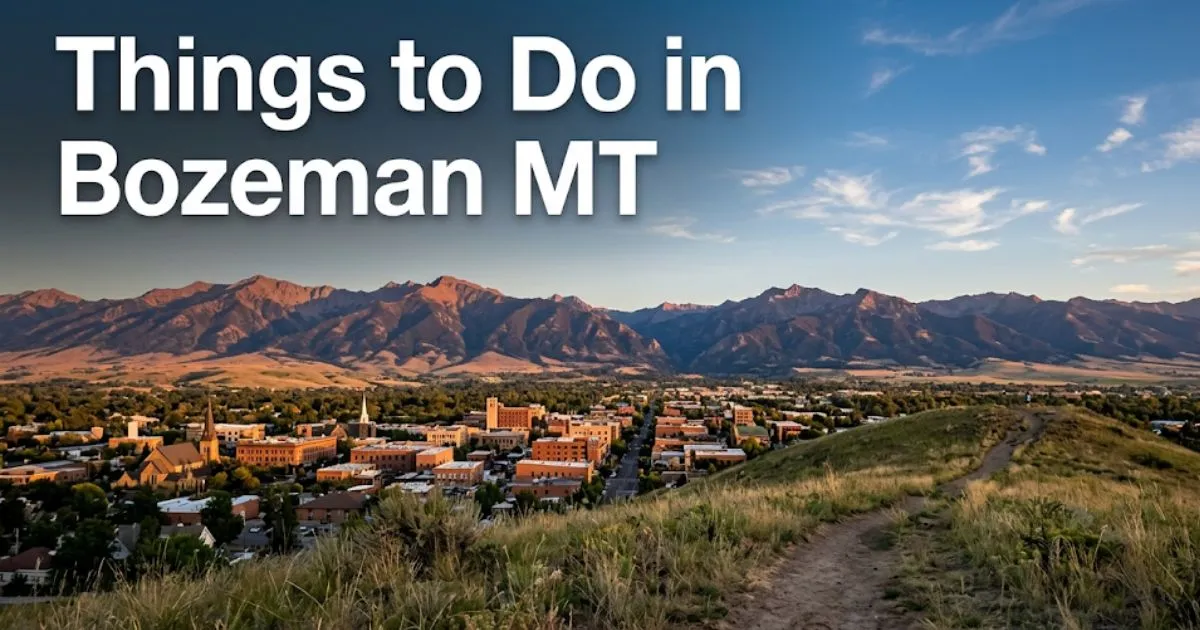
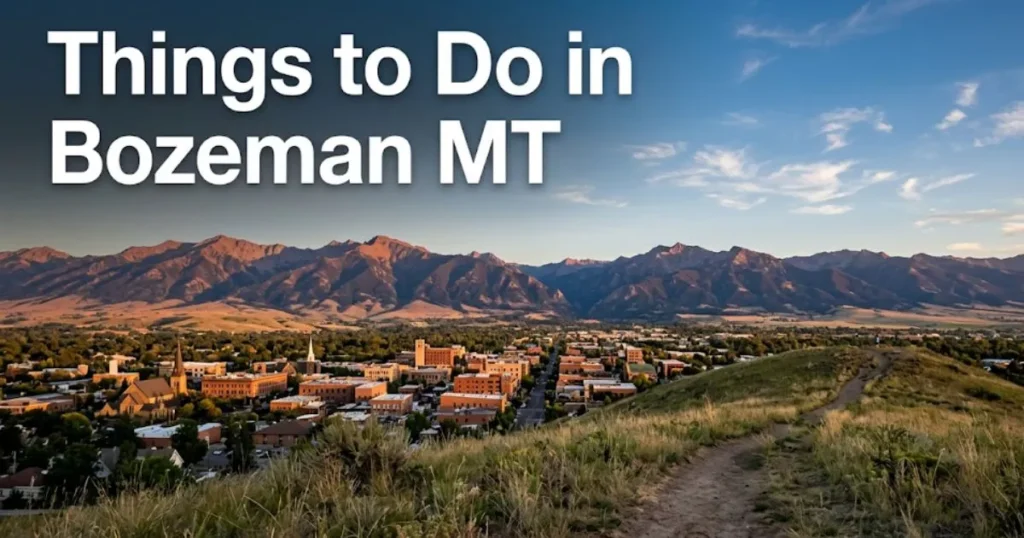
Bozeman sits at 4,820 feet between three mountain ranges with a walkable historic downtown and immediate trail access.
The city serves as Gallatin County’s cultural and economic hub while the Bridger Range, Gallatin Range, and Madison Range rise in every direction.
Most visitors arrive at Bozeman Yellowstone International Airport (BZN) expecting a small regional stopover.
They find a town of 55,000 with a downtown that rewards three full days of exploration.
Hiking trails begin within a 10-minute drive of Main Street. Blue-ribbon trout streams run 30 minutes from downtown.
The town genuinely functions as both a destination and a gateway. Treating it as just the latter wastes some of the best mountain-town experiences in the northern Rockies.
| Experience Category | Best For | Typical Time Needed | Insider Note |
|---|---|---|---|
| Downtown Exploration | All traveler types | Half to full day | Thursday evenings for Music on Main in summer |
| Museum Visits | Families, solo travelers | 2-4 hours each | Museum of the Rockies needs 3 hours minimum |
| Day Hiking | Active travelers, solo, couples | 2-6 hours per trail | Trailheads fill by 7:00 AM on summer weekends |
| Yellowstone Day Trip | First-time visitors, families | Full day, 12+ hours | Requires timed-entry reservation in summer 2026 |
| Brewery Touring | Couples, solo, groups | 3-5 hours for 3 breweries | Walking distance between several downtown |
| Winter Sports | Active travelers | Half to full day | Bridger Bowl 16 miles from downtown |
Best Things to Do in Bozeman Montana
The best experiences in Bozeman are the ones that combine mountain access with town culture.
Hyalite Canyon delivers waterfalls, a reservoir, and trailheads within a 25-minute drive. Main Street offers independent bookstores, Western wear shops that actual ranchers use, and restaurants sourcing from Gallatin Valley farms.
The Museum of the Rockies holds the largest Tyrannosaurus rex collection anywhere.
That claim comes from the museum’s own research and the paleontology program at Montana State University.
Solo travelers find Bozeman exceptionally navigable and safe. The brewery scene and coffee shop culture make it easy to strike up conversations.
Couples get sunset views from Peets Hill and dinner at restaurants where the chef knows the rancher who raised the beef. Families with children find the Museum of the Rockies and Montana Grizzly Encounter genuinely engaging for kids ages five and up.
Budget travelers should know that the best Bozeman experiences are free. The trails, the views, and the downtown stroll cost nothing.
Seniors and travelers with mobility considerations will find downtown walkable but should know that signature hiking trails involve significant elevation gain and uneven terrain.
Insider Tip:
- Skip the tourist shops on the first two blocks of East Main. Walk west toward the residential side streets for locally owned galleries, the Emerson Center for the Arts and Culture, and the Community Food Co-op where Bozeman actually does its grocery shopping.
- The Gallatin History Museum in the old county jail building tells the town’s story better than any guidebook.
Key Takeaway: Bozeman works best when you treat it as a mountain town with a museum and brewery scene, not a Yellowstone parking lot with restaurants.
Downtown Bozeman Things to Do
Downtown Bozeman runs along Main Street from approximately Rouse Avenue to Willson Avenue with historic brick buildings and the Bridger Range visible at the north end.
The Downtown Bozeman Partnership maintains a walkable district that has kept chain retailers largely at bay.
National brands cluster at the Gallatin Valley Mall and the newer developments near 19th Avenue. Main Street remains dominated by independent shops, restaurants, and galleries.
Vargo’s Jazz City has been selling books in Bozeman since 1978. Heyday carries Montana-made goods that do not feel like airport gift shop merchandise.
Solo travelers can spend an easy afternoon browsing independent shops and stopping for coffee at Treeline Coffee Roasters or Ghost Town Coffee Roasters.
Couples should walk Main Street at golden hour when the Bridger Range catches alpenglow from the west-facing storefronts.
Families with children will find the toy selection at Country Bookshelf worth a deliberate stop. Budget travelers can window-shop the entire district for free and grab a pastry at Wild Crumb for under five dollars.
Seniors and accessibility travelers should note that Main Street sidewalks are wide and well-maintained with curb cuts at every intersection. Most storefronts have step-free entry.
Insider Tip:
- Thursday evenings from June through August, Main Street closes to vehicles between Rouse and Willson for Music on Main, a free concert series that draws the entire town. Arrive by 5:30 PM for a spot near the food vendors.
- The residential streets immediately south of Main hold Victorian-era homes that predate Montana statehood. Walk south on Willson Avenue between Babcock and Koch Streets for a 15-minute architectural tour that most visitors miss entirely.
| Downtown Activity | Best For | Cost | Time Needed |
|---|---|---|---|
| Main Street shopping and browsing | All profiles | Free to browse | 1-3 hours |
| Emerson Center for the Arts and Culture | Solo, couples, culture-focused | Free entry, variable event pricing | 1-2 hours |
| Gallatin History Museum | History buffs, families | $5-$10 per adult typical range | 1-1.5 hours |
| Music on Main (summer Thursdays) | All profiles | Free entry, food/drink extra | 2-3 hours evening |
| Independent bookstore crawl | Solo, couples, rainy day activity | Free to browse | 1-2 hours |
Museum of the Rockies Bozeman
The Museum of the Rockies houses the world’s largest collection of Tyrannosaurus rex specimens and is the single attraction that justifies a Bozeman trip on its own.
Part of Montana State University and a Smithsonian Affiliate, the museum’s paleontology collection comes directly from the Hell Creek Formation in eastern Montana.
The Siebel Dinosaur Complex displays mounted T. rex skeletons including the famous specimen known as Big Mike. The exhibit explains not just what these animals were but how the museum’s field teams excavate, prepare, and study them.
Beyond dinosaurs, the museum covers Northern Plains indigenous cultures, Montana homesteading history, and a living history farm with heritage livestock breeds.
The Taylor Planetarium runs shows throughout the day covering astronomy and earth science topics.
Families with children ages five and up will find this the most engaging indoor attraction in Bozeman. Solo travelers and couples with any interest in natural history should budget a minimum of three hours.
Budget travelers should know admission typically runs $15 to $20 per adult with discounts for children and MSU students. The experience easily justifies its price.
Seniors and accessibility travelers will find the museum fully ADA-compliant with elevators, wide galleries, and bench seating throughout. The planetarium accommodates wheelchairs.
Insider Tip:
- Visit on a weekday morning during the university’s fall or spring semester. You will share the dinosaur hall with MSU paleontology students who can answer questions more precisely than any exhibit text.
- The museum’s paleontology field program runs summer digs in eastern Montana. Advance booking for public participation typically opens in January and fills within weeks.
According to the Museum of the Rockies, the institution holds over 400,000 specimens in its collections, with the dinosaur paleontology holdings representing the most significant concentration of T. rex fossils anywhere.
Hiking Near Bozeman Montana
Hiking near Bozeman Montana means trailheads within 15 to 40 minutes of downtown ranging from easy riverside walks to summit climbs above 9,000 feet.
The College M Trail starts from the south end of MSU campus and climbs 850 vertical feet to a massive whitewashed “M” on the Bridger Range foothills.
The trail is steep, exposed to full sun, and takes 45 to 90 minutes round-trip depending on fitness. The view from the M takes in the entire Gallatin Valley.
Drinking Horse Mountain Trail leaves from the same trailhead as the M but offers a more gradual climb with switchbacks and better shade.
The summit loop delivers a view of the Bridger Range that competes with trails requiring twice the effort.
Peets Hill/Burke Park is a gentle ridgeline trail directly adjacent to downtown with a gravel path accessible to most fitness levels.
Locals walk it at lunch, after work, and at sunset. It connects to the Gallagator Trail, a former railroad bed now serving as an urban walking and biking path through the center of town.
For a proper forest and waterfall experience, drive 25 minutes south to Hyalite Canyon. Palisade Falls requires a short paved path accessible to wheelchairs and strollers.
Grotto Falls trail climbs 1.2 miles through dense forest to a waterfall that pours into a natural amphitheater of rock.
| Trail Name | Difficulty | Distance RT | Elevation Gain | Drive from Downtown | Best For |
|---|---|---|---|---|---|
| Peets Hill/Burke Park | Easy | 1-2 miles | Minimal | Walkable from downtown | All profiles, sunset, quick walks |
| Gallagator Trail | Easy | 2-4 miles | Flat | Walkable | Families, accessibility, biking |
| Palisade Falls | Easy | 0.6 miles | Minimal | 25 minutes | Families, accessibility, quick waterfall |
| Drinking Horse Mountain | Moderate | 2.2 miles | 700 feet | 5 minutes | Solo, couples, families with older kids |
| College M Trail | Strenuous | 1.6-2 miles | 850 feet | 5 minutes | Fit solo travelers, couples, trail runners |
| Grotto Falls | Moderate | 2.4 miles | 550 feet | 30 minutes | All active profiles, summer shade hike |
| Sourdough Canyon | Moderate | 5-10 miles | Gradual | 15 minutes | Long hike, mountain biking, trail running |
Things to Do Around Bozeman Montana
The area within an hour’s drive of Bozeman contains hot springs, wildlife sanctuaries, blue-ribbon fly fishing, and mountain scenery that competes with any destination in the northern Rockies.
Bozeman Hot Springs sits 10 miles west of downtown with indoor and outdoor pools fed by natural geothermal water.
The facility runs a fitness center alongside the soaking pools. Evening visits during winter when steam rises off the outdoor pools into cold air offer the best experience.
Montana Grizzly Encounter operates as a sanctuary for grizzly bears born in captivity that cannot be released into the wild.
The facility lies 5 miles east of Bozeman off I-90 and provides an up-close viewing opportunity without the ethical concerns of roadside zoos.
The Madison River runs through Bear Trap Canyon and the Madison Valley west of town. This stretch holds wild trout and sees fewer anglers than the more famous Gallatin.
Fly fishing outfitters in Bozeman typically charge $400 to $600 for a full-day guided trip on nearby rivers.
Solo travelers and couples seeking a quieter hot springs experience should consider Chico Hot Springs in Paradise Valley, 55 miles east. It offers a historic resort pool experience dating to 1900.
Families with children will find Bozeman Hot Springs has a dedicated kids’ pool area. Montana Grizzly Encounter works for all ages but children under five may lose interest within 30 minutes.
Budget travelers should know that river access for do-it-yourself fishing is free at Fishing Access Sites maintained by Montana Fish, Wildlife and Parks. The cost is the license, not the access.
| Activity | Distance from Downtown | Cost Range | Best For |
|---|---|---|---|
| Bozeman Hot Springs | 10 miles west | $10-$20 per adult | All profiles, winter evenings |
| Montana Grizzly Encounter | 5 miles east | $10-$15 per adult | Families, wildlife enthusiasts |
| Fly fishing the Madison River | 25-45 miles west | License fee for DIY, $400-$600 guided | Anglers, solo, couples |
| Chico Hot Springs | 55 miles east | Day pass typically $10-$20 | Couples, solo seeking quieter soak |
| Bridger Bowl scenic chairlift | 16 miles north | Summer chairlift rides $15-$25 | All profiles, summer mountain views |
Key Takeaway: The experiences within 30 minutes of Bozeman rival the experiences inside Yellowstone without the crowds, timed-entry requirements, or tour bus infrastructure.
Yellowstone Day Trip from Bozeman
A Yellowstone day trip from Bozeman is physically possible but demands an early start, realistic expectations about drive times, and a timed-entry reservation for summer 2026.
The West Entrance at West Yellowstone is 90 miles south of Bozeman via US Highway 191. The drive takes approximately 1 hour and 45 minutes in good conditions.
The North Entrance at Gardiner is 80 miles south-southeast via US Highway 89. This route passes through Paradise Valley and the Yellowstone River corridor with mountain views that justify the drive regardless of park access.
Yellowstone National Park’s summer 2026 timed-entry reservation system requires advance booking for access during peak hours. Verify current requirements directly with the National Park Service before planning your trip.
A realistic Yellowstone day trip from Bozeman means leaving by 5:30 AM, arriving at the gate before 8:00 AM, and accepting that you will see Old Faithful, the Grand Canyon of the Yellowstone, or the Lamar Valley, not all three in one day.
Solo travelers and couples can manage the long day without issue. Families with young children should know this is a 12-plus-hour commitment with significant windshield time.
Children under eight may not sustain interest through the driving segments between thermal features.
Budget travelers should pack food and fill the gas tank in Bozeman. In-park dining is limited and expensive.
The park entrance fee runs approximately $35 per vehicle for a 7-day pass. An America the Beautiful annual pass costs around $80 and covers all national parks for a year.
Insider Tip:
- The North Entrance at Gardiner is the only Yellowstone entrance open to wheeled vehicles year-round. Winter visitors can access the Lamar Valley wildlife corridor from this entrance when the West Entrance is closed to cars.
- Chico Hot Springs sits 30 miles north of Gardiner in Pray, Montana. Stopping there for a post-park soak and dinner turns the exhausting drive home into a genuinely pleasant evening.
According to the National Park Service, Yellowstone hosted over 4.5 million recreation visits in 2023, with summer months accounting for the majority of visitation. The timed-entry system aims to manage congestion and protect park resources.
Bozeman Montana Winter Activities
Bozeman Montana winter activities center on Bridger Bowl Ski Area, Nordic skiing, and Hyalite Canyon’s frozen waterfall ice climbing scene.
Bridger Bowl Ski Area operates 16 miles north of downtown as a nonprofit community ski area with 2,000 acres of in-bounds terrain and a legendary ridge hike that accesses advanced chutes and bowls.
Lift tickets at Bridger Bowl typically run $60 to $80 per day during the 2025-2026 season. The terrain quality competes with destination resorts charging twice that amount.
Crosscut Mountain Sports Center north of town offers groomed Nordic ski trails. Rendezvous Ski Trails in West Yellowstone provides additional Nordic options 90 miles south.
Hyalite Canyon Road closes to wheeled vehicles from December through mid-May but opens as a groomed winter recreation corridor for cross-country skiing, snowshoeing, and fat-tire biking.
The Hyalite Winter Recreation Area is maintained by the U.S. Forest Service and local partners. Parking at the gate adds approximately 2 miles to any trailhead approach.
Ice climbing on frozen waterfalls in Hyalite Canyon has gained national recognition. Montana Alpine Guides and other local outfitters offer guided ice climbing experiences for beginners through advanced climbers.
Solo winter travelers will find Bozeman’s outdoor community welcoming. Couples should book a winter weekend at Howlers Inn Bed and Breakfast or a downtown hotel with a fireplace and walk to dinner through snow-lined streets.
Families with children should know that Bridger Bowl has an excellent ski school and beginner terrain. The Bozeman Ice Tower downtown offers indoor ice climbing practice for curious kids and adults.
Budget travelers should ski Bridger Bowl instead of Big Sky Resort. The experience costs roughly half as much and the terrain is authentic without the resort development.
Key Takeaway: Bozeman winter delivers genuine mountain sports at nonprofit pricing. The town does not shut down in winter. It shifts into its best season.
Things to Do in Bozeman MT with Kids
Bozeman works surprisingly well for families with school-age children who can handle moderate outdoor activity.
The Museum of the Rockies dinosaur collection anchors any family visit. Children aged five to twelve spend hours in the Siebel Dinosaur Complex.
The Montana Grizzly Encounter provides a 30-to-45-minute wildlife viewing experience that young children find genuinely exciting.
The bears are active, visible, and the educational component is strong without being preachy.
Palisade Falls in Hyalite Canyon requires a short paved path suitable for strollers and young walkers. The waterfall destination provides a reward that makes the minimal effort feel like an adventure.
Lindley Park sits on the east side of town with a playground, creek access, and open lawn space. It connects to the Gallagator Trail for an easy family bike ride or walk.
Bogert Farmers Market on Tuesday evenings from June through September fills Bogert Park with food vendors, live music, and a splash pad that children treat as the main attraction.
The Bozeman Public Library near Lindley Park has an excellent children’s section and runs summer reading programs worth checking for 2026 dates.
The outdoor swimming pool at Bozeman Swim Center opens seasonally for summer lap and recreational swimming.
Families with children under five should know that most hiking trails beyond Palisade Falls and Peets Hill require carrying small children. Trail surfaces are rocky and uneven.
Budget families should prioritize free activities. The trails, parks, farmers market, and creek access cost nothing. The Museum of the Rockies and Grizzly Encounter represent the best value for paid attractions.
| Kid-Friendly Activity | Age Range | Cost | Time Needed | Rainy Day Option |
|---|---|---|---|---|
| Museum of the Rockies | 5 and up | $15-$20 adult, child discount | 2-4 hours | Yes |
| Montana Grizzly Encounter | 3 and up | $10-$15 per person | 30-60 minutes | No |
| Palisade Falls | Stroller-accessible | Free | 1 hour round trip | No |
| Lindley Park and Gallagator Trail | All ages | Free | 1-2 hours | No |
| Bogert Farmers Market | All ages | Free entry | 1-2 hours evening | No |
| Bozeman Public Library | All ages | Free | 1-2 hours | Yes |
Free Things to Do in Bozeman MT
The best things to do in Bozeman MT cost nothing and they are not filler attractions.
The hiking trail network from Peets Hill to Sourdough Canyon is entirely free. No parking fees at city trailheads. No permits required for day hiking in Gallatin National Forest.
Peets Hill/Burke Park delivers a sunset view over the Gallatin Valley that costs zero dollars and requires a 5-minute walk from downtown.
Music on Main runs Thursday evenings June through August with free live music on Main Street. The town shows up. Bring cash for food vendors, but the music itself is free.
Bogert Farmers Market is free to enter on Tuesday evenings June through September. Walking through costs nothing. The people-watching and produce-browsing are the experience.
The Emerson Center for the Arts and Culture offers free gallery admission during regular hours. Exhibitions rotate, drawn from Montana artists and traveling shows.
Montana State University campus is open to the public. Walk through the Centennial Mall, visit the Strand Union Building, and see the Brick Breeden Fieldhouse where Bobcat athletics play.
The Gallatin History Museum charges a modest admission but the historic Gallatin County Courthouse and Lindley Park Pioneer Cemetery adjacent to it are free to walk through.
Budget travelers can structure an entire two-day Bozeman visit around free activities. The only unavoidable costs are food and accommodation.
Solo travelers on a budget will find Bozeman unusually friendly to cheap exploration. Walkability downtown and free trail access eliminate the need for expensive guided experiences.
Families on a budget can picnic in Lindley Park, walk the Gallagator Trail, attend Music on Main, and visit the free MSU campus easily.
Bozeman MT Brewery Scene
Bozeman’s brewery density rivals towns twice its size with most taprooms clustered within walking distance of downtown.
MAP Brewing Company occupies a building on the east side of town with a patio that frames the Bridger Range. The beer quality matches the view. Their IPA program and seasonal sours draw consistent local crowds.
Bozeman Brewing Company on North Broadway represents the old guard of Bozeman craft beer. They have been brewing since 2001 in a converted dairy building.
The taproom is small, unpretentious, and the beer is excellent. Their Plum Street Porter is a local standard.
Bridger Brewing sits near the MSU campus and serves the university crowd with creative pizzas alongside their beer lineup.
The Bobcat Brown ale and rotating seasonal releases reflect a brewing team that experiments successfully.
Mountains Walking Brewery near I-90 on the north side produces hazy IPAs and sours that compete nationally. Their distribution has expanded but the taproom remains worth visiting for small-batch releases not available in stores.
Outlaw Brewing on North 27th occupies a converted auto shop with a large patio and a dark beer program that deserves more attention than it gets.
Couples can walk between Bozeman Brewing, Bridger Brewing, and Mountains Walking in an afternoon with a designated driver or ride-share service.
Solo travelers will find every taproom has bar seating where conversations with locals start naturally.
Families should know that most breweries allow children in taprooms during daytime hours. MAP Brewing’s large patio works well for families with kids who need space to move.
| Brewery | Location | Known For | Patio | Food |
|---|---|---|---|---|
| MAP Brewing Company | East side, off Manley Road | IPAs, sours, mountain views | Yes, large | Full kitchen |
| Bozeman Brewing Company | North Broadway | Traditional ales, porter | Small | Snacks |
| Bridger Brewing | Near MSU campus | Creative seasonals, pizza | Yes | Full pizza menu |
| Mountains Walking Brewery | North side, near I-90 | Hazy IPAs, sours | Yes | Full kitchen |
| Outlaw Brewing | North 27th Avenue | Dark beers, patio vibes | Yes, large | Food trucks often |
Key Takeaway: Start at MAP Brewing for the view and IPA, walk downtown for dinner, then hit Bozeman Brewing Company for the porter that defines Bozeman’s beer identity.
Unique Things to Do in Bozeman
Beyond the trails and breweries, Bozeman holds genuinely unusual experiences that distinguish it from other mountain towns.
The American Computer and Robotics Museum occupies a small building on the south side of town and traces computing history from ancient counting devices to artificial intelligence.
It holds a fragment of ENIAC, early Apple computers, and artifacts that place the information age in context. The museum is free with suggested donation.
The Gallatin History Museum operates inside the former Gallatin County Jail, a stone building from 1911.
The jail cells remain intact as exhibit spaces. The hanging gallows that executed legal sentences in Gallatin County still stand in the building.
Ted Turner’s Flying D Ranch spreads across 113,000 acres south of Bozeman and manages one of the largest private bison herds in the world.
The ranch does not offer public tours, but the bison are often visible from US Highway 191 south of Four Corners driving toward Big Sky.
The Sweet Pea Festival runs the first weekend of August in Lindley Park with an arts festival, live music, a parade, and a community atmosphere that reflects Bozeman’s identity more accurately than any tourist brochure.
The Bozeman Stampede Rodeo runs in July at the Gallatin County Fairgrounds with PRCA-sanctioned events drawing regional competitors.
Solo travelers and couples interested in Western culture should attend the rodeo. It is a working competition, not a choreographed tourist show.
Families with children will find the Sweet Pea Festival specifically designed for multi-generational attendance. Children’s activities dominate the daytime programming.
Insider Tip:
- The Bogert Farmers Market on Tuesday evenings feels more authentically local than the Saturday markets in neighboring towns. This is where Bozeman residents actually shop for their weekly produce.
- The Gallatin County Regional Park on the northwest side offers a man-made lake, beach access, and trails that out-of-town visitors never discover.
Best Time to Visit Bozeman Montana
The best time to visit Bozeman Montana is June through early October for hiking and outdoor access, or late December through March for winter sports.
June delivers wildflowers in Hyalite Canyon, fully flowing waterfalls, and comfortable daytime temperatures in the 70s. Crowds are present but not at July-August peak levels.
July and August bring the warmest weather and the most visitors. Main Street is crowded. Trailhead parking lots fill by 7:00 AM. Hotel rates peak. But every activity and attraction is fully operational.
September through early October offers the best combination of weather, access, and reduced crowds. Cottonwood trees along the Gallatin River turn gold. Trails remain snow-free at lower elevations.
October is the shoulder season sweet spot. The first snow dusts the Bridger Range peaks while downtown still enjoys fall temperatures in the 50s and 60s. Accommodation rates drop.
November is the most challenging month. Trails are icy or snow-covered but the ski areas have not yet opened. Many seasonal businesses reduce hours. Locals call it the waiting season.
December through March transforms Bozeman into a winter sports town. Bridger Bowl operates December through early April. Hyalite Canyon becomes a winter recreation zone. The town feels festive without Aspen or Vail pretension.
April through early May is mud season. Trails are closed or impassable. The weather cycles between snow, rain, and brief warming. Seasonal businesses may be closed for a post-winter break.
Couples seeking romantic atmosphere should target September for golden light, fewer crowds, and restaurants operating at full capacity without the summer rush.
Families should target late June or August to align with school schedules and the Sweet Pea Festival.
Budget travelers should target October or April for the lowest accommodation rates, accepting that some activities will be limited by weather or seasonal closures.
| Season | Months | Best For | Crowd Level | Hotel Cost | Key Limitation |
|---|---|---|---|---|---|
| Summer Peak | July-August | All activities, festivals | Highest | Highest | Crowds, parking, heat |
| Summer Early | June | Hiking, wildflowers | Moderate | High | Some high-elevation trails snowy |
| Fall | September-October | Hiking, photography, dining | Moderate-Low | Moderate-Low | Seasonal business closures begin |
| Mud Season | April-May | Budget travel | Low | Low | Many trails closed, unpredictable weather |
| Winter | December-March | Skiing, winter sports | Holiday spikes | Moderate | Limited hiking access, cold |
| Holiday | Late November | Thanksgiving | Moderate | High spike | Shoulder season limitations |
How Many Days in Bozeman
Three full days in Bozeman allows time to explore downtown, hike one or two trails, visit the Museum of the Rockies, tour the breweries, and take a shorter day trip into the surrounding area.
Adding a Yellowstone day trip requires a fourth day minimum. Yellowstone from Bozeman is a 12-hour commitment that leaves no energy for anything else that day.
A two-day Bozeman visit works if you are passing through to Yellowstone and want to see the essentials. One day downtown plus one day hiking and breweries covers the core experience.
A one-day Bozeman visit forces hard choices. Visit the Museum of the Rockies in the morning, walk Main Street and have lunch, then hike Peets Hill for sunset. You will miss the canyons, hot springs, and any sense of the surrounding landscape.
Sample 3-Day Bozeman Itinerary:
Day 1: Downtown and Museums
- Breakfast at Nova Café on Main Street for breakfast burritos and coffee.
- Museum of the Rockies from opening until early afternoon. Budget 3 hours minimum.
- Lunch at Montana Ale Works in the former railroad freight building on East Main.
- Afternoon walk through Main Street shops, Country Bookshelf, Vargo’s Jazz City, and the Emerson Center for the Arts and Culture.
- Sunset walk up Peets Hill for Gallatin Valley views.
- Dinner at Blackbird or Open Range for farm-to-table Montana dining.
- Post-dinner beer at Bozeman Brewing Company on North Broadway.
Day 2: Hiking and Hot Springs
- Early breakfast at Western Café for pancakes and cowboy coffee.
- Drive to Hyalite Canyon by 8:00 AM. Hike Grotto Falls trail before the midday rush.
- Stop at Palisade Falls on the return drive. The paved path is quick and the waterfall is worth seeing.
- Lunch at MAP Brewing Company for the patio view and post-hike beer.
- Afternoon at Bozeman Hot Springs for a soak in outdoor pools.
- Drive east to Livingston for a late dinner at Neptune’s Brewery or The Murray Bar in the historic Murray Hotel.
Day 3: Choice Day
Option A (Yellowstone): Leave by 5:30 AM for West Yellowstone entrance. Prioritize Old Faithful and Grand Prismatic Spring areas. Return by 9:00 PM exhausted but satisfied.
Option B (Scenic and Local): Drive US Highway 89 through Paradise Valley to Chico Hot Springs for a soak and lunch. Continue to Gardiner for the Roosevelt Arch photo without entering Yellowstone. Return via the same route with an evening stop in Livingston.
Option C (Brewery Day): Tour Bridger Brewing, Mountains Walking Brewery, and Outlaw Brewing. Walk the Gallagator Trail between stops. Soak at Bozeman Hot Springs in the evening.
Key Takeaway: Four days is ideal. Three works well. Two is the minimum. One day will leave you frustrated at everything you drove past.
Getting Around Bozeman Montana
Getting around Bozeman Montana requires a rental car or personal vehicle for everything beyond the walkable downtown core.
Bozeman Yellowstone International Airport (BZN) sits 8 miles northwest of downtown off I-90. Rental car counters operate in the terminal.
Ride-share services like Uber and Lyft operate in Bozeman but wait times increase outside peak hours and for destinations outside the city center.
Streamline operates free public bus service on several routes throughout Bozeman including a route connecting downtown to MSU campus and the Gallatin Valley Mall. Service is limited to daytime hours and does not reach trailheads, Hyalite Canyon, or surrounding communities.
Downtown Bozeman is genuinely walkable. Main Street spans approximately 6 blocks with sidewalks in good condition. The entire downtown commercial district is accessible on foot in 30 minutes.
Biking infrastructure includes the Gallagator Trail connecting south Bozeman to downtown and several on-street bike lanes. Mountain biking trailheads require a vehicle to access.
Parking downtown is free with a 2-hour limit on Main Street during business hours. The Bridger Park Downtown Parking Garage on Mendenhall Street offers free all-day parking one block south of Main.
Summer weekend parking near Main Street is extremely limited. Plan to use the parking garage by 10:00 AM or accept a several-block walk.
Winter driving in Bozeman requires a vehicle with all-wheel or four-wheel drive for accessing trailheads, Hyalite Canyon, Bridger Bowl, and any road outside the immediately plowed city streets.
Bozeman Pass on I-90 east of town is steep and exposed to rapid weather changes. Chain requirements and closures occur during winter storms.
Solo travelers and couples without a car should stay downtown and rely on rideshares, the free Streamline bus, and organized tours for Yellowstone access.
Families with children and anyone planning to hike or ski must rent a vehicle. The activities that define Bozeman are not reachable by public transit.
According to the Bozeman Yellowstone International Airport, BZN served over 2.5 million passengers in 2024, making it Montana’s busiest airport by a significant margin.
Bozeman to Livingston Day Trip
The Bozeman to Livingston day trip covers 25 miles of Interstate 90 east through Bozeman Pass into Paradise Valley and delivers a complete Montana experience in a single afternoon.
Livingston sits at the bend of the Yellowstone River where the Absaroka Range rises dramatically from the plains. The town has maintained its railroad and ranching character more authentically than Bozeman.
Downtown Livingston’s Main Street runs parallel to the Yellowstone River with historic brick buildings housing galleries, fly shops, and restaurants.
The Murray Hotel dates to 1904 and anchors downtown. Its Murray Bar serves bison burgers under tin ceilings in a room that has not been renovated into tourist sterility.
Neptune’s Brewery operates on the east side of Livingston with a taproom and full menu. Their fish tacos and rotating beer selection make it a legitimate lunch destination.
Sacajawea Park follows the Yellowstone River through town with walking paths and river access. The views across to the Absaroka Range are the best in Livingston.
The drive back to Bozeman on US Highway 89 takes the scenic route through Paradise Valley with the Yellowstone River on one side and the Absaroka Range on the other.
Chico Hot Springs sits 30 miles south of Livingston in Pray, Montana. The historic resort pool dates to 1900 and offers a day pass for non-guests. Soaking in geothermal water while looking at Emigrant Peak represents one of Montana’s genuinely essential experiences.
Solo travelers and couples will find Livingston a quieter, more atmospheric alternative to Bozeman’s busier energy. The town has a literary history as a haven for writers and the independent bookstore scene reflects it.
Families with children can visit the Yellowstone Gateway Museum in Livingston for a kid-friendly overview of railroad and park history.
| Stop | Location | Time from Bozeman | Time Needed | Best For |
|---|---|---|---|---|
| Livingston Main Street | Livingston | 30 minutes | 1-2 hours | All profiles |
| Murray Bar | Livingston | 30 minutes | 1 hour lunch | Couples, solo, history buffs |
| Sacajawea Park | Livingston | 30 minutes | 30-60 minutes | Families, walkers |
| Yellowstone Gateway Museum | Livingston | 30 minutes | 1-1.5 hours | Families, history buffs |
| Chico Hot Springs | Pray | 55 minutes | 2-3 hours | Couples, solo, soak seekers |
| Paradise Valley Scenic Drive | US-89 | 45-60 minutes | Variable | All profiles, photographers |
Insider Tip:
- Eat lunch at The Rib and Chop House in Livingston for honest Montana steakhouse food, then cross the street to Wheatgrass Saloon for a drink in a bar frequented by local ranchers.
- The drive back to Bozeman on US-89 at sunset with the Absaroka Range glowing pink behind you is one of the best free experiences in the northern Rockies.
Safety and Practical Warnings for Bozeman
Bozeman and the surrounding wildlands present genuine safety considerations that flatland visitors often underestimate.
This is grizzly bear country. Every trail in Gallatin National Forest and Hyalite Canyon runs through habitat where grizzly bears are present and active.
Key safety and practical facts every visitor should know:
- Carry bear spray on every hike beyond Peets Hill or the Gallagator Trail. Know how to deploy it before you need to. Bear spray rental is available at several outdoor retailers in Bozeman. Do not hike alone in grizzly country.
- Altitude sickness affects visitors arriving from sea level and immediately hiking to 8,000 feet or higher. Bozeman sits at 4,820 feet. Trailheads start higher. Symptoms include headache, nausea, and fatigue. Allow 24 hours of light activity at town elevation before attempting strenuous high-altitude hikes.
- Mountain weather changes in minutes. Afternoon thunderstorms in summer bring lightning to exposed ridges. Winter storms arrive with minimal warning. Check the forecast before every hike and turn around immediately if thunder is audible.
- Cell service does not exist on most trails in Gallatin National Forest and Hyalite Canyon. Download offline maps before leaving town. Tell someone your route and expected return time.
- Trailhead parking lots fill by 7:00 AM on summer weekends at popular locations including the College M, Drinking Horse Mountain, and Hyalite Canyon trailheads. Arrive early or plan on weekday hiking.
- Moose encounters on trails can be more dangerous than bear encounters. Give moose at least 75 feet of distance. A cow moose with a calf is unpredictable and aggressive.
In an emergency in Gallatin National Forest, contact Gallatin County Sheriff Search and Rescue through 911 dispatch. Carry a satellite communication device for backcountry hikes where cell service is absent.
Frequently Asked Questions About Bozeman MT
How many days do you need in Bozeman Montana?
Three to four days in Bozeman allows you to explore downtown, hike two or three trails, visit the museums, and take a day trip to Yellowstone or Paradise Valley.
Two days covers the downtown core and one major outdoor experience but leaves much unseen.
One day forces hard choices between the museum and the mountains.
What is the best month to visit Bozeman Montana?
September offers the best combination of warm weather, reduced summer crowds, and full trail access in Bozeman.
June delivers wildflowers and green canyons with moderate visitor numbers.
February is ideal for winter sports with reliable snow at Bridger Bowl and a festive but unpretentious town atmosphere.
Is Bozeman Montana worth visiting?
Bozeman is worth visiting as a standalone destination for three to four days, not merely as a Yellowstone overnight stop.
The Museum of the Rockies dinosaur collection, the immediate hiking access, the brewery scene, and the authentic Western college town atmosphere justify a dedicated trip.
Travelers seeking luxury resort amenities or urban cultural institutions should look elsewhere.
What is Bozeman Montana best known for?
Bozeman is best known as a gateway to Yellowstone National Park and as home to Montana State University and the Museum of the Rockies dinosaur collection.
The town also carries a reputation for outdoor recreation access, a strong craft brewery scene, and fly fishing on blue-ribbon trout streams.
Its rapid growth and tech industry expansion have made it one of the most recognized small cities in the Mountain West.
Is Bozeman Montana a walkable city?
Downtown Bozeman is highly walkable with Main Street spanning approximately six blocks of shops, restaurants, and breweries on sidewalks in good condition.
Beyond downtown, Bozeman requires a vehicle for accessing hiking trails, Hyalite Canyon, Bridger Bowl, and surrounding communities.
The Streamline free bus service operates within city limits but does not reach trailheads or outdoor recreation areas.
How far is Yellowstone from Bozeman?
Yellowstone National Park’s West Entrance at West Yellowstone is approximately 90 miles south of Bozeman, a 1-hour-45-minute drive.
The North Entrance at Gardiner is approximately 80 miles southeast, a 1-hour-30-minute drive through Paradise Valley.
Both entrances require a realistic full-day commitment for a day trip from Bozeman.
Bozeman delivers the rare combination of a real mountain town and a genuine cultural destination. The hiking trails leave from the edge of downtown. The dinosaur museum holds the largest T. rex collection on Earth. The breweries pour beer on patios with Bridger Range views.
Book your Yellowstone timed-entry reservation as soon as the National Park Service opens 2026 bookings. This is the single logistical step that determines whether your Bozeman-to-Yellowstone day trip actually happens.
Trail conditions, restaurant hours, seasonal closures, and park entry requirements change. Verify all logistics directly with venues, the National Park Service, U.S. Forest Service, and the Bozeman Area Chamber of Commerce before departure.
The town will reward you with exactly the experience you bring the energy to find.