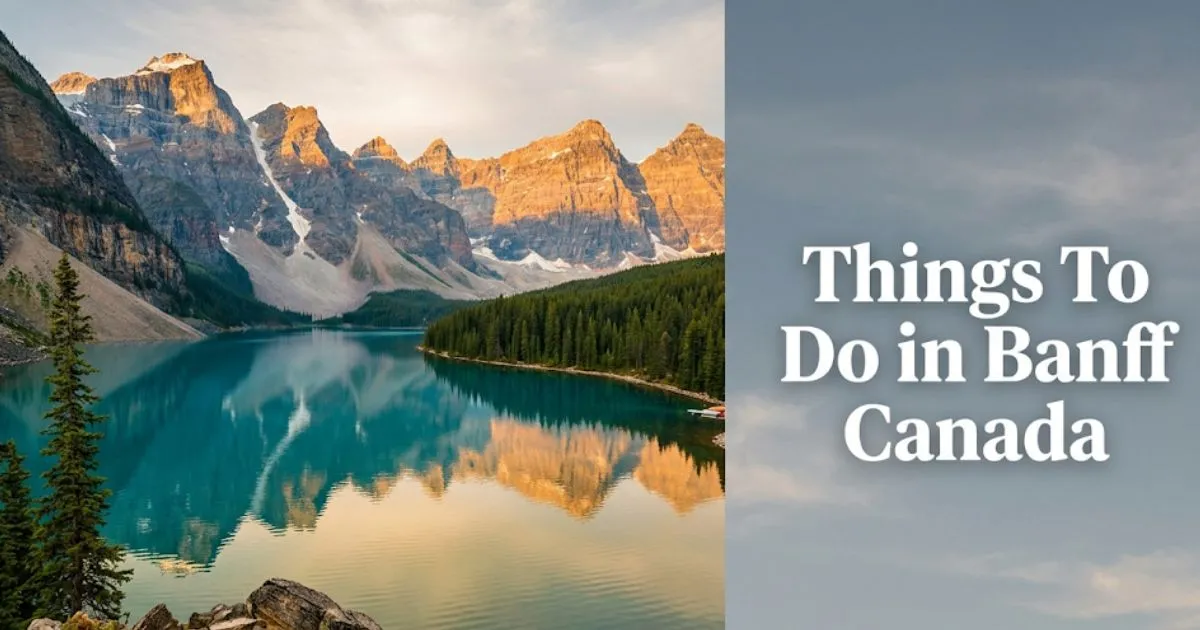
Things To Do in Banff Canada: The 2026 Complete Guide

The best things to do in Banff Canada span turquoise alpine lakes, world-class ski terrain, and a townsite dining scene that outperforms its mountain-town size by a significant margin. Banff rewards planners and punishes those who wing it.
Banff National Park covers 2,564 square miles of UNESCO World Heritage landscape in the Canadian Rockies. It draws over four million visitors annually, according to Parks Canada.
This guide covers specific activities for every season, honest cost context, the shuttle logistics most travelers miss, and practical guidance for every traveler type. Use it to build an actual itinerary.
Things To Do in Banff Canada: The Destination at a Glance
Banff Canada offers outdoor activities, alpine scenery, wildlife encounters, and a genuine mountain town culture that few North American destinations match.
The town of Banff sits at roughly 4,500 feet elevation inside the national park boundary. Calgary International Airport (YYC) is 90 minutes east via the Trans-Canada Highway.
Banff runs on two distinct seasonal modes. Summer (late June through mid-September) is lakes, hiking, and wildlife. Winter (December through March) is skiing, ice walks, and hot springs.
Neither season is wrong. They are genuinely different destinations that happen to share the same geography.
Banff and Lake Louise Tourism identifies the park as Canada’s most visited national park. That distinction is earned and felt, especially on summer weekends.
The practical reality: book accommodation, shuttle passes, and key activity tickets months in advance for any July or August visit. September larch season is the most beautiful and slightly less crowded. January and February offer ski terrain without the full peak summer crush.
| Season | Best For | Crowd Level | Key Logistics |
|---|---|---|---|
| June-August | Hiking, lakes, wildlife | Very high | Shuttle reservations essential |
| September | Larch season, hiking | High but manageable | Book lodging early |
| December-March | Skiing, ice walks, hot springs | Moderate (ski season) | Winter tires required |
| April-May | Budget travel, quiet trails | Low | Many facilities closed |
Banff National Park Things To Do: Core Experiences Worth Your Time
Banff National Park’s core experiences divide into three tiers: iconic lakes, alpine trails, and townsite culture.
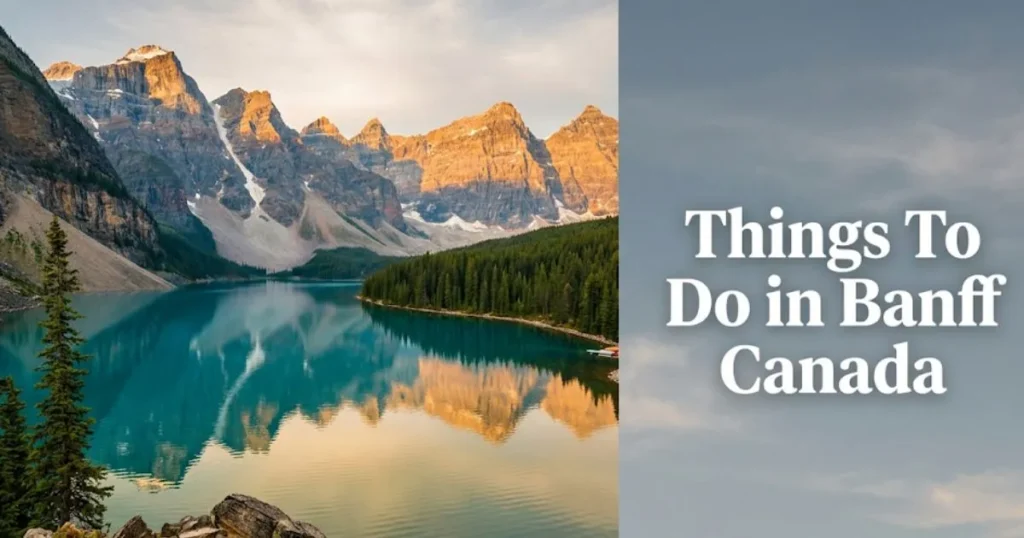
The tier-one experiences are Moraine Lake, Lake Louise, the Banff Gondola, and Johnston Canyon. These earn their reputation genuinely. They are also the most crowded.
Tier two includes Vermilion Lakes at sunset, the Bow River trail system, and the Cave and Basin National Historic Site. These suit travelers who want equal scenery with significantly thinner crowds.
Tier three covers the Whyte Museum of the Canadian Rockies and the Banff Centre for Arts and Creativity. These reward curious travelers on rest days or during shoulder-season visits.
Families with children should focus on Tier two first. The Bow River trail from town is flat, stroller-accessible, and genuinely scenic. Vermilion Lakes Road is paved and produces reliable elk sightings.
Solo travelers can cover Tier one efficiently by booking the early shuttle to Moraine Lake. Arriving at the lake for sunrise with a handful of other early risers is a different experience than midday with thousands of visitors.
Insider Tip:
- Bow Falls is a 10-minute walk from downtown Banff via the Bow River trail. It requires no reservation, no shuttle, no fee beyond the park entry pass, and delivers a legitimate waterfall experience.
- The Fairmont Banff Springs Hotel courtyard is open to non-guests for walking. The building’s 1888 baronial architecture against Mount Rundle is a legitimate photographic subject.
- Seniors and accessibility travelers: the Fairmont’s grounds and Bow Falls trail are largely flat and accessible. Bring a walking stick for uneven riverside sections.
Things To Do in Banff in Winter: The Season Most Visitors Underestimate
Winter in Banff is genuinely one of the best versions of the destination, with ski terrain, ice walks, and a hot springs experience that runs all year.
The Banff Winter Carnival, typically held in late January or early February, brings ice sculpture, outdoor concerts, and specific events to the townsite. Verify exact dates with Banff and Lake Louise Tourism for 2026 before booking.
Johnston Canyon’s ice walk transforms the summer trail into a frozen canyon experience. Guided and self-guided options run through winter. The ice-covered canyon walls are a specific visual experience unavailable in any other season.
The Banff Gondola to the summit of Sulphur Mountain runs year-round. In winter, the observation deck delivers clear views of snow-covered peaks against a blue sky that summer haze sometimes obscures.
Couples find Banff particularly suited to winter. The hot springs at dusk, a gondola ride at golden hour, and a dinner on Bear Street combine into a genuinely intimate mountain experience.
Families with children should note that the Johnston Canyon ice walk is appropriate for children who can walk independently on icy terrain with proper grip footwear. Microspikes are recommended and rentable locally.
Insider Tip:
- The Vermilion Lakes Road is plowed and open in winter. Elk gather near the frozen lakes in the early morning. This is a free, car-accessible wildlife viewing experience that requires nothing but your park pass.
- Dress for -20 Celsius (-4 Fahrenheit) in January and February. Exposed skin freezes in 15 minutes at those temperatures. Experienced winter travelers know this. First-timers often don’t.
Things To Do Around Banff: Day Trips Worth the Drive
The strongest day trip from Banff is the full Icefields Parkway drive north to Jasper, one of the most scenically dense highway routes in the world.
Yoho National Park, across the provincial border into British Columbia, is 45 minutes from Banff townsite. Emerald Lake inside Yoho is as visually striking as Lake Louise and significantly less crowded.
Lake Minnewanka, 15 minutes from downtown Banff, is often overlooked. Boat tours run in summer. In winter, it freezes and becomes one of Alberta’s most popular ice diving locations. For regular visitors, it’s a reliable wildlife corridor.
Kootenay National Park is another 90-minute drive from Banff and delivers hot springs at Radium Hot Springs plus canyon hikes at Marble Canyon with almost none of the Banff crowds.
Budget travelers should note that Emerald Lake in Yoho and Marble Canyon in Kootenay are covered by the same Parks Canada pass used in Banff. One pass accesses all four Rocky Mountain national parks.
| Day Trip Destination | Distance from Banff | Best For | Crowd Level vs. Banff |
|---|---|---|---|
| Yoho National Park | 45 minutes | Emerald Lake, waterfalls | Significantly lower |
| Lake Minnewanka | 15 minutes | Wildlife, boat tours | Low |
| Kootenay National Park | 90 minutes | Hot springs, canyon hikes | Low |
| Jasper via Icefields Parkway | 3.5 hours | Glaciers, scenic drive | Moderate |
Best Hikes in Banff National Park
The best hikes in Banff National Park range from the 30-minute Tunnel Mountain loop to the demanding Plain of Six Glaciers trail above Lake Louise.
For day hikers, the Plain of Six Glaciers trail from Lake Louise is the benchmark. It runs 8.5 miles round trip with 1,200 feet of elevation gain. The historic teahouse near the end has operated since 1927.
Sulfur Mountain Trail parallels the gondola on foot. The 5.5-mile round trip gains 2,300 feet. Hikers who earn the summit can take the gondola down for a fee, saving tired legs.
Sentinel Pass above Moraine Lake is Banff’s most rewarding moderate hike. The pass at 8,600 feet elevation puts you above the Valley of the Ten Peaks with one of the most photographed mountain views in Canada.
Tunnel Mountain, 30 minutes from downtown Banff, is the accessible option. Its 2.9 miles and 900-foot gain puts it within reach of most fitness levels.
Seniors and accessibility travelers should know that most Banff trails are unpaved alpine paths. Tunnel Mountain and the Lake Louise lakeshore trail (flat, paved, 1.5 miles) are the most accessible options.
Budget travelers note that all hiking is free beyond the park entry fee. No additional trail fees apply to any front-country trail in Banff.
Insider Tip:
- Larch season (mid-September through early October) turns the Larch Valley trail above Moraine Lake into a trail with golden larches against grey peaks. It’s the most visually specific version of Banff that doesn’t look like a generic mountain postcard.
- Carry bear spray on every trail. Parks Canada requires it is accessible, not stored in your pack.
Key Takeaway: Book Moraine Lake shuttle reservations through Parks Canada as soon as the reservation window opens; they sell out weeks ahead during peak summer season.
Moraine Lake and Lake Louise: What to Know Before You Go
Moraine Lake is the most photographed lake in Canada and has a timed-entry shuttle system during peak season that most visitors don’t know about until their road is blocked.
The road to Moraine Lake closes to private vehicles roughly from late June through early October during peak hours. Access requires a shuttle reservation booked through the Parks Canada Reservation Service. In 2025, reservations opened in late April and sold out rapidly. Expect similar demand in 2026.
Lake Louise is accessible by private vehicle but parking fills before 8 a.m. on summer mornings. Arriving before sunrise or taking the Roam Transit Route 2 from Banff townsite are the practical solutions.
The lake loop at Lake Louise is 1.5 miles, flat, and paved. The Fairmont Chateau Lake Louise sits at the lakehead. Non-guests can walk the shore freely.
Couples visiting Lake Louise should note the canoe rentals on the lake. Paddling on Lake Louise with the Victoria Glacier behind you is worth the rental cost, which runs at resort pricing (verify current rates directly with the Fairmont or Parks Canada operators).
Families with children: Both lakes are genuinely spectacular in person. Young children will find the lake loops engaging. Most parents report that the effort of shuttle logistics is rewarded immediately on arrival.
Insider Tip:
- Peyto Lake on the Icefields Parkway north of Lake Louise is often compared favorably to Moraine Lake by photographers who know both. It requires a 1-mile uphill walk to the viewpoint. The lake appears wolf-shaped from the overlook, which is a detail most first-timers miss entirely.
Banff Gondola and Sulphur Mountain
The Banff Gondola to the summit of Sulphur Mountain is the most accessible high-elevation experience in the park and one of the few major attractions genuinely suited to all five traveler profiles.
The gondola runs year-round from its base station on Mountain Avenue in Banff townsite. The ride takes approximately eight minutes each way. The summit boardwalk connects to the historic Sanson’s Peak weather observatory.
Admission pricing runs at a premium (verify current rates at the Banff Gondola website before visiting). Booking online in advance typically saves versus walk-up pricing.
The summit elevation is approximately 7,486 feet. The boardwalk at the top is fully paved and accessible to wheelchairs and strollers, making this one of Banff’s most accessibility-friendly high-elevation experiences.
Seniors and accessibility travelers should confirm current wheelchair accessibility on the summit boardwalk directly with the gondola operators before booking, as trail conditions vary seasonally.
Budget travelers note that the Sulphur Mountain trail reaches the same summit on foot (free beyond park entry) in 2 to 3 hours. The gondola down is purchasable separately if you want to hike up and ride down.
Insider Tip:
- The gondola at sunrise offers thinner crowds and dramatically lit peaks. The first morning departure is consistently less crowded than midday. Book the earliest available slot if the experience matters to you.
- Sunset from the summit boardwalk turns the Bow Valley pink and orange. If you’re choosing between morning and evening, evening color runs longer in summer.
Johnston Canyon Ice Walk and Trail
Johnston Canyon delivers one of Banff’s most season-specific experiences: a summer canyon hike that transforms entirely into an ice walk during winter.
The summer trail follows Johnston Creek through a carved limestone canyon. The Lower Falls at 1.5 miles and Upper Falls at 3.3 miles are the trail’s markers. The canyon walls close to within feet of the path at narrow points.
In winter, the creek freezes and guides lead groups along the ice. The canyon walls display ice formations in shades of blue, white, and grey. Parks Canada and local outfitters offer guided ice walks. Self-guided access is also possible with microspikes.
Families with children: The summer Lower Falls trail is appropriate for children who can walk 1.5 miles on uneven terrain. The winter ice walk requires children to be old enough to manage icy footing safely with appropriate footwear.
Johnston Canyon is 15 miles west of Banff townsite on the Bow Valley Parkway. Parking is limited and fills early in summer. The Roam Transit Route 8X serves the canyon from Banff townsite during peak summer season (verify 2026 schedules with Roam Transit).
Insider Tip:
- The Bow Valley Parkway (Highway 1A) between Banff and Lake Louise is restricted to cyclists and buses from 6 p.m. to 11 a.m. during peak summer. This makes the evening drive or morning drive quieter for wildlife viewing. Coyotes, bears, and deer are consistently spotted here.
Key Takeaway: Johnston Canyon’s ice walk in January is one of the most visually specific winter experiences in all of Canada and requires only microspikes and a park pass to access independently.
Icefields Parkway Drive
The Icefields Parkway between Lake Louise and Jasper is 144 miles of mountain highway that routinely appears on lists of the world’s great scenic drives, and that designation is accurate.
The route passes 100 ancient glaciers, several major icefield viewpoints, Peyto Lake, the Columbia Icefield, Athabasca Falls, and the access road to Jasper. Allow at minimum 4 to 5 hours for the drive if stopping at key viewpoints. Allow a full day if you intend to do justice to it.
The Athabasca Glacier is accessible from the Columbia Icefield Discovery Centre. Glacier walks and glacier adventure tours are bookable through Parks Canada and Pursuit (the park’s primary commercial operator). Verify 2026 availability and pricing directly, as glacier access changes with ice conditions annually.
Winter driving on the Icefields Parkway requires winter-rated tires. The highway closes temporarily due to avalanche risk. Check Alberta 511 road conditions before departing in any winter month.
Couples: The 4-hour drive with planned stops at Peyto Lake, the Columbia Icefield, and Sunwapta Falls is one of the most genuinely impressive drives in North America. Bring lunch from Banff townsite. Highway services between Lake Louise and Jasper are minimal.
Families with children: Plan the drive for no more than one major stop per hour. Children lose interest in scenic viewpoints quickly. Athabasca Falls (a loud, powerful waterfall accessible in 10 minutes from the parking lot) tends to hold children’s attention better than lake overlooks.
Wildlife Watching in Banff
Banff National Park is one of the most reliable places in North America to see large wildlife without a remote backcountry expedition.
Elk are the most commonly seen animal in and around Banff townsite, particularly on the Vermilion Lakes Road, the Bow River trail corridor, and the fields behind the Fairmont Banff Springs. They are large animals and routinely approach humans who don’t move away. Maintaining a minimum 30-meter distance is a Parks Canada requirement.
Grizzly and black bears are regularly spotted along the Bow Valley Parkway and on the Icefields Parkway. The Banff Wildlife Crossing infrastructure (wildlife overpasses and underpasses on the Trans-Canada) is designed to allow animals to cross safely. This means bears are most concentrated in areas away from the highway but accessible from park roads.
Families with children: Wildlife encounters are genuinely exciting for children but require adult management. Bears move quickly. Elk charge when approached. Children should be briefed specifically before any roadside wildlife stop.
Solo travelers: Carry bear spray on all trails. Practice deploying it before your hike. Parks Canada rangers at the Banff Visitor Centre on Banff Avenue provide current wildlife activity reports and are the most reliable source of where to look in any given week.
Insider Tip:
- The Vermilion Lakes area at dawn produces elk sightings at a rate that regularly surprises first-time visitors. Drive slowly, windows down. Bighorn sheep gather on the cliffs near the Banff townsite entrance on the Trans-Canada Highway year-round.
Key Takeaway: Pick up a current wildlife activity report at the Banff Visitor Centre on Banff Avenue before every driving or hiking day; it will tell you exactly where bears were spotted that morning.
Banff Hot Springs: Banff Upper Hot Springs
Banff Upper Hot Springs on Mountain Avenue is the only natural hot springs facility open to the public in Banff National Park and one of the original reasons the park was established in 1885.
The pool sits at roughly 7,385 feet elevation on the lower slopes of Sulphur Mountain. The water temperature typically runs between 37 and 40 Celsius (98 to 104 Fahrenheit), maintained by natural geothermal activity. The facility includes changing rooms, rental towels, and optional swimsuit rentals.
Admission runs at a per-person rate for adults with reduced rates for children and seniors (verify current pricing with Parks Canada before visiting). The facility is operated by Parks Canada and typically open daily. Hours vary by season, so confirm before arriving.
Couples visiting in winter: the hot springs in January or February, surrounded by snow-covered trees with temperatures well below freezing outside the pool, is a genuinely atmospheric experience. Book early sessions on weekdays to avoid weekend crowds.
Seniors and accessibility travelers: The pool deck and changing facilities have accessibility features. Verify current accessibility conditions directly with Parks Canada, as specific accommodations can vary.
The Cave and Basin National Historic Site, the original hot springs location, is a separate facility open for historical interpretation. The original springs are no longer available for bathing but the site documents why those springs prompted Canada’s first national park.
Best Restaurants in Banff Townsite
Banff townsite’s best restaurants concentrate on Banff Avenue, Bear Street, and Wolf Street within a walkable grid that takes 10 minutes to cross end to end.
Park Distillery Restaurant and Bar on Banff Avenue is the townsite’s most locally specific dining experience. The kitchen uses Canadian-sourced proteins including bison and elk. The bar produces spirits distilled on-site. Reservations are strongly recommended for dinner.
Banff Brewing Company on Banff Avenue is the townsite’s primary craft brewery. It serves Canadian pub food with house-brewed beers. It’s loud, crowded on weekends, and genuinely fun rather than upscale.
The Maple Leaf Grille and Lounge on Banff Avenue runs a Canadian-focused menu with Alberta beef and regional seafood. It consistently ranks among the townsite’s higher-end sit-down options. Expect resort-level pricing.
Budget travelers should note that Banff Avenue grocery stores (Safeway is the main option) allow you to build picnic supplies for significantly less than any restaurant in town. Eating at least one meal per day from provisions saves meaningfully over a multi-day trip.
Couples: Bear Street has a concentration of slightly quieter, more intimate restaurants away from the Banff Avenue tourist corridor. Bison Restaurant on Bear Street runs a refined Canadian menu in a room that doesn’t feel like a tourist trap.
Insider Tip:
- The food trucks operating near Banff Avenue in summer offer the most affordable hot meals in town. Poutine from a Banff food truck is both cheaper and frequently better than the same dish from a sit-down restaurant on the main strip.
Banff Skiing: Sunshine Village and Lake Louise Ski Resort
SkiBig3 is the collective brand covering Banff’s three ski resorts: Sunshine Village, Lake Louise Ski Resort, and Mount Norquay. Combined, they offer over 8,000 acres of skiable terrain.
Sunshine Village sits at the highest base elevation in Canada for a ski resort (5,440 feet base). Its lifts access terrain up to 8,954 feet. It’s best suited to intermediate and advanced skiers who want consistent snow quality and long vertical runs. Access requires a gondola from the base parking area.
Lake Louise Ski Resort is the largest of the three by terrain. It runs 4,200 acres across four mountain faces. The views of the Lake Louise valley from the upper runs are unmatched for scenery combined with skiing. It’s well-suited to all ability levels.
Mount Norquay is 5 minutes from Banff townsite. It’s the most accessible for beginners and for families who want a lower-commitment ski day. Terrain is limited compared to Sunshine and Lake Louise but the location and convenience make it a practical choice for families with young children learning to ski.
Budget travelers: The SkiBig3 multi-resort pass offers the most economical access if you plan to ski more than two days. Single-day lift tickets at each resort run at full resort pricing (verify current rates with SkiBig3 before booking).
Families: Ski and snowboard schools operate at all three resorts. Mount Norquay’s ski school is closest to town and easiest for logistics with young beginners.
Key Takeaway: Sunshine Village has the best snow conditions and longest season of Banff’s three ski resorts; Lake Louise has the best scenery combined with the most varied terrain for all ability levels.
How To Get Around Banff Without a Car
Getting around Banff without a car is genuinely possible within the townsite and to major attractions using Roam Transit, Banff’s regional public transit system.
Roam Transit operates multiple routes connecting Banff townsite to Lake Louise, Johnston Canyon, the Banff Gondola, and Banff Upper Hot Springs. Fares run significantly lower than any taxi or rideshare. Day passes are available and the most economical option for non-drivers.
The Moraine Lake shuttle runs through Parks Canada’s reservation system, separate from Roam Transit. This shuttle specifically addresses the closed road to Moraine Lake during peak season. Booking through the Parks Canada Reservation Service well in advance is the only way to guarantee access.
Within Banff townsite, nearly everything on the itinerary (Bow Falls, Fairmont grounds, Banff Avenue dining, the Whyte Museum, Banff Centre) is walkable. The townsite grid is compact enough that a car is unnecessary once you’re in town.
Solo travelers and couples without rental cars can have a full Banff experience via Roam Transit plus shuttle bookings. The limitation is flexibility on timing. Families with children should consider whether the car-free logistics are practical with young children and gear.
Seniors and accessibility travelers: Roam Transit buses are low-floor and accessible. Verify specific accessibility features of each route directly with Roam Transit before planning.
Insider Tip:
- The Roam Transit Route 2X express between Banff and Lake Louise is faster than the regular service and runs during peak season. Check the Roam Transit website for 2026 schedules and fares, as service levels are adjusted annually based on funding and demand.
Banff National Park Entry Fee and Parks Canada Passes
Every vehicle entering Banff National Park requires a valid Parks Canada pass, paid at the park gate or purchased in advance online.
The Parks Canada Discovery Pass covers entry to all national parks and historic sites in Canada for one year. For visitors staying multiple days or planning to visit multiple parks (Yoho, Kootenay, Jasper are all viable from Banff), the annual pass is nearly always more economical than per-day entry fees. Verify current pass pricing on the Parks Canada website before purchasing.
Per-visit daily passes are available at park gates. Group and family rates exist. Commercial vehicles pay separate rates.
The Parks Canada pass does not include admission to individual attractions like the Banff Gondola, Banff Upper Hot Springs, or the Columbia Icefield glacier tours. Budget for these separately.
Budget travelers: The Discovery Pass is the single most economical Parks Canada purchase for any multi-day visit. A family spending four days in Banff plus driving to Yoho will recover the pass cost compared to daily fees.
Moraine Lake shuttle reservations are purchased separately from park entry, through the Parks Canada Reservation Service. These two are distinct costs and systems. Confusing them is one of the most common planning mistakes.
Insider Tip:
- Purchase the Discovery Pass before leaving home. It ships to US addresses or is available for digital download. Doing it at the park gate in a line of cars on a July morning costs time you cannot recover.
Best Time To Visit Banff National Park
The best time to visit Banff National Park depends entirely on what you are there to do.
For hiking and lake access: July through mid-September. Trails are clear of snow above most snowline levels by early July. Moraine Lake shuttle access runs through this window.
For larch season: Mid-September through early October. The Larch Valley above Moraine Lake turns gold. This is the single most visually specific version of Banff. Crowds are present but less intense than peak summer. Book accommodation early.
For skiing: December through late March. Sunshine Village typically has the longest ski season of the three resorts, often running into late April or early May.
For budget travel and quiet: Late October through late November and April through early May. Facilities are reduced. Some trails are inaccessible. Hotels drop to their lowest rates. The park is genuinely quieter. This is best for travelers who prioritize cost and solitude over full activity access.
Families with school schedules: The shoulder period of late June (before July 4) and early September (before Labor Day) offers better lodging availability and slightly thinner crowds than peak July and August.
| Month | Best For | Crowd Level | Trail Access | Key Limitation |
|---|---|---|---|---|
| July-August | Lakes, wildlife, full activity | Very high | Full | Shuttle required; expensive |
| September | Larch season, hiking | High | Full to mid-Sept | Book early |
| December-March | Skiing, ice walks, hot springs | Ski-season moderate | Limited (snow) | Cold; winter driving |
| April-May | Budget, quiet, shoulder | Low | Limited (snow) | Many facilities closed |
Banff for Families, Couples, and Solo Travelers
Banff Canada works differently depending on your travel profile. Here is what each group should know before booking.
Families with children (ages 8 and up) will find Banff genuinely excellent. Tunnel Mountain hike, the Bow River trail, Bow Falls, the gondola, and Lake Louise lakeshore are all family-appropriate. Younger children (under 5) face limited accessible terrain on most signature experiences.
Families with toddlers or infants: Be honest with yourself. Most of Banff’s defining experiences require physical engagement that doesn’t work with strollers on backcountry terrain. Vermilion Lakes Road and the Lake Louise paved lakeshore trail are the exceptions.
Couples: Banff is among the strongest mountain destinations in North America for a couple’s trip. The hot springs, gondola at sunset, canoe on Lake Louise, and a dinner at Bison Restaurant on Bear Street combine into a genuinely distinct experience. In winter, the intimacy of the ice walk and the hot springs in the cold air is hard to replicate anywhere else.
Solo travelers: Banff is socially easy for solo travelers. The HI Banff Alpine Centre hostel on Tunnel Mountain Road has a kitchen and social areas that routinely produce travel companions. The townsite is walkable and safe for solo evenings.
Budget travelers: Banff is expensive. A realistic daily budget including park pass, one mid-range meal, accommodation in a hostel, and shuttle fees runs significantly higher than a comparable US national park visit. Camping at Tunnel Mountain Campground in summer or staying at HI Banff Alpine Centre are the most economical accommodation options.
Seniors and accessibility travelers: Banff Gondola summit boardwalk, Bow Falls, Vermilion Lakes Road (drive-through), and the Cave and Basin National Historic Site are the most accessible signature experiences. Most trails are not wheelchair-accessible beyond their initial paved sections.
Insider Tip:
- First-timers at Banff almost always underestimate how long the shuttle logistics take. Add an extra hour to any morning involving Moraine Lake or Lake Louise during peak season. The scenery rewards patience. The planning requires honesty.
Key Takeaway: Solo travelers should book a bed at HI Banff Alpine Centre on Tunnel Mountain Road early; it’s Banff’s most social and budget-friendly base and sells out faster than most people expect.
Suggested 3-Day Banff Itinerary
This framework suits a first-time visitor arriving by rental car from Calgary in summer (late June through September). Winter modifications are noted for each day.
Day 1: Banff Townsite and Sulphur Mountain
- Arrive in Banff townsite via Trans-Canada Highway 1 from Calgary (approximately 90 minutes). Stop at the park gate and present your Parks Canada pass.
- Check in to accommodation. Drop luggage and orient yourself to the Banff Avenue and Bear Street grid.
- Walk the Bow River trail to Bow Falls (30 minutes each way). This is a free, genuine introduction to the Bow Valley landscape.
- Take the Banff Gondola to Sulphur Mountain for late afternoon. The summit boardwalk walk to Sanson’s Peak takes 30 minutes. The view down the Bow Valley at golden hour is worth timing for.
- Dinner on Bear Street. Bison Restaurant or Park Distillery are the specific recommendations for a first evening.
- Winter modification: Replace the gondola with Banff Upper Hot Springs in the early evening. Book in advance. The gondola also operates in winter but check current seasonal hours.
Day 2: Moraine Lake and Lake Louise
- Wake before 6 a.m. Your shuttle to Moraine Lake departs from the Lake Louise shuttle staging area. Confirm your reservation time the night before.
- Arrive at Moraine Lake at shuttle departure time. The light on the Valley of the Ten Peaks at dawn is different from midday in quality and in crowd level.
- Walk the Rockpile Trail above the lake (20 minutes, 200 feet elevation gain). This is the viewpoint in every photograph.
- Take the shuttle back to Lake Louise village. Walk the Lake Louise lakeshore trail (1.5 miles, flat, paved). The Fairmont Chateau is at the far end.
- Optional: canoe rental at Lake Louise. Budget 1 hour on the water.
- Drive the Bow Valley Parkway (Highway 1A) back to Banff townsite in the evening. Wildlife sightings are consistent on this road at dusk.
- Winter modification: Moraine Lake and most of the Lake Louise trail system are snow-covered and shuttle-free in winter. Lake Louise itself remains accessible and dramatic against winter ice. Check current winter conditions with Parks Canada.
Day 3: Icefields Parkway and Wildlife
- Depart Banff by 8 a.m. for the Icefields Parkway drive north toward Jasper.
- First stop: Peyto Lake overlook (1-mile uphill walk to the viewpoint, 40 minutes round trip). This lake is the one most photographers debate against Moraine Lake.
- Continue north to the Columbia Icefield Discovery Centre. Book the Athabasca Glacier tour or glacier walk if pre-booked. Verify 2026 availability with Pursuit before departing.
- Sunwapta Falls: park at the lot and walk 5 minutes to a powerful dual waterfall. Appropriate for all ages and fitness levels.
- Drive back to Banff via the same route. The drive south in afternoon light shows different shadows on the same peaks.
- Final dinner at Park Distillery if you didn’t go on Day 1.
- Winter modification: The Icefields Parkway is open in winter but requires winter-rated tires and weather awareness. Check Alberta 511 before departing. The drive in snow is equally dramatic but demands driving experience and preparation.
Safety and Practical Warnings for Banff National Park
Banff National Park is a genuine wilderness environment adjacent to a developed townsite, and the gap between those two realities catches unprepared visitors every season.
Key safety and practical facts every visitor should know:
- Bear encounters require bear spray: Carry it on every trail. Keep it accessible on your hip, not buried in your pack. Parks Canada rangers sell and rent bear spray at the Banff Visitor Centre on Banff Avenue.
- Maintain 30-meter distance from elk and 100-meter distance from bears: Elk in the townsite charge without warning. Multiple visitors are injured each year by elk they approached for photographs.
- Altitude awareness: Banff townsite sits at 4,500 feet. The gondola summit and most trail high points run 7,000 to 9,000 feet. Visitors arriving from sea level should hydrate aggressively and reduce hiking intensity on day one.
- Moraine Lake road closure: During peak season, the road is physically gated to private vehicles. Having a reservation does not mean driving your own car. Read the shuttle instructions from Parks Canada carefully.
- Winter driving: Icefields Parkway and mountain roads require winter-rated tires from October through April. All-season tires are not sufficient on icy mountain passes. Avalanche closures happen without advance notice.
- Cell service limitations: Signal drops on the Icefields Parkway outside of town. Download offline maps (AllTrails or Google Maps offline) before leaving the townsite.
- Emergency contact: Parks Canada emergency line and Banff RCMP (Royal Canadian Mounted Police) detachment provide emergency response. The nearest hospital is Mineral Springs Hospital in Banff townsite.
Always register your hiking plan at the Banff Visitor Centre before any backcountry or full-day wilderness hiking day.
Frequently Asked Questions About Things To Do in Banff Canada
What are the best things to do in Banff Canada for first-time visitors?
The best things to do in Banff Canada for first-time visitors are visiting Moraine Lake via the Parks Canada shuttle, hiking the Plain of Six Glaciers trail above Lake Louise, riding the Banff Gondola to Sulphur Mountain, and walking the Bow River trail from town to Bow Falls.
These four experiences cover the park’s alpine lake scenery, mountain hiking, high-elevation views, and accessible townsite nature in a logical 2-day sequence.
First-timers should book the Moraine Lake shuttle well before arrival, as access road restrictions make shuttle reservations the only way to reach the lake during peak season.
Do you need a reservation to visit Moraine Lake in 2026?
Moraine Lake’s access road closes to private vehicles during peak season, typically late June through early October, and a shuttle reservation through the Parks Canada Reservation Service is the only way to reach the lake during those months.
Reservations typically open in April and sell out within days for peak summer dates.
Arrive at the shuttle staging area early. Missing a shuttle departure means waiting for the next available slot, which can run over an hour during busy periods.
What is the best time of year to visit Banff National Park?
The best time to visit Banff National Park is mid-September through early October for larch season, or July through early August for full trail and lake access.
September offers the most visually dramatic combination of golden larch trees, clear skies, and slightly thinner crowds than peak July.
Winter (December through March) is the best time for skiing, ice walks, and hot springs visits without summer crowds.
How much does it cost to enter Banff National Park in 2026?
Entry to Banff National Park requires a valid Parks Canada pass; verify current pricing directly at the Parks Canada website before your trip, as fees are updated periodically.
The Parks Canada Discovery Pass covers all national parks and historic sites in Canada for one year and is typically more economical than per-day fees for visits of three or more days.
The park entry pass does not cover gondola admission, hot springs admission, shuttle reservations, or commercial glacier tours, which are priced separately.
What can you do in Banff in winter?
Winter in Banff offers skiing and snowboarding at Sunshine Village, Lake Louise Ski Resort, and Mount Norquay; guided and self-guided ice walks through Johnston Canyon’s frozen canyon; soaking in Banff Upper Hot Springs; and wildlife viewing along the Vermilion Lakes Road where elk gather near the frozen water.
The Banff Winter Carnival in late January or early February adds specific events to the townsite calendar (verify 2026 dates with Banff and Lake Louise Tourism).
The Banff Gondola runs year-round and delivers some of its most dramatic views in clear winter conditions when snow-covered peaks contrast against blue sky.
How do you get around Banff without a car?
Roam Transit operates multiple bus routes connecting Banff townsite to Lake Louise, Johnston Canyon, the Banff Gondola base, and Banff Upper Hot Springs, with day passes available at reduced per-ride cost.
The Moraine Lake shuttle runs as a separate Parks Canada reservation system, not through Roam Transit, and requires booking months in advance for peak summer dates.
Within Banff townsite, everything from Banff Avenue dining to Bow Falls to the Whyte Museum is walkable within 20 minutes, making a car unnecessary once you are in town.
Planning Your Banff Trip: The Final Practical Word
Banff Canada genuinely earns its reputation. The combination of accessible alpine scenery, reliable wildlife sightings, and a functioning mountain town within a national park boundary is rare.
Book the Moraine Lake shuttle reservation the moment the Parks Canada booking window opens. That single step separates visitors who see the lake from those who spend an hour at a closed road gate.
Verify all 2026 prices, shuttle schedules, seasonal road openings, and facility hours directly with Parks Canada and Banff and Lake Louise Tourism before departure. Conditions, fees, and access requirements change annually. The planning that works in 2025 may not apply in 2026 without a quick verification check.
Banff rewards travelers who show up prepared. Build your itinerary around the logistics before you book the flights.