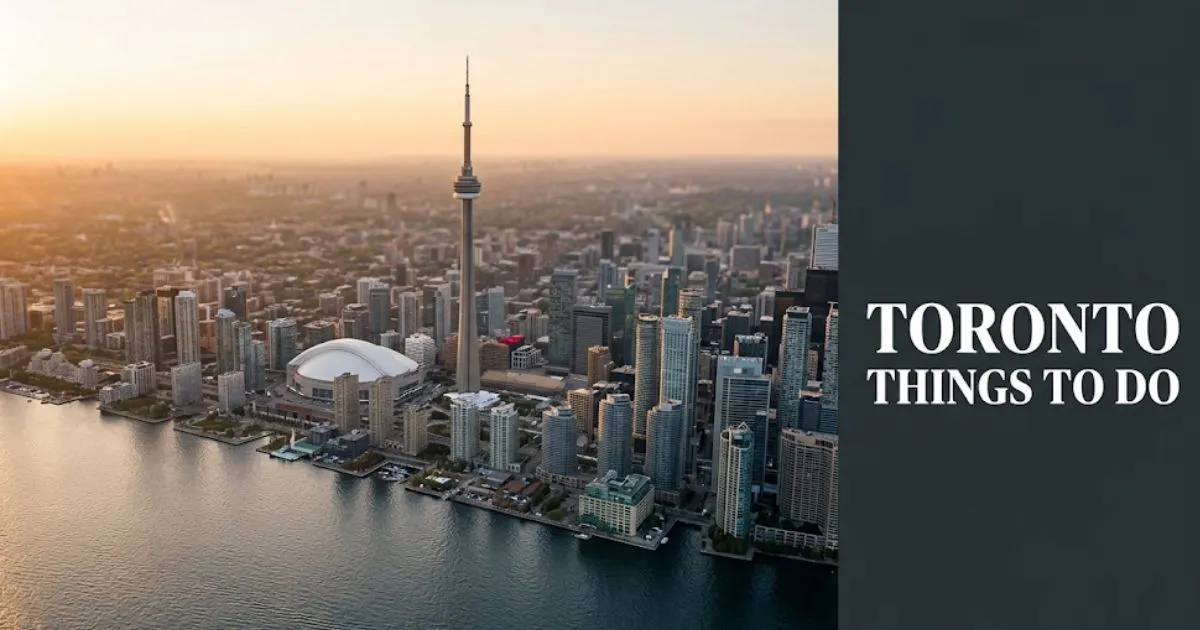
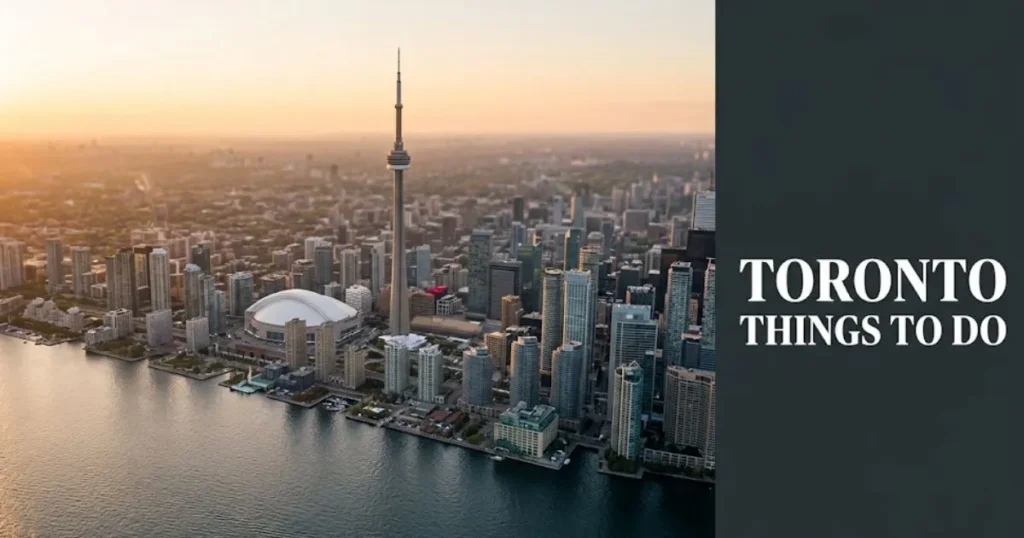
Toronto Things To Do: The 2026 Insider City Guide

Toronto things to do span 140 distinct neighborhoods, six world-class cultural institutions, and a multicultural dining scene that outperforms most North American cities twice its size.
Tourism Toronto identifies the city as North America’s most culturally diverse urban destination. That diversity is not a tourism tagline — it shapes the food, the street life, and the neighborhood character at every level.
This guide covers the best activities, honest neighborhood breakdowns, traveler-profile-specific picks, and a clear itinerary framework. You will leave knowing exactly how to build a trip here.
Toronto Things To Do: What Makes This City Worth Your Time
Toronto rewards curiosity more than it rewards checklist tourism. Its neighborhoods are individually distinct enough to anchor a full half-day each.
The city does not have a single center of gravity the way Paris revolves around the Seine. It has twenty functional centers, each with its own food identity, architecture, and social character.
Kensington Market smells like a combination of Portuguese bakeries, Caribbean spice shops, and vintage leather. Bloor-Yorkville feels like Milan moved to Ontario.
That contrast exists within a 20-minute walk. That is Toronto’s real appeal.
It is also an extremely walkable city for a North American metropolis. The Toronto Transit Commission (TTC) subway and streetcar network covers the core well enough that car-free visits are entirely practical.
For American visitors, the Canadian dollar exchange rate makes Toronto feel meaningfully more affordable than comparable US cities. A $25 CAD meal often costs the equivalent of $18 USD at current rates. Verify current exchange rates before your trip.
Insider Tip:
- Toronto’s neighborhoods are geographically clustered. Plan your days by zone, not by attraction list.
- The eastern cluster (Distillery District, St. Lawrence Market, Corktown) pairs naturally as one half-day.
- The western cluster (Kensington, Chinatown, Little Italy, Little Portugal) pairs as another.
- Solo travelers: the city is safe, transit-friendly, and excellent for solo dining at market stalls and bar counters.
Best Things To Do in Toronto: The Essential Shortlist
The best things to do in Toronto in 2026 are: walk Kensington Market, visit the Royal Ontario Museum, take the ferry to the Toronto Islands, explore the Distillery District, and eat your way through St. Lawrence Market.
| Activity | Best For | Approx. Cost (CAD) | Time Needed | Insider Note |
|---|---|---|---|---|
| Royal Ontario Museum | Families, culture lovers | $23–$30 adult | 2–3 hours | Tuesday evenings sometimes offer discounted admission — verify before visiting |
| Toronto Islands Ferry | Everyone | $9–$10 round trip | Half-day | Book ferry tickets online in summer; walk-up lines can exceed 60 minutes |
| Distillery District | Couples, design lovers | Free to enter | 2–3 hours | Visit Thursday to Sunday for peak gallery and market activity |
| Kensington Market | Solo, food travelers | Free to wander | 2 hours | Saturday mornings are peak energy; Sunday is calmer |
| St. Lawrence Market | Families, foodies | Free entry, food extra | 1–2 hours | Saturday morning is the primary market day — North Market vendors don’t operate daily |
| Art Gallery of Ontario | Art lovers, adults | $25–$35 adult | 2–4 hours | Wednesday evenings offer pay-what-you-can admission — verify current policy |
| Casa Loma | Families, history fans | $30–$40 adult | 2–3 hours | Buy tickets online; weekend walk-up waits are significant |
| Ripley’s Aquarium | Families with young kids | $35–$45 adult | 2 hours | Timed-entry tickets required; book at least 48 hours ahead in summer |
| CN Tower | First-timers | $38–$50 adult | 1–2 hours | The EdgeWalk adds significant cost; the standard deck view covers most of what you need |
| High Park | Outdoor enthusiasts | Free | Half-day | Cherry blossoms peak in late April — crowds are significant during peak bloom |
Top 10 Things To Do in Toronto: Ranked Honestly
Toronto’s top 10 experiences, ranked by genuine value rather than tourism board priority, start with the neighborhoods themselves rather than the major paid attractions.
1. Walk Kensington Market and Chinatown. Free, dense with food, and the most authentic cross-section of the city’s character. No admission required.
2. Take the ferry to Toronto Islands. The view of the downtown skyline from the water is the best photograph in Toronto. Centre Island’s beaches and Ward’s Island’s quiet residential lanes give two completely different experiences on one ticket.
3. Visit the Royal Ontario Museum. The ROM’s collection depth earns its admission price. The dinosaur gallery alone holds children’s attention for an hour. Adults will find the Islamic world and China galleries genuinely substantial.
4. Spend a morning at St. Lawrence Market. The peameal bacon sandwich from Carousel Bakery in the south market building is the single most specific food experience the city produces. Saturday morning is when the North Market adds its vendors. Go before 11 a.m. to avoid the peak lunch crowd.
5. Explore the Distillery District. The historic distillery complex is among the best-preserved Victorian industrial architecture in North America. It is also heavily photographed. Go on a weekday morning if crowds matter to you.
6. Walk Ossington Avenue on a Friday evening. This is where Toronto’s actual neighborhood bar and restaurant culture concentrates. Locals significantly outnumber tourists.
7. Visit the Art Gallery of Ontario. The AGO’s Frank Gehry-redesigned facade is worth seeing from Dundas Street alone. The collection inside is legitimate.
8. Spend an afternoon in High Park. Toronto’s largest green space holds Grenadier Pond, off-leash dog zones, a free zoo, and easy walking trails. In late April, the cherry blossom grove is genuinely extraordinary.
9. Watch a Blue Jays game at Rogers Centre. A summer Blue Jays game at Rogers Centre is affordable, easy to access by transit, and a genuinely fun urban baseball experience. Upper deck seats run approximately $25 to $45 CAD.
10. Walk Scarborough Bluffs. Most visitors skip this entirely. The bluffs extend along Lake Ontario’s eastern shore with dramatic cliff-top views. Bluffer’s Park at the base offers lake-level perspective. It requires a bus or ride-share from downtown but rewards the effort.
To build a 2-day Toronto weekend around these picks:
Day 1 — East Toronto:
- Start at St. Lawrence Market at 9 a.m. Eat at Carousel Bakery.
- Walk north to the Distillery District. Allow 2 hours.
- Lunch at one of the Distillery’s restaurant patios.
- Afternoon: CN Tower and Ripley’s Aquarium are both walkable from Union Station.
- Evening: Harbourfront Centrefor lakefront dining or a waterfront walk.
Day 2 — West Toronto:
- Morning: Royal Ontario Museum. Allow 2 to 3 hours.
- Walk south into Chinatown and Kensington Market. Lunch at a market stall.
- Afternoon: Art Gallery of Ontario on Dundas Street West.
- Evening: Walk Ossington Avenue. Dinner at Bar Raval or Pizzeria Libretto (Ossington location).
Key Takeaway: Plan Toronto by geographic zone, not by attraction name. Grouping the Distillery, St. Lawrence, and waterfront on one day saves 40 minutes of transit compared to mixing east and west.
Toronto Neighbourhoods To Explore: The Zone-by-Zone Guide
Toronto’s most rewarding neighborhoods for visitors are Kensington Market, Distillery District, Ossington Avenue, Bloor-Yorkville, Little Italy on College Street, and The Danforth (Greektown).
| Neighbourhood | Best For | Primary Draw | Walk Time from Downtown | Vibe |
|---|---|---|---|---|
| Kensington Market | Food travelers, solo visitors | Multicultural food stalls, vintage shops | 20 min walk from AGO | Bohemian, unpretentious |
| Distillery District | Couples, design lovers | Victorian brick architecture, galleries | 20 min walk from Union | Polished, photogenic |
| Bloor-Yorkville | Upscale shoppers, couples | Designer retail, gallery row | 10 min subway from Bloor | Elegant, expensive |
| The Danforth | Food lovers, families | Greek restaurants, casual dining | 15 min subway from Bloor | Neighborhood, authentic |
| Little Italy (College W) | Couples, nightlife | Patios, restaurants, bars | Streetcar from downtown | Lively, local |
| Ossington Ave | Adults, locals | Independent restaurants, bars | Short streetcar ride | Cool, low-key |
| Leslieville | Families, brunch culture | Brunch spots, parks | Streetcar east from downtown | Residential, approachable |
Bloor-Yorkville serves upscale travelers and couples well. It is Toronto’s Rodeo Drive equivalent — polished, expensive, and genuinely impressive if that is what you want.
Families with young children will find Leslieville the most manageable neighborhood for a casual afternoon. Quiet streets, good brunch options, and proximity to Riverdale Farm make it practical.
For seniors and accessibility travelers: the Distillery District is cobblestoned and uneven. Mobility aids work on the main brick paths, but the surrounding streets are challenging. Visit on a dry day and stay on the central pedestrian lanes.
Things To Do in Toronto With Kids: What Actually Works
The best Toronto activities for families with children are Ripley’s Aquarium of Canada, the Royal Ontario Museum, the Ontario Science Centre, and Centreville Amusement Park on Centre Island.
Ripley’s Aquarium of Canada sits directly beneath the CN Tower and is the single most child-captivating attraction in the city. The shark tunnel walk-through holds children’s attention in a way that almost nothing else in Toronto does. Admission runs approximately $35 to $45 CAD per adult and $25 to $35 CAD per child as of recent years — verify current pricing before visiting.
Timed-entry tickets are required and sell out quickly in summer. Book at least 3 to 5 days in advance during July and August.
The Royal Ontario Museum works best for children ages 6 and up. The dinosaur gallery is the strongest draw. Children under 3 typically enter free — verify current age policies.
Ontario Science Centre, located in Don Mills, requires a bus or ride-share from downtown. It is worth the trip for families with children ages 8 to 14. Interactive science exhibits hold attention longer than most passive museum formats.
Centreville Amusement Park on Centre Island operates seasonally, typically May through early October. It is small by amusement park standards but genuinely charming for children under 10. The ferry ride there is itself a highlight. Verify current seasonal hours before planning.
Insider Tip:
- The Toronto Zoo, located in Scarborough, requires a full day and a car or ride-share. Plan it as a standalone day, not combined with other activities.
- High Park’s free zoo is small but completely free and requires no advance booking — ideal for budget-conscious families with young children.
- Stroller access: the TTC subway has elevators at major stations but not all. Check the TTC accessibility map before planning routes with a stroller.
Key Takeaway: Book Ripley’s Aquarium tickets at least 3 days ahead in summer. Walk-up availability in July and August is close to zero on weekends.
Outdoor Things To Do in Toronto: Parks, Trails, and Water
Toronto’s best outdoor activities are concentrated in High Park, the Toronto Islands, the Scarborough Bluffs, and the Evergreen Brick Works trail network.
High Park covers 161 hectares in the city’s west end. Grenadier Pond anchors the southern section. Off-leash dog areas, a free zoo, hillside trails, and the famous Sakura grove (cherry blossoms) make it genuinely worthwhile across seasons.
The cherry blossoms in High Park typically peak in late April. Tourism Toronto notes that peak bloom draws thousands of visitors on single days. Arrive before 9 a.m. or after 6 p.m. to experience the grove without serious crowd pressure.
Scarborough Bluffs extends along Lake Ontario’s eastern shoreline for approximately 15 kilometers. The cliff-top views from Scarborough Bluffs Park are among the most visually dramatic natural features within Toronto’s city limits.
Getting to Scarborough Bluffs from downtown requires a TTC bus connection or a 25-minute ride-share. The base of the bluffs at Bluffer’s Park has a beach and marina. Bluffer’s Park Restaurant sits at the bottom of the bluffs and offers a genuinely good setting for a post-hike meal.
Evergreen Brick Works is a former industrial site in the Don Valley. It hosts a farmers’ market on weekends, trails connecting to the Don Valley trail network, and environmental programming. Entry is free.
For seniors and accessibility travelers: High Park’s main paths near the Grenadier Pond are largely flat and accessible. Scarborough Bluffs cliff-top paths are easier; the descent to Bluffer’s Park involves a steeper, paved road that may not suit all mobility levels.
| Outdoor Spot | Access | Cost | Best Season | Physical Demand |
|---|---|---|---|---|
| High Park | TTC subway to High Park station | Free | April–October | Low to moderate |
| Scarborough Bluffs | TTC bus + walk | Free | May–October | Moderate |
| Toronto Islands | Ferry from Jack Layton Terminal | $9–$10 CAD round trip | May–October | Low |
| Evergreen Brick Works | TTC bus | Free | Year-round | Low |
| Don Valley Trail | Multiple TTC access points | Free | April–November | Moderate |
Toronto Waterfront Things To Do: Harbourfront and Beyond
The best Toronto waterfront experiences are centered on Harbourfront Centre, the Jack Layton Ferry Terminal, and the western boardwalk stretch toward Ontario Place.
Harbourfront Centre on Queen’s Quay West runs free and ticketed programming year-round, including outdoor concerts, art installations, and a seasonal ice skating rink in winter. The lakefront promenade between Harbourfront and the ferry terminal is the city’s most accessible waterfront walk.
The waterfront is best experienced in the morning before tourist and lunch crowds arrive. Cycling the Martin Goodman Trail along the lakeshore is a popular local activity. Bike rentals are available near the Harbourfront area — verify current vendors before visiting.
Couples find the waterfront at dusk particularly effective. The Toronto skyline reflects on Lake Ontario in a way that the daytime view at ground level misses. The Habourfront restaurant patios facing the water, particularly Boxcar Social on Harbourfront Quay, give a strong setting for an evening drink with that skyline view.
Families benefit from the waterfront’s open layout and stroller-friendly boardwalk. Ripley’s Aquarium sits two blocks north of the lakefront, making it an easy waterfront morning into aquarium afternoon combination.
The western waterfront toward Ontario Place is currently under significant redevelopment as of 2026. Verify current access and programming before visiting, as construction activity may affect pedestrian access in sections of that corridor.
Insider Tip:
- The ferry terminal view looking back at the city is better than most paid observation deck views.
- Arriving at the ferry terminal at 7:30 a.m. on a summer weekend means boarding the first boat and having Centre Island nearly to yourself before 9 a.m.
- Budget travelers: the ferry, the boardwalk walk, and Harbourfront Centre’s free outdoor programming make a full waterfront morning at minimal cost.
Key Takeaway: Toronto’s waterfront and Harbourfront Centre are most enjoyable before 11 a.m. and after 6 p.m. in July and August. Midday heat and foot traffic make the middle of summer days significantly less pleasant.
Kensington Market Toronto: The Neighbourhood Everyone Should Walk
Kensington Market is Toronto’s most authentic neighborhood food and culture experience — a compact, car-light grid of stalls, vintage shops, Caribbean roti counters, and Portuguese bakeries around Baldwin Street and Augusta Avenue.
The market is not a single covered building. It is a neighborhood roughly bounded by Spadina Avenue, Bellevue Avenue, College Street, and Dundas Street West. Walking it properly takes 90 minutes to two hours.
Baldwin Street is the food corridor. Segovia, a Spanish tapas restaurant, and Seven Lives, a small taco counter frequently cited by Toronto food media as producing the city’s best fish tacos, both anchor the Baldwin Street stretch. Seven Lives operates with a small queue and no reservations. Arrive before noon or after 2 p.m.
Pedestrian Sundays operate in Kensington Market during summer months, closing the main streets to vehicles. These are the market’s peak-energy days and also the most crowded. Verify current Pedestrian Sundays schedule directly with the Kensington Market BIA before visiting.
Solo travelers find Kensington Market particularly well-suited to their travel style. Counter seating, communal tables, and market stall culture make eating alone entirely natural here. It is one of the few Toronto neighborhoods where solo dining is the default, not the exception.
Seniors and accessibility travelers: Kensington Market’s streets are uneven in places. Augusta Avenue has curb cuts but is narrow. The market is best navigated on dry days. The flattest route through the market is along Baldwin Street between Spadina and Augusta.
Insider Tip:
- Courage My Love on Kensington Avenue is Toronto’s most established vintage shop. It predates the area’s current reputation by decades.
- Hot Box Café on Augusta Avenue is a local institution — for the right traveler, it is part of the neighborhood’s identity.
- The stalls selling global spices, dried goods, and fresh produce along Augusta and Kensington avenues are where local cooking actually happens. This is not a tourist show.
Distillery District Toronto: Historic Brick, Galleries, and Food
The Distillery District is a 13-acre pedestrian complex of Victorian-era distillery buildings on Toronto’s eastern waterfront fringe, now occupied by galleries, restaurants, studios, and boutiques.
The architecture is the experience. The Gooderham and Worts distillery complex was built primarily in the 1850s and is among the largest and best-preserved Victorian industrial clusters in North America. The buildings are all brick, heavily textured, and extensively photographed for good reason.
The district runs roughly from Mill Street in the south to the Don Roadway in the east. The main pedestrian courtyard is flanked by CASE GOODS LANE, TANK HOUSE LANE, and TRINITY STREET, each with distinct gallery and restaurant tenants.
Young Public Gallery and Distill Gallery are the two most serious visual arts spaces inside the district. The TIFF Bell Lightbox is a 15-minute walk west on King Street if film is the priority after the Distillery visit.
Admission to the district itself is free. Restaurant pricing runs mid-range to premium. El Catrin is the most popular restaurant in the district, a sprawling Mexican restaurant with a Day of the Dead visual identity. It is well-executed but very tourist-oriented. Cluny Bistro is the local preference for a proper meal: French brasserie format, better food-to-price ratio, more consistent kitchen.
Couples find the Distillery District’s evening atmosphere particularly effective. The brick laneway lighting at night is genuinely atmospheric. Weekend evenings bring live music and market vendors. Weekday mornings offer the architecture without the crowds.
Budget travelers: The district is walkable and free to enter. Window shopping, gallery browsing, and a coffee at the Balzac’s Coffee heritage building space are all low-cost. The food options inside the district run expensive. Walk two blocks west on King Street East and prices normalize significantly.
Toronto Food Scene: Where to Actually Eat
Toronto’s food identity is defined by its multicultural ingredient — more distinct first-generation cuisines are represented here than in virtually any comparable North American city.
That is not promotional language. It is a food reality. St. Lawrence Market on Saturday morning gives the clearest single-location version of it: Portuguese custard tarts, Sri Lankan roti, Chinese BBQ pork, and Ontario peameal bacon within 50 meters of each other.
The peameal bacon sandwich from Carousel Bakery inside the South Market building at St. Lawrence Market is the single most Toronto-specific food experience available. It costs approximately $7 to $10 CAD. It takes five minutes. There is usually a line. It is worth it.
Beyond the markets:
- Bar Raval on College Street West is a Spanish pintxos bar in a carved wood interior. It is the most architecturally interesting bar space in Toronto. Go for late breakfast or early afternoon pintxos and vermouth.
- Pai Northern Thai Kitchen on Duncan Street serves northern Thai cooking (not the standard pad Thai tourist menu) in a consistently strong format. Weeknight reservations recommended.
- Richmond Station on Richmond Street West focuses on Ontario-sourced ingredients with a rotating seasonal menu. It is mid-range in price and well-regarded by Toronto food critics.
- Pushpam in Scarborough serves South Indian cuisine (specifically Tamil Brahmin cooking) that Toronto food writers have identified as among the best in the city. It requires a ride-share from downtown but rewards the trip for serious food travelers.
- The Danforth (Greektown) along Danforth Avenue between Pape and Jones serves straightforward Greek food in an unpretentious neighborhood setting. Mezes, fresh seafood, and consistently fair pricing make it a reliable dinner option.
For budget travelers: Kensington Market stalls, the food court at First Canadian Place (underground PATH network), and the St. Lawrence Market floor provide quality meals at $10 to $15 CAD per person.
Key Takeaway: Toronto’s best food is rarely on the tourist waterfront. Go to St. Lawrence Market on Saturday morning and to Ossington or College Street West for dinner. Those two moves cover the essential food identity of the city.
Toronto Museum Guide: ROM, AGO, and Beyond
Toronto’s top museums are the Royal Ontario Museum (ROM), the Art Gallery of Ontario (AGO), the Hockey Hall of Fame, and the Ontario Science Centre.
| Museum | Primary Draw | Admission (approx. CAD) | Best For | Time Needed |
|---|---|---|---|---|
| Royal Ontario Museum | Natural history, world cultures, dinosaur gallery | $23–$30 adult | Families, culture lovers | 2–4 hours |
| Art Gallery of Ontario | Canadian and European art, Frank Gehry building | $25–$35 adult | Art-focused adults, couples | 2–4 hours |
| Hockey Hall of Fame | NHL history, Stanley Cup | $25–$30 adult | Sports fans, families | 1–2 hours |
| Ontario Science Centre | Interactive science | $22–$28 adult | Families, children 8–14 | 3–4 hours |
| Aga Khan Museum | Islamic art and culture | $20–$25 adult | Architecture lovers, adults | 2–3 hours |
| Gardiner Museum | Ceramic art | $15–$20 adult | Art specialists | 1–2 hours |
The AGO on Dundas Street West is the stronger single-visit museum for adult travelers without children. The Gehry renovation integrated the existing structure with new glass and wood volumes in a way that functions as its own architectural experience. The Thomson Collection of Canadian art inside is significant.
The ROM on Bloor Street West is the right choice for families and travelers with general cultural curiosity. The dinosaur gallery, the Canada Goose Arctic Gallery, and the ancient China collection are all substantive. The bat cave exhibit is small but children respond to it reliably.
Wednesday evening pay-what-you-can admission at the AGO is one of Toronto’s genuinely worthwhile free-access opportunities. Verify current policy directly with the AGO before visiting.
The Aga Khan Museum in the Don Mills area is consistently overlooked by first-time Toronto visitors. Its Islamic world art collection and Fumihiko Maki-designed building are among the most serious cultural assets the city holds. It requires a transit or ride-share connection from downtown.
Cool Things To Do in Toronto: Beyond the Standard List
The most interesting Toronto experiences beyond the standard tourist circuit are Graffiti Alley, the Evergreen Brick Works, a Blue Jays game at Rogers Centre, a night at a live jazz venue on Ossington Avenue, and a morning at the Aga Khan Museum.
Graffiti Alley runs along Rush Lane, south of Queen Street West between Spadina and Portland. It is a 1-kilometer stretch of continuously maintained street art, some of it commissioned work by internationally recognized artists, and it changes regularly. Entry is free. Best photographed in morning light.
The alley predates Toronto’s mainstream street art scene. It has been active since the early 2000s. The current work ranges from large-scale murals to densely layered tags. Walking its full length takes 20 to 30 minutes.
Jazz at The Rex on Queen Street West has been Toronto’s most committed jazz venue for decades. The Rex operates as a hotel bar with nightly live music, no cover charge in most cases, and a consistently strong booking calendar. It is a locals-first space where tourists are welcome but not pandered to. Verify current programming at The Rex directly.
Evergreen Brick Works in the Don Valley operates a Saturday farmers’ market and connects to the Don Valley trail network. The site’s industrial architecture, converted into environmental programming and market space, gives it a character that no other Toronto outdoor space matches.
For solo travelers: Graffiti Alley, The Rex, and Ossington bar crawls are the three experiences that generate real contact with the city’s creative and social scene. None require advance planning or a travel companion.
Insider Tip:
- The Ossington Strip between Dundas and Queen West is where Toronto’s independent restaurant and bar culture concentrates most naturally. Foxley at 207 Ossington is a long-running fixture serving Thai-inflected small plates. The line moves quickly. No reservations for small parties.
- Bata Shoe Museum near the ROM is one of North America’s genuinely unusual specialty museums. If the concept sounds absurd, the execution will surprise you. It takes 45 to 60 minutes.
Key Takeaway: Graffiti Alley, The Rex, and the Aga Khan Museum are the three Toronto experiences that consistently separate visitors who actually know the city from those who only know the tourist infrastructure.
Romantic Things To Do in Toronto: Couples-Specific Picks
The most genuinely romantic Toronto experiences for couples are a late evening at Distillery District, a waterfront dinner at Harbourfront, a morning at the Aga Khan Museum gardens, and a wine tour in Niagara-on-the-Lake as a day trip.
Toronto is not inherently a romantic city in the way that New Orleans or Savannah carry that designation automatically. Its romanticism is earned through specific neighborhood and dining choices, not ambient city atmosphere.
The Distillery District at night, when the brick lanes are lit and the restaurant patios are operating, comes closest to a ready-made romantic environment. Cluny Bistro on Trinity Street inside the district consistently delivers a dinner-appropriate atmosphere and kitchen quality.
Bar Raval on College Street West seats couples at the carved wood bar counter or small tables in an interior that genuinely creates intimacy despite its modest size. It is a better first-date bar than a romantic dinner destination, but it earns its reputation.
Hotel X Toronto near Ontario Place has a rooftop pool and bar with a skyline view that works well for couples. The rooftop is guest-priority but sometimes open to non-guests for drinks. Verify current access policy before visiting.
For budget-conscious couples: the Toronto Islands at sunset, the Harbourfront boardwalk after 7 p.m. in summer, and the Evergreen Brick Works Saturday market followed by a Don Valley trail walk make a full romantic day at near-zero cost.
The Fairmont Royal York on Front Street is Toronto’s most historic grand hotel. Its lobby and bar are worth visiting for a cocktail even if you are not staying there. The hotel opened in 1929 and its architecture communicates that history immediately.
Things To Do in Toronto for Free: No-Cost Experiences
The best free things to do in Toronto are visiting High Park, walking Kensington Market, exploring Graffiti Alley, walking the Harbourfront boardwalk, visiting the Evergreen Brick Works, and attending free programming at Harbourfront Centre.
Free activities in Toronto:
- High Park: 161 hectares of trails, gardens, Grenadier Pond, a free zoo, and the famous cherry blossom grove. No entry fee.
- Graffiti Alley (Rush Lane): Free street art corridor near Queen West. 20 to 30 minutes walking time.
- Kensington Market: Free to walk. Eating costs money. Wandering costs nothing.
- Harbourfront Centre: Free outdoor programming including concerts and events, particularly in summer. Check the current calendar directly.
- St. Lawrence Market (browsing): Entry is free. Buying is not.
- Scarborough Bluffs Park (cliff-top): Free access to the bluffs viewpoint. Bus required from downtown.
- Evergreen Brick Works: Free entry to the site and trail connections. Saturday market vendors charge individually.
- Distillery District (walking): Free to enter and walk. Restaurants and galleries charge individually.
- Toronto Reference Library on Yonge Street: Free access to one of the most architecturally impressive library spaces in Canada, designed by Raymond Moriyama.
- AGO Wednesday evenings (pay-what-you-can): Verify current policy directly with the AGO.
- Nathan Phillips Square: Free public plaza at City Hall with seasonal programming. Ice skating in winter (skate rental fee applies).
Budget travelers can legitimately spend a full day in Toronto without significant cost by combining High Park, Kensington Market, Graffiti Alley, and Harbourfront Centre. Bring a transit day pass for the TTC, which runs approximately $13 to $15 CAD per day — verify current pricing.
Seniors: The flat terrain of Harbourfront and Nathan Phillips Square, and the main paths in High Park, are the most accessible free options.
Best Time To Visit Toronto: Month-by-Month Honest Assessment
The best time to visit Toronto is late April through early June, or September through mid-October. Both windows offer comfortable temperatures, lower hotel rates than peak summer, and the city’s strongest cultural programming.
| Month | Weather | Crowds | Hotel Rates | Key Events |
|---|---|---|---|---|
| January–February | Cold, grey, icy | Low | Lowest | Winter Festival of Lights (nearby Niagara) |
| March | Cold, unpredictable | Low | Low | — |
| April | Cool to mild, cherry blossoms late April | Moderate | Moderate | Cherry blossoms High Park (late April) |
| May | Mild, pleasant | Moderate | Moderate | Patio season begins |
| June | Warm, excellent | Moderate-High | Rising | Toronto Jazz Festival (late June) |
| July | Hot, humid | Peak | Peak | Caribana/Caribbean Carnival (late July) |
| August | Hot, humid | Peak | Peak | CNE (Canadian National Exhibition, mid-Aug) |
| September | Warm to mild | High early, moderate later | Declining | TIFF (early September) |
| October | Cool, fall foliage | Low-Moderate | Lower | Nuit Blanche (early October) |
| November | Cold, grey | Low | Low | — |
| December | Cold, festive | Moderate | Moderate | Distillery District Christmas Market |
July and August are Toronto’s peak season for a reason: the weather is warm and the city’s outdoor culture is at its most active. They are also the most expensive, most crowded months. Ferry lineups to the Toronto Islands in August can run over an hour without advance tickets. Hotel rates downtown in July can exceed $350 to $500 CAD per night for mid-range properties.
September is the most sophisticated time to visit. TIFF brings genuine cultural energy to the city in early September. The weather is still warm by day and comfortable in the evenings. Hotel rates drop 20 to 30 percent from August peak.
Late April is the local-favorite window. Cherry blossoms in High Park peak around late April. Patios are not yet crowded. Hotel rates are moderate. The city is fully operational without the summer tourist compression.
Winter visits work for travelers focused on indoor experiences: museums, restaurants, the underground PATH network. The cold is genuine and sustained. Outdoor activities are significantly limited from December through March.
Day Trips From Toronto: Niagara, Wine Country, and More
The best day trips from Toronto are Niagara Falls, Niagara-on-the-Lake, Stratford, and the Prince Edward County wine region.
| Destination | Distance from Toronto | Best Transport | Time Needed | Best For |
|---|---|---|---|---|
| Niagara Falls | 130 km / ~1.5 hours | Car, GO/Via Rail + connection | Full day | Families, first-timers |
| Niagara-on-the-Lake | 135 km / ~1.5 hours | Car (recommended) | Full day | Couples, wine lovers |
| Stratford | 150 km / ~2 hours | Car, Via Rail | Full day | Culture lovers, theatre fans |
| Prince Edward County | 220 km / ~2.5 hours | Car (required) | Full day or overnight | Wine lovers, cyclists |
| Hamilton (Dundas Valley) | 70 km / ~1 hour | Car, GO Transit | Half-day | Hikers, waterfall seekers |
| Collingwood / Blue Mountain | 150 km / ~2 hours | Car | Full day or overnight | Outdoor enthusiasts |
Niagara Falls is one of the most genuinely impressive natural phenomena in North America. That is not hyperbole. Standing at the Horseshoe Falls at Niagara Falls, Ontario and watching the volume of water pass over the edge is a legitimate experience. The American side view is different but requires border crossing planning for non-US citizens.
The tourist infrastructure around Niagara Falls Ontario is extensive and aggressively commercial. Clifton Hill on the Canadian side is theme-park kitsch at scale. The falls themselves are free to view from the public promenade. The Hornblower Niagara Cruises boat tour gets you closest to the falls on water and runs approximately $30 to $35 CAD per adult. Book in advance in summer.
Niagara-on-the-Lake is 20 minutes north of the falls. It is where serious wine touring and theatre (the Shaw Festival) replace the commercial noise. The wineries along Niagara Parkway and the Niagara Escarpment produce genuinely good Riesling, Chardonnay, and Icewine. A car is essential.
Hamilton, 70 km west of Toronto, has a significant waterfall trail network in the Dundas Valley. Webster’s Falls and Tew’s Falls are both accessible by short trail and reward the drive. Hamilton has also developed a restaurant and arts scene on James Street North that rivals smaller Toronto neighborhoods.
Stratford hosts the Stratford Festival, one of North America’s largest Shakespeare and classical theatre festivals. The season runs from April through November. Book performance tickets well in advance. The town itself is small, walkable, and genuinely pleasant.
Key Takeaway: Niagara Falls is genuinely worth visiting once. Niagara-on-the-Lake is where you go the second time, and most experienced Toronto visitors will tell you they prefer it.
Safety and Practical Warnings for Toronto Visitors
Toronto is among the safest major cities for tourists in North America. Standard urban awareness applies in specific zones.
Key safety and practical facts every visitor should know:
- The area around Dundas Street and Jarvis Street has historically seen more street-level activity than other downtown zones. Maintain standard urban awareness in this corridor.
- Winter sidewalk ice is a genuine fall hazard from November through March. Wear footwear with grip. This is not a minor concern.
- Lake Ontario swimming at downtown Toronto beaches (Woodbine, Sunnyside) is subject to periodic E. coli water quality advisories during summer. Check the City of Toronto Beach Water Quality page before swimming.
- Toronto Islands ferry wait times in peak summer can exceed 60 to 90 minutes without advance tickets. Book online through the City of Toronto Parks website before your visit.
- Timed-entry attractions including Ripley’s Aquarium require advance booking. Walk-up availability on summer weekends is extremely limited.
- The PATH underground network (30 km of underground pedestrian tunnels connecting downtown) is poorly signed for first-time navigators. Download an offline PATH map before using it.
- Downtown parking is expensive ($5 to $8 CAD per 30 minutes in central zones) and limited. The TTC is a faster and cheaper option for all downtown activities.
- Medical infrastructure: Toronto General Hospital, Mount Sinai Hospital, and St. Michael’s Hospital are all within the downtown core. Emergency medical access is excellent.
In case of emergency, call 911. For non-emergency police, call the Toronto Police Service non-emergency line at 416-808-2222.
Frequently Asked Questions About Toronto Things To Do
What are the best things to do in Toronto for first-time visitors?
First-time visitors to Toronto should prioritize St. Lawrence Market on Saturday morning, Kensington Market, the Toronto Islands ferry, and the Royal Ontario Museum or Art Gallery of Ontario.
These five experiences together capture the city’s food culture, neighborhood character, waterfront setting, and cultural depth.
Plan them across two days by zone: St. Lawrence Market, Distillery District, and the waterfront on Day 1; Kensington Market, the AGO, and Ossington Avenue on Day 2.
How many days do you need in Toronto to see the main attractions?
Three days is the minimum to see Toronto’s main attractions without feeling rushed.
Two days covers the essential highlights but requires tight geographic planning. Four or five days allows for day trips to Niagara Falls or Niagara-on-the-Lake alongside the city’s core experiences.
A first-time visitor trying to do Toronto in a single day will cover almost nothing with the depth the city rewards.
Is Toronto worth visiting for Americans?
Toronto is worth visiting for Americans, particularly for those who have not experienced a major non-US city with a distinct cultural identity.
The Canadian dollar exchange rate reduces effective costs for American travelers. The city’s multicultural food scene and neighborhood variety provide experiences that most US cities do not offer at this scale.
The biggest adjustment for American visitors is the pace: Toronto is not as relentlessly stimulating as New York or Las Vegas, but that measured pace is part of its character.
What is Toronto most known for?
Toronto is most known for its multicultural identity, the CN Tower, the Toronto International Film Festival (TIFF), the Royal Ontario Museum, and its position as Canada’s largest city.
It is also known in food circles for its extraordinary restaurant diversity, driven by one of the highest per-capita immigration rates of any major city in the world.
Locally, Toronto is defined as much by its neighborhoods, particularly Kensington Market and the Distillery District, as by its headline attractions.
What are the best free things to do in Toronto?
The best free things to do in Toronto are walking High Park, exploring Kensington Market and Graffiti Alley, walking the Harbourfront boardwalk, and visiting the Evergreen Brick Works.
The AGO’s Wednesday evening pay-what-you-can admission is an additional free-access option; verify current policy directly with the gallery.
The Distillery District and St. Lawrence Market are both free to enter, though food and shopping inside cost money.
What is the best time of year to visit Toronto?
The best time to visit Toronto is late April through early June or September through mid-October.
Late April offers cherry blossoms in High Park, moderate hotel rates, and mild weather without peak summer crowds. September brings TIFF, comfortable temperatures, and hotel rates 20 to 30 percent below August peak.
July and August are the most popular months but also the most expensive, most crowded, and most humid. Winter visits work for museum-focused travelers but limit outdoor experiences significantly.
Plan Your Toronto Trip With Confidence
Book Ripley’s Aquarium tickets before any other reservation if you are traveling with children in summer. That single logistical step determines whether your family visit succeeds or waits in line for two hours.
For all visitors: verify ferry schedules, museum hours, and attraction pricing directly with official sources before departure. Tourism Toronto’s official site is the most reliable single resource for current seasonal information.
Toronto rewards travelers who go neighborhood-by-neighborhood with genuine curiosity. The standard tourist checklist gets you through the city. The neighborhood approach gets you into it.