18 Best Places to Visit in Utah for 2026 Travelers

Utah packs more geological drama into one state than most countries manage in their entire borders. The best places to visit in Utah reward travelers who plan their permits and basecamps months ahead.
Five national parks, dozens of state parks, and vast national monuments create a landscape where every turn of Highway 12 reveals something that belongs on a postage stamp. The National Park Service reports Utah’s Mighty 5 drew over 11 million visitors in recent years, with Arches and Zion now requiring advance reservations.
This guide sorts Utah’s overwhelming options into honest, traveler-profile-matched recommendations. You will finish knowing exactly which destinations fit your season, fitness level, and travel style, plus what permits you actually need before showing up.
best places to visit in utah
The best places to visit in Utah cluster in two distinct regions: the red-rock canyon country of the south and the alpine Wasatch Range of the north.
Southern Utah holds the Mighty 5 national parks stretched across the Colorado Plateau. Northern Utah centers on Salt Lake City, Park City, and the ski resorts of the Wasatch Mountains.
Your choice between these two zones determines everything about your trip. The southern circuit demands long desert drives between destinations with summer temperatures exceeding 100 degrees Fahrenheit.
The northern circuit offers walkable mountain towns with cooler summers and world-class winter sports. Most first-time visitors head south for the iconic red rock.
Key Takeaway: Split Utah into two separate trips: one for southern canyon country, one for northern mountains and cities.
utah places to visit
Utah places to visit fall into four categories: national parks, state parks and monuments, mountain towns and ski resorts, and vast roadless landscapes like Grand Staircase-Escalante.
The Mighty 5 national parks anchor most first-time itineraries. Zion and Bryce Canyon cluster in the southwest corner within a 90-minute drive of each other.
Arches and Canyonlands sit together near Moab in the southeast. Capitol Reef stands alone in south-central Utah, the least visited and most underrated of the five.
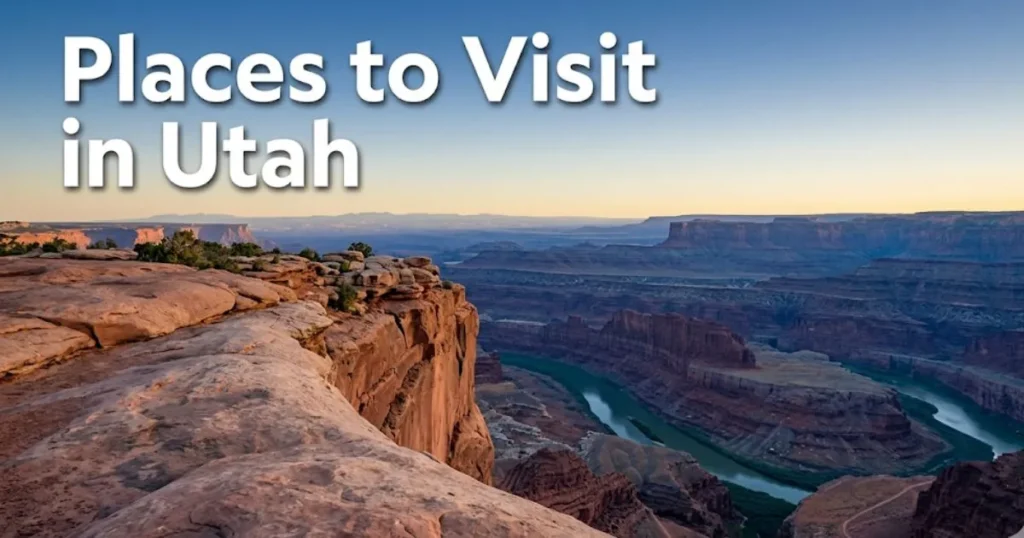
Beyond the national parks, Dead Horse Point State Park rivals Canyonlands for drama with a fraction of the driving. Goblin Valley State Park delivers Martian landscapes where kids can scramble freely.
Salt Lake City and Park City anchor the northern experience with urban amenities, mountain access, and the Sundance Film Festival each January. The Bonneville Salt Flats stretch westward toward Nevada, a stark white expanse where land-speed records fall.
top 10 places to visit in utah
Here is the honest top 10 places to visit in Utah, ranked by a combination of scenery quality, accessibility, and overall experience rather than Instagram popularity.
Zion National Park delivers the most concentrated drama. Sheer sandstone canyon walls rise 2,000 feet above the Virgin River while The Narrows and Angels Landing test nerve and fitness in equal measure.
Springdale, the park’s gateway town, offers walkable dining and the Zion Canyon Shuttle System that eliminates parking headaches during peak season. Zion suits adventurous couples and fit solo travelers best.
| Ranking | Destination | Best For | Main Drawback |
|---|---|---|---|
| 1 | Zion National Park | Fit hikers, photographers | Extreme crowds; shuttle required |
| 2 | Bryce Canyon National Park | Families, seniors, sunrise viewers | High elevation; cold even in summer mornings |
| 3 | Arches National Park | Classic red-rock seekers | Timed entry required; summer heat |
| 4 | Canyonlands National Park | Solitude seekers, 4WD explorers | Remote; long drives between districts |
| 5 | Capitol Reef National Park | Crowd-avoiders, pie enthusiasts | Fewer iconic single viewpoints |
| 6 | Park City | Skiers, festival-goers, couples | Expensive lodging in peak seasons |
| 7 | Moab | Mountain bikers, adventure basecamp | Expensive; crowded spring and fall |
| 8 | Dead Horse Point State Park | Sunrise photographers, families | Small; can be seen in half a day |
| 9 | Monument Valley | Road trippers, Western landscape fans | Long drive from anywhere else |
| 10 | Grand Staircase-Escalante | Backcountry explorers, solitude | No services; rough roads; cell dead zones |
Key Takeaway: Zion and Bryce together make the best 4-day combo for first-timers. Arches and Canyonlands pair perfectly from a Moab base.
utah best places to visit
The Utah best places to visit for a first-timer are unequivocally Zion National Park and Bryce Canyon National Park visited as a single southern Utah road trip loop.
Fly into Las Vegas McCarran International Airport and drive two and a half hours to Springdale. Spend two full days hiking Zion’s main canyon and one morning attempting Angels Landing if you secured the lottery permit.
Then drive 90 minutes to Bryce Canyon for two days among the hoodoos at 8,000 feet elevation. This loop delivers the state’s most dramatic scenery with manageable driving distances.
For return visitors who have already seen Zion and Bryce, Moab becomes the answer. Arches and Canyonlands offer entirely different geological personalities than the southwestern parks.
The sandstone fins and arches of Arches feel like a Dr. Seuss landscape rendered in red rock. Canyonlands provides the vastness and solitude that Zion’s crowded shuttle buses cannot offer.
According to the National Park Service, 2026 continues timed-entry requirements at Arches between April and October. Secure your reservation at recreation.gov the moment your travel dates are firm.
beautiful places to visit in utah
The beautiful places to visit in Utah extend far beyond the national park entrance stations. Some of the state’s most arresting scenery sits on Bureau of Land Management land with zero entry fees.
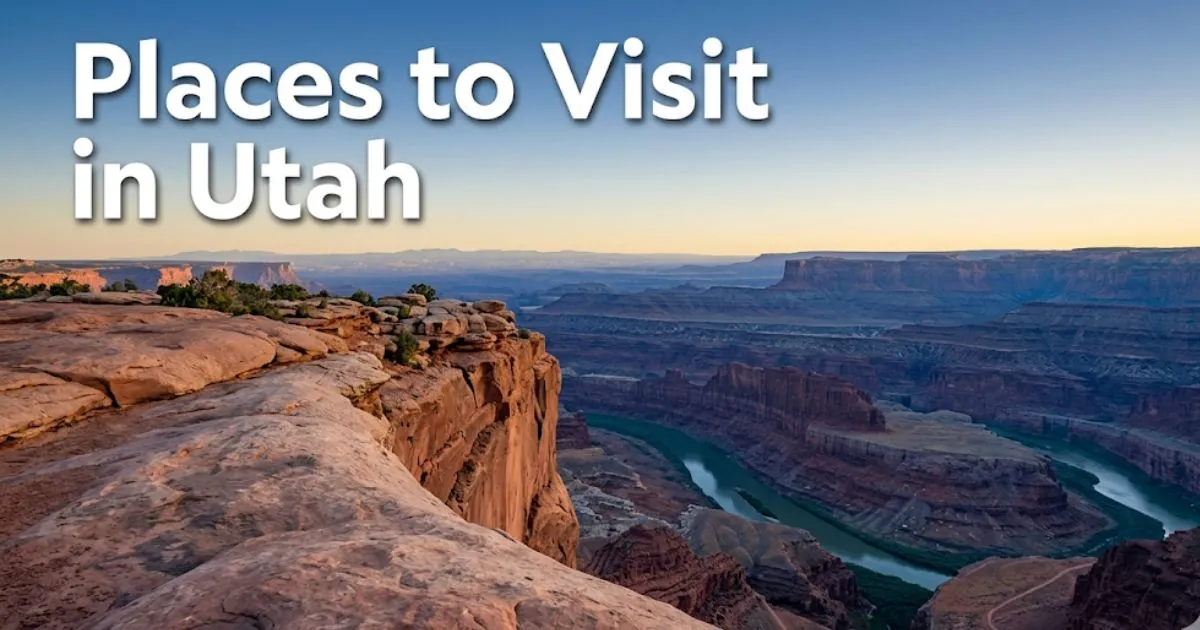
Dead Horse Point State Park delivers a gooseneck bend in the Colorado River that rivals Horseshoe Bend in Arizona without the tour bus crowds. The overlook sits a 40-minute drive from Moab on a paved road suitable for any vehicle.
Kodachrome Basin State Park near Bryce Canyon earns its name honestly. Sandstone chimneys and spires in shades of cream, coral, and rust rise from a basin that photographs like a 1950s postcard of the American West.
The Bonneville Salt Flats west of Salt Lake City create a white void so perfectly flat you can see the curvature of the earth. Visit at sunrise or sunset when shallow water creates a mirror effect across the salt crust.
These three destinations cost a fraction of national park entry fees. They also receive a fraction of the crowds that overwhelm Zion’s Riverside Walk and Bryce’s Sunset Point each afternoon.
places to visit in southern utah
Places to visit in southern Utah concentrate along two major highway corridors: Interstate 15 on the western side and Highway 191 on the eastern side near Moab.
The I-15 corridor connects Zion and Bryce Canyon with Las Vegas as the logical gateway airport. St. George serves as the region’s largest city with an expanding regional airport, chain hotels, and big-box stores for resupply.
The eastern corridor centers on Moab, the adventure sports capital of the Colorado Plateau. Arches National Park sits five minutes from downtown Moab while Canyonlands Island in the Sky District requires a 35-minute drive.
Between these two corridors stretches some of the most remote country in the Lower 48. Highway 12 connects Bryce Canyon to Capitol Reef through Grand Staircase-Escalante National Monument, a 124-mile scenic drive with no services for long stretches.
Southern Utah demands a fly-and-drive approach. There is no meaningful public transit connecting these destinations. Budget one gallon of water per person per day during summer desert travel and fill your gas tank whenever it drops below half.
Key Takeaway: Pick either the western (Zion/Bryce) or eastern (Arches/Canyonlands) circuit. Trying to do both in under 10 days means more windshield time than trail time.
utah national parks ranked
Utah national parks ranked by honest, traveler-profile-matched assessment rather than visitor numbers or Instagram fame.
First Place: Zion National Park earns the top spot for sheer theatrical geology. Walking the Riverside Walk into the mouth of The Narrows while 2,000-foot walls close in around you is the single most transportive experience in any US national park.
Second Place: Bryce Canyon wins for accessibility. The rim trail stays above 8,000 feet with paved, wheelchair-friendly sections and views that require zero hiking to appreciate. Families and seniors thrive here.
Third Place: Capitol Reef is the insider’s champion. Fewer than 1.5 million annual visitors compared to Zion’s 5 million means you can hike to Cassidy Arch and see maybe six other people.
| Park | Best Hike | Crowd Level | Advance Permit Required? |
|---|---|---|---|
| Zion | The Narrows (bottom-up) | Extreme | Angels Landing lottery only |
| Bryce | Queens Garden/Navajo Loop | High at rim, moderate on trail | No |
| Capitol Reef | Cassidy Arch | Low | No |
| Arches | Delicate Arch | Extreme at sunset | Timed entry reservation |
| Canyonlands | Mesa Arch at sunrise | Moderate | No (Island in the Sky) |
Fourth Place: Arches has the most recognizable single feature in Utah (Delicate Arch) but also the most regimented visit experience due to timed-entry requirements and heavy crowding on every named trail.
Fifth Place: Canyonlands Island in the Sky District rewards those who want big views without big hiking mileage. Mesa Arch at sunrise is a genuine bucket-list image that requires a 0.5-mile walk from the parking area.
places to visit in utah besides national parks
Places to visit in Utah besides national parks could fill an entire separate vacation. The state parks and national monuments deliver 90 percent of the scenery with 10 percent of the permitting headaches.
Goblin Valley State Park sits in the San Rafael Swell, a region locals call Utah’s forgotten corner of the Colorado Plateau. Thousands of sandstone hoodoos shaped like mushrooms and goblins fill a valley where visitors can walk anywhere without marked trails.
Kids treat Goblin Valley like a natural jungle gym. There is no comparable national park experience because nowhere else allows this level of unstructured exploration among such strange geology.
Grand Staircase-Escalante National Monument spans 1.87 million acres of slot canyons, waterfalls, and dinosaur fossil beds. The monument has no entrance fee, no visitor center, and no services beyond a few dirt-road trailheads.
Bears Ears National Monument protects Ancestral Puebloan cliff dwellings, rock art panels, and sacred tribal lands across 1.36 million acres. Visit with respect and preparation: roads are rough, cell service is nonexistent, and archaeological sites are irreplaceable.
Snow Canyon State Park near St. George offers lava tubes, petrified sand dunes, and red Navajo sandstone in a compact package 15 minutes from town. It’s the ideal Zion alternative when spring break crowds overwhelm the main park.
best small towns in utah
The best small towns in Utah function as gateways to the landscapes that surround them. Choose your basecamp wisely because it determines your daily drive time, dining quality, and how early you reach the trailhead.
Springdale at Zion’s entrance is the best gateway town in the National Park System. Walkable restaurants, the Zion Canyon Shuttle stops, and canyon walls that rise directly behind Main Street make it worth the premium lodging prices.
Couples and solo travelers thrive in Springdale’s boutique hotels and independent restaurants. Families with young children may find the two-bedroom suite inventory limited and the dinner options more geared toward adults.
Moab serves as the adventure capital for Arches, Canyonlands, and Dead Horse Point. The town itself is a functional mix of gear shops, burger joints, and chain motels stretched along a highway strip.
Torrey near Capitol Reef is the anti-Moab. Fewer than 200 residents, one excellent restaurant at the Capitol Reef Resort, and genuine darkness once the sun sets. This is where you stay when you want to hear nothing but wind through juniper trees.
Boulder sits along Highway 12 between Bryce and Capitol Reef. The population hovers around 250, Hell’s Backbone Grill serves some of the best food in rural Utah, and the surrounding canyons offer complete solitude within a 20-minute drive.
According to the Utah Office of Tourism, these gateway towns book solid six months ahead for peak-season weekends. Reserve lodging before you book flights.
utah hidden gems
Utah hidden gems reward the travelers who research beyond the Mighty 5 postcards and accept that dirt roads lead to the best experiences.
Calf Creek Falls in Grand Staircase-Escalante requires a 6-mile round-trip hike through a desert canyon to reach a 126-foot waterfall plunging into a clear swimming hole. The trail bakes in summer sun with zero shade for most of its length.
Start this hike at dawn in July and August. Carry a gallon of water per person. The waterfall at the end makes the heat worth it, but afternoon hikers risk heat exhaustion on the return leg.
Little Wild Horse Canyon near Goblin Valley delivers a family-friendly slot canyon experience without the technical gear or permit hassles of Zion’s Narrows. The narrows pinch to shoulder width in places with wavy sandstone walls polished by flash floods.
Check the weather forecast obsessively before entering any slot canyon. Flash floods kill hikers in Utah every year, and monsoon storms can form 50 miles away before sending a wall of water through these channels.
Fantasy Canyon near Vernal looks like a Salvador Dali painting rendered in sandstone. Twisted, eroded rock formations fill a small area on BLM land with zero crowds, zero fees, and a rough dirt access road that keeps tour buses permanently away.
The Wedge Overlook is Utah’s Grand Canyon with nobody there. This viewpoint above the San Rafael River canyon sits at the end of a graded dirt road with free dispersed camping right at the rim.
Key Takeaway: Dirt roads and early starts are the price of solitude in Utah. Pay it willingly.
places to visit in utah in winter
Places to visit in Utah in winter split into two completely different trips: skiing the Greatest Snow on Earth in the Wasatch Range or experiencing the red rock parks under snow and solitude.
Park City Mountain Resort and Deer Valley Resort anchor North America’s most accessible ski destination. Salt Lake City International Airport sits 35 minutes from downtown Park City, making a morning flight and afternoon ski run logistically realistic.
Deer Valley caps daily ticket sales and prohibits snowboarders. Park City offers more terrain, more nightlife, and more crowds. Both require advance lift ticket purchases during holiday periods.
The southern national parks transform in winter. Bryce Canyon under fresh snow at 8,000 feet is arguably more beautiful than its summer version, with white powder highlighting orange hoodoos in high contrast.
Zion’s main canyon sits at a lower elevation and rarely accumulates lasting snow. Winter visits mean driving your own vehicle on the Scenic Drive rather than riding the shuttle, a freedom that fundamentally changes the park experience.
Arches timed entry typically pauses between November and March, eliminating the reservation scramble. Temperatures hover in the 30s and 40s Fahrenheit, perfect for hiking while summer’s 105-degree days become a distant memory.
Beware winter road closures. Highway 12 over Boulder Mountain closes during heavy snow. Bryce Canyon roads may ice over. Carry chains and check Utah Department of Transportation conditions before driving into the high country.
best places to visit in utah in summer
The best places to visit in Utah in summer are the high-elevation destinations that escape the desert heat choking Moab and Zion below.
Bryce Canyon sits at 8,000 to 9,000 feet where summer highs stay in the 70s Fahrenheit. The rim trail offers paved, shaded walking with views that require zero sweating to appreciate.
Cedar Breaks National Monument near Brian Head reaches 10,000 feet with wildflower meadows in July and August that rival anything in the Colorado Rockies. The amphitheater of eroded cliffs glows at sunset with a fraction of Bryce’s crowds.
Park City empties of skiers and fills with mountain bikers, hikers, and festival-goers. The Park Silly Sunday Market runs weekly through summer on Main Street, and the ski resort chairlifts convert to scenic rides and downhill bike hauling.
The Uinta Mountains northeast of Salt Lake City offer the state’s best high-alpine backpacking. Mirror Lake Highway (Highway 150) accesses trailheads above 10,000 feet where temperatures rarely exceed 75 degrees.
Southern Utah in summer demands strategy. Hike before 9 AM when temperatures are tolerable. Carry a gallon of water minimum per person. Watch the sky for monsoon thunderheads building after noon, and exit slot canyons before rain starts falling anywhere in the drainage.
Key Takeaway: Elevation is your escape from Utah’s summer heat. Camp above 7,000 feet and hike early.
utah scenic drives
Utah scenic drives are destinations in themselves, not just transportation corridors. Some rank among the finest roads in North America.
Highway 12, Utah’s All-American Road, runs 124 miles from Bryce Canyon to Capitol Reef through Grand Staircase-Escalante National Monument. The section over Boulder Mountain crosses an 11,000-foot alpine plateau where aspen groves give way to views of the Waterpocket Fold stretching toward the horizon.
The Hogback section drops away on both sides with no guardrails and steep canyons falling hundreds of feet below. Drivers uncomfortable with exposure should research this section before committing. It’s genuinely narrow with no shoulder.
Scenic Byway 24 runs through Capitol Reef National Park and continues east through the San Rafael Swell’s Martian badlands. The road parallels the Fremont River past historic orchards where visitors can pick fruit in season.
Trail of the Ancients National Scenic Byway loops through Bears Ears country, connecting Monument Valley, Natural Bridges National Monument, and Hovenweep. This is Ancestral Puebloan country with cliff dwellings and rock art panels accessible via short walks from parking areas.
Mirror Lake Highway (Highway 150) climbs from Kamas into the High Uintas Wilderness, passing alpine lakes and trailheads above 10,000 feet. The road typically opens by late May and closes when snow returns in October or November.
Check Utah DOT road conditions before every scenic drive, especially in spring when high passes can remain snow-covered into June. Cell service disappears on most of these routes.
best time to visit utah national parks
The best time to visit Utah national parks is April through early June and mid-September through October for moderate temperatures and manageable crowds.
Spring brings wildflower blooms to the desert and comfortable hiking temperatures in the 60s and 70s Fahrenheit. Zion’s waterfalls run strong with snowmelt, and Bryce Canyon’s roads typically clear by April.
Fall delivers cottonwood trees turning gold in Zion’s main canyon and crisp mornings in Moab ideal for Delicate Arch sunrise hikes. September and October see reduced crowds after Labor Day while temperatures remain pleasant through late October.
July and August bring extreme heat to the desert parks. Moab and Zion regularly exceed 100 degrees Fahrenheit, making midday hiking dangerous and early morning starts non-negotiable.
Monsoon season runs July through mid-September. Afternoon thunderstorms build quickly over the plateau, creating flash flood risk in slot canyons and lightning danger on exposed slickrock trails like Angels Landing.
December through February offers solitude and snow-dusted red rock at the cost of cold temperatures and potential road closures. Bryce Canyon’s high elevation means cross-country skiing and snowshoeing replace hiking for much of winter.
Book lodging six months ahead for peak spring and fall dates. Moab and Springdale sell out completely during April, May, September, and October weekends.
places to visit utah
Places to visit Utah demands honest triage. You cannot see this entire state in one trip unless you have three weeks minimum.
Pick your basecamp strategy first because it determines everything else. A Springdale base accesses Zion and a day trip to Bryce. A Moab base reaches Arches, Canyonlands Island in the Sky, and Dead Horse Point.
A Torrey or Boulder base puts you in Capitol Reef and Grand Staircase-Escalante country with fewer crowds than either Springdale or Moab. A Park City base gives you mountain town amenities with Salt Lake City’s airport 35 minutes away.
The single biggest mistake Utah visitors make is trying to drive between Zion and Moab in one day while seeing things along the way. This is a 5-hour highway drive without stops.
Adding Bryce Canyon, Capitol Reef, and any scenic detour turns it into a 10-hour ordeal. Split southern Utah into two separate road trips: the western parks (Zion/Bryce) and the eastern parks (Arches/Canyonlands) with Capitol Reef as a bridge if time allows.
Salt Lake City works best as a bookend rather than a hub. Use it for arrival and departure with exploration of the Wasatch Range on either end of a southern road trip loop.
utah road trip itinerary
A practical Utah road trip itinerary for first-timers covers the Mighty 5 southern circuit in 10 to 14 days.
Days 1-2: Fly into Las Vegas, drive to Zion. Arrive Las Vegas McCarran, pick up your rental car, and drive 2.5 hours to Springdale. Spend two full days hiking Zion: Day 1 for the Riverside Walk and lower Narrows, Day 2 for Angels Landing if you secured the lottery permit. Reserve Springdale lodging six months ahead.
Days 3-4: Bryce Canyon. Drive 90 minutes from Zion to Bryce Canyon City or Tropic. Hike the Queens Garden and Navajo Loop combination trail into the amphitheater. Spend sunset at Bryce Point and sunrise at Sunset Point the next morning.
Days 5-6: Capitol Reef via Highway 12. Drive Utah’s finest scenic highway from Bryce to Torrey, stopping at Calf Creek Falls for a hike if you started early. Spend two days in Capitol Reef hiking Cassidy Arch and Cohab Canyon while eating pie at the Gifford Homestead inside the park.
Days 7-9: Moab for Arches and Canyonlands. Drive from Torrey to Moab via Scenic Byway 24. Secure your Arches timed-entry reservation before this day. Spend mornings in Arches and an afternoon at Dead Horse Point. Dedicate one full day to Canyonlands Island in the Sky.
Days 10: Return to Salt Lake City or Las Vegas. Salt Lake City is a 4-hour drive from Moab. Las Vegas is 6.5 hours. Choose based on flight availability and whether you want a final night in a mountain city or desert resort.
This itinerary works best spring and fall. Summer demands pre-dawn starts every day and skipping midday hiking entirely. Winter requires checking Bryce Canyon and Boulder Mountain road conditions daily.
Key Takeaway: Ten days gets you the Mighty 5 highlights. Fourteen days lets you actually experience them rather than just photographing them.
best places in utah to visit
The best places in Utah to visit for specific traveler profiles eliminate the mismatch between destination demands and visitor capabilities.
For families with young children: Bryce Canyon’s paved rim trail and Goblin Valley’s hoodoo playground beat Zion’s steep drop-offs and shuttle logistics every time. Stay in Tropic or Torrey for lower lodging costs and shorter walks to dinner.
For couples seeking romance: Springdale’s boutique hotels with canyon-view balconies and Park City’s Main Street restaurants deliver atmosphere that Moab’s highway motel strip cannot match. Book the Desert Pearl Inn in Springdale or the Washington School House in Park City well ahead.
For solo travelers prioritizing solitude: Capitol Reef and Grand Staircase-Escalante offer genuine alone time on trails where Zion’s crowds never appear. Torrey’s small guest ranches provide communal dining without forced socialization.
For seniors and accessibility travelers: Bryce Canyon’s rim trail between Sunrise and Sunset Points is paved and mostly level at high elevation. Canyonlands Island in the Sky offers dramatic viewpoints steps from parking areas with no hiking required. Avoid Angels Landing and The Narrows entirely.
For budget travelers: Camp on BLM land outside Moab and Torrey for free. Buy the America the Beautiful annual pass at your first national park entrance for $80, covering all parks for 12 months. Cook your own meals from grocery stores in St. George, Cedar City, or Moab.
top places to visit in utah
The top places to visit in Utah reflect the state’s essential geological identity: red rock canyon country sculpted by water and time across the Colorado Plateau.
Zion, Bryce, Arches, Canyonlands, and Capitol Reef form the canonical circuit that every first-time visitor should consider. But the state parks, national monuments, and scenic byways connecting these icons often deliver the trip’s most memorable moments.
Goblin Valley State Park at sunset when the hoodoos cast long shadows. Highway 12 cresting Boulder Mountain. Dead Horse Point at sunrise with coffee in hand and the Colorado River catching first light 2,000 feet below.
Utah’s gift to travelers is the density of genuine astonishment. You can photograph Mesa Arch at sunrise, hike among hoodoos by late morning, and watch the Milky Way rise over Capitol Reef by nightfall, all in a single day.
The cost of this density is planning complexity. Timed-entry reservations, permit lotteries, six-month-advance lodging bookings, and water safety protocols separate the prepared visitor from the disappointed one.
Read the National Park Service websites for your intended parks before you book anything. Check recreation.gov for current permit requirements. Reserve your lodging. Then drive Highway 12, hike into a canyon, and let the geology do the rest.
Travel conditions, permit requirements, park hours, and lodging prices change year to year. Verify all logistics directly with nps.gov, recreation.gov, and your chosen accommodations before departure. Utah’s landscapes are timeless. Its access rules are not.