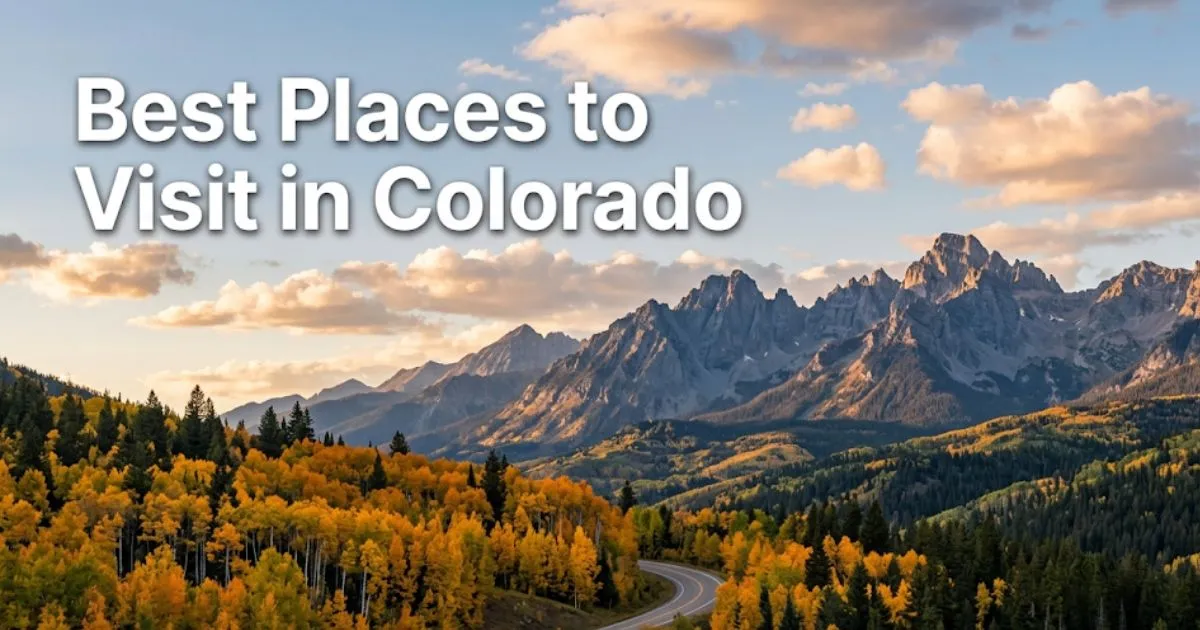
Best Places to Visit in Colorado for First-Timers

First-time visitors should anchor their trip around the classic mountain towns and one major national park. The instinct to cover too much ground is the most common mistake people make.
Start with a base in Estes Park or Colorado Springs. Both offer access to headline attractions without requiring alpine driving skills on day one.
| Destination | Best For | Base Town | Booking Lead Time |
|---|---|---|---|
| Rocky Mountain National Park | First-time alpine scenery | Estes Park | Timed entry permit required, reserve 30+ days out |
| Garden of the Gods | Easy-access red rock formations | Colorado Springs | No reservation needed, free entry |
| Pikes Peak | Summit views without hiking | Colorado Springs | Cog railway tickets book 2+ weeks ahead |
| Red Rocks Amphitheatre | Music and geological spectacle | Morrison | Show tickets sell out months in advance |
Altitude affects nearly everyone at first. Spend your first night at 5,000 feet, not 9,000 feet.
Key Takeaway: Pick one mountain base and one front-range city for your first Colorado trip. Trying to add Mesa Verde or the Sand Dunes creates a driving slog that eats your vacation.
Top Places to Visit in Colorado for Outdoor Adventure
Buena Vista delivers the highest concentration of adrenaline activities in one compact valley. The Arkansas River runs right through town with guided whitewater rafting trips launching daily.
The Browns Canyon National Monument section serves Class III and IV rapids suitable for adventurous beginners. Full-day trips cost roughly $100 to $150 per person during peak season from May through September.
Solo travelers find Buena Vista’s outfitter culture highly social. Families with kids aged 12 and up do well on the Numbers section of the river with intermediate rapids. Seniors and those with mobility concerns can book scenic float trips on calmer stretches that bypass the heavy whitewater entirely. Budget travelers should compare weekday rates, which often undercut weekend prices significantly.
Locals know to skip the crowded Fisherman’s Bridge put-in on summer Saturdays. Drive 20 minutes north to the Railroad Bridge launch instead for thinner crowds and equally strong rapids. The real secret here is booking a multi-sport day where you raft the morning and climb the granite cliffs of Elephant Rock in the afternoon.
Places in Colorado to Visit for Stunning Scenery
Telluride sits in a box canyon with 14,000-foot peaks dropping straight down on either side. The scenery hits you the moment you round the final bend on Highway 145.
The free Telluride Gondola connects the historic town to Mountain Village and runs year-round. Ride it at sunset for the most rewarding zero-cost experience in the state.
Couples seeking a dramatic backdrop for a mountain getaway find Telluride unmatched. The town’s intimate scale and walkable core suit romantic travelers perfectly. Budget travelers face real challenges here since lodging routinely exceeds $300 per night even in shoulder season. Seniors and accessibility travelers will appreciate the gondola system and the flat, stroller-friendly main street with its boardwalks and benches.
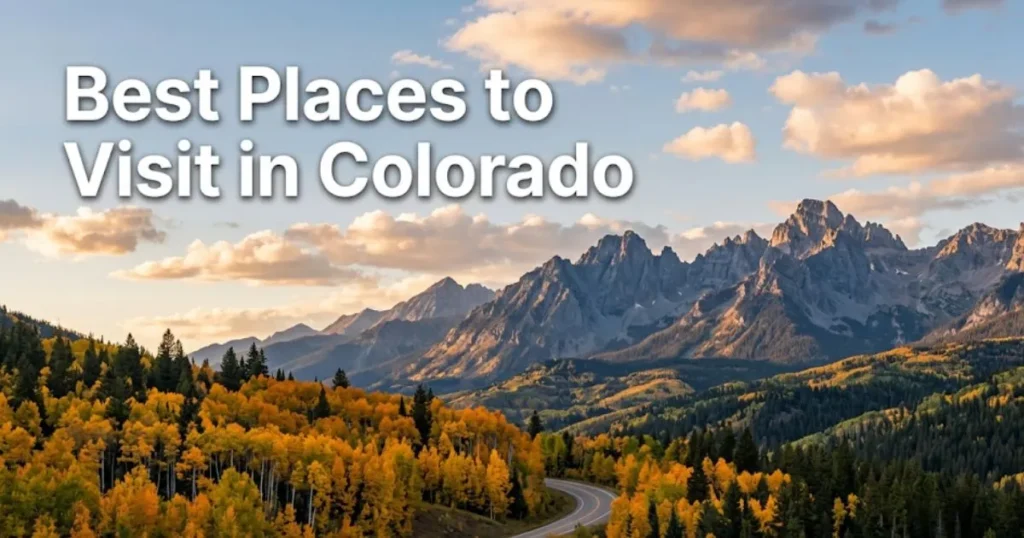
Late June delivers the wildflower peak on the Judd Wiebe Trail. Fall colors in the aspen groves around Trout Lake during the last week of September draw photographers from across the country. The landscape here genuinely earns the superlatives that tourism brochures throw around recklessly for lesser destinations.
Key Takeaway: Telluride’s scenery is worth the splurge, but book six months ahead for summer or ski season lodging.
Best Colorado Vacation Spots for Families
Steamboat Springs works better for families with young children than any other major Colorado resort town. The town’s Western heritage is genuine, not manufactured for tourists.
The Yampa River runs through downtown with a gentle current and tube rentals available all summer. Kids under 10 can float safely with a life jacket and minimal supervision.
| Activity | Age Range | Cost Range | Why It Works |
|---|---|---|---|
| Yampa River tubing | 4+ | $20-$30 tube rental | Lazy current, easy exit points |
| Strawberry Park Hot Springs | 8+ (daytime) | $15-$20 entry | Natural rock pools, shallow areas |
| Howelsen Hill alpine slide | 5+ | $10-$15 per ride | Speed control, parent-child sleds |
| Fish Creek Falls overlook | All ages | $5 parking | Paved quarter-mile path to viewpoint |
| Pro Rodeo Series (Fri/Sat summer) | All ages | $15-$25 | Genuine local event, not tourist theater |
Families with toddlers should avoid the downtown hot springs during evening hours when the scene shifts to adults-only. The Steamboat Pro Rodeo Series runs every Friday and Saturday night from late June through August and costs far less than comparable entertainment in Aspen or Vail. Locals take their kids here every weekend and it shows in the unpolished, authentic atmosphere.
Unique Places to Visit in Colorado
Great Sand Dunes National Park and Preserve delivers the most unexpected landscape in the state. Towering dunes rise 750 feet against a backdrop of snow-capped peaks in a visual contradiction that makes no geological sense until you understand how wind patterns funnel sand against the Sangre de Cristo Mountains.
Rent a sandboard or sand sled from Kristi Mountain Sports in Alamosa before driving in. The park itself offers zero rental equipment and the nearest in-park concession is nearly 40 miles away.
Solo travelers find the dune field meditative and otherworldly. Families discover that kids will sled for hours without a single complaint, something no hike ever achieves. Medano Creek runs shallow and warm at the base of the dunes from late May through June, creating a natural beach scene. Budget travelers pay a modest $25 per vehicle entry fee for a seven-day pass that covers the entire park and preserve.
The dunes require early starts from June through August. Sand surface temperatures exceed 150 degrees Fahrenheit by midday in summer. Arrive at sunrise or visit in October when daytime highs stay manageable. Plan to verify sand surface conditions with the park visitor center before heading onto the dunes during summer months.
Key Takeaway: Rent sandboards in Alamosa, arrive at sunrise in summer, and check dune surface temperatures before heading out.
Colorado Destinations for Culture and History
Mesa Verde National Park protects the most significant concentration of Ancestral Puebloan cliff dwellings in North America. The architecture and preservation quality here have no equal in the United States.
Cliff Palace is the largest cliff dwelling and requires a ranger-guided tour ticket. Book through the National Park Service reservation system at least two weeks in advance for peak summer dates.
History-oriented travelers and multi-generational family groups get the most from Mesa Verde. The cliff dwelling tours involve ladders, narrow passages, and uneven stone steps at high elevation. The park service clearly states that these tours are unsuitable for anyone with mobility limitations, heart conditions, or severe fear of heights. Alternative options include mesa-top viewpoints and the Chapin Mesa Archaeological Museum, which provides accessible viewing of artifacts and dioramas. Budget travelers benefit from the relatively low entry fee of approximately $30 per vehicle for a seven-day pass from late spring through early fall.
Skip the midday tour slots during July and August. The canyon walls reflect heat intensely and the ladders become uncomfortably hot to touch. Book the first morning tour instead. Locals from nearby Durango and Mancos drive up for the ranger-led Balcony House tour, which is less crowded than Cliff Palace but more physically demanding.
According to the National Park Service, Mesa Verde preserves over 600 cliff dwellings across the park’s 52,000 acres.
Colorado Mountain Towns Worth the Drive
Crested Butte deserves the drive up Kebler Pass for its wildflower season and its refusal to become Aspen. The town’s dirtbag skiing heritage survives despite the arrival of second-home owners from Texas.
Elk Avenue is the walkable main street with independent bookstores, a legendary wood-fired pizza joint at Secret Stash, and a dive bar called The Eldo that pours strong drinks and hosts live music on a deck overlooking the creek. The mountain biking on the 401 Trail ranks among the best single-track routes in North America. Rent a full-suspension bike from Big Al’s Bicycle Heaven and book the Alpine Express shuttle to the top to skip the brutal climb.
Families who bike together find Crested Butte more relaxed than the high-end resort towns. The town’s free Mountain Express bus connects the base area to downtown reliably. Seniors and accessibility travelers should note that Crested Butte sits above 8,800 feet and the town’s sidewalks can be uneven.
Wildflower season peaks during the last two weeks of July. The Crested Butte Wildflower Festival runs annually and lodging books six months in advance for that window. Mud season in April and early May leaves many trails closed and many restaurants shuttered for staff break.
Key Takeaway: Crested Butte’s July wildflower season rivals any alpine display in North America, but book lodging by January.
Colorado Summer Destinations to Beat the Heat
Ouray sits at 7,800 feet with summer highs rarely exceeding 80 degrees. The town calls itself the Switzerland of America and for once the claim is not entirely empty.
The perimeter of Ouray is defined by a dramatic amphitheater of cliffs and the Ouray Ice Park draws winter climbers worldwide. Summer visitors can walk the Perimeter Trail, a roughly five-mile loop with minimal elevation gain and constant views of waterfalls, box canyons, and mining relics.
Families with kids who can handle rocky terrain do well here. The Ouray Hot Springs Pool offers a family-friendly soaking complex with multiple temperature zones and a shallow section for young children. Solo travelers find the town’s compact layout and brewery scene at Ouray Brewing easy to navigate. Seniors and accessibility travelers should focus on the town core, the hot springs pool with its accessible entry ramps, and the flat section of the Perimeter Trail near the visitor center. Budget travelers can camp at Amphitheater Campground on the edge of town for a modest nightly rate.
Late June through August provides the most reliable weather. Avoid Ouray during the third week of July when the Hardrock 100 Endurance Run floods the town with runners and support crews and lodging availability drops to zero.
Hidden Places in Colorado to Visit Without Crowds
The Black Canyon of the Gunnison National Park sees fewer annual visitors than Rocky Mountain National Park handles in a single summer week. The canyon drops 2,700 feet to the Gunnison River below, deeper than the Grand Canyon at certain measured points.
The South Rim Road features 12 overlooks along a seven-mile paved drive. This is accessible to nearly every traveler profile and requires no hiking ability. The North Rim runs on gravel and receives nearly no traffic. Experienced hikers and climbers can descend into the inner canyon on unmaintained routes where wilderness permits are free but mandatory for any travel below the rim.
Solo travelers find the South Rim contemplative and uncrowded. Families with children should stick to the rim overlooks exclusively since inner canyon descent routes are dangerous for young kids and inexperienced hikers. Seniors and accessibility travelers will appreciate the paved and mostly flat overlook paths on the South Rim. Budget travelers pay a modest entry fee of roughly $25 per vehicle for a seven-day pass with no timed-entry restrictions.
The canyon is best visited in May, September, or October. Summer afternoon temperatures on the rim can push into the low 90s and the inner canyon roasts. Bring all the water you will need since the park has no water available on either rim. The National Park Service advises that inner canyon routes are for experienced wilderness travelers only.
Key Takeaway: Black Canyon of the Gunnison offers Grand Canyon scale without Grand Canyon crowds, and the South Rim requires zero hiking for world-class views.
Romantic Colorado Getaways for Couples
Aspen works best for couples who want high-end dining, upscale lodging, and dramatic mountain scenery without the rustic edges of less polished mountain towns. The Maroon Bells are the most photographed mountains in the state for good reason.
The Maroon Bells Scenic Area requires a timed reservation for both parking and shuttle access during summer and fall 2026. Book through the Aspen Chamber Resort Association reservation portal at least two weeks in advance for sunrise slots, which go first.
Couples seeking a polished romantic weekend find Aspen’s restaurant scene unmatched in the Colorado high country. The music tent at the Aspen Music Festival runs all summer and picnic dinners on the lawn cost nothing beyond whatever you bring. Budget travelers face the harshest reality check here since lodging under $400 per night is nearly impossible in summer and winter. Seniors and accessibility travelers will appreciate Aspen’s excellent public transit and the gondola-accessible dining options on Aspen Mountain.
September delivers crisp air, golden aspen groves, and a noticeable drop in room rates after Labor Day. Avoid Aspen in mid-December when early-season ski conditions are unreliable and holiday rates are already in full force.
Best Places to Visit in Colorado for Solo Travelers
Denver’s RiNo Art District and the surrounding neighborhoods offer the state’s strongest solo travel experience in an urban setting. The city’s brewery count, walkable neighborhoods, and restaurant-bar counter culture make eating alone feel normal.
RiNo (River North Art District) packs more than a dozen craft breweries into a walkable industrial zone. Odell Brewing’s two-story patio and Our Mutual Friend’s low-key taproom both suit solo drinkers who want conversation without forced socializing. The Denver Central Market in RiNo offers counter-service dining where solo eating is standard, not awkward.
Solo travelers find Denver’s bike-share system and light rail make car-free exploration realistic. The Denver Art Museum and Clyfford Still Museum are both in the Golden Triangle Creative District and offer quiet, self-paced cultural experiences. Families and couples have plenty to do here too, but solo travelers are the profile that benefits most from Denver’s counter-culture and brewery-patio layout. Seniors and accessibility travelers will find the light rail system and flat downtown core manageable, though RiNo’s sidewalks remain uneven in spots.
Spring and fall offer the best weather for walking between breweries. Summer afternoons bring punishing heat in RiNo’s concrete-heavy corridors and winter slush makes the warehouse district less walkable.
Key Takeaway: Denver’s RiNo district, Golden Triangle museums, and light rail system make it Colorado’s best solo travel base.
Cheapest Places to Visit in Colorado
Salida delivers the Arkansas River scenery and outdoor access of Buena Vista at noticeably lower lodging and dining costs. The downtown is Colorado’s largest historic district and the main street feels genuinely lived-in rather than curated for tourists.
Riverside Park sits right on the Arkansas River in downtown Salida with free riverfront access, a kayak play wave, and picnic tables where you can watch boaters without spending a dime. The Salida Creative District hosts a rotating schedule of free gallery walks and street festivals throughout the summer months. Monarch Mountain skiing in winter costs roughly half what Vail or Breckenridge charge for a lift ticket.
Budget travelers find Salida the best value in the Arkansas River Valley. Families benefit from the free river access and the town’s unpretentious diners like Pat’s Fifties Diner. Solo travelers can stay affordably at the Simple Lodge and Hostel, one of the few remaining hostels in Colorado’s mountain towns. Seniors and accessibility travelers should note that downtown Salida has some steep sidewalk sections near the river.
Salida works best in late spring through early fall. Winter brings reliable snow but much of the riverfront activity shuts down from November through March.
Colorado National Parks You Should Not Skip
Rocky Mountain National Park anchors the state’s park system and draws the largest crowds by an enormous margin. Its timed-entry reservation system runs annually from late May through late October and reservation windows for 2026 open on specific dates posted by the National Park Service.
Trail Ridge Road crosses the Continental Divide above treeline and is typically fully open from late May through mid-October depending on snowpack. This is the park’s essential drive. The Bear Lake Corridor offers the most concentrated set of alpine lake hikes but requires a separate timed-entry permit in addition to the park-wide reservation.
Families and first-time visitors should focus on the Bear Lake area for shorter, accessible hikes like Bear Lake Trail, a flat loop around the namesake lake. Experienced hikers can push on to Emerald Lake and Sky Pond. Solo travelers find the park’s shuttle system functional and the trail system well-marked. Budget travelers pay $30 per vehicle for a seven-day pass, making this one of the best value experiences in the state. Seniors and accessibility travelers should prioritize Trail Ridge Road sightseeing from pullouts and the accessible sections of the Sprague Lake trail, which is flat and wide with continuous mountain views.
Fall weekends in September and early October bring elk bugling season crowds that rival summer. If you cannot secure a timed-entry permit, enter the park before 5 a.m. or after 6 p.m. when the reservation requirement is not enforced.
Key Takeaway: Rocky Mountain National Park timed-entry permits are not optional during peak hours from late May through October. Reserve exactly when the window opens.
Colorado Winter Destinations Beyond Skiing
Pagosa Springs houses the deepest geothermal hot spring in the world at The Springs Resort and Spa. The Mother Spring reaches a verified depth of over 1,000 feet and feeds 25 soaking pools along the San Juan River.
Winter soaking with snow on the riverbanks and steam rising off the terraced pools creates a genuinely memorable experience that requires no skiing ability. The resort offers tiered pricing with pool-only access running roughly $40 to $65 per adult depending on the season. The more exclusive adult-only terraces cost more but provide a quieter, more romantic environment.
Couples seeking a winter escape that is not ski-focused find Pagosa Springs ideal. The combination of hot springs, river views, and proximity to Wolf Creek Ski Area for those who do want a day on snow is rare. Families should stick to the main resort pools where kids are welcome and the temperature range is moderate. Solo travelers can stay at the budget-friendly Pagosa Riverside Campground cabins. Seniors and accessibility travelers should contact the resort directly about accessible pool entry options, which vary by pool and terrace level.
Winter rates peak around Christmas and New Year. Book the resort at least three months in advance for holiday stays. The soaking pools are most dramatic during active snowfall from December through February.
Best Colorado Road Trip Routes for 2026
The San Juan Skyway is a 236-mile loop that connects Durango, Silverton, Ouray, and Telluride through some of the most dramatic mountain passes in the lower 48 states. The route includes the Million Dollar Highway segment between Silverton and Ouray, which is both the most scenic and most nerve-wracking stretch of paved road in Colorado.
| Segment | Distance | Drive Time (No Stops) | Key Stops |
|---|---|---|---|
| Durango to Silverton | 50 miles | 1.5 hours | Purgatory Resort, Molas Pass overlook |
| Silverton to Ouray (Million Dollar Hwy) | 24 miles | 45 min | Red Mountain Pass, Bear Creek Falls |
| Ouray to Telluride | 50 miles | 1 hour | Dallas Divide, Telluride Brewing |
| Telluride to Cortez | 78 miles | 1.5 hours | Lizard Head Pass, Rico |
| Cortez to Durango (via Mesa Verde) | 42 miles | 1 hour | Mesa Verde National Park |
Solo road trippers find the loop navigable and hostel options in Durango and Telluride keep costs manageable. Couples should book the historic Strater Hotel in Durango for at least one night. Families need to know that the Million Dollar Highway has sheer drop-offs, no guardrails on some sections, and demands a confident driver with no height-related anxiety. Seniors and accessibility travelers should choose the Durango-to-Silverton leg and the Telluride-to-Durango return, skipping the Million Dollar Highway section entirely.
The San Juan Skyway is fully open from late May through October. Snow closes the high passes from November through April. September delivers the best combination of stable weather, fall colors, and reduced crowds.
Key Takeaway: The San Juan Skyway loop is Colorado’s best road trip, but the Million Dollar Highway section demands a confident driver unbothered by exposure.
Where to Stay in Colorado for Every Travel Style
Lodging strategy in Colorado shifts dramatically by season and destination. The mistake travelers make most often is underestimating how far mountain towns sit from one another and how early hotels fill during peak windows.
Estes Park offers the widest range of lodging for Rocky Mountain National Park visitors, from the historic Stanley Hotel to budget chains on the east end of town. Aspen and Vail command the highest nightly rates in the state with summer and winter rooms frequently exceeding $500. Buena Vista and Salida deliver the best value in the central mountains with independent motels like the Surf Hotel in BV and the Amigo Motor Lodge in Salida.
| Traveler Profile | Best Lodging Zones | Budget Range (Nightly) | Booking Lead Time |
|---|---|---|---|
| Solo travelers | Denver RiNo, Salida hostels, Durango | $40-$150 | 1-4 weeks |
| Couples | Telluride, Aspen, Ouray boutique inns | $200-$500+ | 3-6 months |
| Families | Steamboat, Estes Park cabins, Pagosa | $150-$350 | 2-4 months |
| Budget travelers | Salida motels, Alamosa chains, camping | $25-$120 | Variable |
| Seniors/accessibility | Denver, Colorado Springs, Estes Park | $130-$300 | 1-3 months |
Camping expands budget options significantly during summer months. Colorado State Parks operate a reservation system that opens six months in advance and prime summer weekend sites at popular parks fill within minutes of release.
Safety and Practical Warnings for Colorado Travel
Altitude sickness derails more Colorado vacations than any other single factor. Drink twice as much water as you normally would, avoid alcohol on your first full day above 8,000 feet, and descend immediately if symptoms include severe headache, nausea, or confusion.
Key safety and practical facts every visitor should know:
- Altitude sickness is a medical condition, not an inconvenience. Symptoms typically appear above 8,000 feet and the only guaranteed treatment is descending to a lower elevation immediately.
- Wildfire season runs from June through October with smoke affecting air quality across wide regions. Check air quality reports daily and have evacuation route information if staying in forest-adjacent lodging.
- Afternoon thunderstorms in the high country arrive reliably from June through August, typically between noon and 4 p.m. Start alpine hikes at sunrise and be below treeline by early afternoon.
- Mountain passes including Trail Ridge Road, Independence Pass, and the Million Dollar Highway close during snowstorms from October through May. Always carry chains and check road conditions on cotrip.org before driving.
- Cell service is nonexistent across large sections of the San Juan Mountains, the Flat Tops, and any wilderness area trailhead. Download offline maps before leaving town.
- Wildlife encounters with moose and black bears are common. Give moose at least 75 feet of distance and never approach a calf. Carry bear spray in the backcountry and know how to use it.
- River and creek crossings on hiking trails run dangerously high during late spring and early summer snowmelt from May through mid-July. Hikers have died attempting crossings that looked passable.
The Colorado Department of Transportation operates cotrip.org for real-time road conditions, pass closures, and chain law status updates.
Frequently Asked Questions About the Best Places to Visit in Colorado
What is the best month to visit Colorado?
September offers warm days, cool nights, fall colors, and reduced crowds after the summer peak.
Wildfire smoke has typically cleared and high mountain passes remain open through mid-October.
Reserve lodging at least two months ahead for popular fall destinations like Aspen and Telluride.
How many days do you need to visit Colorado?
A seven to ten-day trip covers one mountain region plus a front-range city comfortably.
A five-day trip limits you to a single base like Estes Park or Colorado Springs.
Ten to fourteen days lets you road trip the San Juan Skyway loop or combine two distinct regions.
Do I need a car to visit Colorado’s mountain towns?
Yes, most mountain towns require a car for practical exploration outside of Aspen and Telluride.
Denver light rail connects the airport to downtown but does not reach the mountains.
The Bustang state bus service runs from Denver to some mountain towns with limited schedules.
What is the most beautiful part of Colorado?
The San Juan Mountains between Ouray, Telluride, and Silverton offer the most dramatic scenery in the state.
The Maroon Bells near Aspen provide the most photographed single view.
The Black Canyon of the Gunnison delivers the most underappreciated landscape.
Is Colorado expensive to visit?
Colorado ranges from budget-friendly camping and motel trips to luxury resort stays exceeding $800 per night.
Summer and winter peak seasons in resort towns like Aspen and Vail demand premium pricing across all categories.
Salida, Alamosa, and the Western Slope offer reasonable alternatives with abundant free outdoor recreation.
What should I know before visiting Colorado for the first time?
Altitude will affect you physically even if you are fit, so plan a gradual ascent and hydrate constantly.
Distances between destinations on the map often take twice as long as you expect due to mountain roads.
Timed-entry reservations are now required at Rocky Mountain National Park and Maroon Bells from late May through October.
Plan Your Colorado Trip With Confidence
Pick one region and explore it well rather than racing across the state. The traveler who spends five days in the San Juans has a richer experience than the one who covers five mountain towns in seven days.
Book your lodging and any required timed-entry permits first. Everything else builds around those two fixed points. Airfare and rental cars can wait, but Rocky Mountain National Park permits and Telluride summer hotels cannot.
Travel conditions, entry fees, and reservation systems change. Verify permit requirements, road conditions, and hours directly with the National Park Service, Colorado Department of Transportation, and individual venues before departure. The Colorado you find will reward the planning you put in before you arrive.